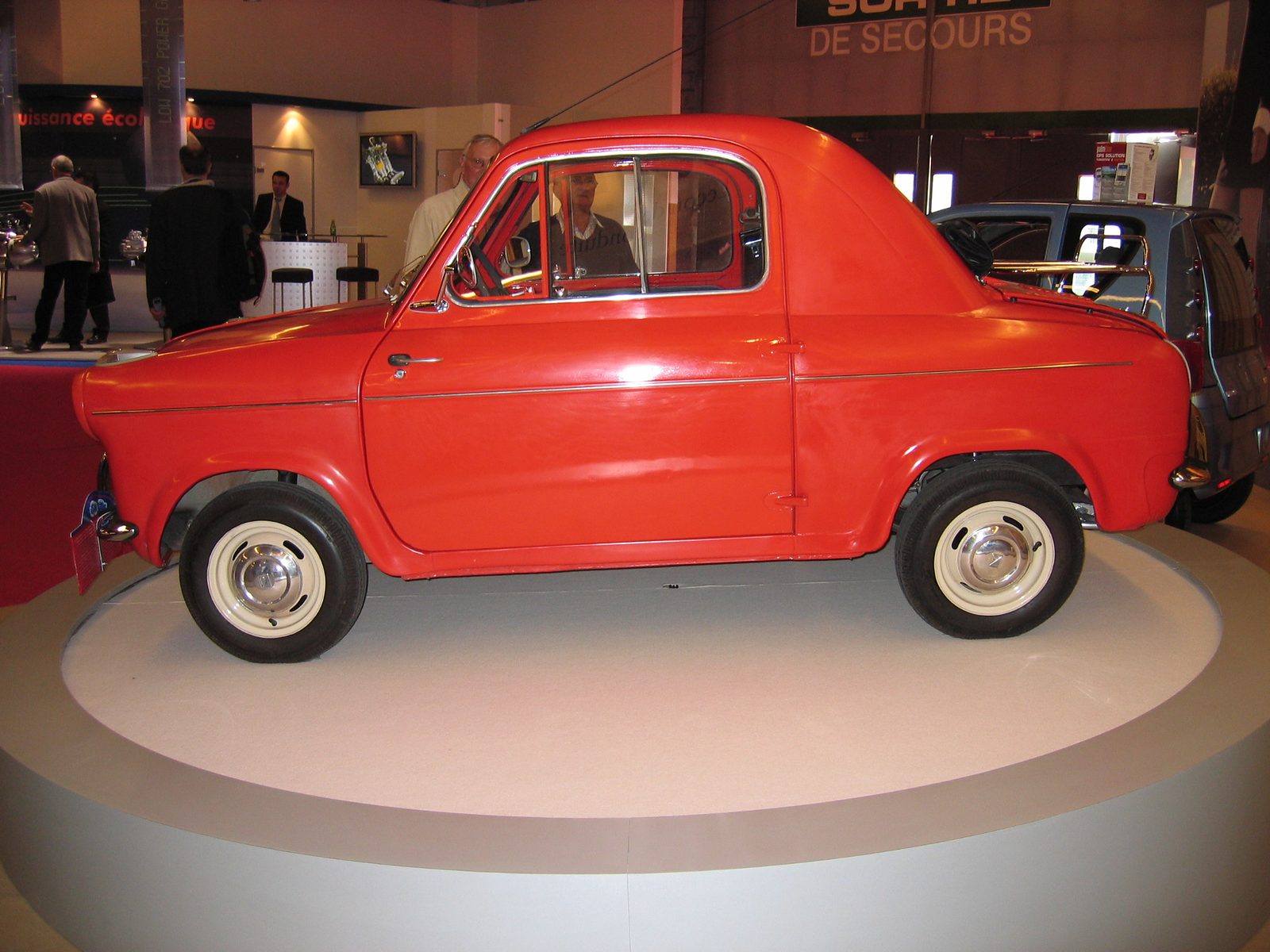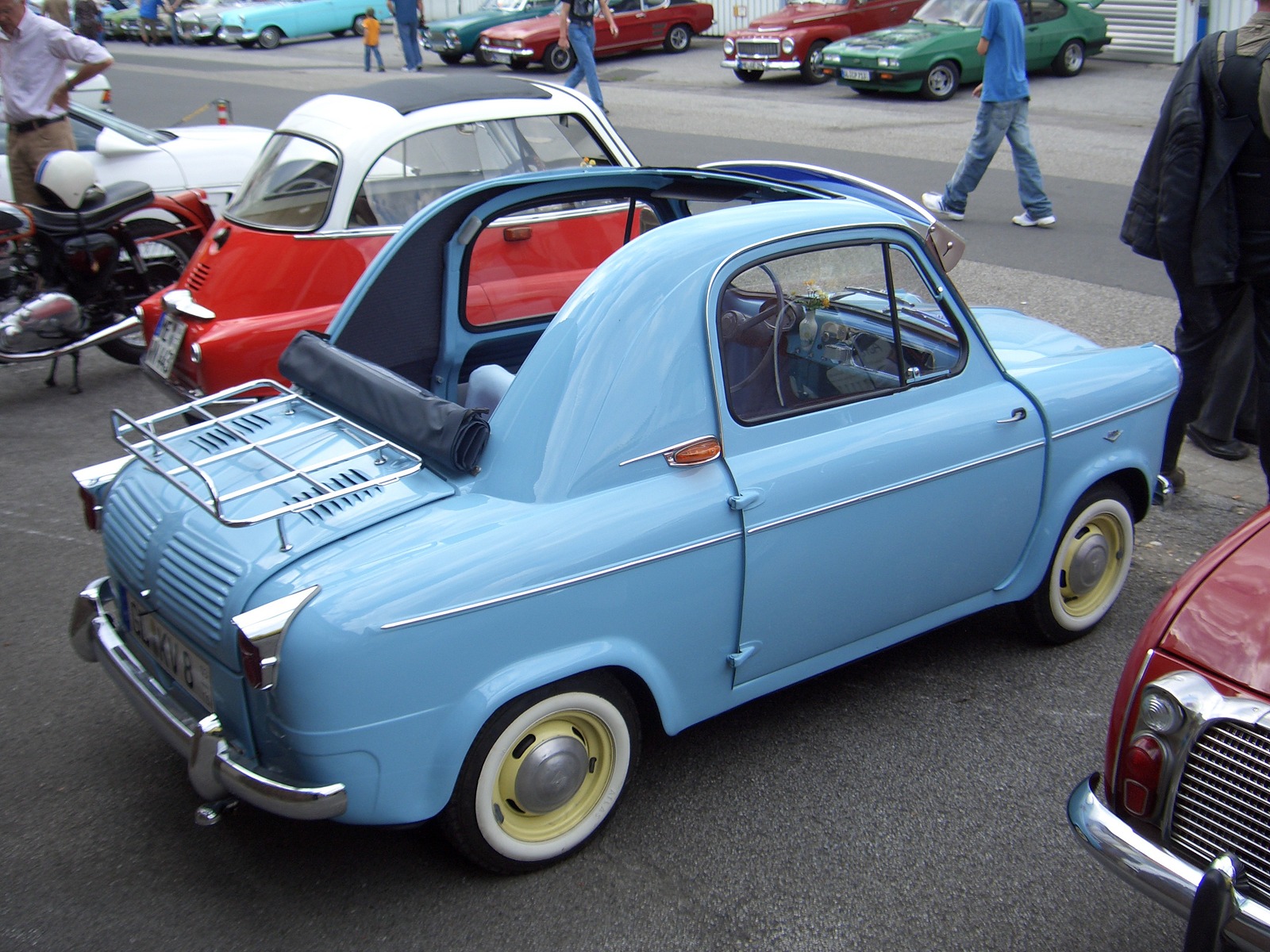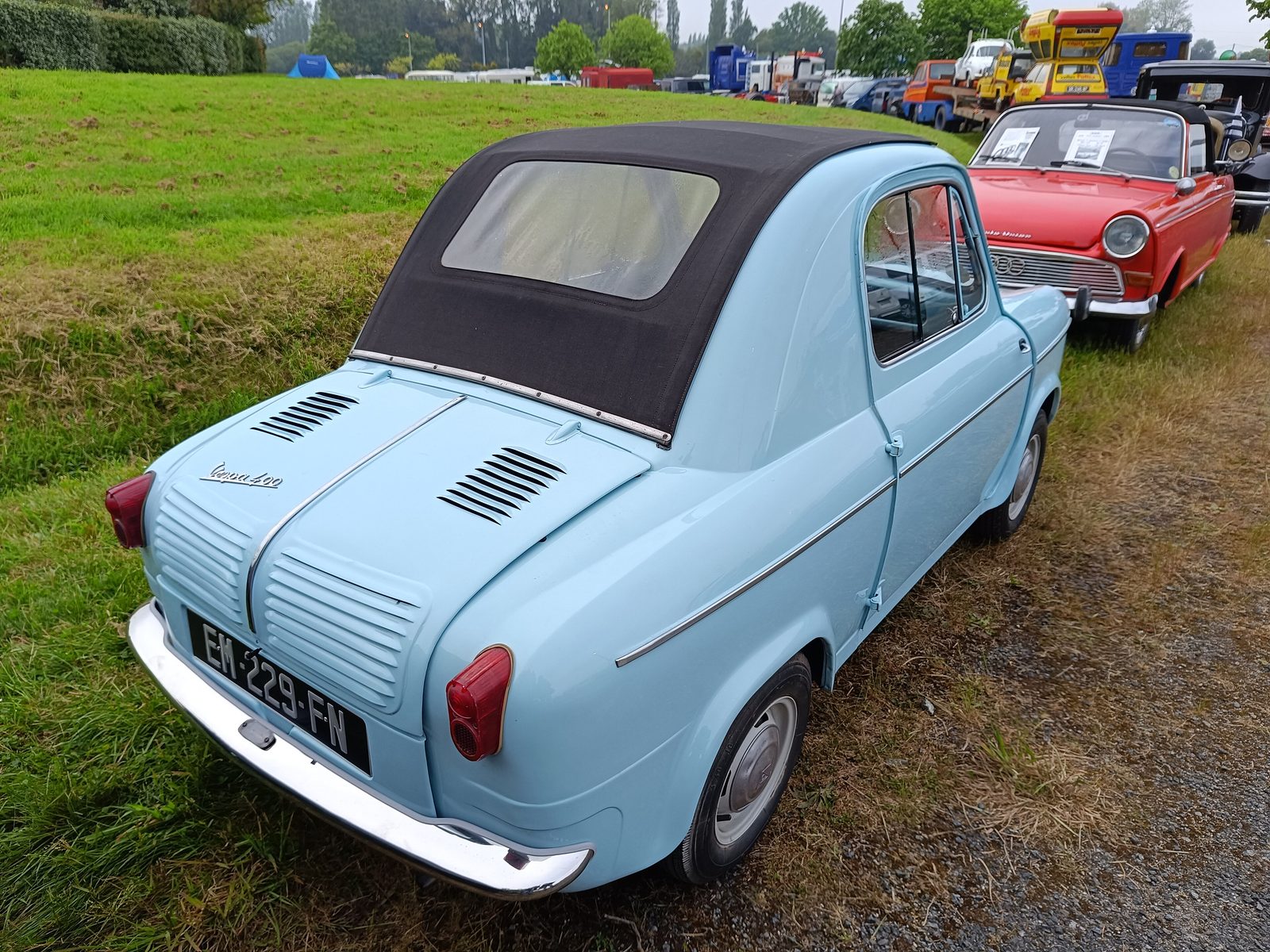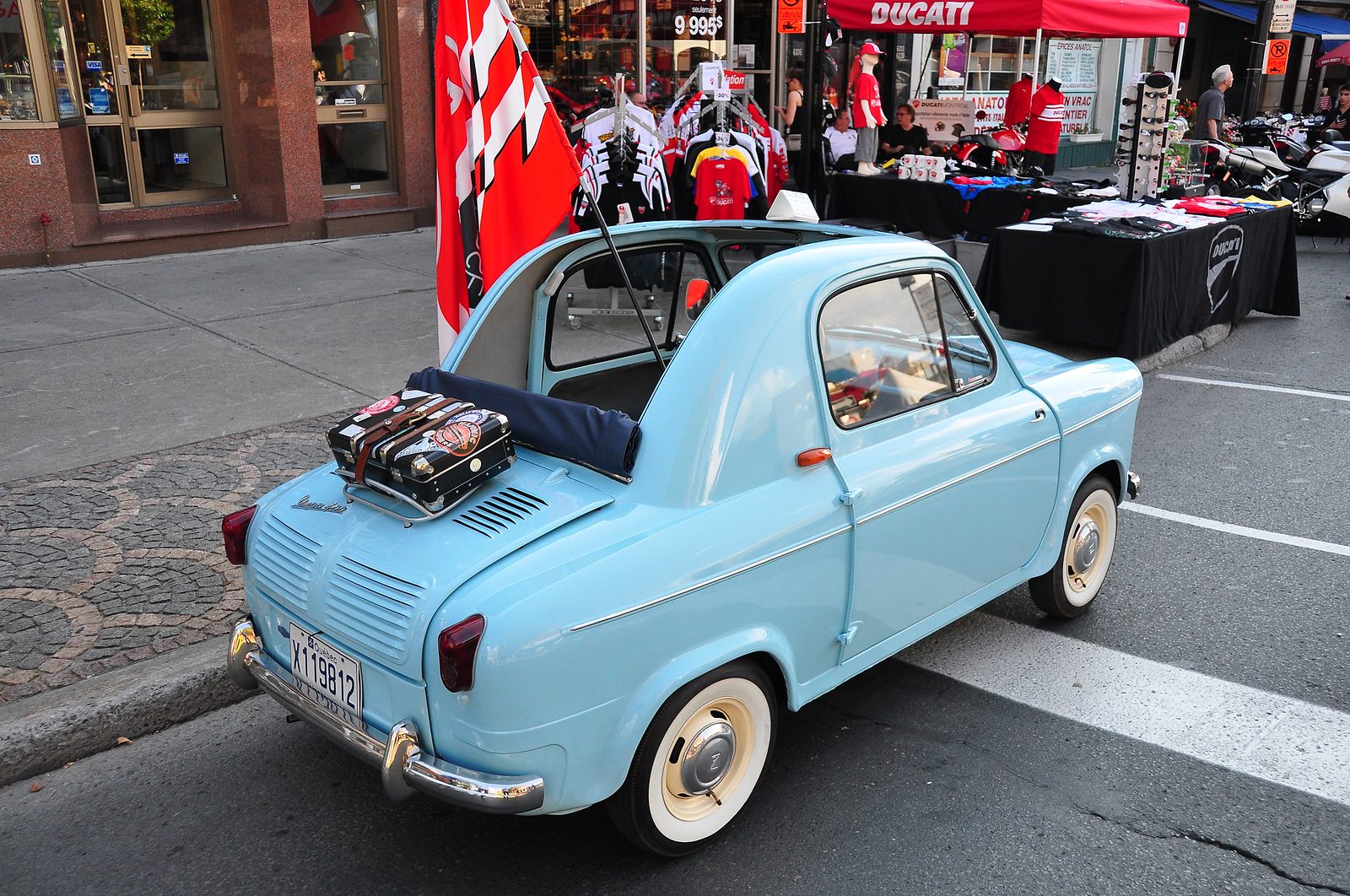
microcarfan
  • Microcar
  • France
  • Four wheels
  • Roll-back roof

Vespa 400

Also known as Piaggio Vespa 400, ACMA Vespa 400

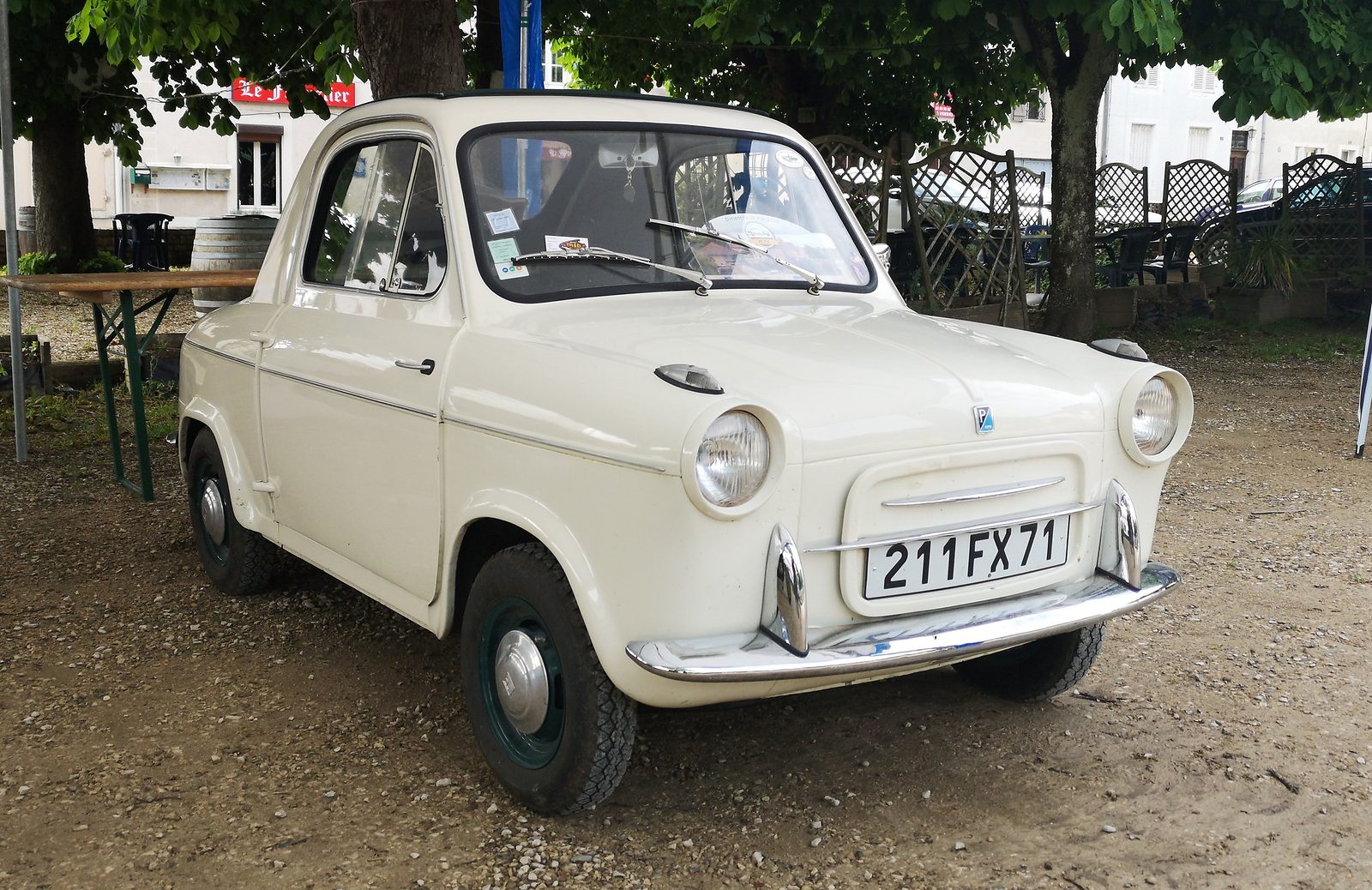
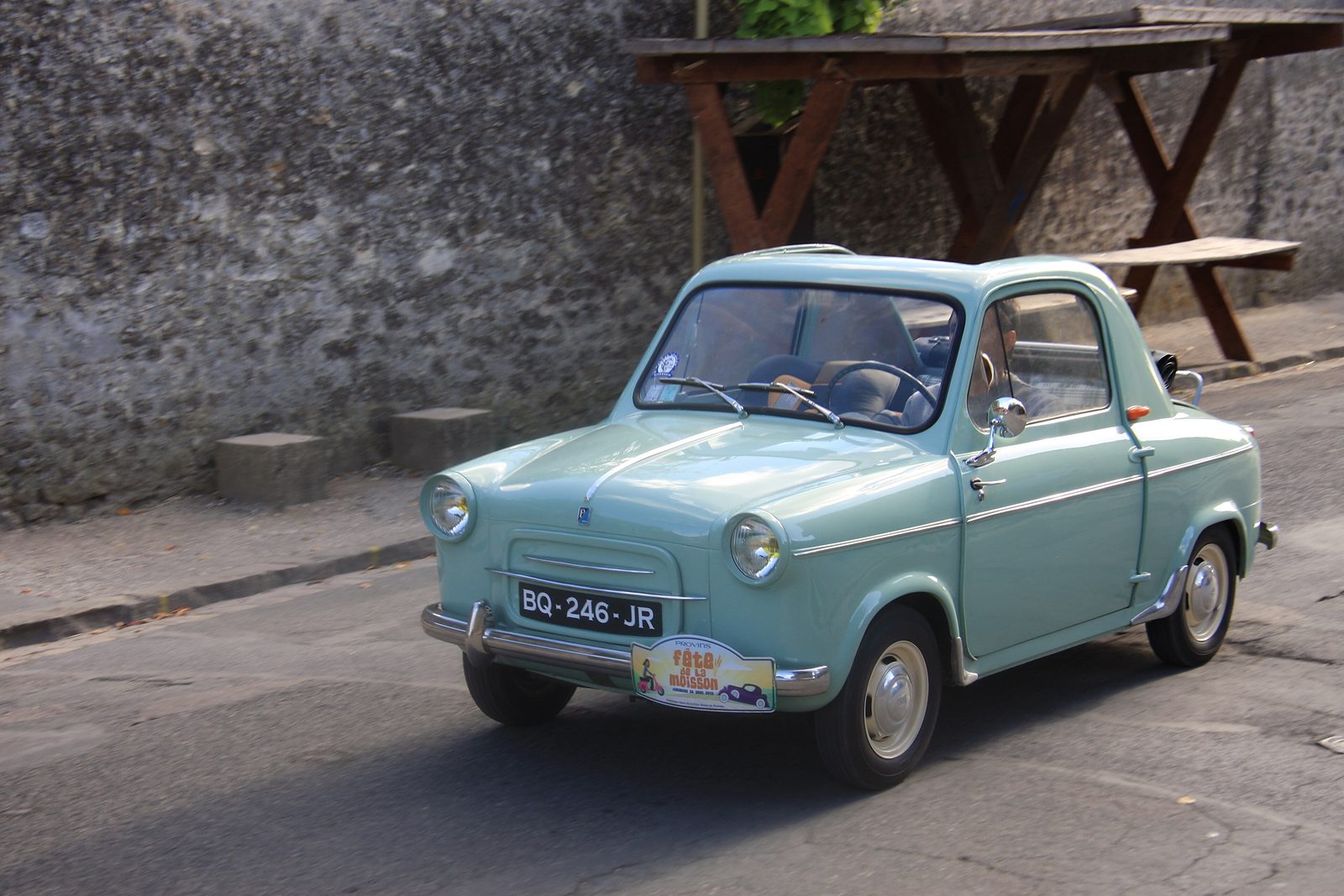
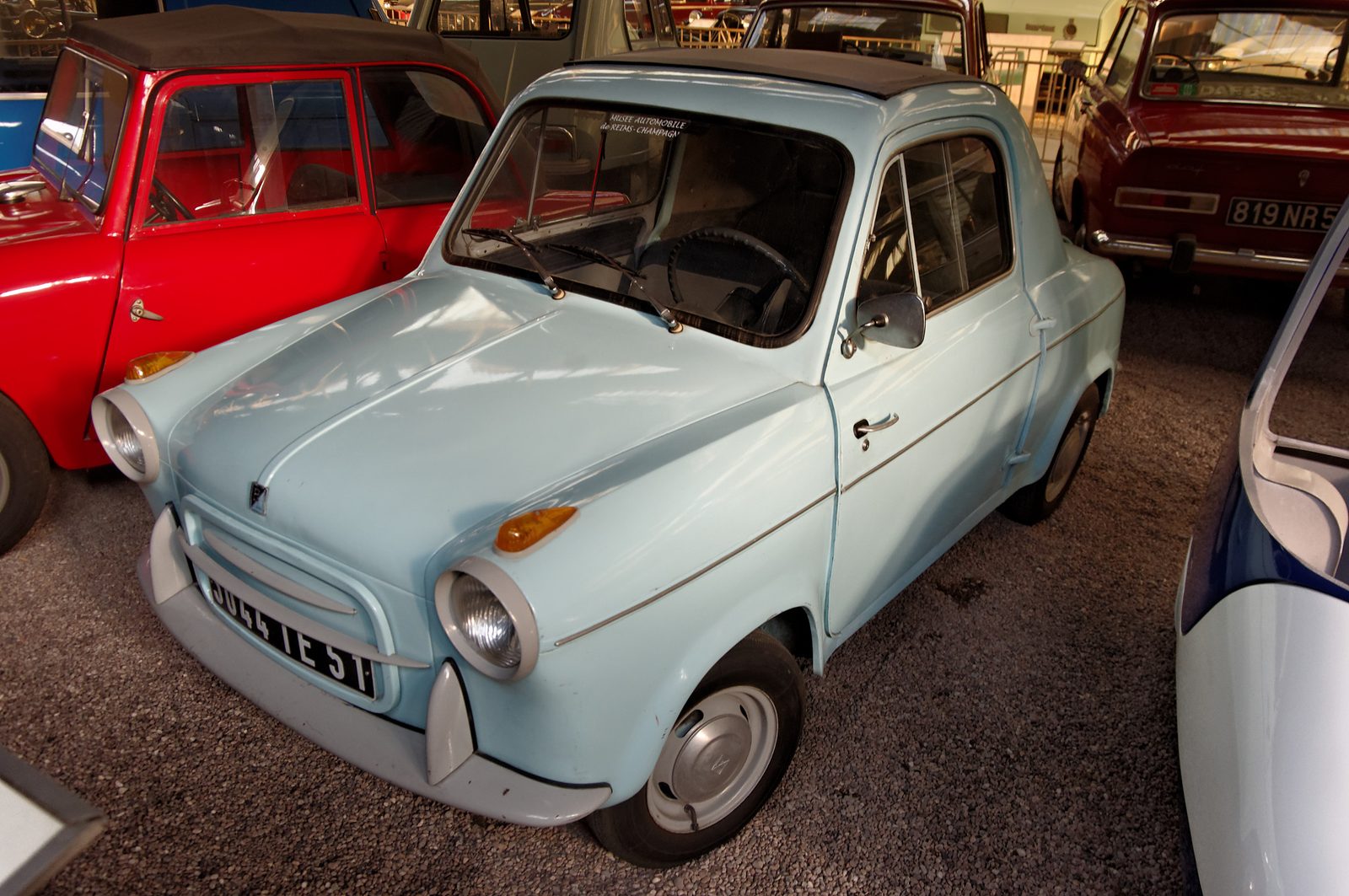
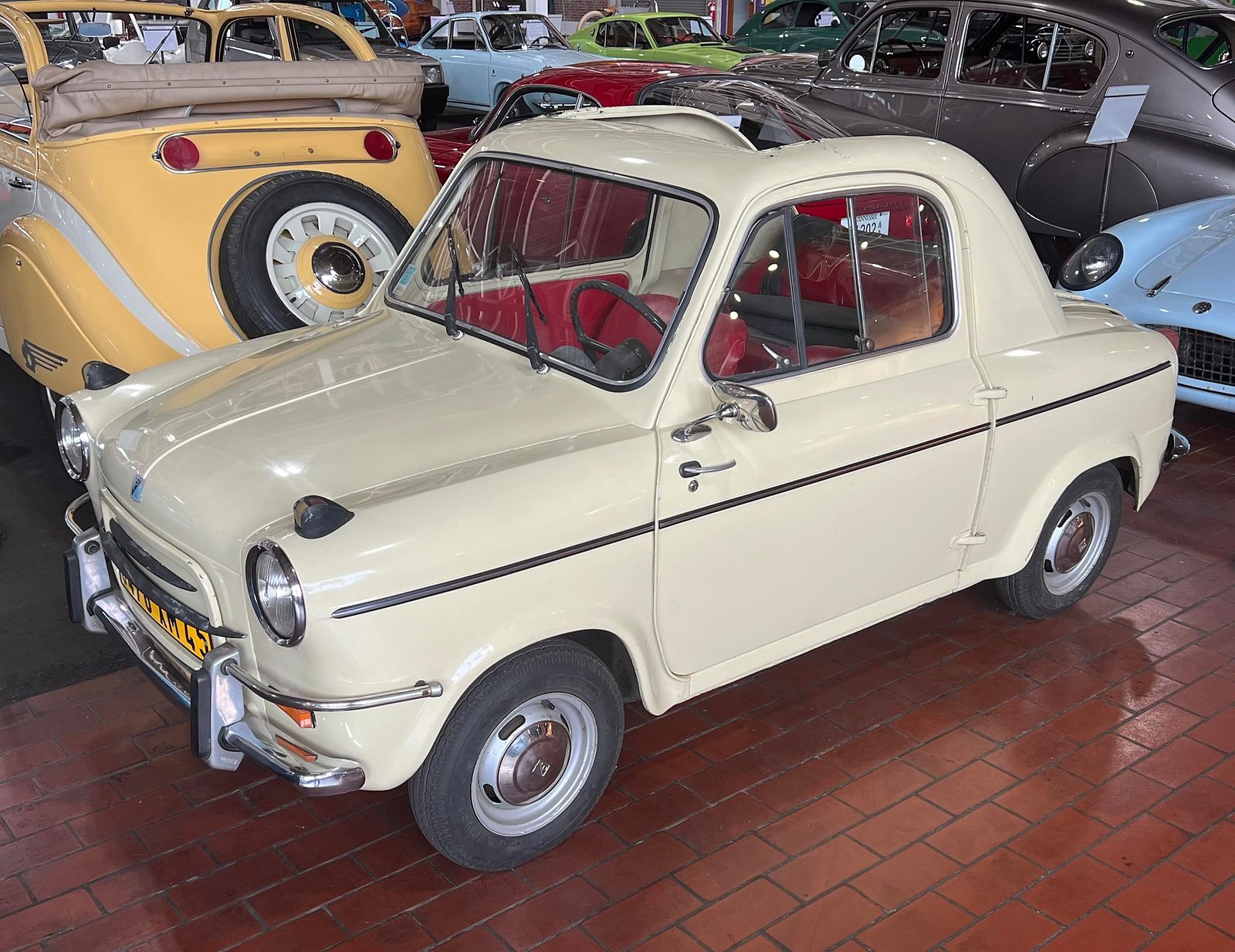
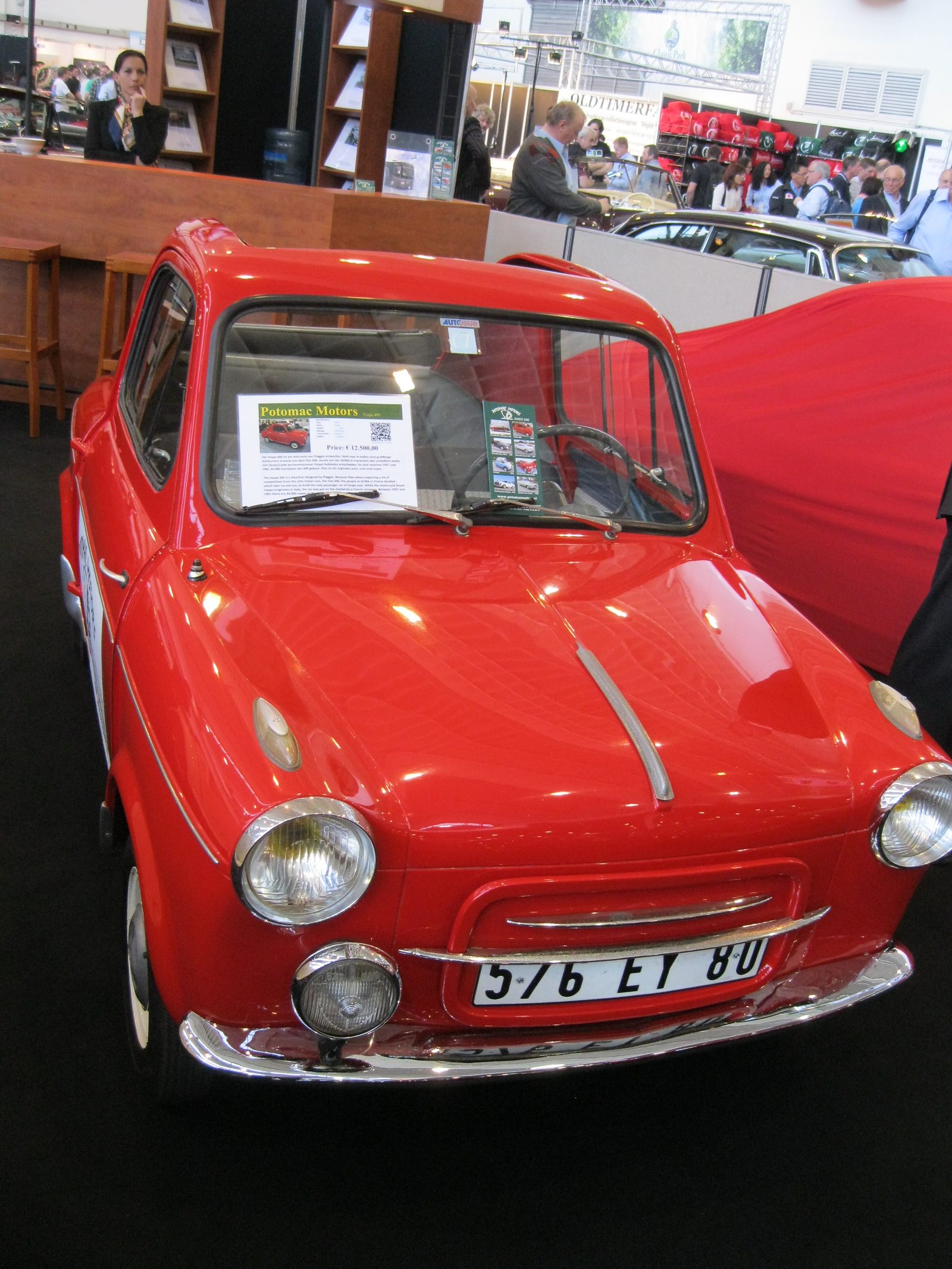
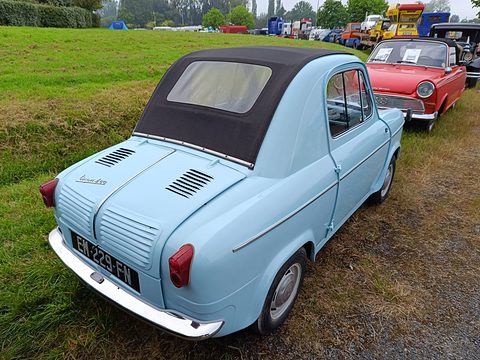
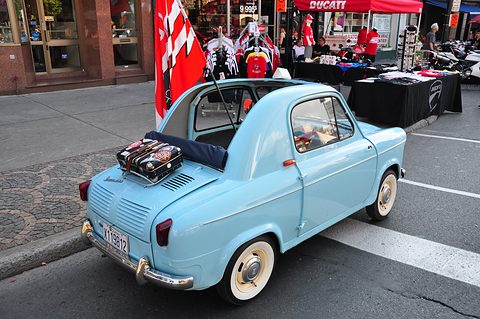
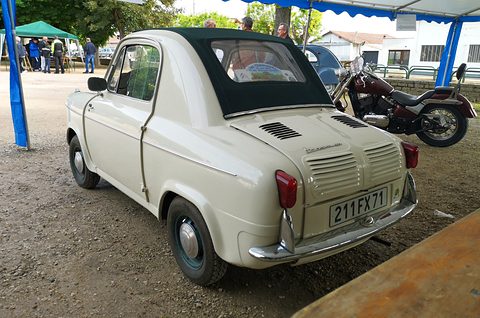
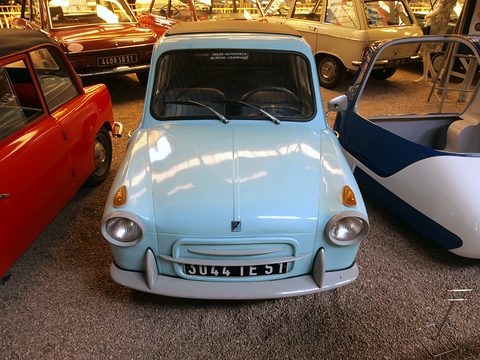
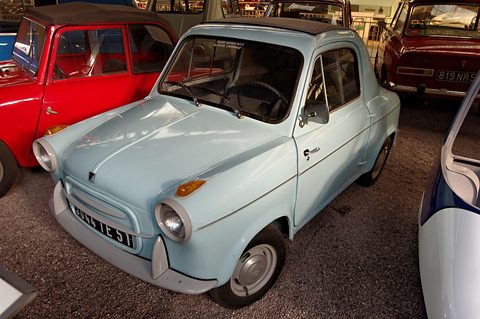
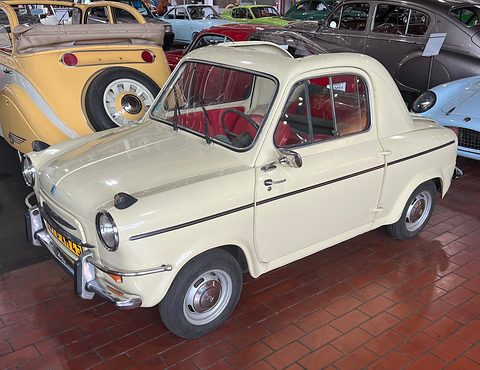
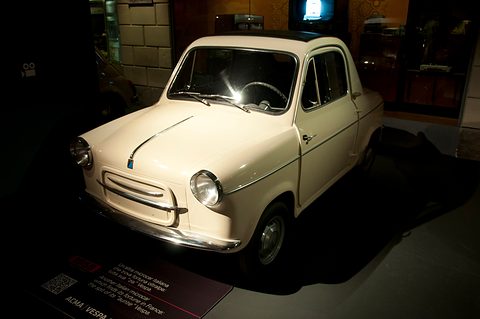
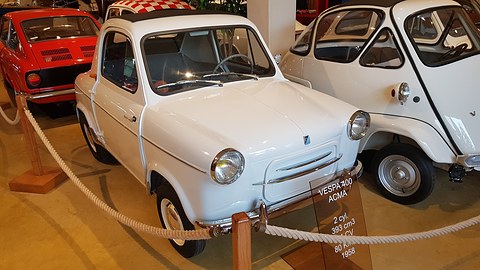
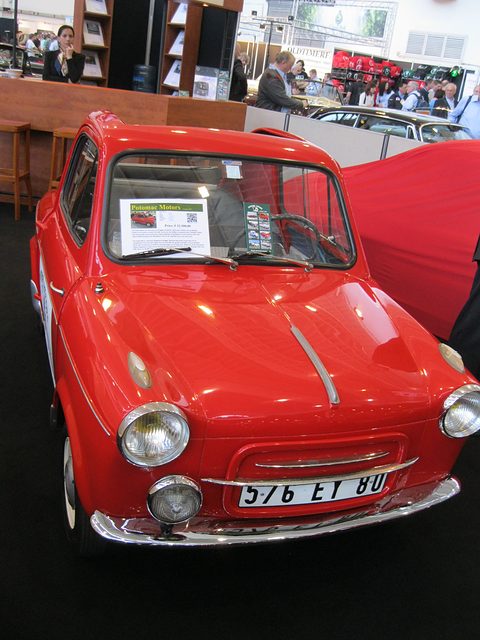
The scooter maker’s car, designed in Italy and built in France, so as not to provoke Fiat: a little two-stroke saloon with a roll-back roof and its battery in a drawer behind the grille, launched with two Grand Prix drivers at its side.

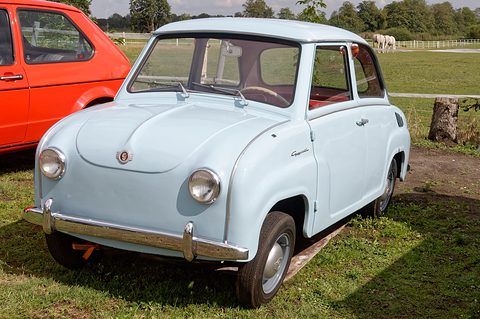
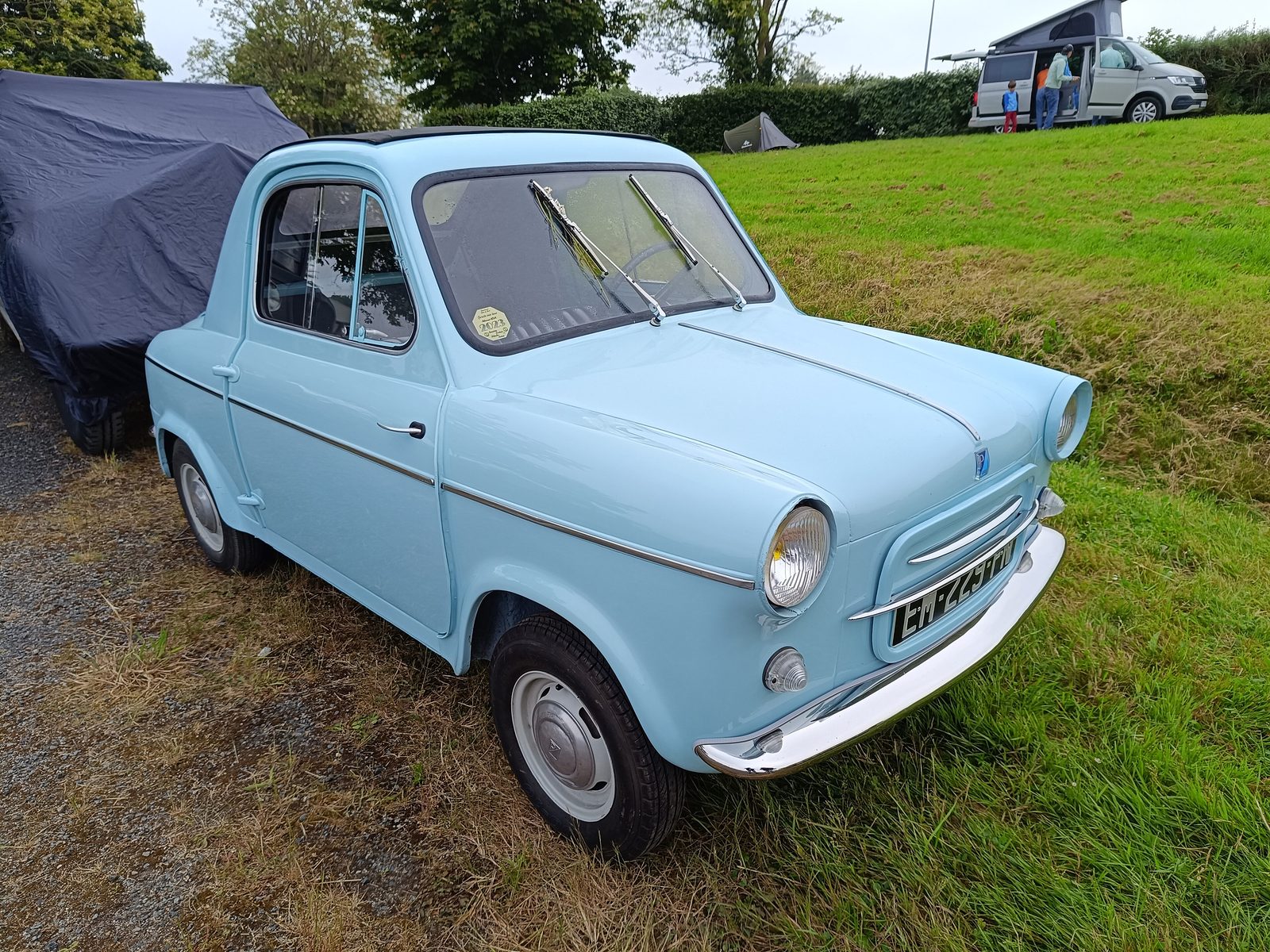
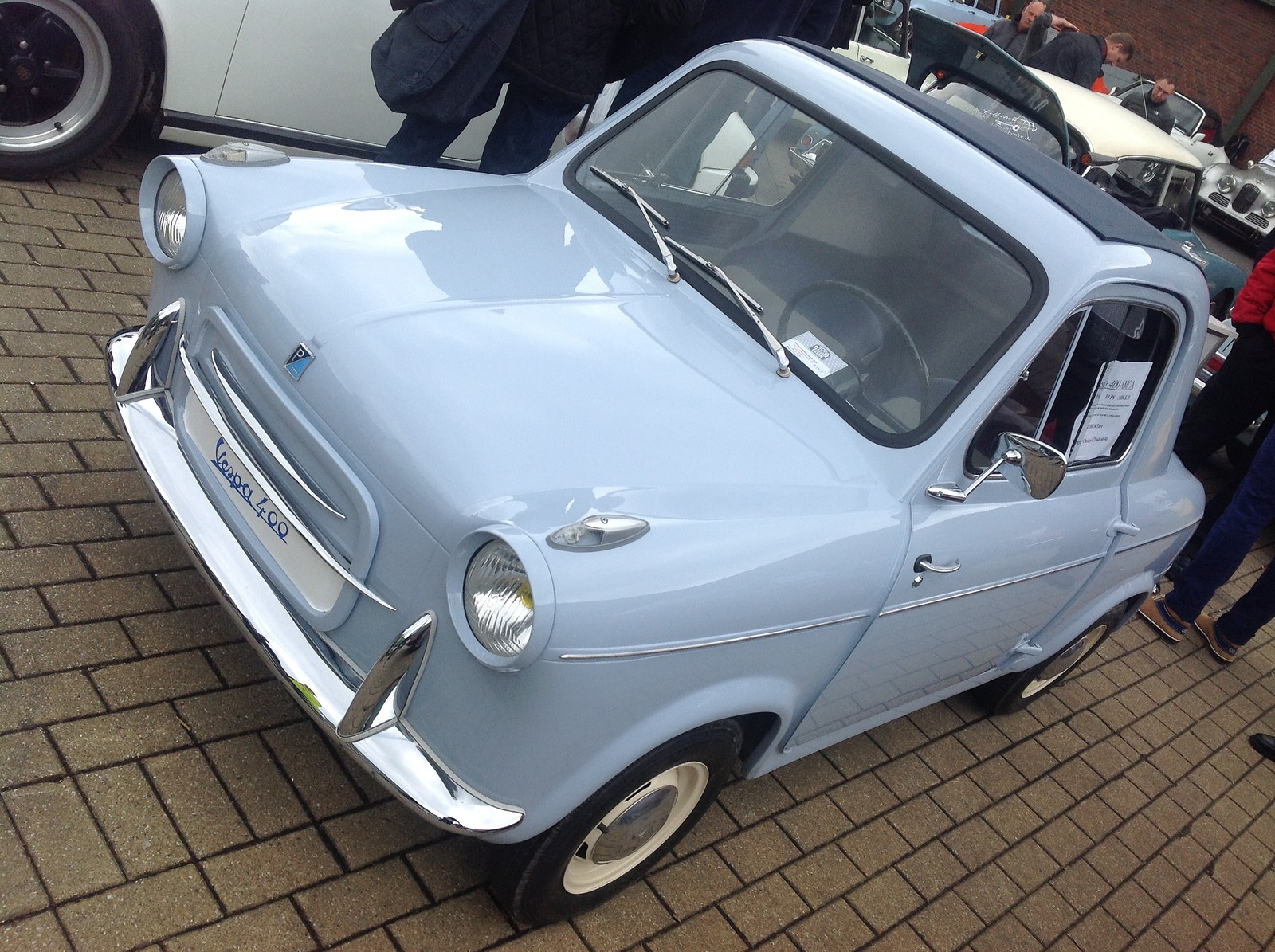
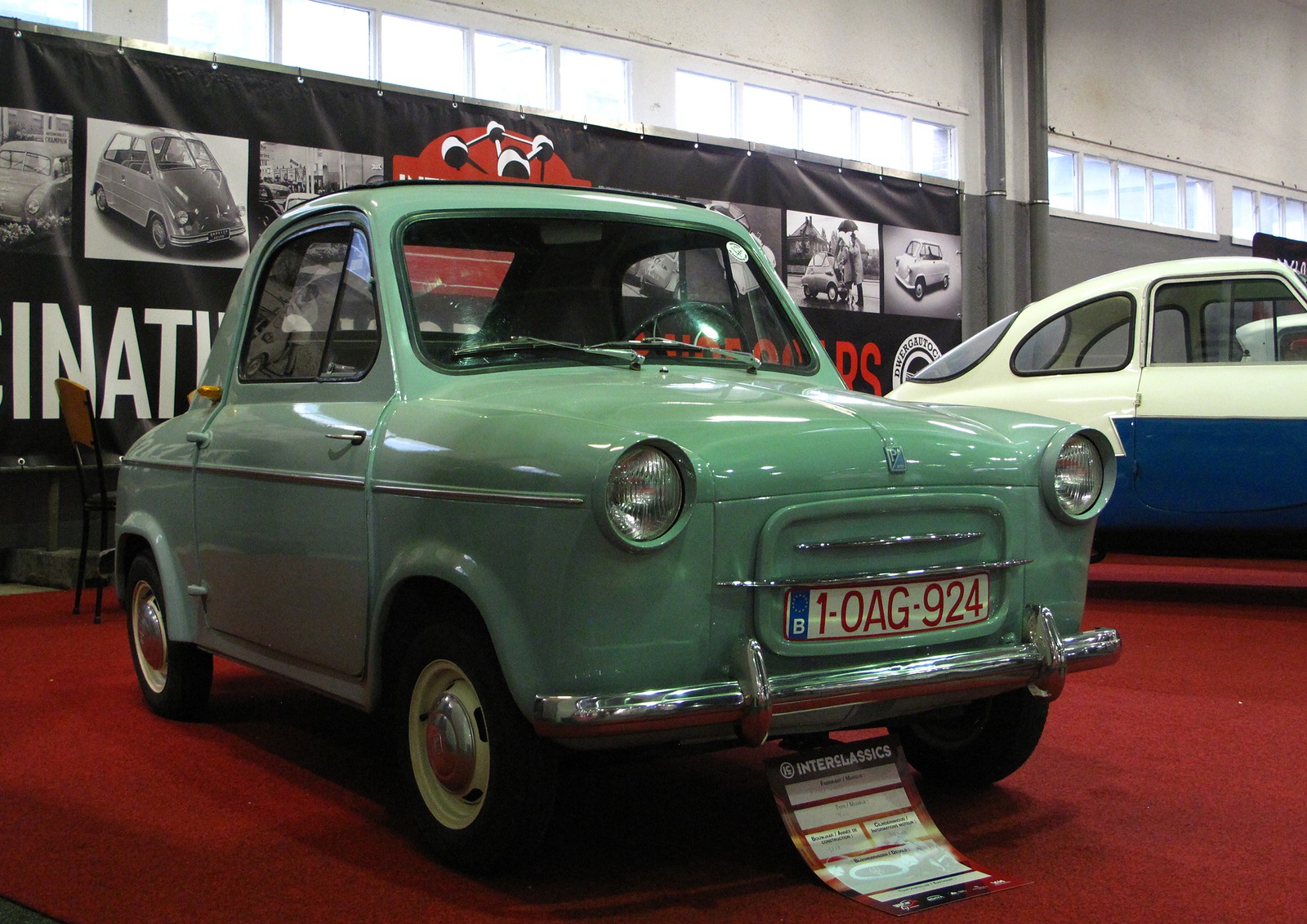
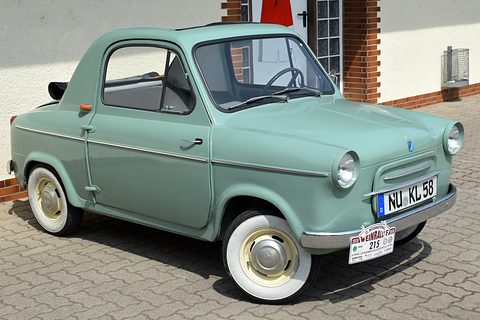
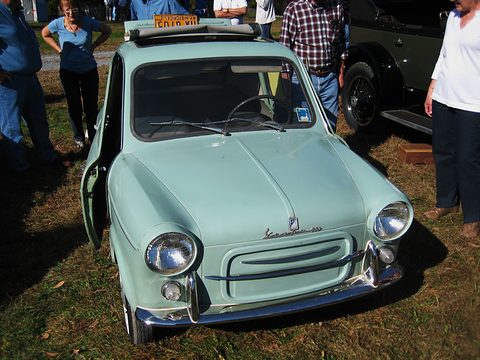
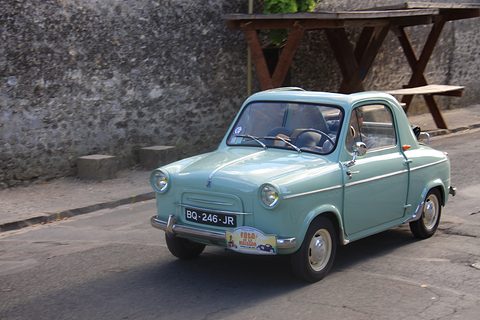
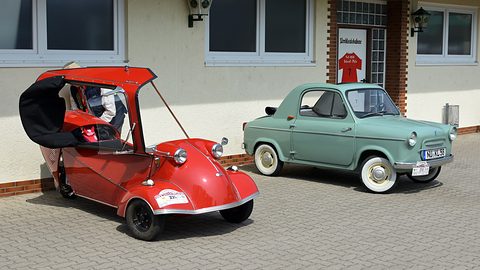
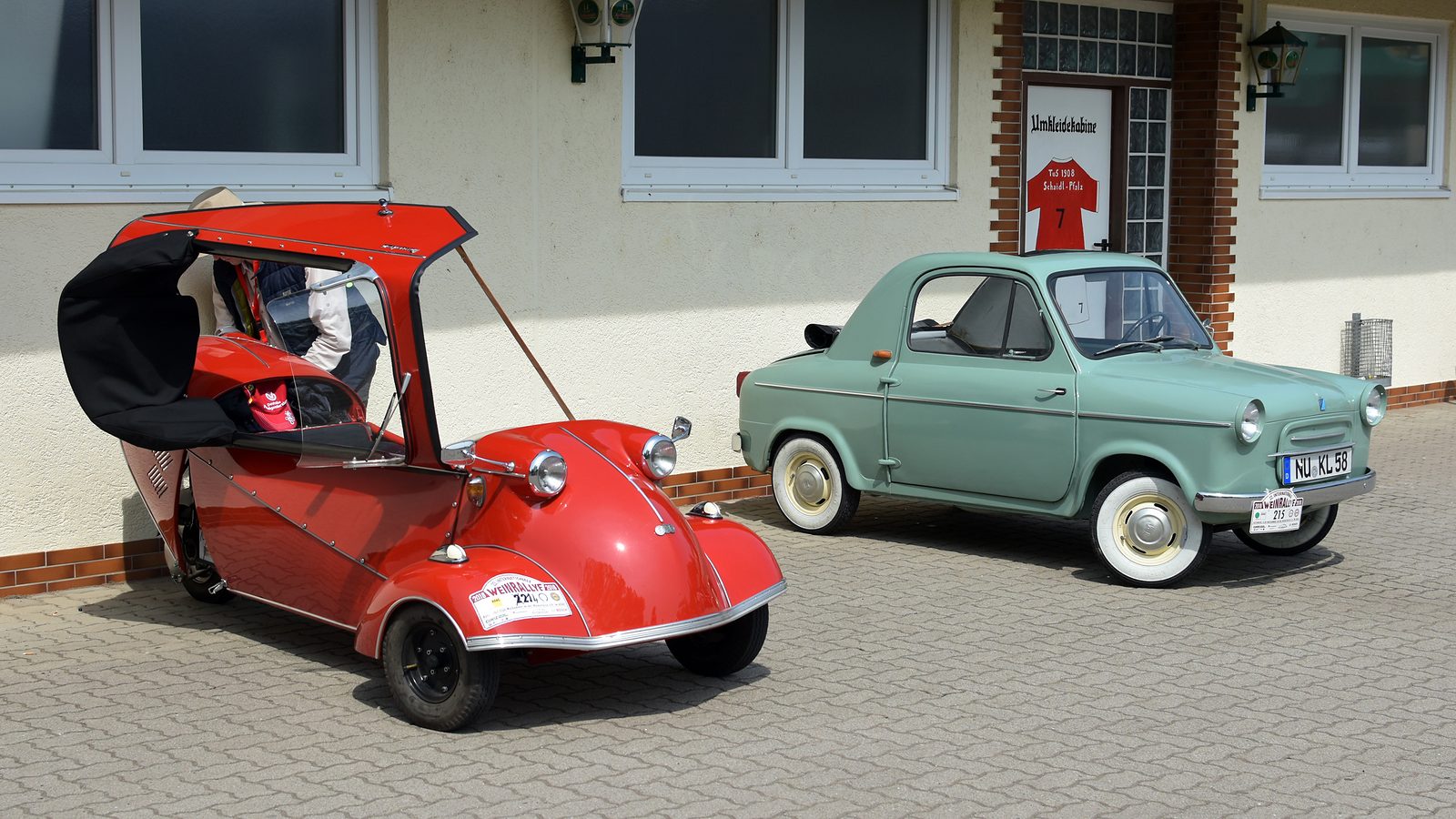
Mint green small car with whitewall tyres and a rally plaque under its bumper, on block paving by a house.
A green 1958 Vespa 400 with whitewall tyres on German plates in 2018.Photo: BlueBreezeWiki, CC BY-SA 3.0, via Wikimedia Commons

At a glance

The spec plate

Vespa 400

P/ACMA · Fourchambault

Built
1957–⁠1961Shown to the press on 26 September 1957; built until 1961
Country
FranceBuilt by ACMA at Fourchambault, Nièvre, to Piaggio’s Italian design
Maker
ACMA, FourchambaultPiaggio’s French subsidiary, maker of French Vespa scooters since 1951
Engine
393 cc two-stroke twin, at the rearAir-cooled by a turbine, with rotary-valve induction
Power
12 to 14 hpAbout 9–10 kW; 14 hp from 1959, the sources mixing DIN and SAE
Length
2,850 mm1,270 mm wide, 1,250 mm high
Weight
360 kgBy the 1958 brochure; 380 kg in other sources
Seats
2Room behind for luggage or, at a pinch, a child
Wheels
4Rear engine, rear-wheel drive, independent suspension all round
Price new
345,000 FThe Tourisme, October 1957; Automobilia gives 360,000 F
Production
30,9761957–⁠61, credited to L’Argus; 29,873 by another count
Survives
YesA club since 1992; owners on five continents
Top speed
83km/h83 km/h51.8 mph; about 85–90 km/h by the French Wikipedia

How big is it?

True proportion

2.85 m

It is 120 mm shorter than a Fiat 500, about 1.6 adults laid end to end, and twice the length of a Peel P50.

  • 1.27 m wide
  • 360 kg: about five adults
  • Two seats, and room behind for luggage or a child
  • Rear-hinged doors
Drawn at true proportion. The track is 3.6 metres long; the adult stands at the same scale. The Peel P50 is the smallest production car, on every page for comparison.

The story

History

The cover of L’Action automobile et touristique for October 1957 shows three small cars on a harbour quay among yachts, one blue, one white and one red, with Juan Manuel Fangio and Jean Behra beside them. The caption says it was taken during the official presentation.source 1 The car was the Vespa 400, and its makers had chosen its godfathers well.

Piaggio, the maker of the Vespa scooter, wanted a car for scooter riders ready to move up to four wheels.source 1source 2 The start came from Siata of Turin, which Piaggio had taken over, according to Automobilia. Siata had developed a study called the Mitzi: a two-seat monocoque with a 434 cc side-valve four-stroke twin at the back, weighing 395 kg (871 lb) and good for 80 km/h (50 mph).source 1 Jacques Vuillaumier tells it slightly differently: Siata could not get an engine from Fiat and sold its study to Piaggio, which fitted a 400 cc engine derived from the Piaggio Ape, its three-wheeled scooter truck.source 2 When the work began is not agreed: RM and the Weiner museum say 1952, the German Wikipedia 1955.source 3source 4source 5

Fiat stood in the way. It dominated the Italian small-car market, its Nuova 500 was due in the summer of 1957, and it supplied the sheet steel for Piaggio’s scooters. Fiat disliked the idea of a rival, and Piaggio gave up building the car in Italy.source 1source 3 Some writers say Fiat leaned on Italian component suppliers. That is not documented. Vuillaumier says only that it probably did, and that it was even said at the time that Fiat would launch a scooter if Piaggio made a car.source 6 So the Vespa 400 became an Italian design built under licence by a French subsidiary.

Fourchambault

That subsidiary was ACMA, founded in the autumn of 1950 to assemble Vespa scooters in France, with Prince Marc de Beauvau-Craon as its president. It took over a denationalised aircraft factory of the SNCAC at Fourchambault, in the Nièvre, hired 300 workers, and sent out its first scooters in March 1951: nearly 9,000 that year and more than 28,000 the next, by then entirely French-made. By the end of 1956 it had built more than 240,000 Vespas and 4,000 Ape three-wheelers.source 1 When the car arrived, Automobilia says, the works employed about 2,000 people and made 250 scooters a day, and the dealer network had 1,200 agents; RM gives 260 a day and nearly 3,000 staff.source 1source 3

The car was meant to fill a hole. In 1957 French sales of motorcycles, scooters and mopeds over 50 cc collapsed: the Algerian war kept young men in uniform, Suez brought fuel rationing, VAT went up twice, insurance was dear, and from 1 April 1958 a licence would be needed to ride a 125.source 1 It was French almost to the last part. Only the cast aluminium pistons, by Borgo, came from Italy; the body was made by Facel at Dreux, with a Solex carburettor, Ducellier ignition, a Paris-Rhône starter and dynamo, Auteroche lamps and Ronis locks.source 2source 6source 1

Out of hiding

Prototypes were built during 1956 and tested at night on the factory’s track and the roads around it, and apparently in Germany too.source 1 From the spring of 1957 ACMA’s press men lifted the veil a little at a time. L’Automobile ran two short items in May and June under the heading “La voiture 2 CV Vespa sort de la clandestinité”, the 2CV Vespa comes out of hiding, and that summer a big weekly caught a group of finished cars, still called V2, being run on quiet roads in the Forez. Automobilia wonders whether that was really a surprise.source 1

The press launch was on 26 September 1957. Where is disputed: Vuillaumier, ma-vespa-400.com and the club say the Pré Catelan restaurant in the Bois de Boulogne, Paris; RM and the English Wikipedia say Monaco.source 2source 6source 7source 3source 8 The French Wikipedia has both, Paris first and then a showing to the press at Monte Carlo, and says the first three cars wore the colours of the flag.source 9 Automobilia names Behra and Fangio as the car’s sponsors, and RM adds Louis Chiron.source 1source 3 At the 44th Paris Salon, from 3 to 13 October 1957, ACMA took stand 37 as a new car maker, and the little car was the star of the show.source 1source 3source 2 The Tourisme cost 345,000 F and the Luxe 365,000 F, by Vuillaumier’s figures; Automobilia gives 360,000 and 380,000 F. The engine was guaranteed for 50,000 km.source 2source 9source 1

A thoroughbred 2CV

Une « 2 CV racée » aussi agréable pour le travail et les voyages, que pour les courses en ville d’une femme élégante.

ACMA’s 1958 brochure, reproduced in Automobilia no. 34. In English: “A ‘thoroughbred 2CV’, as pleasant for work and travel as for an elegant woman’s shopping in town.”source 1

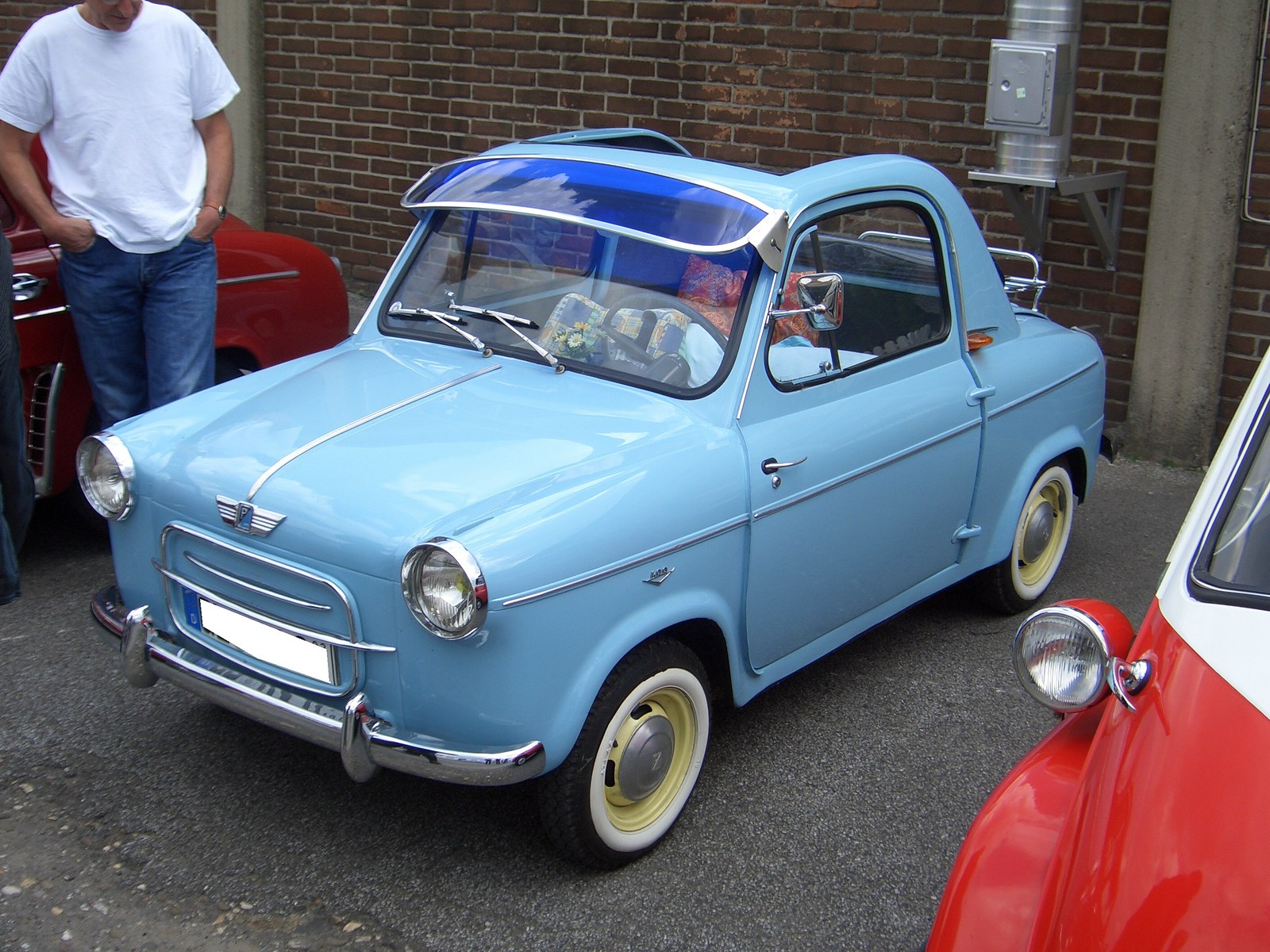
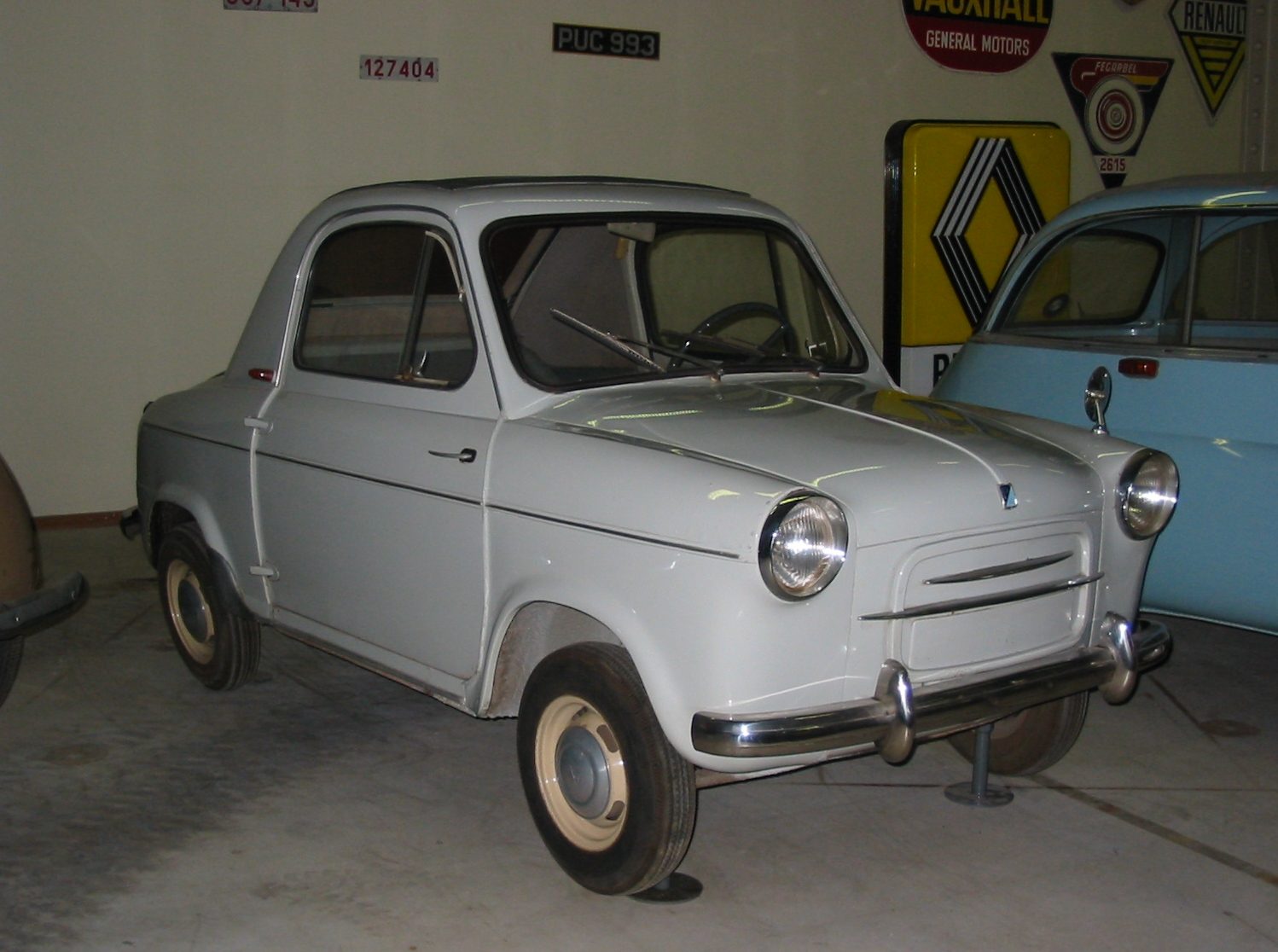
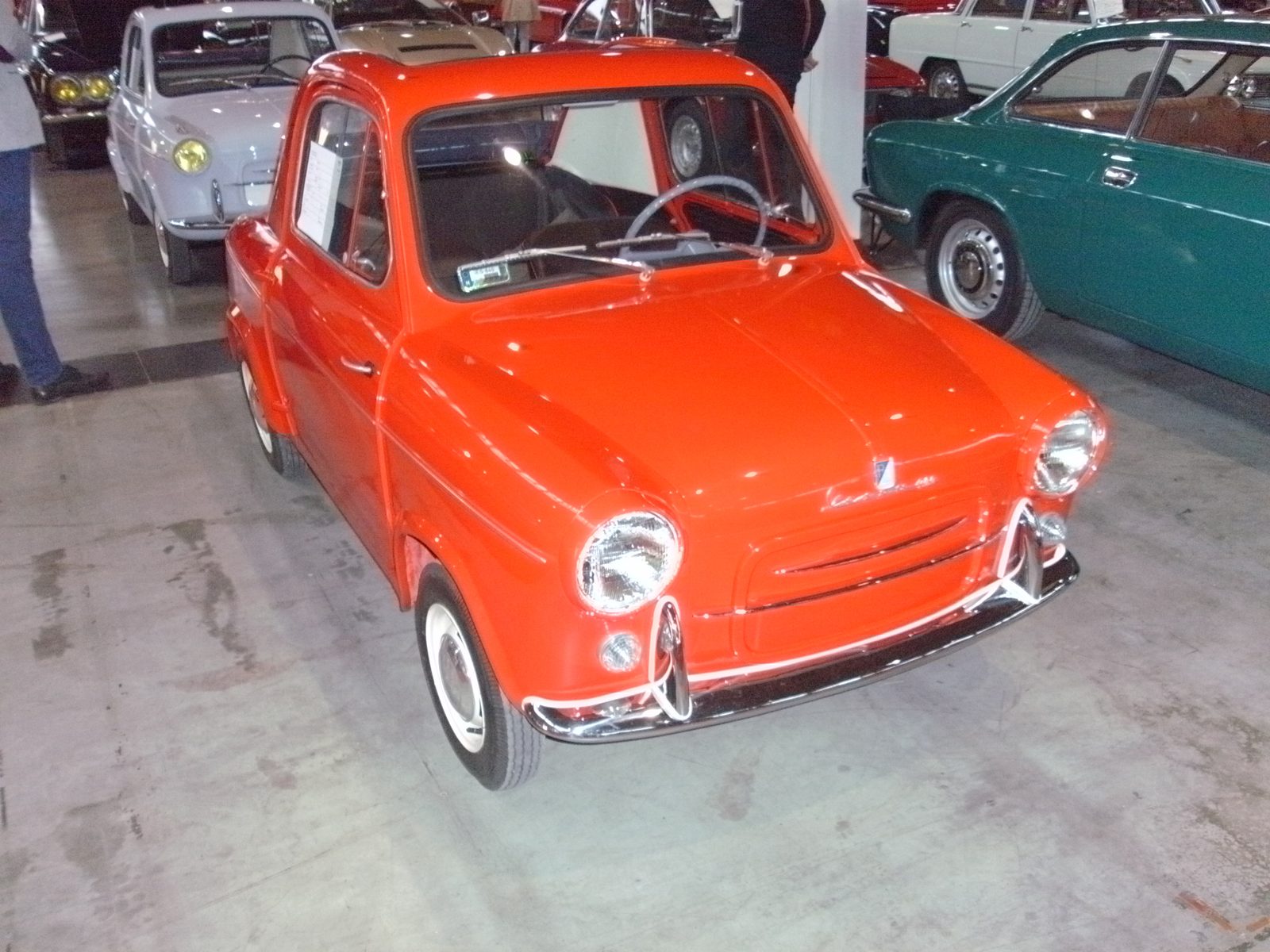
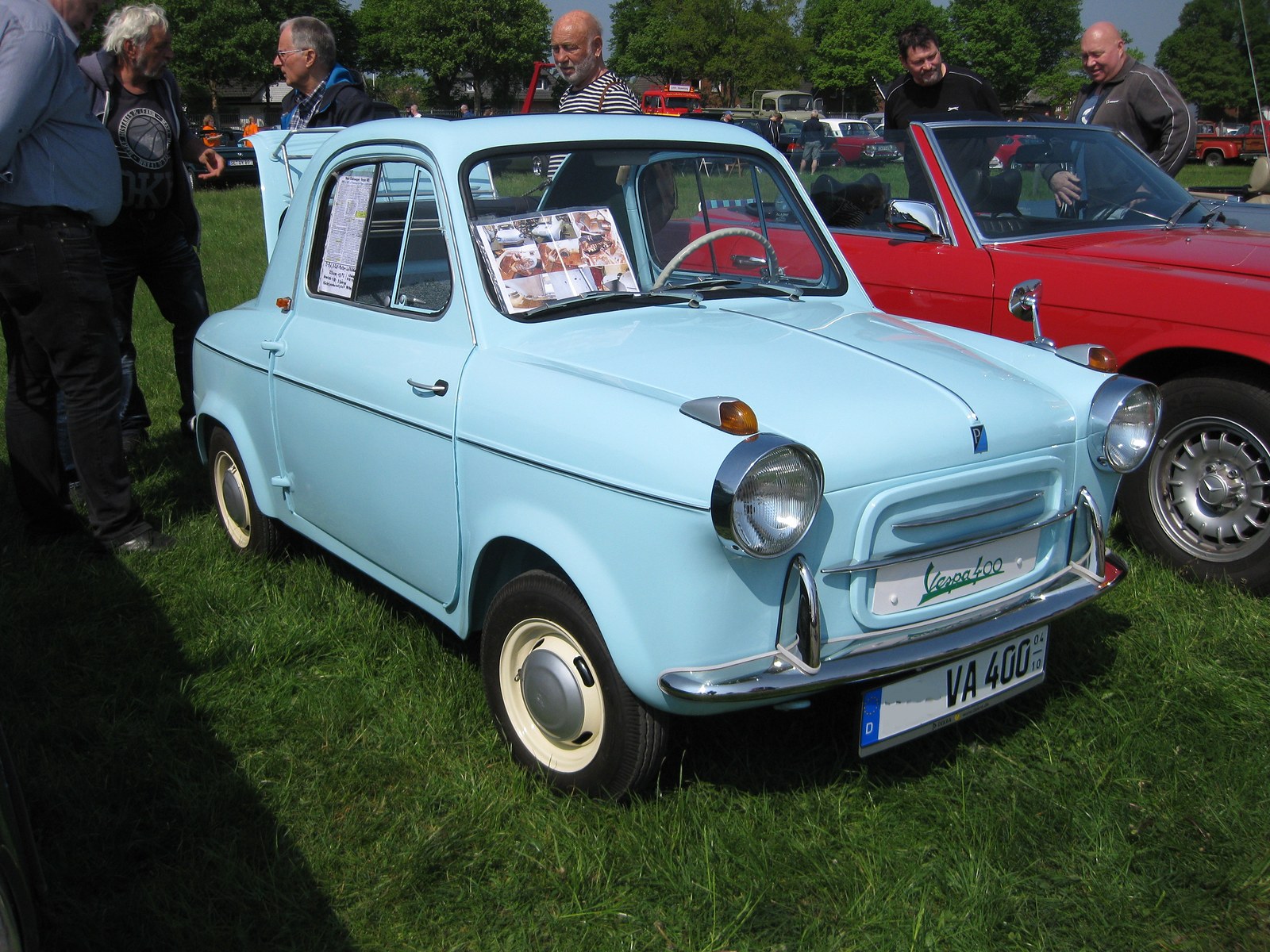
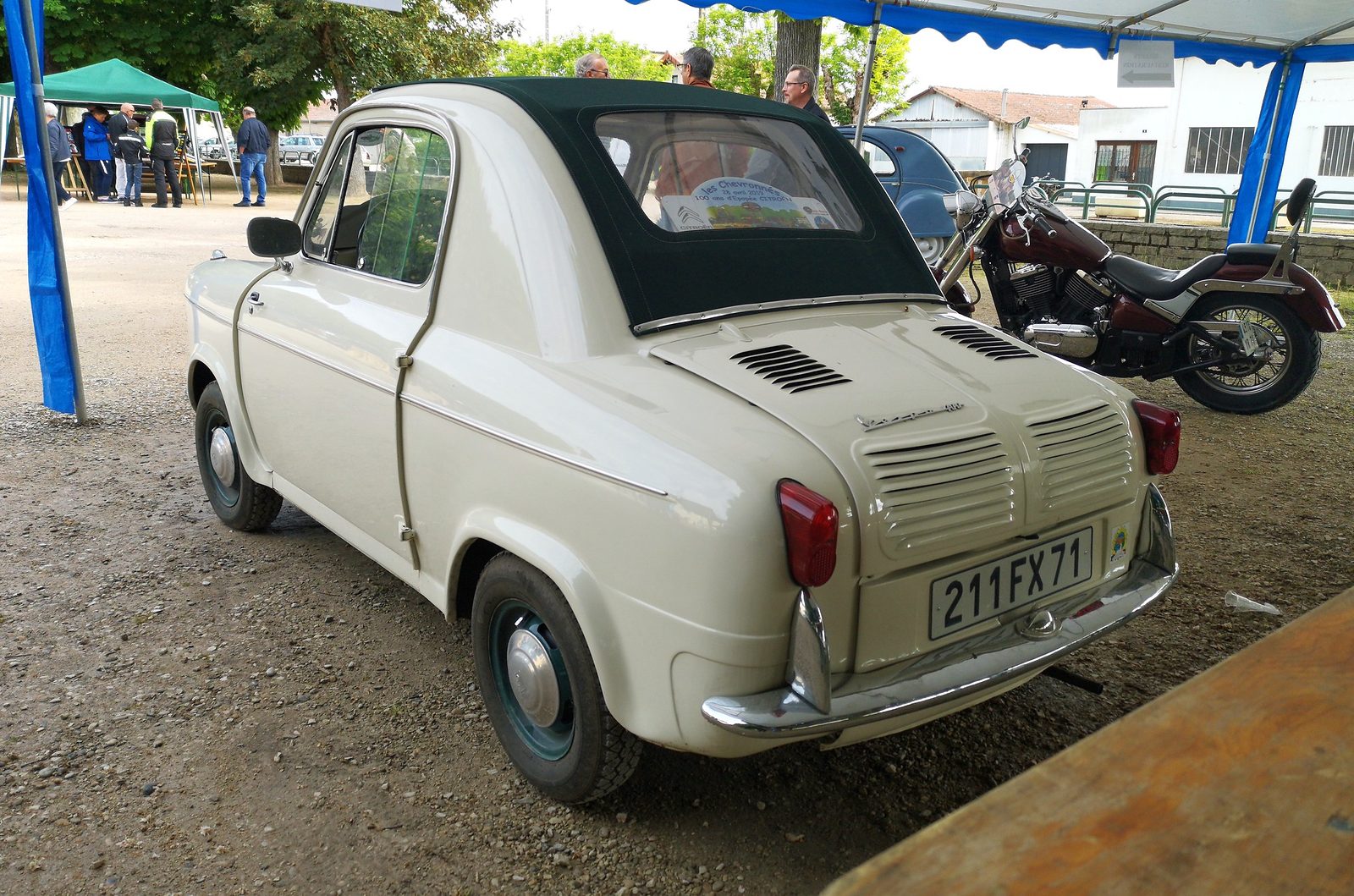
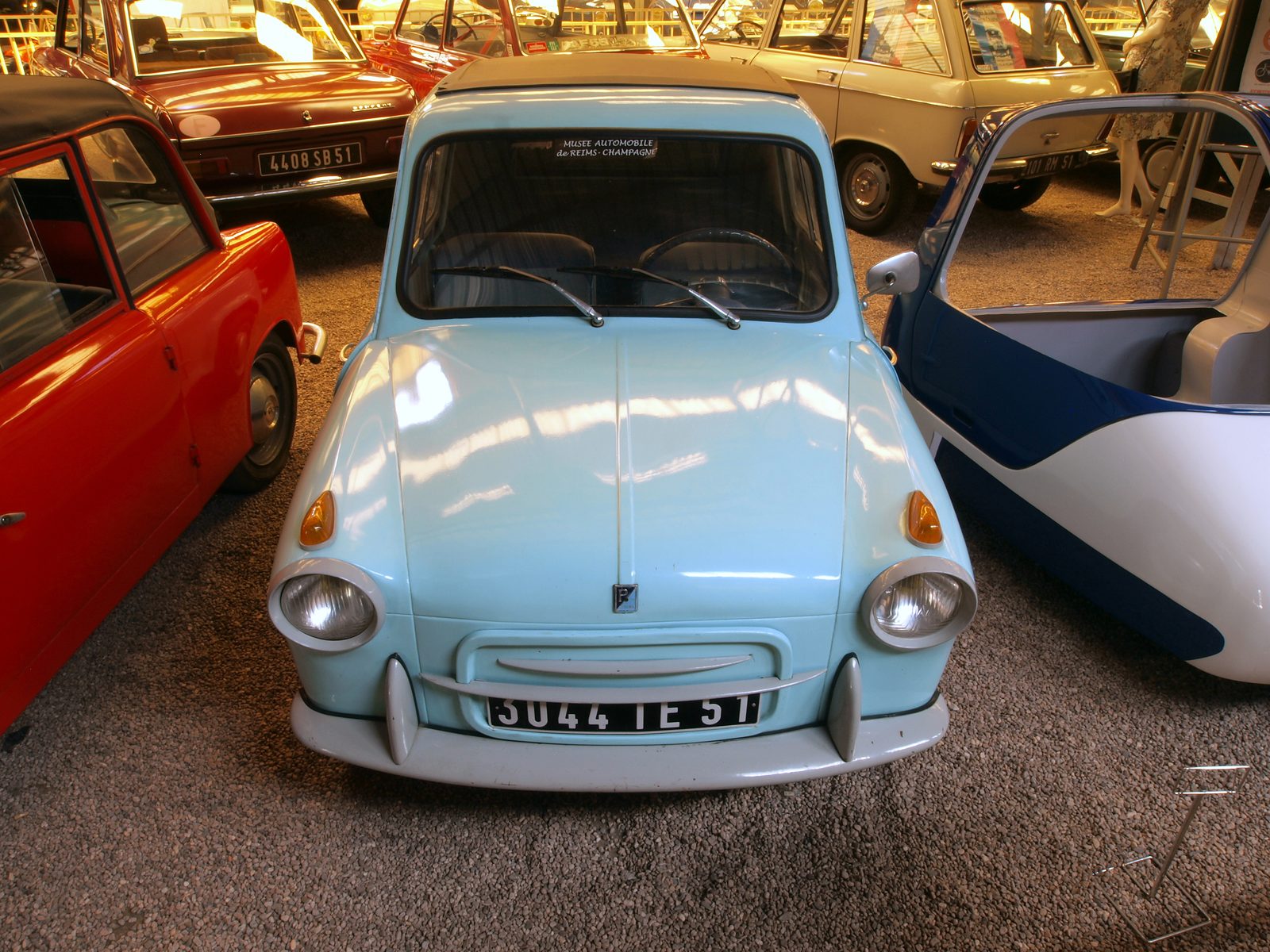
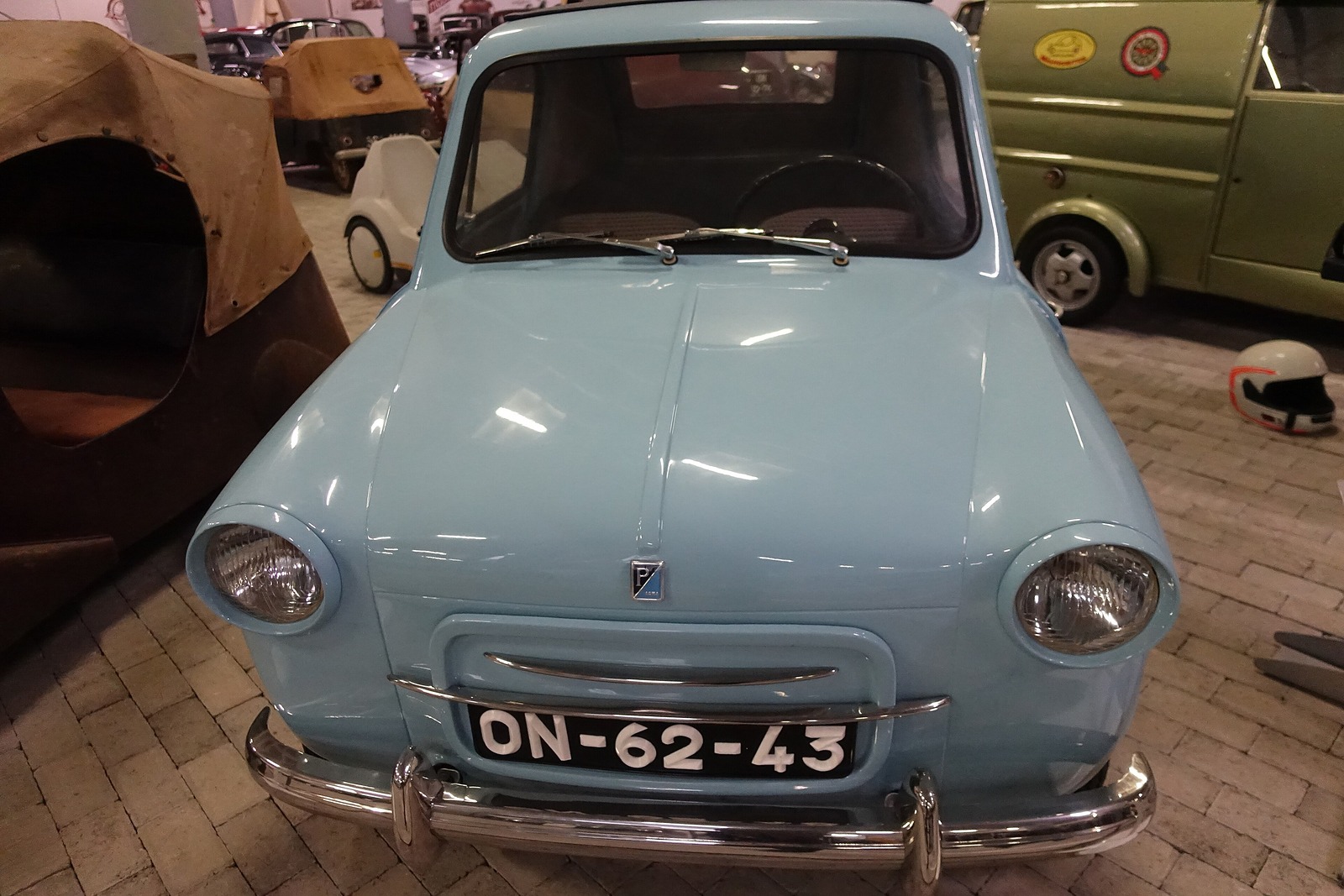
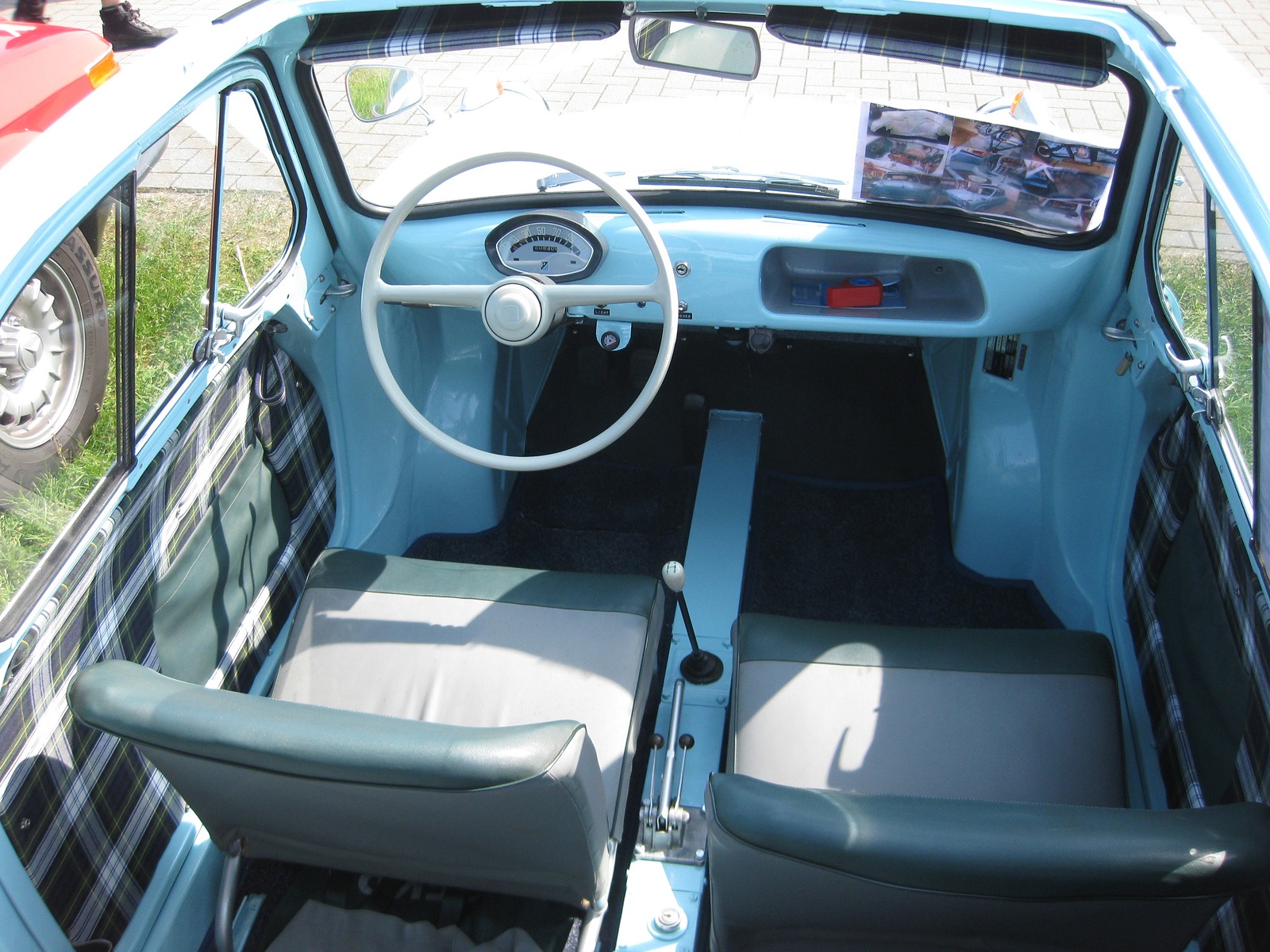
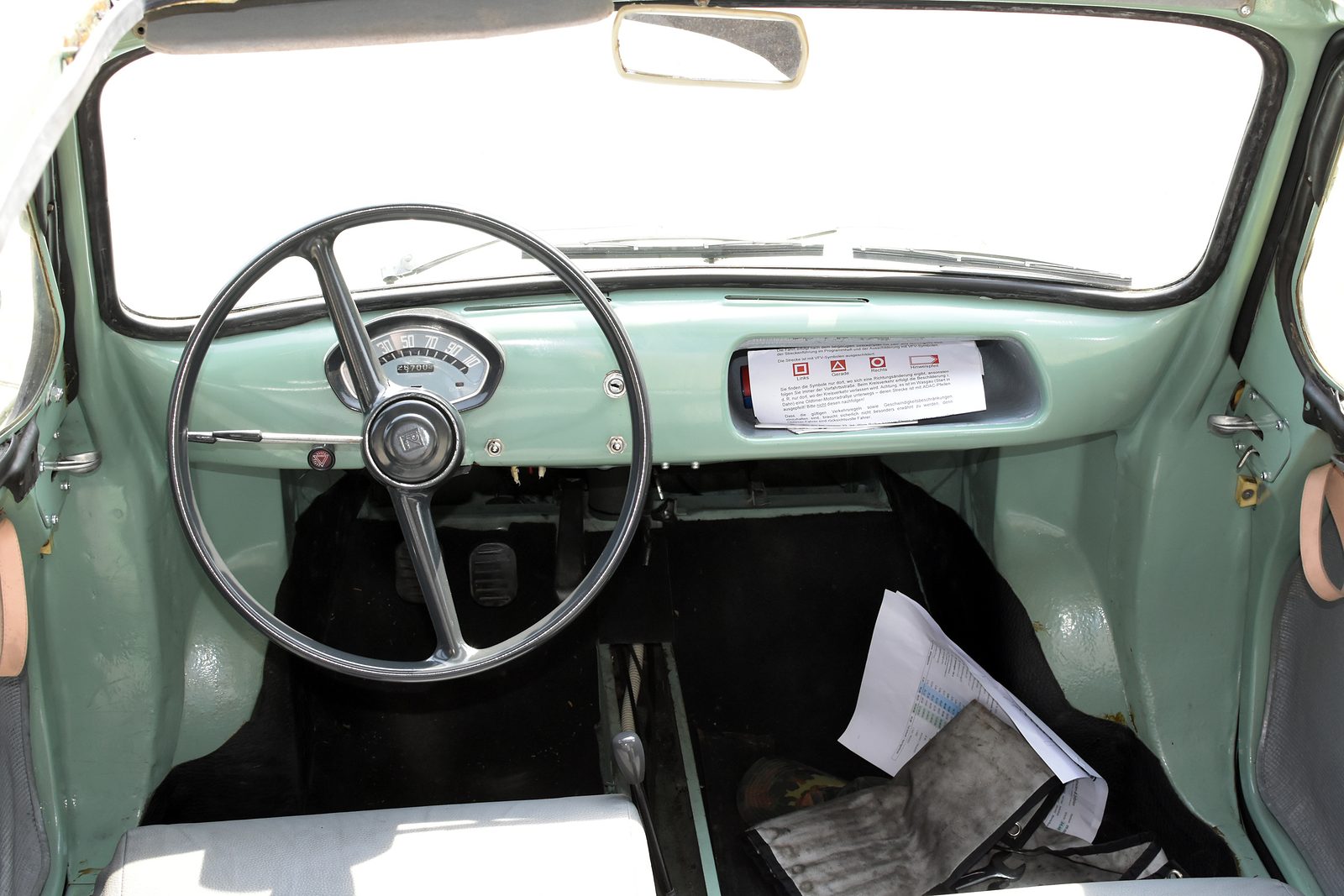
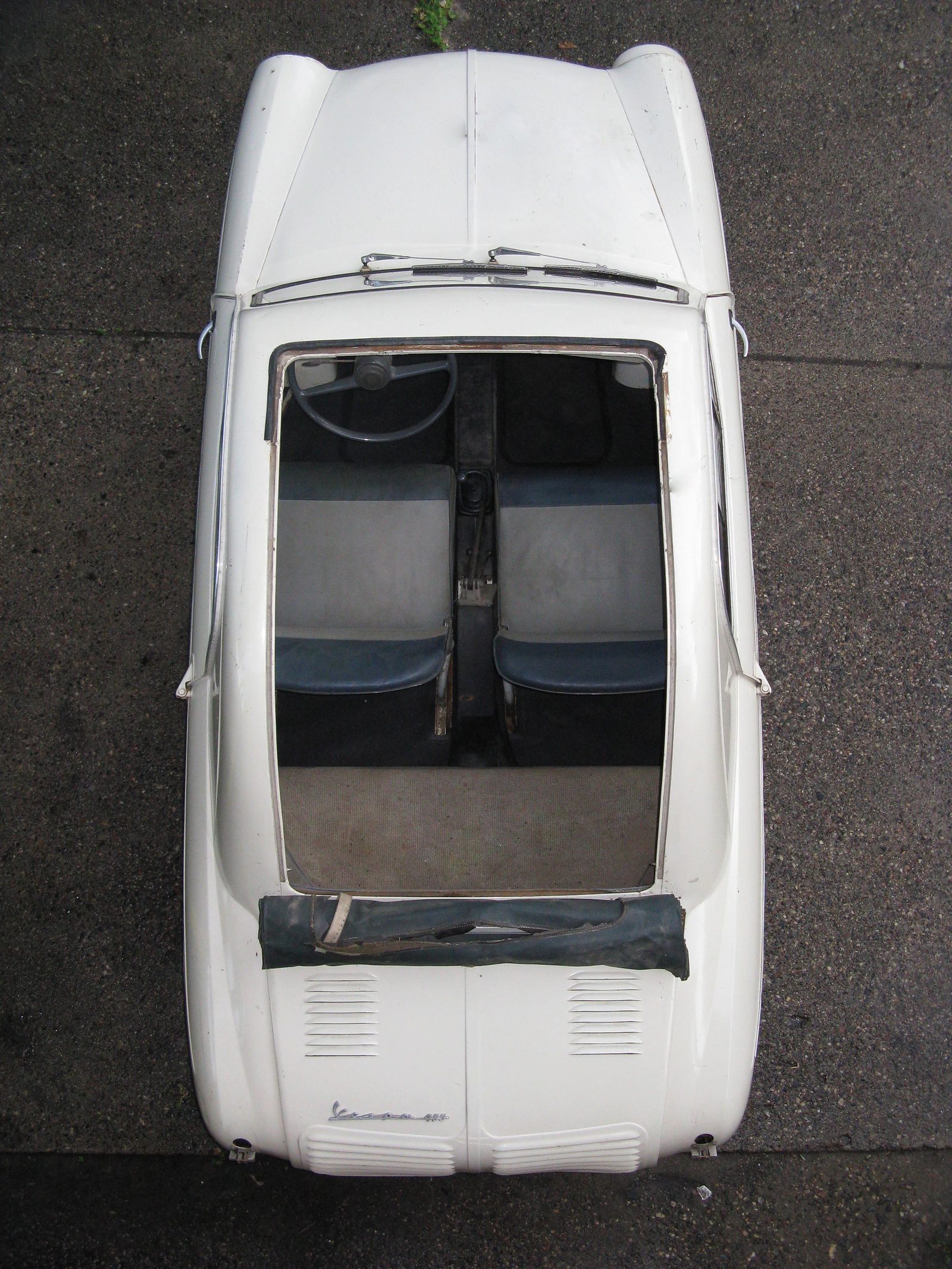
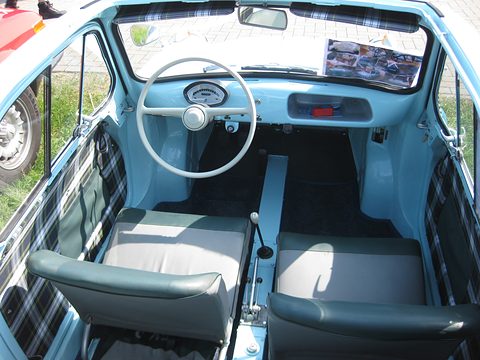
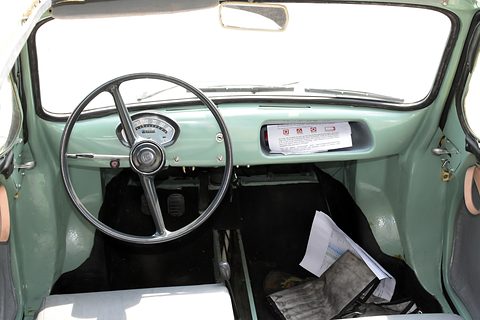
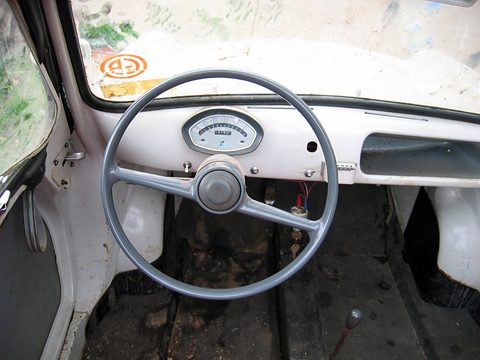
It was a clever piece of engineering. The steel shell was held together by 3,000 spot welds, every wheel was independently sprung, and the twin at the back breathed through a rotary valve.source 1source 8 There was no boot in the nose; the empty space gave the occupants leg room, and behind the false grille the battery and the brake reservoir sat on a drawer that slid out. The spare wheel lived under the passenger seat, which folded completely flat to reach it or to carry something bulky, and hot air from the engine’s cooling turbine could be turned into the cabin as a heater.source 1source 8 The roof was fabric and rolled back, and the two doors were hinged at the rear; Automobilia notes that they open, unfortunately, the wrong way.source 1source 5 Behind the two seats was room for luggage or, at a pinch, a child.source 1 Even the horn had two tones, one for town and one for the open road, and the town one, ma-vespa-400.com says, was more a comic toy than a real tool.source 6

The testers of the specialist magazines, Automobilia says, agreed that it did not lack qualities: it was lively, comfortable, held the road well and was pleasant to drive. Against it they set the three-speed gearbox, doubtful sealing, a fiddly roof and door bottoms that scraped the kerb when parked.source 1 A scooter magazine’s long-term test went further.

… une tenue de route étonnante et à un comportement pouvant être qualifié de sportif.

An unnamed scooter magazine’s long-term test, late 1950s, as quoted in Automobilia no. 34. In English: “… astonishing roadholding and behaviour that could be called sporting.”source 1

It had its faults. Changing down into first, at 10 to 15 km/h, needed a double declutch. It drank 6 litres of mixture per 100 km driven gently and up to 8 pressed, where the Citroën 2CV used 5.7 and the Renault 4CV 7.2, and both of those had four real seats; and its price was not far below theirs.source 1source 8 The fuel was a two-stroke mix of 2 per cent oil, and at first owners mixed it themselves. RM says ACMA feared careless 20:1 fill-ups at the pump.source 1source 3 In July 1958 a hand-cranked mixer arrived, to be refilled every 200 km: after filling up, the driver turned the crank once for every litre of petrol taken on.source 1source 2

Year by year

1958 was the peak, with 12,130 cars built.source 6source 8 The seats were padded to the top, and the smooth chromed bumpers gave way to ribbed stainless ones.source 2 The English Wikipedia, citing Automobilia’s annual, says the basic car was cut from 345,000 F to 319,500 F by October 1958.source 8 For 1959 came the much-requested sliding windows, indicators on the front wings, wrap-round bumpers, an aluminium cooling turbine and the Type II engine, with new heads and more power, 14 hp in place of 12.source 2 In April 1959 three Vespa 400s went with Georges Monneret, riding a Vespa 150 scooter, on his raid from Algiers to Hassi Messaoud. Vespa 400s also worked the fairground wall of death, with their suspension reinforced against the force of the ride.source 1

The advertising tried everything. In May 1959 ACMA billed it as the cheapest French car, and offered any Vespa scooter owner a trade-in towards one; in 1960 it sold it to women.source 1

Vespa 400, la voiture idéale pour la femme… racée, nerveuse, rapide, économique, elle se faufile, se gare incroyablement.

ACMA advertisement, 1960, reproduced in Automobilia no. 34. In English: “Vespa 400, the ideal car for a woman… thoroughbred, lively, fast, economical; it slips through traffic and parks incredibly.”source 1

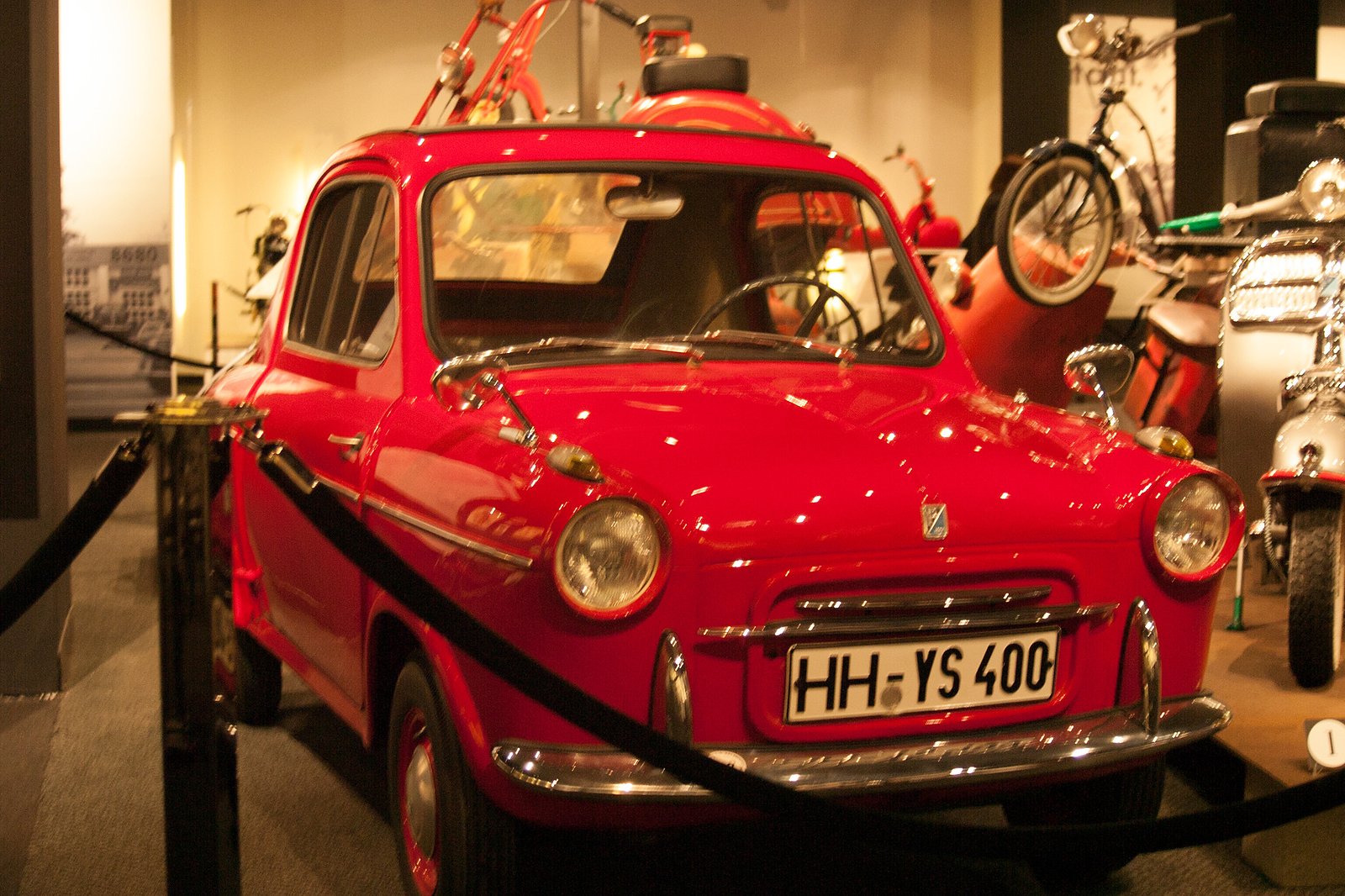
America got its own version, with big sealed-beam headlamps; RM counts 514 sold there in 1959 and 1,138 in 1960, at two-thirds the cost of a Volkswagen.source 3 At the Paris Salon of October 1960 ACMA showed the Luxe 61 at 3,550 new francs and a Grand Tourisme, with four speeds, an automatic oil mixer, whitewall tyres and more chrome.source 2source 1 The French Wikipedia adds about ten Esterel beach cars by the coachbuilder Pichon-Parat of Sens, open, with seats of rattan or plastic cord and a sun awning, on the standard mechanicals.source 9

The end of ACMA

The works had been planned for 200 cars a day. Even in 1958 it never built more than about 50.source 1source 2 By the end of 1959, Automobilia says, the failure was plain to see, and it gives the reasons: a two-stroke engine with oil to be mixed, which French buyers had always disliked; a thirst out of proportion to its size; and a price barely below those of its formidable rivals from Citroën and Renault.source 1 The site ma-vespa-400.com thinks it would have done better with a real dealer network behind it.source 6 In 1961 only 1,849 were built, fewer than 200 of them GTs and about 60 with right-hand drive, and production ended that year.source 2source 1 ACMA’s workshops closed for good on 31 December 1962, and Simca Industries took over the plant.source 2source 9source 1

Durant toute sa courte carrière, la Vespa 400 est certes la plus petite, mais non la moins élégante des voitures françaises.
Jean Goyard, Automobilia no. 34, February 1999. In English: “Throughout its short career the Vespa 400 was certainly the smallest, but not the least elegant, of French cars.”source 1
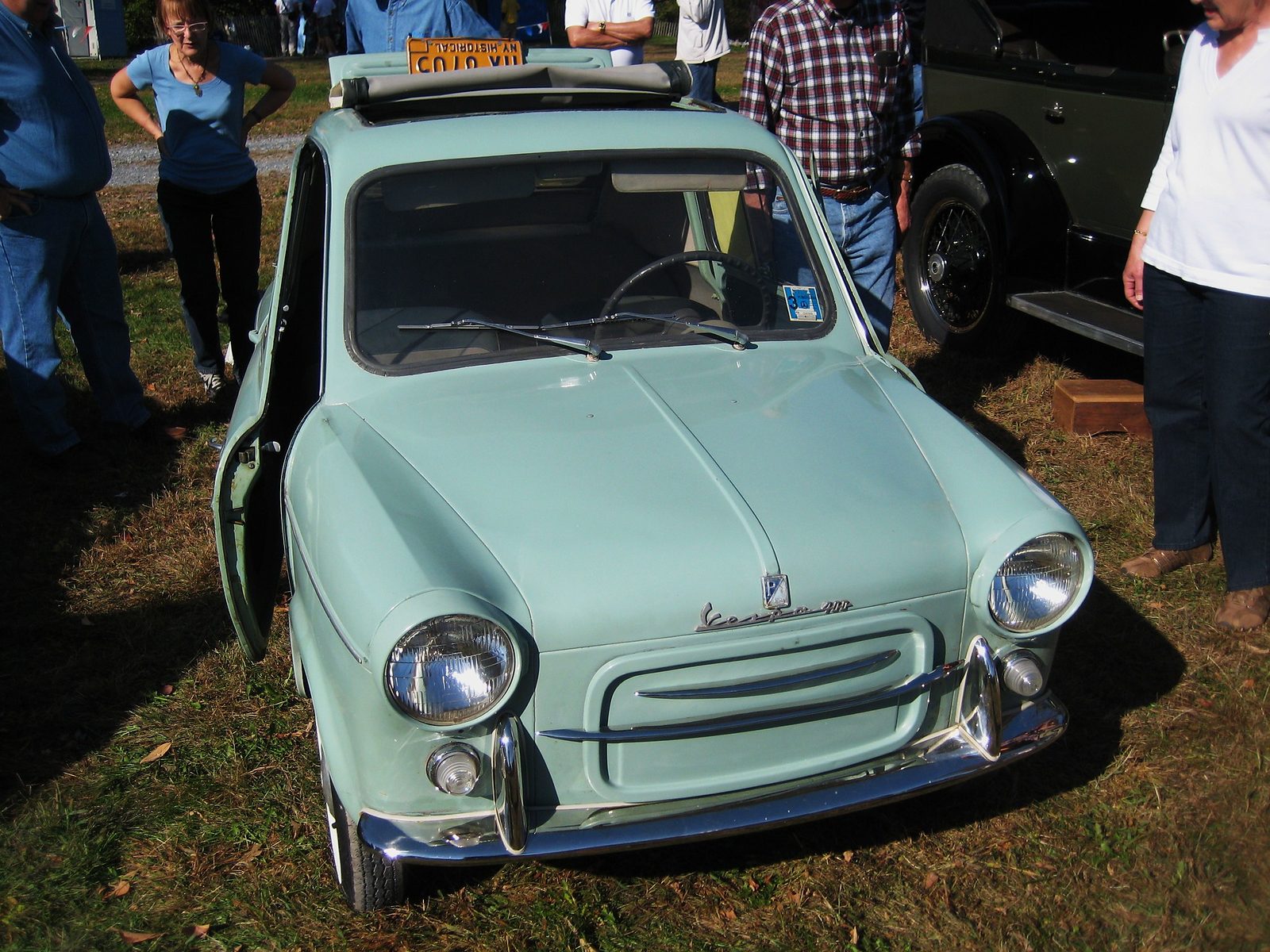
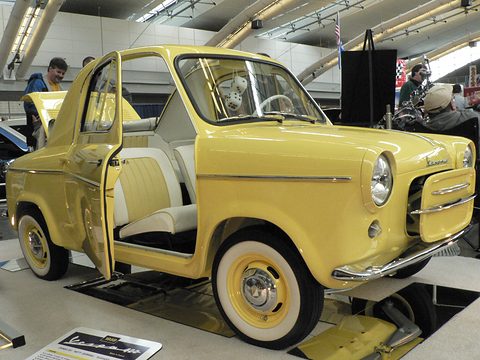
Yellow small car with its door swung open on a show stand, pale seats and a white steering wheel inside.
A yellow 1959 Vespa 400 with its rear-hinged door open, showing the seats, at a show in 2008.Photo: Kev, CC BY-SA 2.0, via Wikimedia Commons
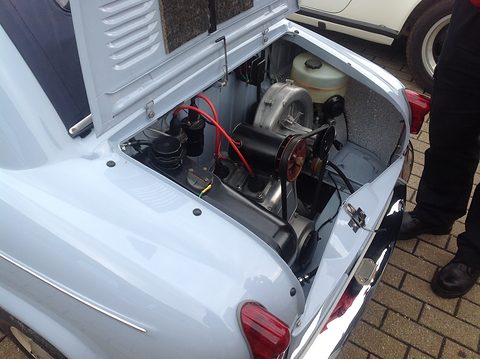
Open rear compartment of a pale blue car with a small engine, cooling fan housing and red ignition leads.
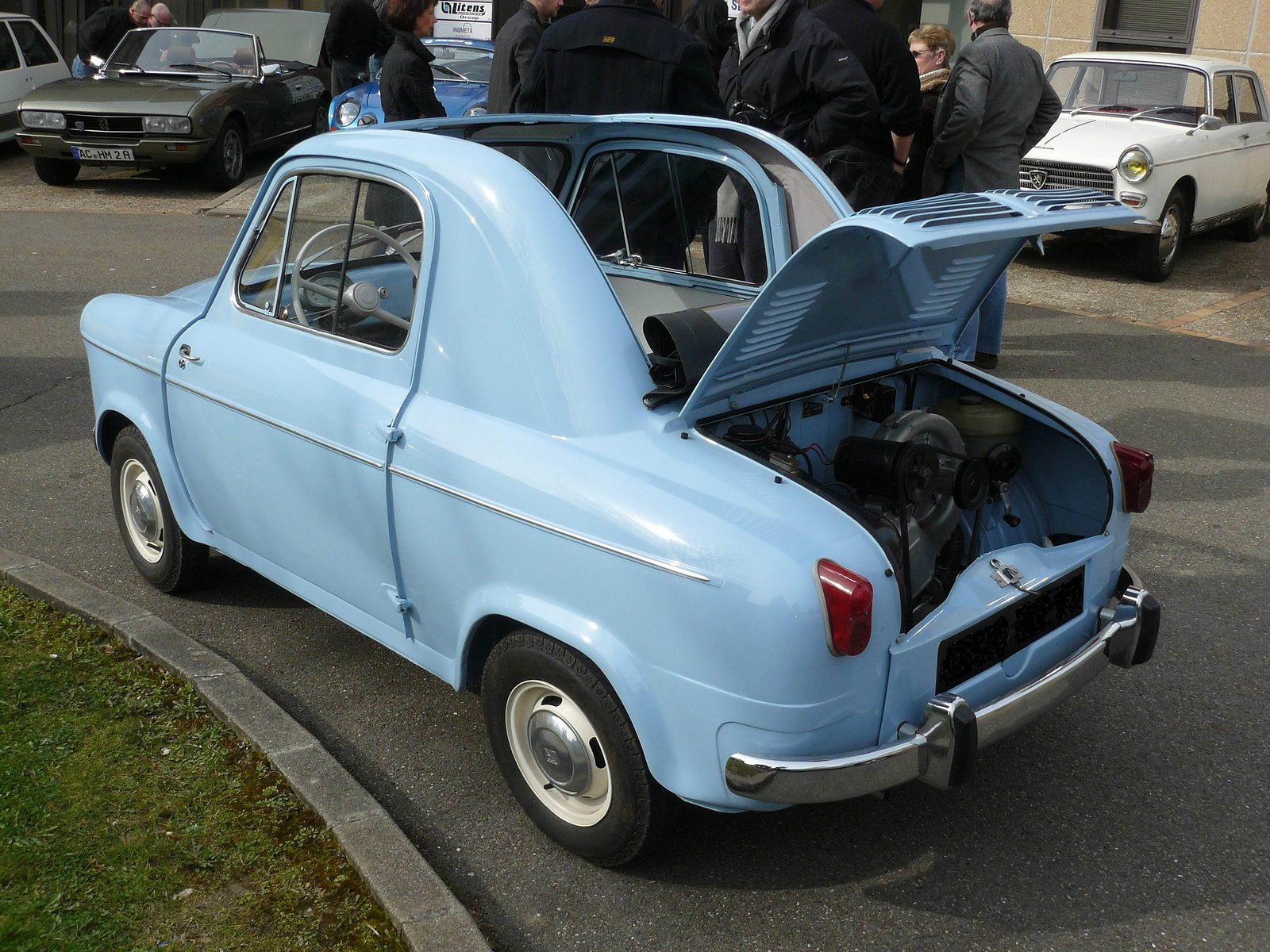
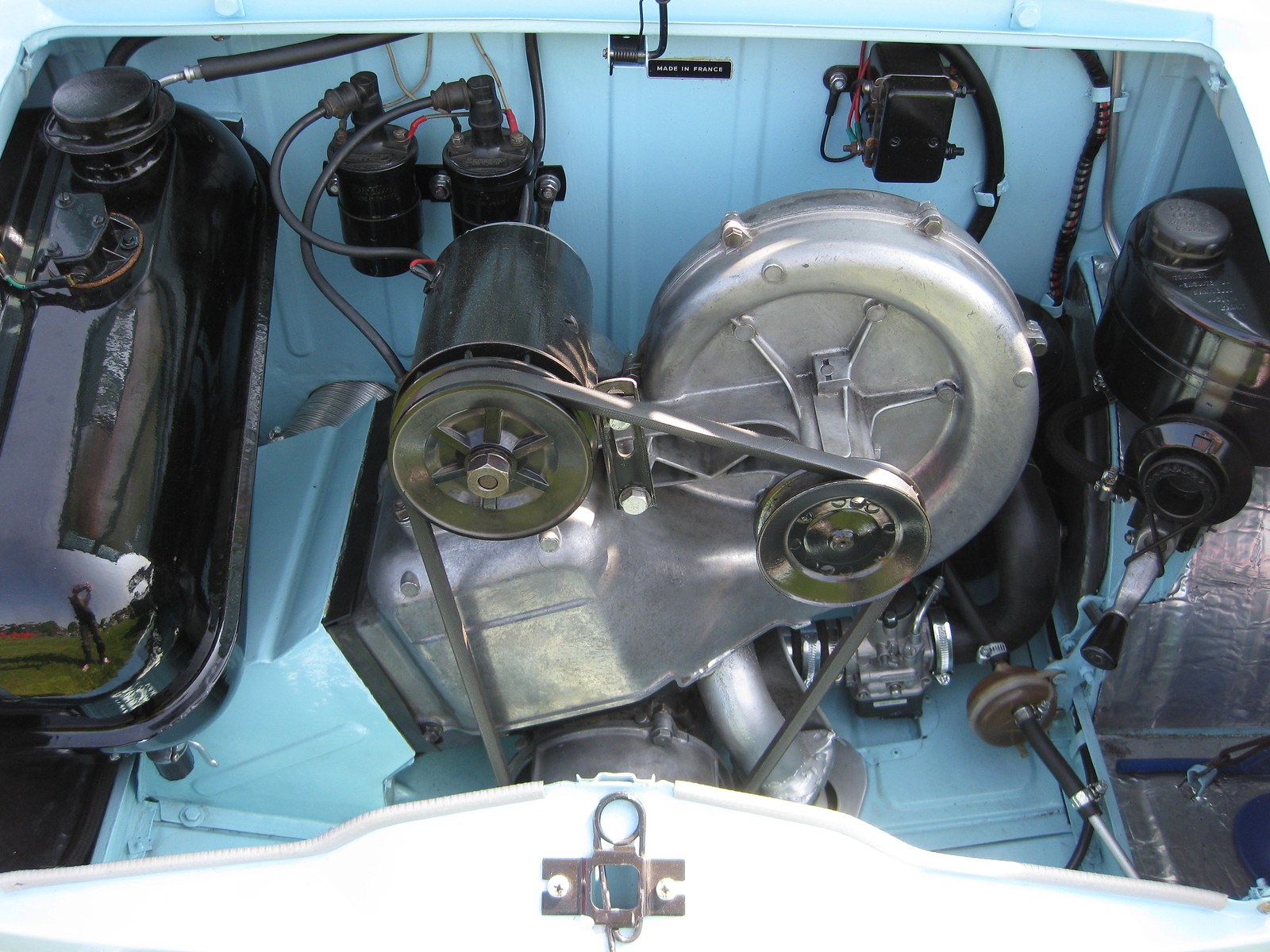
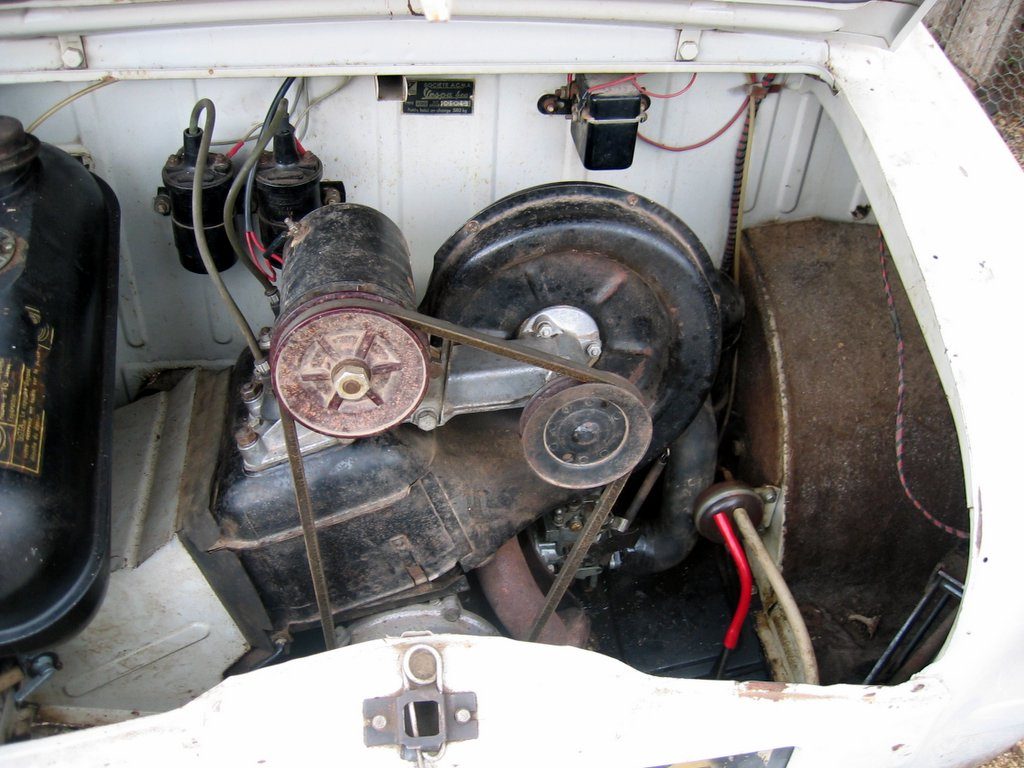
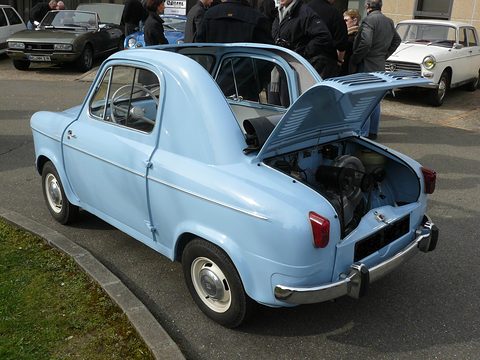
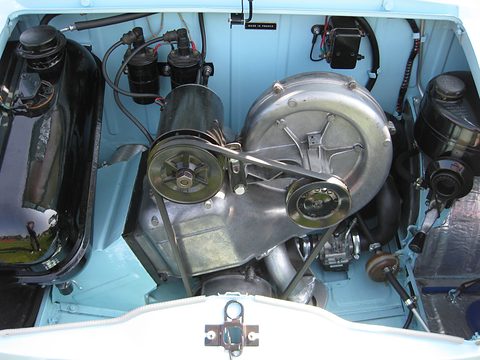
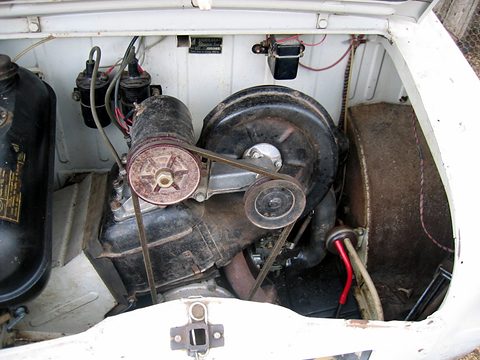
The engine compartment of a pale blue Vespa 400 with the rear lid raised, showing the twin and its cooling turbine.Photo: Andrew Bone, CC BY 2.0, via Flickr
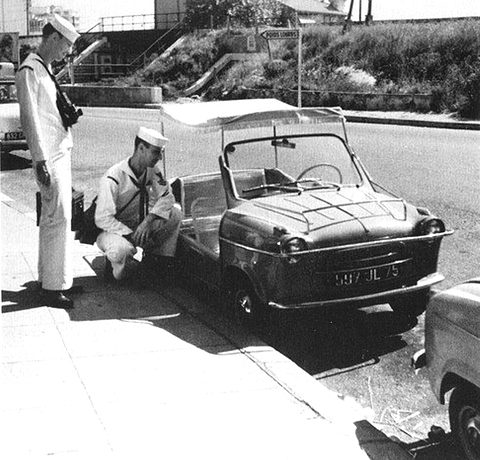
Black and white photograph of two sailors in white uniforms beside an open doorless car with a fringed canopy and Paris plate.
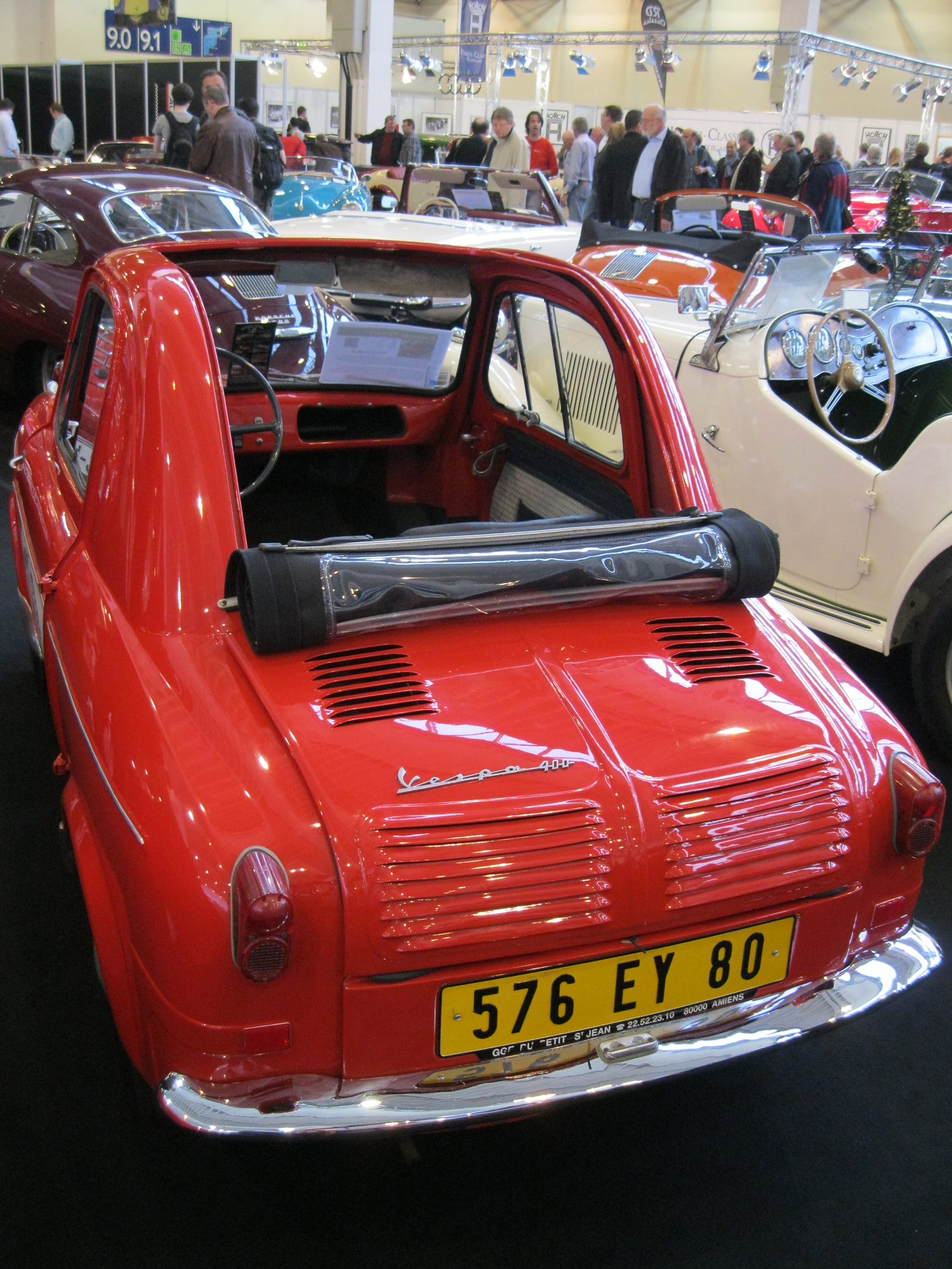
Plate I · c. 1960 US Navy sailors look over a Vespa 400 beach car on Paris plates at Cannes, about 1960.Photo: U.S. Navy, Public domain, via Wikimedia Commons
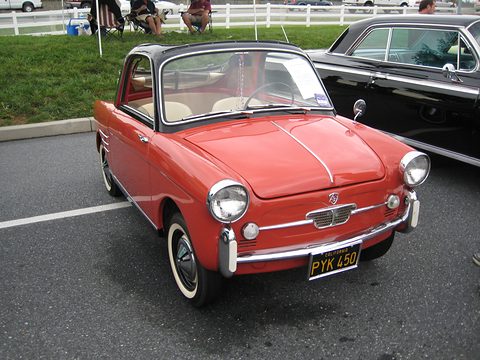
Red small two-door car side-on on a lawn, with white-wall tyres and evergreen trees behind.
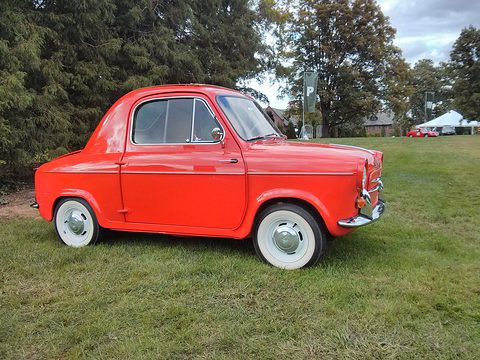
A red Vespa 400 with whitewall tyres on the lawn at the Stan Hywet Hall concours, Akron, Ohio, in 2014.Photo: Phil Kalina, CC BY 2.0, via Flickr

Pictures

More photographs, old and new

Variants

Saloons, a GT and a beach car

The Vespa 400 family
VariantYearsWhat differsHow many
Tourisme1957–⁠61The basic saloon, with the roll-back roofWithin the total
Luxe1957–⁠61More instruments, two wipers and more brightwork; the one most bought, by a 1959 German testWithin the total
Type II1959–⁠61Sliding windows, wrap-round bumpers, indicators on the wings, an aluminium turbine, 14 hpWithin the total
GT1960–⁠61Four speeds, an automatic oil mixer, whitewall tyres and extra chrome; shown in October 1960Fewer than 200
US export1959–⁠61Large sealed-beam headlamps514 in 1959 and 1,138 in 1960, by RM
Right-hand drive1961Wheel on the rightAbout 60
Esterel1959–⁠61Open beach car by Pichon-Parat of Sens; rattan or cord seats, a sun awningAbout 10, by the French Wikipedia

Specification

From the 1958 brochure, as reproduced by Automobilia, unless noted

Engine and drive

Engine and drive
EngineTwo-stroke parallel twin, at the rear, inclined 20° to the left, cooled by a turbine; rotary-valve inductionsource 1source 6
Capacity393 cc (63 × 63 mm)source 1source 6394 cc in some sources
Power12 hp DIN at 4,350 rpm, or 14 hp SAEsource 614 hp at 4,350 rpm for the 1959 Type II; the sources mix the two bases
Compression6.4:1; 6.8:1 from 1959source 2
FuelPetrol with 2 per cent oil; a crank mixer from July 1958, an automatic one from 1960source 1source 3
GearboxThree speeds and reverse, second and third synchronised; double-declutch into firstsource 1source 8Four speeds on the GT
StarterParis-Rhône electric, worked by a lever between the seatssource 8source 2

Body and chassis

Body and chassis
BodySteel monocoque with 3,000 spot welds; a roll-back fabric roofsource 1source 8
Front suspensionIndependent: pivoting telescopic dampers carry the stub axles, with a torsion bar on pressed-steel armssource 1
Rear suspensionIndependent: pressed-steel wishbones, dampers with concentric springssource 1
BrakesHydraulic drums, 170 mm acrosssource 1
SteeringRack and pinion, mounted high under the bonnetsource 1source 9
Electrics and tyres12 V, the battery on a drawer behind the grille; 4.00 × 10, 4.40 × 10 from 1959source 1source 2

Dimensions

Dimensions
Length2,850 mmsource 1source 82,835 mm by the Weiner museum
Width1,270 mmsource 8source 6
Height1,250 mmsource 1source 6
Wheelbase1,693 mmsource 1source 8
Track1,100 mm front and rearsource 1source 9
Weight360 kg (794 lb)source 1source 5380 kg in two sources

Performance and running

Performance and running
Top speed51.8 mph (83.4 km/h), by The Motor, 1959source 8As reported by the English Wikipedia; Automobilia says it flirted with 100 km/h
Acceleration0–40 mph in 23.0 s, by the same testsource 8
Consumption6 l/100 km driven gently, up to 8 pressedsource 155.3 mpg by The Motor; under 5 l at 60–70 km/h by the maker
Fuel tank23 litres, for about 450 kmsource 1source 6
Price new345,000 F Tourisme, 365,000 F Luxe, October 1957source 2source 9360,000 and 380,000 F by Automobilia

How many were built?

Every figure, with its source

About 30,000 built30,976, credited to L’Argus de l’Automobile, comes with a figure for every year, and two of those years are confirmed by Automobilia’s annuals. Jacques Vuillaumier counts 29,873.

  1. 30,9761957–⁠61One source

    ma-vespa-400.com, credited to L’Argus de l’Automobile; the French Wikipedia repeats itsource 6source 9

  2. 29,8731957–⁠61One source

    Jacques Vuillaumier, capactionsource 2

  3. 28,000in allOne source

    Bruce Weiner Microcar Museum and RM, one collectionsource 4source 3

  4. 12,130built in 1958, the peak yearTwo sources agree

    L’Argus, via ma-vespa-400.com; Automobilia’s 1959 annual, via the English Wikipediasource 6source 8

  5. 8,717built in 1959Two sources agree

    the same twosource 6source 8

  6. 7,177built in 1960One source

    L’Argus, via ma-vespa-400.comsource 6

  7. 1,849built in 1961Two sources agree

    L’Argus, via ma-vespa-400.com; Vuillaumiersource 6source 2

  8. 1,103built in 1957One source

    L’Argus, via ma-vespa-400.comsource 6

  • Two sources agreetwo good sources give the figure
  • One sourcea good source, alone
  • Unconfirmeda lead only, not yet checked

Famous for

Three points

  1. A drawer in the nose

    The battery and brake reservoir slid out on a drawer behind the false grille.

  2. One turn per litre

    From July 1958 the driver cranked the oil mixer once for every litre of petrol.

  3. Paris to Moscow

    7,319 km there and back in 1958, observed by the FFSA, without a repair.

Racing and records

Endurance and rallies

62km/h · 7,319 km

From 18 August to 7 September 1958 Raymond Miomandre and René Pari drove a Vespa 400, fitted with two fog lamps and a radio, from Paris to Moscow and back: out in ten stages through Cologne, Berlin, Warsaw and Minsk, two weeks in Moscow, and home in twelve through Smolensk, Minsk, Warsaw, Prague, Milan and Geneva. Paul Massonet, technical adviser to the FFSA, followed in an escort car and signed its official report, no. 301, on 23 September (more in records and feats).source 1

7,319 km
covered (4,548 miles) without mechanical incident, repairs or changes of parts, by the report; the French Wikipedia gives 7,214 km.source 1source 9
5.85 l
of mixture per 100 km over the whole run.source 1
3 cars
in the Monte Carlo Rally of January 1959. The French Wikipedia says they started from Stockholm, all three reached Monaco and one was classified (more in racing and rallying).source 1source 9
57 km/h
average up the 21.6 km of Mont Ventoux, by Albisson’s car in the Rallye de Provence on 12 June 1960.source 1

Survivors and collecting

Today

No register count of survivors has been found. A French club for the car was founded in 1992, on the car’s 35th anniversary, and on 26 September 1992 it re-staged the Pré Catelan launch to the day, with more than 40 cars. It has taken part in the Coupes de l’Âge d’Or at Montlhéry and in Vespa Club de France events, and its history lists owners in France, Germany, Austria, Switzerland, Belgium, Portugal, Spain, the United States, Argentina, Venezuela, Singapore, Japan, Algeria, Mexico and Australia.source 7 Dinky Toys made a blue Vespa 400 in 1:43 scale.source 7

The Weiner museum’s 1957 car, blue, with the roll-back roof, cream wheels and a Cannes Motors dealer sticker, was sold by RM Auctions in 2013.source 3 The German Wikipedia, citing Classic Cars in 2011, reports a restoration project sold in the United States for $21,000 in 2009, and concours cars at up to $40,000.source 5

At auction
CarSalePrice
1957 Vespa 400, identification no. 06938, largely originalRM Auctions, Weiner museum sale, 2013, lot 612source 3$28,750
A restoration projectUnited States, 2009, as reportedsource 5$21,000

Sources

Numbered as in the text

No period French road test has been read in the original; Automobilia’s 1999 history, which reproduces the brochure, the advertisements and the covers, carries most of the story. Sources are given as plain text; the links are on the Credits page.

  1. Jean Goyard, “La Vespa 400 — la petite auto de Fourchambault”, Automobilia no. 34, February 1999, pp. 44–49, with the 1958 brochure, advertisements and magazine covers reproduced. Read in full.
  2. Jacques Vuillaumier, “Vespa 400 Histoire / history”, capaction, read in full.
  3. RM Auctions, The Bruce Weiner Microcar Museum, Madison, Georgia, 2013, lot 612, “1957 Piaggio Vespa 400”, catalogue text, read in full.
  4. Bruce Weiner Microcar Museum, “1957 Vespa 400”, tour page (© 2002), read in full.
  5. German Wikipedia, Vespa 400, read in full; it cites Robert Poensgen’s test in Der Kleinwagen 10/1959 and Classic Cars 7/2011, not seen.
  6. ma-vespa-400.com, “Caractéristiques techniques de la Vespa 400”, read in full; its production table is credited to L’Argus de l’Automobile.
  7. vespa400.com (Nicolas Courtonne), home page, with the club’s history.
  8. English Wikipedia, Vespa 400, read in full; it cites Automobilia’s Toutes les voitures françaises annuals for 1958 and 1959, and The Motor, 15 April 1959, not seen.
  9. French Wikipedia, Vespa 400, read in full.