microcarfan
  • Cyclecar
  • Italy
  • Air-cooled V-twin

Temperino

Also known as Temperino 8/10 HP, Vetturetta Temperino

In March 1919 a car with two people aboard climbed from Sassi to the Superga, about 3.5 km at up to 15 per cent, in 12 minutes. Under its bonnet was an air-cooled V-twin of about a litre, and in front of that a dummy radiator, which made it look like a Fiat in miniature.

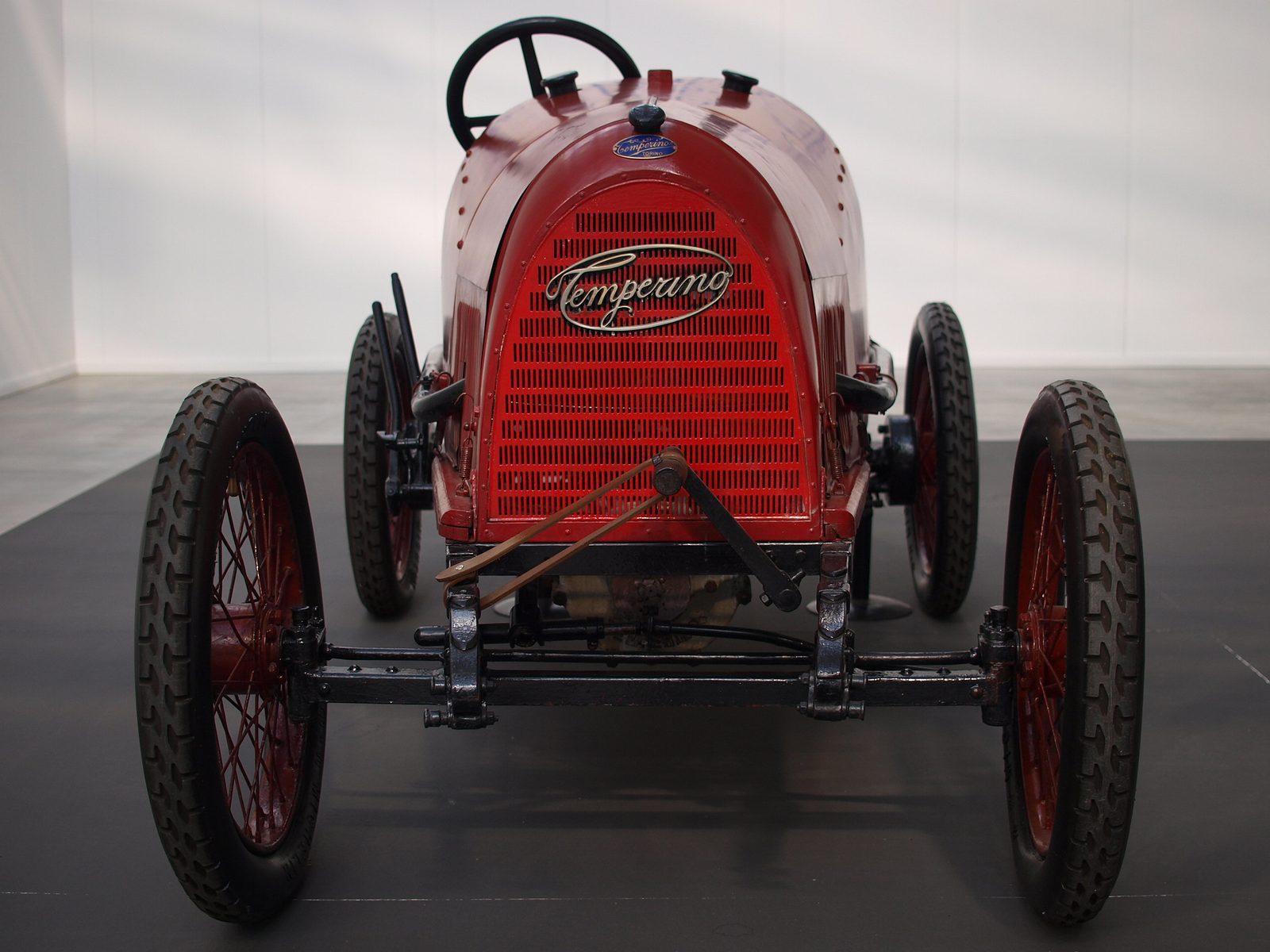
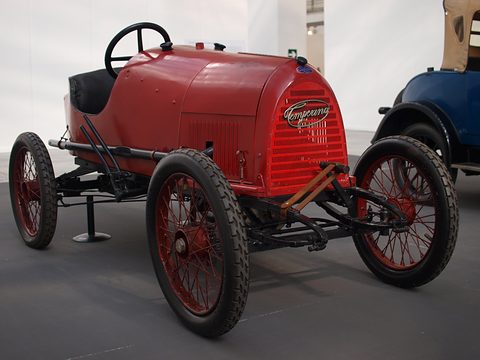
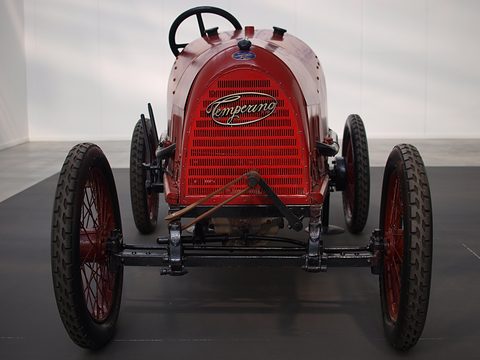
Red narrow two-seater with a slatted cowl bearing a ‘Temperino’ script and red wire wheels.
A red 1920 Temperino 8/10 HP with its script radiator cowl at the Museo Nazionale dell’Automobile, Turin, Italy, in July 2009.Photo: tomislav medak, CC BY-SA 2.0, via Wikimedia Commons

At a glance

The spec plate

Temperino

8/10 HP · Turin

Built
1908–⁠1924Prototypes from 1908; series production 1918–⁠1924
Country
ItalyTurin
Maker
Officina F.lli TemperinoSA Vetturette Temperino from October 1919; assembled under contract by Opessi; parts from Moncenisio from 1921
Engine
1,010 cc air-cooled V-twinIn front; 1,021 cc in the Sport; 350 cc and 800 cc twins in the prototypes
Power
20 hp25 hp in the Sport
Seats
2 or 3Spider, torpedo, landaulet or light van
Wheels
4Front engine, drive to the rear axle
Price new
9,000 lireThe spider, 1920; £175–285 in Britain
Production
about 1,500Unconfirmed; the museum’s history gives no total
Top speed
75km/h75 km/h70–75 km/h for the normal car; 85–90 km/h for the Sport

Not yet recordedlength and weight.

How big is it?

True proportion

Length unknown

No reliable length has been found. The Fiat 500, the Peel P50 and the adult stay, so the gap is shown, not hidden.

  • Two or three seats
Drawn at true proportion. The track is 3.6 metres long; the adult stands at the same scale. The Peel P50 is the smallest production car, on every page for comparison.

The story

History

Maurizio Temperino was born at Limone Piemonte in 1888. His father, a miner, had died at Lead City, South Dakota, and the family came home to Piedmont; at 15 Maurizio went to work in a bicycle shop.source 1 In 1906–⁠07 he and his brothers opened their own workshop at corso Principe Oddone 44 in Turin, repairing bicycles and motorcycles and vulcanising tyres. Italian Wikipedia and the museum name the siblings as Maurizio, Giacomo, Secondo and their sister Mary, who ran the office; English Wikipedia leaves out Secondo.source 1source 2source 3 From about 1908 they built motorcycles, shown at the 1911 Turin International Exhibition under the name “Mead Flyer” and probably built under licence or imported.source 1source 2 The workshop became a well-known garage, and among the cars it serviced was one from the Queen’s garage. In February 1912 Maurizio patented a detachable wheel rim and licensed it to Adolfo Krumm.source 1

What he wanted to build was a vetturetta economica, a cheap light car made for strength, with simple parts and standardisation, much as Henry Ford did, in the museum’s comparison. The first prototype, of 1908, is said to have had a 350 cc twin, and no trace of it remains; the second, with an 800 cc twin, is known from a photograph.source 1 Then wars scattered the brothers, first the Italo-Turkish war of 1911 and then the First World War, in which Secondo was badly wounded as an airman.source 1

A Lilliputian car

Production began early in 1918, under contract. Antonio Opessi, a maker of precision instruments, built the chassis and assembled the cars at his works in viale Stupinigi; the engines came from the Della Ferrera motorcycle works and the bodies from Stabilimenti Farina.source 1 The car had an A-shaped frame, an air-cooled V-twin in front of 1,010 cc and 20 hp, three speeds and reverse, and a pedal “kick-starter”.source 1source 2 The press of 1919 gave it about 5 litres per 100 km (56 mpg) and 75 km/h (47 mph), and said it could turn almost on the spot, like a spinning top, forwards or in reverse.source 1 In April La Stampa Sportiva called it “the Lilliputian automobile”, crediting the Opessi firm and “the inventor Signor Temperino”; the maker’s own advertisements of 1920 called it a motovetturetta, and in English it was a cyclecar.source 1

L’automobile alla portata di tutti! Ecco la trovata!… L’automobile lillipuziana è una delle più grandi novità del dopoguerra, destinata ad immensa fortuna.

La Stampa Sportiva, 1919, as quoted by the Turin motor museum. In English: “The car within everyone’s reach! That’s the idea!… The Lilliputian car is one of the greatest novelties of the post-war period, destined for immense success.”source 1

In October 1919 the brothers formed the Società Anonima Vetturette Temperino, with a capital of 500,000 lire.source 1 The 1920 catalogue offered a two-seat spider at 9,000 lire, a three-seat torpedo at 10,000, a two-seat light van at 9,800 and a landaulet at a price on request, in olive green, garnet red or black. A Sport version had 1,021 cc and 25 hp, and ran at 85–90 km/h (53–56 mph) instead of 70–75.source 1 When the Lombardy agency went to a Milan firm in May 1920, Motori Cicli & Sports gave its verdict.

Temperino ha trovato la via giusta. La sua è una vera vetturetta ed è una creazione nuova ed organica… è una macchina seria.

Motori Cicli & Sports, 15 May 1920, as quoted by the Turin motor museum. In English: “Temperino has found the right way. His is a true light car, a new and organic creation… it is a serious machine.”source 1

Turin to Aldwych

Maurizio’s man in London was J. S. Wood of the Kingsway Motor Co., Aldwych, who lent a car to The Light Car and Cyclecar. In October and December 1920 the magazine praised its solid construction, careful workmanship and the engine’s “wonderful power and vim”.source 1 Wood then ran Temperino Motors Ltd, at Waldorf House, Catherine Street, Aldwych.source 1source 3 British buyers liked the kick-starter, the easy driving, the price, £285 or £175 for the basic model, and the look of a miniature Fiat. From July 1920 up to 30 cars a month were shipped to London, at 14,500 lire each, packed, and 14,000 lire after the first hundred. A few went to Java, Brazil and Malta.source 1 By 1921 about a hundred people worked on the car, and its mechanical parts now came from the Officine Moncenisio at Condove.source 1

The car’s best-known photograph shows a boy. Cavaliere Giovanni Farina’s two sons were keen young drivers, and a picture of Giuseppe “Nino” Farina, aged about 15, cornering hard in a Temperino against his brother, appeared in Popolo Sportivo and went into the firm’s advertising. In 1950 he became the first Formula One world champion.source 1source 2 The slogan was “Per tagliare primi il traguardo ci vuole una Temperino!”: to cross the line first, you need a Temperino.source 2

Debts paid

The Banca Italiana di Sconto, the firm’s main lender, came close to collapse in December 1921 and took several car makers with it, Rapid, SCAT and Itala among them.source 1 Inflation followed. In April 1922 the Tipo S, a twin of 85 × 90 mm rated at 8 HP, cost 14,000 lire with a body and 11,000 as a bare chassis, when a Trikappa chassis cost 65,000; in 1923 the single model cost 15,000 lire.source 1 A GSM 7-14 HP was offered abroad, in Britain and Brazil, though Italian Wikipedia calls it the 7-12 HP.source 2source 3 In 1924 the brothers decided to stop. They paid every debt and there was no bankruptcy.source 1source 2source 3 In 1926 they opened a garage with a petrol pump near Turin’s old municipal stadium, and they went on filing patents into the 1930s.source 1source 3 Italian Wikipedia says the London company lasted until 1940, which has not been confirmed.source 2
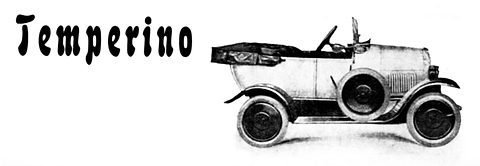
Drawing of a small open tourer with its hood folded beside the word ‘Temperino’ in bold letters.
Plate I · 1923 A Temperino open tourer, drawn in the Illustrierte Sport-Zeitung of 14 January 1923.Photo: Illustrierte Sport-Zeitung, Public domain, via Wikimedia Commons
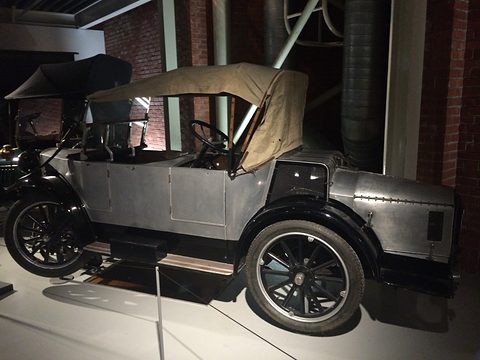
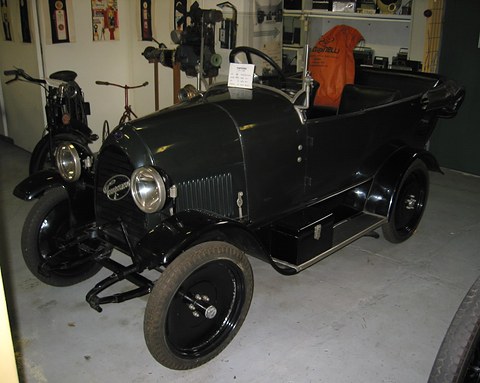
Black open tourer with large headlamps and black disc wheels in a museum of old radios and machines.
A black 1918 Temperino tourer with its hood folded, at the Museo delle comunicazioni Lucia e Francesca, Italy, in 2006.Photo: Buch-t, Public domain, via Wikimedia Commons

Pictures

More photographs, old and new

Variants

Prototypes to Tipo S

The Temperinos
VariantYearsWhat differsHow many
First prototype1908Reportedly a 350 cc twin; no trace of it remains1
Second prototypec.1909–⁠1911An 800 cc twin, known from a photograph1
8/10 HP1918/19–19221,010 cc, 20 hp: spider, torpedo, landaulet and light vanAbout 1,500, unconfirmed
8/10 HP Sport1920–1,021 cc, 25 hp, 85–90 km/hNot recorded
Tipo S1922–⁠1924A single model, 85 × 90 mm, “8 HP”: 14,000 lire in 1922, 15,000 in 1923Not recorded
GSM 7-14 HP1922–For markets abroad, sold in Britain and Brazil; Italian Wikipedia calls it the 7-12 HPNot recorded

Specification

The 8/10 HP, 1919–⁠1922

Engine and drive

Engine and drive
EngineAir-cooled V-twin, mounted in frontsource 1source 2
Capacity and power1,010 cc, 20 hp; Sport 1,021 cc, 25 hpsource 1source 2English and German Wikipedia give 800 cc, the second prototype’s size
StartingA pedal “kick-starter”source 1
GearboxThree speeds and reversesource 1source 2
Final driveTo the rear axle; chain or shaft not recorded

Body and chassis

Body and chassis
ChassisAn A-shaped framesource 1
CoolingAir, behind a dummy radiatorsource 1
BrakesMechanical, on the rear wheelssource 2
BodiesTwo-seat spider, three-seat torpedo, landaulet, two-seat light vansource 1
ColoursOlive green, garnet red and black, in 1920source 1

Dimensions

Dimensions
Length, width, weightNot found

Performance and running

Performance and running
Top speed70–75 km/h (43–47 mph); Sport 85–90 km/h (53–56 mph)source 1
ConsumptionAbout 5 litres per 100 km (56 mpg), in the 1919 presssource 1
Price new, Italy1920: spider 9,000 lire, torpedo 10,000, van 9,800; landaulet on requestsource 1
Price new, Britain£285, or £175 for the basic modelsource 1

How many were built?

One round number

About 1,500, unconfirmedTwo encyclopaedias give about 1,500, but neither traces the figure to a primary source: English Wikipedia cites carsfromitaly.net, and the Turin museum’s history gives no total at all. Treat it as an estimate.

  1. about 1,5008/10 HPsUnconfirmed

    English Wikipedia, citing carsfromitaly.netsource 3

  2. 1,500Temperinos, to 1924Unconfirmed

    German Wikipediasource 4

  • Two sources agreetwo good sources give the figure
  • One sourcea good source, alone
  • Unconfirmeda lead only, not yet checked

Famous for

Three points

  1. Italy’s first utilitaria

    The Turin motor museum calls it la prima utilitaria italiana, the first Italian economy car.

  2. A Fiat in miniature

    An air-cooled V-twin behind a dummy radiator, which British buyers liked for its likeness to a small Fiat.

  3. Nino Farina, aged 15

    The future world champion, photographed cornering hard in a Temperino; the picture became an advertisement.

Racing and records

Hills and passes, 1919–⁠1920

The brothers proved the car on the hills around Turin and in the Alps (more in racing and rallying).source 1

12 min
Sassi to the Superga, about 3.5 km at up to 15 per cent, with two aboard, March 1919.source 1
32.6 km/h
Cesana to Sestrières, 11.4 km in 20 min 59 s, on 27 July 1919; the press called the Temperinos the great attraction of the race.source 1
256 km
at 52.325 km/h on the Sestrières circuit in 1920, winning the Gran Premio dell’Automobile Club d’Italia by the maker’s own advertisement; Italian Wikipedia says Temperinos finished first and second.source 1source 2
1 h 11 min
for the 30.5 km climb from Aosta to the Great St Bernard in August 1920, by Adolfo Martinelli and Marco Truccano in two cars.source 1

Survivors and collecting

Today

The Museo Nazionale dell’Automobile in Turin keeps an 8/10 HP, and its documentation centre wrote the history on which most of this page rests.source 2source 4source 1 How many survive is not recorded in the sources read, which give no auction result either.

Sources

Numbered as in the text

Most of this page rests on one source, the Turin motor museum’s 2005 history, which quotes the period press; the 1920 road tests in The Light Car and Cyclecar are known only through it. Sources are given as plain text; the links are on the Credits page.

  1. Donatella Biffignandi, “Alla piccola vettura un grande avvenire!”, Centro di Documentazione del Museo Nazionale dell’Automobile di Torino, 2005, read in full. It cites La Stampa Sportiva (1919), Motori Cicli & Sports (1911–⁠20), Automobile Quarterly 17 (2) and La Manovella (1975).
  2. Italian Wikipedia, Temperino (azienda), read in full. Used as a lead.
  3. English Wikipedia, Temperino, and Grace’s Guide, “Temperino”, both read in full. Used as leads.
  4. German Wikipedia, Temperino, read in full. Used as a lead; it cites Linz and Schrader and Georgano.