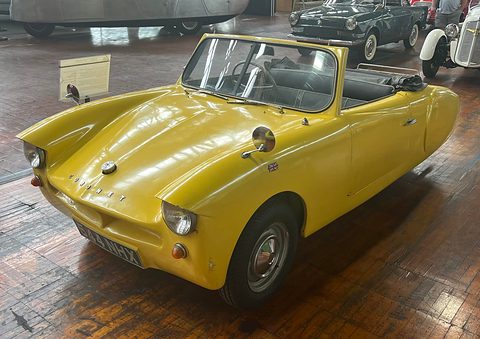
The Astra, the saloon’s ancestor
Britain’s forgotten 1950s microcars
1948–1969 · Britain · 12 makers
Also known as Zeta Runabout, Zeta Sedan, Zeta Utility, Zeta Sports
There was no reverse gear. To reverse a Lightburn Zeta Runabout, the driver stopped its two-stroke engine and started it again running backwards, and then all four gears went the other way. The firm that built it made concrete mixers.
The spec plate
Lightburn Zeta
Runabout · Camden Park
True proportion
3.07 m
It is 103 mm longer than a Fiat 500, about 1.8 adults laid end to end.
History
Lightburn & Co. of Camden Park, Adelaide, was Harold Lightburn’s firm, and it made washing machines and concrete mixers, car jacks, power tools and glass-fibre boats.source 1source 2source 3source 4 In the early 1960s it set out to fill what it saw as a gap: a cheap second car, a runabout.source 1source 4 The Weiner museum, which later owned two, put the background plainly.source 3source 5
Australia is a land of huge open spaces, and Australians tended to look towards America for their automotive needs.
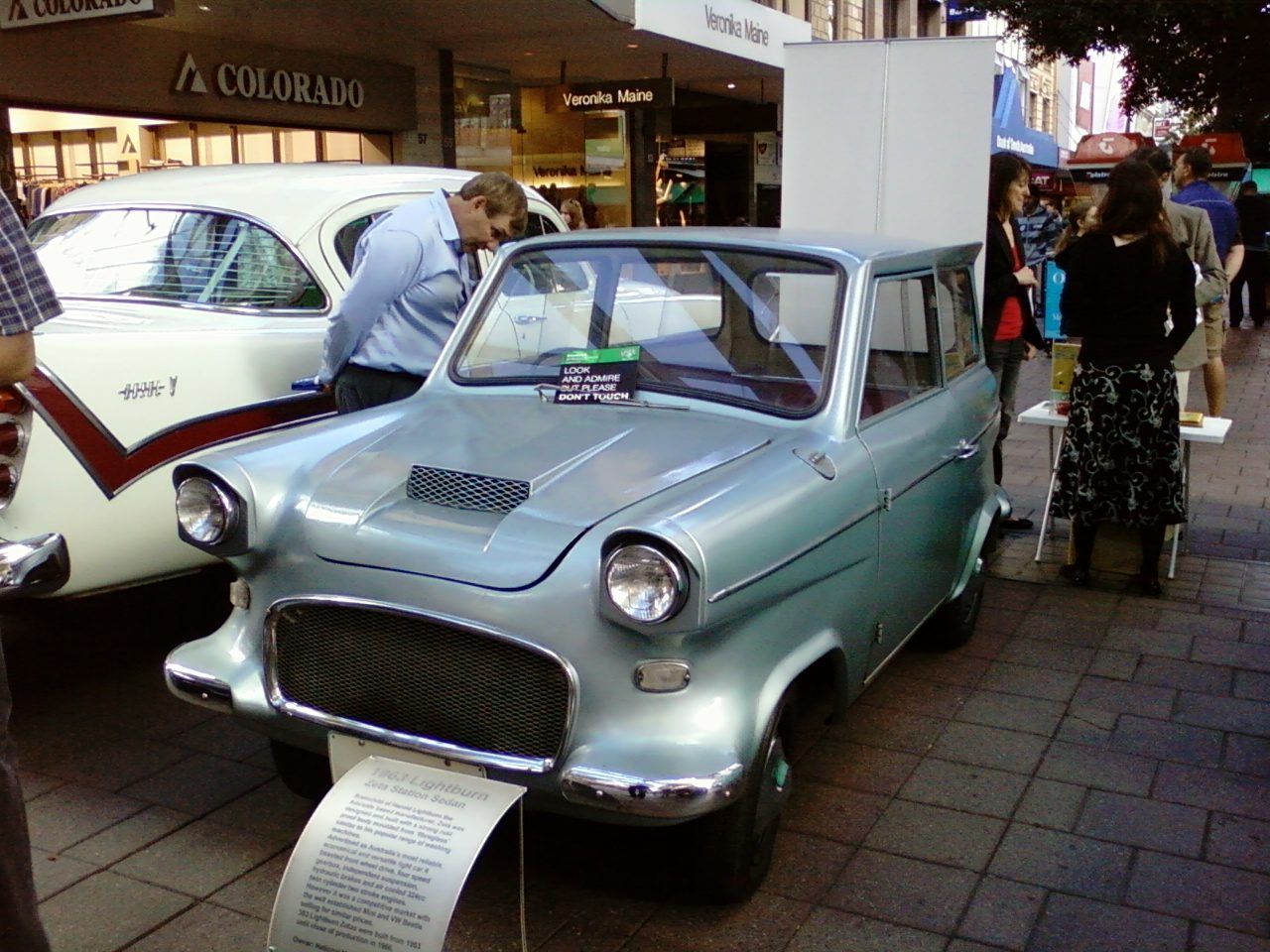
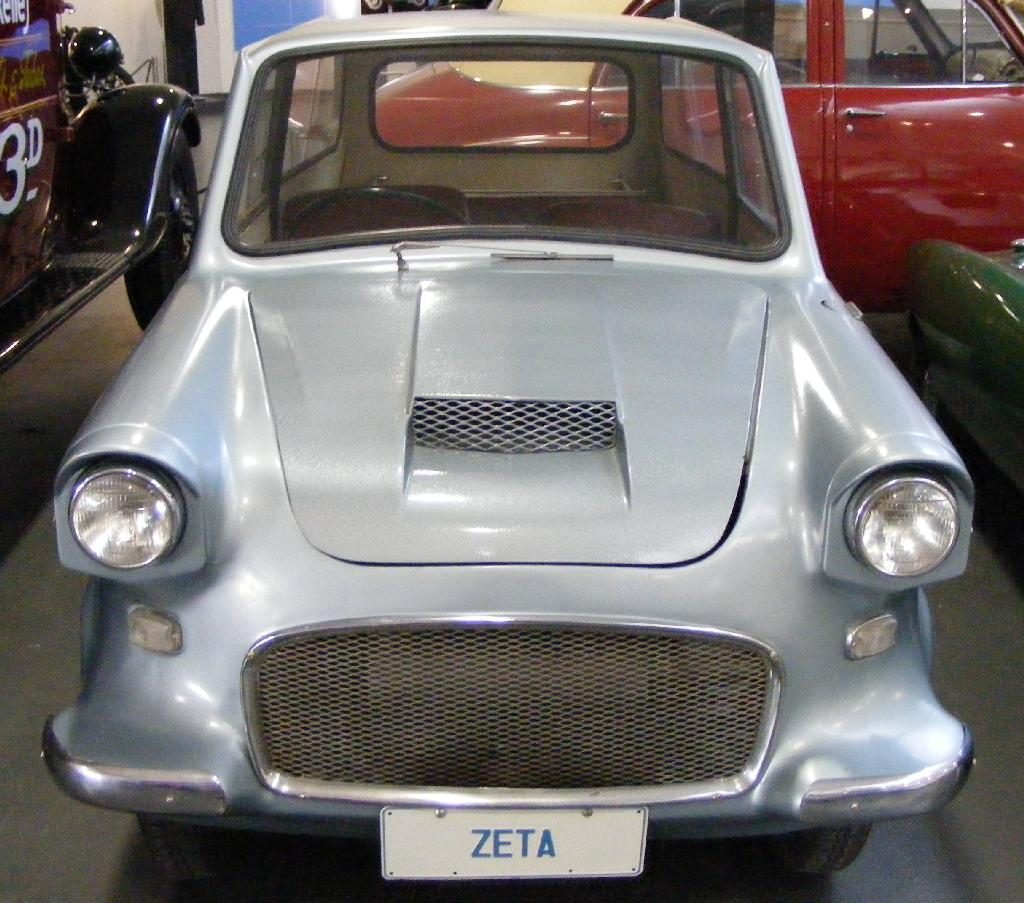
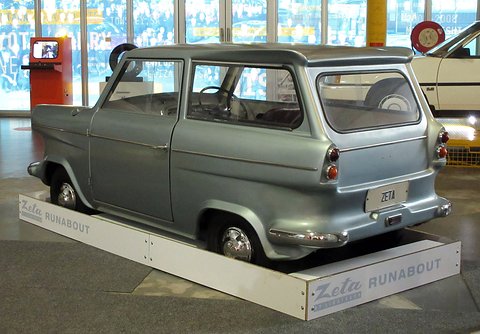
The saloon came from Britain. Lightburn obtained the rights to the British Anzani-built Astra Utility and gave it a new glass-fibre body shaped like a small estate.source 3source 5 A Villiers 324 cc two-stroke twin of 16.5 hp (12 kW) drove the front wheels, and the chassis was steel tube.source 1source 2source 5 The side windows were Perspex, and the fuel fed by gravity from a tank behind the dashboard, its level shown in a see-through tube.source 1 The engine was started by a Dynastart, and that was how the Zeta went backwards: stopped and restarted the other way round, it gave four speeds in reverse.source 1source 5 There was no tailgate either: cargo went in once the front seats were out. The roof carried tailfins.source 1source 3source 5
the car was a hideous assemblage of jutting, ill-conceived shapes and angles, with tailfins on the roof. There was no tailgate.
At 3,073 mm (121 in) the Runabout overshoots the Fiat Nuova 500 that serves here as the measure of what a microcar is, but it earns its place as Australia’s own.source 5
The Zeta Sedan went on sale in 1963 at £595, just as the Morris Mini arrived for only £60 more.source 1 Lightburn planned to build 50 a week.source 2 Its advertising compared the glass fibre on a steel frame with the Chevrolet Corvette’s, and sold the interior: it would carry tools, or sleep two adults with the seats out.source 5 The maker claimed it was the first vehicle sold in Australia to combine saloon, wagon and light truck, and that the seats could even be bolted to the roof as a grandstand.source 2 There was a Deluxe, and a coupé Utility, mechanically the same, of which eight were built, some for Sydney City Council’s fleet in Hyde Park.source 1 The Hyde Park cars were seldom used on the road.source 6
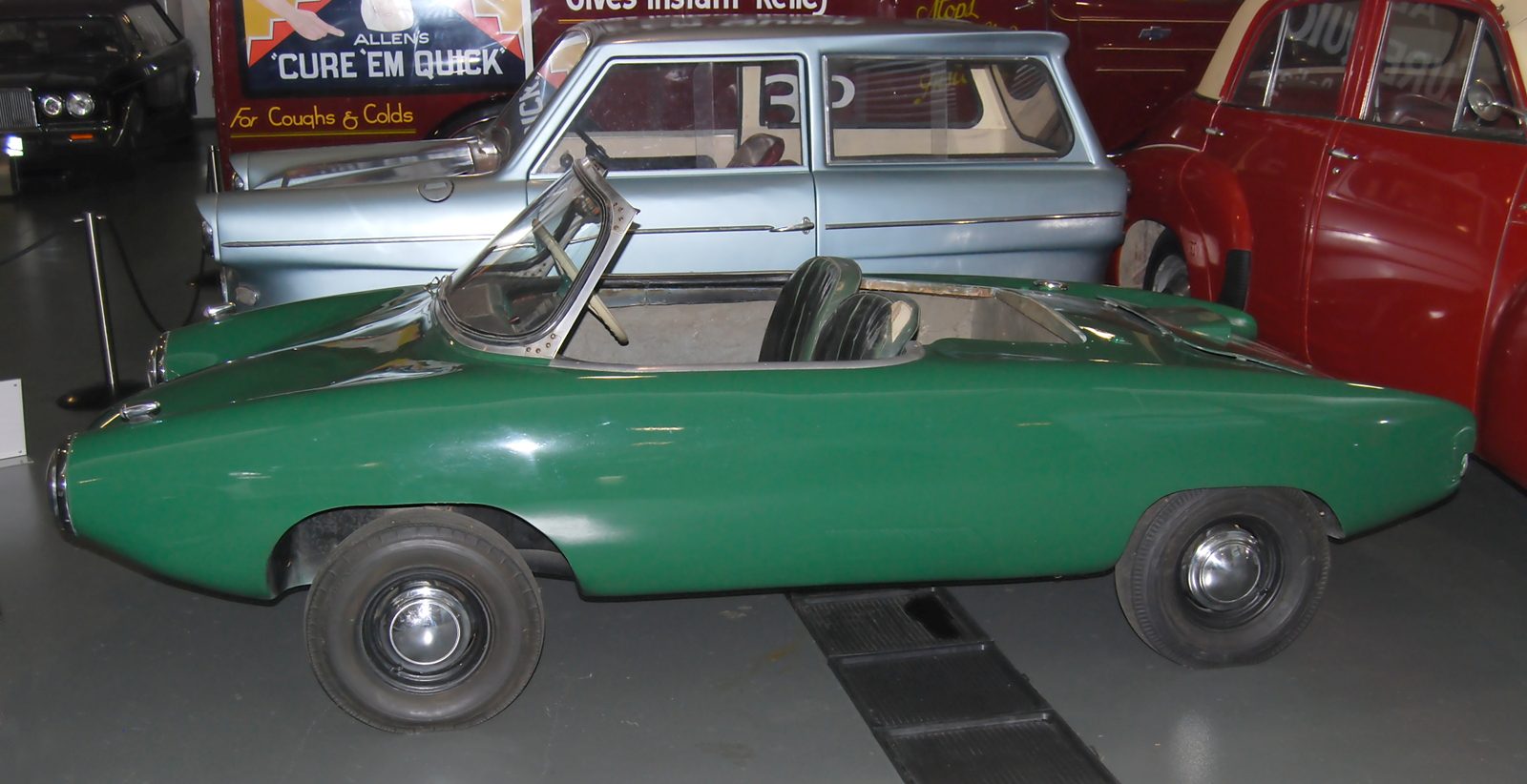
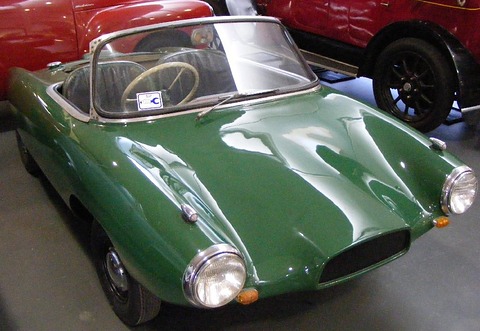
The Zeta Sports had another parent. Gordon Bedson had designed the Frisky Sprint, a 492 cc two-seater shown at Earls Court in 1958 and claimed to do 145 km/h (90 mph), which never went into production (see Frisky).source 3 He met Harold Lightburn at the Earls Court show of 1959, and the next spring went to Australia with a chassis, some Frisky Sports, the Sprint’s drawings and 50 Fichtel & Sachs twins of 493 cc, the engine of the FMR Tg500 Tiger.source 3 Lightburn advertising credited the design to Giovanni Michelotti; English Wikipedia says it was Bedson and Keith Peckmore’s Sprint, and the Register of Unusual Microcars finds Michelotti involved in neither car.source 1source 7
The result, introduced in June 1964, was a doorless glass-fibre two-seater with no bumpers.source 1source 3 The Weiner museum adds, without knowing why, that most were built in 1961 and held back until mid-1964.source 3 Lightburn had a network of Alfa Romeo dealers ready to sell it, but orders were few, and some cars failed New South Wales lighting rules and were given extra headlamps standing free on the bonnet.source 3 That year a Zeta also ran in the Ampol 7,000-mile trial across Australia; its result has not been found (more in racing and rallying).source 3source 5
Production ended in 1965, and the last cars were sold in 1966.source 1 Unique Cars and Parts blames poor execution, poor build quality and the engines, with the Mini a far better choice.source 6 Tony Davis made the Zeta a prime exhibit in Lemon!, his 2004 book of Australian automotive failures.source 1 Lightburn also built an electric two-seater, in two models, of which no details have been found.source 1
Handling was nervous at best.
More photographs, old and new
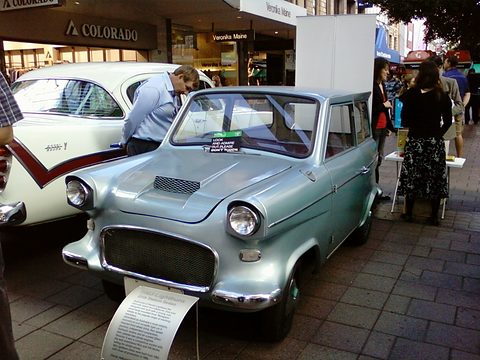
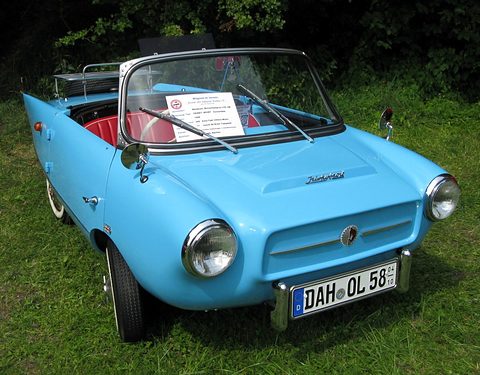
1 A pale blue Lightburn Zeta Runabout with its information board at a street display in 2011.
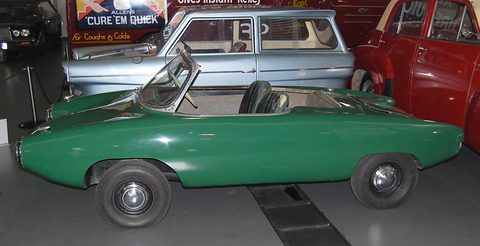
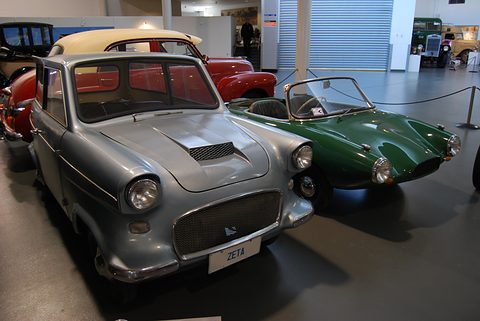
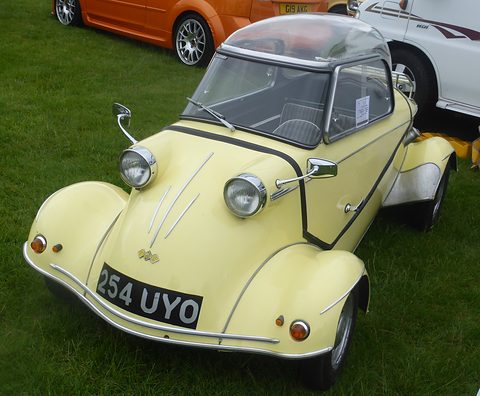
2 The green 1964 Zeta Sports in profile at the National Motor Museum, Birdwood, in 2008, with the Zeta Runabout behind.
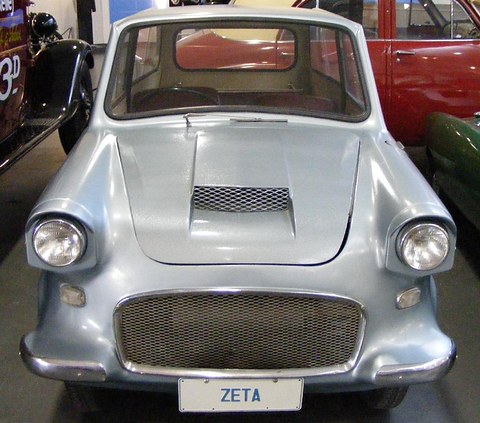
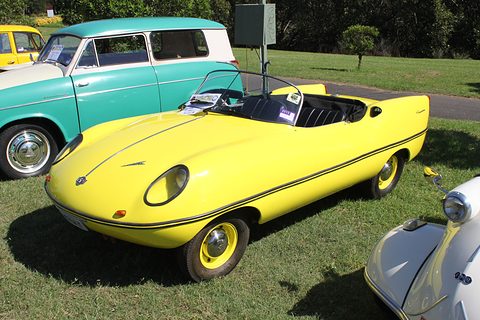
3 A pale blue Lightburn Zeta Runabout head-on in the National Motor Museum, Birdwood, South Australia, in 2007.
Two lineages under one name
| Variant | Years | What differs | How many |
|---|---|---|---|
| Sedan, or Runabout | 1963–65 | Two-door glass-fibre body like a small estate, with no tailgate; the Villiers twin | Part of 363 |
| Sedan Deluxe | 1963–65 | Better trim, the details not found | Part of 363 |
| Utility | 1963–65 | A coupé utility, mechanically the same | 8 |
| Sports | 1964–66 | A doorless two-seat roadster from the Frisky Sprint, with no bumpers and the 494 cc Fichtel & Sachs twin | About 28 sold; 48 made by the Birdwood sign |
| Electric runabout | Not known | A two-seat electric vehicle, in two models; no details found | Not found |
The Runabout, from the Weiner museum’s card, unless noted
| Engine | Villiers two-stroke twin, 324 ccsource 1source 2source 5 |
|---|---|
| Power | 16.5 hp (12 kW)source 1source 5 |
| Gearbox | Four speeds; no reverse gear: the Dynastart restarted the engine backwards, giving four speeds in reversesource 1source 5A Villiers dog-clutch box by English Wikipedia; a Burman motorcycle gearbox by Marque Automotive News |
| Drive | Front wheelssource 1source 2source 5 |
| Electrics | 12 volts; twin-coil ignitionsource 5 |
| Chassis | Steel tubesource 5 |
|---|---|
| Body | Glass fibre, with Perspex side windows and a laminated-glass windscreensource 1 |
| Suspension | Struts at the front, coil springs at the rearsource 5English Wikipedia gives independent trailing arms at the rear |
| Steering | Worm and pegsource 5 |
| Brakes | Hydraulicsource 5 |
| Fuel | Gravity feed from a tank behind the dashboard, with a see-through tube for a gaugesource 1 |
Every figure, with its source
363 sold363 is the figure we state: English Wikipedia and Marque Automotive News both give it for all models sold from 1963 to 1966. The National Motor Museum and Unique Cars and Parts give a round 400. No Lightburn record has been found.
about 400all modelsOne source
The National Motor Museum, Birdwood, and Unique Cars and Parts, not shown to be independent; English Wikipedia’s lead says fewer than 400source 4source 6source 1
363all models sold, 1963–66Two sources agree
English Wikipedia and Marque Automotive Newssource 1source 2
48Sports made, by the sign beside the Birdwood carOne source
The museum sign, as reported by English Wikipedia and Marque Automotive Newssource 1source 2
about 28Sports soldTwo sources agree
8UtilitiesOne source
English Wikipediasource 1
Three points
No reverse gear in the saloon: the engine was restarted to run the other way, and all four gears worked in reverse.source 1source 5
Tailfins on the roof, no tailgate, and cargo went in once the front seats were out.source 1source 3source 5
The Sports was the Frisky Sprint’s designer’s work, built in Australia with FMR engines.source 1source 3
Today
The National Motor Museum at Birdwood, South Australia, has a Runabout, a Sports and a Utility, and is gathering material on the company.source 4 English Wikipedia links a 1963 Zeta in the National Museum of Australia in Canberra.source 1 The Bruce Weiner Microcar Museum in the United States owned a 1964 Runabout and a 1964 Sports, and counted six surviving Sports.source 3source 5 No auction result has been found.
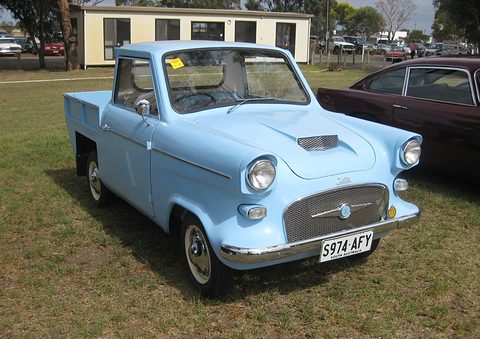
Its British parents, its German engine donor and an Australian rival
The Astra, the saloon’s ancestor
1948–1969 · Britain · 12 makers
Numbered as in the text
No period source was read: not the Australian Motor Manual of July 1964 that English Wikipedia cites, nor any report of the Ampol trial. The story rests on English Wikipedia, the Weiner museum’s two tour pages and one magazine article. Sources are given as plain text; the links are on the Credits page.