The story
History
In Japan in the Taishō years, cars were imported, or put together from imported parts. Toyokawa Junya, born in 1886, the eldest son of Toyokawa Ryōhei, a director of Mitsubishi, wanted to build one designed in Japan from parts made there.source 1source 2source 3 In 1912 he had founded a workshop in Sugamo, Tokyo, called Hakuyōsha, from a Chinese poem; the name expressed his resolve to give himself up to become a foundation for his country.source 2source 4 Between 1915 and 1917 he was in the United States, patenting a gyrocompass and negotiating with Sperry, and studying the motor industry while he was there.source 2 When his father died in June 1920 and left him the family fortune, he spent it on cars.source 2source 4
The first prototypes, the Ales, were finished at the end of 1921: a small air-cooled 780 cc car and a larger water-cooled one of 1,610 cc. Hakuyōsha bought a Hanomag, a Citroën and a Jordan and imported engines to study, not to copy.source 2source 4 The Ales won a silver prize at the Peace Commemoration Exhibition in Tokyo in 1922. After the Great Kantō earthquake of 1 September 1923, the ruined roads served as a test track; the engine grew to 943 cc and ten improved Ales were built by the end of the year.source 2
Named for a clan
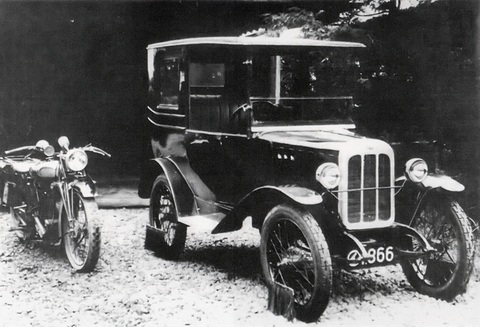
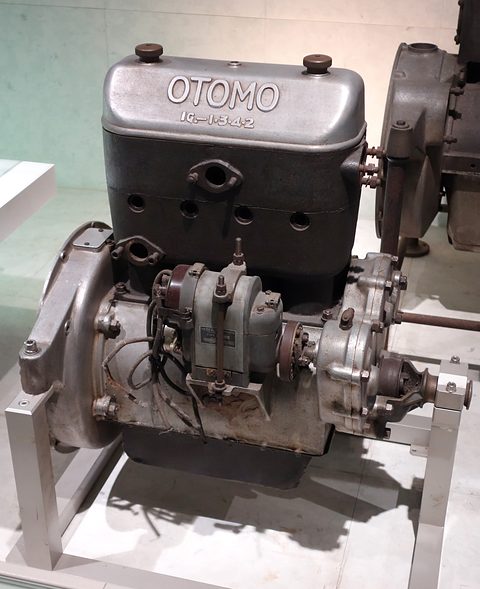
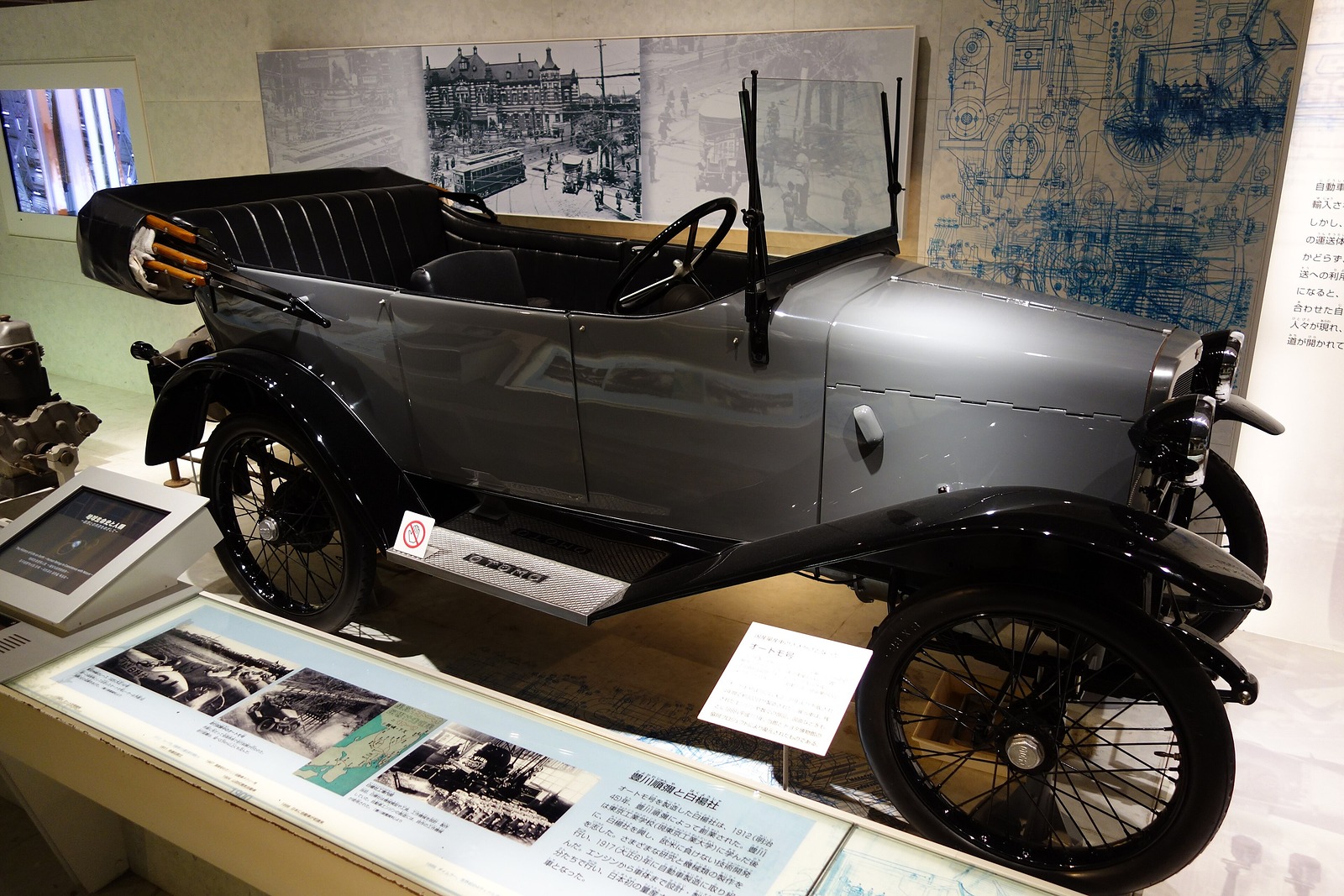
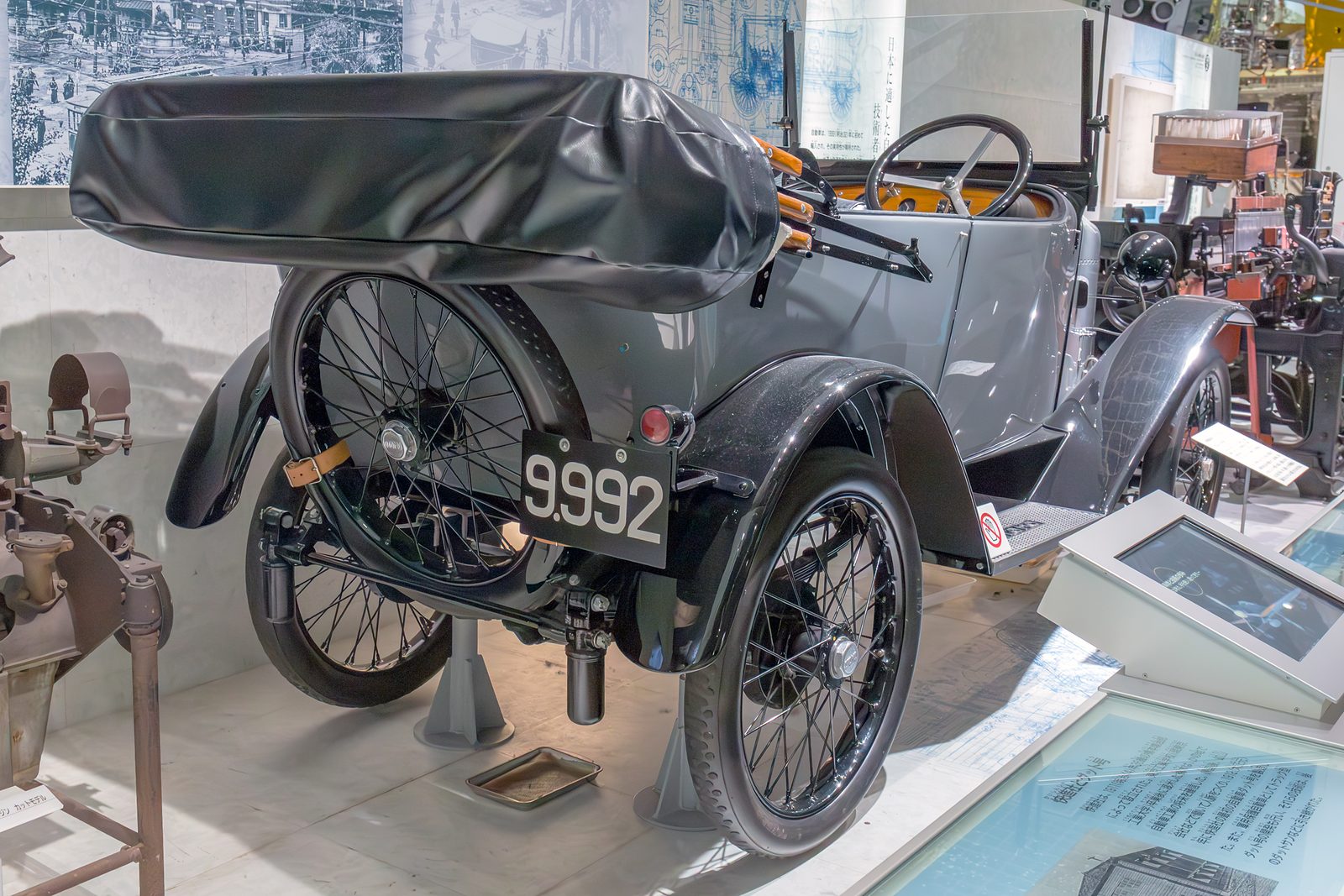
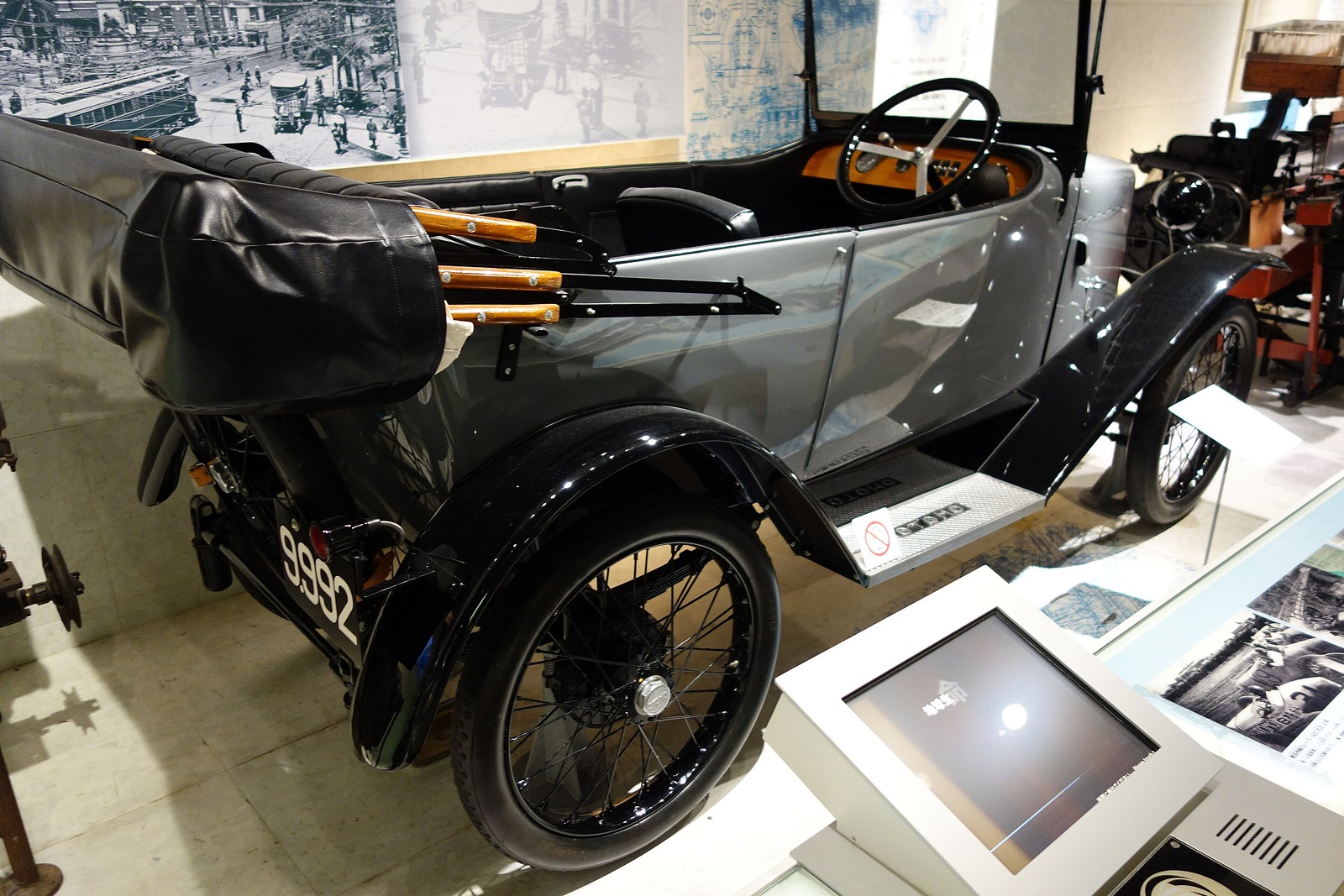
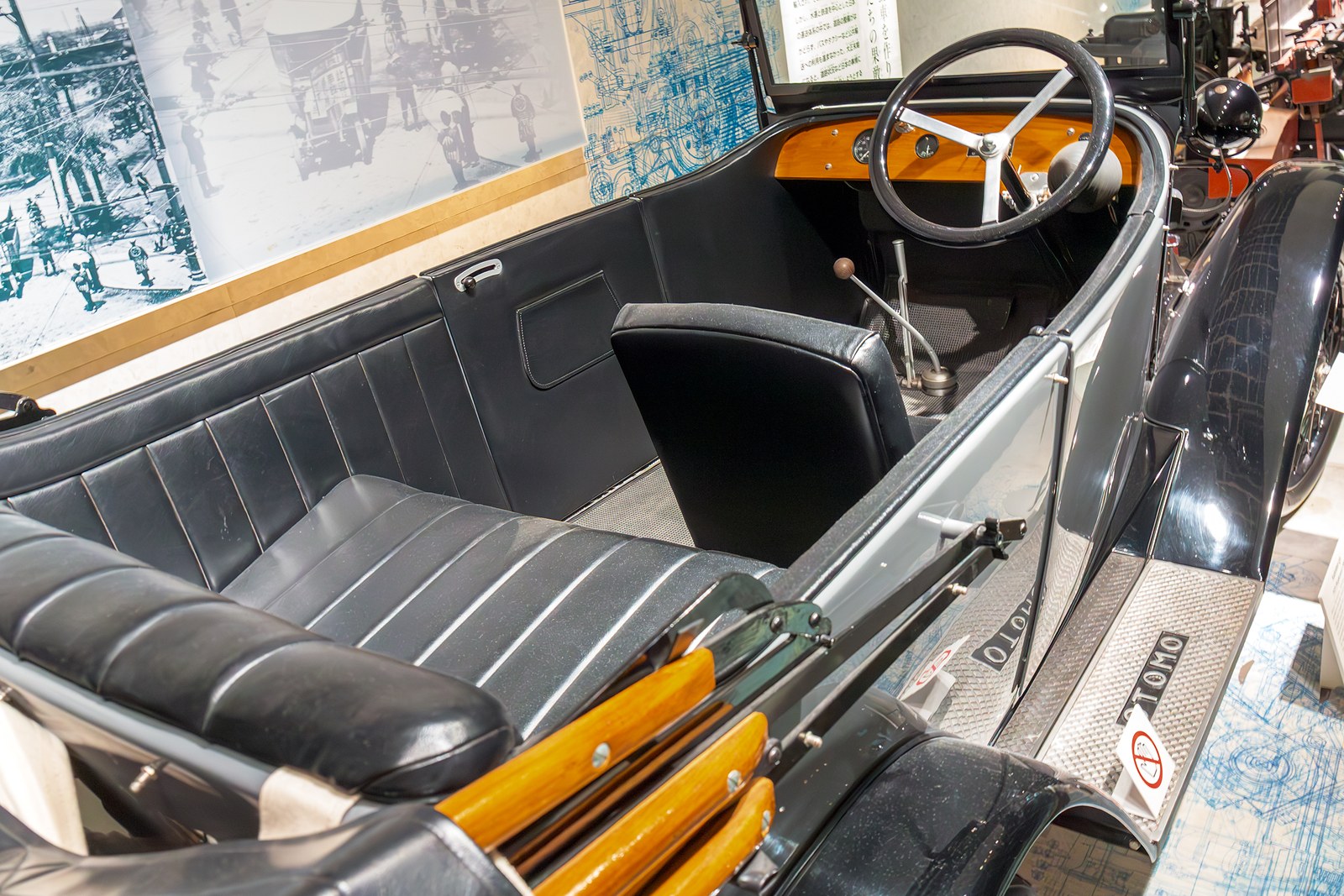
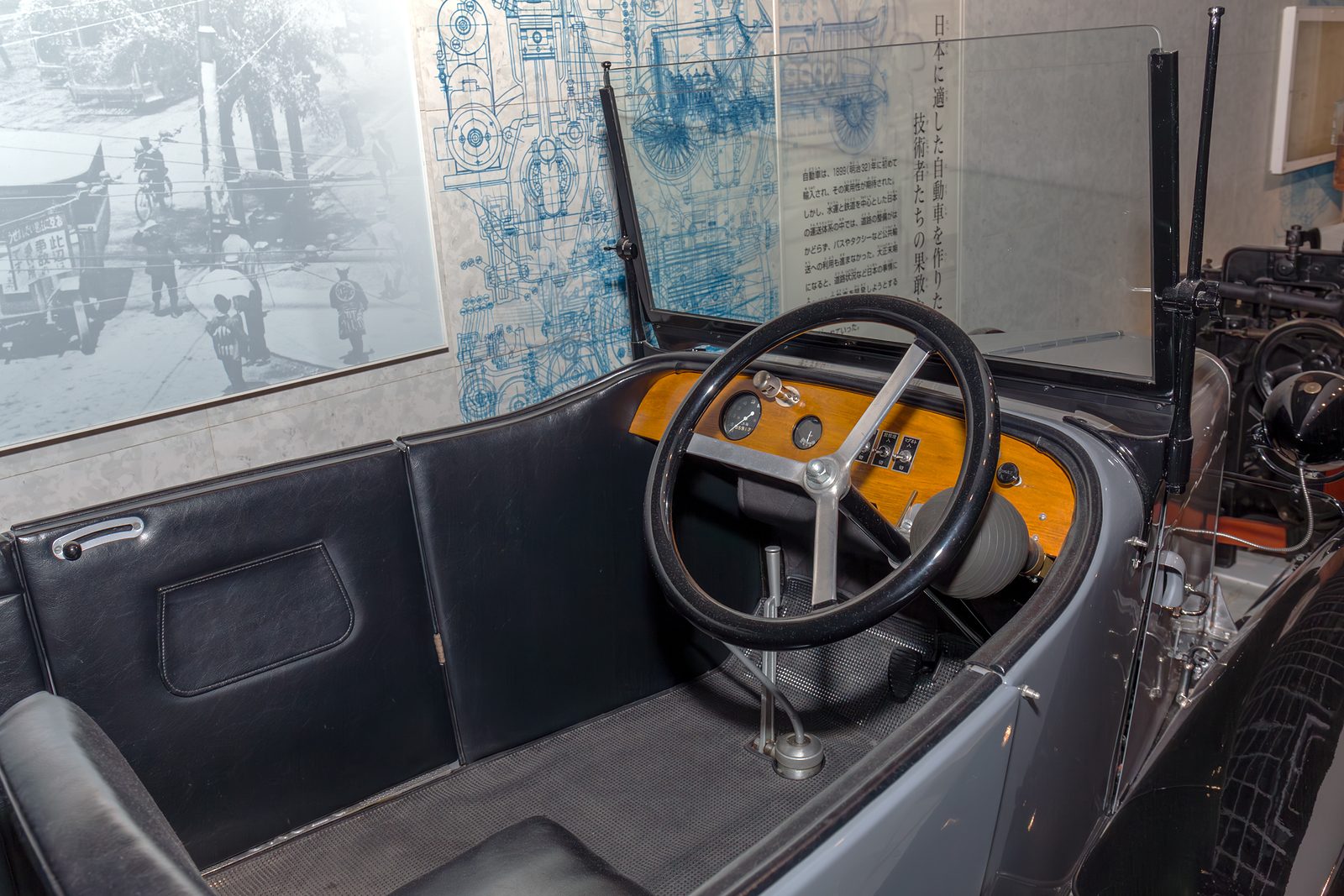
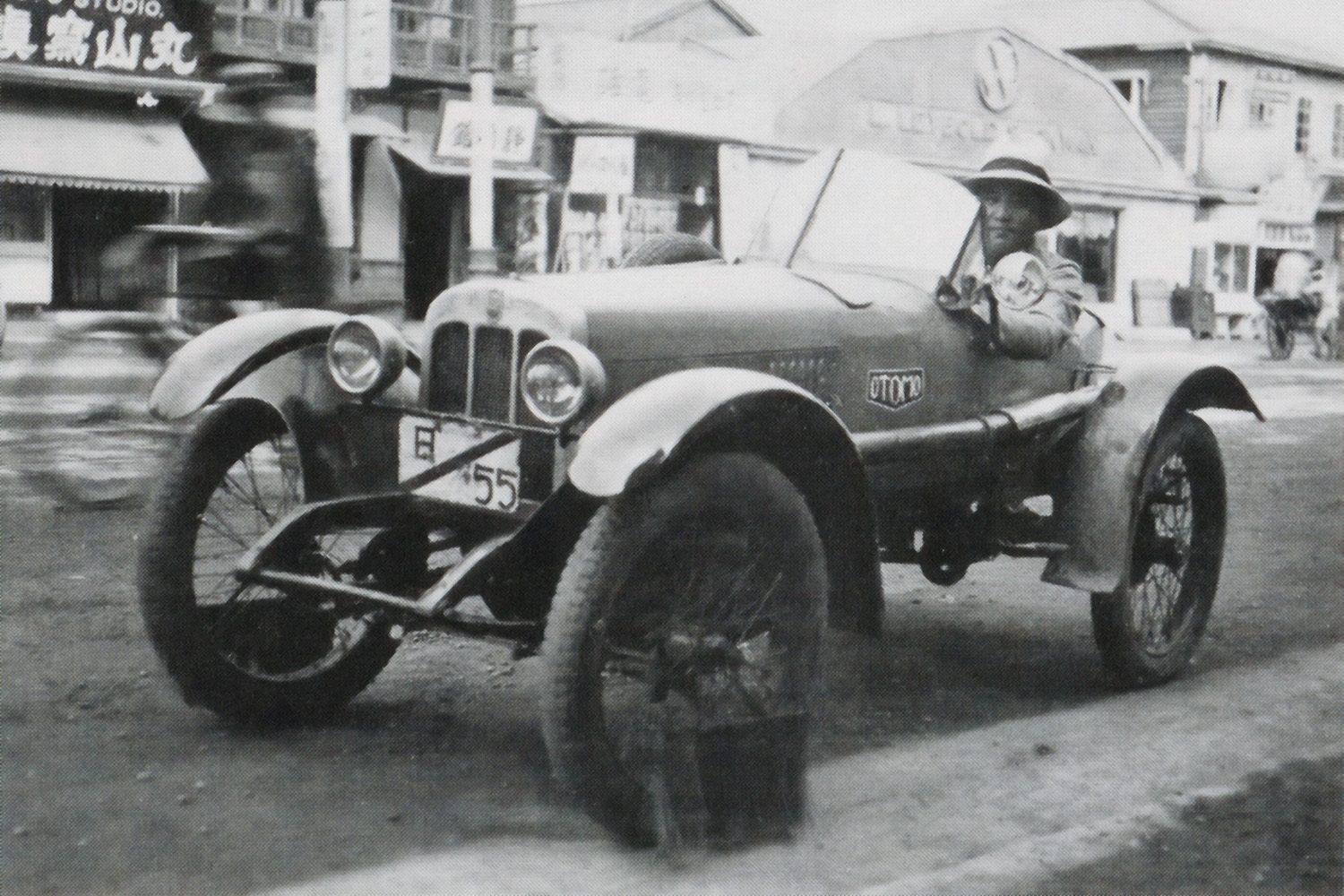
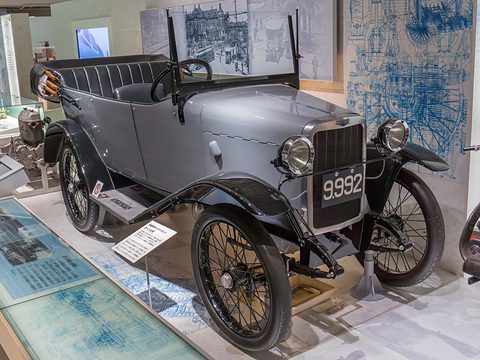
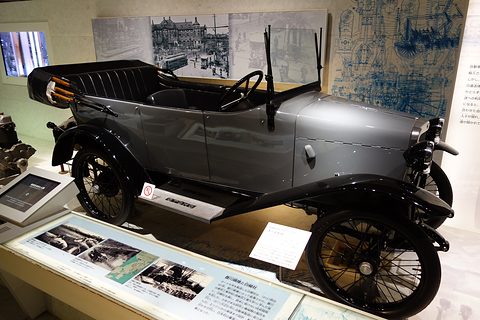
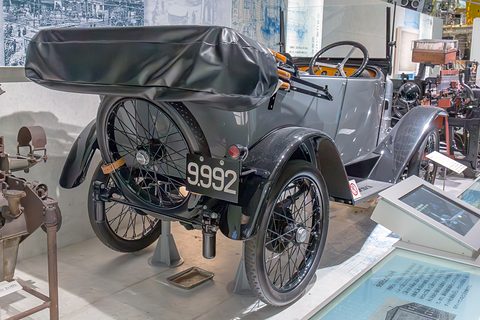
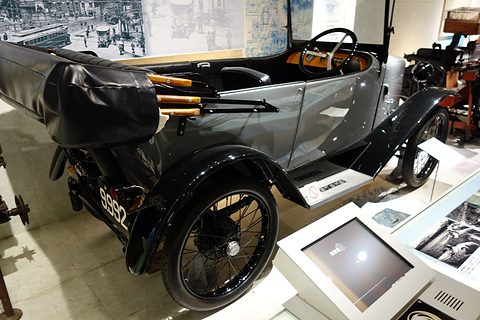
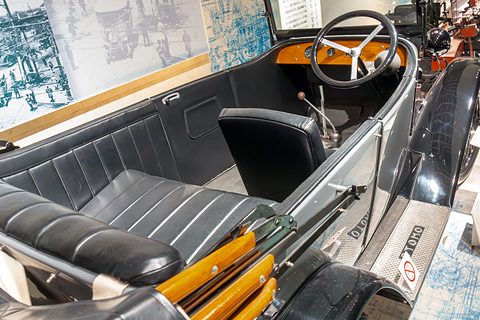
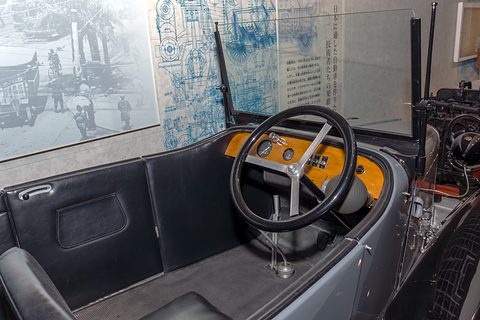
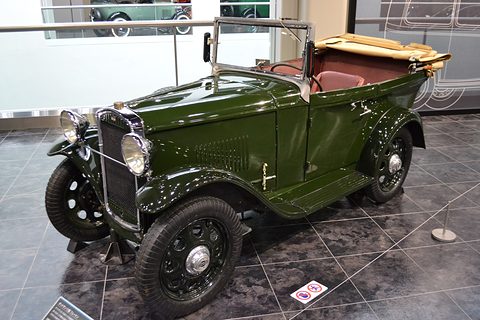
The car that went on sale was the Otomo. The name is often read as a play on “automobile”, and Japanese Wikipedia’s own article on Toyokawa repeats it, but Toyokawa said in an interview in 1958 that it came from Ōtomo, the ancient clan of his family’s ancestors.source 2source 3 Its engine was unusual anywhere in 1924: an air-cooled four with overhead valves, its cylinders cast with their cooling fins, and a wooden fan.source 2source 4 The phaeton seated the driver alone in front, with a bench behind and an occasional seat, and there were also a saloon, a roadster and a van. It was 3,030 mm long, ten shaku, and weighed 450 kg (992 lb).source 2source 5
Before the launch the prototype ran from Sugamo to Osaka, to Sendai and over the mountain passes of Kantō, and climbed every steep hill in Tokyo, the 20 per cent Edomizaka among them. From midnight on 21 August 1924, Toyokawa and his employee Sakai Takashi took turns to drive it from Tokyo to Osaka, 40 hours without a stop.source 2source 3 The Otomo went on sale in November 1924, and its launch show at Hakuyōsha’s office in Eirakuchō drew 5,000 visitors in three days, the prime minister, Katō Takaaki, among them.source 2 Its catalogue showed the actress Mizutani Yaeko, probably the first time an actress had sold a Japanese car.source 1source 2
To Shanghai
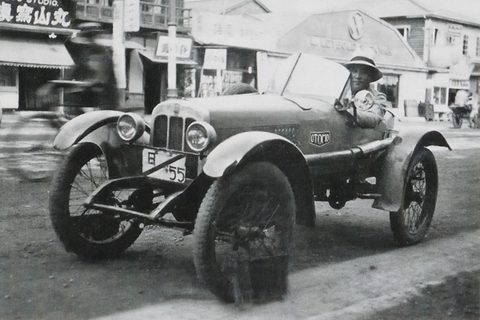
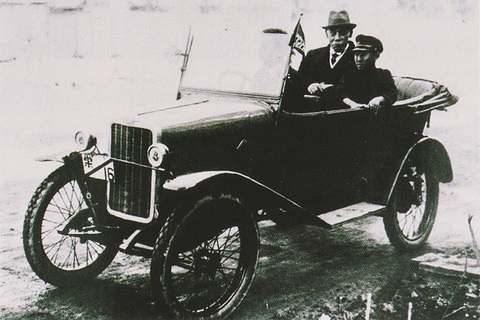
Sugiyama Takeo, a 20-year-old salesman in the Shanghai car department of the Morimura trading house, saw the Otomo in the Tokyo showroom. He bought car number 34 for ¥1,380 as a sample and shipped it to Shanghai on the NYK’s Aso Maru, on 28 November 1925 by Japanese Wikipedia’s account or at the end of October by the national museum’s; the customer ledger records the sale on 16 October.source 2source 4 Hakuyōsha’s car is counted as Japan’s first car export.source 1source 2source 4 A Dutch resident of Shanghai imported a second one directly, which ended its days as a red messenger car for the fire brigade in Zhabei.source 2 The Tōkyō Asahi Shimbun noticed:
日本で出来た自動車が初めて上海に輸出された。願わくは、将来の日本の自転車のように、輸出されることを期待する。
Racing a Curtiss
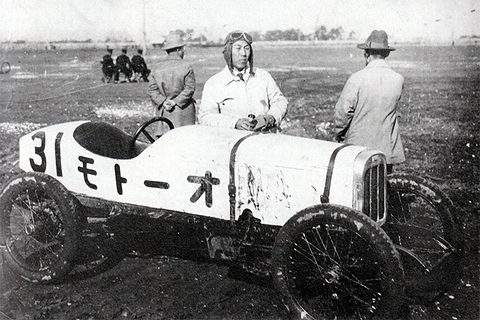
A week before the 8th Japan Motor Race, held on the reclaimed ground at Susaki in Tokyo on 6 December 1925, Toyokawa heard of it and built a racing Otomo in five days. Driven by Sakai Takashi, it was the only Japanese car in the field. It was fastest in the heats and second in the final, where only two cars finished; the winner was Art Shōkai’s 160 hp Curtiss, with the young Honda Sōichirō aboard as riding mechanic.source 1source 2source 4 (More on our pages of racing and rallying and records and feats.) Motor, Japan’s only motoring magazine of the time, was delighted:
多数の舶来自動車を一蹴し、国産自動車の為に万丈の気を吐きしは…
Sold at a loss
The price was ¥1,780 at launch, cut to ¥1,580 the next month, ¥1,280 by November 1925 and ¥985 by March 1927, and every one of those prices was below cost; Toyokawa said later that he lost about ¥1,000 a car. Ford Japan sold a five-seat Model T tourer for ¥1,475 in 1926.source 2source 4 Ford began assembling cars at Yokohama in 1925, and General Motors at Osaka in April 1927, and Hakuyōsha could match them neither on price nor on performance.source 2source 4source 5 Major-General Yamakawa Ryōzō praised the Otomo as cheap to buy, tax and run, light enough for weak bridges and nimble in narrow lanes, and noted that three of them parked where two ordinary cars would fit. Its air-cooled engines ran very hot and fouled with carbon.source 2
In 1927 came larger engines, an air-cooled 1,331 cc and then a water-cooled 1,487 cc, both with electric starters.source 2 That year the US Commerce Department named Hakuyōsha and Ishikawajima as Japan’s only real car makers, and in 1928 it called the Otomo the most successful passenger car made in Japan, by Japanese Wikipedia’s summary.source 2 By then it was all but over. Production ended in the spring of 1928, and Hakuyōsha closed completely in 1929.source 2source 4 Toyokawa ran a private laboratory and advised Nakajima Aircraft during the war, and died on 7 March 1965.source 3 His engineers went on: Makita Tetsuji founded Nihon Nainenki, and Ikenaga Kuma, Ōno Shūji and Kurata Shisaburō joined the car department of the Toyoda Automatic Loom Works, the beginnings of Toyota.source 2