microcarfan
  • Kei car
  • Japan
  • Four wheels
  • Four cylinders

Mazda Carol

Also known as Carol 360, Carol 600, P360, KPDA

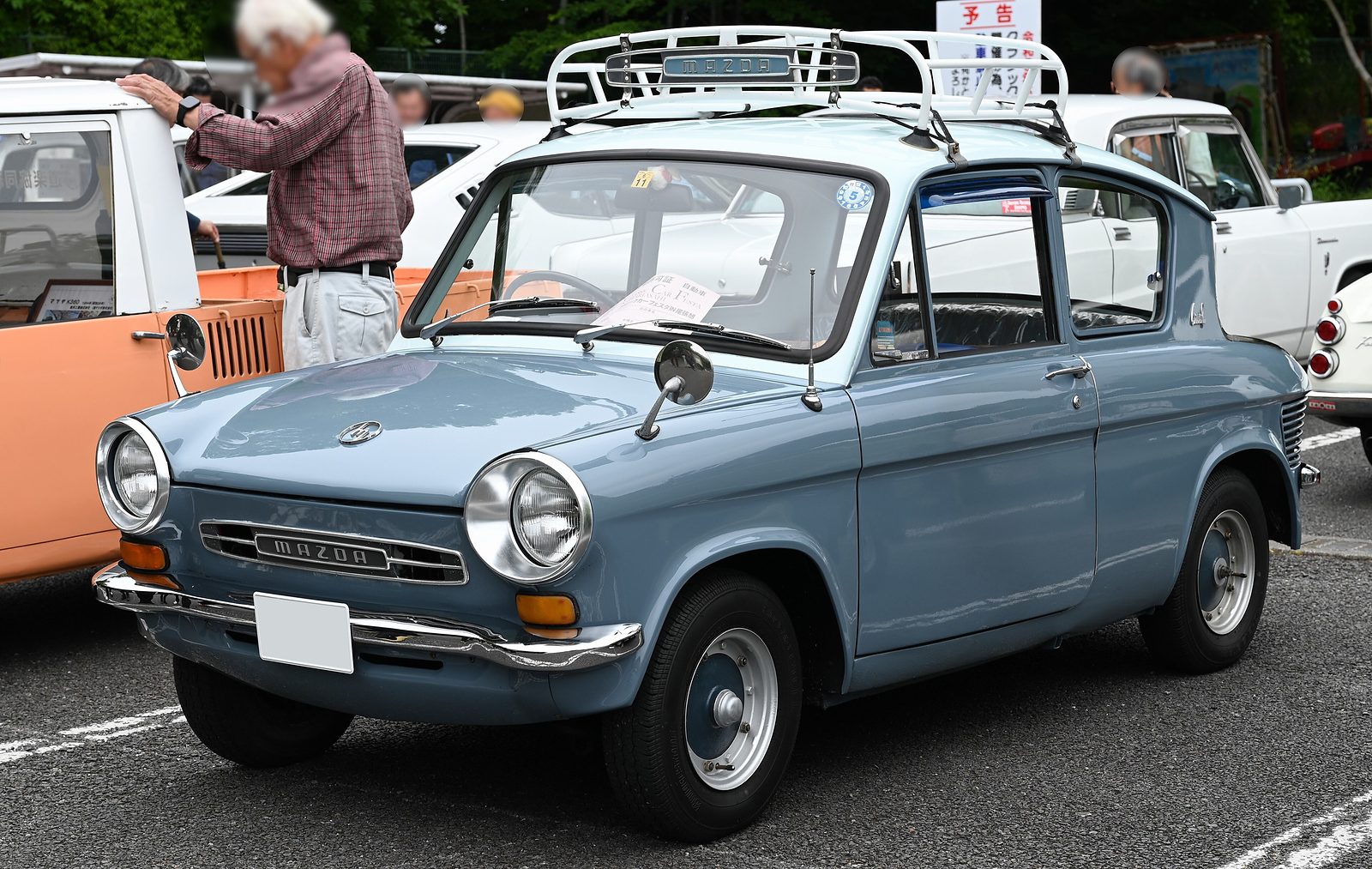
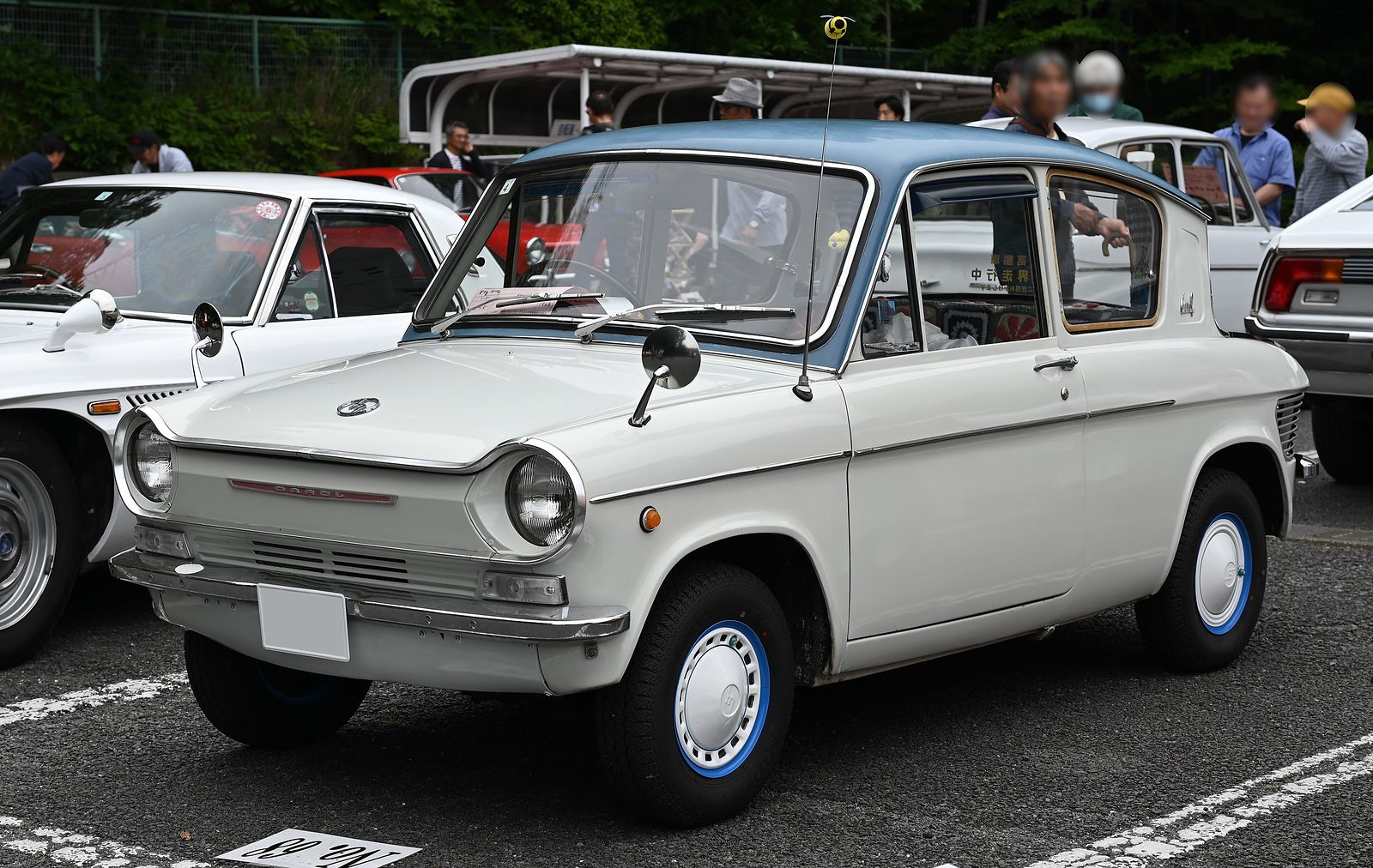
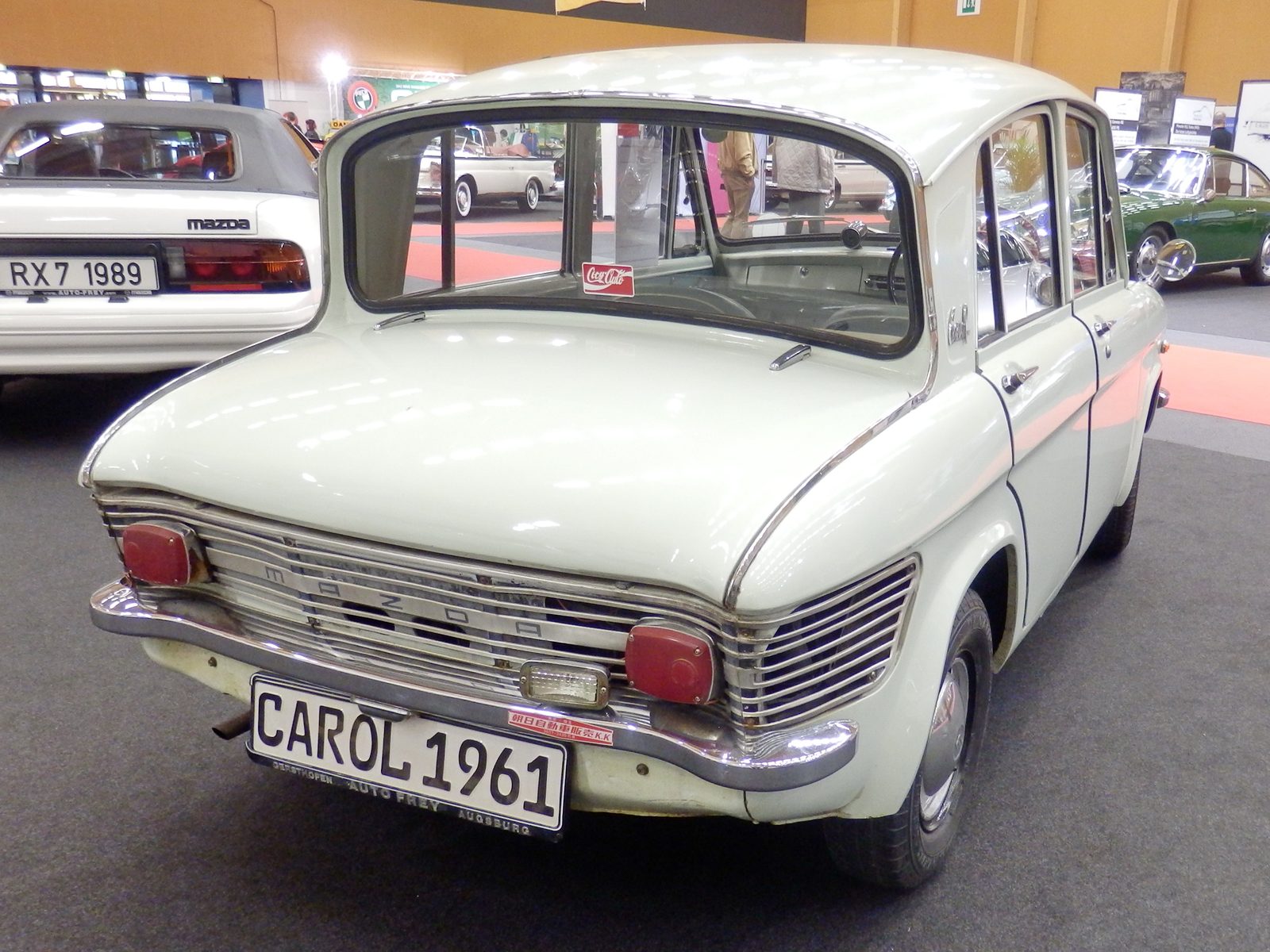
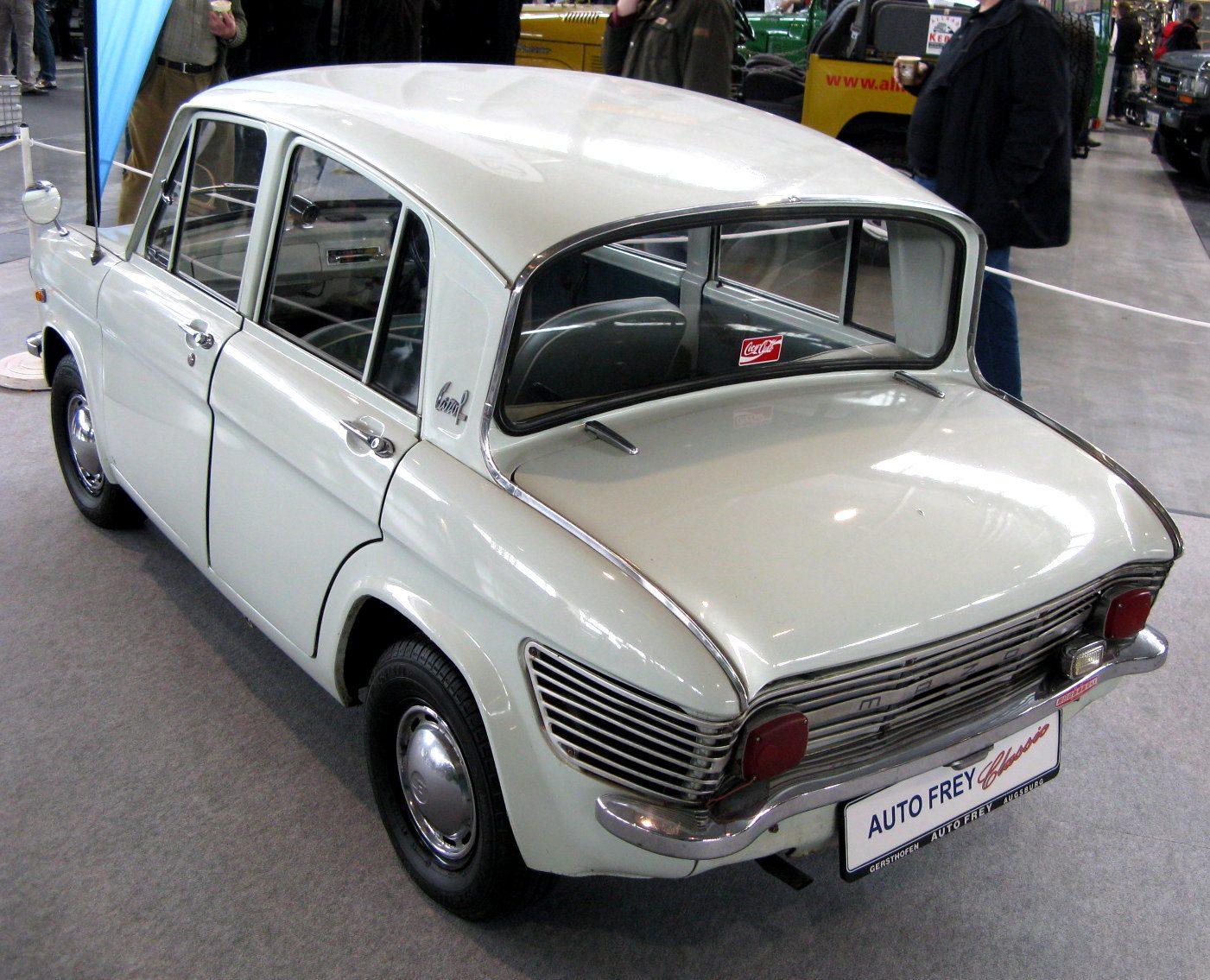
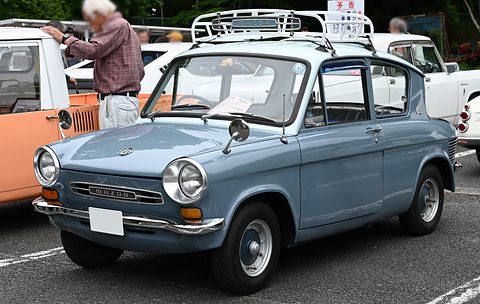
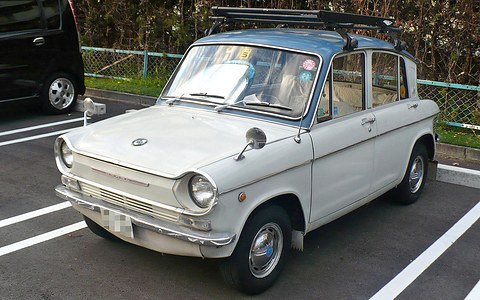
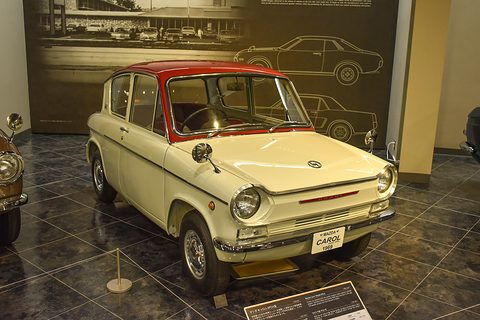
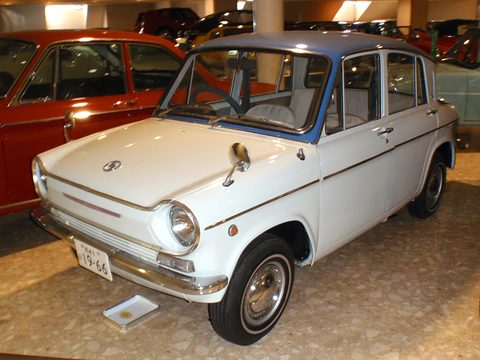
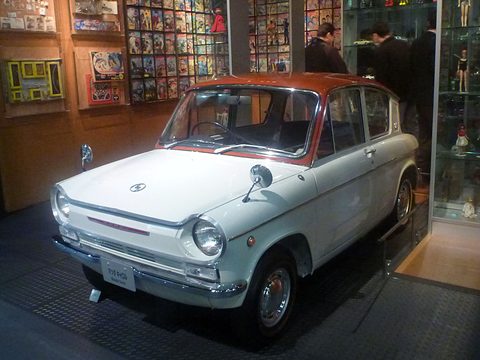
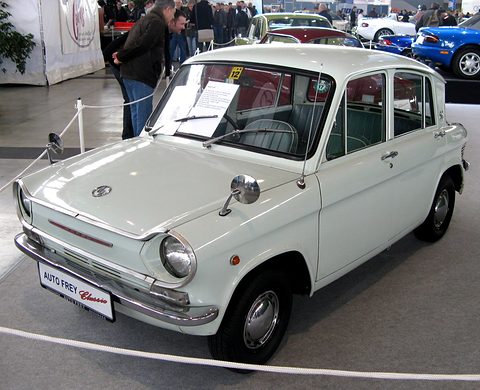
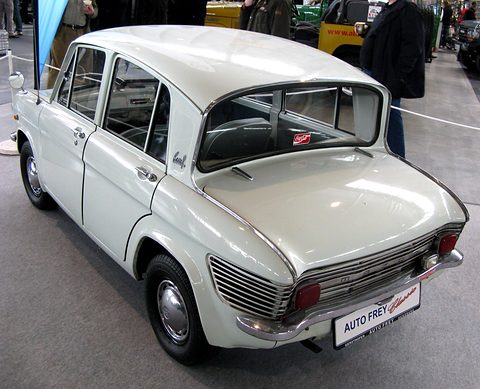
The rear window leant the wrong way, forward over the back seat, to give the passengers headroom and the engine a big lid. Under the lid lay the smallest water-cooled four-cylinder engine in the world, 358 cc of aluminium alloy, in a car that a year later became the first kei car with four doors.

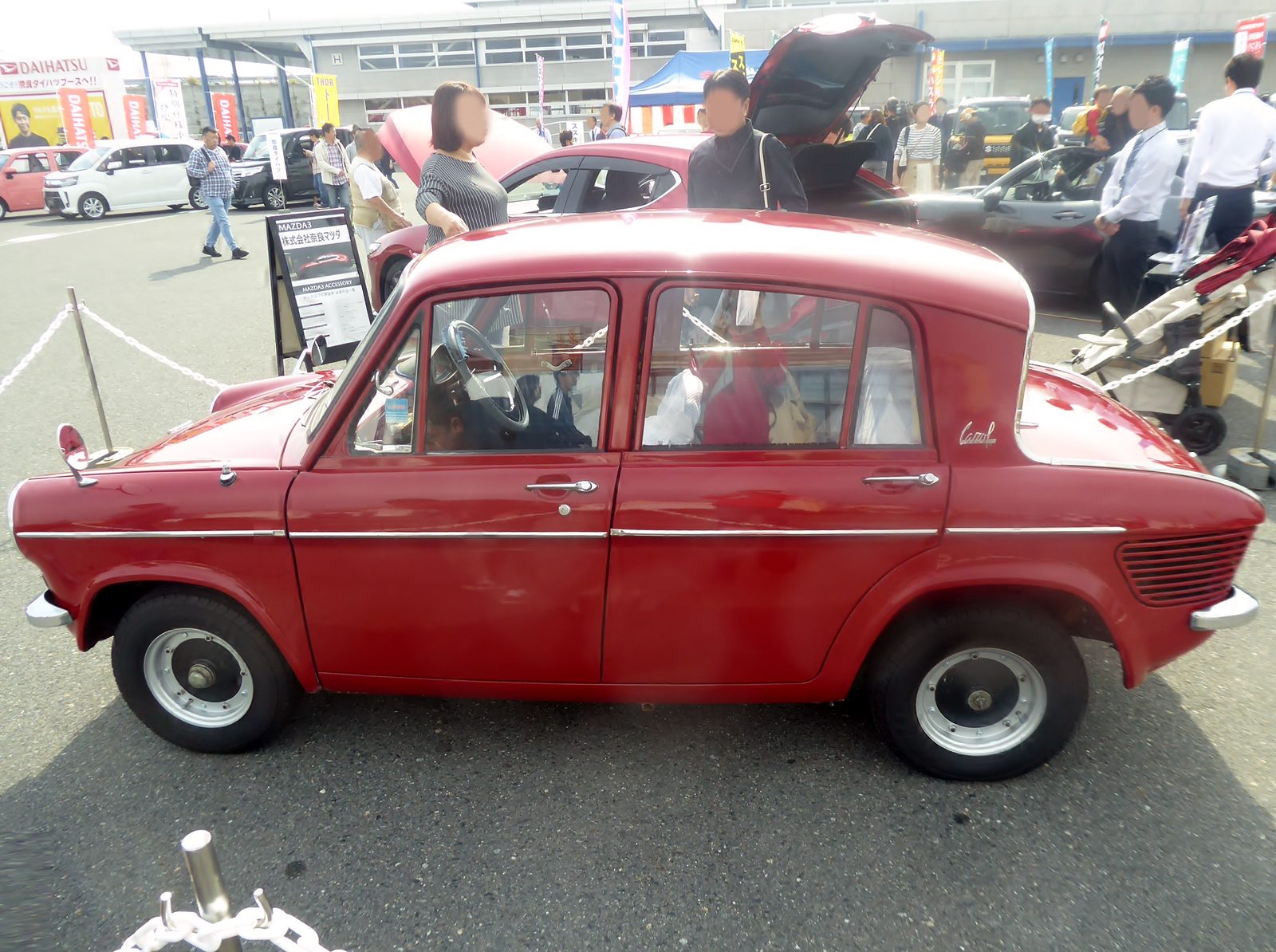
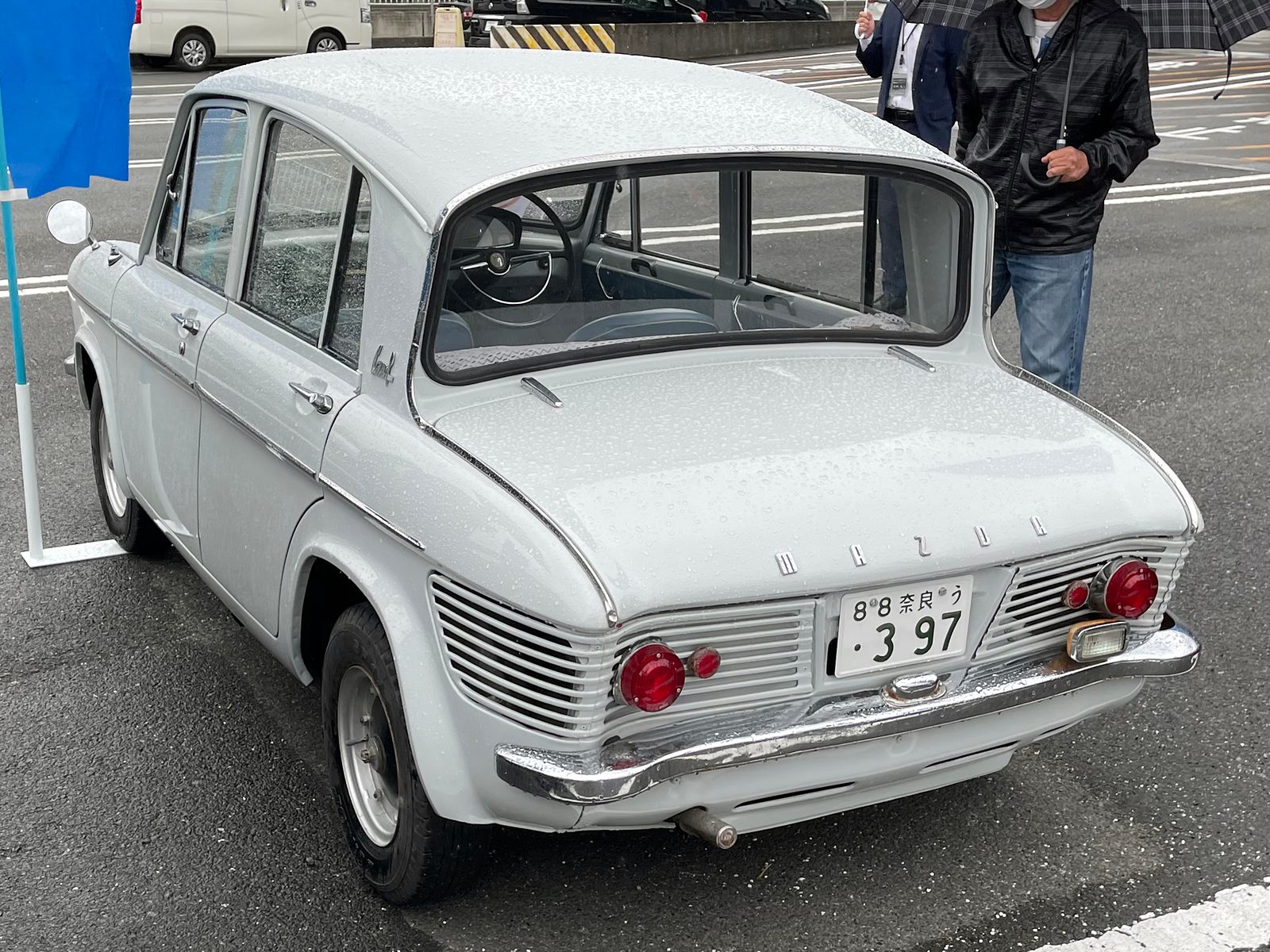
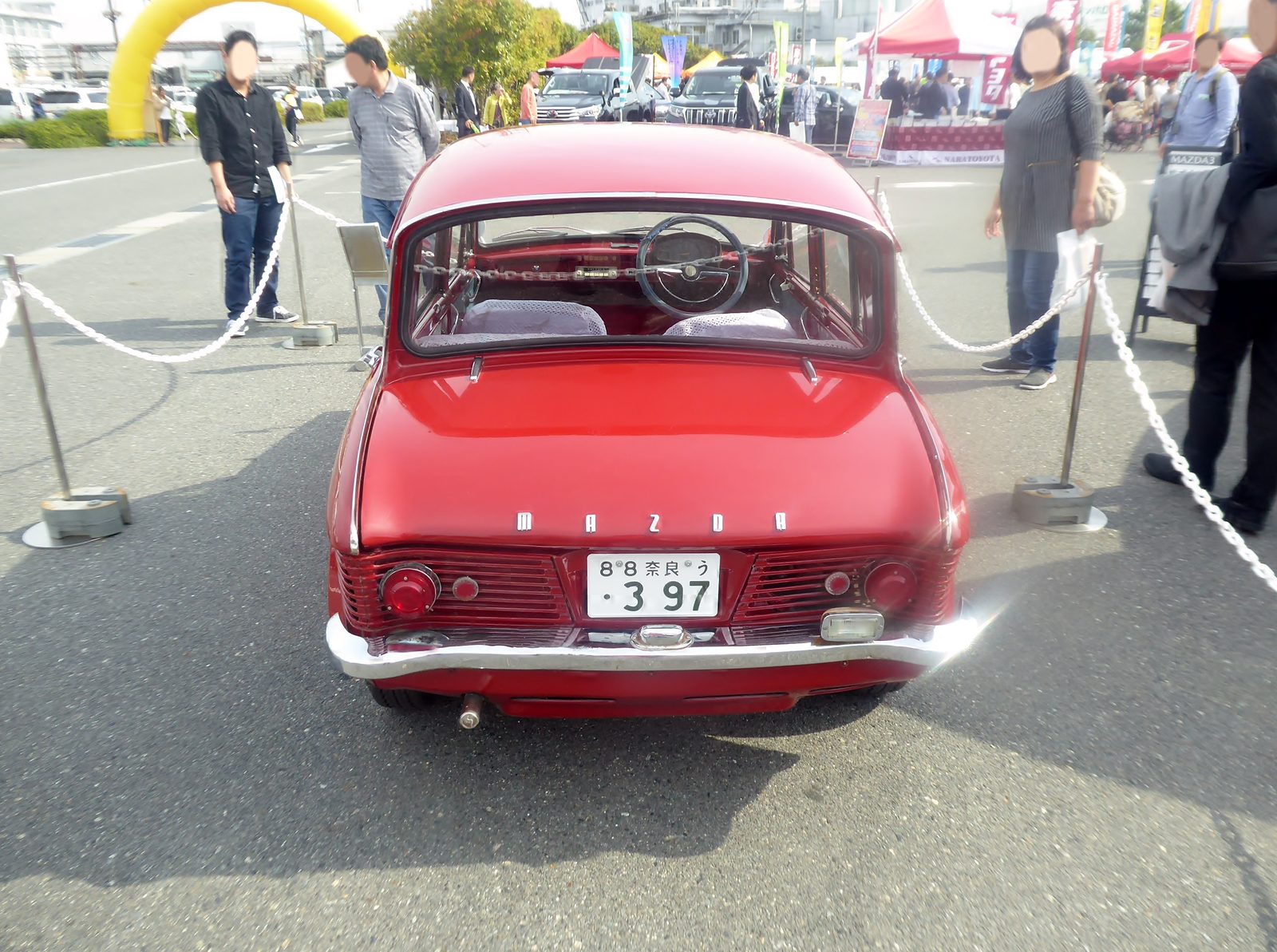
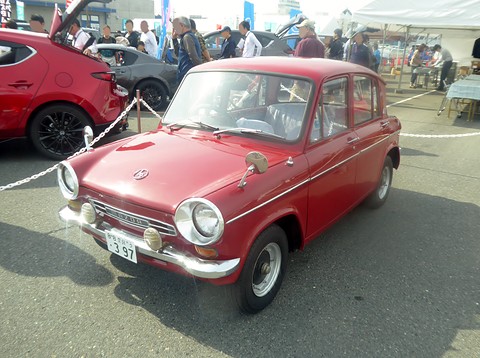
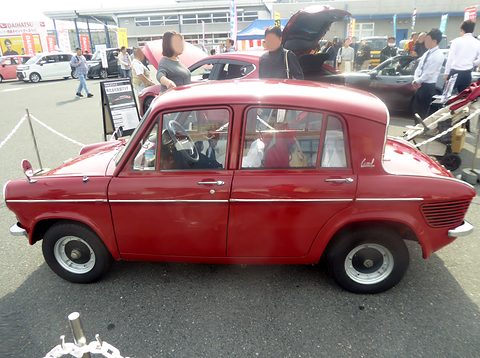
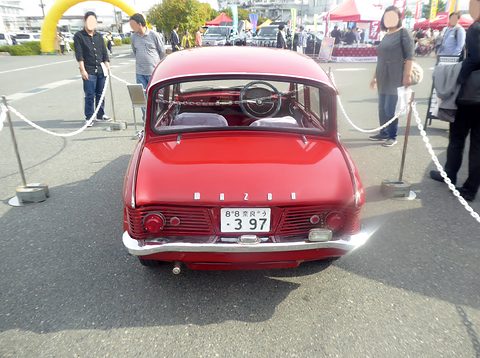
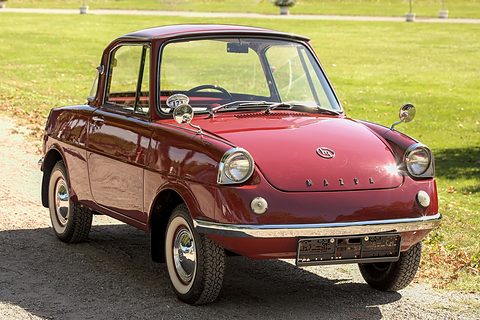
Red four-door small saloon behind a rope barrier, a modern red Mazda and visitors behind.
A red Mazda Carol 360 at a classic car meeting in Japan in 2019.Photo: Tokumeigakarinoaoshima, CC BY-SA 4.0, via Wikimedia Commons

At a glance

The spec plate

Mazda Carol

Carol 360 · Hiroshima

Built
1962–⁠1970February 1962 to August 1970; the Carol 600 from November 1962, for about two years
Country
JapanTōyō Kōgyō, Hiroshima
Maker
Tōyō KōgyōHiroshima; now Mazda
Engine
358 cc water-cooled four, overhead valvesAll aluminium alloy, mounted across the tail; the Carol 600 586 cc
Power
18 PS13 kW, at 6,800 rpm; 20 PS (15 kW) from October 1966
Length
2,980 mm1,295 mm wide, 1,340 mm high
Weight
525 kgThe two-door of 1962; 540 kg for a car of 1969
Seats
4
Wheels
4Engine at the back, mounted across the car, driving the rear wheels
Survives
YesNo count; Mazda and the Toyota Automobile Museum each keep one
Top speed
90km/h90 km/h

How big is it?

True proportion

2.98 m

It is 10 mm longer than a Fiat 500, about 1.7 adults laid end to end.

Drawn at true proportion. The track is 3.6 metres long; the adult stands at the same scale. The Peel P50 is the smallest production car, on every page for comparison.

The story

History

The Mazda R360 Coupe of 1960 had sold on its price, but it was really a two-seater, and its simple air-cooled V-twin lacked the refinement a passenger car needed.source 2 Tōyō Kōgyō wanted a full four-seater to take on the Subaru 360.source 2source 3 It showed one first as a 700 cc saloon, the Mazda 700, at the Tokyo Motor Show of 1961, then launched it within the 360 cc limit of the kei rules, and production of the Carol began in February 1962 with a two-door.source 1source 2

Four cylinders in 358 cc

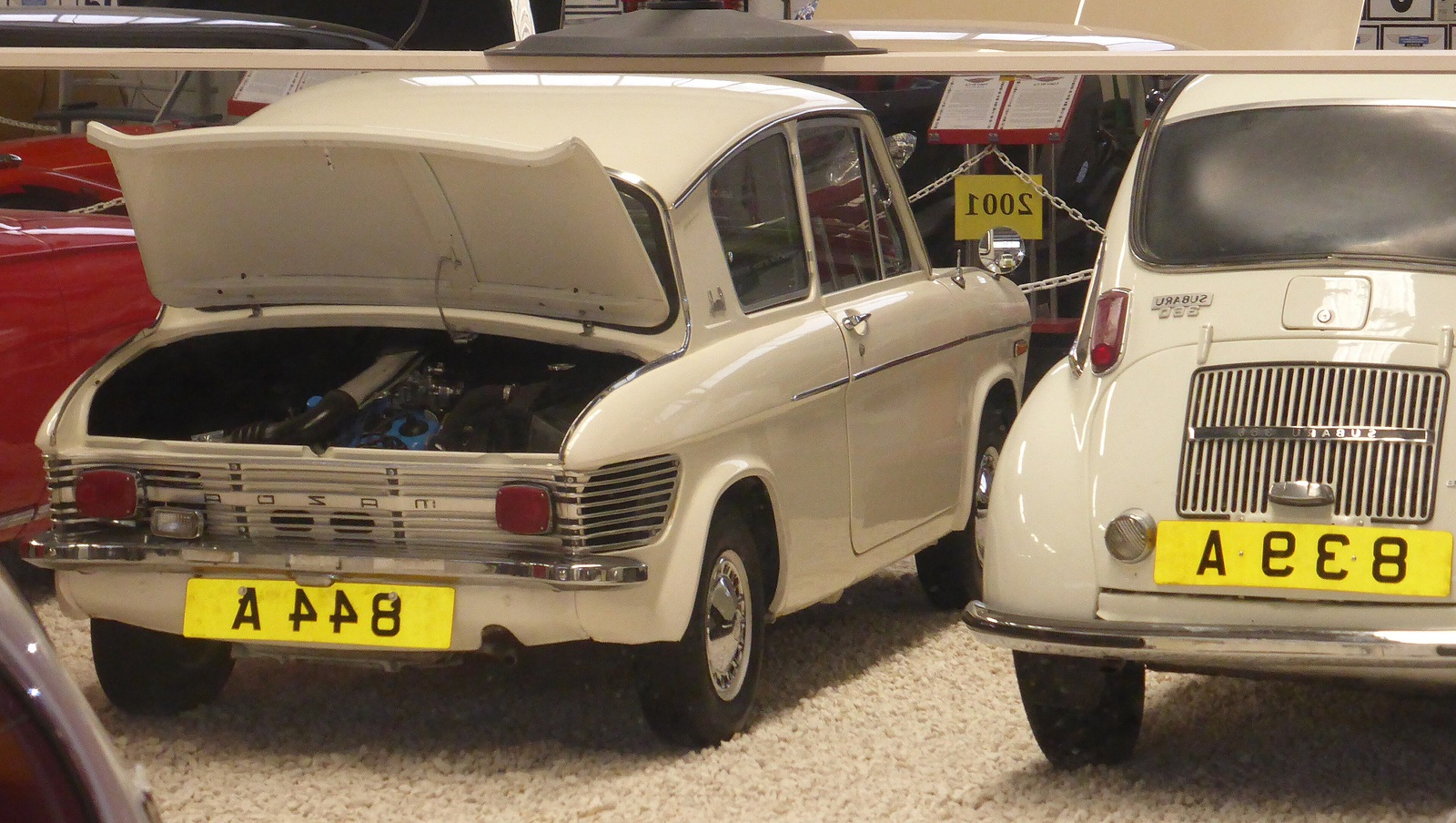
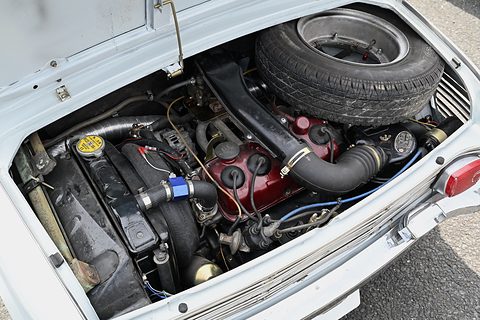
The engine was a water-cooled in-line four with overhead valves, all aluminium alloy, with a five-bearing crankshaft, hemispherical combustion chambers and crossflow valves. At 358 cc it was the smallest water-cooled four in the world, and the JSAE calls it the first all-aluminium engine in a kei passenger car.source 1source 2source 4 It gave 18 PS at 6,800 rpm.source 1 The block was drawn with room to grow to about 800 cc, so that it could be shared with the Familia small car that was coming; the Familia 800 of October 1964 did use an engine rich in light alloy.source 2source 4 The price of that plan was an engine big and heavy for 360 cc.source 2 From September 1963 it also went into the Mazda B360 truck, in place of its air-cooled V-twin.source 5

The engine sat across the tail, with its radiator beside it, fed by an engine-driven fan that drew air in from the side, and the noise of that fan is one of the Carol’s traits.source 2 With four water-cooled cylinders and rubber springs, the car was smooth and quiet, far better in that respect than the air-cooled twins.source 2

The cliff cut

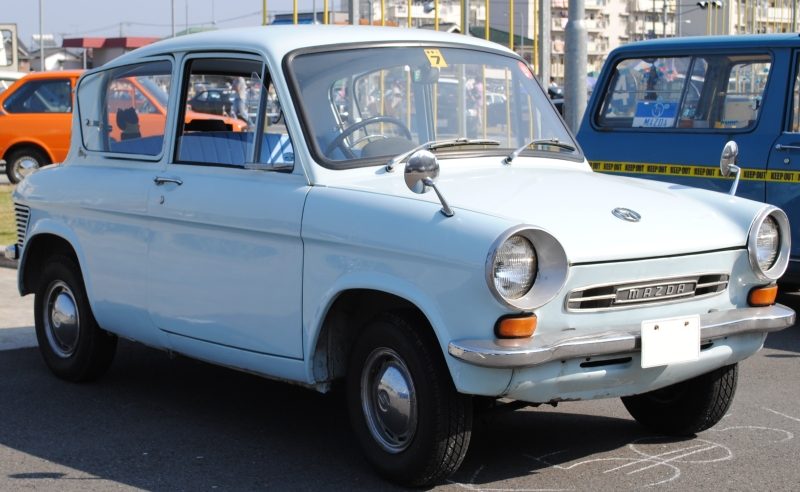
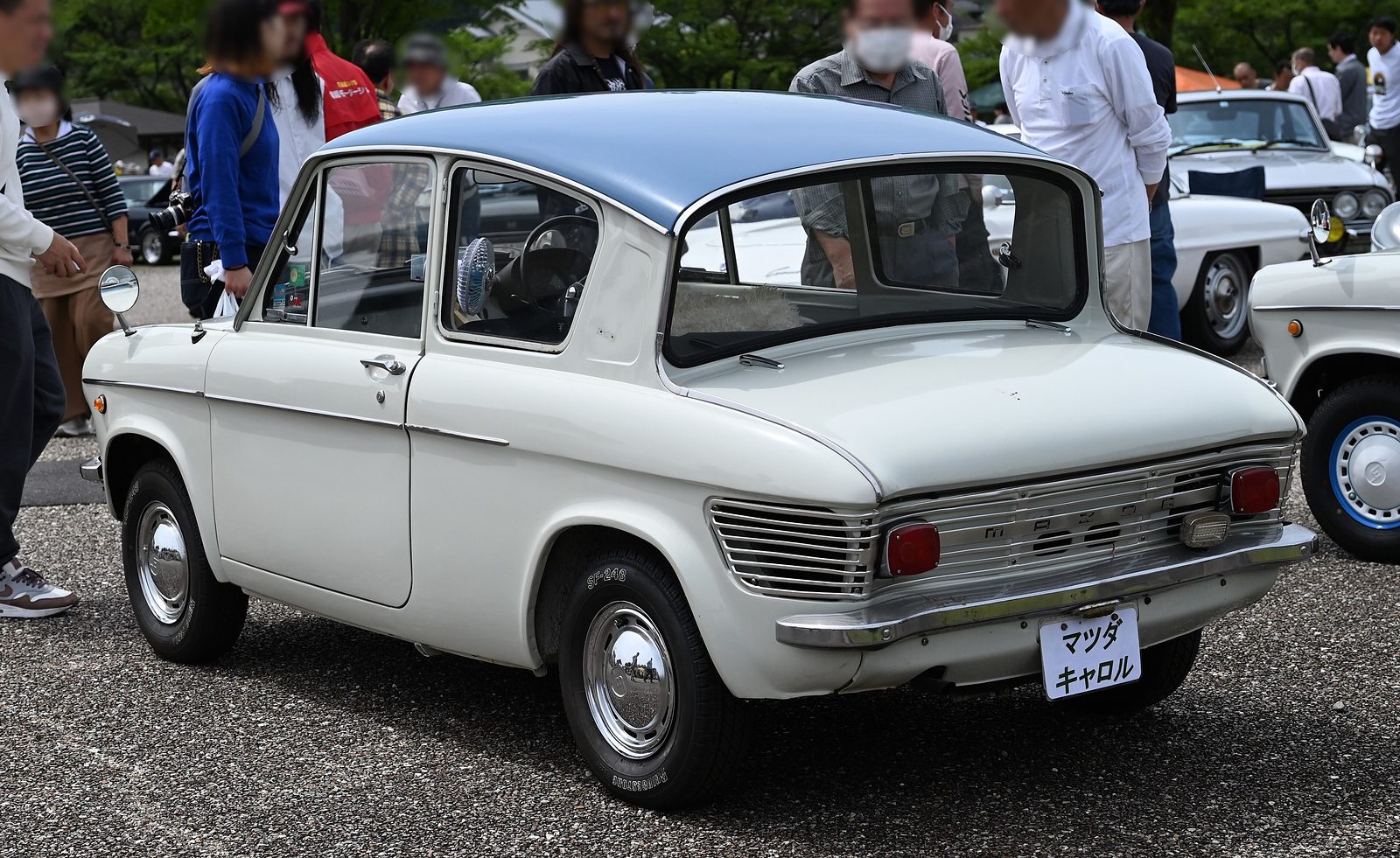
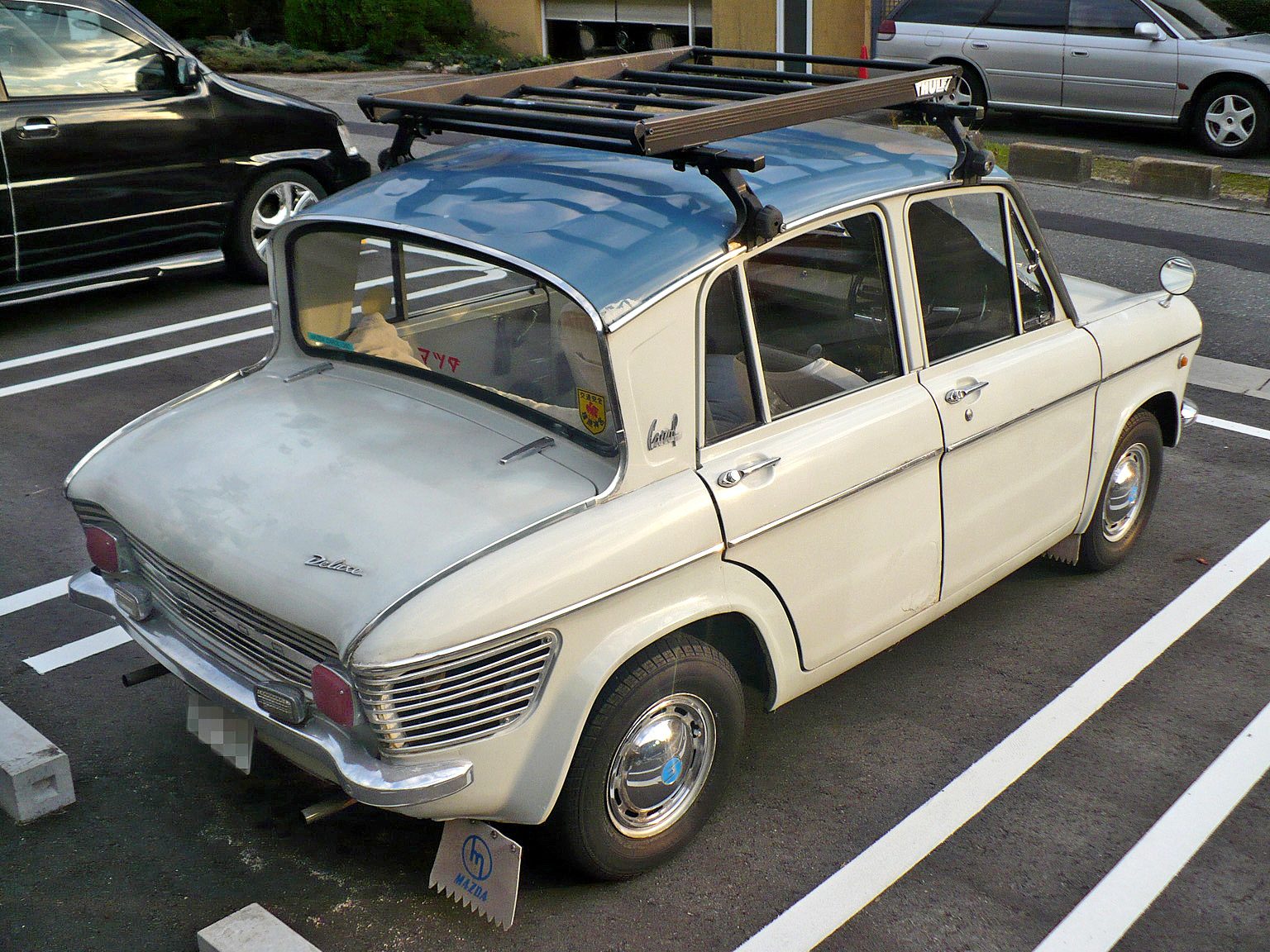
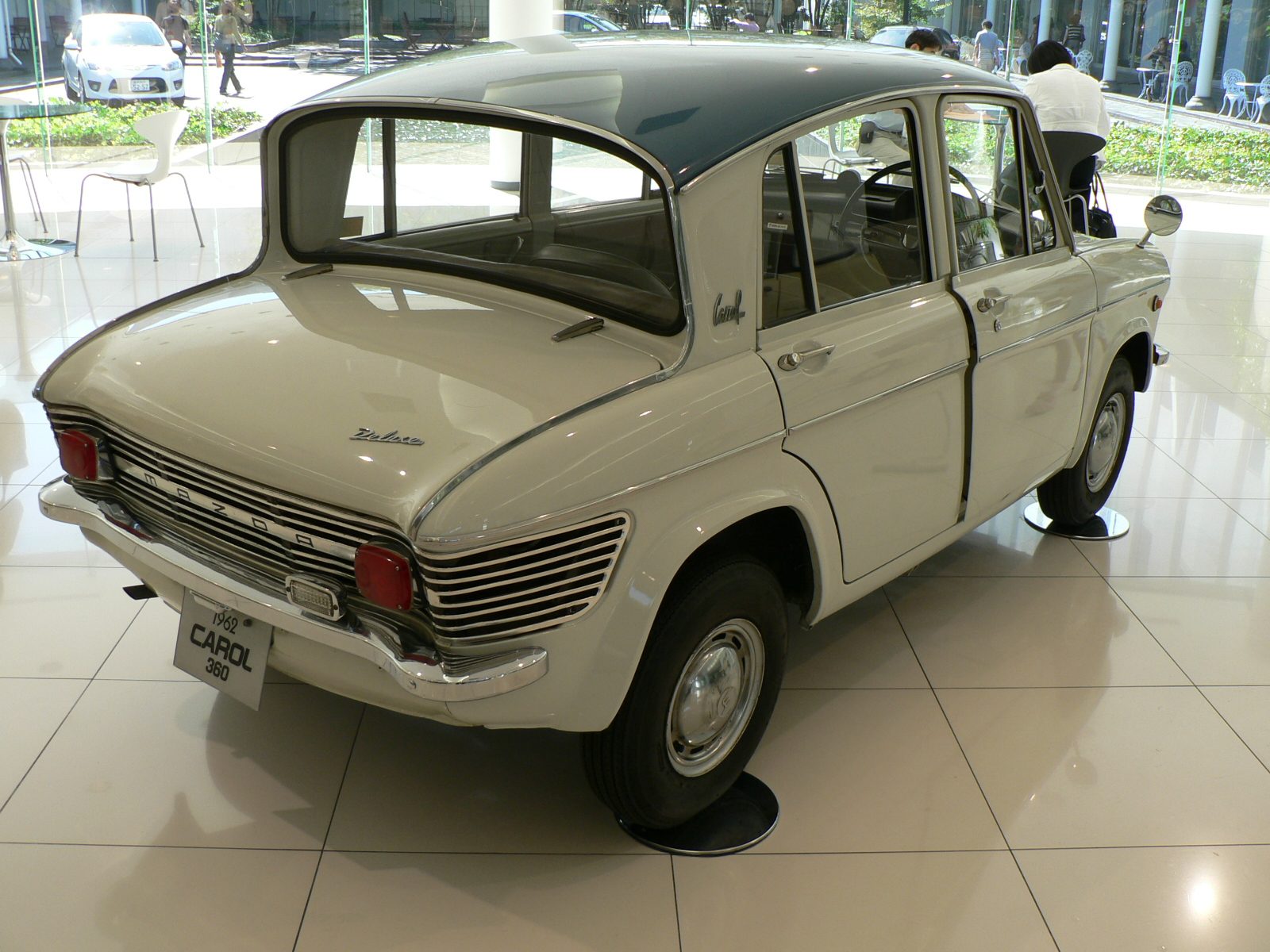
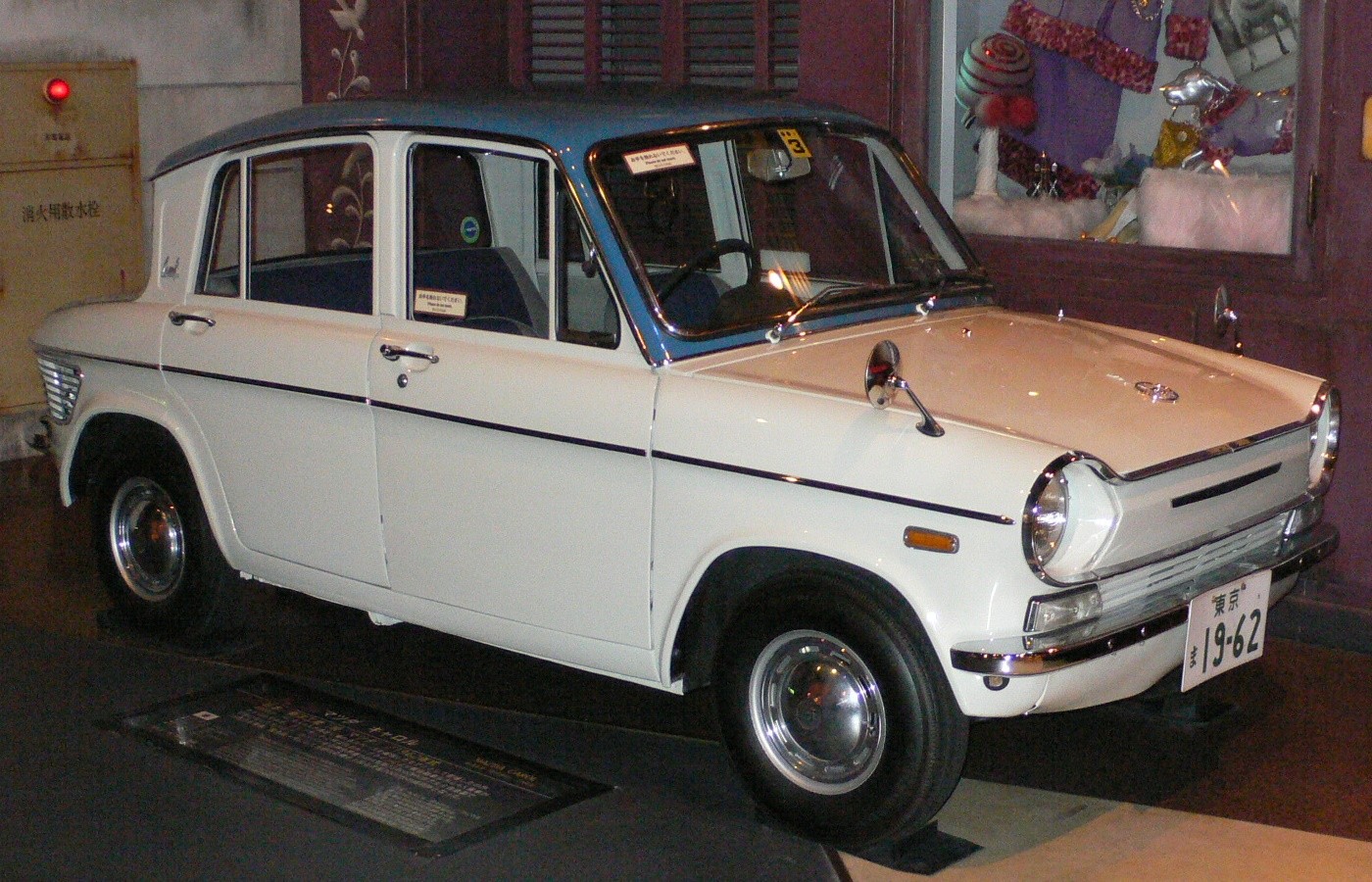
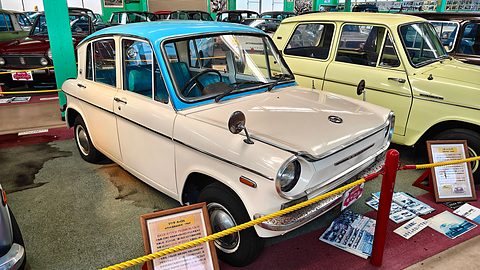
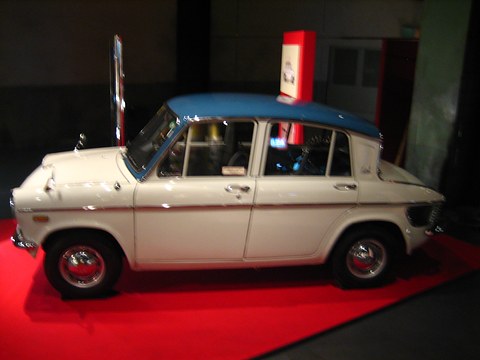
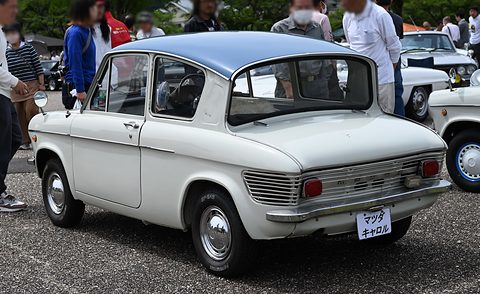
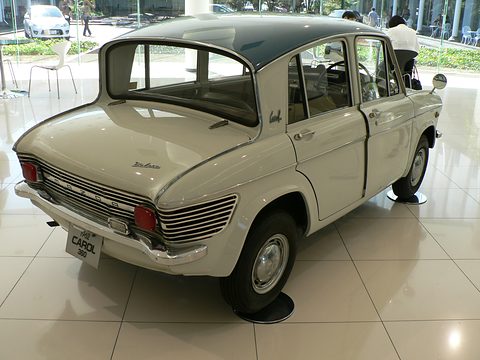
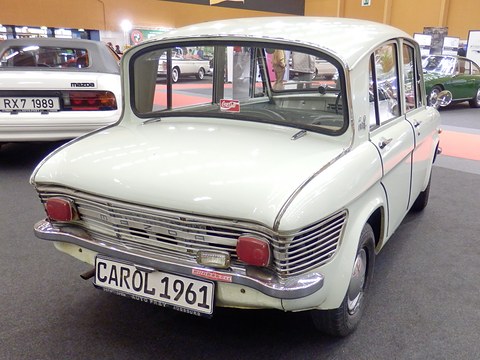
The rear window, raked forward like that of the Ford Anglia 105E of 1959, was called the cliff cut. It gave the rear passengers headroom and left room for a large engine lid.source 1source 2 The JSAE lists three Japanese firsts on the Carol: the cliff-cut style, a four-door kei car, and rubber torsion springs at both ends, the independent Neidhart type. It had Alfin brakes too.source 1

Room was the problem. Inside the 1,300 mm width limit, with luggage in the nose and the engine in the tail, the cabin was very tight. At 525 kg (1,157 lb) the car was also about 150 kg heavier than the R360 or the Subaru 360, and it was short of performance from the start.source 1source 2

A Carol 600 and four doors

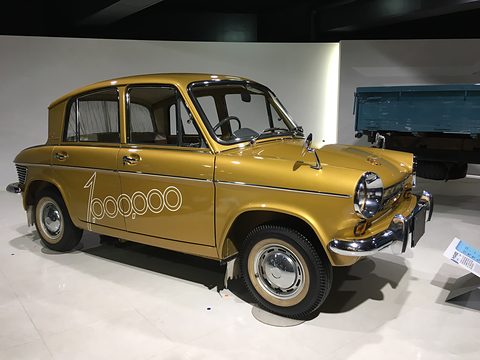
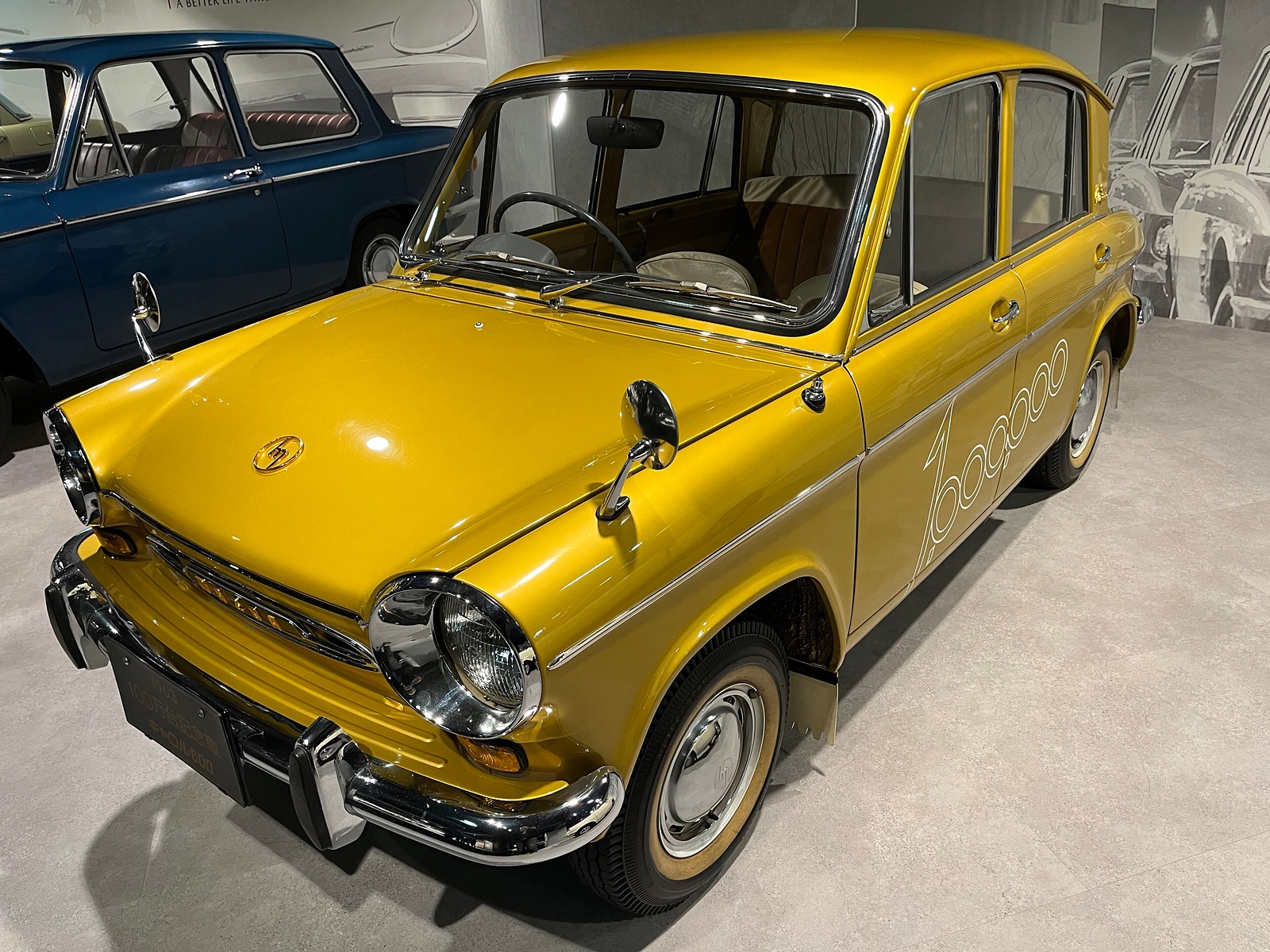
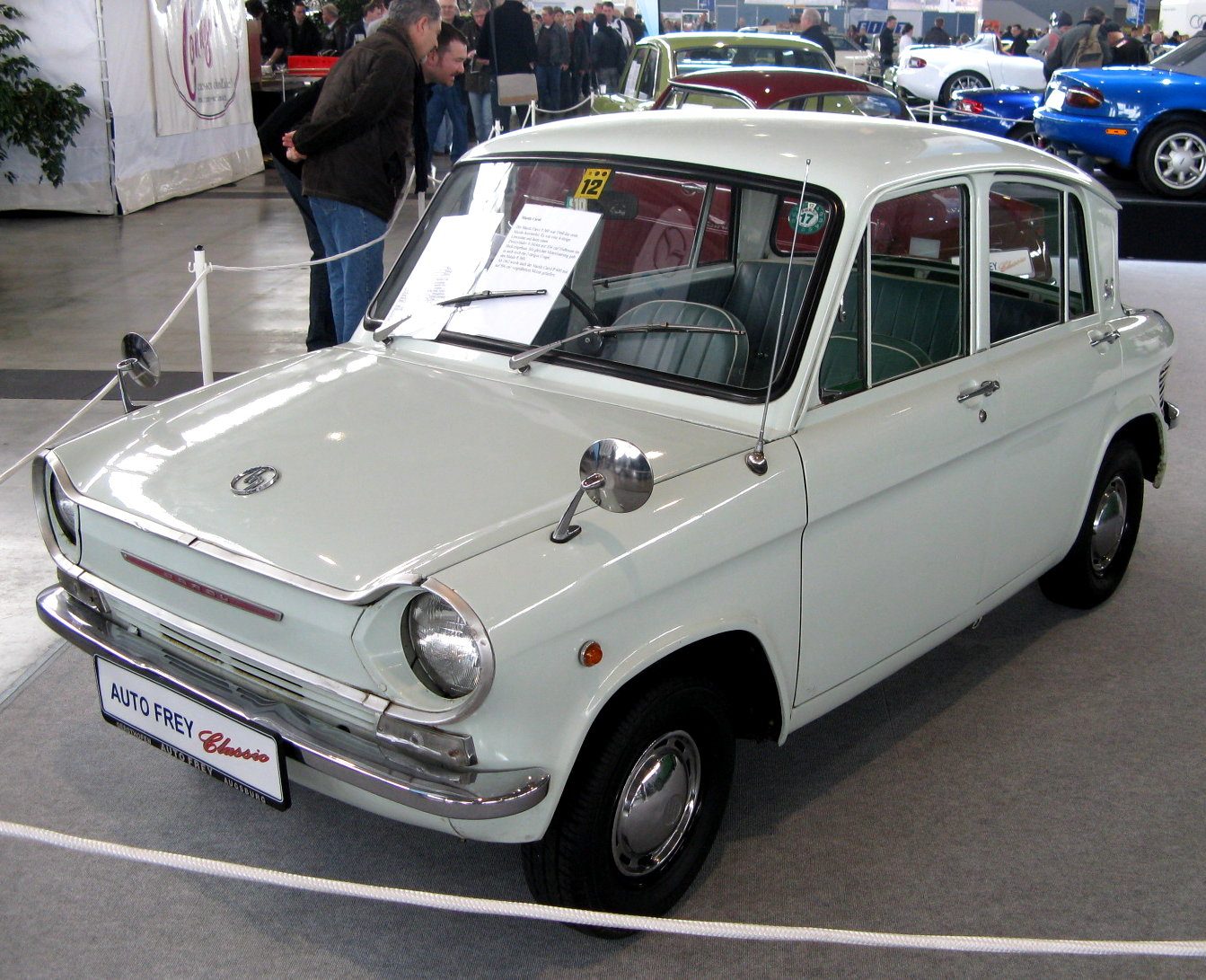
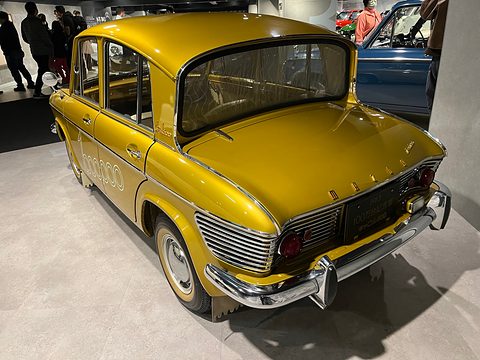
In November 1962 came the Carol 600, with a 586 cc engine, longer bumpers that made it 3,200 mm (126 in) long, and plusher trim; it was a registered small car, not a kei car, and it was sold with four doors before the 360 was.source 2source 6 On 9 March 1963 a Carol 600 became Mazda’s one-millionth vehicle.source 2 The 600 was dropped after about two years, when the 800 cc Familia saloon arrived.source 2 The four-door Carol 360 followed in 1963; Japanese Wikipedia gives the year twice, once for the four-door Deluxe and once for the facelift of September, which may be the same event.source 2 The Weiner museum mentions a convertible of 1964 that no other source confirms.source 7

At the second Japanese Grand Prix, at Suzuka in May 1964, a Carol 360 ran in the 400 cc class in the hands of the motorcycle star Katayama Yoshimi. Subaru 360s finished first and second, ahead of the Suzuki Suzulight and the Carol (more in racing and rallying).source 8source 9 From 1966 the Honda N360 and other newcomers left the Carol near the bottom of its class.source 2

The facelift of October 1966 gave 20 PS, a new grille and tail, new bumpers and synchromesh on every gear, and moved the spare wheel from the nose to the engine bay, which freed the front for luggage.source 2source 4source 6

The rotary that was refused

Tōyō Kōgyō was busy with its rotary engine and its larger small cars, and the Carol was never fully replaced.source 2 A single-rotor Wankel engine was tried in one. Rival makers objected to how its capacity would be counted under the kei rules, and the Ministry of Transport would not approve it. The single rotor also vibrated, drank fuel, and could even turn backwards under a reverse load.source 2 Production and sales of the Carol ended in August 1970.source 2 Its successor, two years later, was the front-engined Mazda Chantez.source 2 The Carol name came back in October 1989 on the Autozam Carol, a different car based on the Suzuki Alto.source 2source 6
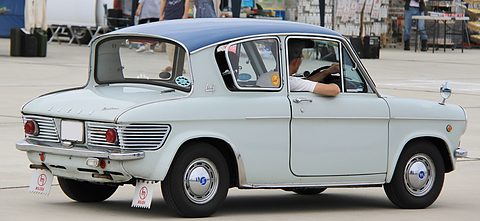
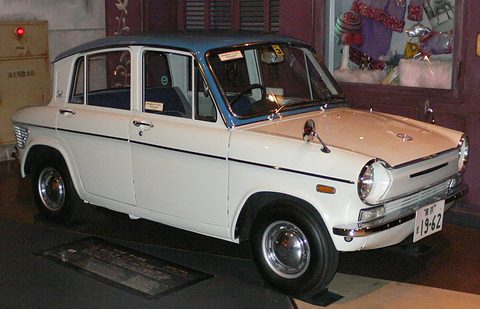
Side view of a pale blue two-door saloon with a dark blue roof, a driver resting an arm on the door.
A pale blue Carol 360 two-door with a dark blue roof, its rear window raked forward over the back seat.Photo: TTTNIS, Public domain, via Wikimedia Commons
Open rear lid of a white car showing a compact engine, hoses and a spare tyre on top.
The 358 cc water-cooled four in a Carol of 1970, with the spare wheel moved above it after the 1966 facelift.Photo: TTTNIS, CC0, via Wikimedia Commons
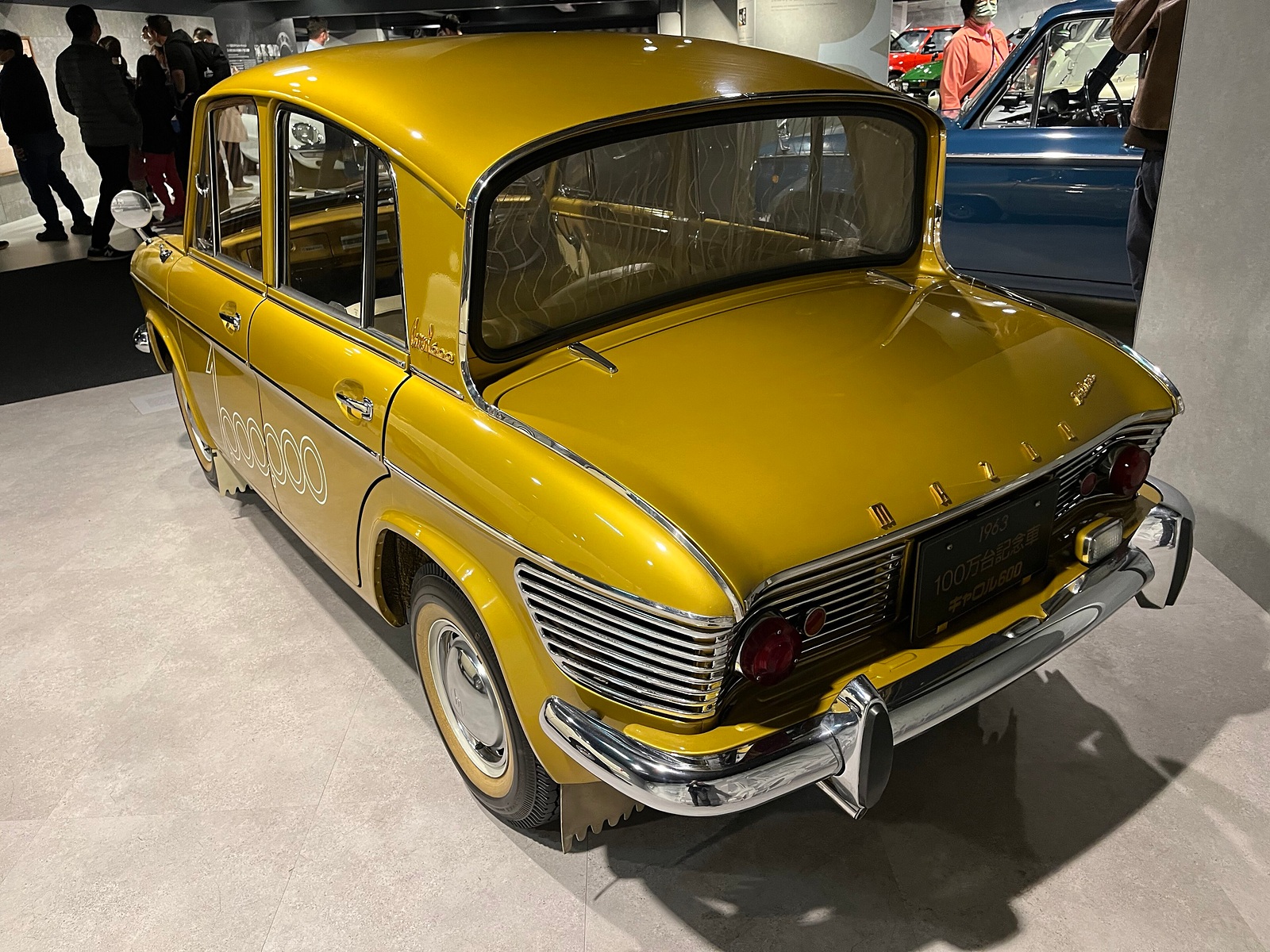
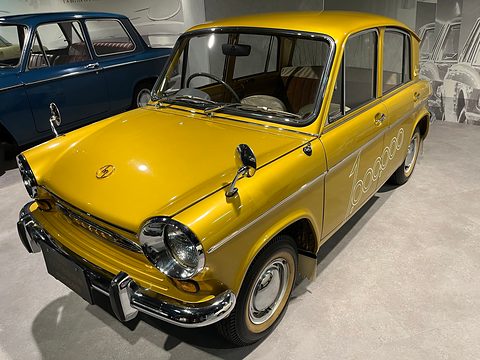
Gold four-door saloon with a large 1,000,000 script on its doors, in a white gallery.
The gold Carol 600 that was Mazda’s one-millionth vehicle in 1963, in the Mazda Museum, Hiroshima.Photo: NAParish, CC BY-SA 2.0, via Wikimedia Commons

Mazda Chantez

1972–⁠1976 · a record on this page

Little is recorded of the Chantez in the sources read for this page. Japanese Wikipedia’s account of the Carol says only that its successor of 1972 had its engine at the front, and that it was meant to have the rotary engine but had to make do with the two-stroke twin of Mazda’s Porter Cab kei truck (see Mazda Porter).source 2 No specification, production figure or account of its end has been found.

Pictures

More photographs, old and new

Variants

The first Carol, 1962–⁠70

The Carol range
VariantYearsWhat differsHow many
Carol 360 two-door (KPDA)1962–⁠70The original: 358 cc, 18 PSNot found
Carol 6001962–c. 64586 cc, longer bumpers, 3,200 mm, two or four doors; a registered small car, not a kei carNot found
Carol 360 four-door1963–⁠70The first four-door kei carNot found
Carol 360 after the facelift1966–⁠7020 PS, new grille, tail and bumpers, the spare wheel moved to the engine bay, synchromesh on every gearNot found
Rotary CarolNot datedA single-rotor Wankel engine, tested but refused approval as a kei engineNever sold

Specification

The Carol 360 KPDA of 1962 unless noted

Engine and drive

Engine and drive
EngineWater-cooled in-line four, overhead valves, all aluminium alloy; five-bearing crankshaft, hemispherical combustion chambers, crossflow valvessource 1source 2
Capacity358 cc (46 × 54 mm)source 1source 4
Power18 PS at 6,800 rpmsource 120 PS (15 kW) at 7,000 rpm in a car of 1969
CoolingRadiator beside the engine, with an engine-driven fan drawing air in from the sidesource 2
GearboxFour speedssource 1Synchromesh on every gear from October 1966

Body and chassis

Body and chassis
BodySaloon, two doors; four doors from 1963source 1source 2
SuspensionIndependent all round, on rubber torsion springs of the Neidhart typesource 1source 2English Wikipedia says torsion bars; the JSAE’s record says rubber
SteeringRack and pinionsource 1
BrakesHydraulic drums all round, Alfin typesource 1
Tyres5.20-10source 1

Dimensions

Dimensions
Length2,980 mm (117 in)source 12,990 mm for a car of 1969; the Carol 600 3,200 mm
Width1,295 mm (51 in)source 1source 4
Height1,340 mm (53 in)source 11,320 mm in 1969
Wheelbase1,930 mmsource 1source 4
Track1,050 mm front, 1,100 mm rearsource 1
Kerb weight525 kg (1,157 lb)source 1540 kg in 1969; 560–585 kg for the Carol 600

Performance and running

Performance and running
Top speed90 km/h (56 mph)source 1
Consumption26 km per litre, claimedsource 1
Fuel tank20 litressource 1
Price newNot found

Famous for

Three points

  1. The cliff cut

    A rear window raked forward over the back seat, for headroom and a big engine lid.source 1source 2

  2. Four cylinders, 358 cc

    The smallest water-cooled four-cylinder engine in the world, all in aluminium alloy.source 1source 2source 4

  3. Four doors

    The first kei car with four doors, by the JSAE’s record.source 1

Survivors and collecting

Today

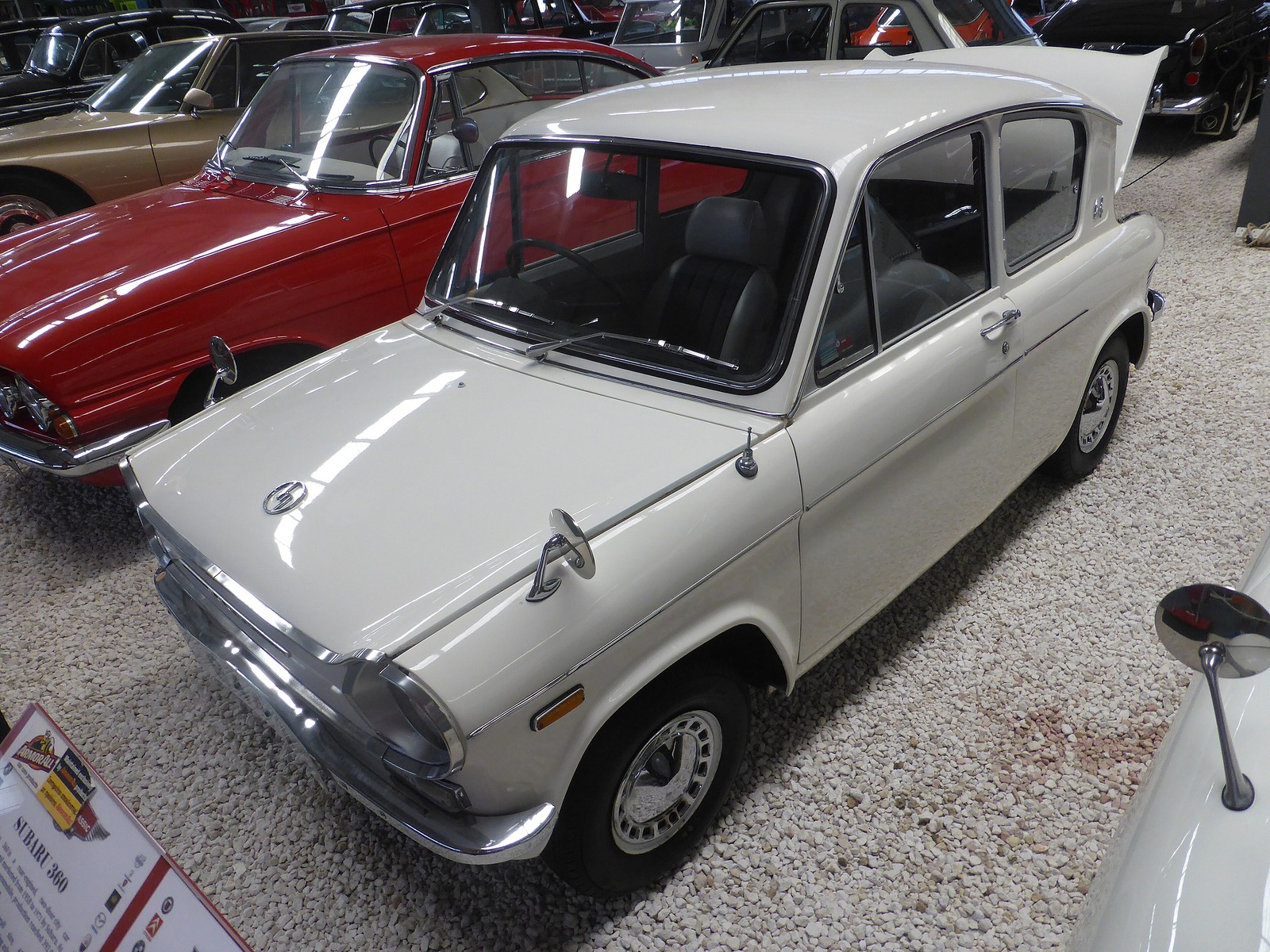
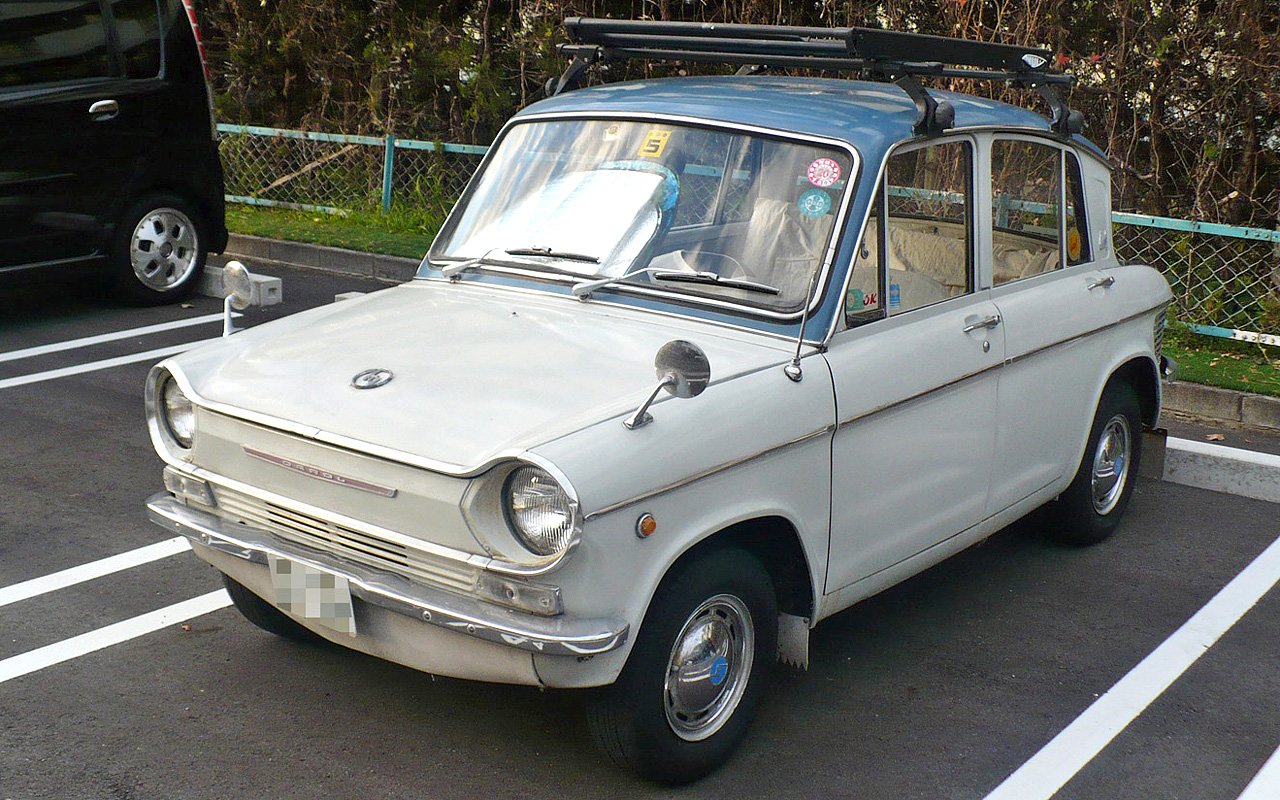
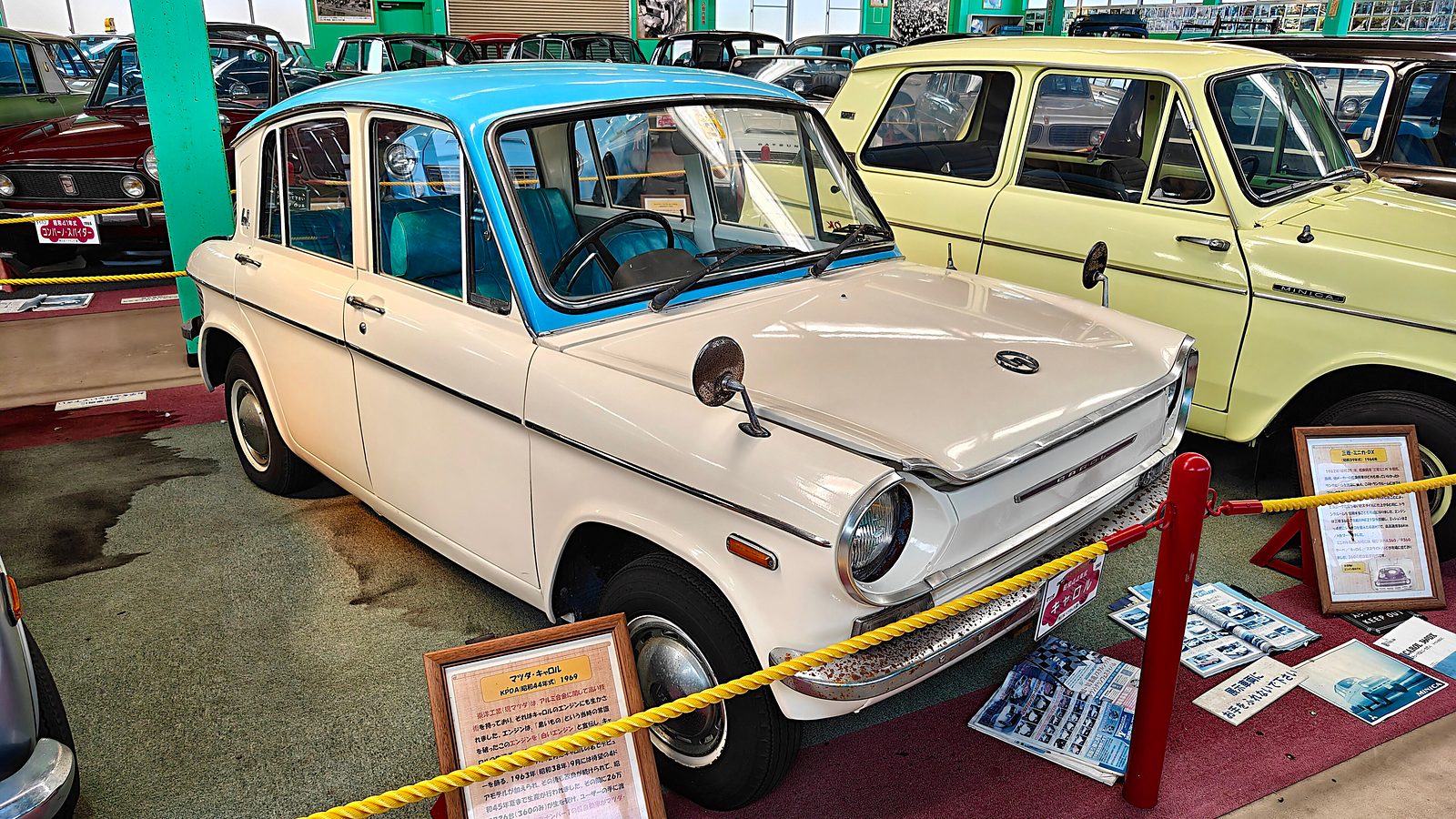
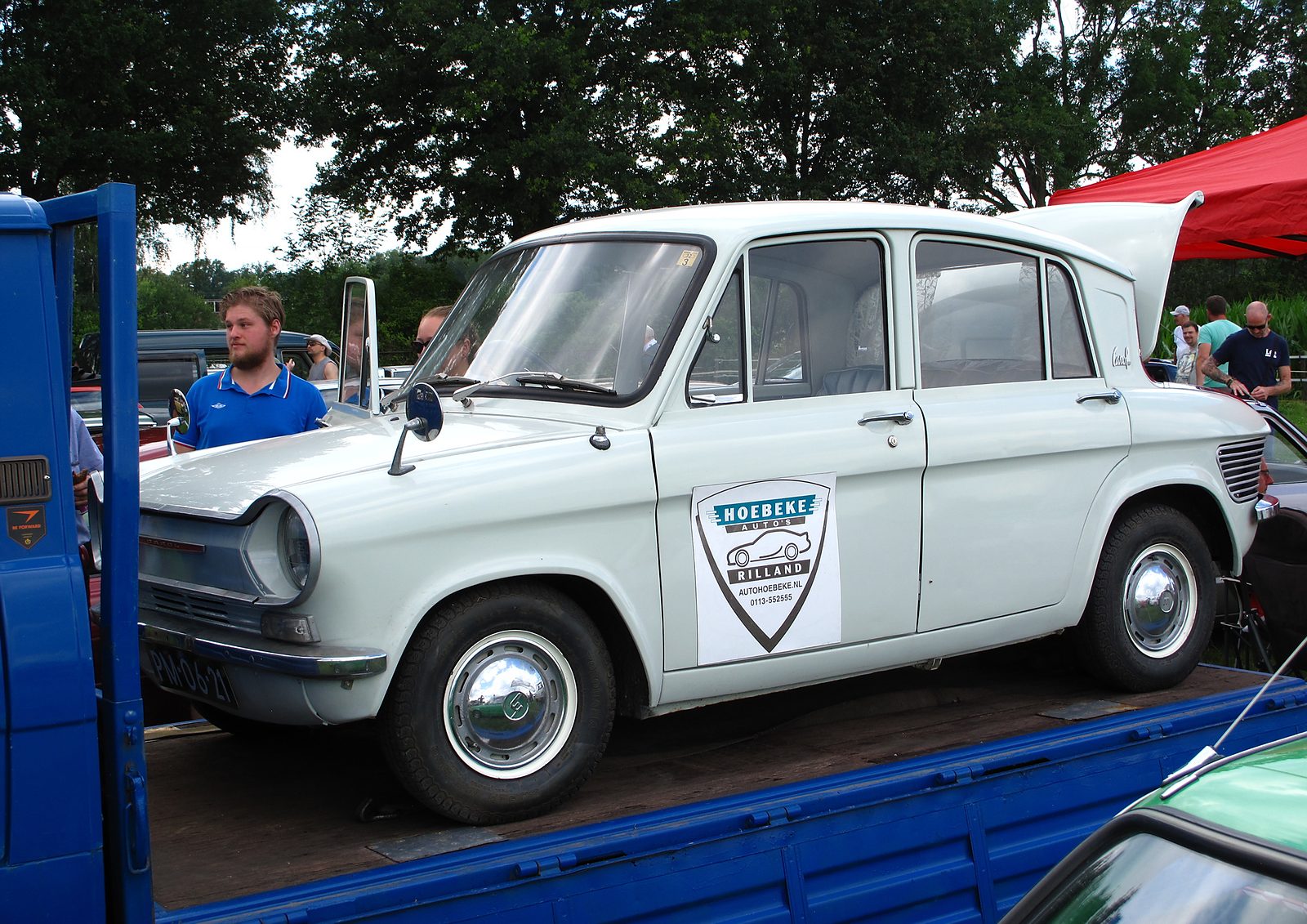
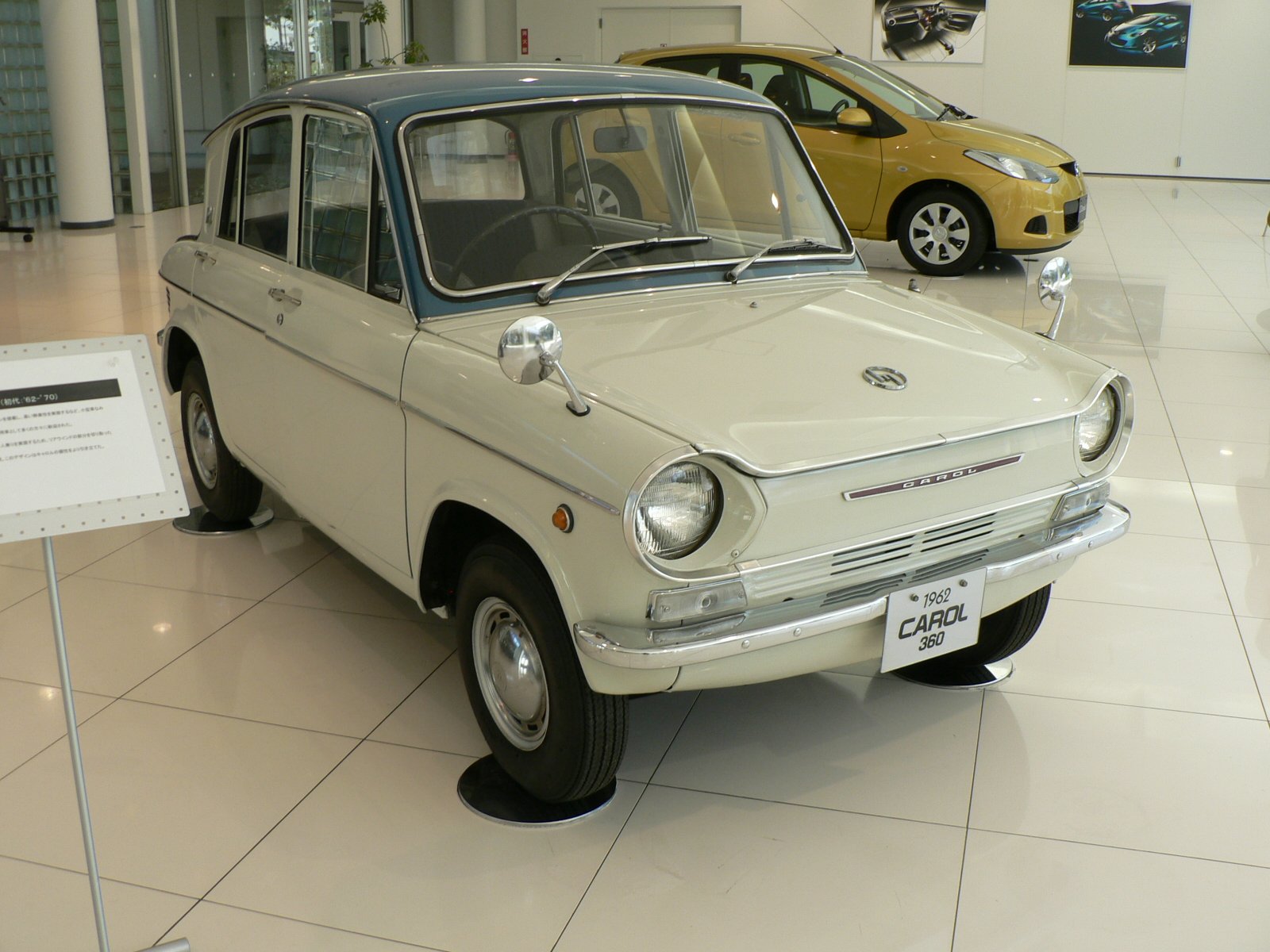
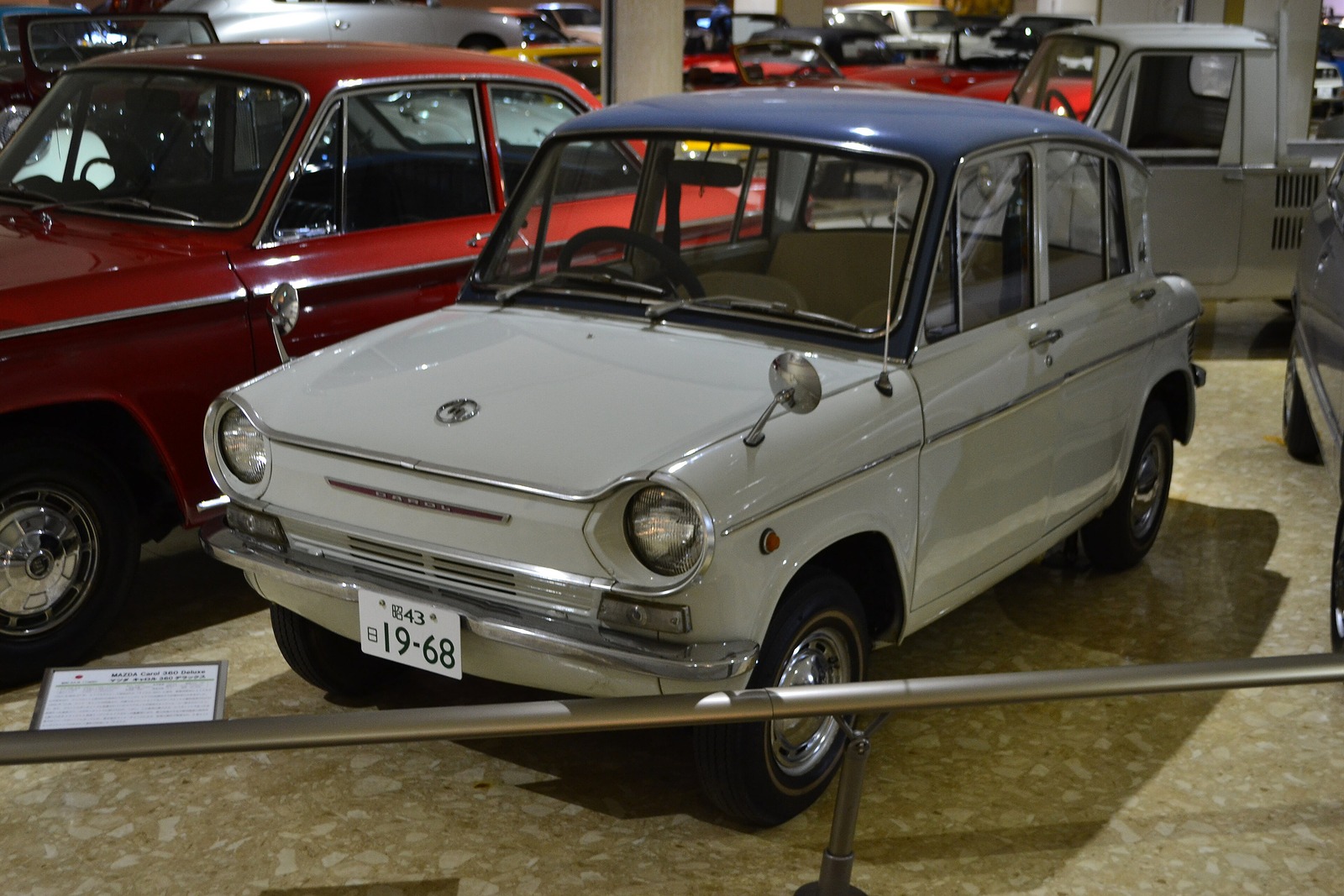
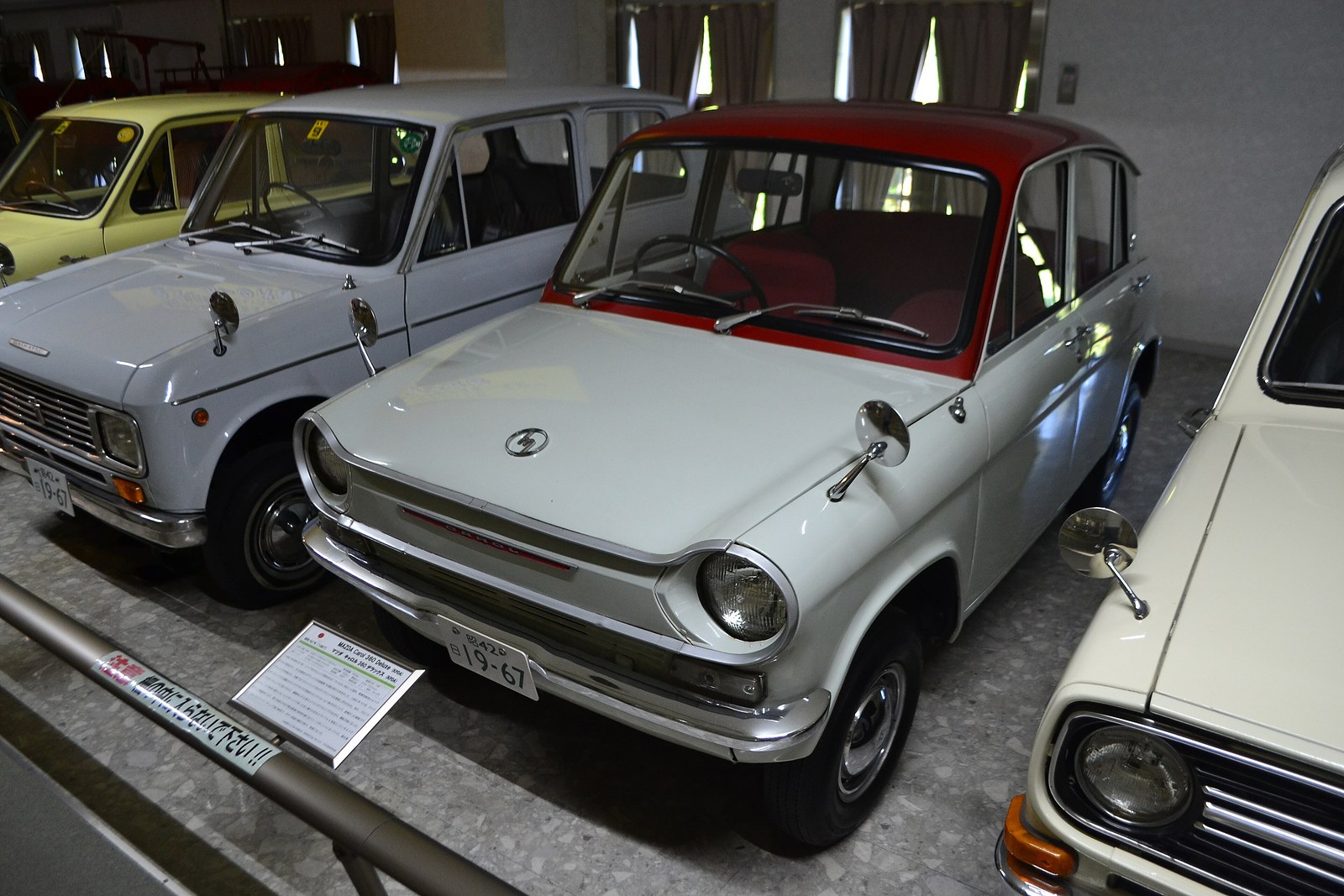
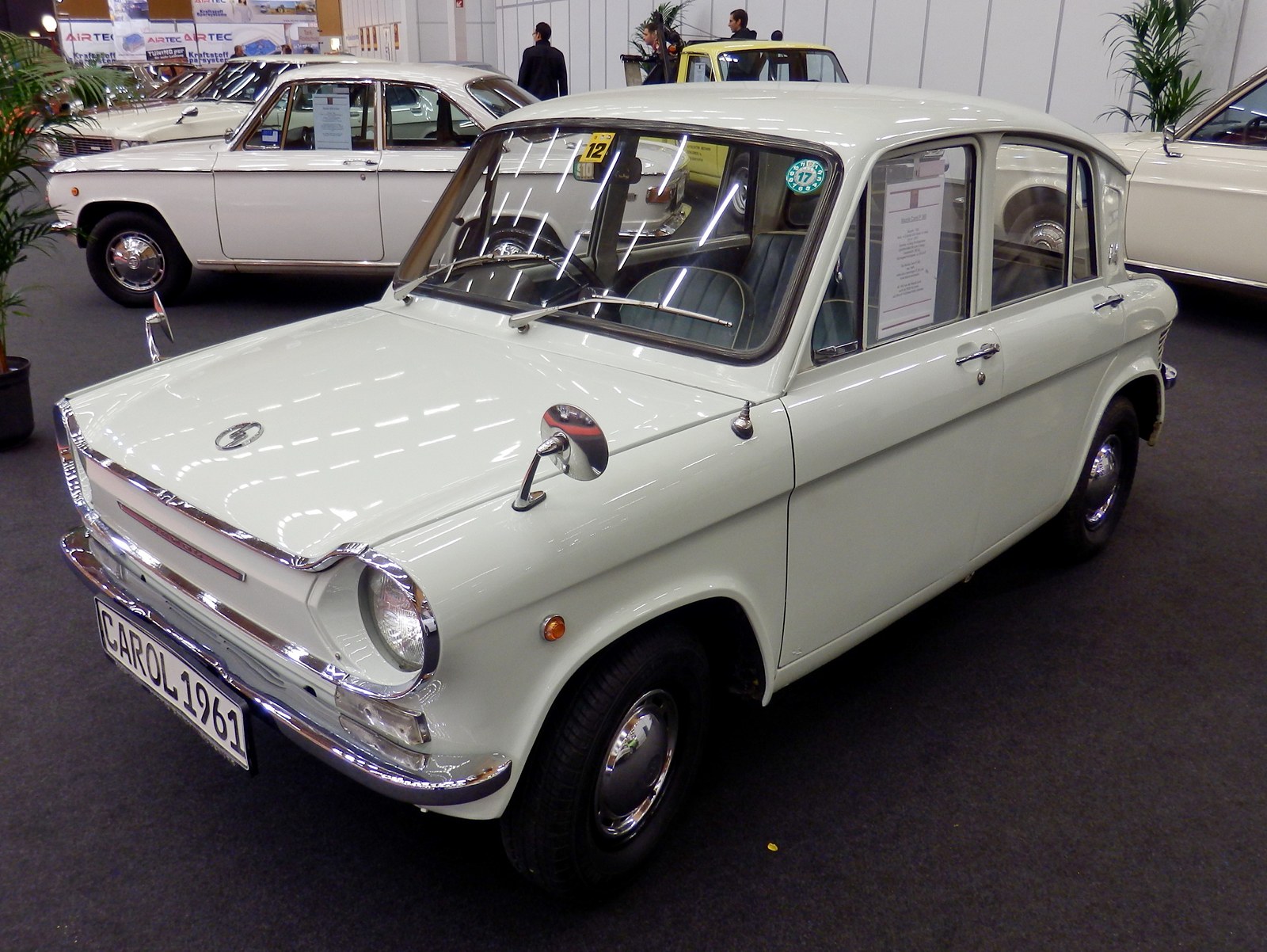
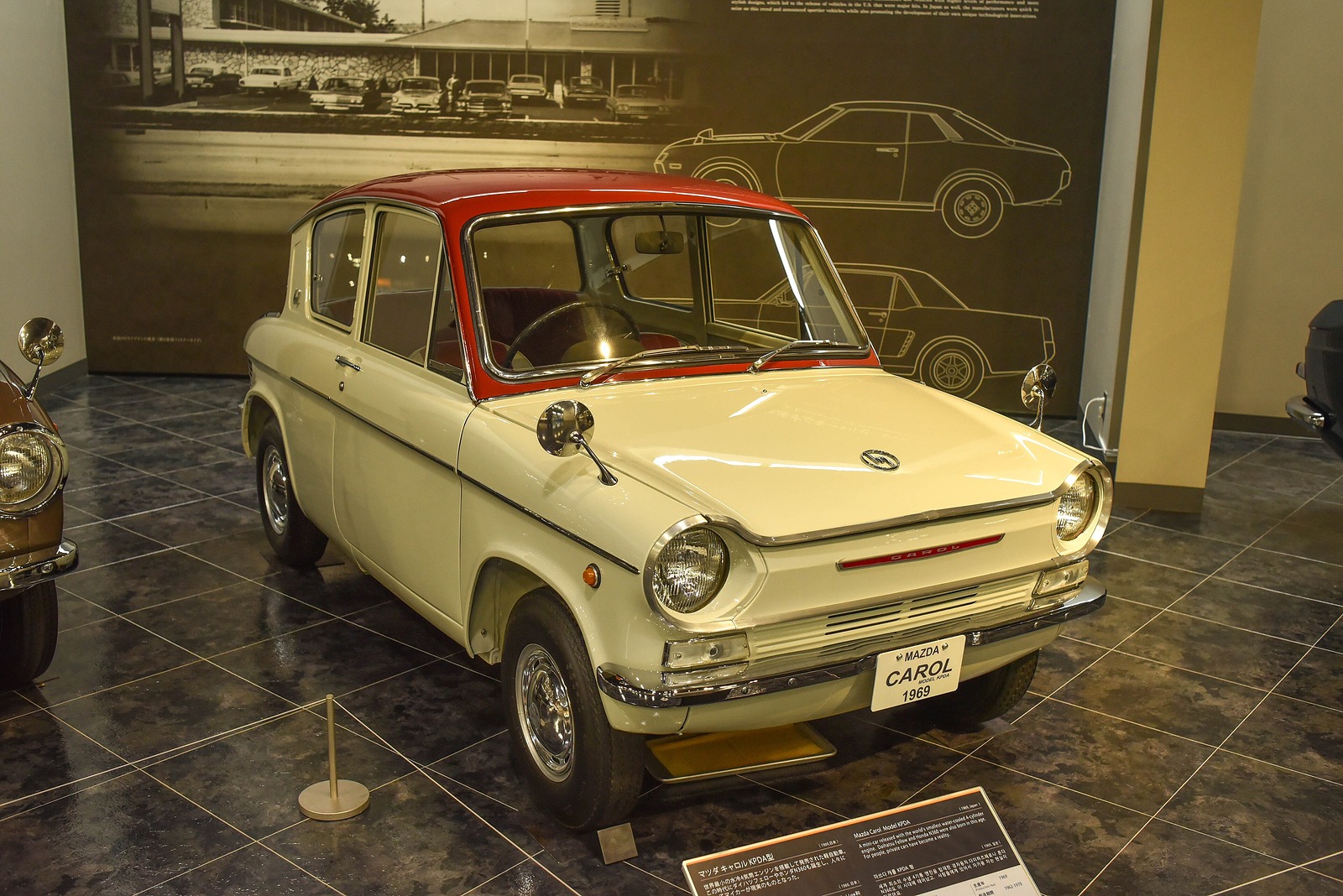
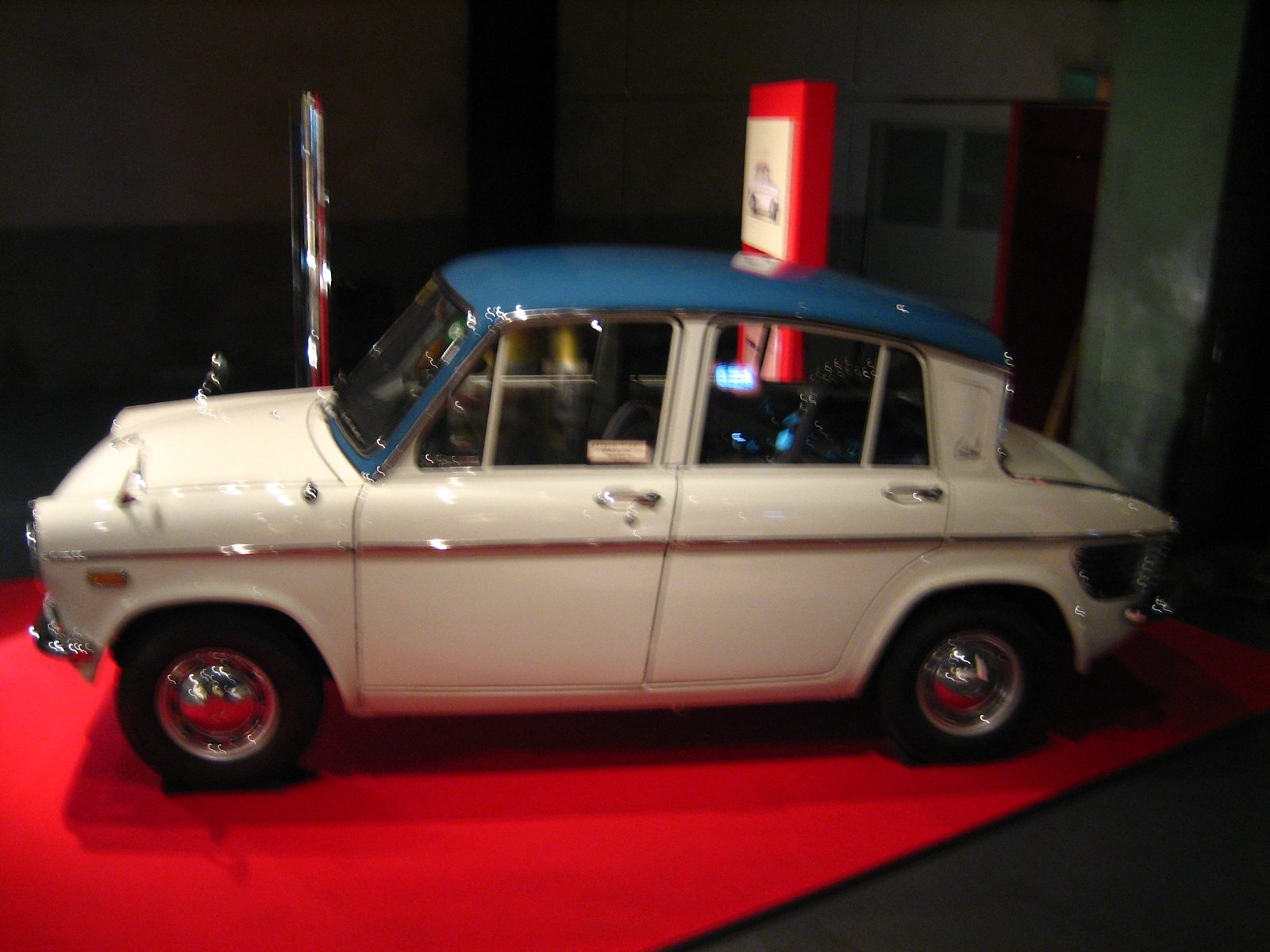
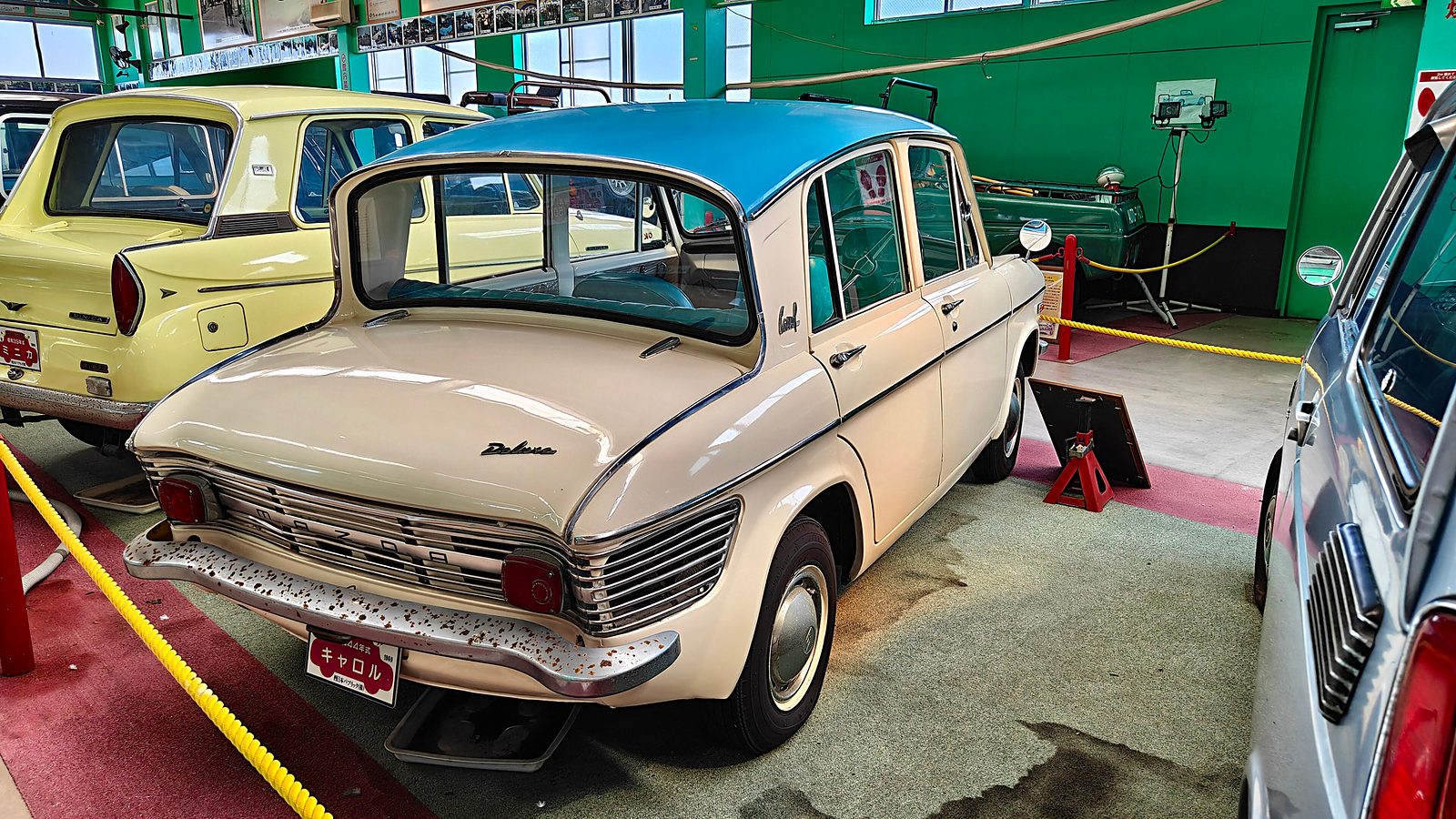
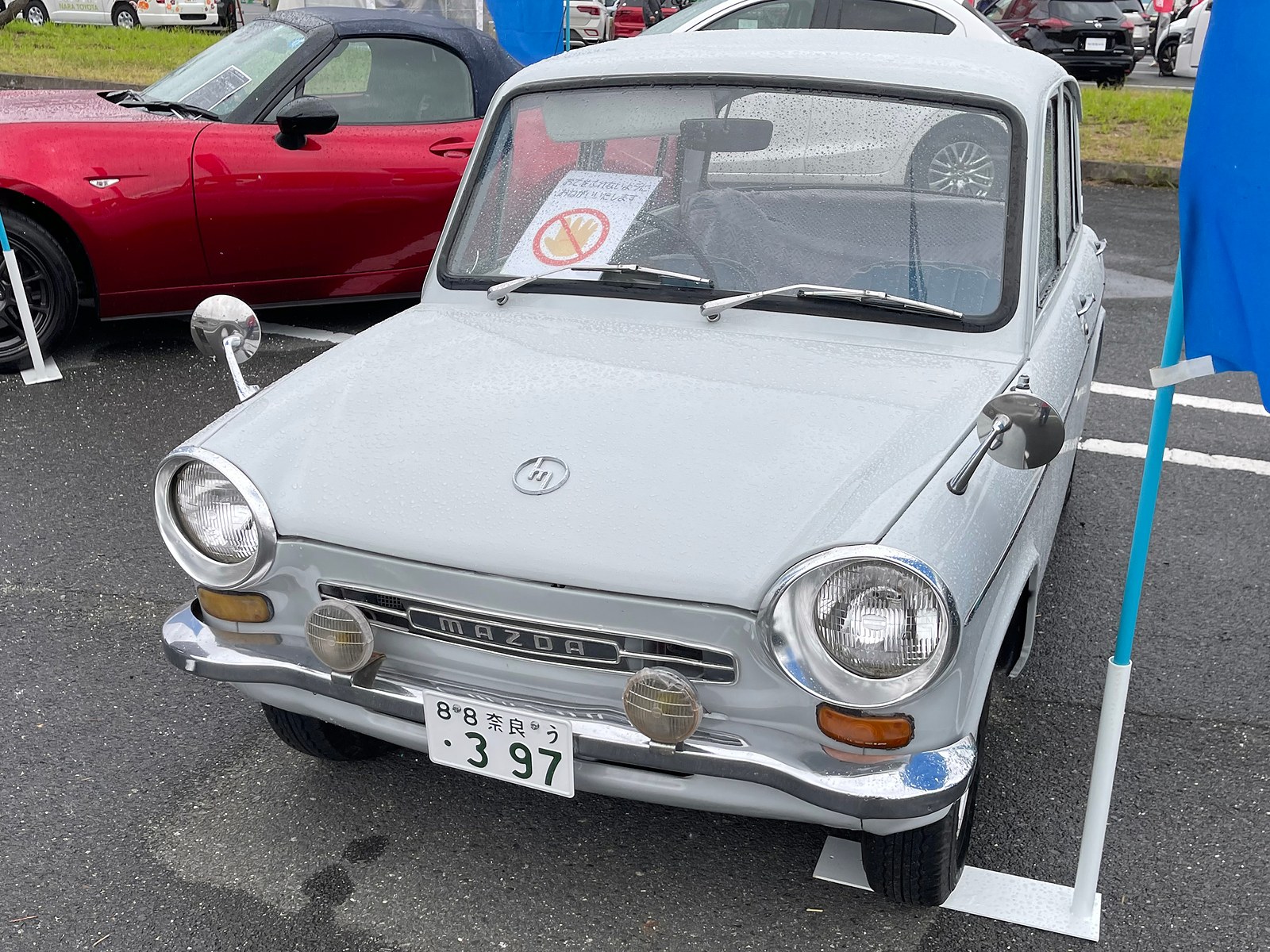
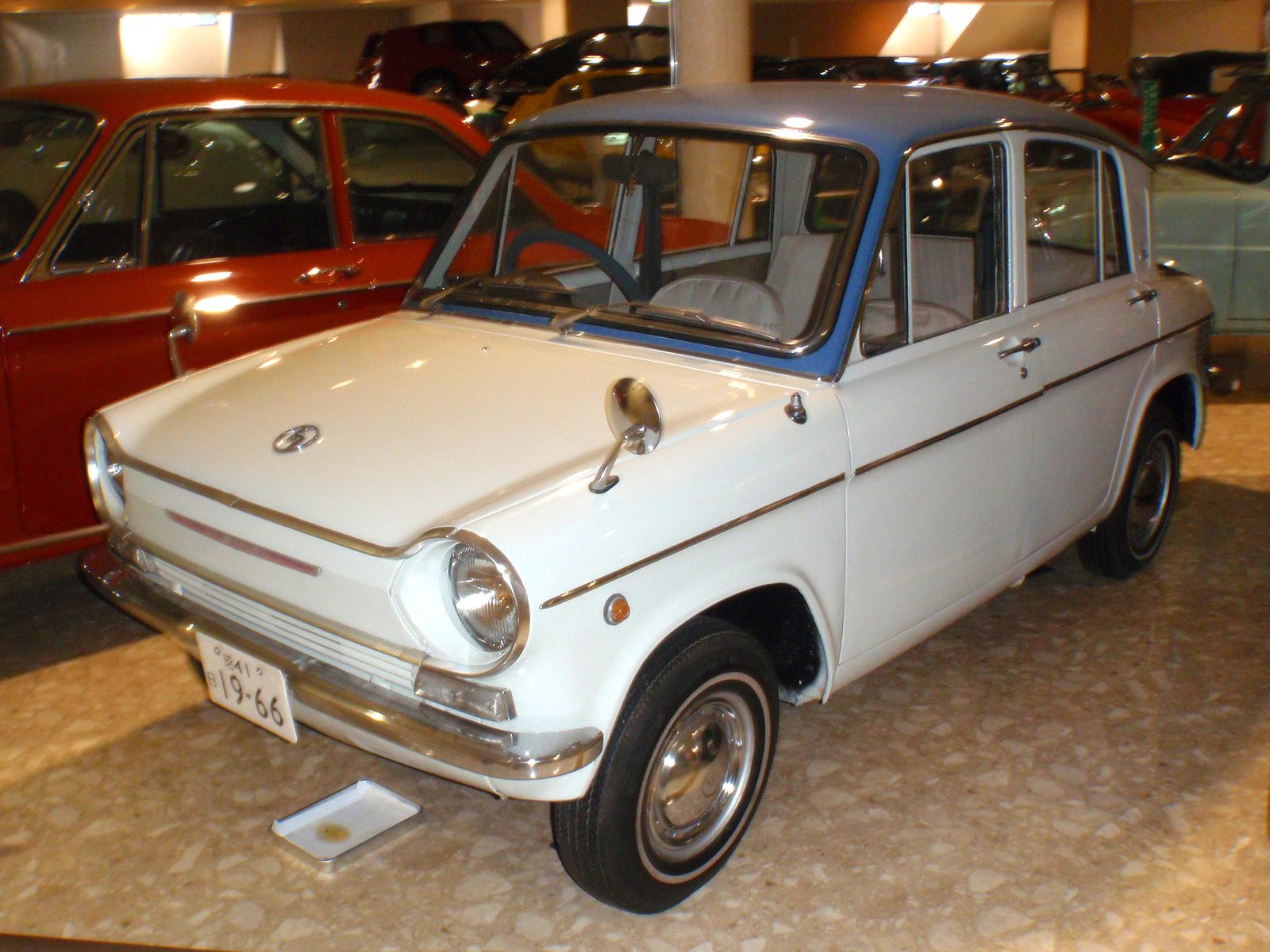
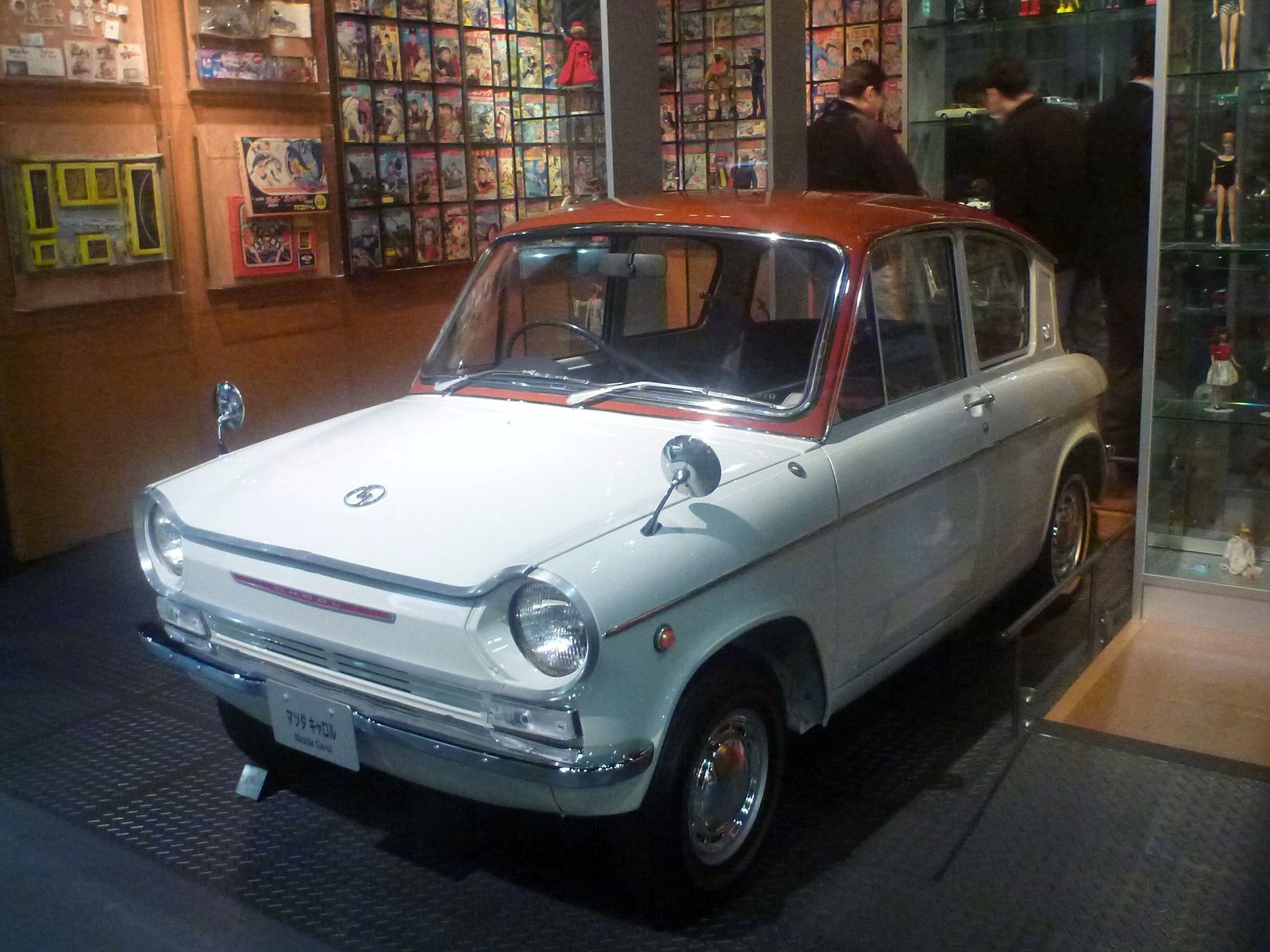
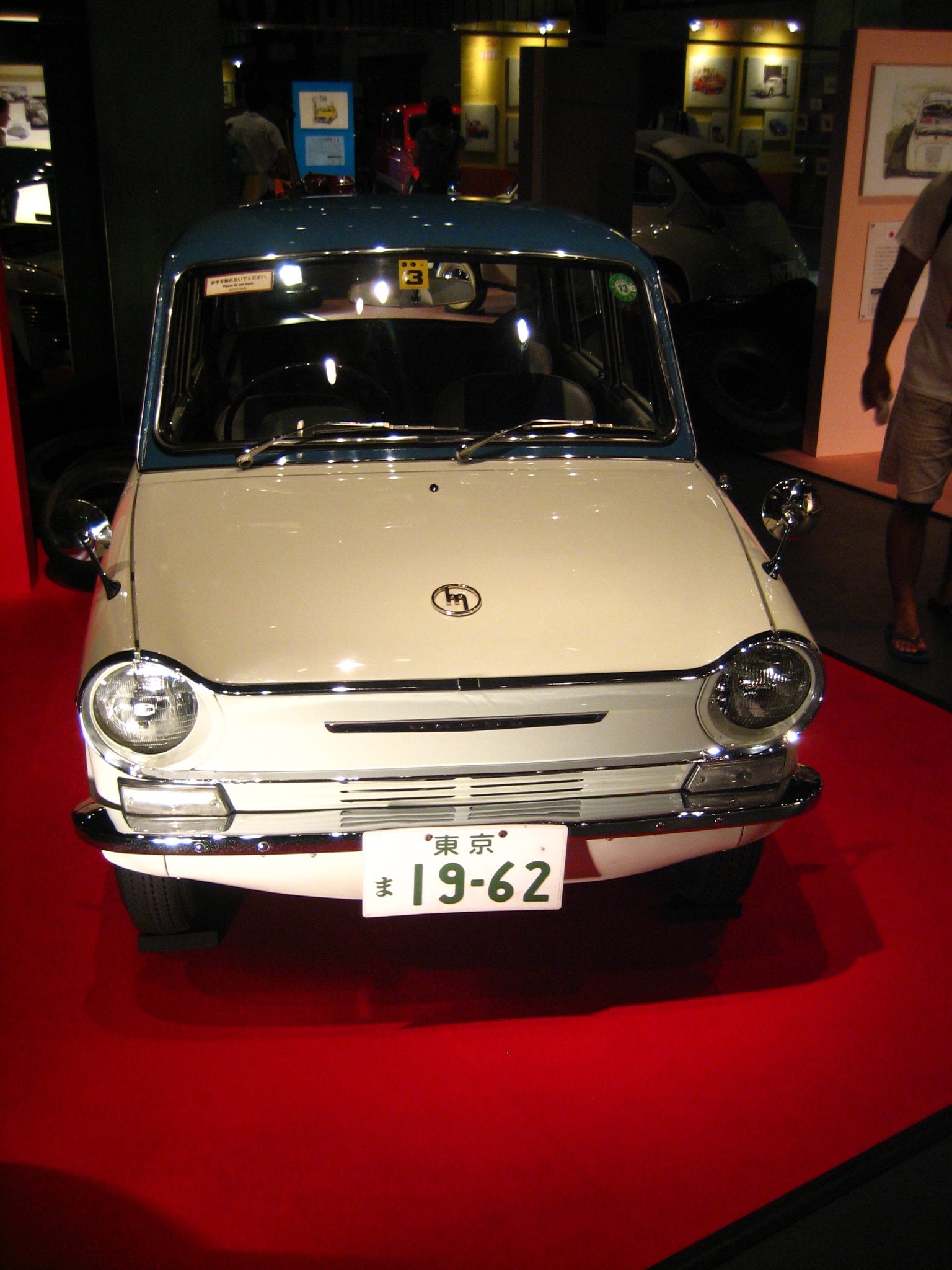
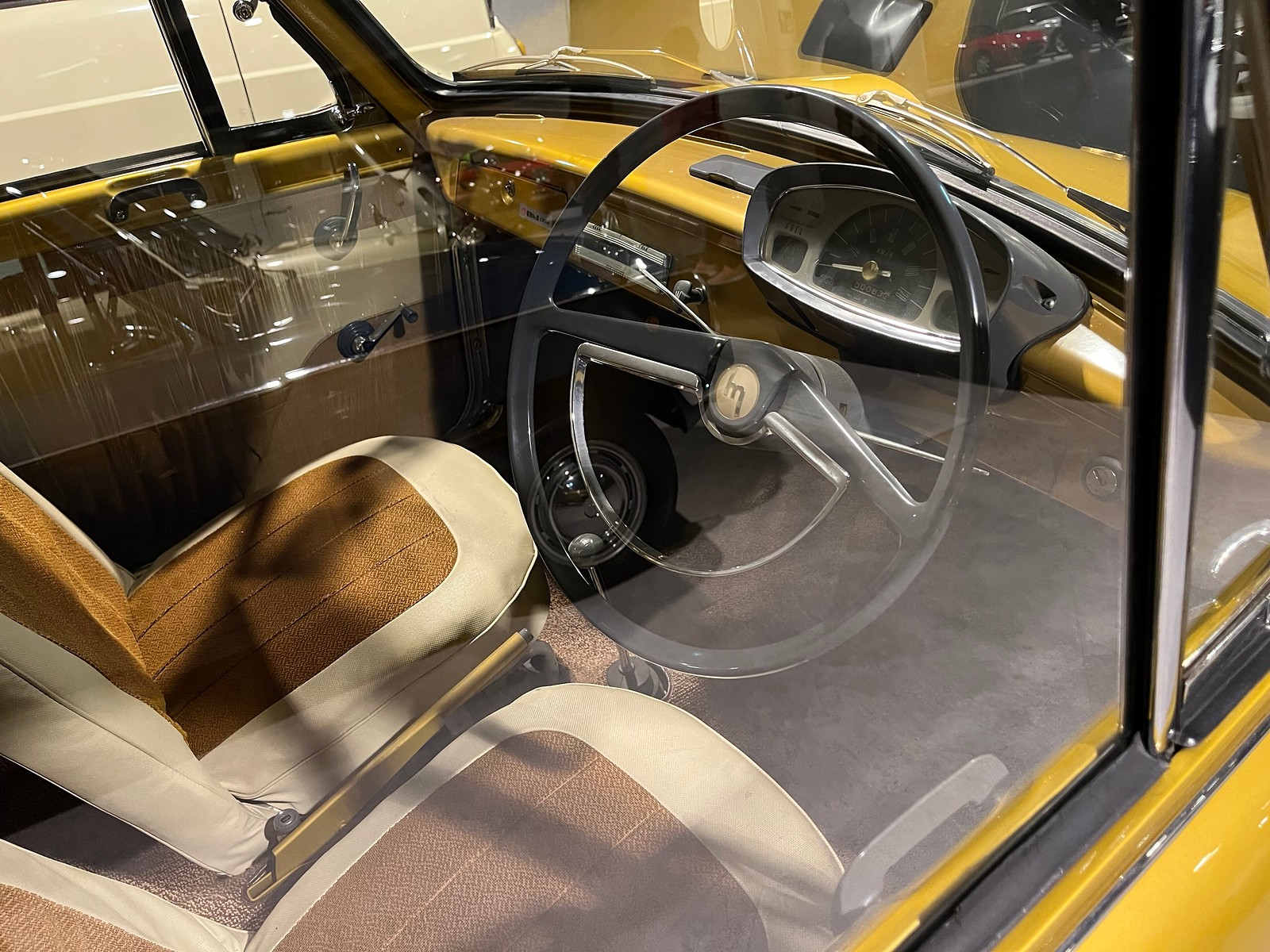
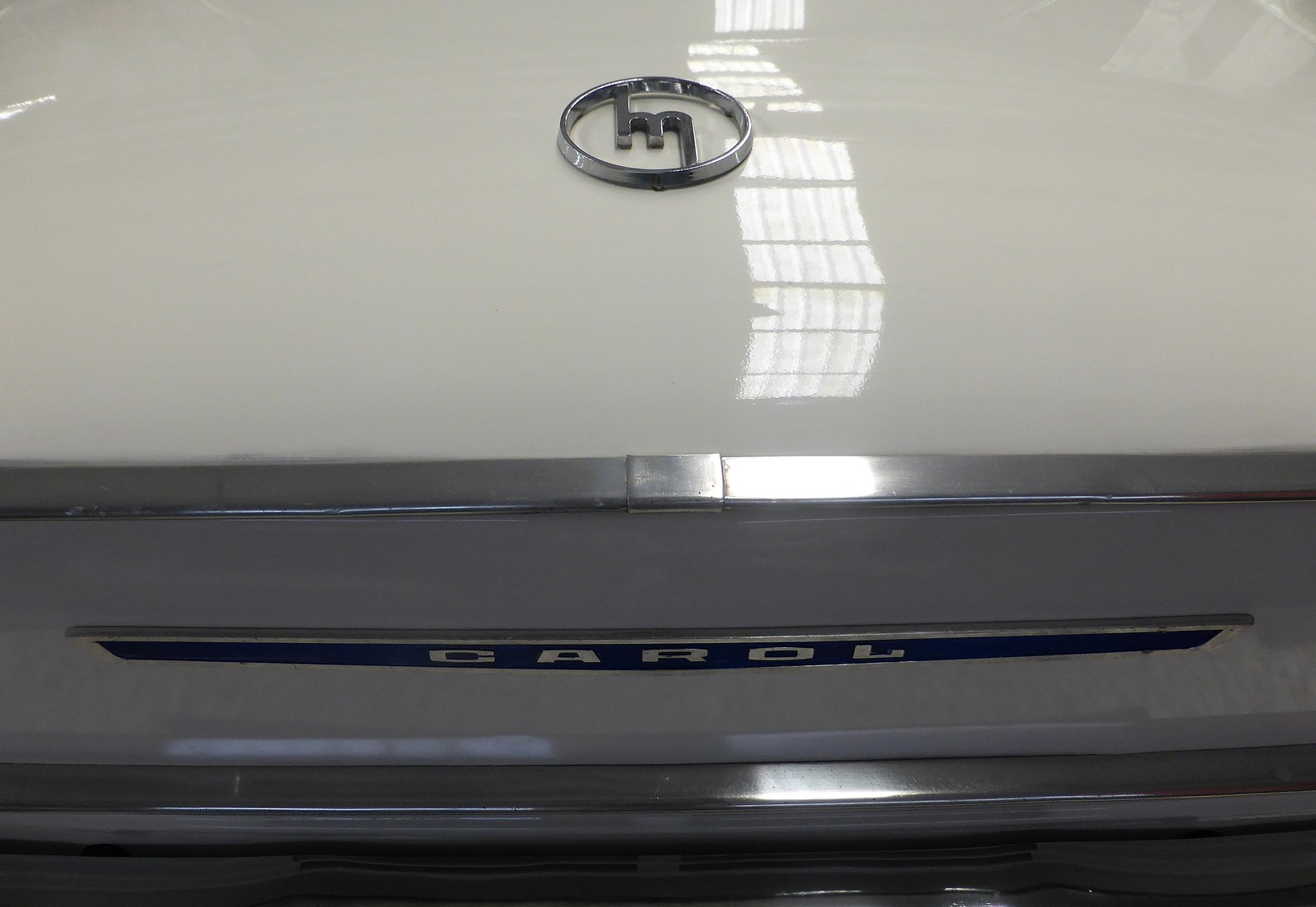
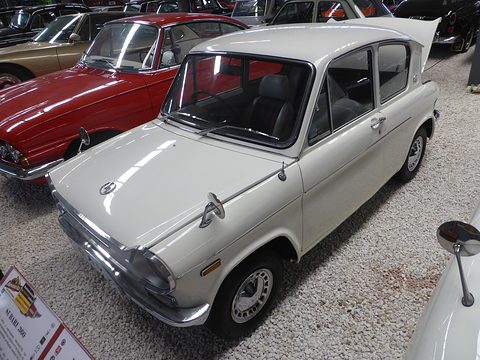
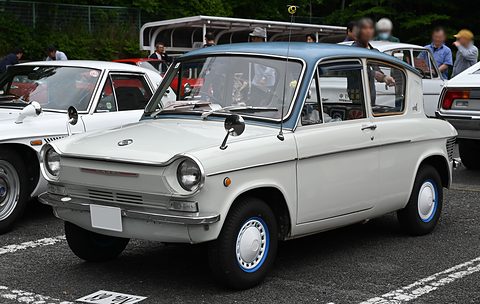
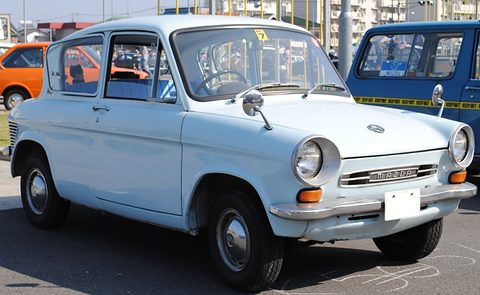
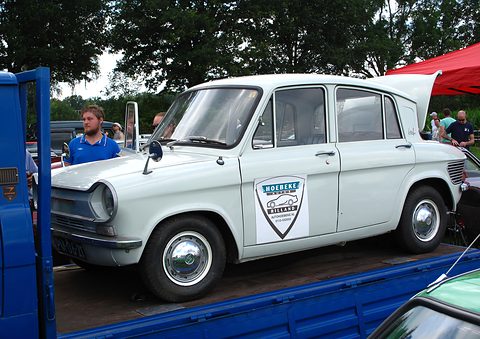
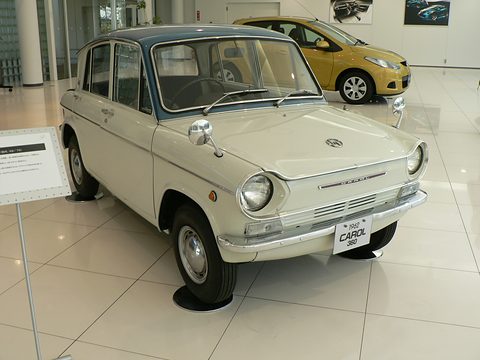
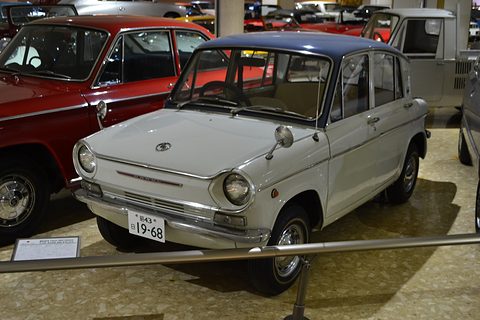
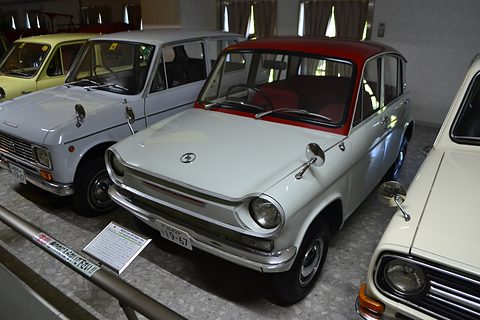
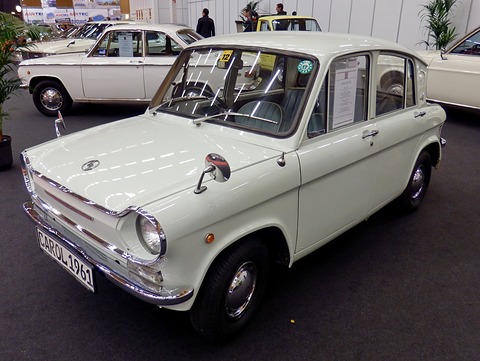
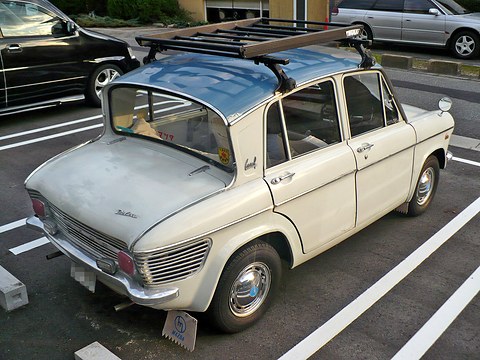
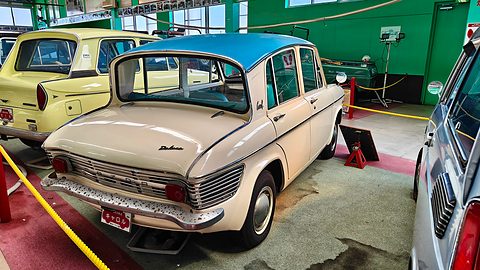
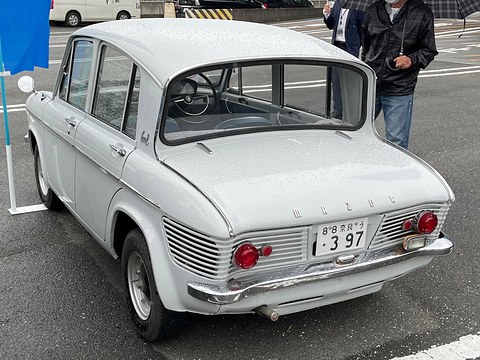
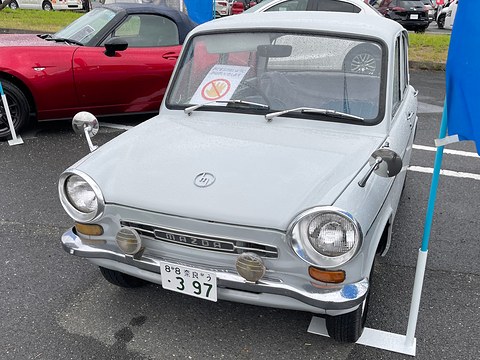
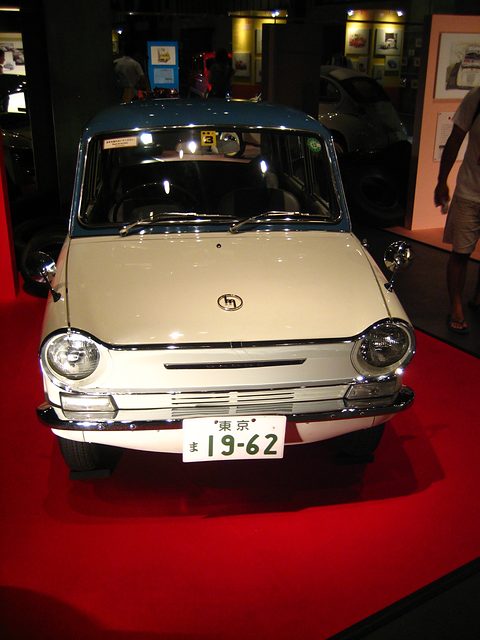
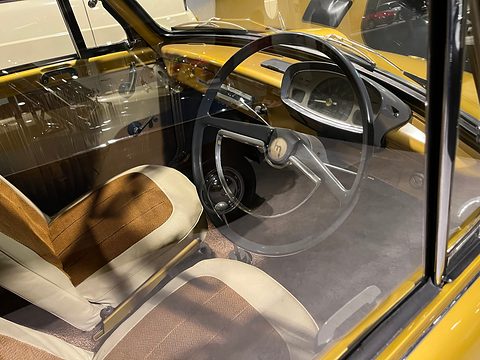
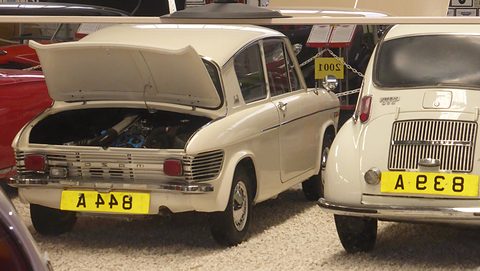
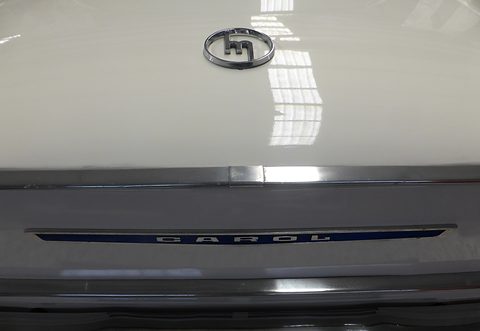
No count of surviving Carols has been found. The JSAE’s landmark record notes a KPDA kept on static display by Mazda, and the Toyota Automobile Museum has a Carol 360 of 1969.source 1source 4 The photographs on this page show Carols in museums in Japan and in Limassol, Cyprus, at meetings in Japan and at Japan Classic Sunday in Gemert, and the one-millionth Mazda, the gold Carol 600, in the Mazda Museum in Hiroshima (see museums and meets).

Sources

Numbered as in the text

No period road test was read and no production total was found. Most of the history rests on Japanese Wikipedia, with the JSAE’s landmark record for the specification; the Grand Prix of 1964 comes from the Subaru 360’s sources. Sources are given as plain text; the links are on the Credits page.

  1. JSAE (Society of Automotive Engineers of Japan), 330 Landmarks of Japanese Automotive Technology, 1-30: Mazda Carol 360 (KPDA), read in full; its reference is Tōyō Kōgyō’s fifty-year company history.
  2. Japanese Wikipedia, Mazda Carol, the first-generation section, read in full.
  3. Kuruma News, five great Mazdas, read in summary.
  4. Toyota Automobile Museum, collection database, records 266 (Carol KPDA, 1969) and 120 (Familia), read in full.
  5. Japanese Wikipedia, Mazda B360, read in full.
  6. English Wikipedia, Mazda Carol, read as wikitext; used as a lead.
  7. Bruce Weiner Microcar Museum, the Mazda R‑360 page, which mentions the Carol, read in full from an archived copy.
  8. Japanese Wikipedia, Subaru 360, read in full on 7 October 2026.
  9. Subaru Museum, the Subaru 360 story: the 1964 Grand Prix, read in full.