The story
History
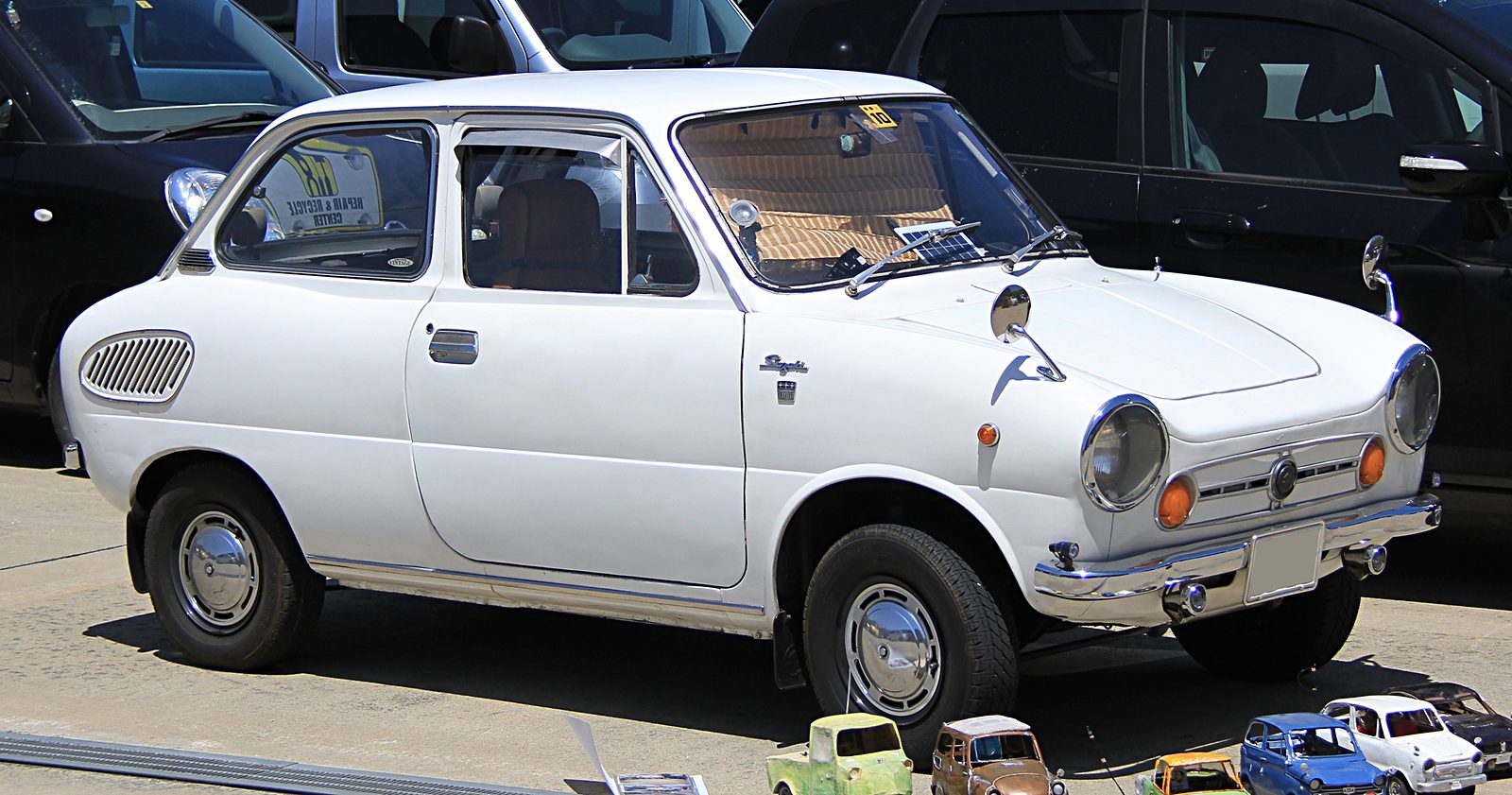
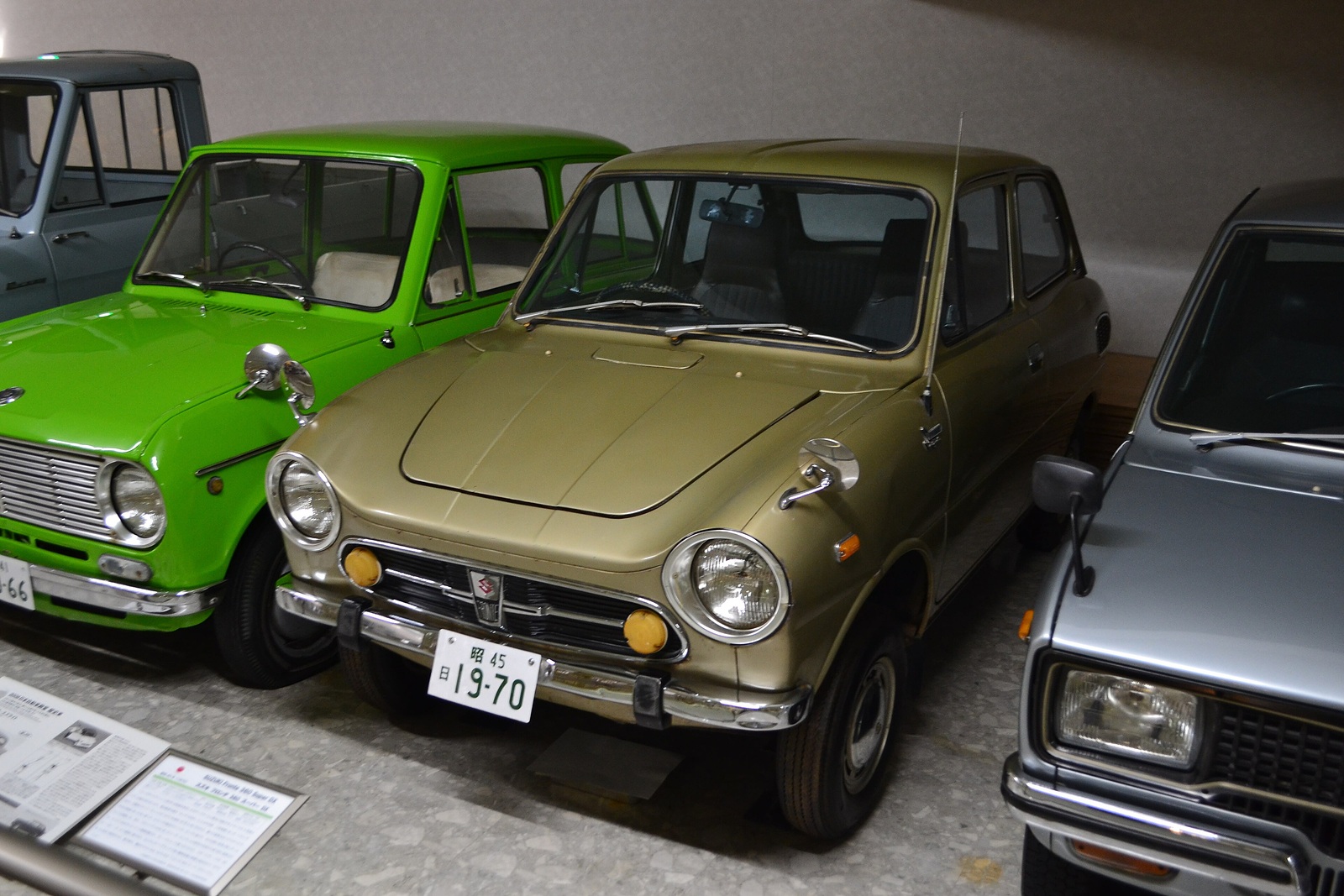
The name came first on a front-wheel-drive car. In March 1962 Suzuki gave its Suzulight van a passenger version, the Fronte, with a 360 cc two-stroke twin, and in May 1963 its FEA model finished first, second and fourth in the kei class of the first Japanese Grand Prix at Suzuka.source 1source 2 An internal competition had chosen the name: it stood for the frontier spirit, and also for FF, front engine and front drive.source 1source 2 The next three generations had their engines at the back.source 1source 2
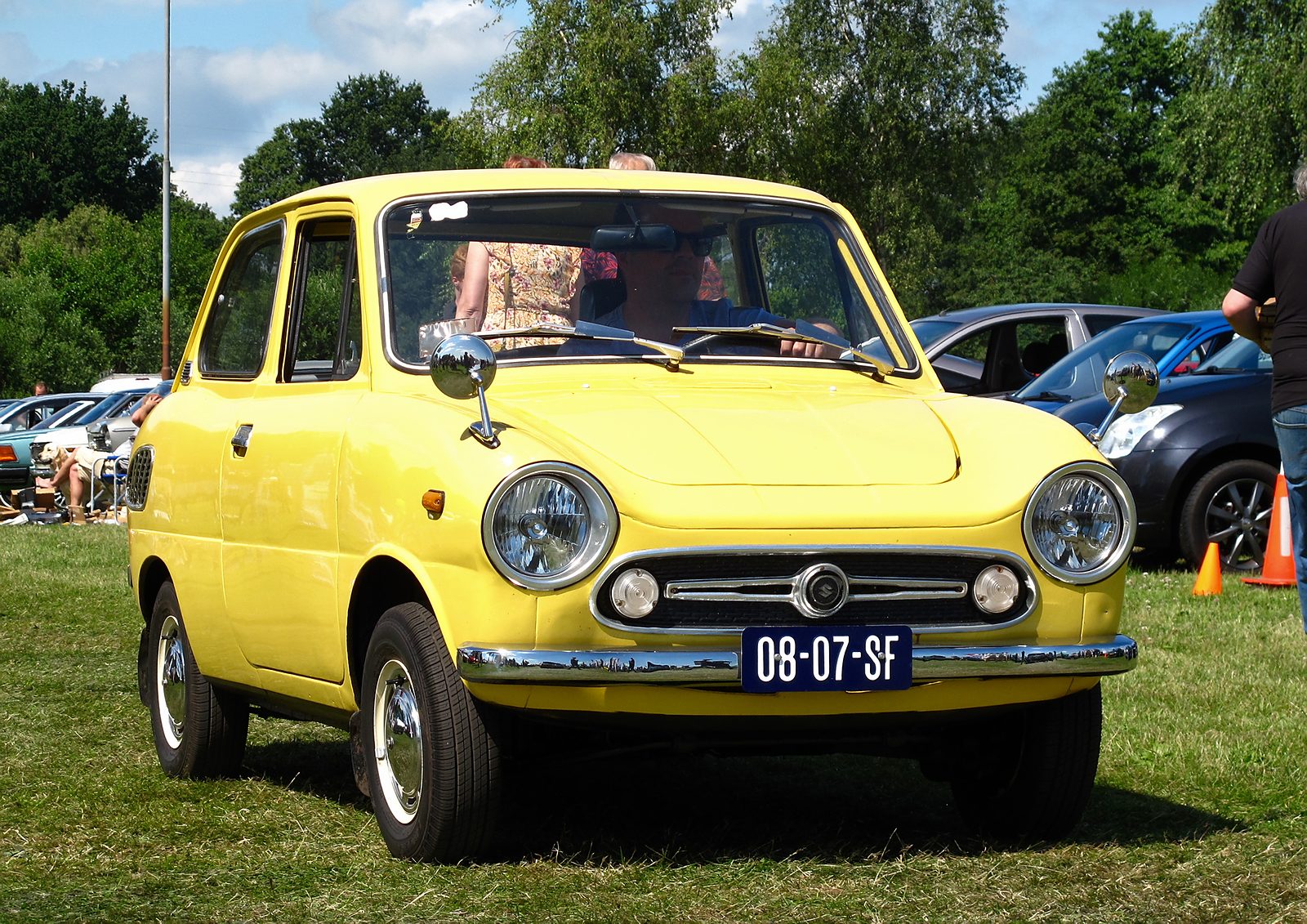
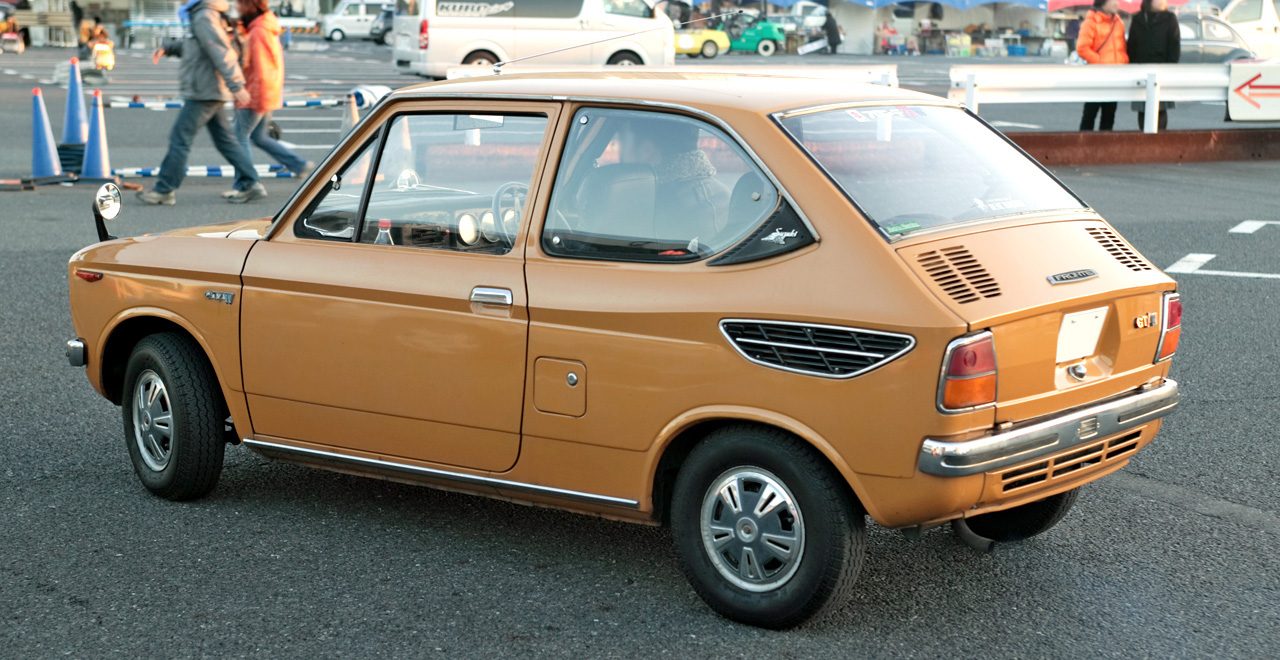
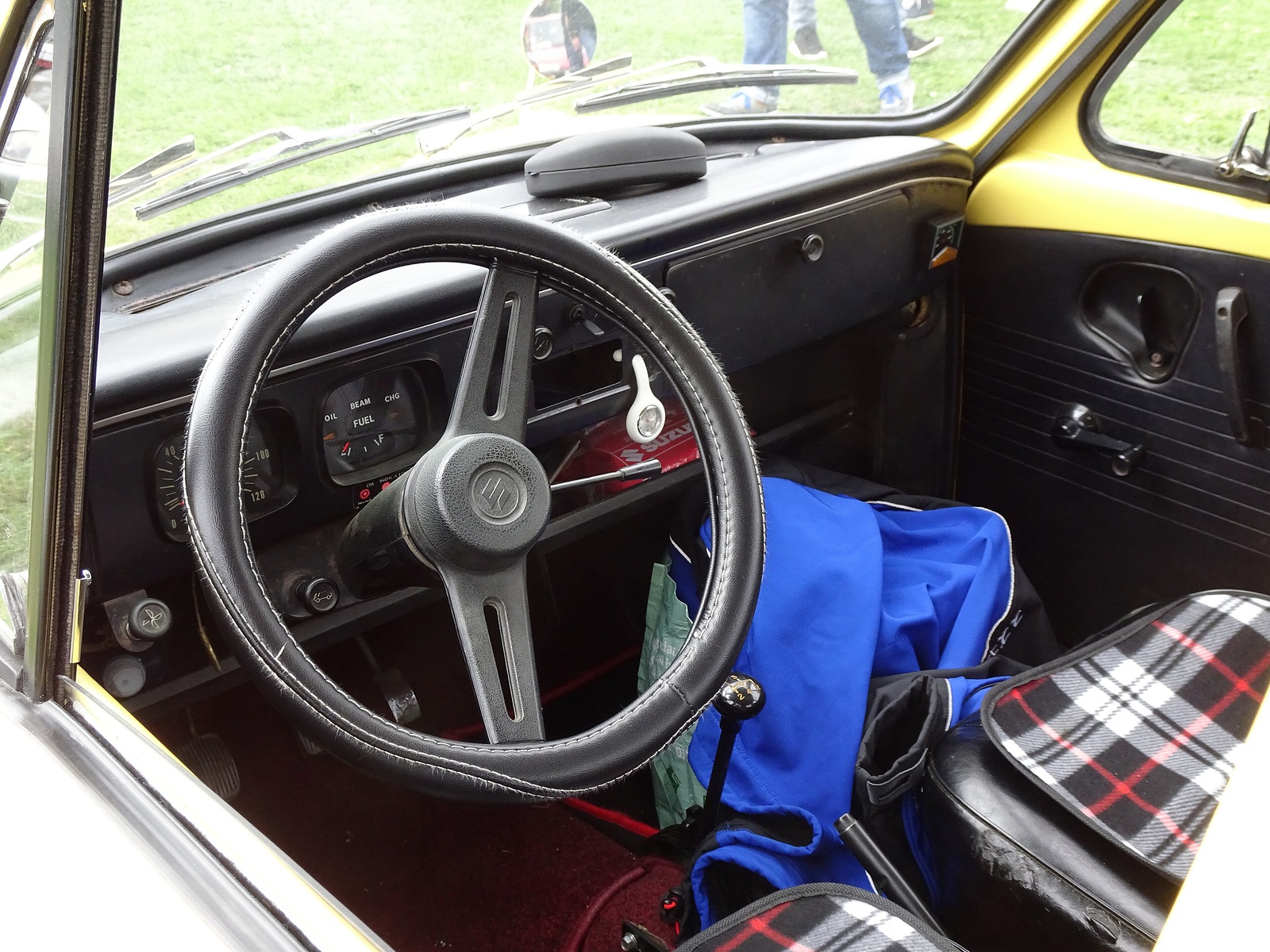
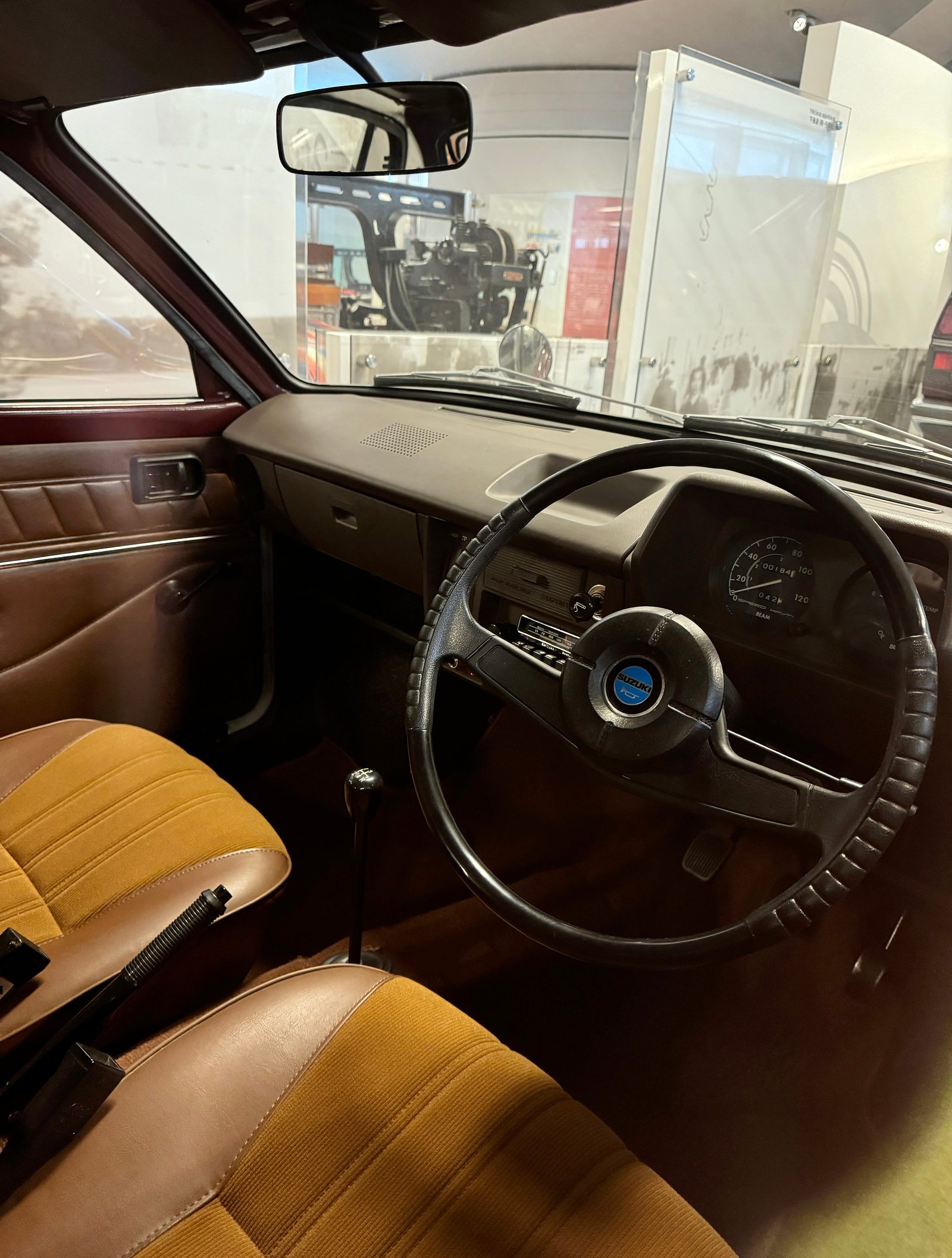
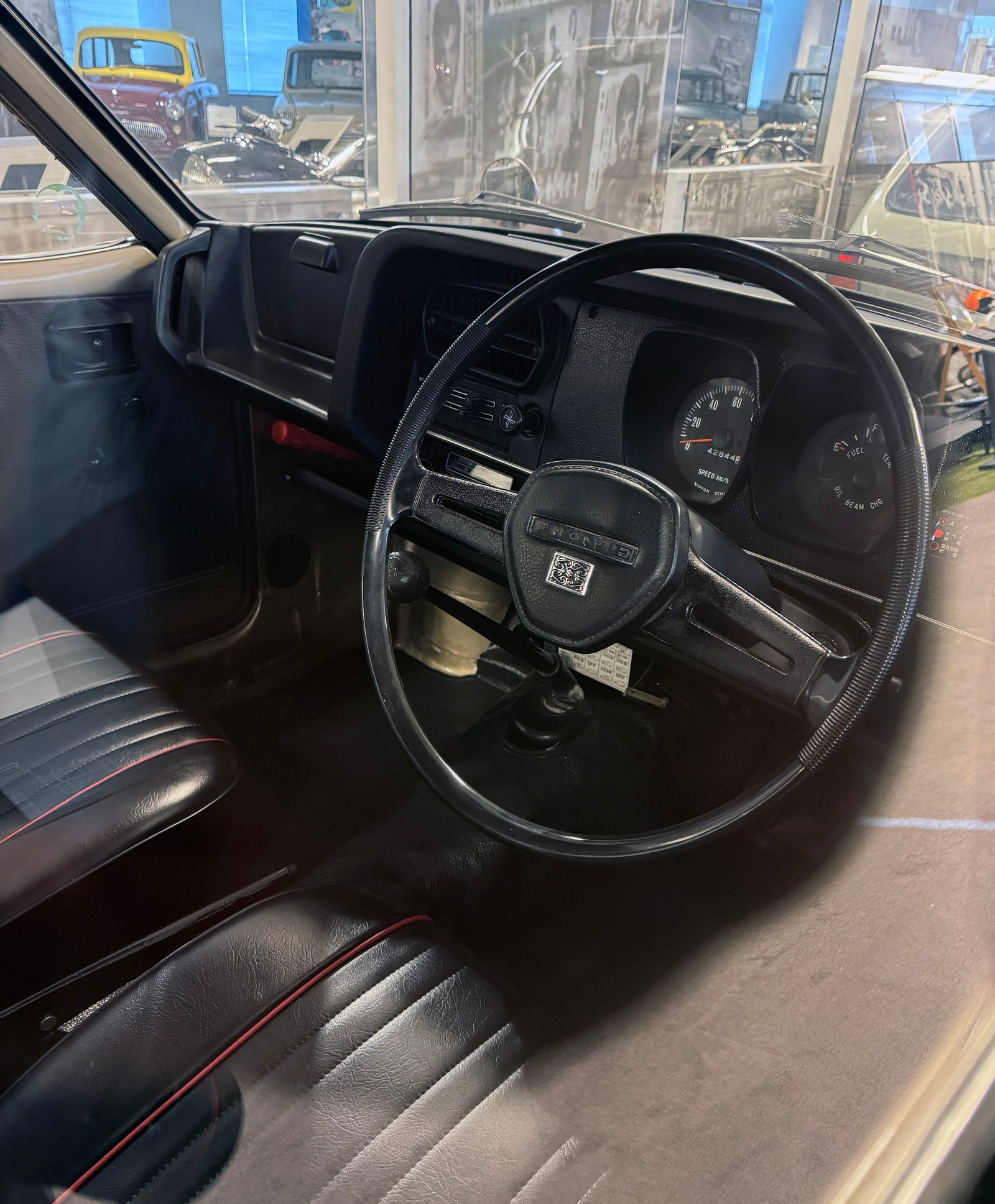
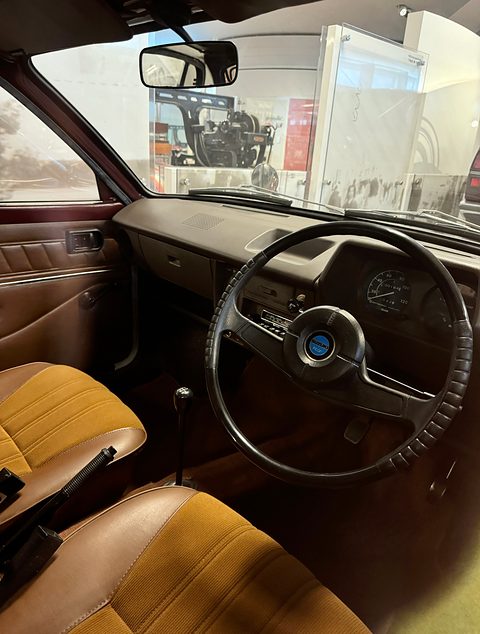
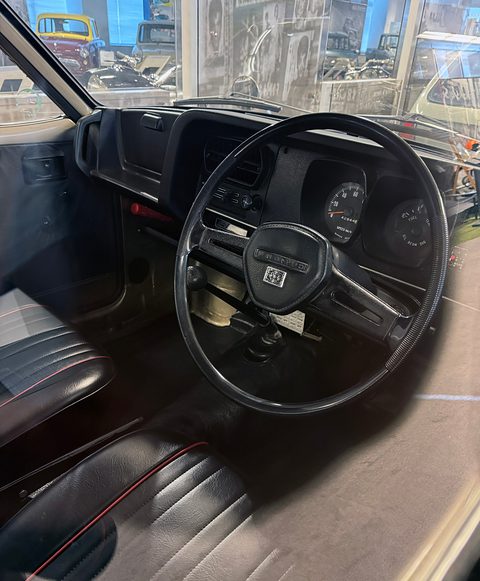
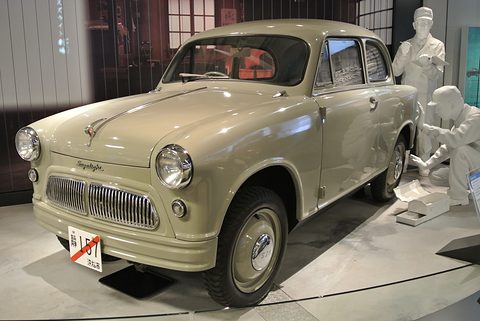
Suzuki had tried the idea before, with an open two-seater, the FA, in 1960, and in 1961 the FC Suzulight Sports 360, prompted by the success of the rear-engined Subaru 360.source 3 The new car was project Y‑16, developed on Suzuki’s new test track at Ryūyō, in the heat of Thailand and the cold of Hokkaidō.source 3 Suzuki had kept to front-wheel drive since its first Suzulight in 1955, and turned to the rear engine for a simpler structure and a tighter turning circle.source 4 The gear lever moved from the column to the floor, and the luggage went into the nose.source 1source 2
Three cylinders
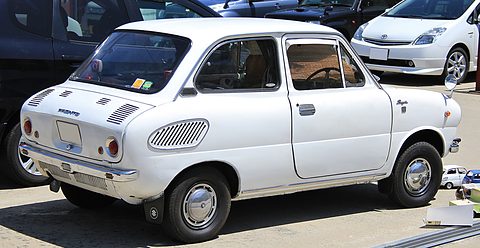
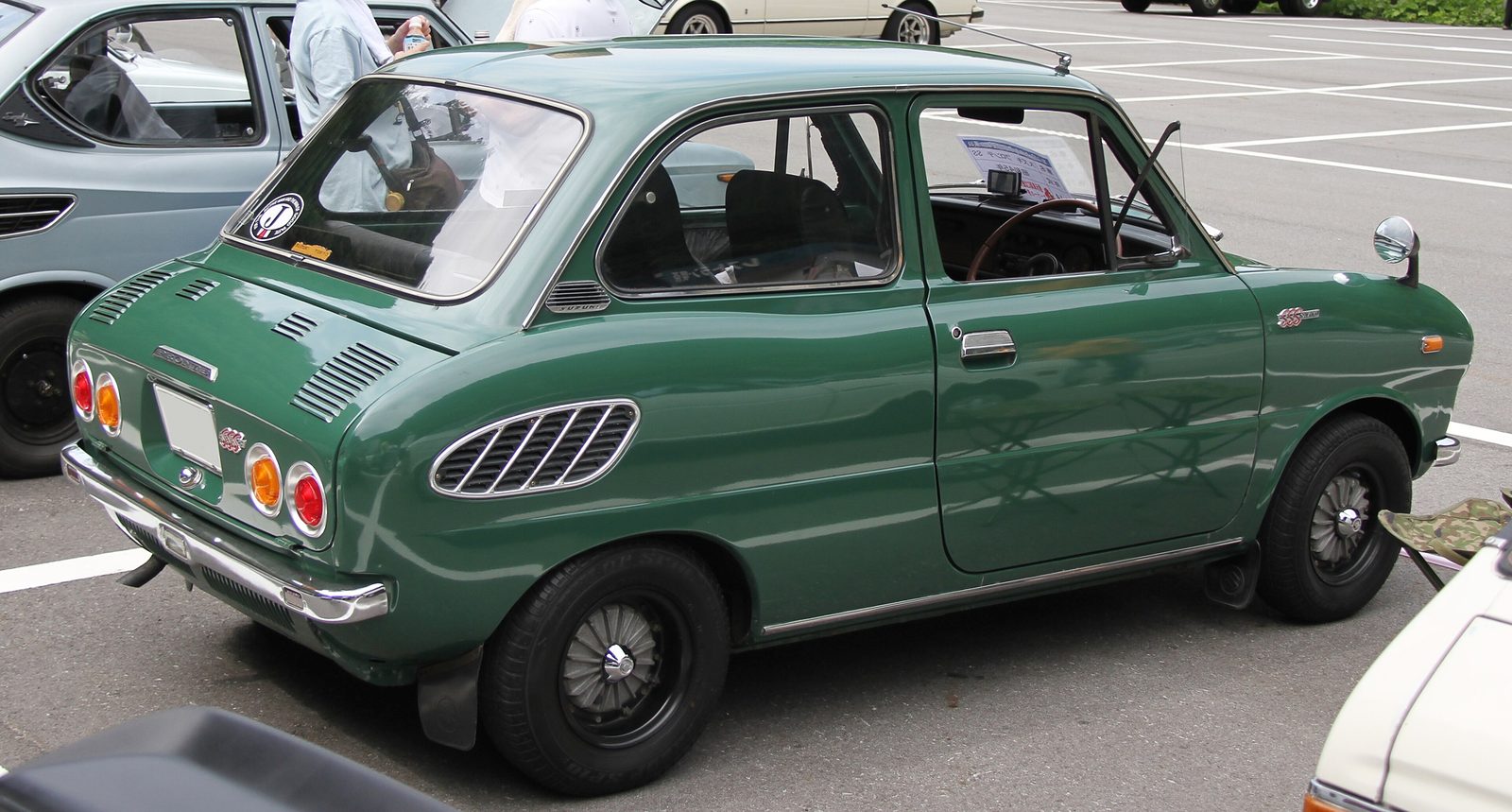
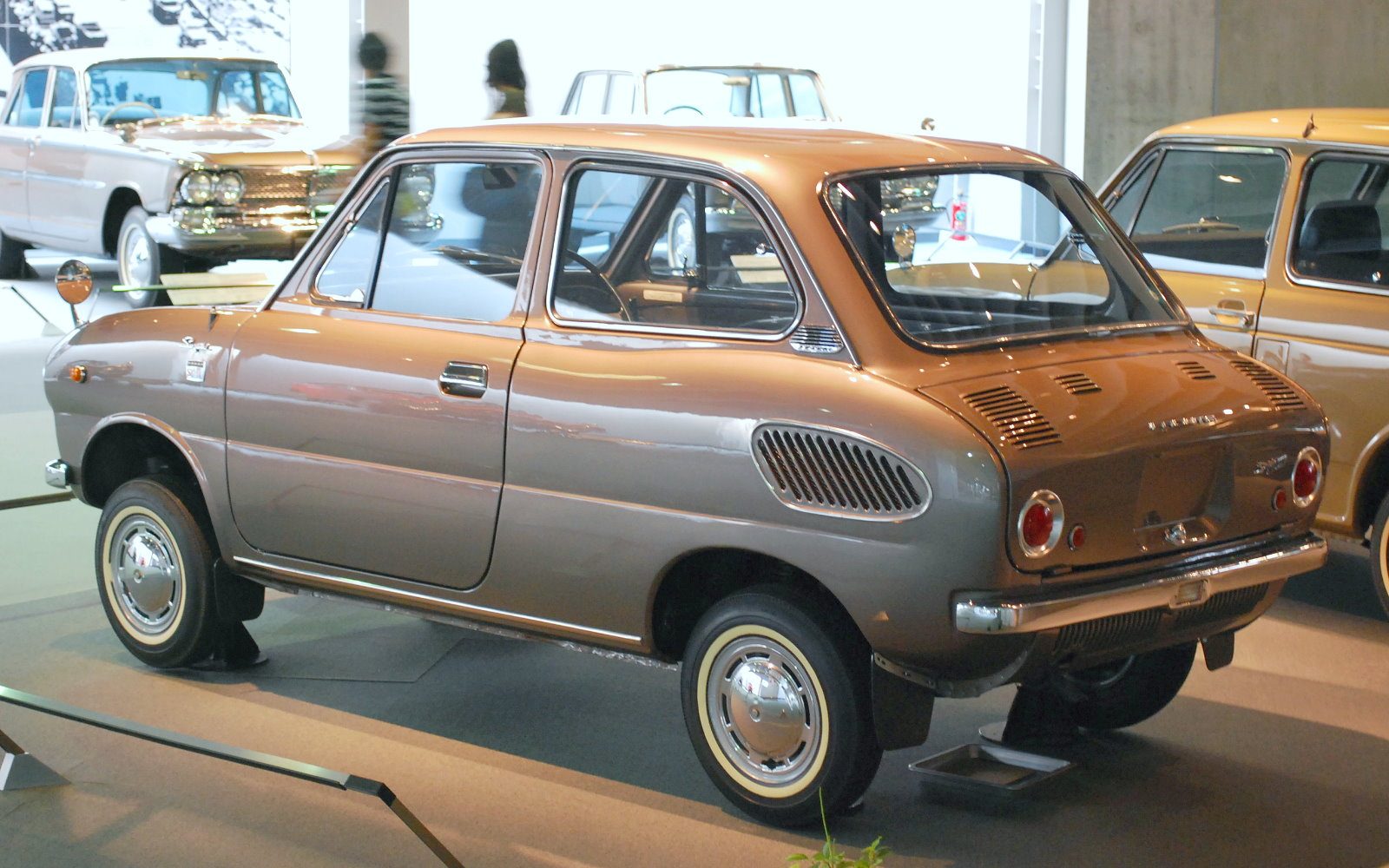
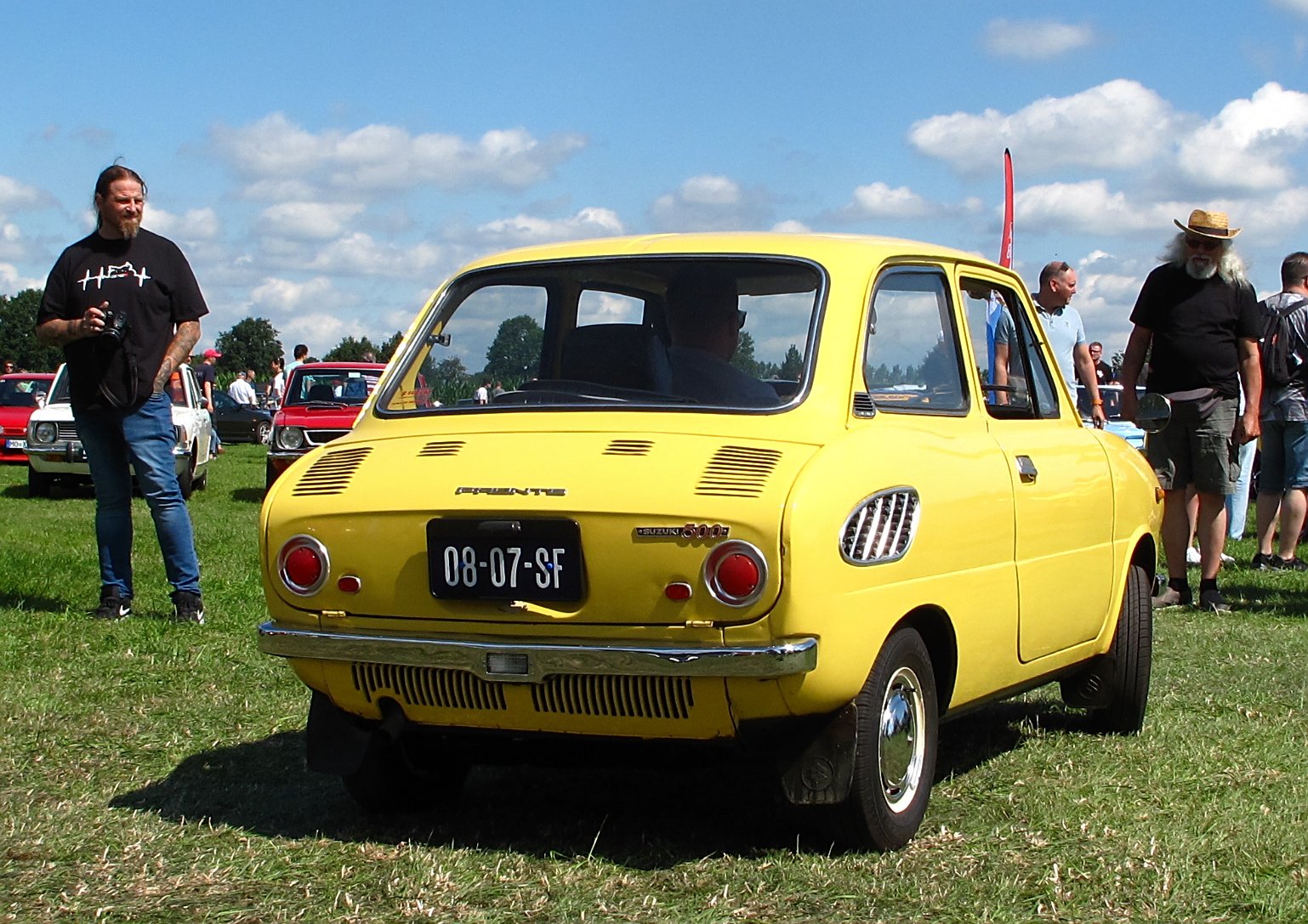
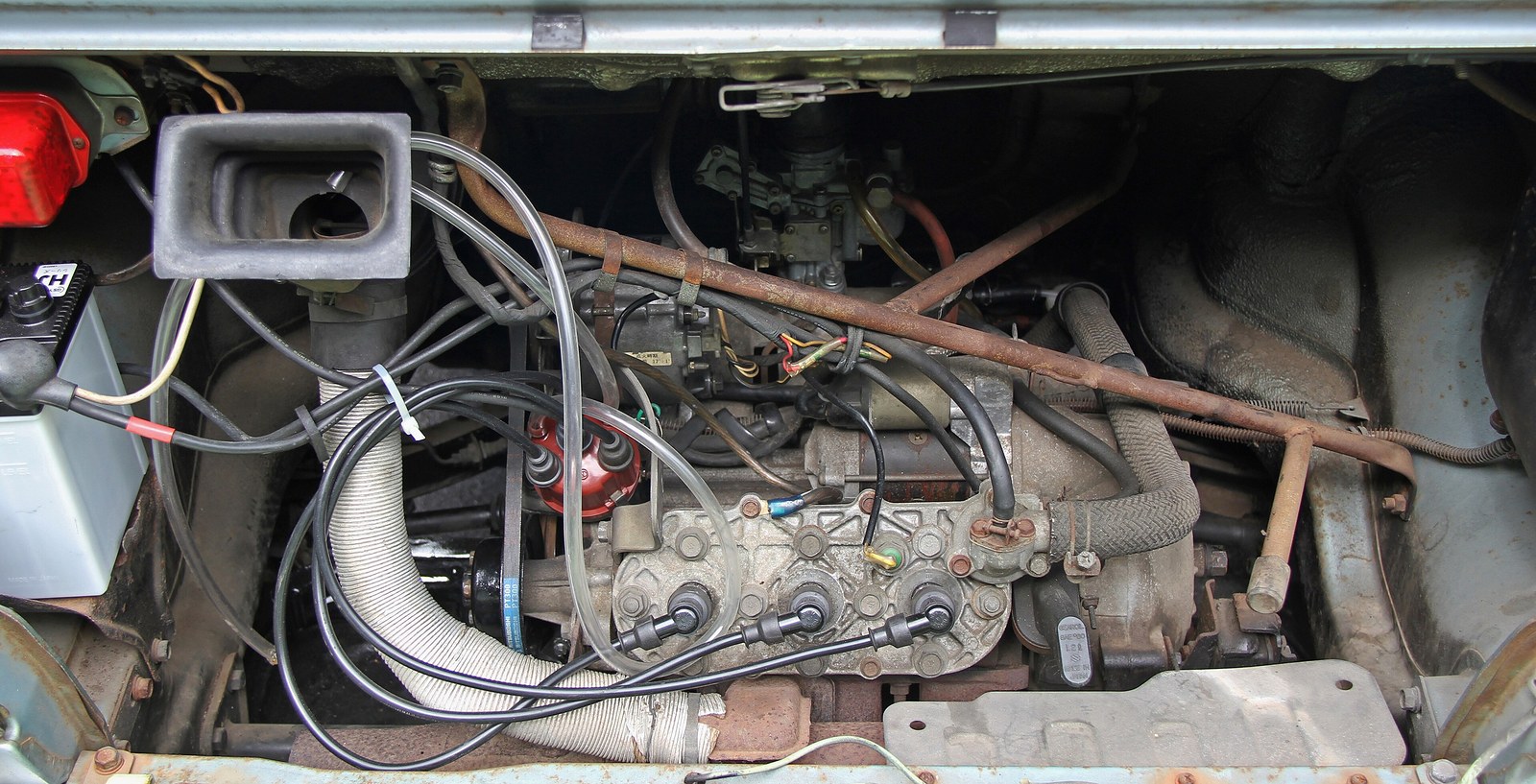
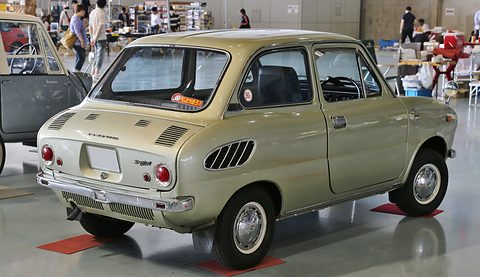
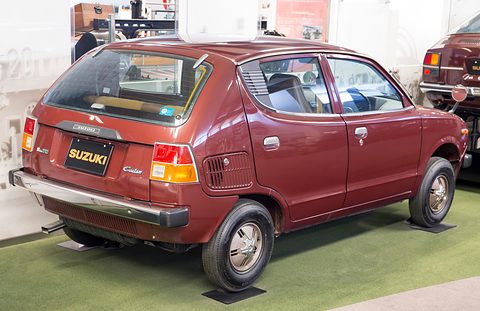
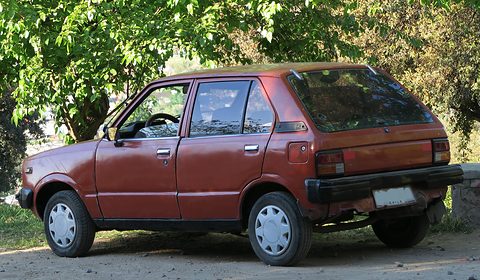
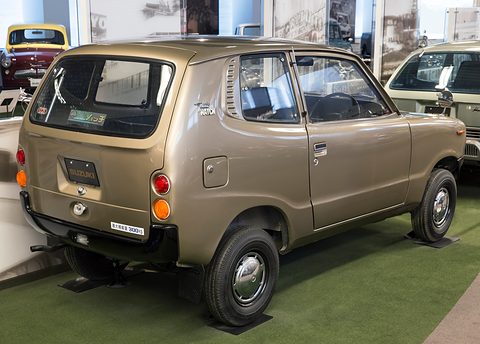
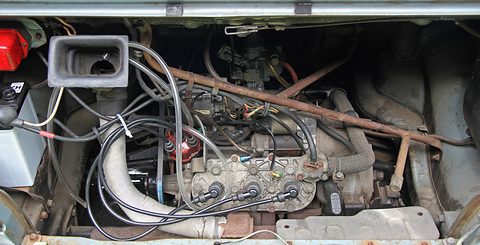
The engine was new: an air-cooled two-stroke three of 356 cc, the first three-cylinder engine in a kei car.source 1source 2 It came from motorcycle practice, with each cylinder a separate unit for cooling, and it was designed with more power in mind.source 2 Even the base car had three carburettors.source 3source 5 They were awkwardly placed, reached through a small egg-shaped hatch from the rear seat.source 3 The engine sat across the car behind the rear axle, under a cover shaped to smooth the airflow, and gave 25 PS (18 kW) at 5,000 rpm.source 1source 2source 4 The car was built for Japan’s new expressways: it carried four adults and could cruise all day at 100 km/h (62 mph), with 110 km/h in hand.source 1source 4
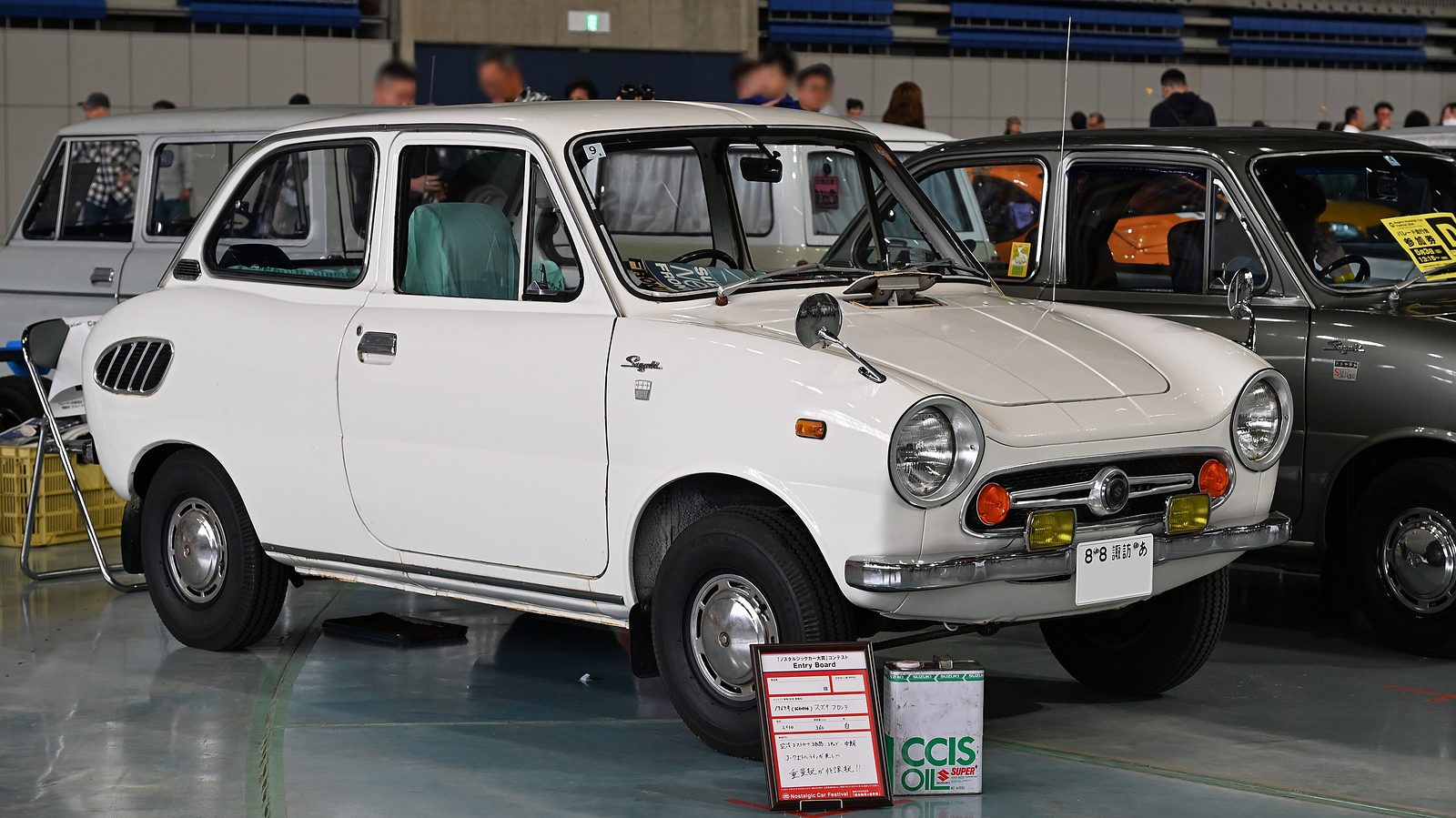
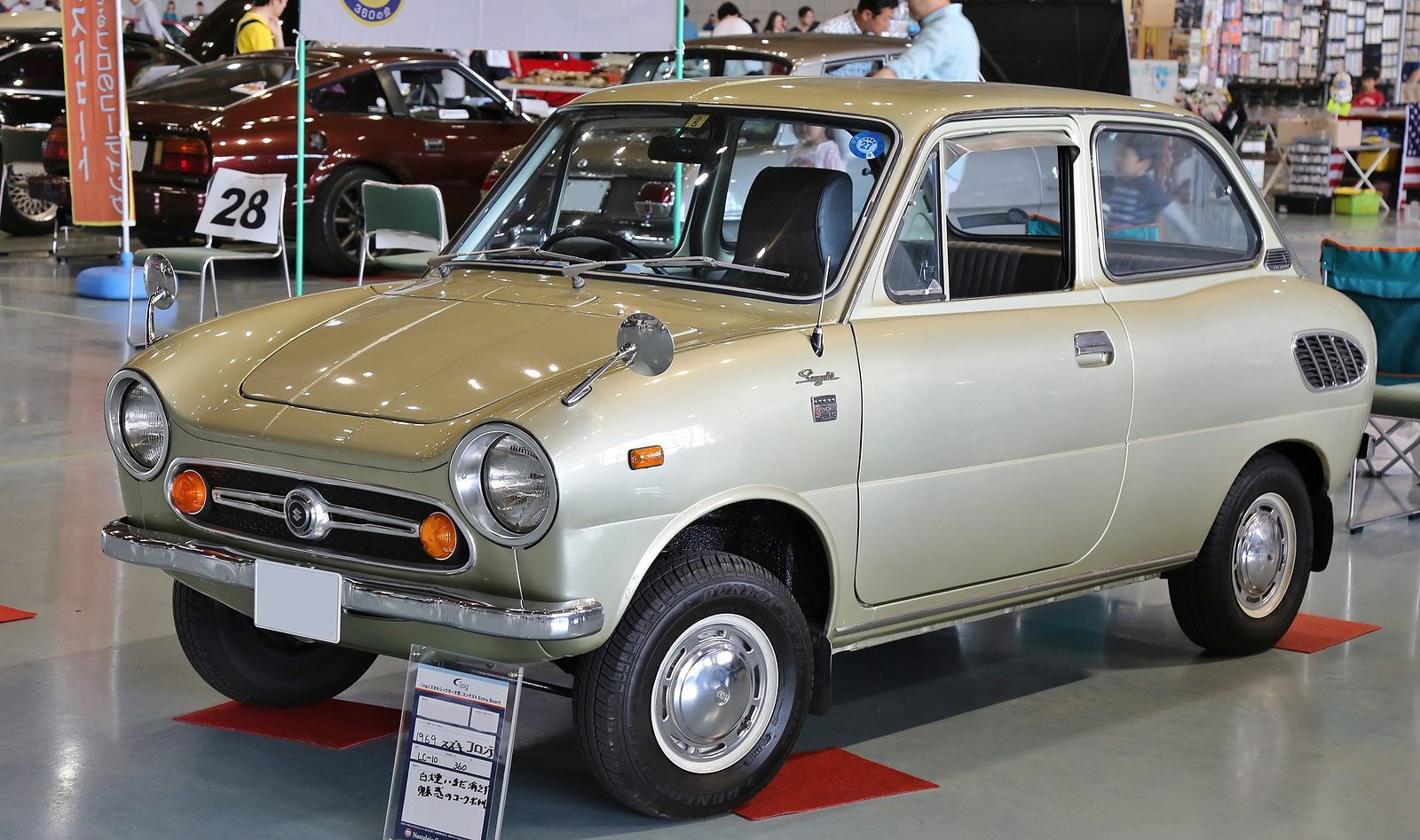
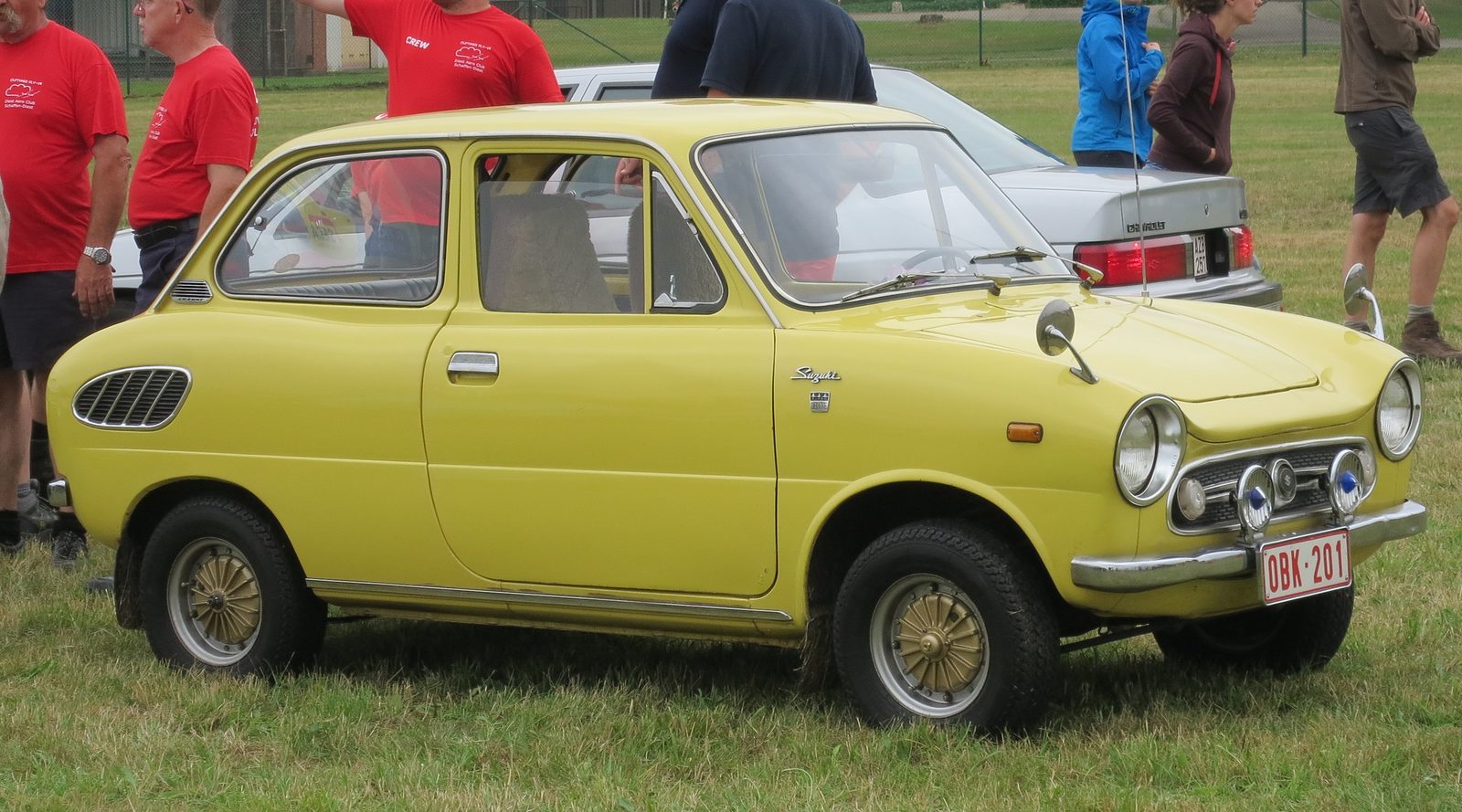
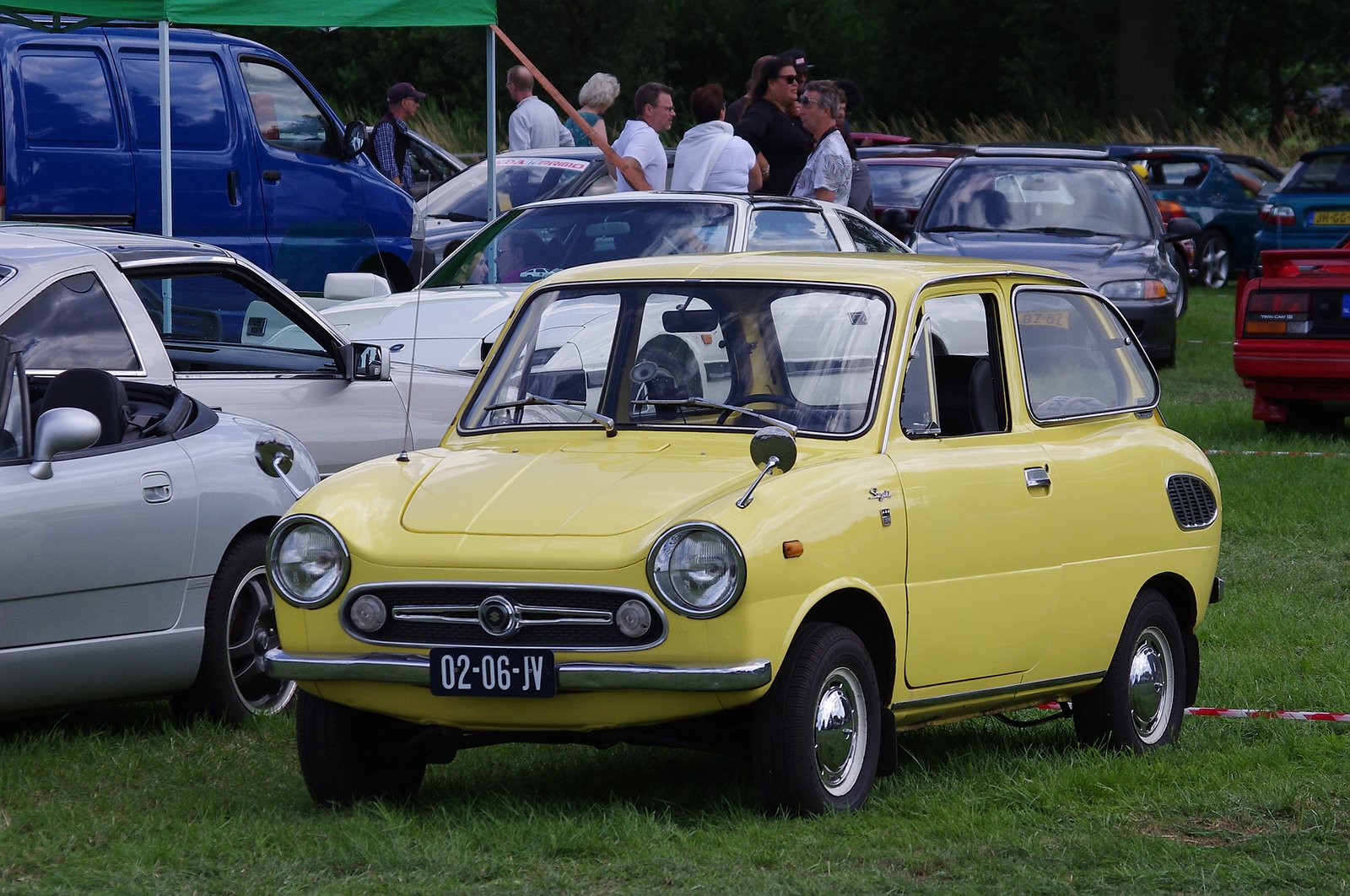
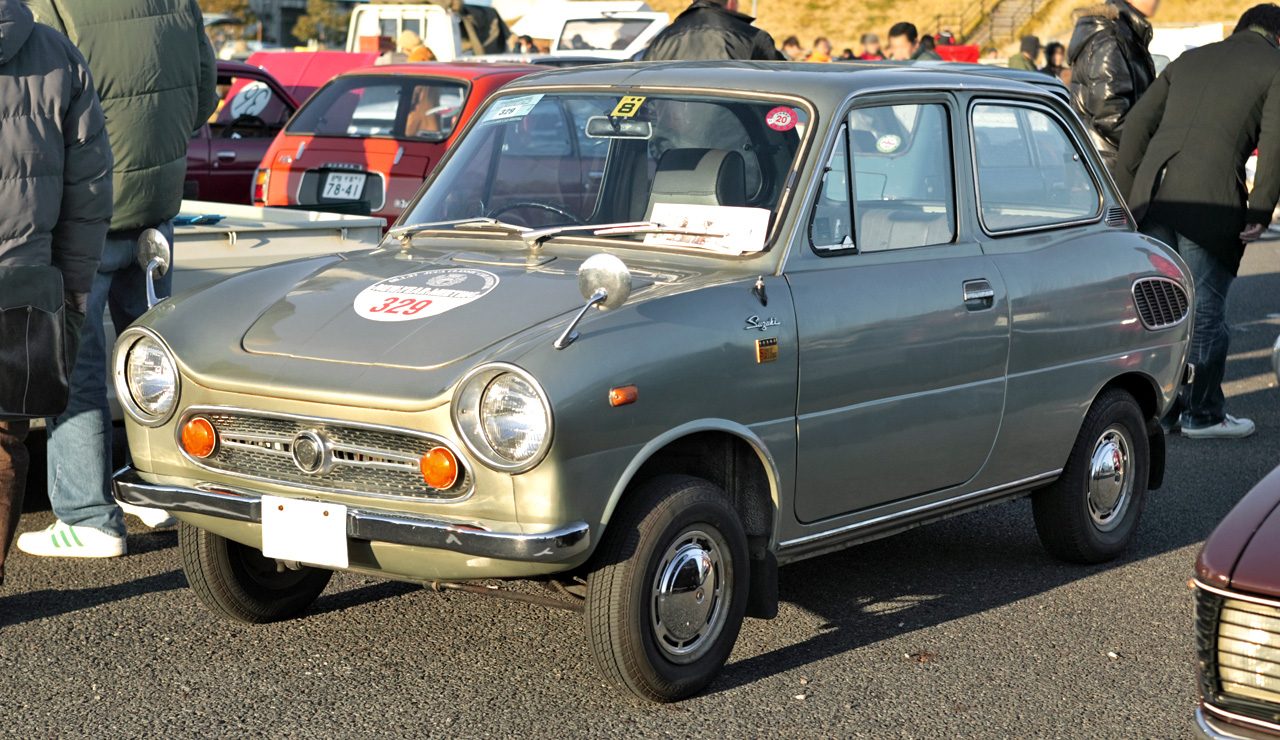
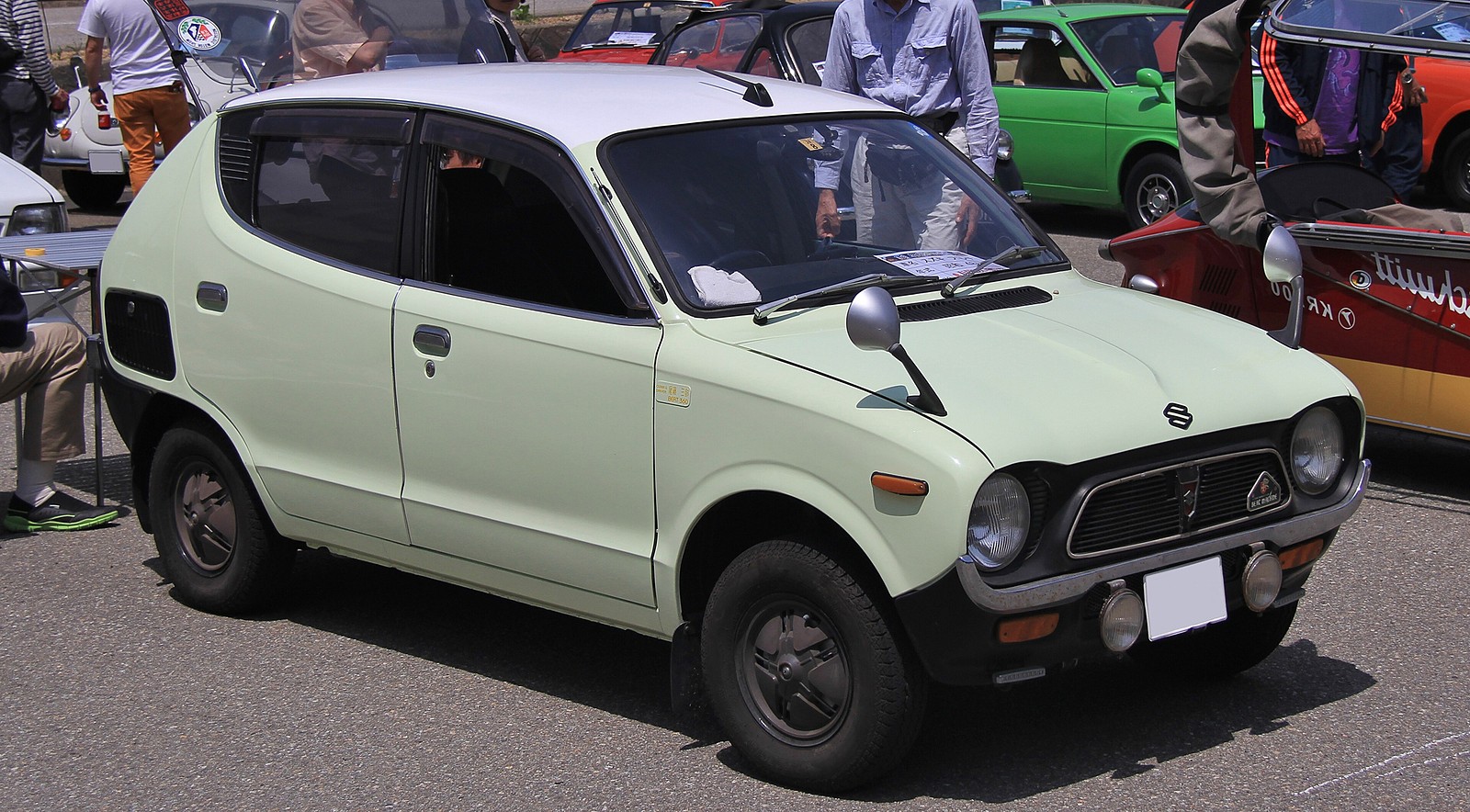
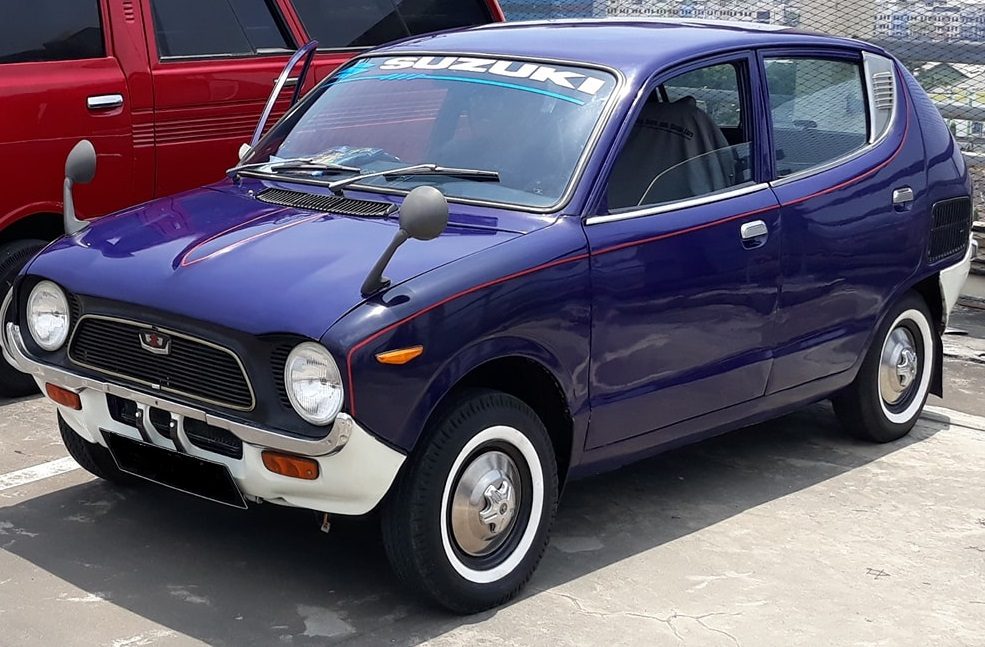
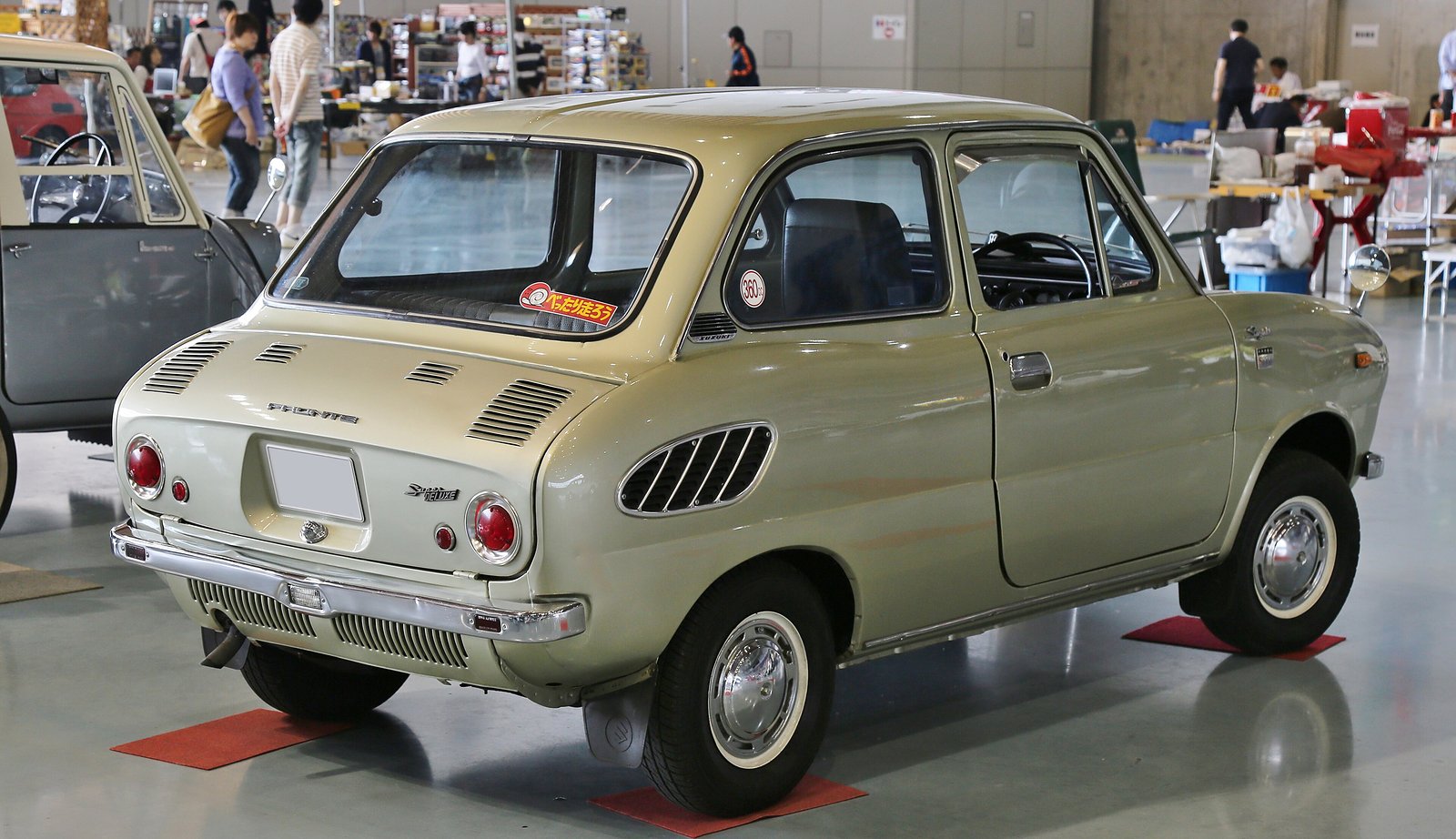
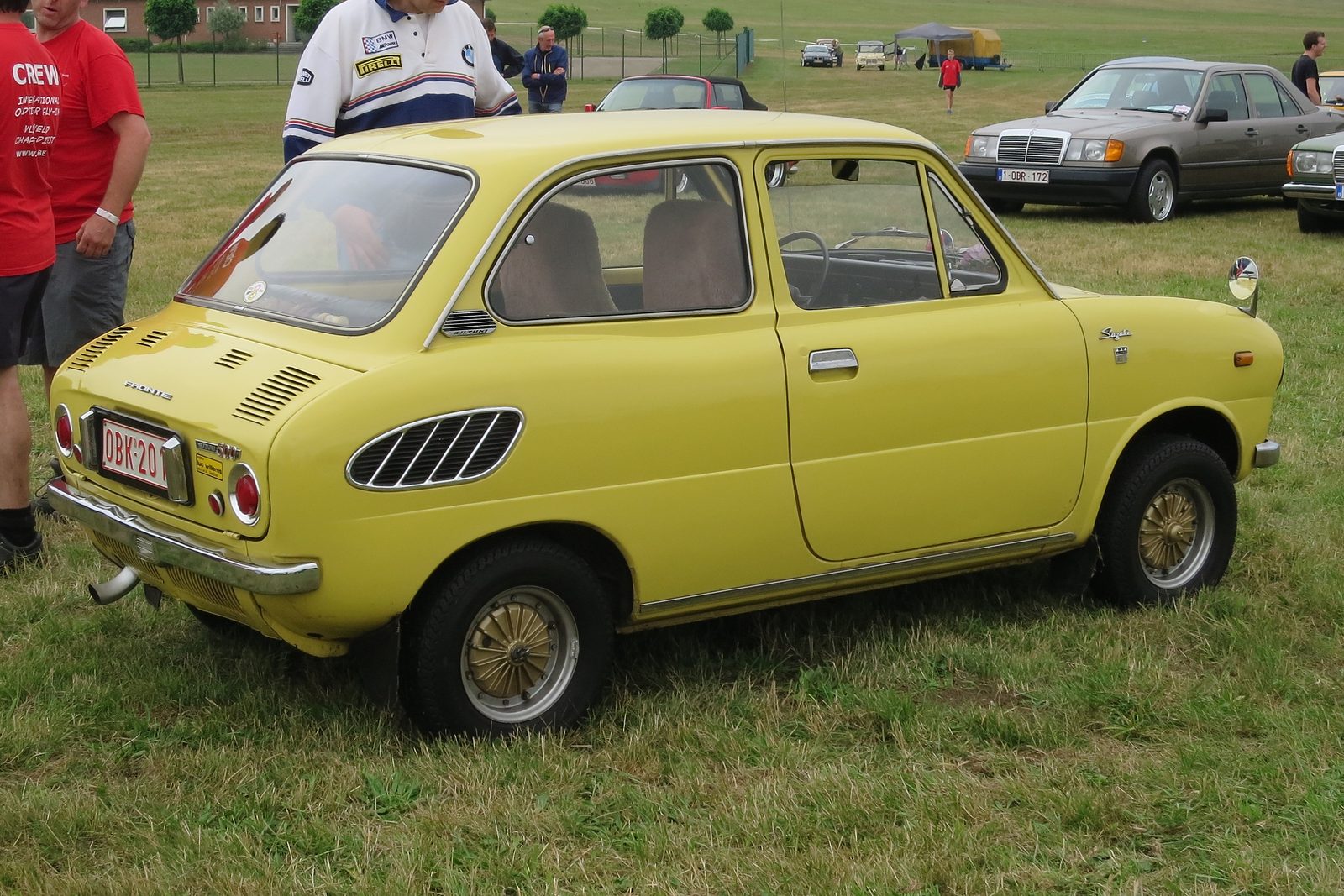
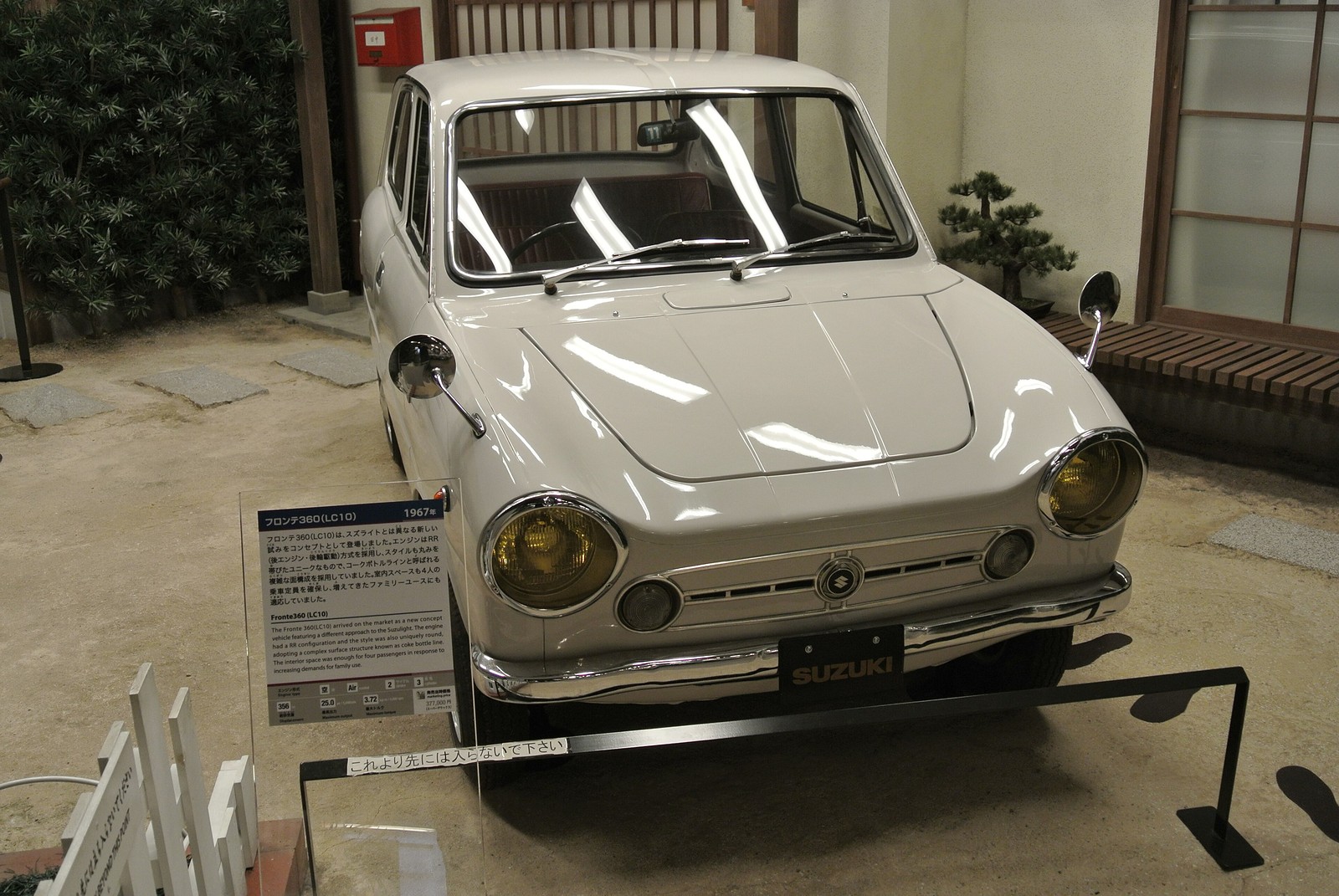
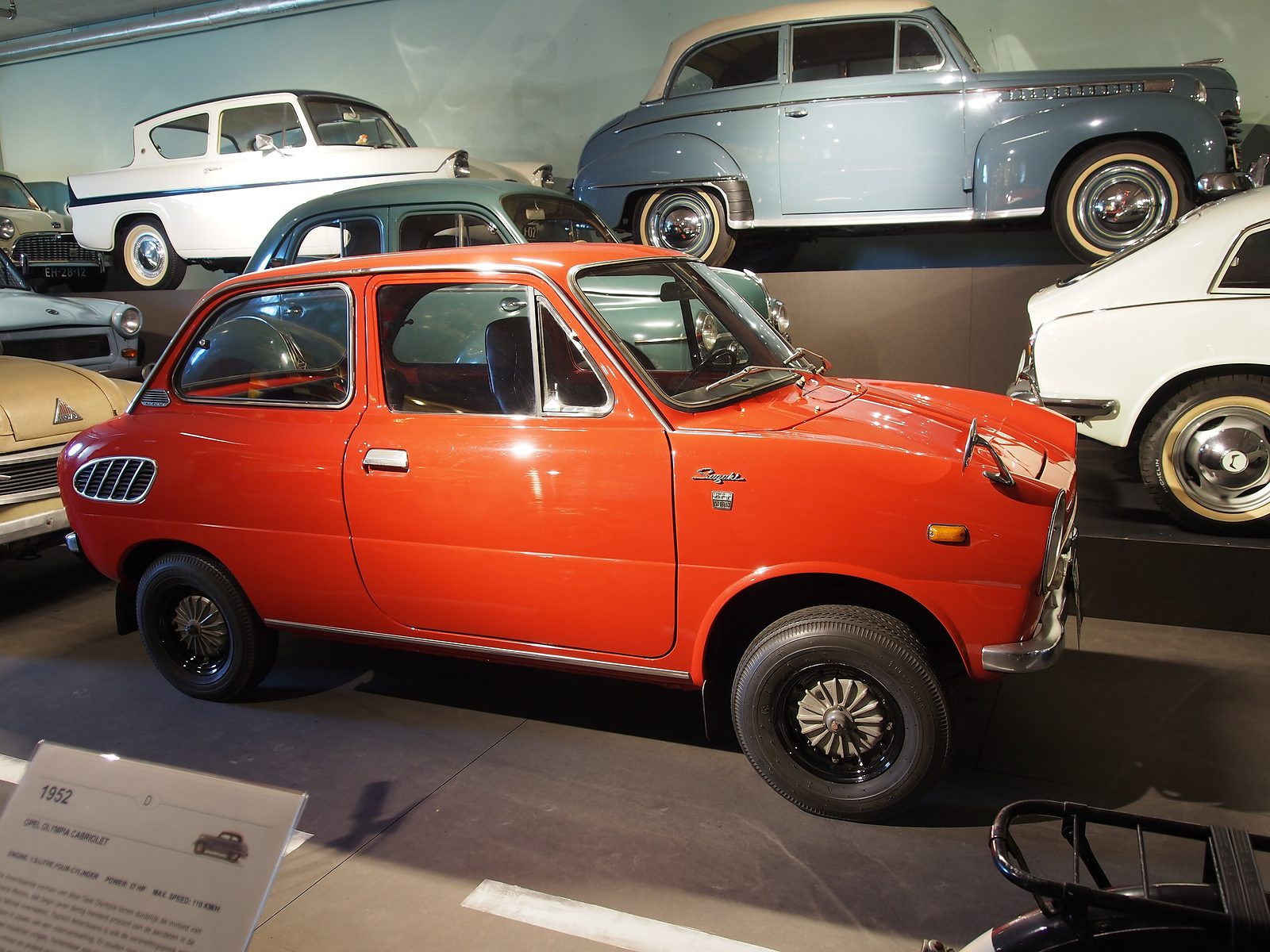
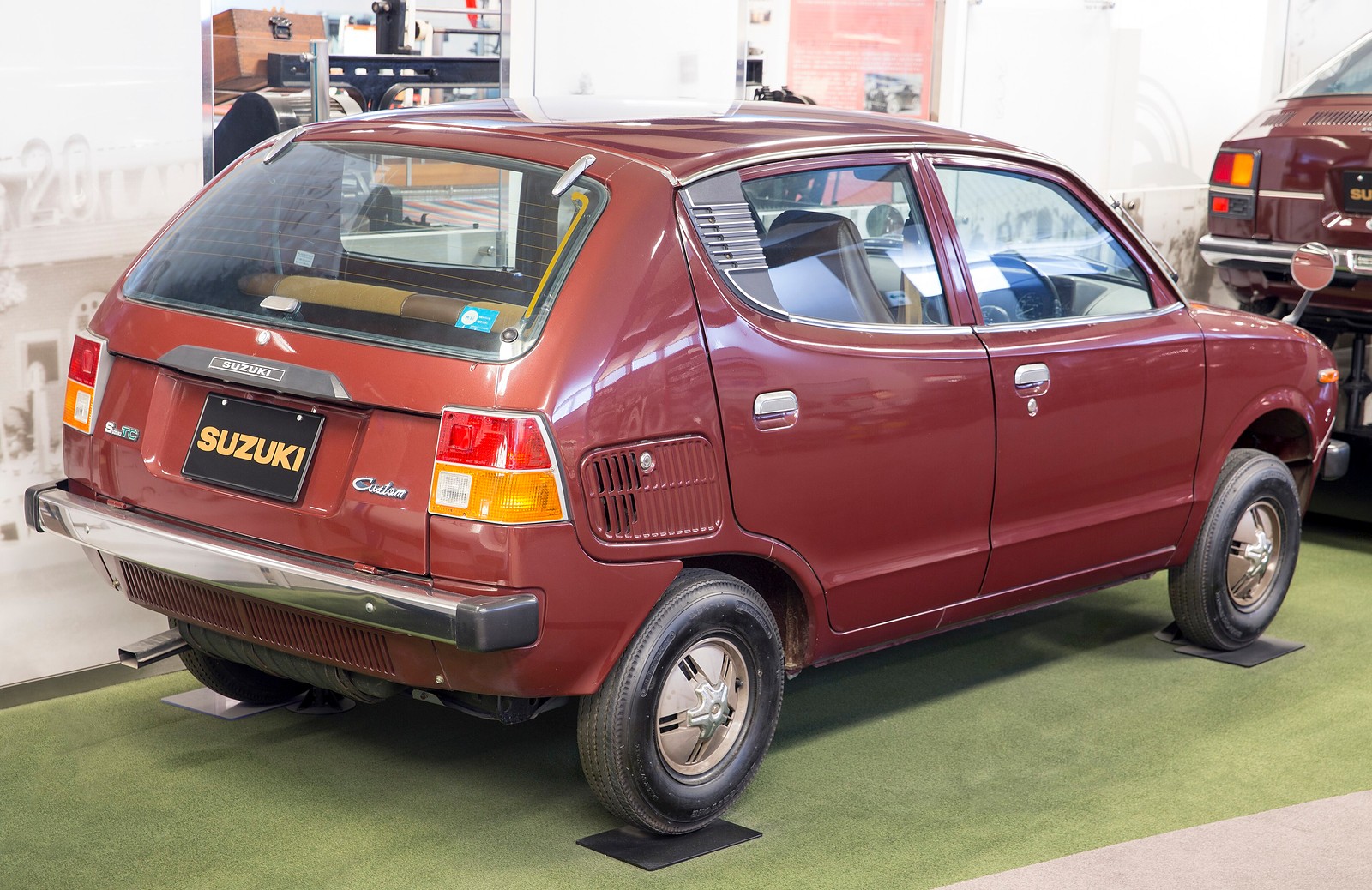
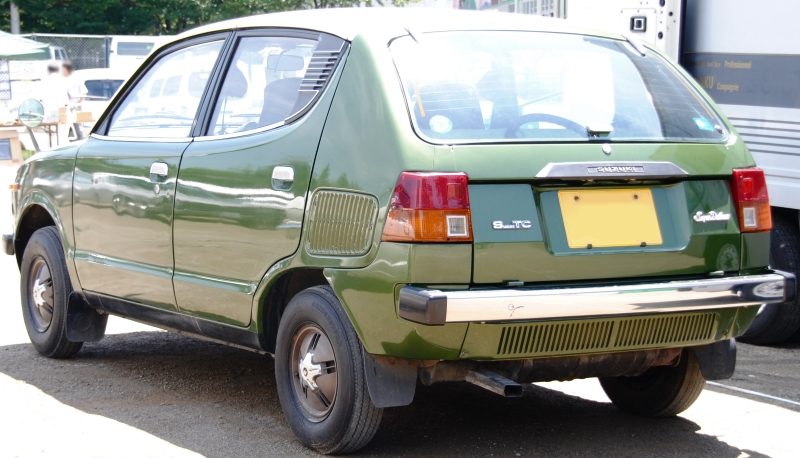
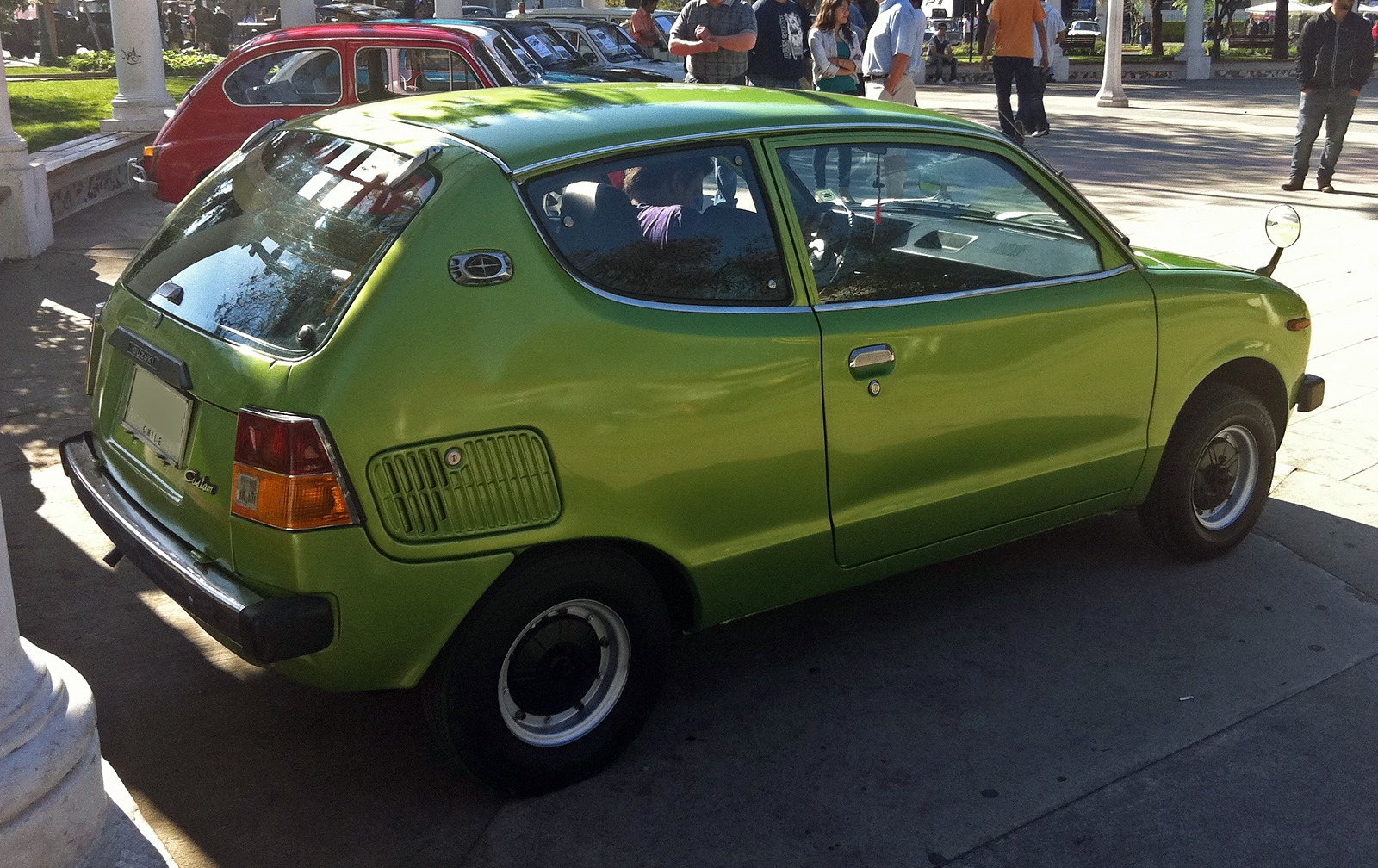
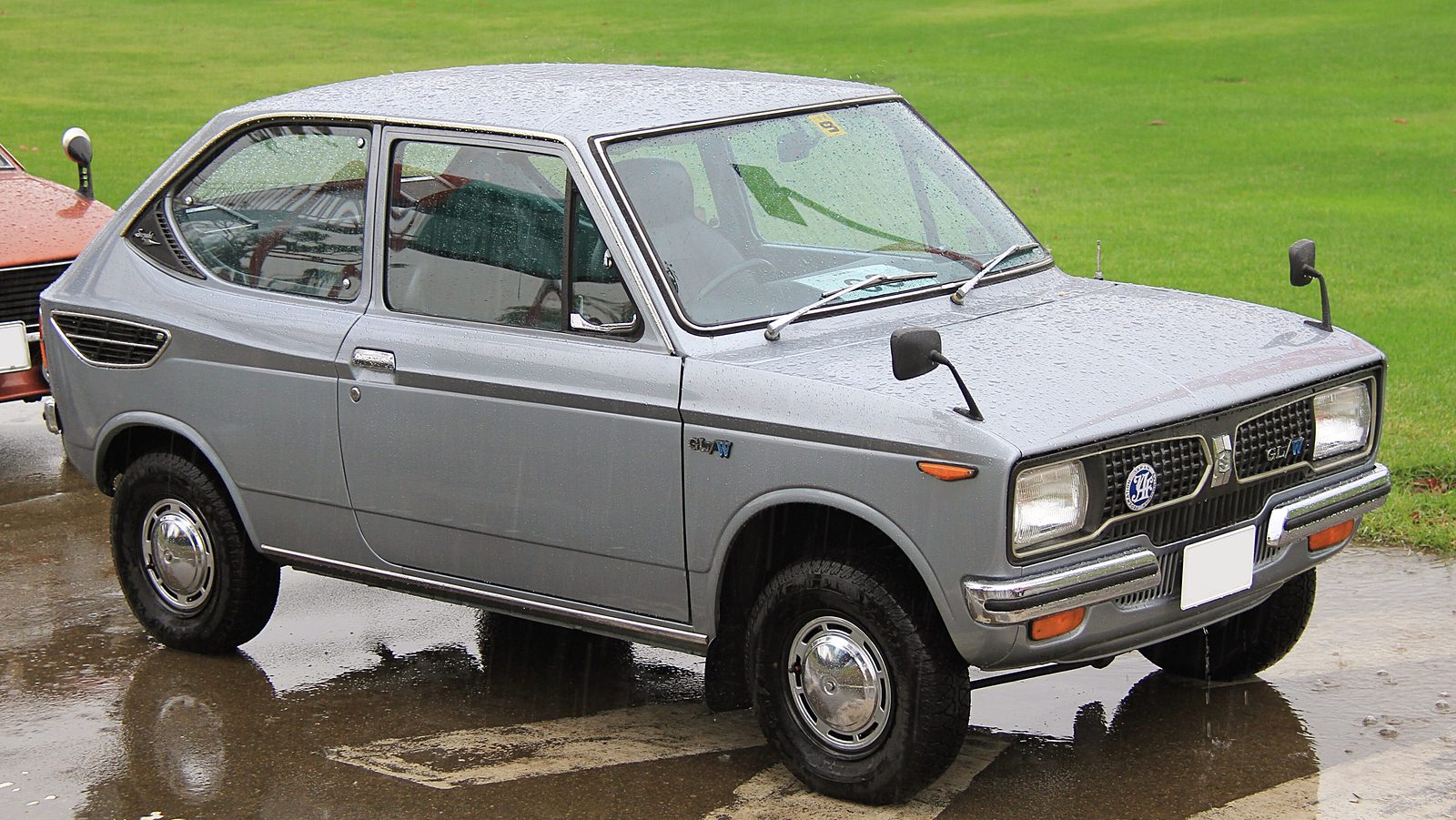
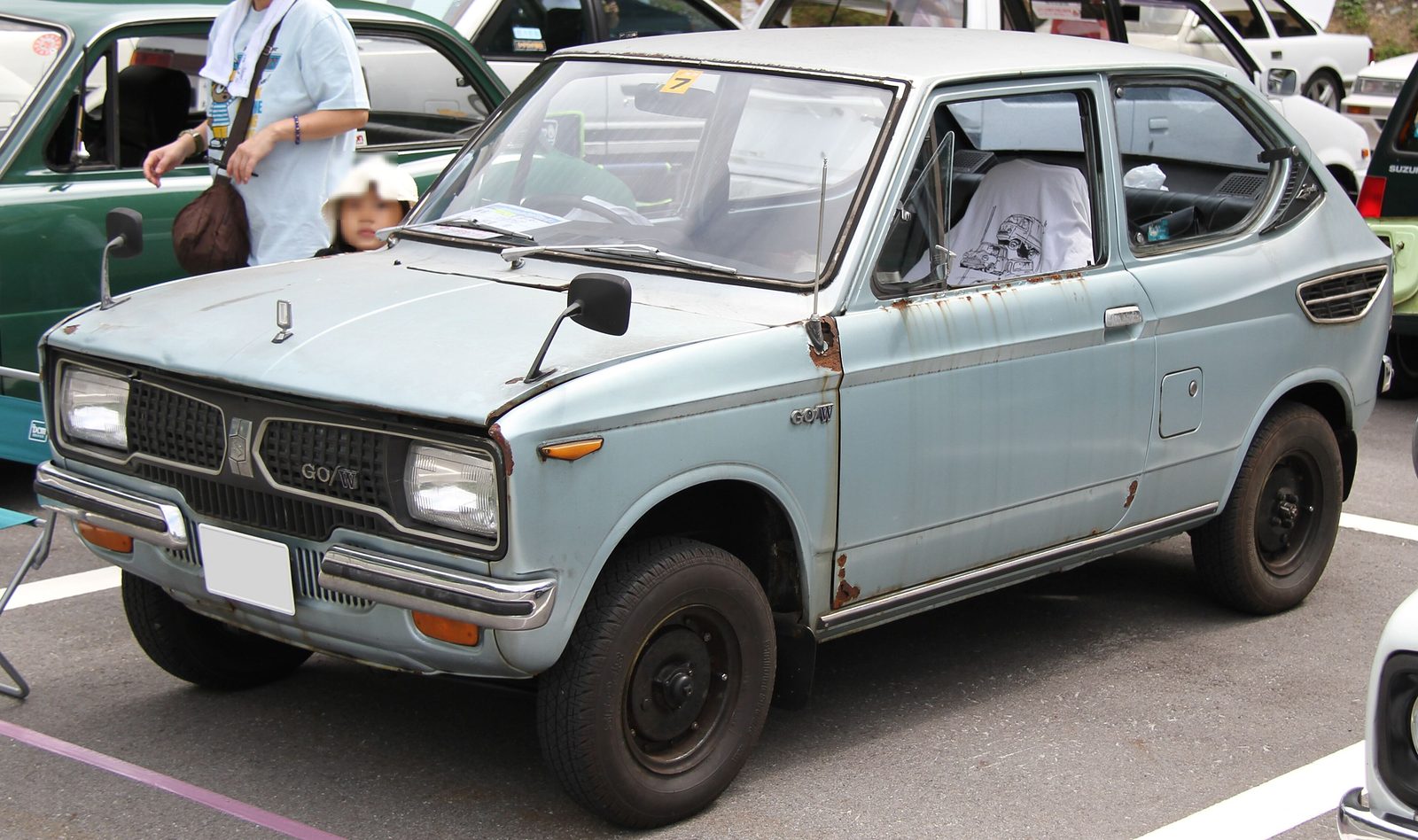
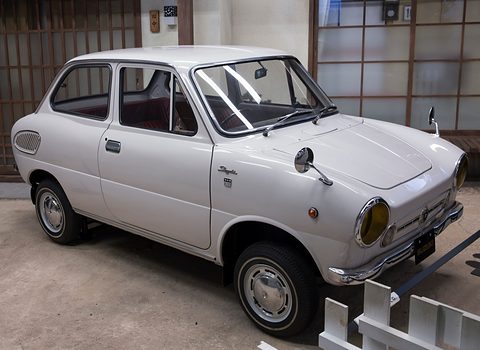
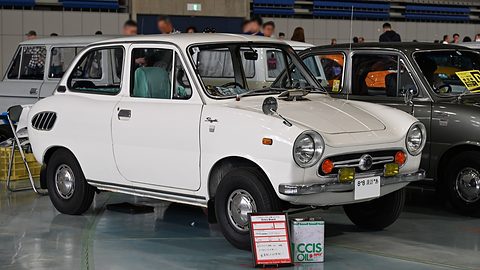
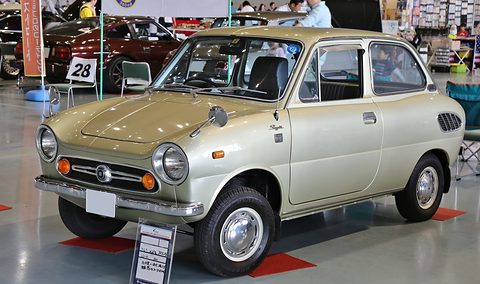
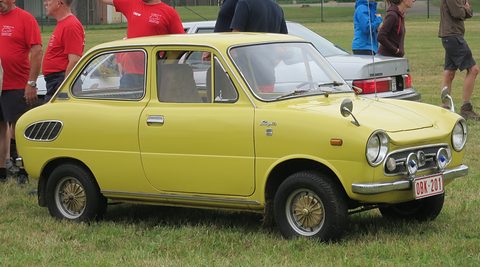
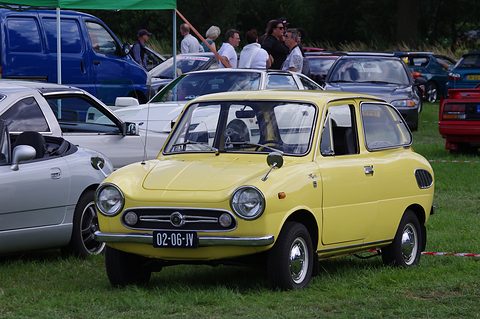
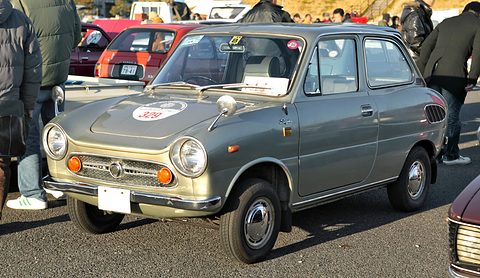
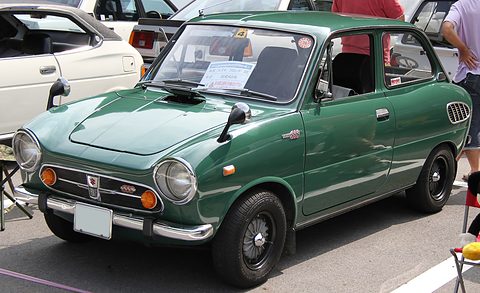
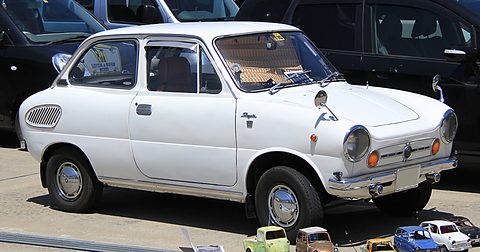
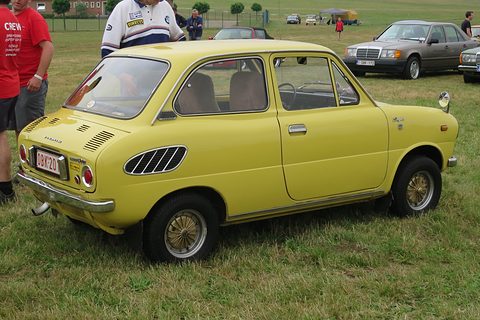
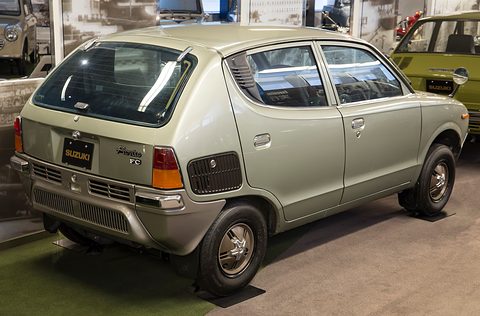
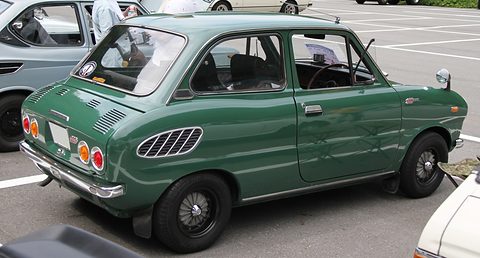
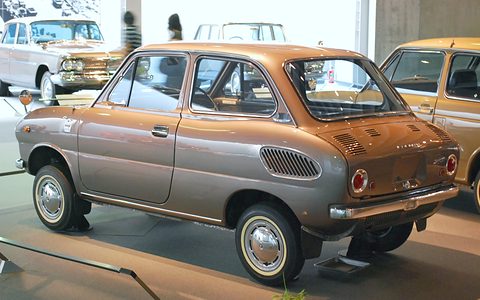
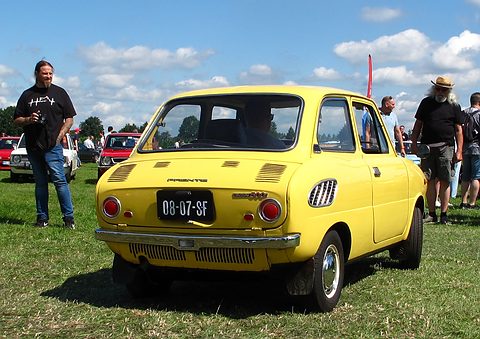
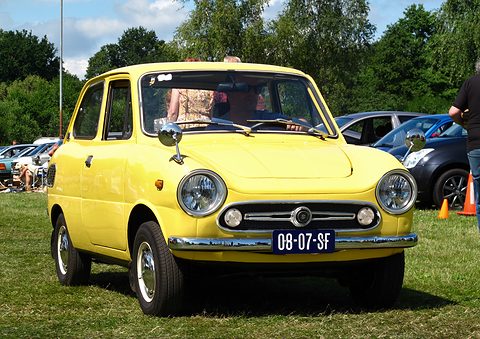
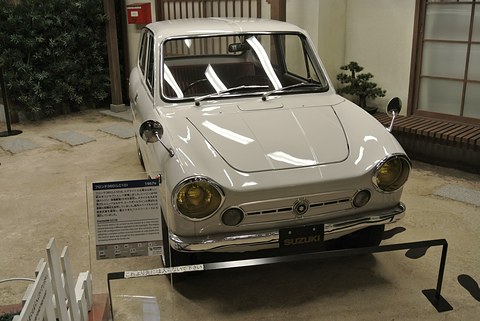
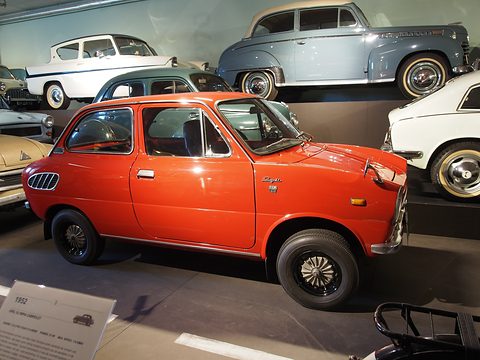
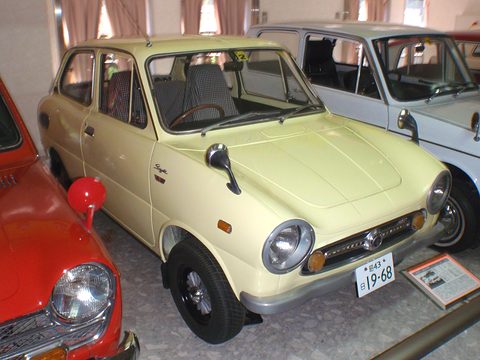
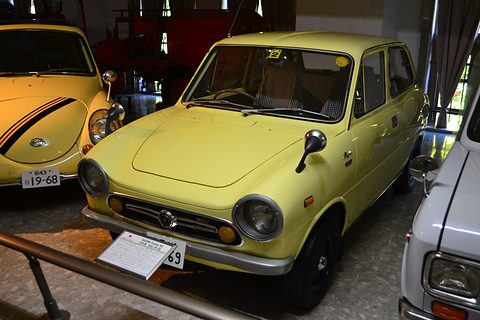
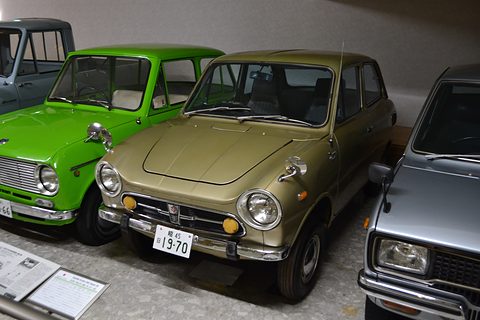
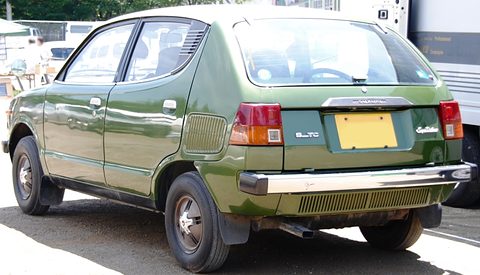
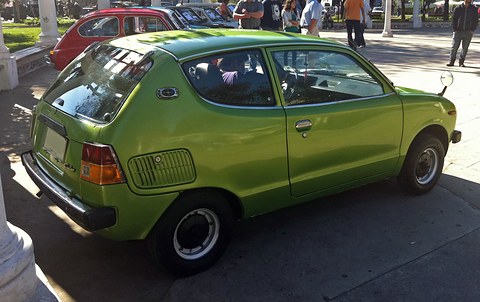
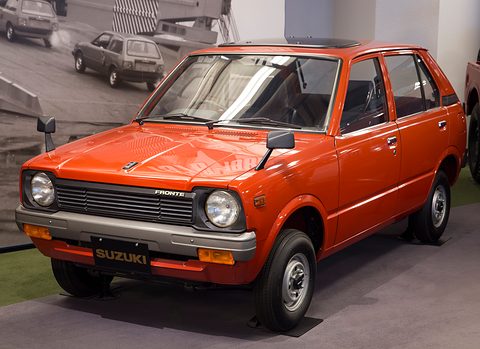
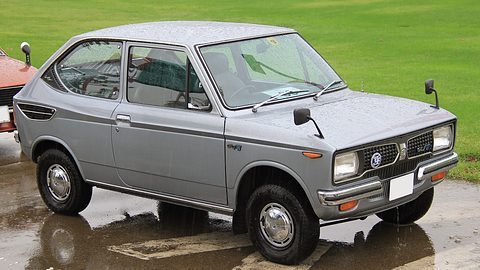
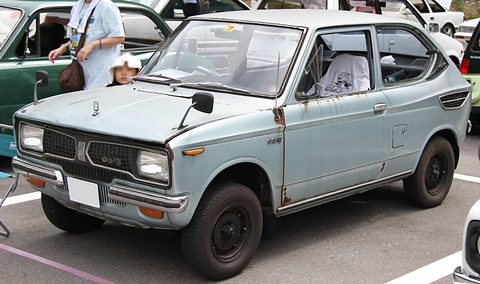
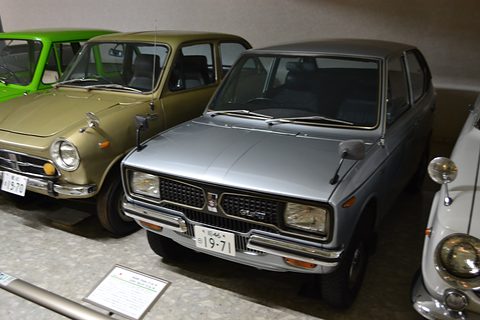
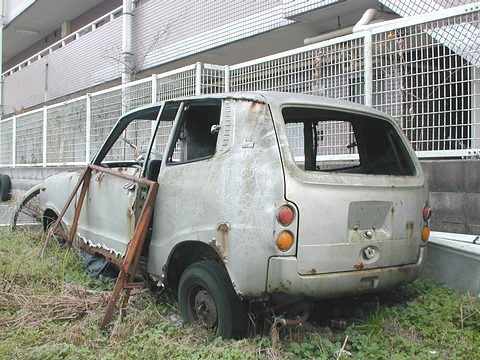
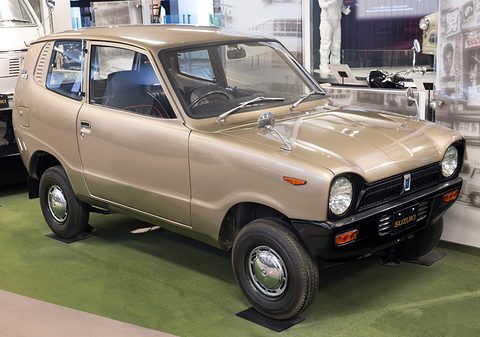
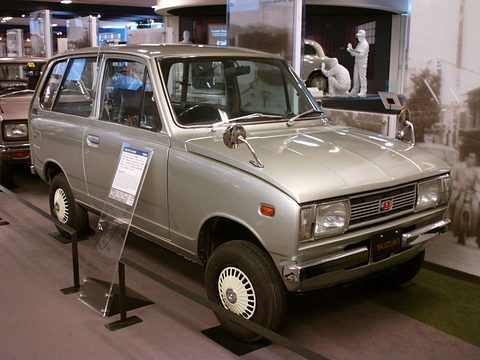
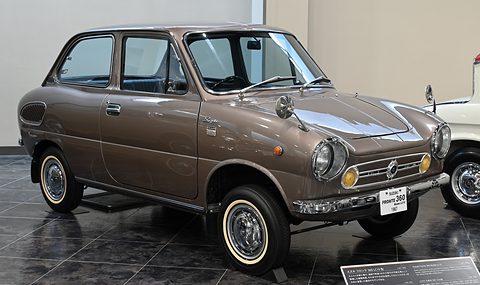
The body was a semi-fastback with a rounded coke-bottle waist; English Wikipedia calls it the smallest car, and arguably the only kei car, styled that way.source 1source 3 Its round shape got it the nickname Daruma, after the roly-poly doll, and Suzuki’s marketing called it the queen of the kei cars.source 3 Its weak points were next to no room for luggage, and those carburettors.source 3
Three times the plan
The Fronte 360 was introduced in the spring of 1967 and reached showrooms in late May, by English Wikipedia’s dates; Japanese Wikipedia says June.source 2source 3 It cost from ¥318,000 at the works, and a large television campaign launched it.source 1source 3 Suzuki planned 3,000 a month. In the last three months of 1967 it built 26,281, three times the plan, and output stayed above 8,000 a month for the rest of the car’s life; a second plant at Iwata had opened that August.source 2source 3 Its rivals were the Mitsubishi Minica, the Daihatsu Fellow, the Subaru 360 and the Honda N360, and Japanese Wikipedia says Honda, Daihatsu and Subaru answered with cars aimed at beating the Fronte.source 2source 3
The SS360 and the Autostrada
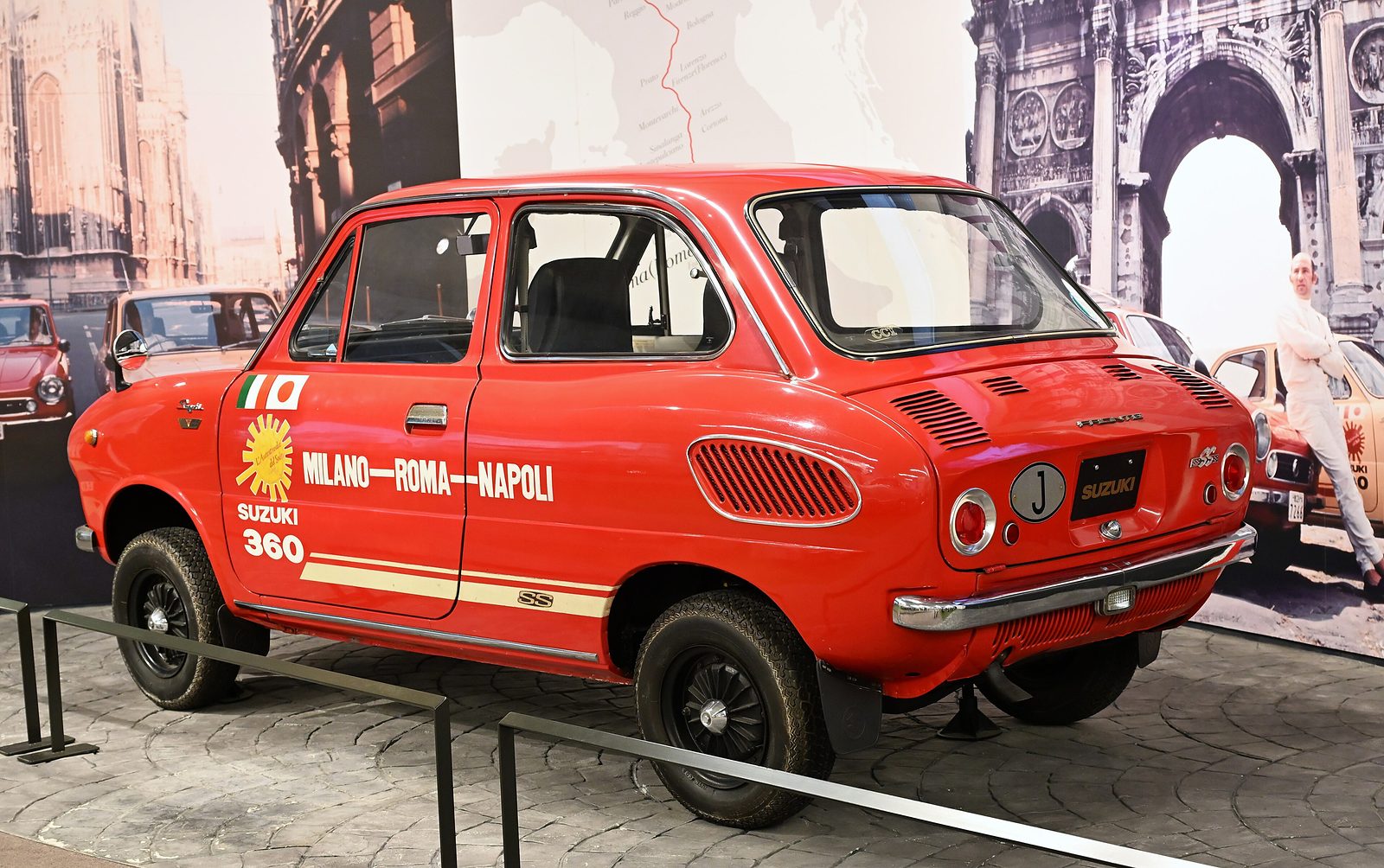
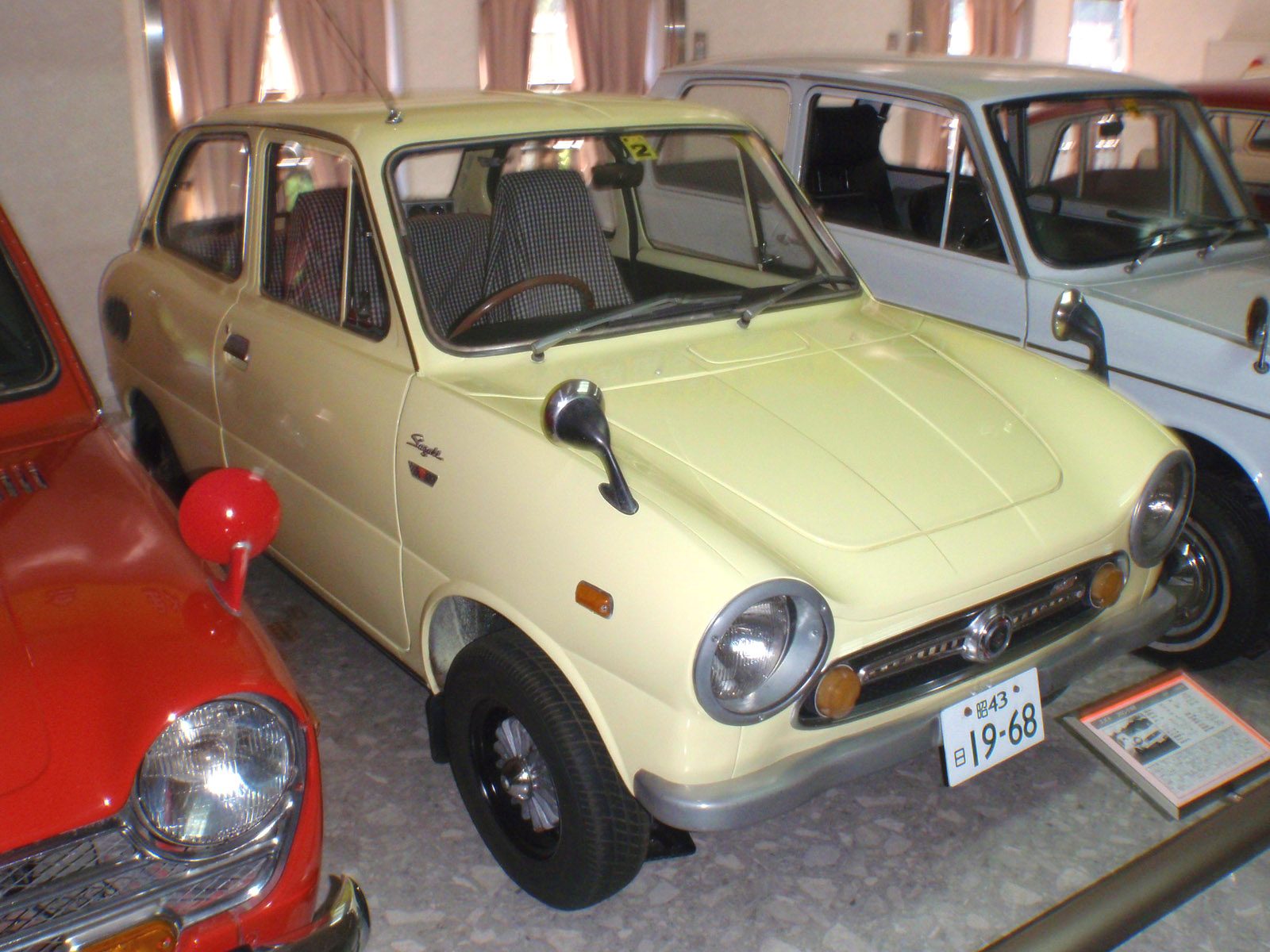
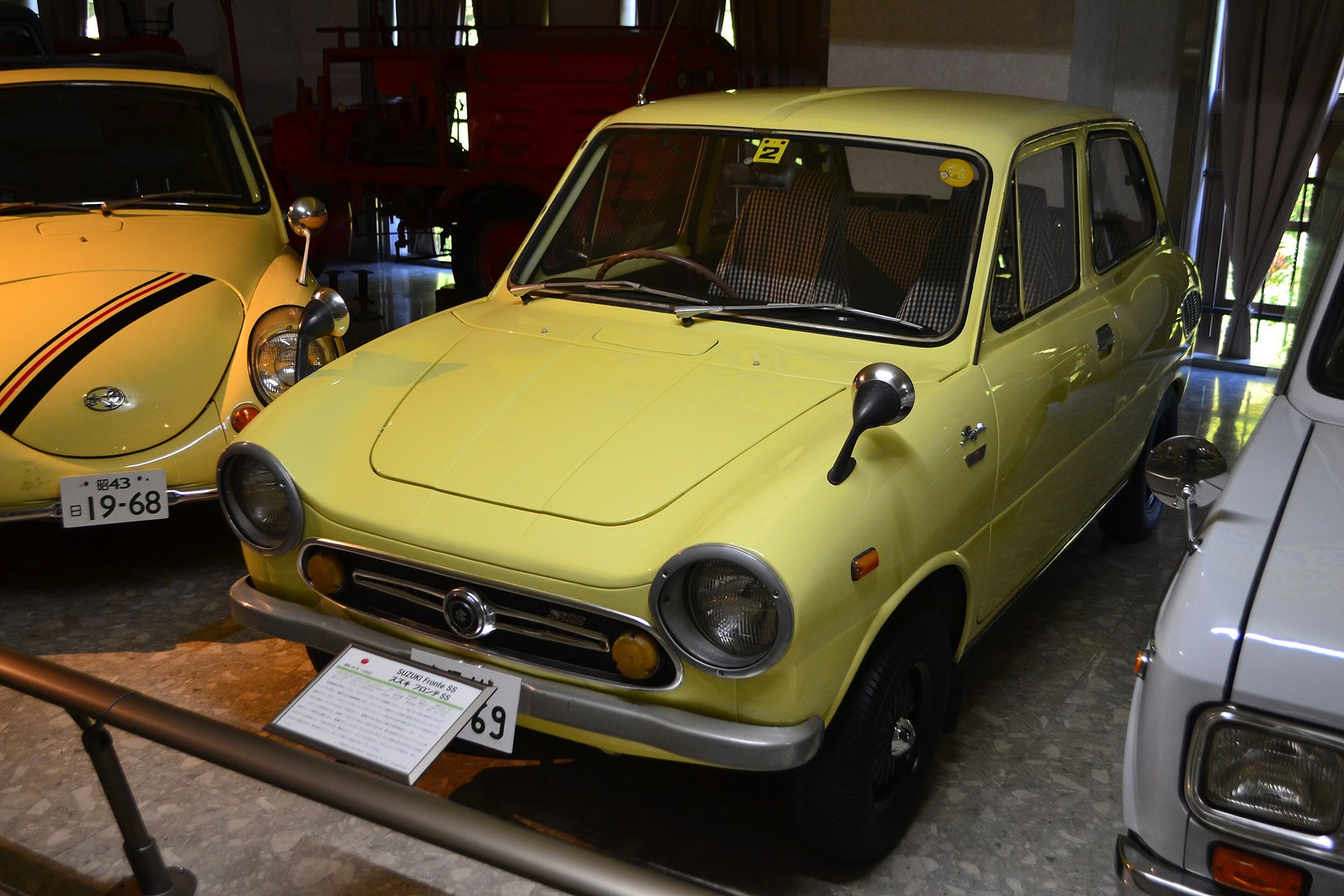
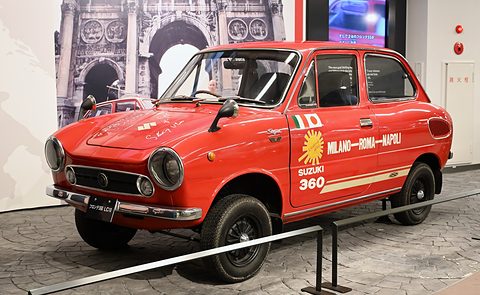
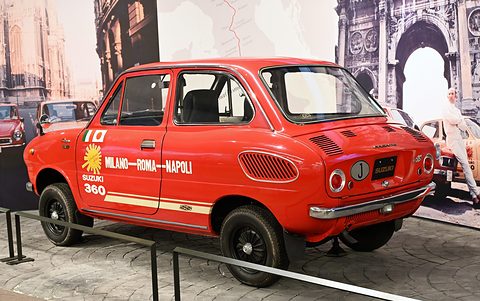
For its sports model Suzuki gave the engine aluminium cylinders in place of cast iron, and in August 1968 it sent two prototypes to Italy to prove the new engine’s speed and stamina on the Autostrada del Sole, which then had no speed limit.source 1source 2 The drivers were Stirling Moss and Itō Mitsuo, the Suzuki works rider described as Japan’s only winner of an Isle of Man TT race; English Wikipedia says one car was red and one pale yellow, and webCG that Itō drove the yellow car beside Moss.source 2source 3source 5 By Japanese Wikipedia’s account they covered about 750 km from Milan by way of Rome to Naples in 6 hours 6 minutes, without trouble, at an average of 122.44 km/h (76 mph), touching 134.1 km/h on the way. That is faster, on average, than the 120 km/h Japanese Wikipedia gives as the SS360’s official top speed.source 2 Suzuki’s advertising put the average at 122.2 km/h.source 5 (The run is among the records and feats gathered on their own page.)
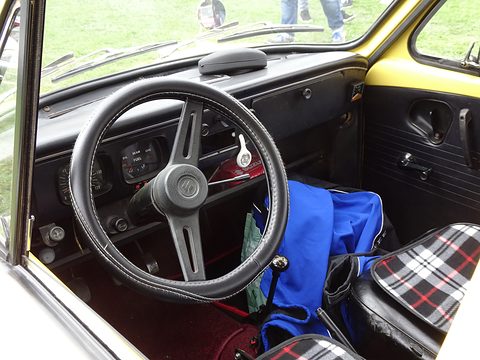
The SS360 went on sale in November 1968, with bigger venturis in its three carburettors and 36 PS at 7,000 rpm, 100 PS per litre.source 1source 5 It weighed 440 kg, reached 125 km/h by Suzuki’s figure, and with four aboard needed 19.95 seconds for 400 m from a standstill, the first kei car to break 20 seconds.source 1source 5 Suzuki called it the Beat Machine.source 5 It had synchromesh on every gear and a tachometer, red-lined at 8,400 rpm with a yellow band below 3,500; below about 4,000 rpm there was little to use, and Suzuki told its dealers to warn buyers how awkward that made it in town.source 2 webCG says the hot Frontes of the power war were rated the sportiest kei cars in handling as well as in performance.source 5
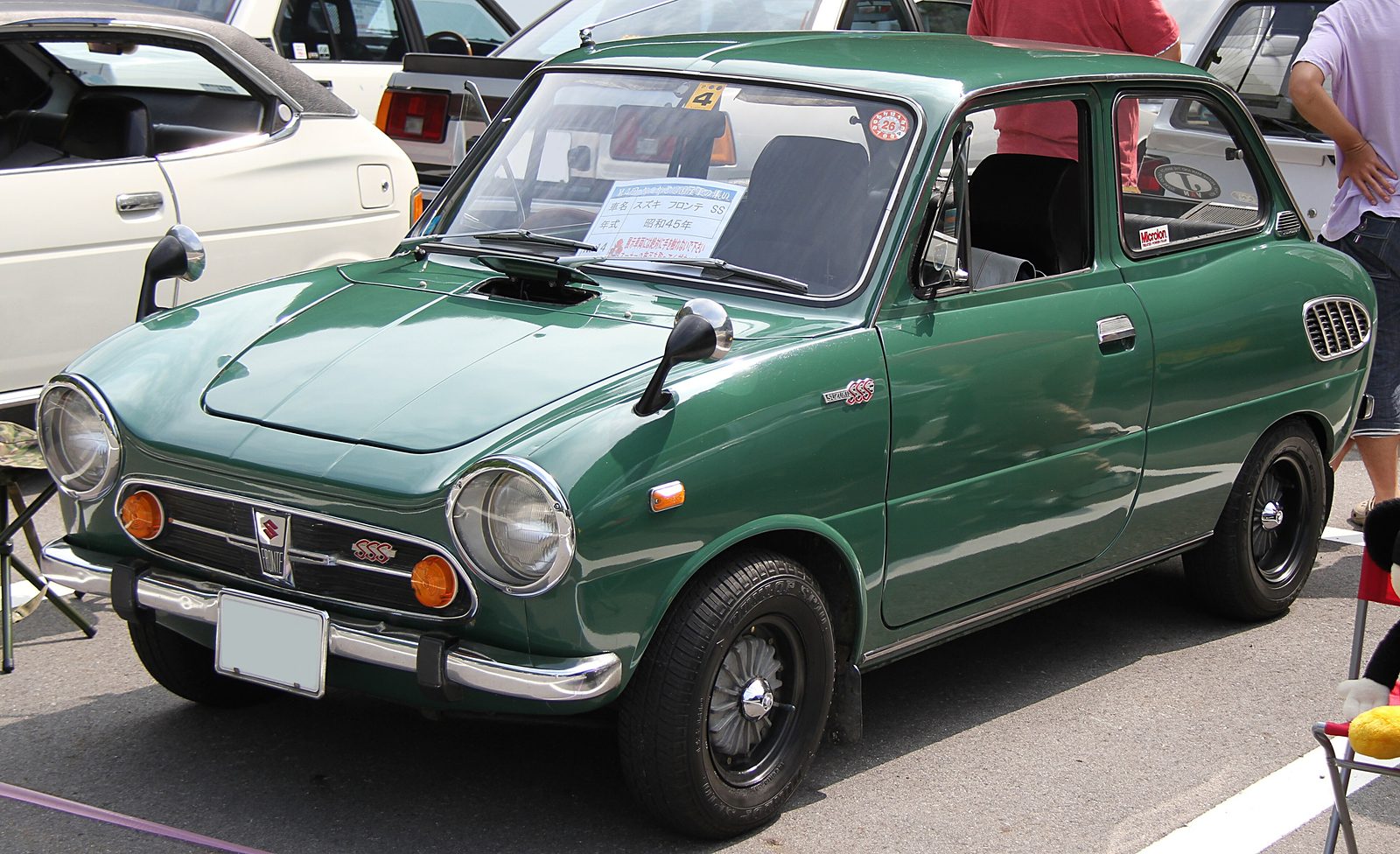
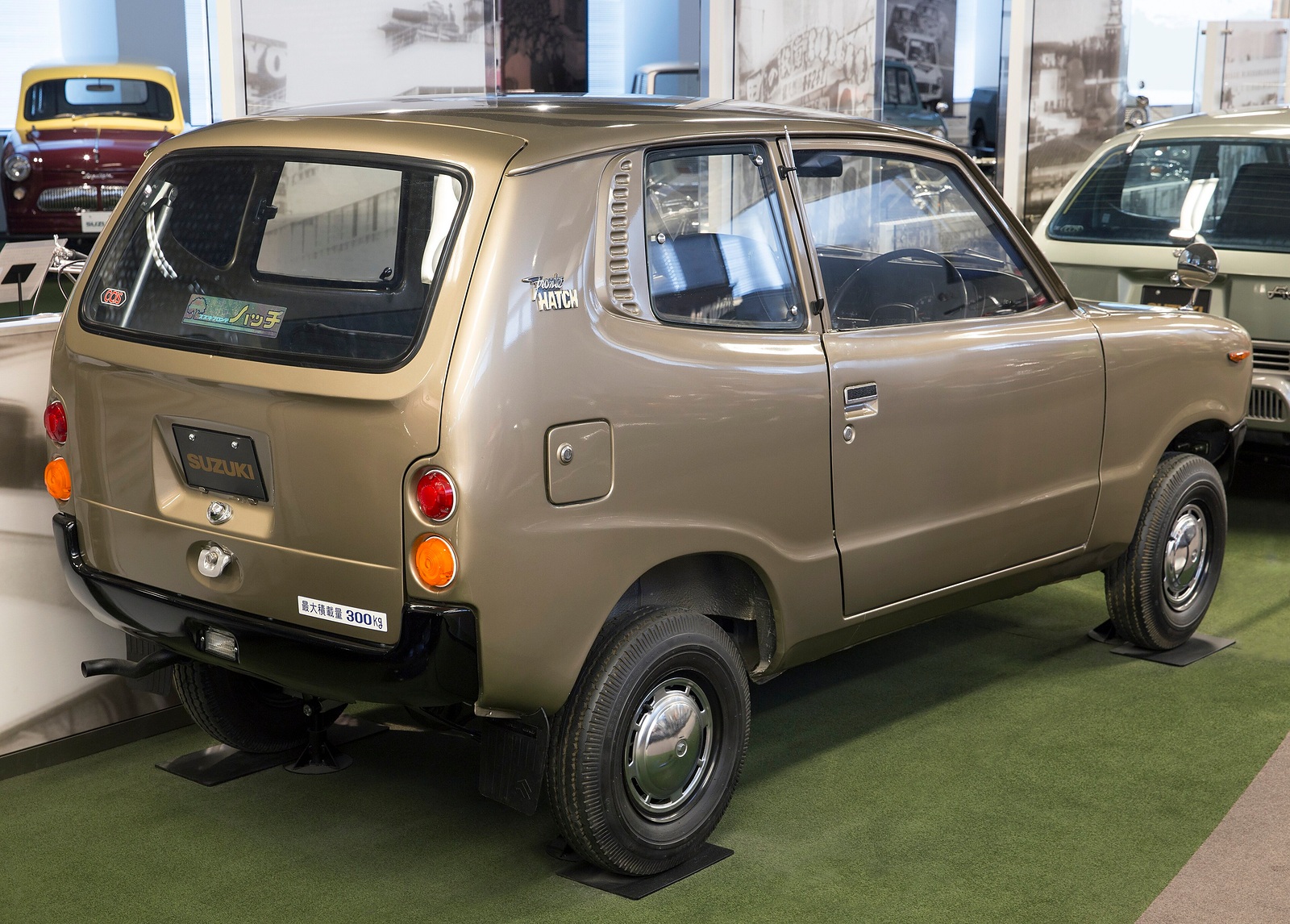
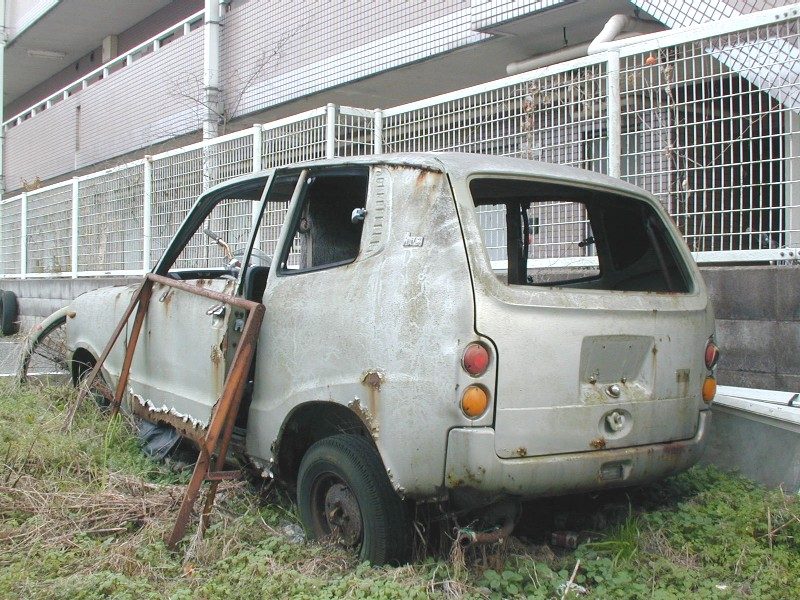
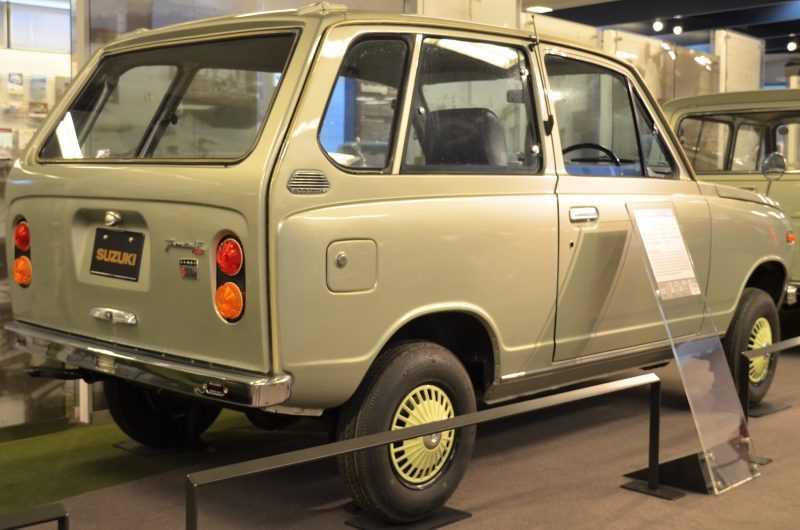
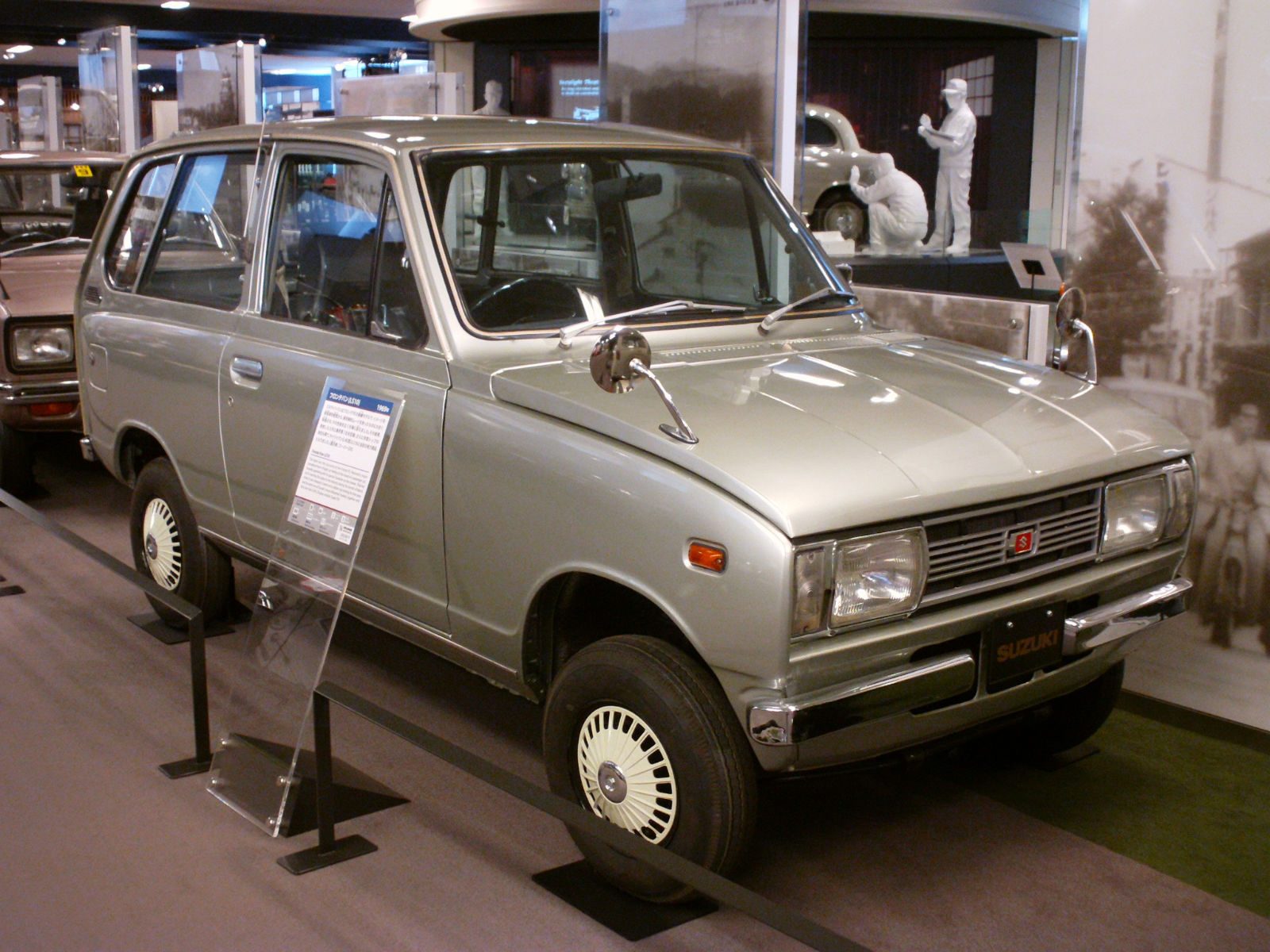
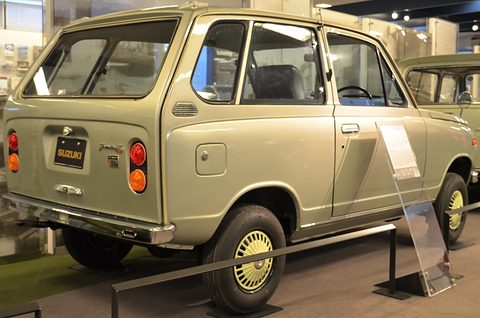
The range filled out in 1969: the export Fronte 500 of 475 cc and 29 PS in January, an SS Standard stripped for competition, a facelift in May with square gauges, real grilles and synchromesh on first gear, and a Fronte S with the SS look and the 25 PS engine.source 3 A brochure for the United States was printed, though probably no cars were imported.source 3 The rear-engined saloon could not make a good van, so the Fronte Van of January 1969 was a quite different square car with its engine in front driving the rear wheels, followed by an Estate and a Custom; 5,719 LS11 Estates and Customs were built.source 2source 3 A facelift in April 1970 brought new engines of 31 and 34 PS and a sports model called the SSS, but the LC10 ended that October, after only three years, as emissions rules drew near.source 2source 3
2サイクル3気筒は4サイクル6気筒に匹敵する
Stingray, oval shell, 7-S
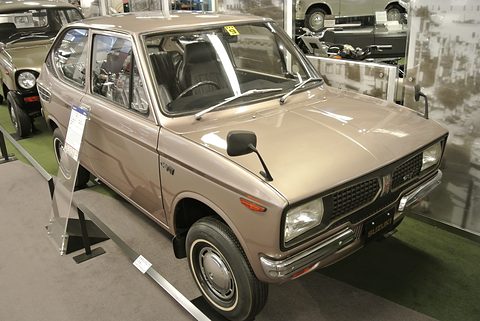
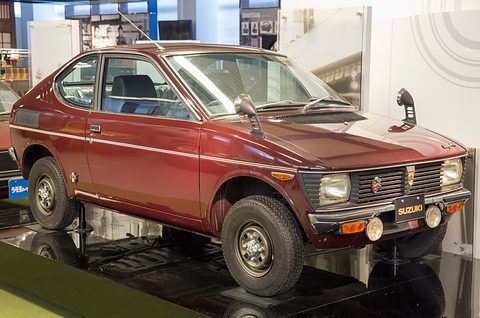
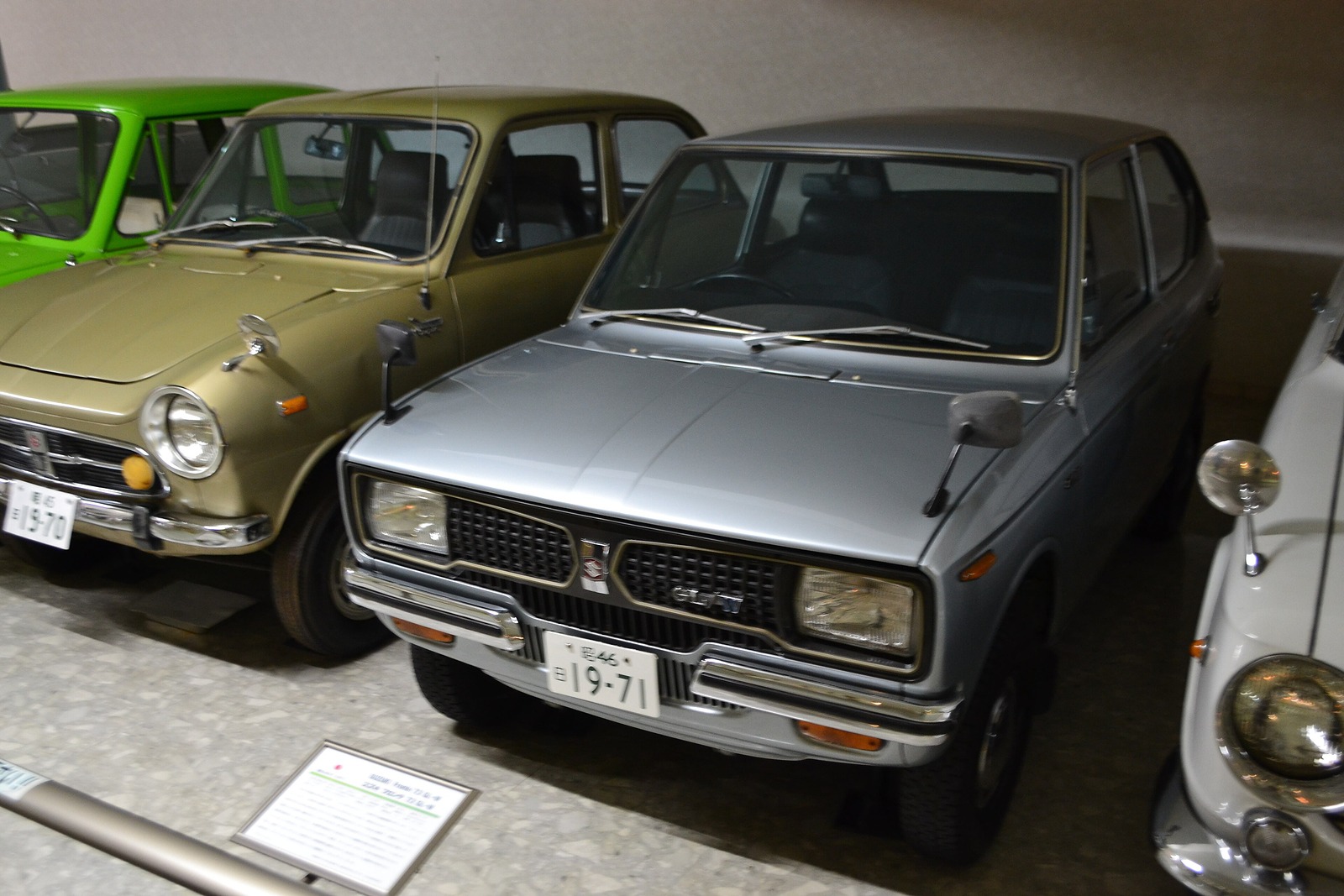
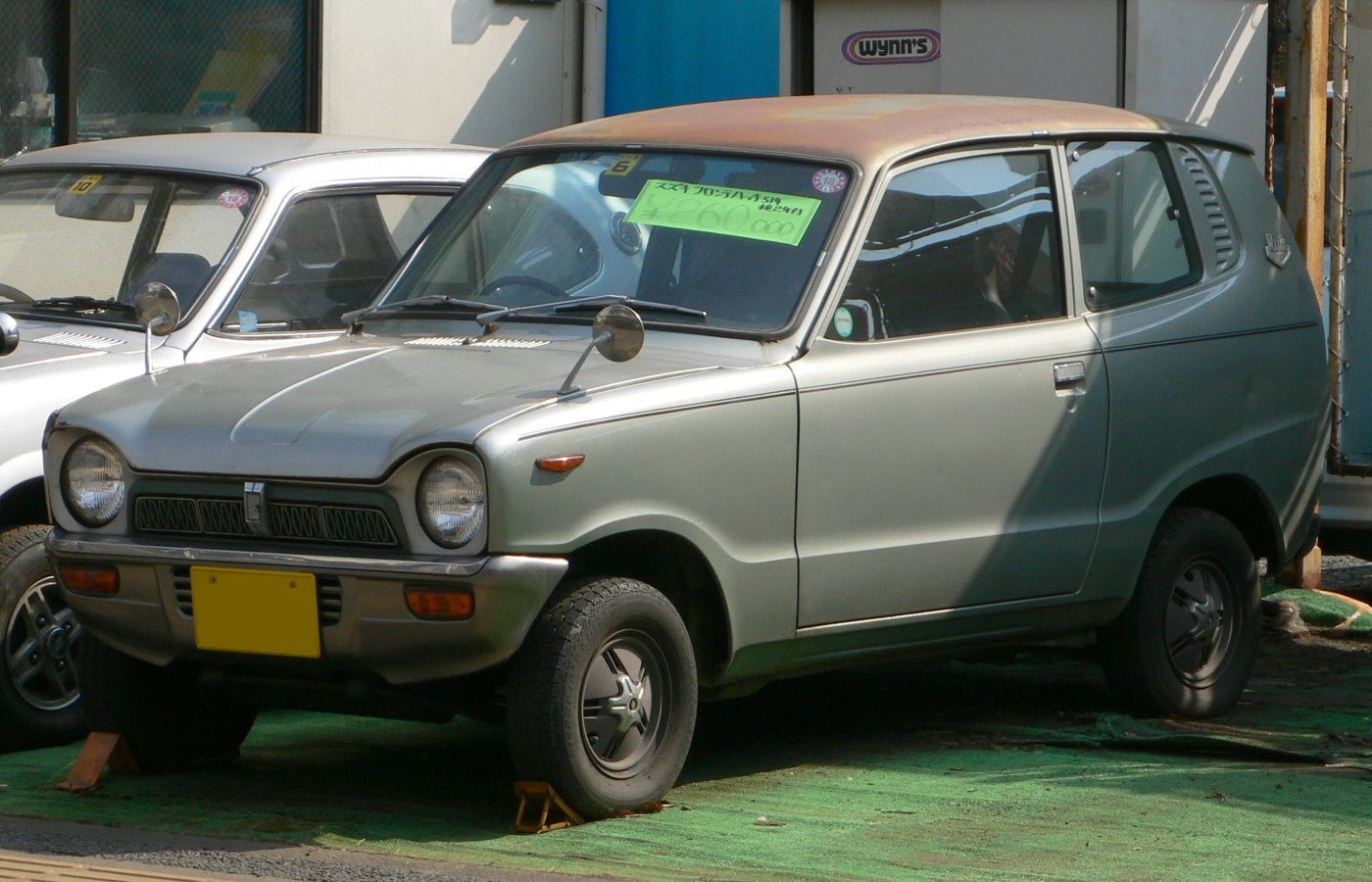
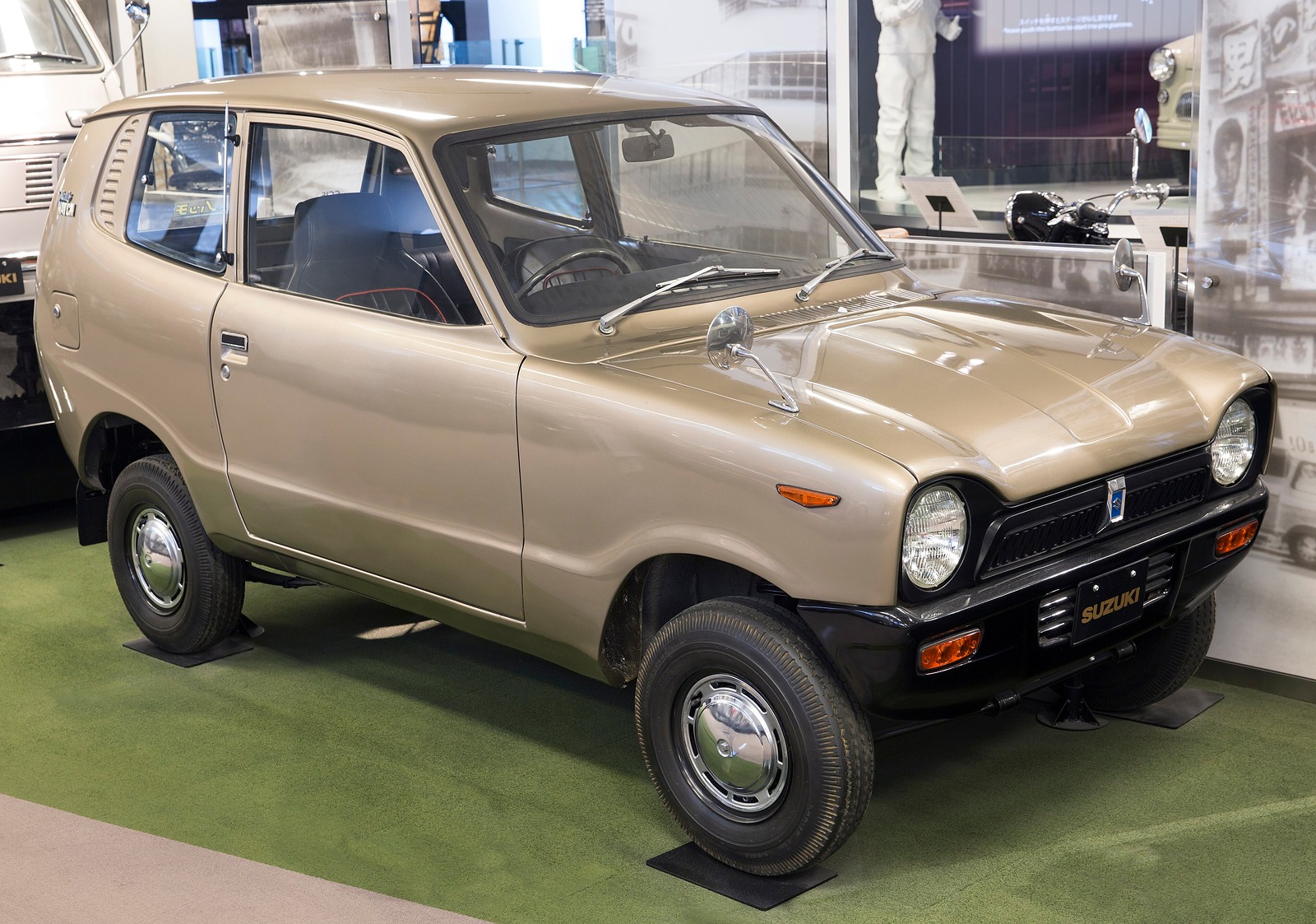
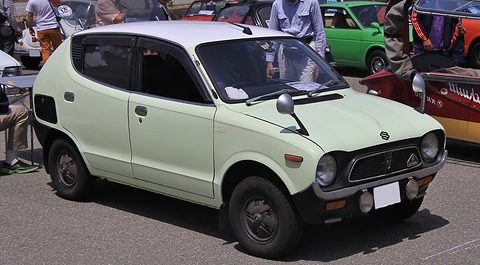
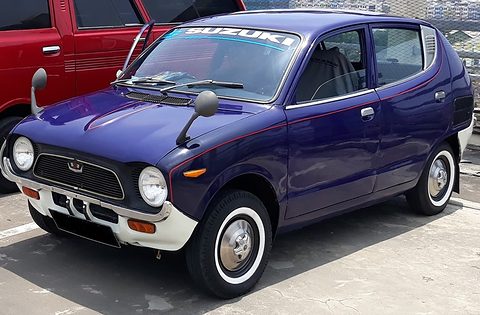
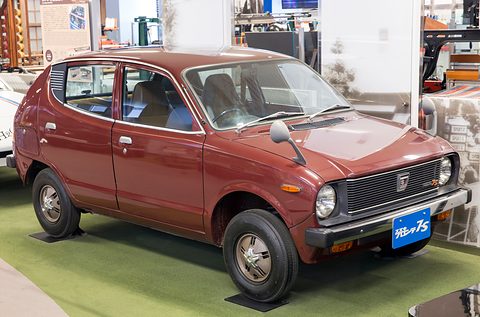
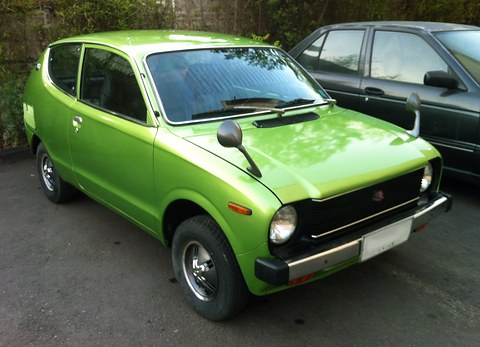
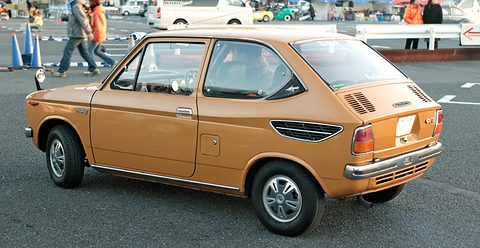
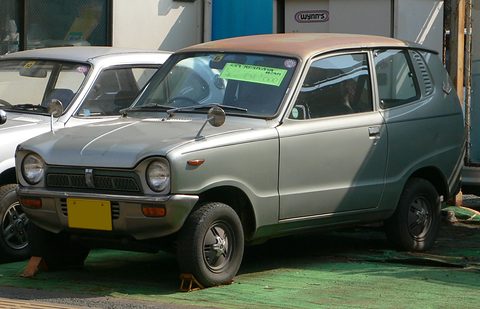
The Fronte 71 of November 1970 had the Stingray look, named after the fish, under the slogan “wide, low, sharp”: a longer wheelbase, independent suspension at all four wheels and the lowest roof of any kei car, from ¥329,000 in Tokyo.source 1 It was the first kei car offered with an air conditioner, hung under the dashboard.source 2 The 71W of May 1971 brought a water-cooled engine, with 37 PS in the GT-W, and in September the Suzuki Fronte Coupé was spun off it.source 1source 2source 5 Japanese Wikipedia says this generation won the power war, and was Suzuki’s best seller until the Alto.source 2
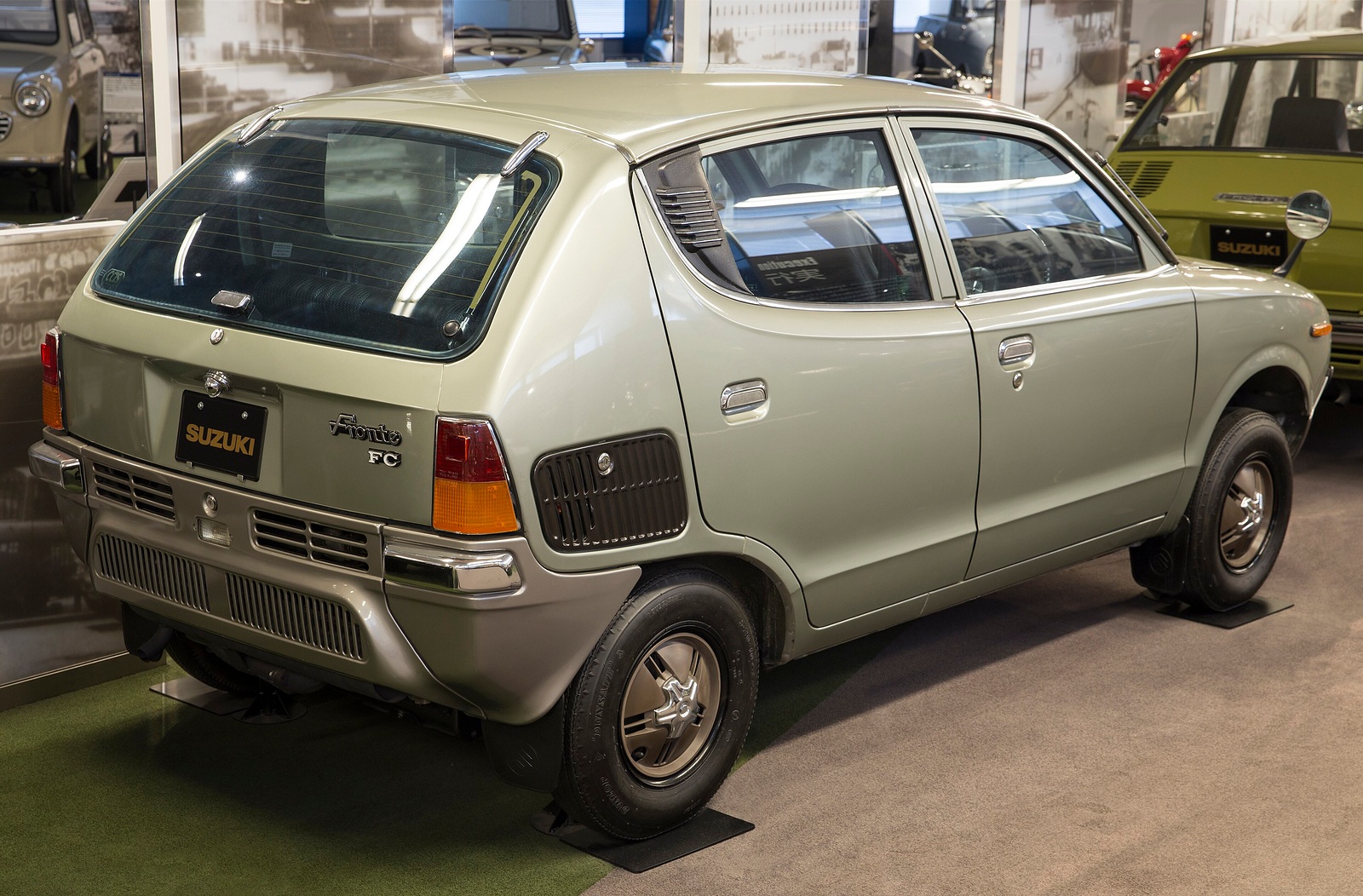
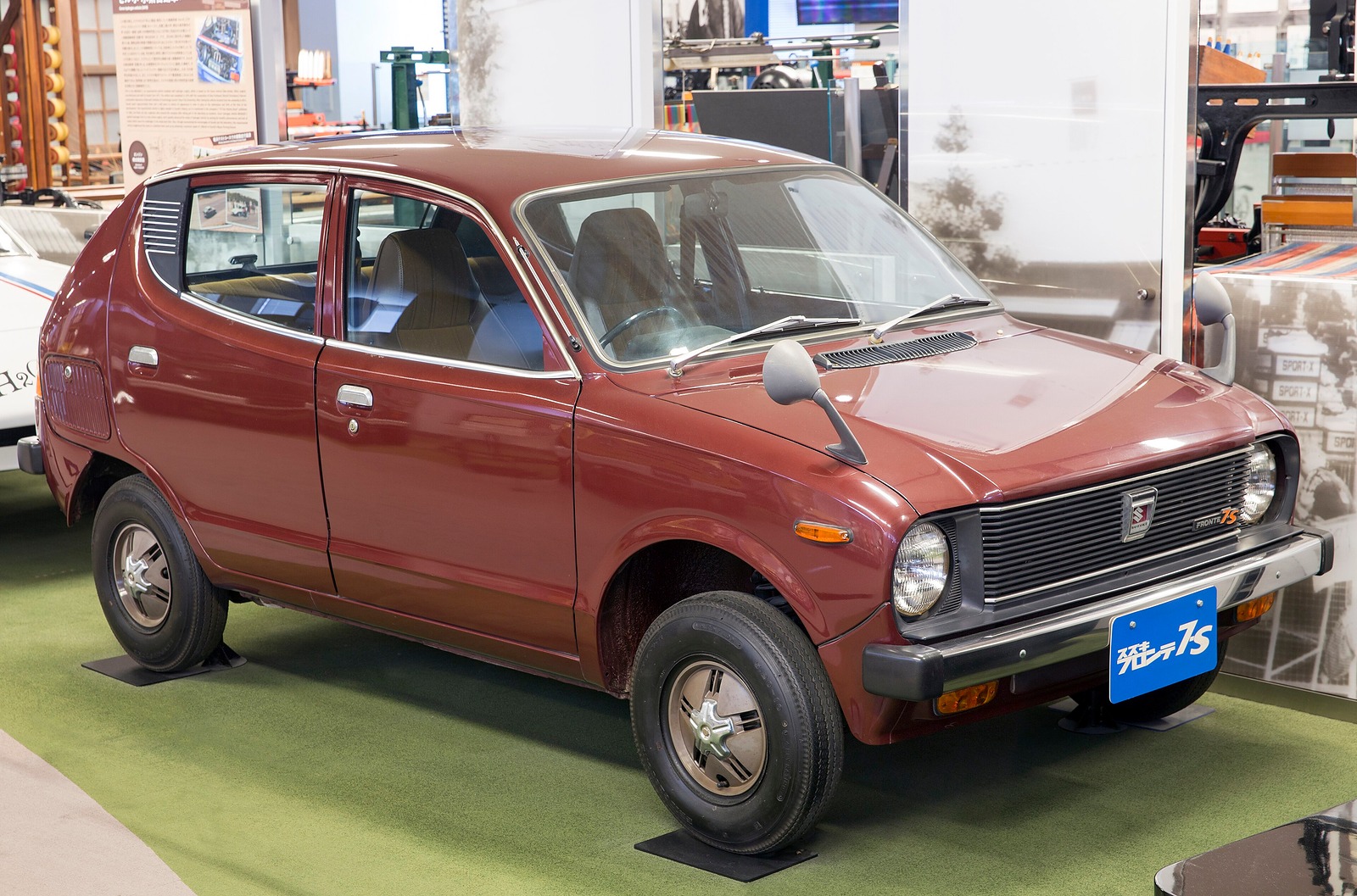
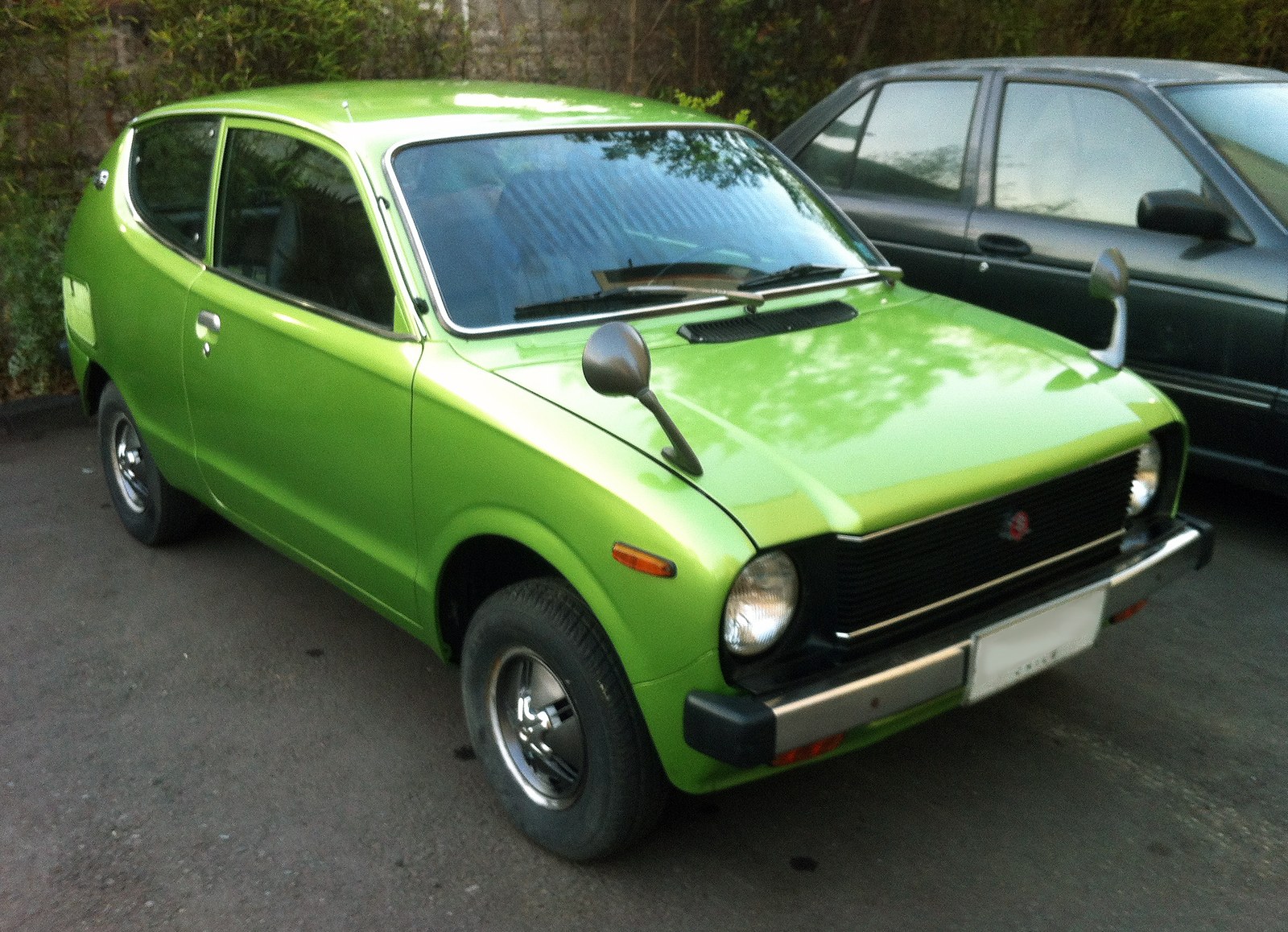
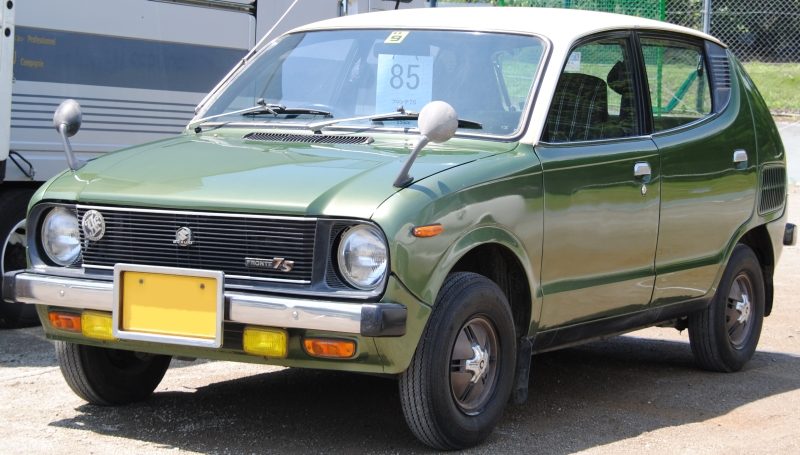
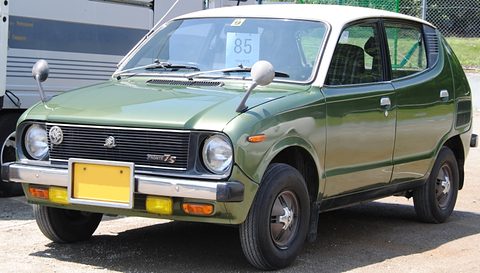
The oval-shell car of July 1973 added a four-door, with a water-cooled three still at the back.source 1source 2 That October the oil crisis struck, and in the same month inspection became compulsory for kei cars; sales fell, and in 1974 the engines lost power, 37 PS becoming 35.source 2 When the kei rules grew in 1976, the Fronte 7-S grew with them, 195 mm (7.7 in) longer and 100 mm (3.9 in) wider, with a 443 cc two-stroke of 26 PS.source 1 Suzuki developed a catalyst system for the two-stroke, and from May 1977 it was the first two-stroke to meet Japan’s 1978 emissions rules.source 1 In June 1977 it borrowed a four-stroke from Daihatsu as a stop-gap, the AB twin of the Daihatsu Fellow Max, before a 539 cc two-stroke and, in October 1978, Suzuki’s own four-stroke three.source 1source 2
Behind the Alto
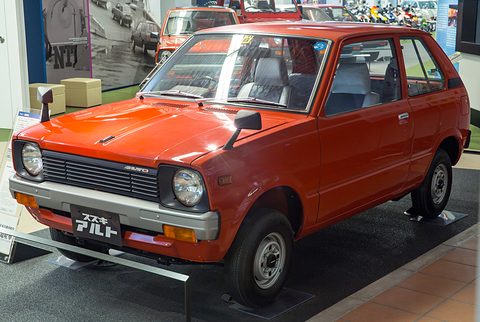
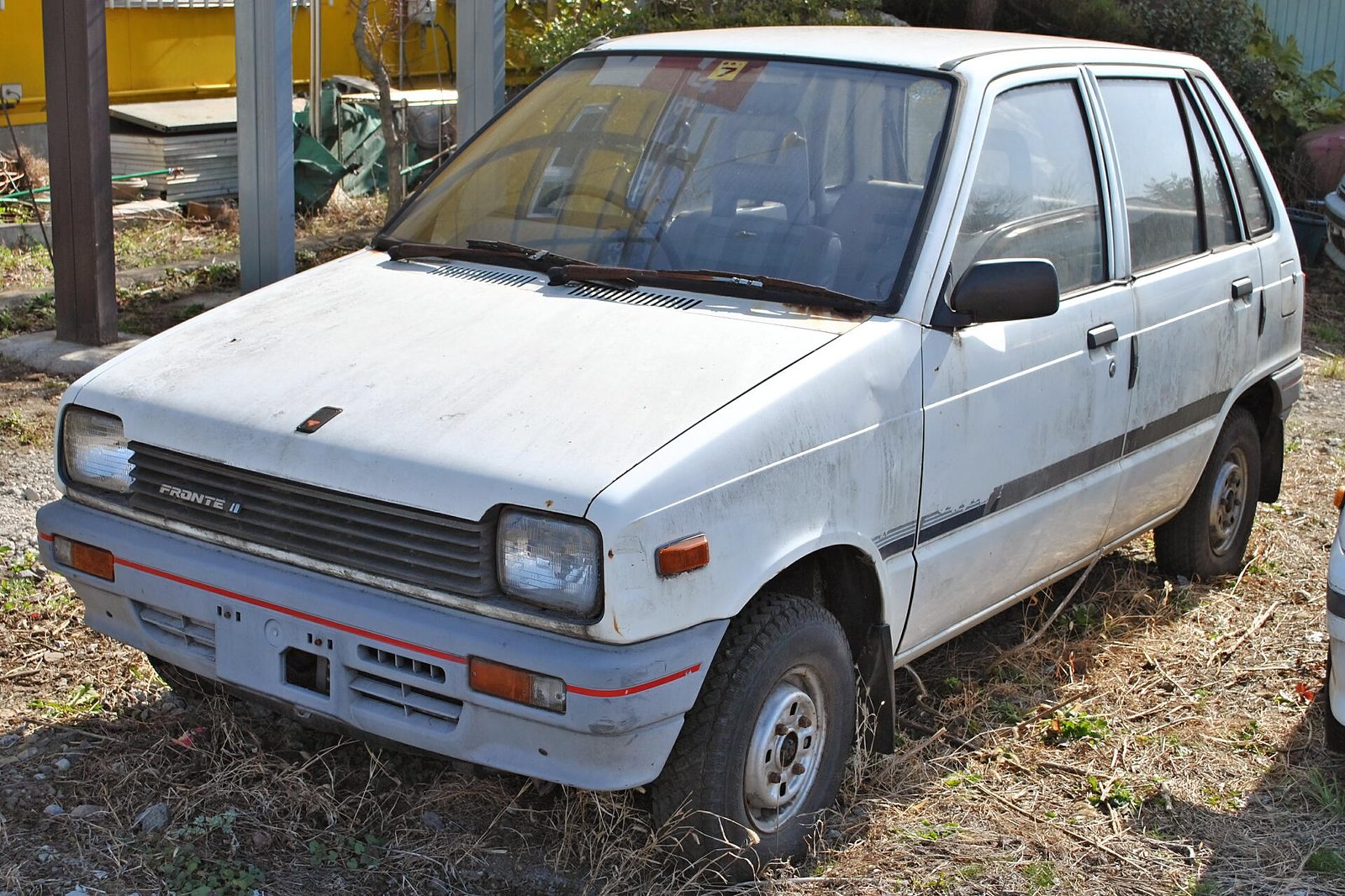
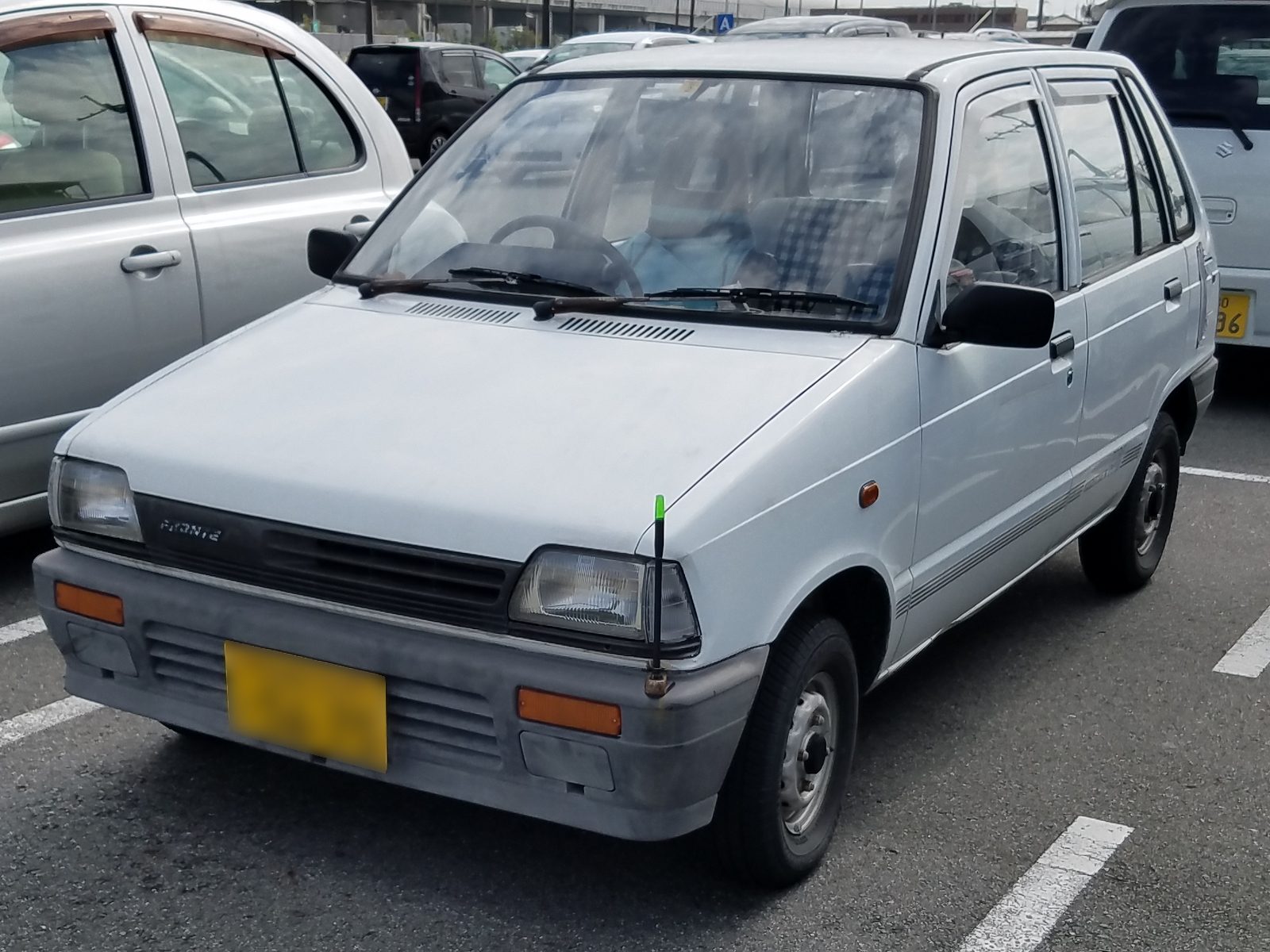
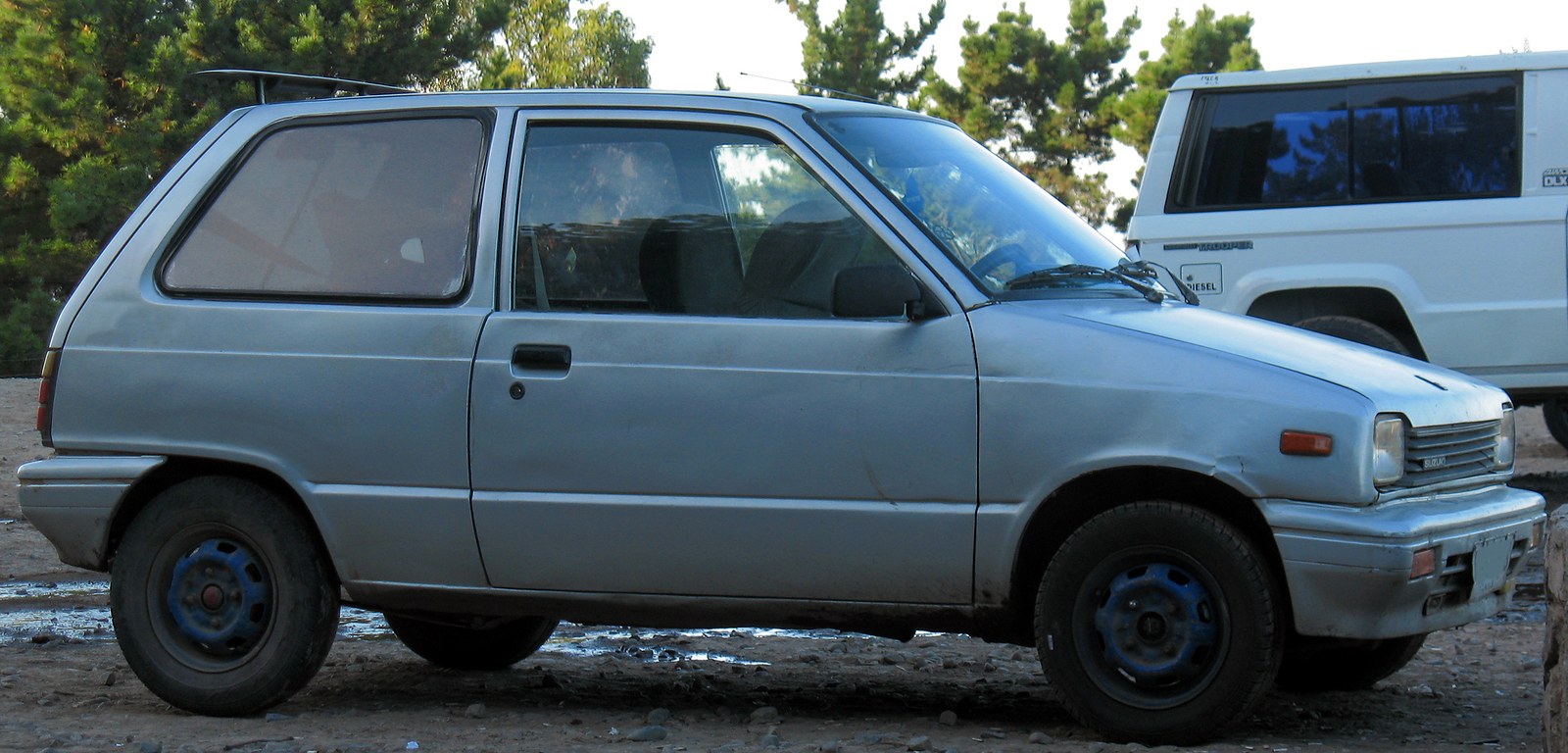
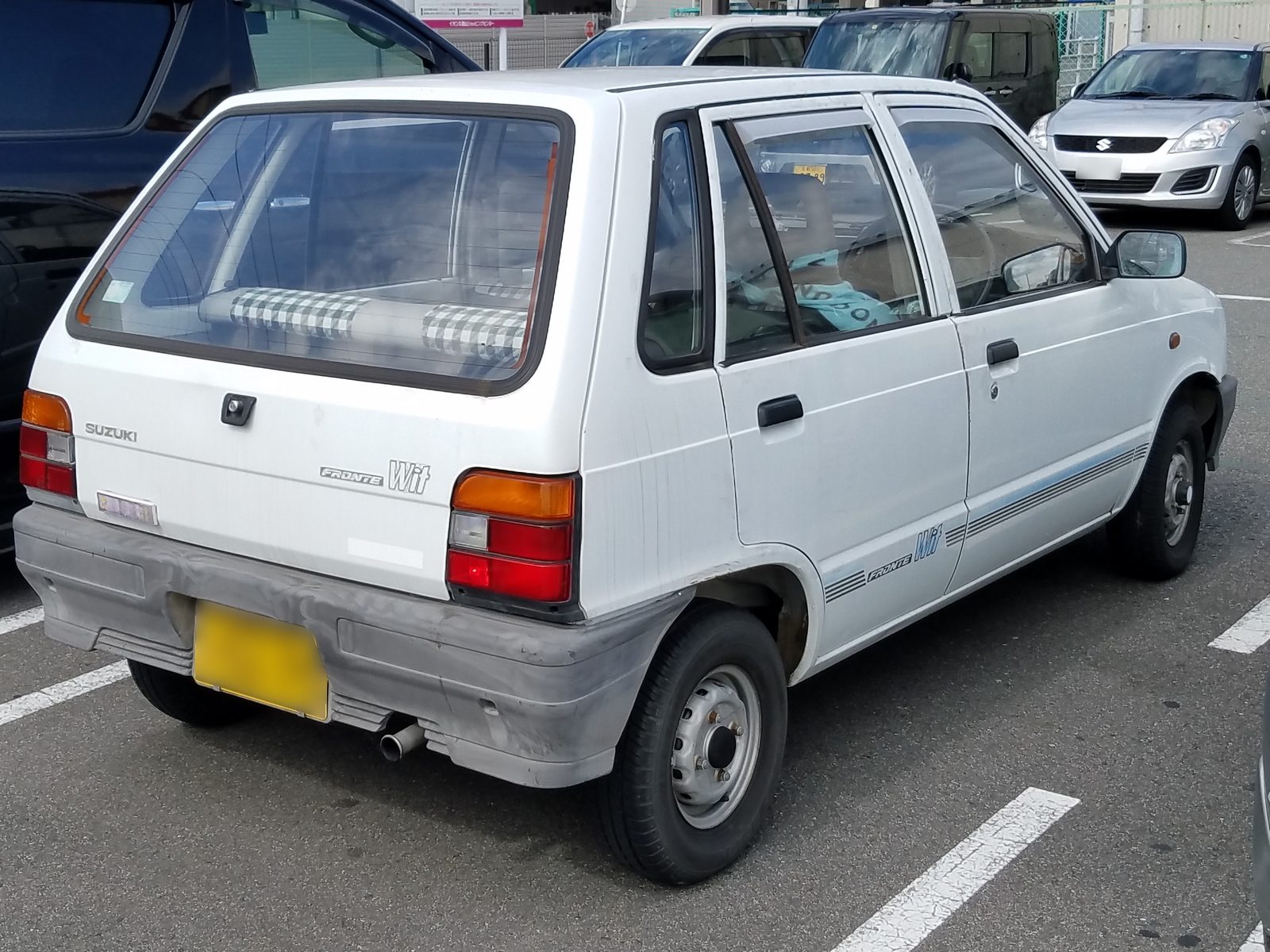
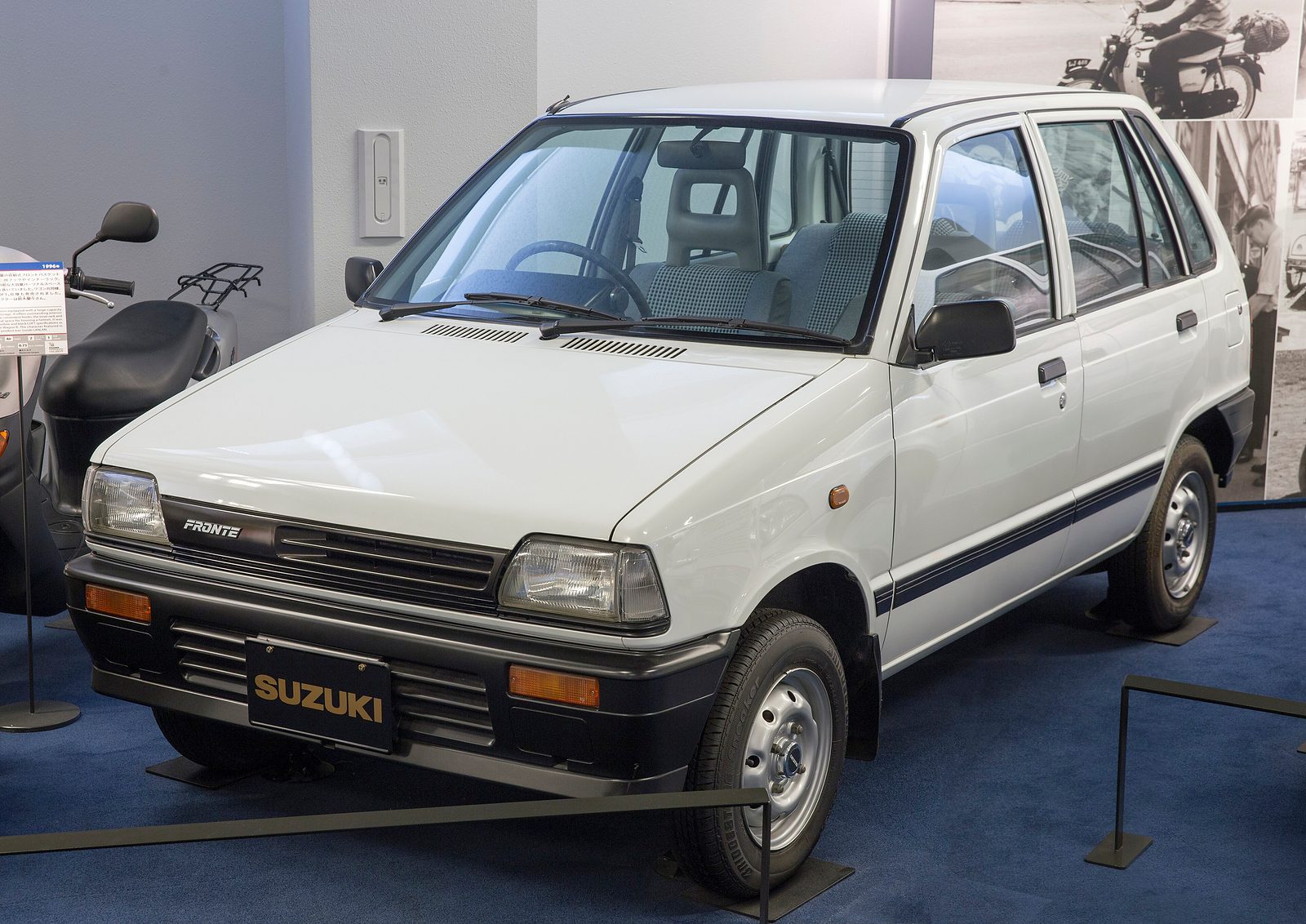
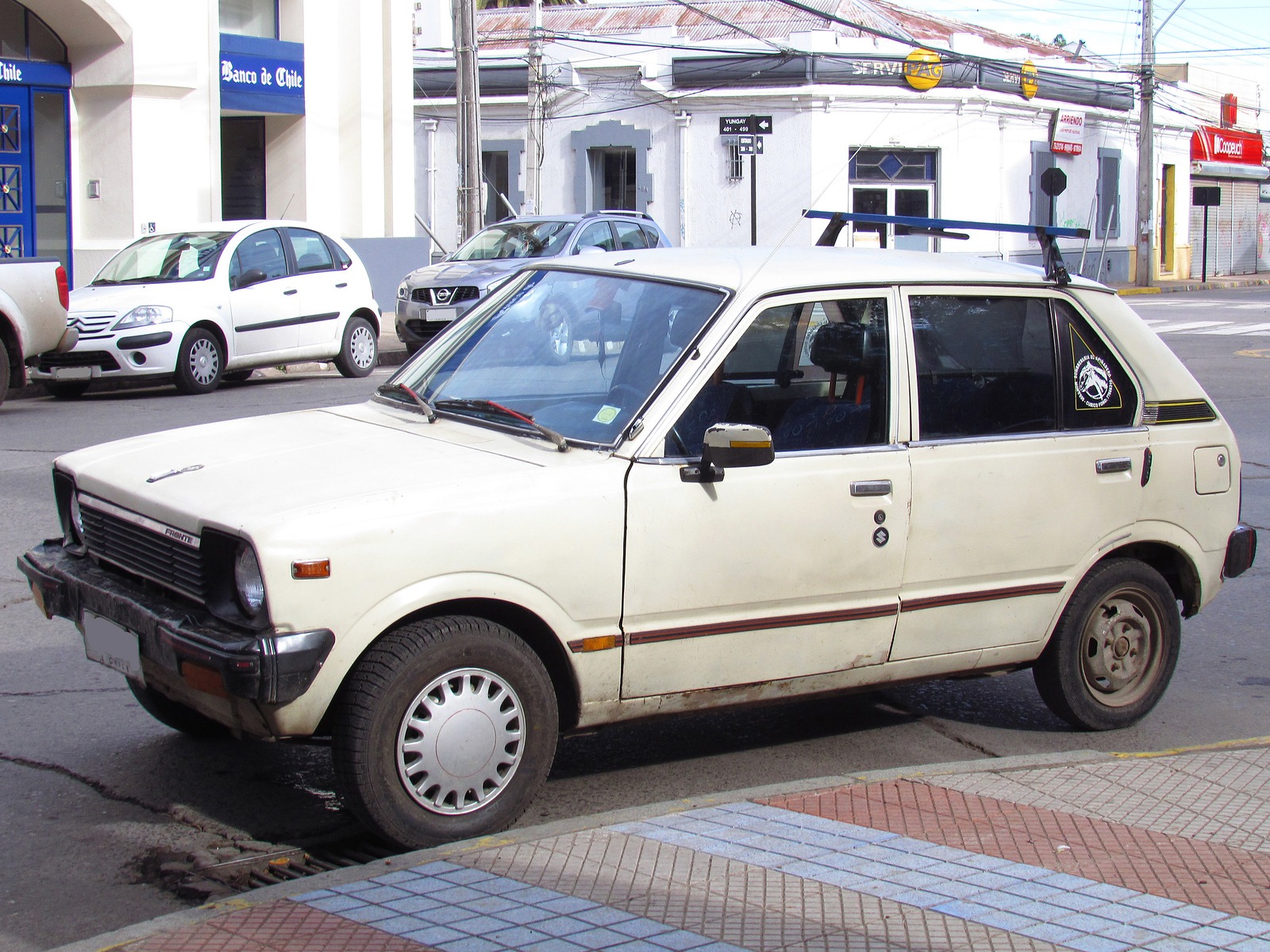
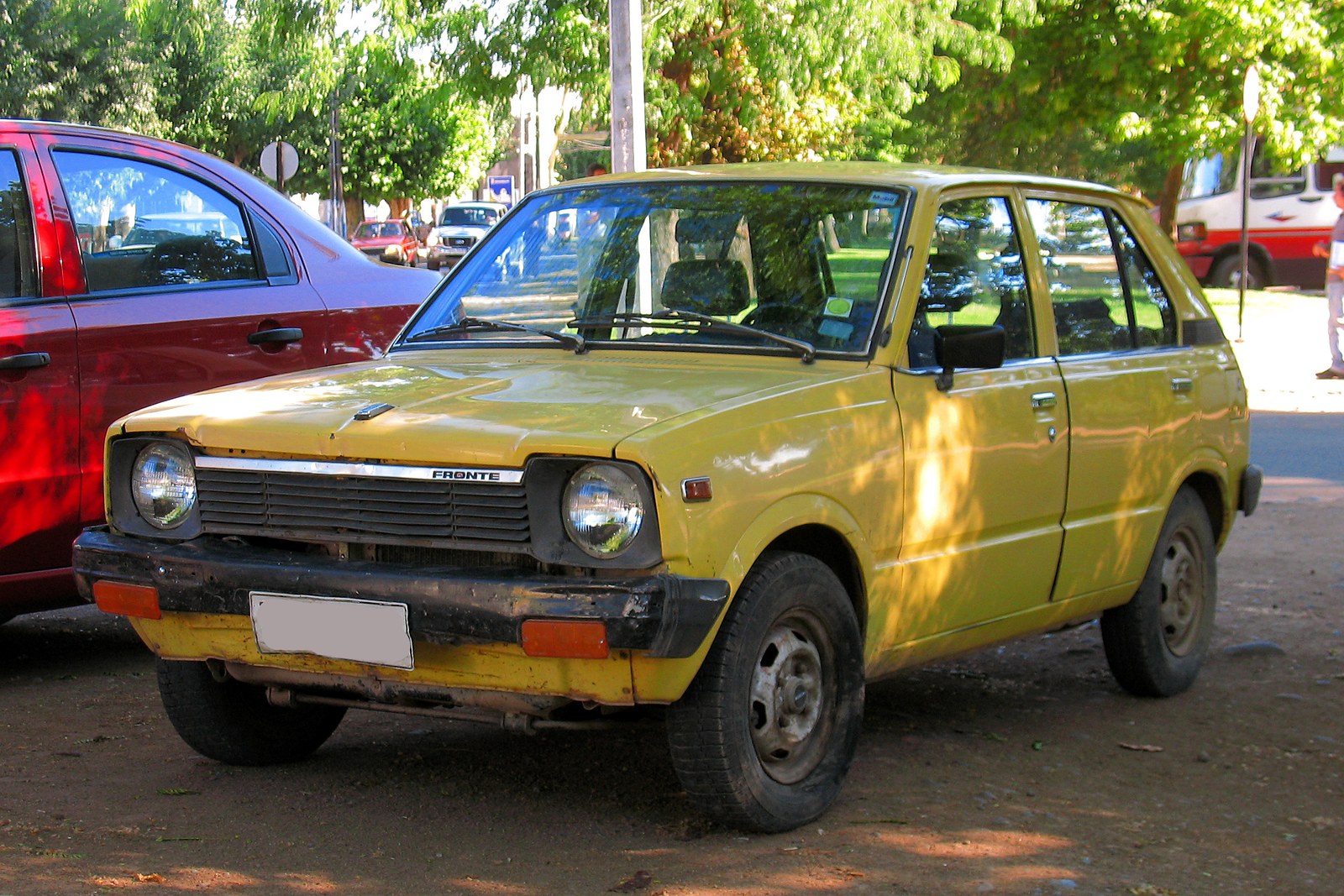
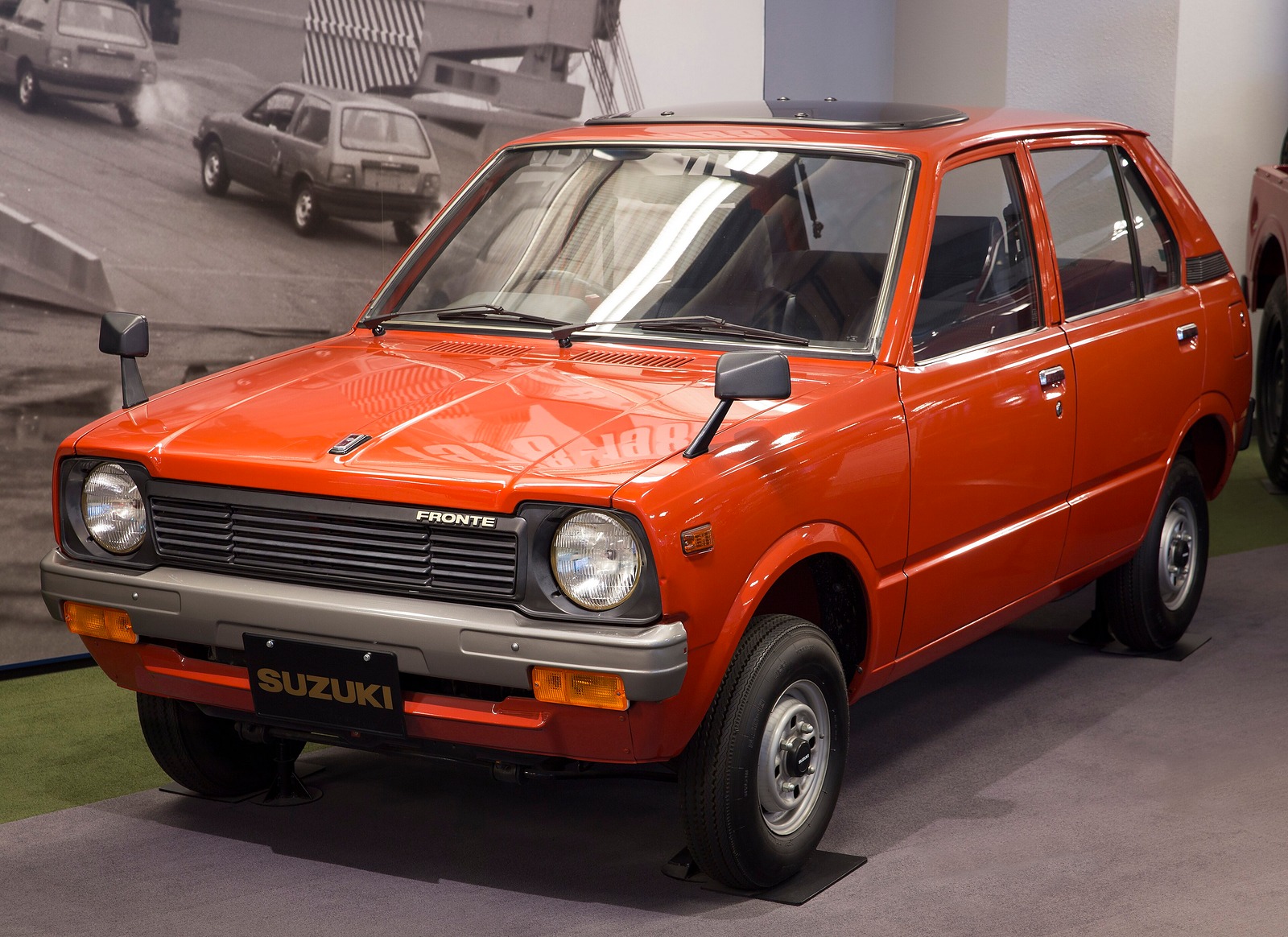
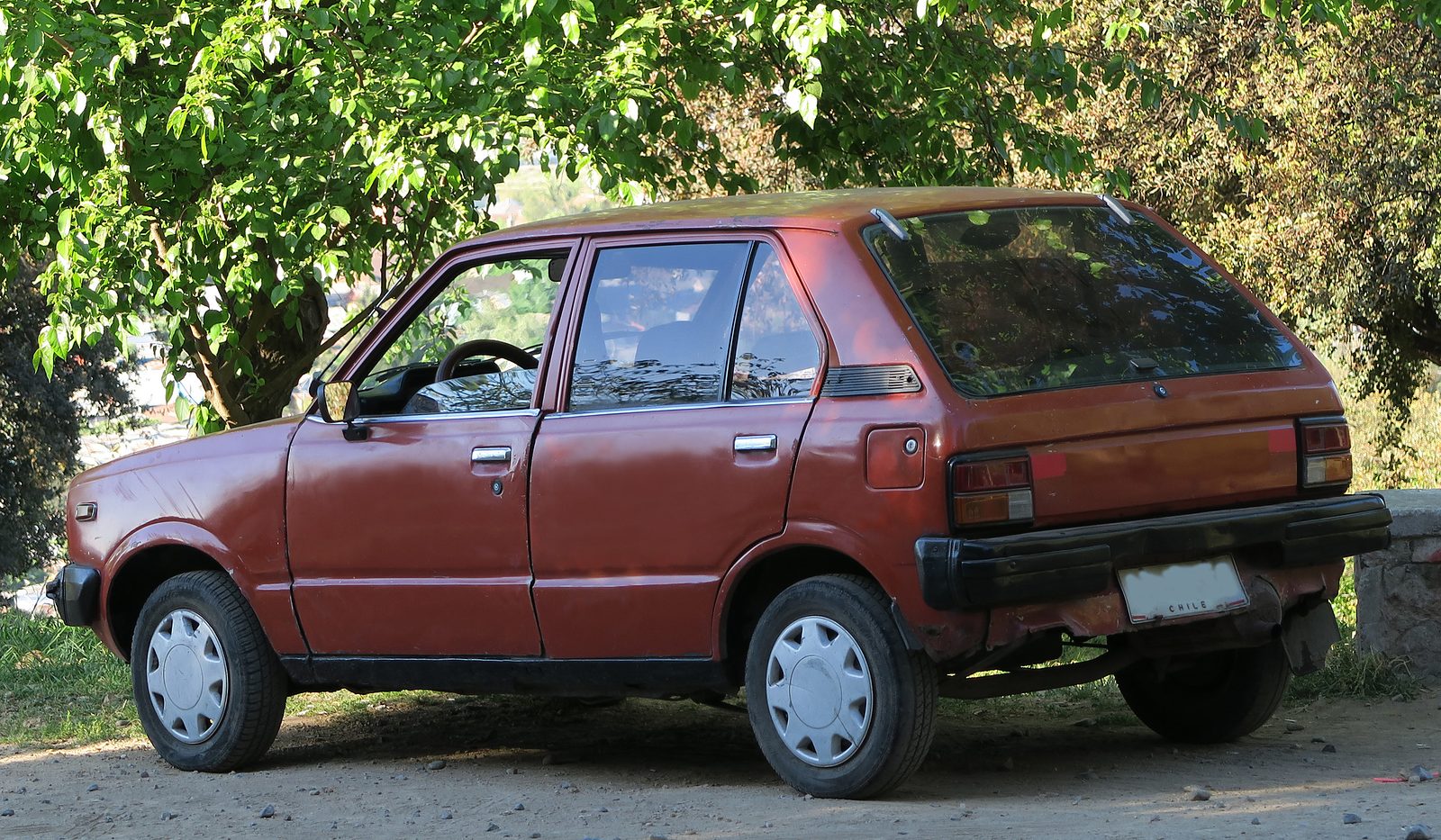
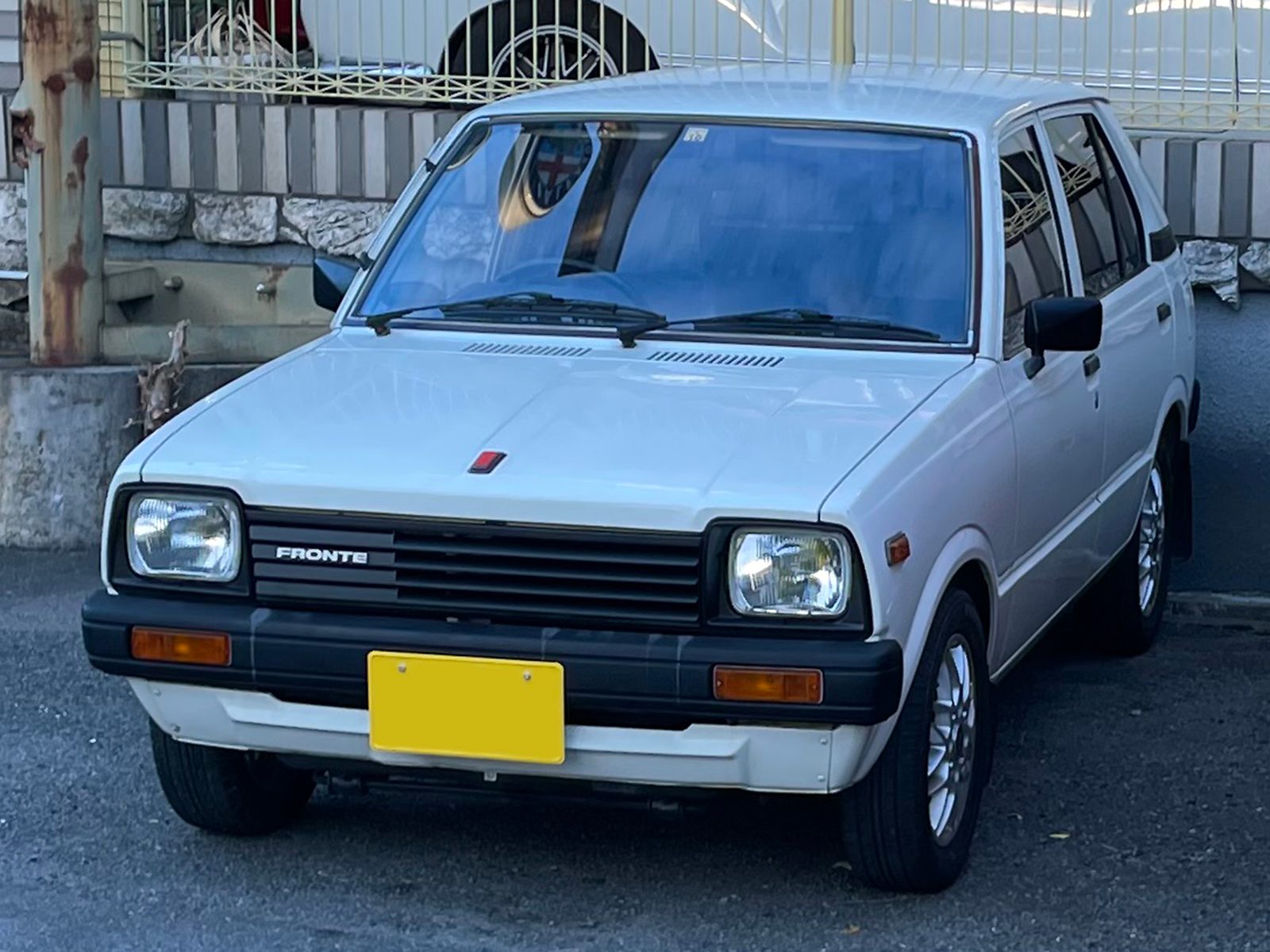
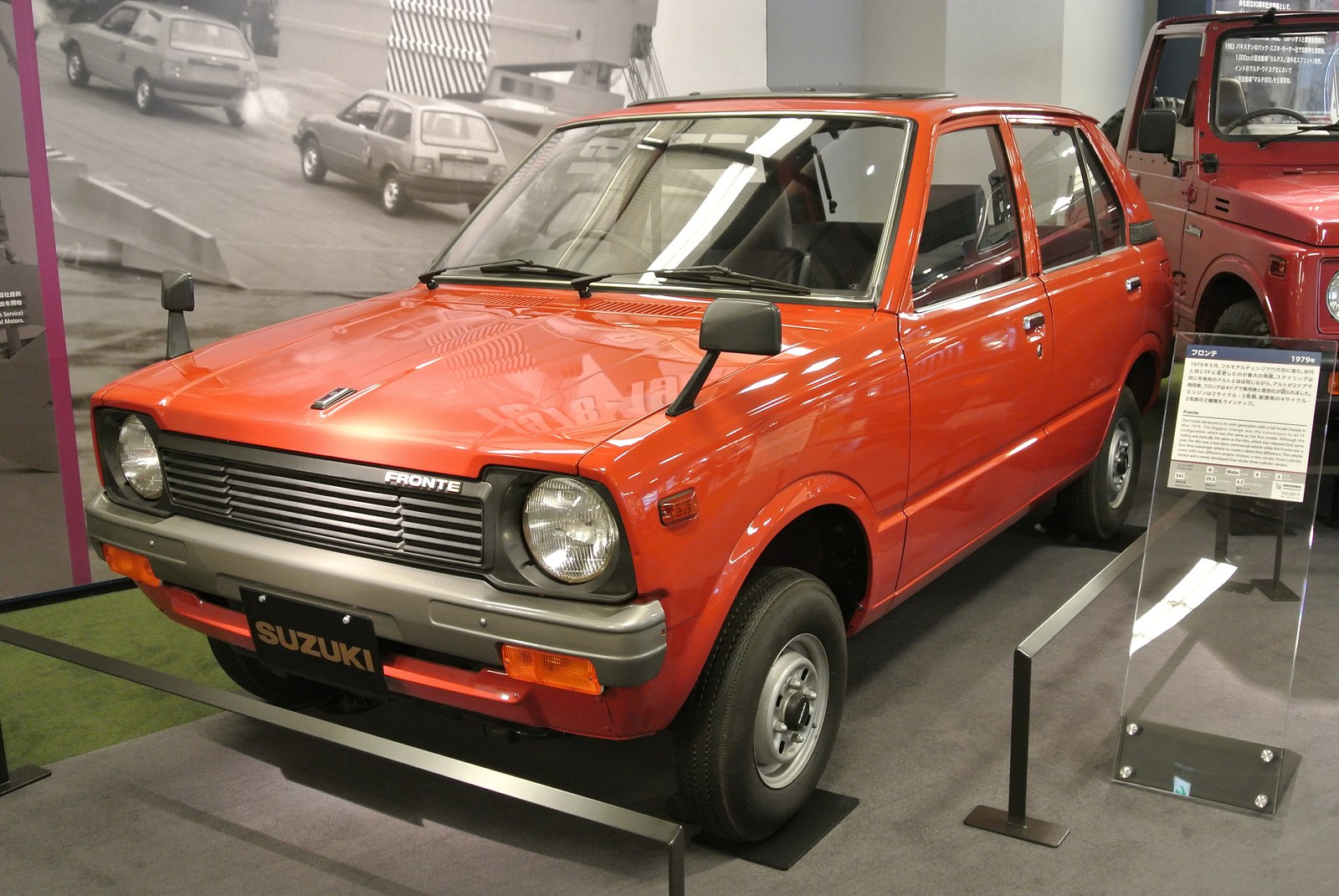
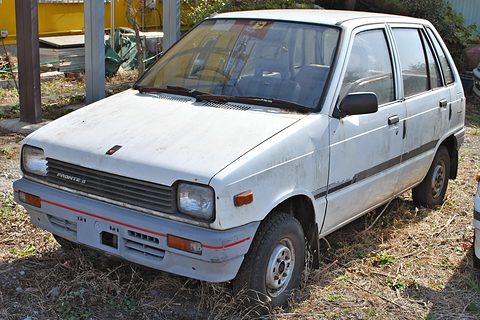
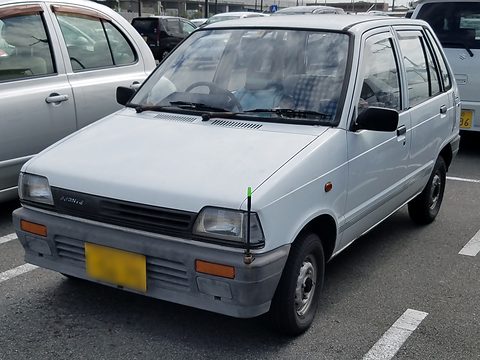
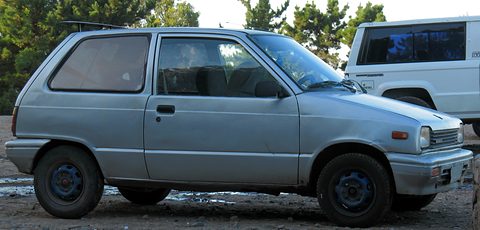
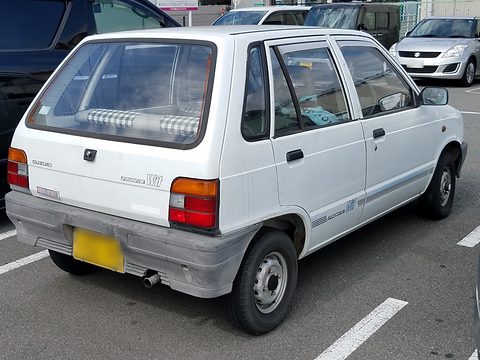
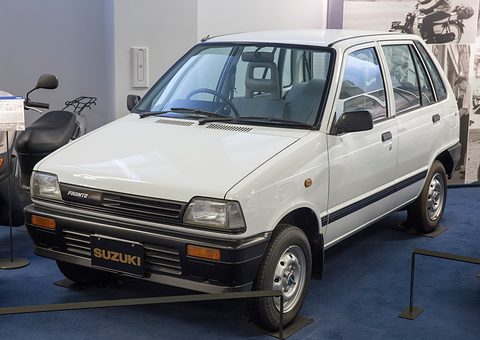
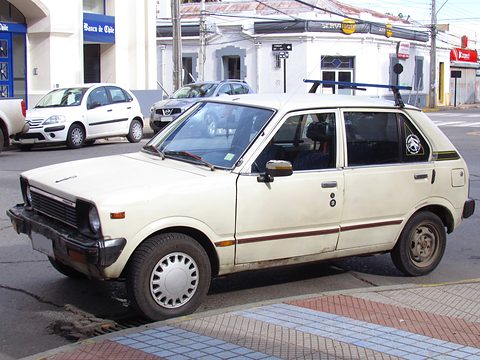
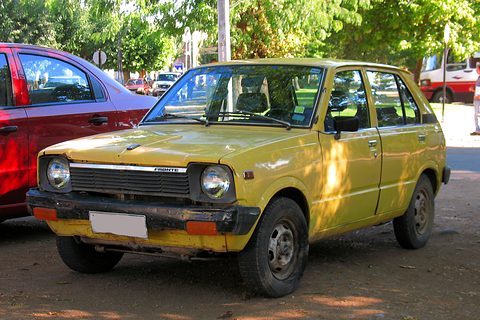
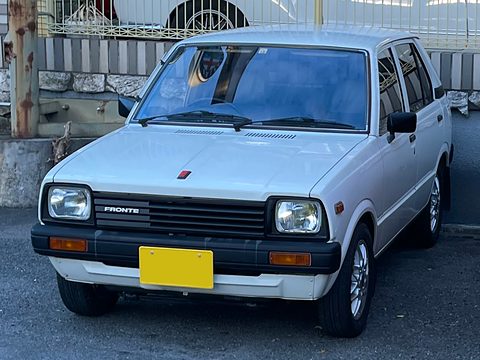
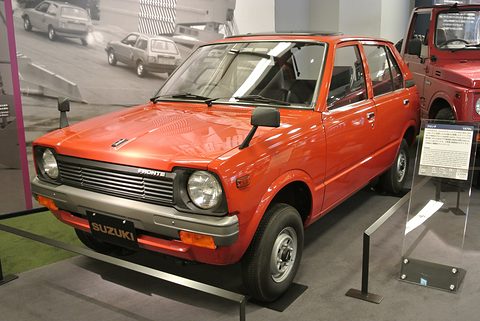
In May 1979 the Fronte went back to front-wheel drive, as the four-door passenger sister of a commercial car, the Suzuki Alto, and the ¥470,000 Alto overshadowed it.source 1source 2 Pak Suzuki built it in Pakistan from 1982, and a derivative went into production in India in December 1983 as the first Maruti 800.source 2 The five-door Fronte of 1984 had Japan’s first swivelling driver’s seat, and the three-door Twincam of 1987 was the only kei passenger car with twin camshafts; the last generation, of 1988, had the longest wheelbase in the class.source 1 In 1989 a consumption tax replaced the commodity tax, the tax gap between the Alto van and the Fronte saloon closed, and the Fronte name was folded into the Alto.source 1source 2 At the 2005 Tokyo Motor Show Suzuki’s LC concept looked back to the Fronte 360.source 2