microcarfan
  • Microcar
  • Germany
  • Four wheels
  • One headlamp

Hanomag 2/10 PS

Also known as “Kommissbrot”, “Kommißbrot”

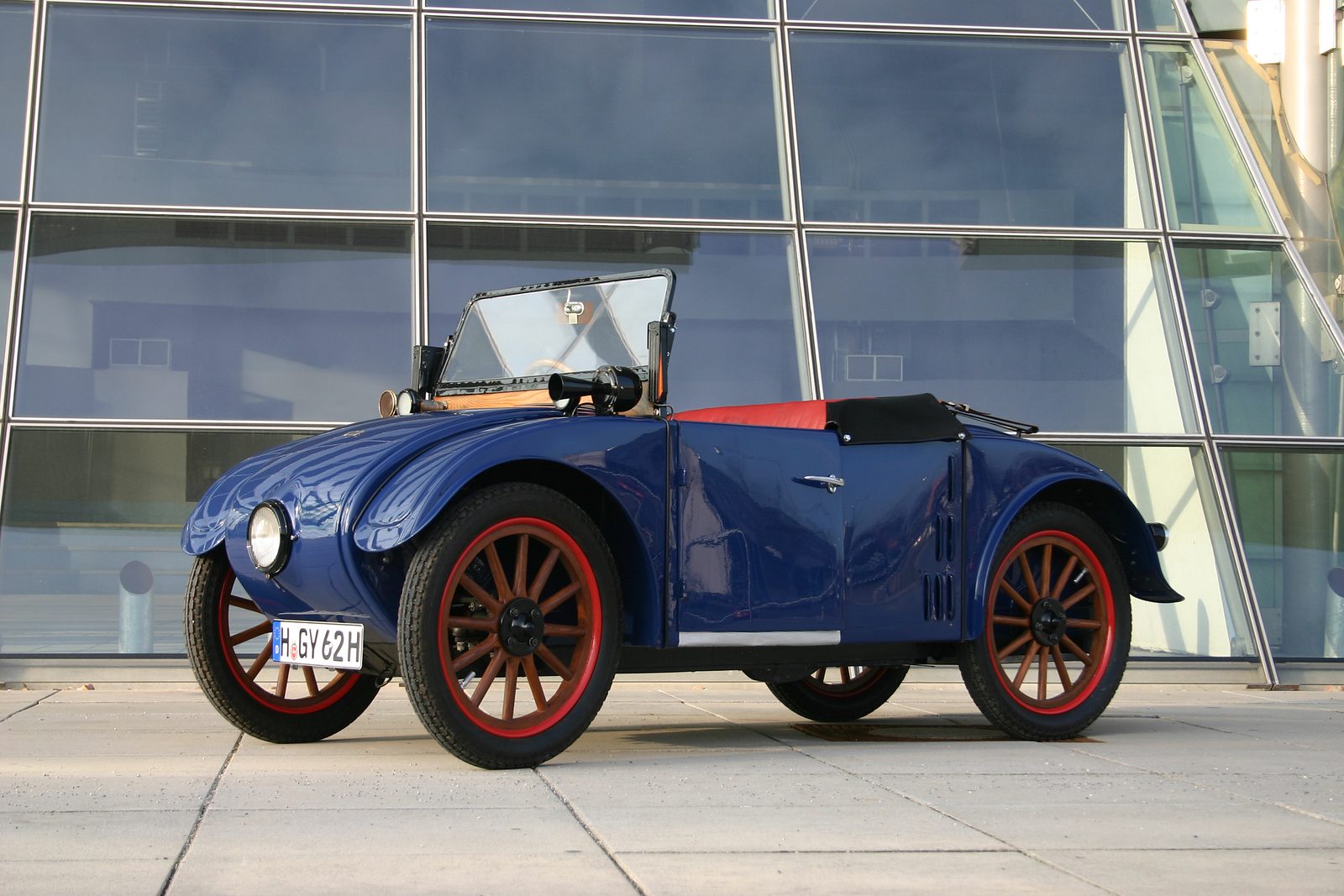
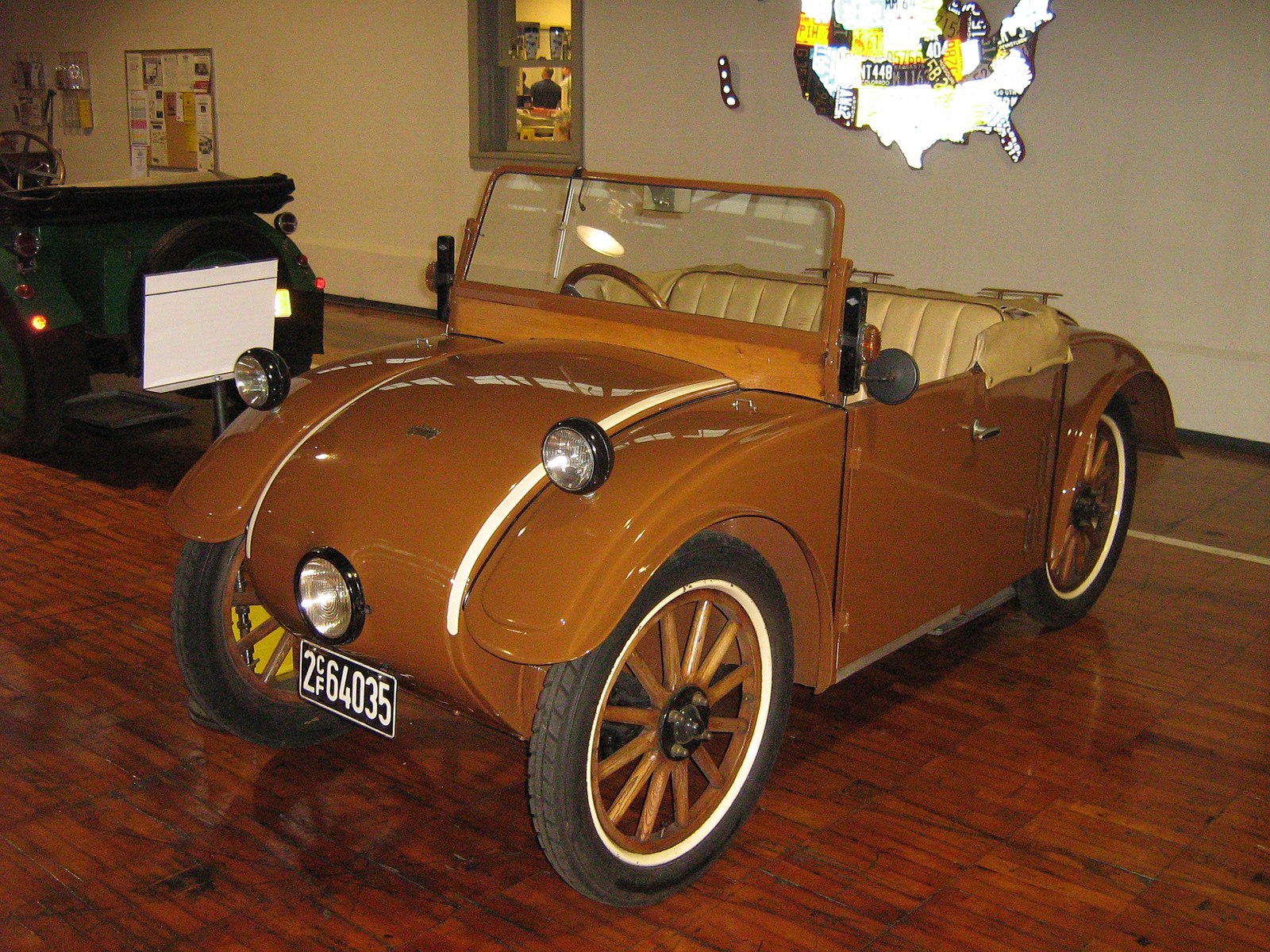
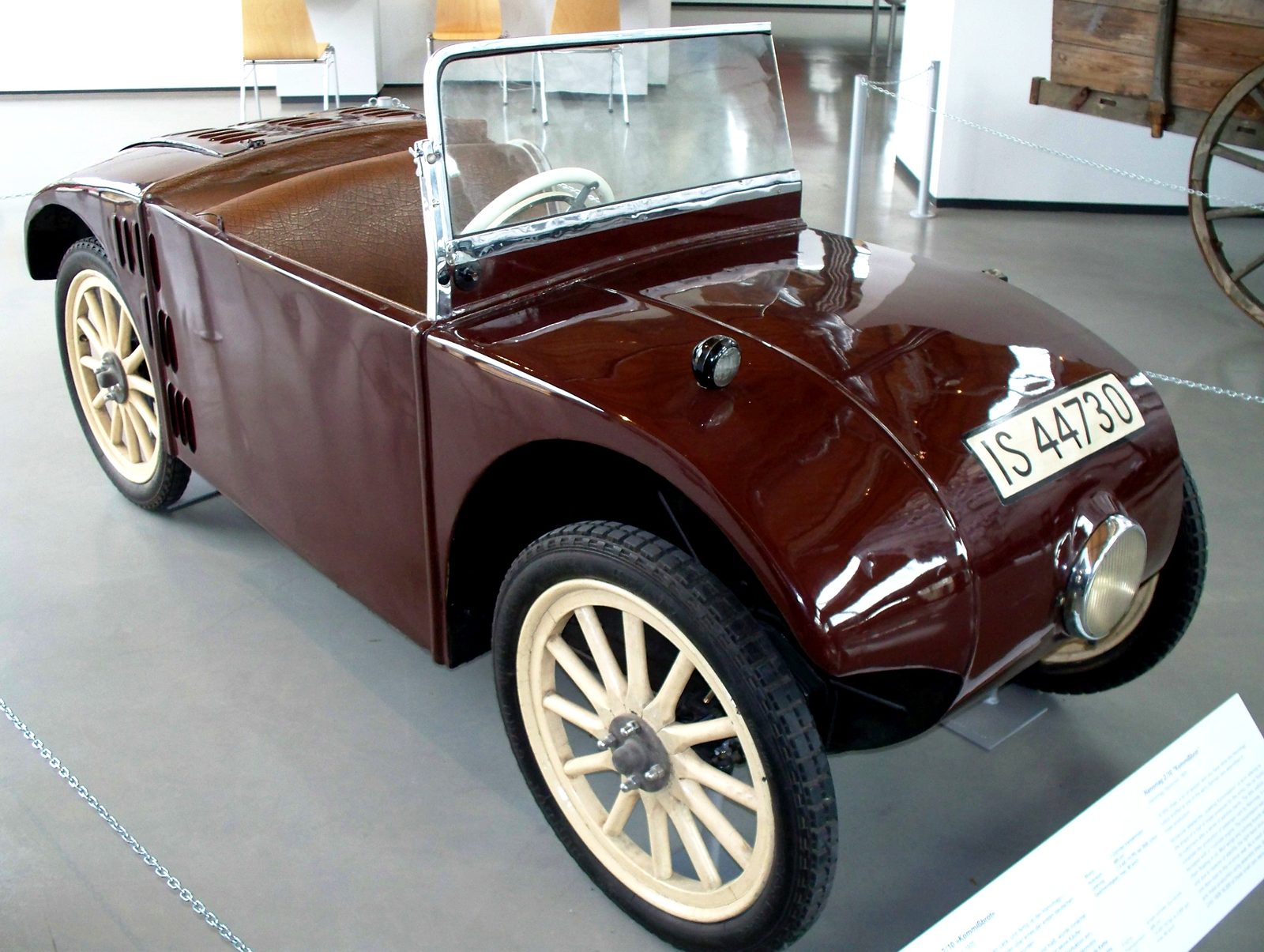
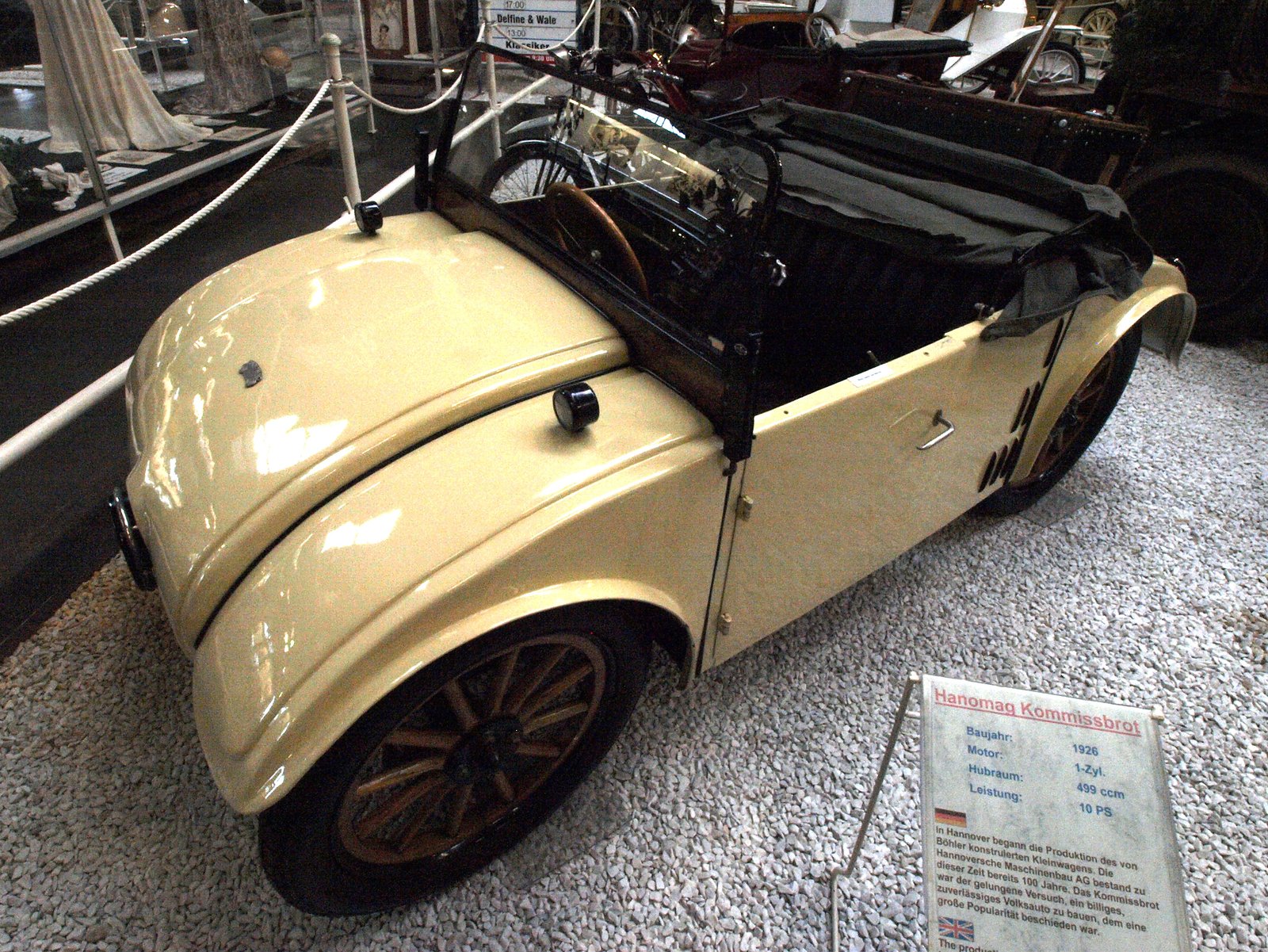
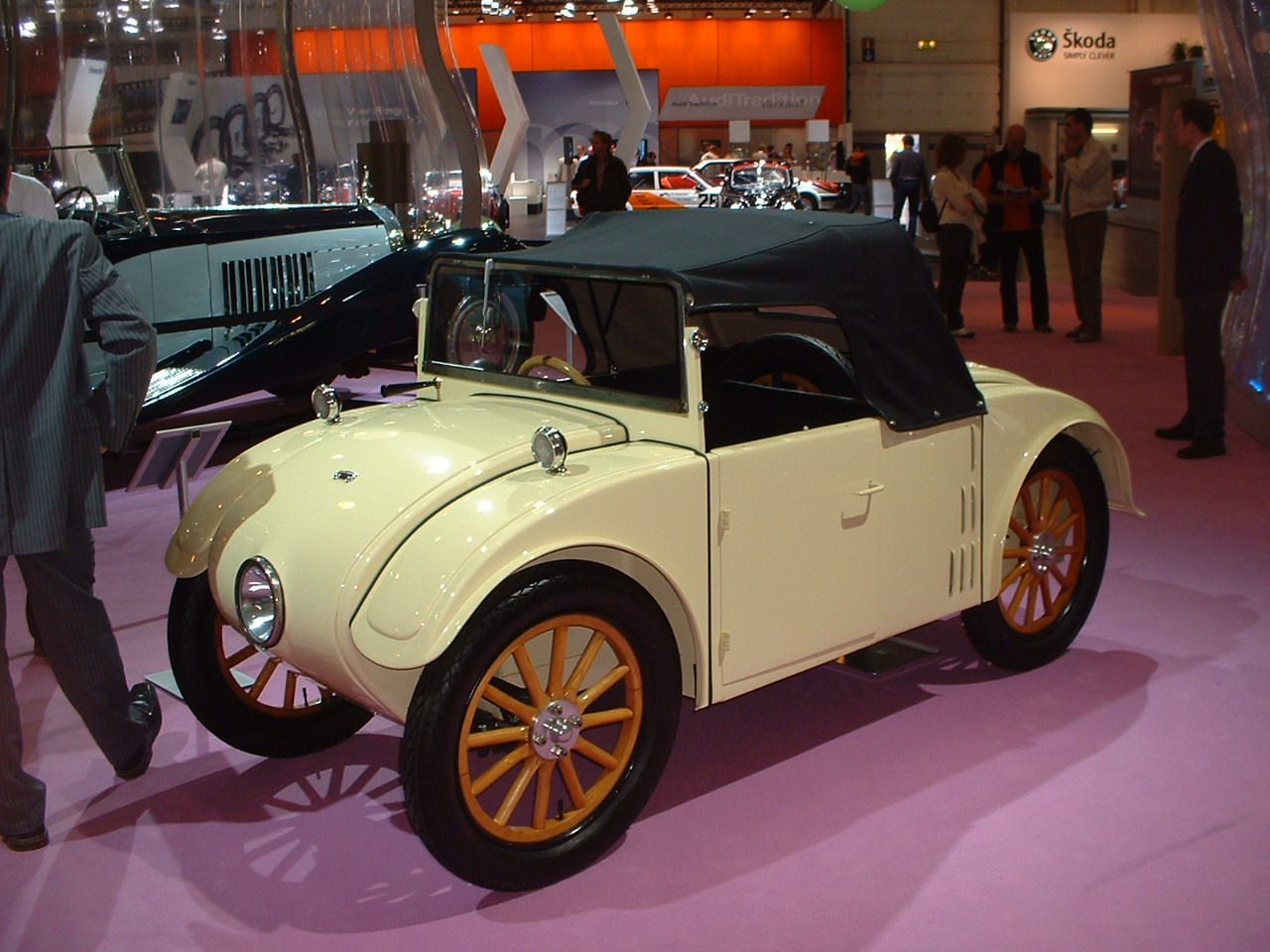
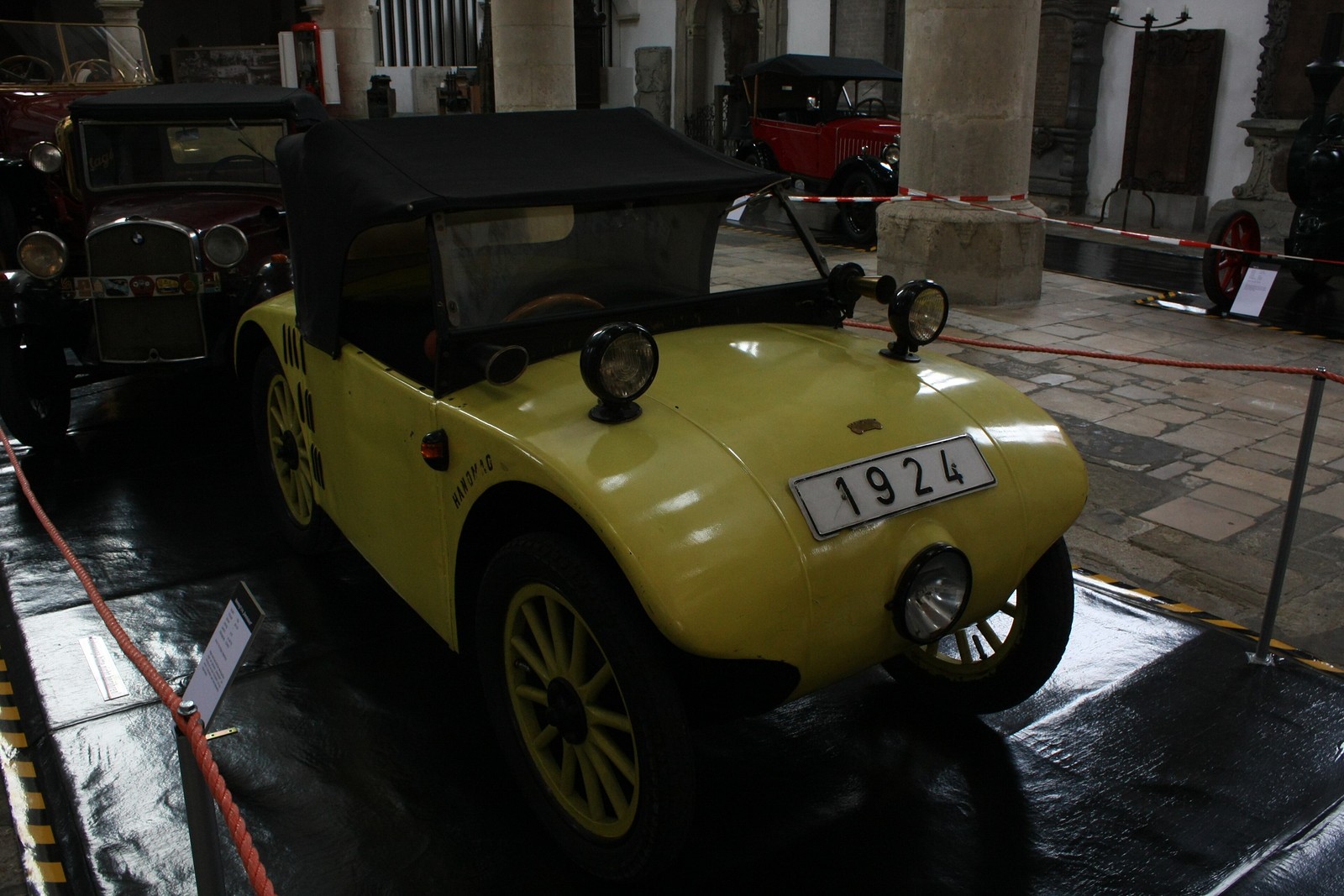
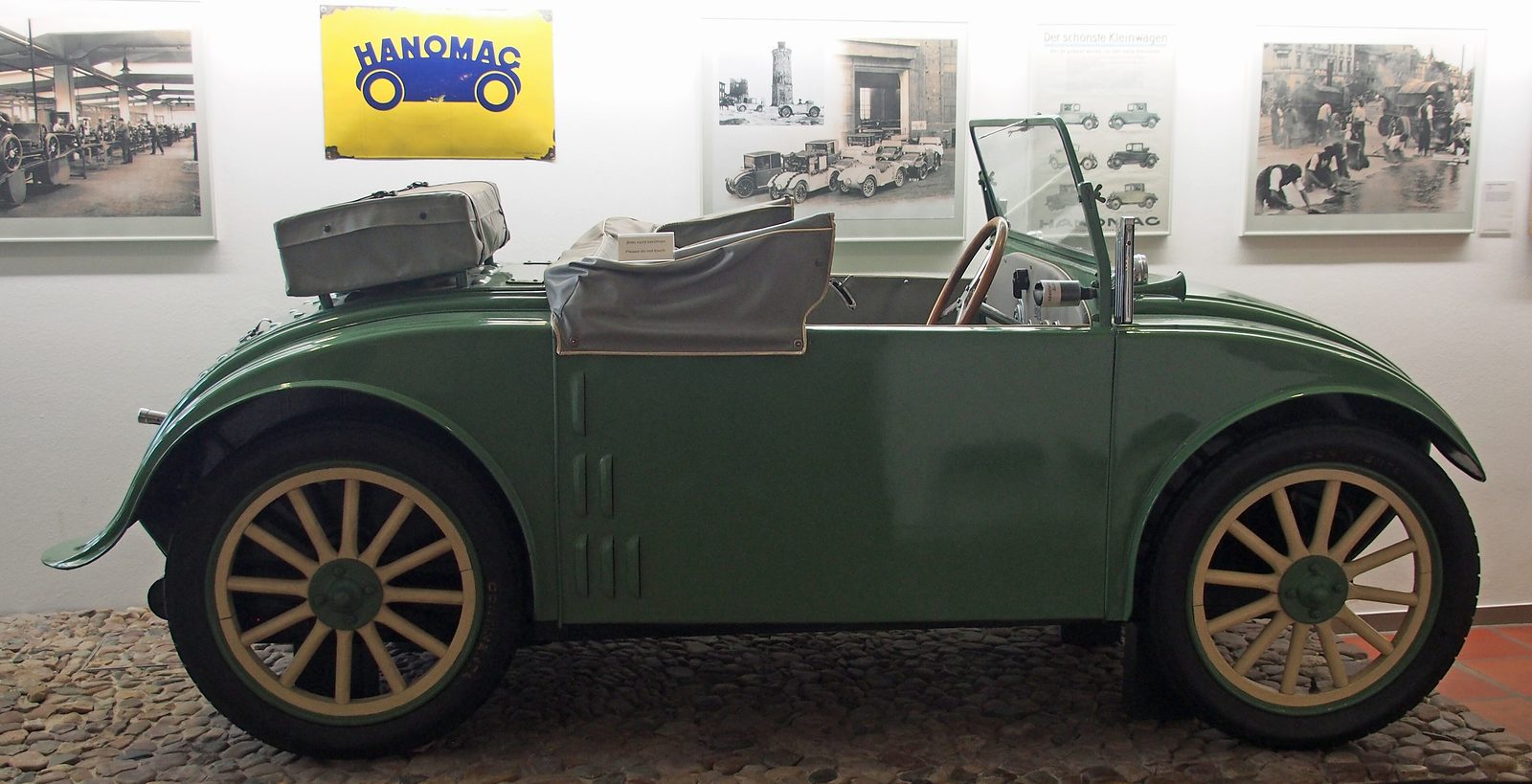
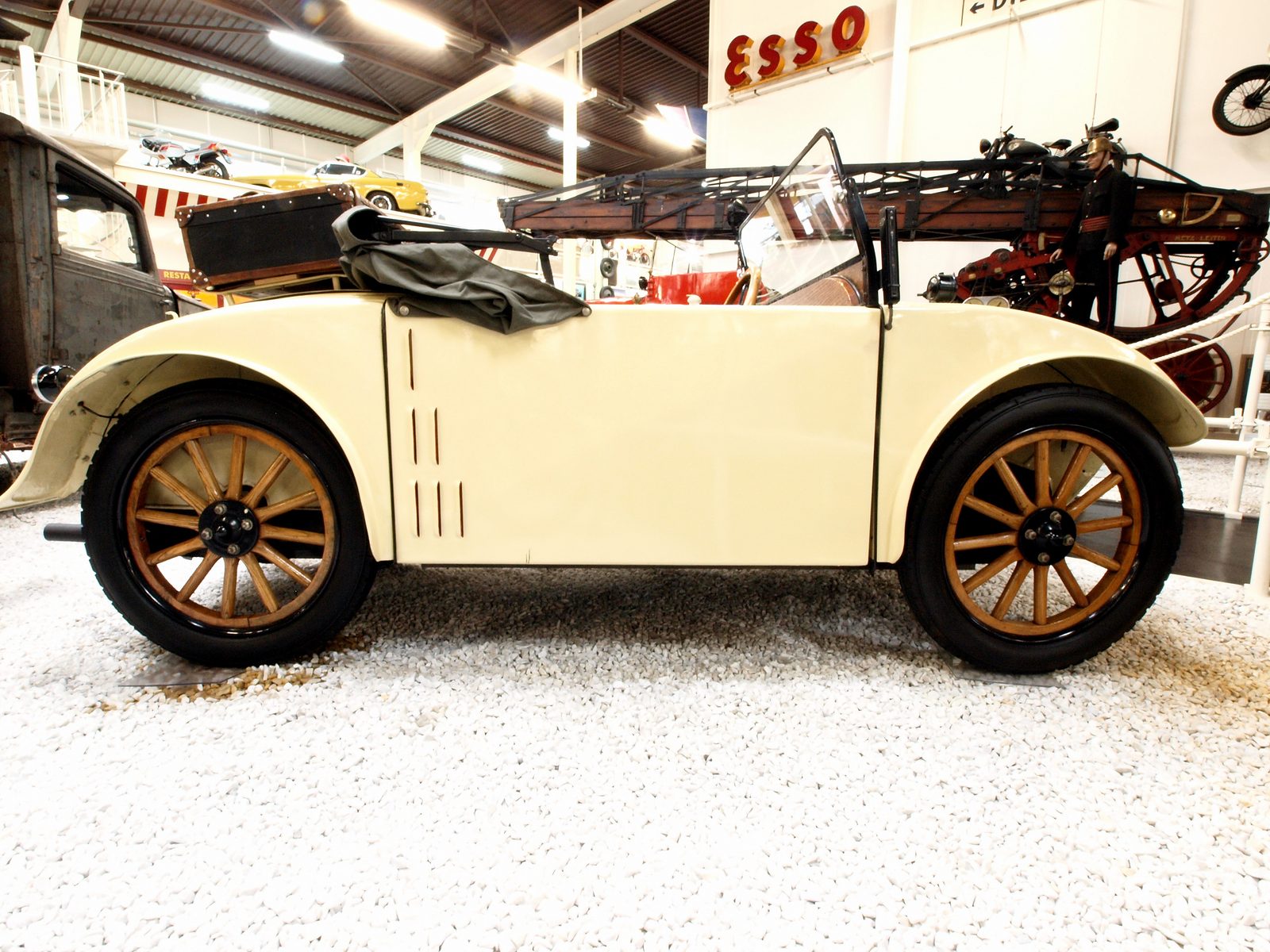
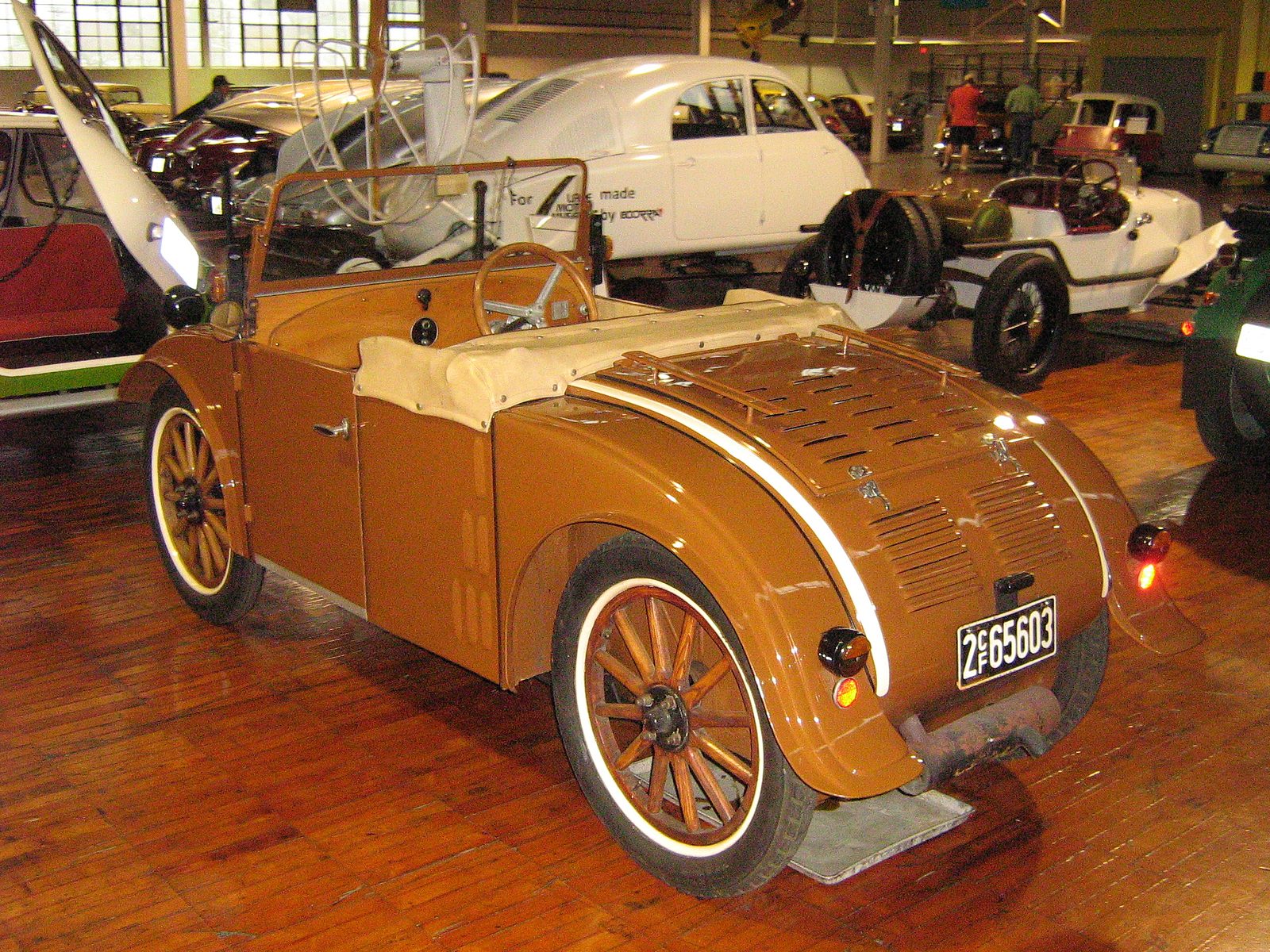
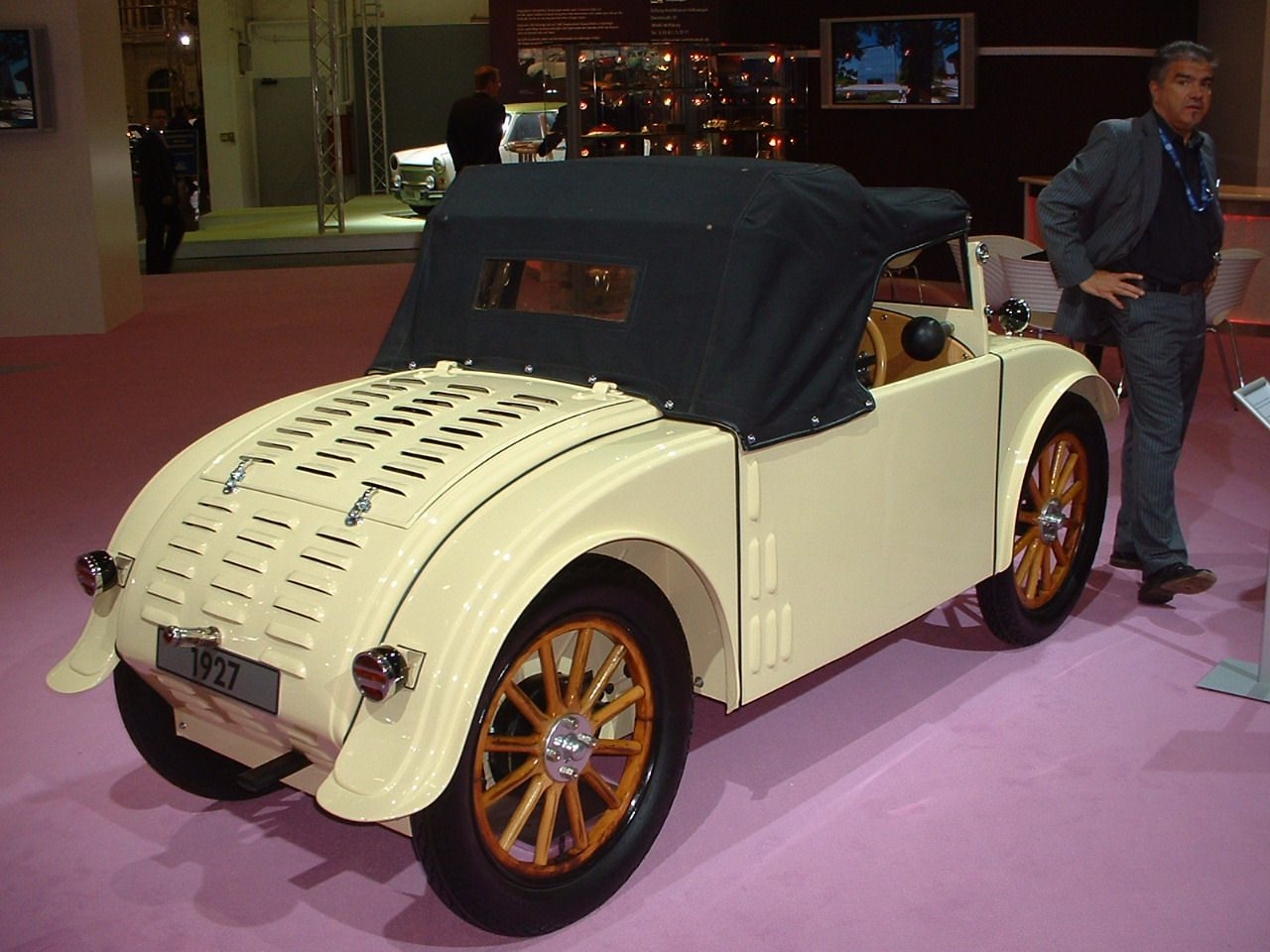
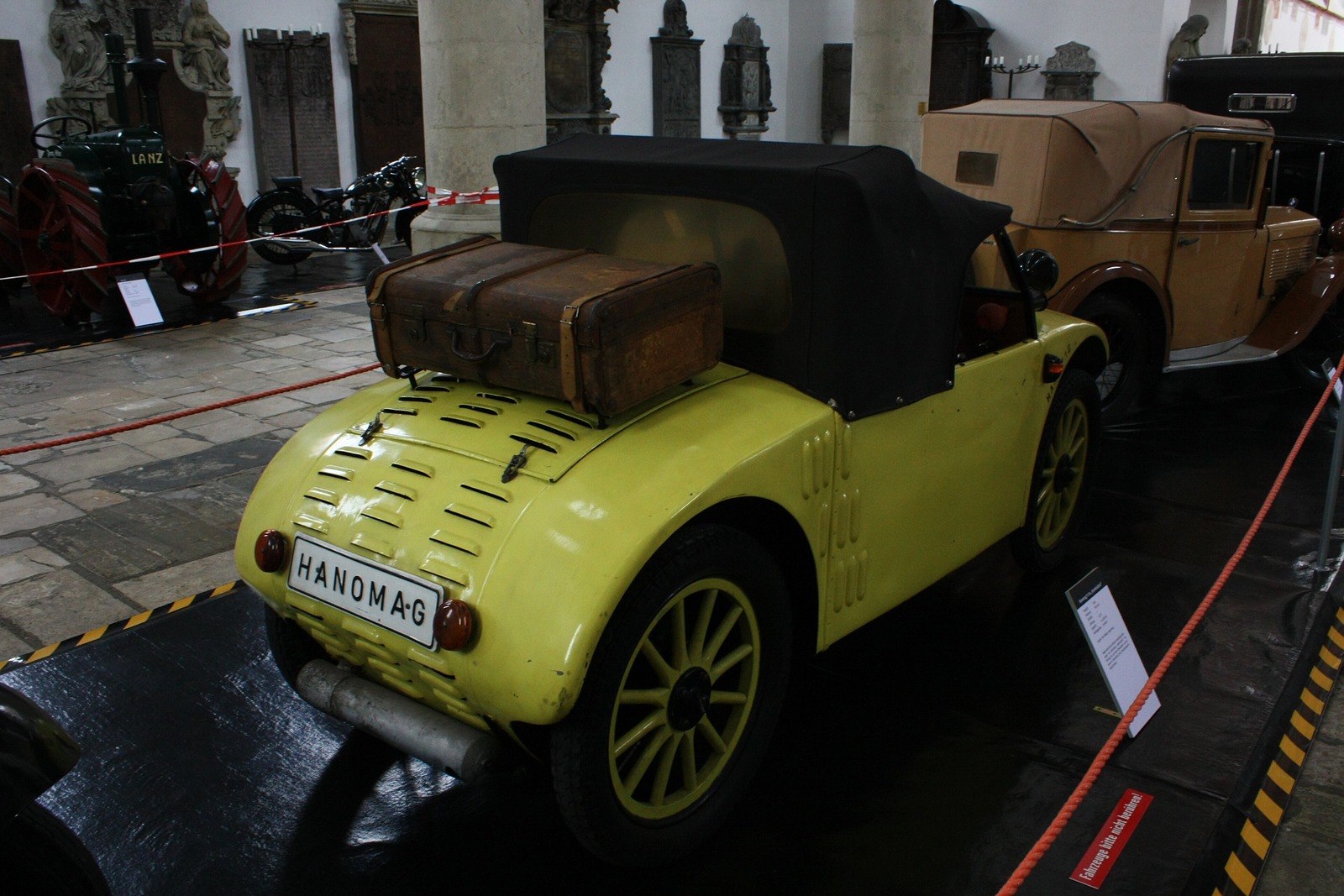
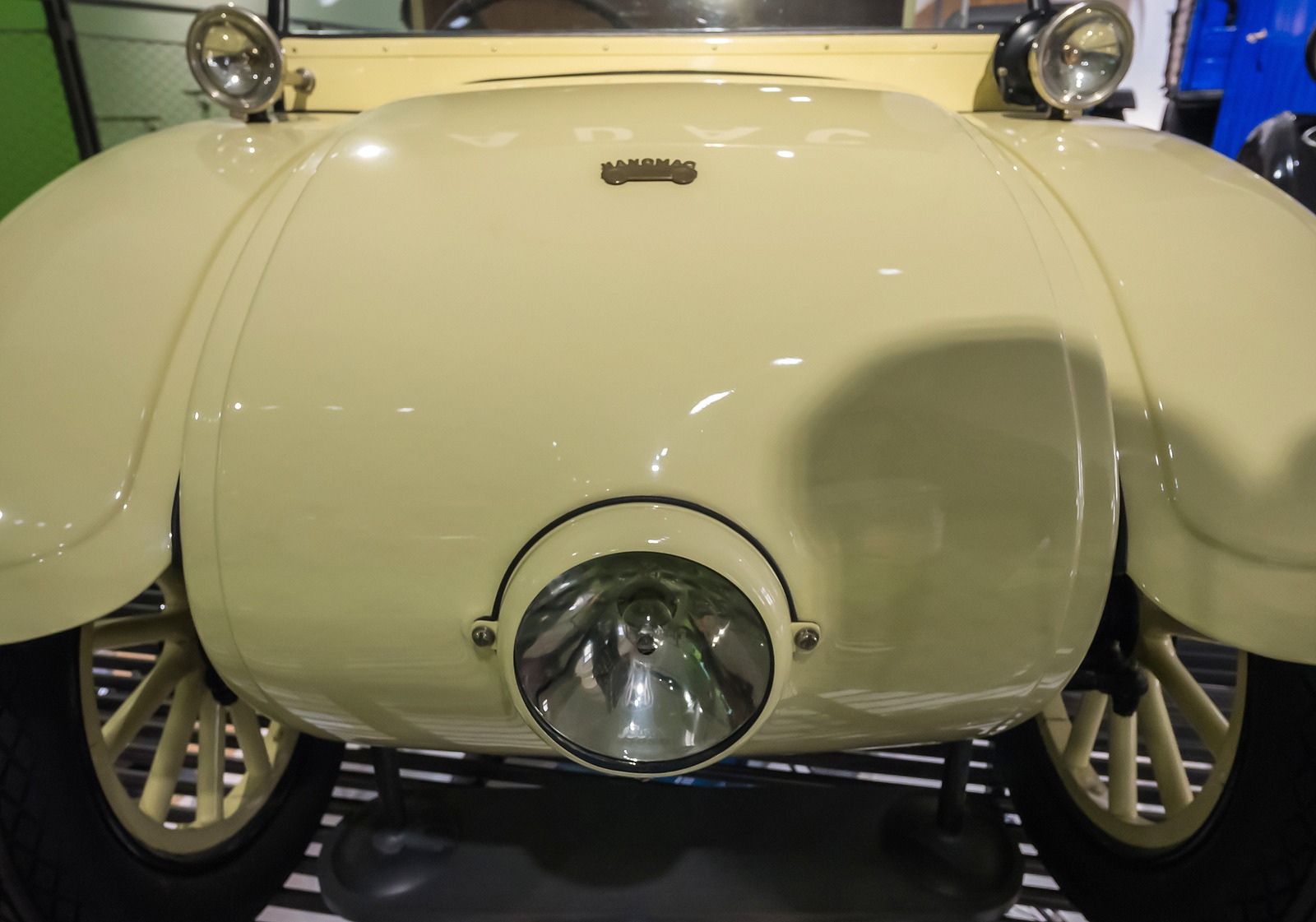
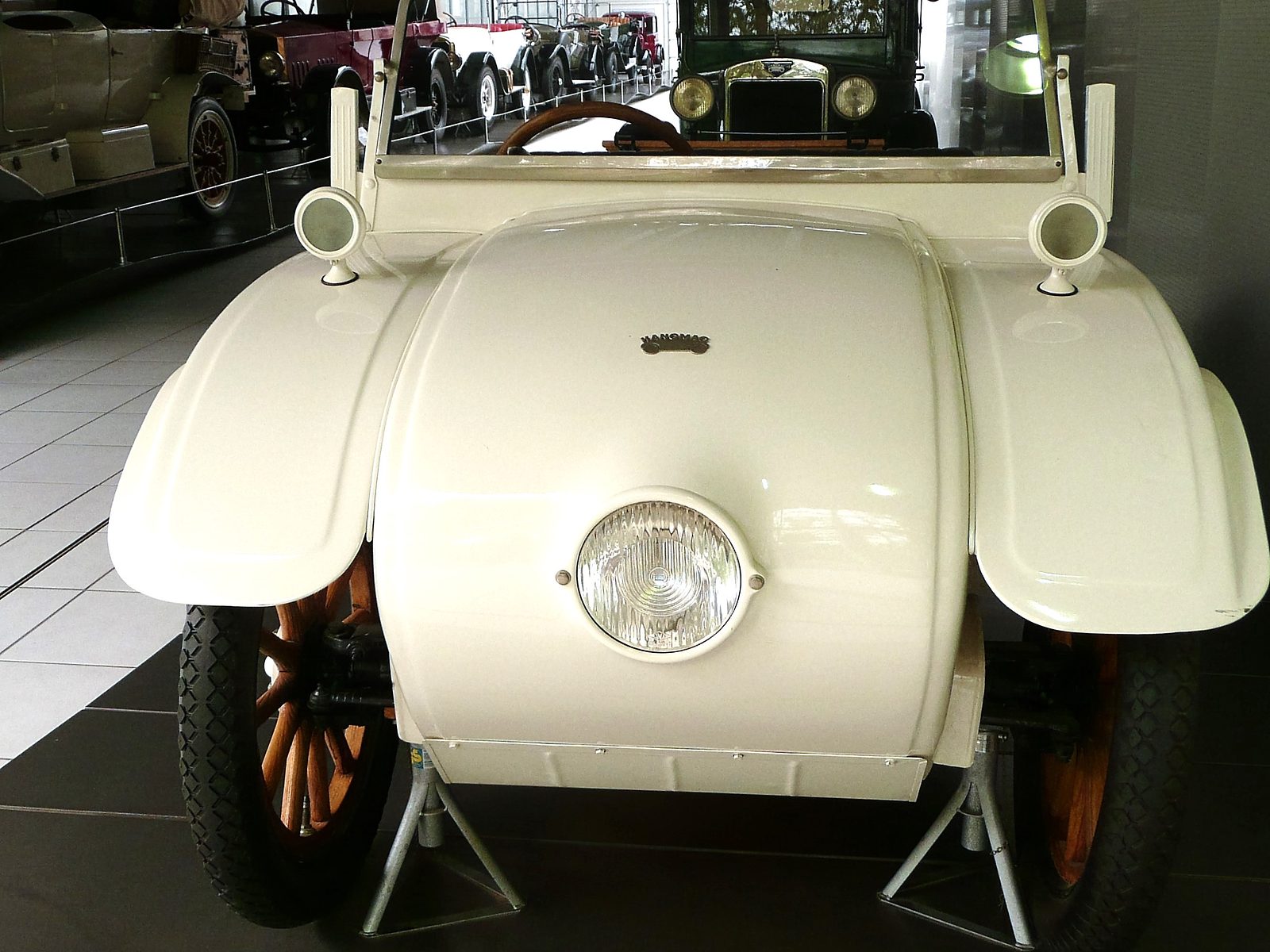
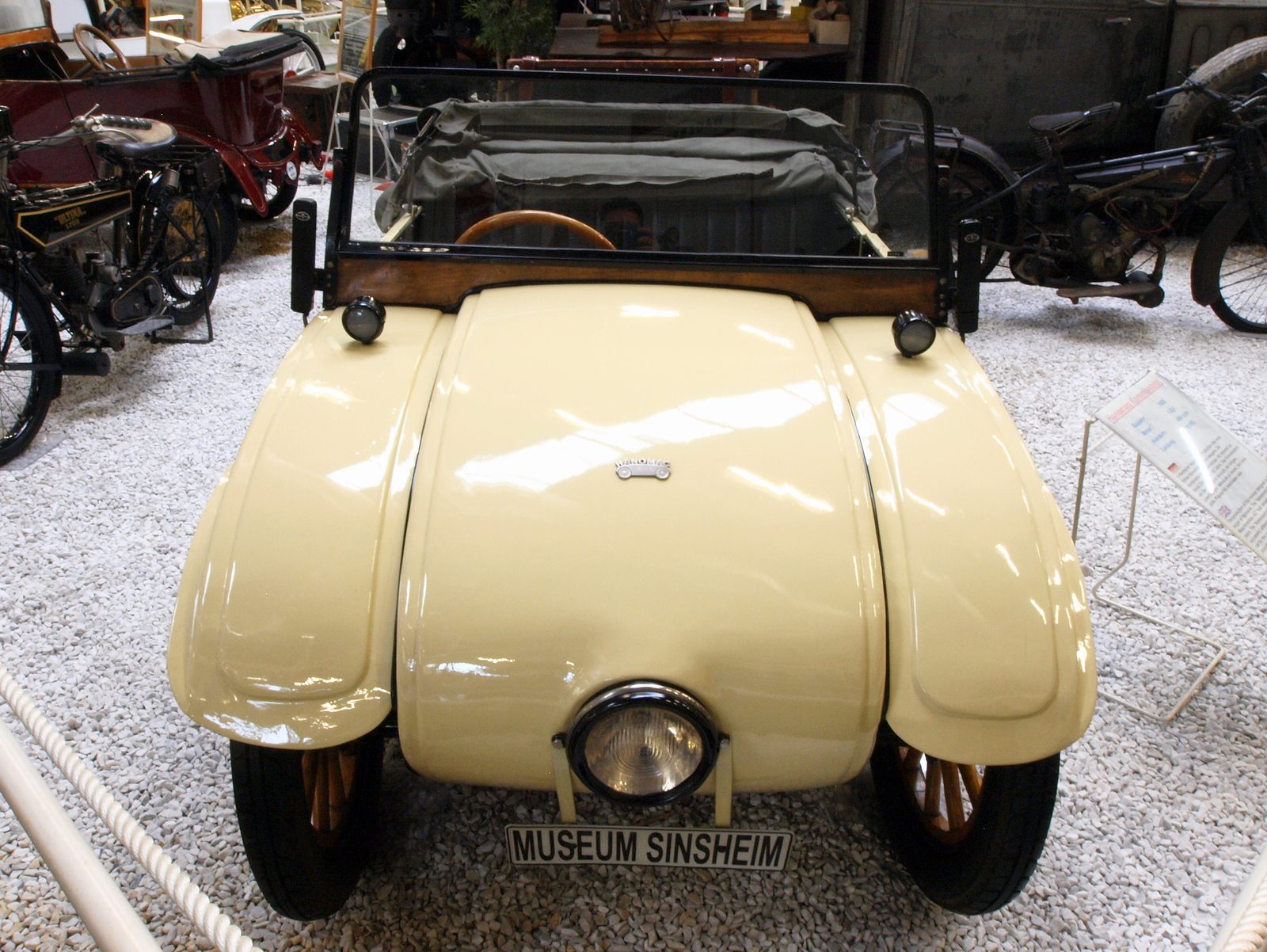
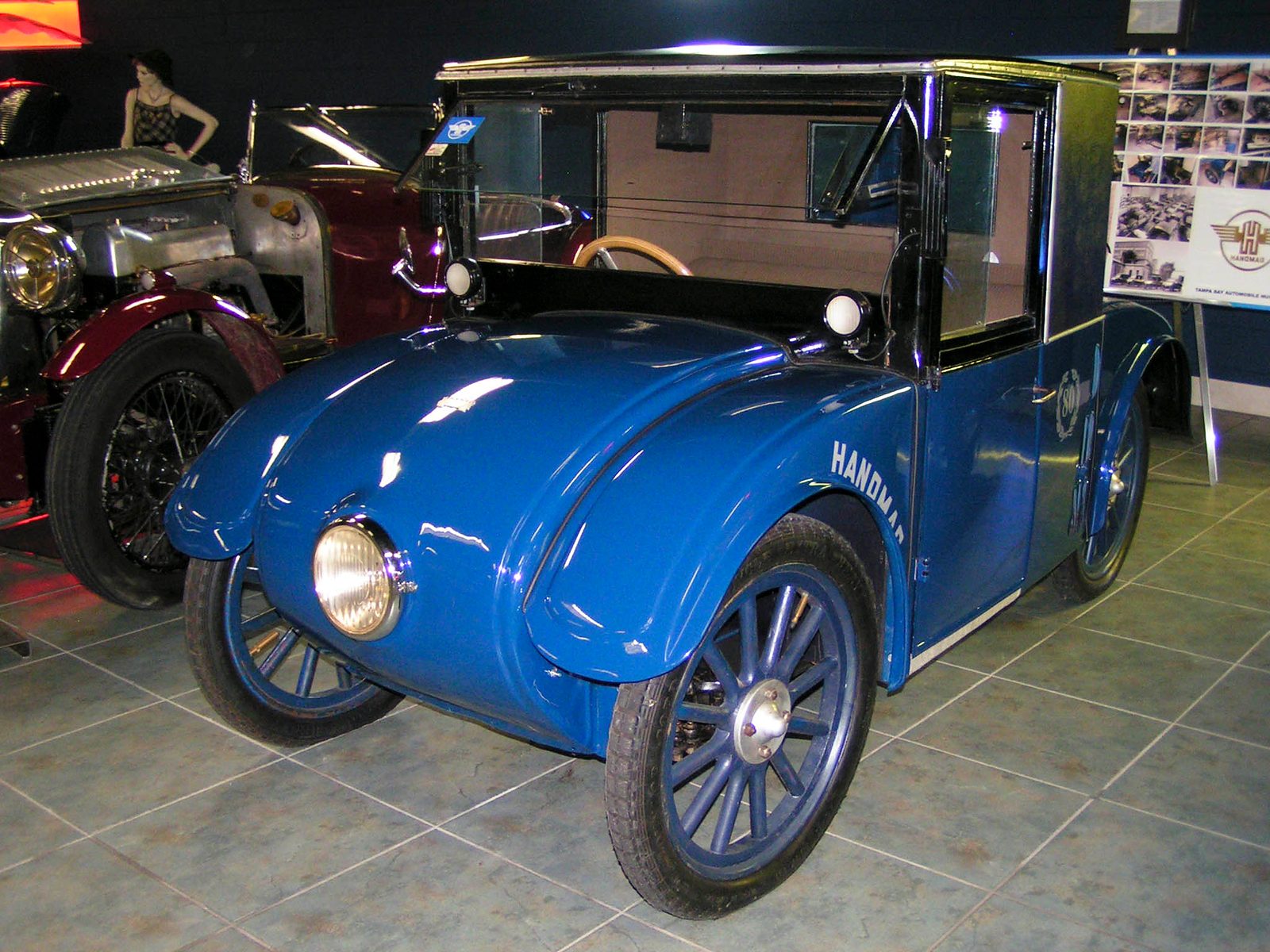
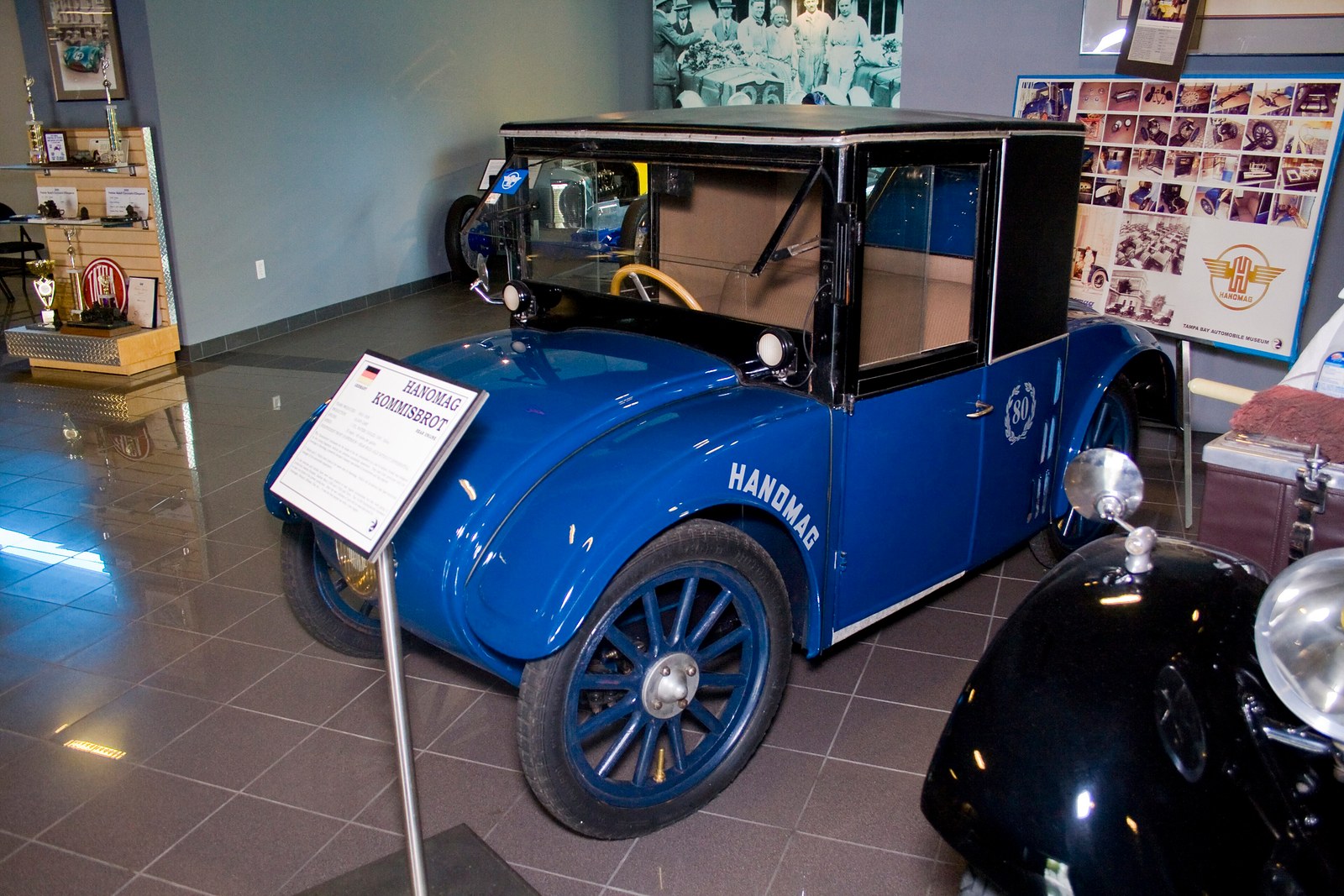
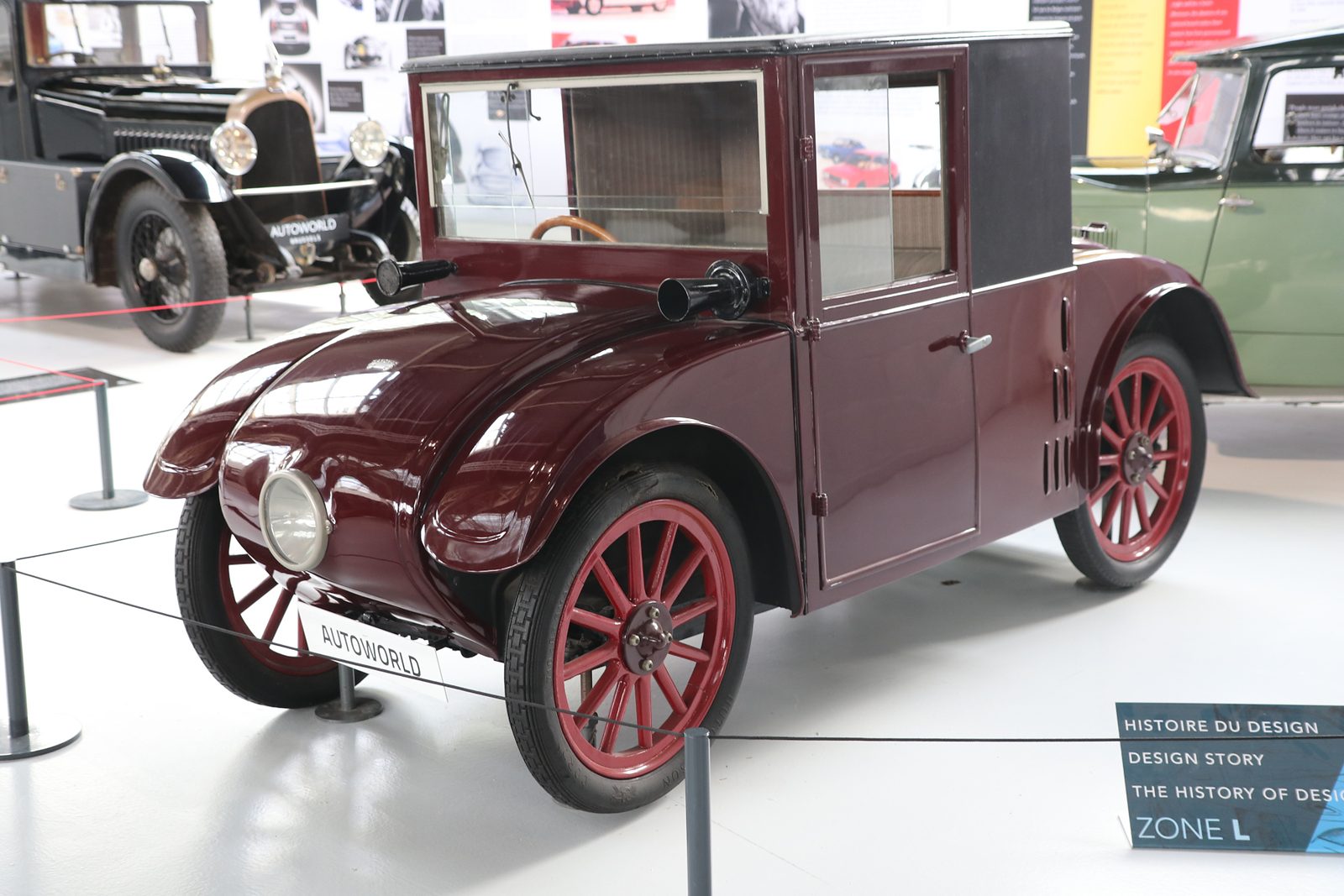
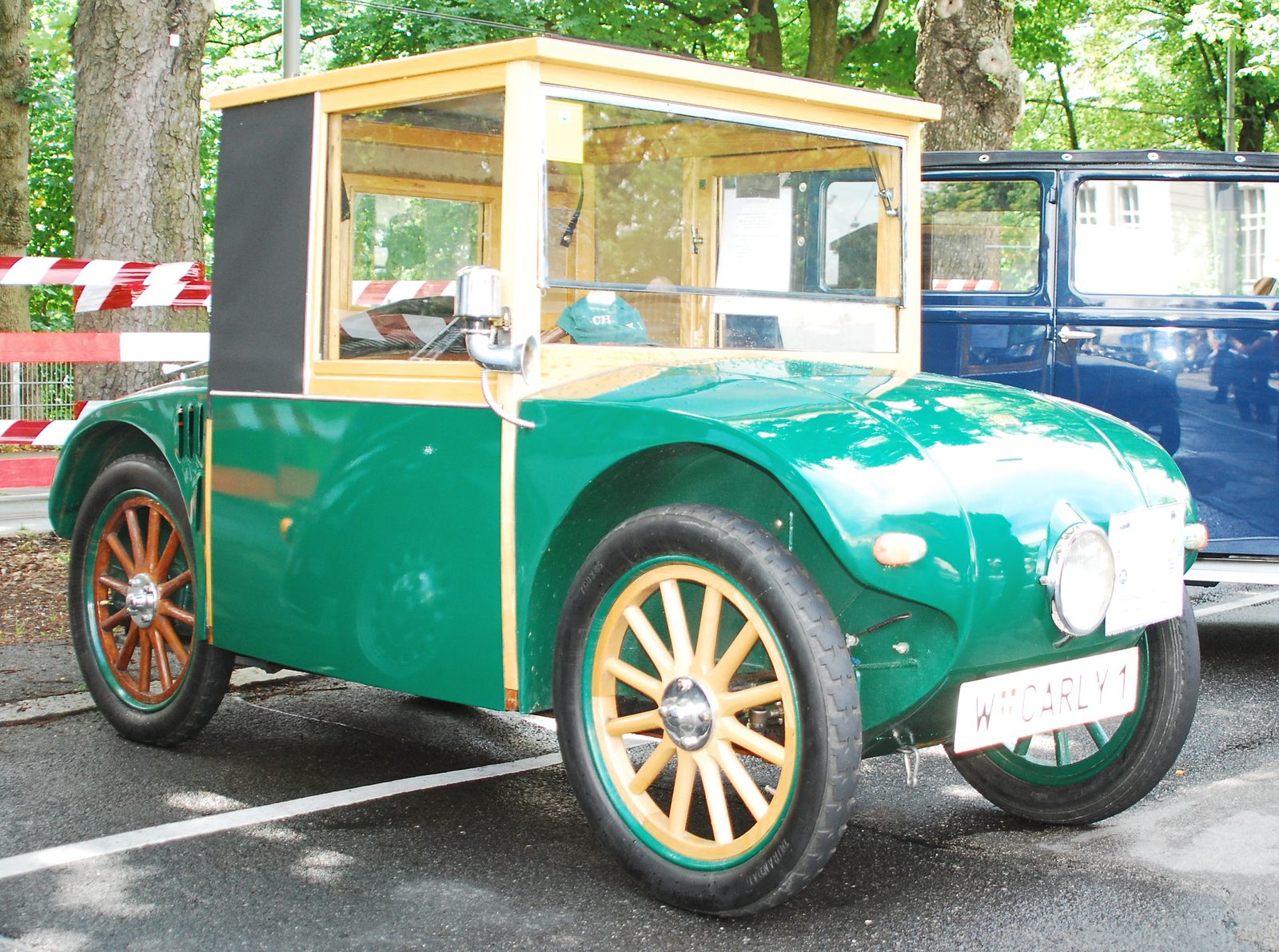
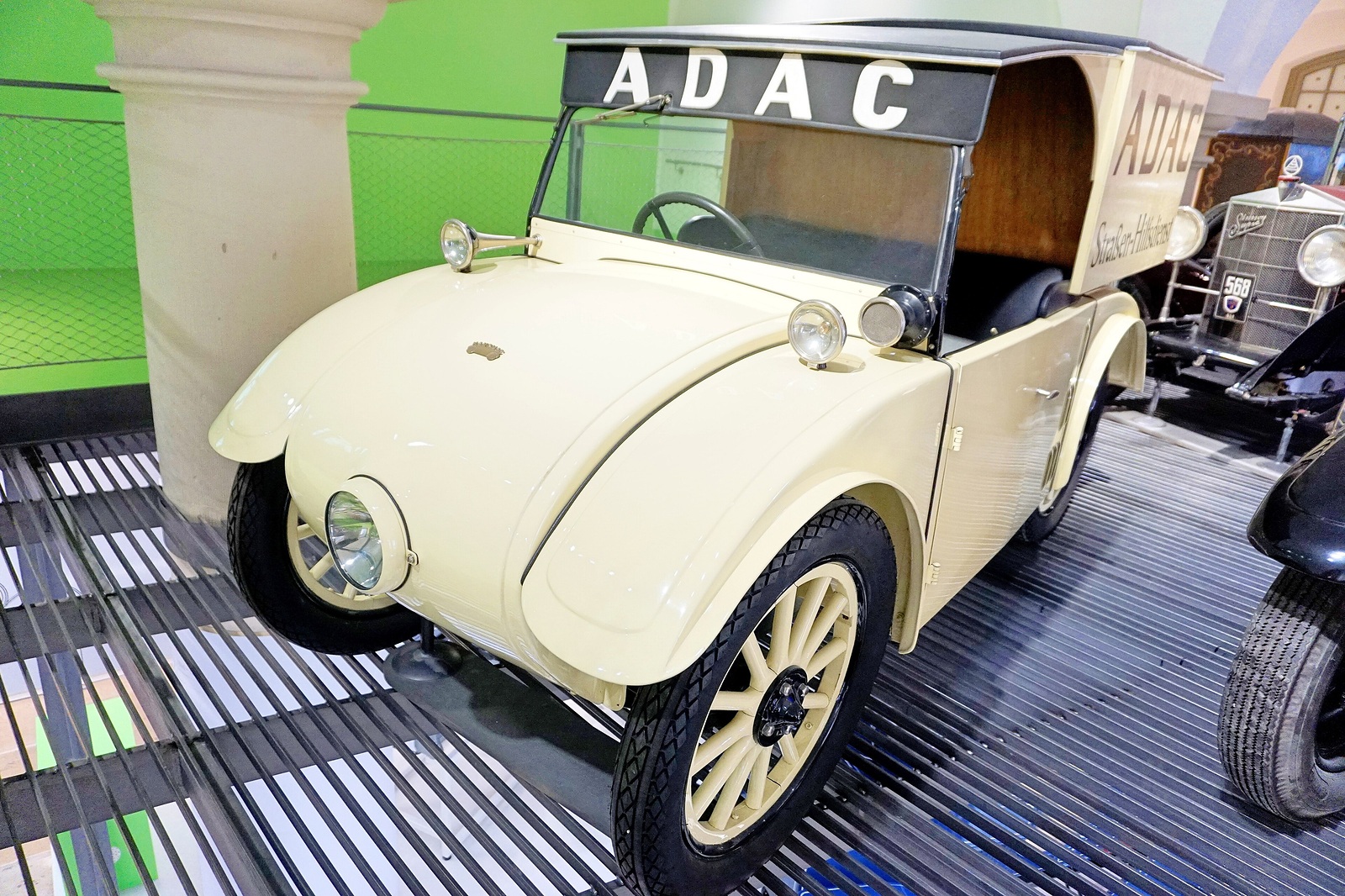
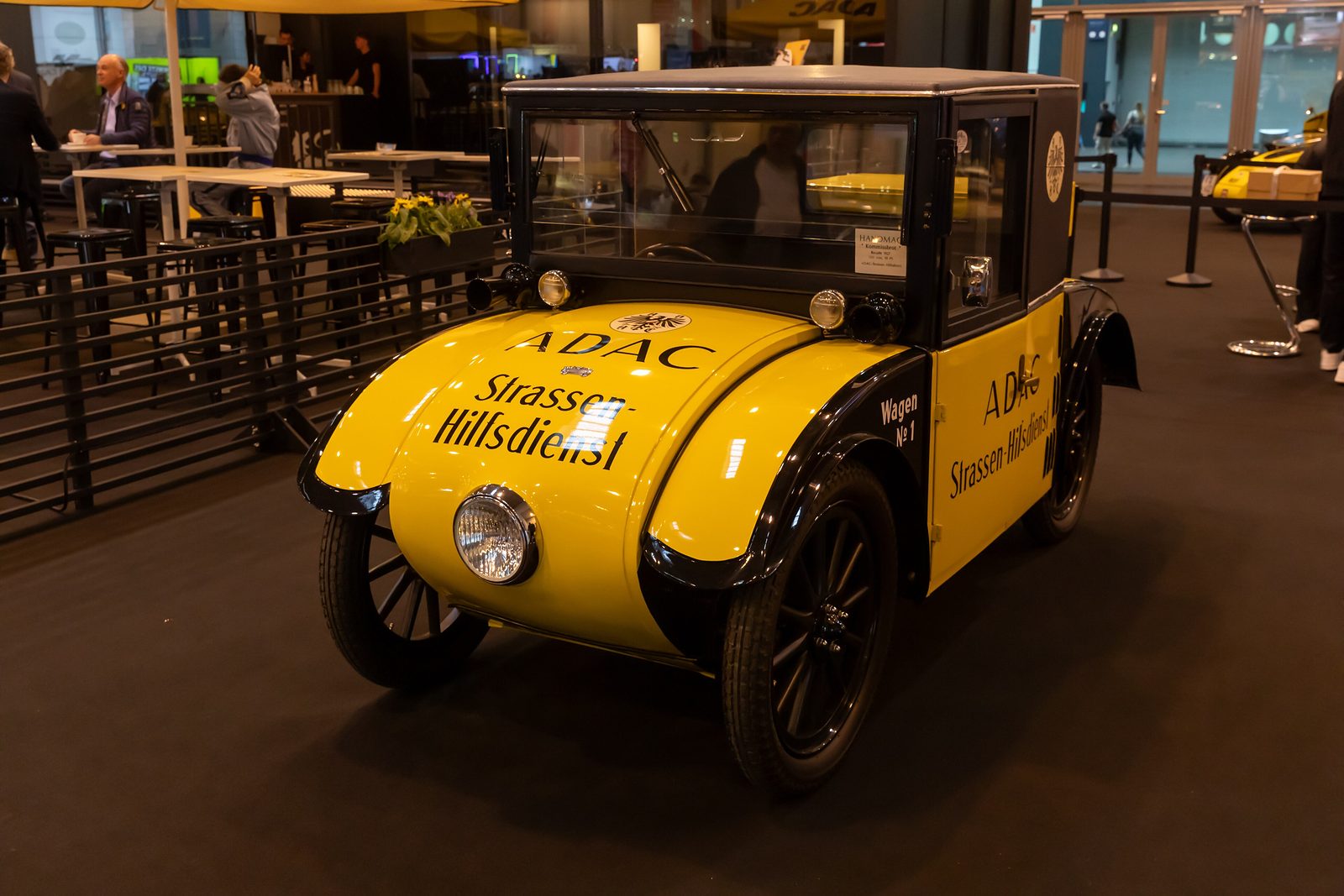
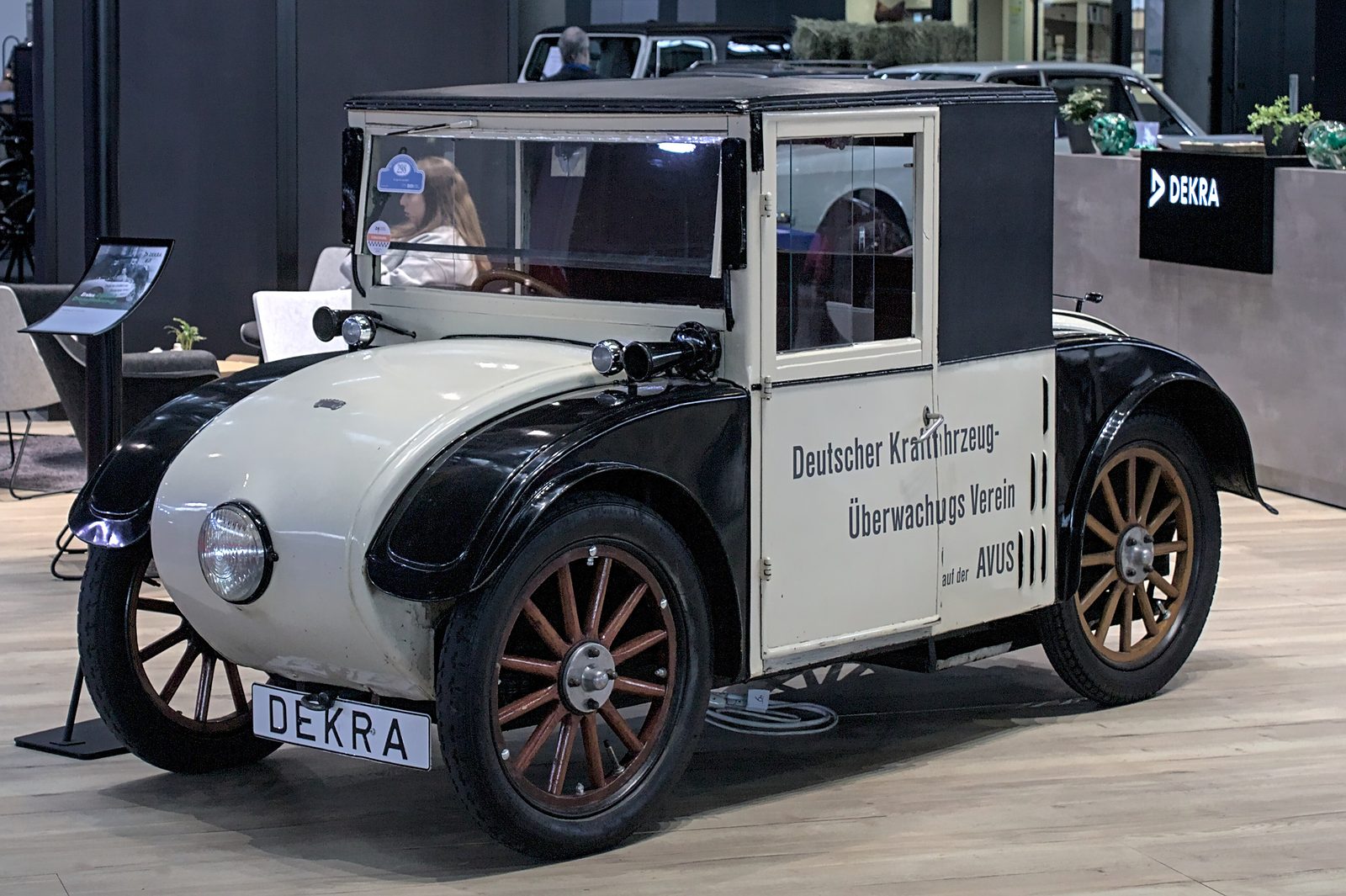
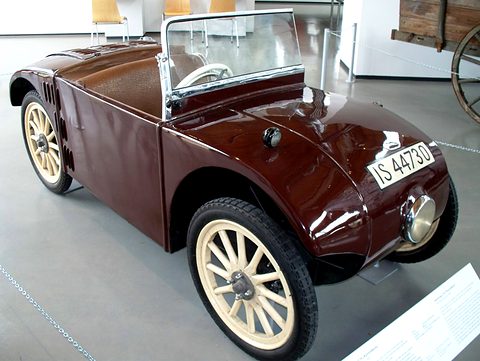
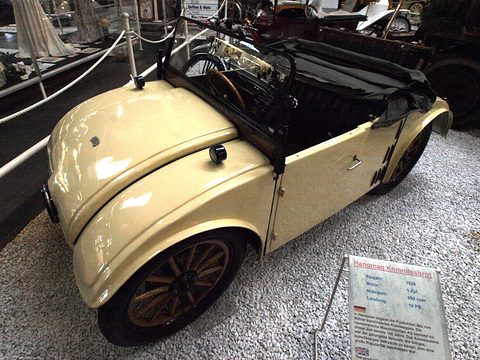
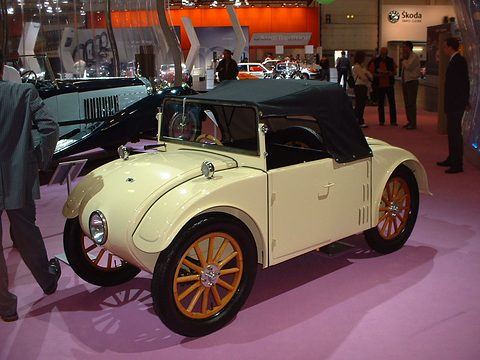
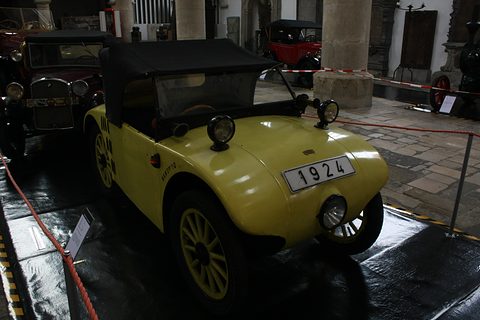
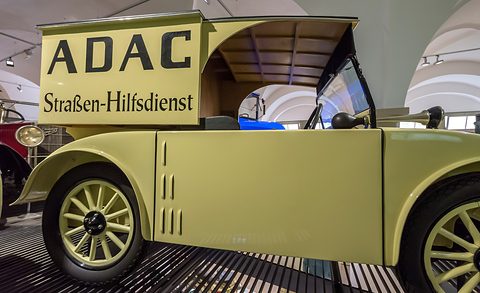
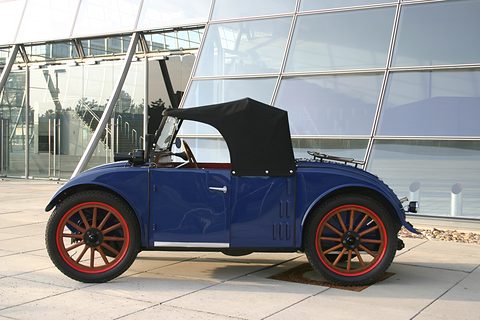
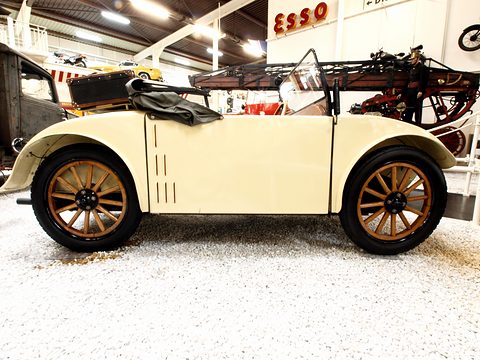
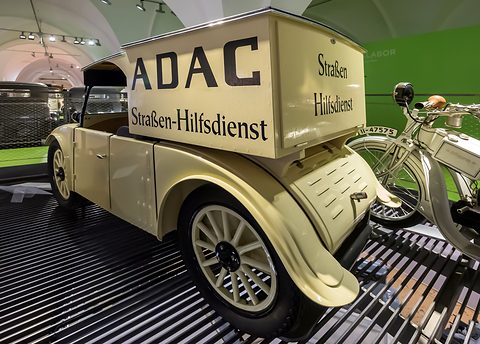
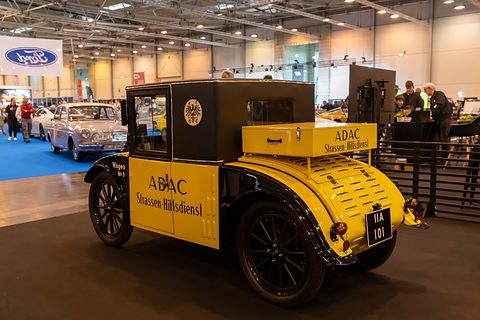
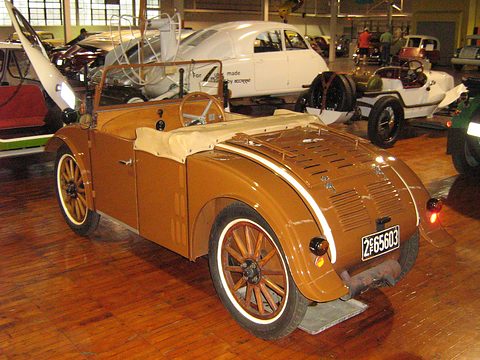
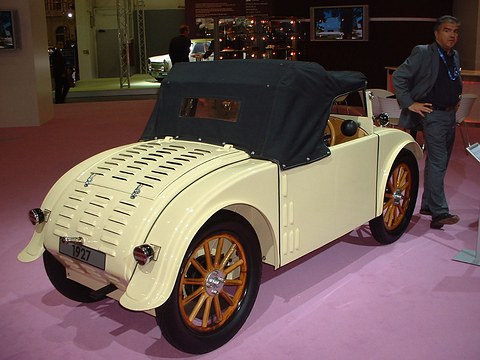
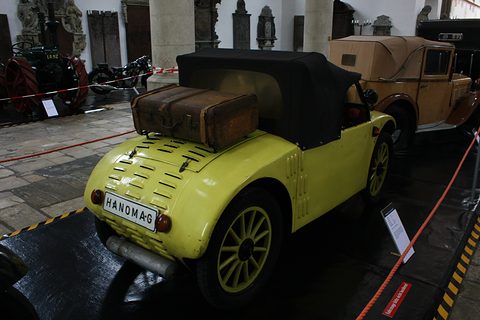
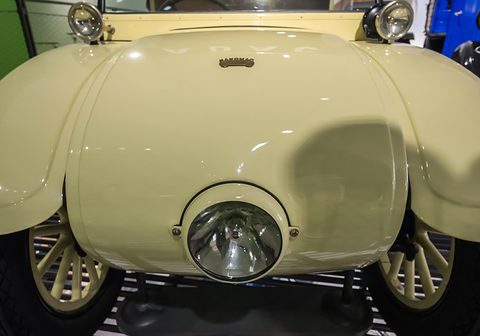
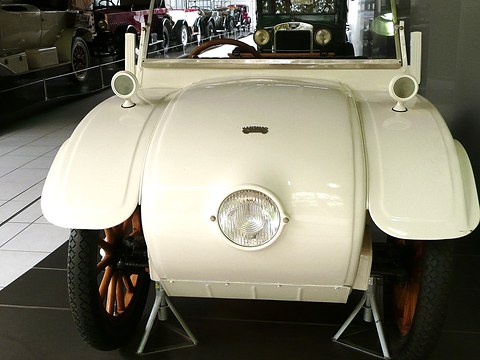
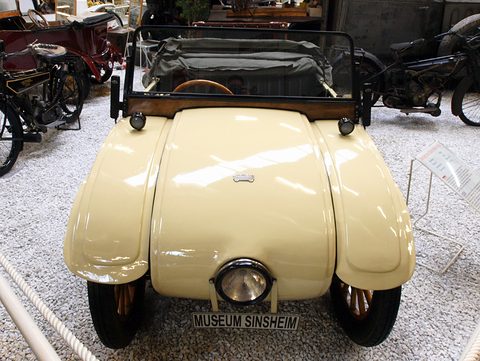
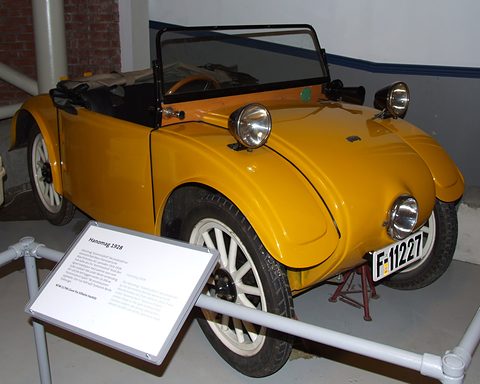
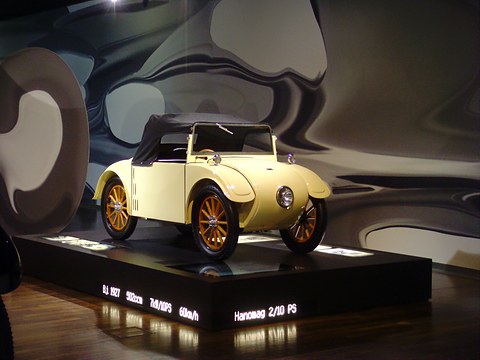
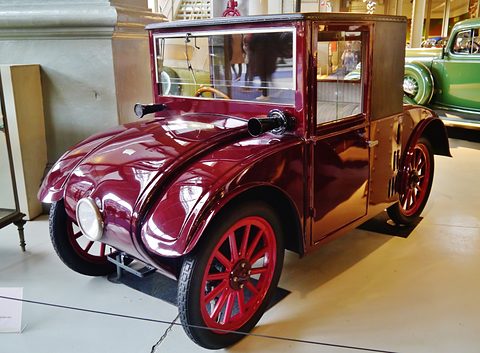
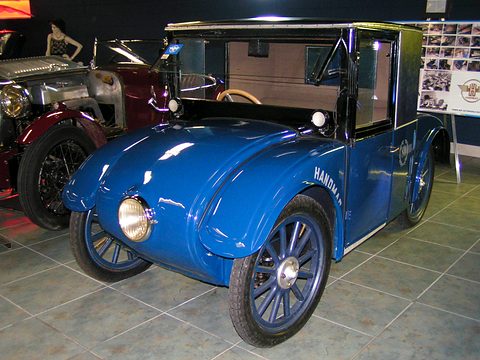
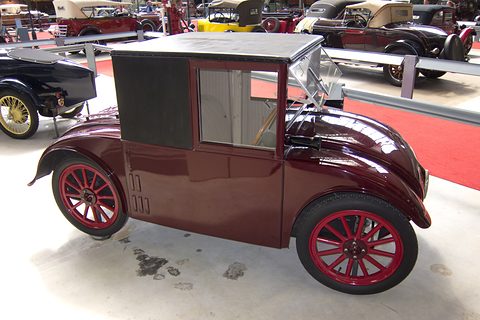
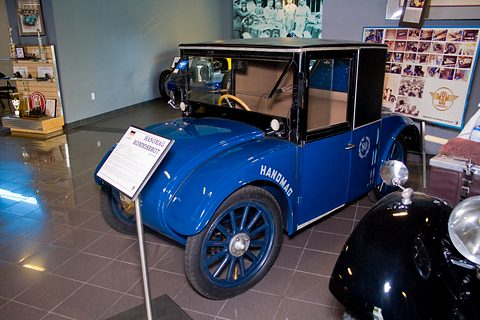
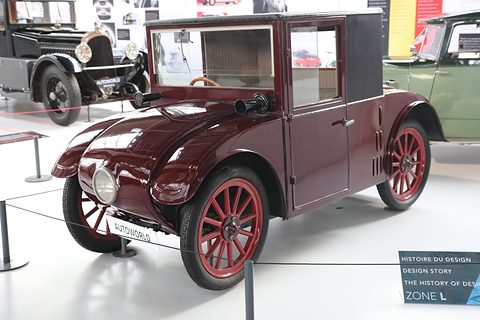
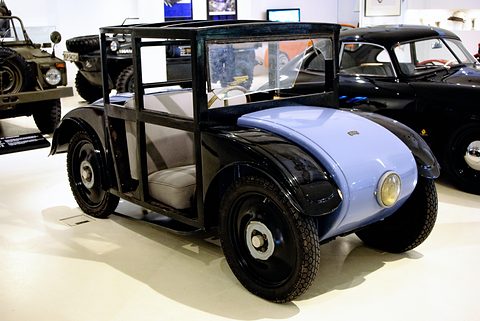
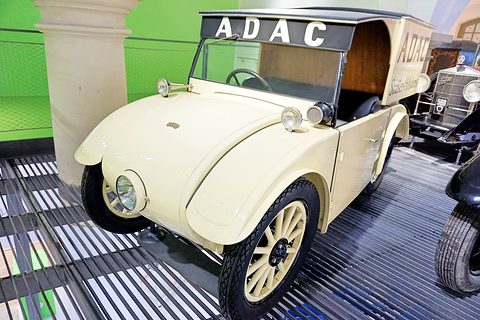
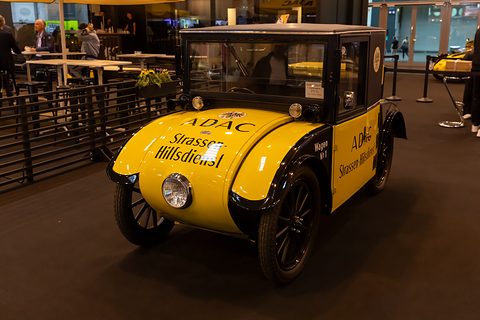
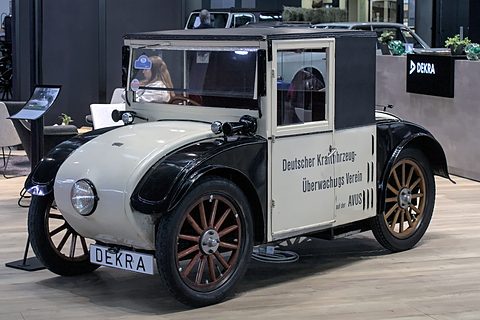
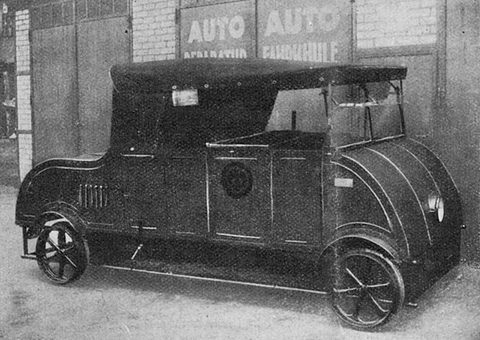
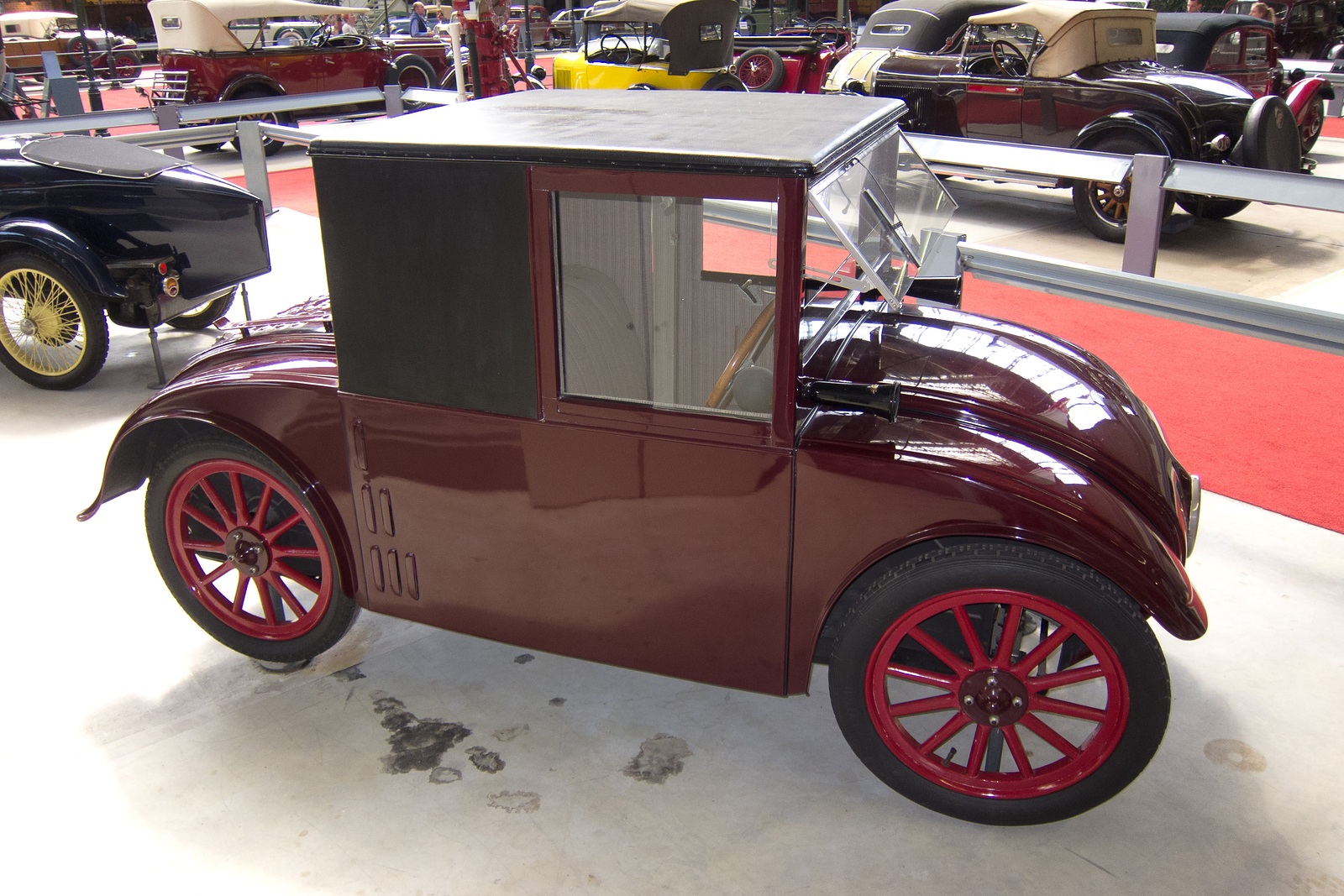
It was named after the square loaf of bread issued to German soldiers, the Kommissbrot. It had one headlamp, in the middle of its nose, one door, a single cylinder behind the seat, and no running boards at all, so that two people could sit side by side in a car less than 1.2 metres wide.

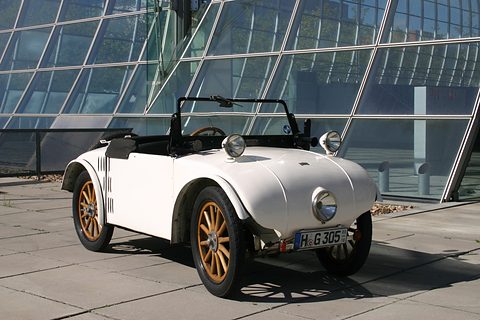
A white open two-seater with wooden wheels, a single headlamp and plate H-G 305 on paving before a glass facade.
White Hanomag 2/10 PS Cabriolet of 1925 before the German Pavilion on the Expo grounds, Hanover, in September 2013.Photo: Hmg210, CC BY-SA 3.0, via Wikimedia Commons

At a glance

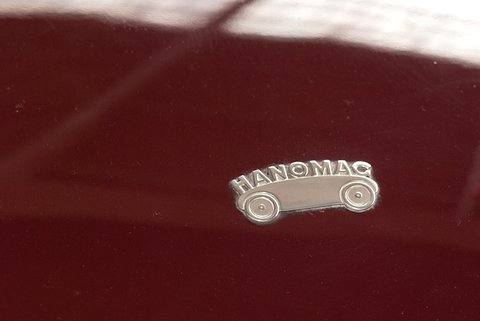
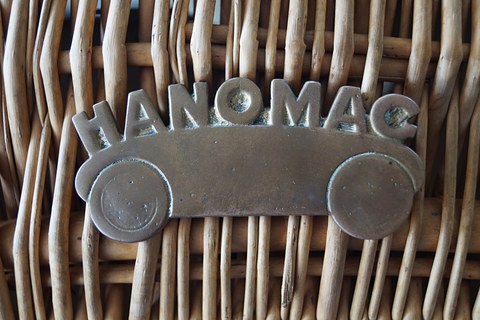
The spec plate

Hanomag 2/10 PS

2/10 PS · Hanover-Linden

Built
1924–⁠1928First cars 1924; on an assembly line from 1925; replaced in 1928
Country
GermanyHanomag works, Hanover-Linden
Maker
Hannoversche Maschinenbau AG (Hanomag)Designed by Carl Pollich and Fidelis Böhler, with Hellmuth Butenuth
Engine
502 cc single-cylinderWater-cooled, overhead valves, crosswise ahead of the rear axle; three speeds
Power
10 PS7.4 kW at 2,500 rpm; 2 PS for tax
Length
2,780 mm1,180 mm wide, 1,600 mm high
Weight
370 kg370–430 kg by body
Seats
2Side by side
Wheels
4A single cylinder set crosswise ahead of the rear axle, driving it by chain, with no differential
Price new
2,000–2,800 RMThree undated figures from three sources
Production
15,7751924–⁠28
Survives
about 30Roadworthy, by Auto Bild’s estimate in 2010
Top speed
60km/h60 km/h40 mph (64 km/h) by the Lane Motor Museum

How big is it?

True proportion

2.78 m

It is 190 mm shorter than a Fiat 500, about 1.6 adults laid end to end, and twice the length of a Peel P50.

  • 1.18 m wide
  • 370 kg: about five adults
  • Two seats side by side, no running boards
  • One door, on the left
Drawn at true proportion. The track is 3.6 metres long; the adult stands at the same scale. The Peel P50 is the smallest production car, on every page for comparison.

The story

History

Hanomag, the Hannoversche Maschinenbau AG, had built its first steam engine in 1836 and was making steam lorries by 1905. As that market declined, the company of Hanover-Linden looked for something new to make.source 1source 2

It found it at the Berlin motor show of 1923. That year three young men in Hanover had set up the Butenuth-Fahrzeugwerke, Bufag for short: Fidelis Böhler, born in 1887 at Friedingen, who had trained with Luftschiffbau Zeppelin at Friedrichshafen and then at NSU; Hellmuth Butenuth, born in 1898 in Dortmund and a student at the Technische Hochschule in Hanover since 1920; and the designer Carl Pollich. A Hanomag representative saw their small car at the show. Hanomag bought Bufag and its plans and took on all three, Butenuth as test engineer.source 3source 4 Auto Bild credits the design to Böhler and Pollich alone; German Wikipedia names all three.source 2source 5

The army loaf

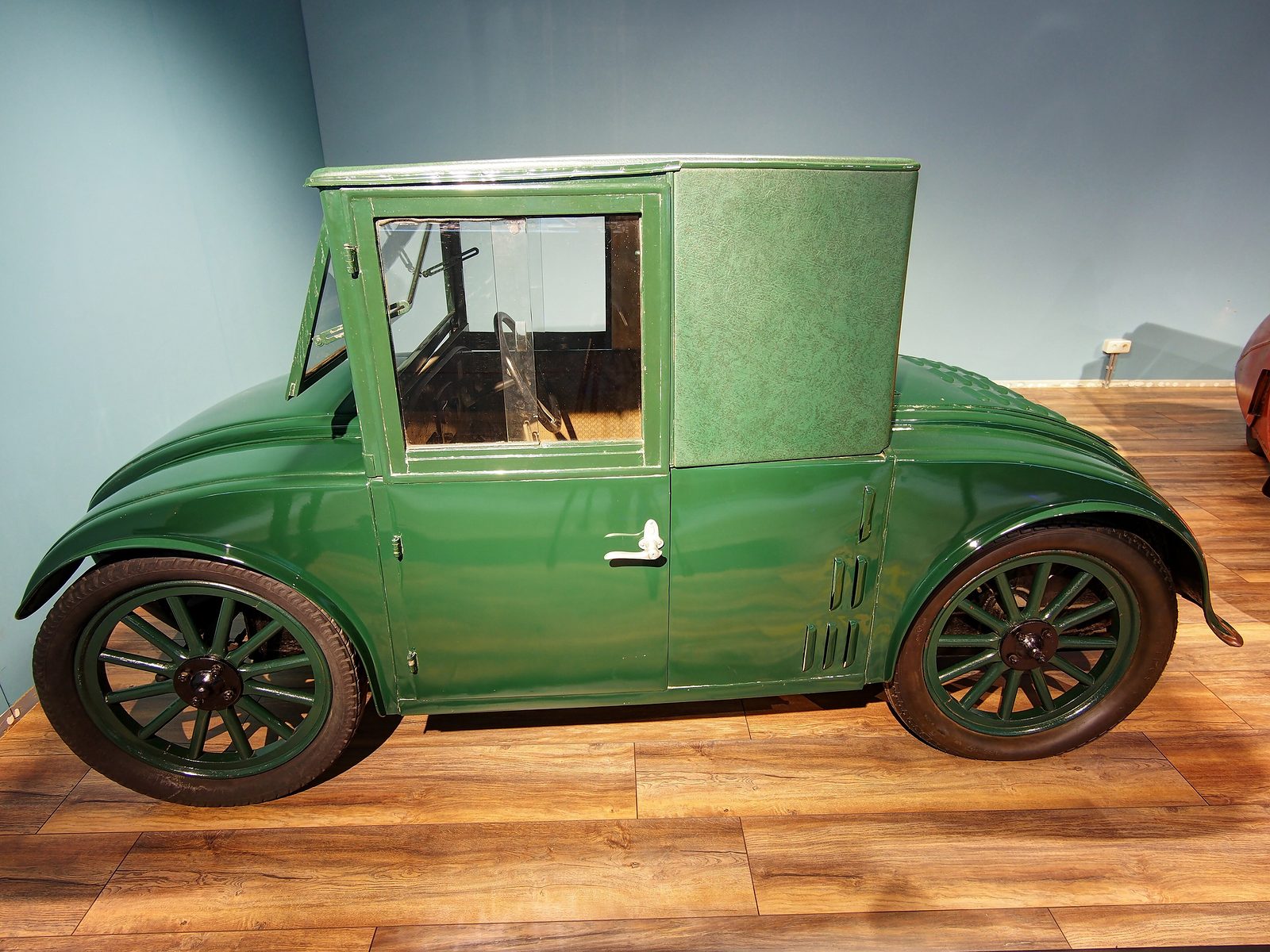
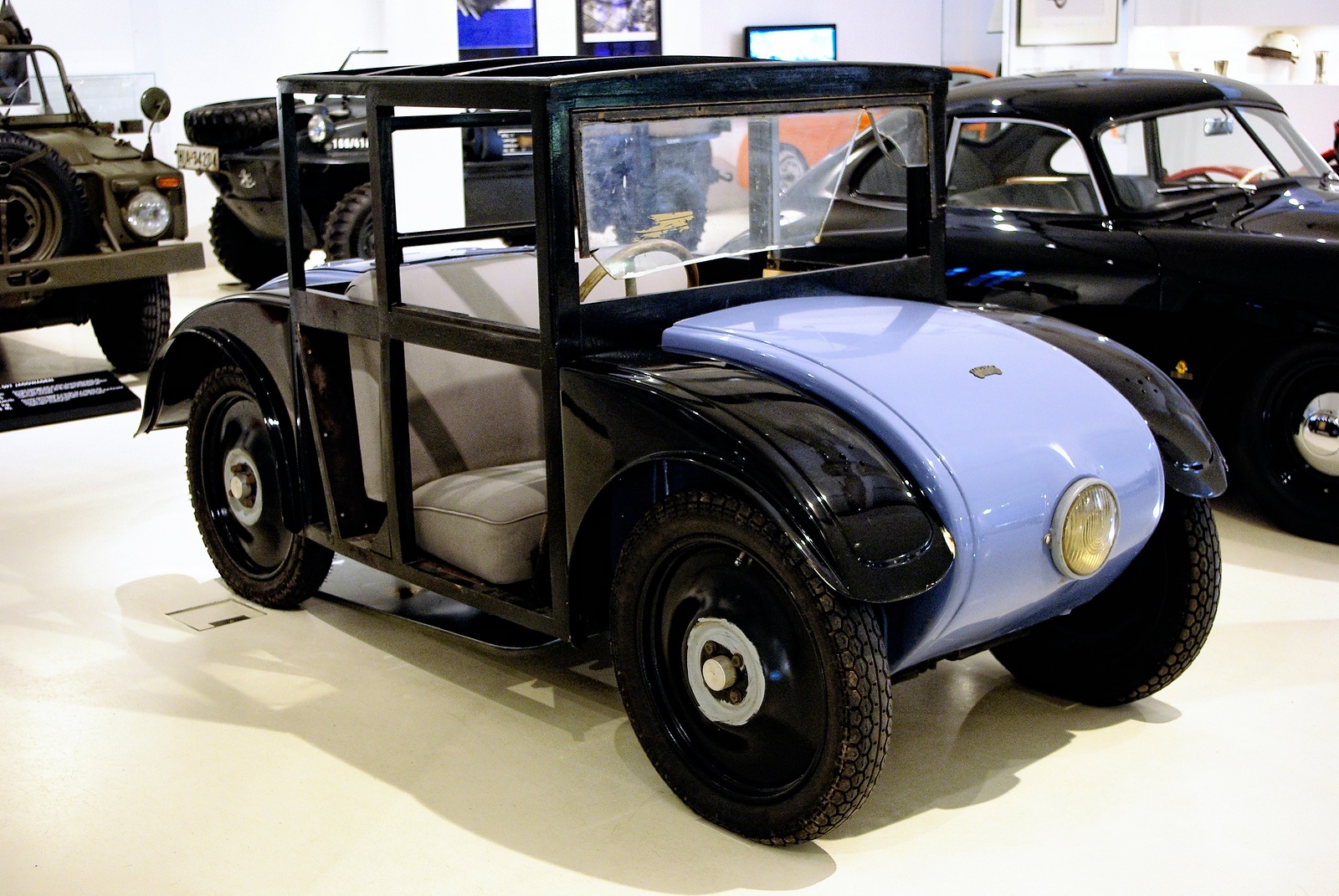
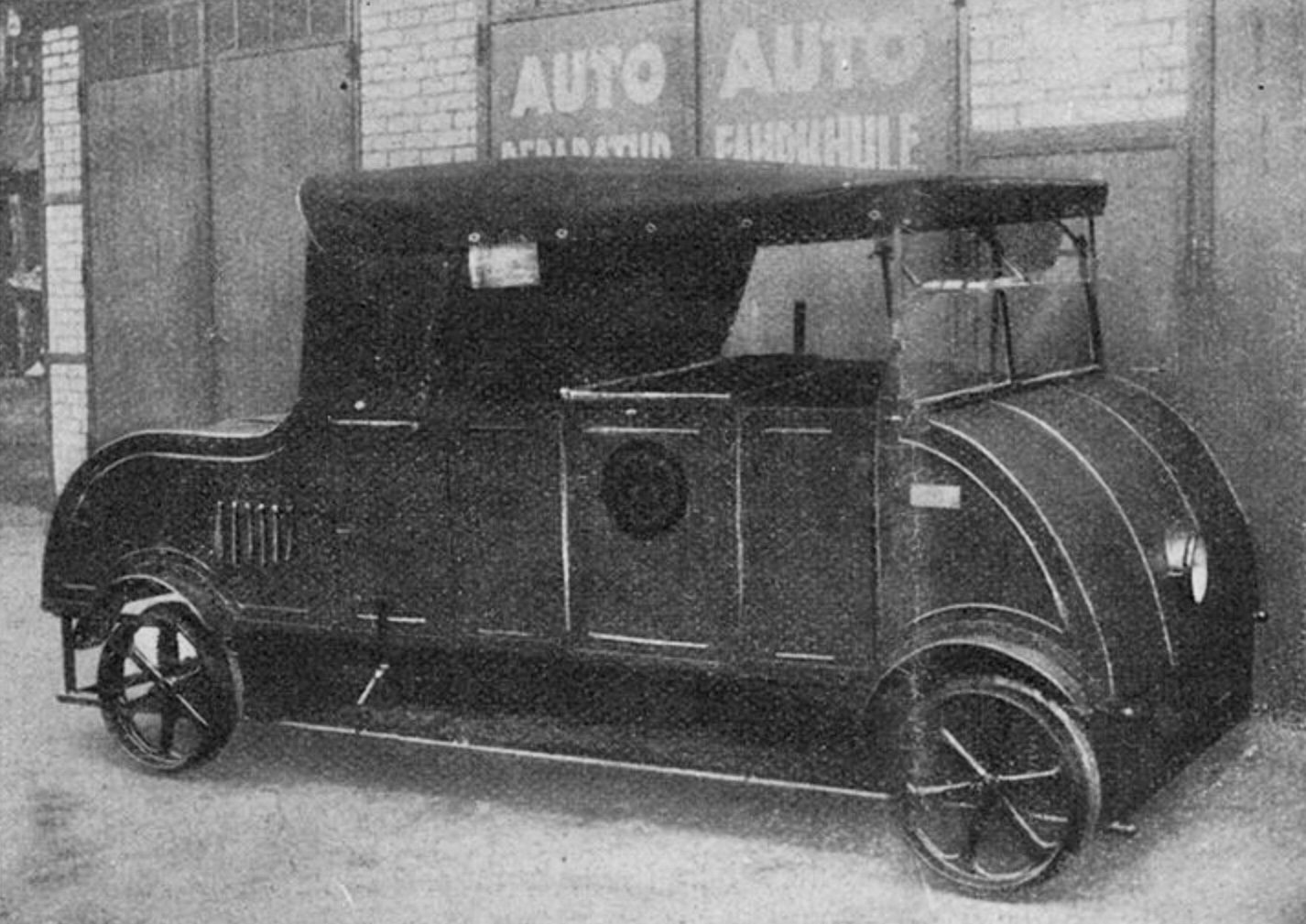
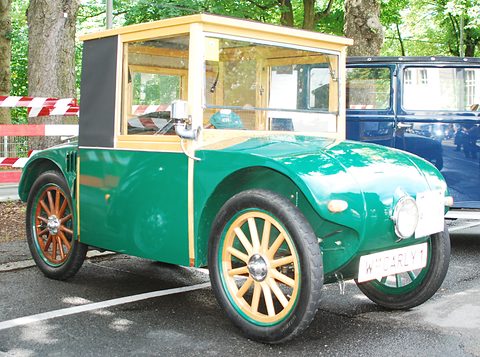
Their car began from the seat. To make it wide enough for two people, the designers left off the running boards and the separate wings, and by putting the engine at the back they freed the front for legs.source 1source 2source 6 What was left was a slab-sided envelope of a body, and the shape gave the car its nickname: the Kommissbrot, the square loaf of army bread, from Kommiss, soldiers’ slang for the army. Auto Bild says the press meant it mockingly; English Wikipedia calls it affectionate.source 1source 2source 6source 5 German Wikipedia claims it as the first car with a full-width body of the kind Germans call a Ponton; English Wikipedia says one of the first.source 2source 6

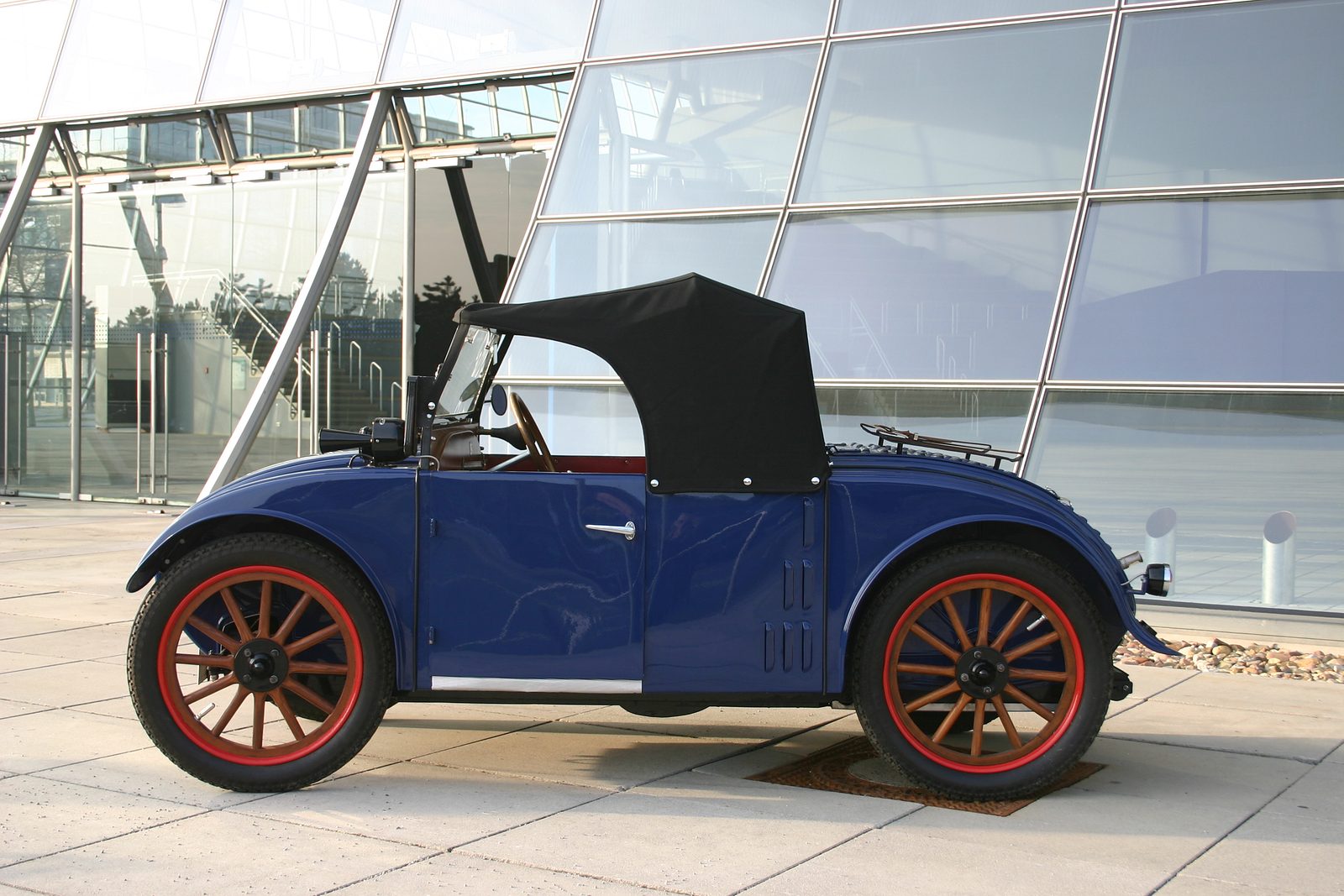
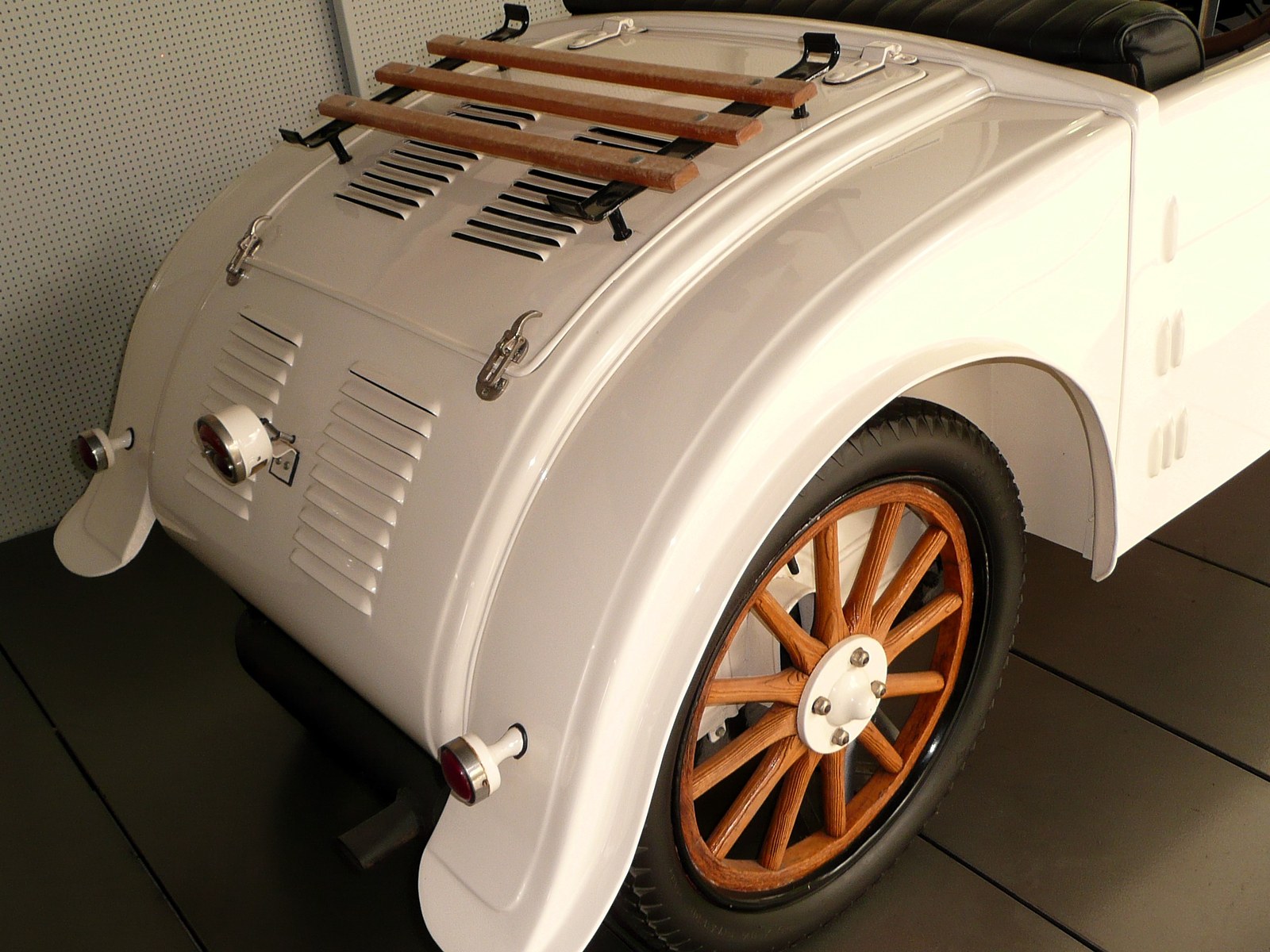
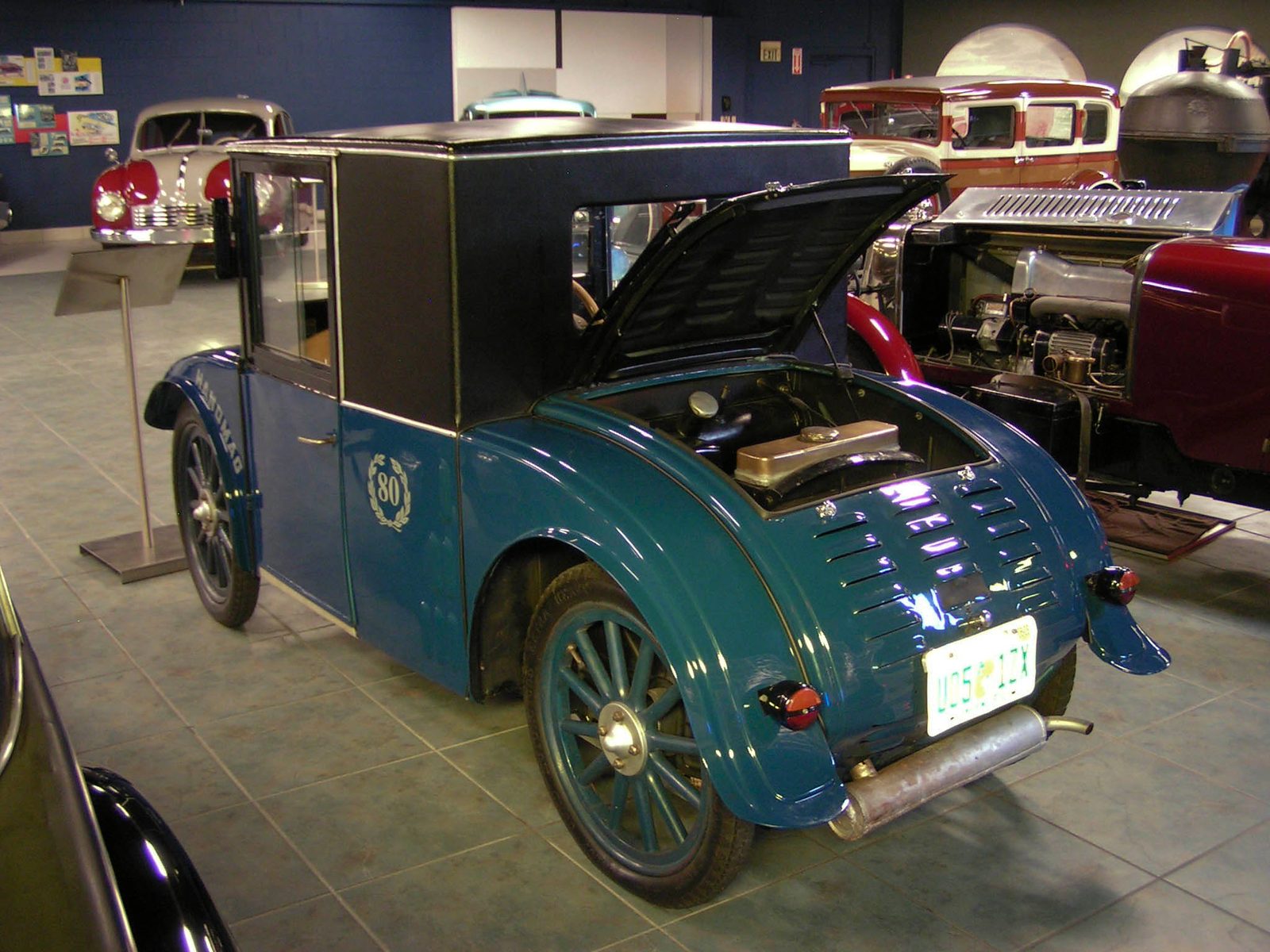
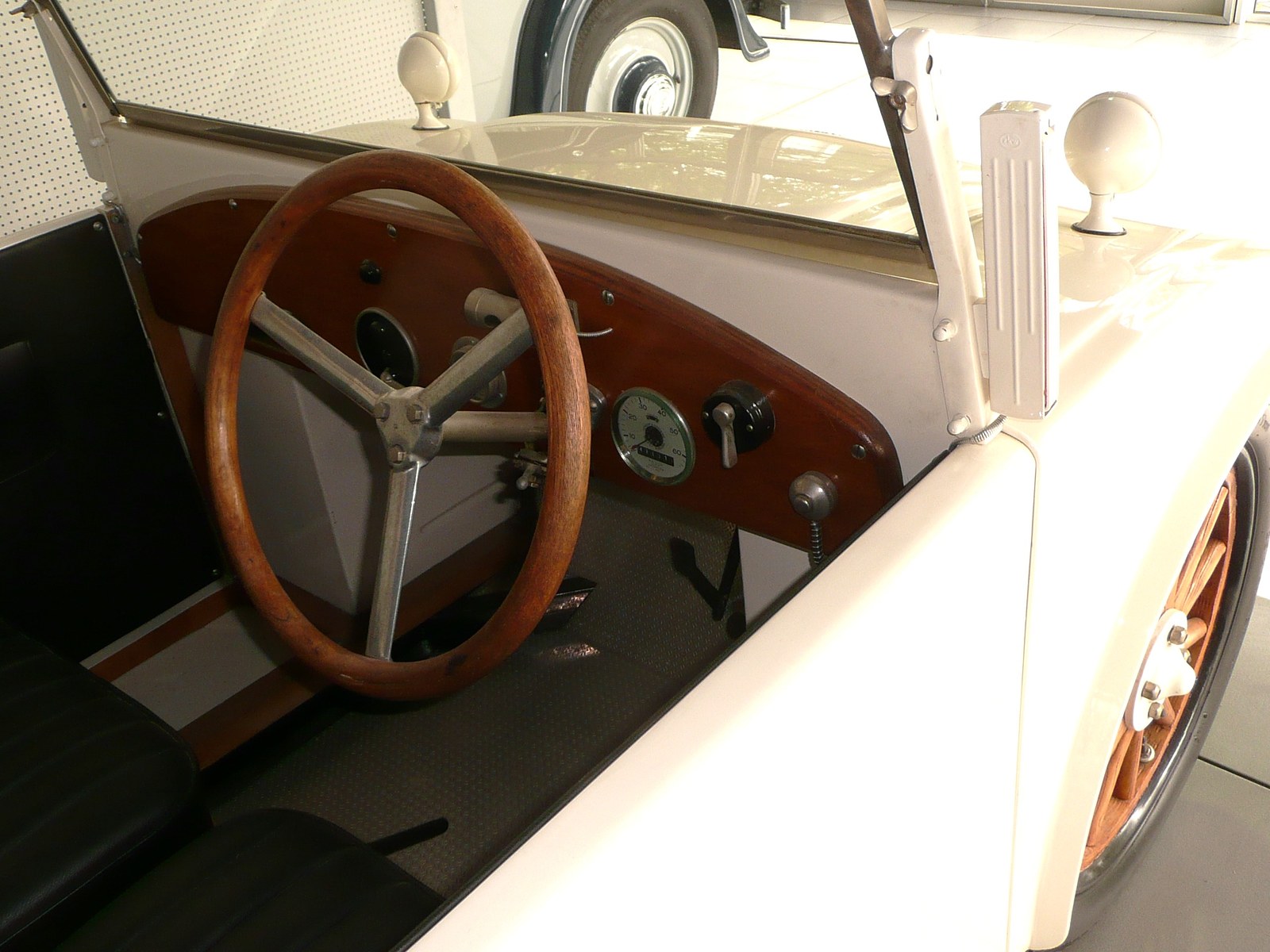
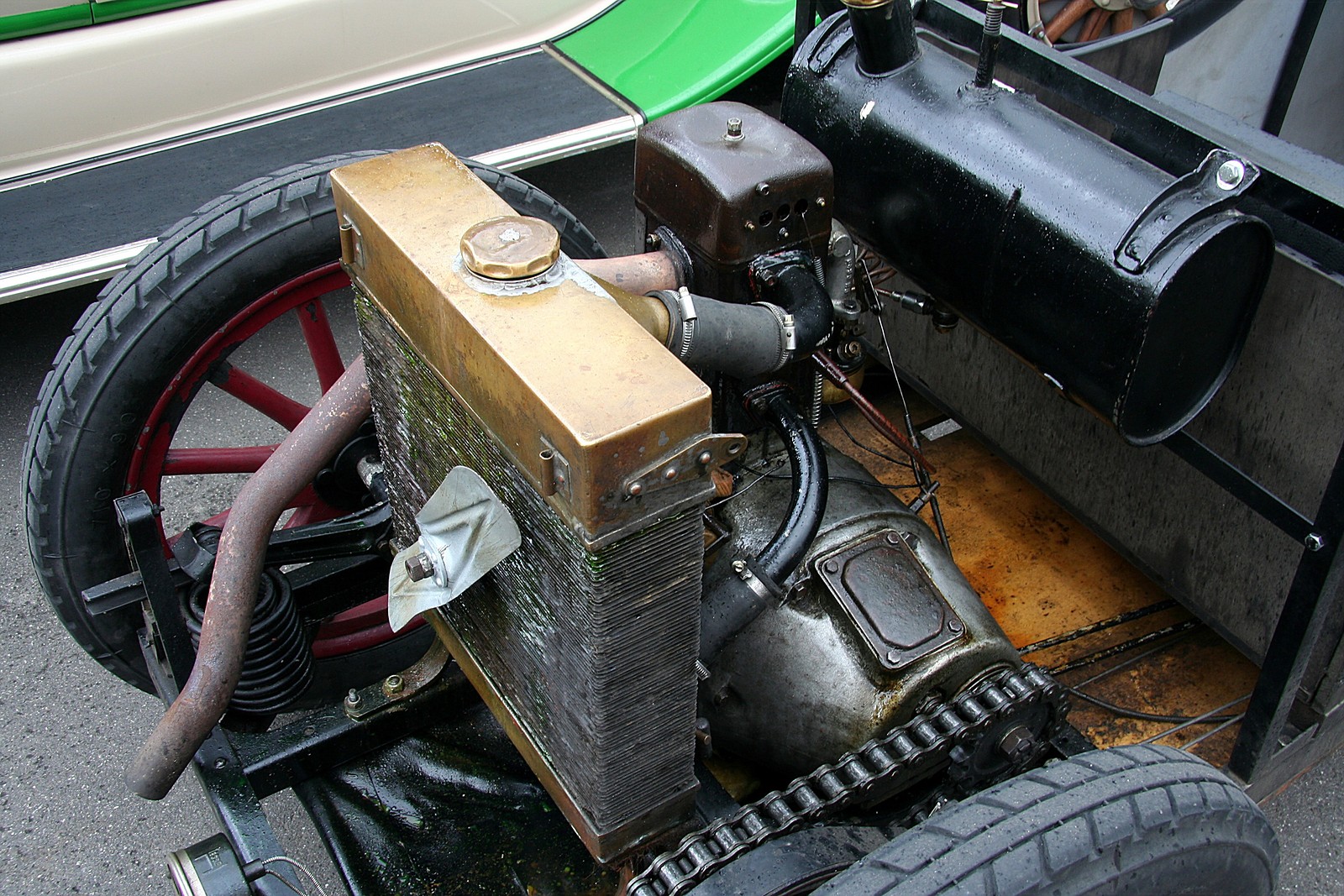
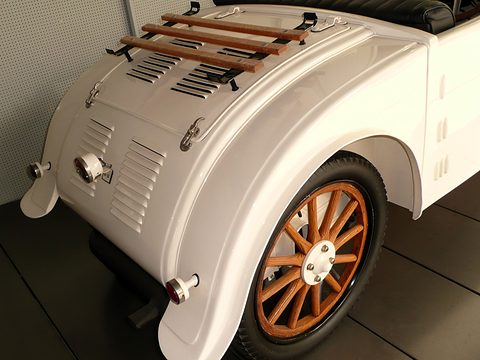
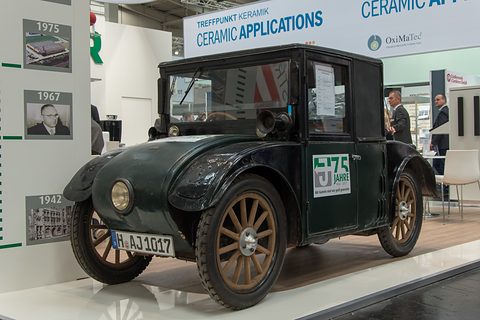
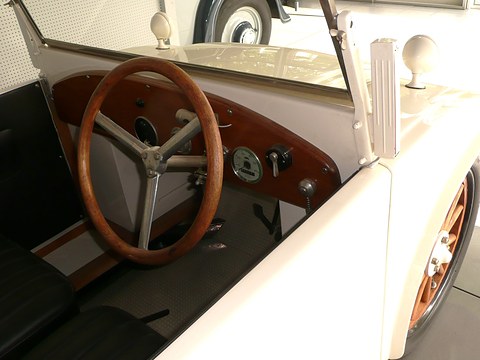
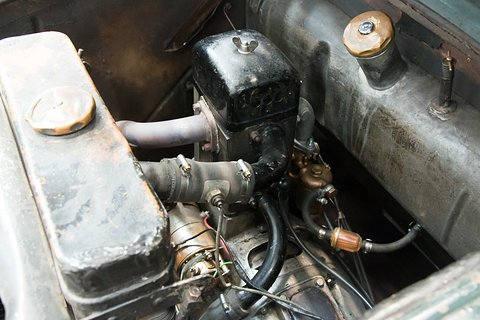
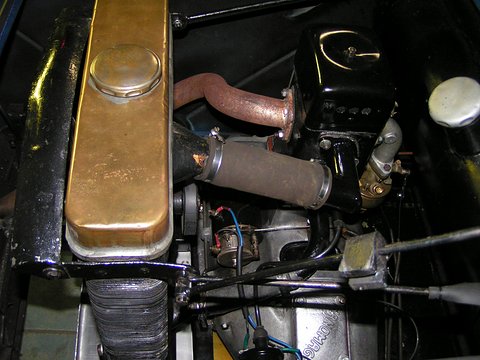
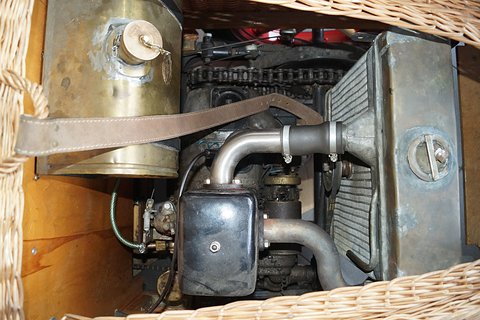
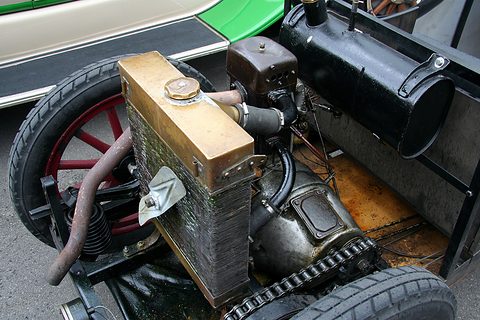
There was one door, on the left, for the sake of a stiff body, and the driver sat on the right. There was one headlamp, in the middle of the nose; two were not compulsory in Germany until 1931.source 2 The engine was a water-cooled single of 502 cc with overhead valves, giving 10 PS at 2,500 rpm, and it sat across the car just ahead of the rear axle.source 2source 5 English Wikipedia counts that as a rear-mid engine, and Auto Bild calls the car the first mid-engined car built in series, a claim only it makes.source 6source 5 The name 2/10 PS meant 2 taxable horsepower and 10 real ones.source 6 A chain took the drive to the rear axle, which was solid and had no differential, and a single drum on that axle did all the braking: shoes inside it for the pedal, a band outside it for the handbrake.source 2source 6 The front axle hung on two transverse leaf springs, one above the other.source 2
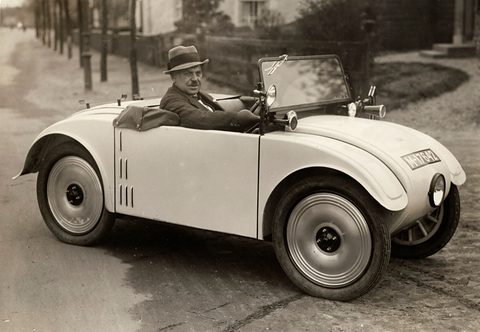
A man in a hat sits in a small pale open two-seater with a single round headlamp in its rounded nose.
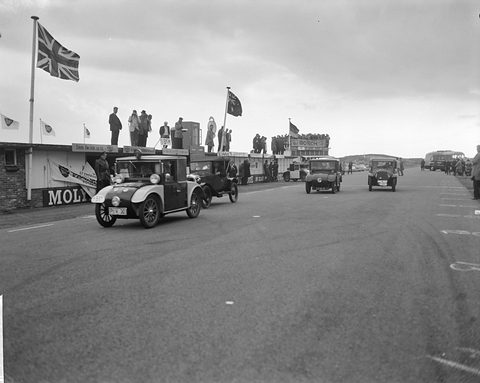
Plate I · 1928 S. Keestra, Hanomag’s Dutch importer, at the wheel of a 2/10 PS Cabriolet in Apeldoorn in 1928: the full-width body and the one headlamp.Photo: Spaarnestad Photo, Public domain, via Wikimedia Commons

On the line

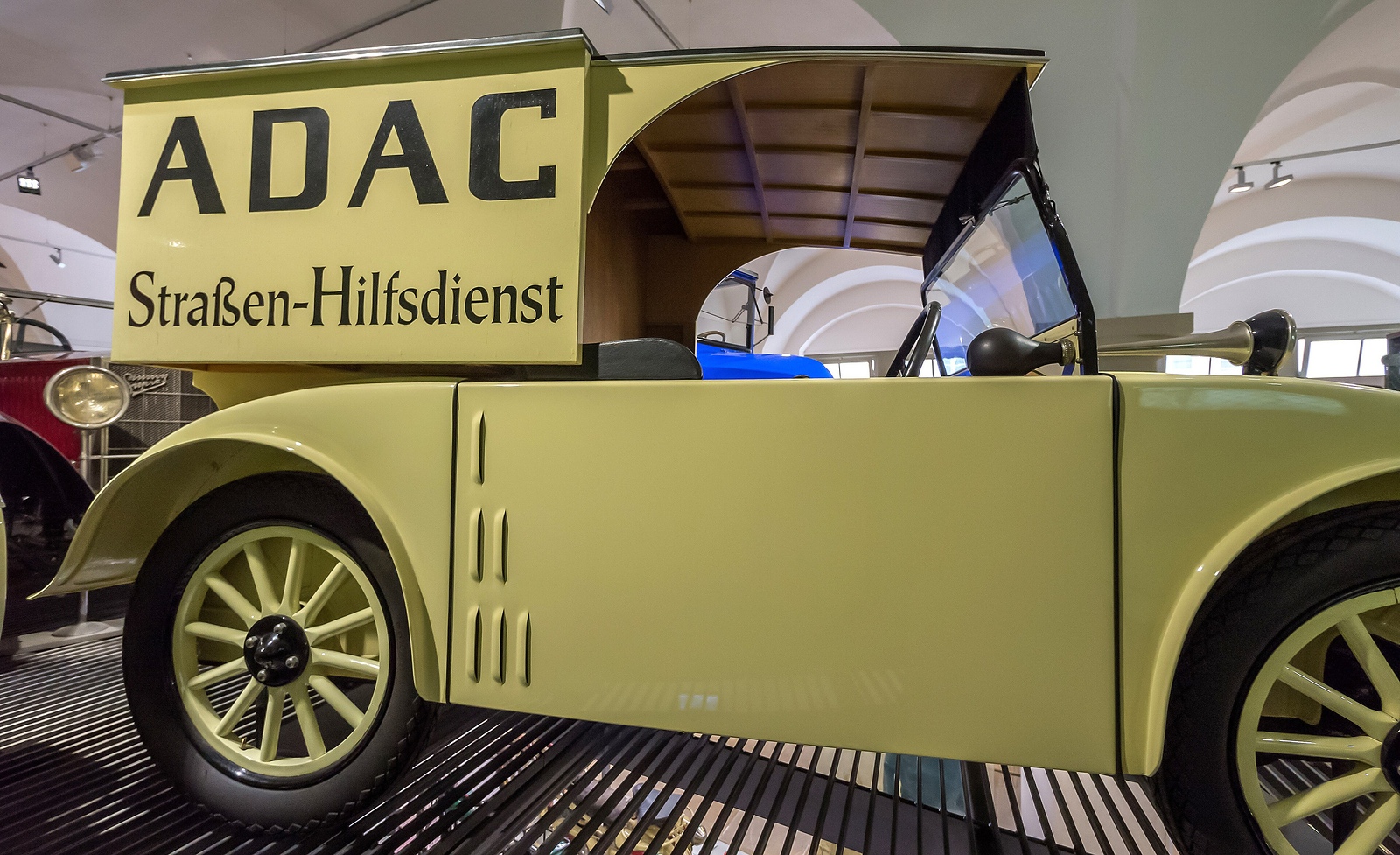
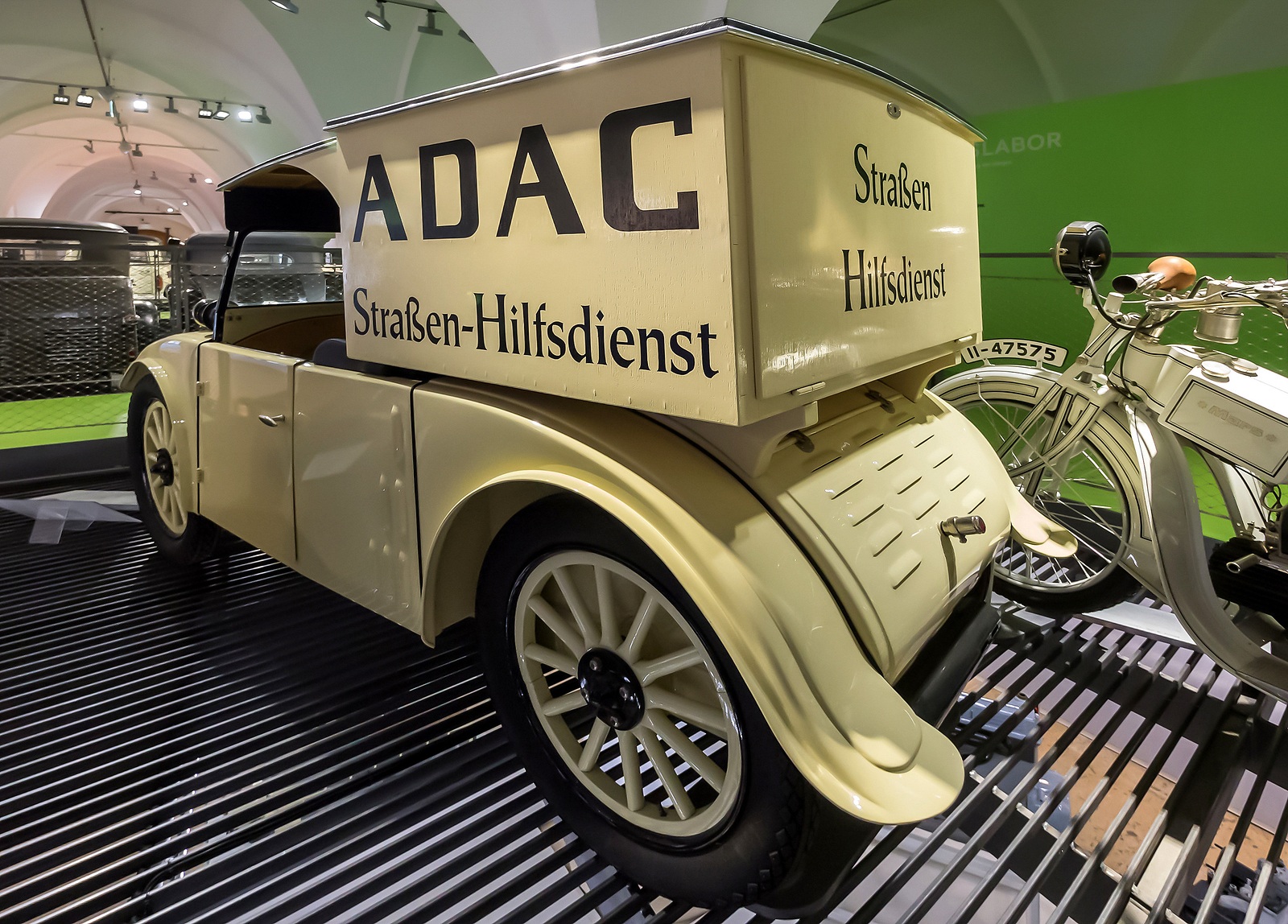
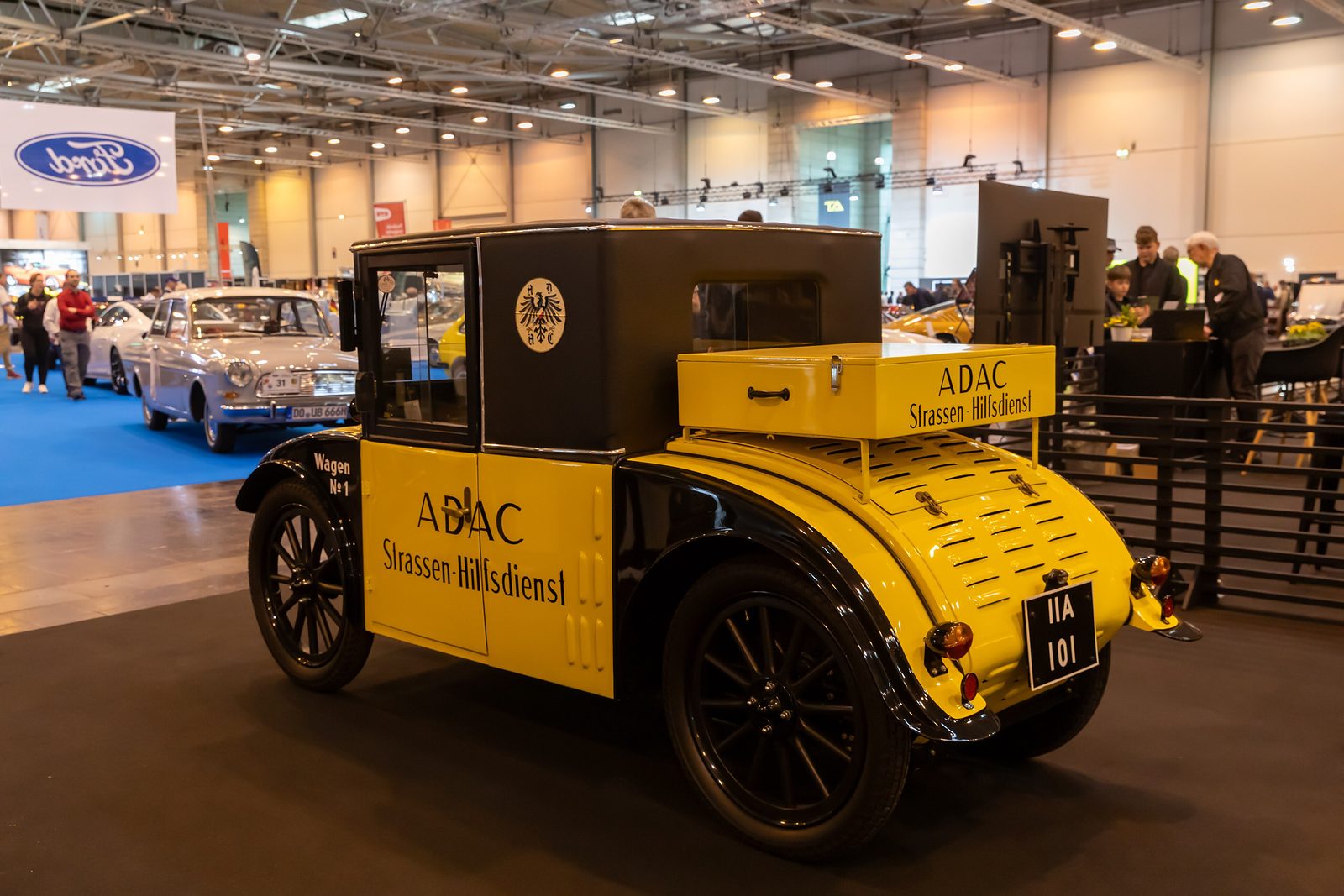
The car went on sale in 1924, and demand was strong enough that from 1925 Hanomag built it on a moving assembly line. It was the second German small car built that way, after the Opel 4 PS Laubfrosch of 1924.source 2 There were four bodies, all two-seaters: the Limousine, the Roadster, the Cabriolet and the Landaulet. Auto Bild adds a sports model, a delivery van and a flatbed.source 2source 5 Prices are given as just under 2,000 to 2,500 Reichsmark by body, from 2,000 RM, and 2,800 RM, none of them dated.source 1source 2source 5

It was not a refined car. The big single shook so much at idle that the whole car hopped. Top speed was about 60 km/h (37 mph), or 40 mph by the Lane Motor Museum’s figure.source 1source 2source 5 What it did well was save fuel: at 4.0 litres per 100 km (about 70 mpg), Horst-Dieter Görg calls it the most economical mass-produced car of the years between the wars, and the subtitle of his book on it calls it Germany’s first people’s car.source 2source 6 About 16,000 had been sold by 1927, by Auto Bild’s count.source 5

Racing at the new Nürburgring

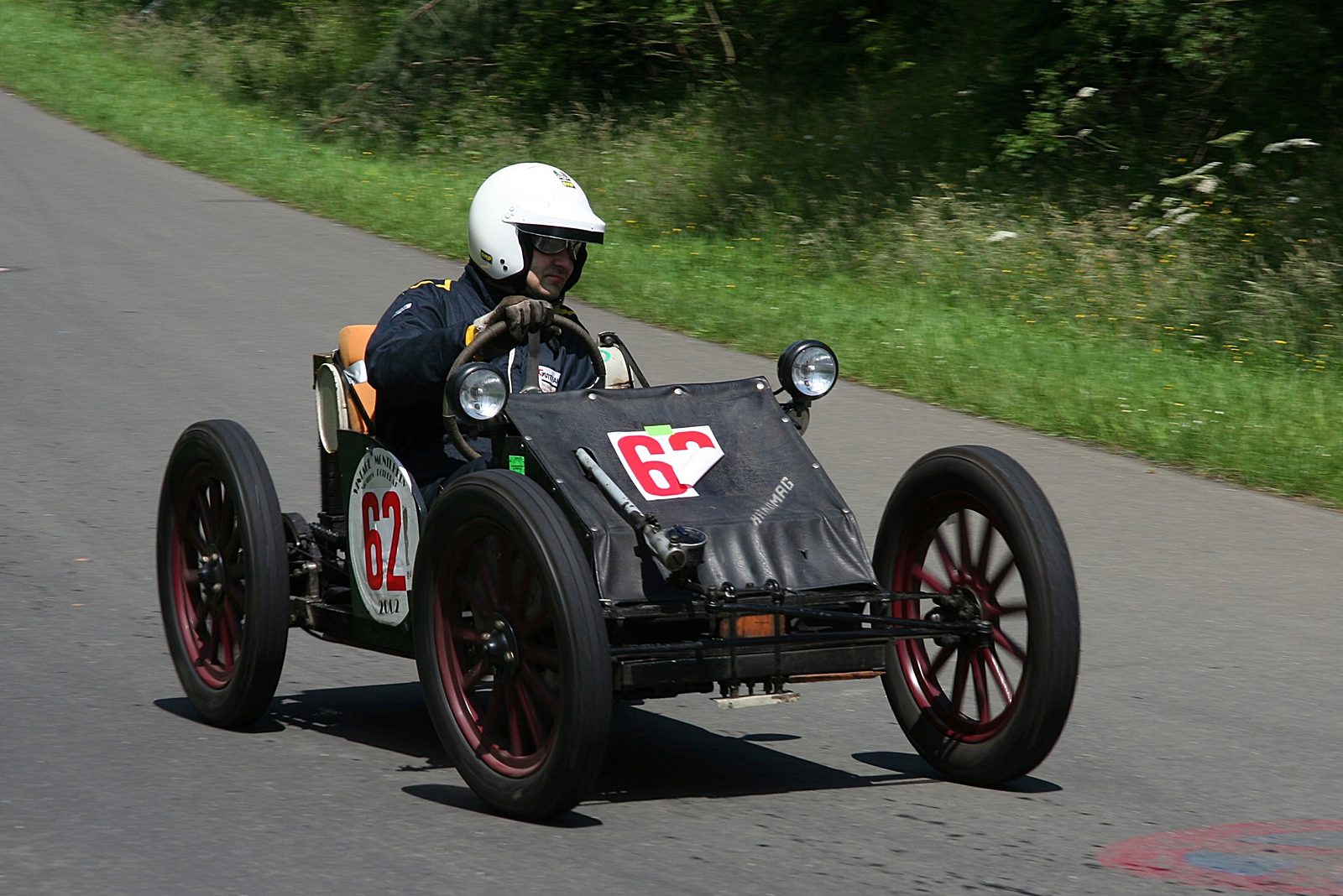
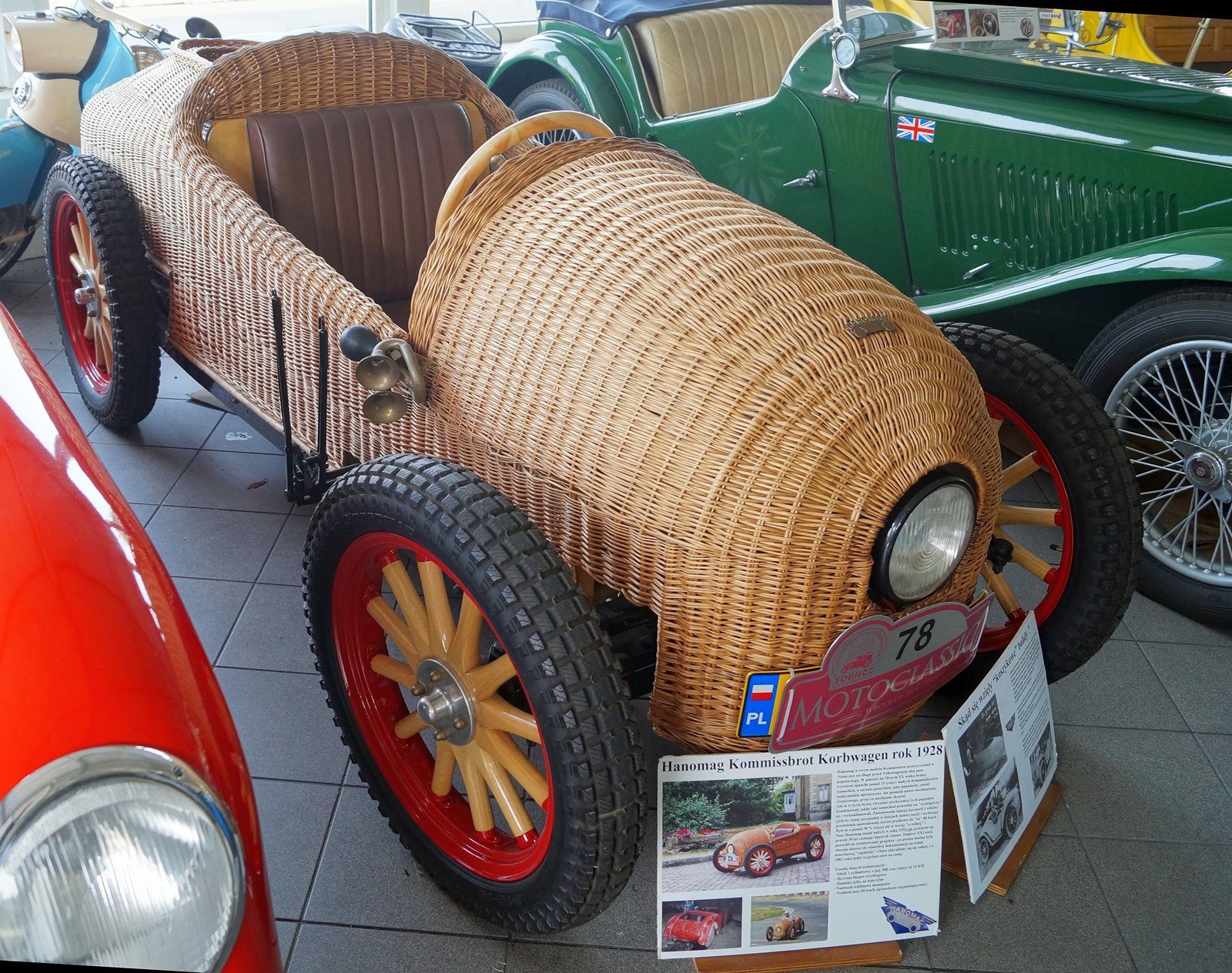
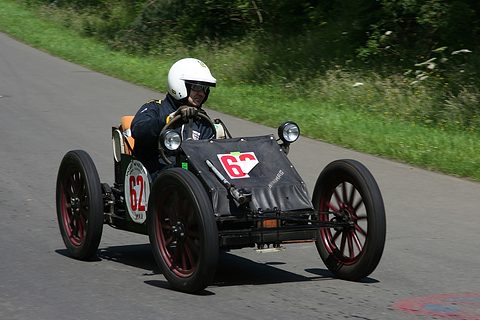
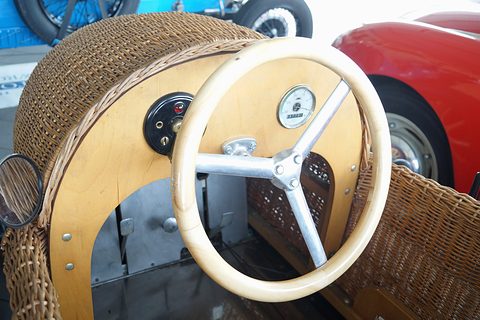
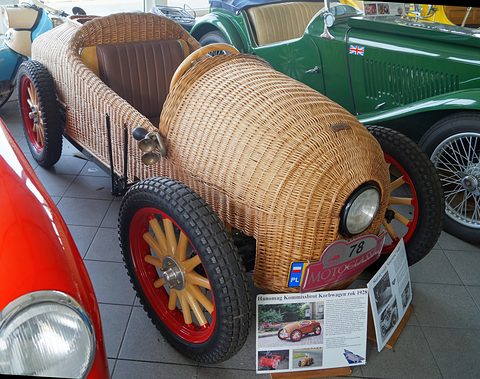
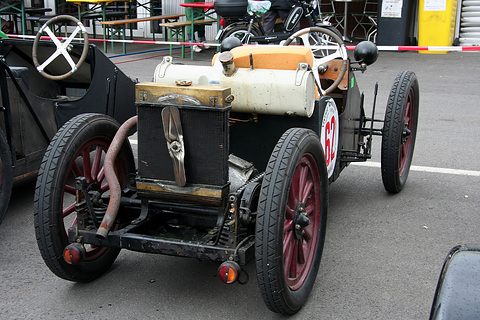
Butenuth drove the car in races and long-distance trials to prove it (more in racing and rallying). In 1927 he won the racing class up to 500 cc at the Feldberg hill climb in the Taunus.source 4 On 19 June 1927, at the opening meeting of the Nürburgring, three Hanomags ran in the class up to 750 cc, driven by Butenuth, Wilhelm Höpfner and Karl Wery. They were stripped for racing, with bare wheels and only a cowl over the nose.source 2source 7 Höpfner crashed on the fourth lap and Wery retired after two.source 2source 7 Butenuth spun soon after the start, broke a rear wheel and ended in a ditch. He took 15 minutes to reach the pits for a new wheel, rejoined about 20 minutes down and, with a bent front axle, drove on to the finish: 12 laps, 340.8 km, in 5 h 36 min 19.4 s.source 2source 7 That is an average of 60.51 km/h by the racing historians’ arithmetic, or 60.8 by German Wikipedia’s, and the racing historians count him third in his group.source 2source 7 A racer with a wicker body, the Korbwagen, is dated to about 1928.source 2source 6

Outsold

The design answered the small-car problem, but buyers wanted something more like a proper car. The Dixi 3/15, the Austin Seven built under licence at Eisenach, and the Opel Laubfrosch sold better.source 2source 6 The Lane museum says the Austin, as the Dixi, came to Germany with four seats at a lower price than the Hanomag; English Wikipedia says the rivals were better in nearly every way and cost no more.source 1source 6 In 1928 Hanomag replaced the 2/10 PS with the conventional, front-engined 3/16 PS, and built 15,775 of the loaf in all.source 1source 2source 6 Hanomag went on making cars until 1951.source 2
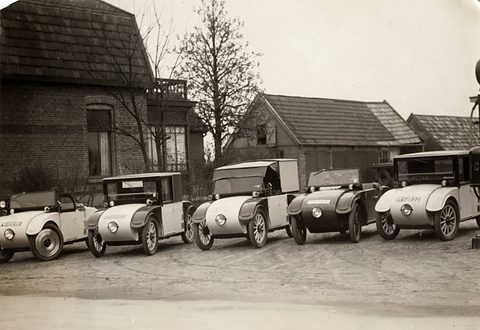
Five small rounded cars with single central headlamps parked in a row before brick houses on a sandy yard.
Plate II · 1928 Hanomag 2/10 PS cabriolets, saloons and a van lined up at the yard of the Dutch importer Keestra, Apeldoorn, 1928.Photo: Spaarnestad Photo, Public domain, via Wikimedia Commons

The designers went their ways. Böhler later built a single-seater of his own, the Böhler Monoplace, at Riedlingen, a prototype in 1932 and a few after the war at 400 RM, and died at Fellbach on 11 August 1954.source 3 Butenuth became Hanomag’s technical director in the late 1920s, ran its agency for Berlin and Brandenburg from 1933, founded the Econom lorry firm after the war, and died in Berlin on 20 August 1990.source 4
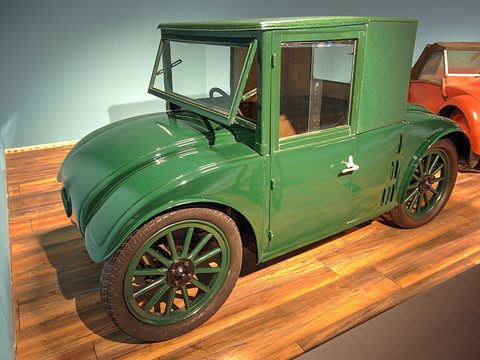
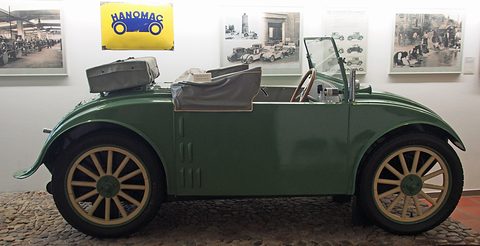
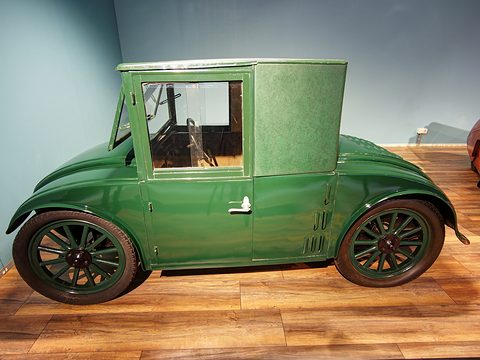
A green saloon with an open windscreen, rounded wings and wooden wheels on a wooden floor.
A 1926 saloon at the Louwman Museum in The Hague: the slab sides that made it the army loaf.Photo: Alf van Beem, Public domain, via Wikimedia Commons
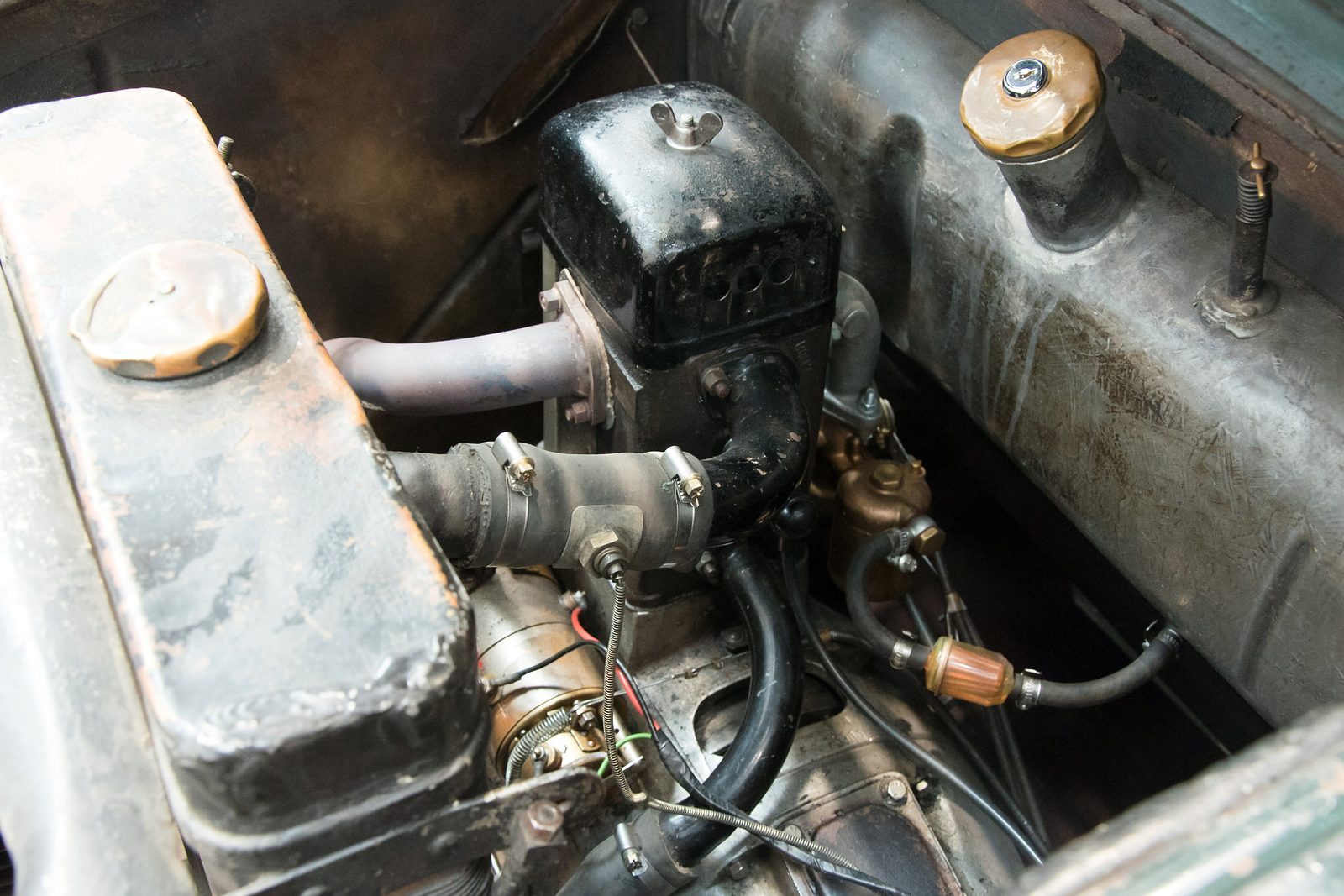
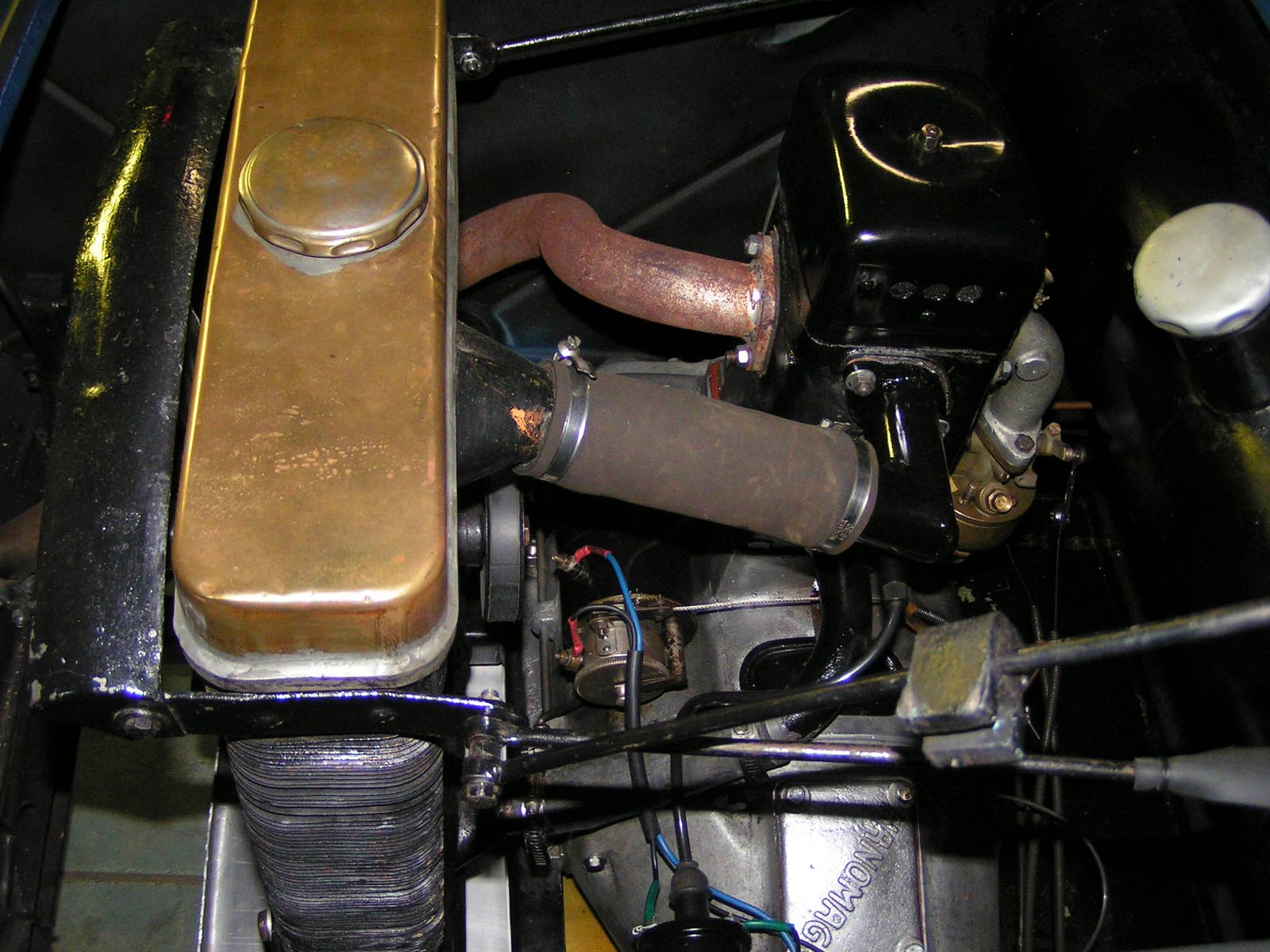
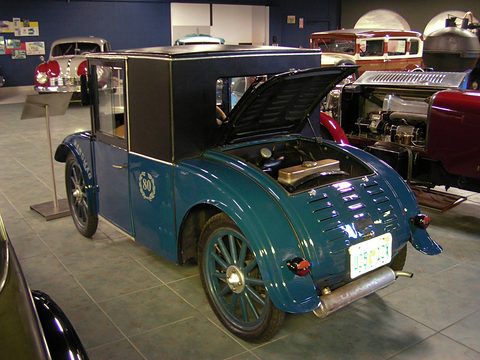
A louvred rear lid propped open over a small engine compartment with a single-cylinder engine and tank.
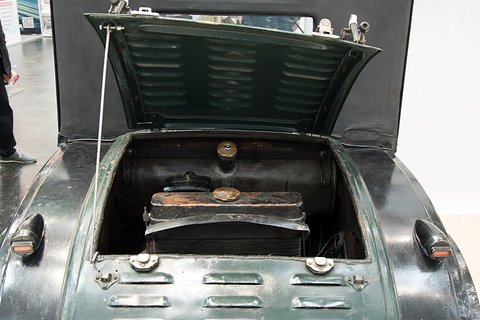
The engine lid raised at the back of a dark-green 1927 saloon at the Hannover Messe in 2017.Photo: Frank Schwichtenberg, CC BY-SA 4.0, via Wikimedia Commons

Pictures

More photographs, old and new

Variants

Bodies and racers

The 2/10 PS family
VariantYearsWhat differsHow many
Limousine (L2)1924/25–28The closed two-seat saloonIn the total
Cabriolet (Cb2)1924/25–28A folding hoodIn the total
Roadster (R2)1924/25–28The open two-seaterIn the total
Landaulet (Ld2)1924/25–28A landaulet roofIn the total
Sports, van and flatbed1920sListed by Auto BildNot found
Racing car1927Bare wheels and only a cowl over the nose; about 90 km/hAt least 3
Korbwagenc.1928A racer with a wicker bodyNot found

Specification

The 2/10 PS, all bodies

Engine and drive

Engine and drive
EngineSingle cylinder, four-stroke, upright, water-cooled, overhead valves; set crosswise ahead of the rear axlesource 2source 5
Capacity502 cc, 80 × 100 mmsource 2source 5499 cc by the tax formula
Power10 PS (7.4 kW) at 2,500 rpmsource 2source 5
Compression6:1source 2
GearboxThree speeds and reverse, gate change, no synchromeshsource 2source 5
Final driveChain to a solid rear axle, no differentialsource 2source 6

Body and chassis

Body and chassis
BodyFull width, with no running boards or separate wings; one door, on the left; right-hand drivesource 2source 6
Front suspensionTwo transverse leaf springs, one above the othersource 2
Rear suspensionSolid axle on trailing arms with coil springs, damped by pads rubbing on the framesource 2
BrakesOne drum on the rear axle: internal shoes for the pedal, an external band for the handbrakesource 2
Electrics6 volt; one headlamp, in the middlesource 2
Tyres27 × 3.5 insource 2

Dimensions

Dimensions
Length2,780 mm (9 ft 1 in)source 2source 6source 5
Width1,180 mm (3 ft 10 in)source 2source 61,118 mm in Auto Bildsource 5
Height1,600 mm (5 ft 3 in)source 2source 61,500 mm in Auto Bild
Wheelbase1,920 mm (6 ft 4 in)source 2source 6
Track1,040 mm front, 910 mm rearsource 2
Weight370 kg (816 lb)source 6source 5370–430 kg by body; 570–630 kg loadedsource 2

Performance and running

Performance and running
Top speed60 km/h (37 mph)source 2source 540 mph (64 km/h) by the Lane museumsource 1
Consumption4.0 litres per 100 km (about 70 mpg)source 2source 6
Price newJust under 2,000 to 2,500 RM by bodysource 2From 2,000 RM in Auto Bild; 2,800 RM, about US$660, by the Lane museumsource 5source 1

How many were built?

Every figure, with its source

15,775 built15,775, given by the Lane Motor Museum and by German Wikipedia, which draws on Görg’s monograph of 2005. A figure that exact suggests a count from the factory. The round figures agree with it.

  1. about 16,000sold by 1927One source

    Auto Bild Klassik, 2010source 5

  2. 15,7752/10 PS of all bodiesTwo sources agree

    The Lane Motor Museum; German Wikipedia, after Görgsource 1source 2

  3. 15,000sold in the 1920sOne source

    German Wikipedia’s life of Hellmuth Butenuthsource 4

  • Two sources agreetwo good sources give the figure
  • One sourcea good source, alone
  • Unconfirmeda lead only, not yet checked

Famous for

Three points

  1. The army loaf

    Its slab sides earned it the name of the German soldier’s square loaf, the Kommissbrot.source 1source 2source 6

  2. One of everything

    One cylinder, one headlamp in the middle of the nose, one door, and no running boards.source 2source 5

  3. Four litres

    It used 4.0 litres per 100 km, the thriftiest German car of its day by Görg’s account.source 2source 6

Racing

The opening of the Nürburgring

Hanomag sent three stripped 2/10 PS cars to the first meeting at the Nürburgring; one finished.

19 June 1927
three Hanomags started in the class up to 750 cc at the Nürburgring’s opening race; two retired.source 7
340.8 km
in 5 h 36 min 19.4 s, by Hellmuth Butenuth, after a spin, a broken wheel and a bent axle.source 2source 7
1927
Butenuth won the racing class up to 500 cc at the Feldberg hill climb.source 4
Survivors and collecting

Today

Auto Bild reckoned in 2010 that about 30 roadworthy cars survived, and put a complete, drivable car in fair condition at about €15,000 and the best at over €25,000.source 5 There is a 1926 car at the Lane Motor Museum in Nashville, and another at the PS.Speicher in Einbeck.source 1source 2 The Siegfried-Grösche-Stiftung at Alfeld has a Kommissbrot that the Grösche family owned from 1930 and gave to the foundation in 2001; it was back on the road in the late summer of 2016, and the foundation puts the little Hanomag in its logo.source 2 On film, the reporter Spike Holland, played by Eddi Arent, drives a white 2/10 PS Cabriolet in the West German Edgar Wallace thriller Der grüne Bogenschütze, The Green Archer (see microcars on screen).source 2 No club and no recent auction result has been found.

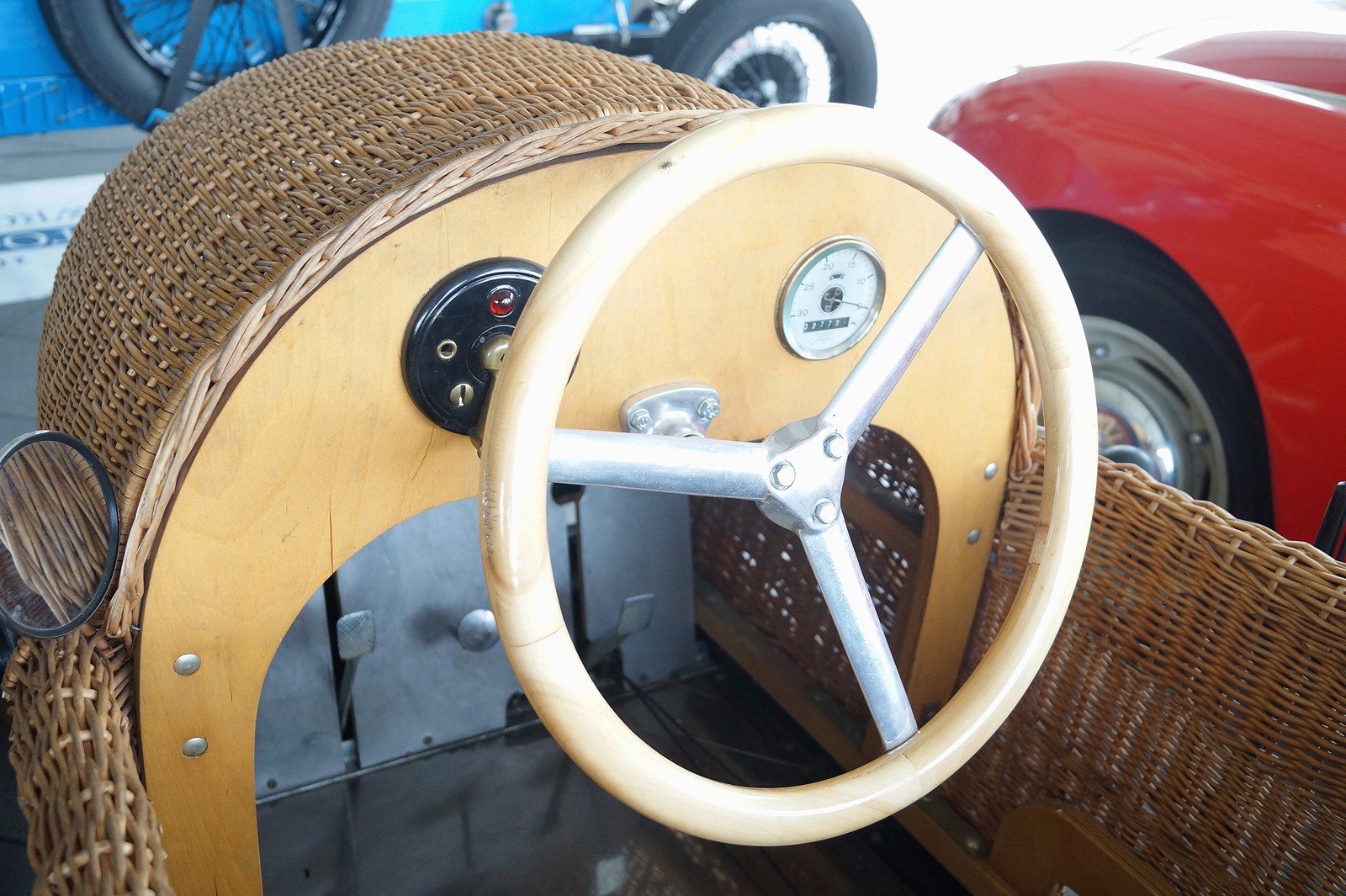
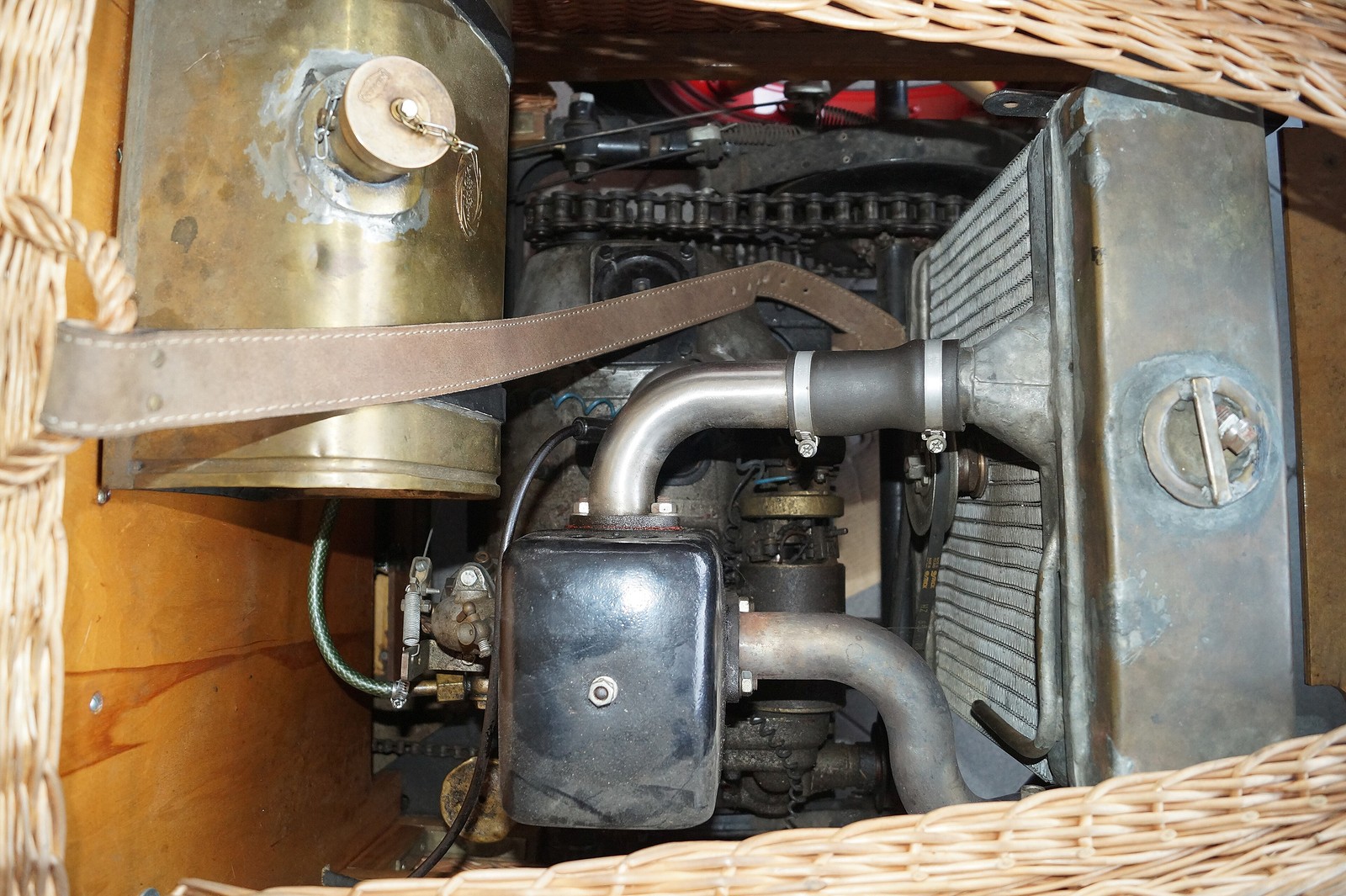
The racers have their survivors too. A wicker-bodied Korbwagen dated 1928, a car or a replica, is shown at the Automuzeum at Gostyń in Poland, and a replica is in Germany; a 2/10 PS in racing form, bare wheels and all, ran at the DAMC 05 Oldtimer Festival at the Nürburgring in 2007.source 2source 6 Hanover has not forgotten the car. It was part of the city’s exhibition 750 Jahre Verkehr in & um Hannover in 1990, and for its hundredth birthday the Hannoversche Allgemeine Zeitung called it “Eine Legende aus Linden”, a legend from Linden, in January 2024, and “Mythos aus Hannover” in July 2025.source 2

A stripped racing car with a radiator at the front, a long exhaust pipe, wooden wheels and race number 62.
A 2/10 PS in racing form, bare wheels and engine on show, at the Nürburgring in 2007.Photo: Lothar Spurzem, CC BY-SA 2.0 de, via Wikimedia Commons

Sources

Numbered as in the text

No period road test or contemporary press account was read; Görg’s monograph and the centenary articles of 2024–⁠25 were not seen. Sources are given as plain text; the links are on the Credits page.

  1. Lane Motor Museum, “Hanomag 2-10 PS – 1926”, collection page, read in full.
  2. German Wikipedia, Hanomag 2/10 PS, read in full. It cites the Hannoversche Allgemeine Zeitung of 15 January 2024; Auto Bild, 6 May 2010; Gebauer and Buck (1956); Horst-Dieter Görg, 80 Jahre Hanomag Kommißbrot: Deutschlands erster Volks-Wagen (2005); Behrndt and others, ADAC Eifelrennen (2009); and goldenera.fi.
  3. German Wikipedia, Fidelis Böhler, read in full.
  4. German Wikipedia, Hellmuth Butenuth, read in full.
  5. “Das Brot der frühen Jahre”, Auto Bild Klassik, 6 May 2010.
  6. English Wikipedia, Hanomag 2/10 PS, read in full. It cites Posthumus (1977), Görg (2005) and the Lane museum.
  7. Leif Snellman and Hans Etzrodt, “Nürburgring Eröffnungsrennen” (1927), The Golden Era of Grand Prix Racing.