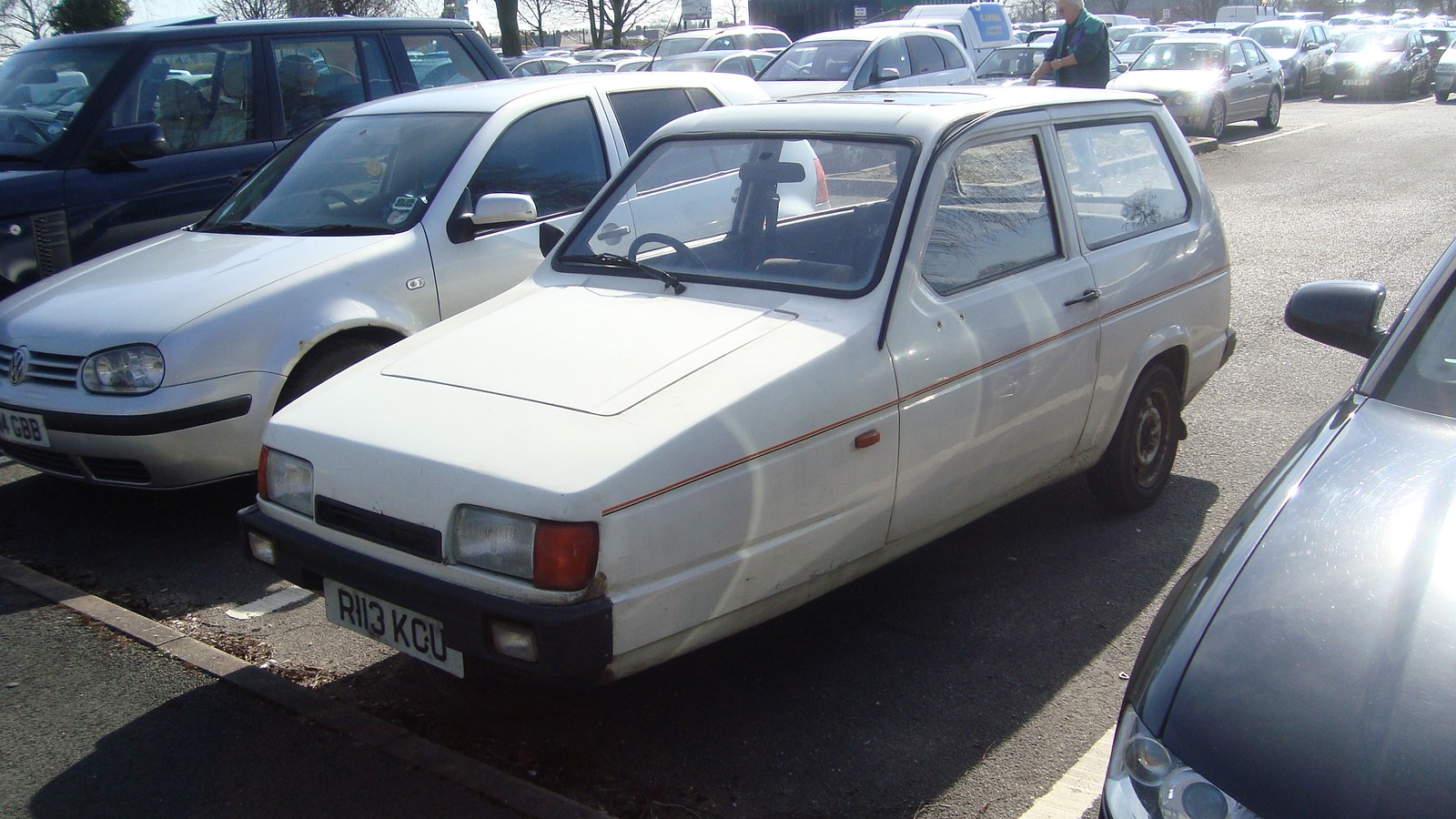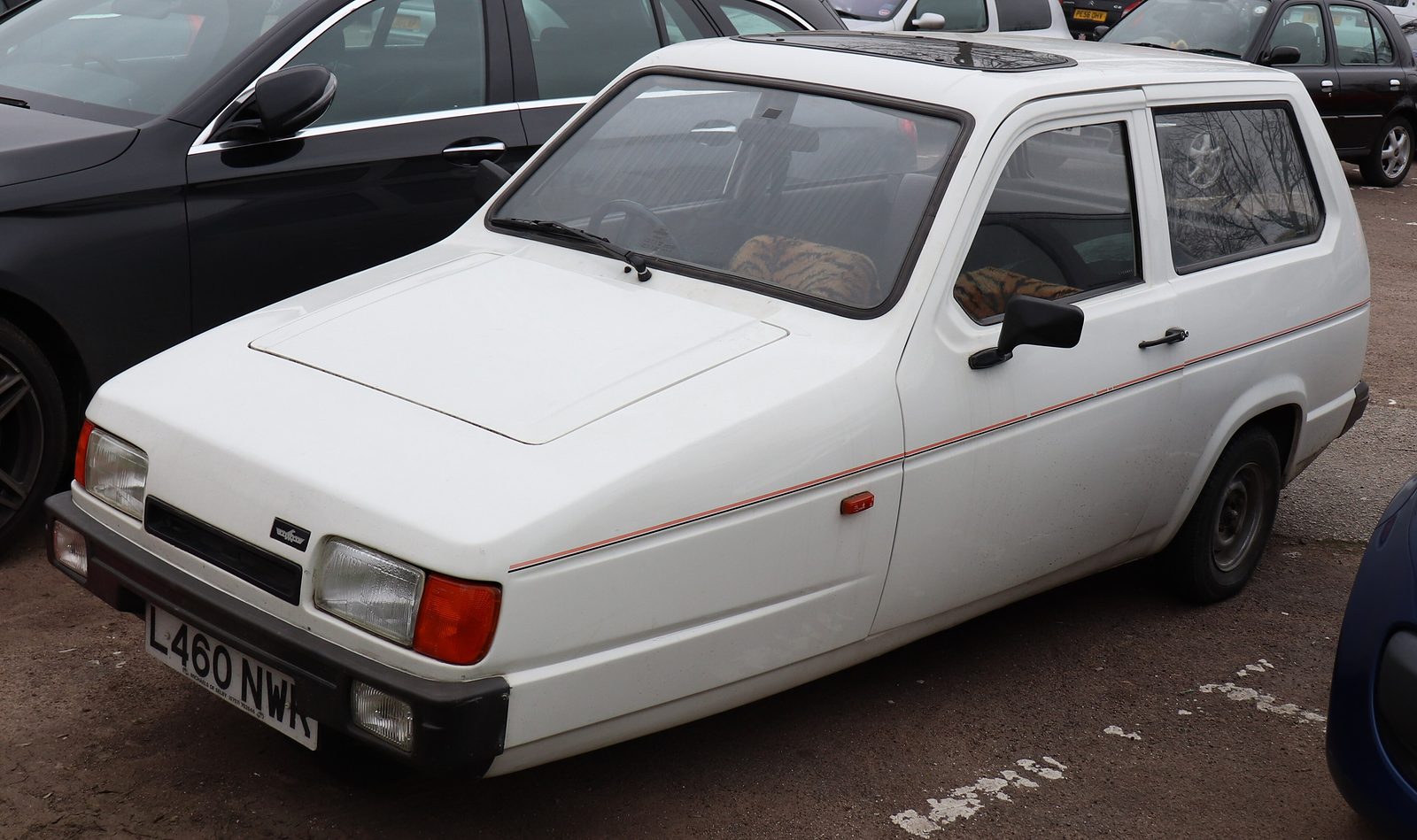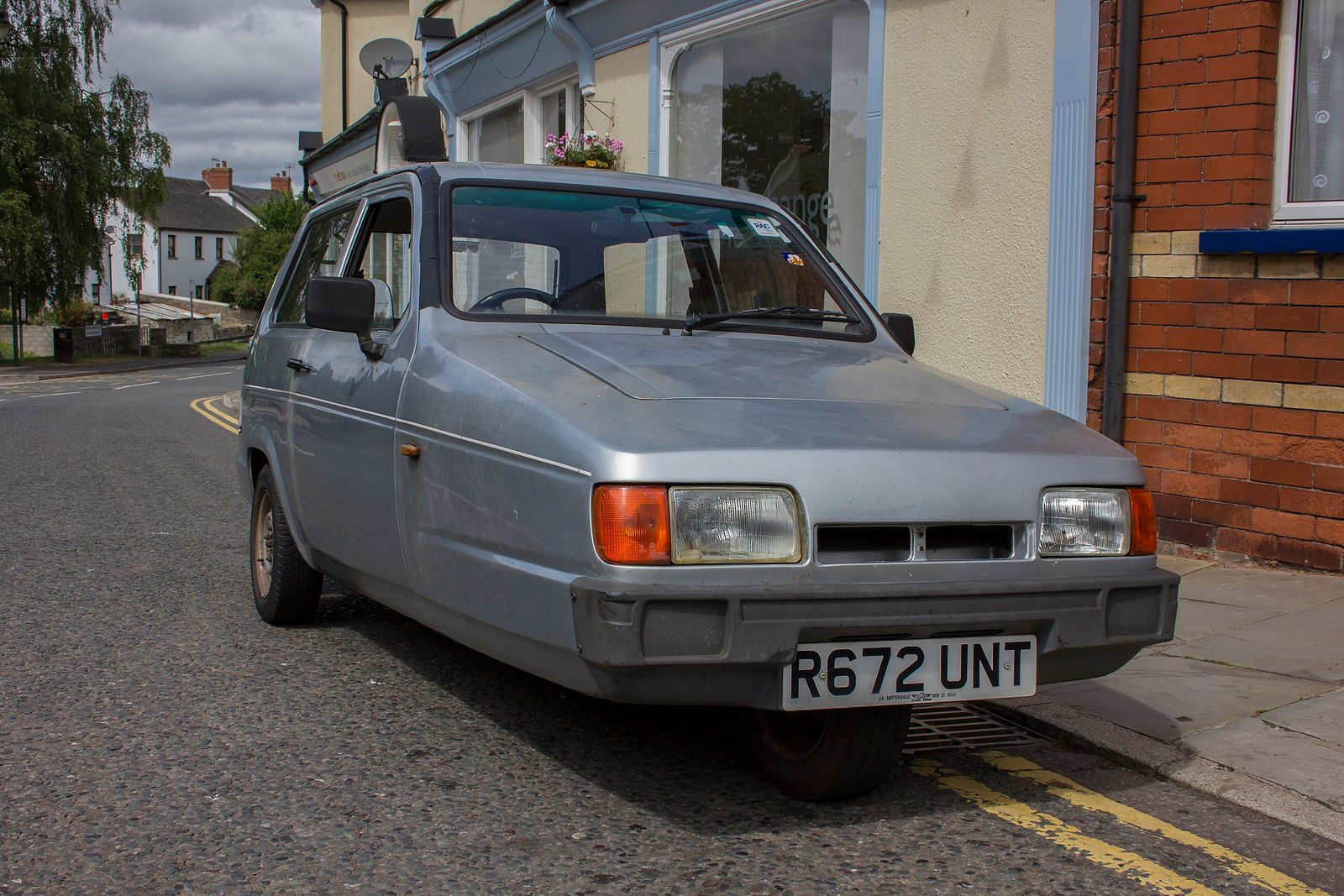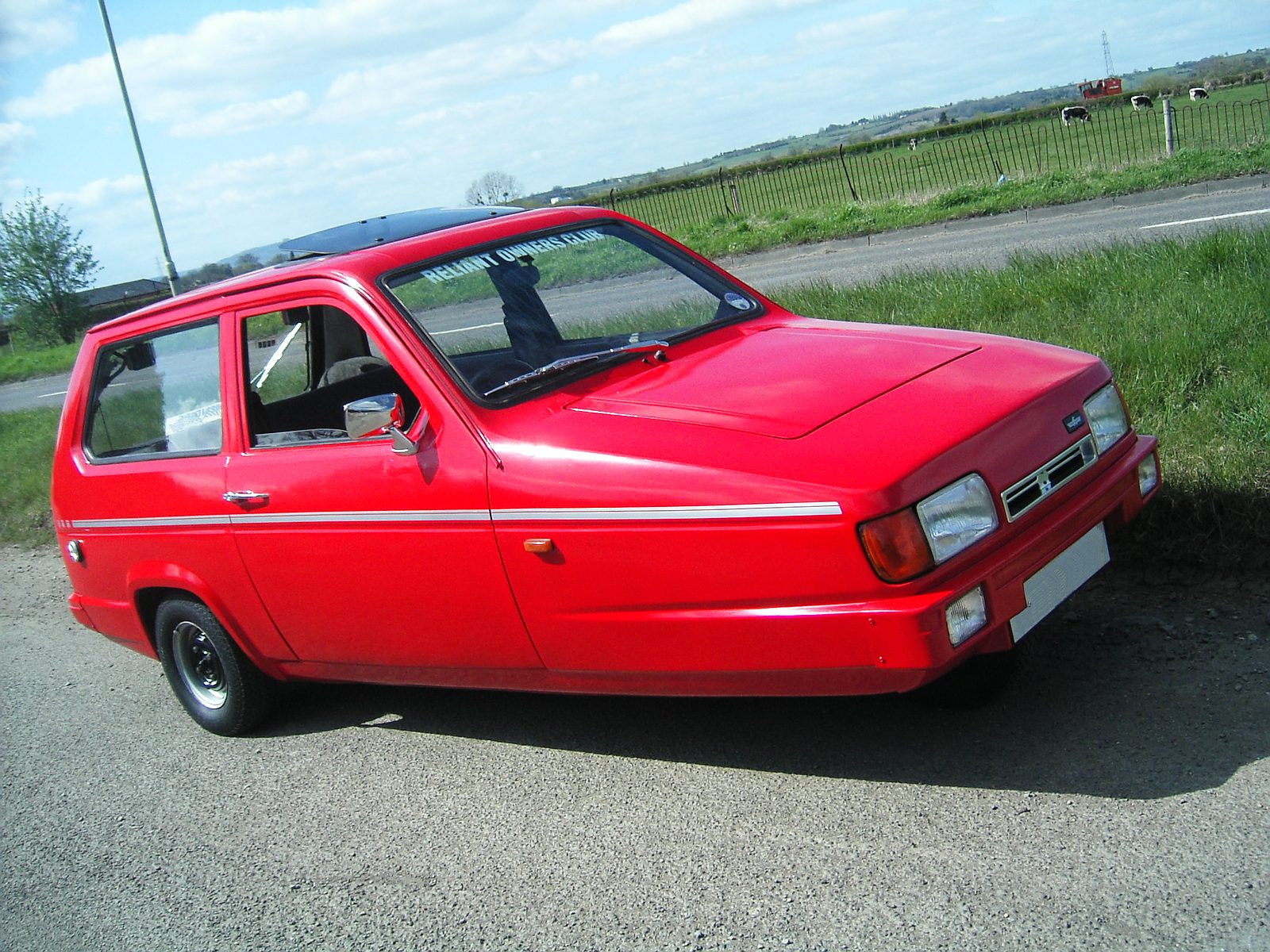
The story
History
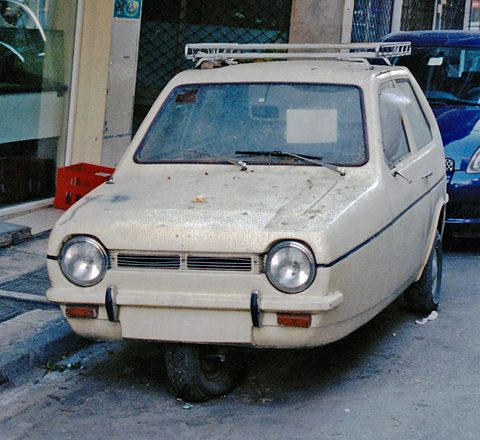
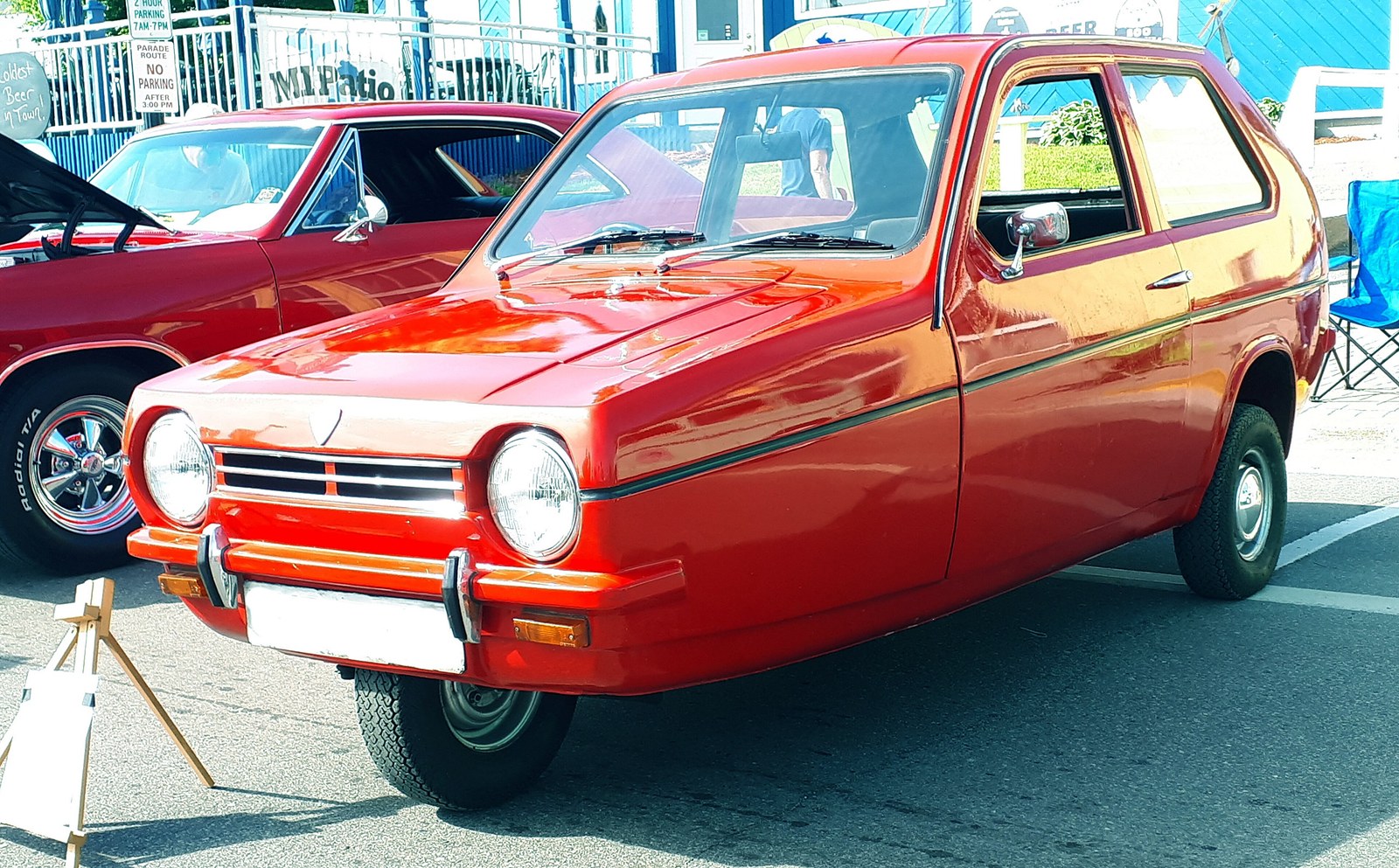
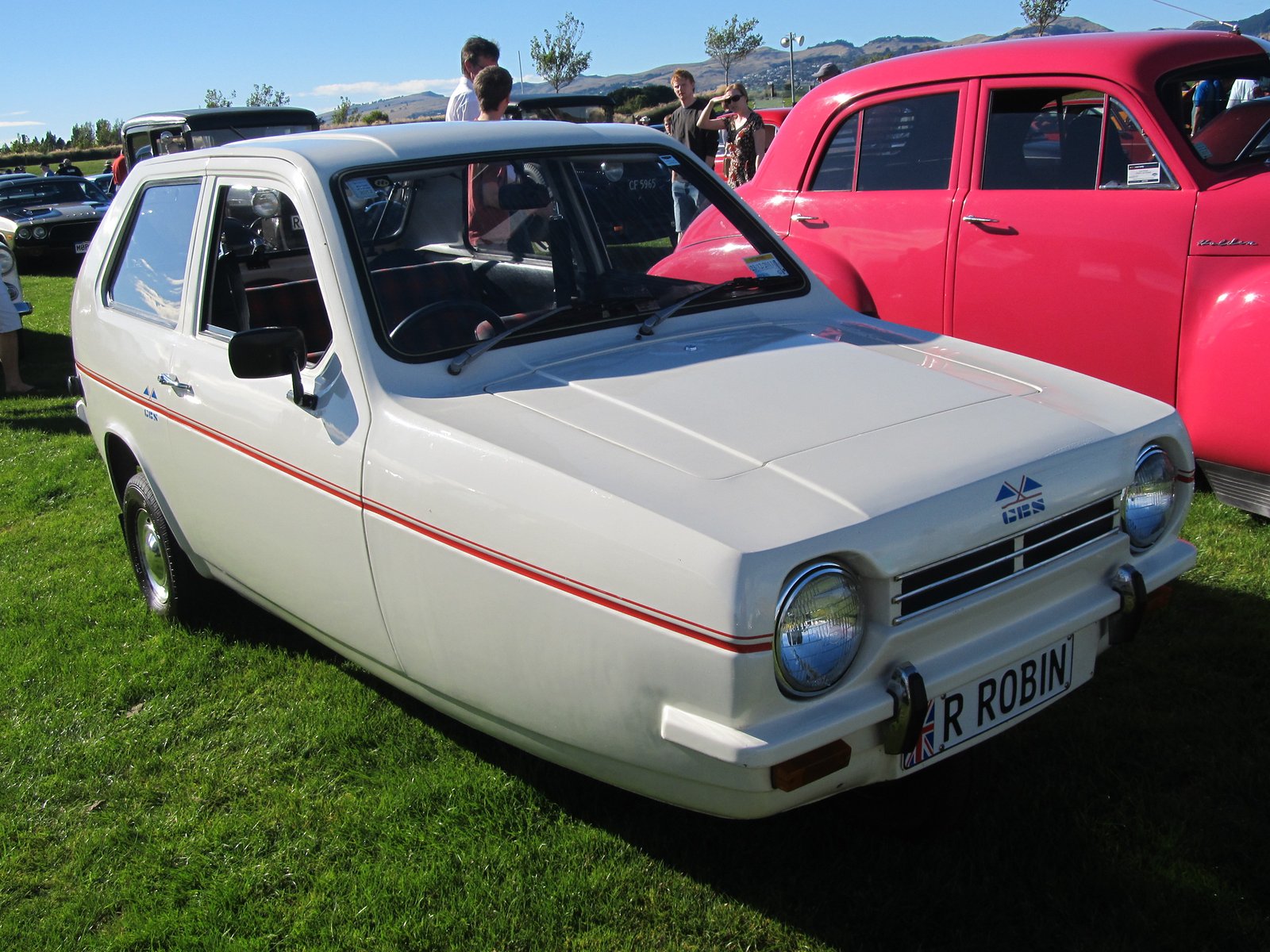
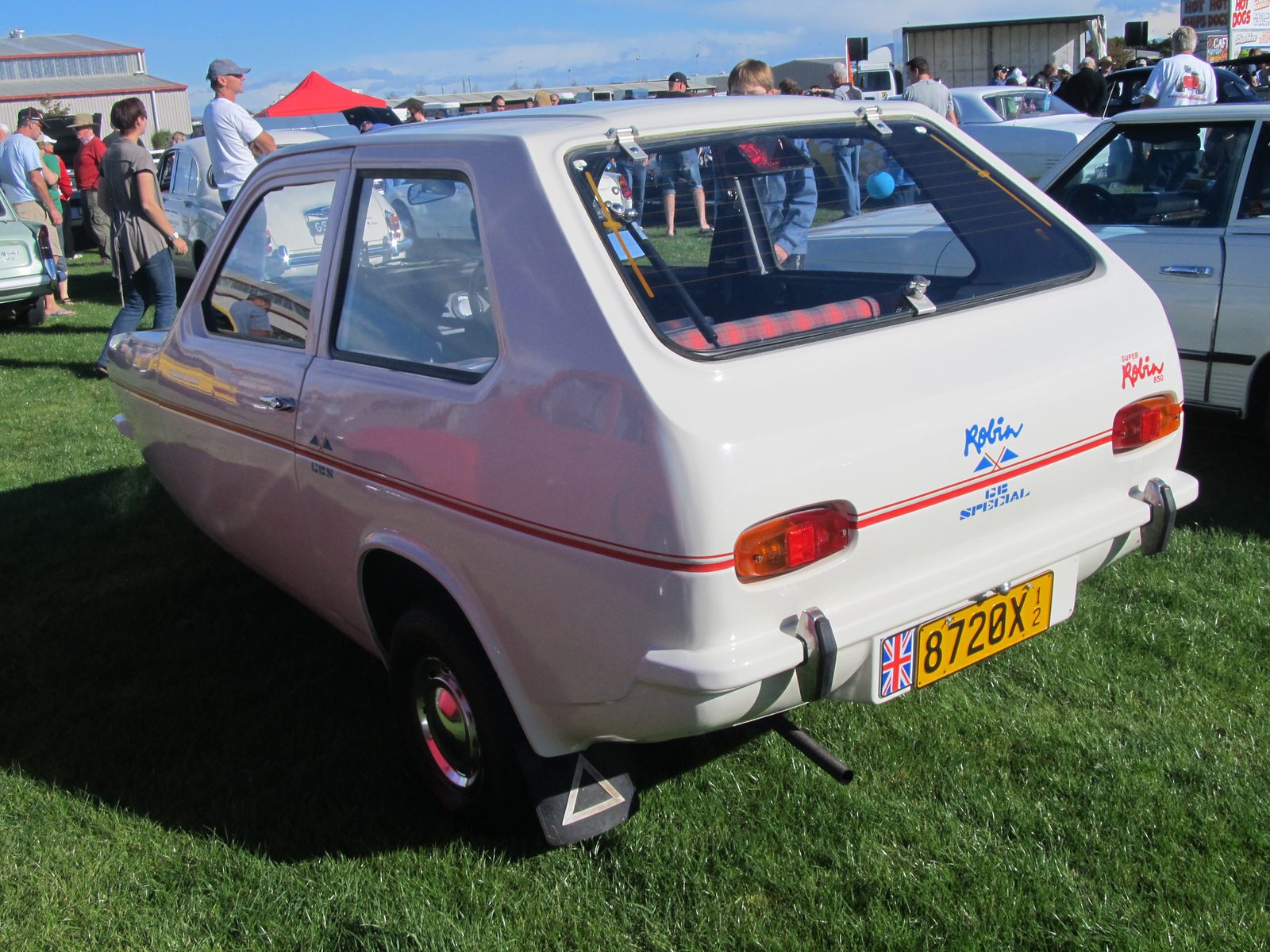
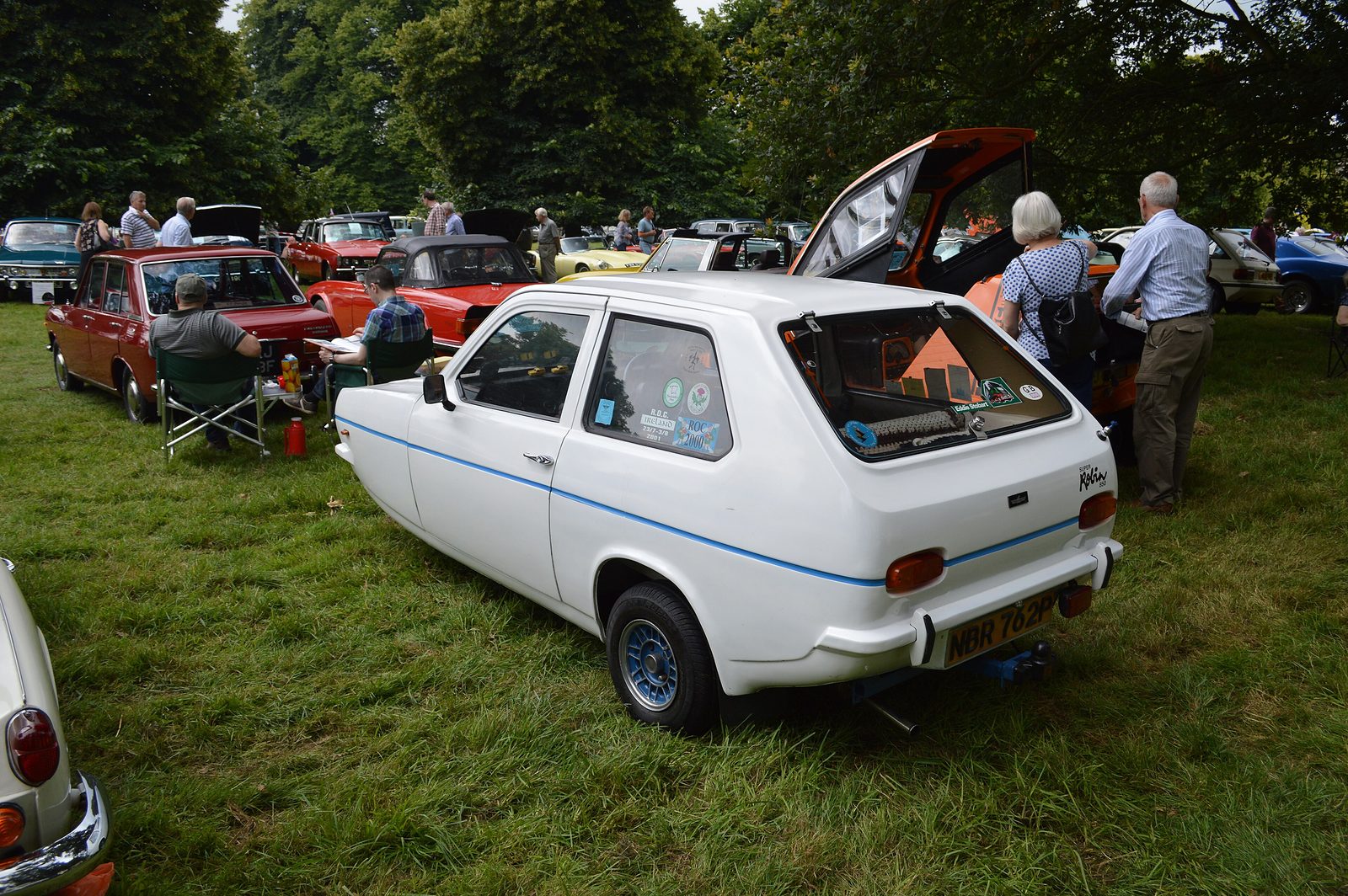
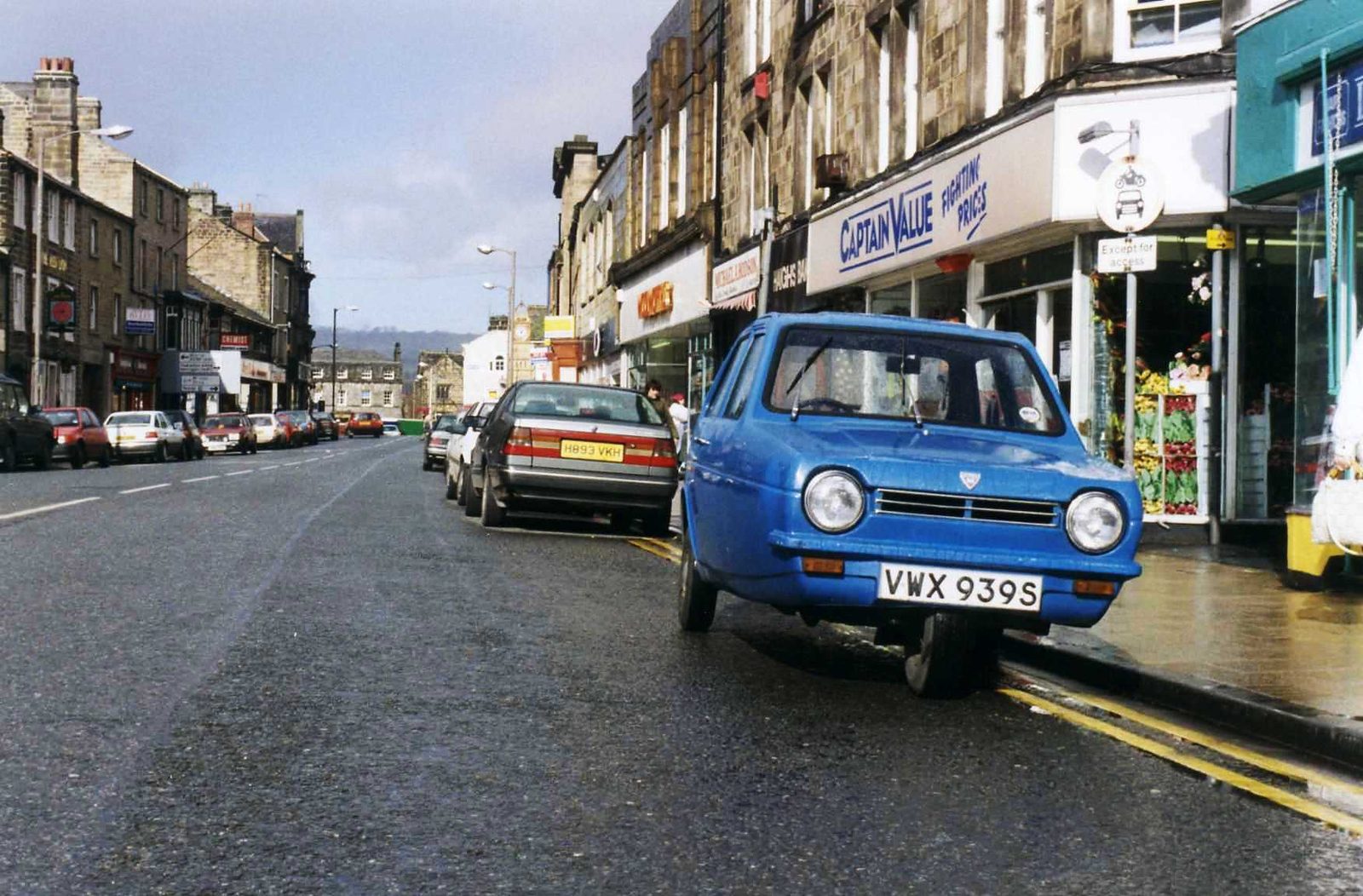
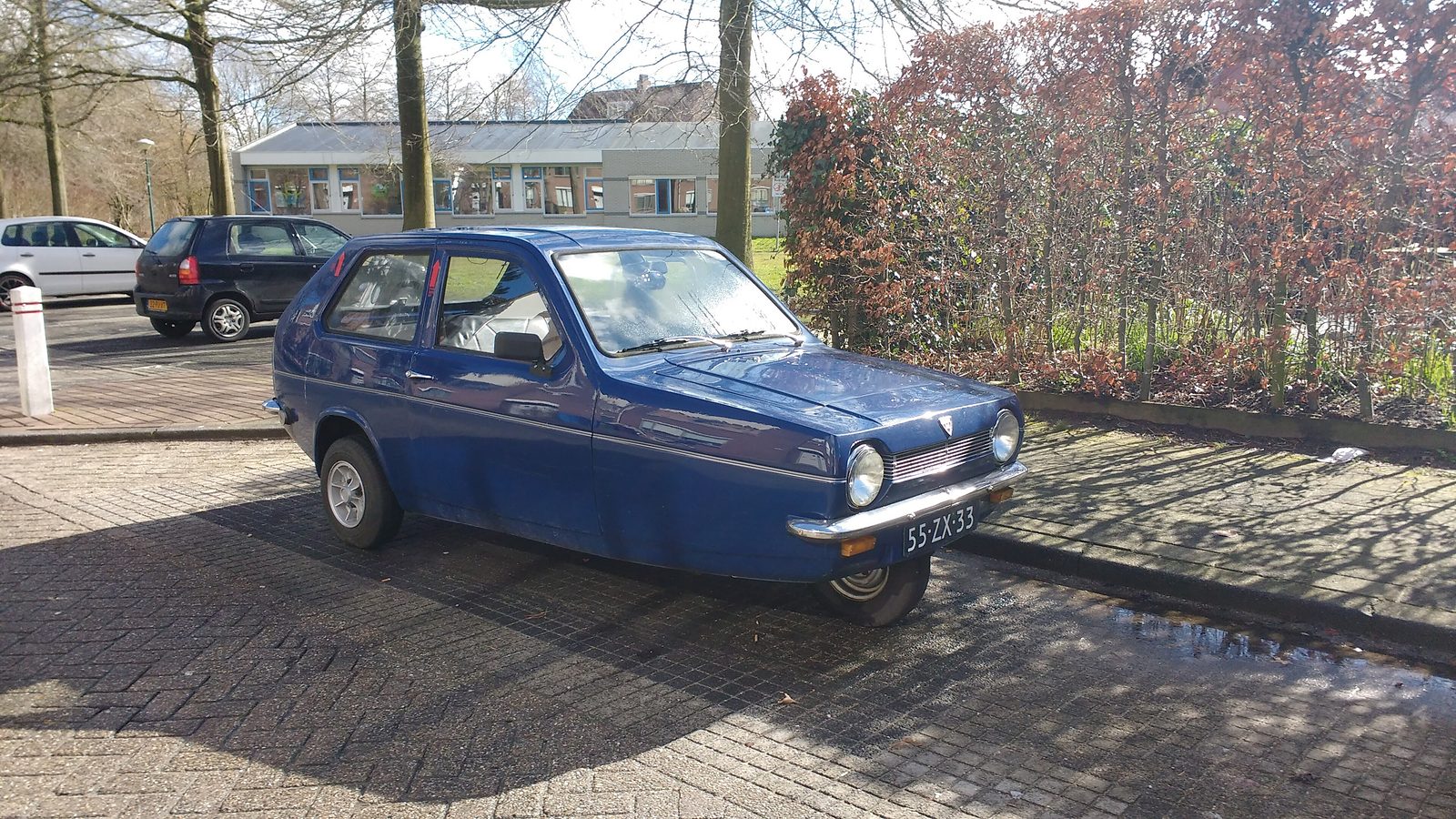
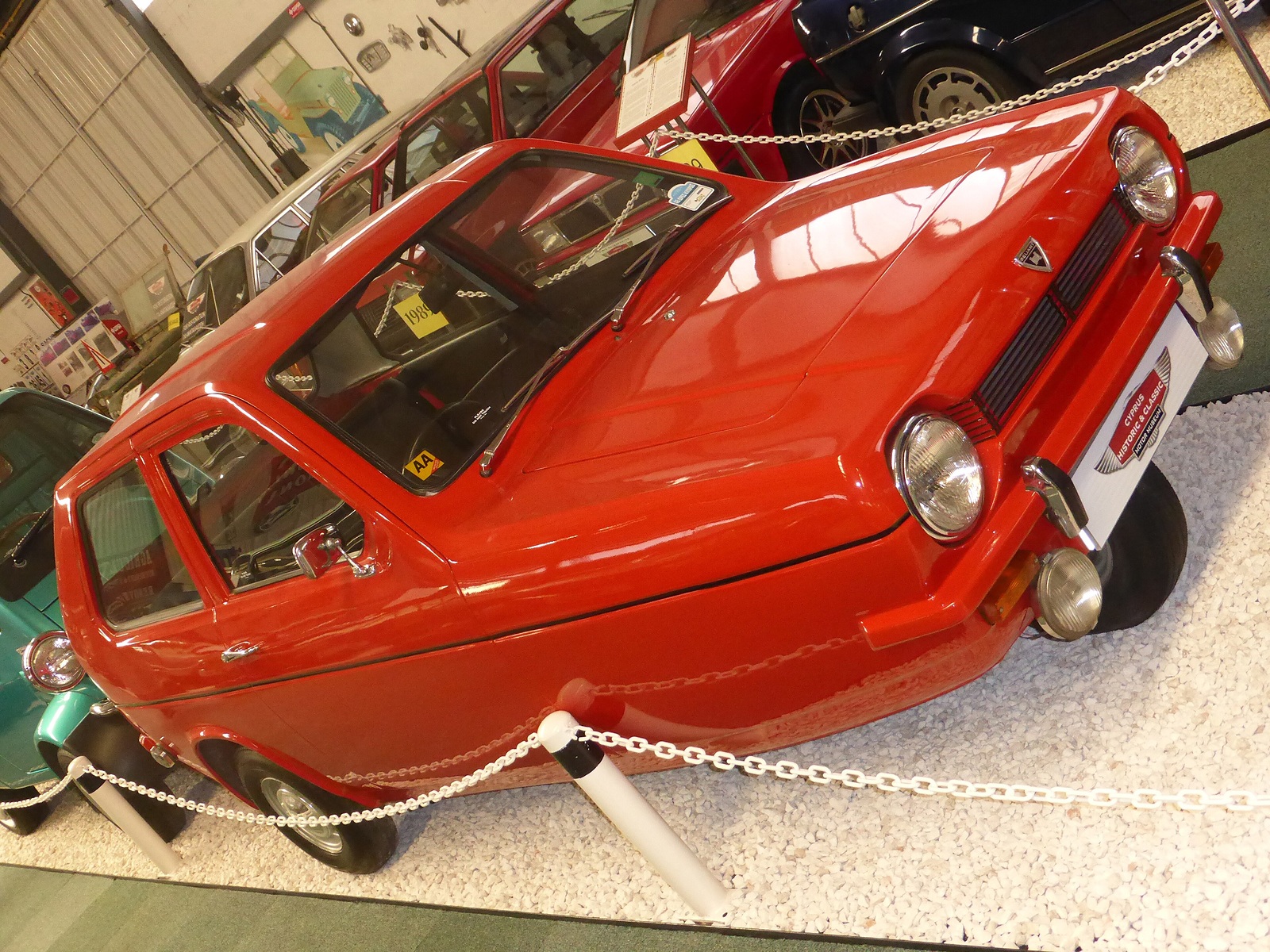
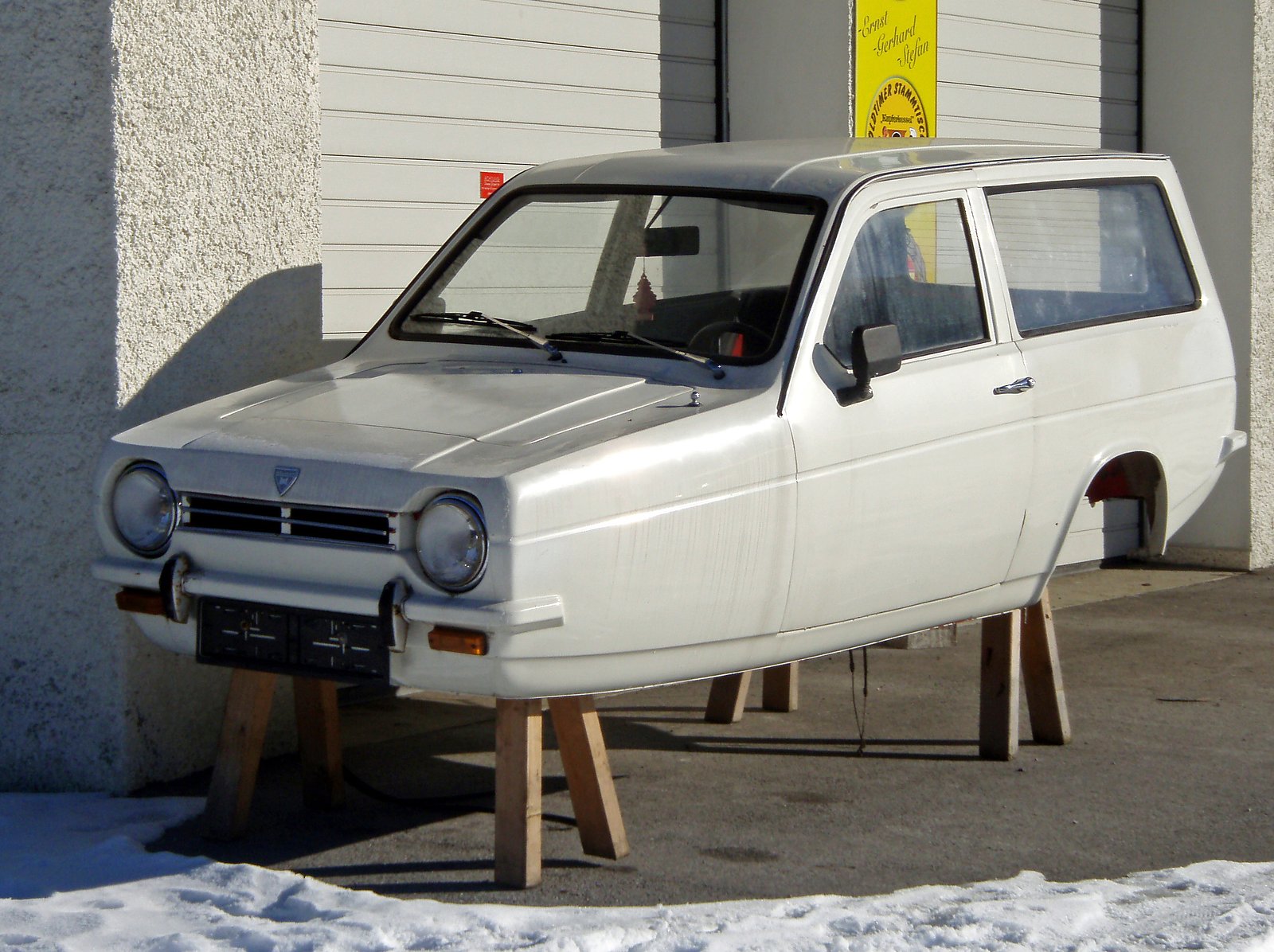
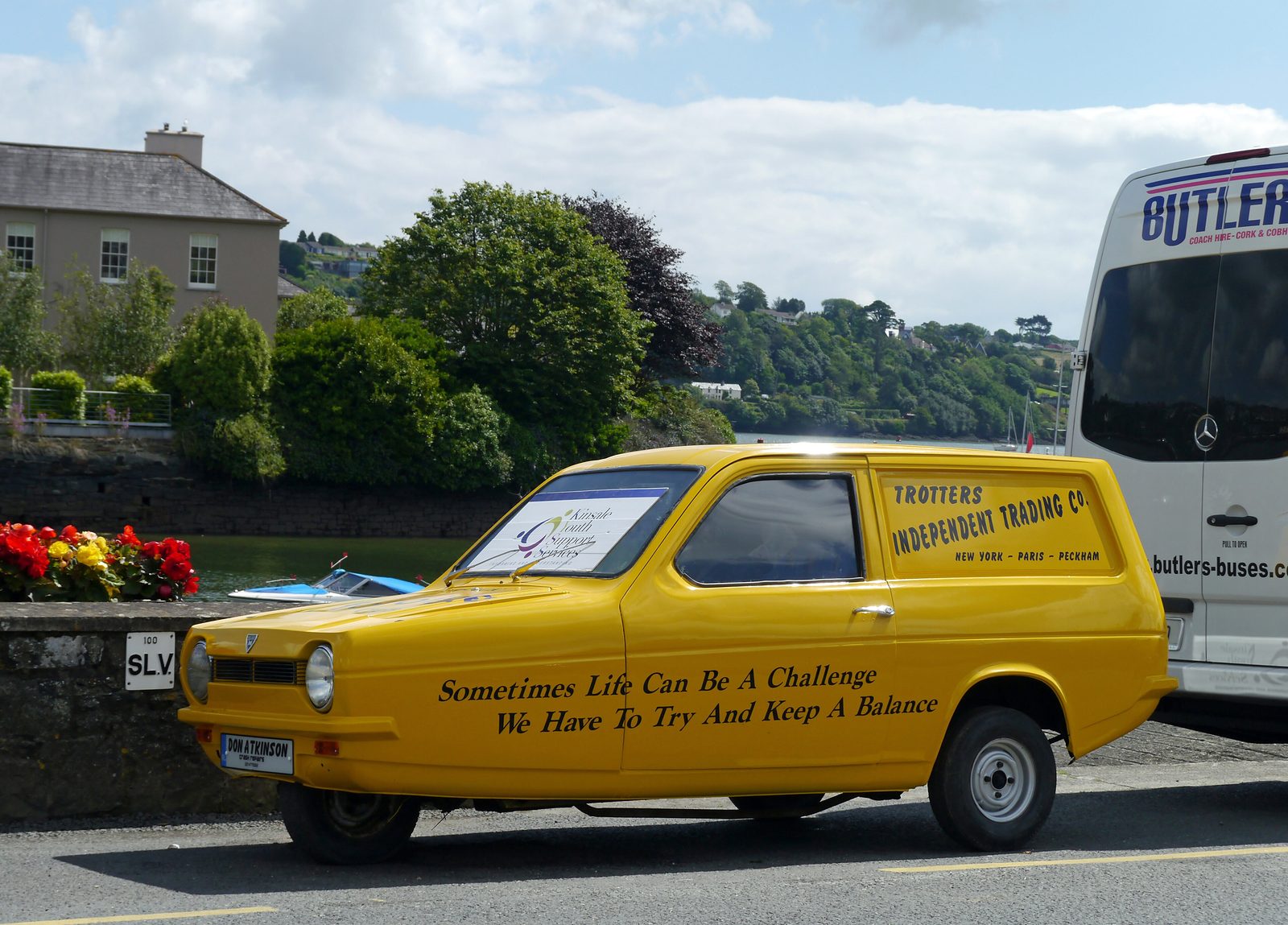
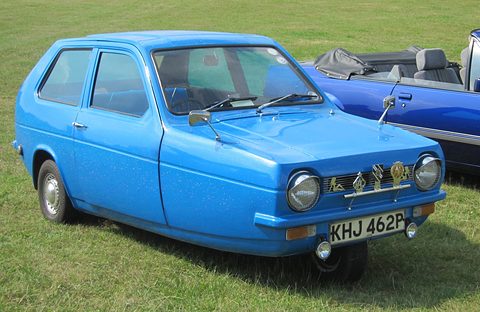
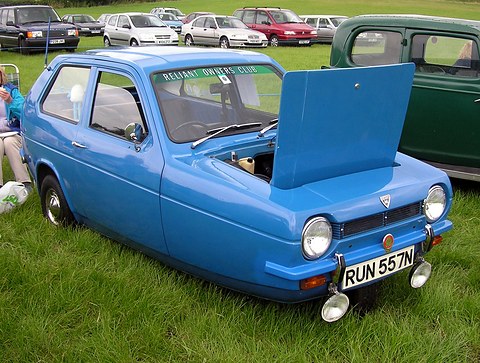
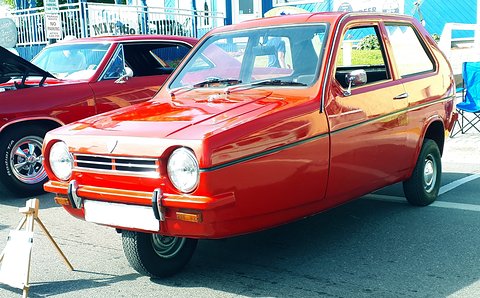
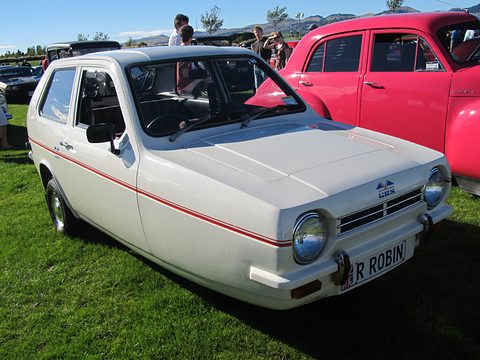
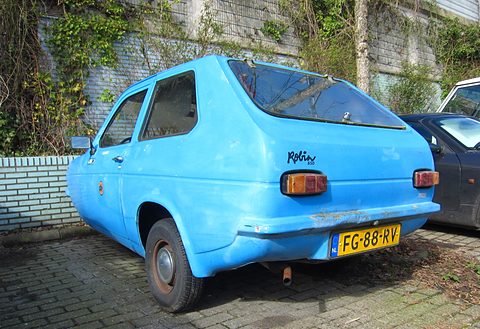
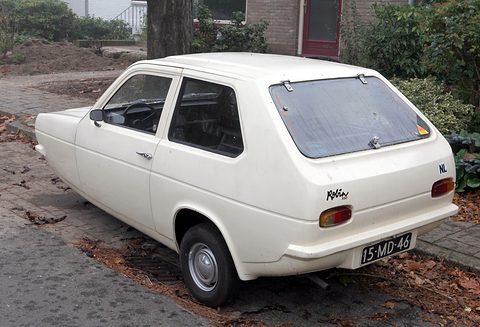
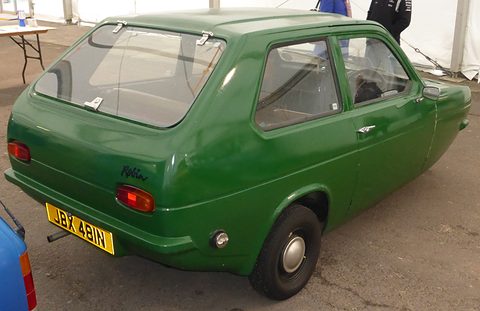
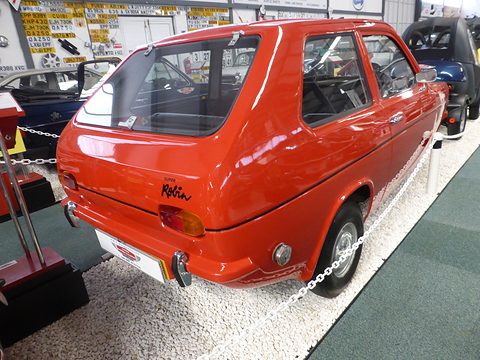
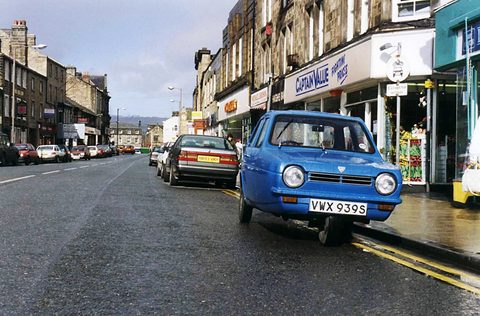
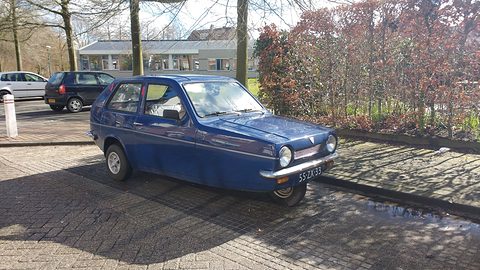
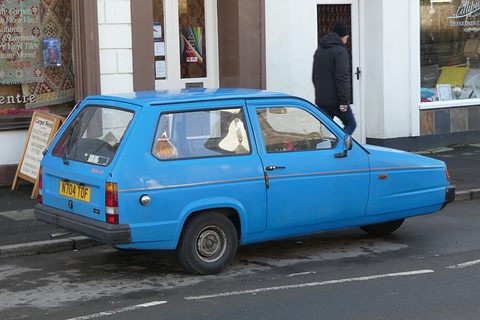
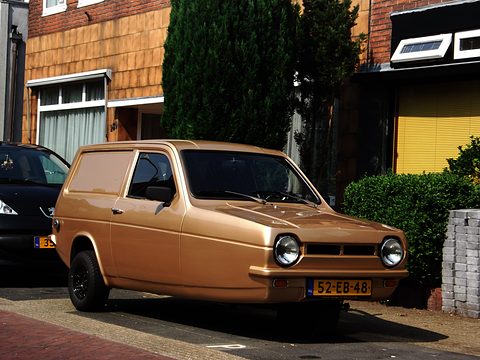
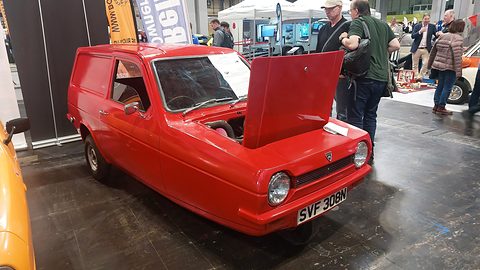
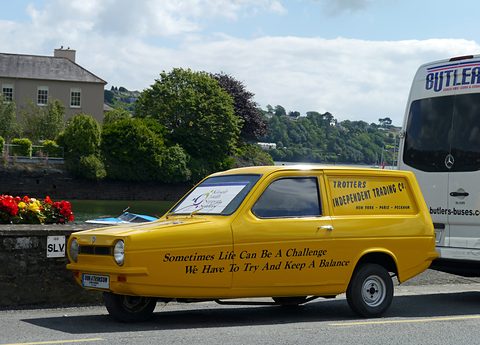
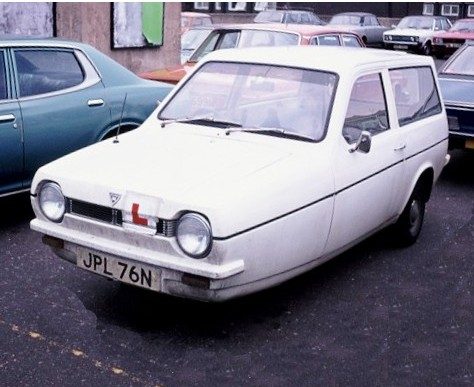
The Robin was launched on 30 October 1973, a few weeks into the OPEC oil crisis, and the dealers knew what to say. “PETROL RATIONING No Problem WITH THE SPARKLING NEW RELIANT ROBIN”, ran one of their advertisements.source 1source 2 It replaced the Reliant Regal 3/30 as Reliant’s mainstream three-wheeler, and Reliant had that market almost to itself: the bubble cars were gone, and it had bought Bond in 1969.source 3source 4source 5 The Reliant Motor Club dates the introduction to November.source 3 Four months after the launch, dealers reported sales passing 6,000.source 1
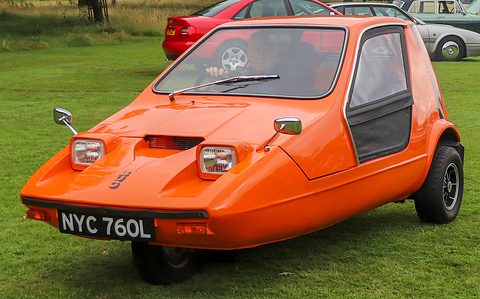
The shape had been a long time coming. Tom Karen of Ogle Design began work on a successor to the Regal 3/25 as early as 1963, the year after that car appeared, and the brief was to tempt drivers of the Mini Clubman and the Hillman Imp.source 1 Karen had already designed the Bond Bug and the Scimitar GTE for Reliant (more on him in the designers); the factory called the new car TW8.source 3source 4source 1 The customers were changing: former motorcyclists were a shrinking share of Reliant’s buyers, and the advertising also aimed the Robin at women drivers.source 1source 2
A saloon under 8 cwt
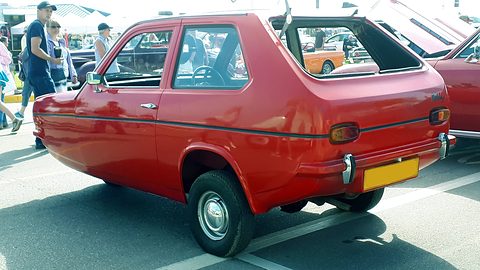
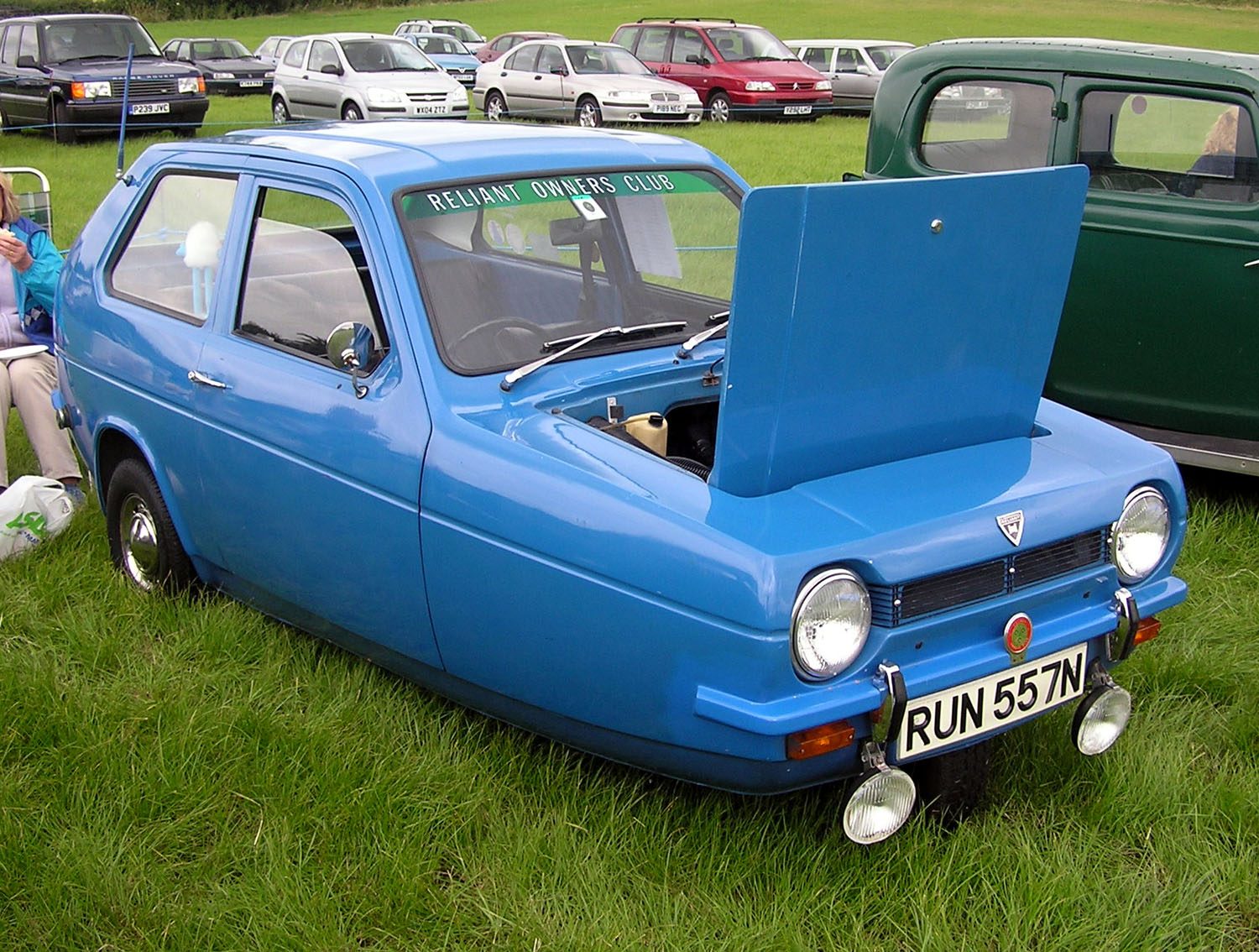
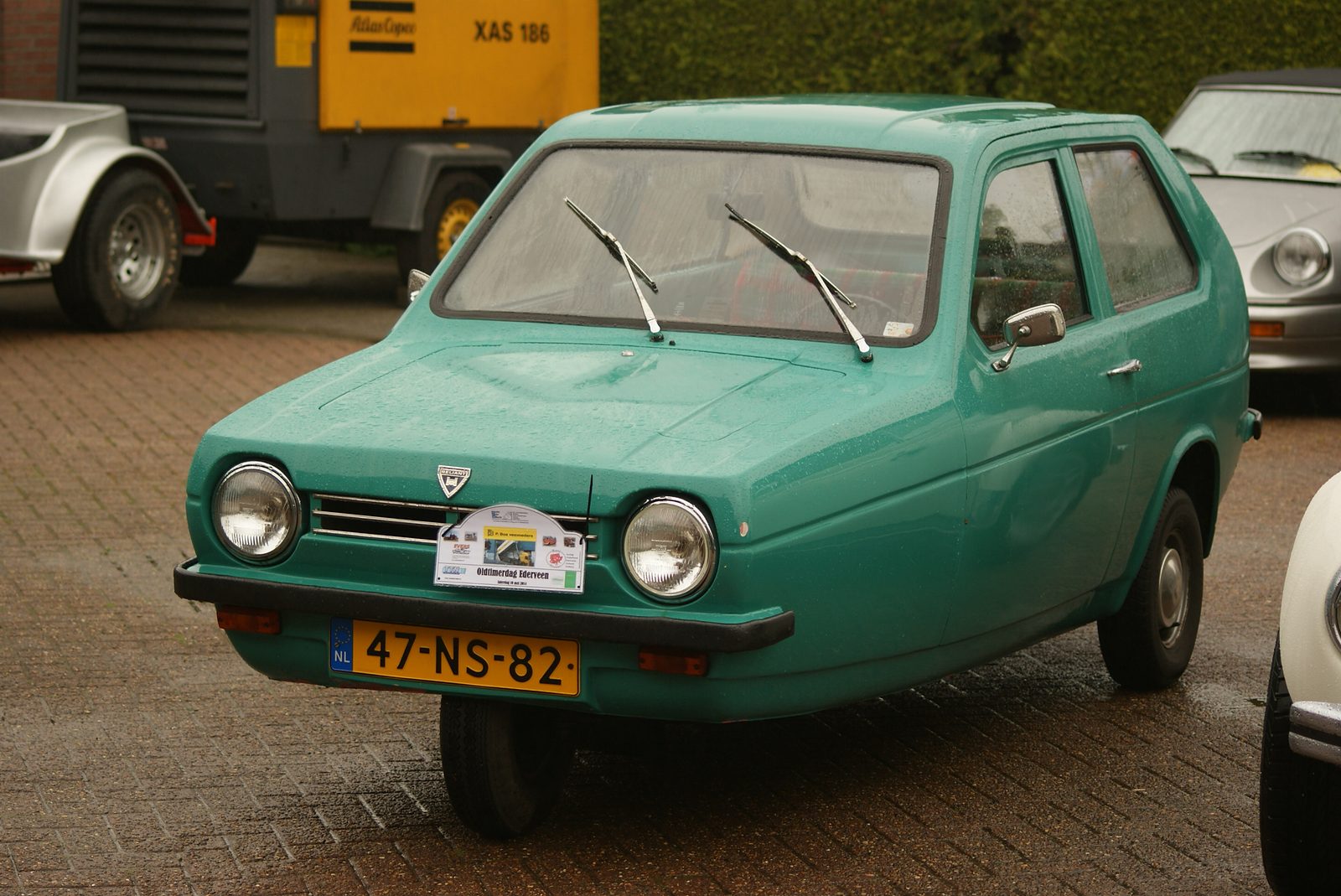
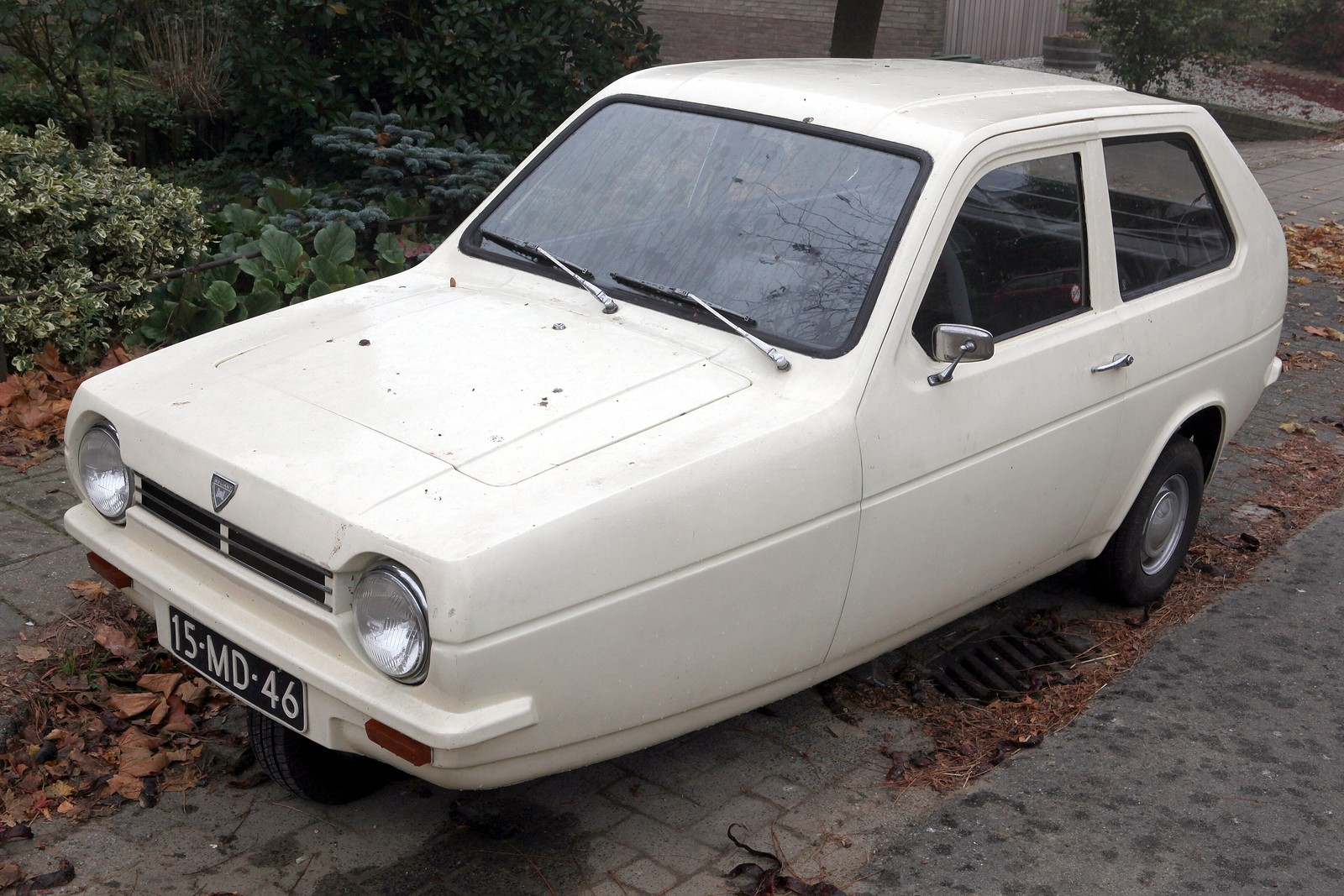
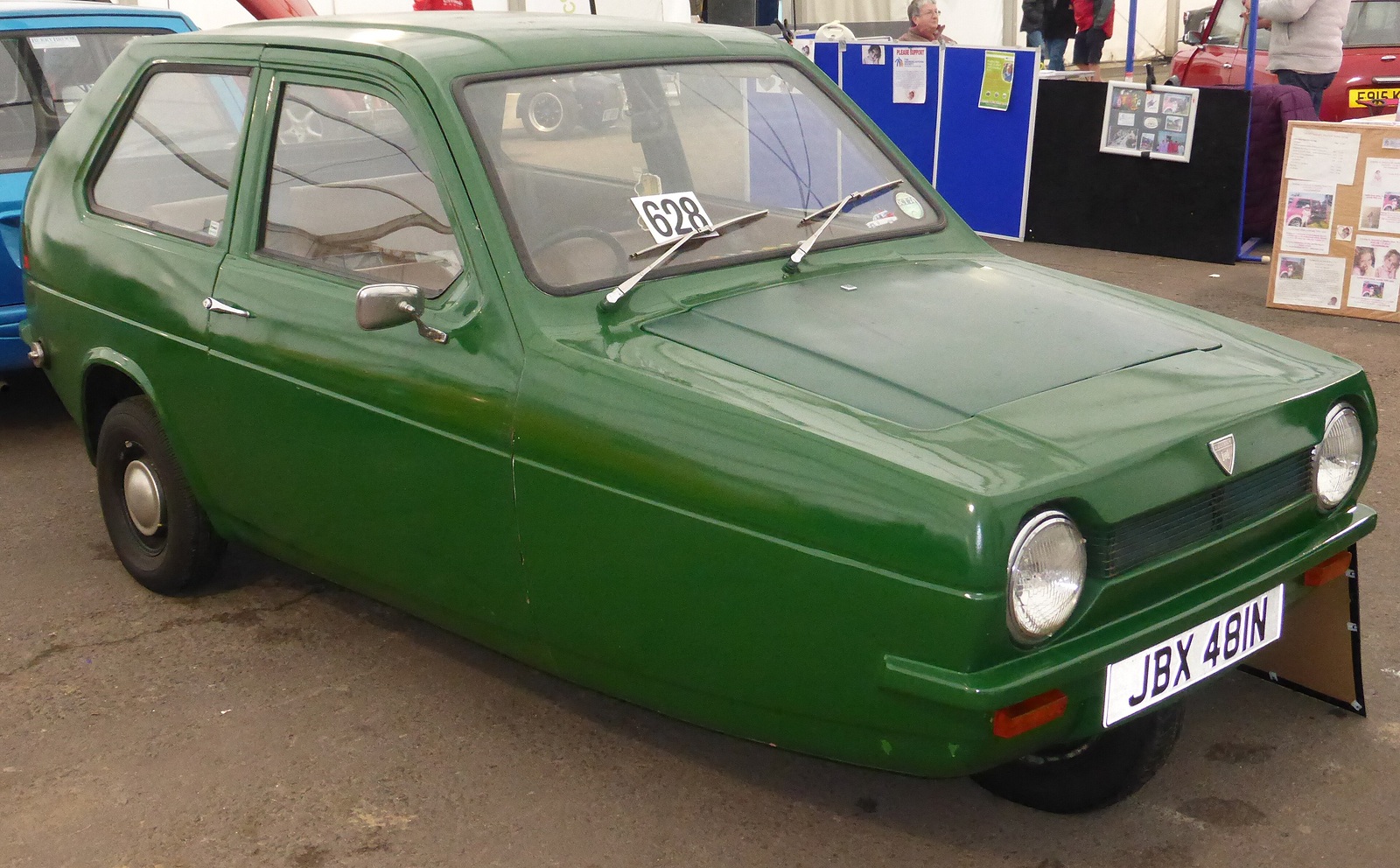
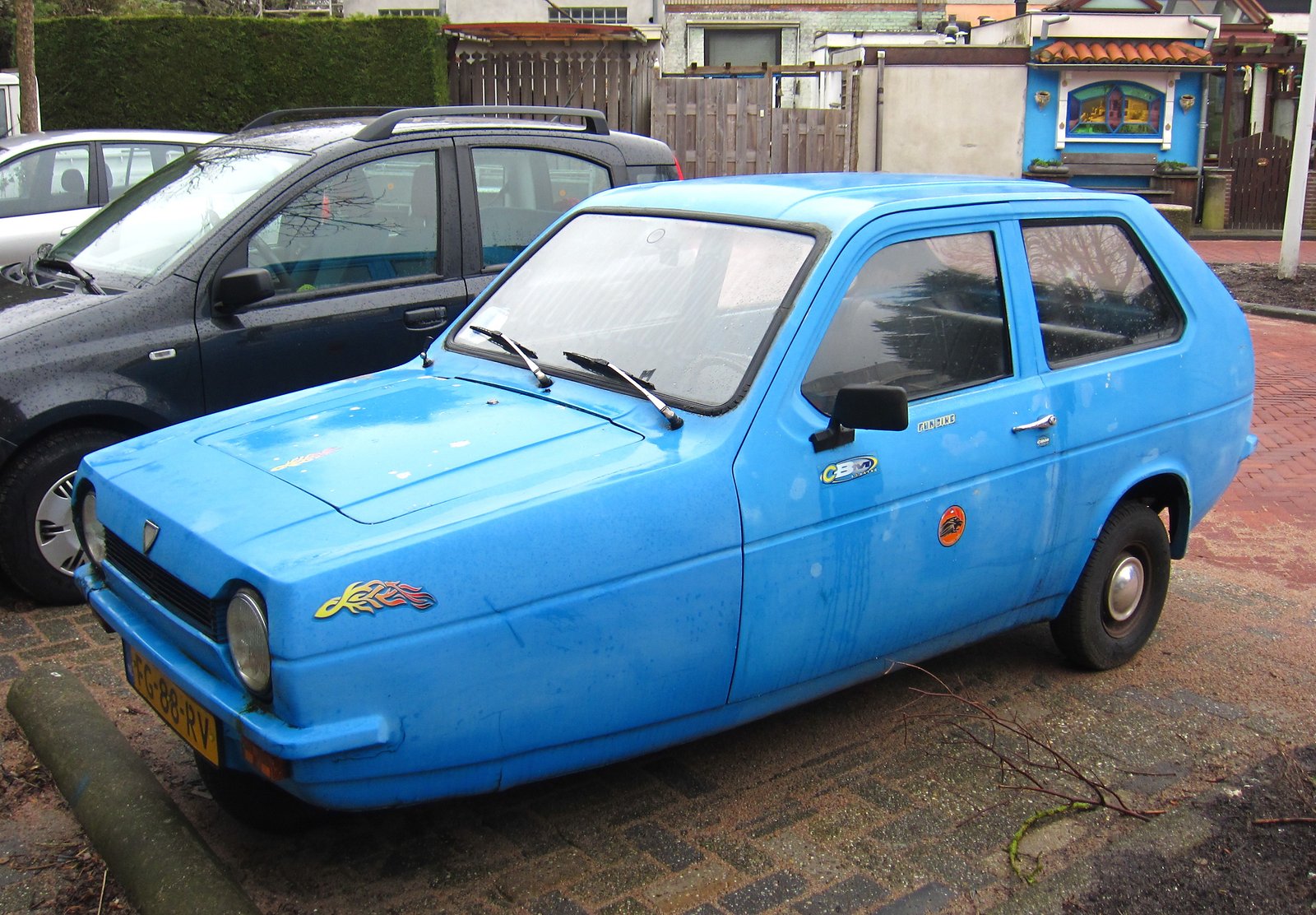
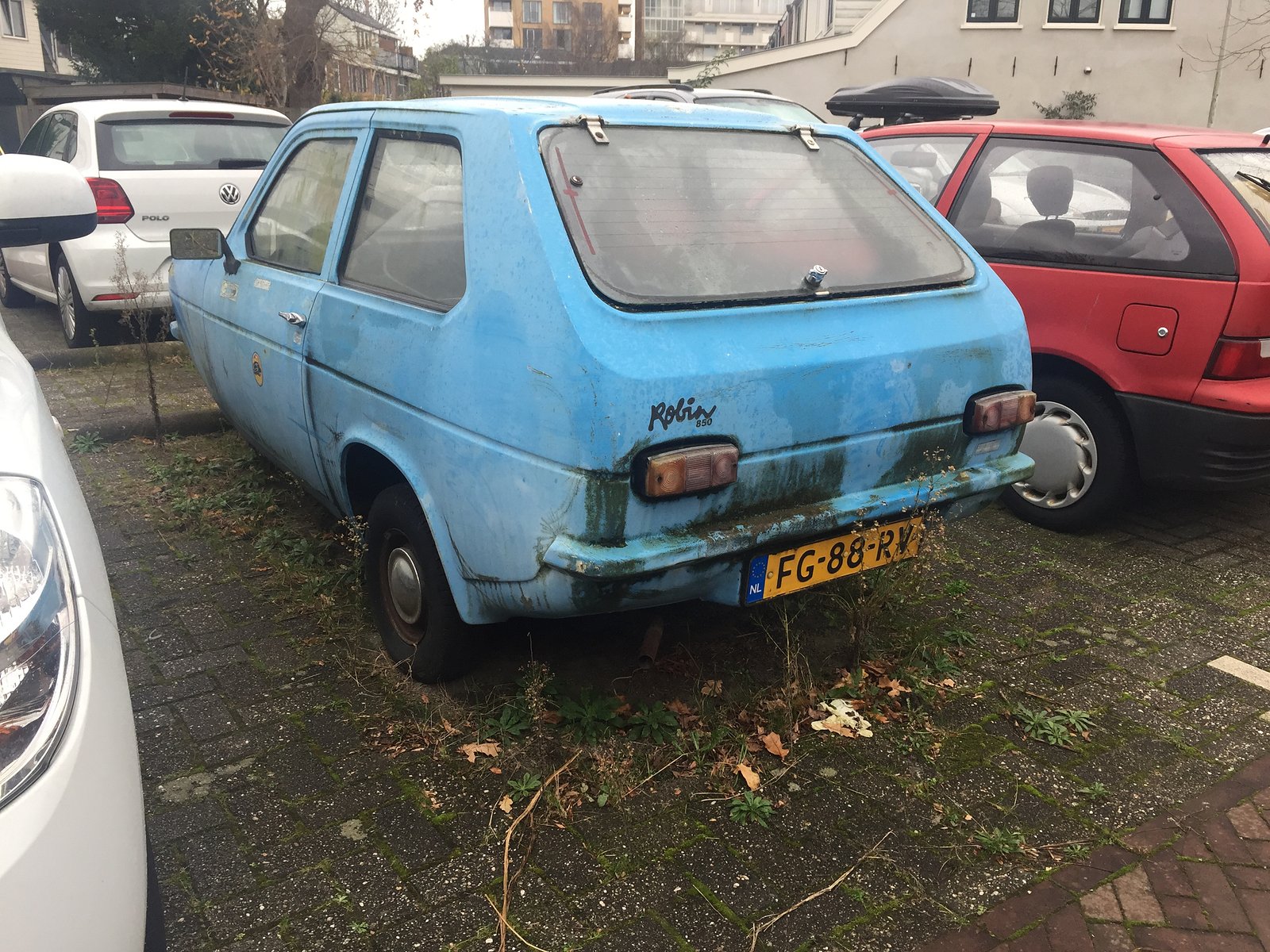
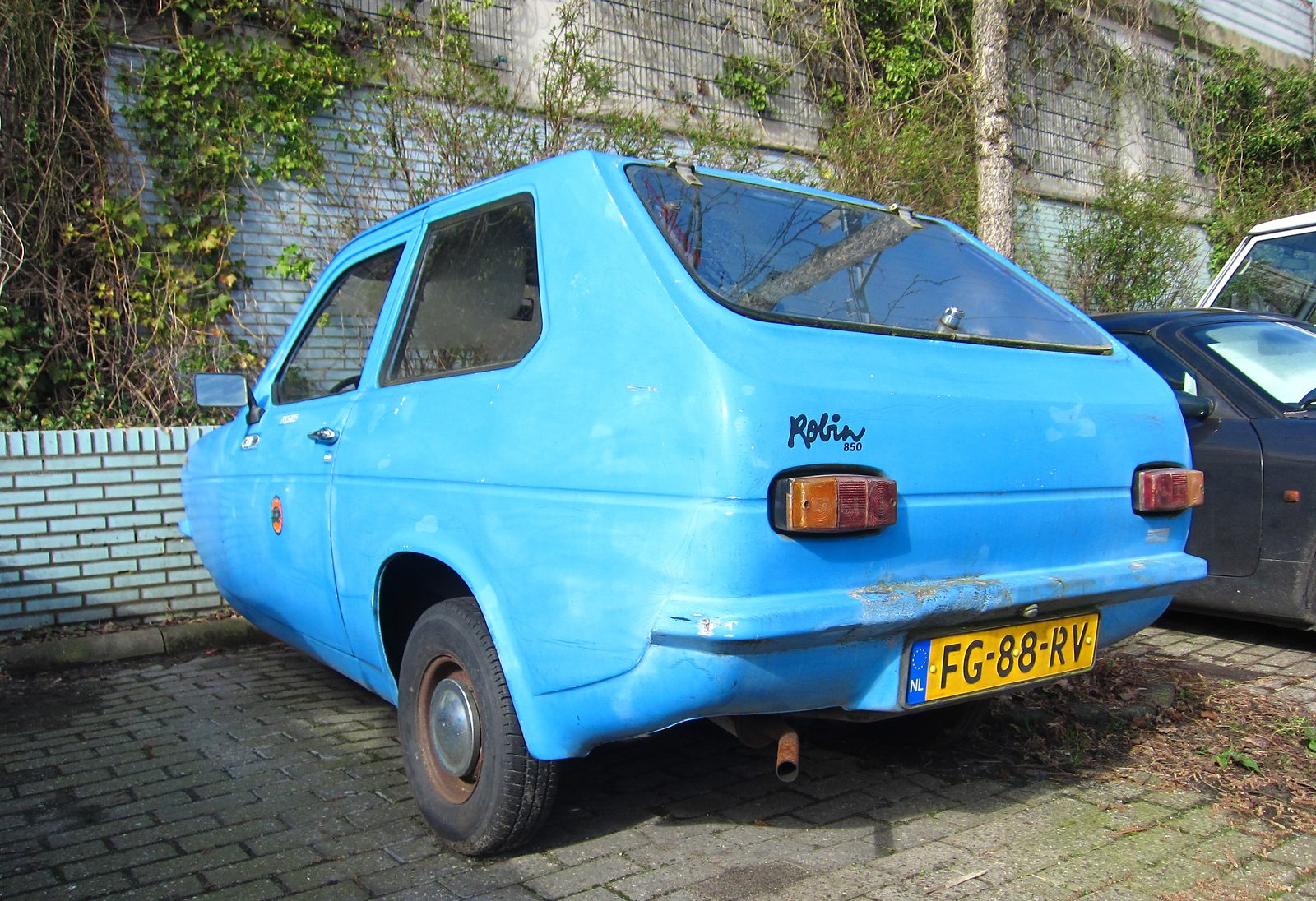
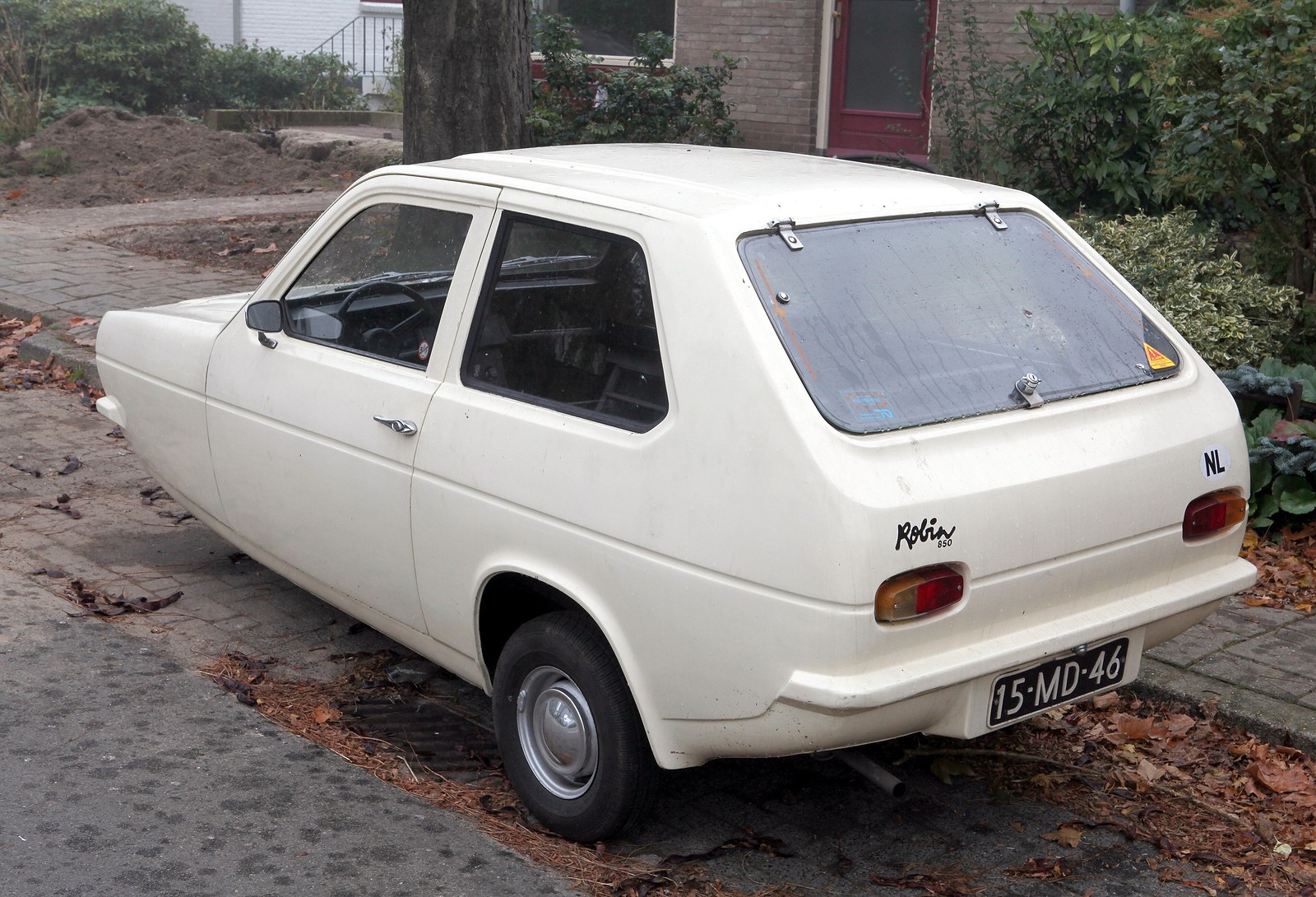
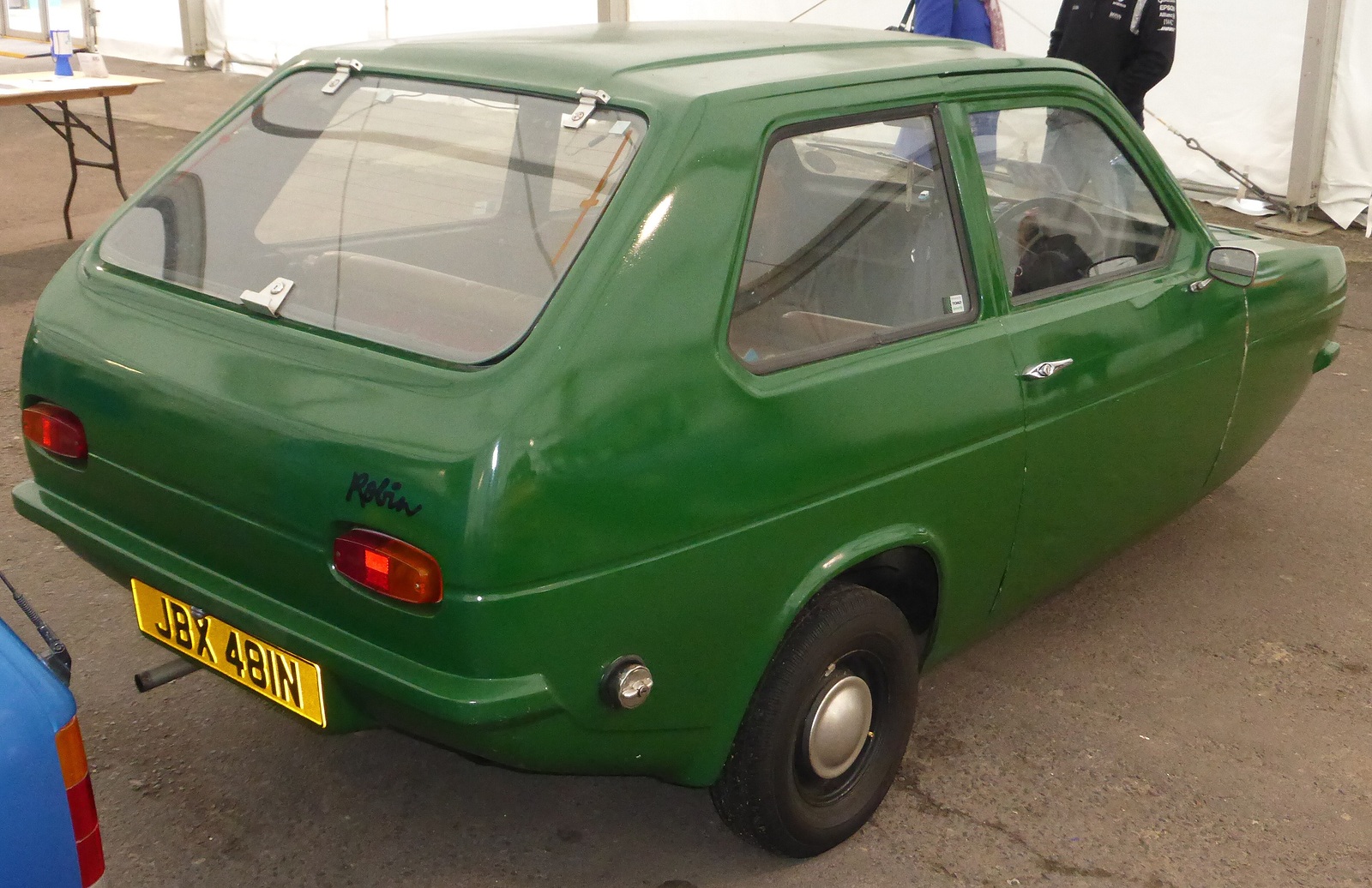
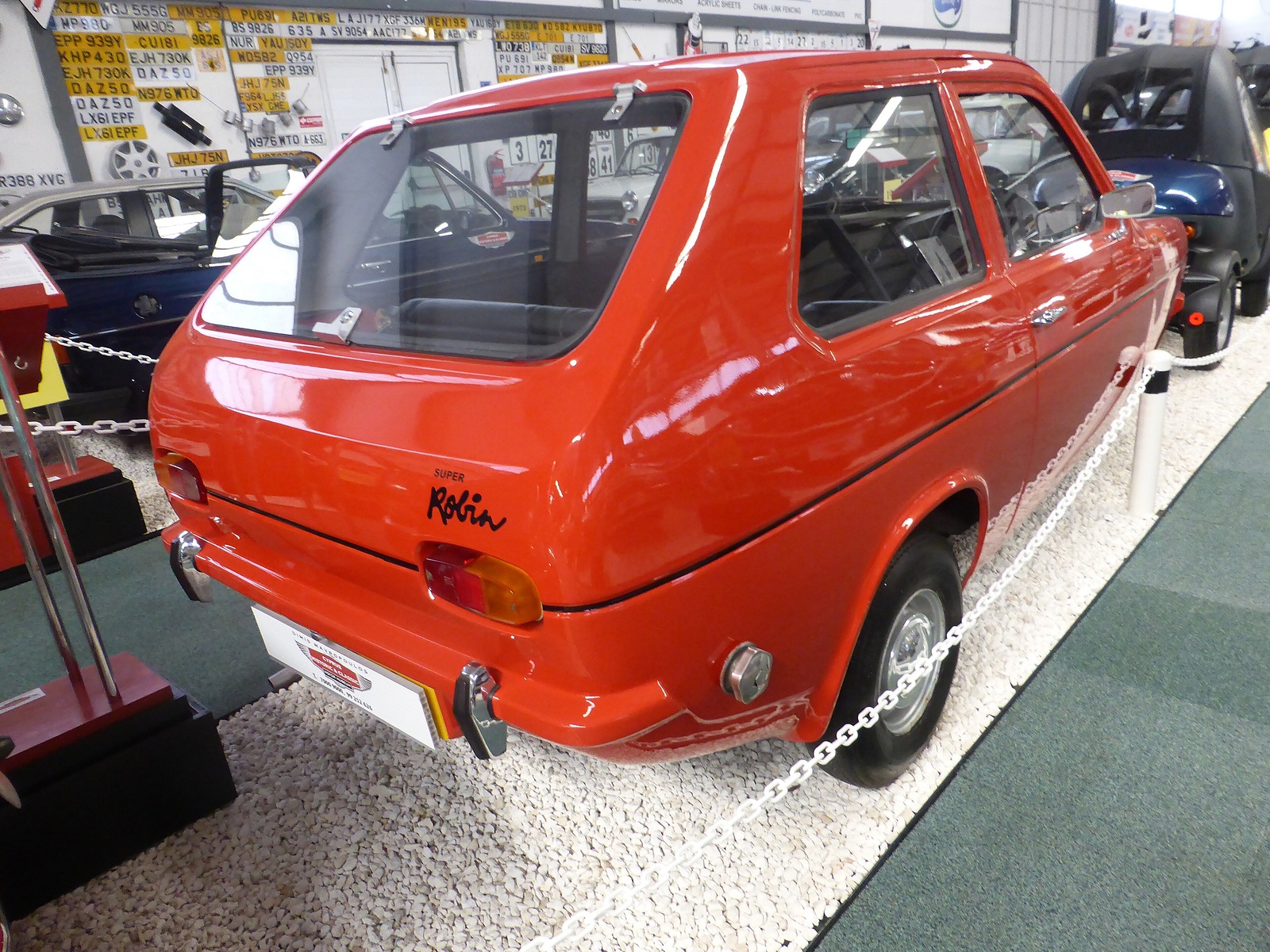
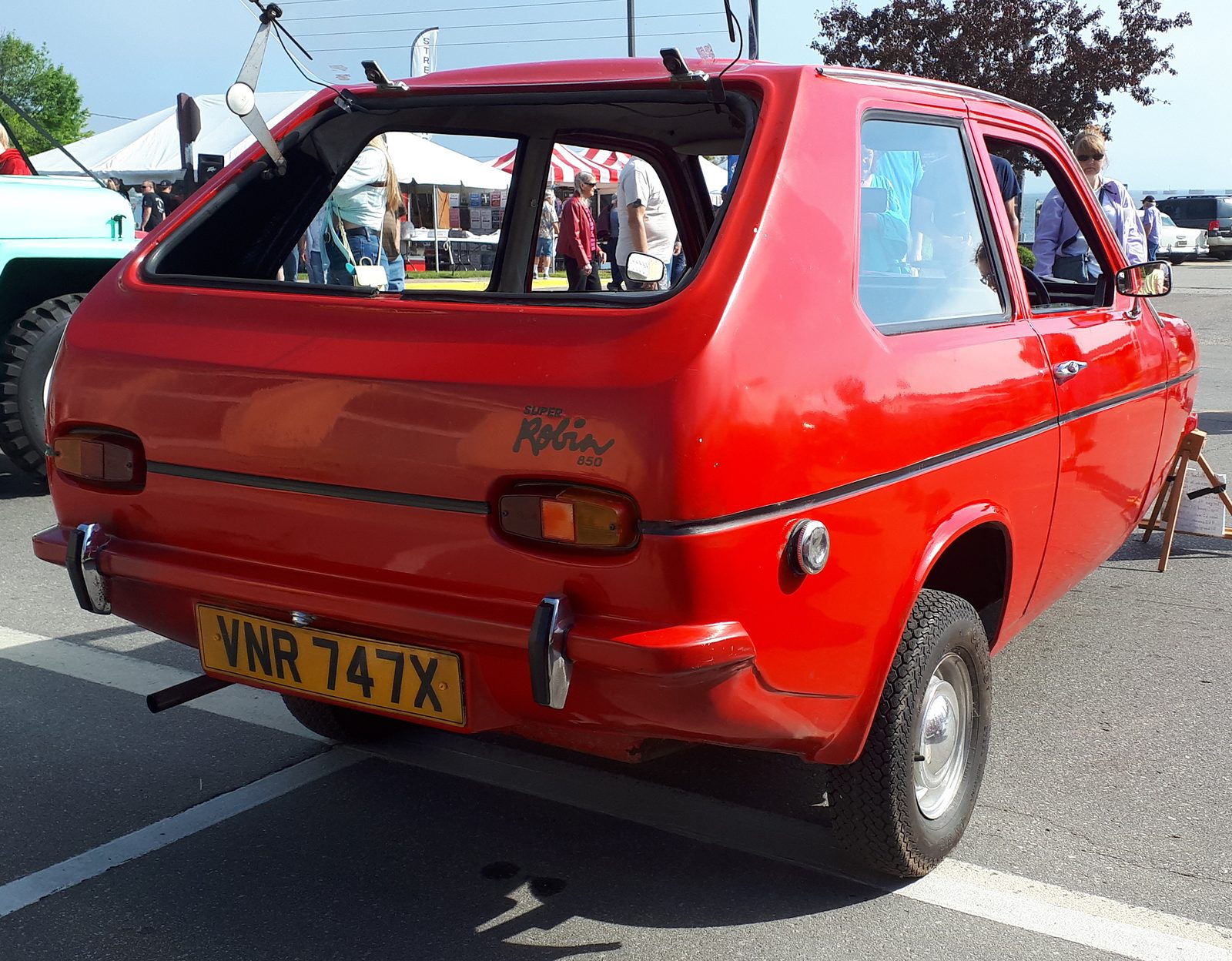
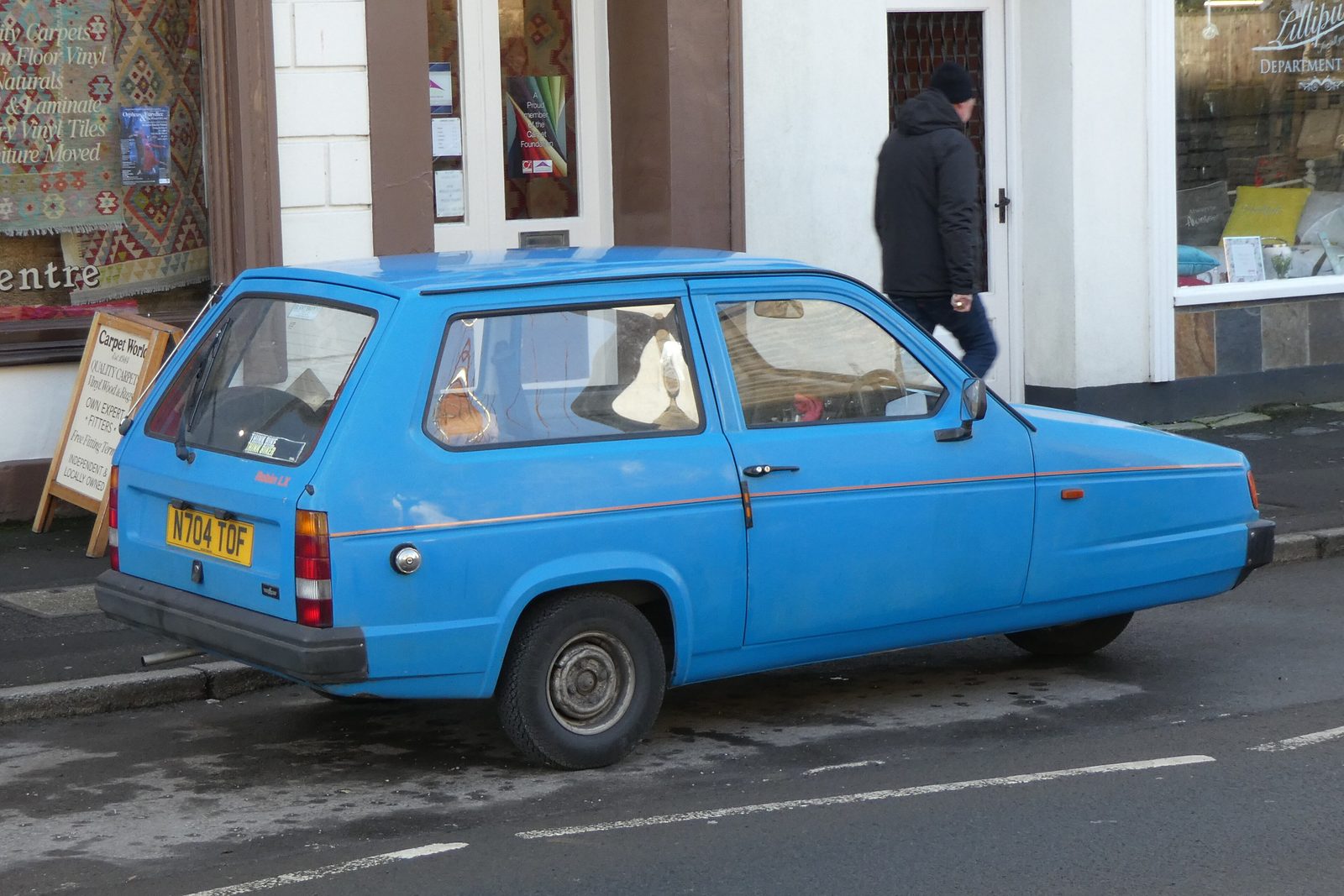
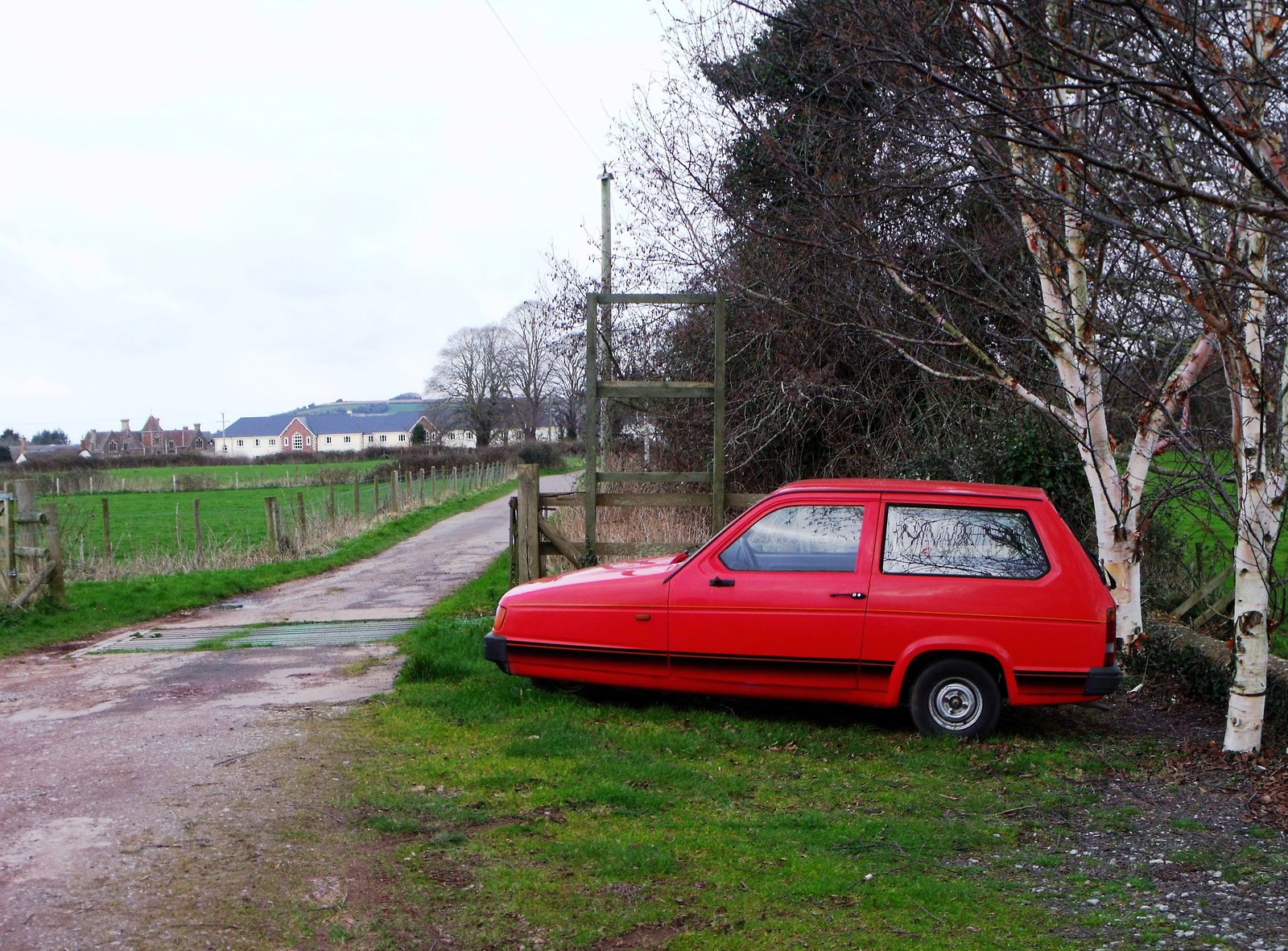
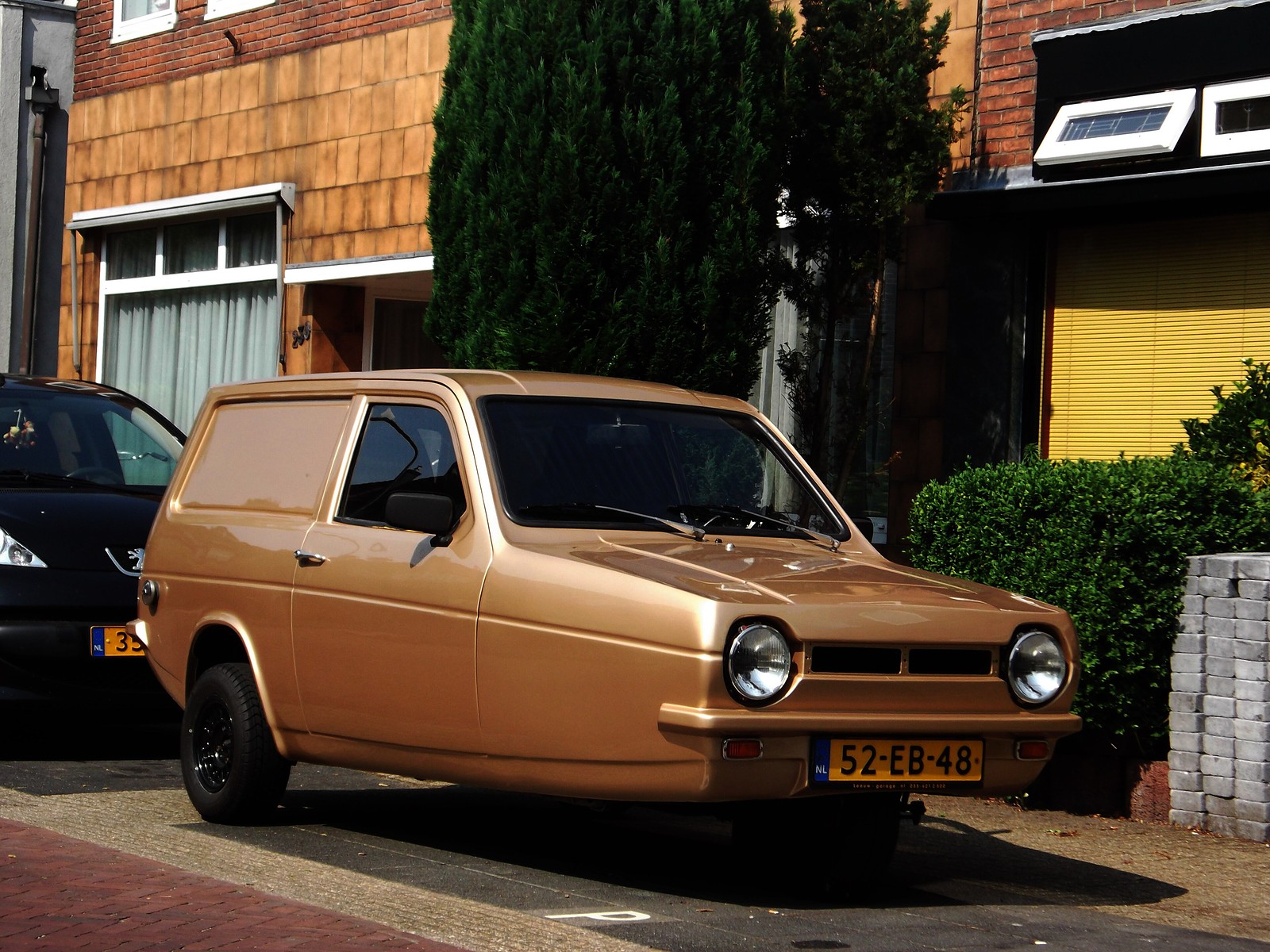
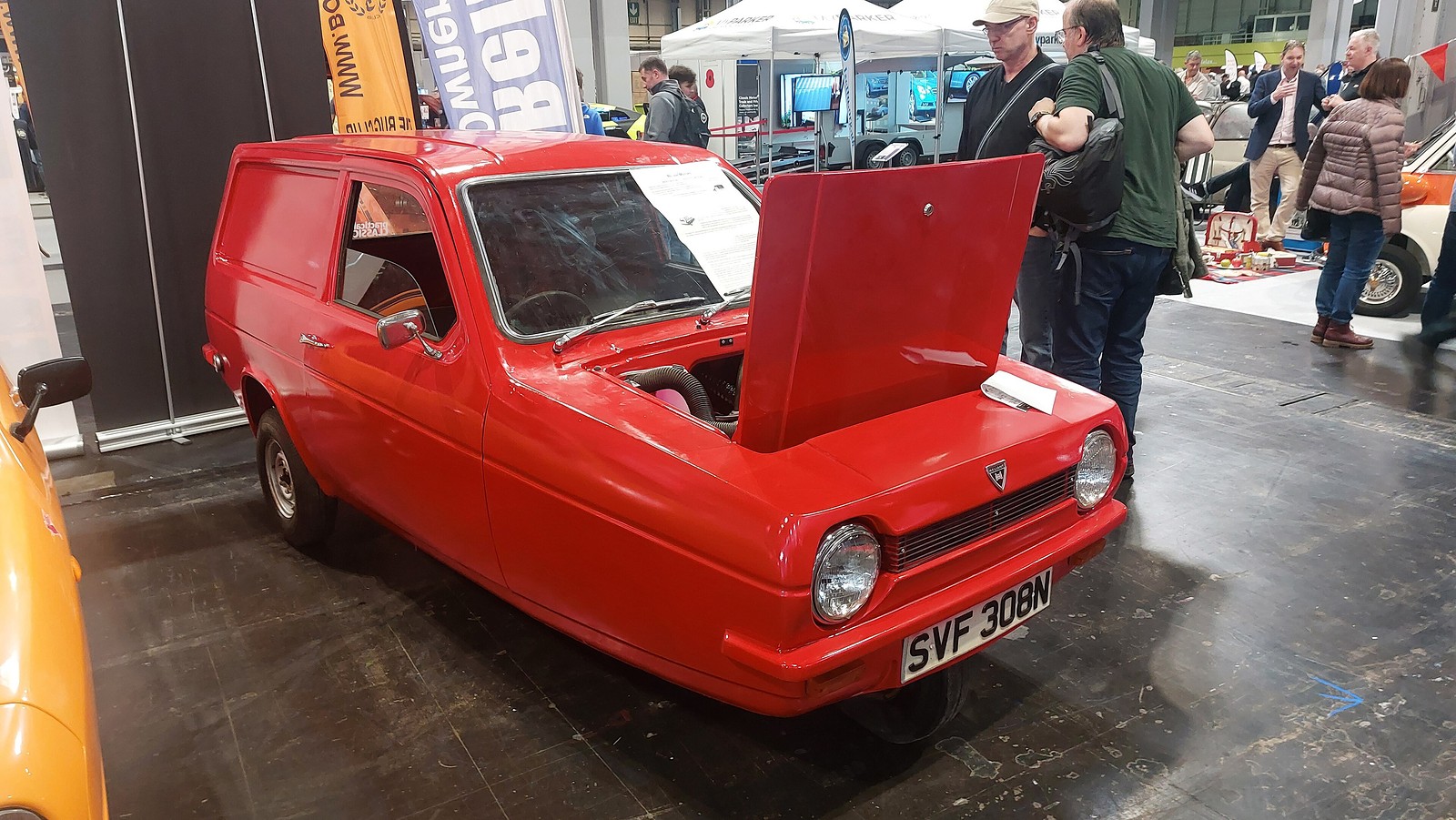
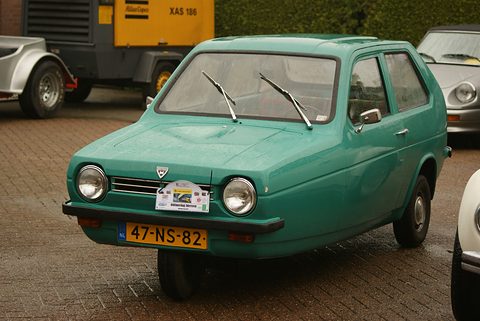
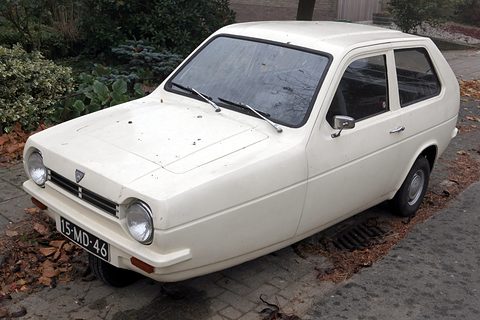
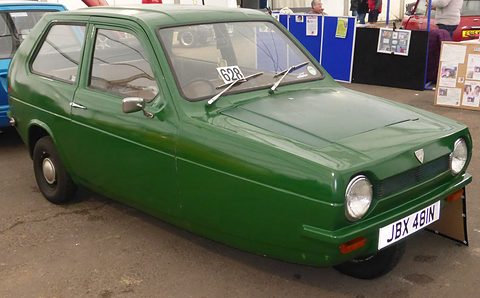
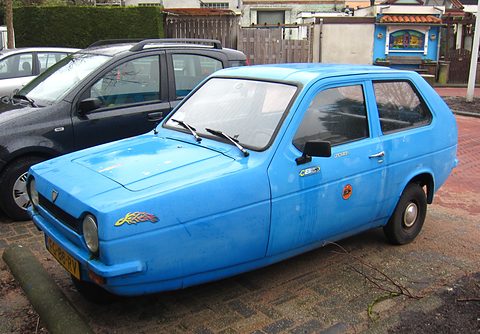
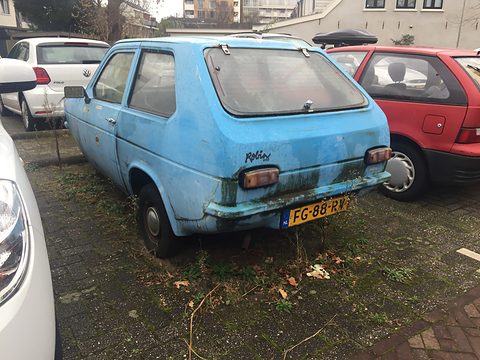
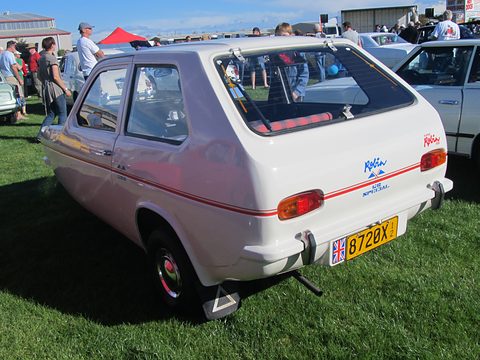
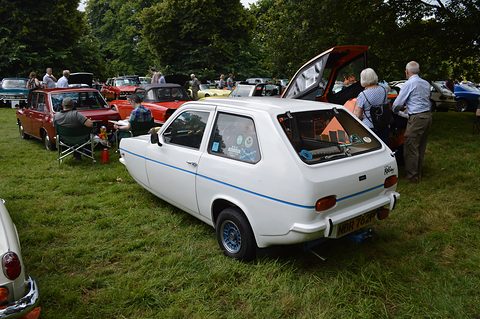
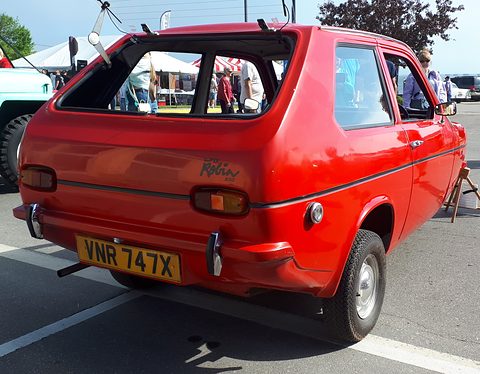
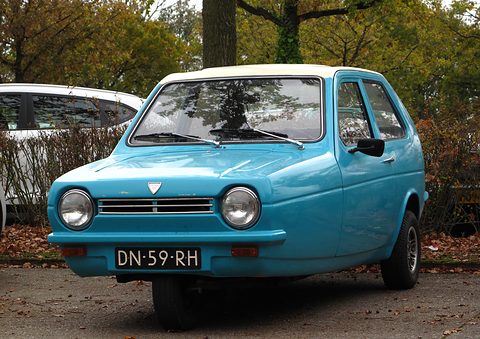
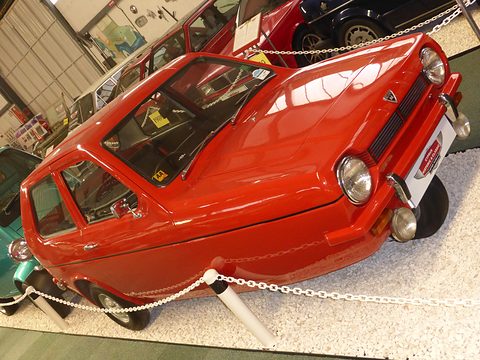
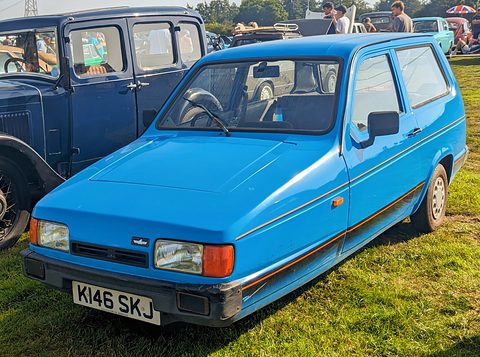
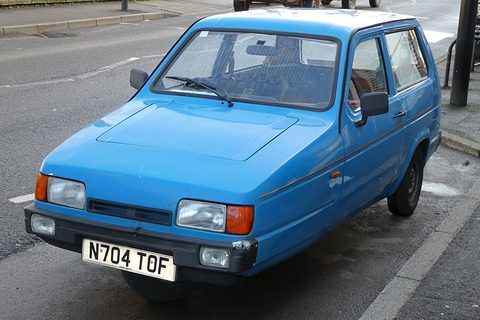
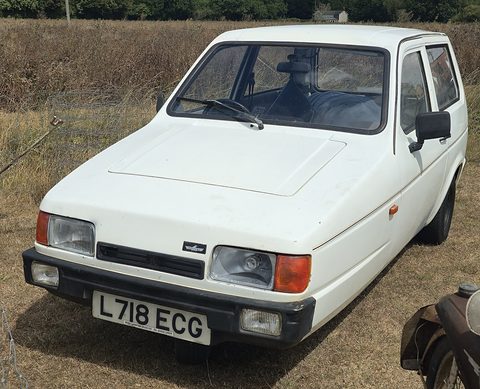
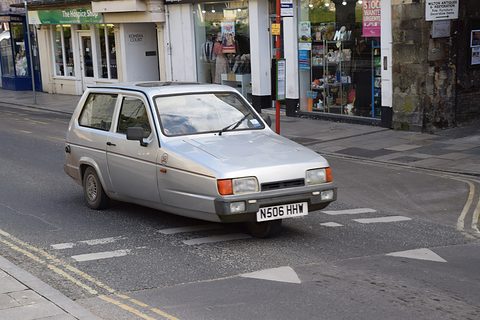
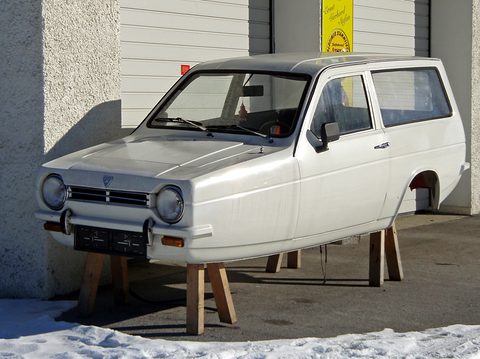
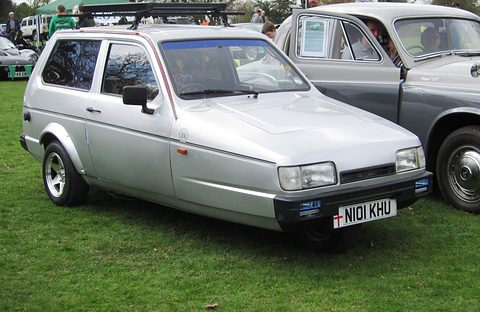
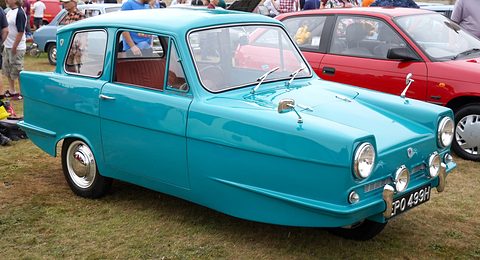
The body was glass fibre, with pressed panels in places to save weight, on a box-section steel chassis.source 3 The single front wheel steered, and the engine at the front drove the rear axle through a four-speed all-synchromesh gearbox with an ordinary reverse.source 4source 6 That engine was Reliant’s own 748 cc OHV four, all aluminium, giving 32 bhp at 5,500 rpm through a Zenith downdraught carburettor.source 3source 7 Its ancestor, a 600 cc unit of 1962, was by the club’s account Britain’s first mass-produced light-alloy car engine.source 5 The rear window opened like a hatch, which the Mini did not have: with the rear seat folded there were 30 cu ft of load space, and 8.5 cu ft behind it with the seat in use. There were 10-inch wheels and an anti-roll bar, the first on a Reliant three-wheeler.source 3source 1 The saloon was 3,327 mm (131 in) long and 1,422 mm (56 in) wide, and weighed about 406 kg (895 lb).source 4source 6
All told, the Robin marks a real step forward in three-wheeler design.
Autocar praised Karen’s good-looking answer to the problem of styling a car with three wheels and glass-fibre panels, and the feat of “a full four-seater saloon inside an all-up weight of less than 8cwt”.source 2 The standard car cost £801.39. The Super, at £848.46, added fog and spot lamps, hazard lights, a vanity mirror in the passenger’s visor, extra instruments and a “chromium-plated lockable petrol cap”, and took 60 per cent of early sales.source 1source 2 Dealers quoted 73 mph (117 km/h) for the 750, though one advertisement promised only “Up to 63 mph”.source 1 On Thames Television’s Drive In that year, Tony Bastable liked the glass-fibre body and the economy, and added a caution.source 1
… in certain situations, from emergency avoidances to sudden cross winds, three wheels stand too good a chance of being less stable than four.
The 850, Greece and a princess
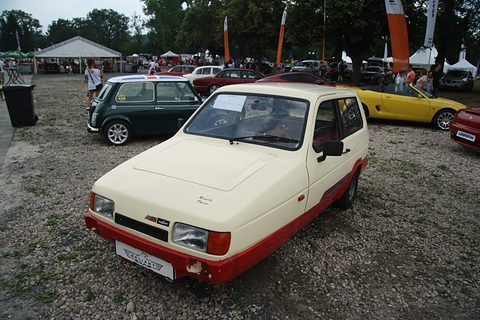
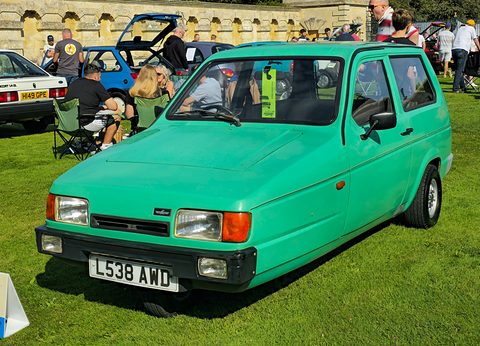
In 1975 the engine grew to 848 cc, with an SU-type carburettor and 40 bhp, and the body had minor changes. The club gives 85 mph (137 km/h) and 0–60 mph in 16.1 seconds.source 3source 7 The 850 could now beat the 70 mph motorway limit, which silenced critics who had seen the 750 as an obstacle to traffic, and Autocar then gave a Reliant three-wheeler its first full road test.source 6source 8 From 1974 to 1978 MEBEA built the Robin under licence in Greece (see built under licence).source 4source 6 Princess Anne bought a Robin Super Saloon while she was living at Sandhurst, the club says; one other source adds Roy Orbison to the list of owners.source 3source 1 Limited editions, the GBS and the Jubilee, saw the first Robin out.source 4 It ended in 1981 by the club’s date (English Wikipedia says the last was built in 1982), after about 32,600 had been made, and its place went to the wedge-shaped Reliant Rialto.source 3source 6source 4
The name comes back
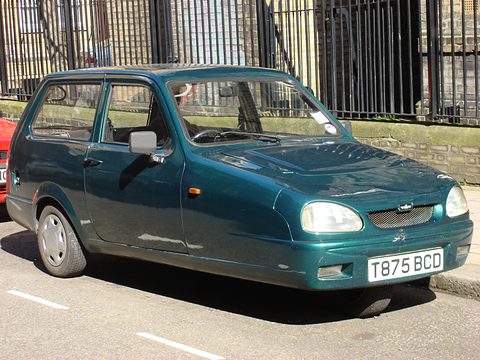
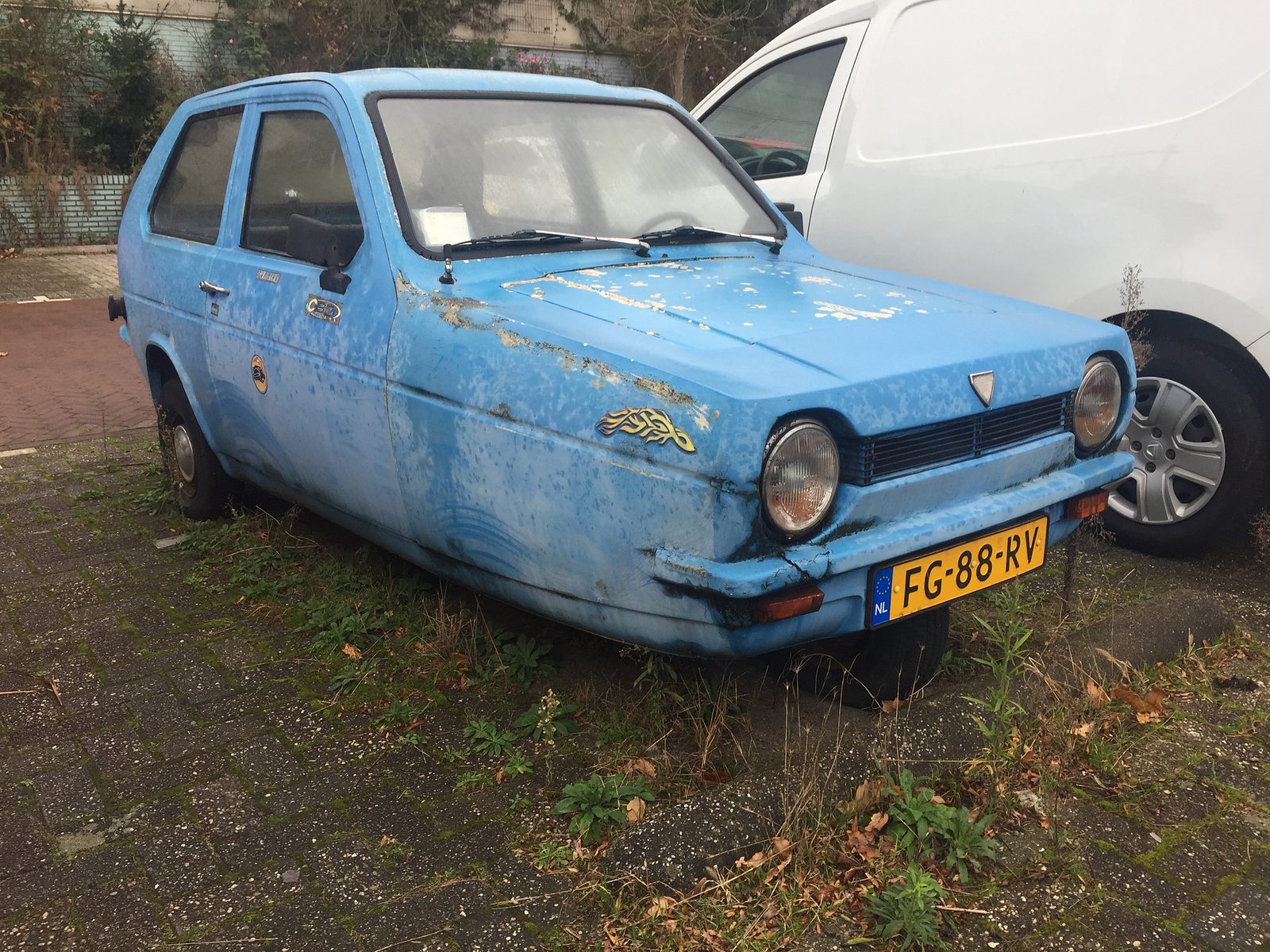
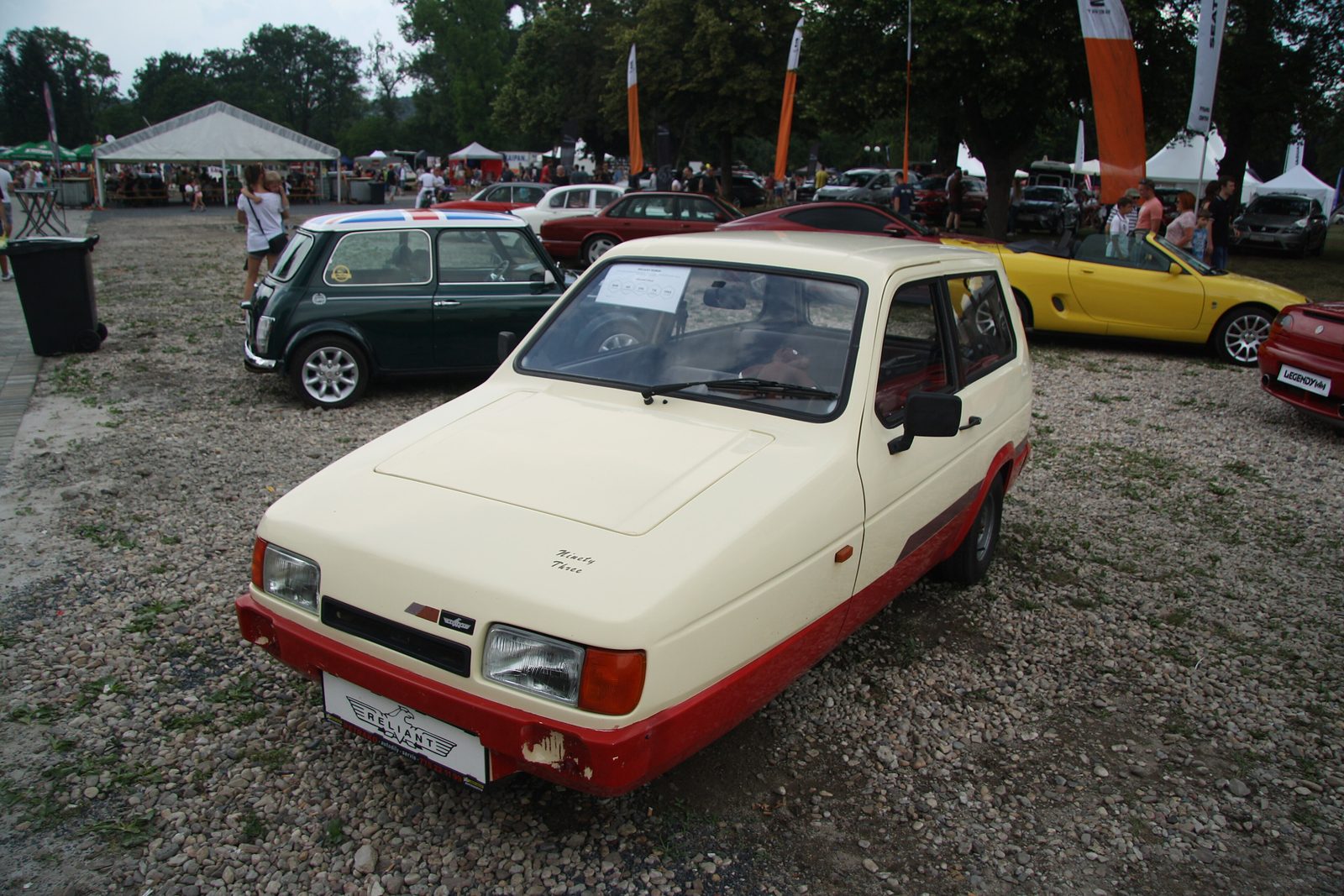
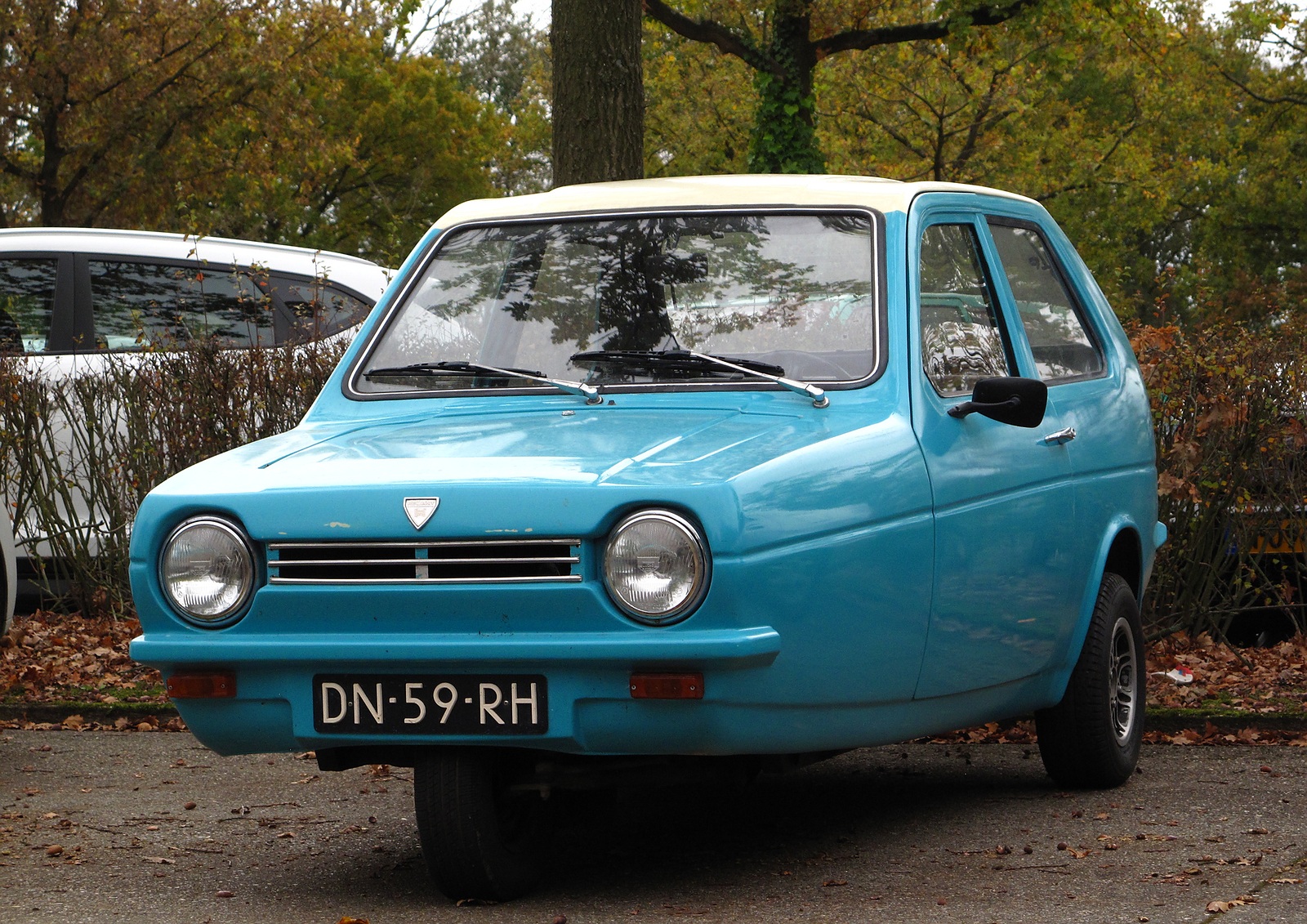
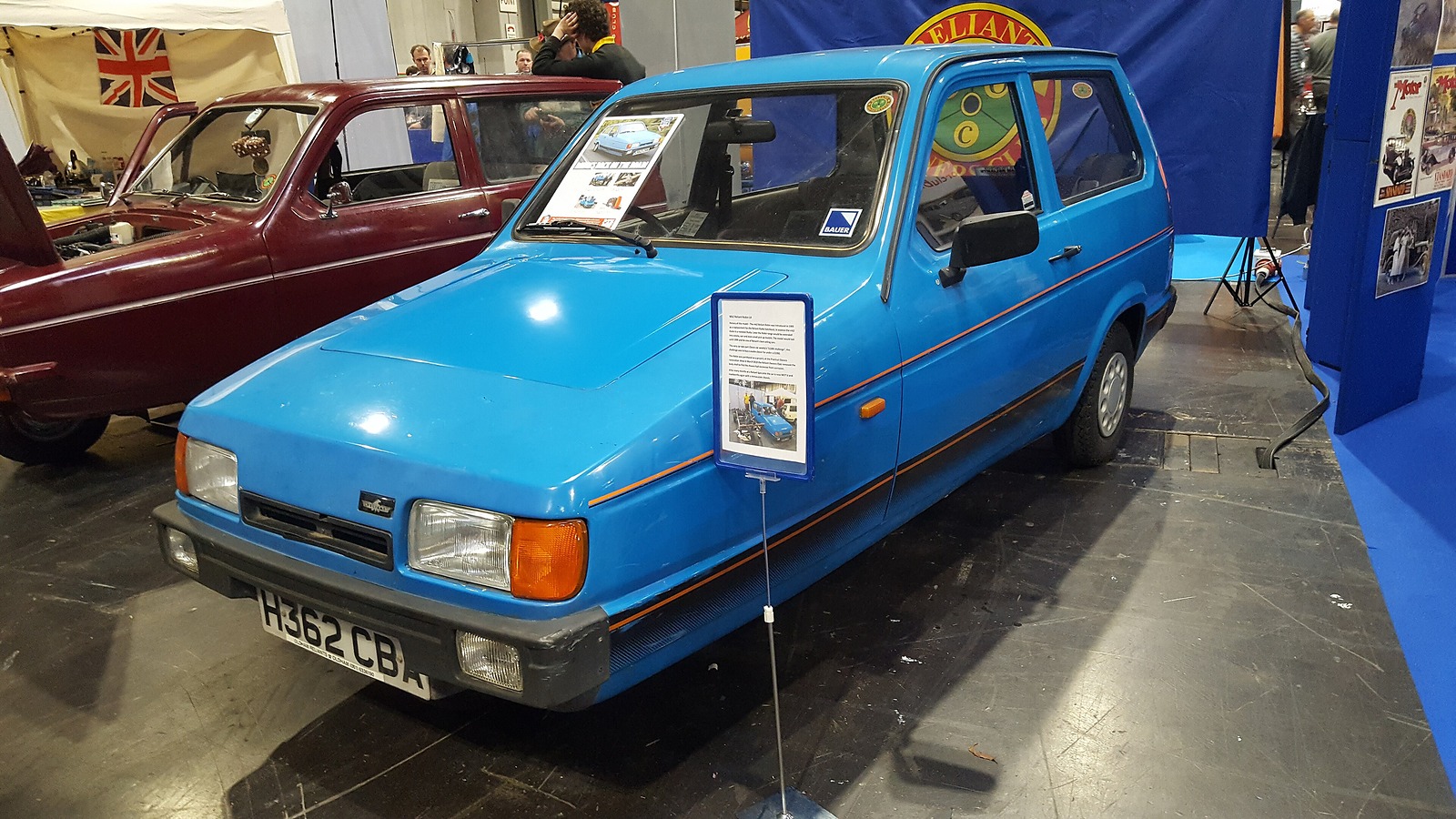
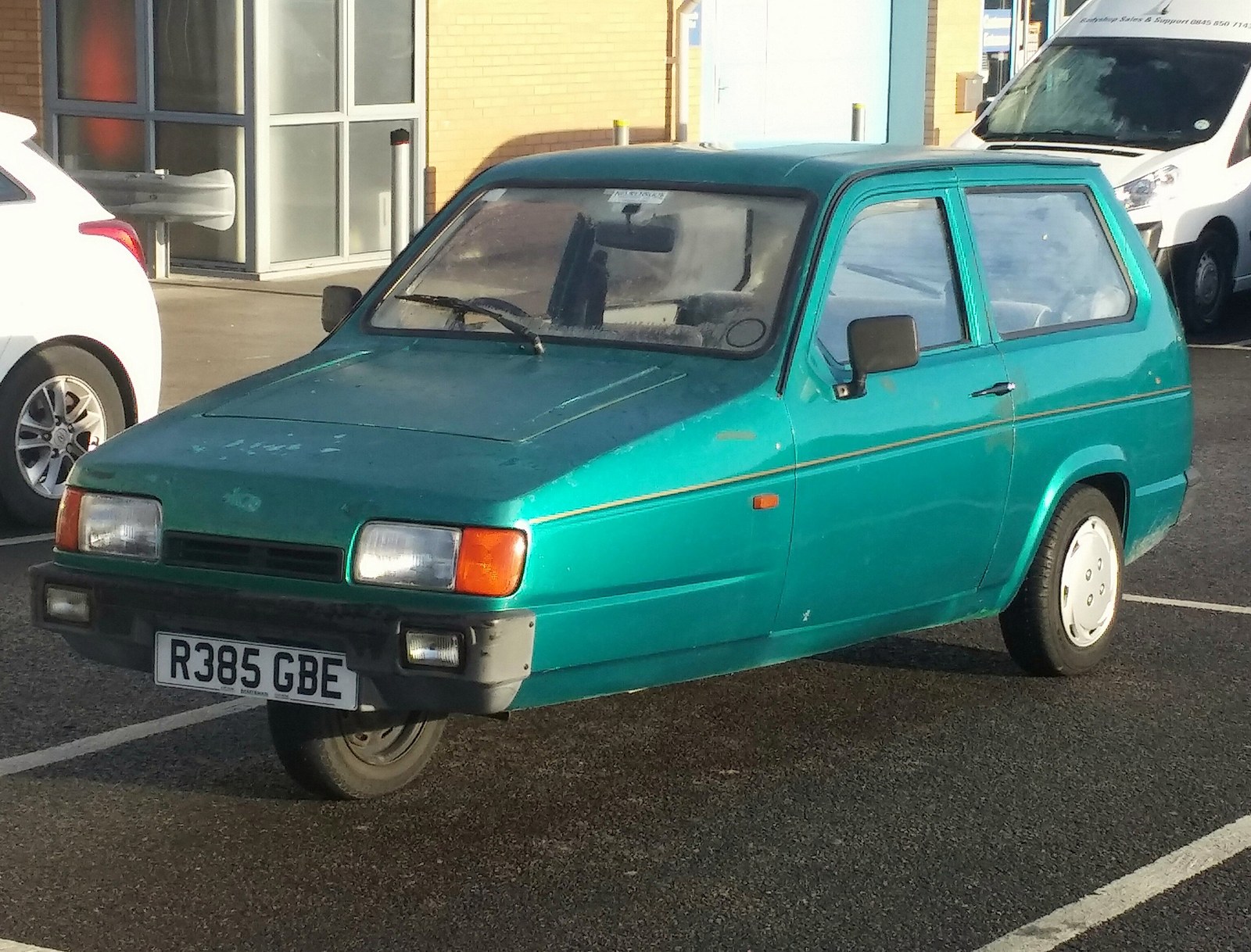
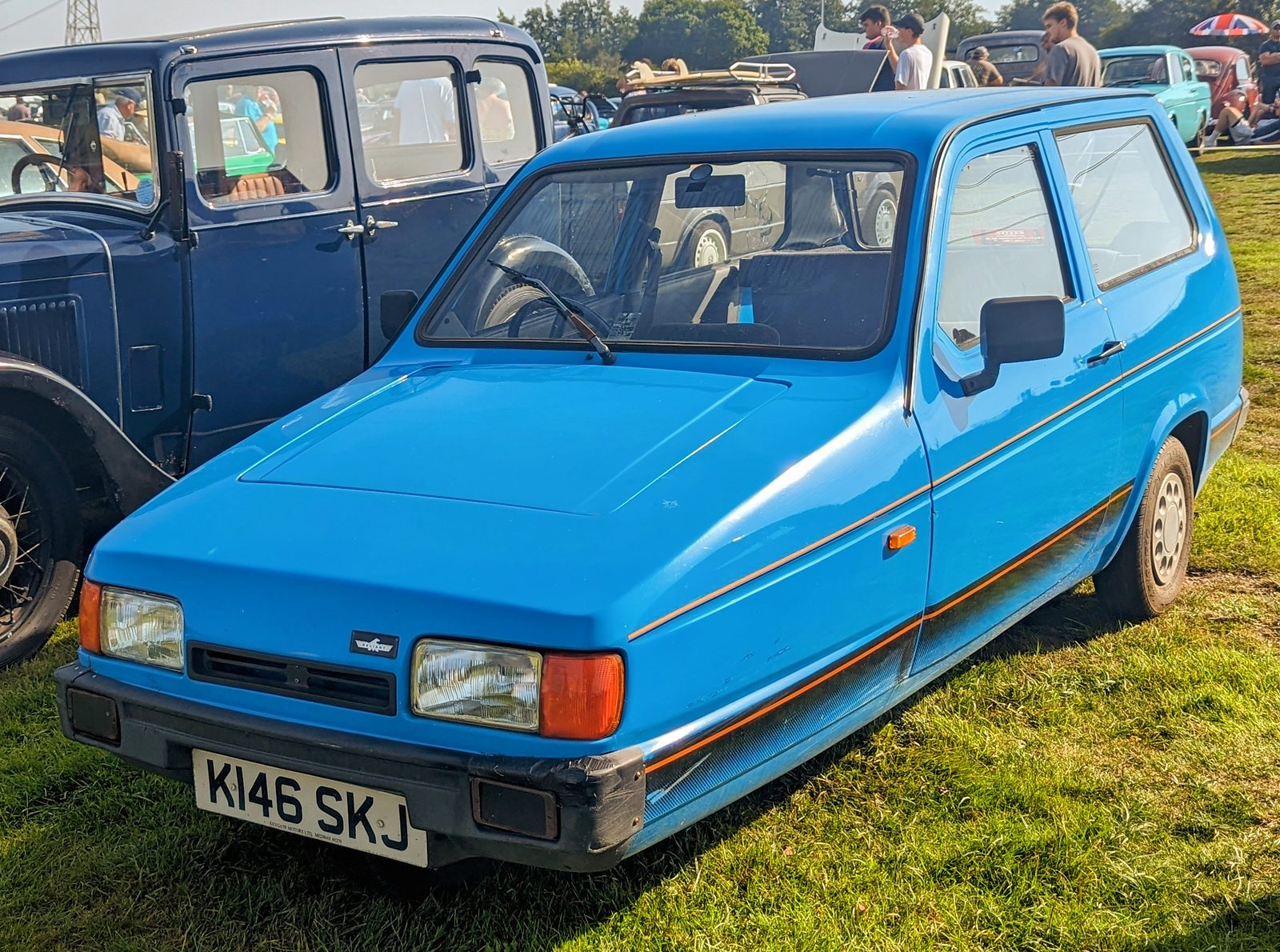
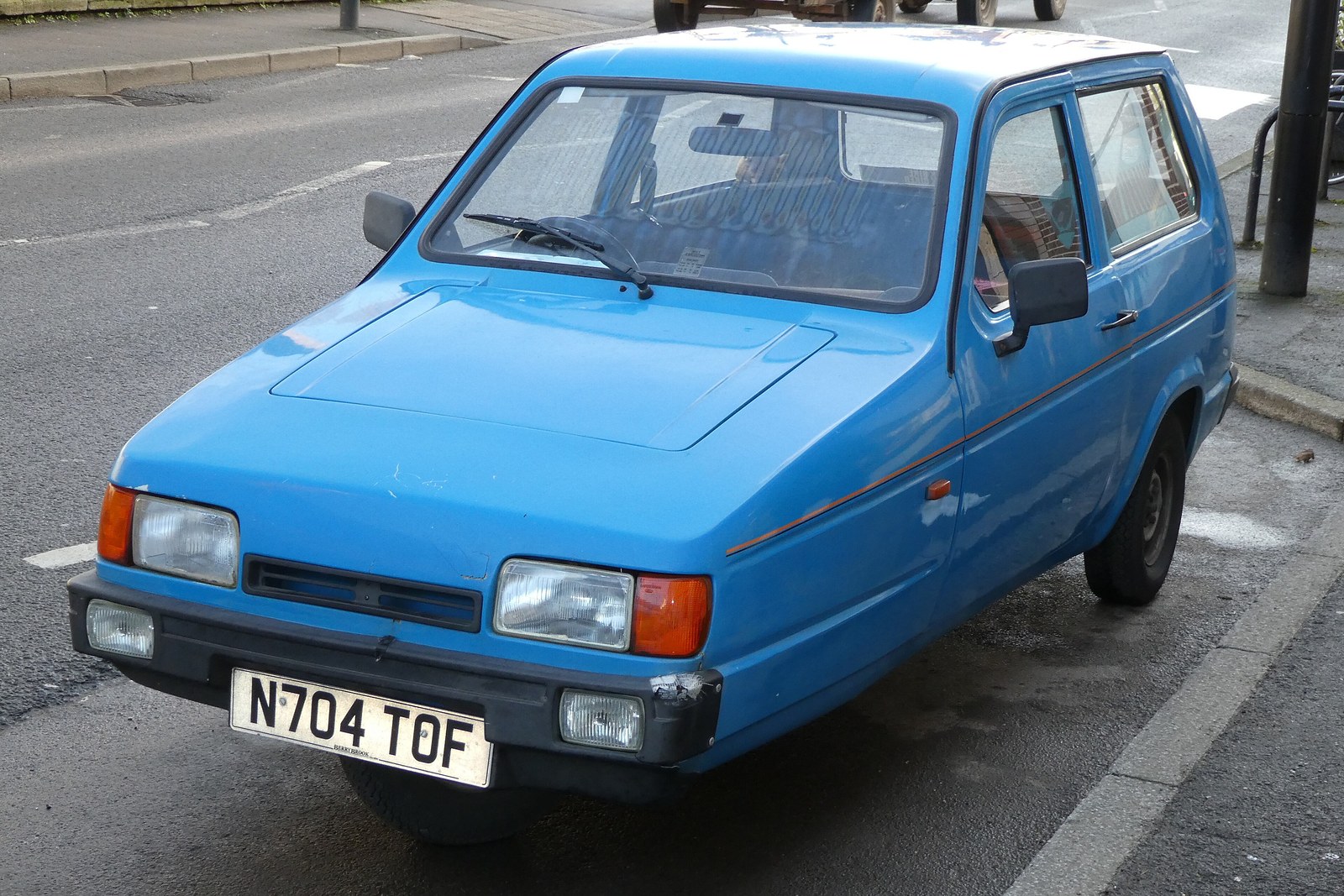
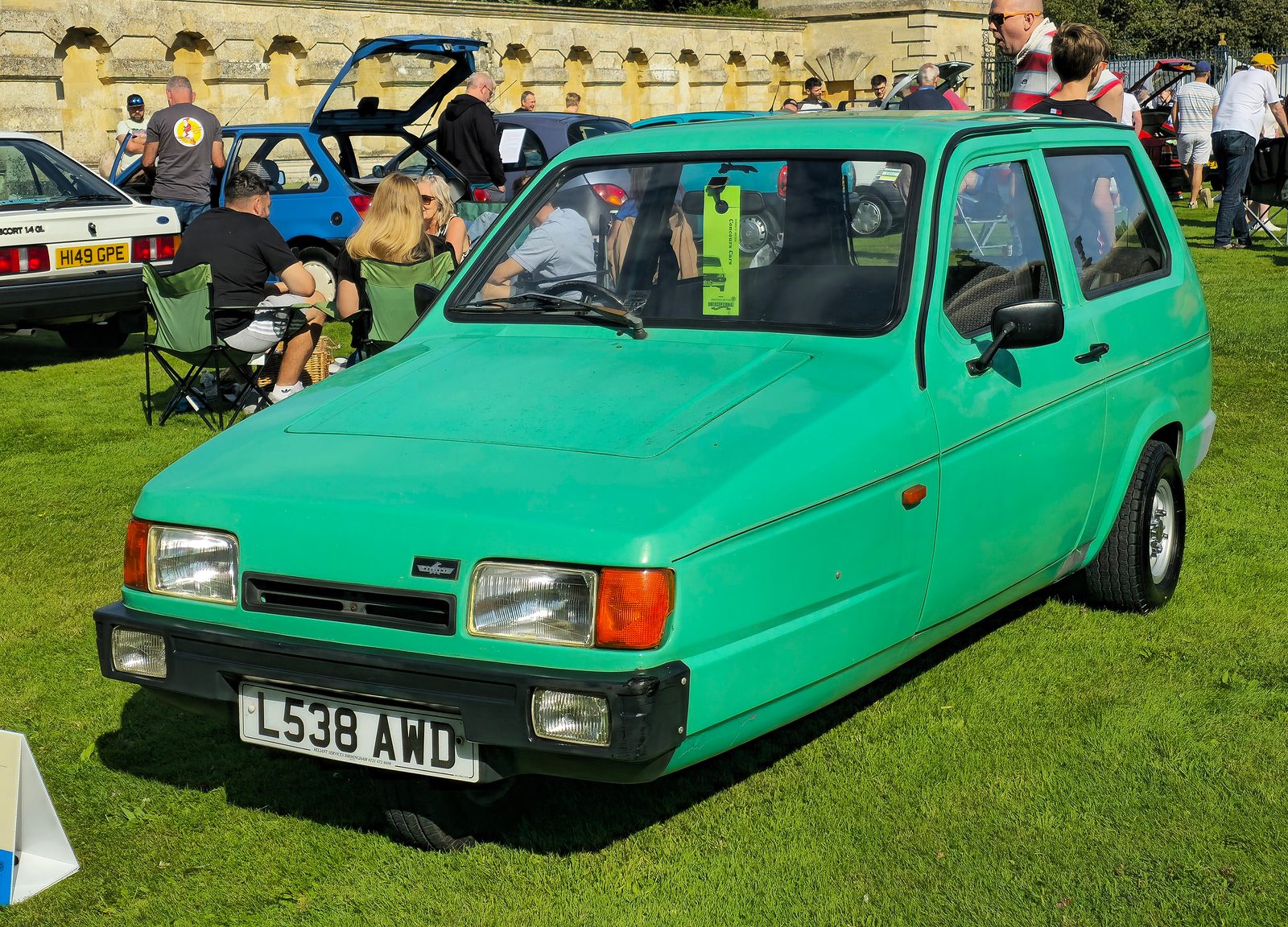
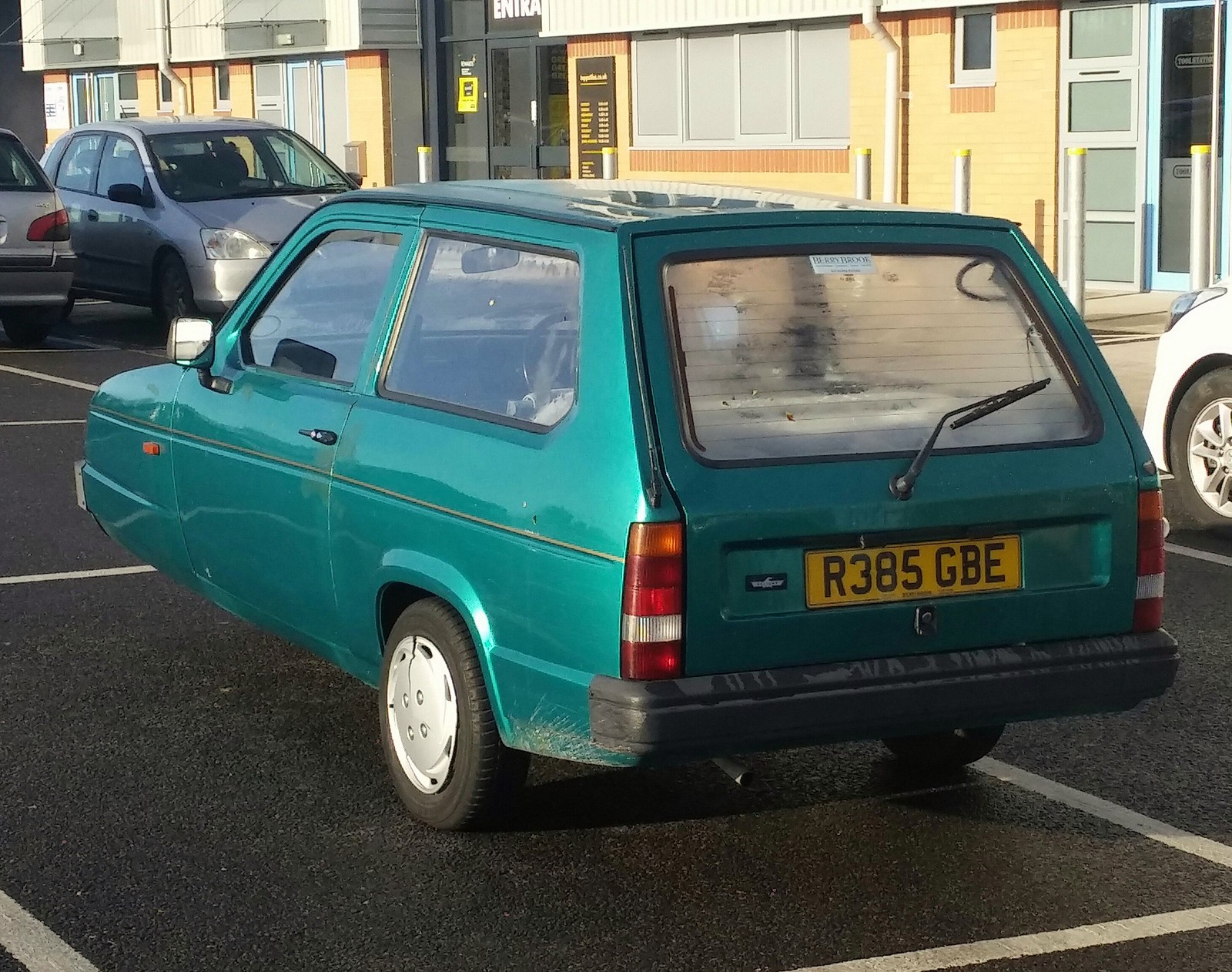
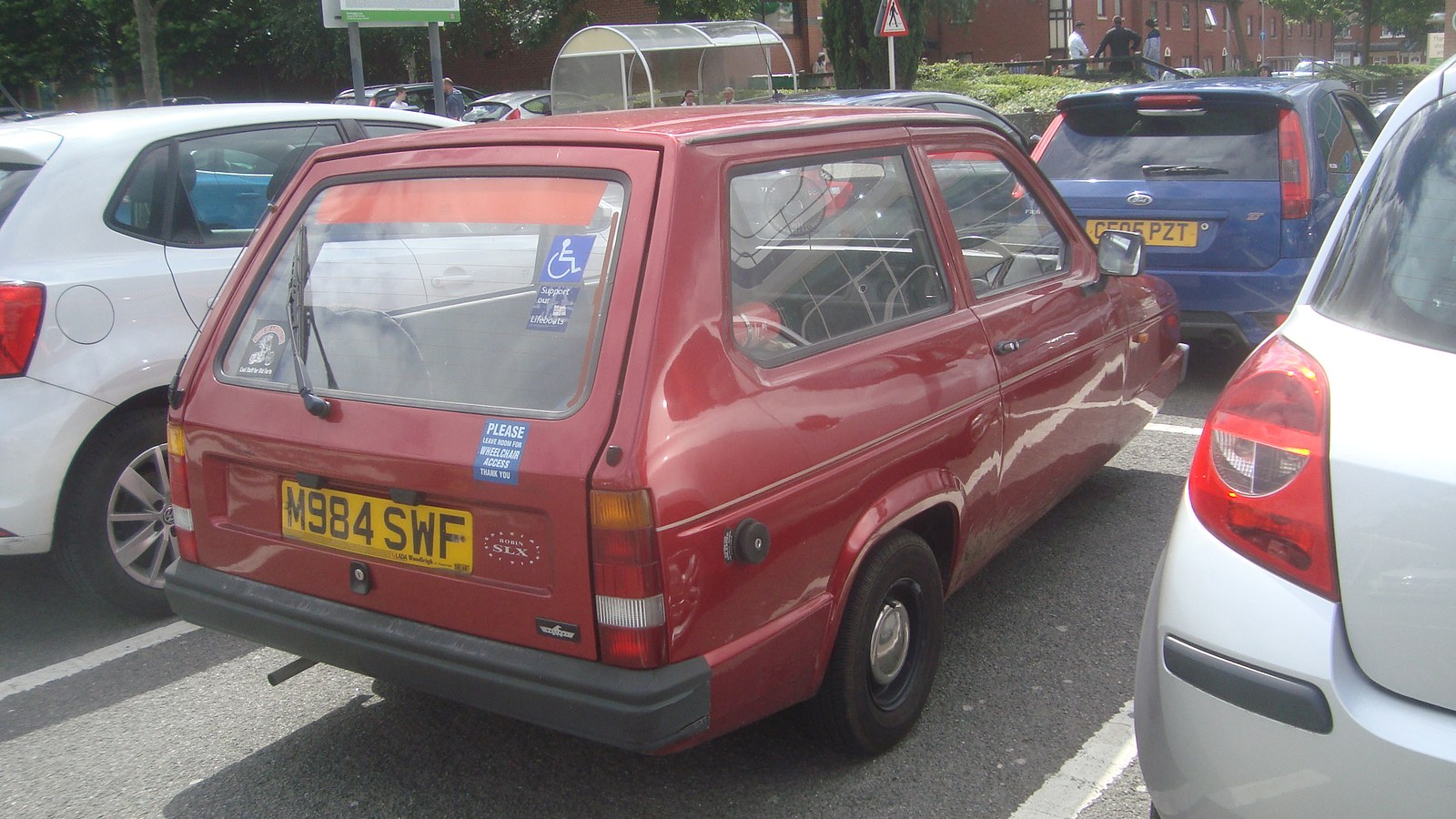
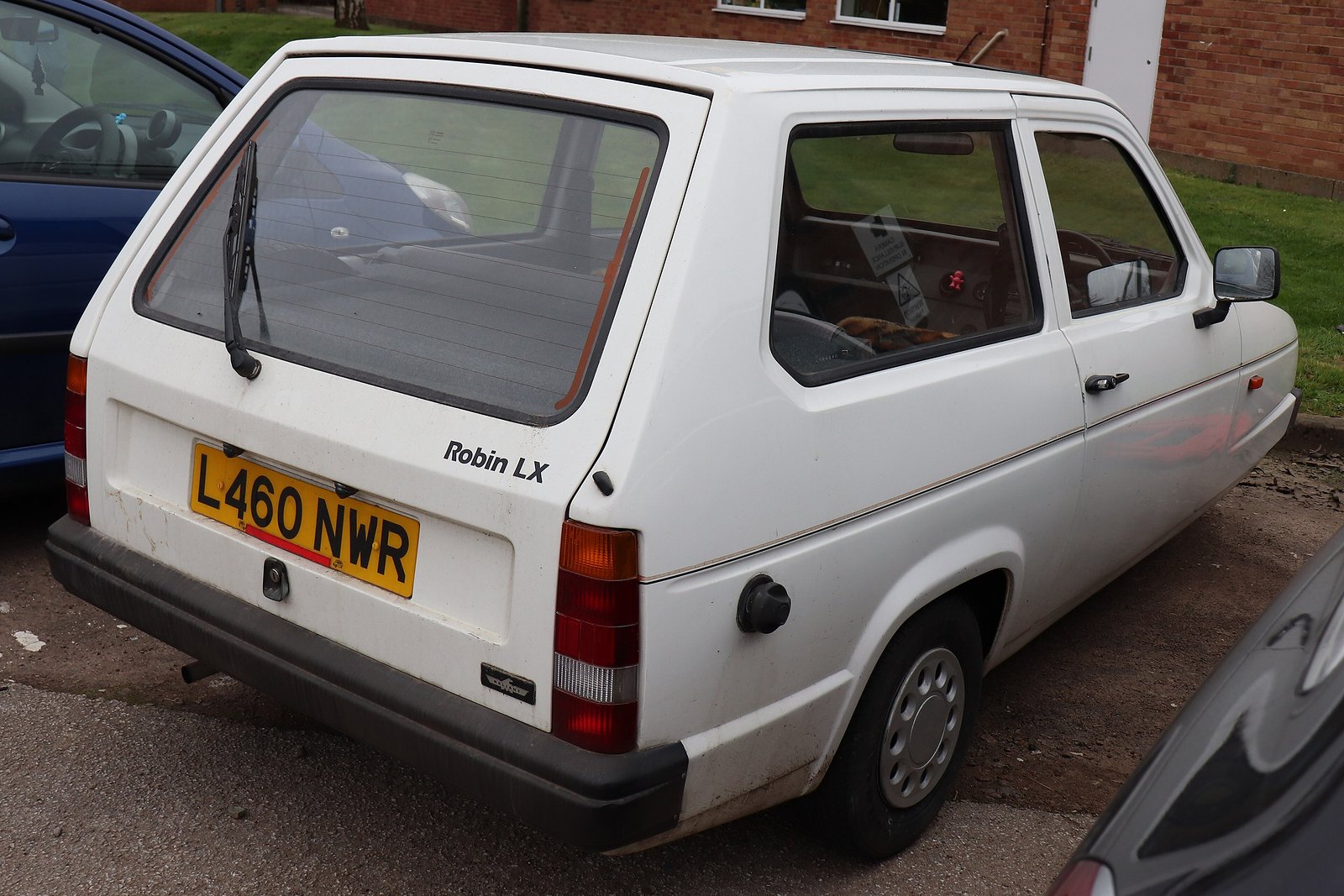
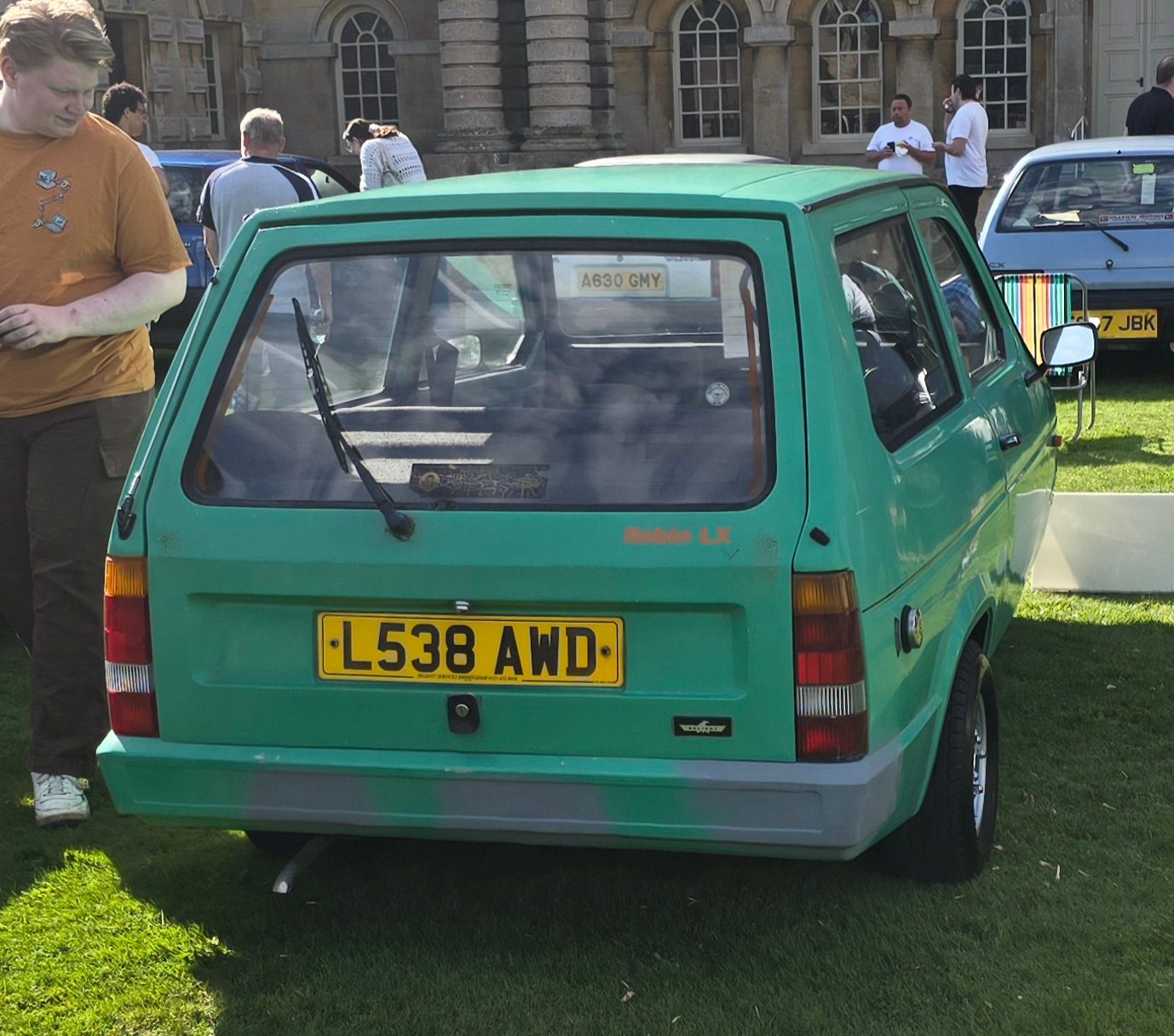
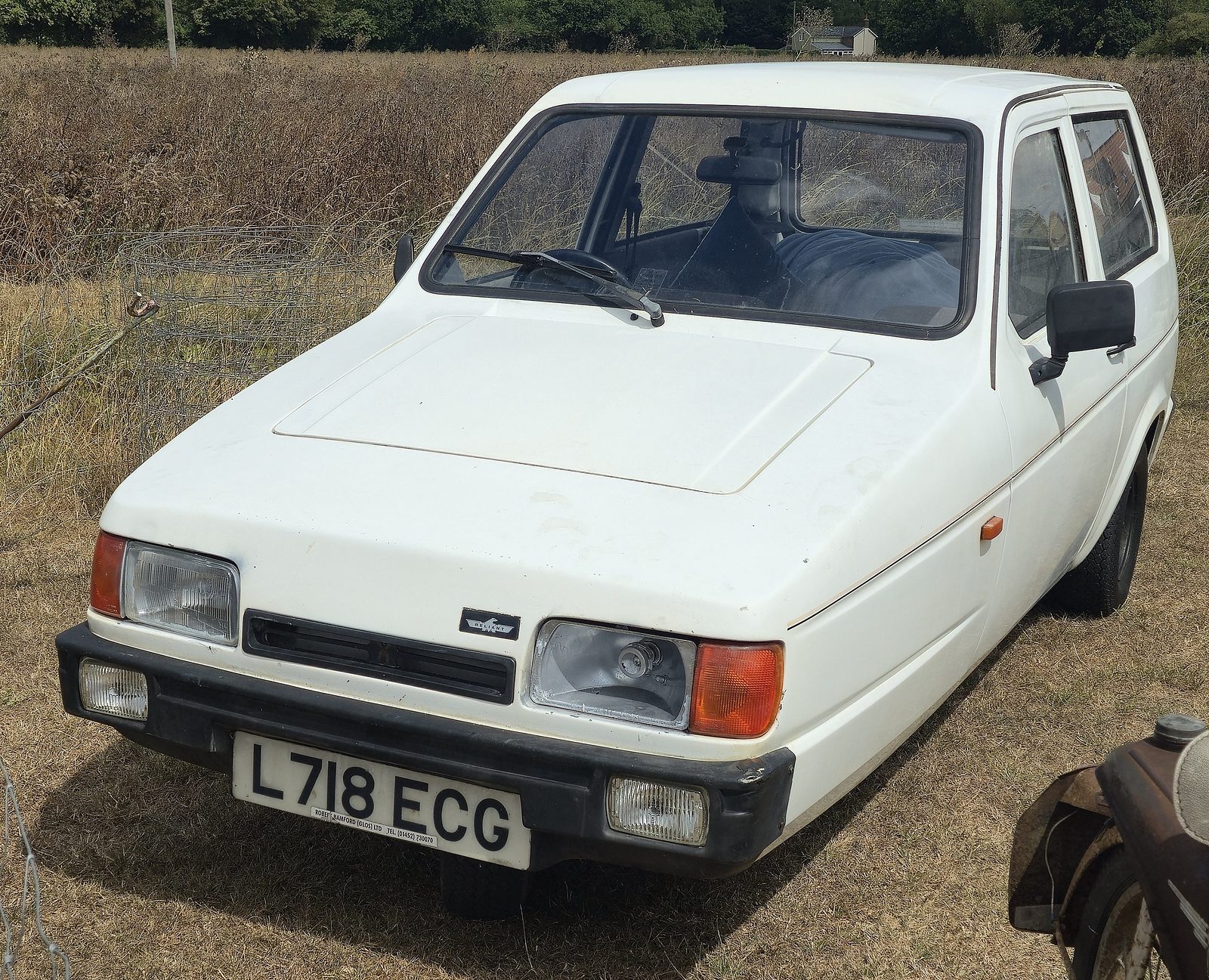
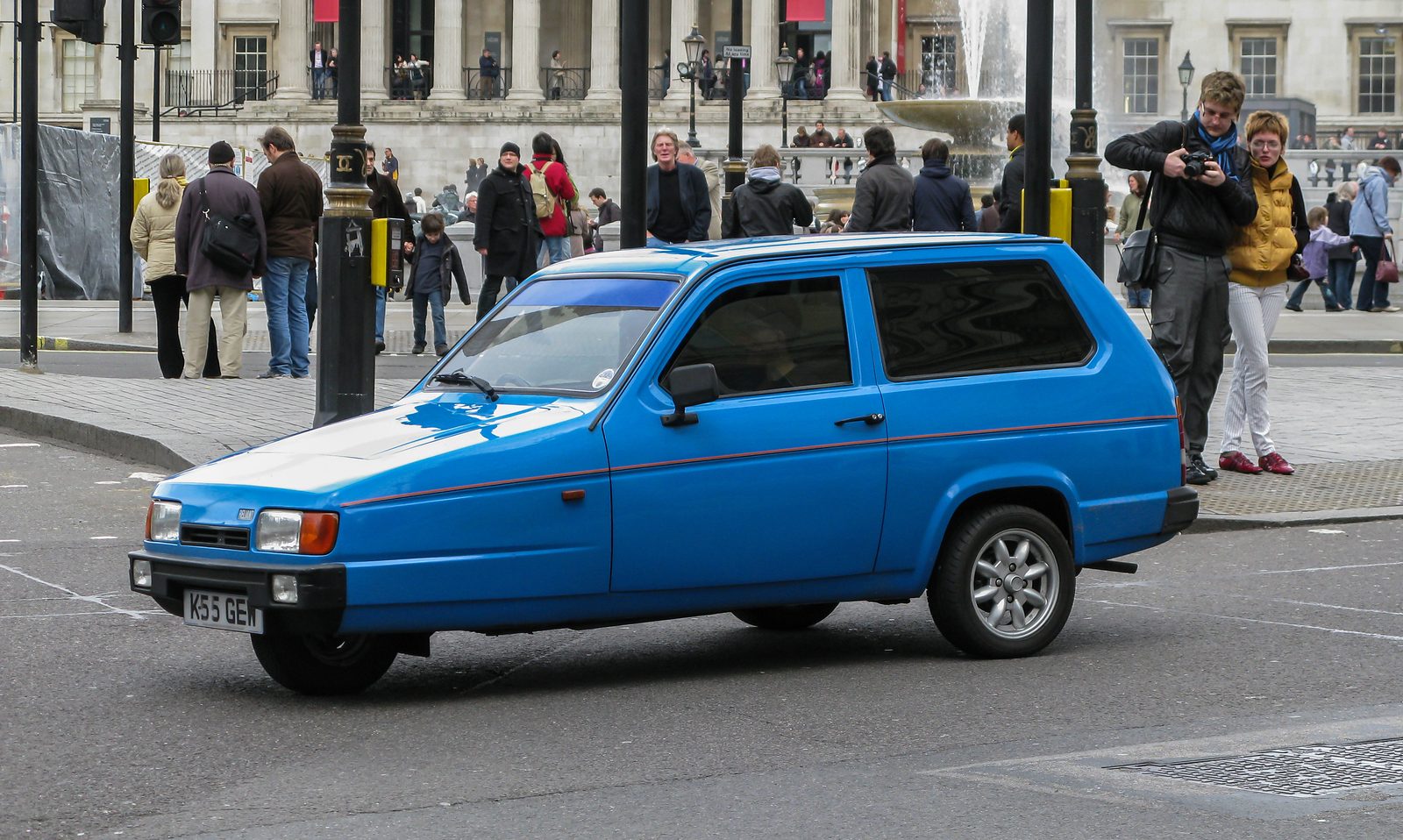
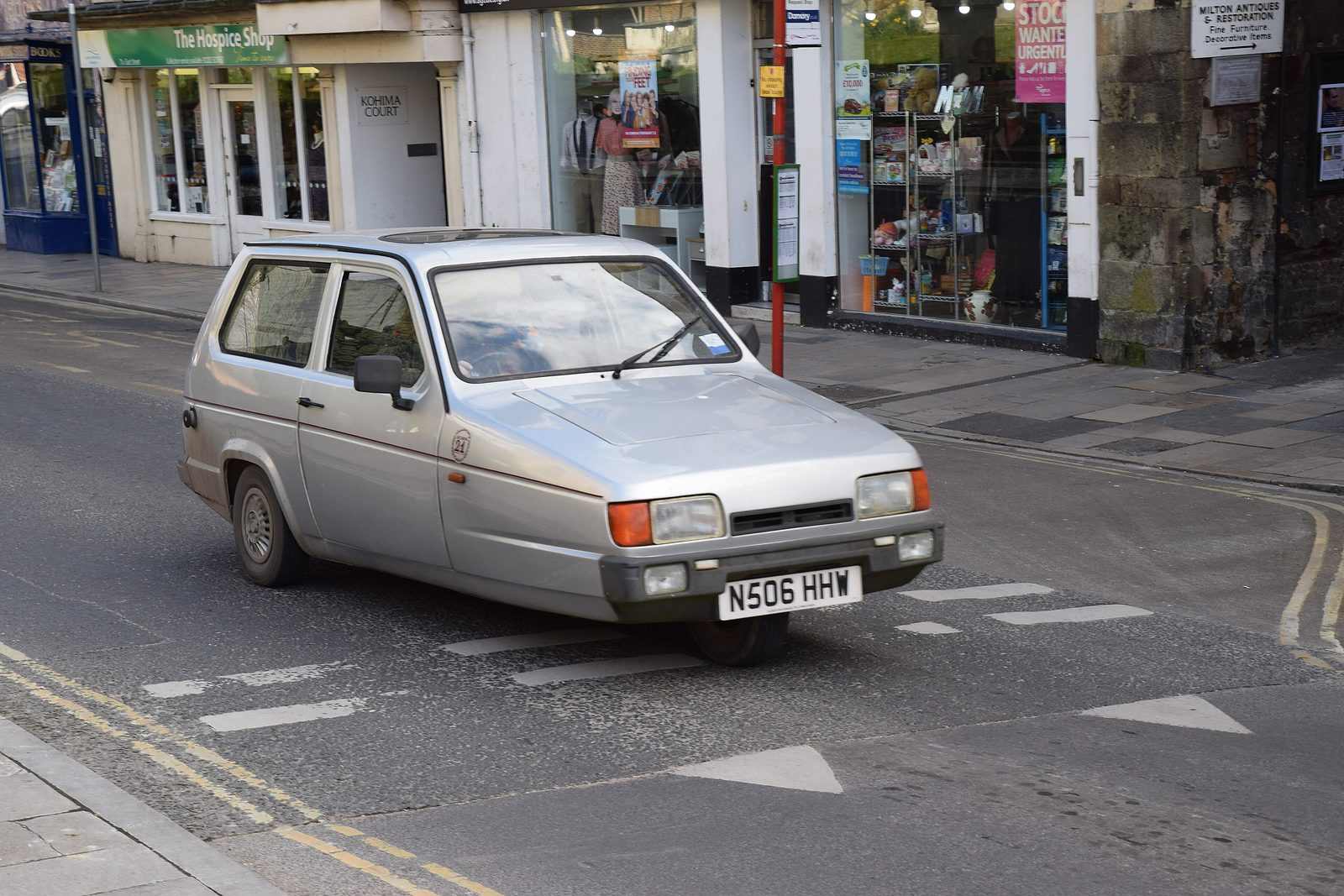
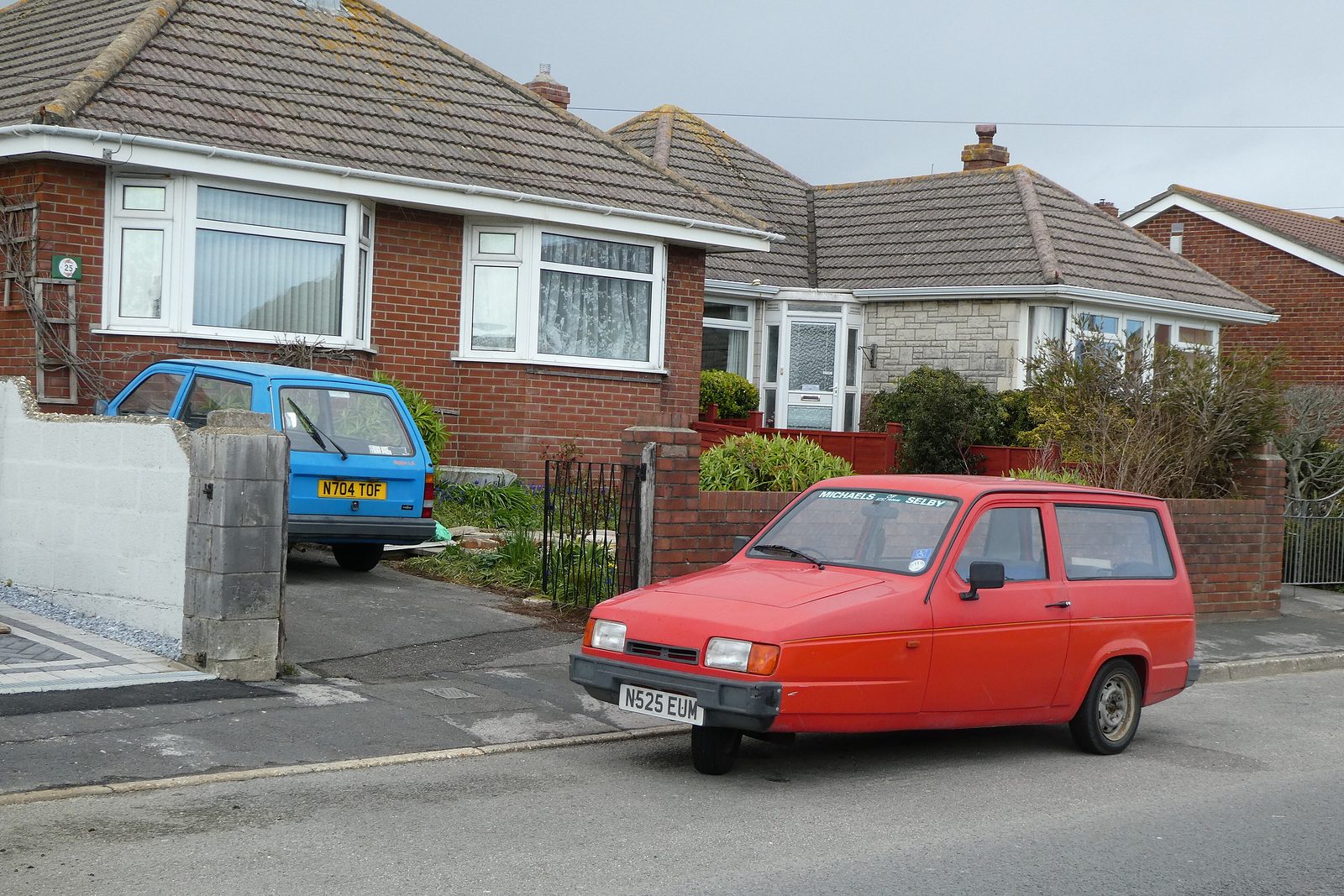
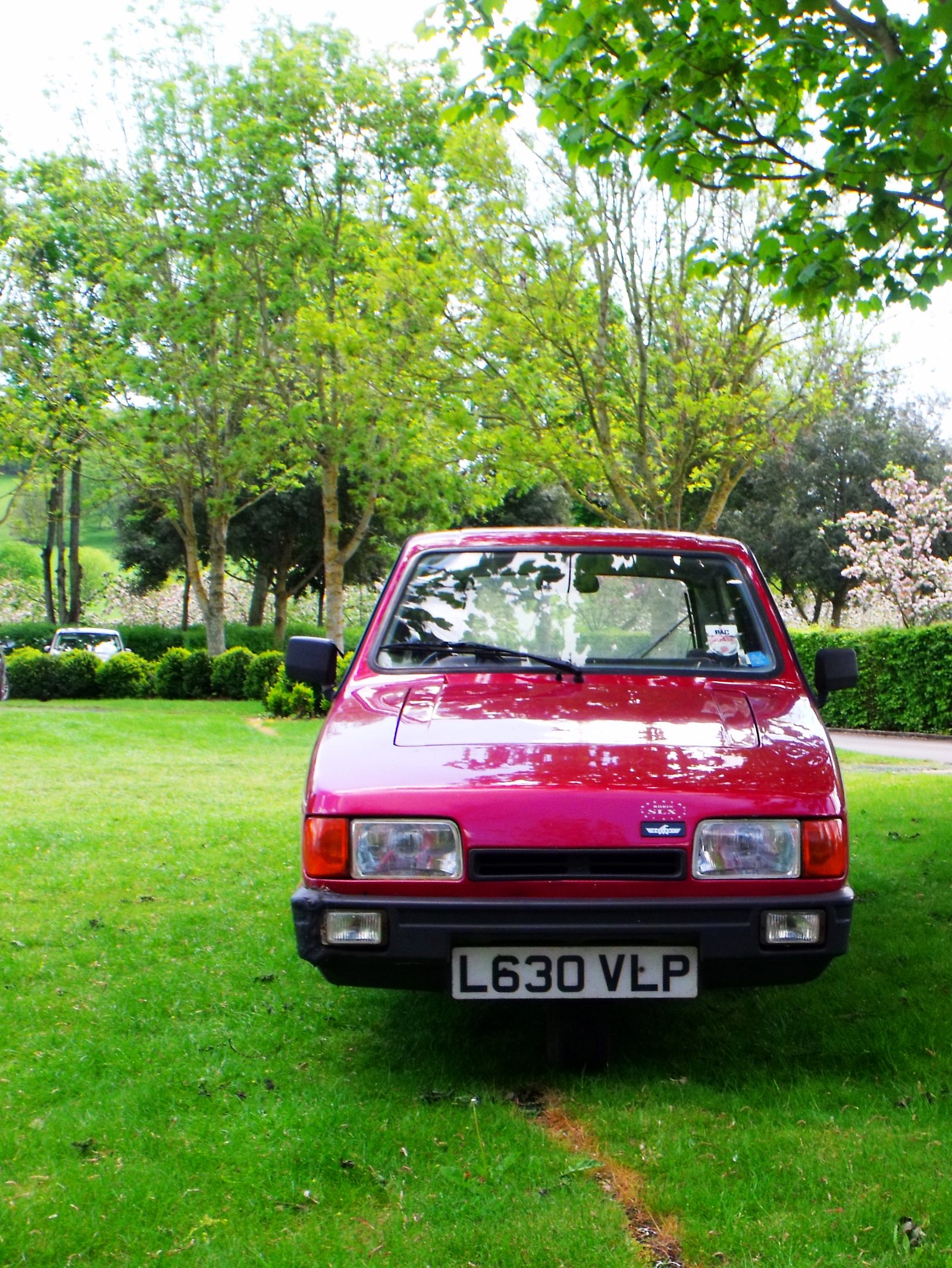
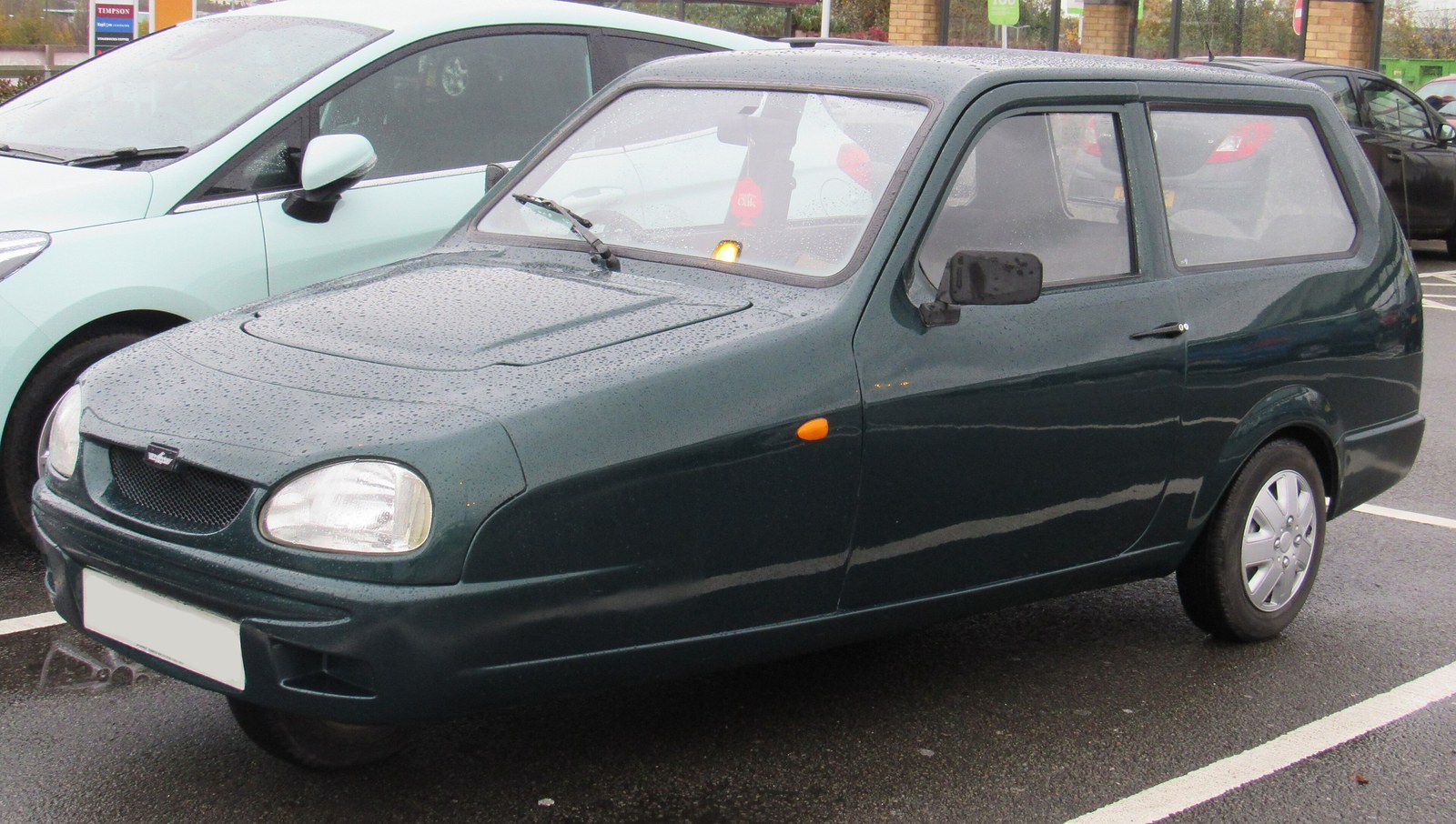
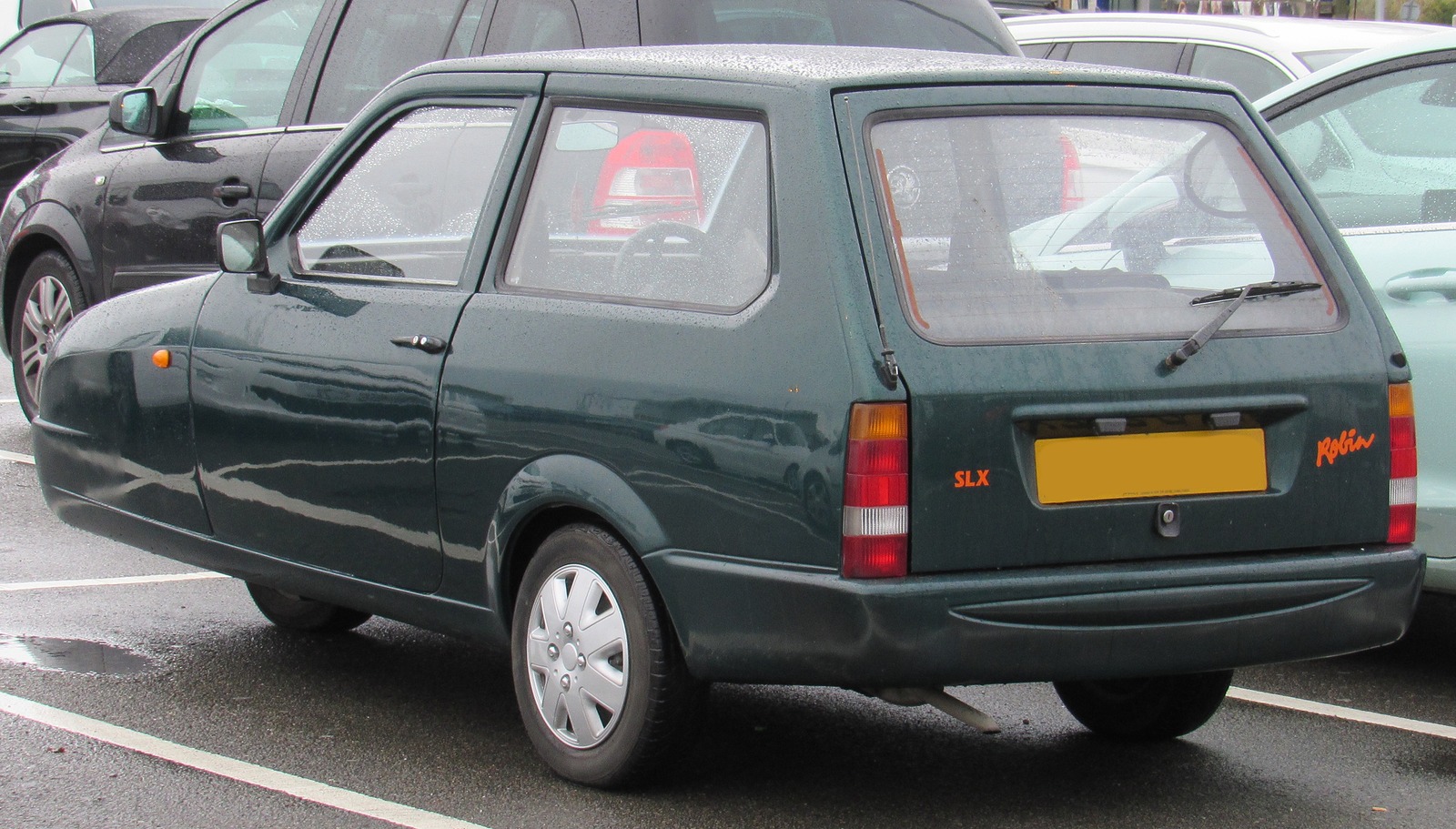
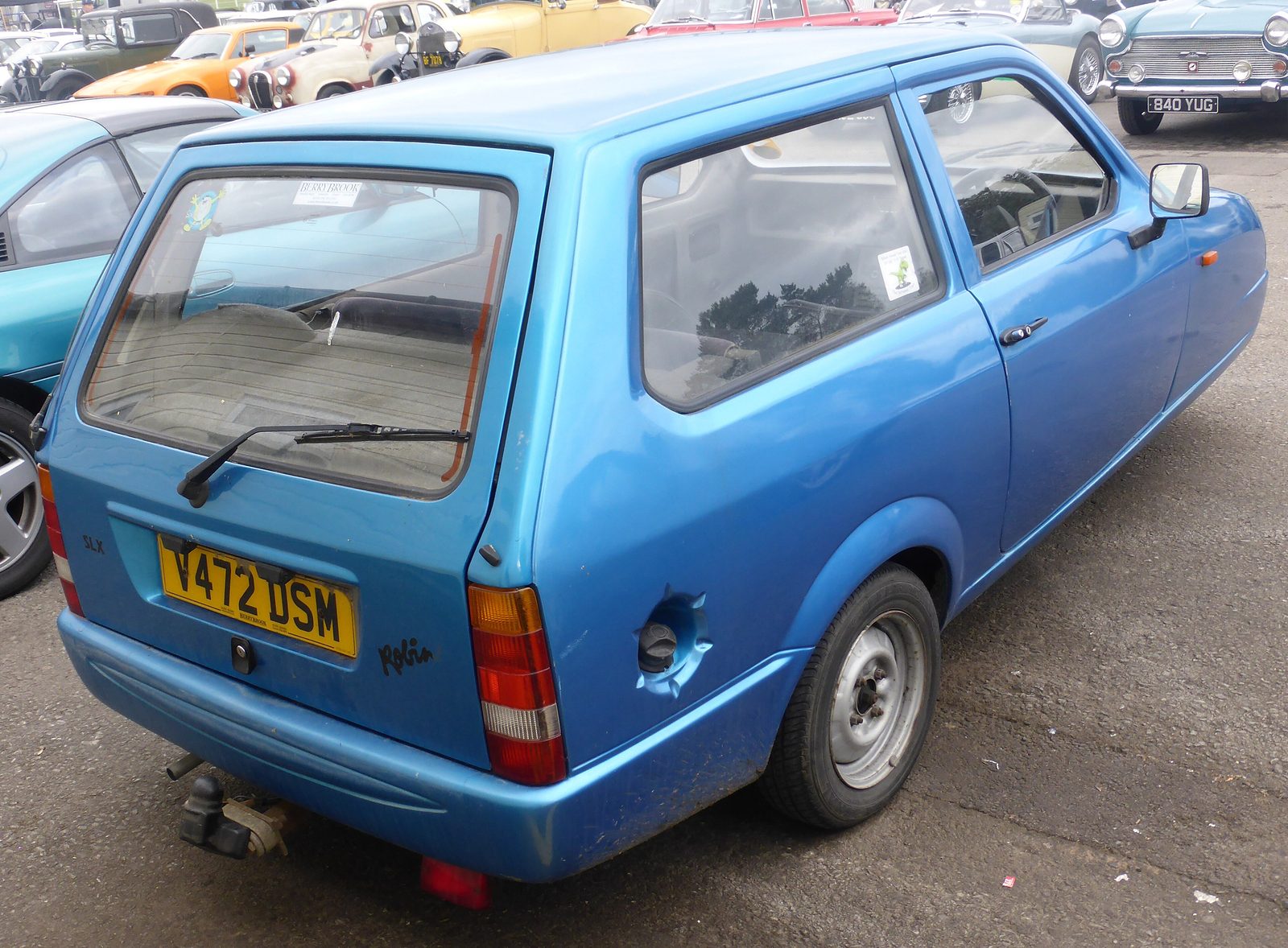
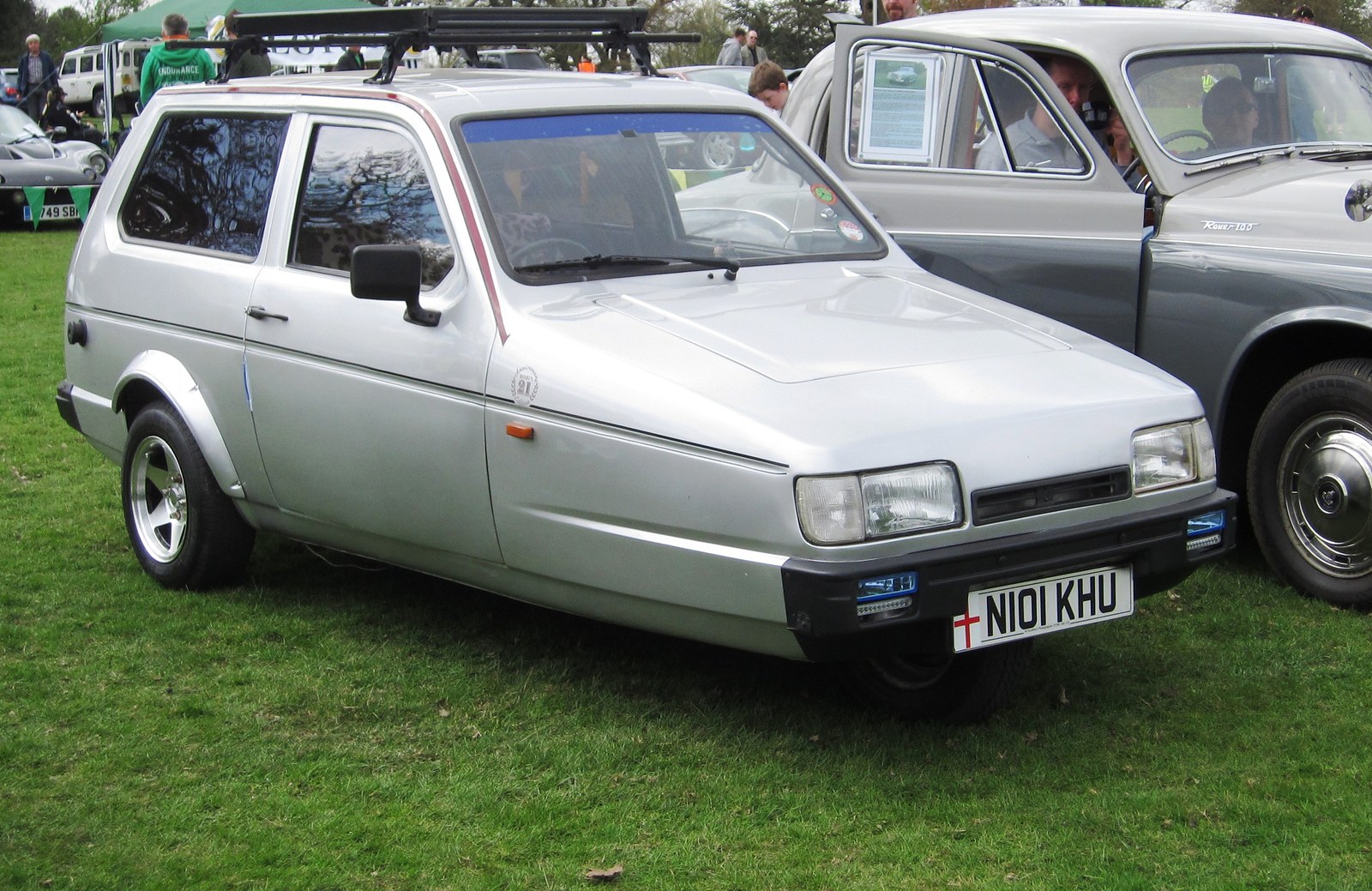
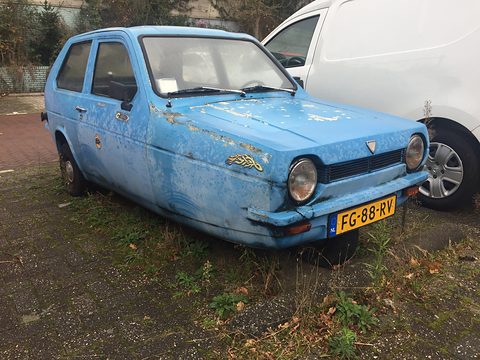
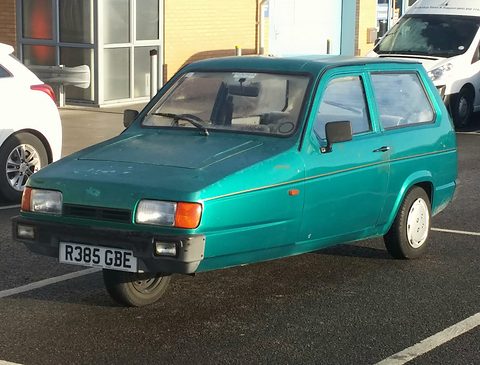
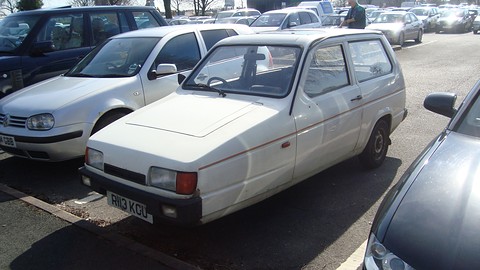
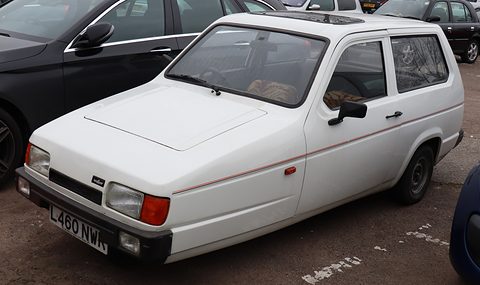
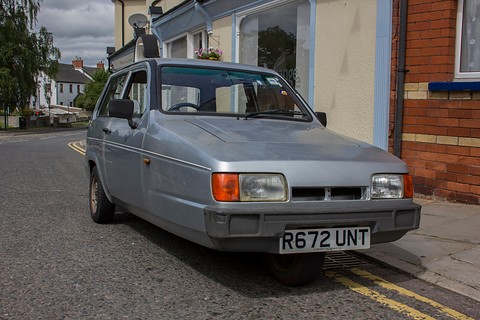
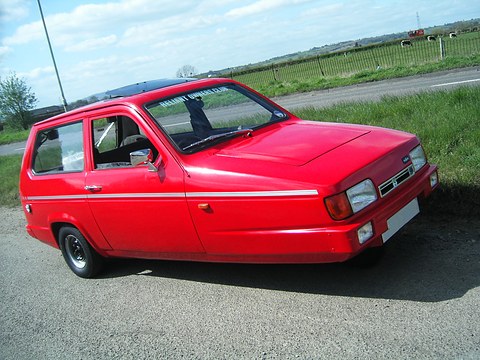
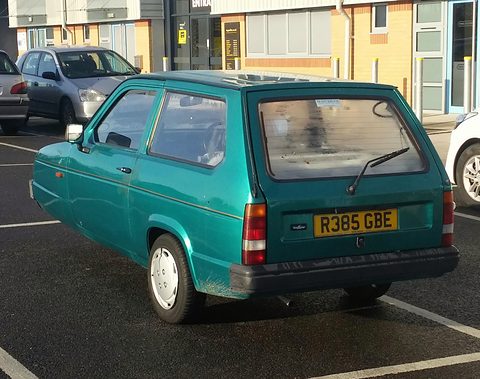
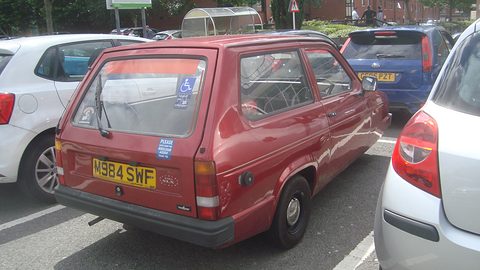
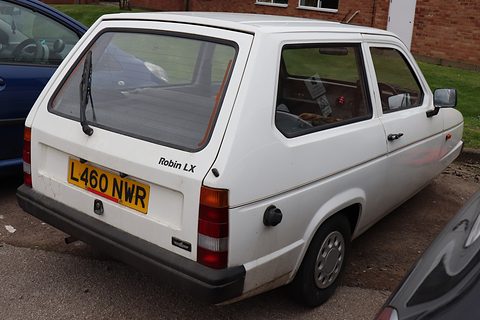
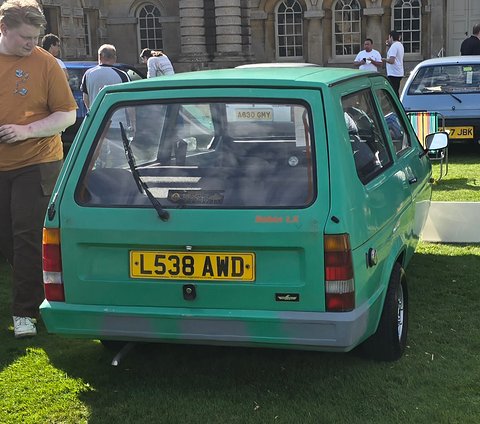
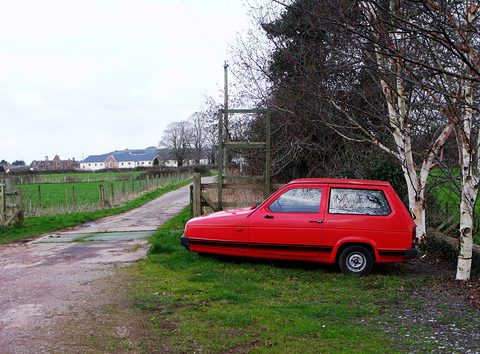
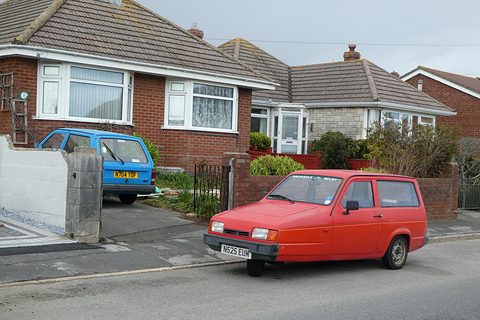
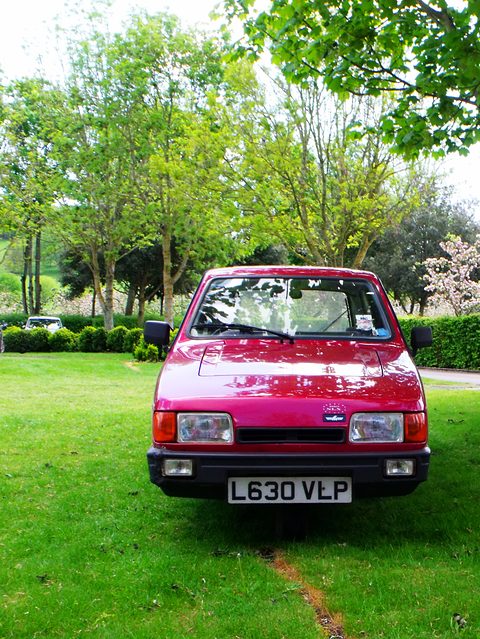
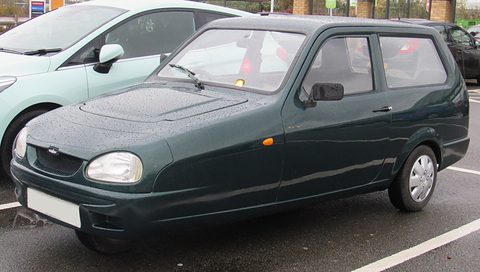
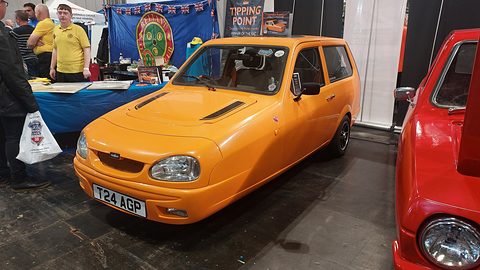
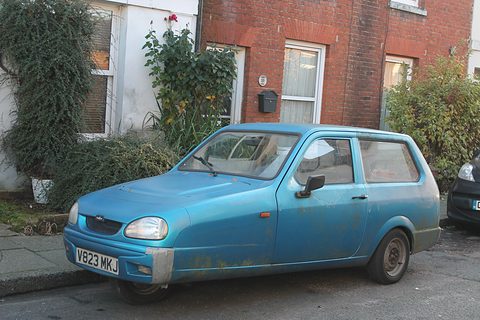
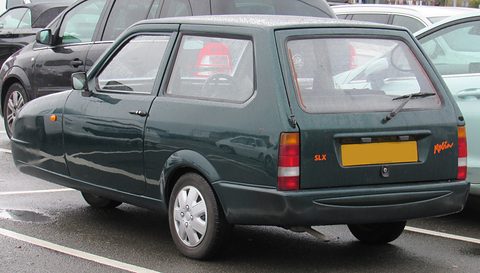
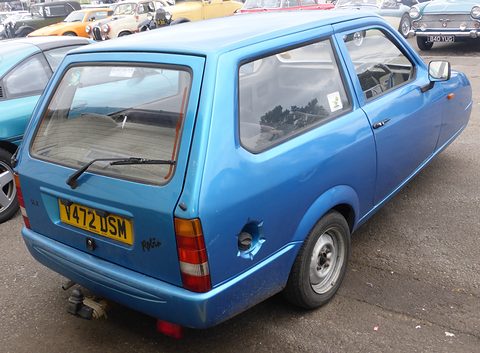
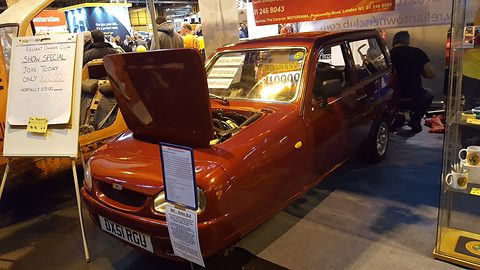
The public called every Reliant three-wheeler a Robin anyway, so in 1989 Reliant revived the name.source 3 The Mk2 had a new glass-fibre hatchback body on a galvanised chassis, a full rear hatch and a single central wiper, but the same 848 cc engine of 40 bhp; German Wikipedia says its headlamps came from the 1984 Ford Fiesta.source 3source 6 An estate and a van followed, and the Rialto stayed on as the cheaper line until 1996 or 1998, by different accounts (see the Rialto, below).source 4source 9source 10 Later cars had 12-inch wheels, brakes from the Mini and new dials, in LX, SLX, BRG and Royale trims; a Royale or a BRG cost over £9,000.source 4 In 1990 the United States Embassy in London bought three.source 6
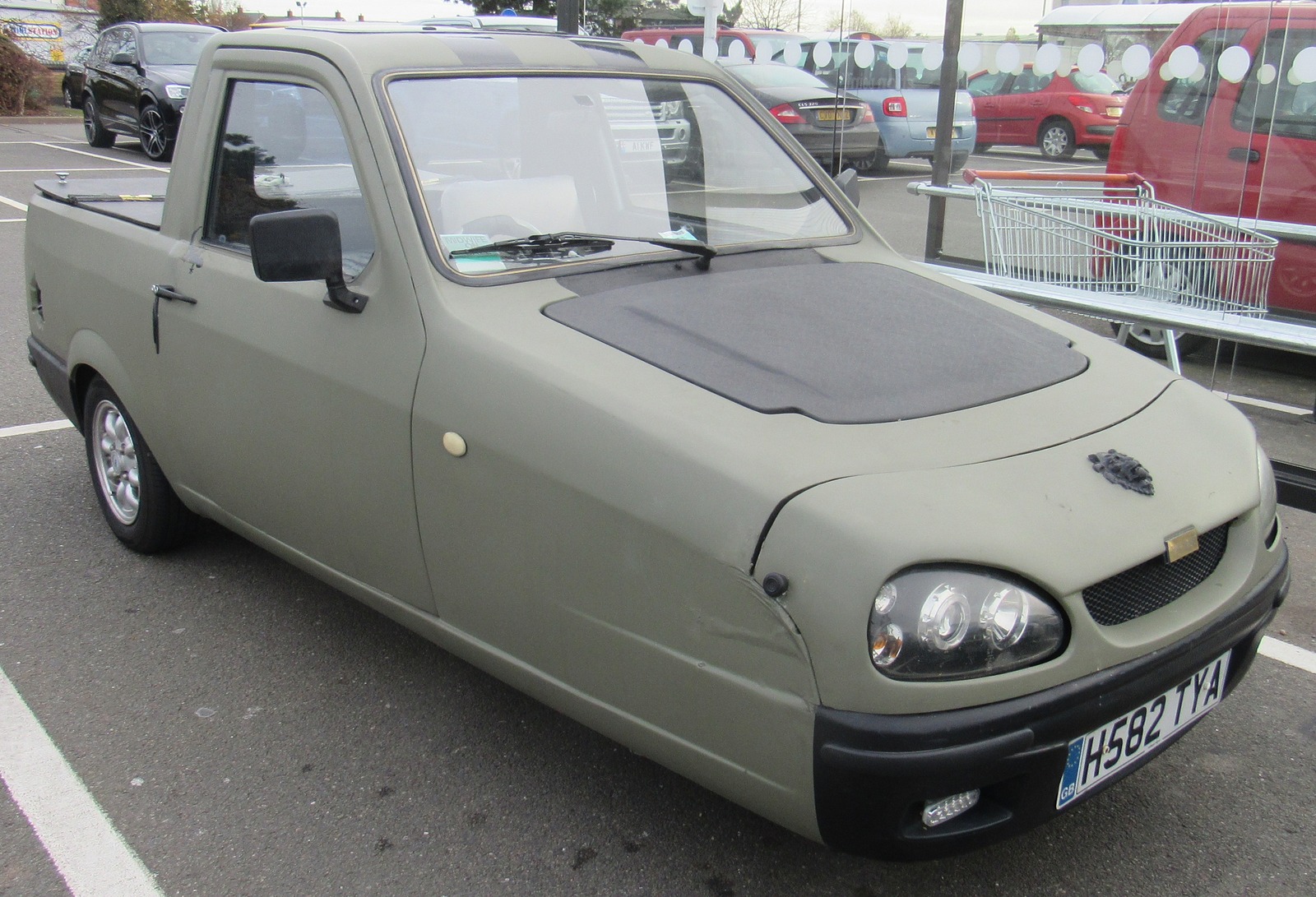
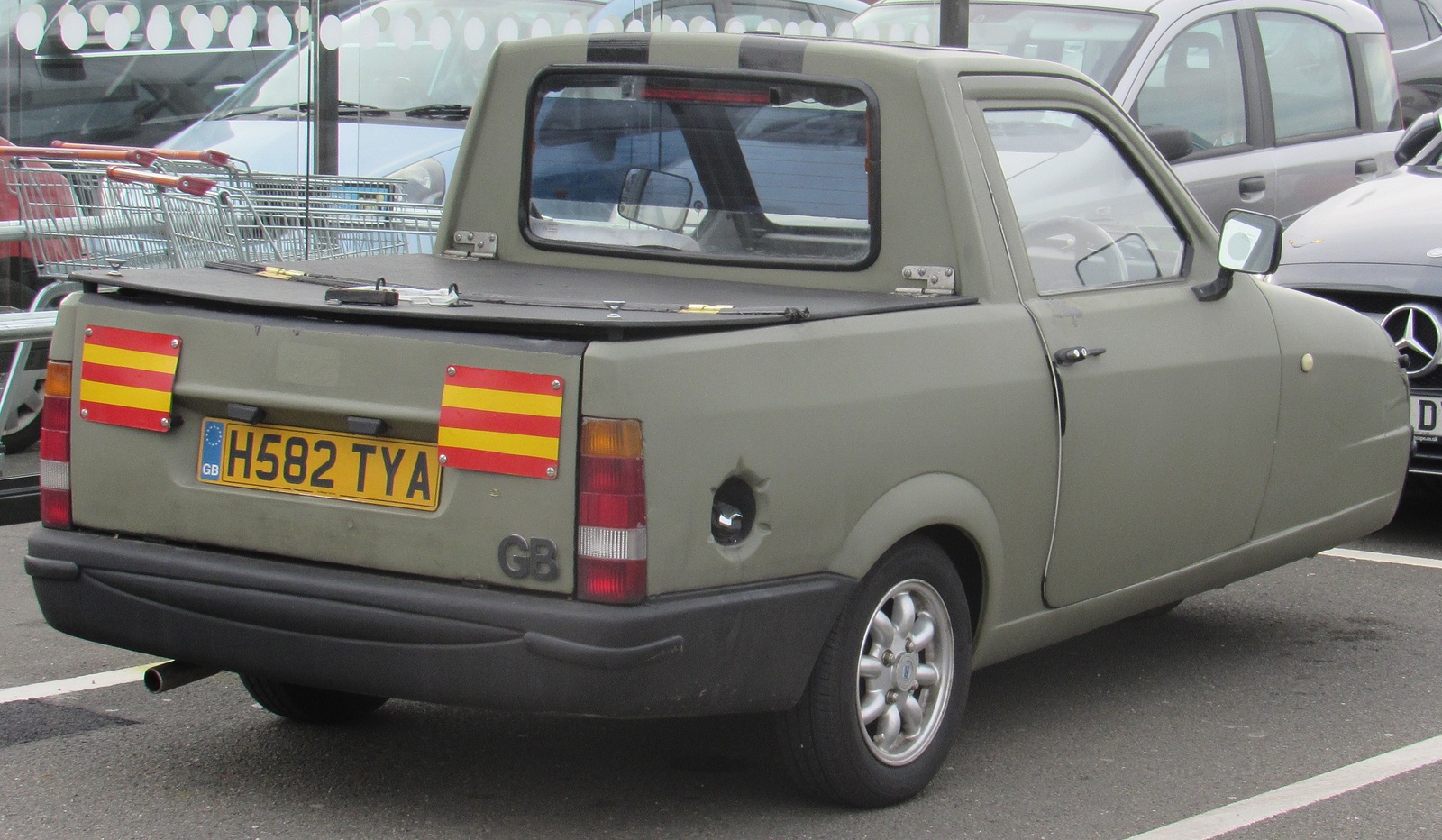
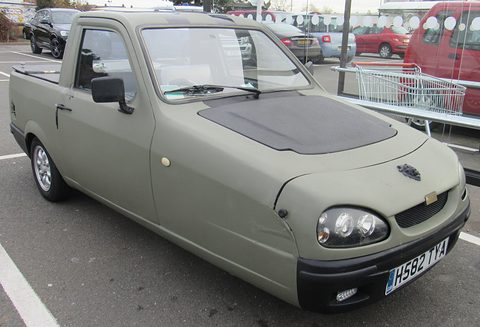
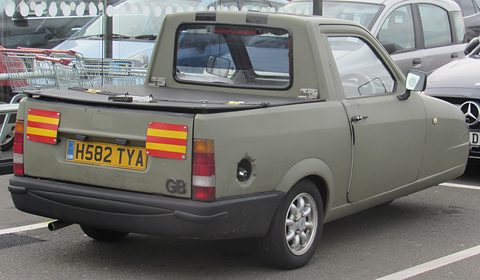
The company, meanwhile, changed hands again and again. Receivers were called in on 25 October 1990, and Beans Engineering bought Reliant for about £1.5 million; Beans called in receivers in November 1994; the Avonex Group bought the firm on 16 January 1995 and called in receivers that December. In April 1996 a consortium led by Jonathan Heynes took over, the Robin was back in production by the end of August, and 720 cars were built in the first full year.source 5 Reliant also imported the Ligier microcar and the Piaggio Ape.source 5 An 850 pick-up was prototyped and brochured in 1996, but never went into production.source 6
Burntwood, and the last Robins
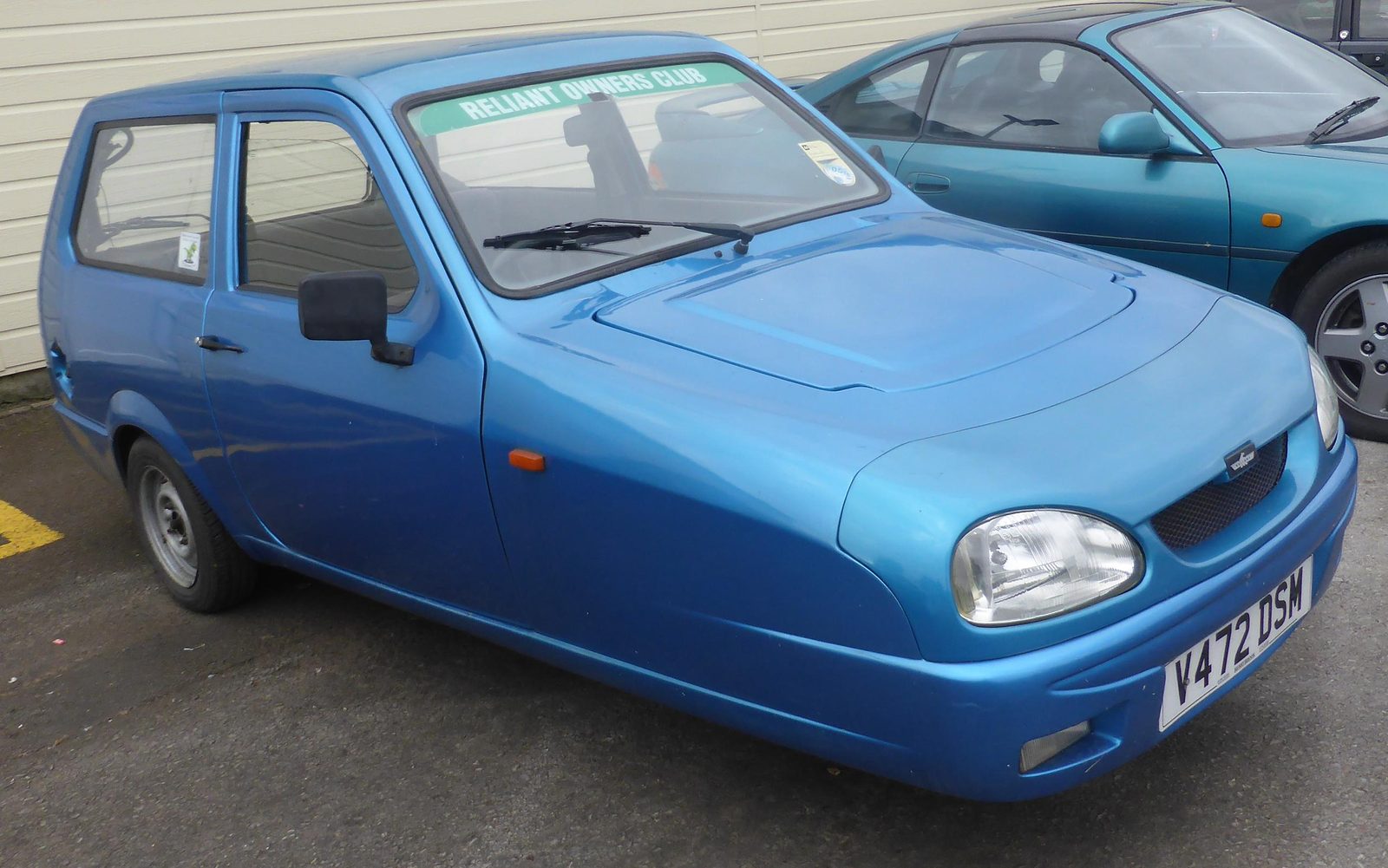
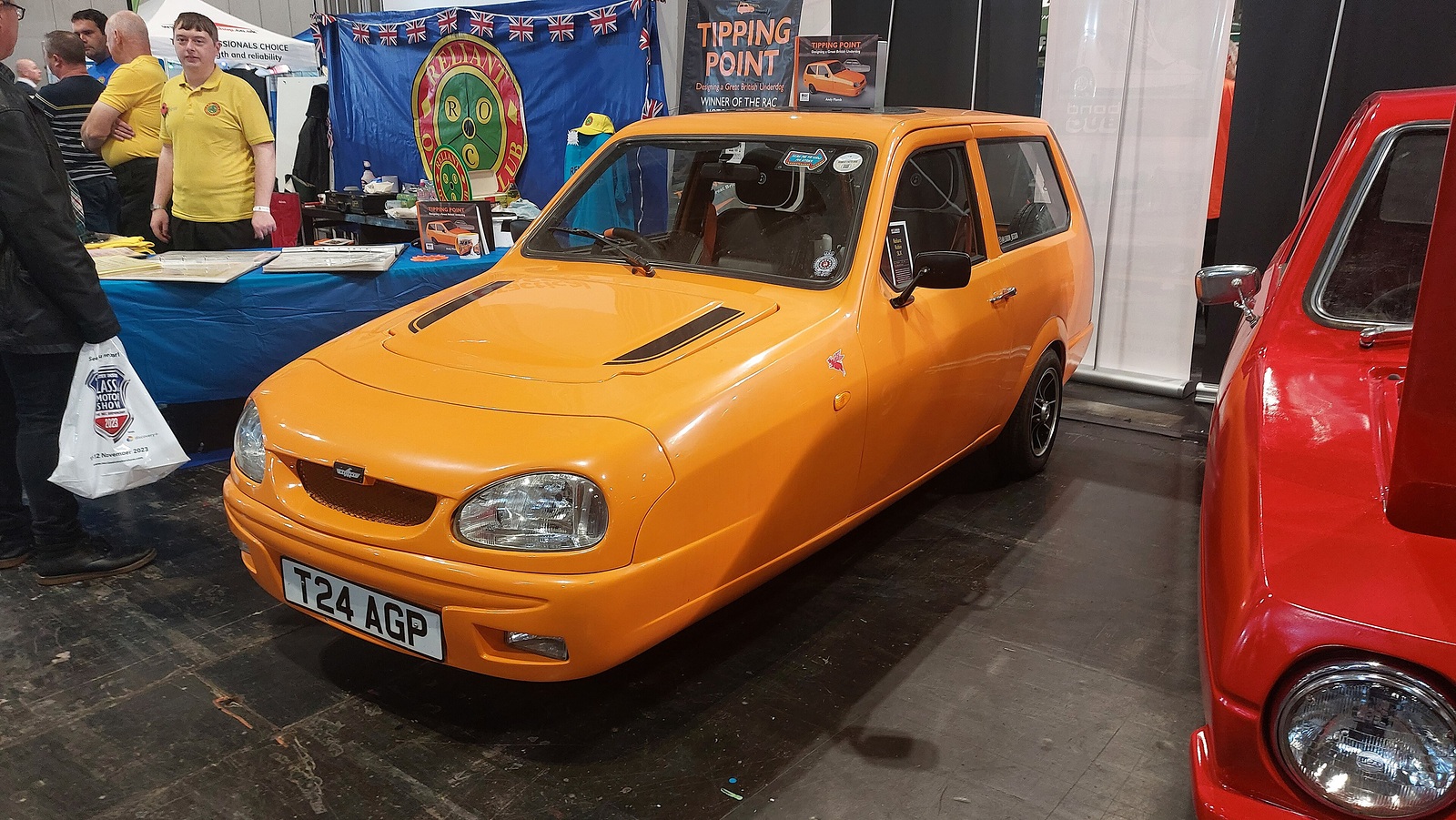
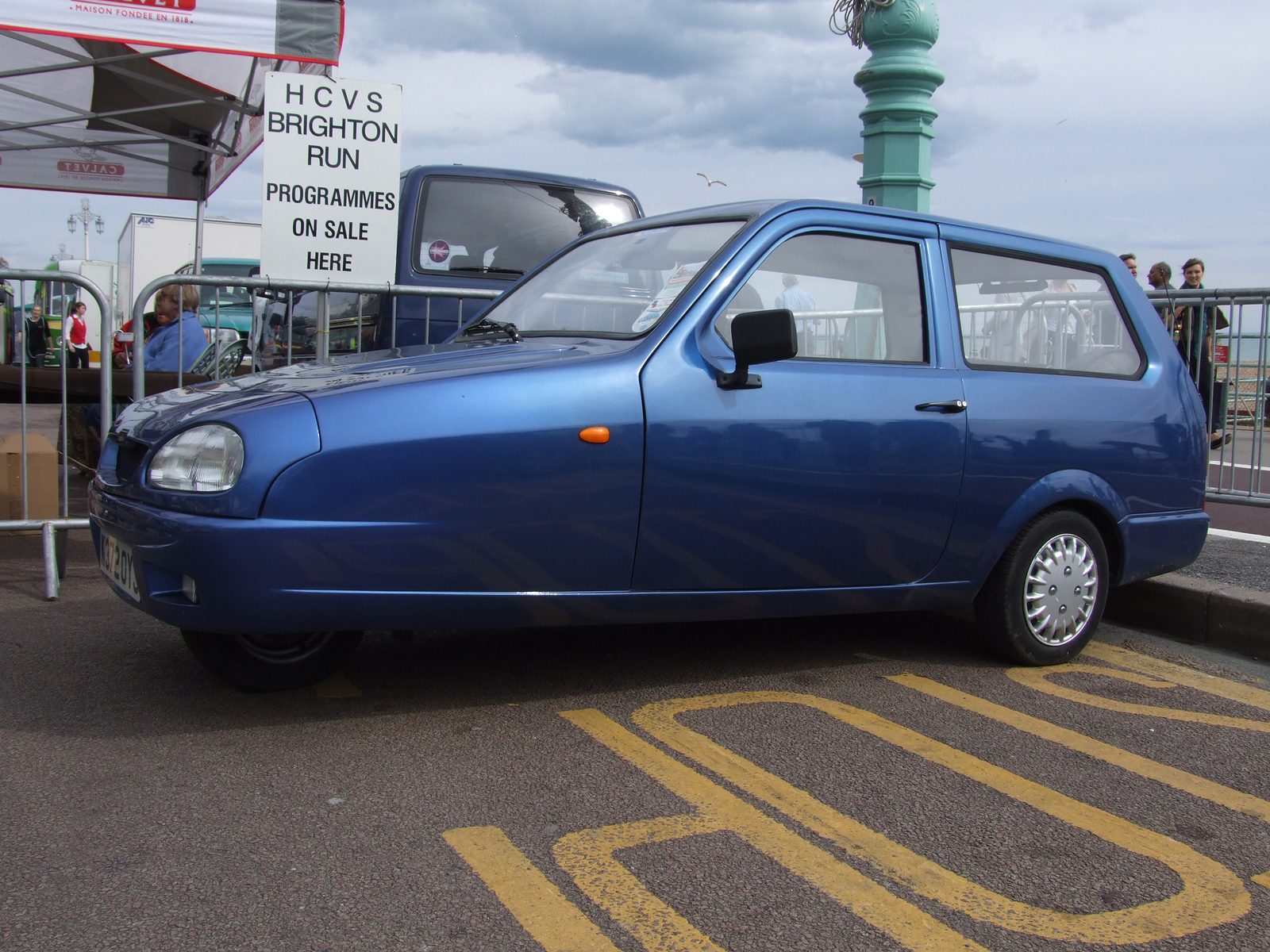
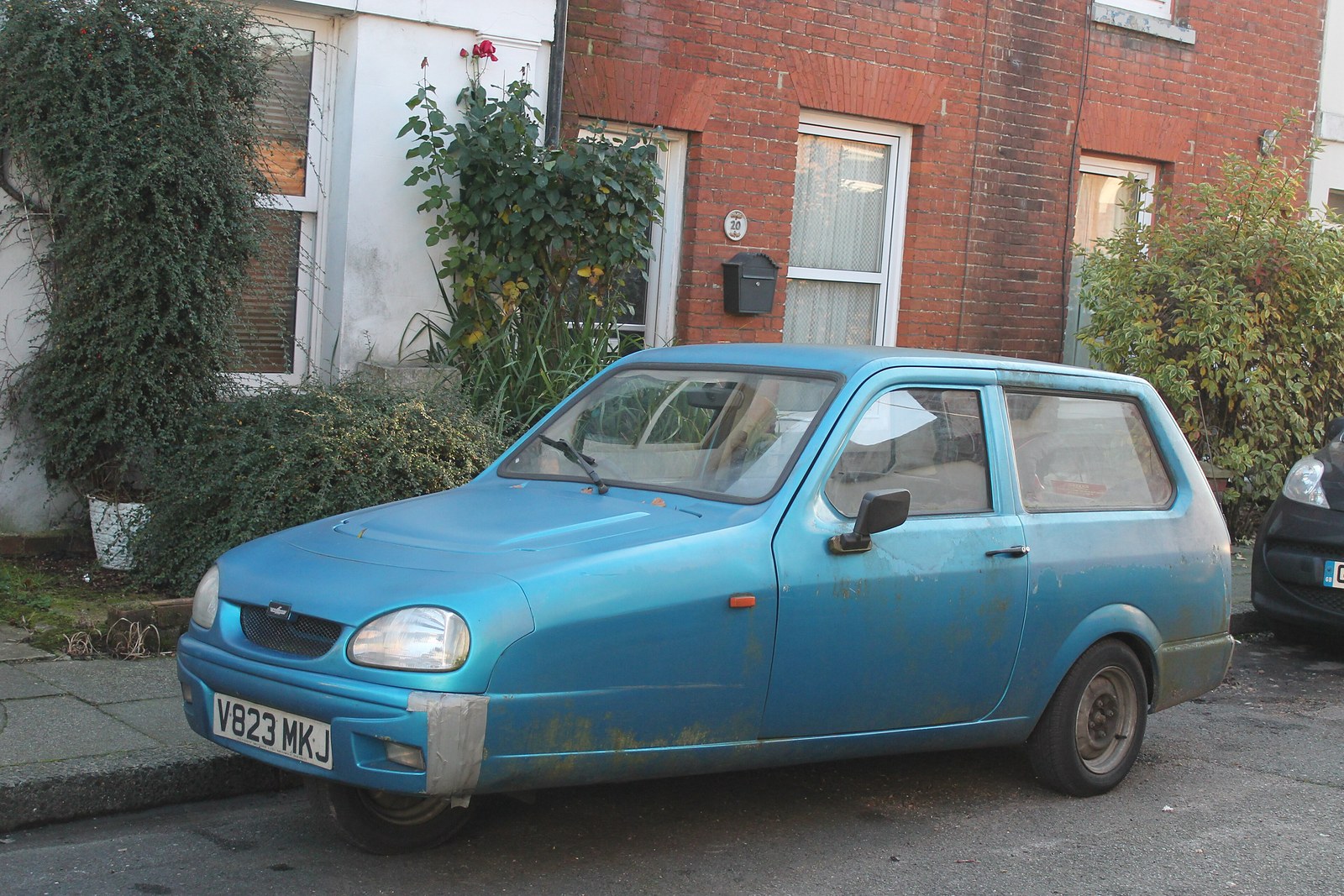
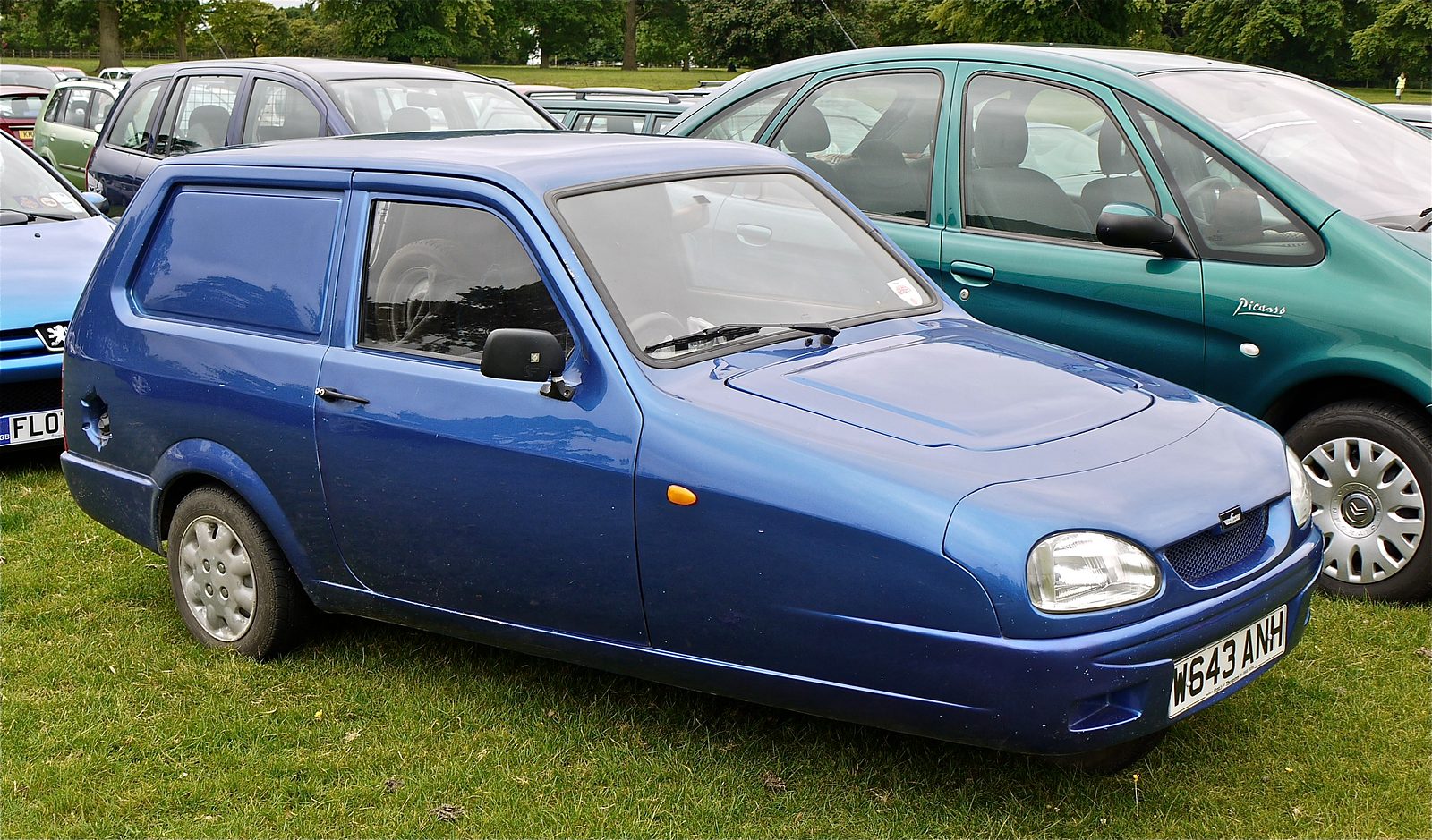
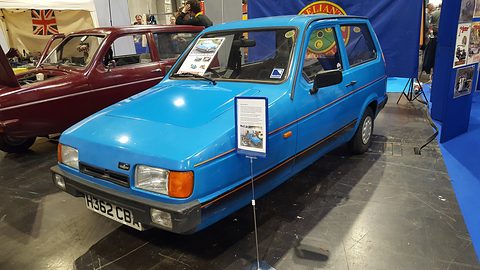
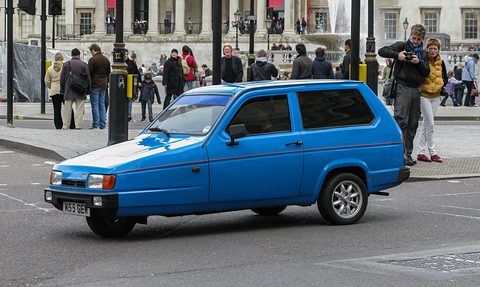
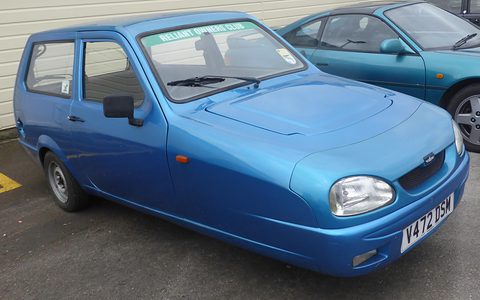
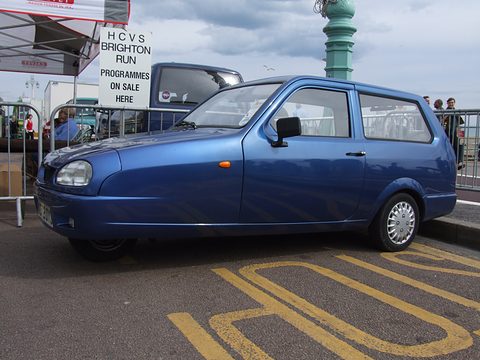
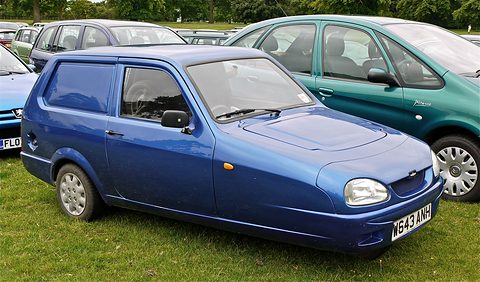
Car making at Tamworth ended late in 1998. The last 50 cars built there were a commemorative edition, each with a plaque on the dashboard, and No. 1 was lined in leather throughout.source 3source 5 The Mk3 followed in late February 1999 from a new factory at Burntwood, also in Staffordshire. Andy Plumb, Reliant’s chief designer, drew it, the first Robin designed by computer. It had a new front with teardrop Vauxhall Corsa headlamps, new doors and a new tailgate, but kept the galvanised chassis and the 848 cc engine; Reliant claimed 60 to 100 mpg, and fitted deep-pile carpet, an RDS radio-cassette, chrome door handles, a stainless exhaust, fog lamps and alloy wheels.source 5source 3source 4source 6source 8 Electric, diesel and pick-up versions were drawn up but not built.source 4
On 26 September 2000 Reliant announced that it would stop making three-wheelers. The end, planned for December, came in February 2001.source 3source 5 The last 65 were the Robin 65, marking 65 years of Reliant three-wheelers (66 by then, in fact): gold metallic paint, red and grey leather, a walnut dashboard with white dials, Minilite-style alloys, and a numbered gold plaque engraved with the first owner’s name, for about £10,000.source 3source 5source 4 The very last Reliant-built Robin was a prize in a Valentine’s Day competition in The Sun, and its winner collected it on 14 February 2001.source 3source 4
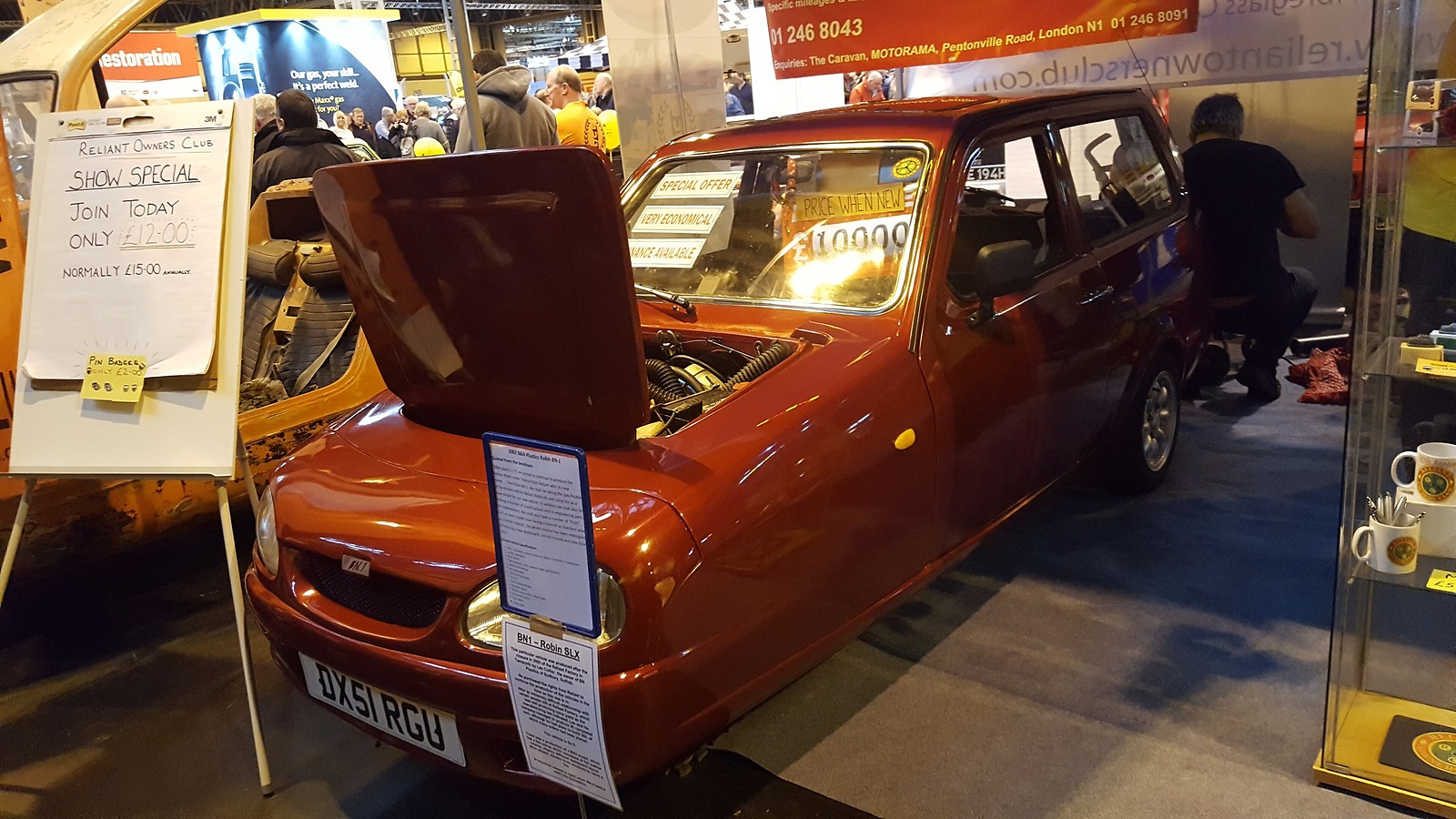
That was not quite the end. B&N Plastics took a licence from 30 April 2001 and launched the BN-1 on 12 July, announcing the BN-2 the same day.source 3 The BN-1 was based on the Robin 65, with a re-engineered gearbox and axle, a new black dashboard and interior, leather and a sunroof as standard, and a new way of making the whole body that saved weight; the car had to be type-approved again. The BN-2 added light-reactive paint, front electric windows and a CD player, all firsts for a Robin.source 3source 4 The licence allowed 250 cars a year, and in July 2002 there were plans for an electric Robin with a range of 50 miles.source 4source 3 After what the club calls “various problems” and production faults, building stopped in October 2002, after about 40 complete cars.source 3source 4
Three wheels and the licence
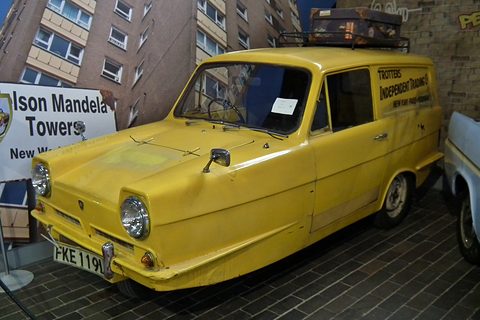
Much of the Robin’s appeal was legal. In Britain it was registered and taxed as a motor tricycle, which in 1973 meant £10 a year in road tax against £25 for a car.source 4source 1source 2 Its registration as a tricycle rested on an official weight under 450 kg.source 4source 6 And for decades a full motorcycle licence carried the B1 entitlement, for three- and four-wheelers up to 550 kg unladen, so a motorcyclist could drive a Robin on it. The DVLA stopped issuing B1 with motorcycle passes in 2001.source 4
The rules have since closed in. From 19 January 2013 tricycles moved into category A; holders of the old B1 now see “B1 and A” on renewal, with the A limited to tricycles.source 11 A full category A or B licence holder must be 21 or over to drive a three-wheeler.source 4 Provisional licences cover motor tricycles only for disabled drivers, and the three-wheeler test is open only to physically disabled drivers, so a learner can no longer learn in a Robin.source 11source 4
Does it fall over?
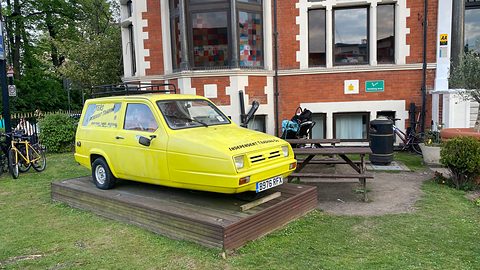
The joke everyone knows is that a Robin rolls over at every corner. The best-known evidence for it was made to order. For Top Gear in June 2010 (see microcars on screen), Jeremy Clarkson drove a Robin 14 miles (23 km) through South Yorkshire and rolled it again and again.source 12source 4source 6 The Reliant Motor Club, whose founders helped find the cars, says two red Mk2 Robins played the one car, fitted with racing harnesses, roll cages, a sealed fuel tank and a larger front wheel; even so, it took several attempts to roll, and it always went over to the driver’s side.source 12 In January 2016 Clarkson told his readers what had been done.
A normal Reliant Robin will not roll unless a drunken rugby team is on hand. Or it’s windy. But in a headlong drive to amuse and entertain, I’d asked the backroom boys to play around with the differential so that the poor little thing rolled over every time I turned the steering wheel.
Bastable’s caution of 1973 was only that, in certain situations, three wheels stood too good a chance of being less stable than four. Racing Robins do sometimes roll; German Wikipedia says their drivers can right them without help, by shifting their weight and pushing off from the open window.source 1source 6 But the club’s founders, Elvis Payne and his brother, drove a Robin 5,500 miles (8,850 km) to the North Cape and back in 2008 and, by their account, never lifted a wheel.source 12 Clarkson himself, in the same review, called the Robin an absolute hoot to drive, partly because it is light and nimble, and liked its “rorty-sounding 848cc engine”.source 13
Rolling a Reliant Robin on purpose is a bit like putting a tortoise on its back. It’s an act of wanton cruelty.