
microcarfan
  • Electric microcar
  • United States
  • Four wheels
  • Seats in tandem

Commuter Cars Tango

Also known as Tango T600

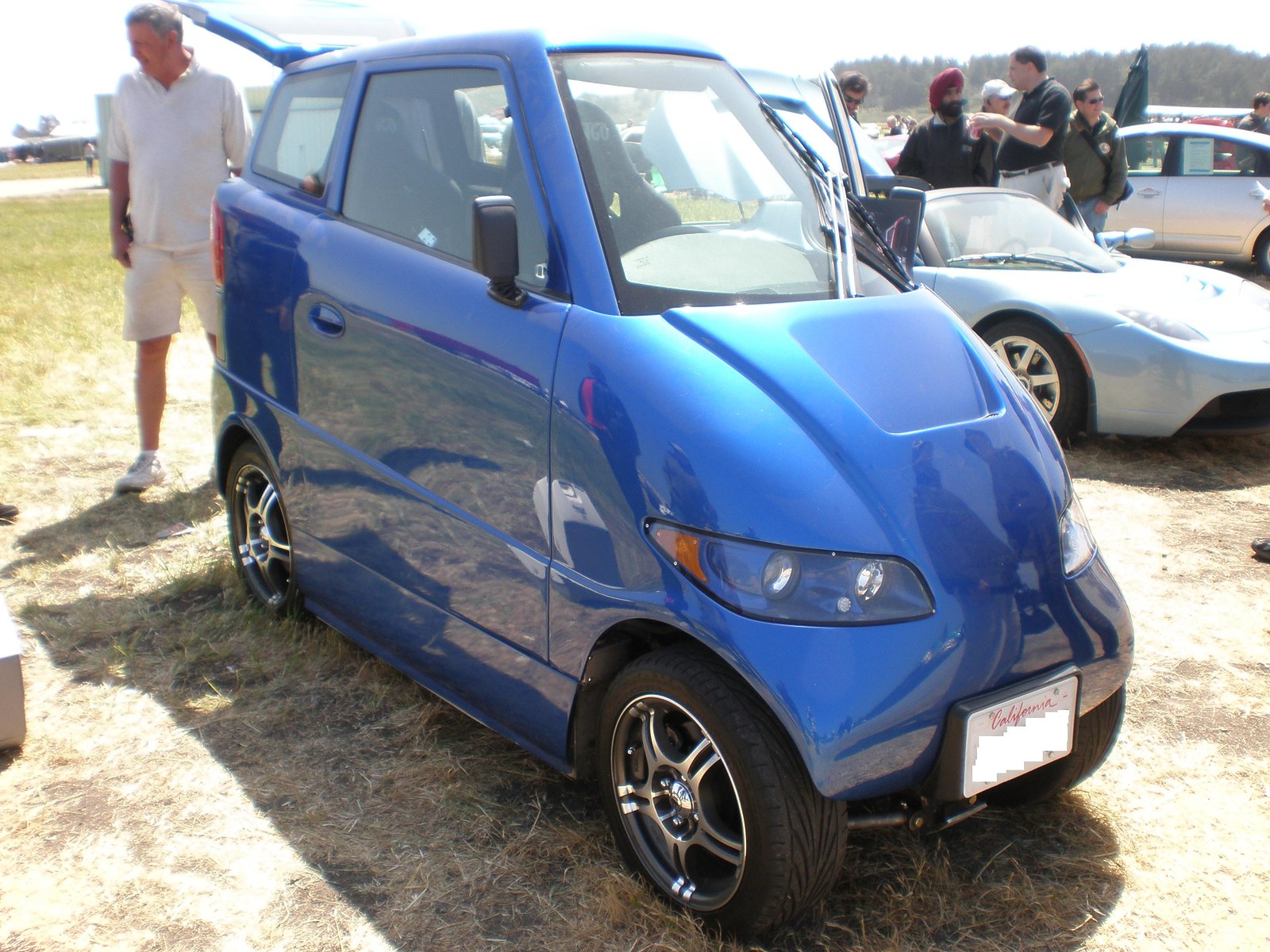
A car 99 cm (39 in) wide, narrower than a Honda Gold Wing motorcycle, with its two seats one behind the other and its batteries and lead ballast low in the floor. Its maker claims 0–60 mph in 3.2 seconds. About a dozen have been built.

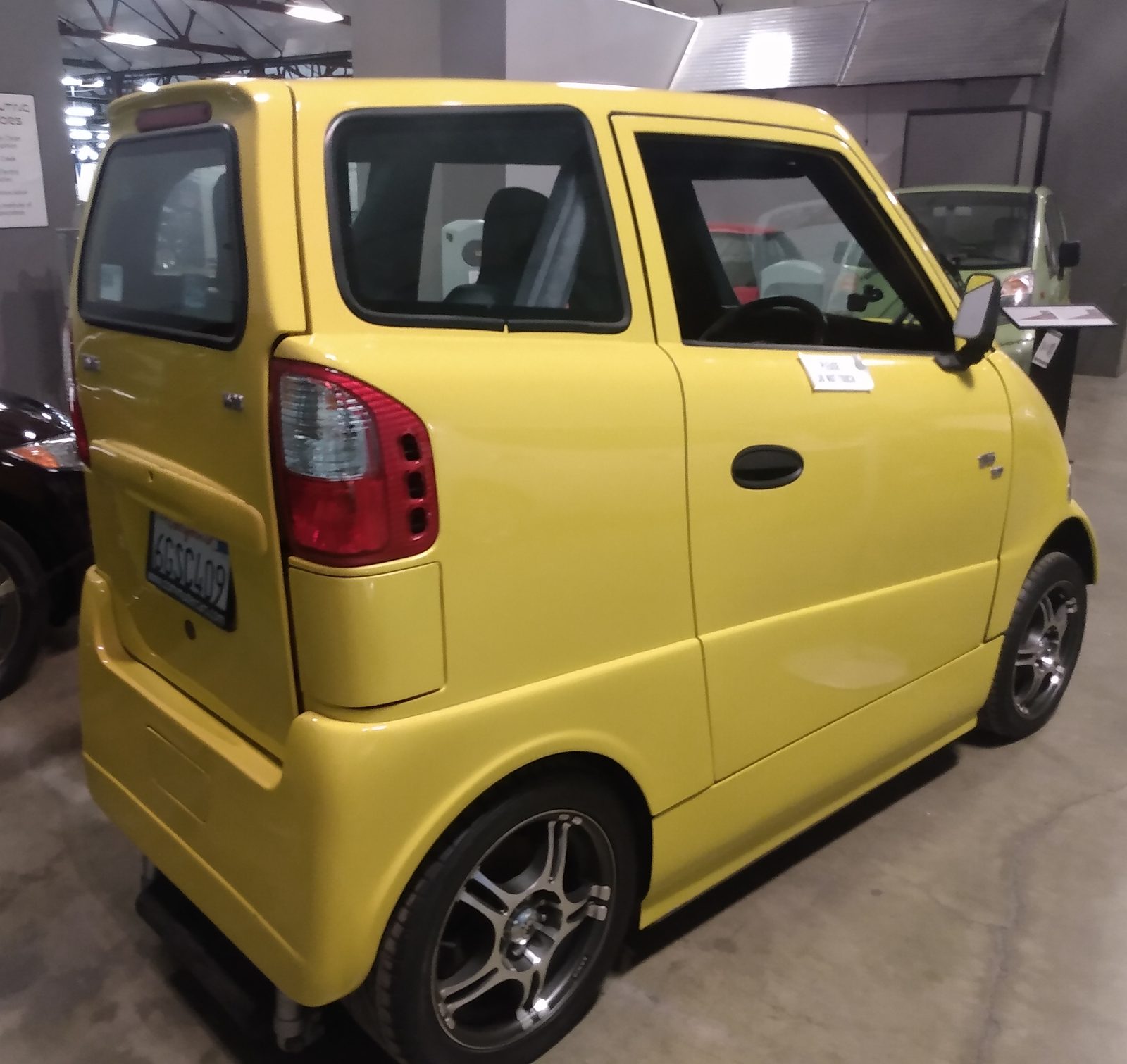
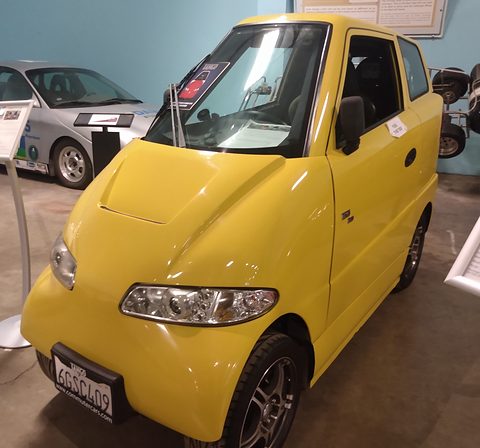
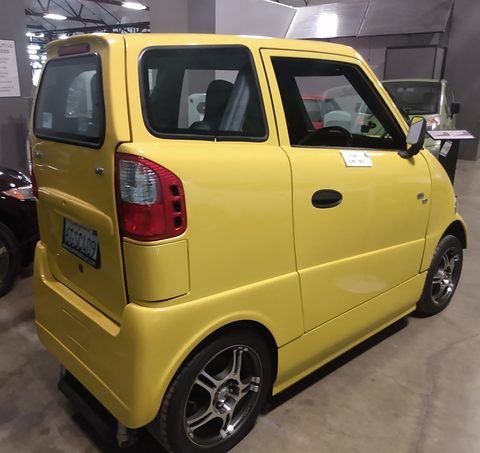
Narrow yellow two-seat car with a raised bonnet bulge on a museum floor beside a silver electric car.
A yellow Commuter Cars Tango T600 at the California Automobile Museum, Sacramento, United States, in April 2022.Photo: DestinationFearFan, CC BY-SA 4.0, via Wikimedia Commons

At a glance

The spec plate

Commuter Cars Tango

Tango T600 · Spokane, Washington

Built
2005–First kit delivered 9 August 2005; built in tiny numbers since
Country
United StatesSpokane, Washington
Maker
Commuter Cars CorporationFounded in 1998 by Rick Woodbury and his son Bryan
Engine
Two series-wound DC electric motorsOne per rear wheel, each through its own 3:1 gear set
Power
up to 600 kWThe controller’s limit, “805 hp”, by the maker
Length
2,591 mm991 mm wide, 1,549 mm high
Weight
1,509 kgThe maker’s figure for the lithium T600; most of it low in the floor
Seats
1 + 1In tandem, with four-point harnesses
Wheels
4An electric motor for each rear wheel, no differential
Price new
US$121,000The average per car by 2008; the kit from US$240,000 in 2026
Production
about a dozenAbout 10 by 2008, fewer than 20 by 2014, 12 in existence in 2026

Not yet recordedtop speed.

How big is it?

True proportion

2.59 m

It is 379 mm shorter than a Fiat 500, about 1.5 adults laid end to end.

  • 0.99 m wide
  • 1509 kg: about 20 adults
  • 99 cm (39 in) wide: narrower than a Honda Gold Wing motorcycle
  • Short enough to park nose-in to the kerb
Drawn at true proportion. The track is 3.6 metres long; the adult stands at the same scale. The Peel P50 is the smallest production car, on every page for comparison.

The story

History

The idea goes back to the early 1980s, when Rick Woodbury learned that 106 million Americans drove to work alone. By his son Bryan’s account, an interest in hydrogen fuel cells then led him to a narrow electric car with a very low centre of gravity and a motor for each driven wheel.source 1 In 1998 father and son founded Commuter Cars in Spokane, Washington, and Rick sold his yacht to pay for it. The plan was to use existing production parts wherever possible, down to a safety cage built to NASCAR’s specification.source 1

In January 2005 a prototype went to Prodrive in England to be refined for production; the maker says the roll cage Prodrive designed passed FIA certification.source 1source 2 On 9 August that year George Clooney took delivery of the first Tango kit, as Time reported, and about 100 a year were planned from late 2005.source 1 They did not come. Trouble with the British manufacturer forced Commuter Cars to build the cars itself, and the second car was not shipped until 11 February 2008, fully assembled in Spokane.source 1 With some funding, the firm had eight employees in 2007 and built about one car a month, and it showed at SEMA that year.source 1source 2

In 2008 a Tango turned up in the second-floor office of Eric Schmidt, chief executive of Google, as an April Fool’s joke. That year CNN Money counted 10 built, at an average of US$121,000 each.source 1

Two motors, no differential

The layout is simple and heavy. Two series-wound DC motors drive one rear wheel each through their own 3:1 gear sets, with no differential and no gearbox, and the controller can deliver up to 600 kW, which the maker gives as 805 hp.source 1source 2 The first cars ran on lead-acid batteries, good for 40 to 60 miles (64 to 97 km); the maker now fits 1,000 lithium iron phosphate cells and claims 100 miles (160 km) at 70 mph (113 km/h).source 1source 2 The car weighs 1,509 kg (3,326 lb), about as much as a Toyota Corolla, and 589 kg (1,299 lb) of that is the battery box and lead ballast. The weight sits low enough, the maker says, to put the centre of mass about 280 mm (11 in) off the ground, for a static rollover threshold it rates as equal to five stars.source 1source 2

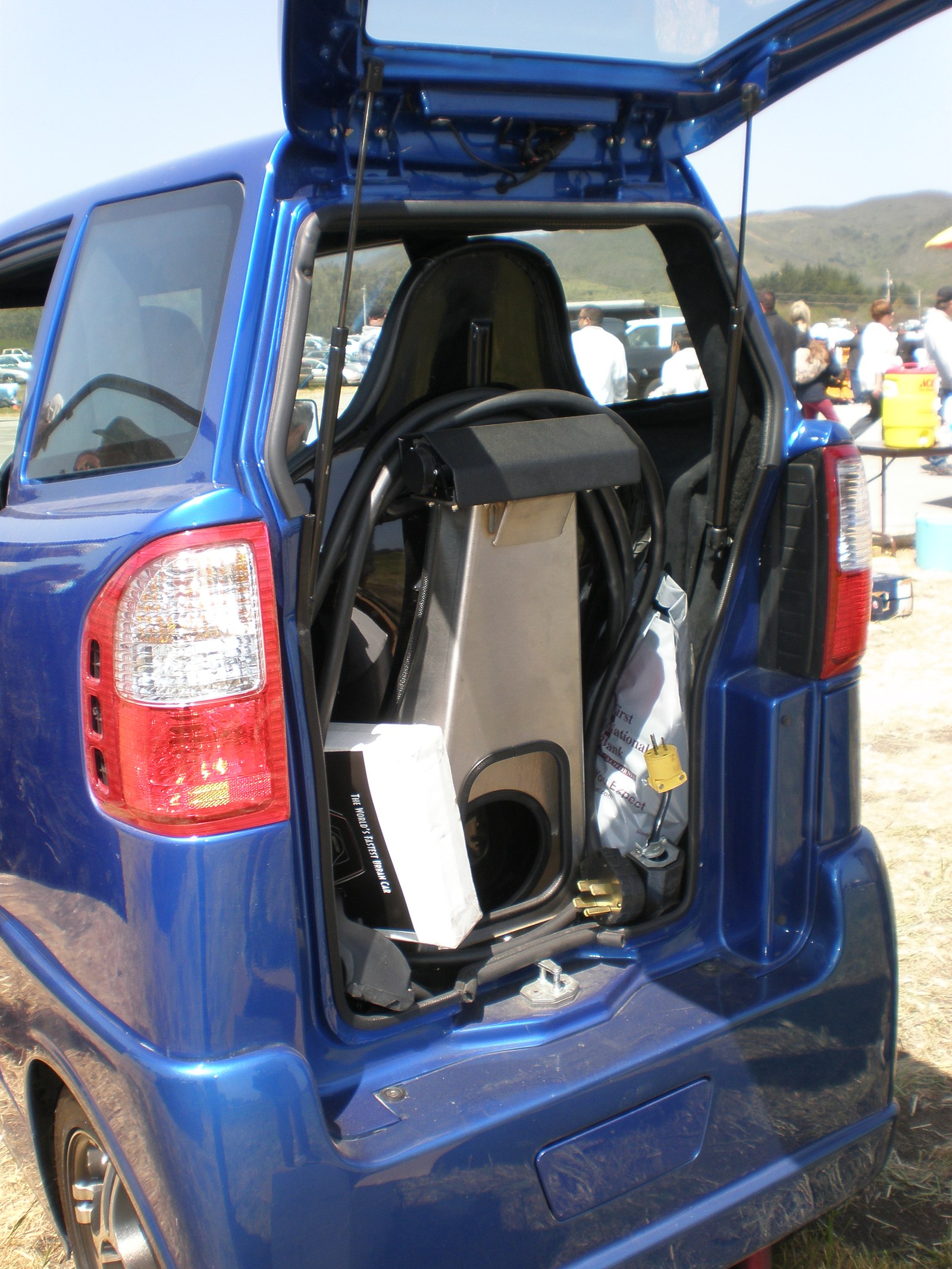
Inside, the passenger sits behind the driver, straddling the driver’s seat structure, and both wear four-point harnesses.source 1source 2 The maker lists practical virtues as well: it parks sideways in a quarter of a normal space, the rear seat lifts out through the hatch to make room for two large suitcases, and there is a tow hitch for a range-extending generator trailer and another at the front “for moving airplanes”.source 2 Its speed rests on the maker’s word alone: 0–60 mph in 3.2 seconds, and a timed quarter-mile of 12.255 seconds at 106.86 mph (172 km/h) at Spokane County Raceway on 28 July 2012.source 2 No independent timing has been found, and the torque is given three different ways that cannot all be right.

The X Prize and after

In 2010 Commuter Cars entered the Progressive Insurance Automotive X Prize, in the Alternative class, with a T600 borrowed back from its owner, Google’s co-founder Sergey Brin. It passed many of the tests easily but failed to finish the 100-mile durability run and was eliminated.source 1 The maker adds that it went through Consumer Reports’ emergency lane-change test there faster than any other car or motorcycle tested.source 2 No production partner ever came. By 2014 fewer than 20 had been built, and in 2018 Car and Driver gave the company a 1.1-in-10 chance of survival.source 1

The company’s website was still live in 2026. It offered only the T600 kit, from US$240,000 for a single set of parts down to US$100,000 each for an order of 100, and claimed a waiting list of more than 2,000 for a cheaper production Tango of about 150 kW.source 2

There are currently only 12 Tangos in existence worldwide.
Commuter Cars Corporation, on its website, 2026.source 2
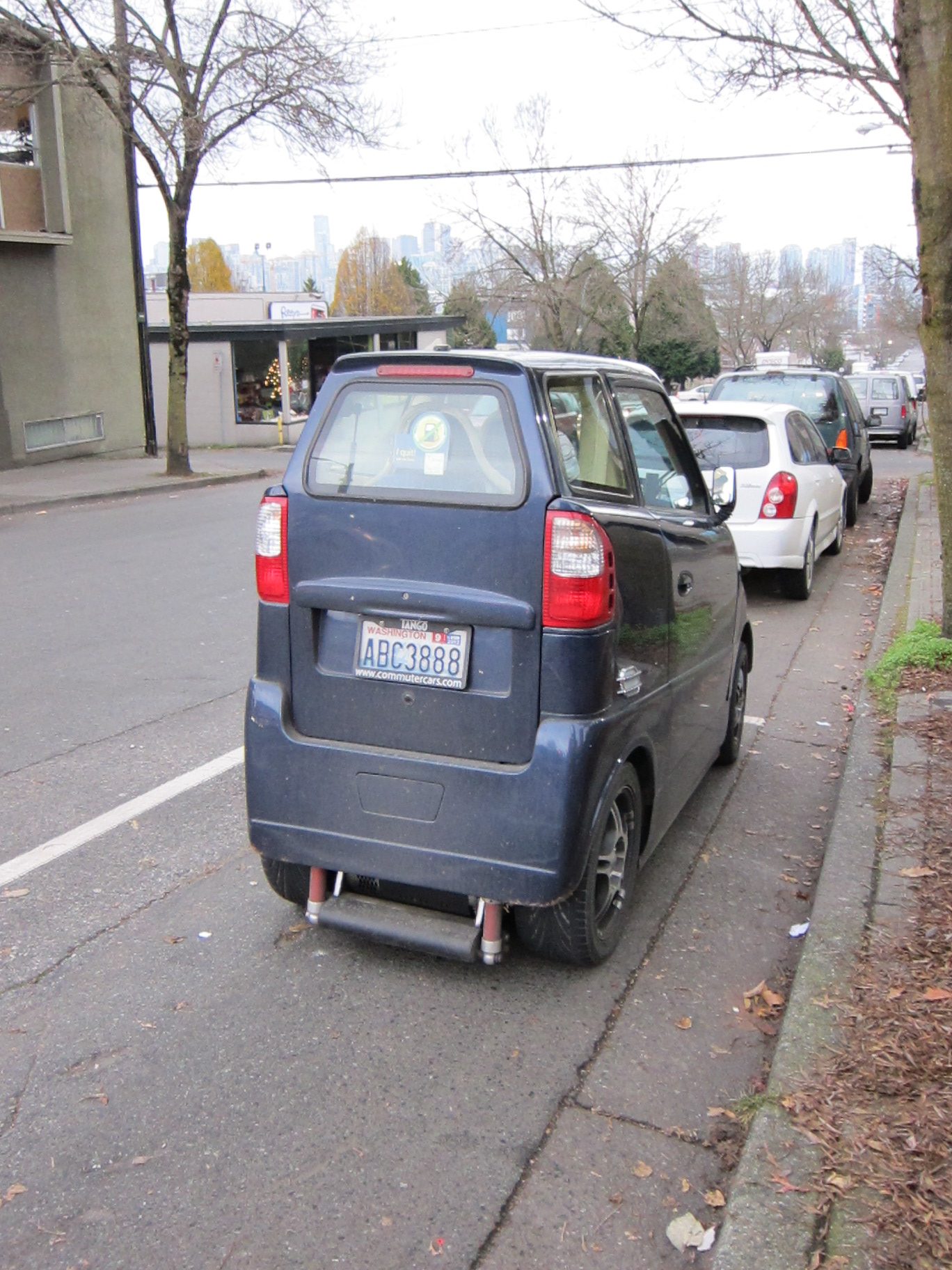
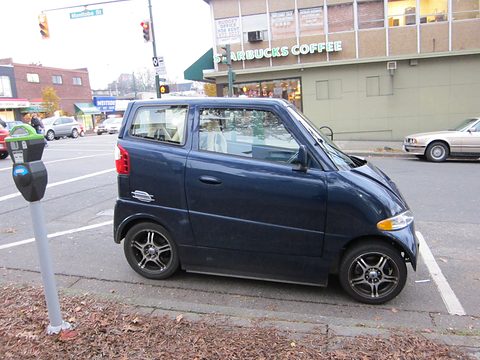
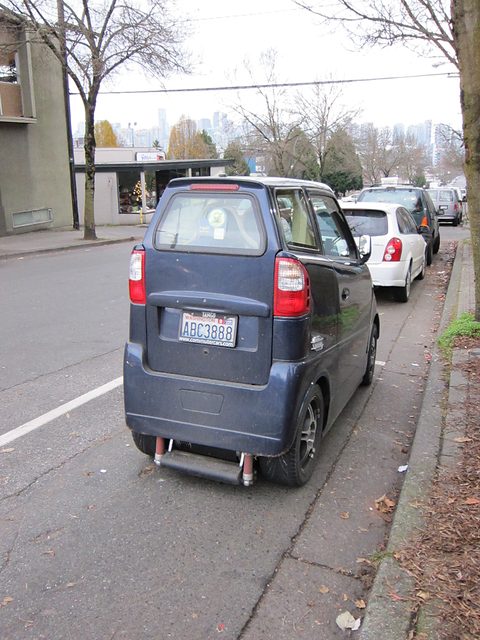
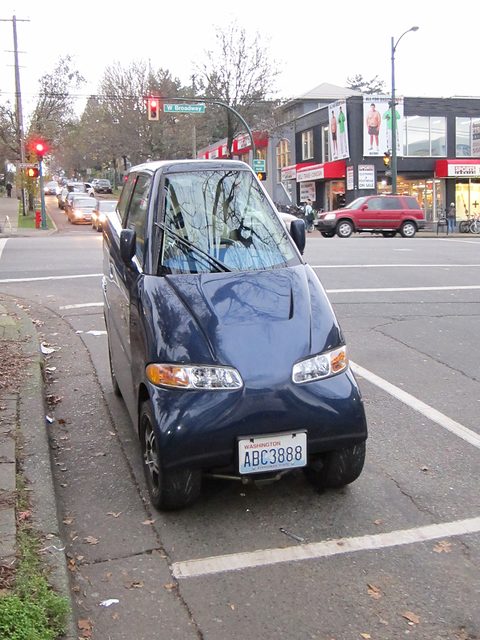
Very narrow dark blue two-seat car parked head-on at a kerb with autumn leaves, shops and traffic lights behind.
A dark blue Commuter Cars Tango T600 on Washington plates, seen head-on in a parking bay in Vancouver, Canada, in December 2011.Photo: Mike W., CC BY-SA 2.0, via Flickr
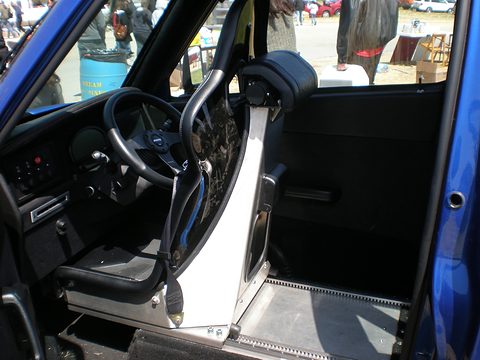
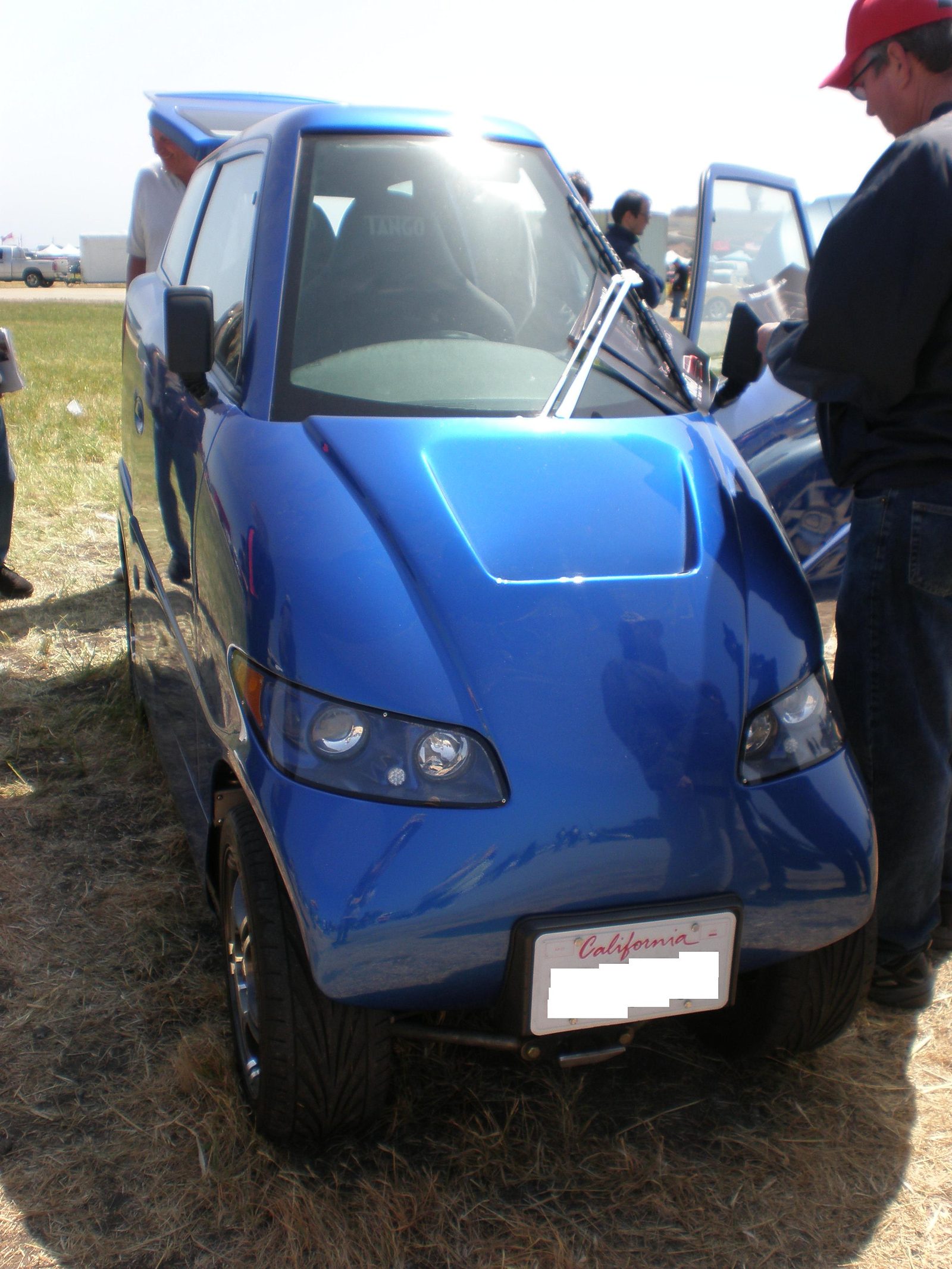
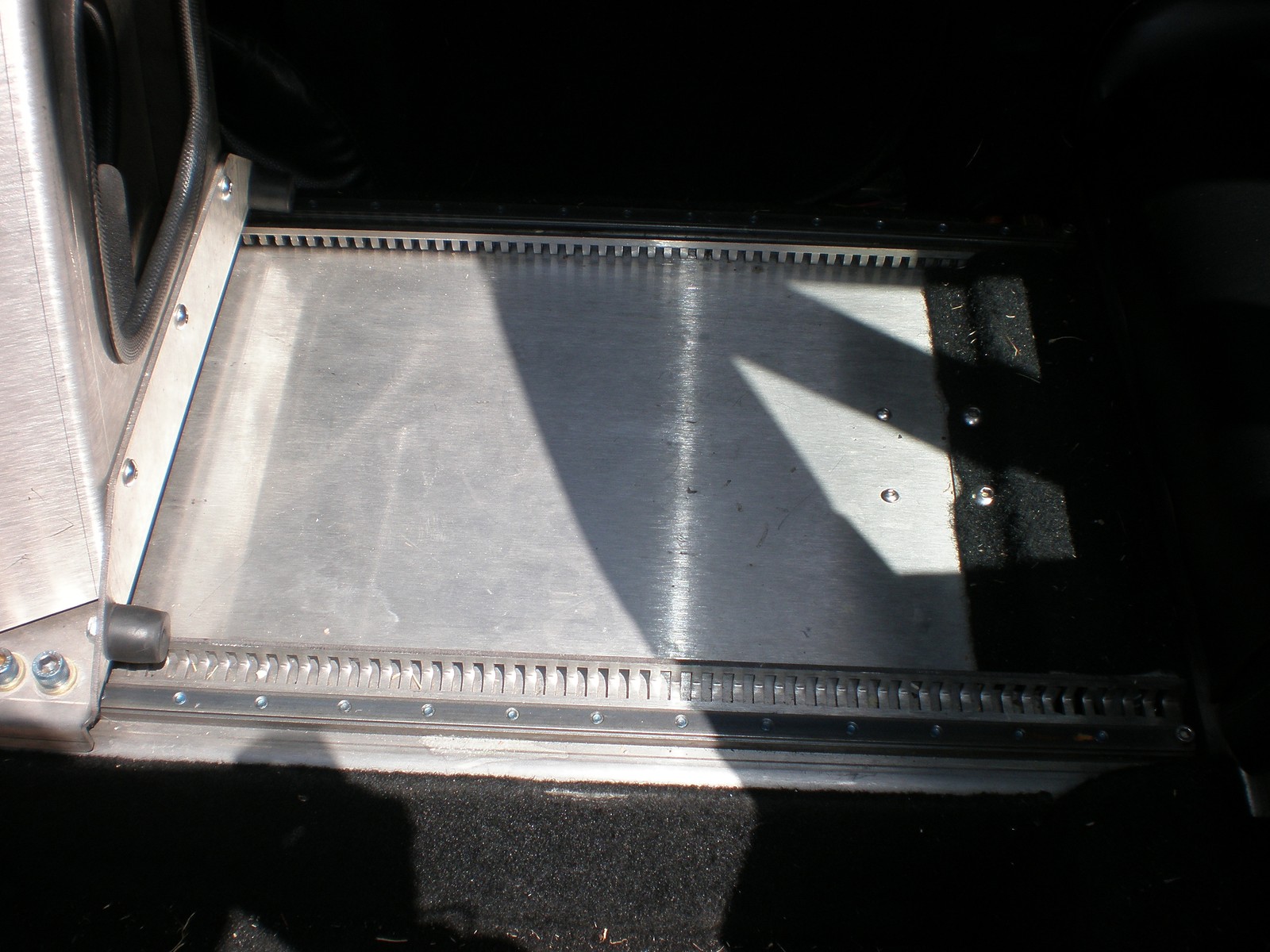
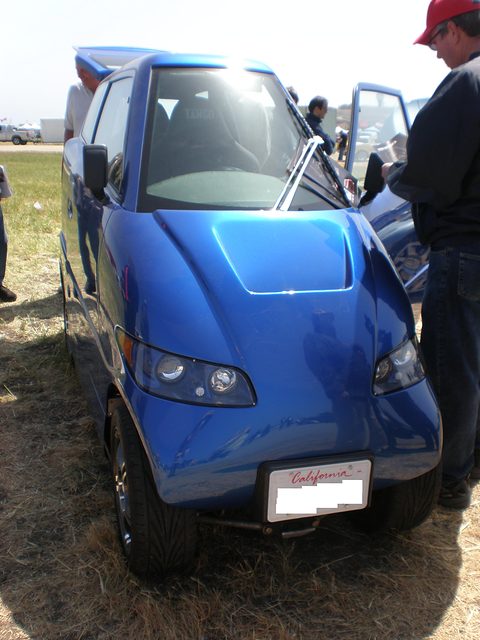
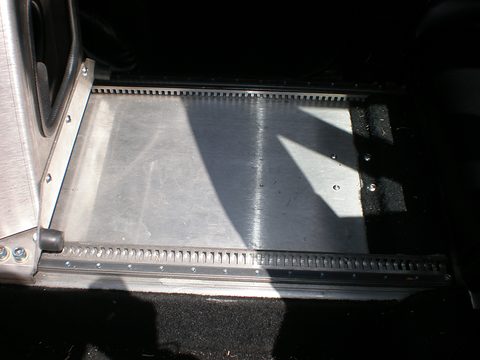
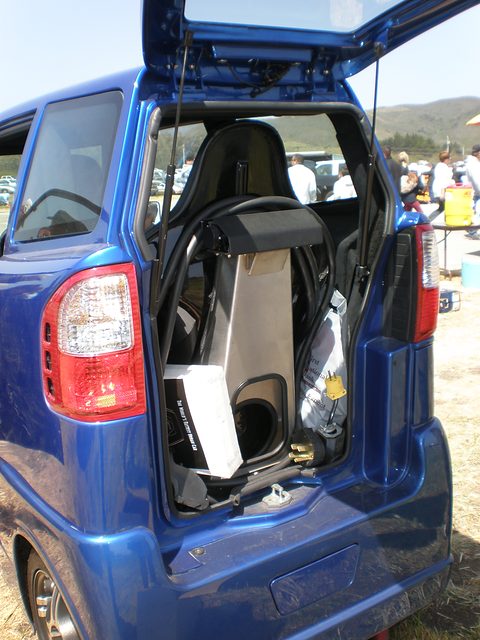
Black racing seat with a tubular roll cage, a steering wheel and a bare aluminium sill seen through the open door.
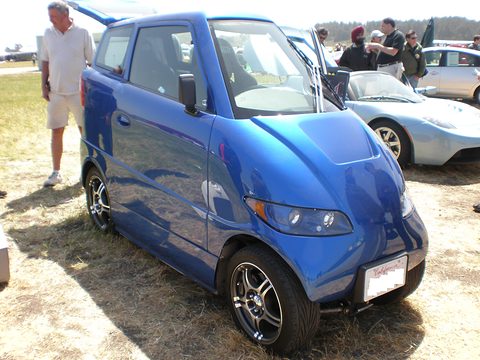
The driver’s seat, roll cage and dashboard of a blue Tango T600 at Half Moon Bay, California, in April 2009.Photo: BrokenSphere, CC BY-SA 3.0, via Wikimedia Commons

Pictures

More photographs, old and new

Variants

Prototype, kit and promise

The Tangos
VariantYearsWhat differsHow many
Prototypeby 2005Lead-acid batteries; about 3,000 lb (1,360 kg)One
Tango T6002005–Sold as a kit; lead-acid batteries at first, later lithium iron phosphate cellsAbout 10 by 2008; 12 in existence in 2026
Production TangoplannedAbout 150 kW, fully certifiedNone built

Specification

The T600, by the maker unless noted

Motors and batteries

Motors and batteries
MotorsTwo Advanced DC FB1-4001 series-wound DC motors, one per rear wheelsource 1source 2
ControllerZilla Z2K, up to 2,000 A at 350 V (600 kW)source 1source 2
TransmissionTwo direct-drive gear sets, 3:1 as standard; no differential, no gearboxsource 1source 2
TorqueNot stated hereThree figures circulate, 1,000 lb ft, over 3,000 lb ft and 4,000 Nm, and they cannot all be right
Battery1,000 Headway lithium iron phosphate cells, 320 V; earlier 19–25 lead-acid batteriessource 2source 1
Charging40 A on board, J1772 socketsource 2

Body and chassis

Body and chassis
BodyClosed two-door coupé with a rear hatch and a roll cage designed by Prodrivesource 2
SuspensionUnequal-length A-arms in front, trailing arms behind, coil-over damperssource 2
BrakesMazda Miata calipers and hubssource 2
Tyres195/45 R14 front, 215/45 R15 rearsource 2

Dimensions

Dimensions
Length2,591 mm (8 ft 6 in)source 22,600 mm by English Wikipedia
Width991 mm (39 in)source 1source 2
Height1,549 mm (61 in)source 2
Ground clearance102 mm (4 in)source 2
Weight1,509 kg (3,326 lb), 43 per cent on the front wheelssource 21,514 kg on another of the maker’s pages; the prototype about 3,000 lb

Performance and running

Performance and running
0–60 mph3.2 s, the maker’s claimsource 1source 2
Quarter-mile12.255 s at 106.86 mph, 28 July 2012, the maker’s claimsource 212.214 s on the maker’s home page
Top speedAbout 150 mph, “not tested”source 2
Range40–60 miles on lead-acid; 100 miles at 70 mph on lithiumsource 1source 2120 miles at 60 mph on lithium by the maker; English Wikipedia’s 150 miles is unconfirmed

How many were built?

Every figure, with its source

About a dozen builtAbout a dozen. The maker’s own count of 12 in existence in 2026 sits inside the range the press gave between 2008 and 2014.

  1. fewer than 20built in the United States by 2014One source

    English Wikipedia, citing the New Zealand Herald, 14 February 2014source 1

  2. 12in existence worldwide, 2026One source

    Commuter Cars’ websitesource 2

  3. about 10built by 2008One source

    English Wikipedia, citing CNN Moneysource 1

  • Two sources agreetwo good sources give the figure
  • One sourcea good source, alone
  • Unconfirmeda lead only, not yet checked

Famous for

Three points

  1. 39 inches wide

    Narrower than a big touring motorcycle, and small enough to park front-first in a parallel bay.

  2. Clooney’s kit

    George Clooney took delivery of the first Tango kit on 9 August 2005.

  3. 3.2 seconds

    The maker’s claim for 0–60 mph, from two motors and up to 600 kW.

Survivors and collecting

Today

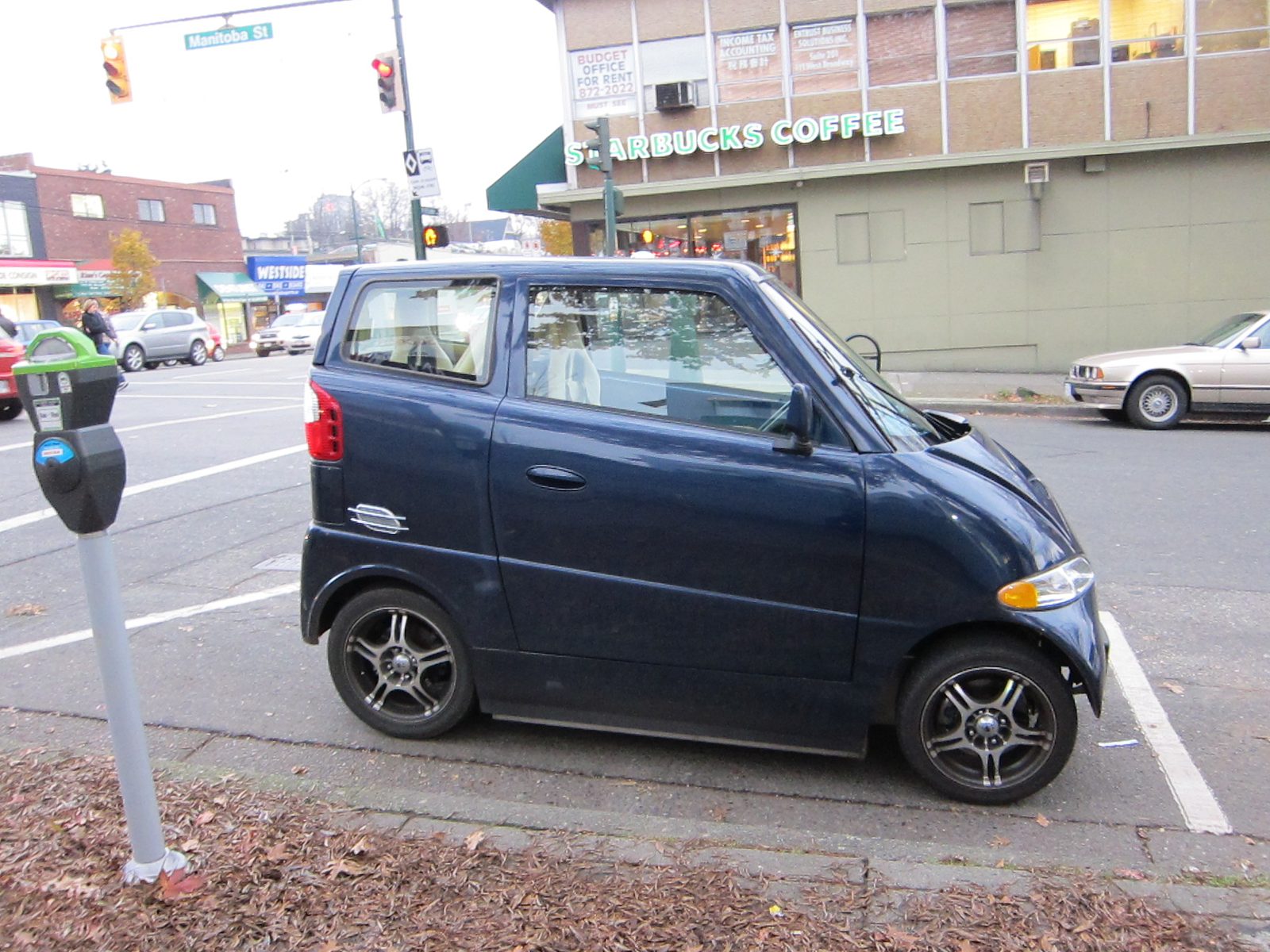
The maker counts 12 Tangos, registered for the road in California, Washington, the United Kingdom and New Zealand, and occasionally resells one.source 2 No sale at auction is known. Among the pictures here, a yellow Tango stands in the California Automobile Museum in Sacramento in 2022, and a blue one waits at a Vancouver kerb while a passer-by gives the scale.

Side view of a short, tall dark blue car at a kerb, a man walking past a convenience store behind it.
A dark blue Commuter Cars Tango T600 in profile at the kerb in Vancouver, Canada, in December 2011, a pedestrian passing for scale.Photo: Mike W., CC BY-SA 2.0, via Flickr

Sources

Numbered as in the text

No independent road test was read, and every performance figure on this page comes from the maker. The history rests on English Wikipedia, which cites Time, CNN Money and the New Zealand Herald. Sources are given as plain text; the links are on the Credits page.

  1. English Wikipedia, Commuter Cars Tango, read in full with its reference list. Used as a lead; it cites Time, CNN Money, AnnArbor.com, the New Zealand Herald (14 February 2014) and Car and Driver (26 October 2018).
  2. Commuter Cars Corporation, website pages “Specs”, “FAQs”, “Buy/Lease/Rent”, “Acceleration & Torque”, “Press” and the home page, 2026 versions.