The story
History
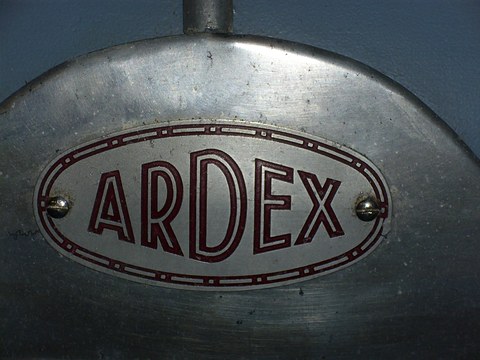
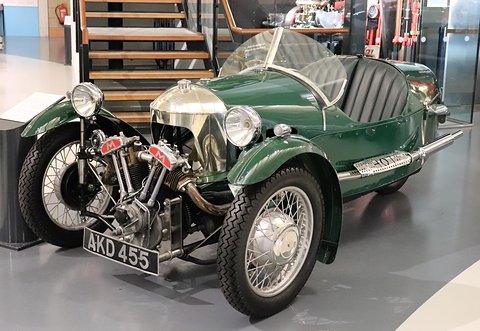
Ardex was tiny, and it was old. The Bruce Weiner Microcar Museum traced the firm to the years between the wars: in 1934 it offered a cyclecar in the manner of the Morgan Three-Wheeler, with engines of up to 500 cc, and in 1937 a streamlined four-wheeler that was the cheapest car on the French market.source 1source 2 The German Wikipedia, citing the Beaulieu encyclopaedia, gives the first car a 500 cc V-twin and the second a price of 5,500 francs.source 2
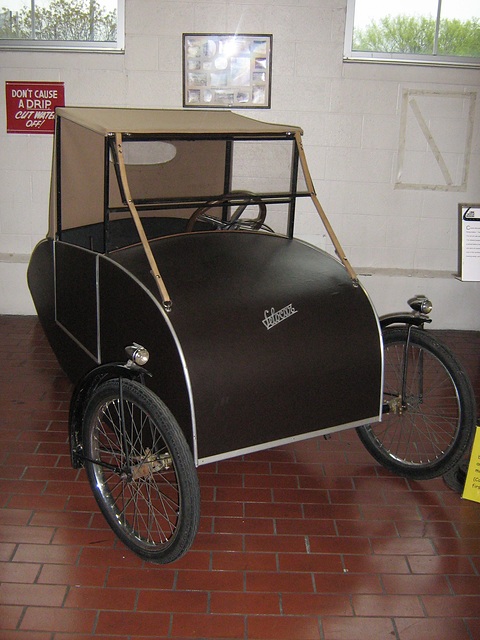
The old site’s author told it differently. In his account the marque was born at the end of the 1930s, when Marcel Tamine decided to sell a cyclecar of his own making. His 1938 car had three wheels, an aluminium body and a 350 cc two-stroke with two speeds; it reached 60 km/h (37 mph) and cost very little.source 3 The two accounts may describe two different cars. The record cannot yet say.
The war, by one account
Only the old site tells what happened next. The war, it says, forced Ardex to change its power: it built electric cars with plywood bodies, some with pedals as a back-up, and in 1943, because of the shortages, a three-wheeled version. That work stopped when the building of any motor vehicle was banned. The old site thought it probable that pedal cars like the Mochet Vélocar were made then too, but offered that only as a probability.source 3
Plywood and vinyl
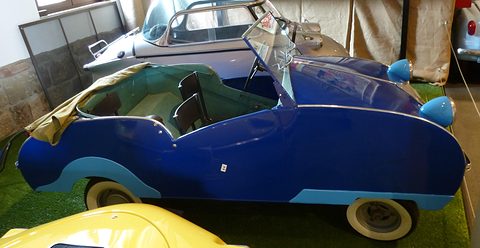
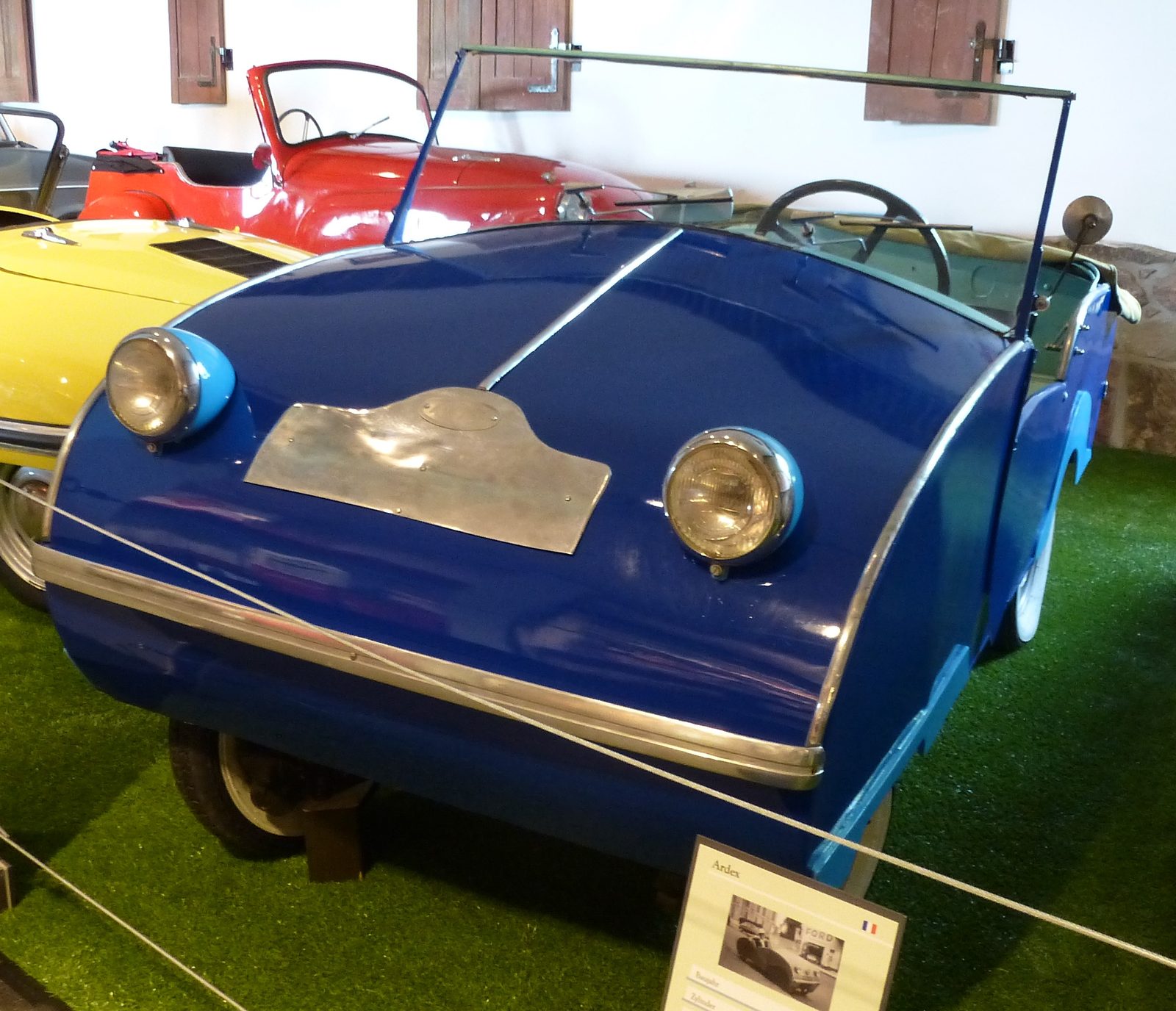
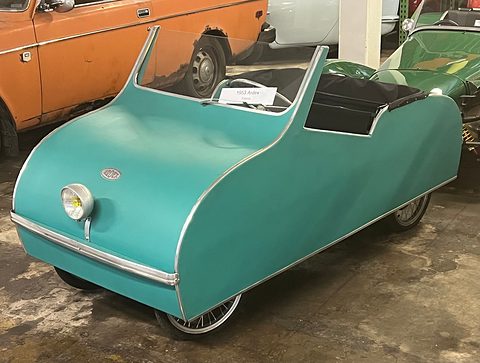
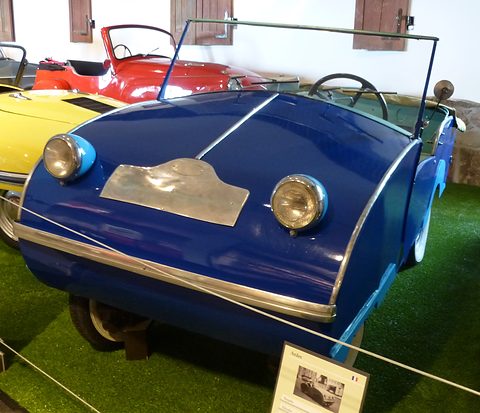
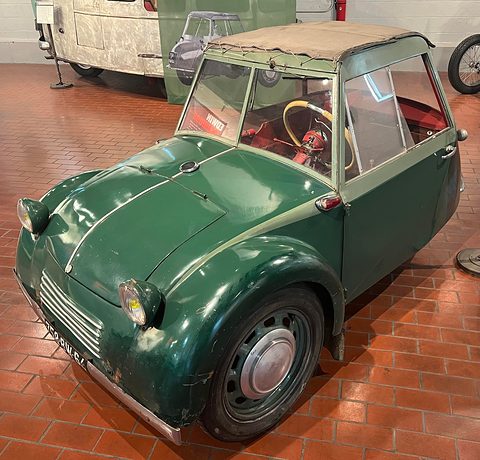
In 1952 a new small car came out of the Nanterre workshop. The Weiner museum describes the most basic of bodies, plywood covered in vinyl. A four-seater had a 100 or 125 cc engine, and a smaller two-seater a 50 cc engine with a clutch worked from the dashboard.source 1 The German Wikipedia names the larger engines as SABB two-stroke singles and the 50 cc as a Fichtel & Sachs, and gives the car as 2.40 m (7 ft 10 in) long and 1.07 m (3 ft 6 in) wide.source 2 The old site lists a 2+2 with a 50 cc engine, an aluminium body and optional pedals, a two-seater in tandem that went back to wood, the Type T of 1953 in plywood with 100 or 125 cc, and the Type E of 1956, in which it saw no noticeable change.source 3
… chaque modèle sorti de l’atelier de Nanterre pouvait évoluer en fonction de la demande du client ou des propres aspirations du constructeur.
Buyers who wanted to see one driven had to come on the right day: demonstrations at the Nanterre shop were held on Mondays and Saturdays only.source 1 Production, the Weiner museum says, was extremely limited.source 1
When it ended is disputed. The Weiner museum and the German Wikipedia close the post-war story in 1955.source 1source 2 The old site says that Ardex, unlike many firms, came through the difficult end of the 1950s, and that 1965 was its last year of manufacture.source 3