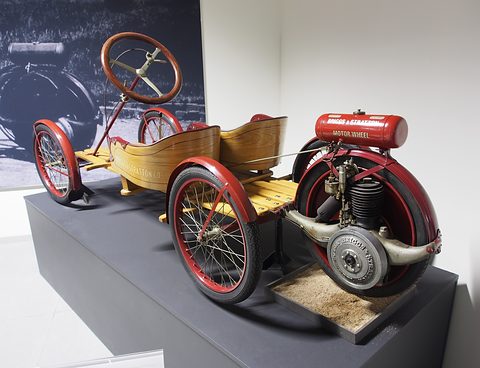
microcarfan
  • Electric microcar
  • Germany
  • Electric
  • One seat
  • Wooden monocoque

Slaby-Beringer

Also known as SB-Wagen, SB-Einsitzer, System Slaby-Beringer

A one-seat electric car from Berlin, with a wooden body that was its own chassis, two speeds forward and two backwards, and room for a second person on an emergency seat: the car Rudolf Slaby turned to in 1919, after the Treaty of Versailles restricted the aircraft industry he had worked in.

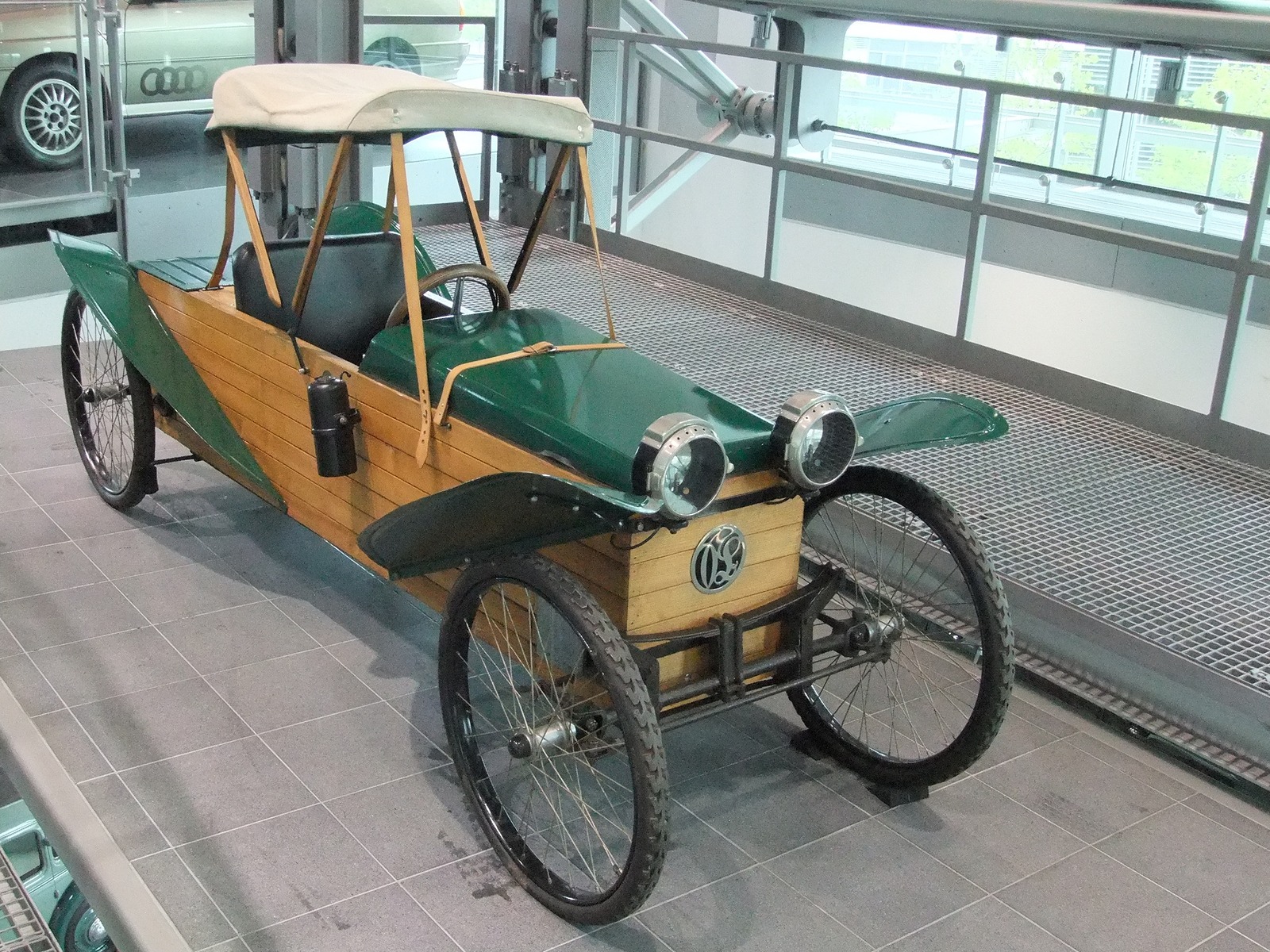
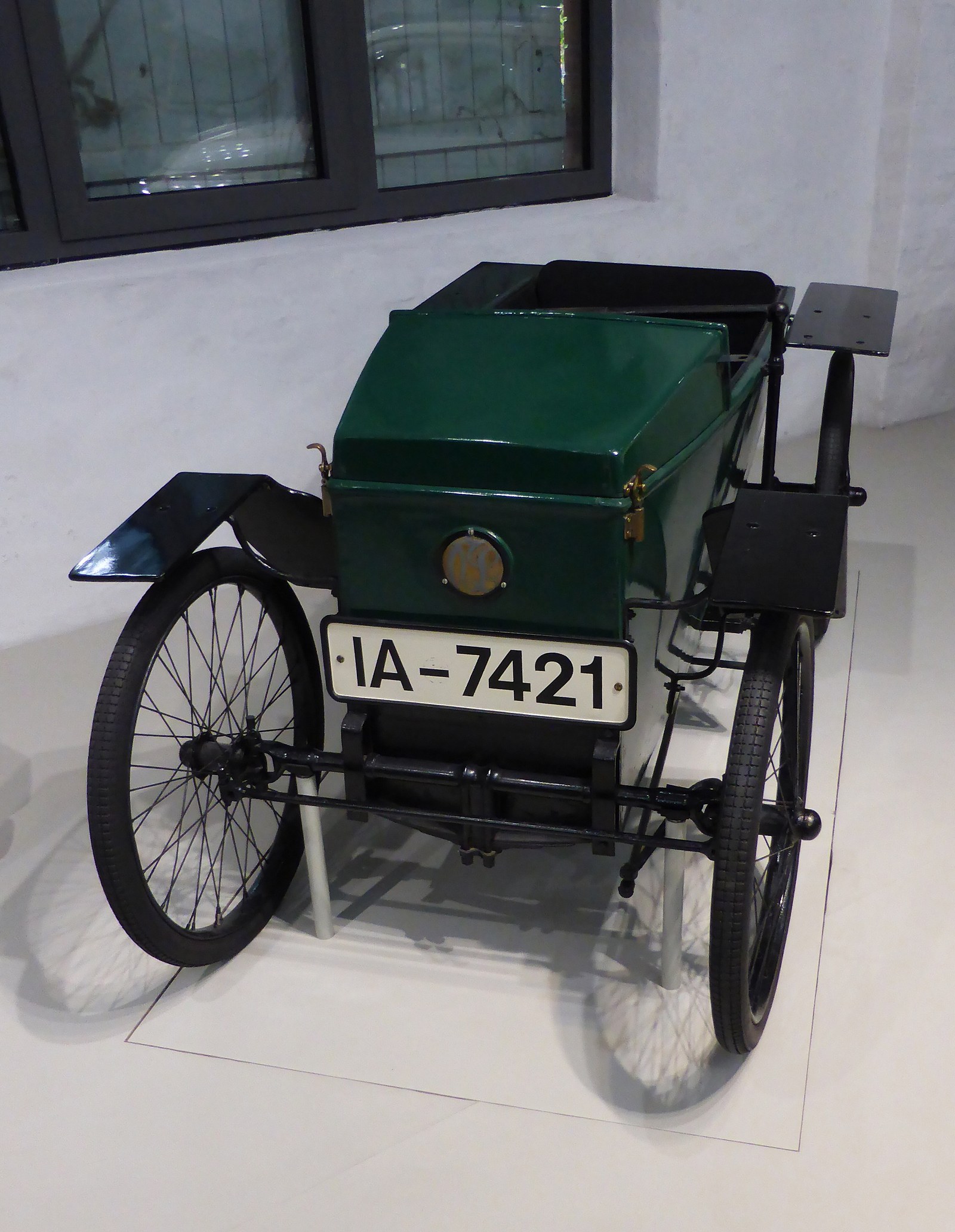
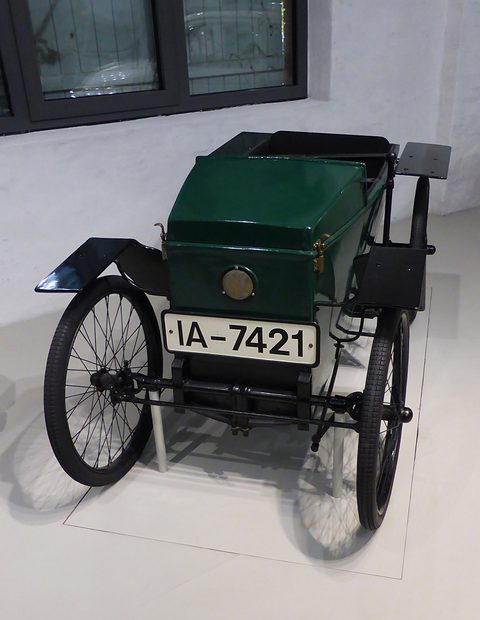
A small green boxy electric car with tall wire wheels, a front number plate IA-7421 and side wings, on a white floor.
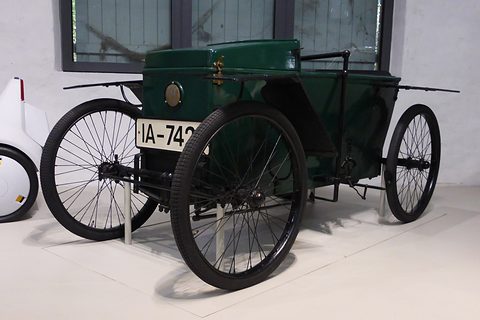
Green 1921 Slaby-Beringer electric single-seater IA-7421 in a museum, photographed in October 2015.Photo: 1971markus, CC BY-SA 4.0, via Wikimedia Commons

At a glance

The spec plate

Slaby-Beringer

SB-Einsitzer · Charlottenburg

Built
1919–⁠1924From 1919; the Berlin works closed on 1 September 1924
Country
GermanyBerlin-Charlottenburg, in Beringer’s paint works
Maker
SB-Automobil-Gesellschaft m.b.H.Founded in 1919 by Dr.-Ing. Rudolf Slaby and his cousin Hermann Beringer
Engine
Electric motor at the rear, 48 voltsLater cars could have a DKW petrol engine
Power
½ PS0.37 kW, by the 1922 brochure; 1 PS (0.74 kW) with the emergency seat; 0.25 PS by one book
Length
2,300 mm1,000 mm wide
Weight
240 kgThe 1922 single-seater with its batteries, by the maker; 280 kg with the emergency seat
Seats
1A second person on an emergency seat; a DKW-engined two-seater from 1924
Wheels
4On a track of only 0.8 m
Production
About 2,0002,005, 266 of them with DKW engines, by German Wikipedia; about 2,500 by a German reference book
Survives
YesA 1924 car at the Industriemuseum Chemnitz, on loan from Audi
Top speed
24km/h24 km/h15 mph; about 80 km (50 miles) on a charge

How big is it?

True proportion

2.30 m

It is 670 mm shorter than a Fiat 500, about 1.3 adults laid end to end.

  • 1.00 m wide
  • 240 kg: about three adults
  • One seat, with room for a second on an emergency seat at 2.60 m longsource 1
  • A track of 0.8 msource 1
Drawn at true proportion. The track is 3.6 metres long; the adult stands at the same scale. The Peel P50 is the smallest production car, on every page for comparison.

The story

History

In the summer of 1919 J. S. Rasmussen, the owner of DKW, came across Rudolf Slaby driving his little electric car in Berlin, and ordered a hundred on the spot, to sell at the Leipzig Fair.source 2 The car lasted five years; the meeting outlived it.

An aircraft engineer’s car

Slaby was born in Berlin in 1887, the son of Adolf Slaby, a professor at the Technische Hochschule Charlottenburg and a co-founder of Telefunken. He studied mechanical engineering and worked in the German aircraft industry; when the Treaty of Versailles restricted aircraft building he changed course, and took his doctorate at Hanover in 1919.source 2 That year he and his cousin Hermann Beringer founded the SB-Automobil-Gesellschaft, SB for Slaby-Beringer, and began making small electric cars in the premises of Beringer’s paint works at Sophienstraße 19–22, Charlottenburg, near the Technische Hochschule.source 2source 3 The car was said to be meant for war invalids, who mostly could not afford it.source 2

Slaby’s car had no chassis. Its body carried the loads itself, decades before such a thing was usual: a wooden frame with panels, as most sources describe it, or a “Triplex” composite by German Wikipedia’s account, which is doubtful for 1919.source 2source 4source 5source 3 The maker’s brochure of 1922 put it simply.source 1

Fahrgestell und Karosserie sind zusammen aus einem Stück gearbeitet.

SB-Automobil-Gesellschaft, brochure Der elektrische SB-Einsitzer Modell 1922. In English: “Chassis and body are made together in one piece.”source 1

The SB-Einsitzer of 1922

By 1922 the single-seater was planked in fine woods, left in their natural colour, and padded inside. It was 2.30 m long and 1.00 m wide on a track of 0.8 m, and weighed 240 kg, of which the batteries were 130 kg. A ½ PS motor on 48 volts gave 24 km/h (15 mph) and about 80 km (50 miles) on a charge. It had two reverse speeds to match the two forward ones, since the controller simply reversed the motor. It had electric lights, a speedometer lit by an inspection lamp, a tool box and a spare wheel at the back. With the emergency seat it was 2.60 m long, weighed 280 kg and had a 1 PS motor. Some of the brochure’s figures are corrected by hand on the scanned copy, and the price was on a separate sheet that has not been found.source 1

Als ausgesprochener Selbstfahrer verbindet diese Type bei einfachster Handhabung eine vollkommene Betriebssicherheit und zeichnet sich durch Sauberkeit und geringste Betriebs- und Unterhaltungskosten aus.

SB-Automobil-Gesellschaft, brochure Der elektrische SB-Einsitzer Modell 1922. In English: “As a true owner-driver’s car, this type combines the simplest handling with complete reliability, and is distinguished by its cleanliness and very low running and upkeep costs.”source 1

The range grew round it. The SB-Mehrsitzer chassis carried a three-seat body on two 1 PS motors in the rear axle, which could be switched to act as a charging set, so that the car charged itself from direct, alternating or three-phase current at 110 or 220 volts. An electric works truck, the SB-Lastkarren, carried 1,500 kg.source 1 In 1921 SB also offered small electric lorries, and a photograph of that year shows two single-seaters coupled into a six-wheeled tandem.source 4

Japan, and the earthquake

The cars went abroad. In 1920 Gamages, the London department store, imported the car from Germany.source 3 From 1920, by German Wikipedia’s account, 200 went to Japan, which became the main market: government offices and taxi firms bought them through The Japan and German Electric Cyclecar Co. of Osaka, which published its own house magazine.source 2 The inflation had already left the firm short of money and dependent on guarantees. Then the Great Kantō earthquake of 1923 destroyed a large consignment and the Japanese importer with it, and the Japanese business collapsed.source 2 The whole Japanese story rests on that one source.

Petrol, and DKW

Rasmussen had bought an SB car for experiments and fitted a DKW engine to it, outside on the left.source 4 Now he put in more money, and SB began making small cars with DKW petrol engines; from 1924 there was a two-seater.source 2source 4 It was not enough. The SB-Automobil-Gesellschaft filed for insolvency in June 1924, and the Berlin works stopped on 1 September. Rasmussen bought what was left to protect his investment and made it the Berlin branch of J. S. Rasmussen AG.source 2 About 2,000 cars had been built.source 2source 5

Slaby went with them. As DKW’s designer and technical director he created its first car, the P 15 PS of 1927–⁠28, a water-cooled two-stroke twin in a self-supporting plywood body, built, as German Wikipedia puts it, the Slaby way. The line ran on from there to Auto Union and Audi.source 2source 4
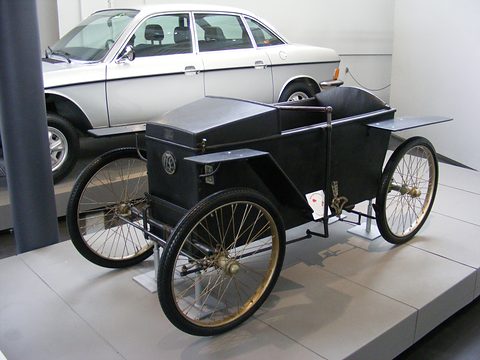
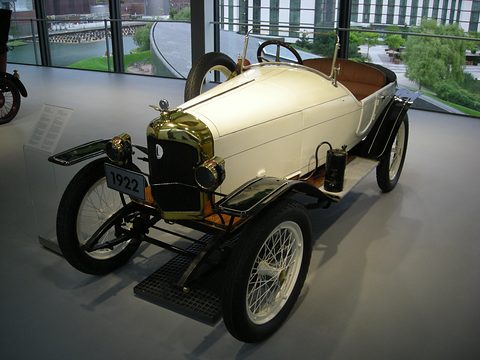
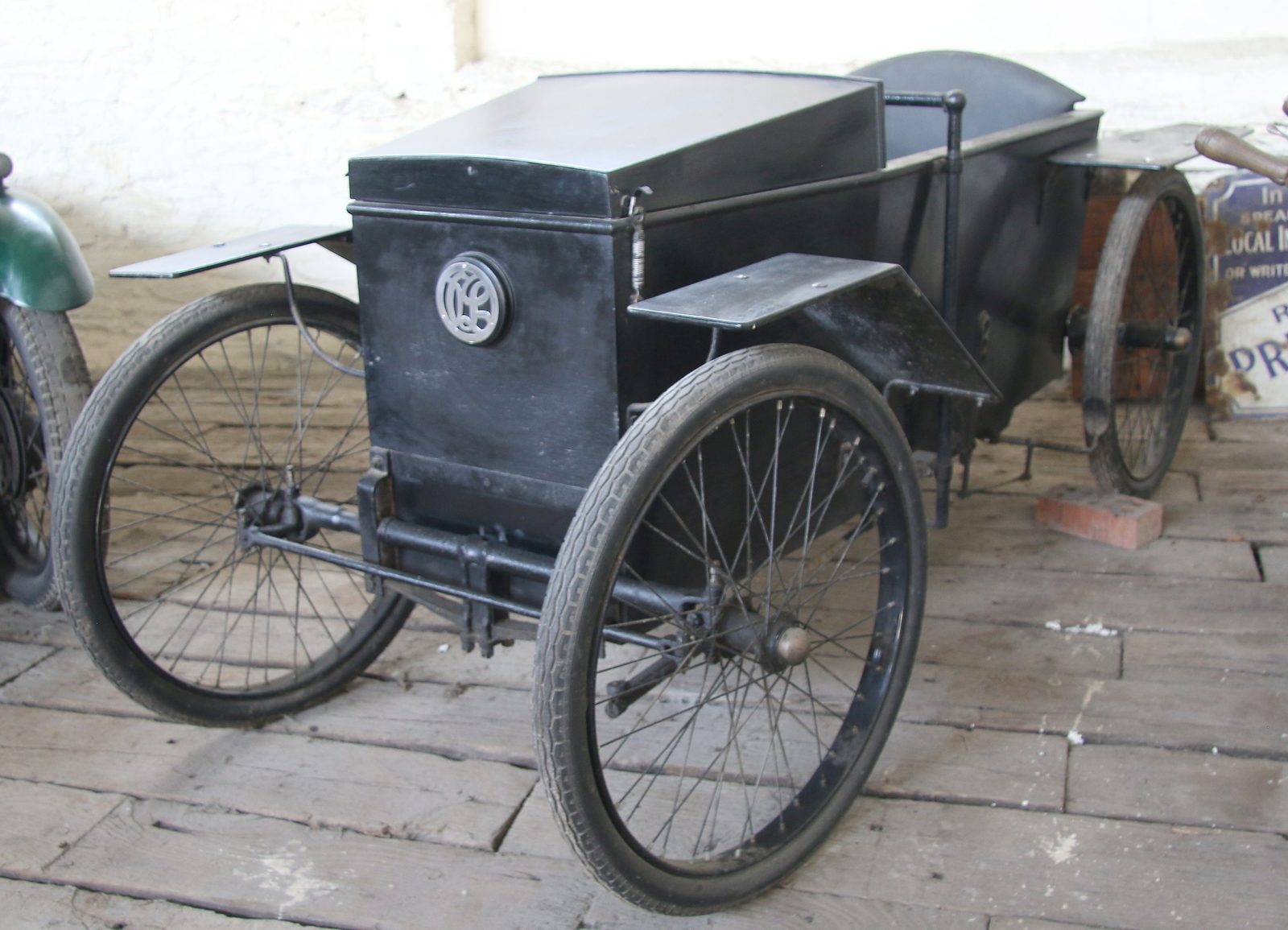
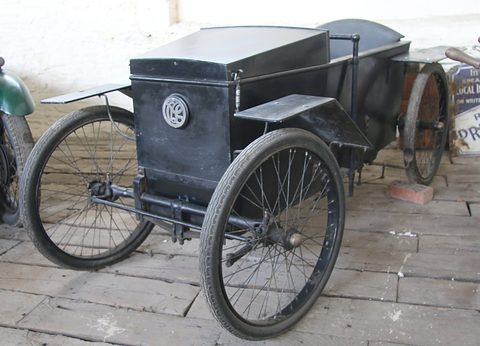
A small black box-bodied electric car with tall wire wheels on a pale plinth, a silver saloon behind.
A black 1920 Slaby-Beringer single-seater, with the SB badge on the box at its front, in the Deutsches Museum Verkehrszentrum, Munich.Photo: Mattes, CC BY-SA 3.0, via Wikimedia Commons

Hawa 40 Volt Elektro-Kleinwagen

1921–⁠1923 · a record on this page

No source describing the Hawa 40 Volt Elektro-Kleinwagen has been found; its maker, design and numbers are not known.

Pictures

More photographs, old and new

Variants

The SB range

Slaby-Beringer models
VariantYearsWhat differsHow many
Single-seater1919–⁠21The first electric car; 180 kg with batteries by German WikipediaPart of about 2,000
SB-Einsitzer Model 19221922–⁠242.30 m long, ½ PS, 240 kg; with an emergency seat 2.60 m, 1 PS, 280 kgPart of about 2,000
SB-Mehrsitzer1922A chassis for a three-seat body; two motors in the rear axle that doubled as an on-board chargerNot found
SB-Lastkarren1921–⁠22An electric works truck for 1,500 kgNot found
DKW-engined SBTo 1924A petrol two-stroke DKW engine; a two-seater from 1924266

Specification

The SB-Einsitzer of 1922, from the maker’s brochure

Motor and drive

Motor and drive
MotorElectric, ½ PS (0.37 kW); 1 PS (0.74 kW) with the emergency seatsource 10.25 PS by Kirchberg
Battery48 volts, 130 kg; 160 kg with the emergency seatsource 1The figure for the plain single-seater is corrected by hand on the scanned brochure
SpeedsTwo forward and two in reversesource 1
BrakesFoot and handsource 1

Body and chassis

Body and chassis
ConstructionNo chassis: “Fahrgestell und Karosserie sind zusammen aus einem Stück gearbeitet”, chassis and body made in one piecesource 1
BodyPlanked in fine woods, left in their natural colour, and padded insidesource 1German Wikipedia calls it a “Triplex” composite; doubtful for 1919
WheelsDetachable disc wheels, 26 × 2½ in tyres; a spare at the backsource 1
EquipmentElectric lights, an illuminated speedometer with an inspection lamp, a tool boxsource 1

Dimensions

Dimensions
Length2.30 m; 2.60 m with the emergency seatsource 1
Width and track1.00 m and 0.8 msource 1
Weight240 kg with batteries, 110 kg without; 280 kg with the emergency seatsource 1180 kg with batteries for the first car of 1919, by German Wikipedia

Performance

Performance
Top speed24 km/h (15 mph)source 1
RangeAbout 80 km (50 miles) on a charge; 60 km (37 miles) with the emergency seat, a figure corrected by handsource 1
PriceOn a separate price sheet, not foundsource 1

How many were built?

Two figures

About 2,000 builtGerman Wikipedia gives 2,005, of which 266 had DKW engines; a German reference book of 1989 gives about 2,500. The more exact figure probably comes from DKW and Audi’s own history, but that is our guess; we state about 2,000.

  1. about 2,500built in 1919–⁠24One source

    Automobile, a German reference book, 1989source 5

  2. 2,005SB cars, 266 of them with DKW enginesOne source

    German Wikipedia, with no source given for the figuresource 2

  • Two sources agreetwo good sources give the figure
  • One sourcea good source, alone
  • Unconfirmeda lead only, not yet checked

Famous for

Three points

  1. A wooden monocoque

    Chassis and body were made in one piece, in 1919.

  2. Two speeds backwards

    The controller reversed the motor, giving two reverse speeds to match the two forward ones.

  3. The start of DKW’s cars

    Slaby went on to design DKW’s first car, built the SB way.

Survivors and collecting

Today

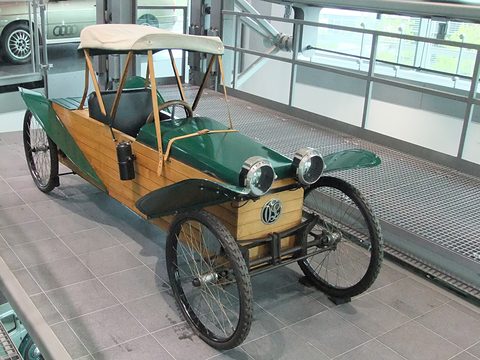
A 1924 Slaby-Beringer is on show at the Industriemuseum Chemnitz, on loan from Audi.source 2 The pictures on this page also show single-seaters in the Deutsches Museum Verkehrszentrum in Munich and elsewhere. No auction result has been traced. The maker’s brochure of 1922 survives, scanned, with its photographs of the range.source 1

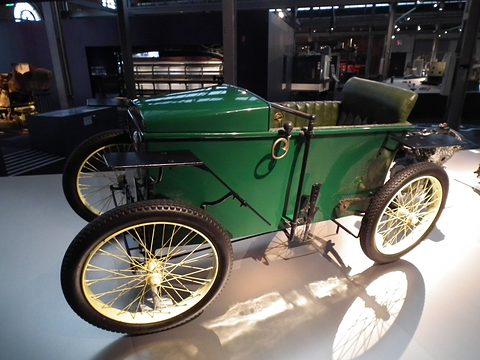
A green box-bodied electric car with cream wire wheels and a black seat in a dark exhibition hall.
A green Slaby-Beringer single-seater with yellow wheels in the Sächsisches Industriemuseum, Chemnitz, in November 2015.Photo: Stefan Kühn, CC0, via Wikimedia Commons

Sources

Numbered as in the text

The specification comes from the maker’s own brochure of 1922, read in full; some of its figures are corrected by hand on the scanned copy. The history, the Japanese business and the production figure of 2,005 rest mainly on German Wikipedia, which gives no source for them, with snippets of Kirchberg and two encyclopedias. Sources are given as plain text; the links are on the Credits page.

  1. SB-Automobil-Gesellschaft, Charlottenburg, brochure Der elektrische SB-Einsitzer Modell 1922 (System Slaby-Beringer), with pages on the SB-Mehrsitzer chassis and the SB-Lastkarren, read in full.
  2. German Wikipedia, Slaby-Beringer, read in full. Used as a lead.
  3. G. N. Georgano (ed.), The New Encyclopedia of Motorcars 1885 to the Present (1982), entries S.B. and Gamage, snippets only.
  4. Peter Kirchberg, Dixi, Horch, Trabant & Co. (1990), snippets only.
  5. Automobile (1989), a German illustrated reference, entry “1920 Slaby-Beringer Elektrowagen”, snippets only.