microcarfan
  • Microcar utility
  • France
  • Light van

Autelec

Also known as Autélec

Twelve hours on the charger for one day’s round of deliveries at 25 km/h. In occupied Paris, with petrol all but gone, a brake maker’s small battery van still found buyers, because there was nothing else to buy.

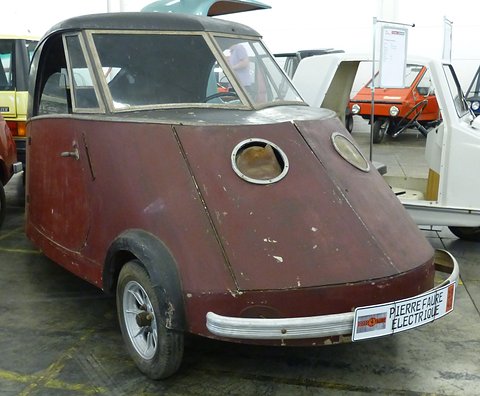
Maroon rounded nose with two porthole lamps and a chrome bumper carrying a maker’s plate.
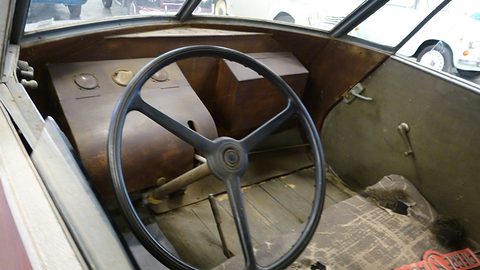
The unrestored 1941 Pierre Faure PFA, not an Autélec, from the front quarter, with its porthole lamps and Pierre Faure Électrique plate.Photo: Buch-t, CC BY-SA 3.0 de, via Wikimedia Commons

At a glance

The spec plate

Autelec

Light electric van · Paris

Built
1940–⁠1943Presented in 1940; production ended in 1943
Country
FranceParis, under the German occupation
Maker
Société des Freins Jourdain-MonneretA brake maker at 30 rue Claude-Decaen, Paris 12e
Engine
Electric motor, 48 V lead-acid battery224 Ah; three speed steps forward and three in reverse
Power
3.5 hpAbout 2.6 kW
Price new
46,300 francs1940
Production
Not knownBuilt from 1940 to 1943
Survives
None found
Top speed
25km/h25 km/hRange about 65 km on a charge

Not yet recordedlength, weight, seats and wheels and layout.

How big is it?

True proportion

Length unknown

No reliable length has been found. The Fiat 500, the Peel P50 and the adult stay, so the gap is shown, not hidden.

  • A payload of 500 kg
Drawn at true proportion. The track is 3.6 metres long; the adult stands at the same scale. The Peel P50 is the smallest production car, on every page for comparison.

The story

History

From 1940, under the German occupation, petrol in France was rationed almost to nothing. Parisians took to bicycles, to gazogène conversions that ran on wood gas, and to battery power: the electric car, long forgotten, came back, and small workshops turned car maker overnight.source 1source 2 The Autélec was one of these electric microcars of the war, built not for people but for goods.

Its maker was the Société des Freins Jourdain-Monneret, a brake firm at 30 rue Claude-Decaen in the 12th arrondissement. Before the war, it seems, the firm had also built electric platform trucks for moving goods in the railway stations and inside the markets of Paris.source 2 In 1940 it presented the Autélec, a light van for the city’s tradesmen. It was meant to be small and light, easy to load and easy to get at the battery, and it carried 500 kg (1,100 lb). A motor of 3.5 hp (about 2.6 kW) ran from a 48 V lead-acid battery, with three steps of speed forward and three in reverse, for about 25 km/h (16 mph) and a range of about 65 km (40 miles).source 2

The limits were plain. A full recharge took 12 hours, so the van could do one day’s round and no more, and its price of 46,300 francs l’Automobile Ancienne calls prohibitive. It still sold modestly, because it had no competition. A larger electric lorry, for a payload of 1.5 tonnes, was developed too; whether it was ever sold is not known. Production ended in 1943, why is not recorded, and the number made is unknown.source 2 What became of Freins Jourdain-Monneret afterwards has not been found.

Car or van?

The first microcarfan.com said in two sentences that the firm offered several voiturettes, small cars, until 1943.source 3 The only source that describes a body, l’Automobile Ancienne, describes a small utility van, a micro camion.source 2 Until a period photograph or a brochure shows a passenger body, the Autélec is best taken as a van.

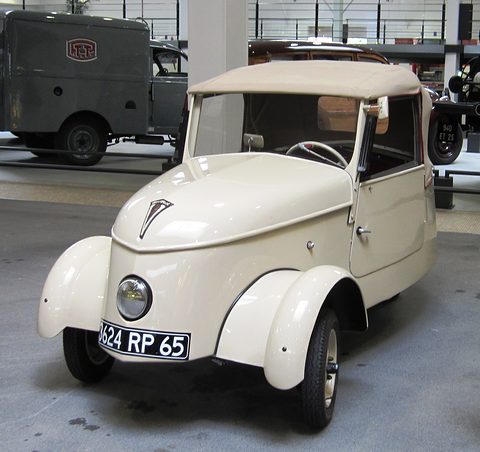
The photographs here show not an Autélec but its Paris contemporary, the Pierre Faure, an electric two-seater of the same years.
Brodeau

1943 · a record on this page

Everything known about the Brodeau is in two sentences on the old microcarfan.com: a French firm that, during the Second World War, offered a small electric vehicle, and a car of the name photographed in the streets of Paris in 1943. Its author asked readers for more, so even its author knew little else.source 4 That is one collector’s account, and nothing has been found to support it. German Wikipedia, which lists most of the small French makers, has no Brodeau, and the name leads there only to a poet of the 16th century; the Roger-Viollet agency’s captions for its photographs of wartime electric cars in Paris do not mention it either.source 5source 6 The name may be a misreading of a badge, or of an owner’s or a coachbuilder’s name. No maker, address or specification has been traced, nor any production figure or survivor.

Pierre Faure électrique

1941–⁠1947 · a record on this page

Pierre Faure’s firm in Paris began building cars in 1941, and built only electric ones, because there was no petrol.source 7 Faure had worked for Breguet, the aircraft firm whose works also made the Breguet electric car during the war, and his cars had wooden bodies.source 1 There were two: a small two-seat coupé and a delivery van, both with a narrow rear track, which could cover 69–80 km (43–50 miles) between charges at up to 40–45 km/h (25–28 mph).source 7 The firm showed them at the Paris Salon of 1946 and stopped in 1947, when petrol cars came back.source 7

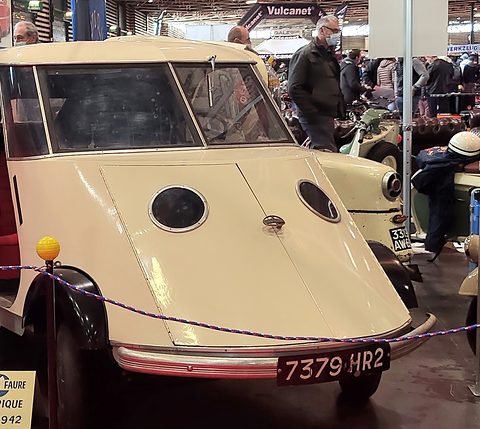
At least one survives. A 1941 Pierre Faure Type PFA two-seater, needing restoration, was offered at a French auction without reserve.source 8 German Wikipedia records a sale in 2016 at €21,900, perhaps of the same car.source 7 The photographs on this page show an unrestored PFA at a show in 2018, its body tapering to porthole lamps, and a restored cream PFA in 2021.

Cream streamlined two-seater with porthole lamps and a split windscreen behind a rope barrier.
A restored cream Pierre Faure PFA electric two-seater, 7379 HR 2, on a show stand in 2021.Photo: crash71100, CC0 1.0, via Flickr

Électro-Renard

1943–⁠1946 · a record on this page

Électro-Renard of Lyon built two-seat electric cars from 1943 to 1946, with a quoted range of 72 km (45 miles). Nothing else about them has been found.source 9

Pictures

More photographs, old and new

Specification

What the sources give

Autélec van

Autélec van
MotorElectric, 3.5 hpsource 2
BatteryLead-acid, 224 Ah at 48 Vsource 2
ControllerThree speed steps forward, three in reversesource 2
Payload500 kgsource 2
Top speed25 km/hsource 2
Range65 kmsource 2Printed “65km/h” in the source, a slip for km
Recharge12 hourssource 2
Price new46,300 francs, 1940source 2

Pierre Faure

Pierre Faure
BodiesTwo-seat coupé and delivery van, both with a narrow rear tracksource 7
BodyWoodsource 1
Top speed40–45 km/hsource 7
Range69–80 kmsource 7

Électro-Renard

Électro-Renard
SeatsTwosource 9
Range72 km, as quotedsource 9

Famous for

Three points

  1. Brakes, then batteries

    A Paris brake maker that, it seems, had built electric trucks for stations and markets offered a van for tradesmen.

  2. One round a day

    Twelve hours to recharge, 25 km/h on the road, about 65 km to a charge.

  3. Nothing else to buy

    Dear at 46,300 francs, it sold all the same in a city all but out of petrol.

Survivors and collecting

Today

No Autélec is known to survive, and no Brodeau or Électro-Renard has been traced. The wartime Pierre Faure has fared better: at least one 1941 PFA survives, and has been offered at auction.source 8

Sources

Numbered as in the text

The record is thin. The Autélec rests on one enthusiast’s article, which names no sources of its own, and on the old microcarfan.com’s two sentences; the Brodeau on the old site alone, one collector’s account. No period press, brochure or Salon catalogue has been found for either. Sources are given as plain text; the links are on the Credits page.

  1. l’Automobile Ancienne, “Les voitures électriques sous l’occupation”, 3 November 2015, read in full.
  2. l’Automobile Ancienne, “Autélec (1940-1943)”, 6 November 2015, read in full. An enthusiast’s article; it cites no sources.
  3. The original microcarfan.com (2006–⁠2016), marque page “AUTELEC”: one collector’s note of two sentences, read in full from the archived copy.
  4. The original microcarfan.com (2006–⁠2016), marque page “BRODEAU”: one collector’s note of two sentences, read in full from the archived copy.
  5. German Wikipedia, navigation list Französische Automobilmarken ab 1945, and the article to which “Brodeau” leads, Victor Brodeau, checked in October 2026.
  6. Roger-Viollet, “The electric car”, photograph set of wartime Paris, captions read.
  7. German Wikipedia, Pierre Faure, read in full. Used as a lead; it cites Linz and Schrader, Die Internationale Automobil-Enzyklopädie (2008), and Georgano, The Beaulieu Encyclopedia of the Automobile (2001).
  8. auction.fr, lot listing “1941 Pierre Faure type PFA biplace électrique no reserve”, seen as a title only.
  9. German Wikipedia, Électro-Renard, read in full. Used as a lead; it cites Linz and Schrader and Georgano.