microcarfan
  • Licence-free car
  • France
  • Four wheels
  • One seat

Erad

Also known as ERAD

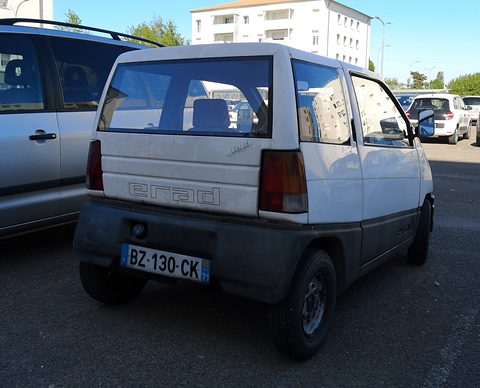
It started with a three-wheeler a garage owner built in his spare time. A local paper wrote it up, a reader asked to buy one, and by 1979 the works at Aniche was turning out more than 2,000 cars a year.

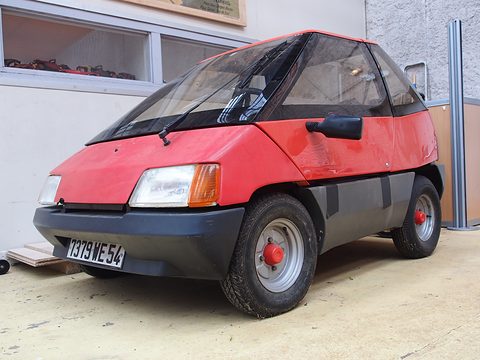
Small red car with a huge tinted glass door-and-roof panel, grey lower body and Peugeot 205 headlamps, by a white wall.
A red and grey Erad Junior, a model of 1988 or later, at the Association Lorraine des Amateurs d’Automobiles in 2013.Photo: Alf van Beem, CC0, via Wikimedia Commons

At a glance

The spec plate

Erad

Capucine · Aniche

Built
1978–⁠1997Series production at Aniche from 1978 until the works was sold in 1997
Country
FranceAniche, in the Nord; the firm began in Douai, or in Aniche, by different accounts
Maker
Automobiles Erad (Études et Réalisations du Douaisis), AnicheDaniel Renard’s company
Engine
47 cc Sachs two-stroke singleAlso a 50 cc Motobécane in the front-drive car; from 1981 a 123 cc BCB and a 290 cc Farymann diesel; later a 360 cc Petter diesel, diesels to 505 cc and electric motors; in the Midget, a 125 cc two-stroke or a 600 cc diesel
Length
1,690 mm1,250 mm wide, 1,600 mm high
Weight
170 kgThe first Capucine
Seats
1A four-seater from 1984
Wheels
4Rear-wheel drive, or front-wheel drive in a second version of the Capucine
Price new
35,000 francsFor the Junior of 1988, the cheapest car on the French market; no Capucine price has been found
Production
About 30,000All models, 800 of them electric; the trade press credits Renard with about 25,000 to 1995
Survives
YesThe photographs here show a Midget in a museum in 2012, a Junior in 2013 and a Spacia in 2019

Not yet recordedpower and top speed.

How big is it?

True proportion

1.69 m

It is 1,280 mm shorter than a Fiat 500, about one adult laid end to end.

  • 1.25 m wide
  • 170 kg: about two adults
  • Nearly as tall as it was long: 1.60 m high, 1.69 m long
  • One seat in the first Capucine
Drawn at true proportion. The track is 3.6 metres long; the adult stands at the same scale. The Peel P50 is the smallest production car, on every page for comparison.

The story

History

Daniel Renard had no secondary education. In 1967 he opened a small garage in Douai, and in his spare time he built himself a three-wheeled microcar. That is the English Wikipedia’s account: a local newspaper wrote about the car, one of its readers ordered a copy, and the company followed.source 1 It was called Automobiles Erad, for Études et Réalisations du Douaisis, the studies and works of the Douai district.source 1source 2 It was founded in 1975, in Douai by one account and in Aniche by the other.source 1source 2 Series production began in 1978, once the firm had moved into larger premises at Aniche.source 1source 2

The first model was the Capucine, a licence-free car with a plastic body and a single seat. It was 1,690 mm (67 in) long, 1,250 mm (49 in) wide and 1,600 mm (63 in) tall, almost as high as it was long, and it weighed 170 kg (370 lb). Its engine was a 47 cc single-cylinder Sachs two-stroke.source 1source 2 There was a small boot for the shopping.source 1 The English Wikipedia describes two types, one driving the rear wheels and one the front, the second with a 50 cc Motobécane it calls controversial: a contra-piston worked as a compressor in the crankcase, for lower revs and more torque.source 1 An improved Capucine kept nearly the same body on a wider track.source 1

One version was built for a wheelchair user. The whole rear of the car became a single large door, hinged at the side, with a small ramp to roll up.source 1

More than 2,000 a year

Erad was one of the big producers of the French licence-free boom. It built nearly 2,400 vehicles in 1979 and about 2,640 in 1980, the year the German Wikipedia counts 105 employees.source 1source 2 In 1981 the range took two new engines: a 123 cc BCB petrol unit, for versions that needed a licence, and a 290 cc Farymann diesel, an early diesel in its class.source 1source 2 A 360 cc Petter AC1 diesel came later.source 1

The oddest Erad came in 1982. The Midget was a replica of the 1936 MG Midget, 2,700 mm (106 in) long, with a 125 cc two-stroke or a 600 cc diesel.source 1source 2 Under the period shape it had live axles on leaf springs at both ends and drum brakes all round, and it weighed 260 kg (573 lb). Only 24 were built.source 1 The Capucine was facelifted in 1984, and the range gained an open version and a four-seater.source 1source 2

The cheapest car in France

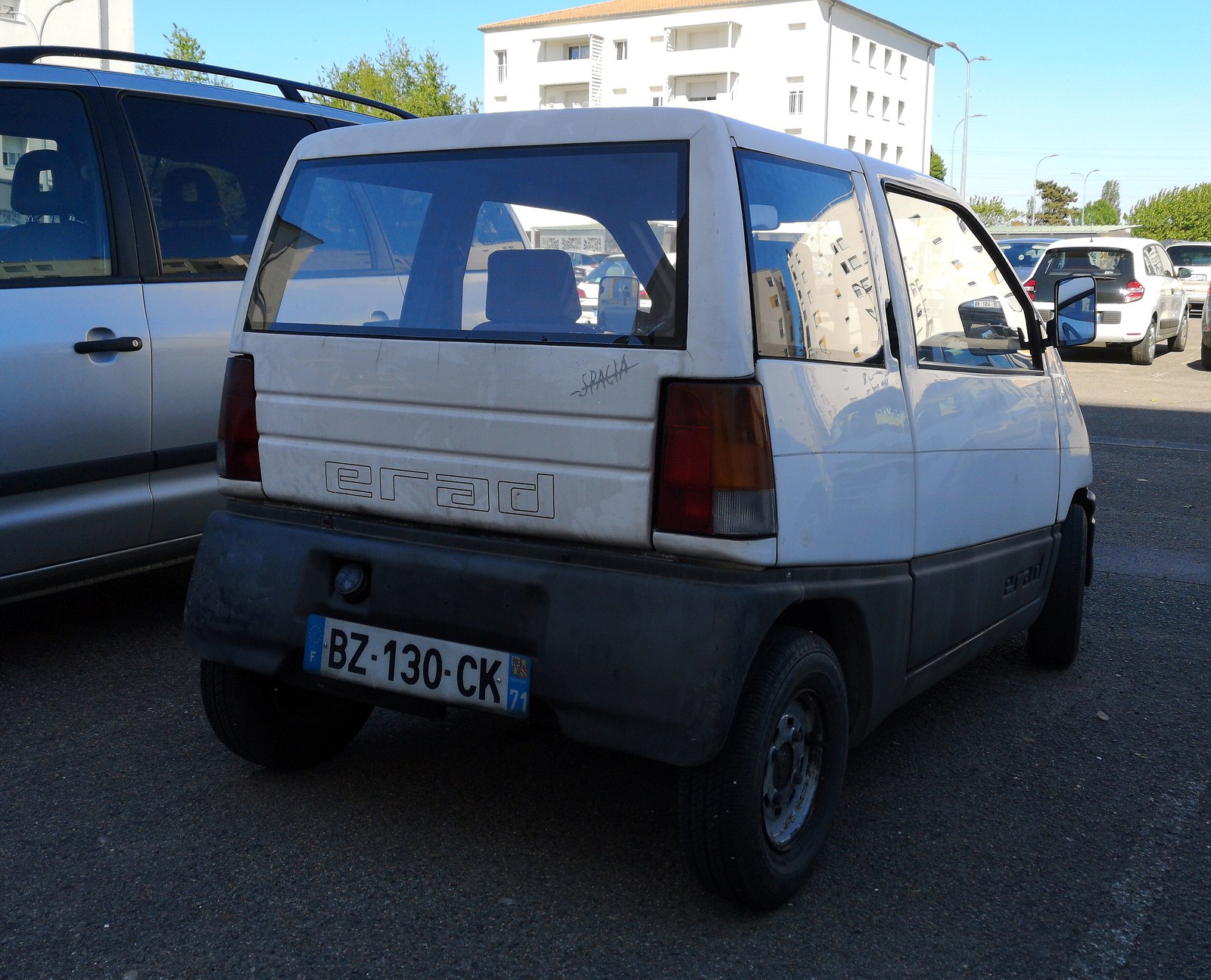
The Junior of 1988 was built down to a price. It had the headlamps of a Peugeot 205 and a single huge door that folded forward and took the roof with it.source 1 At 35,000 francs, says the German Wikipedia, no new car in France cost less.source 2 The Spacia of 1990 looked like the Renault Twingo, which arrived later, and was offered with diesels of up to 505 cc or as an electric car.source 1source 2 Of all the Erads built, 800 were electric.source 1source 2 The last new model was the Agora of 1993, a light two-seater.source 1source 2 The trade press also names a utility, the Utilit, and notes that most Erads used the firm’s own reversers, drive shafts and brakes.source 3

Renard leaves

Then a manager misappropriated money, and Erad fell into financial trouble.source 1 Renard left in 1995, says the Journal de l’Automobile, and founded a new company, SECMA, where he designed the Fun Tech to compete with scooters.source 3source 1 In 1997 the Erad works was sold to Savel, a new company also based at Aniche, and Erad production ended.source 1source 2 The Journal de l’Automobile tells it differently: Savel took over Erad’s assets after a failure in 2001, and Renard later bought the remaining stock from it.source 3 Savel was liquidated in 2002, and Renard bought back most of his old firm and folded it into SECMA.source 1

The firm he started second has kept the first one running. SECMA holds Erad parts in more than 2,000 m² (21,500 sq ft) of stores at Aniche, for nearly every model from the early 1980s on.source 3source 1
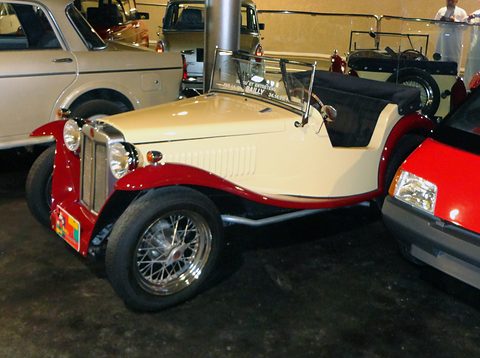
Cream and red open roadster with an upright chrome radiator, wire wheels and cycle wings among other cars.
An Erad Midget, the firm’s scaled-down MG replica, in the Emirates National Auto Museum, Abu Dhabi, in 2012.Photo: Abdulla Al Muhairi, CC BY 2.0, via Wikimedia Commons
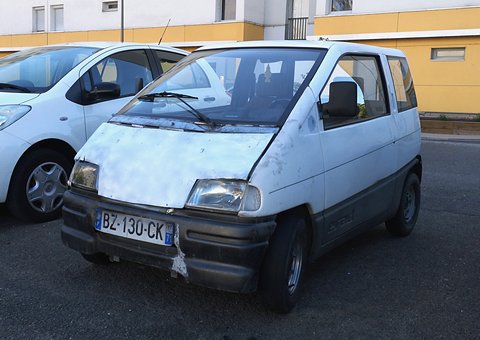
Front of a tired white small car with a dented bonnet and black bumper, parked beside a modern white hatchback.
An Erad Spacia from the front in 2019, its Twingo-like nose dented.Photo: Guillaume Vachey, CC0, via Wikimedia Commons

Pictures

More photographs, old and new

Variants

From one seat to four

The Erad range, by model
VariantYearsWhat differsHow many
Capucine1978–Plastic single-seater, Sachs 47 cc, rear-wheel driveNot known
Capucine, front driveLate 1970sA 50 cc Motobécane with a contra-pistonNot known
Capucine 125 and diesel1981–BCB 123 cc, or a Farymann 290 cc diesel; later a Petter 360 cc dieselNot known
Capucine for wheelchairs1980sThe whole rear one side-hinged door, with a small rampNot known
Capucine, 19841984–A facelift, with an open version and a four-seaterNot known
Midget1982A 2.70 m replica of the 1936 MG Midget; 125 cc two-stroke or 600 cc diesel24
Junior1988–Peugeot 205 headlamps; one forward-folding door that takes the roof with itNot known
Spacia1990–Twingo-like looks; diesels up to 505 cc, or electricNot known
Agora1993–A light two-seater, the last new EradNot known
UtilitNot knownA utility, named by the trade pressNot known

Specification

The first Capucine, unless noted

Engine and drive

Engine and drive
EngineSachs single-cylinder two-stroke, 47 ccsource 1source 2
Front-drive carMotobécane 50 cc two-stroke, with a contra-piston as a crankcase compressorsource 1
Later enginesBCB 123 cc and Farymann 290 cc diesel from 1981; Petter AC1 360 cc diesel; diesels to 505 cc and electric in the Spaciasource 1source 2
Reverser and drive shaftsErad’s own, on most modelssource 3

Body and chassis

Body and chassis
BodyPlasticsource 1source 2
Seats1The English Wikipedia also says two, in the same paragraph
BootA small one, for shoppingsource 1
TrackWidened on an improved modelThe English Wikipedia’s 160 cm looks too wide for a car 125 cm wide
BrakesErad’s own, on most modelssource 3

Dimensions

Dimensions
Length1,690 mmsource 1source 2
Width1,250 mm
Height1,600 mm
Weight170 kg
Midget2,700 mm and 260 kgsource 1

Performance and running

Performance and running
Top speedNot stated in the sources
Midget running gearLive axles on leaf springs, drum brakes all roundsource 1
Price newNot foundThe Junior cost 35,000 francs in 1988

How many were built?

Every figure, with its source

About 25,000 to 30,000Both Wikipedias give about 30,000 Erads in all, 800 of them electric; the trade press credits Daniel Renard with about 25,000 in his 20 years in charge. Neither is a register figure, and the two are shown side by side.

  1. about 30,000all Erads, including 800 electricOne source

    English and German Wikipedia, probably drawing on one encyclopaediasource 1source 2

  2. about 25,000launched by Renard in his 20 years, to 1995One source

    Journal de l’Automobilesource 3

  3. about 2,640in 1980, by 105 employeesOne source

    English and German Wikipedia, perhaps from one encyclopaediasource 1source 2

  4. nearly 2,400in 1979One source

    English and German Wikipedia, perhaps from one encyclopaediasource 1source 2

  5. 800electric Erads, within the 30,000One source

    English and German Wikipediasource 1source 2

  6. 24Midgets, 1982One source

    English Wikipediasource 1

  • Two sources agreetwo good sources give the figure
  • One sourcea good source, alone
  • Unconfirmeda lead only, not yet checked

Famous for

Three points

  1. A garage owner’s three-wheeler

    A car built in a Douai mechanic’s spare time became a factory of 105 people.source 1source 2

  2. The cheapest car in France

    In 1988 the Junior, with one door that took the roof with it, cost 35,000 francs.source 1source 2

  3. An MG in miniature

    The 1982 Midget copied the 1936 MG Midget at 2.70 m long. Only 24 were made.source 1

Survivors and collecting

Today

The sources record no museum car, auction result or club for Erad. The photographs on this page show a Midget in the Emirates National Auto Museum, Abu Dhabi, in 2012, a Junior at a Lorraine club in 2013 and a Spacia still on the road in 2019. Owners are not without help, either: SECMA, the company Renard founded in 1995, still supplies Erad parts from Aniche.source 1source 3

Sources

Numbered as in the text

No period road test, model-by-model figures or prices other than the Junior’s were found, and the founder’s story rests on one encyclopaedia article. Sources are given as plain text; the links are on the Credits page.

  1. English Wikipedia, Automobiles ERAD, citing Les Échos and a SECMA history page.
  2. German Wikipedia, Automobiles Erad, citing Linz and Schrader, Georgano and René Bellu’s Automobilia Salon issues.
  3. Journal de l’Automobile, “La Secma fait ses gammes”, mid-2000s.