microcarfan
  • Prototype
  • Several countries
  • 11 makers

Microcar concept cars since 1990

Since 1990 nearly every big maker has shown a tiny city car, and few have built one. Their show cars folded, leaned, turned their cabins round or balanced on two wheels; one led to 250 cars, and one ended with fraud charges.

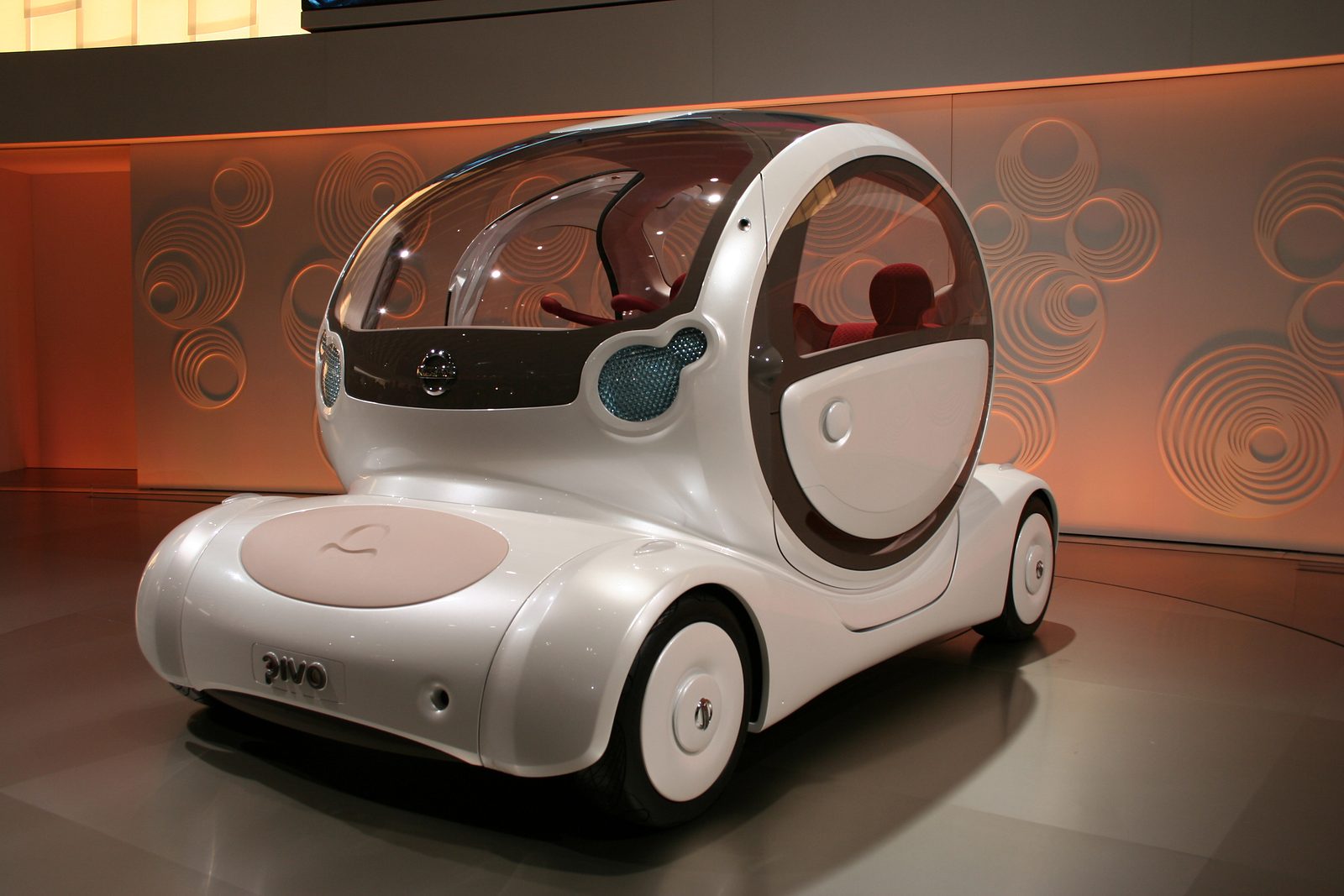
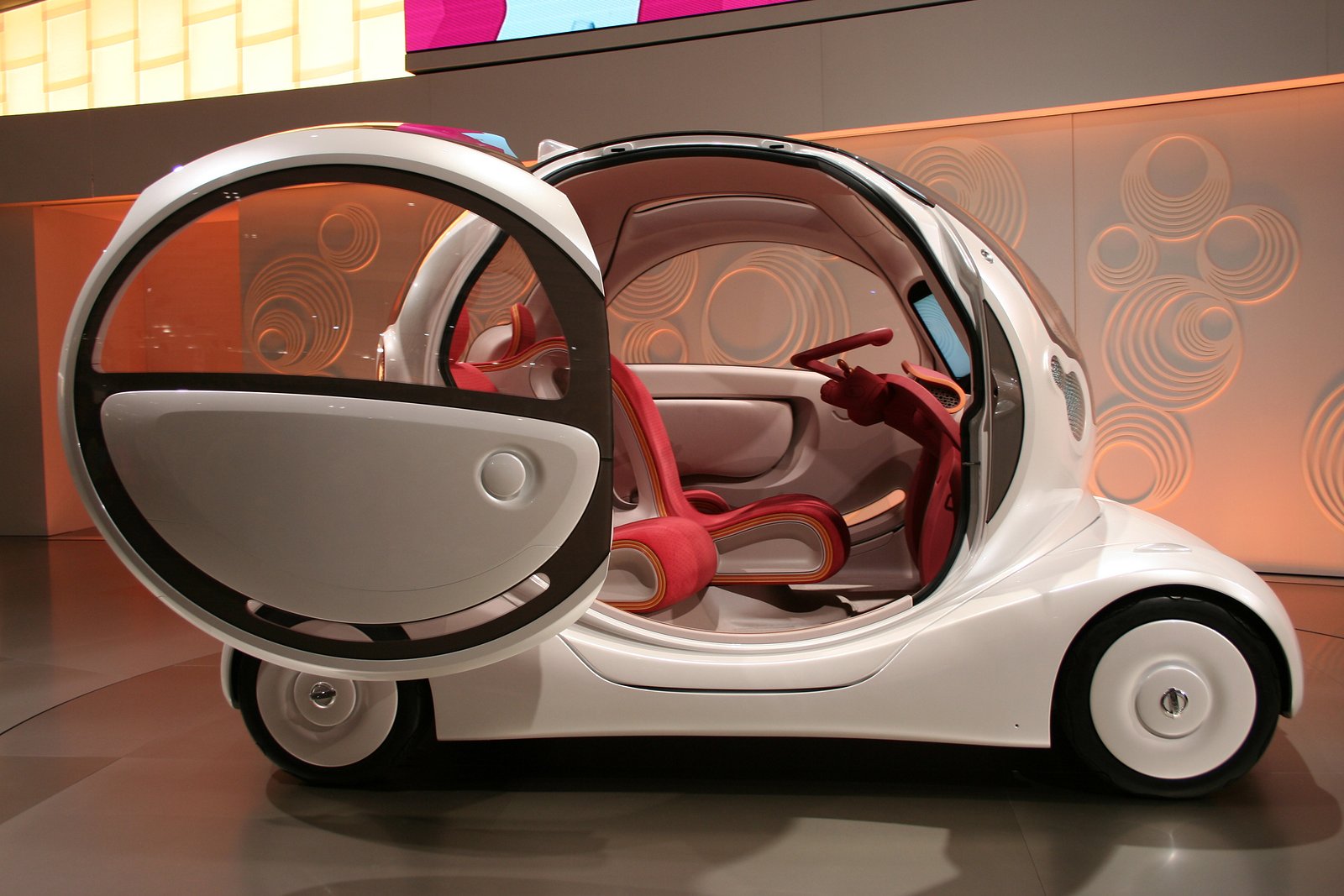
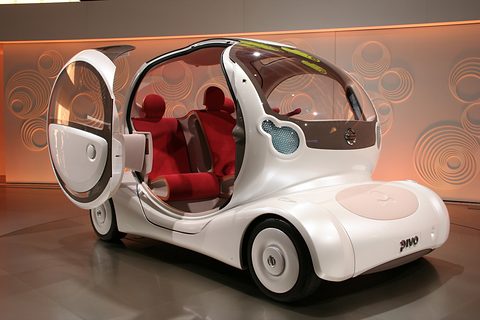
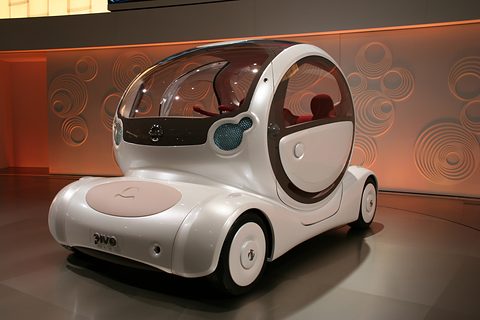
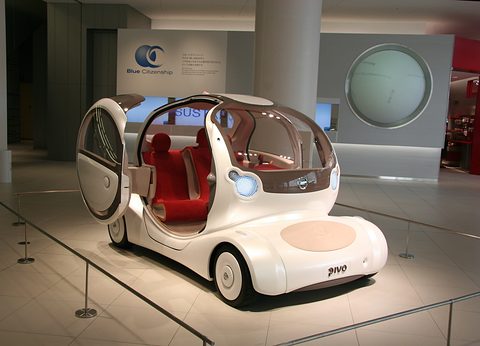
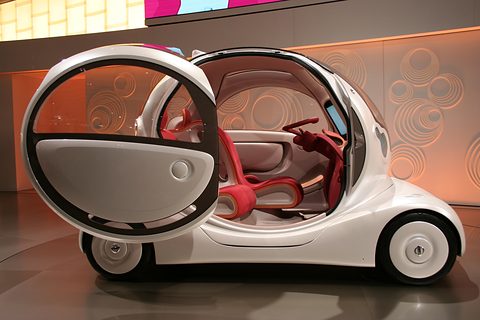
Pearl-white bubble-shaped three-seat concept with round doors swung open showing red seats, on a lit stand.
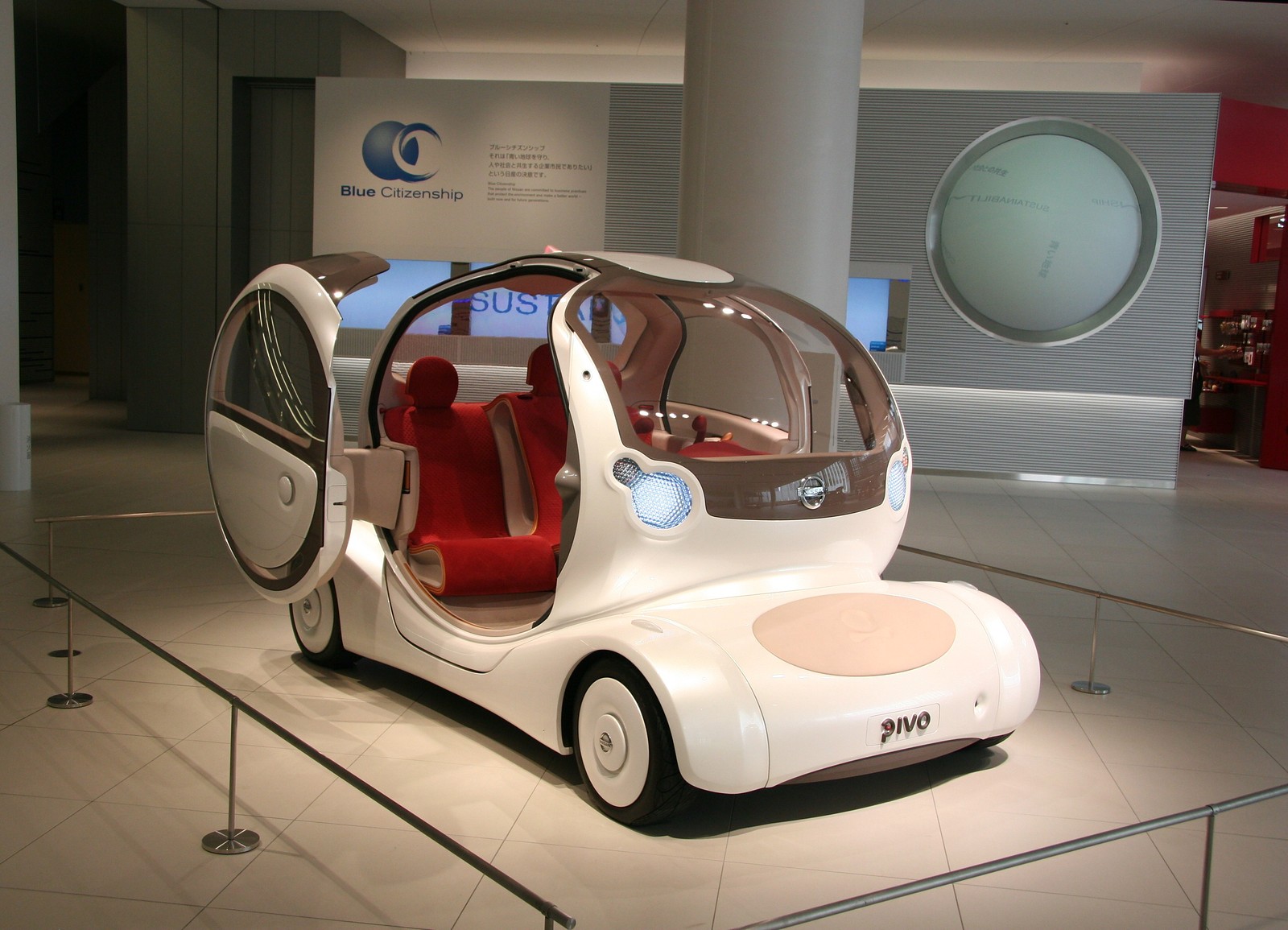
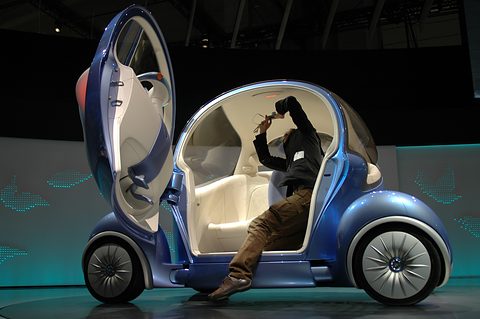
The Nissan Pivo concept of 2005, with its round doors open, at the Tokyo Motor Show, Japan, in November 2005.Photo: machu., CC BY 2.0, via Flickr

At a glance

The spec plate

Microcar concept cars since 1990

11 makers · 14 concepts

Built
1992–⁠2025From the Renault Zoom, shown in Paris in 1992, to the Dacia Hipster of 2025
Country
Several countriesFrance, Germany, Spain, Romania, Japan, China and the United States
Engine
Electric motors, nearly allThe Yamaha Tesseract a V-twin hybrid; Volkswagen’s XL1, the 1-litre car’s descendant, a plug-in diesel hybrid
Seats
1 to 4One in the VW Nils and the Yamaha Tesseract; four in the Peugeot BB1 and the Dacia Hipster
Production
250 Volkswagen XL1sThe only offshoot sold in numbers; 10 Lumeneo Neomas sold
Top speed
130km/h130 km/hThe GM EN-V 40 km/h, by English Wikipedia

Not yet recordedpower and wheels and layout.

The story

History

The same few ideas come back. Bodies fold or shrink to park, in the Renault Zoom and the Hiriko; narrow tandems appear in the Land Glider, the Smera, the RAK e and the Minimó, the first two leaning into corners as the Tesseract does; the Pivo turns its cabin round; the PUMA and the EN-V balance on two wheels; and the BB1 and the CityCar put their motors in the wheels.source 1source 2source 3source 4source 5source 6source 7 Nearly all were electric (more in electric microcars).

A few led somewhere. Volkswagen’s 1-litre car became the XL1, built in a small series; the Lumeneo Smera became the Neoma, of which 10 were sold; and French Wikipedia sees the Zoom as a forerunner of the Renault Twizy, whose production version, by German Wikipedia’s account, was shown in the same season as the Nils and the RAK e.source 8source 9source 3source 10 The Hiriko, a folding car from the Basque Country, ended in a fraud case (more in frauds and never-weres). The concepts follow in the order they were shown, the makers numbering 11 and the concepts 14.
Renault Zoom

1992 · a record on this page

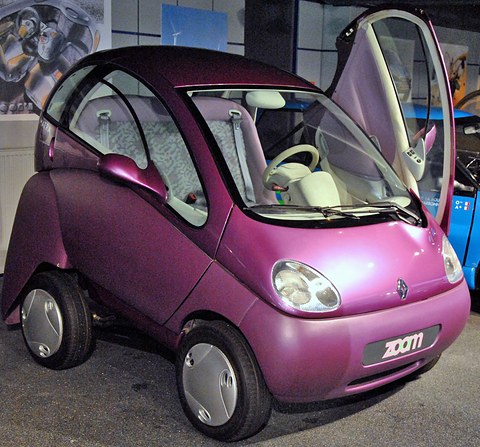
Renault and Matra showed the Zoom, an electric two-seater for the city, at the Paris Motor Show of 1992.source 1source 8 Its rear wheels folded inwards to shorten it from 2,650 mm (104 in) to 2,300 mm (91 in) for parking, raising the car by 230 mm as they did, while its width stayed at 1,520 mm; its scissor doors opened on inclined hinges.source 1source 8 It ran about 150 km on a charge and, by French Wikipedia, reached 120 km/h (75 mph); English Wikipedia gives its motor as 25 kW in one place and 45 kW in another.source 1source 8 It appeared in Albert Dupontel’s short film Désiré in 1992, and a pink prototype is in the Matra museum at Romorantin-Lanthenay.source 8

Purple bubble-shaped two-seat concept with gullwing doors raised and a ‘zoom’ badge, on a museum floor.
The 1992 Renault Zoom, short, its rear wheels folded in, at the Matra museum in Romorantin in June 2012.Photo: Rémi, CC BY-SA 2.0, via Wikimedia Commons

Volkswagen L1

2002 · a record on this page

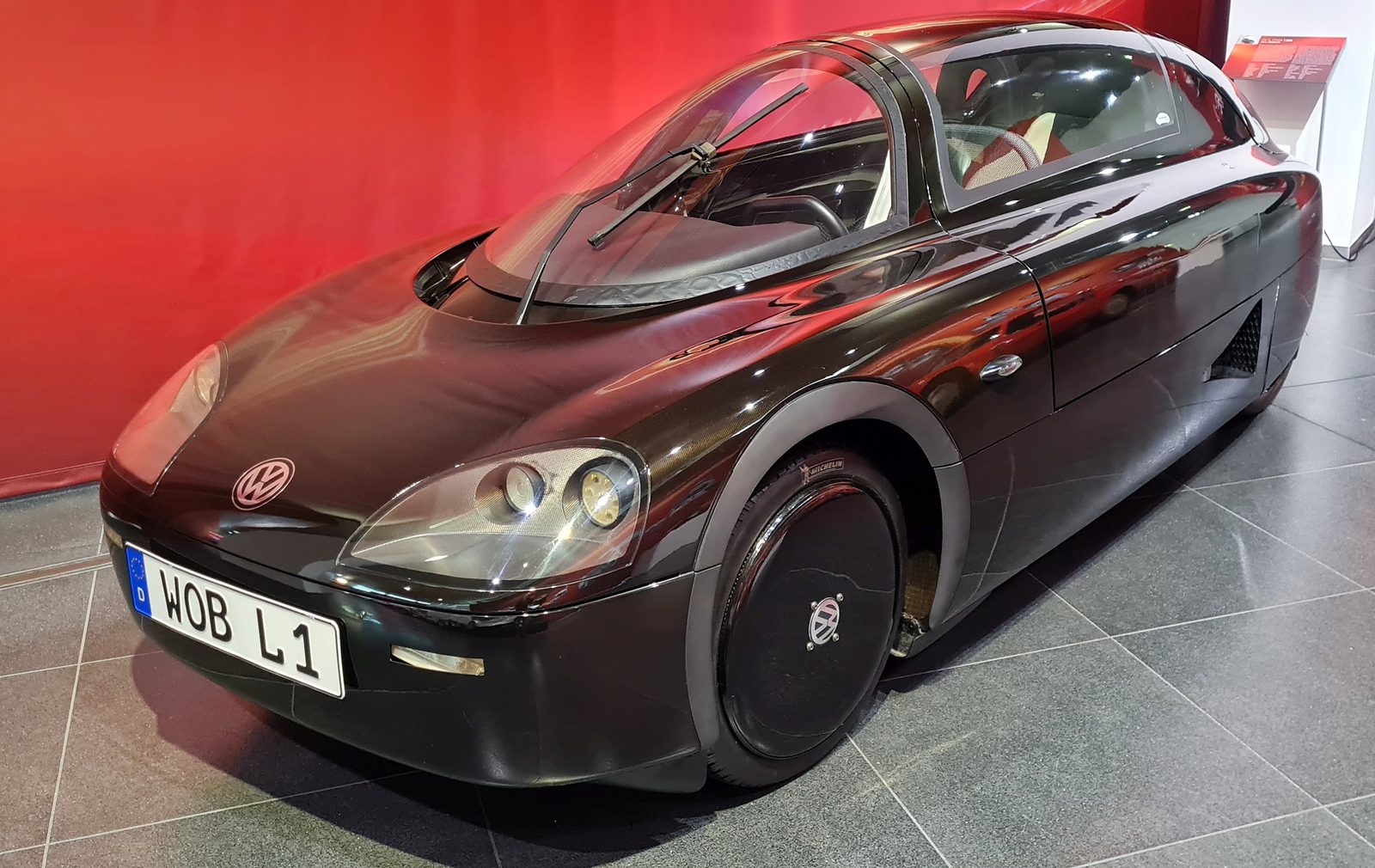
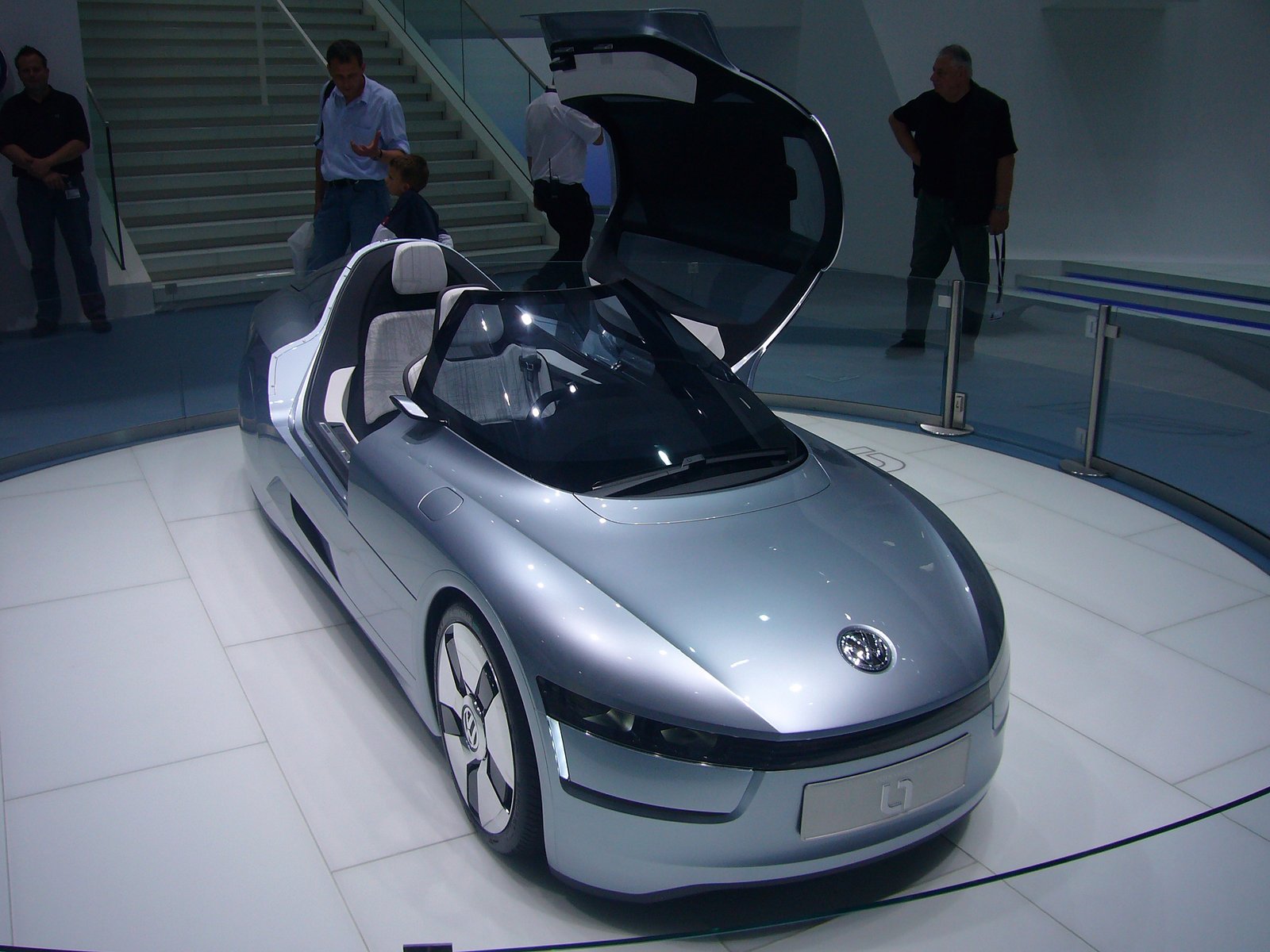
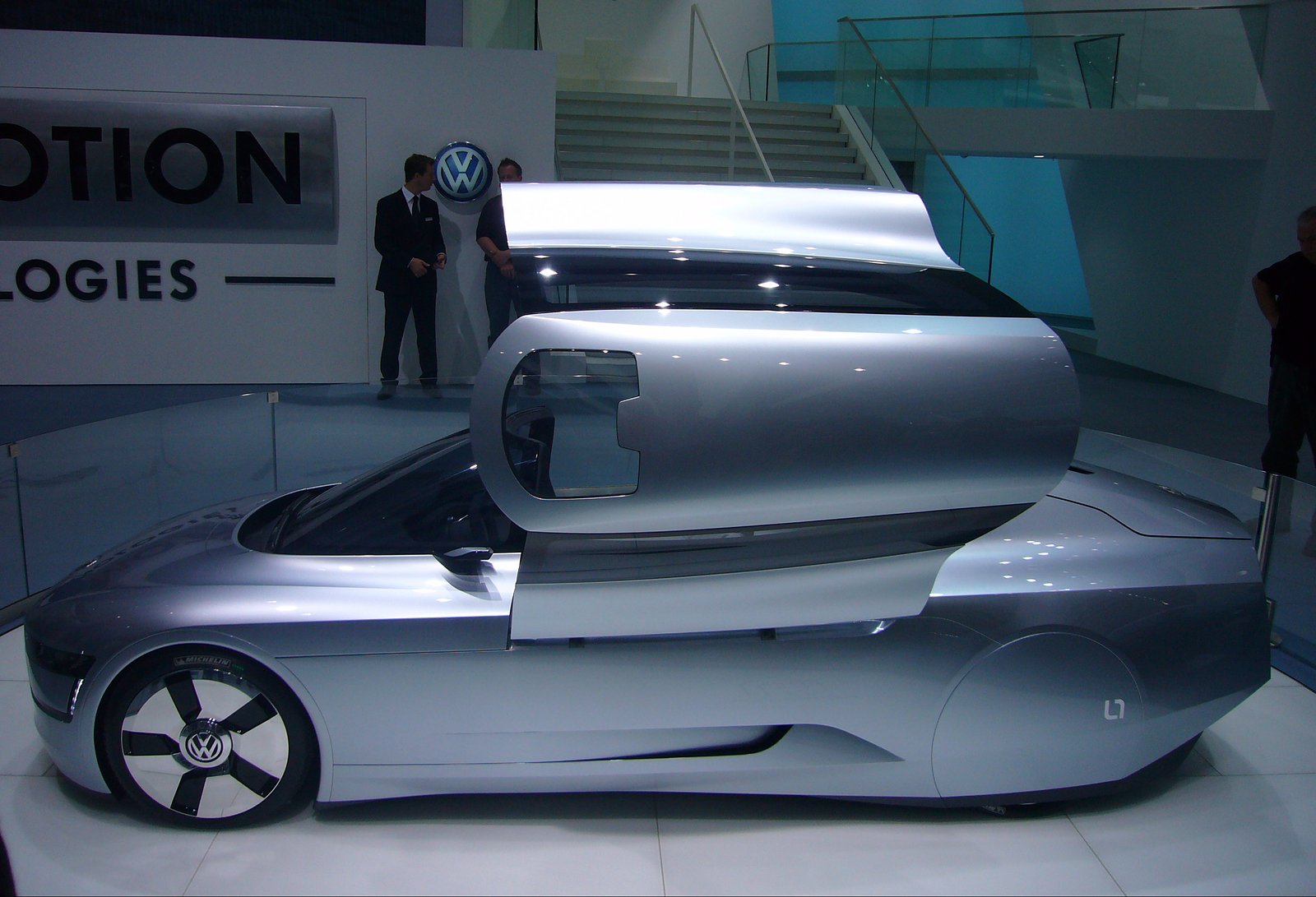
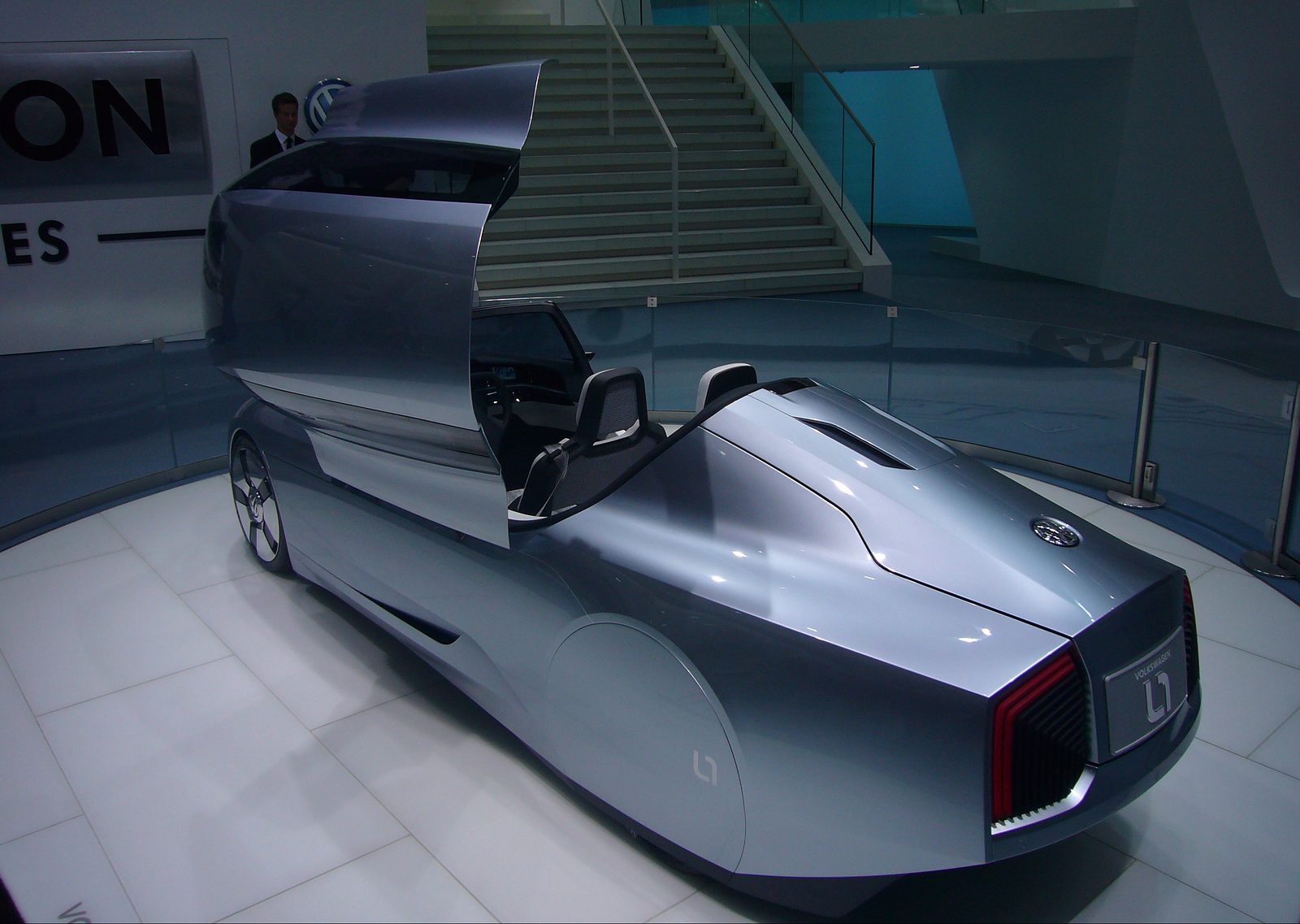
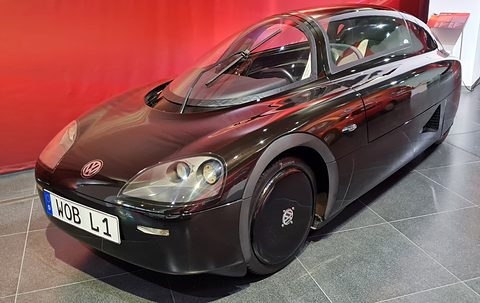
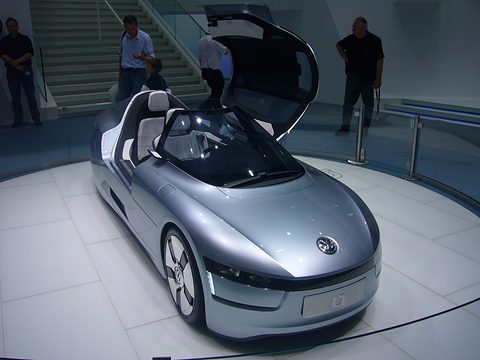
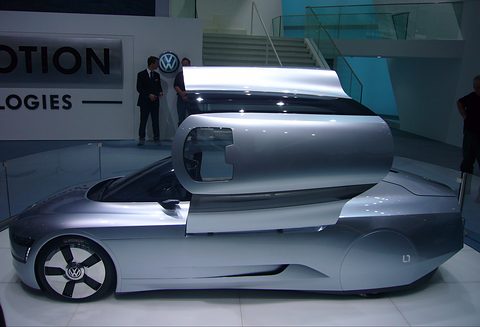
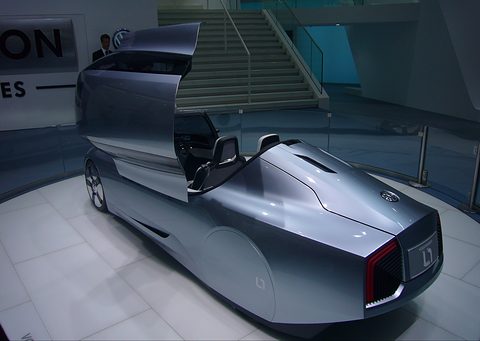
In April 2002 Volkswagen’s chairman, Ferdinand Piëch, drove Volkswagen’s 1-litre car from Wolfsburg to Hamburg for the annual shareholders’ meeting.source 9 Its two seats were in tandem under an aircraft-style canopy, its rear wheels were set close together, and cameras stood in for mirrors; its skin was carbon fibre on a magnesium frame, and its drag coefficient was 0.159. At 3,470 mm (137 in) long and 1,250 mm wide it is the longest of these concepts.source 9 It was reworked as the L1 in 2009 and as the XL1 in 2011, and the XL1, a plug-in diesel hybrid, was built in a run of 250 at Osnabrück from 2013 to 2016, priced from €111,000.source 9

Nissan Pivo

2005 · a record on this page

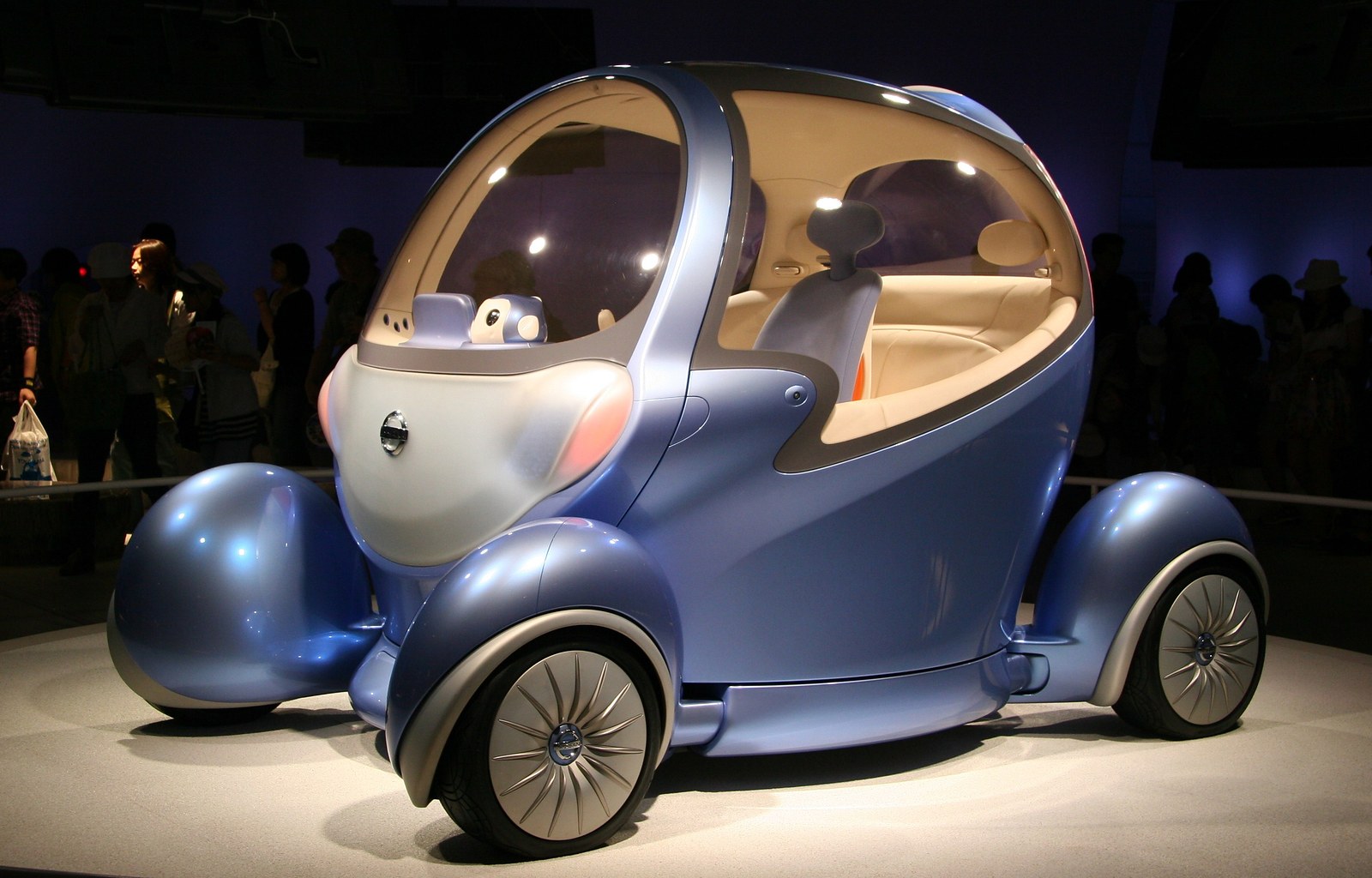
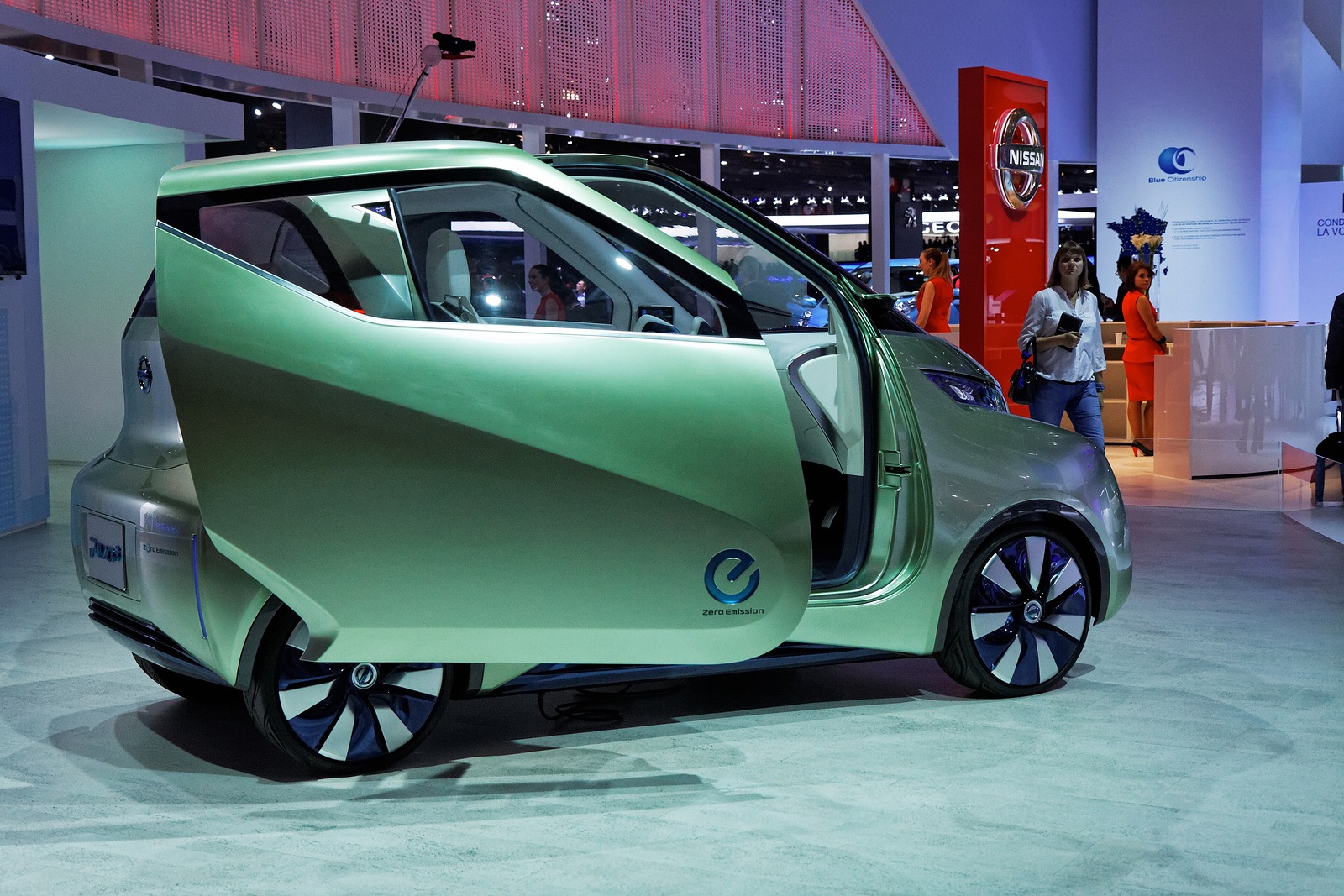
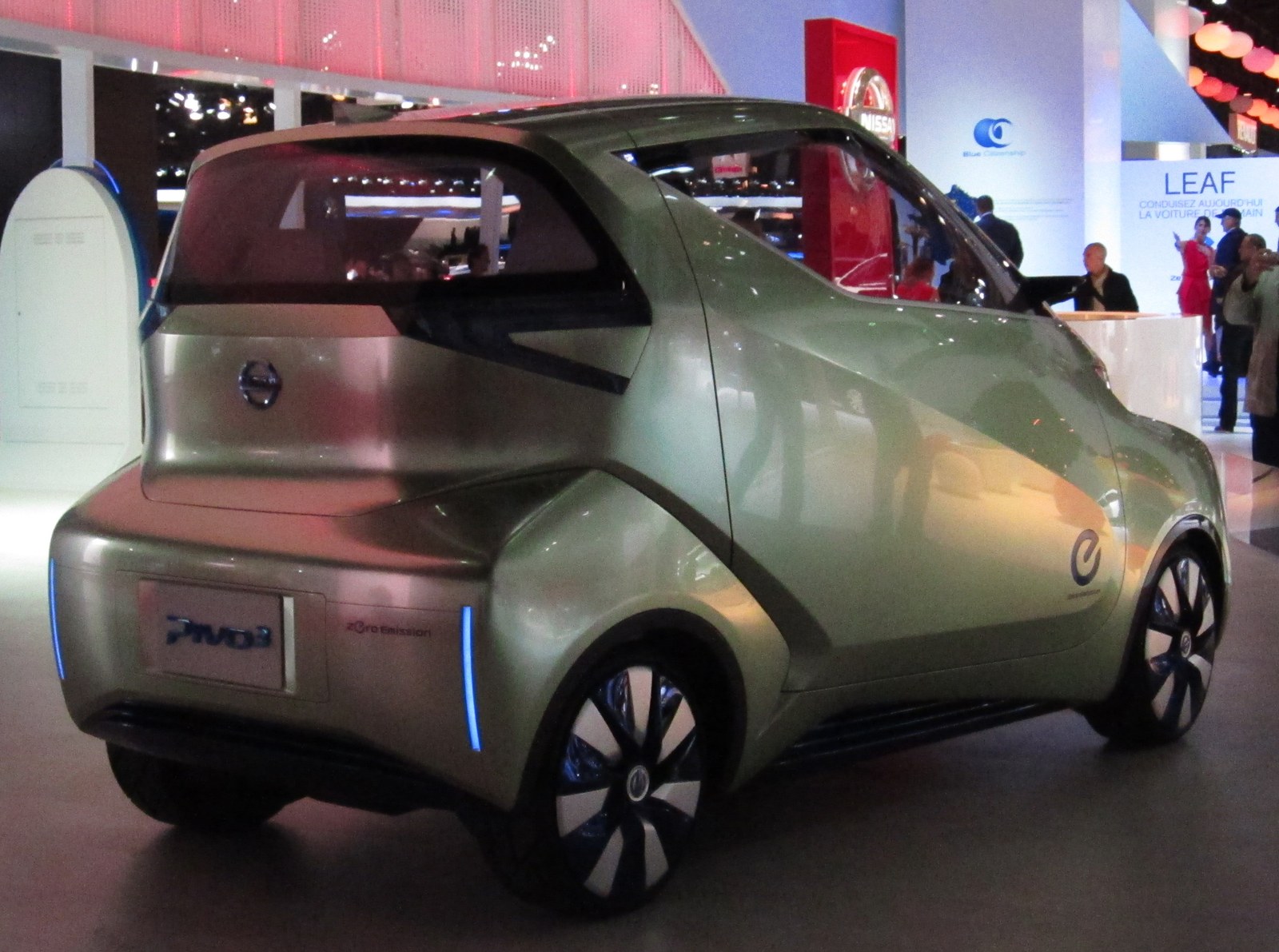
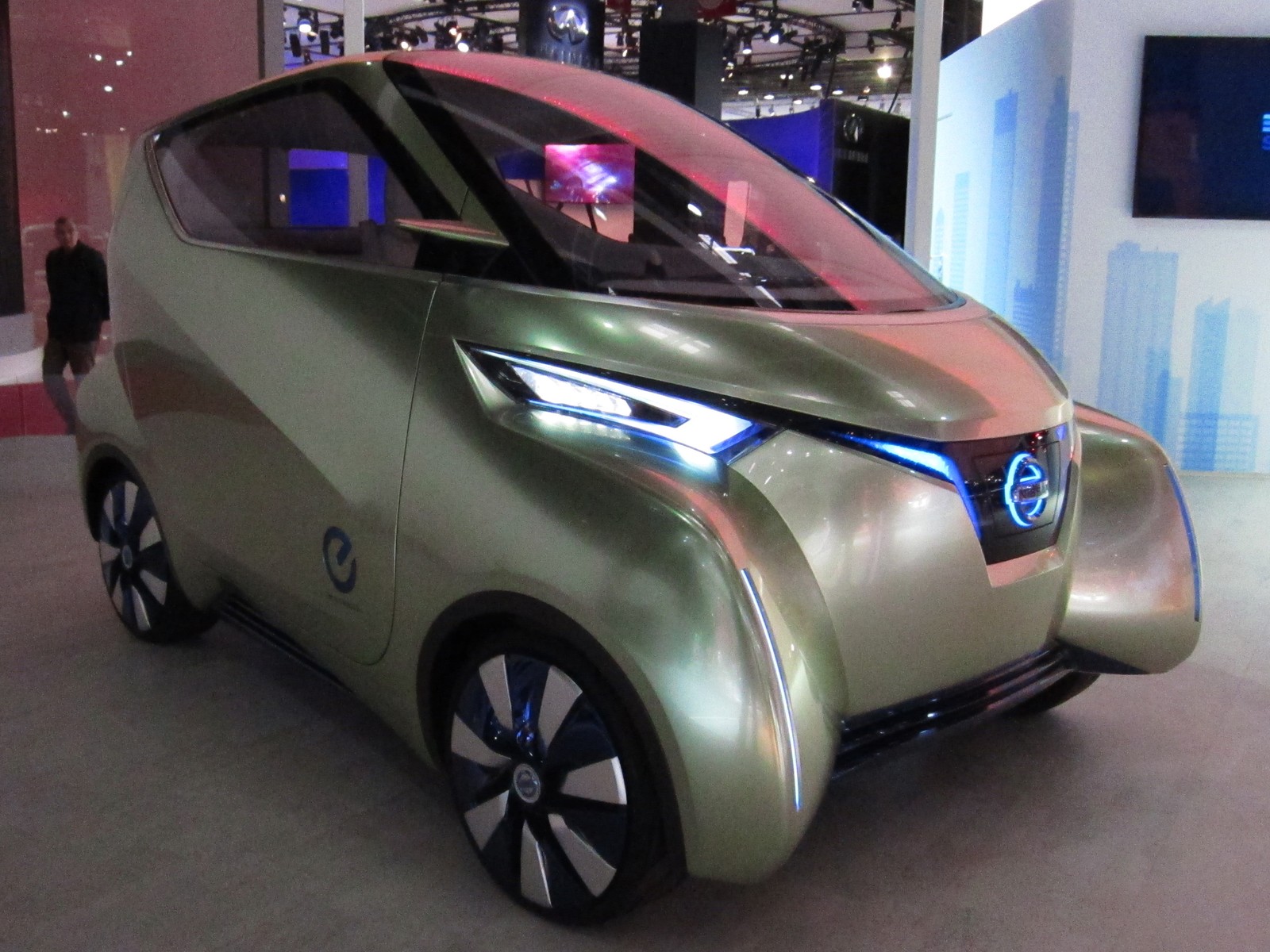
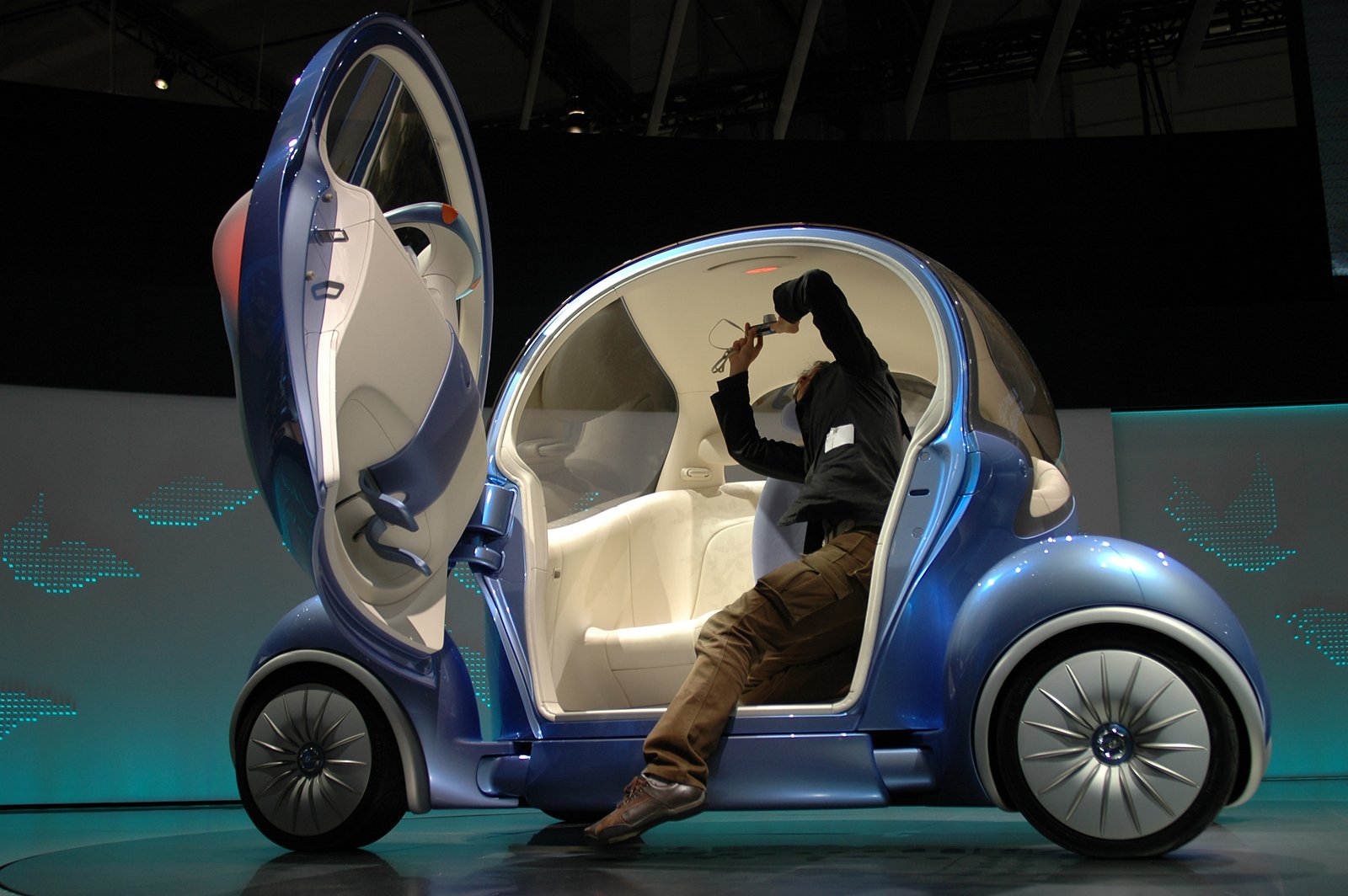
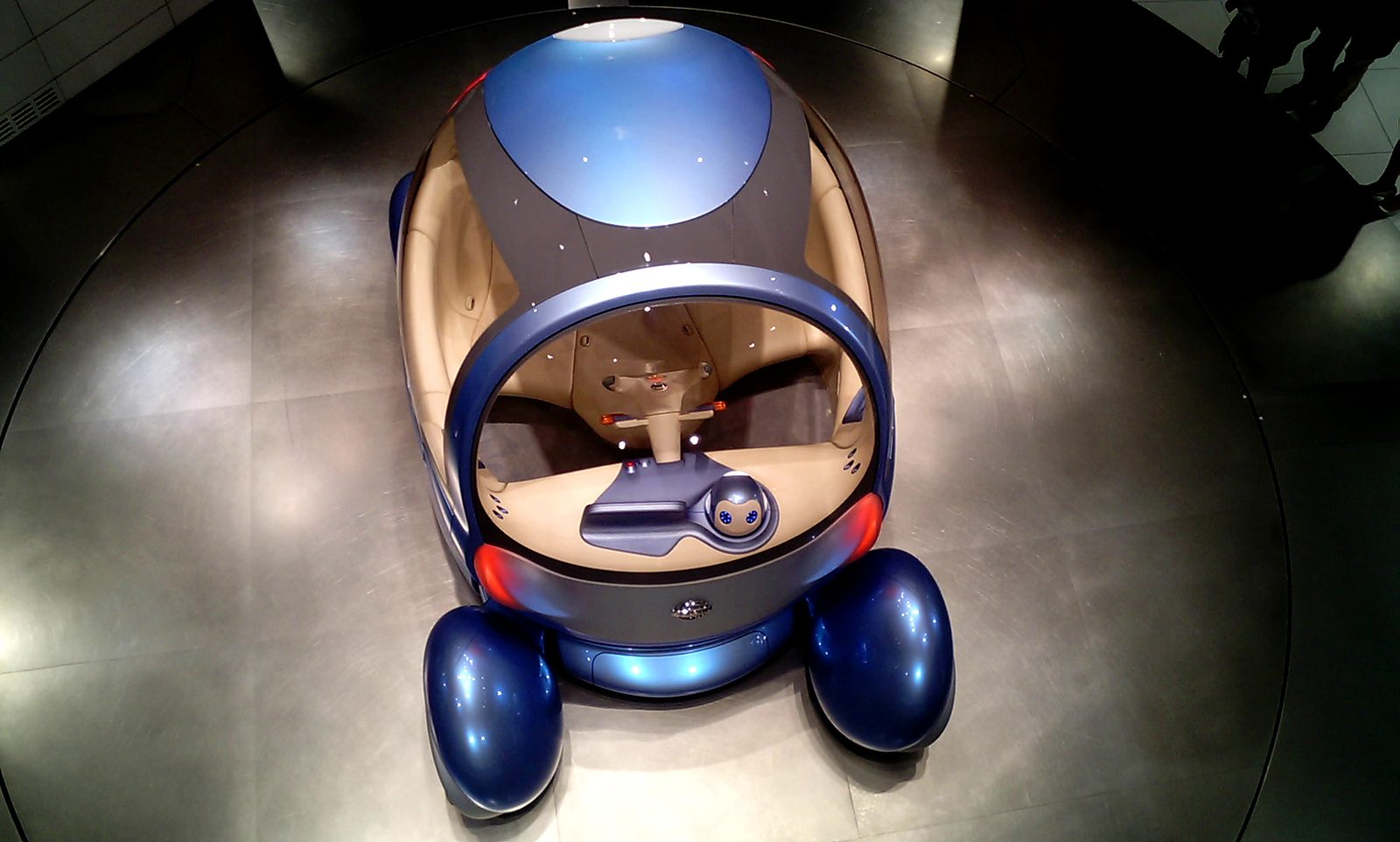
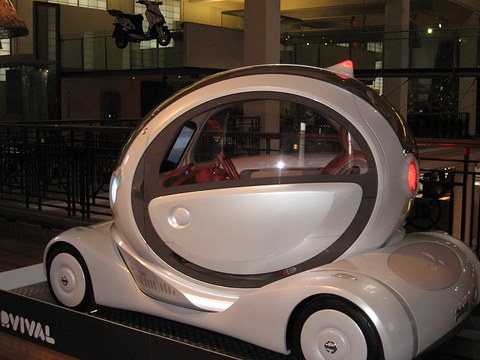
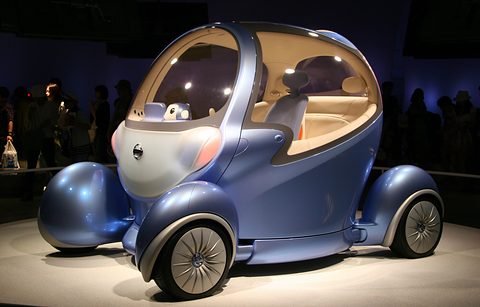
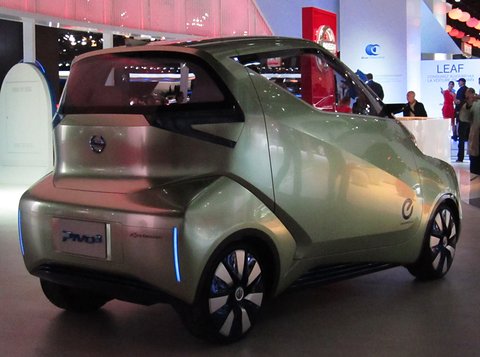
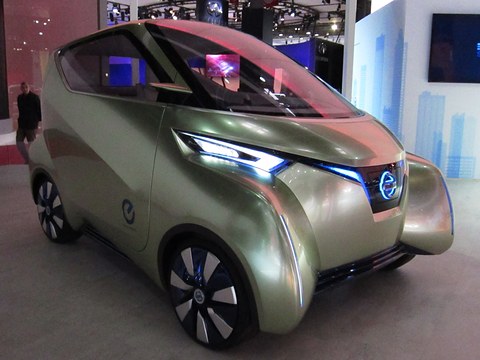
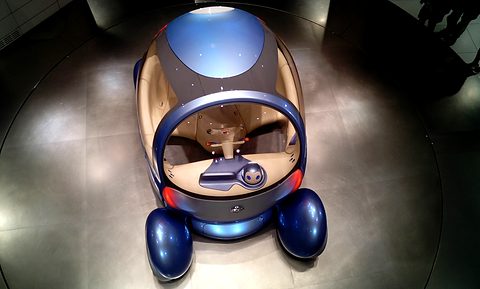
Nissan’s Pivo, at the Tokyo Motor Show of 2005, had a cabin for three that turned through 360° on its four-wheeled chassis, so that it never needed to reverse; it had screens on its windscreen pillars, which Nissan called the Around View Monitor, and a lithium-ion battery.source 2 The Pivo 2 of 2007 put its wheels in pods that turned too, so that it could drive sideways into a space, and gave the driver a robot companion on the dashboard. The Pivo 3, at Tokyo in 2011, seated one in front and two behind and was meant to park and charge itself, controlled from a smartphone.source 2 The first Pivo is shown at the Science Museum in London.source 2

White bubble-shaped concept with its glass cabin rotated to face sideways on a display plinth.
The first Nissan Pivo with its cabin turned sideways, at the Science Museum, London, in June 2008.Photo: Giac83, CC BY-SA 2.5, via Wikimedia Commons

Yamaha Tesseract

2007 · a record on this page

Yamaha called the Tesseract, at the Tokyo Motor Show of 2007, a four-wheeled motorcycle. It was a hybrid, with a V-twin and an electric motor, on Yamaha’s tilting “Dual Scythe” suspension, and measured 2,115 mm (83 in) long and 720 mm wide.source 11 It was designed by Luciano Marabese, whose family firm, Quadro Tecnologie, builds tilting vehicles, and Yamaha’s patents were held up by those of Mike Shotter, inventor of the 4MC.source 11 In law it would have been a quadricycle rather than a car.source 11

Lumeneo Smera

2008 · a record on this page

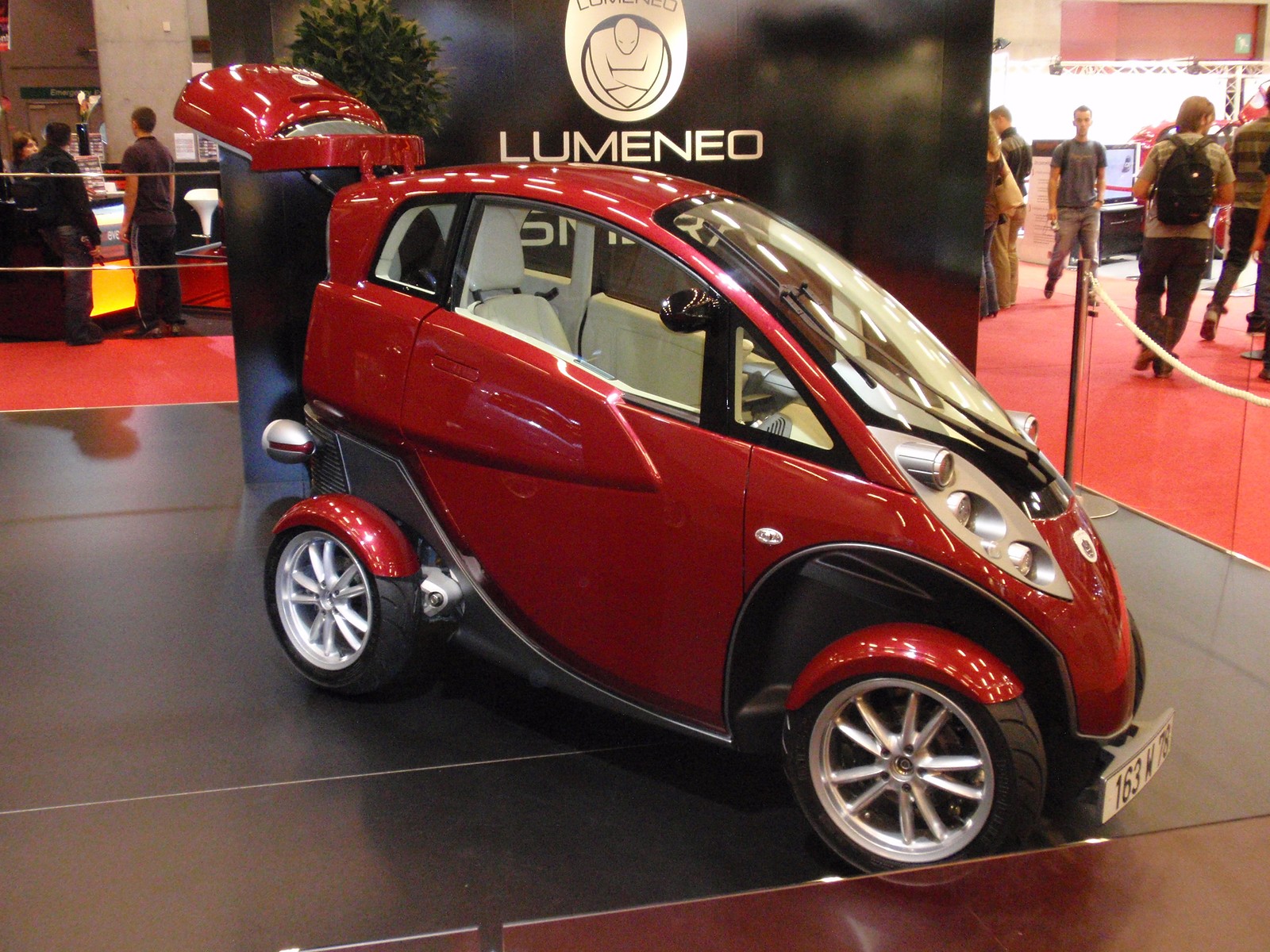
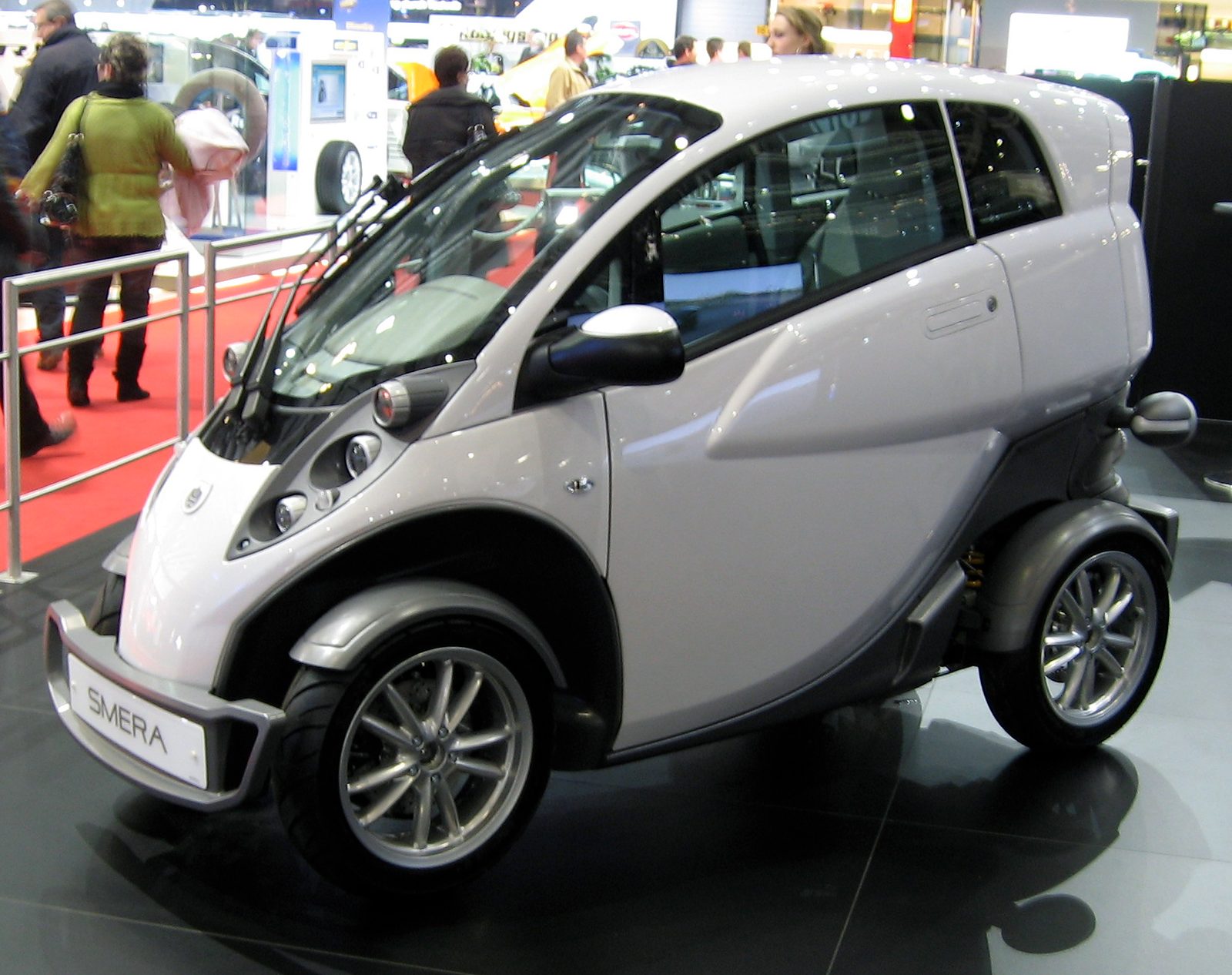
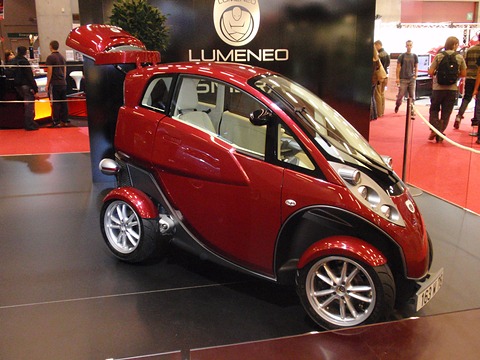
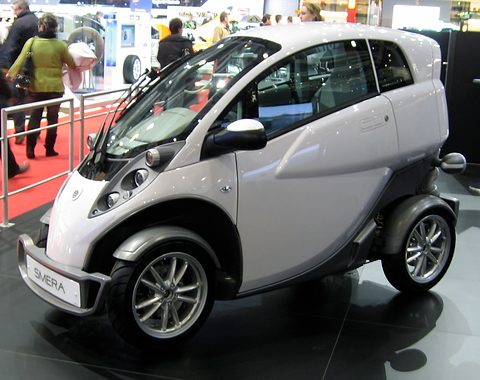
The Smera, from the French start-up Lumeneo, was a two-seat electric tandem that leant up to 25° in corners, shown at the Paris Motor Show of 2008. It measured 2,500 mm (98 in) by only 960 mm (38 in), on a track of 655 mm, and was classed as a car; Lumeneo claimed 110 km/h and 100 km.source 3 The French railways, SNCF, put €1.5 million into it.source 3 The production version, the Neoma, went on sale in France in May 2013, and after 10 sales Lumeneo filed for bankruptcy that November.source 3

Nissan Nuvu

2008 · a record on this page

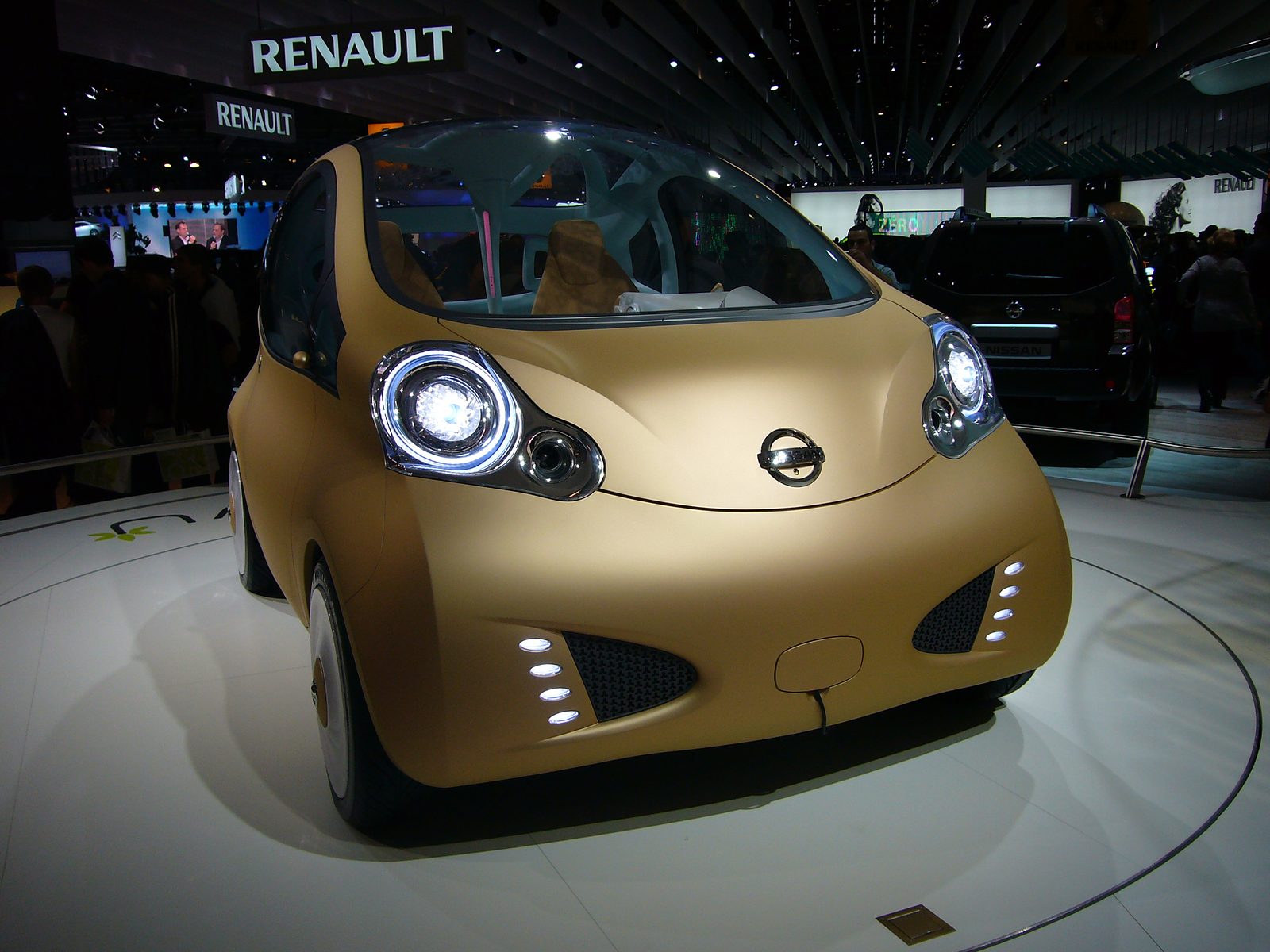
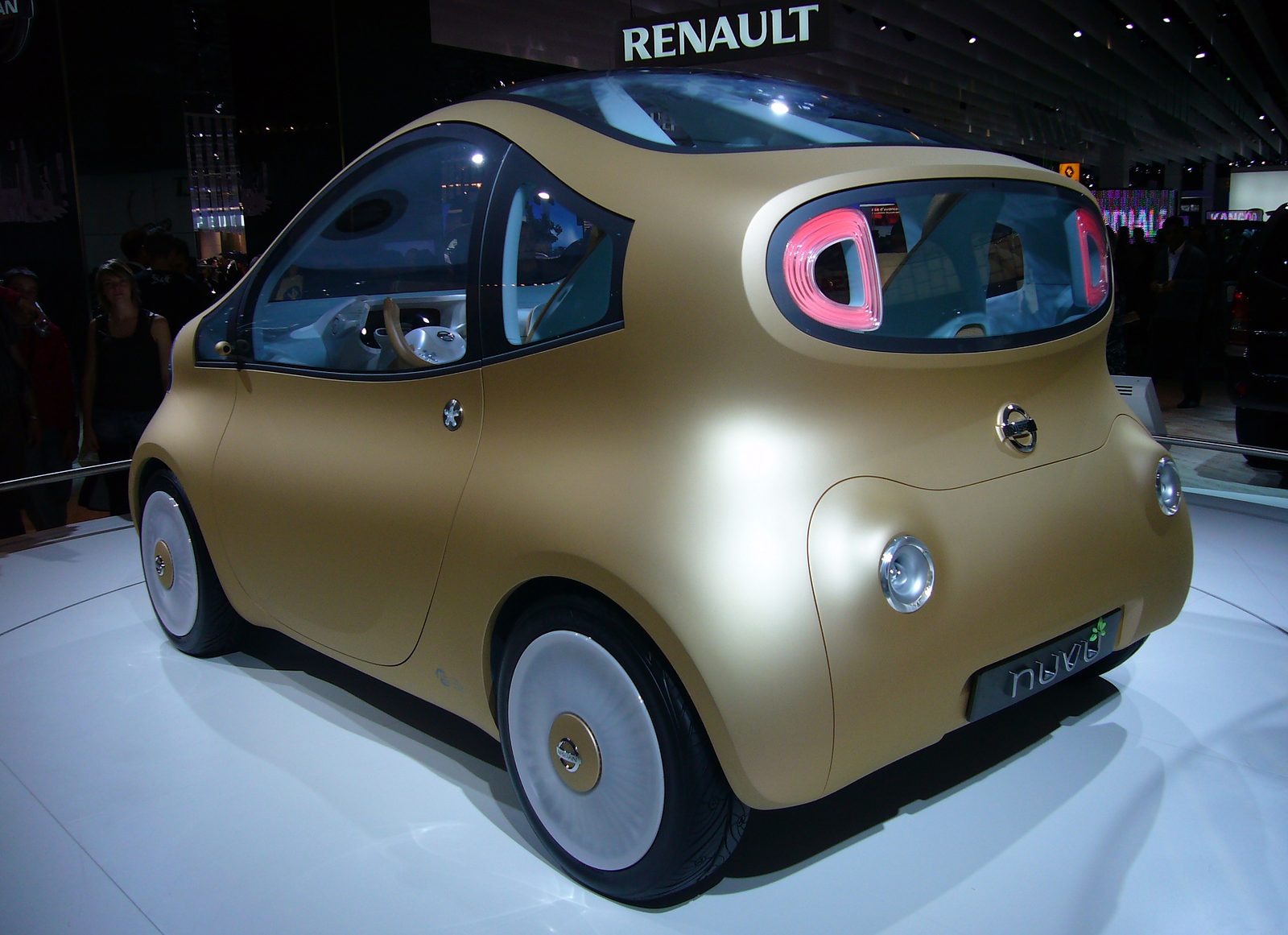
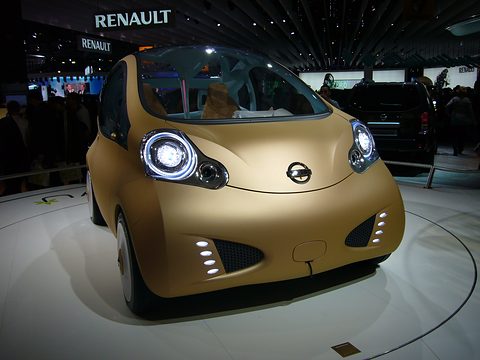
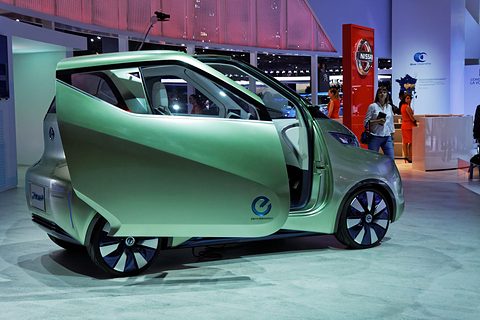
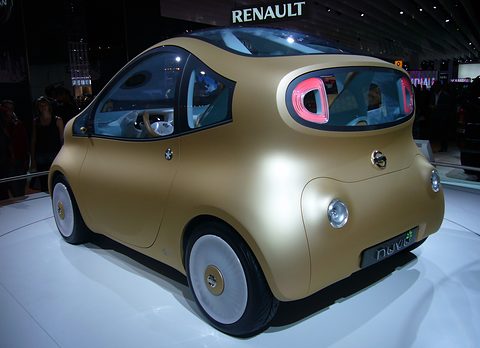
Nissan’s Nuvu, at the Paris Motor Show of 2008, seated two and one more, and had a “tree” behind the driver that gathered power from leaf-shaped solar panels in its glass roof. Its steering and brakes worked by wire. At 3,000 by 1,550 mm (118 by 61 in), it was claimed to reach 120 km/h, to run 130 km and to take 80 per cent of a charge in 20 minutes.source 12 Auto Express drove it in October 2008 and gave it five stars as a car for the city of the future, though it disliked the placing of the gear selector and the handbrake.source 12 Some of its technology went into the Nissan Leaf.source 12

Peugeot BB1

2009 · a record on this page

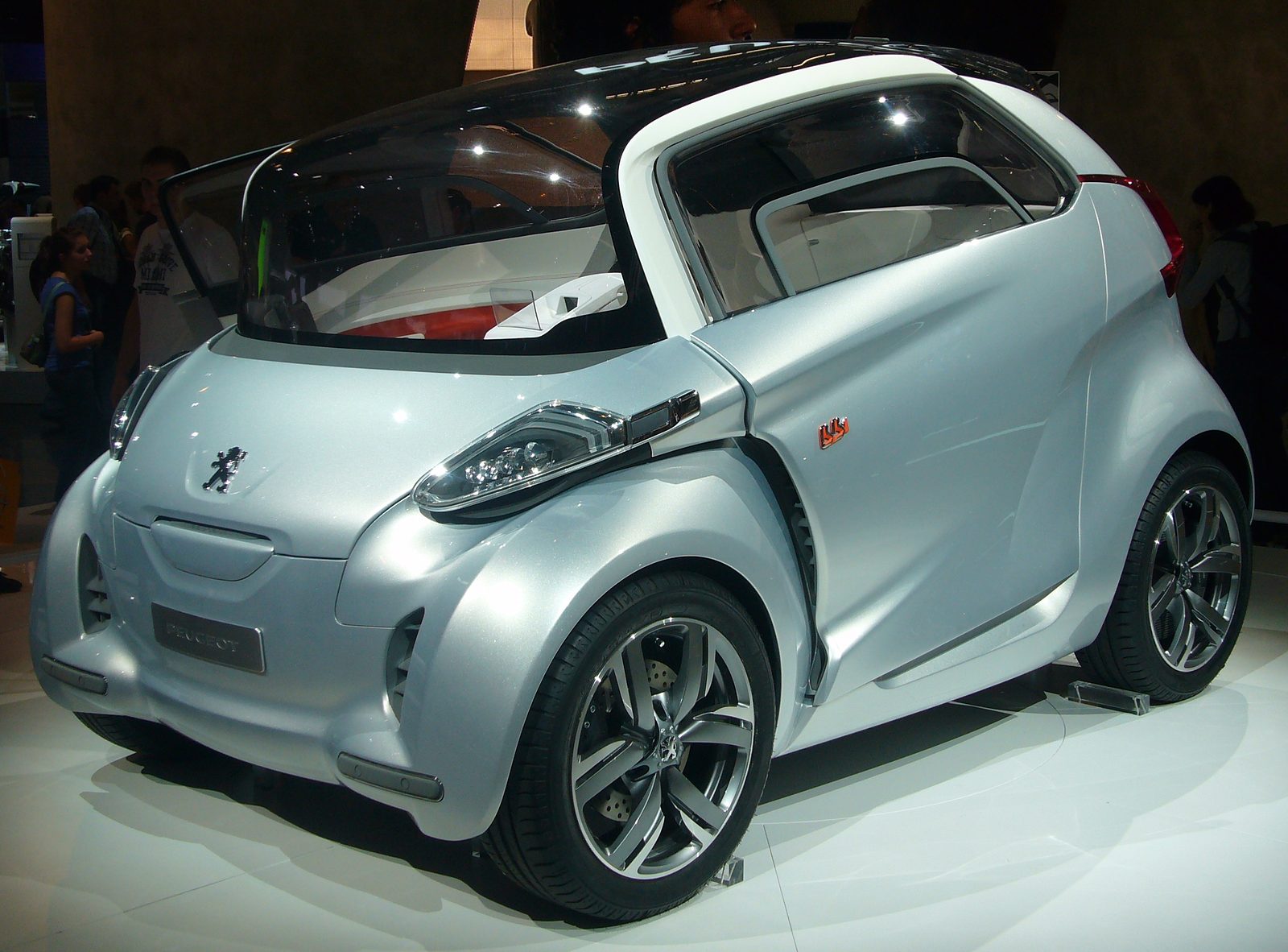
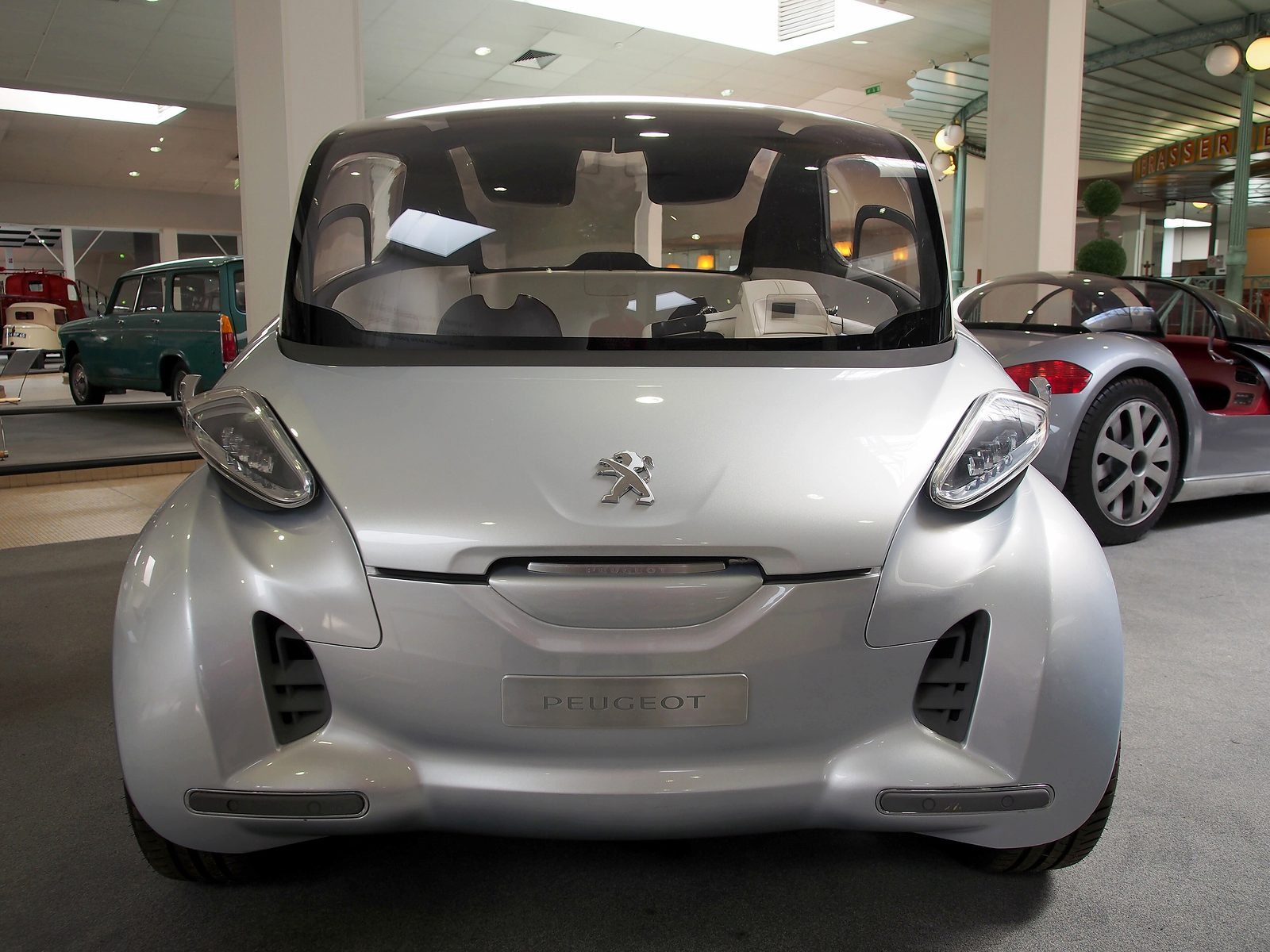
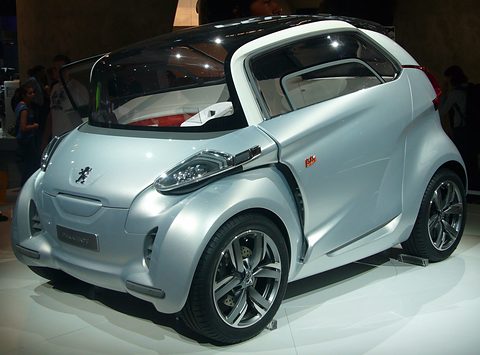
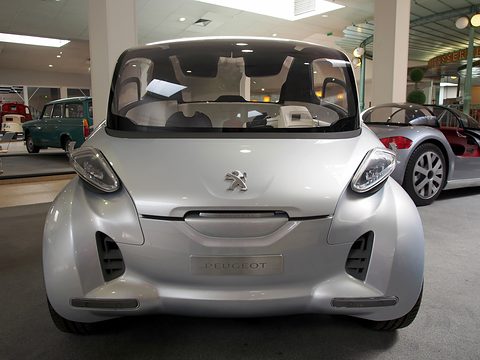
Peugeot’s BB1, at the Frankfurt show of 2009, fitted four seats into 2.5 m (8 ft 2 in) by 1.6 m, at 600 kg (1,323 lb), behind rear-hinged doors.source 5 Its two rear wheels each held a motor developed with Michelin, of 7.5 kW and 320 Nm.source 5 Athanassios Tubidis drew the outside and Neil Simpson the inside.source 5 One photograph on this page shows it in 2016 in Peugeot’s museum at Sochaux, the Musée de l’Aventure Peugeot.

Nissan Land Glider

2009 · a record on this page

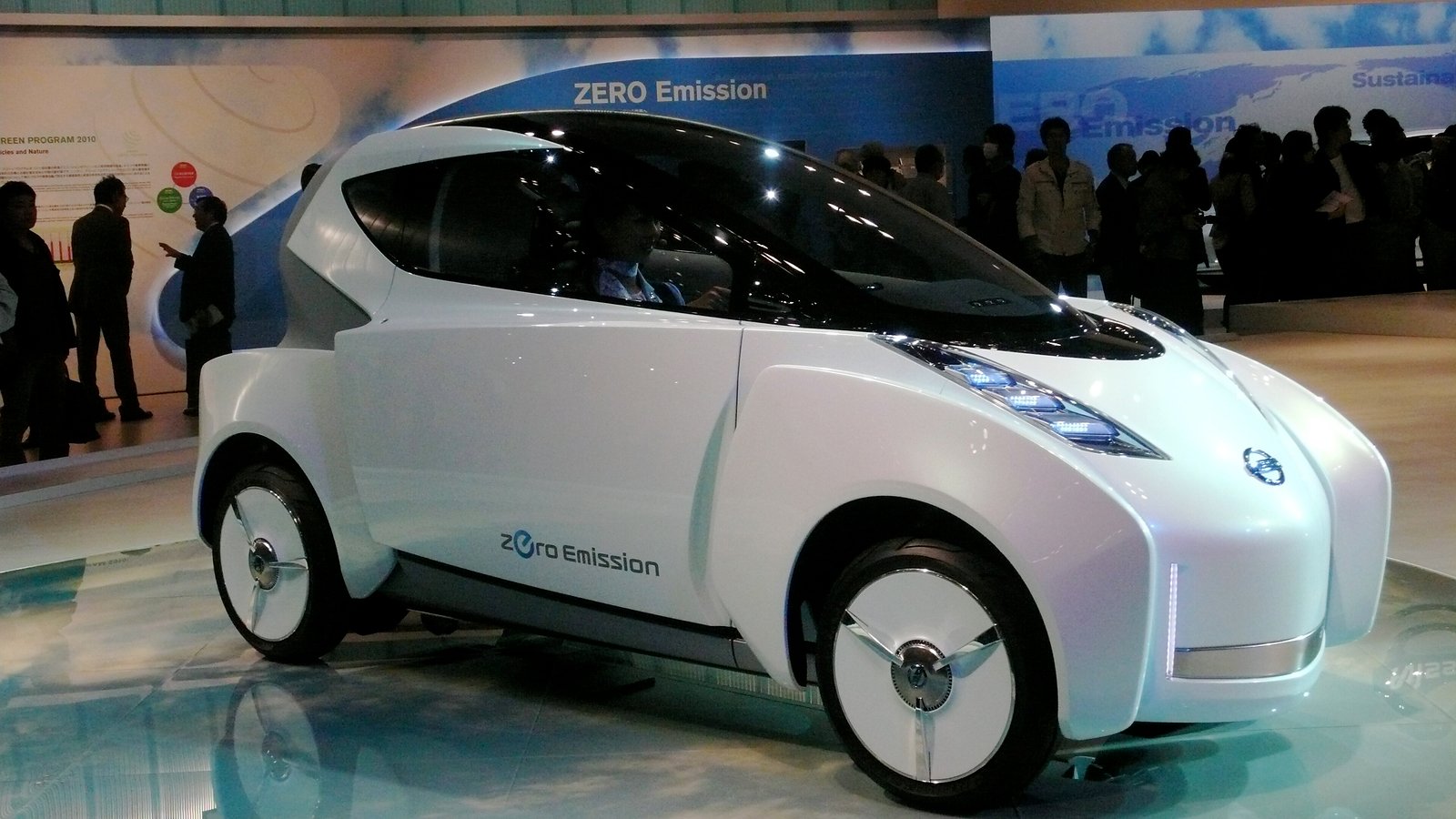
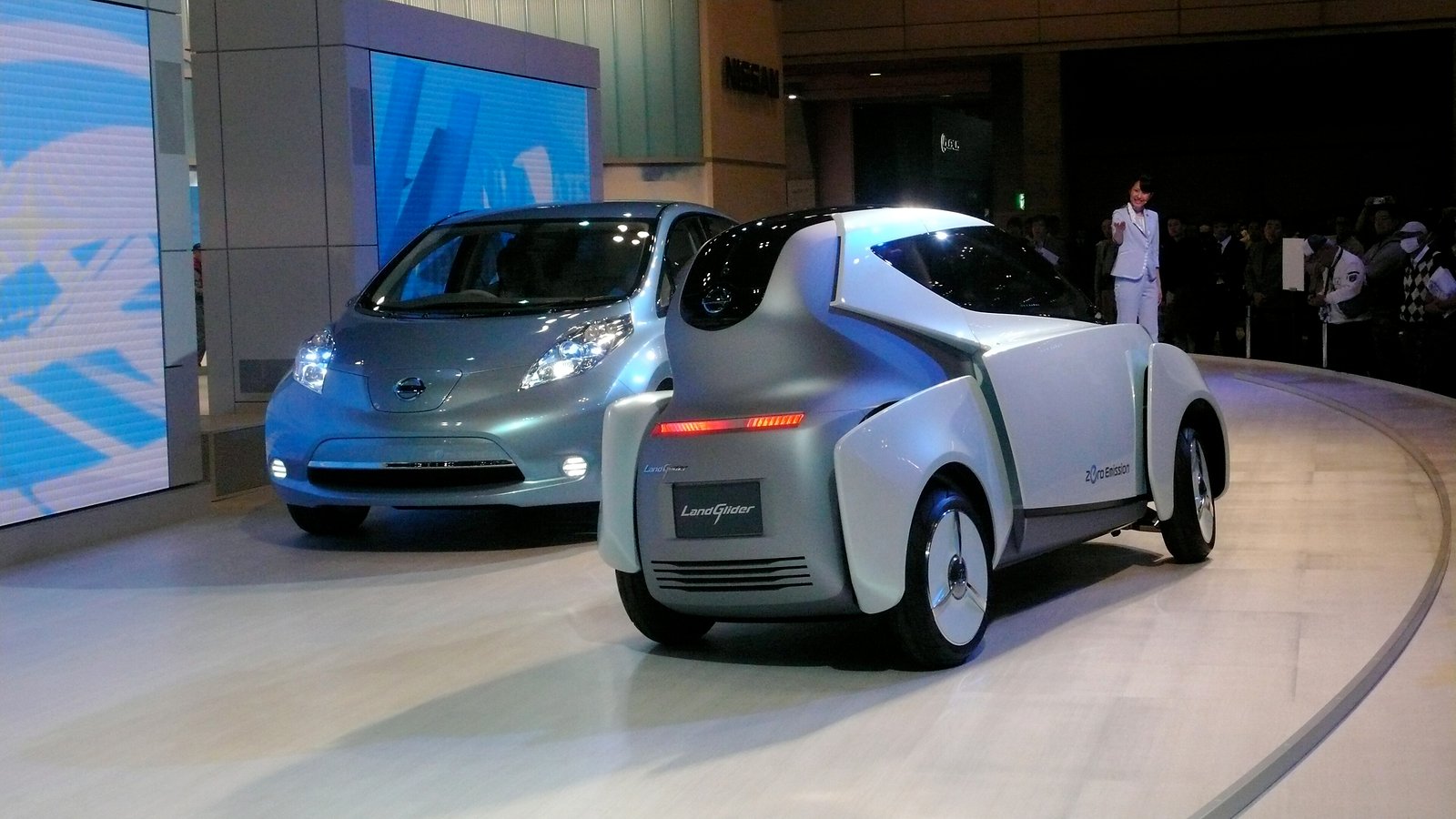
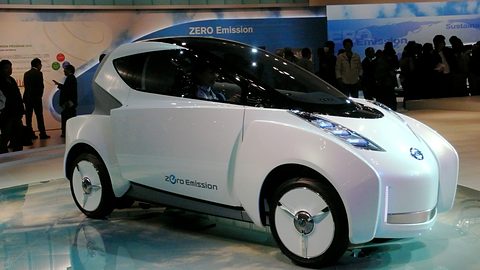
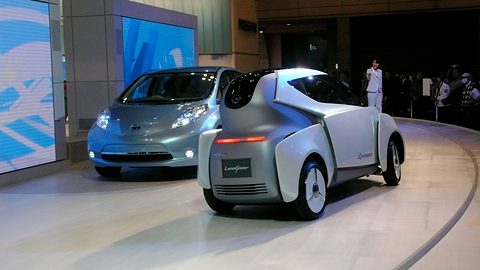
The Land Glider, at the Tokyo Motor Show of 2009, was another narrow electric tandem, which leant up to 17° in corners. It was steered with a yoke, used cameras for mirrors, had two motors, and charged without a cable.source 6 The photographs on this page show it at the show, one of them beside a Nissan Leaf.

General Motors EN-V

2010 · a record on this page

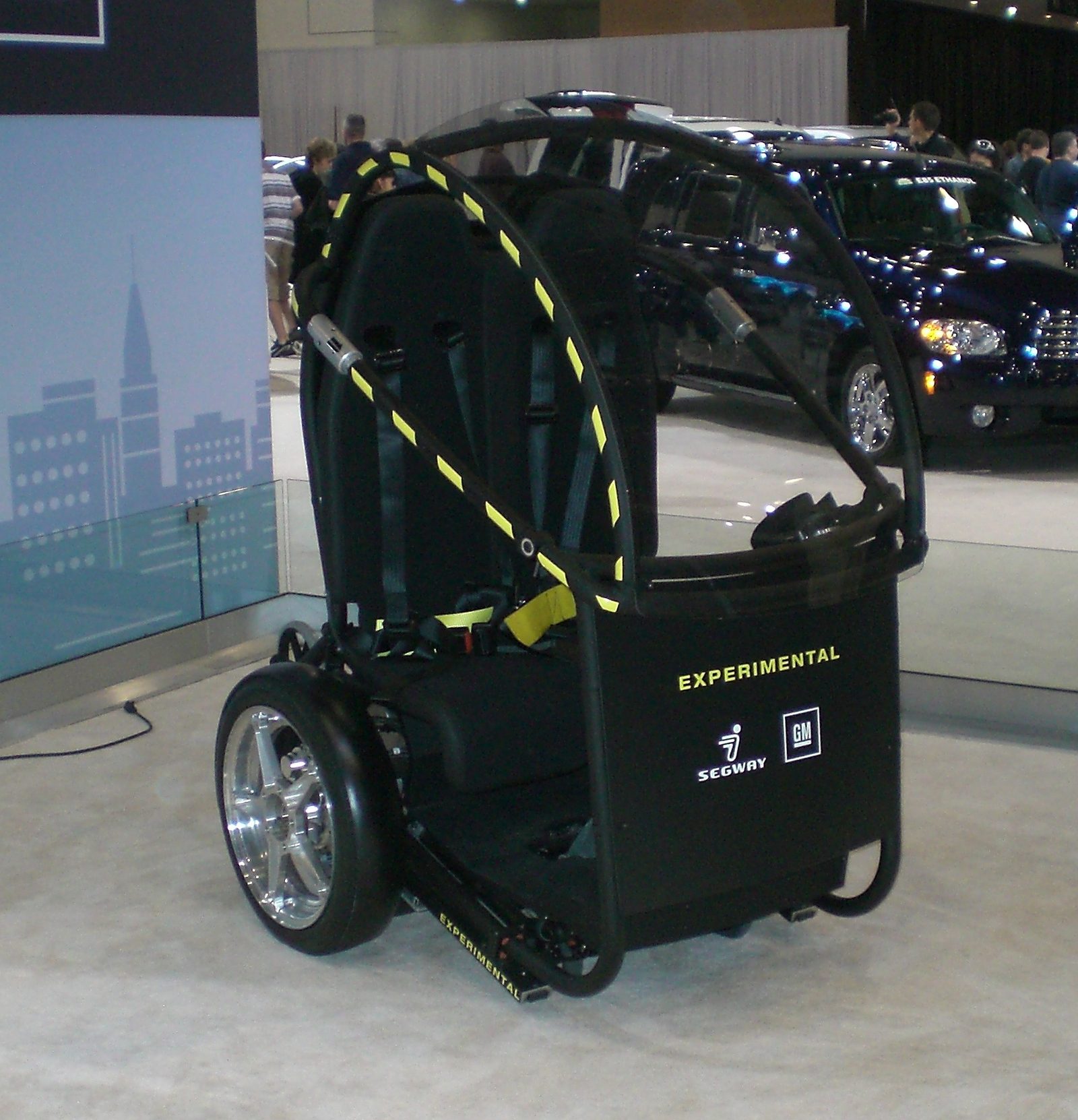
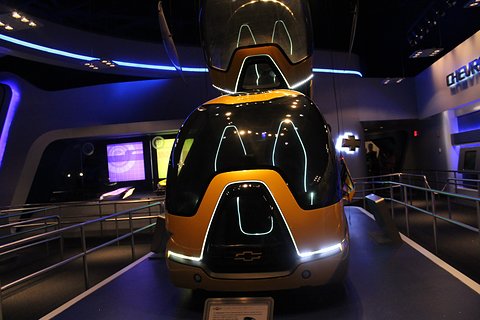
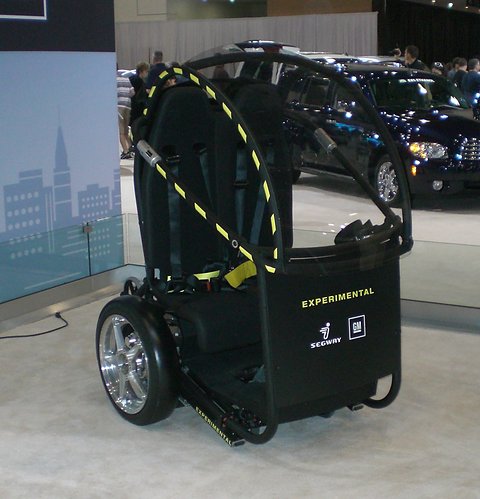
In April 2009 Segway and General Motors showed the PUMA, for Personal Urban Mobility and Accessibility: two seats side by side on two wheels, balanced as a Segway is, good for 56 km/h (35 mph) and 56 km (35 miles), at about 136 kg (300 lb).source 13 On 25 March 2010 GM and its Chinese partner SAIC unveiled in Shanghai the EN-V, the Electric Networked-Vehicle, on a drive platform that Segway developed and built.source 14 There were three pods, each from a different GM studio: Xiao, “laugh”, from Holden in Australia; Miao, “magic”, from California; and Jiao, “pride”, from Opel in Europe. They were about 1.5 m (4 ft 11 in) long and under 500 kg, and GM claimed five would park in the space of one ordinary car.source 14source 4 Each wheel had its own motor, the range was at least 40 km, and the pods could drive themselves, using what GM had learned with its “Boss” Tahoe in the DARPA challenge of 2007.source 14 They were shown at the SAIC-GM pavilion of Expo 2010 in Shanghai, from 1 May to 31 October.source 14source 4

By English Wikipedia’s account, GM announced field tests of Chevrolet-badged EN-Vs in Tianjin in 2011, and of a four-wheeled EN-V 2.0 in the Tianjin Eco-city in 2014; how they went has not been found. The same article says a Miao was shown in the queue of the Test Track ride at Walt Disney World.source 4

Orange and black egg-shaped two-wheeled pod with a Chevrolet bowtie under blue display lighting.
A GM EN-V pod on display at Epcot’s Test Track, Florida, in December 2015.Photo: Theme Park Tourist, CC BY 2.0, via Wikimedia Commons

Volkswagen Nils

2011 · a record on this page

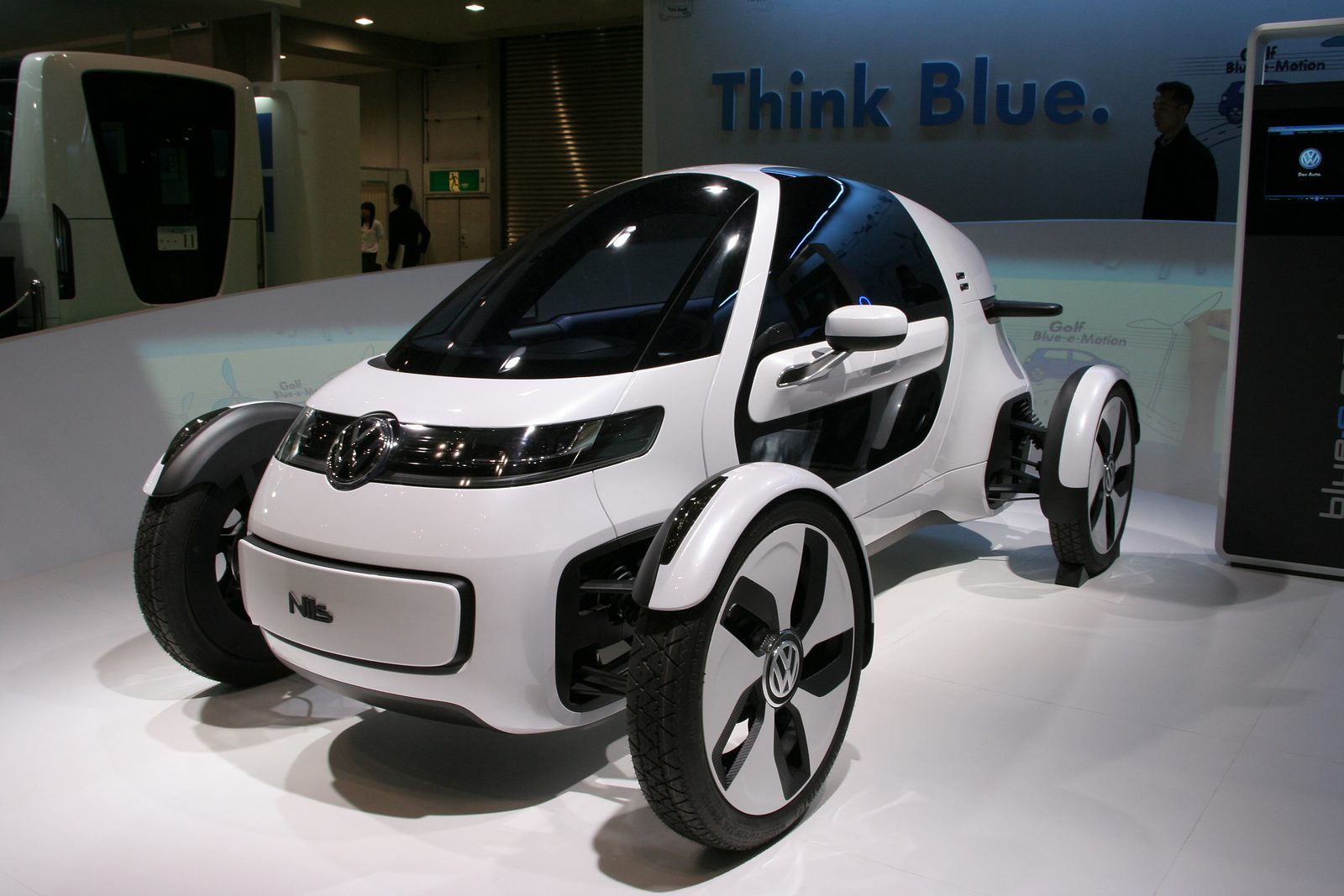
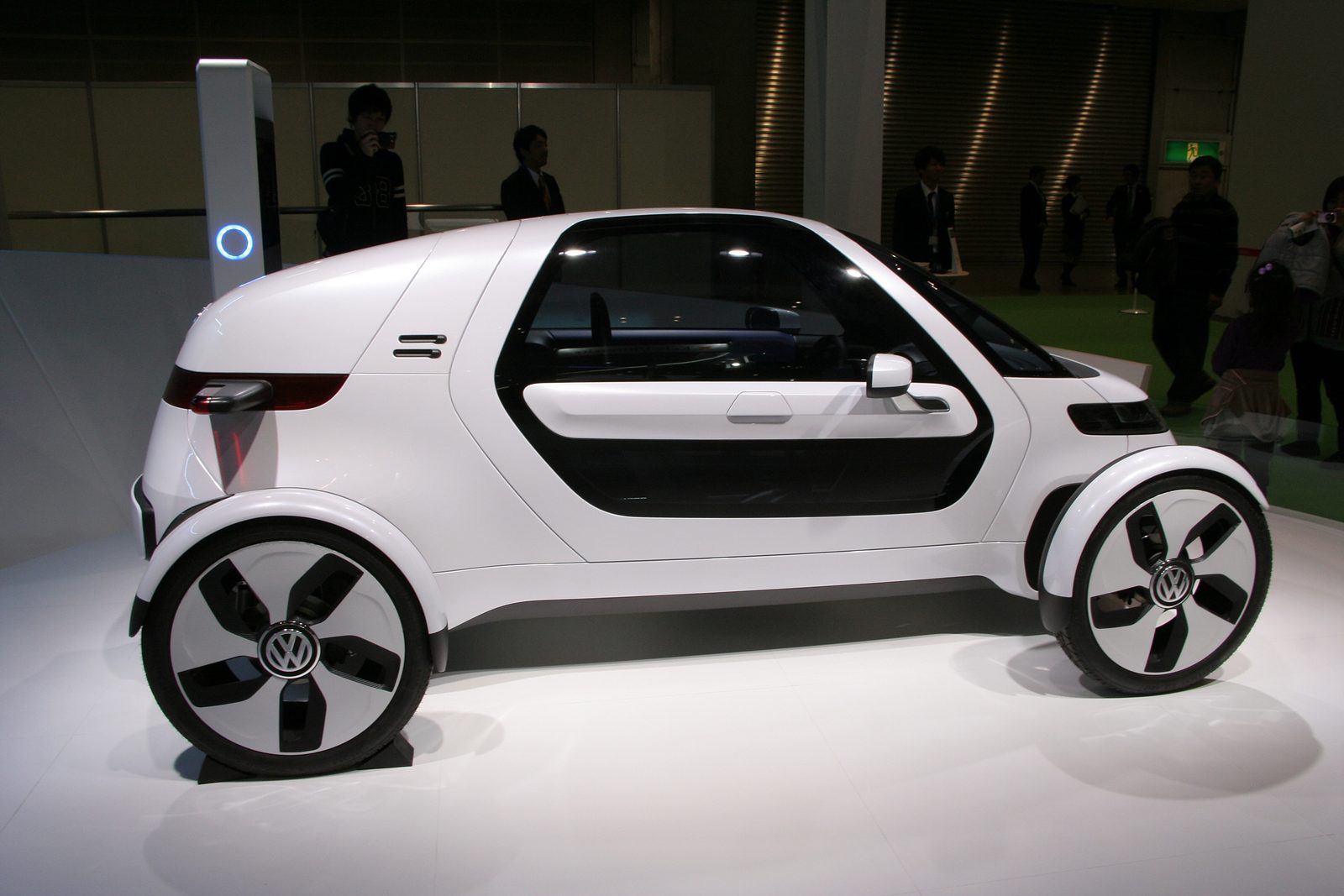
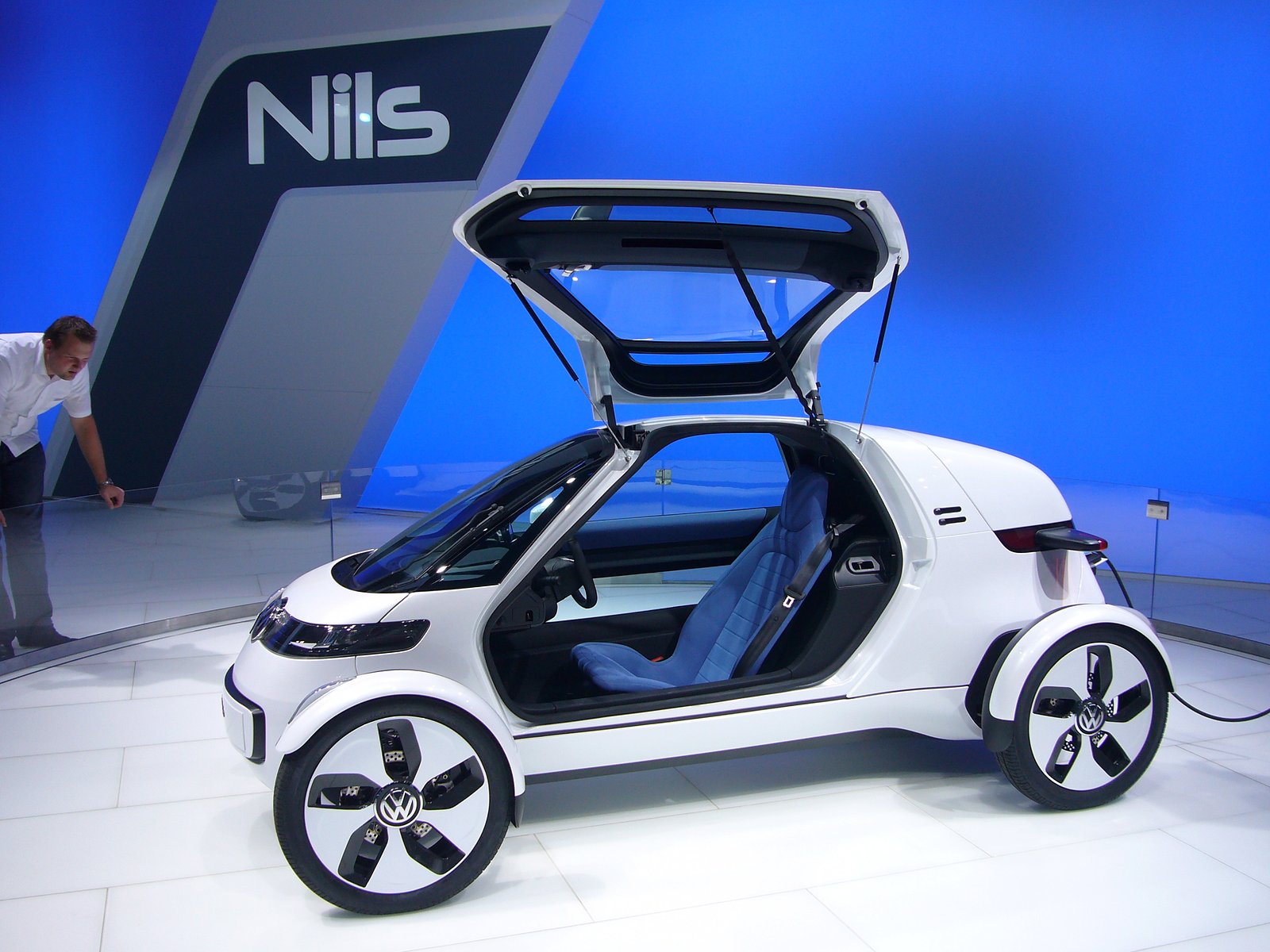
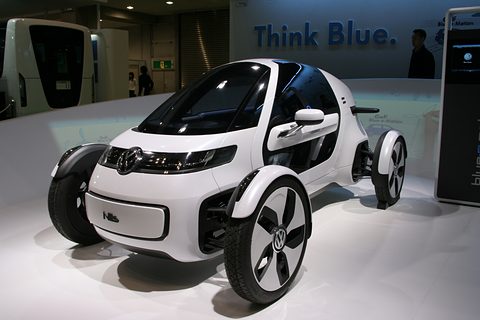
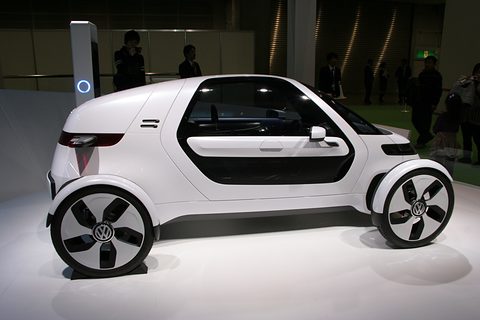
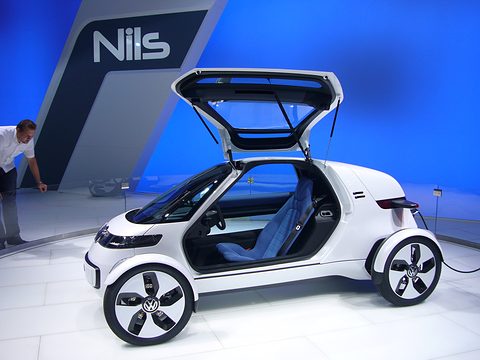
Volkswagen’s research department built the Nils, with money from the German transport ministry, as a car for one commuter, and showed it at the Frankfurt show of 2011.source 15source 10 Volkswagen’s case was in its statistics: 73.9 per cent of German commuters travelled less than 25 km, and more than 90 per cent of those who drove went alone.source 15 The driver sat in the middle, with free-standing wheels at the corners, two glass doors that opened upwards, an aluminium space frame, and a 15 kW motor weighing 19 kg behind; a 5.3 kWh battery gave about 65 km, and it was claimed to reach 130 km/h (81 mph). Its length was 3,040 mm (120 in) and its weight 460 kg (1,014 lb), and its boot took a crate of drinks and a bag.source 15source 10 German Wikipedia compares it with the Twizy, shown the same season, and with the Wanderer Puppchen of 1911.source 10 No production followed.

Opel RAK e

2011 · a record on this page

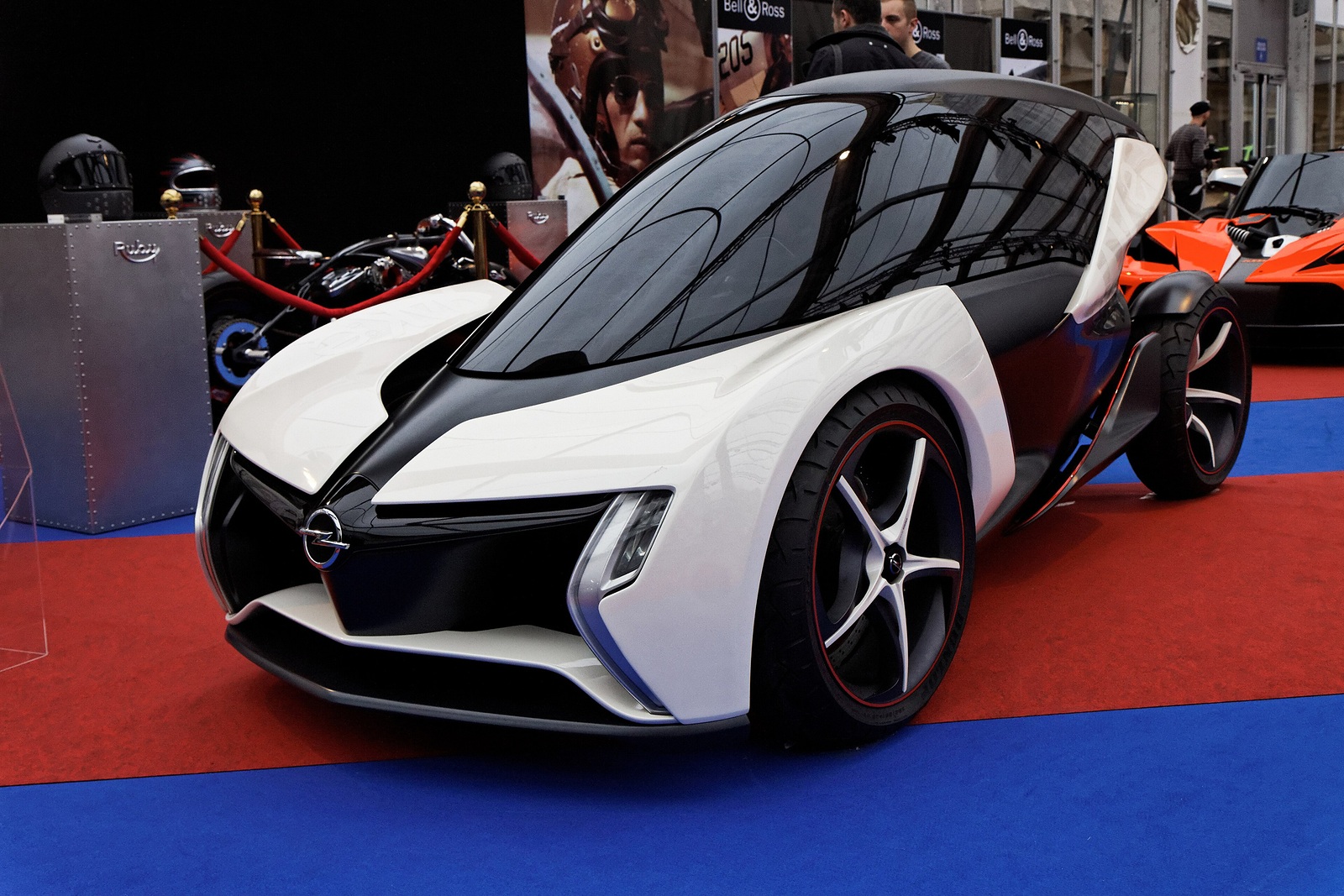
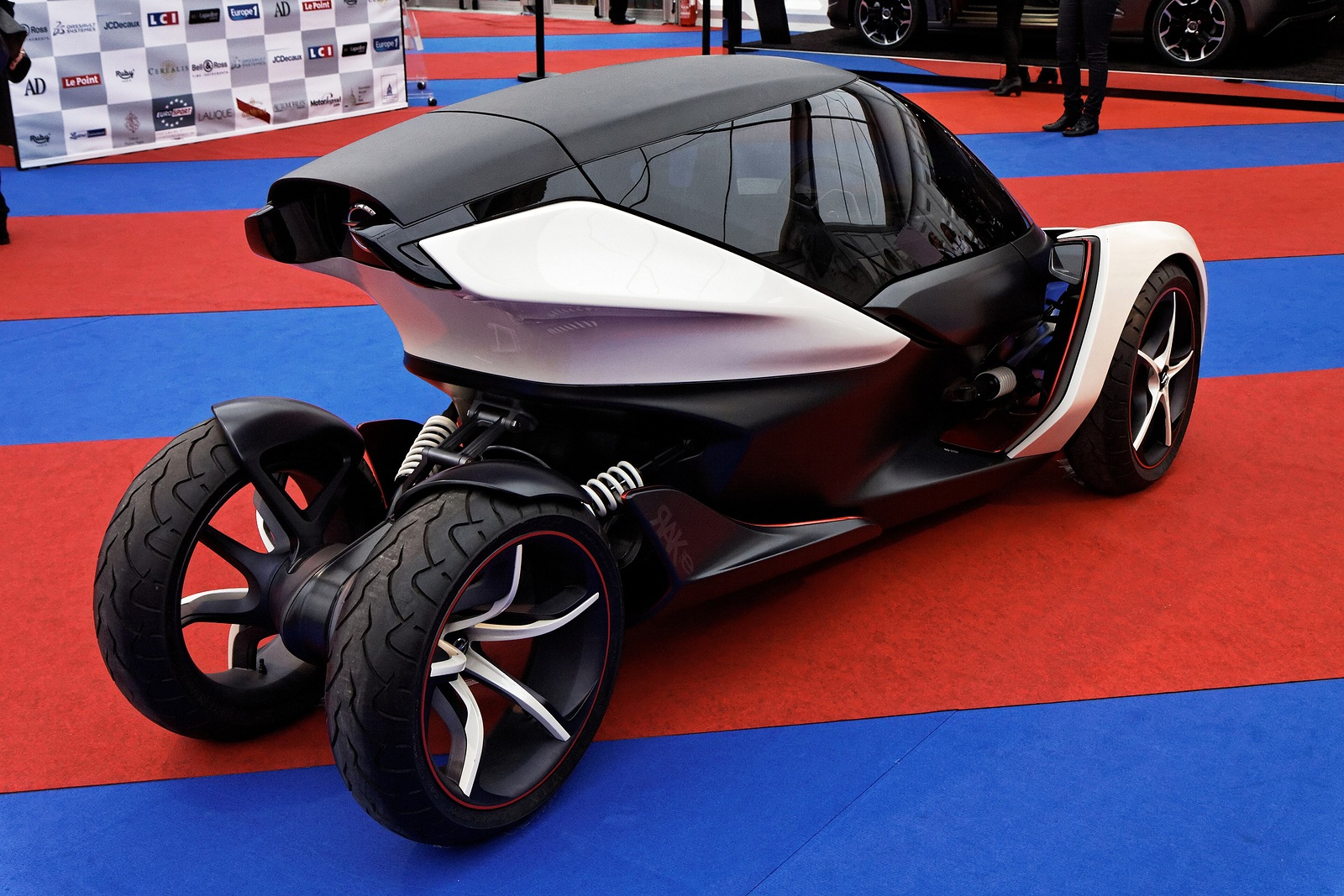
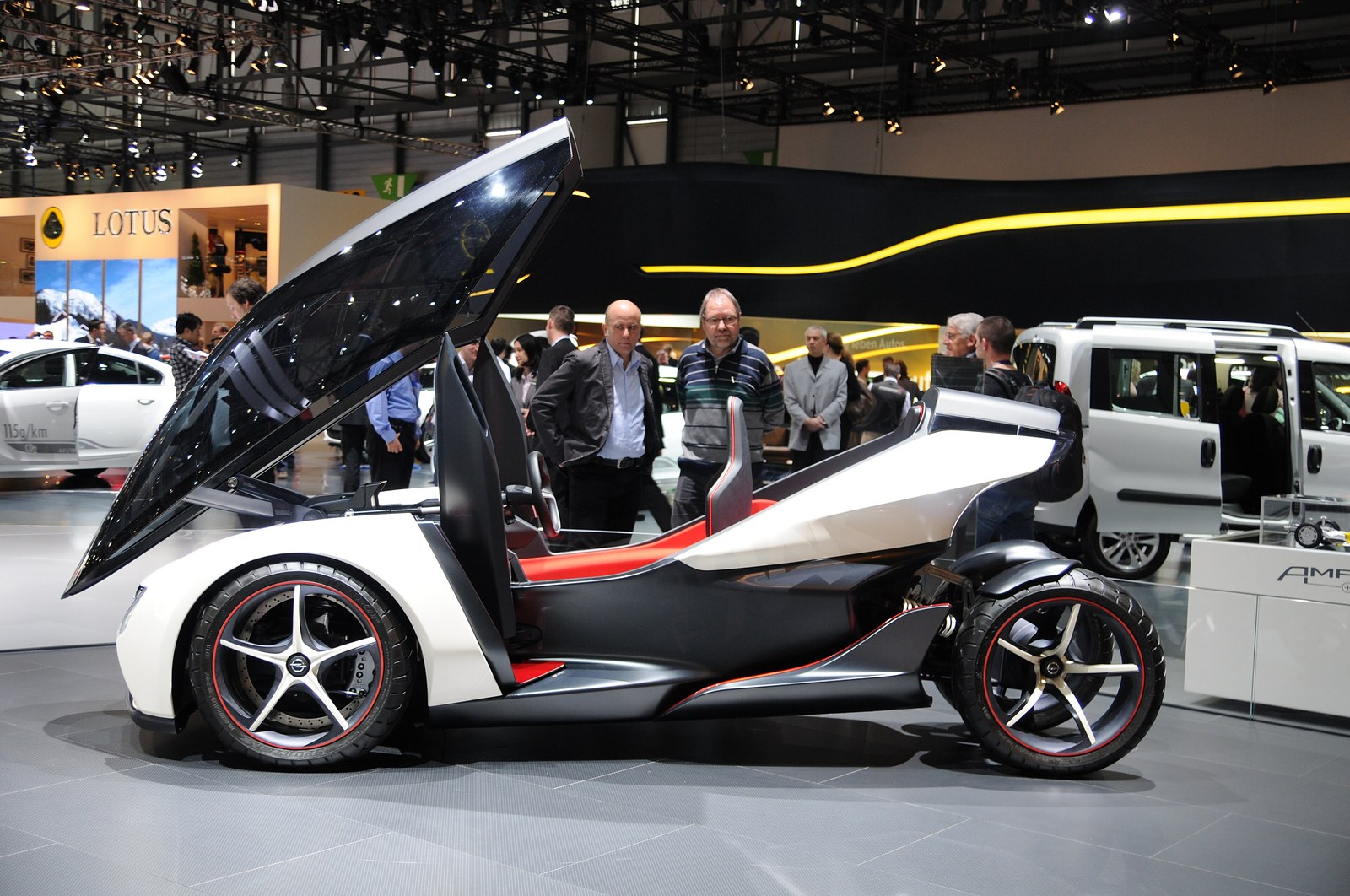
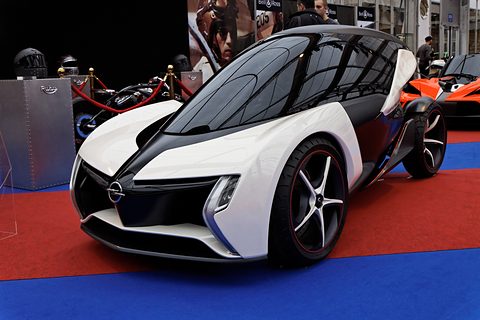
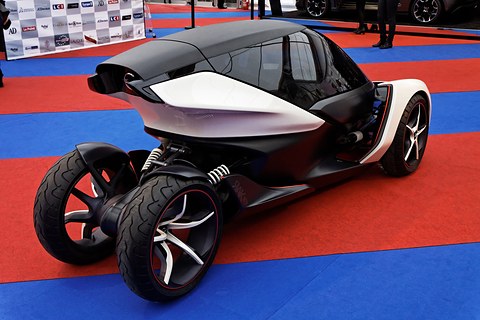
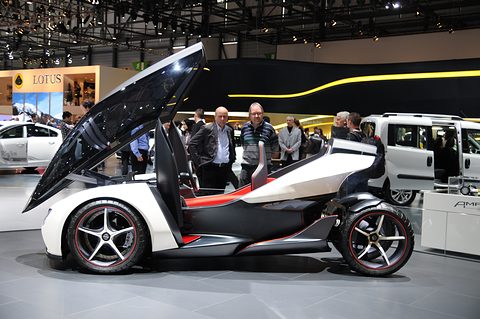
Opel’s RAK e, at Frankfurt in 2011, was a two-seat electric tandem designed with KISKA, the designers of the KTM X-Bow, and named after the RAK 2 rocket car of 1928.source 16 Its length was 3,000 mm (118 in), its height 1,190 mm and its weight 380 kg (838 lb), and in law it was a quadricycle; with 36.5 kW at peak, 10.5 kW continuously, and a 5 kWh battery, it was claimed to reach 120 km/h and run 100 km.source 16

Hiriko

2012 · a record on this page

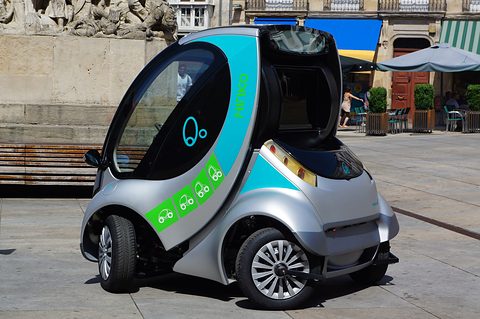
The Hiriko began at the Massachusetts Institute of Technology, as the CityCar that William J. Mitchell’s Smart Cities group at the Media Lab conceived in 2003, with support from General Motors. Its four wheels each had a motor and could turn up to 120°, so that it could park sideways or turn on the spot, and its body folded so that it could park nose to the kerb; Time named it one of the best inventions of 2007.source 7 A consortium of seven Spanish companies, Hiriko Driving Mobility, set out to build it in the Basque Country with about €15 million of support from the Spanish government. The President of the European Commission formally unveiled the production prototype; up to 2,500 mm (98 in) in length, it was to weigh 500 kg and run 120 km.source 17 A trial of 20 cars in Vitoria-Gasteiz was planned from July 2012, and a price of €12,500 plus a battery lease.source 17 In May 2013 the money ran out, after one test car and two unfinished ones had been built, and in 2015 Spanish prosecutors accused six businessmen of fraud.source 17

Silver and teal two-seat microcar with a raised front canopy, parked on a square before a cafe.
The Hiriko folding electric car in Vitoria-Gasteiz in June 2012.Photo: Robert Hextall, CC BY 2.0, via Wikimedia Commons

SEAT Minimó

2019 · a record on this page

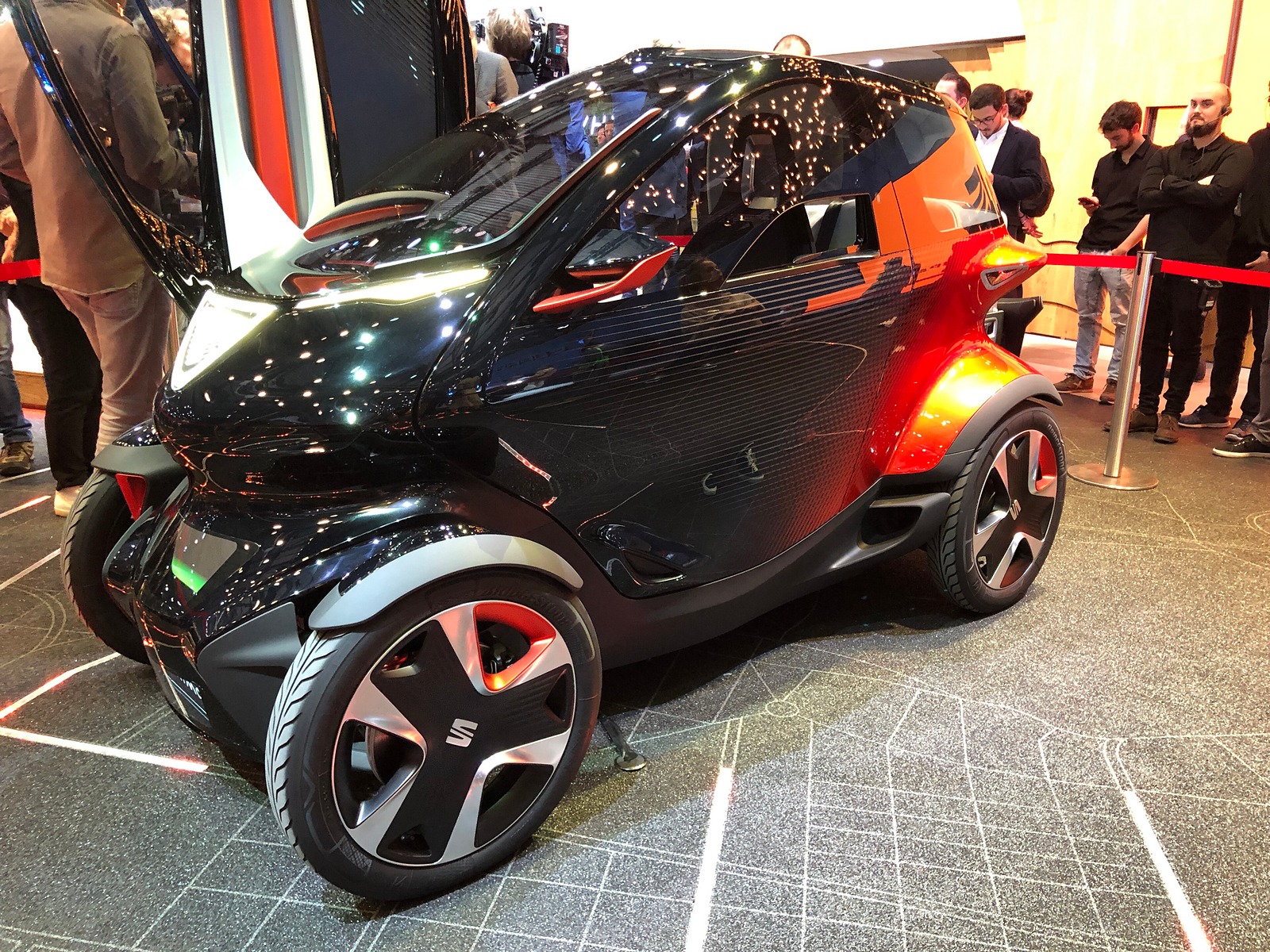
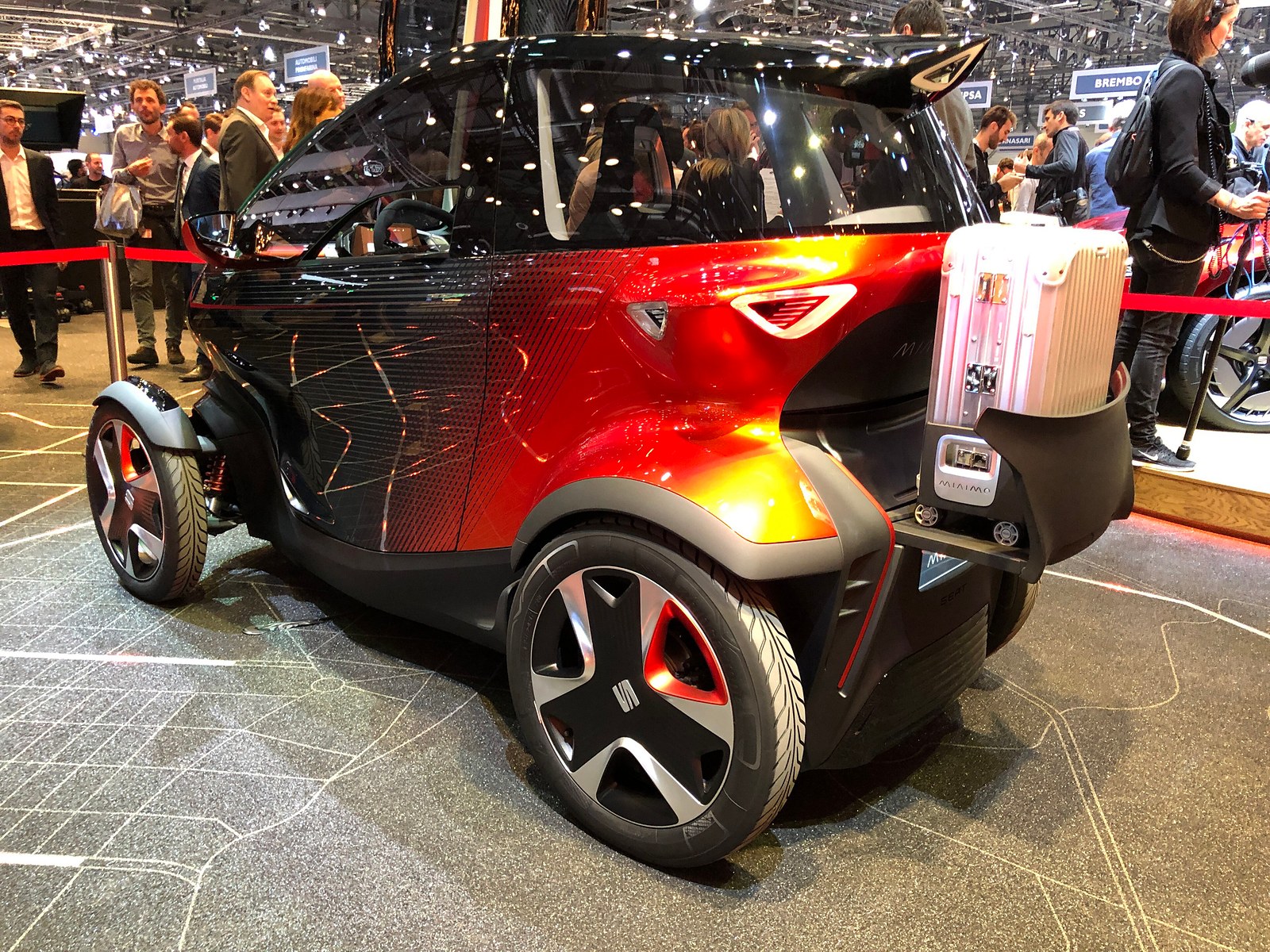
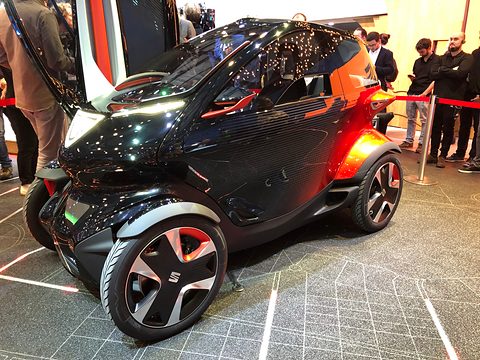
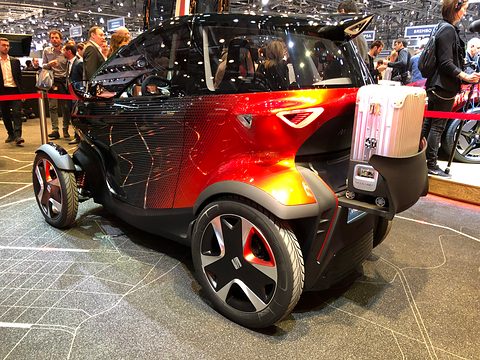
SEAT announced the Minimó at the Mobile World Congress in Barcelona in 2019 and showed it at Geneva that spring: an electric tandem quadricycle designed by Alejandro Mesonero-Romanos for car-sharing, 2,500 mm (98 in) long and 1,240 mm wide.source 18 Its 15 kWh battery could be swapped and gave about 100 km, and it was built for Level 4 self-driving and 5G connections. Production was announced for 2021 but did not happen.source 18

Dacia Hipster

2025 · a record on this page

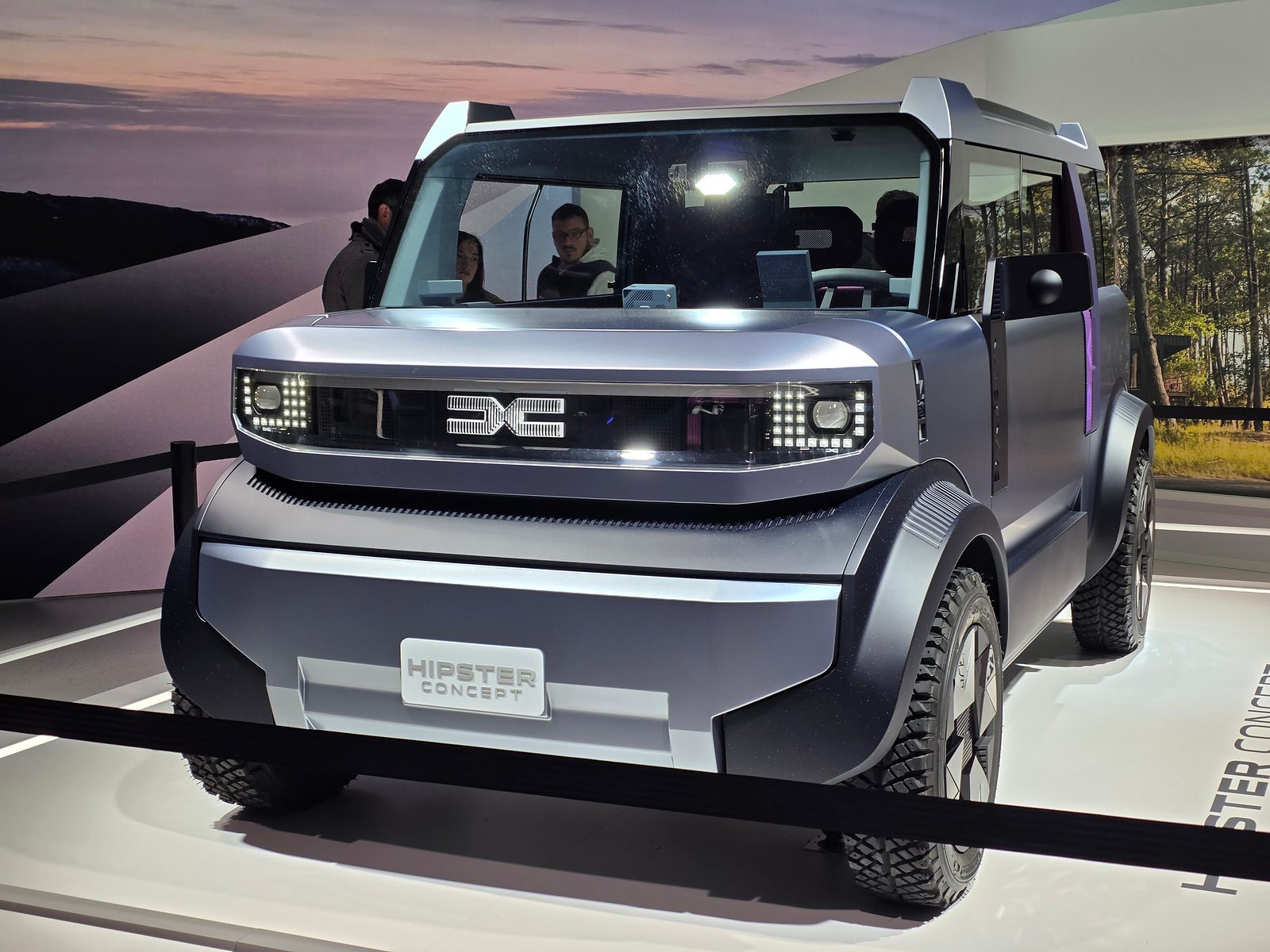
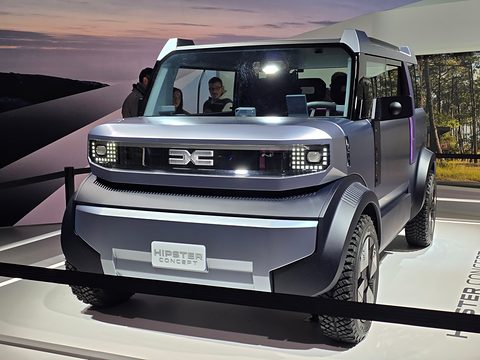
Dacia’s Hipster of 2025 is a four-seat box about 3.0 m (9 ft 10 in) long, 1.55 m wide and, by one headline, about 800 kg, with up to 500 litres of space with the seats folded. Its reported targets are about 90 km/h, 150 km on a charge and a price under €15,000.source 19

Enable as many people as possible to access essential mobility.

Dacia, on the Hipster, 2025, in press coverage quoted by English Wikipedia.source 19

Pictures

More photographs, old and new

Variants

14 concepts, in order of appearance

The concepts, their shows and their ideas
VariantYearsWhat differsHow many
Renault Zoom1992Paris; rear wheels fold in to shorten itA prototype in the Matra museum
VW 1-litre car, L12002, 2009A tandem two-seater, drag coefficient 0.159Led to 250 XL1s
Nissan Pivo 1–32005–⁠11Tokyo; a cabin that turns roundShow cars
Yamaha Tesseract2007Tokyo; a tilting hybrid on four wheelsShow car
Lumeneo Smera2008Paris; a tilting tandem 960 mm wide10 Neomas sold
Nissan Nuvu2008Paris; solar leaves on a “tree”Show car
Peugeot BB12009Frankfurt; four seats, motors in the rear wheelsShow car
Nissan Land Glider2009Tokyo; a tandem that leans 17°Show car
GM EN-V2010Shanghai; two wheels, self-balancing and self-drivingThree pods, then test fleets reported
Volkswagen Nils2011Frankfurt; one seat, gullwing doorsShow car
Opel RAK e2011Frankfurt; a tandem by KISKAShow car
Hiriko2012Vitoria-Gasteiz; a body that foldsOne test car, two unfinished
SEAT Minimó2019Barcelona and Geneva; a swappable batteryShow car
Dacia Hipster2025A cheap four-seat boxShow car

How many were built?

What came of them

Show cars, and 250 XL1sNearly all of these were one-offs. Two led to cars that were sold: Volkswagen’s 1-litre car to the XL1, built in a run of 250, and the Lumeneo Smera to the Neoma, of which 10 were sold before the firm failed. The Hiriko got no further than one test car and two unfinished ones.

  1. 250Volkswagen XL1s, 2013–⁠16, the 1-litre car’s descendantOne source

    English Wikipediasource 9

  2. 20Hirikos planned for a trial in Vitoria-Gasteiz, 2012One source

    English Wikipediasource 17

  3. 10Lumeneo Neomas sold, 2013One source

    English Wikipediasource 3

  4. 3Hirikos built: one test car and two unfinishedOne source

    English Wikipediasource 17

  • Two sources agreetwo good sources give the figure
  • One sourcea good source, alone
  • Unconfirmeda lead only, not yet checked

Famous for

Three points

  1. A car that shrank

    The Renault Zoom folded its rear wheels in to lose 350 mm for parking.

  2. A cabin that turned

    Nissan’s Pivo spun its cabin round so that it never had to reverse.

  3. A fold, and a scandal

    The Hiriko folding car collapsed before production, and in 2015 Spanish prosecutors accused six businessmen of fraud.

Survivors and collecting

Today

The Renault Zoom is in the Matra museum at Romorantin-Lanthenay and the first Nissan Pivo in the Science Museum in London.source 8source 2 The photographs on this page show the BB1 at Sochaux, in Peugeot’s own museum, a Pivo in a Nissan gallery in Japan and an EN-V at Epcot, and most of the rest at motor shows.

Sources

Numbered as in the text

Almost every concept rests on one Wikipedia article, which mostly follows its maker’s releases; only the Nils and the EN-V were checked against the releases themselves. Specifications are makers’ claims. Sources are given as plain text; the links are on the Credits page.

  1. English Wikipedia, Renault Zoom, read in full.
  2. English Wikipedia, Nissan Pivo, read in full.
  3. English Wikipedia, Lumeneo SMERA, read in full.
  4. English Wikipedia, General Motors EN-V, read in full.
  5. English Wikipedia, Peugeot BB1, read in full.
  6. English Wikipedia, Nissan Land Glider, read in full.
  7. English Wikipedia, CityCar, in part.
  8. French Wikipedia, Renault Zoom, read in full.
  9. English Wikipedia, Volkswagen 1-litre car, the lead and the 2002 car.
  10. German Wikipedia, VW Nils, read in full.
  11. English Wikipedia, Yamaha Tesseract, read in full.
  12. English Wikipedia, Nissan Nuvu, read in full.
  13. English Wikipedia, Personal Urban Mobility and Accessibility, read in full.
  14. General Motors (China), “GM Unveils EN-V Concept: A Vision for Future Urban Mobility”, Shanghai, 25 March 2010, read in an archived copy.
  15. egmCarTech, “Single-seat Volkswagen NILS Concept looks at future of electric urban driving”, 1 September 2011, with Volkswagen’s release in full, read in an archived copy.
  16. English Wikipedia, Opel RAK e, read in full.
  17. English Wikipedia, Hiriko, the lead and the history.
  18. English Wikipedia, SEAT Minimó, read in full.
  19. English Wikipedia, Dacia Hipster, read in full.