Europe’s small electric microcar makers since 1990
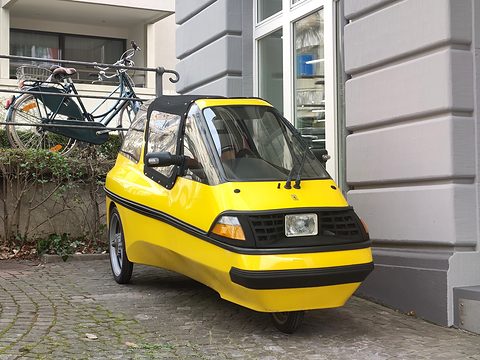
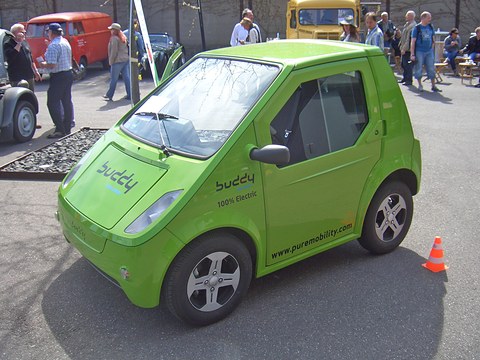
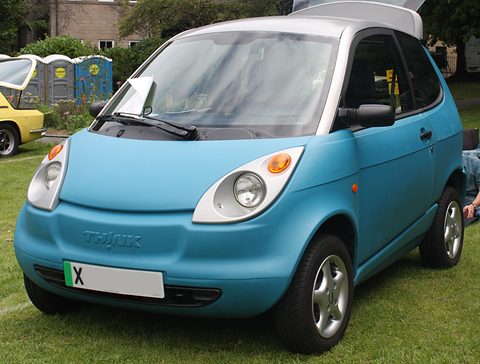
Since 1990 dozens of small European firms have tried to build an electric microcar, and nearly all failed for want of money or sales. Ten of them follow: a Black Forest electrician’s car, a runabout from Tonino Lamborghini’s group, a Swiss three-wheeler, a car with its driver in the middle, and a battery you can wheel indoors like a trolley case.
Built1993 –todaySeveral
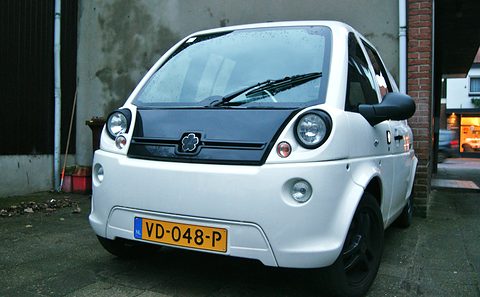
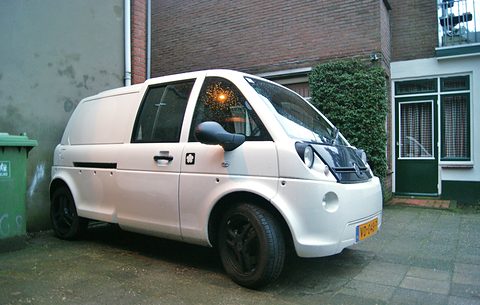
A white 2013 Mia electric parked in a village street in Lunteren, Netherlands, in February 2014.Photo: Niels, CC BY 2.0, via Flickr
1
At a glance
The spec plate
Europe’s small electric microcar makers since 1990
10 makers · Europe
Built
1993–From the Hotzenblitz, built from 1993, to the Silence S04 and the XEV Yoyo, still made
Country
Several countriesGermany, Switzerland, Italy, France, Sweden, Spain and the Netherlands; the Yoyo built in China
Engine
Electric motorsFrom the Birò’s 4 kW to the XEV Yoyo’s 15 kW (the unbuilt Uniti One was to have 50 kW); the Town Life also with 505 cc petrol and diesel engines
Seats
2 to 4Two in tandem in the Cree SAM; three in the Mia, the driver in the middle; four in the Mia L
Price new
€6,250 to €17,760The Squad Solar’s announced price to the Uniti One’s British price; the Mia L €12,781 before VAT
Production
about 800 MiasAbout 140 Hotzenblitzes and 80 Cree SAMs; no Uniti delivered
Top speed
100km/h100 km/hThe Mia also 100 km/h, by its Wikipedia entries; a light quadricycle is held to 45 km/h
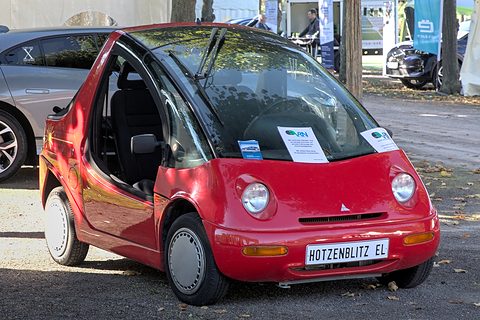
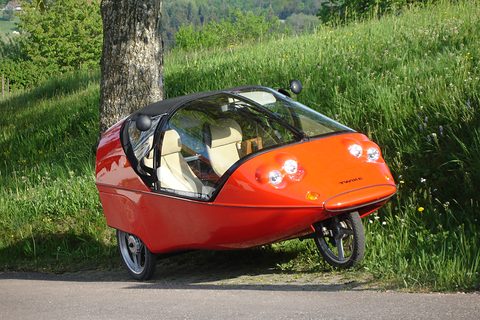
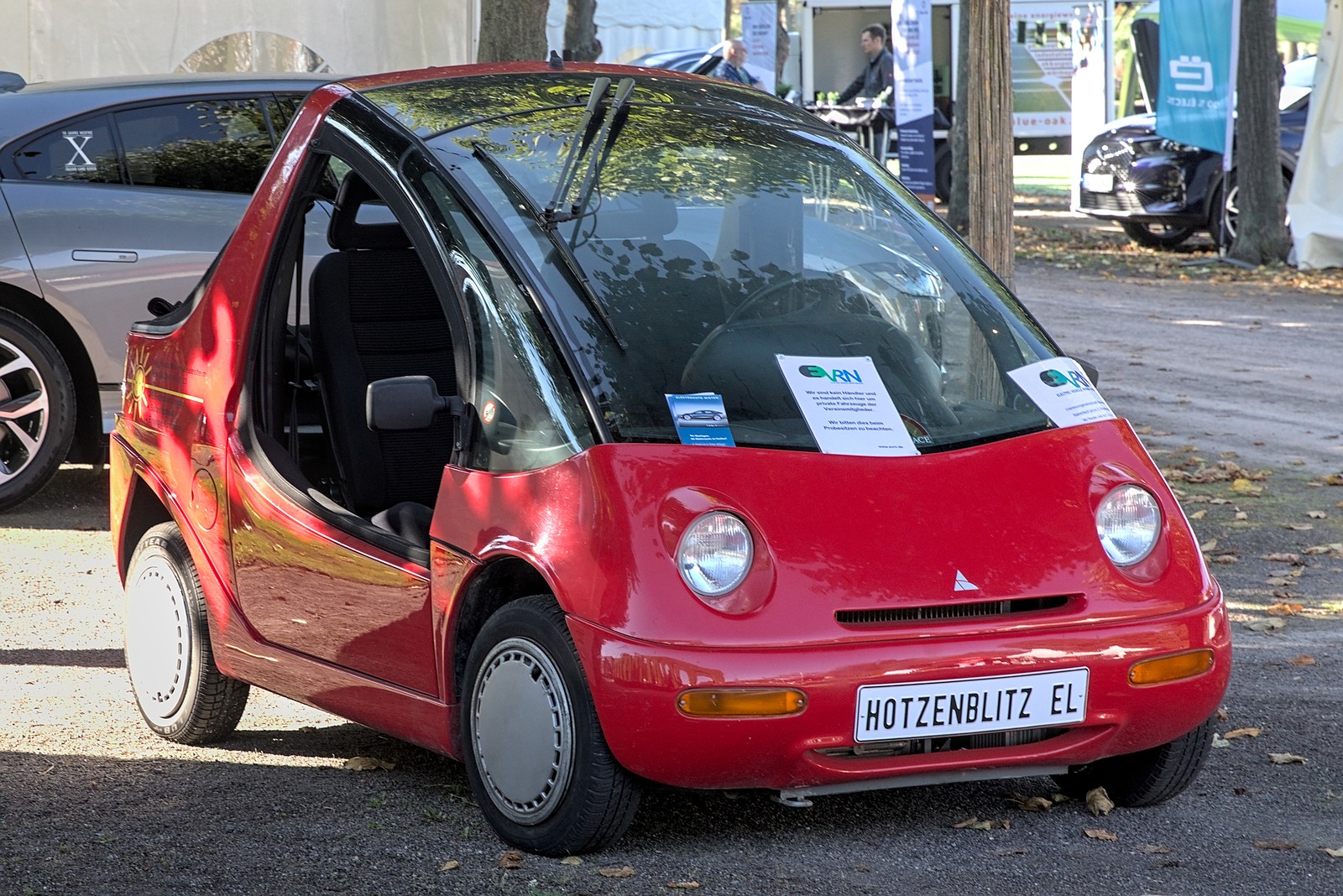
In 1989 a group of engineers in the Hotzenwald, in the southern Black Forest, gathered round the electrician Thomas Albiez, decided to build an electric car, and in 1990 founded Hotzenblitz Mobile at Ibach. Alfred Ritter, of Ritter Sport chocolate, joined the backers that July.source 4 The first prototype ran 19 months after work began; Schwaller Motorsport of Switzerland developed the frame and chassis, and MeDes Industrial Design helped prepare it for production.source 4 It was built from 1993 in the halls of the Suhler Fahrzeugwerk at Suhl, in Thuringia, and shown at the IAA in 1993 and 1995 and at Geneva in 1994 and 1995.source 4 German Wikipedia calls it the first car developed in Germany purely as an electric car and sold to customers, and the only one until the BMW i3 of 2013.source 4
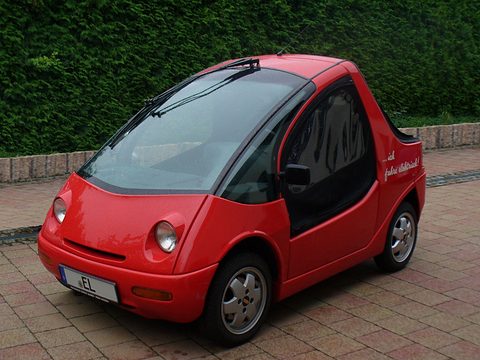
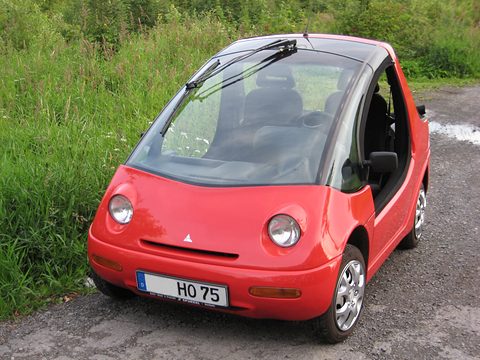
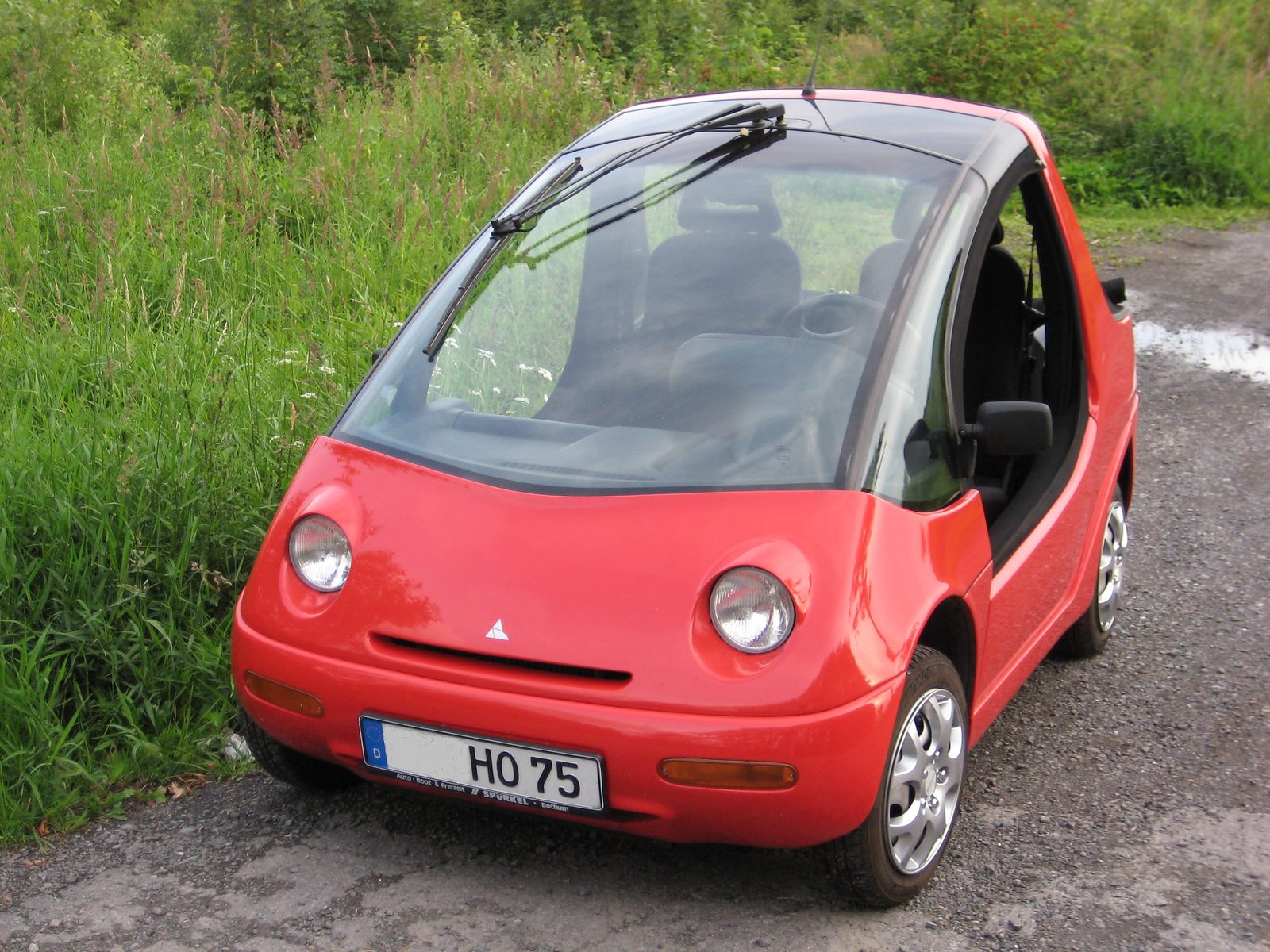
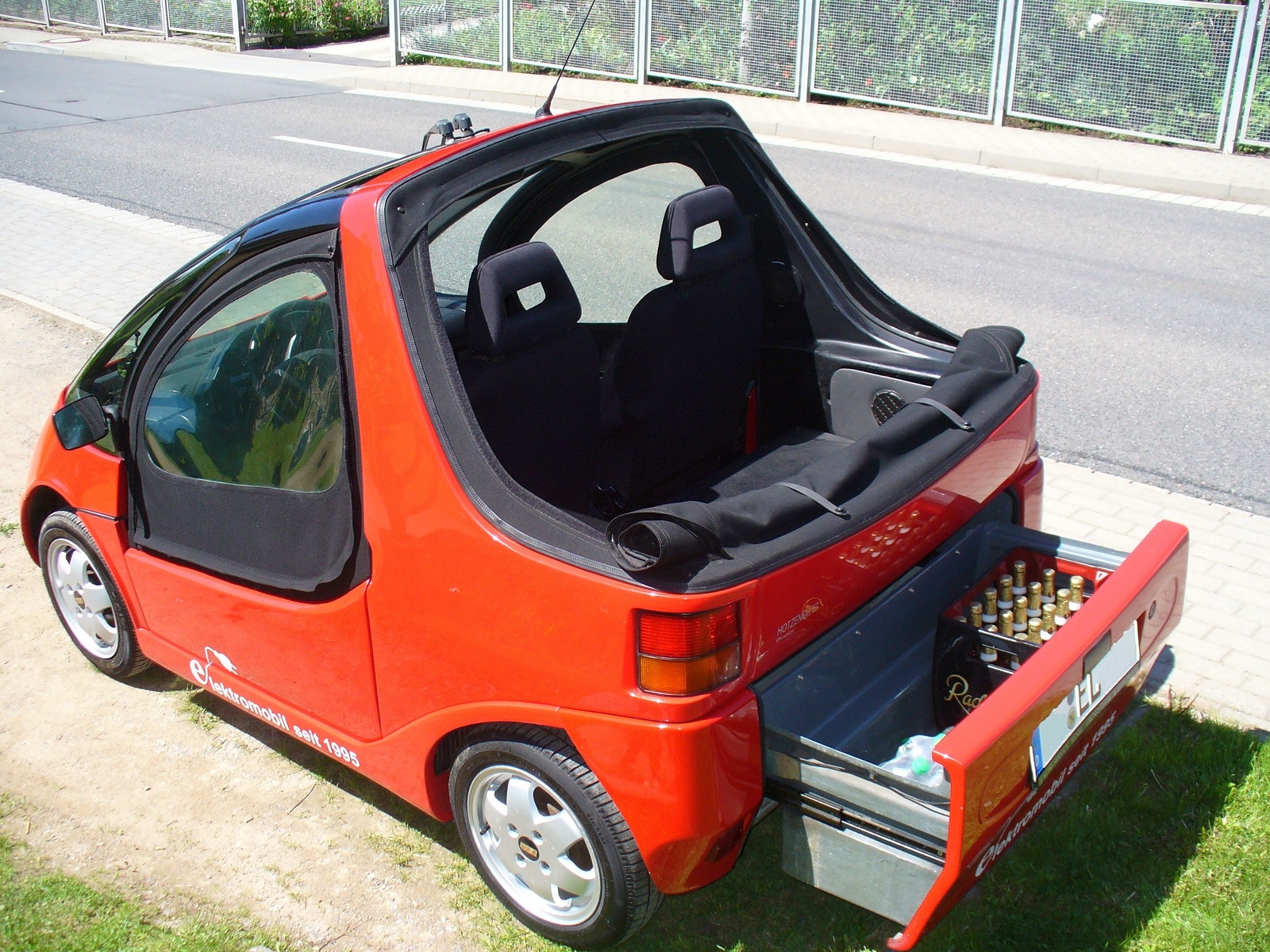
It had a steel-tube frame, an aluminium sandwich floor and a plastic body, hand-laid glass fibre at first and later through-coloured ABS. A 12 kW (16 PS) motor, 16.5 kW at peak, drew on 14 lead-gel batteries, 10 kWh and about 350 kg of them, and gave about 100 km/h (62 mph) and up to 70 km; the car measured 2,750 mm (108 in) and weighed 830 kg (1,830 lb), with a diesel heater by Webasto. There was a City with doors and a Buggy without; most were Buggys.source 4 auto motor und sport praised its detail solutions.source 4 Money ran out in June 1996, before series production could begin, after about 140 cars that German Wikipedia calls pre-series in character.source 4 Owners first met at Dogern in August 2004, and many have refitted their cars with lithium batteries; one such conversion, by Kruspan Engineering, ran the 3,000 km WAVE rally of 2011.source 4
A red Hotzenblitz with the later ABS body, in Germany in July 2008.Photo: J. Hammerschmidt, CC BY-SA 3.0, via Wikimedia Commons
4
Town Life
2000–2008 · a record on this page
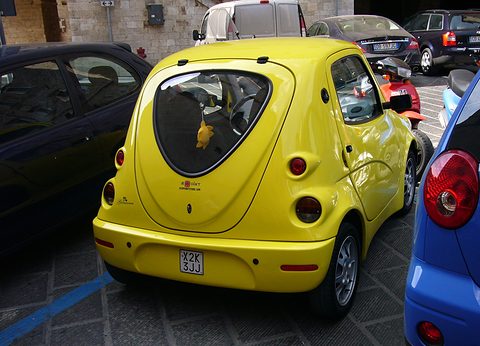
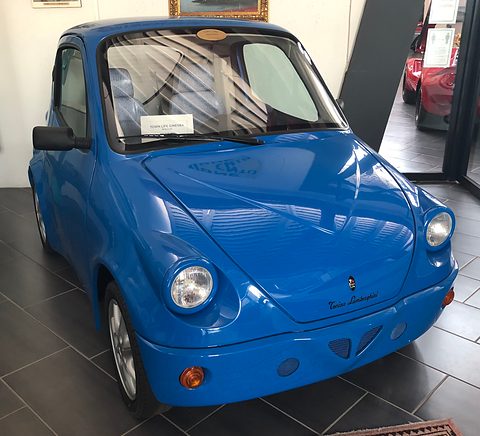
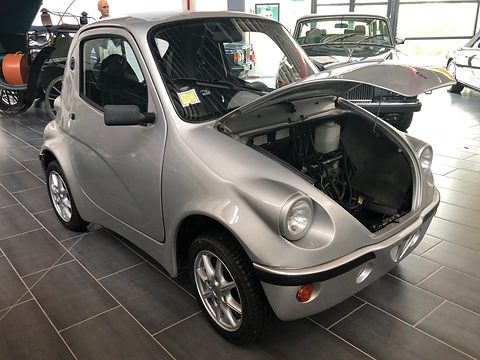
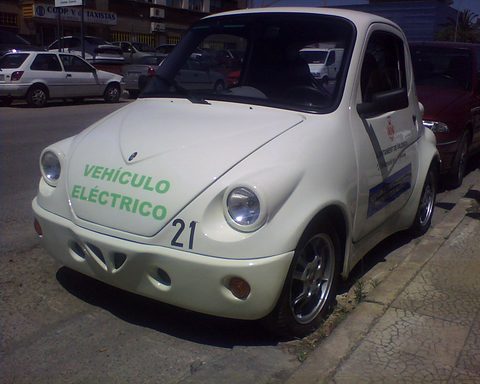
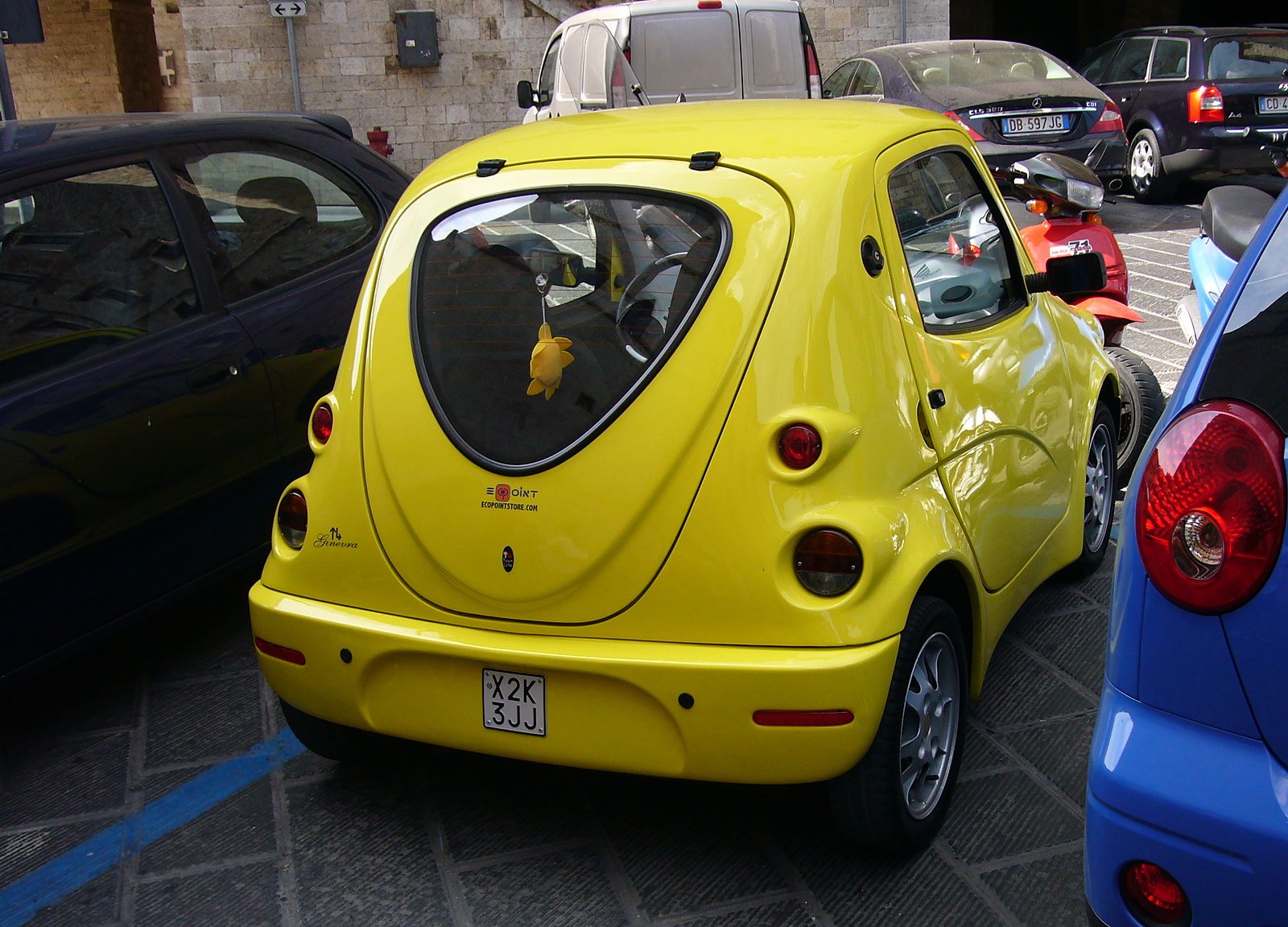
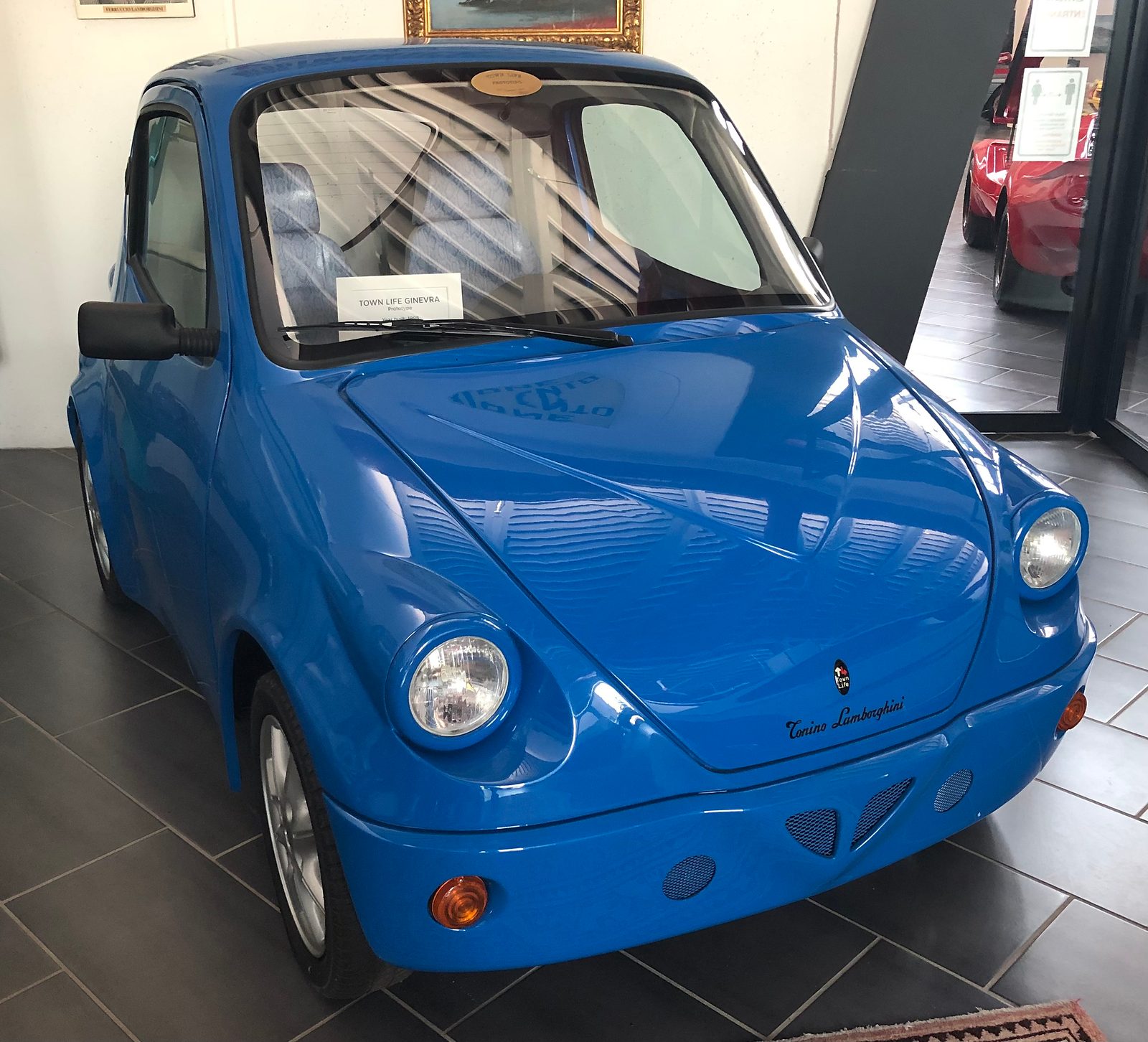
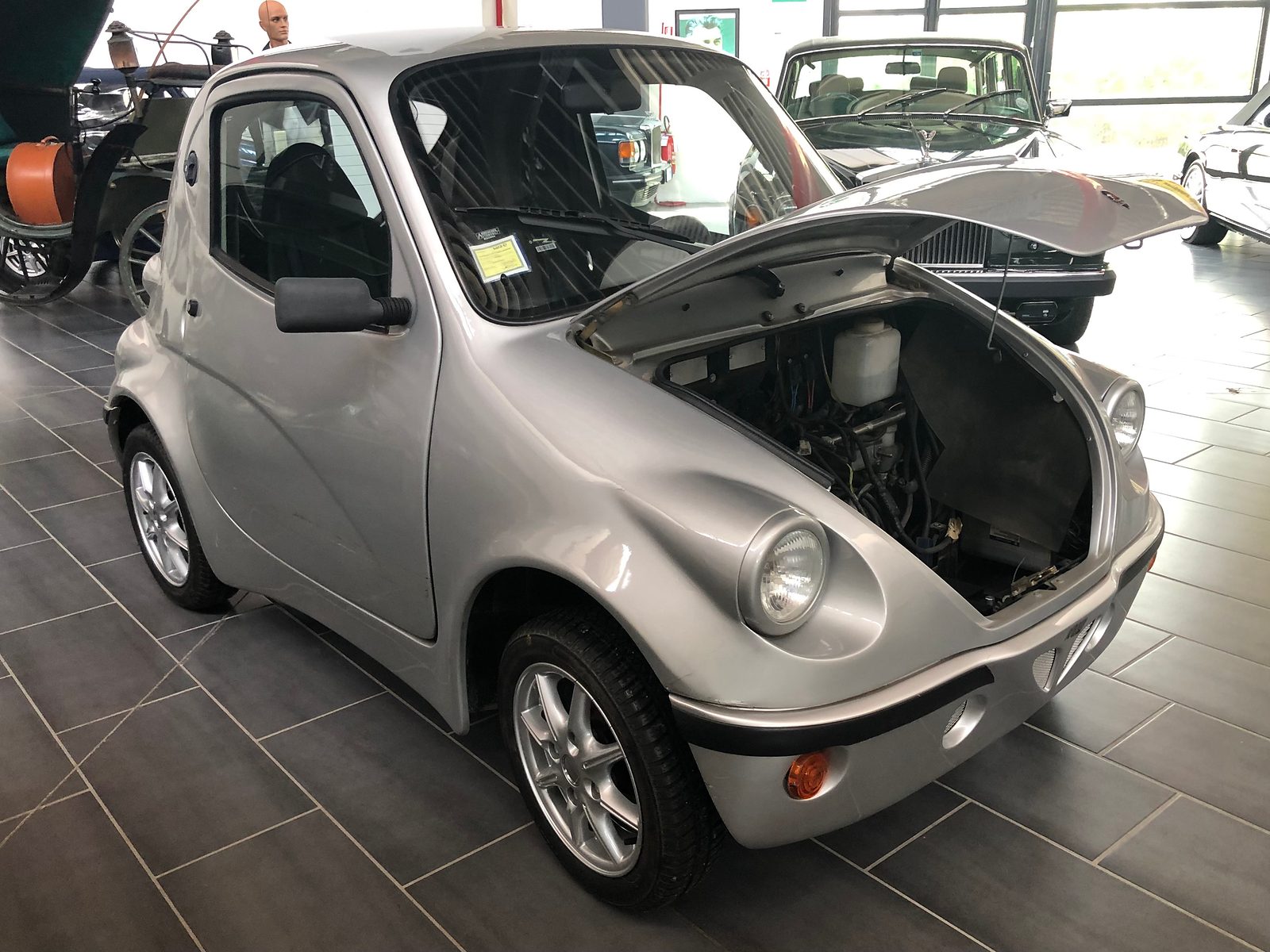
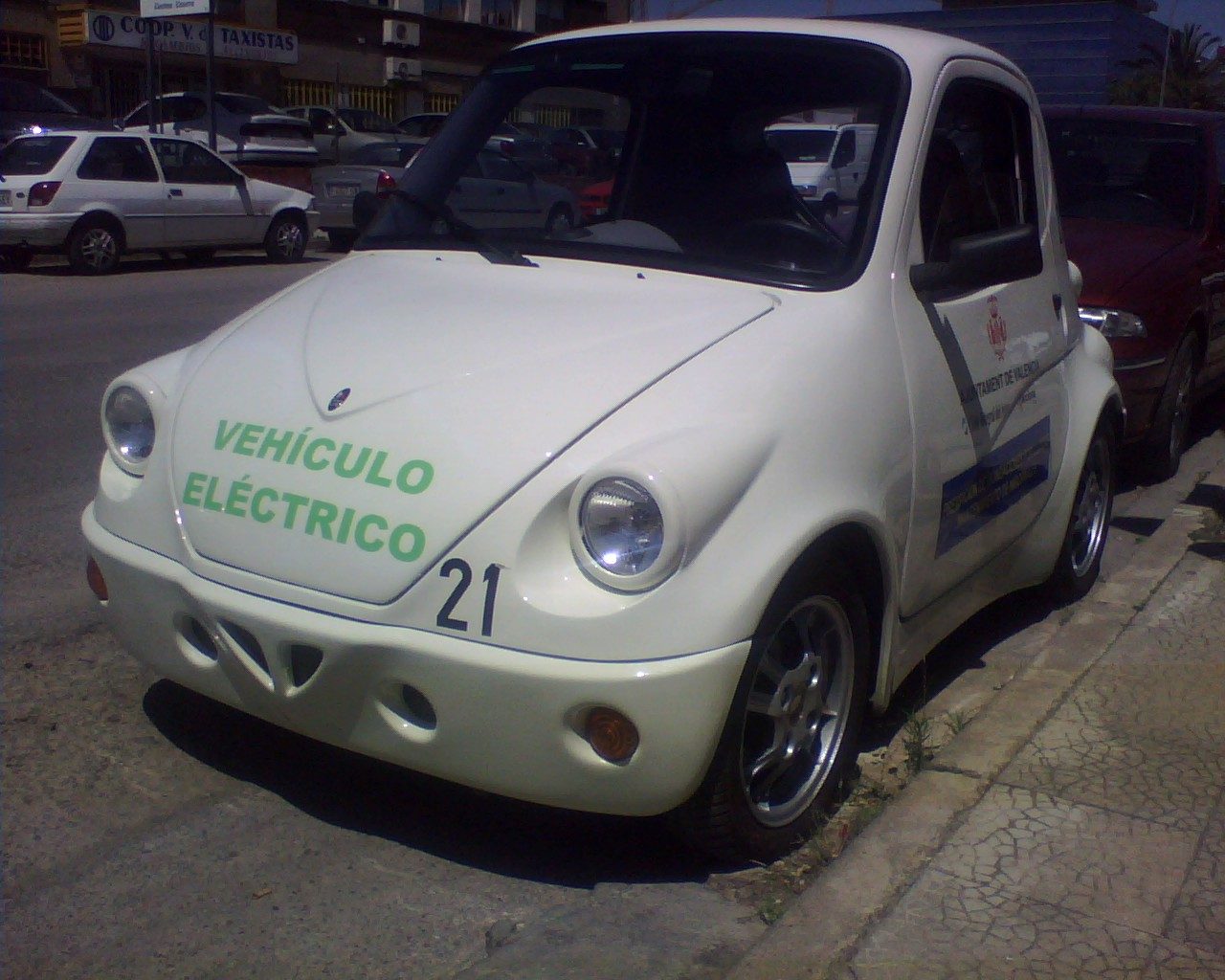
The Tonino Lamborghini group, led by Ferruccio Lamborghini’s son and unconnected with Automobili Lamborghini but for the name, showed the Town Life at the Bologna Motor Show of 1999.source 8 Town Life S.p.A. bought the bankrupt Iso works at Magione, in Umbria, and began production in January 2000.source 8 The Ginevra had a 505 cc petrol or diesel engine and the Helektra an electric motor; both came as coupés or convertibles in glass fibre, 2,520 mm (99 in) long, and in Italy could be driven from 14 on a moped licence (more on such cars in licence-free cars).source 8 A Ginevra GTB Sport was announced in 2006, and examples are kept in the Ferruccio Lamborghini museum.source 8
5
Cree SAM
2001–2009 · a record on this page
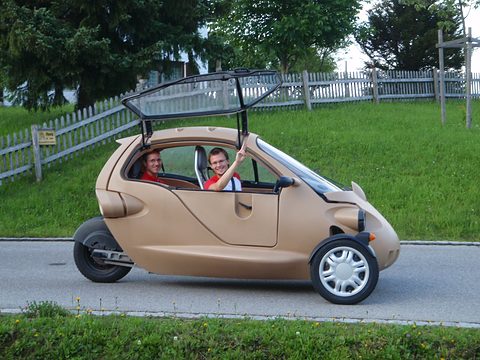
Daniel Ryhiner’s Swiss company Cree designed the SAM as a three-wheeler whose single wheel is at the back, with two seats one behind the other. About 80 were built in 2001 for public trials round Zürich and Basel.source 5 In 2003 Cree laid off its staff and filed for bankruptcy, and its shareholders, Ryhiner among them, bought it back. In mid-2009, by English Wikipedia’s account, Impact Automotive Technologies of Pruszków, in Poland, said it was developing a faster SAM with a longer range; that account is muddled in its dates.source 5
A Cree SAM being test-driven with two aboard, one behind the other, in June 2009.Photo: Martin from Tyrol, CC BY-SA 2.0, via Flickr
6
Estrima Birò
2009– · a record on this page
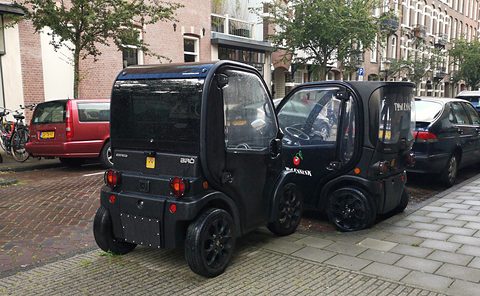
Matteo Maestri founded Estrima at Pordenone in 2008, as a start-up of his family’s firm, Brieda, and the Birò went into production in June 2009.source 9 It seats two side by side in 1,740 mm (69 in) by 1,030 mm, which its maker says makes it the smallest four-wheeled electric vehicle on sale. Two 48 V hub motors in the rear wheels give 4 kW together, with a “boost” lever, and 45 km/h, or 55 km/h with a controller update; a lead or lithium battery gives about 40 or 70 km.source 9 By its maker’s account it was the most registered electric vehicle in Italy in 2010 and 2011, counting two, three and four wheels.source 9 At the end of 2012 the Rosso family’s Red Circle Investments bought 30 per cent.source 9
7
Mia electric
2011–2013 · a record on this page
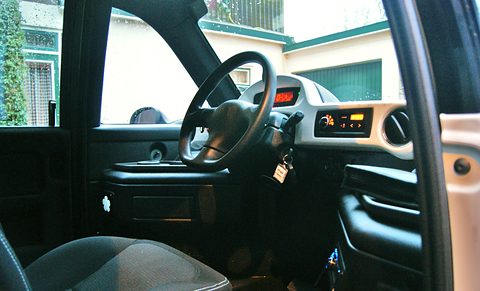
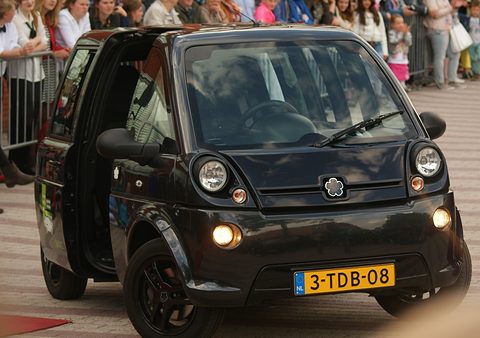
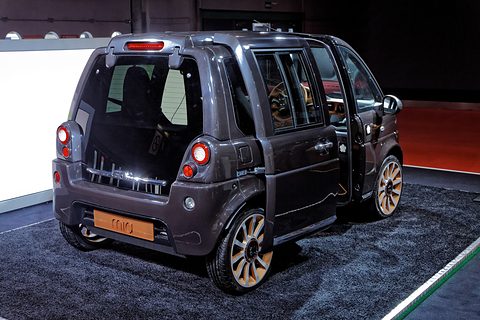
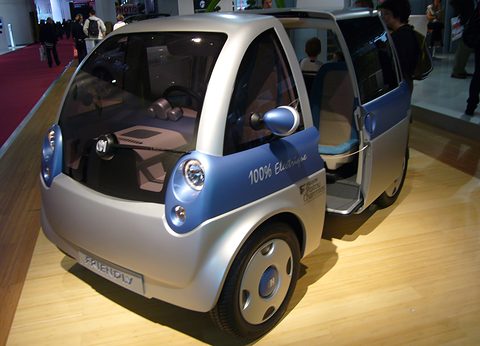
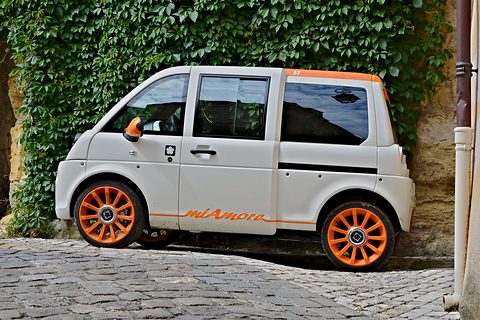
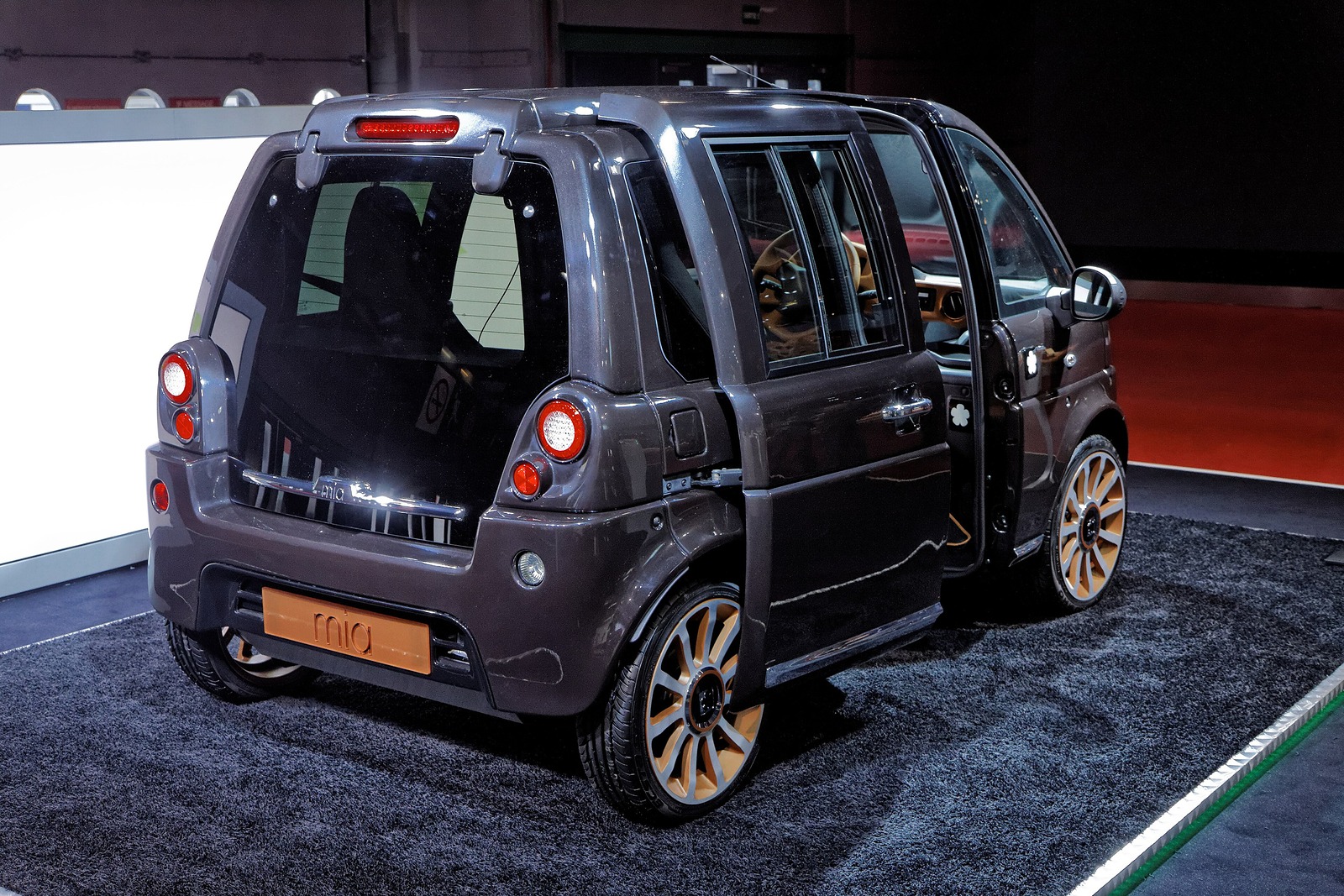
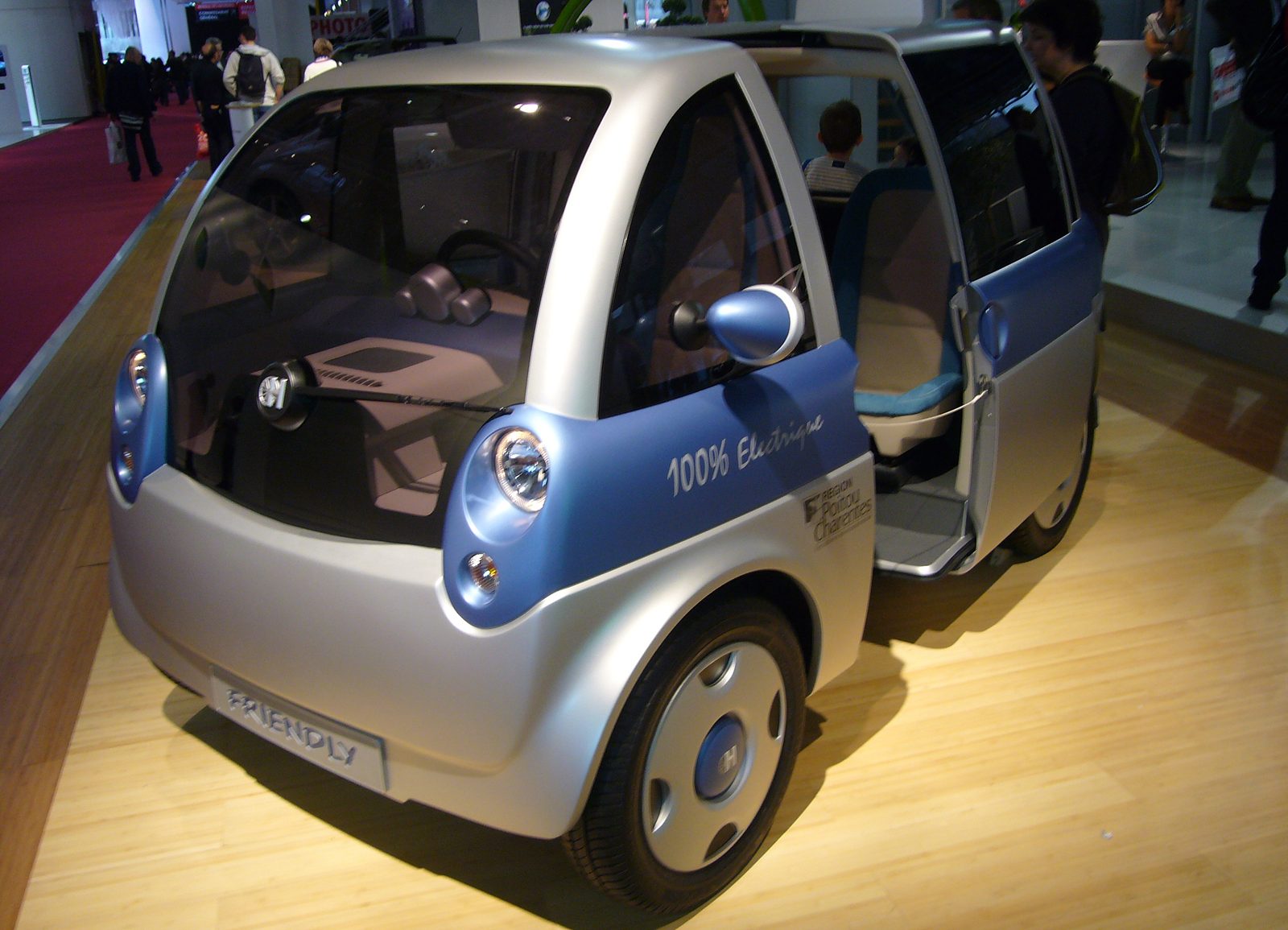
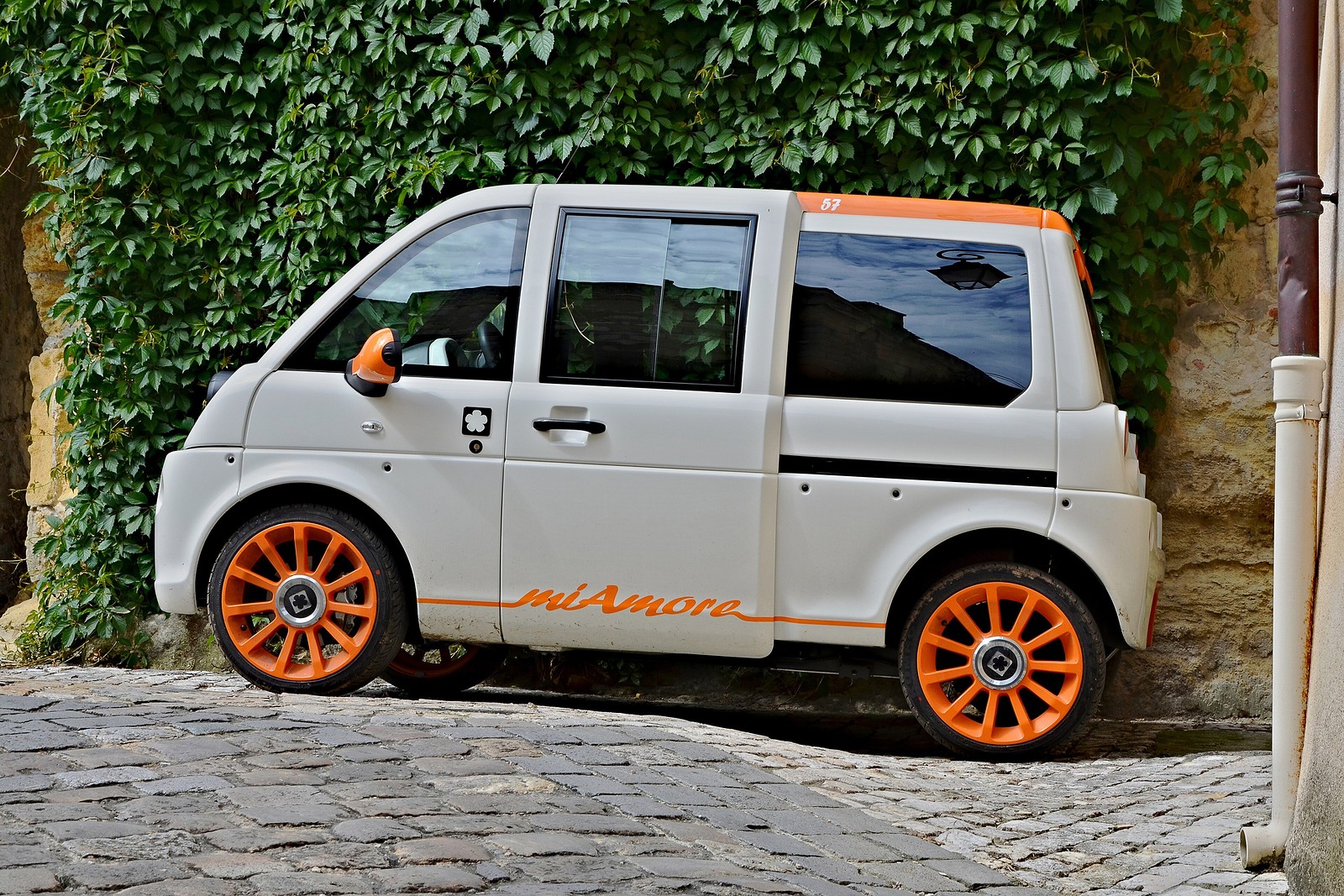
The Mia grew out of the electric branch of Heuliez at Cerizay, in the Deux-Sèvres, and its concept car of 2008, the Heuliez Friendly.source 6source 10 Mia electric was formed in July 2010 under Edwin Kohl, with about €30 million of private and French government money, and Murat Günak designed the car.source 6source 10 A pre-production car was shown at Geneva in March 2011, production began that June, and sales to the public followed in 2012.source 6source 10 It seated three, the driver in the middle, had two sliding doors, and was 2,870 mm (113 in) long; the Mia L had four seats and the Mia U was a van, both 3,190 mm. It was a car in law, not a quadricycle.source 6 English Wikipedia gives its motor as 13 kW; French Wikipedia gives it as asynchronous, of “24 ch”.source 6source 10 Before VAT, the Mia cost €12,255, the Mia L €12,781 and the Mia U €11,730.source 6
In June 2013 its main shareholder was Focus Asia, chaired by Michelle Boos, who spoke of the new ownership with confidence.source 10
La nouvelle répartition de l’actionnariat de Mia electric permet à l’entreprise de poursuivre les défis du développement de la société sur le marché du véhicule électrique en France et surtout à l’international.
Michelle Boos, chair of Focus Asia, June 2013, as quoted by French Wikipedia. In English: “The new shareholding structure lets Mia electric pursue the challenges of developing the company in the electric-vehicle market in France and above all internationally.”source 10
Only 201 were registered that year, against a target of 700–900. Production stopped in December 2013, receivers were appointed on 12 February 2014, and the Niort commercial court ordered liquidation on 12 March; the shareholder had put in only €2 million of the €36 million promised.source 6source 10 In July 2015 the production line, spares, batteries and five remaining cars were auctioned for about €900,000.source 10 On 10 February 2022 the criminal court at Niort sentenced Boos to three years in prison, one of them suspended, a €150,000 fine and a permanent ban from managing a company, for causing the bankruptcy by enriching herself (more in frauds and never-weres).source 10 A Swiss firm, Fox Automotive, announced a Mia 2.0 in 2020.source 6
The Mia’s central driving seat and dashboard, in Lunteren, Netherlands, in February 2014.Photo: Niels, CC BY 2.0, via Flickr
8
Uniti One
2017– · a record on this page
Uniti began as an open-innovation project at Lund University and became a company in January 2016, under its chief executive, Lewis Horne.source 7 More than 3,000 investors in 40 countries put money in, and customers placed orders at MediaMarkt shops in Stockholm and Malmö after test drives in virtual reality.source 7 A fully automated factory with Siemens at Landskrona, for up to 50,000 cars a year, was announced in 2017, and a pilot plant at Silverstone, in England, in October 2018.source 7 The production Uniti One of 2019 was to seat a driver in the middle and two passengers behind, with a 50 kW motor and a range of 150 or 300 km, from €17,760 in Britain.source 7source 11 In 2021 investors were shown a new model, the Zero, which the magazine Filter found to be a Chinese Zhidou D3, resprayed and given a new bumper.source 7source 12 The Lund District Court declared Uniti bankrupt on 11 March 2022, and no car was ever delivered to a customer.source 7source 11 An earlier investor bought what was left and relaunched it under Paul Birch.source 7
9
XEV Yoyo
2021– · a record on this page
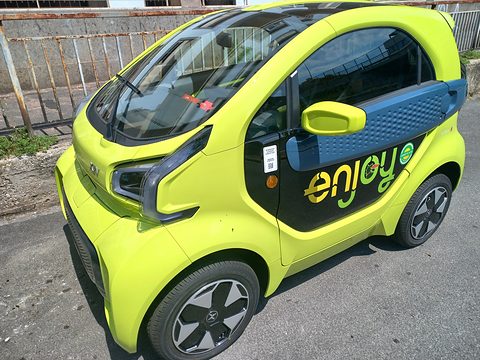
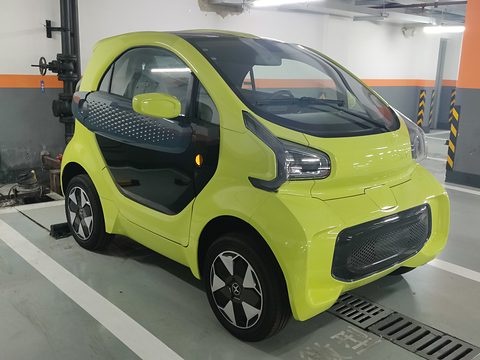
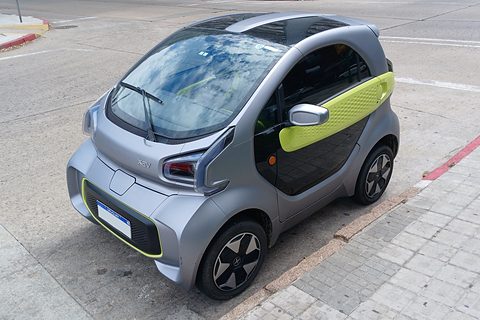
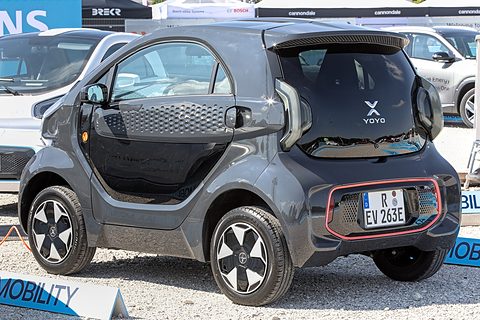
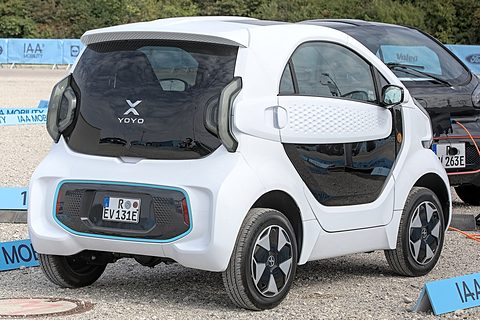
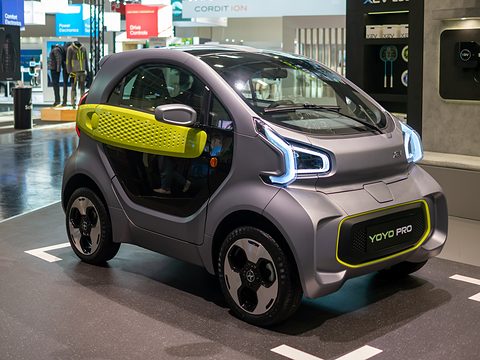
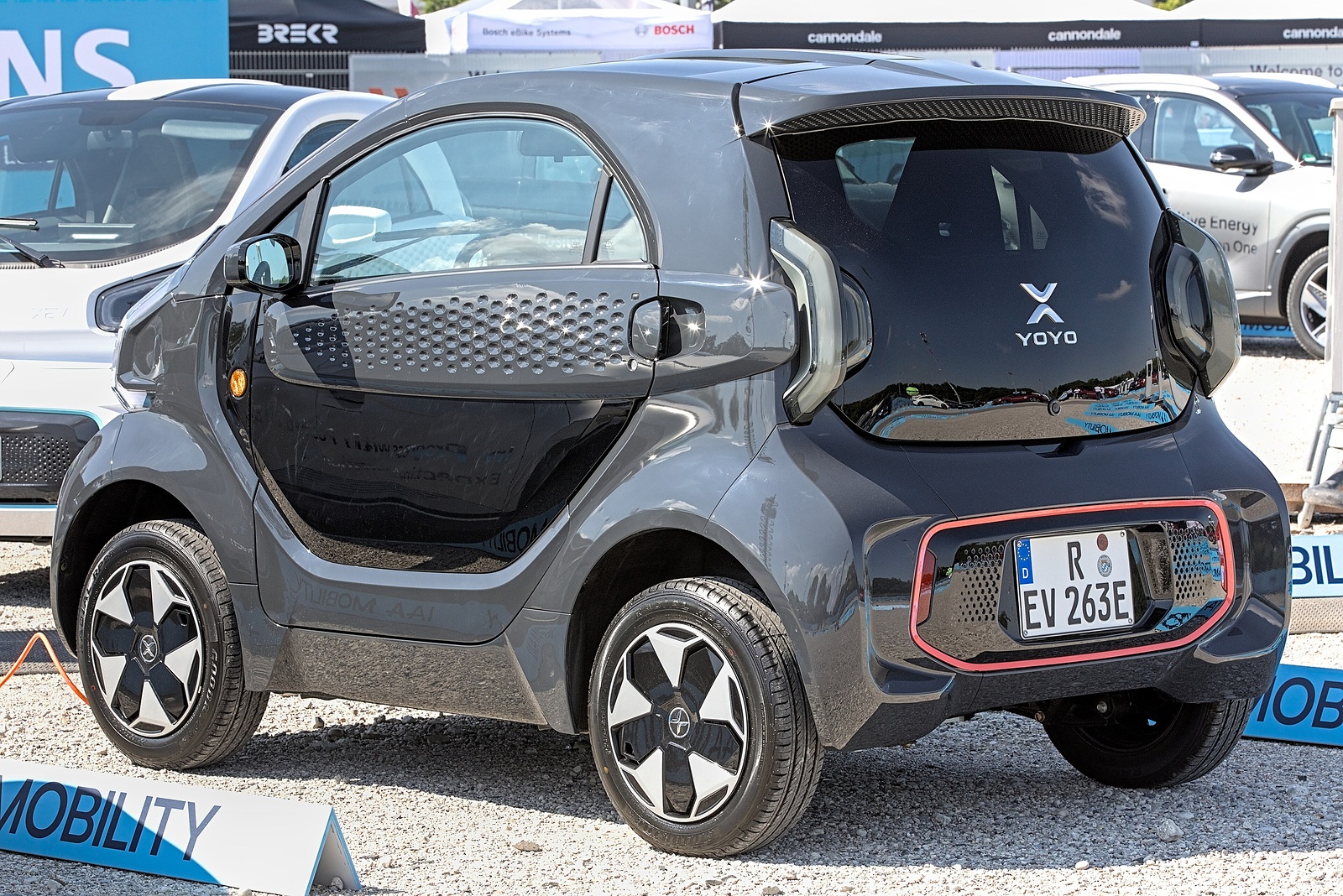
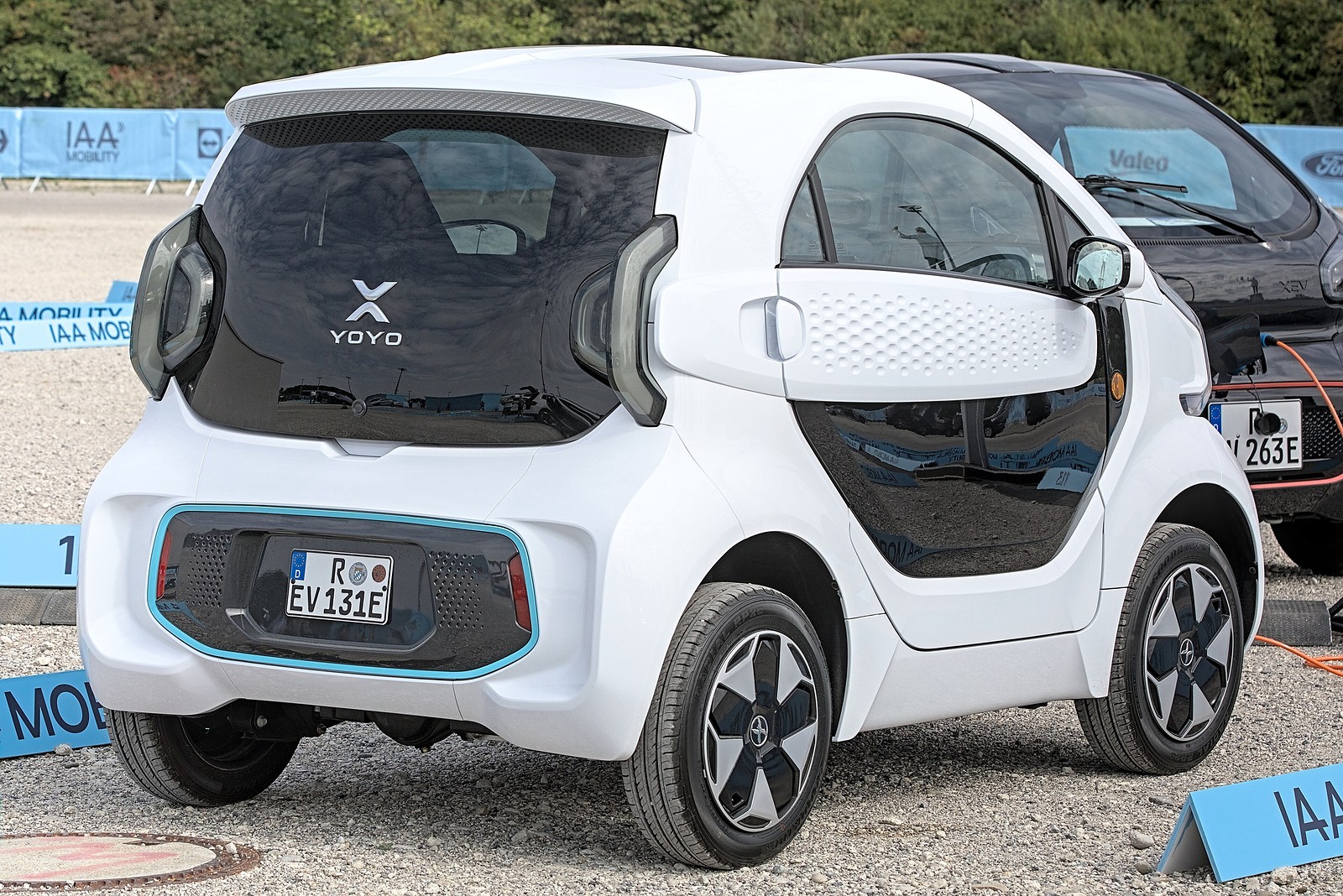
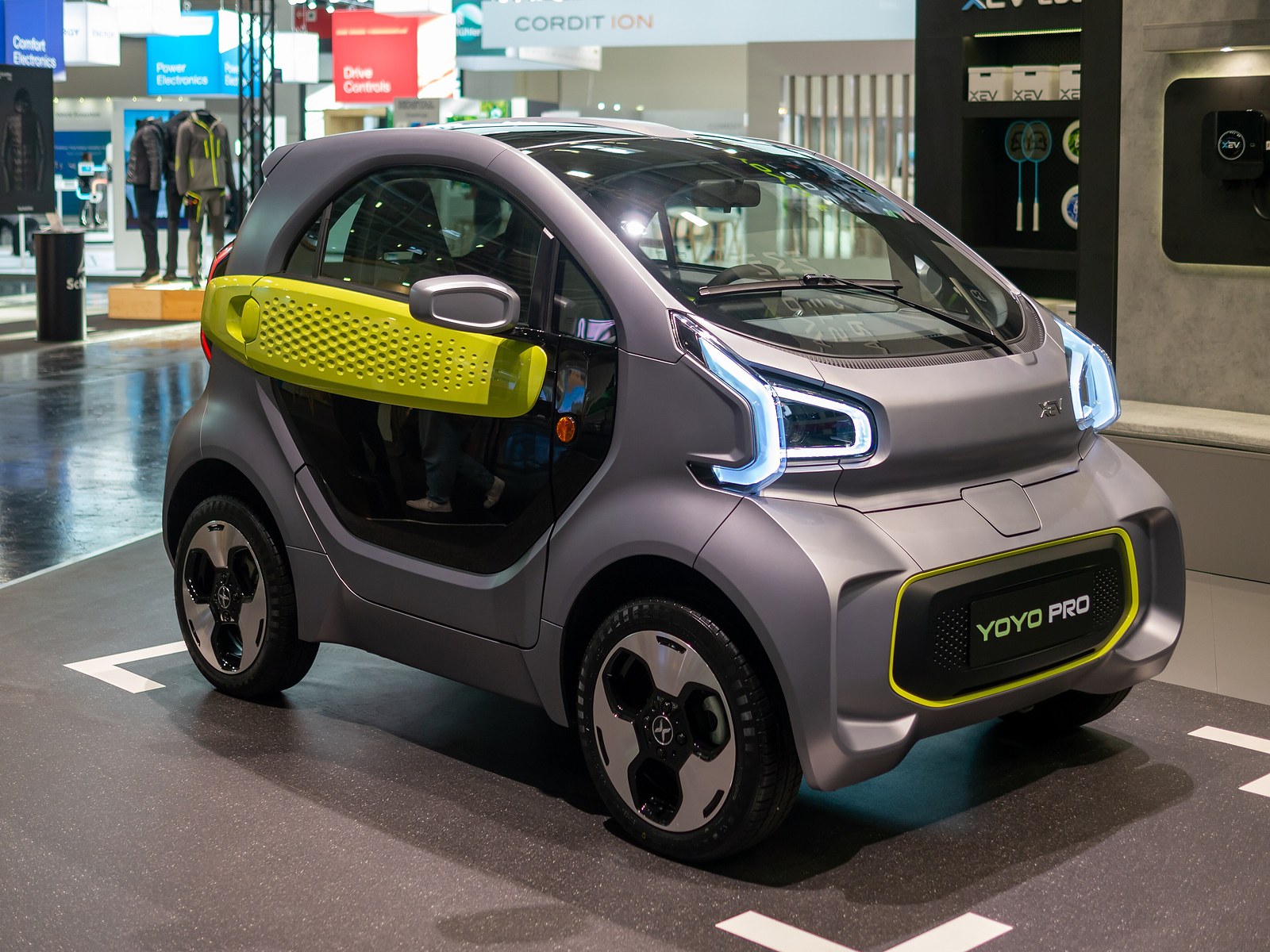
The Yoyo comes from XEV, an Italian and Hong Kong start-up; it was designed in Turin and is built in China by Shandong Fulu Vehicle Industry.source 1 The production car was shown at the IAA in Munich in September 2021. It is a heavy quadricycle, 2,530 mm (100 in) long and 850 kg, with a 15 kW motor and a 10.3 kWh battery that can be swapped through the rear bumper, for 80 km/h and about 150 km.source 1 XEV claimed that it had only 57 parts and that everything but the chassis, seats and glass was 3D-printed, a claim best taken as advertising.source 1
10
Silence S04
2022– · a record on this page
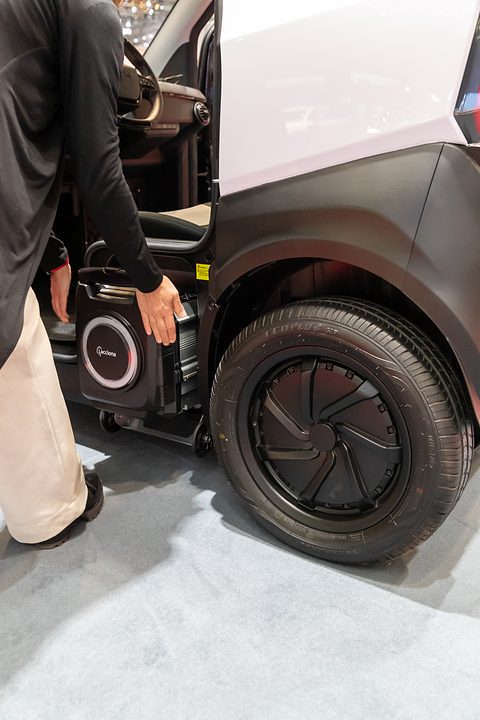
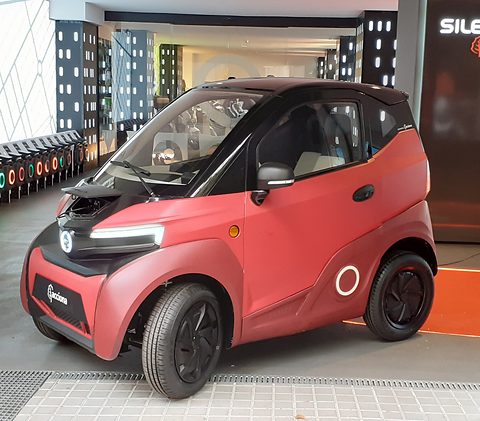
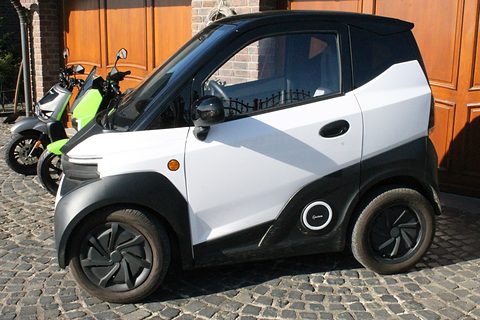
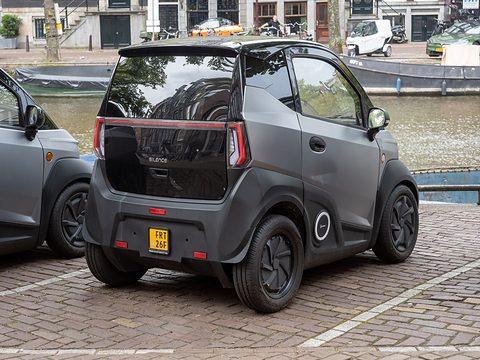
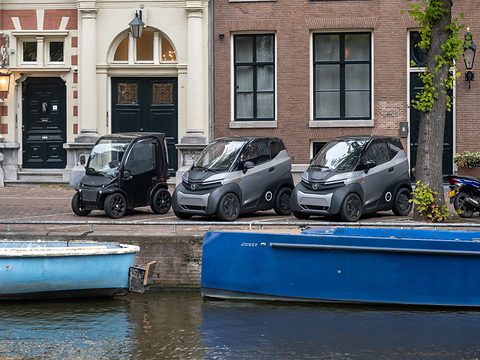
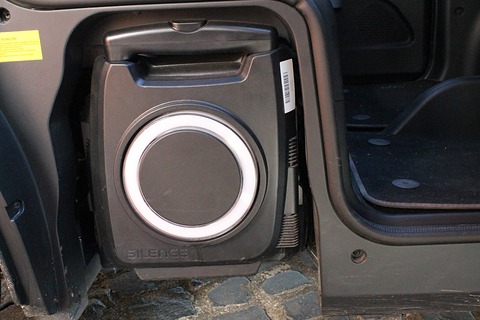
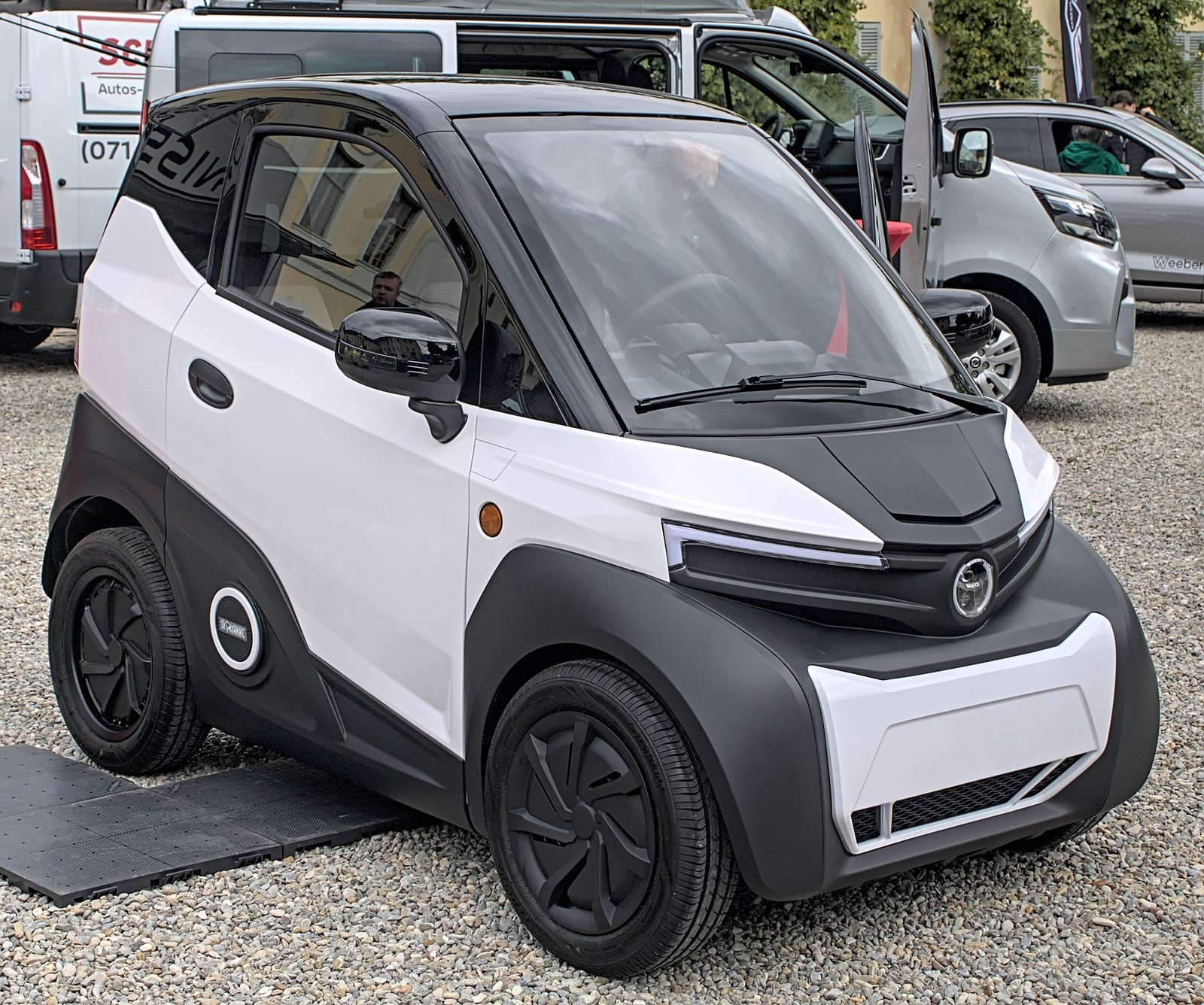
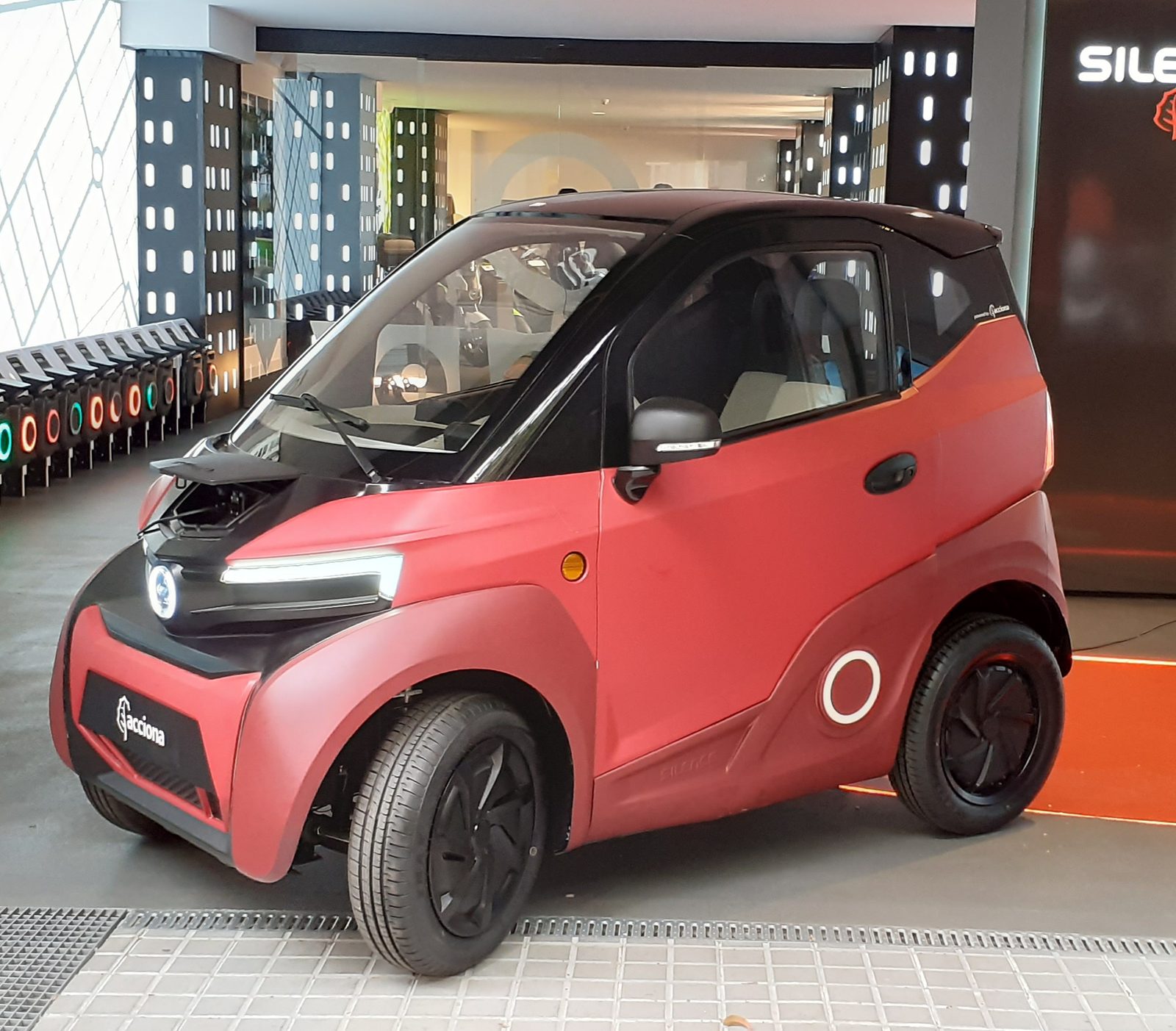
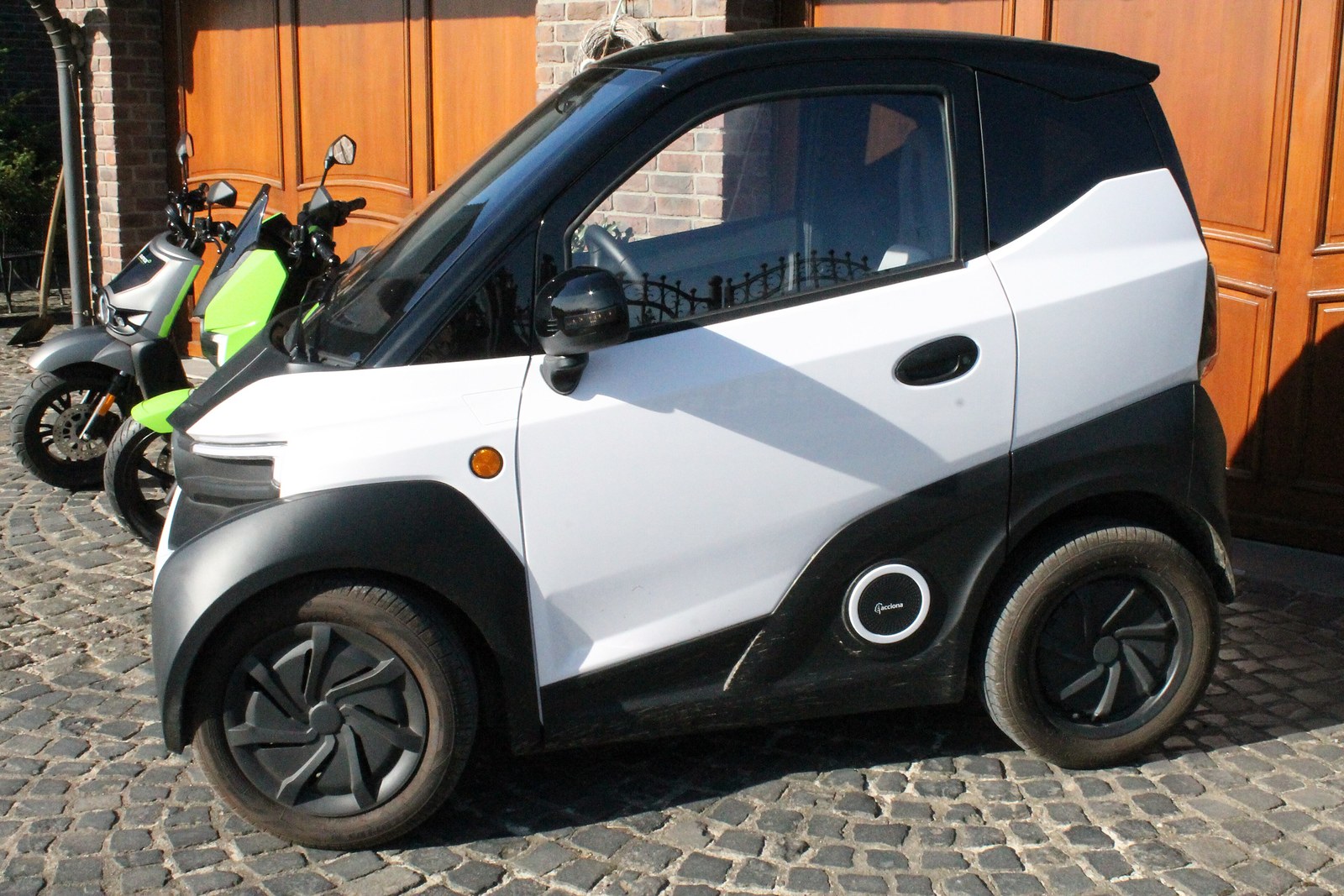
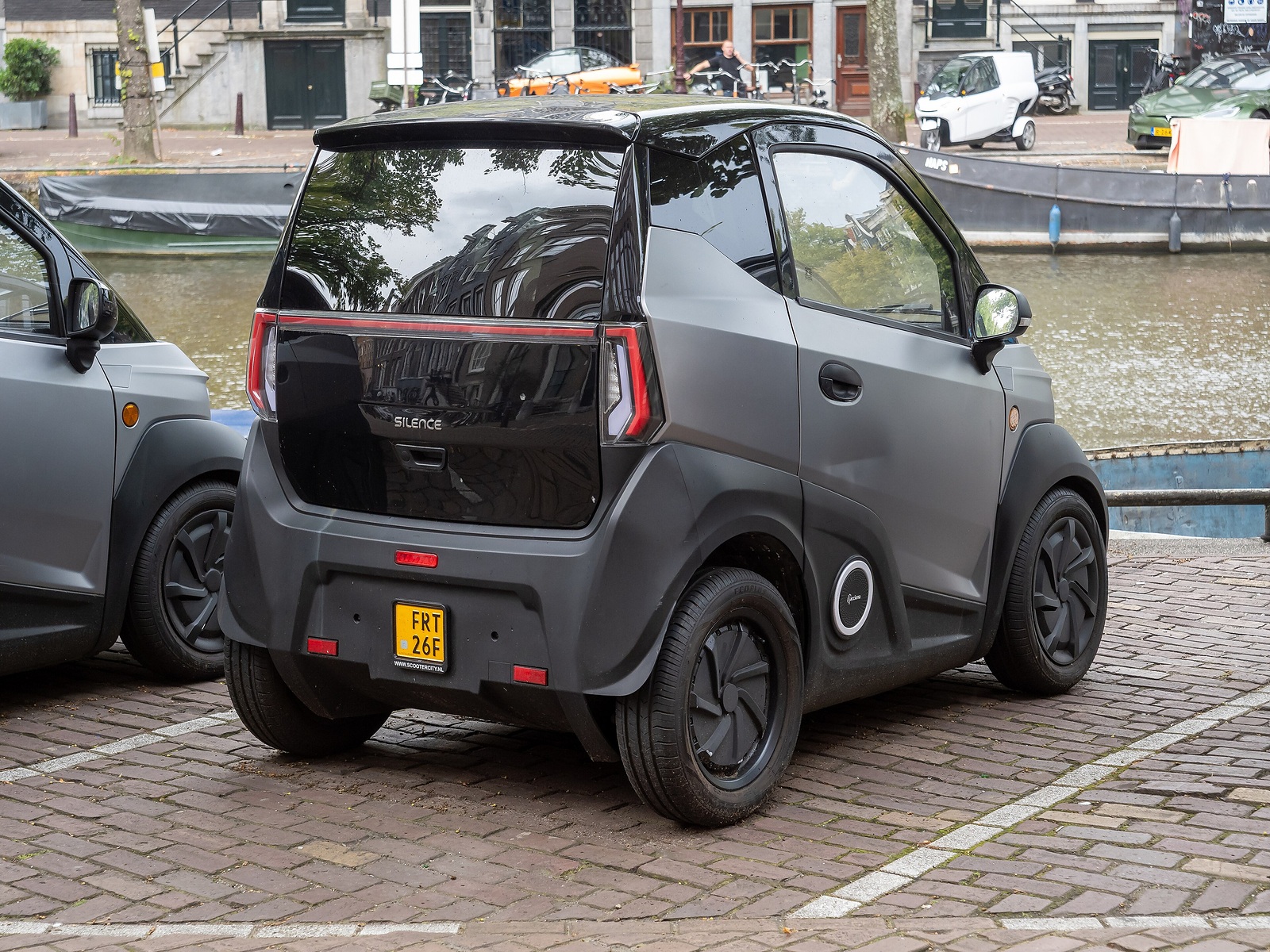
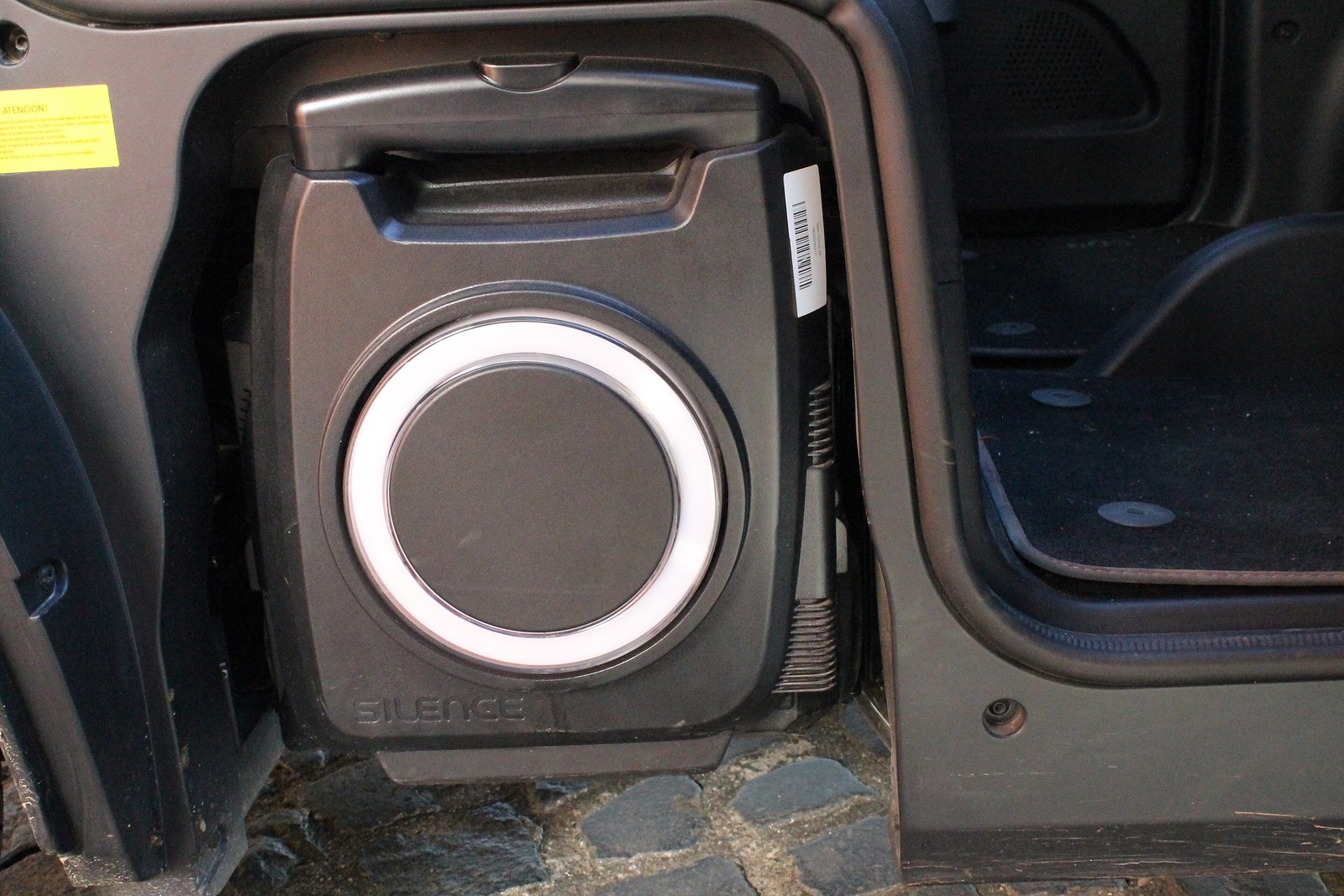
Silence, an electric-scooter maker in Barcelona, now Acciona Mobility, announced the S04 in October 2021 and began selling it in 2022, aiming at €7,500 without a battery and a battery subscription of €20 a month.source 2 It carries two 5.6 kWh batteries built like wheeled trolley cases, which can be pulled out and wheeled indoors to charge, or swapped. As a light quadricycle it has 6 kW and 45 km/h, as a heavy one 14 kW and 85 km/h (53 mph), and with both packs it runs up to 149–175 km. It is 2,330 mm (92 in) long and 1,560 mm wide, with a 310-litre boot.source 2
A Silence S04’s trolley battery being pulled out at the Geneva Motor Show in February 2024.Photo: Matti Blume, CC BY-SA 4.0, via Wikimedia Commons
11
Kilow La Bagnole
2024– · a record on this page
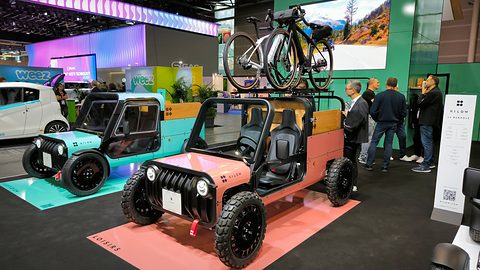
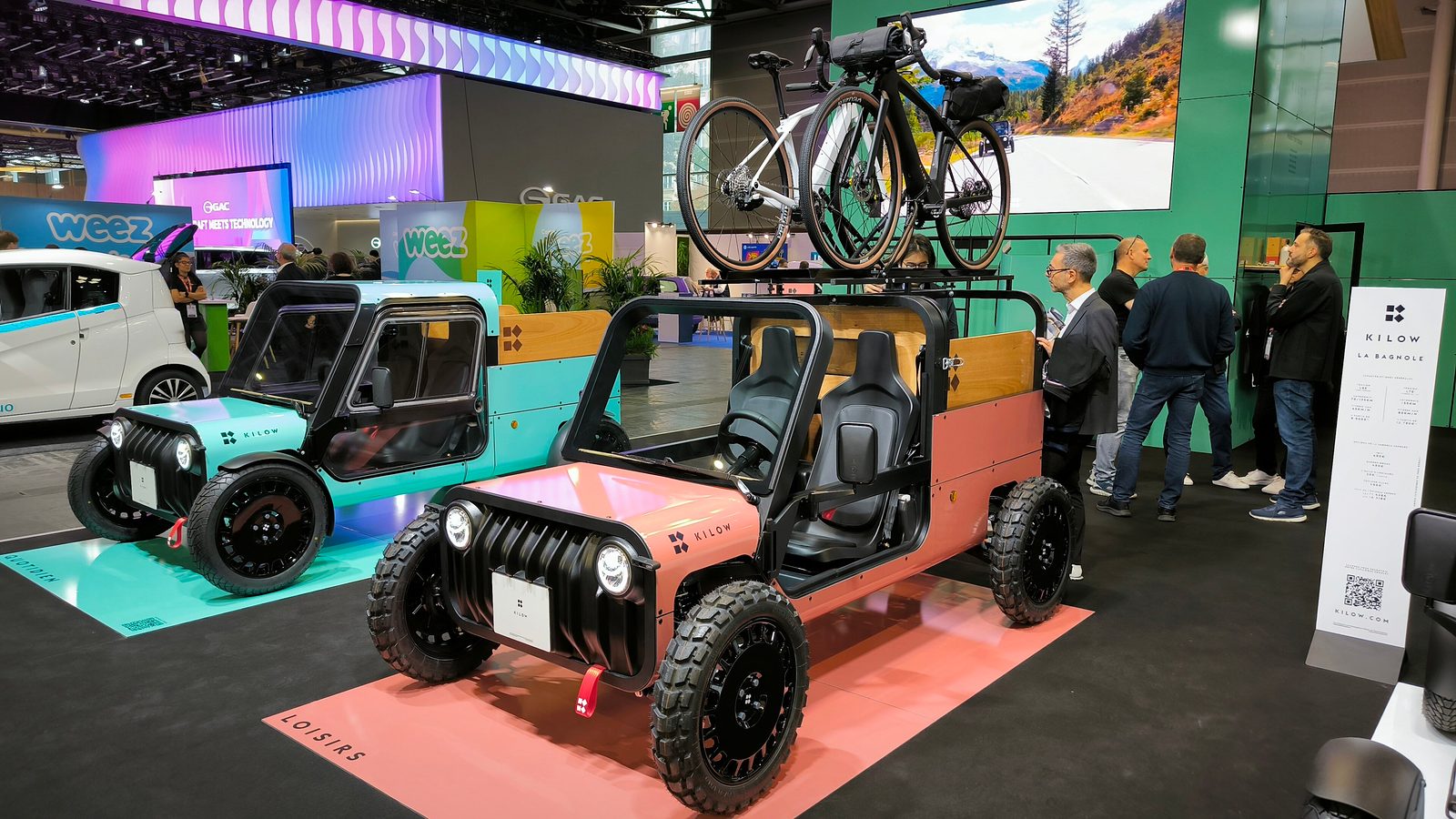
Kilow, part of Savoy International in the Haute-Savoie, showed La Bagnole, designed by Léo Choisel, at the Paris Motor Show of 2022, and brought three cars to the show of 2024.source 3 It is offered as a light quadricycle for 45 km/h or a heavy one for 80 km/h, with one or two 5.6 kWh batteries for 70 or 140 km, and weighs 283 kg (624 lb).source 3
12
Squad Solar
2024– · a record on this page
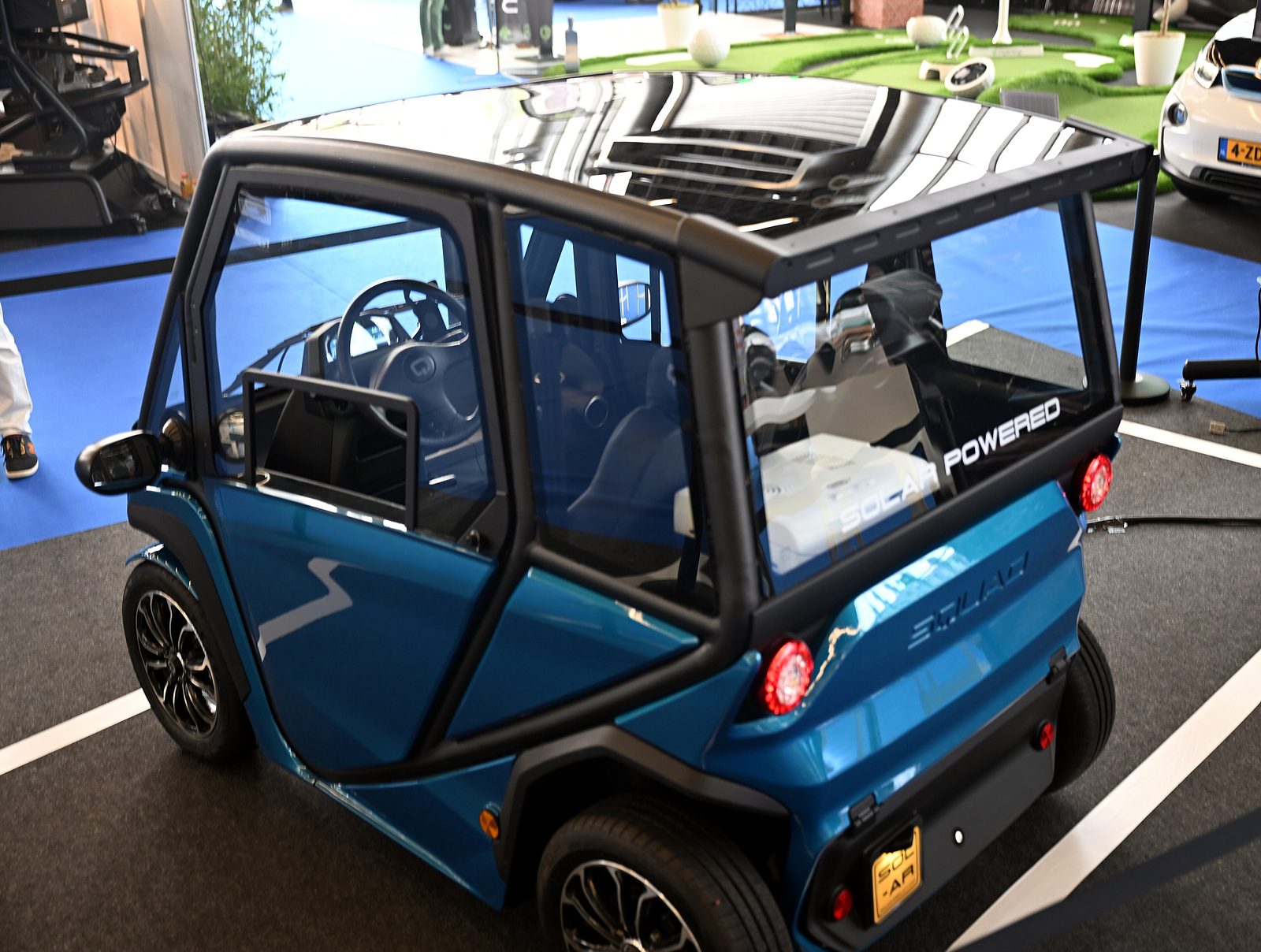
Squad Mobility of the Netherlands was founded by Robert Hoevers and Chris Klok, both formerly of Lightyear. Their Squad Solar, announced in 2019, is a two-seater 2 m (6 ft 7 in) long with a solar roof that adds about 21–30 km a day, two 2 kW motors at the back and four swappable packs of 1.6 kWh, at about 270 kg; it is offered for 45 km/h or 70 km/h, from €6,250.source 13 Production was first promised for 2021 and has been put off again and again; the maker’s website now says 2026.source 13
We are seeing a tremendous interest from the USA, specifically for markets such as sharing platforms, gated communities, campuses, (seaside) resorts…
Robert Hoevers, co-founder of Squad, as quoted by English Wikipedia from the press, about 2023.source 13
13
Pictures
More photographs, old and new
The car 18
1 A red Hotzenblitz with the GRP body, run open with its fabric doors and top removed, in Germany in June 2011.
2 The Kilow La Bagnole on its stand at the Paris Motor Show, France, in October 2024.
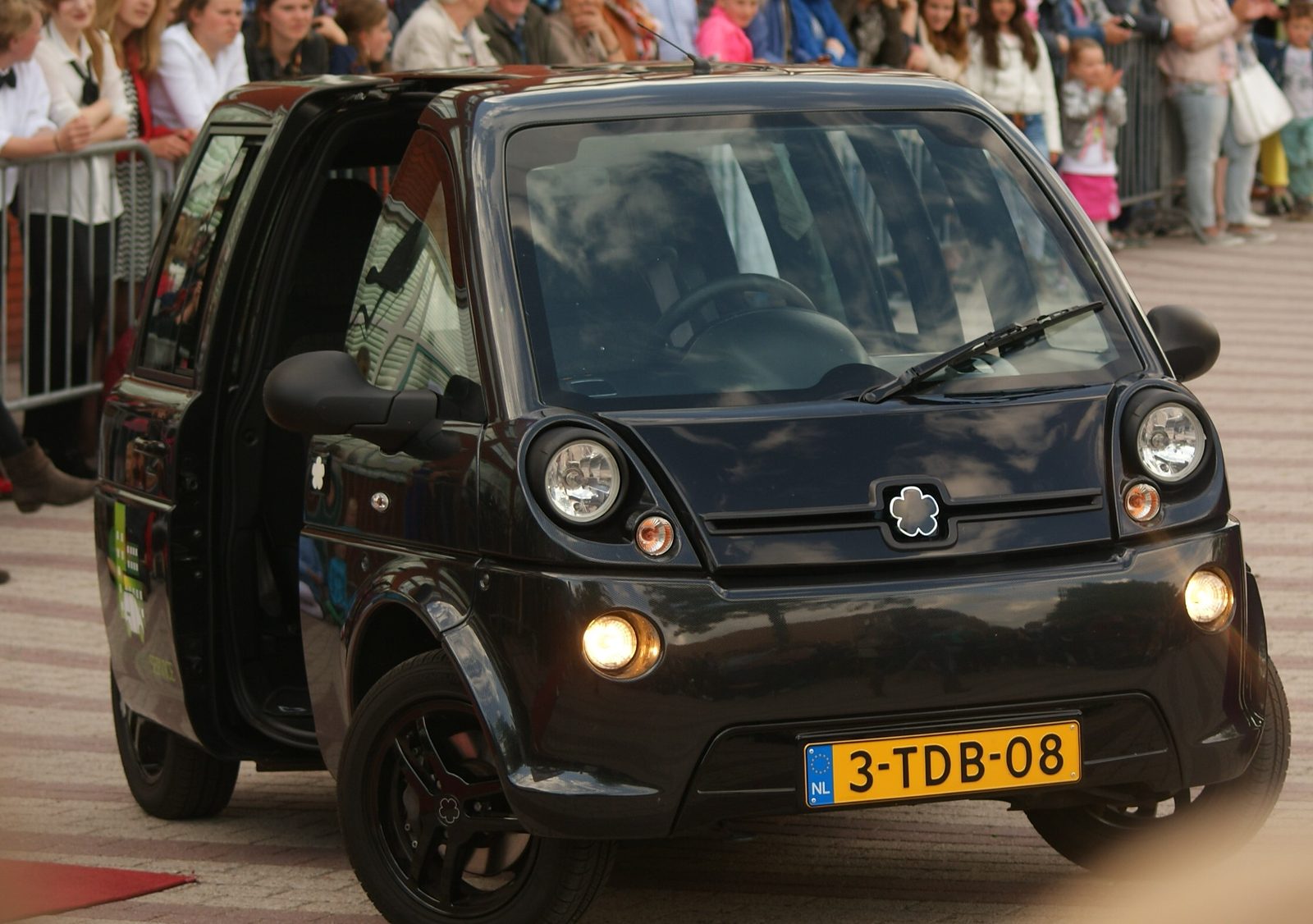
3 A black 2014 Mia electric at a school event in Veenendaal, Netherlands, in June 2015.
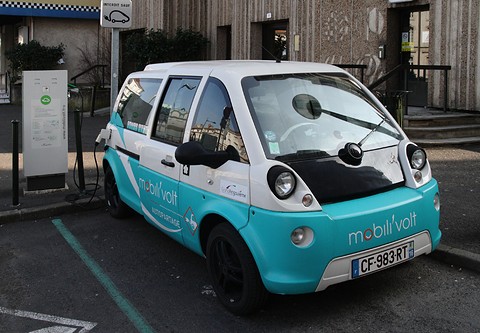
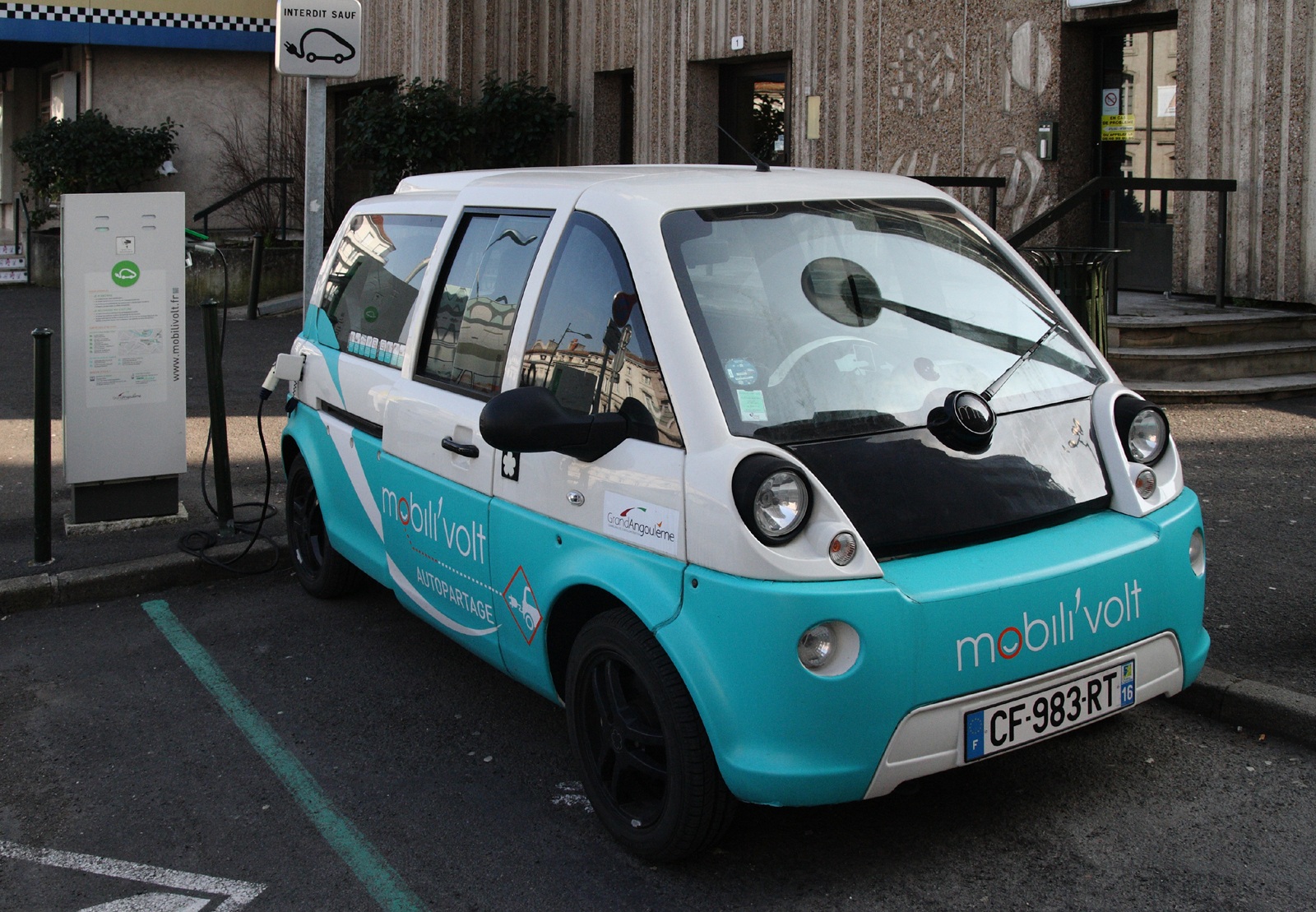
4 A turquoise and white Mobilivolt car-share Mia electric in Angoulême, France, in February 2015.
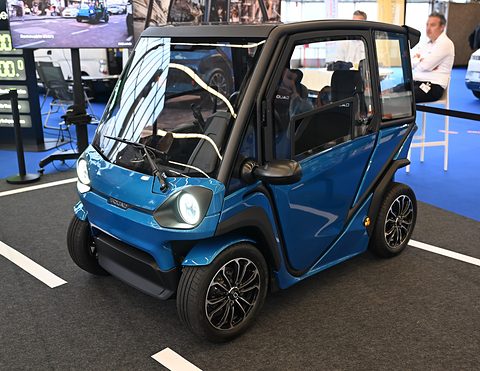
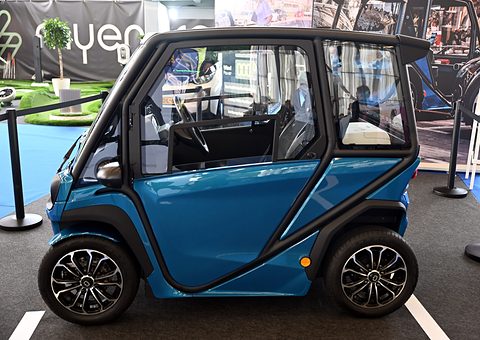
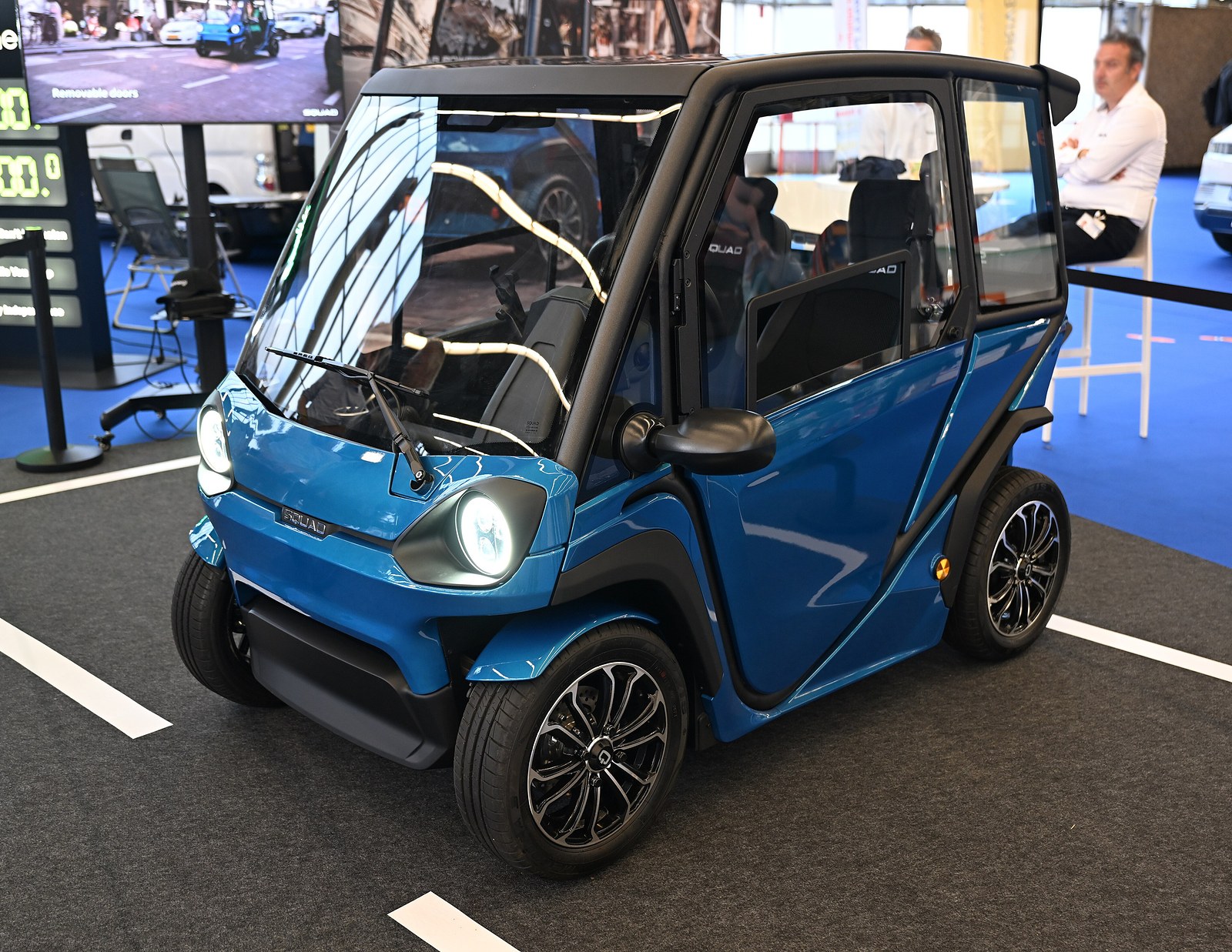
5 The Squad Solar City Car from the front three-quarter at Fully Charged Live, Amsterdam, Netherlands, in May 2022.
13 more picturesFewer pictures
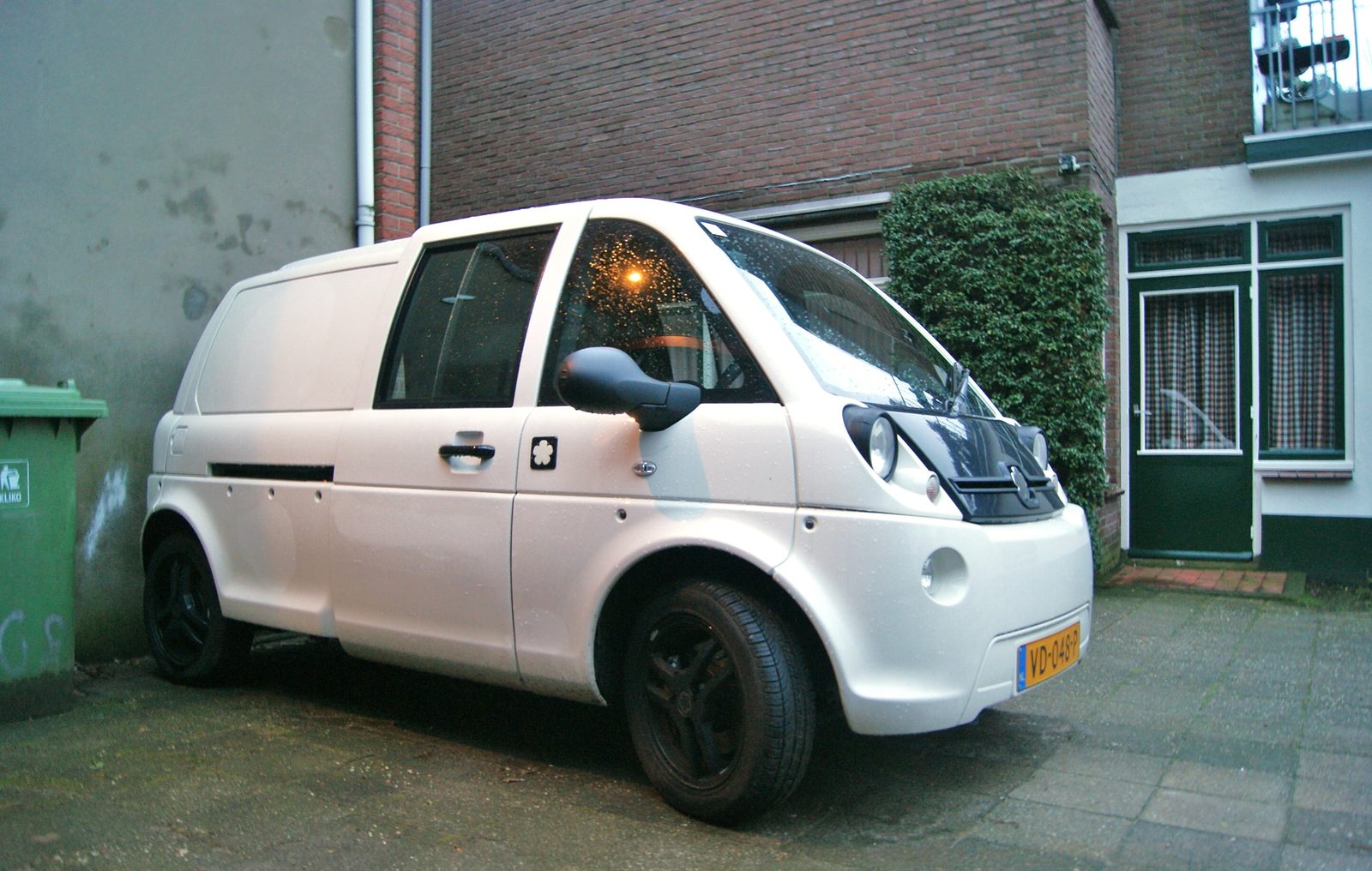
6 A white Mia electric van in profile, showing its sliding door, in Lunteren, Netherlands, in February 2014.
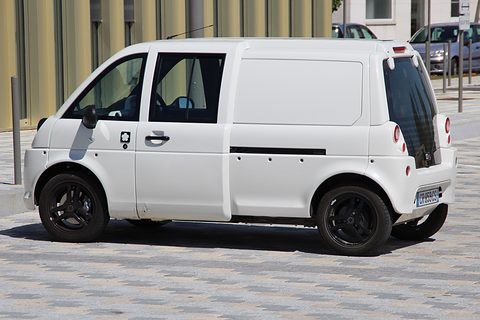
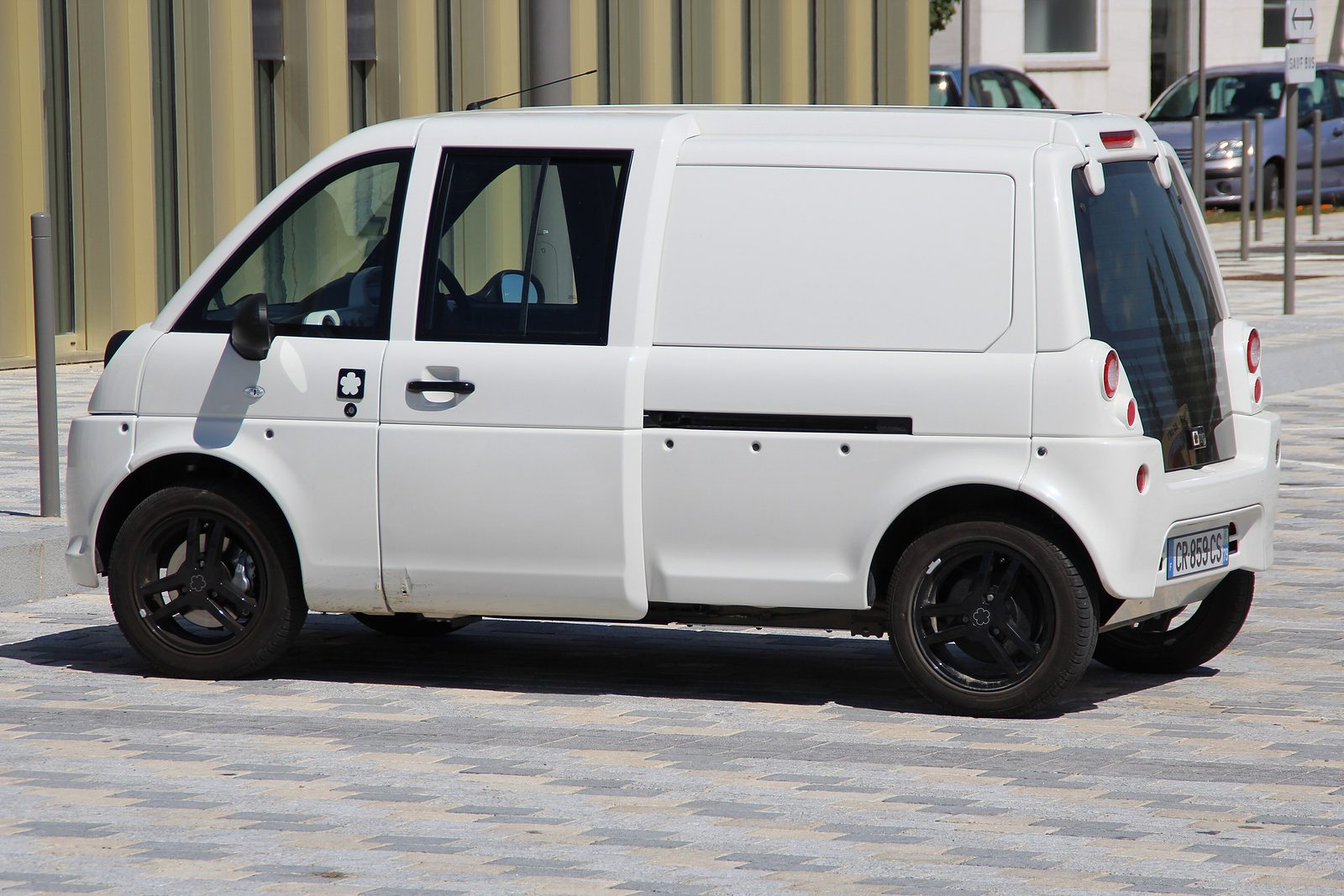
7 A white Mia U van in profile, showing its sliding door, in Saclay, France, in August 2013.
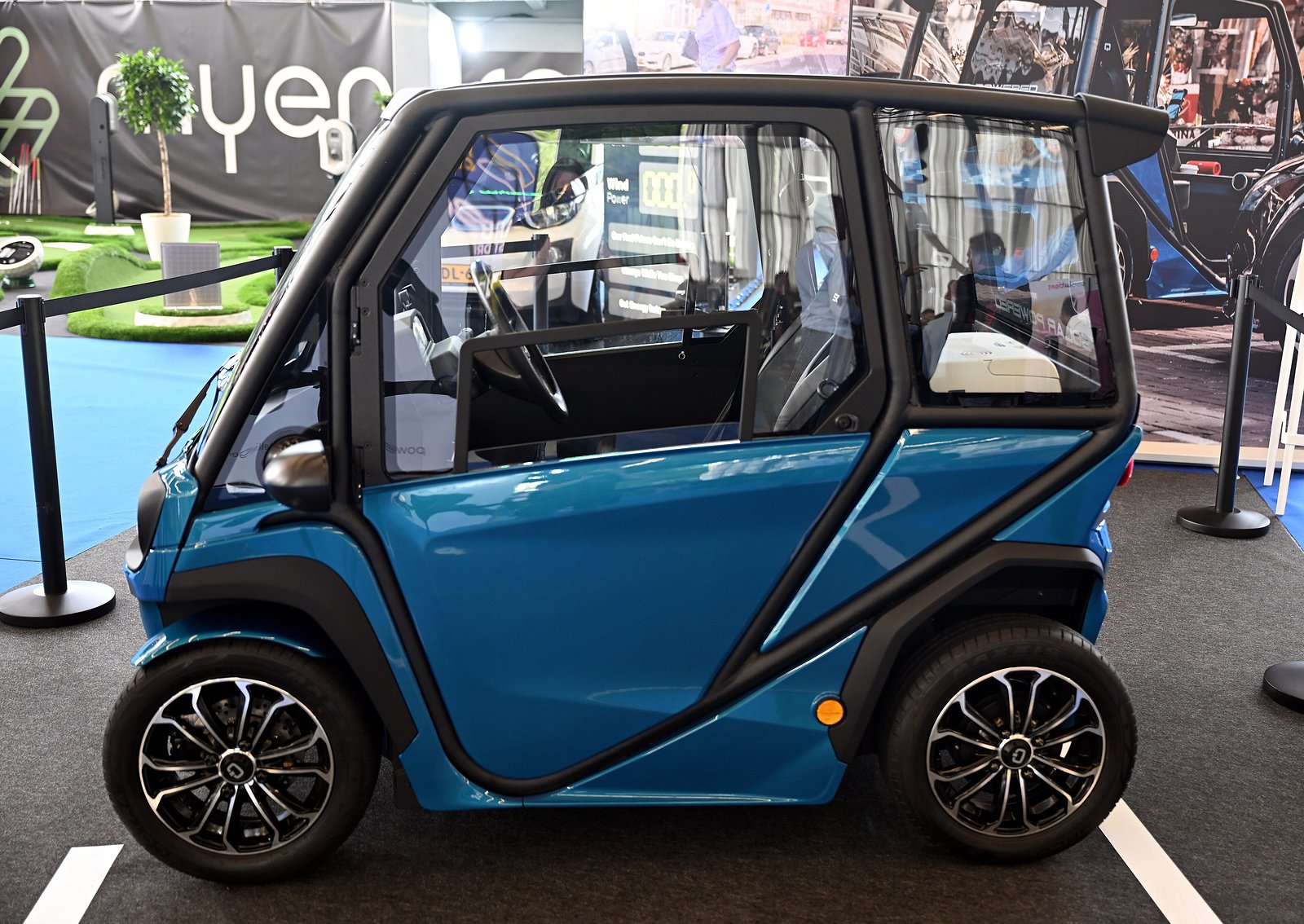
8 The Squad Solar City Car in profile at Fully Charged Live, Amsterdam, Netherlands, in May 2022.
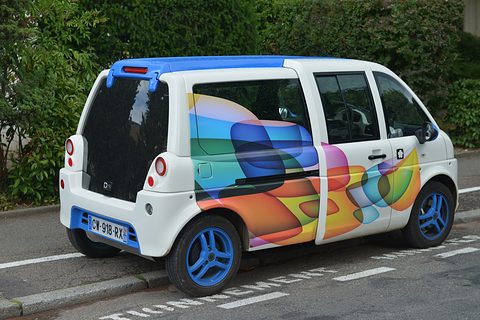
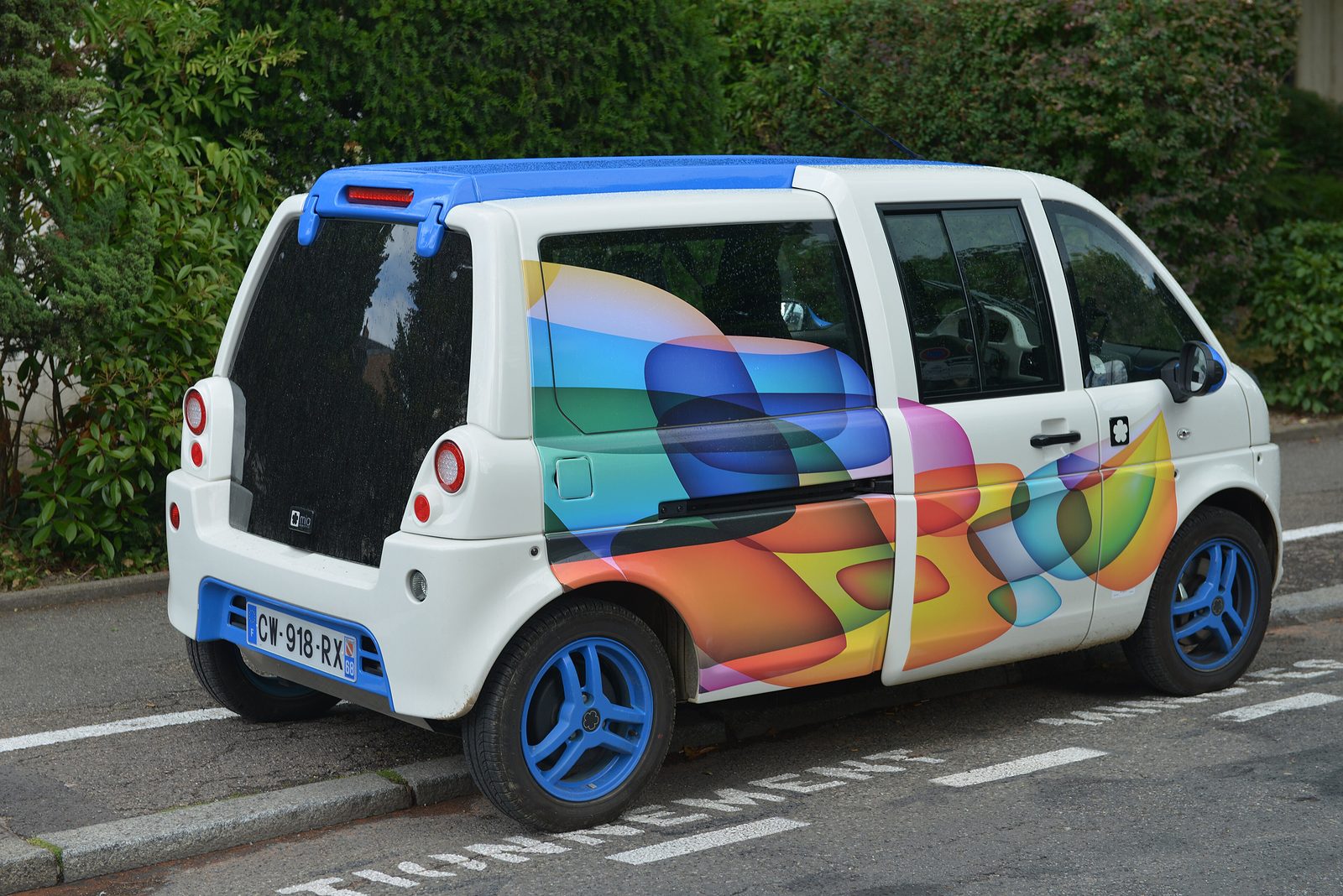
9 A Mia electric in a colourful art livery in Colmar, France, in June 2014.
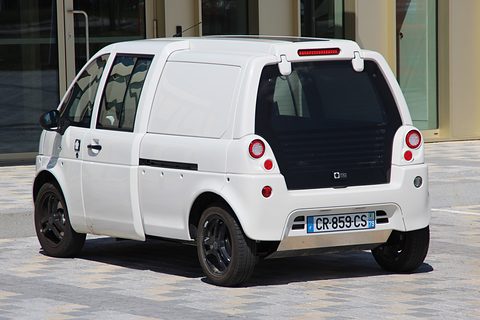
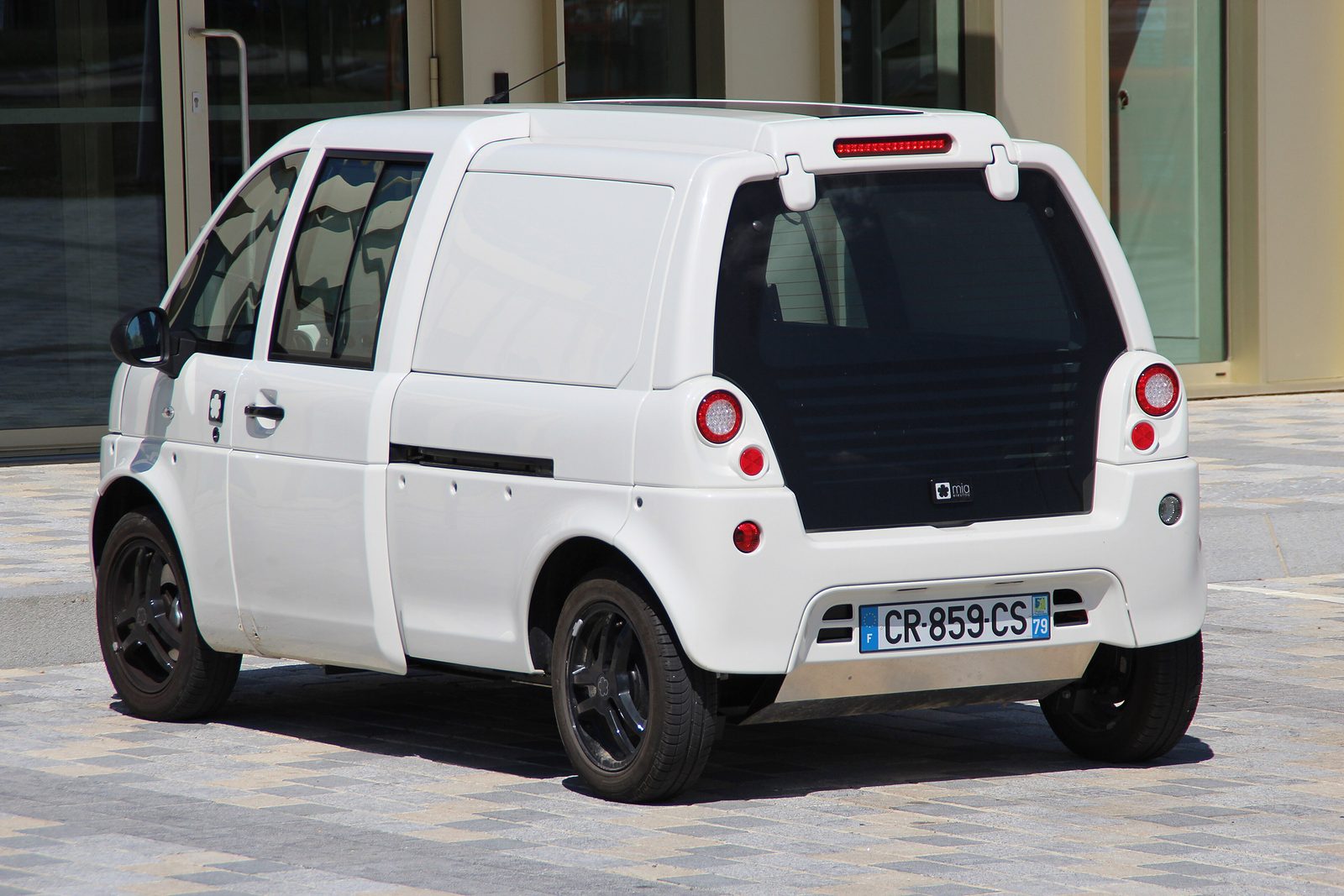
10 A white Mia U van from the rear three-quarter in Saclay, France, in August 2013.
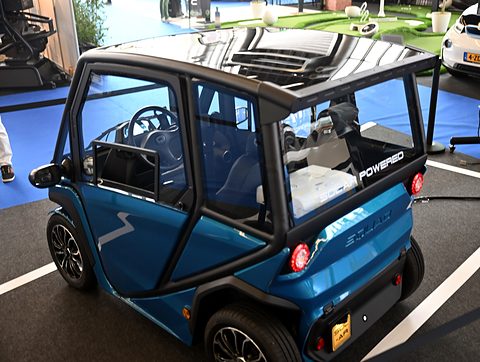
11 The Squad Solar City Car with its solar-panel roof at Fully Charged Live, Amsterdam, Netherlands, in May 2022.
12 A yellow Town Life Ginevra parked in Todi, Umbria, Italy, in 2007.
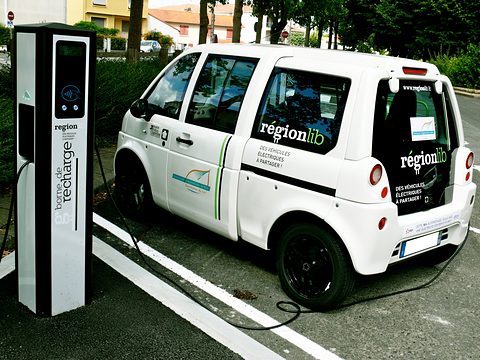
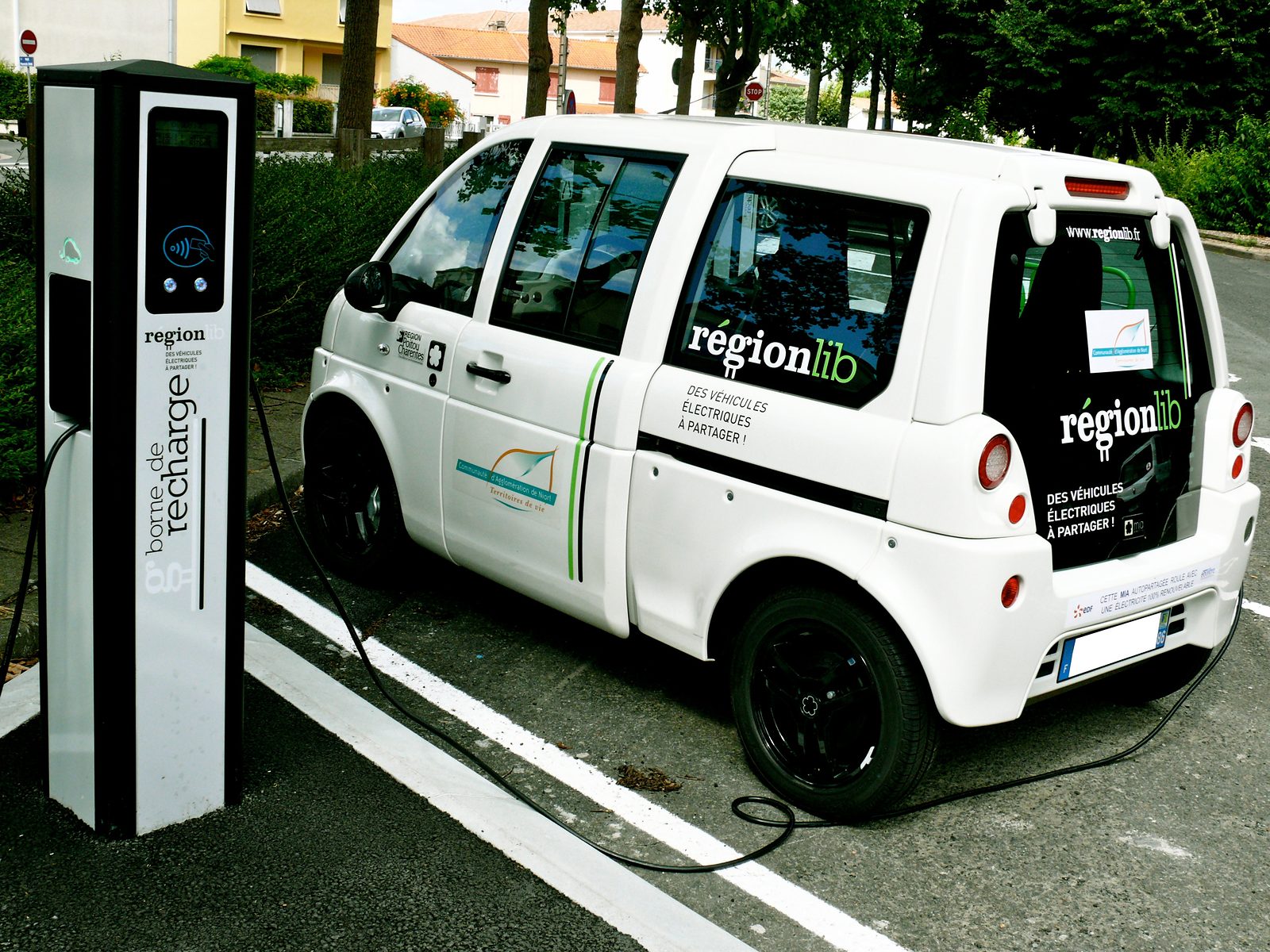
13 A white car-share Mia electric in ‘régionlib’ livery at a charging post in Niort, France, in July 2013.
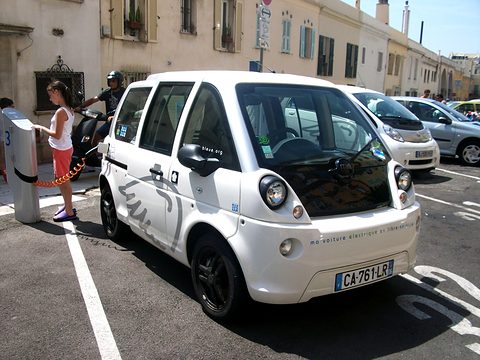
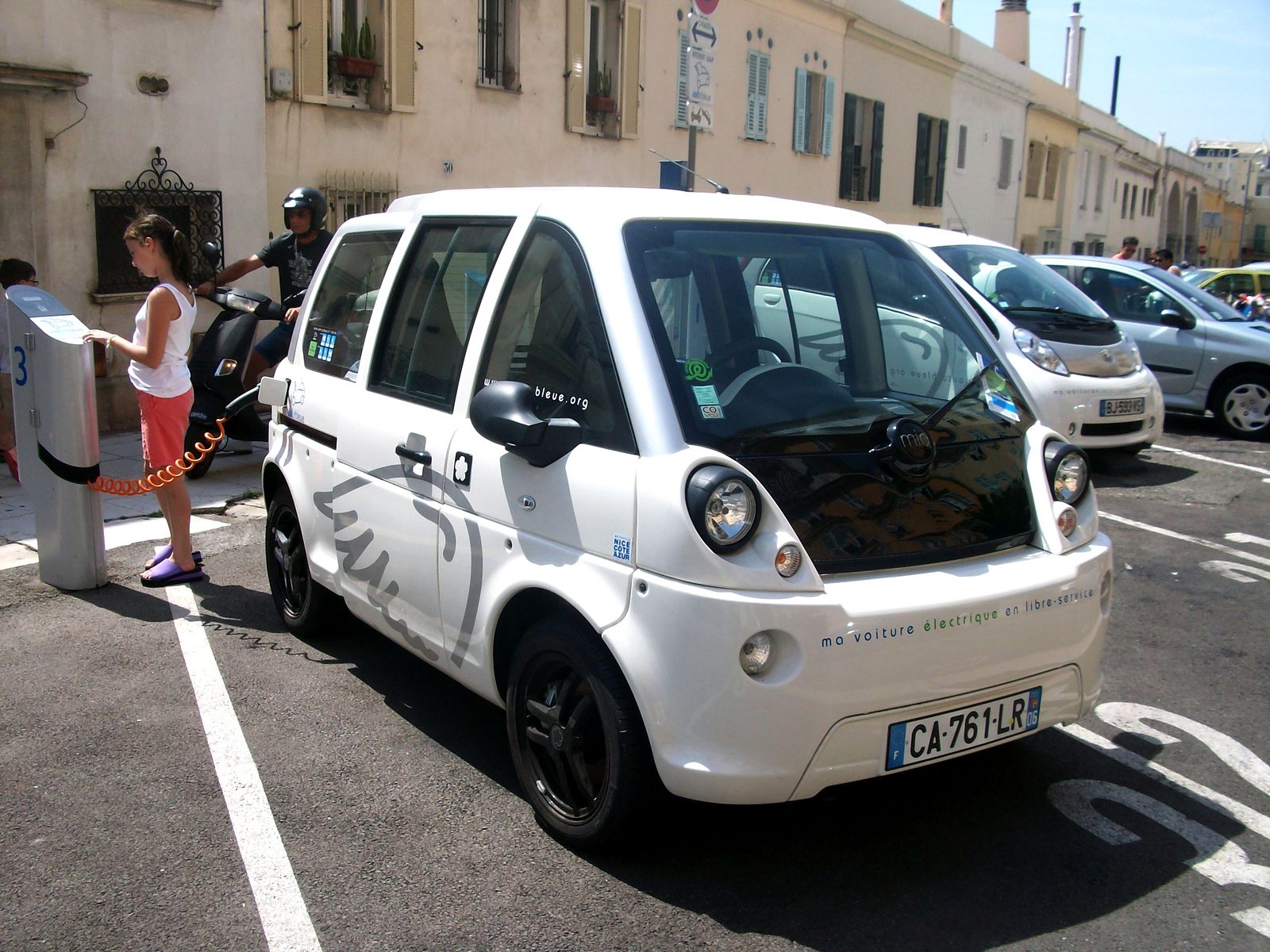
14 A white Mia electric charging at a street post in Nice, France, in August 2012.
15 A red Hotzenblitz at the Classic-Gala, Schwetzingen, Germany, in September 2021.
16 The dark ‘Miaparis’ special edition of the Mia at the Paris Motor Show, France, in September 2012.
17 A blue Town Life Ginevra in the Ferruccio Lamborghini Museum, Italy, in June 2022.
18 A silver Town Life Ginevra with its bonnet open in the Ferruccio Lamborghini Museum, Italy, in June 2022.
The car: Estrima Birò 4
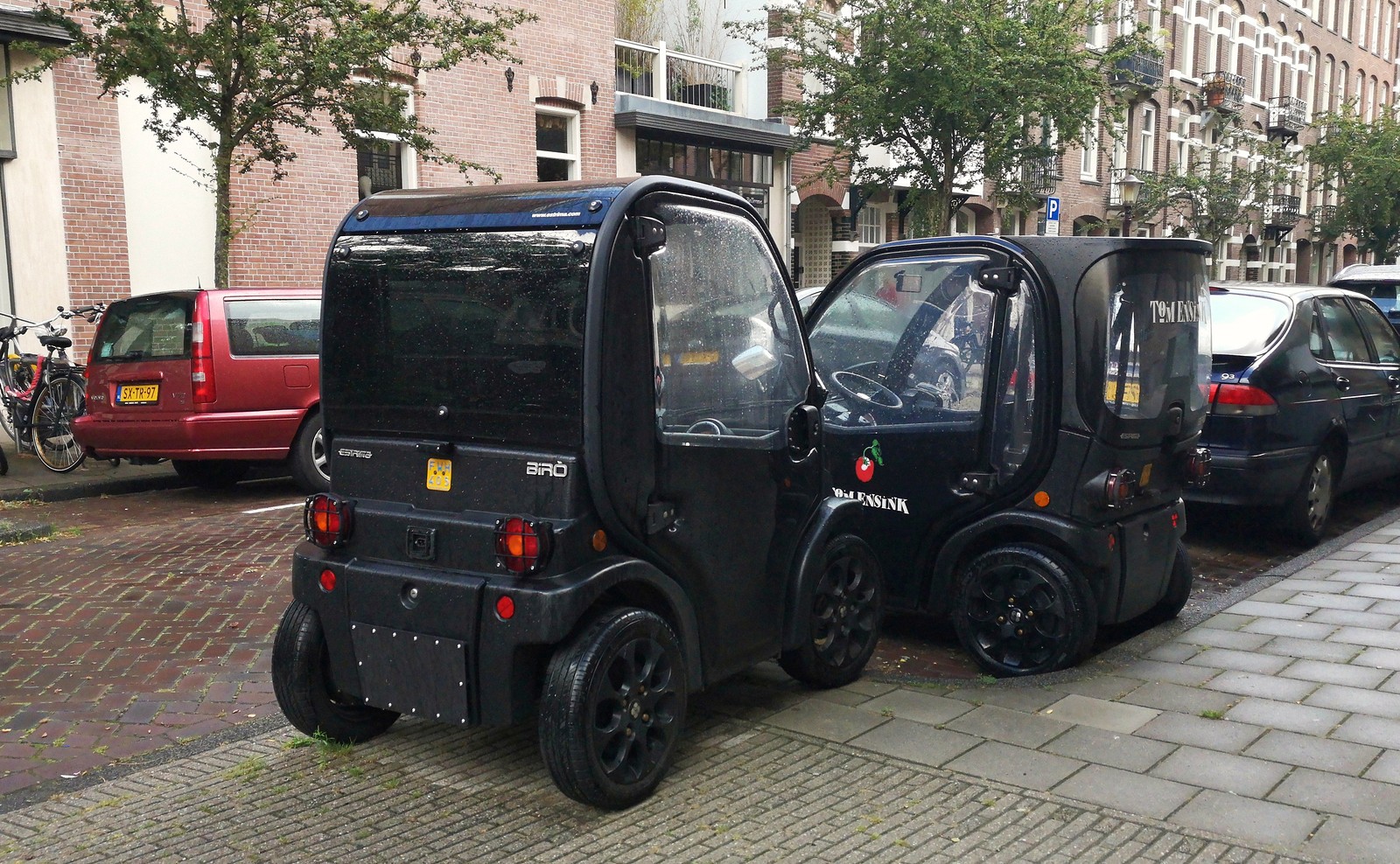
19 Two black Estrima Birò quadricycles parked in a city street in August 2019.
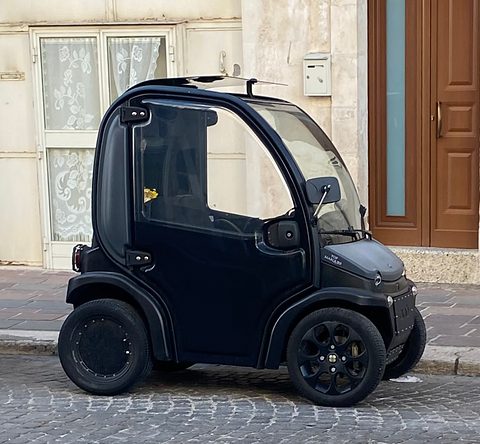
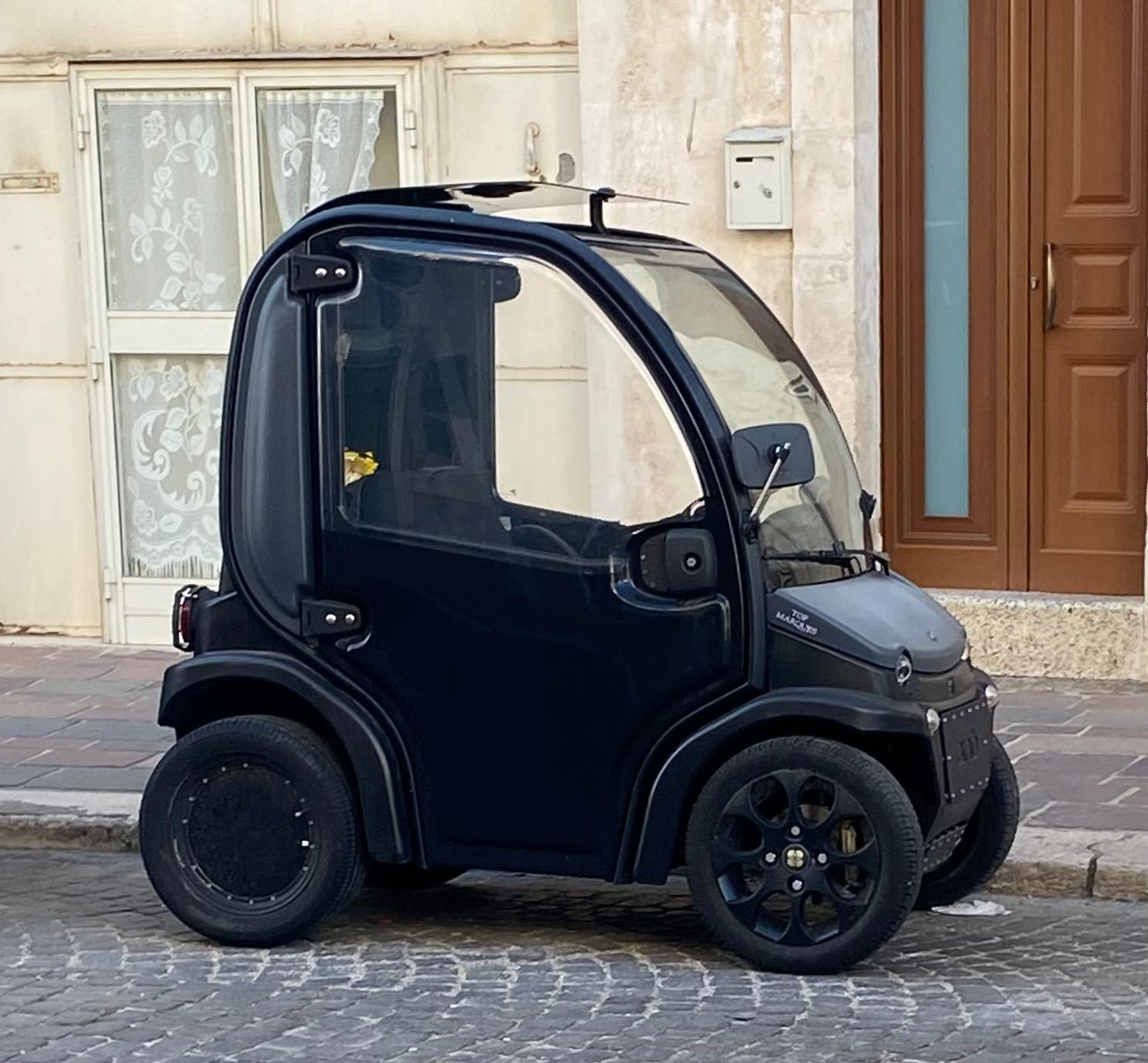
20 A black Estrima Birò parked by a doorway in Ostuni, Italy, in August 2023.
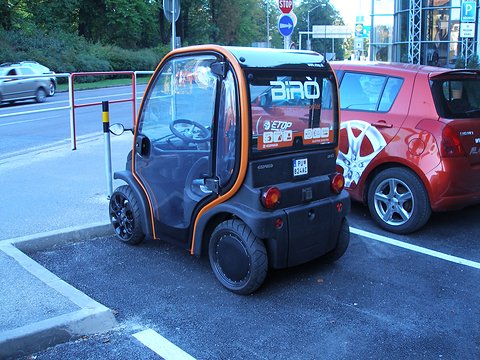
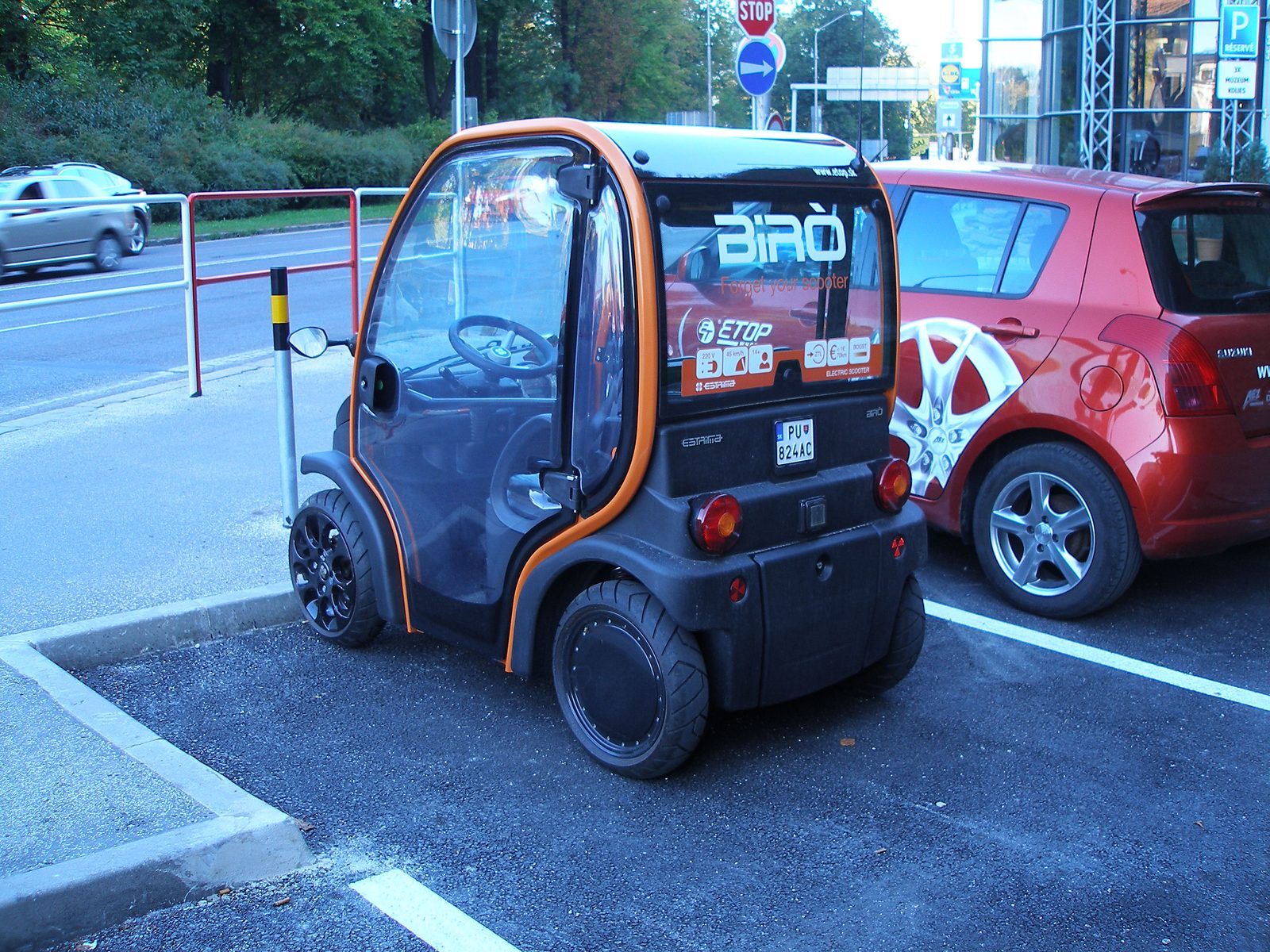
21 An Estrima Birò parked at the car museum in Trenčín, Slovakia, in October 2012.
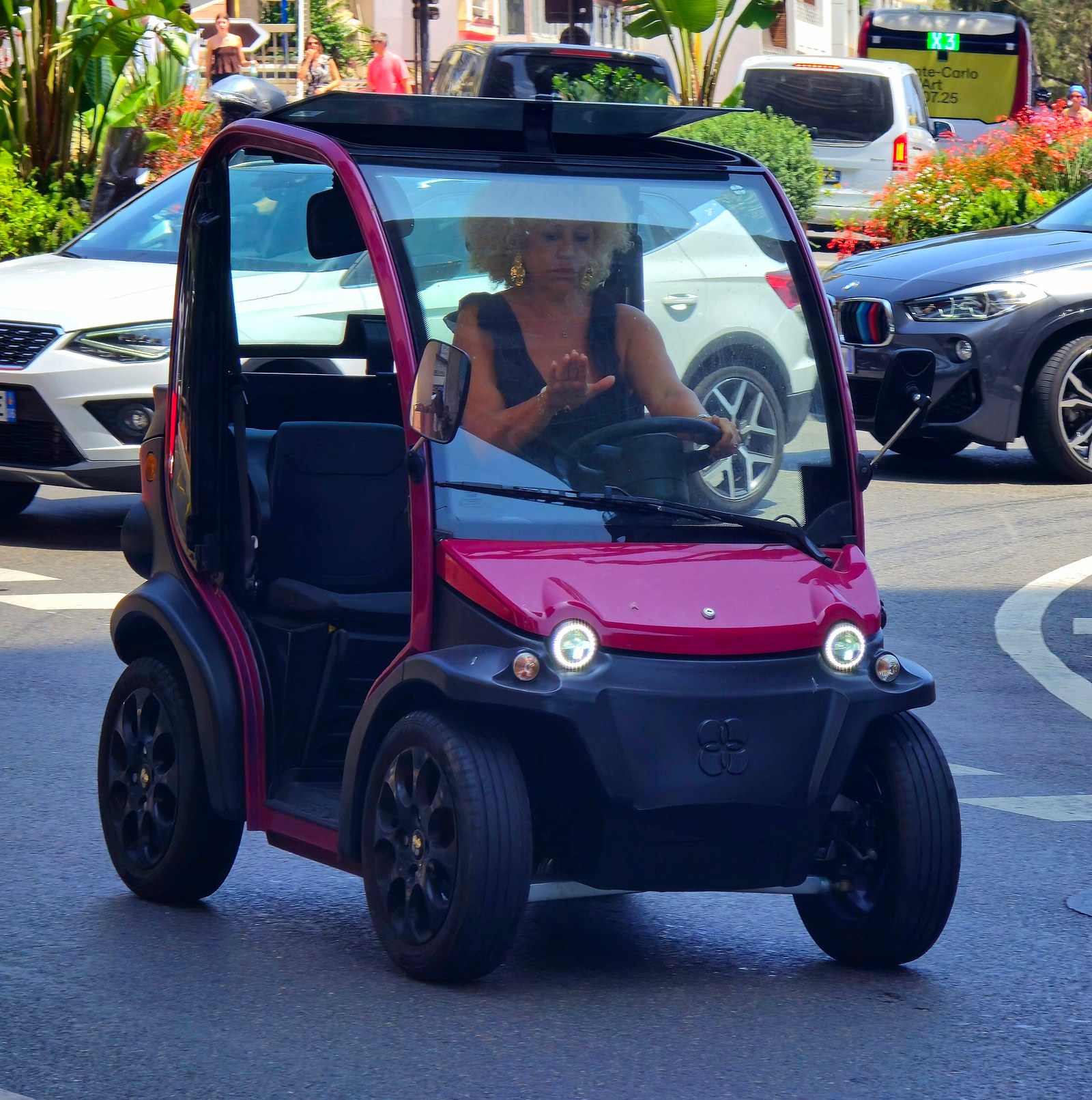
22 A red and black Estrima Birò head-on with its driver, photographed in June 2025.
The car: Silence S04 5
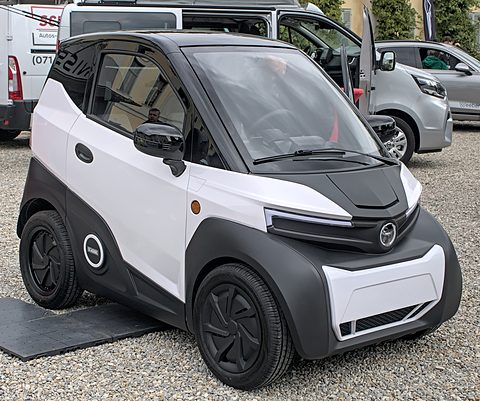
23 A white and black Silence S04 at the Automesse Ludwigsburg, Germany, in September 2024.
24 A red Silence S04 on show in Barcelona, Spain, in April 2022.
25 A white and black Silence S04 in profile, with Silence scooters behind, in Germany in September 2025.
26 A grey Silence S04 parked by a canal in Amsterdam, Netherlands, in August 2025.
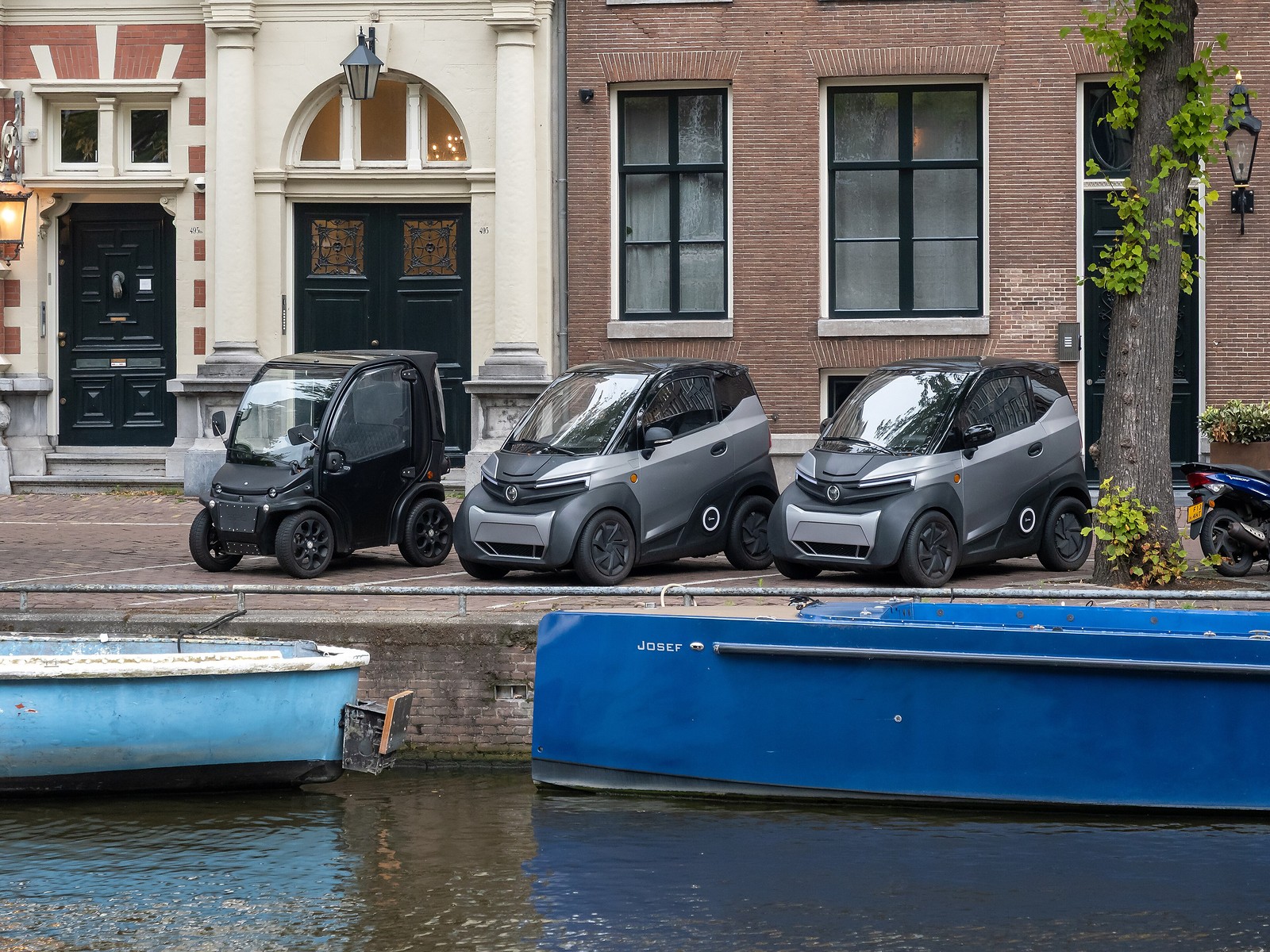
27 Three Silence S04s parked along the Keizersgracht, Amsterdam, Netherlands, in August 2025.
The car: XEV Yoyo 5
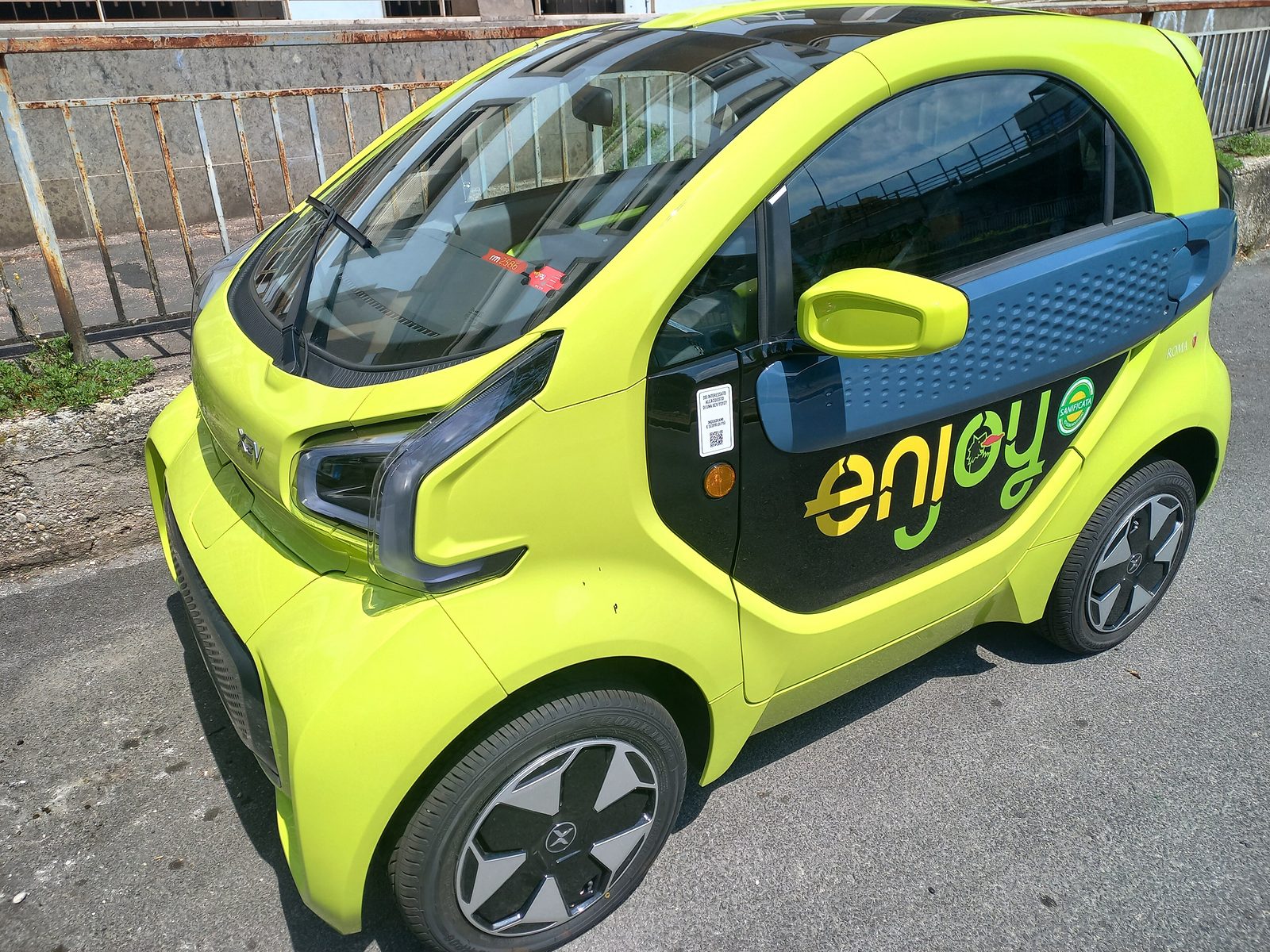
28 An Enjoy car-sharing XEV Yoyo in Rome, Italy, in July 2023.
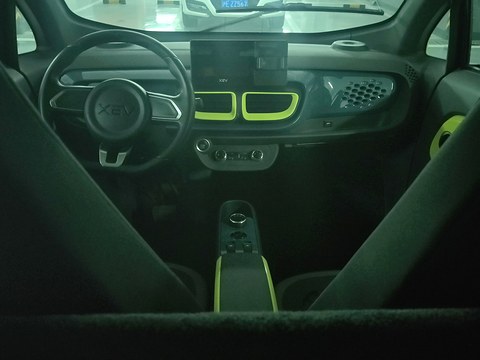
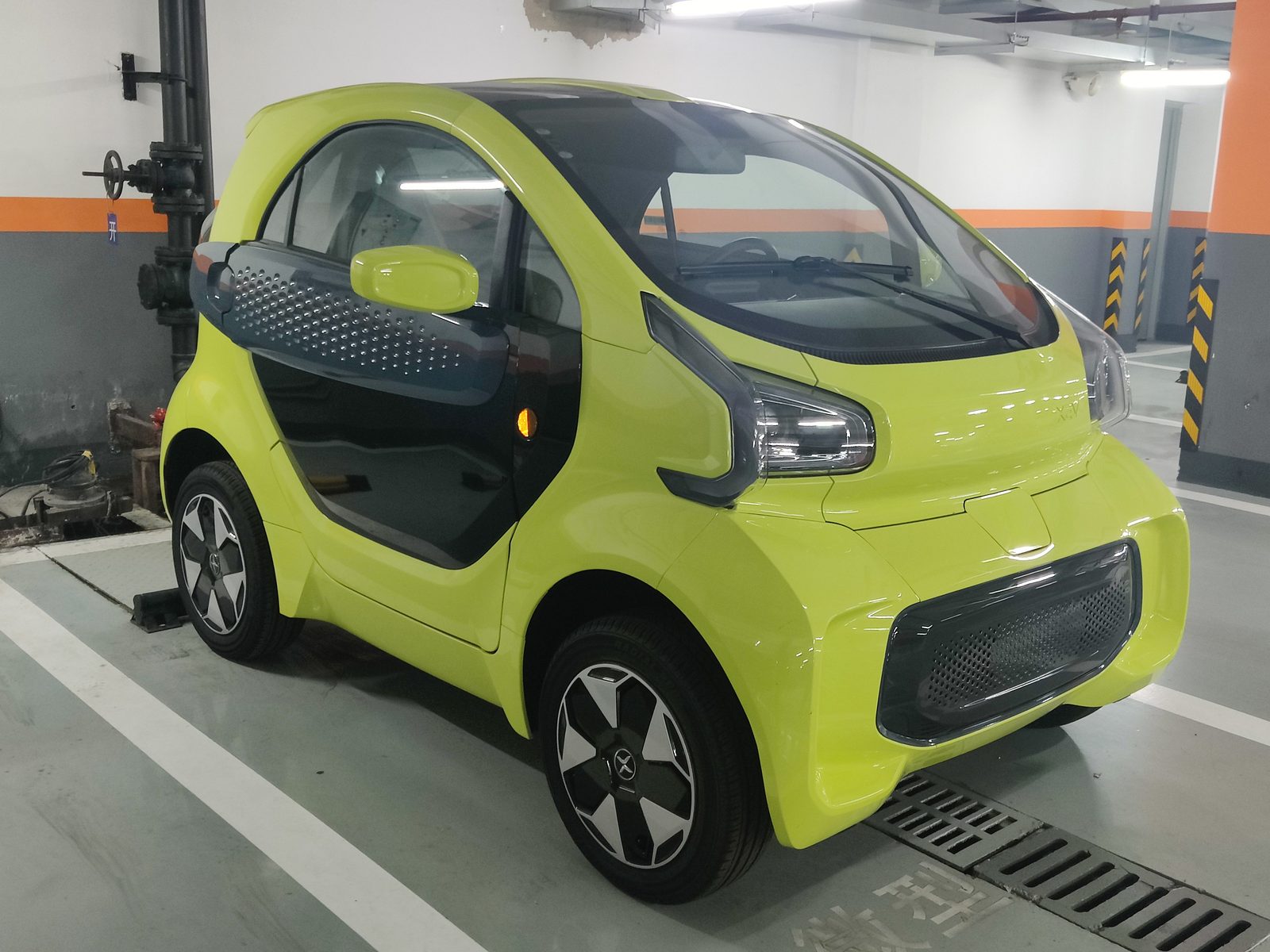
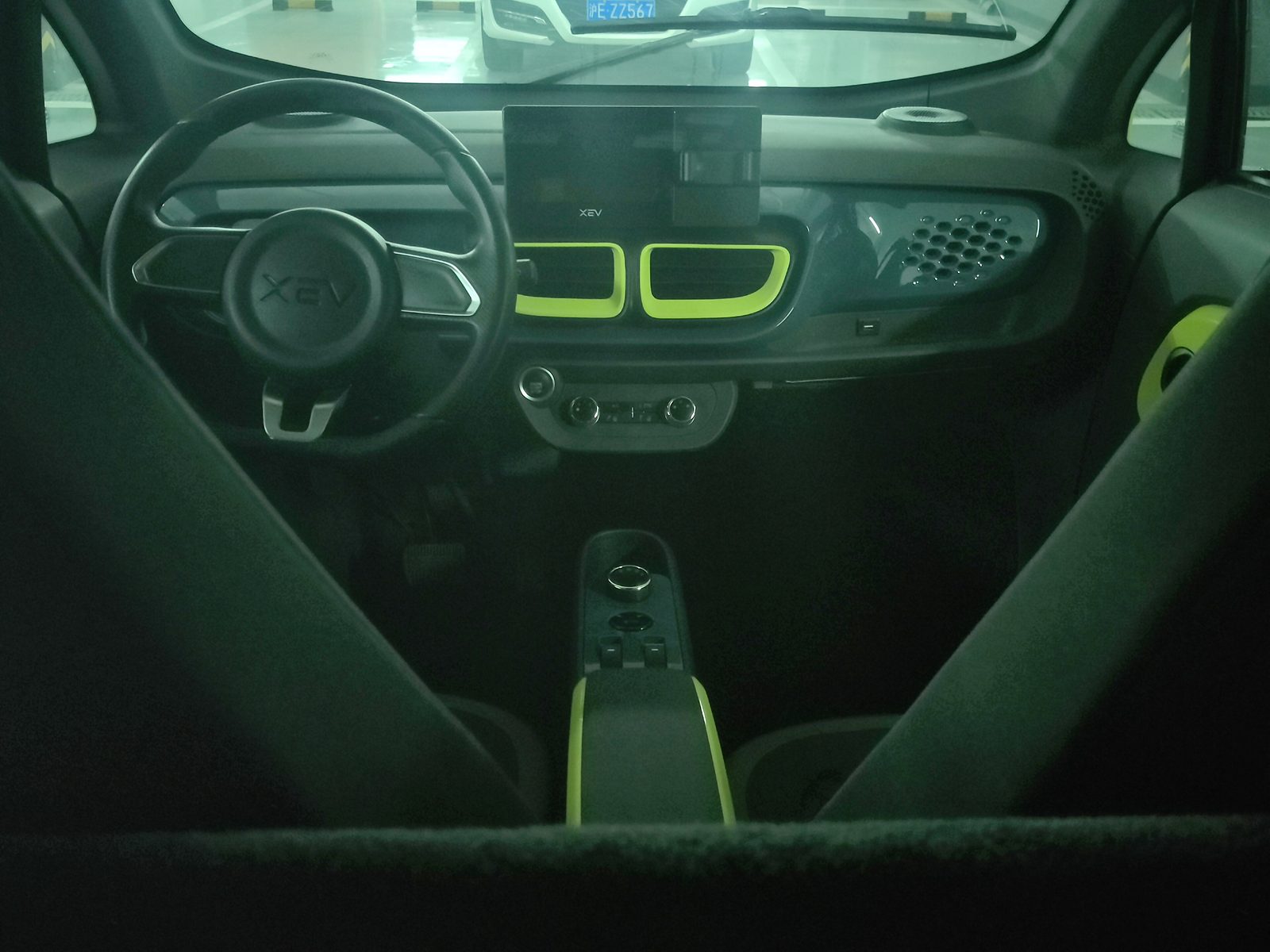
29 A lime-green XEV Yoyo in an underground car park in October 2022.
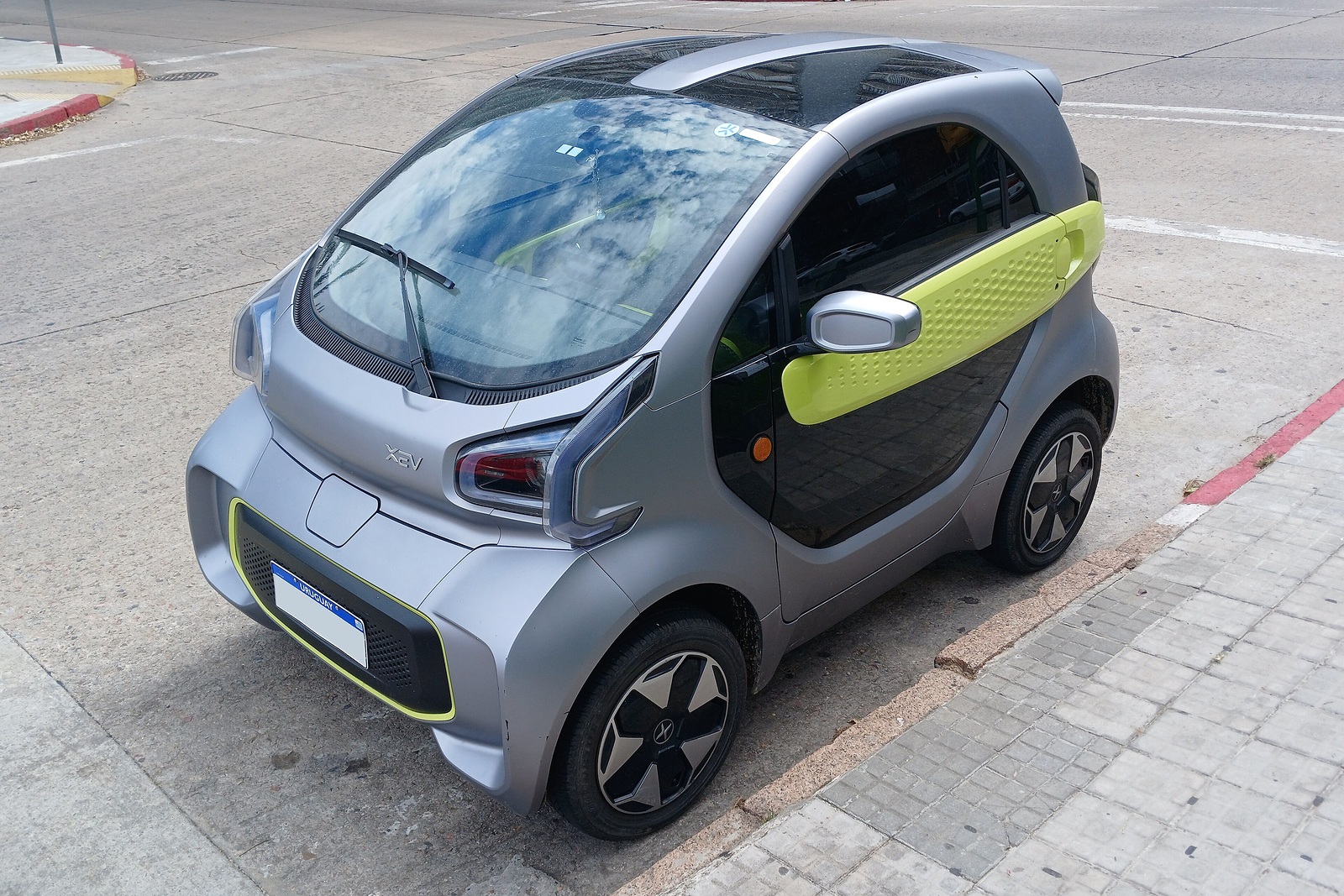
30 A silver and lime XEV Yoyo parked in Montevideo, Uruguay, in February 2025.
31 A grey XEV Yoyo at IAA Mobility, Munich, Germany, in September 2021.
32 A white XEV Yoyo at IAA Mobility, Munich, Germany, in September 2021.
Inside and details 7
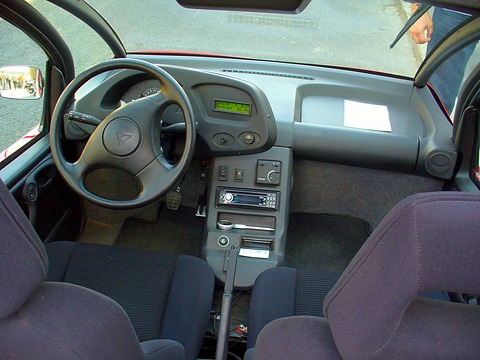
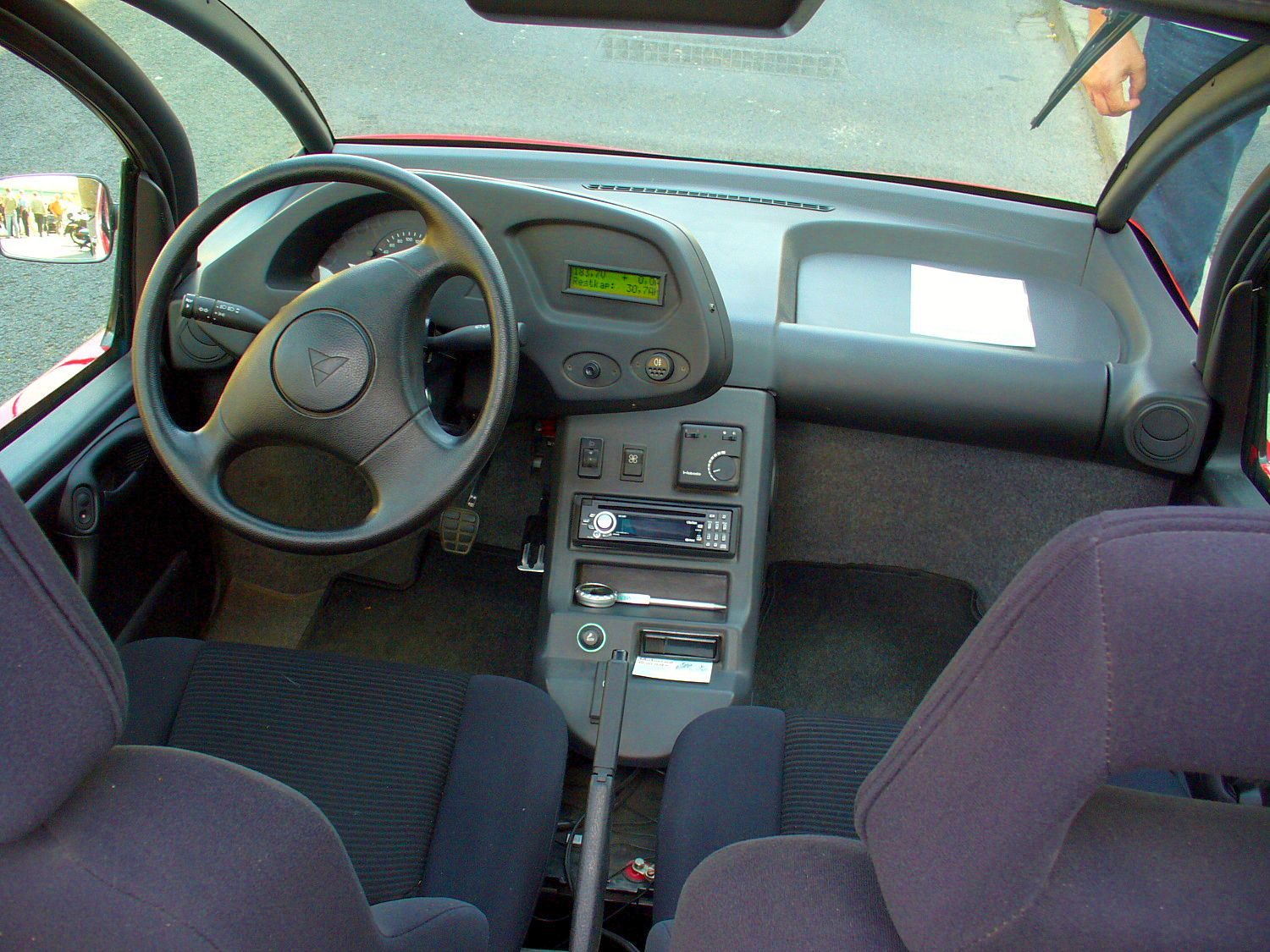
33 The dashboard, steering wheel and seats of a Hotzenblitz with doors, photographed in April 2007.
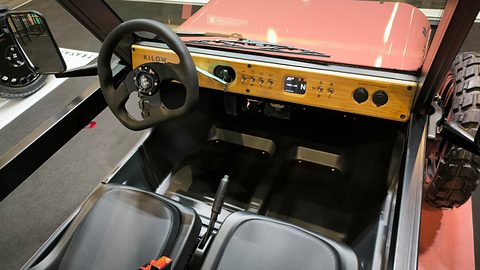
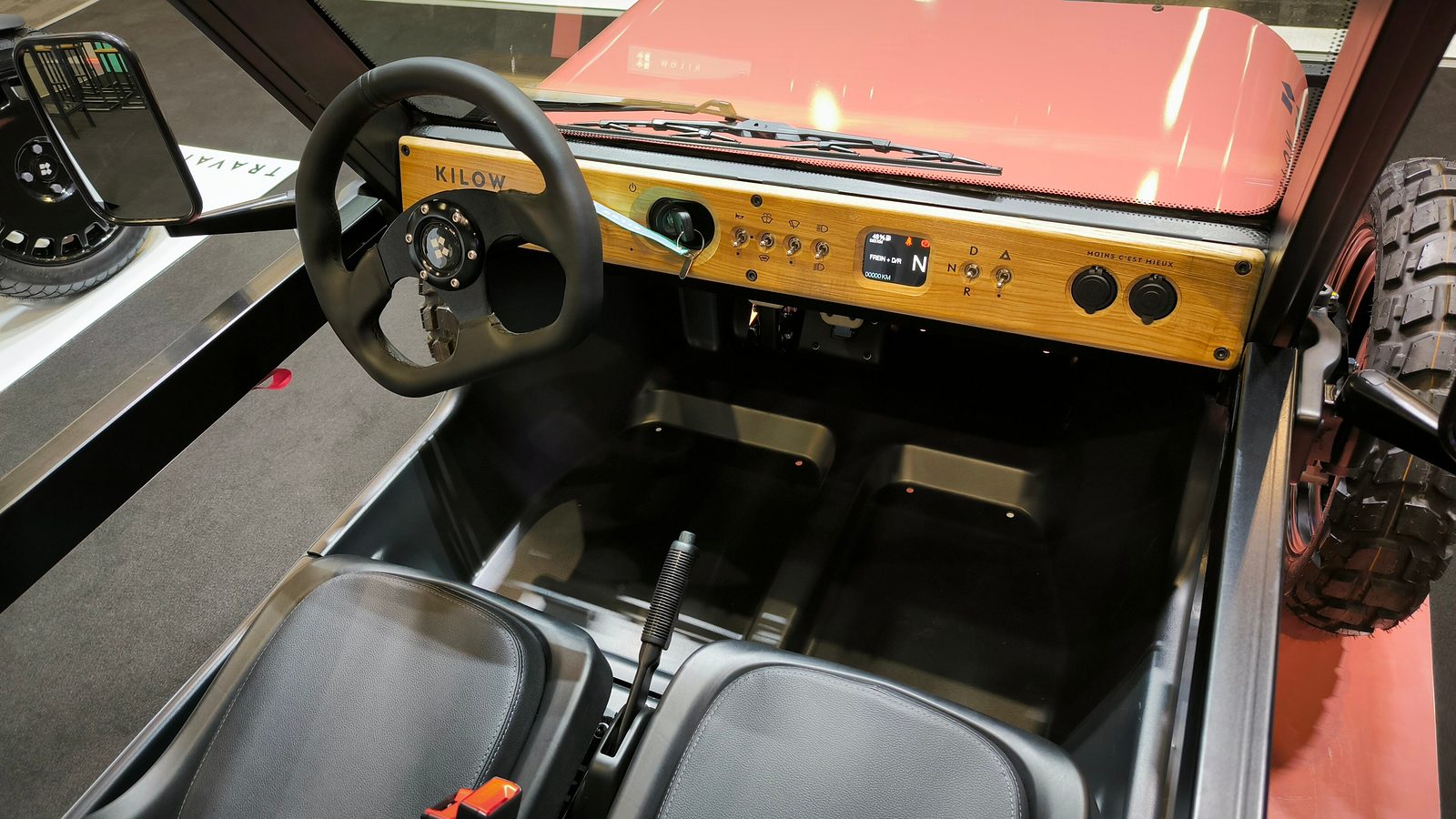
34 The cabin and simple dashboard of a Kilow La Bagnole at the Paris Motor Show, France, in October 2024.
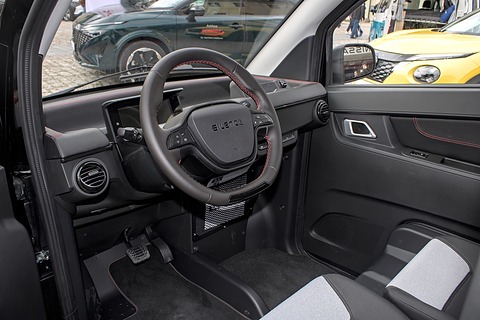
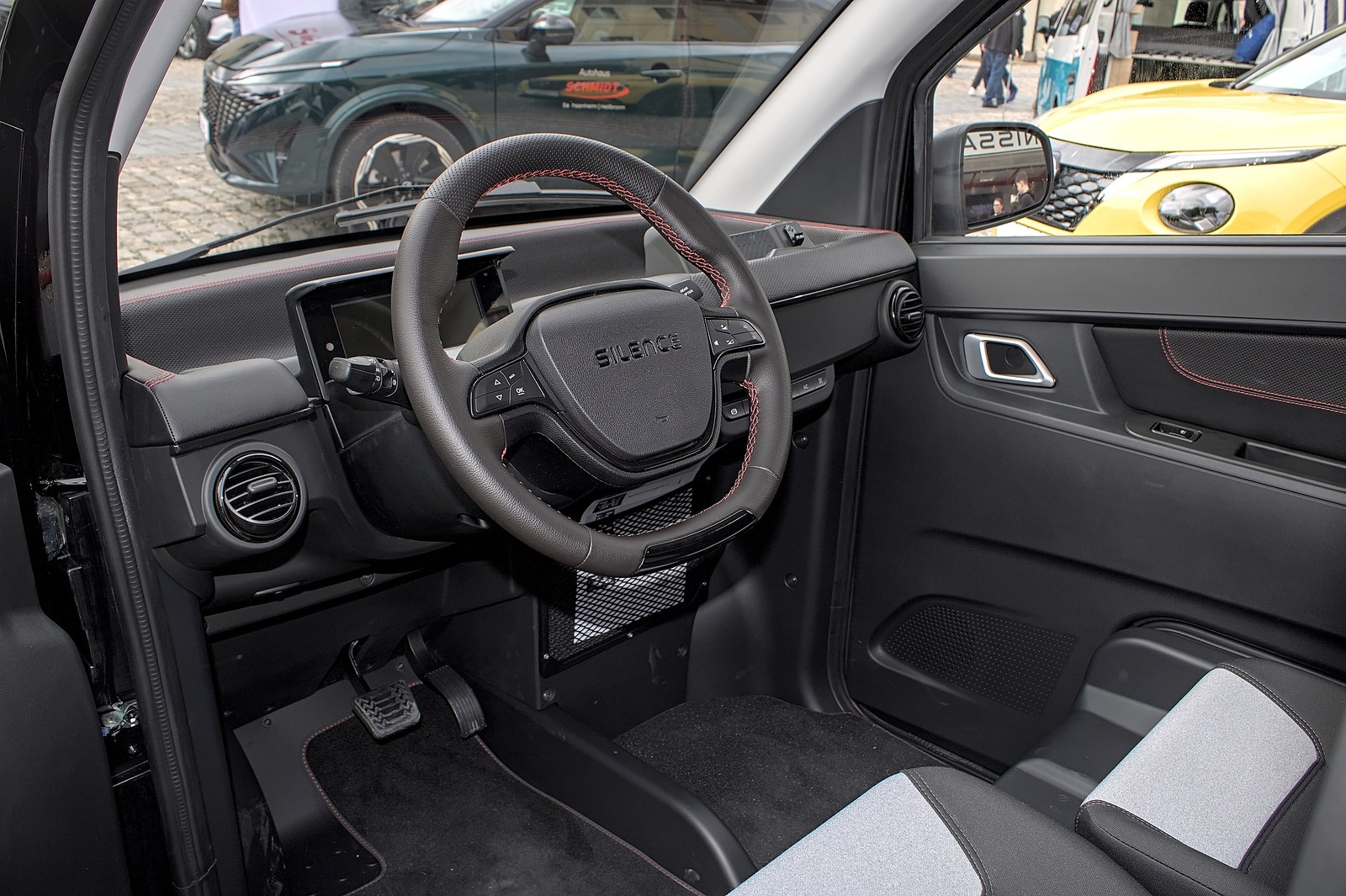
35 The steering wheel, dashboard and seats of a Silence S04 at the Automesse Ludwigsburg, Germany, in September 2024.
36 The dashboard and steering wheel of an XEV Yoyo, photographed in October 2022.
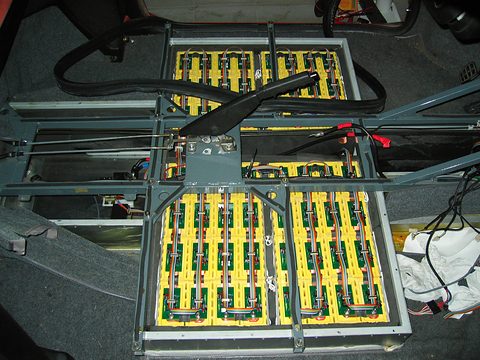
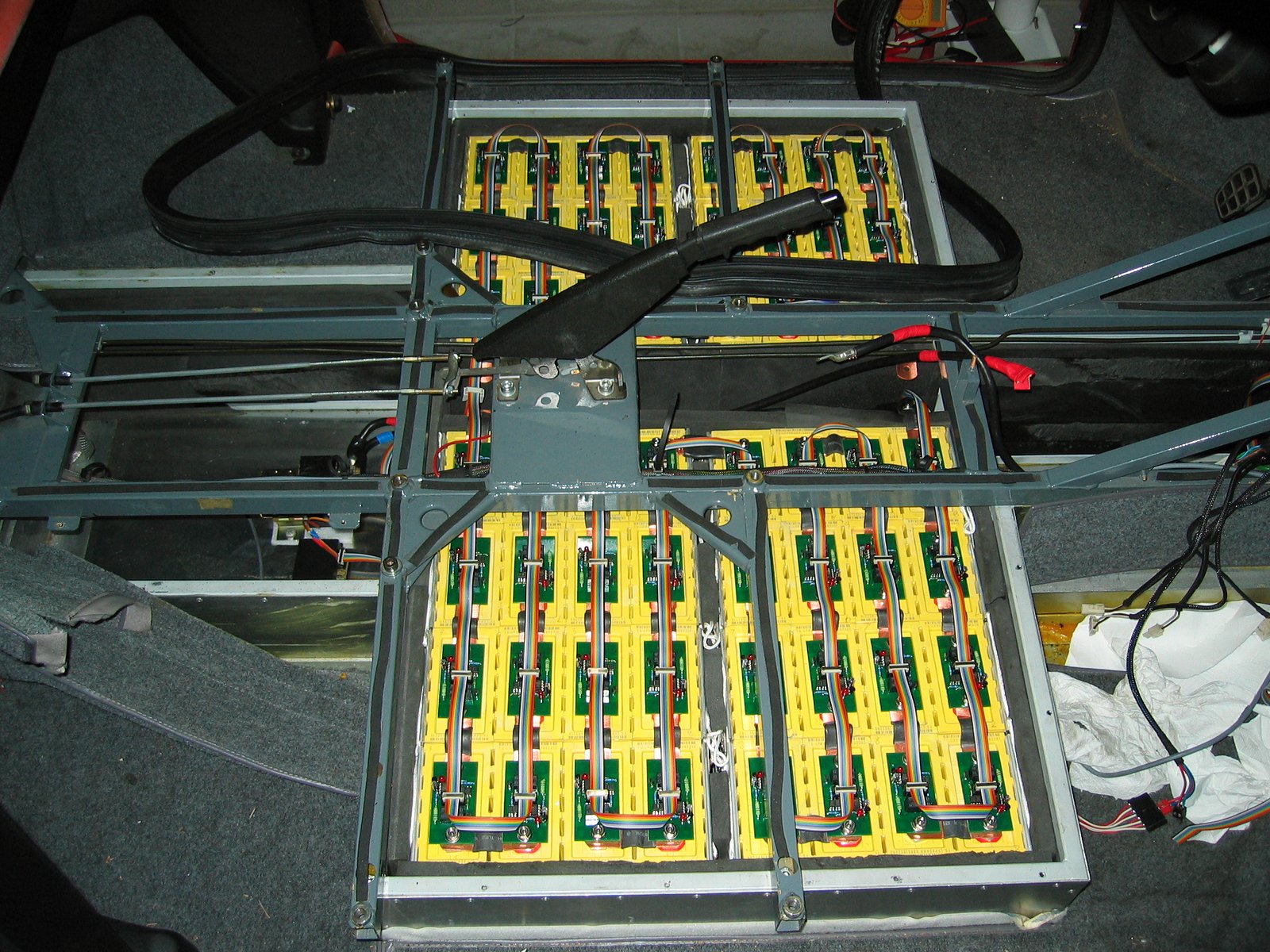
37 The under-floor battery tray of a Hotzenblitz refitted with lithium cells, photographed in February 2009.
38 The removable trolley battery in its bay behind the door of a Silence S04, photographed in September 2025.
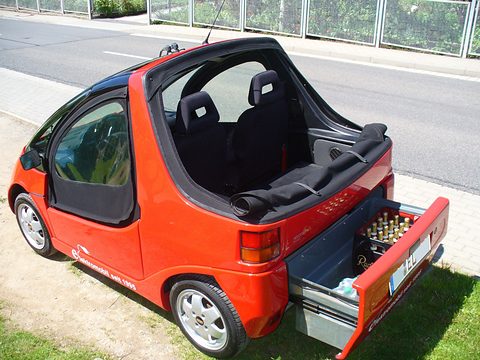
39 A red Hotzenblitz (GRP body) with its pull-out boot drawer open, in Germany in May 2013.
Variants and relatives 4
40 The Heuliez Friendly concept, forerunner of the Mia, with its sliding door open at the Paris Motor Show in October 2008.
41 A white Mia L ‘miAmore’, the long version, with orange wheels in Saint-Émilion, France, in May 2013.
42 White Town Life Helektra electric car, number 21, lettered Vehículo Eléctrico, parked in Valencia, Spain, in 2008.
43 The XEV Yoyo Pro at IAA Mobility, Munich, Germany, in September 2023.
About 800 Mias, 140 HotzenblitzesCounts have been found for only three of the ten. The Mia is the best documented, from sales and French registrations; the Hotzenblitz and the Cree SAM rest on one encyclopaedia each. Uniti delivered nothing, and the Squad Solar has not yet gone into production.
0500
843Mias registered in France, 2011 to January 2014One source
By German Wikipedia’s account, the Hotzenblitz was the only car designed in Germany as an electric car and sold to customers before the BMW i3.
The driver in the middle
The Mia seated three, its driver centrally, and ended in a fraud conviction.
Batteries on wheels
The Silence S04’s two batteries can be wheeled indoors like trolley cases.
17
Survivors and collecting
Today
Hotzenblitz owners met for the first time at Dogern in August 2004, and many still convert their cars to lithium batteries.source 4 Town Lifes are on show in the Ferruccio Lamborghini museum.source 8 The photographs on this page also show an Estrima Birò at the car museum in Trenčín, in Slovakia, Mias in car-sharing service in Niort and Angoulême, and Silence S04s parked along the canals of Amsterdam. For none of them has an auction result been found.
Each maker rests on one or two Wikipedia articles, with two news reports for Uniti; no maker’s brochure or press release was read, and the specifications rest on the encyclopaedias. Sources are given as plain text; the links are on the Credits page.
English Wikipedia, XEV Yoyo, read in full.
English Wikipedia, Silence S04, read in full.
English Wikipedia, Kilow La Bagnole, read in full.
German Wikipedia, Hotzenblitz, read in full.
English Wikipedia, Cree SAM, read in full.
English Wikipedia, Mia electric, read in full.
English Wikipedia, Uniti (automobile), read in full.
English Wikipedia, Town Life, read in full.
English Wikipedia, Estrima Birò, read in full.
French Wikipedia, Mia electric, read in full.
Electrive, “Uniti files for insolvency”, 11 April 2022, read in full.
The Local (Sweden), “Hyped Swedish car start-up passed off Chinese EV as new model Zero”, 29 January 2022, read in summary.
A red Hotzenblitz with the GRP body, run open with its fabric doors and top removed, in Germany in June 2011.Photo: F. Rethagen, CC BY-SA 3.0 de, via Wikimedia Commons
The Squad Solar City Car from the front three-quarter at Fully Charged Live, Amsterdam, Netherlands, in May 2022.Photo: Jan Ainali, CC BY-SA 4.0, via Wikimedia Commons
The Squad Solar City Car with its solar-panel roof at Fully Charged Live, Amsterdam, Netherlands, in May 2022.Photo: Jan Ainali, CC BY-SA 4.0, via Wikimedia Commons
A white car-share Mia electric in ‘régionlib’ livery at a charging post in Niort, France, in July 2013.Photo: Dalambr, CC BY-SA 3.0, via Wikimedia Commons
The dark ‘Miaparis’ special edition of the Mia at the Paris Motor Show, France, in September 2012.Photo: Thesupermat, CC BY-SA 3.0, via Wikimedia Commons
A silver Town Life Ginevra with its bonnet open in the Ferruccio Lamborghini Museum, Italy, in June 2022.Photo: TKOIII, CC BY-SA 4.0, via Wikimedia Commons
The dashboard, steering wheel and seats of a Hotzenblitz with doors, photographed in April 2007.Photo: Thomas doerfer, CC BY-SA 3.0, via Wikimedia Commons
The cabin and simple dashboard of a Kilow La Bagnole at the Paris Motor Show, France, in October 2024.Photo: Y.Leclercq, CC BY-SA 4.0, via Wikimedia Commons
The steering wheel, dashboard and seats of a Silence S04 at the Automesse Ludwigsburg, Germany, in September 2024.Photo: Alexander-93, CC BY-SA 4.0, via Wikimedia Commons
The under-floor battery tray of a Hotzenblitz refitted with lithium cells, photographed in February 2009.Photo: F. Rethagen, CC BY-SA 3.0 de, via Wikimedia Commons
The Heuliez Friendly concept, forerunner of the Mia, with its sliding door open at the Paris Motor Show in October 2008.Photo: Rutger van der Maar, CC BY 2.0, via Flickr
White Town Life Helektra electric car, number 21, lettered Vehículo Eléctrico, parked in Valencia, Spain, in 2008.Photo: Ferbr1, Public domain, via Wikimedia Commons