
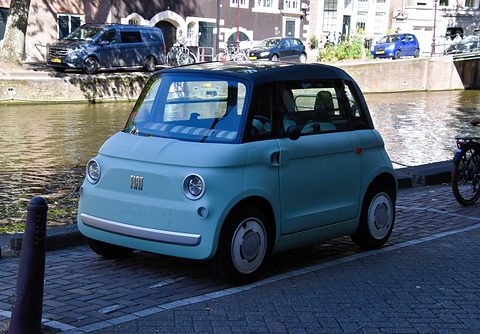
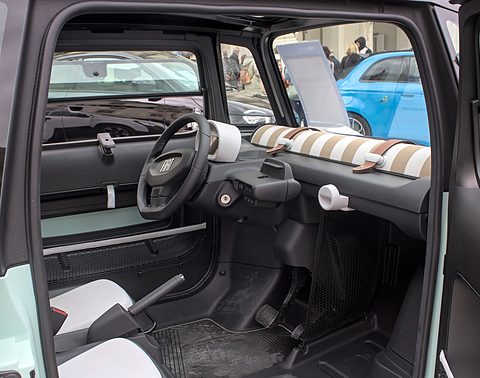
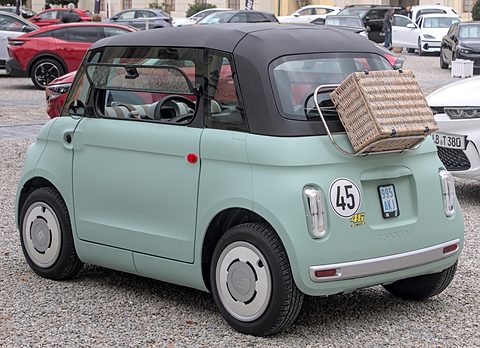
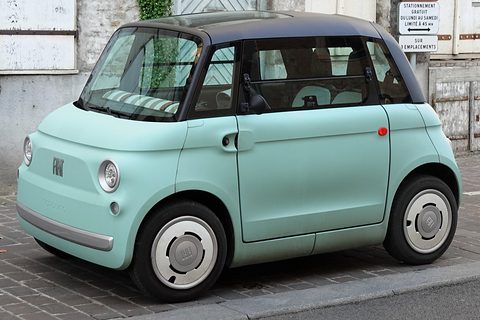
The story
History
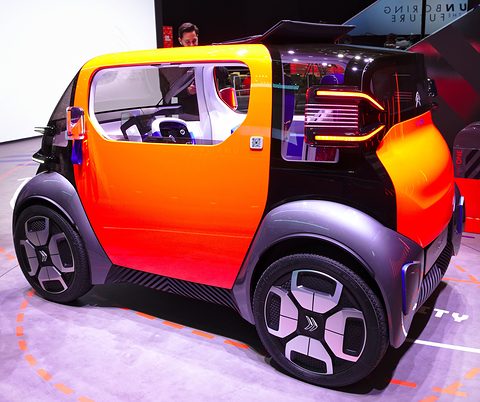
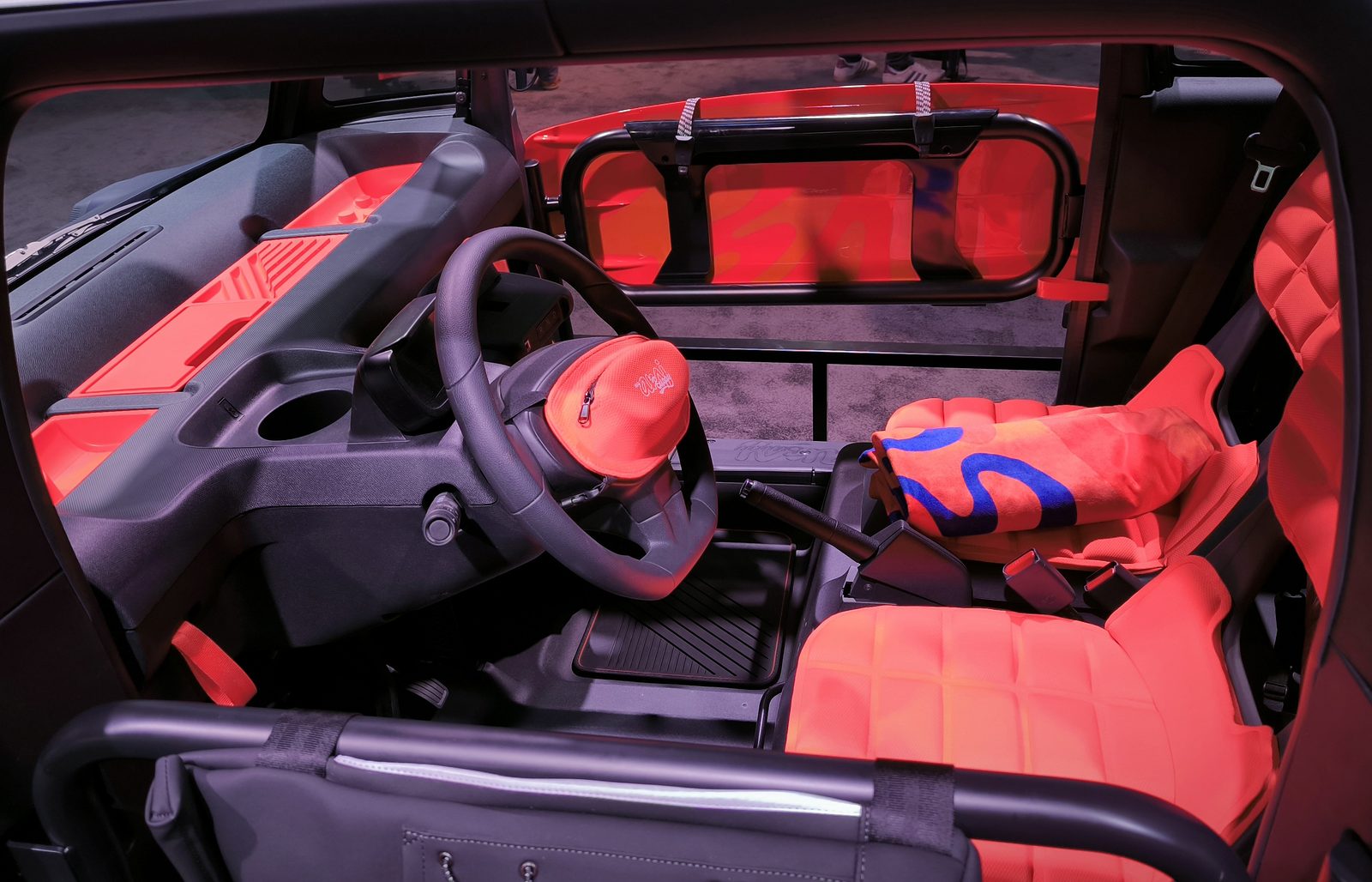
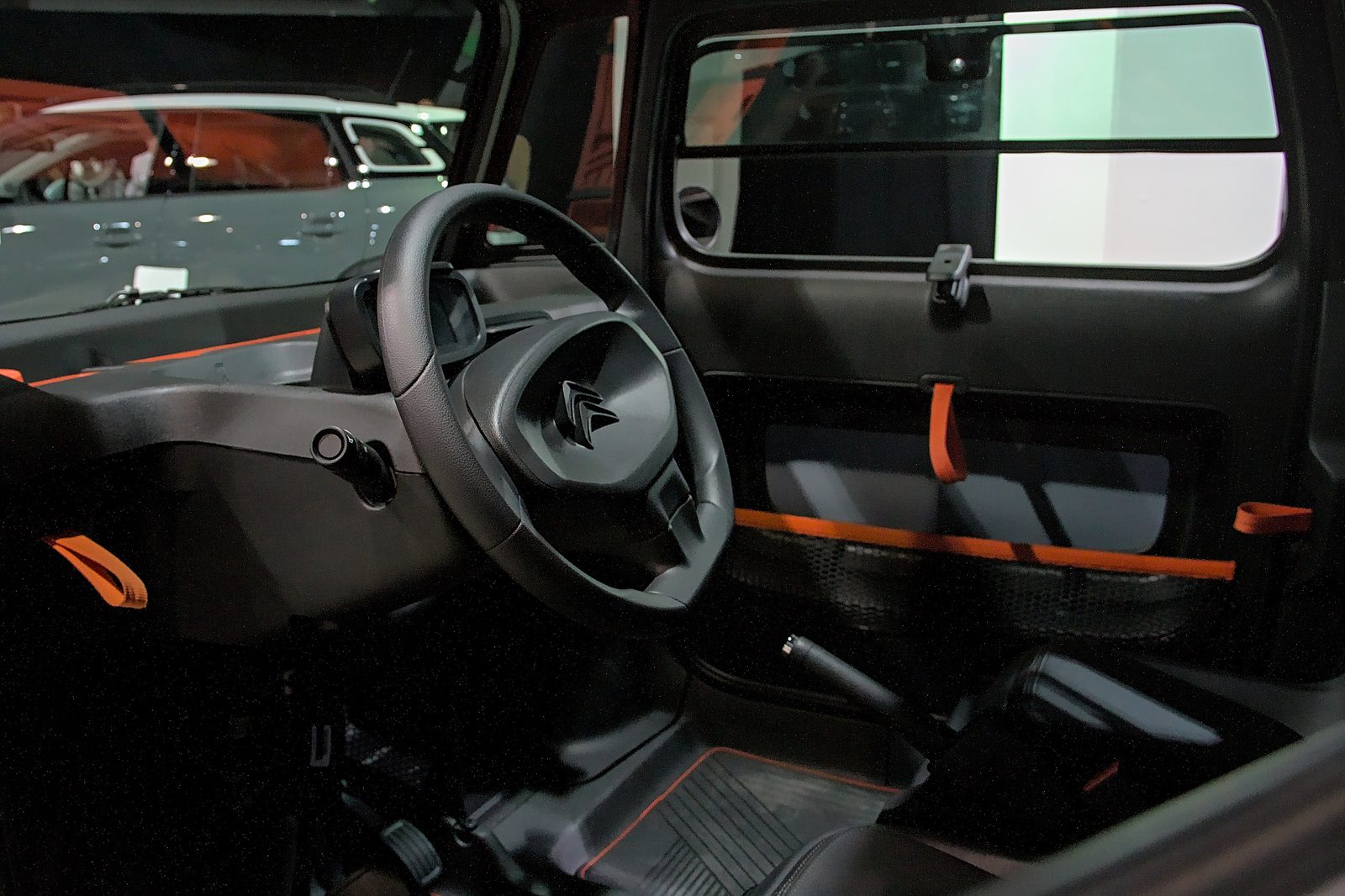
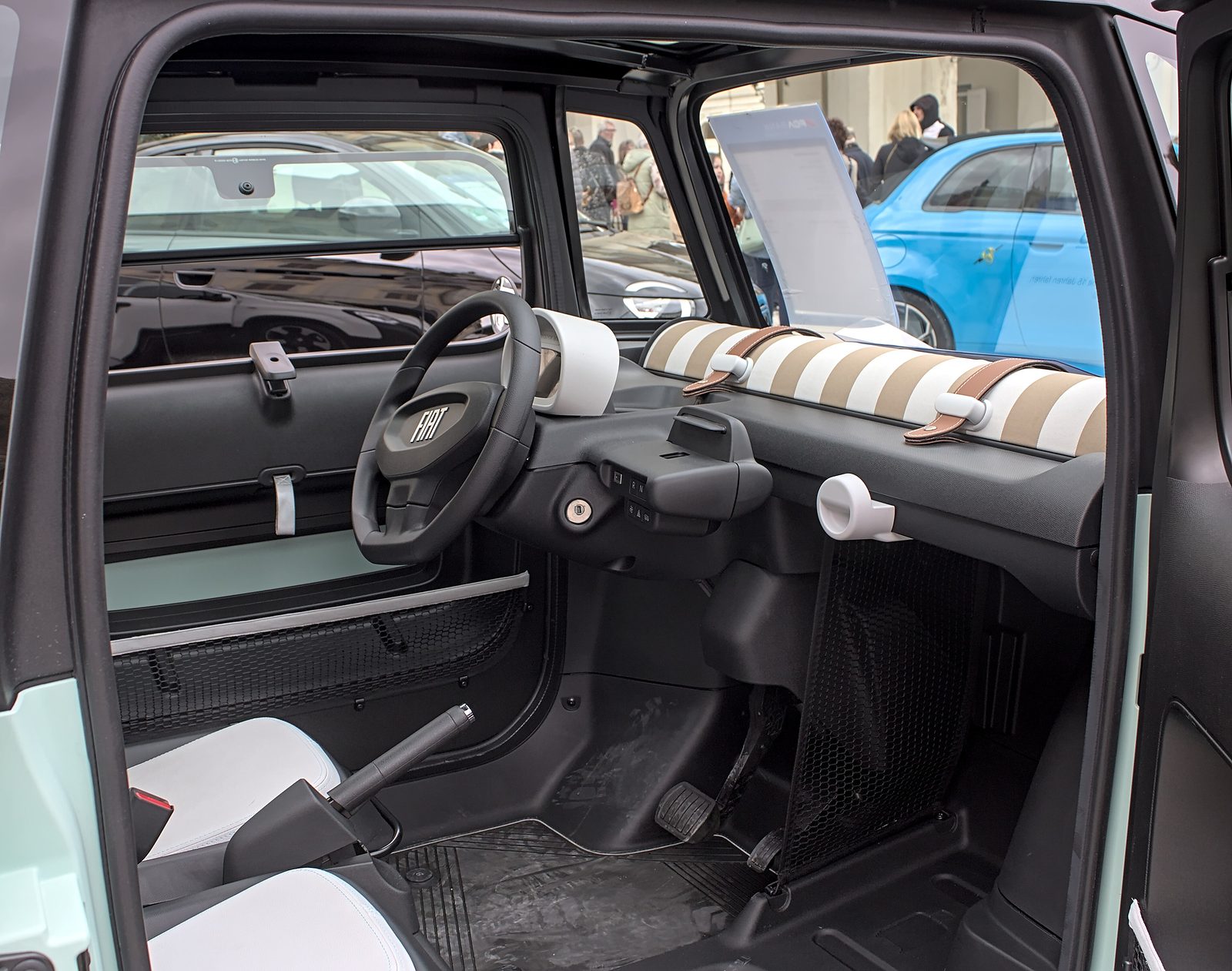
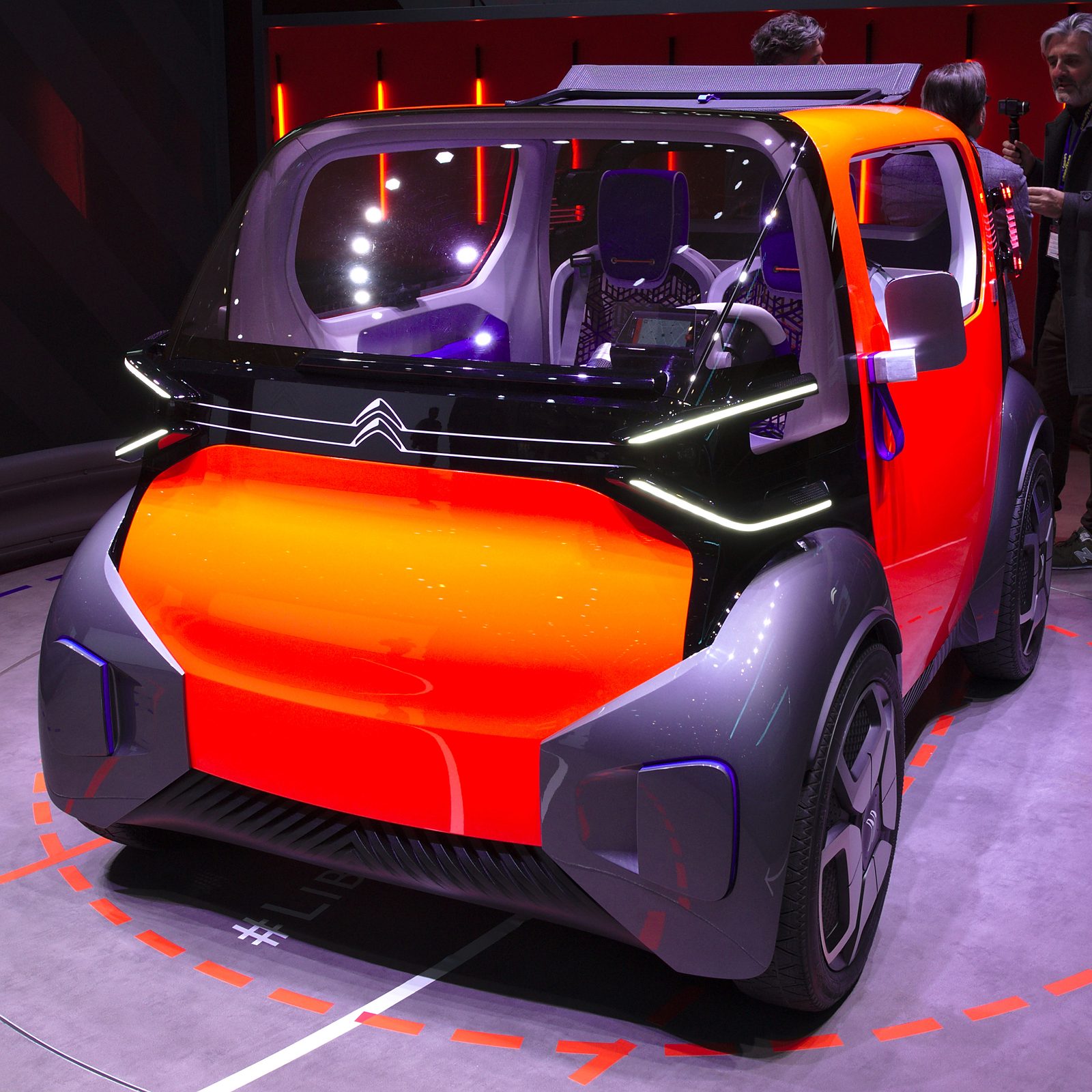
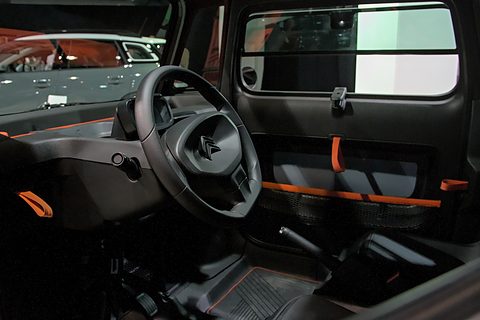
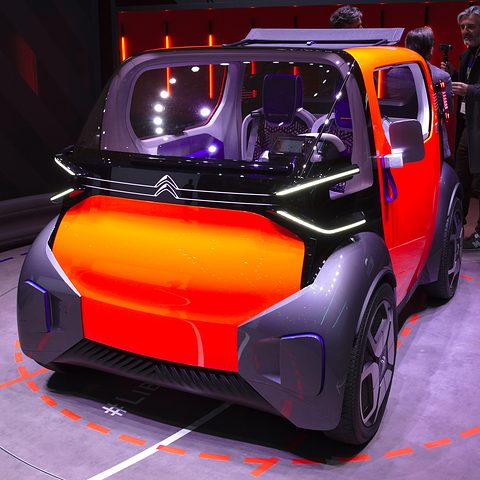
The name is old: it revives Citroën’s Ami 6 and Ami 8 of 1961–78.source 1source 2 It began as the Ami One, a concept at the Geneva Motor Show in March 2019. Its doors were already nearly identical, one with its hinges forward and the other with them aft, to save on unique parts; its information display was the driver’s smartphone, and a cylindrical Bluetooth speaker sat to the right of the steering column.source 1 The interior designer, Jean-Arthur Madeleine, explained the thinking.
the way to make it affordable was to avoid the redundancy of technology … everything is based on the idea that instead of having a lot of displays, everything is coming from your smartphone
English Wikipedia credits the exterior to Pierre Leclercq, who said that the concept and the production car were developed at the same time and that the design was not meant to carry over into Citroën’s main range. The engineering was contracted out, as a turnkey project, to Altran, now Capgemini Engineering.source 1source 2
Twice the same part
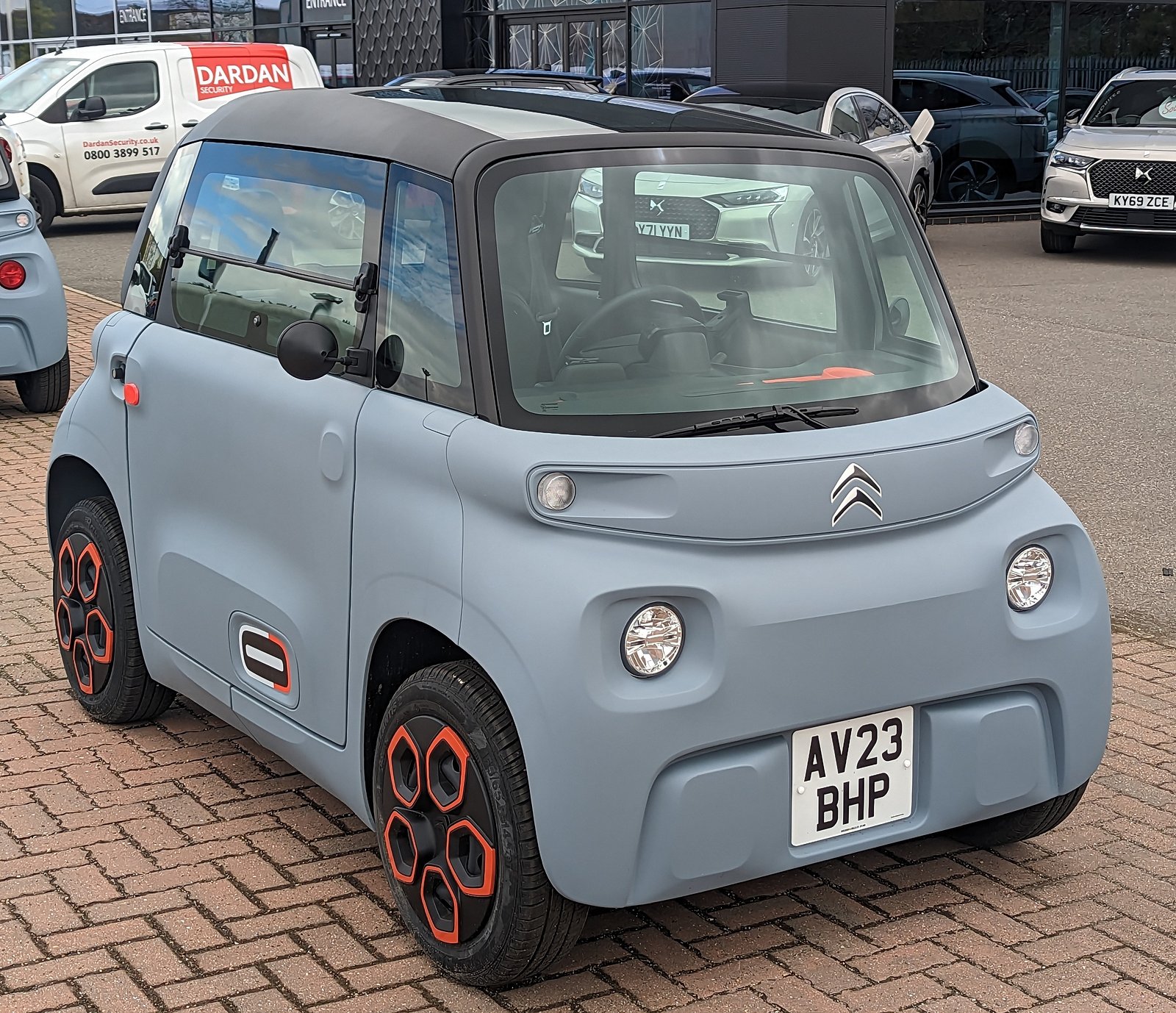
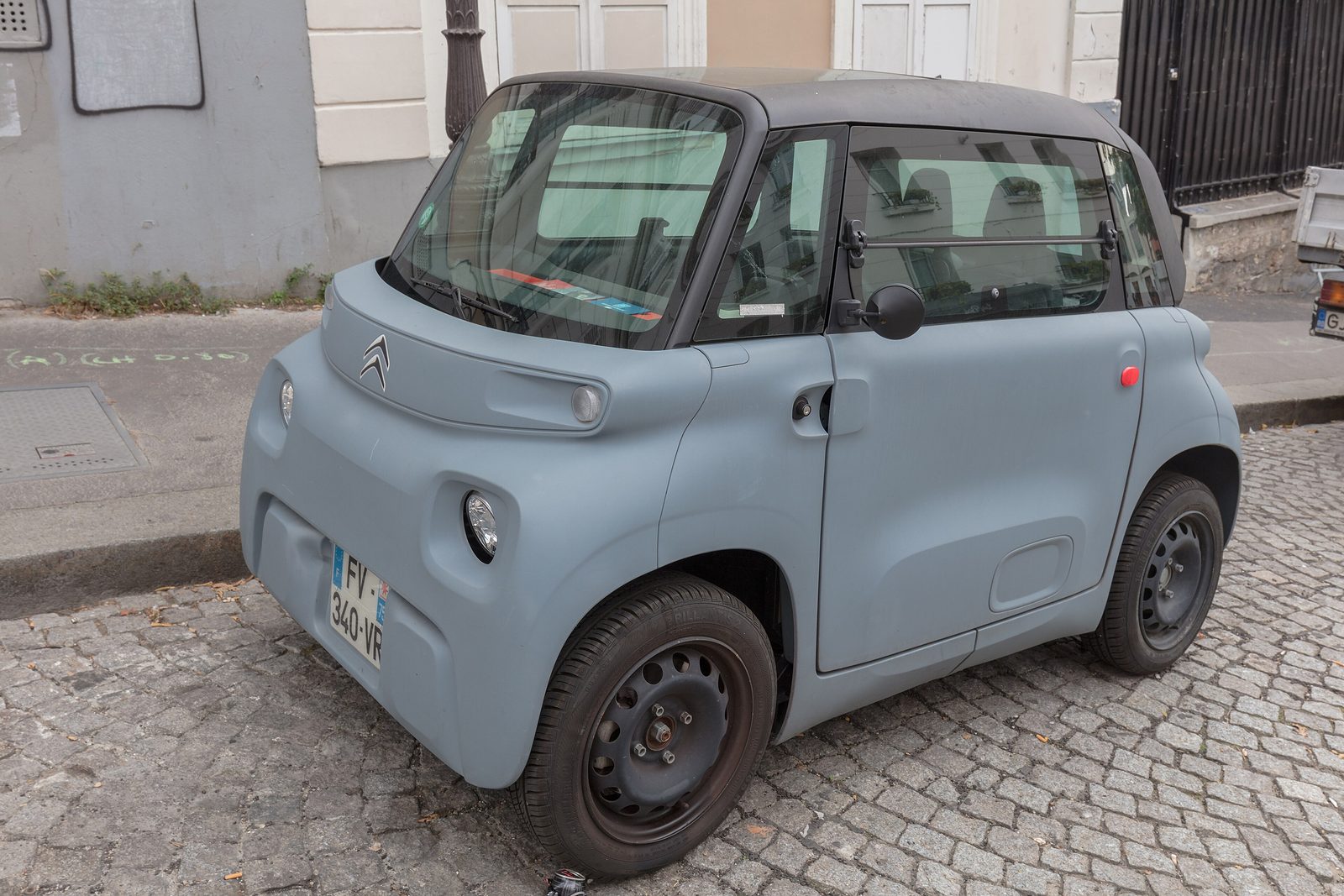
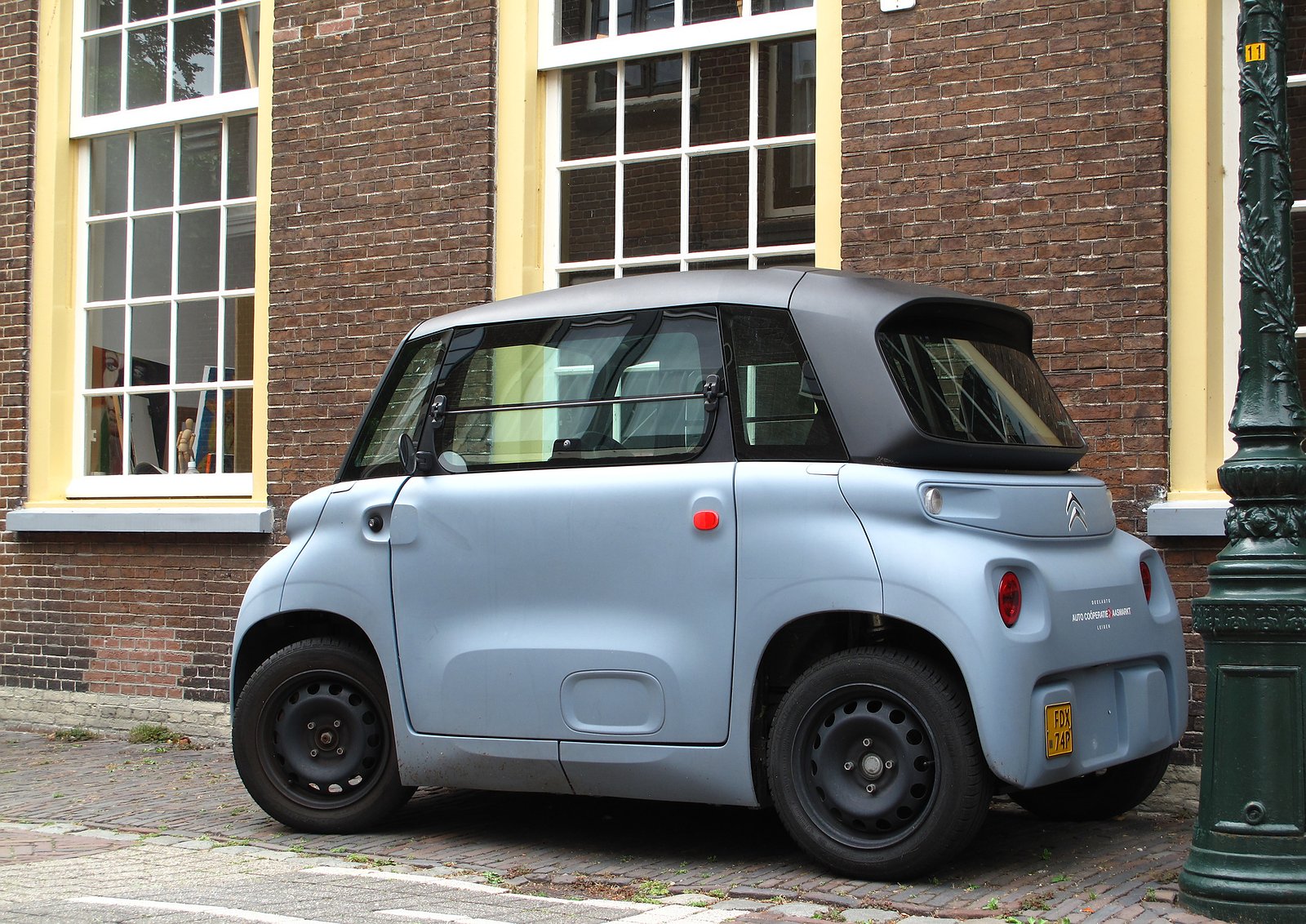
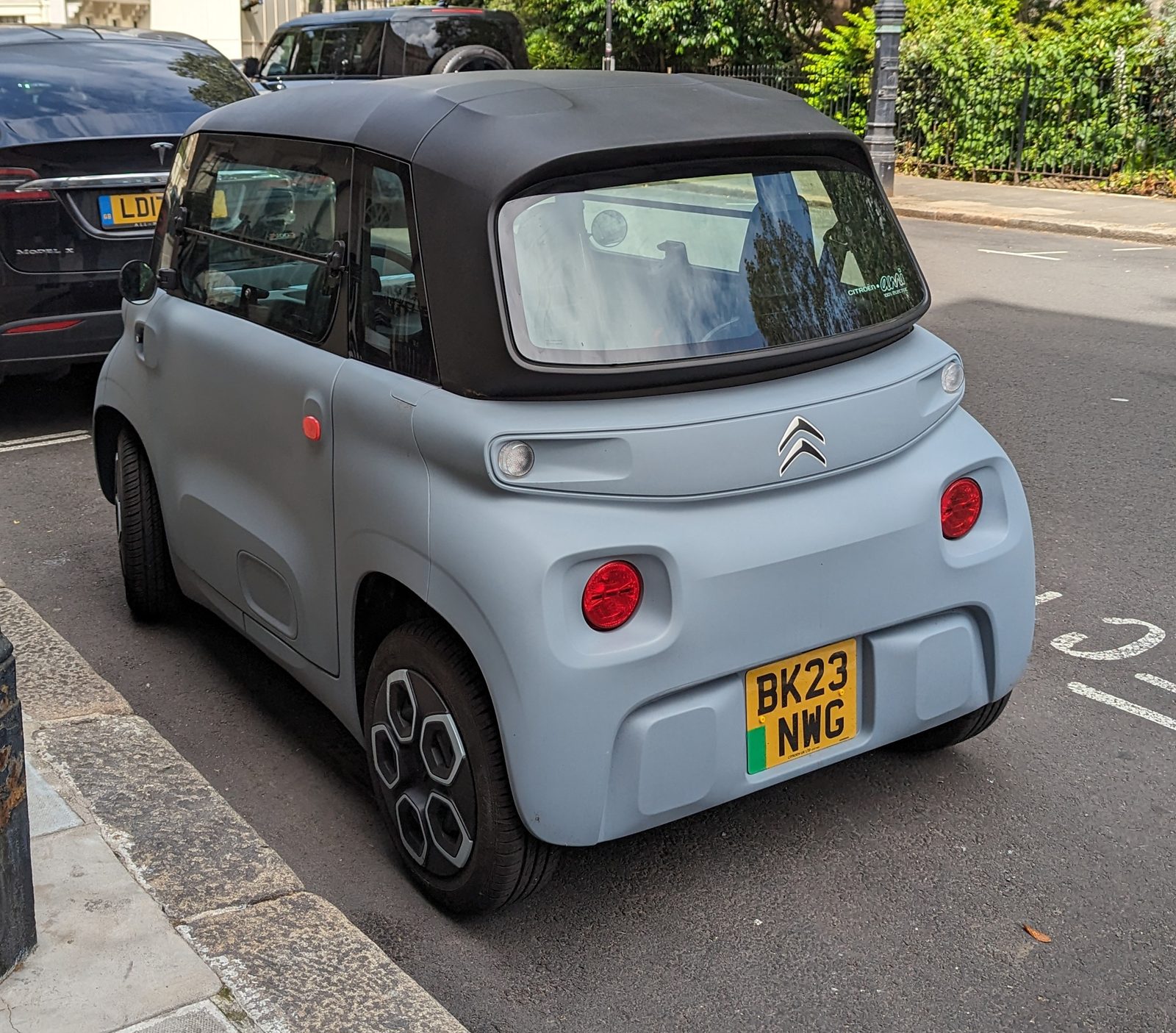
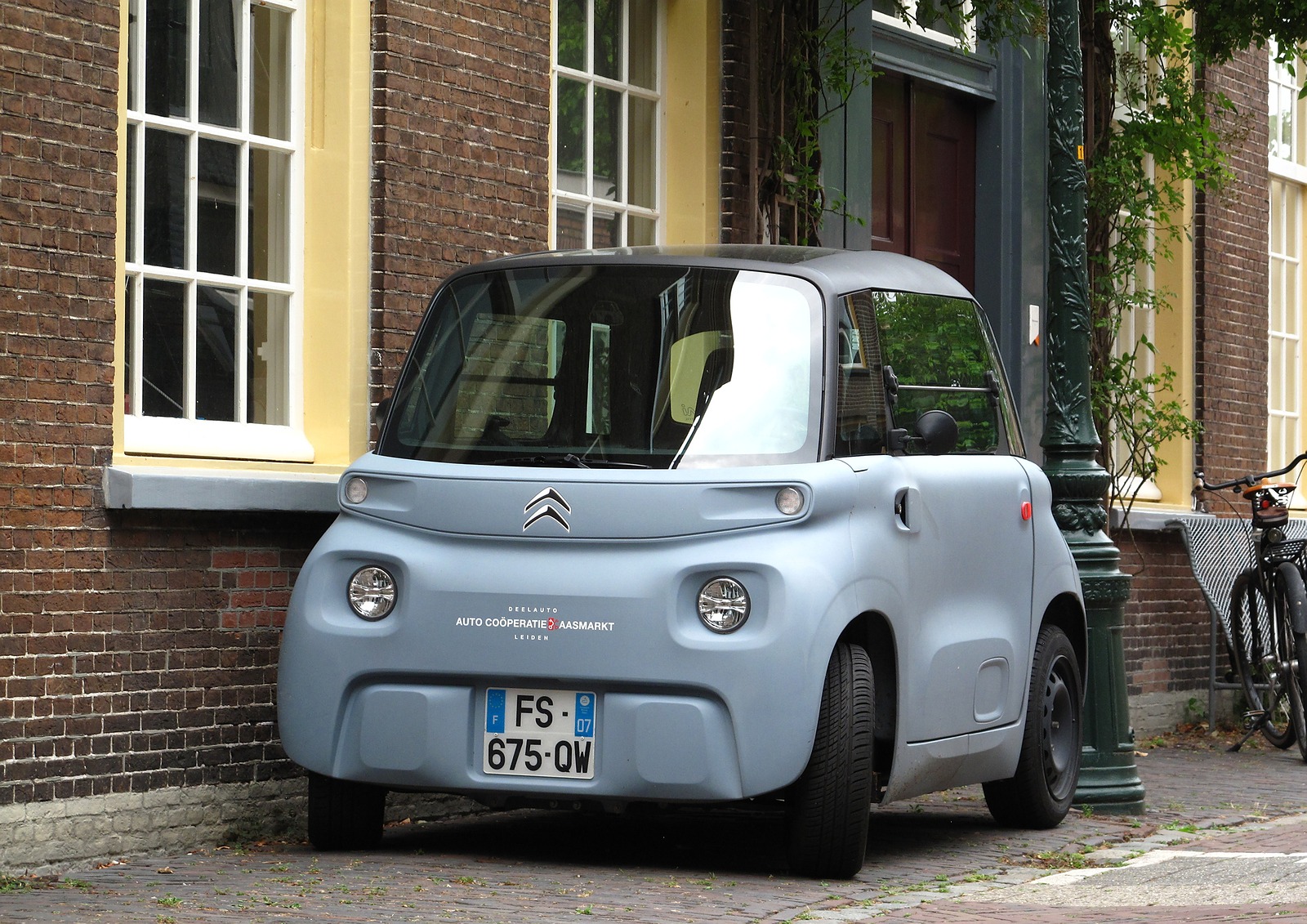
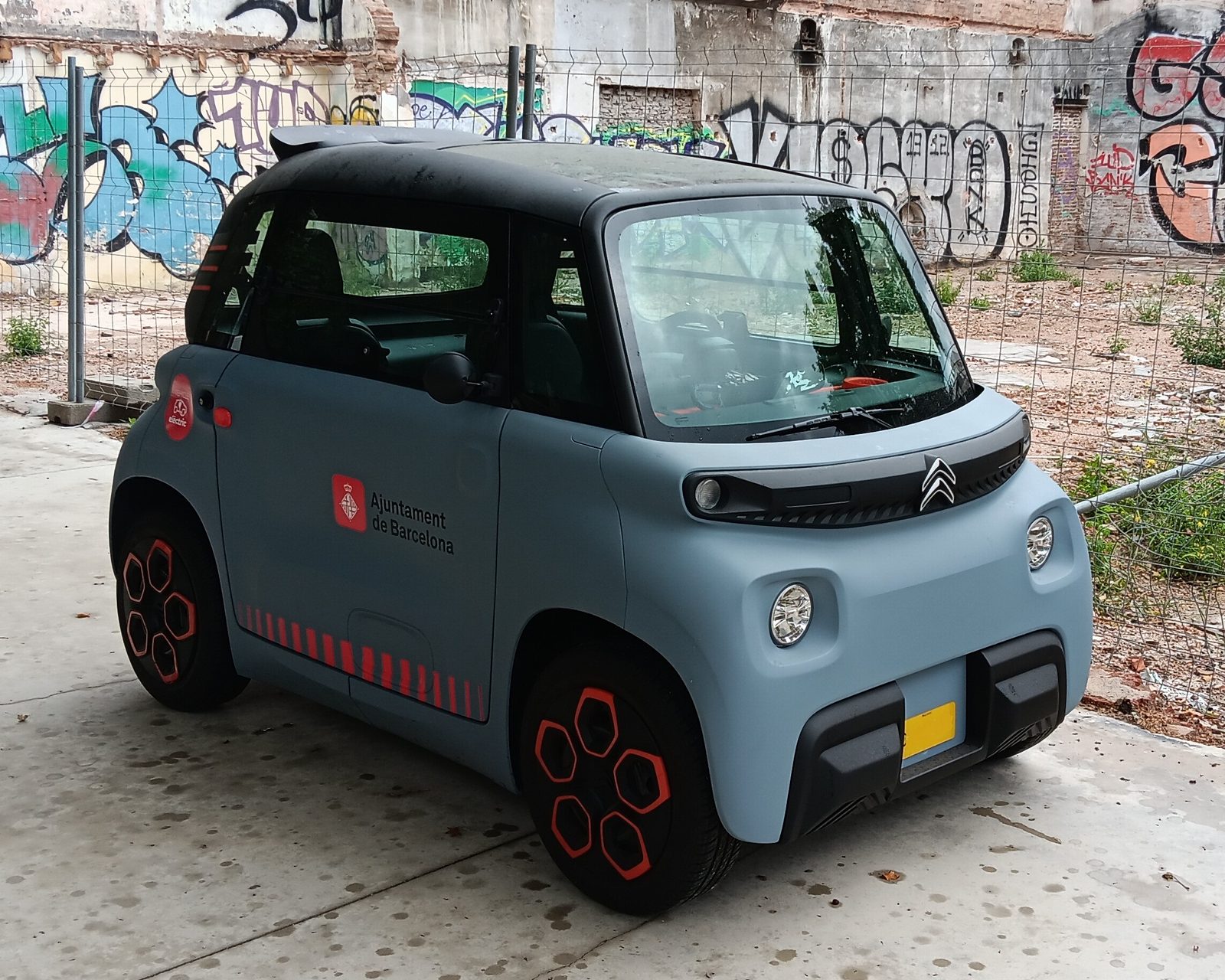
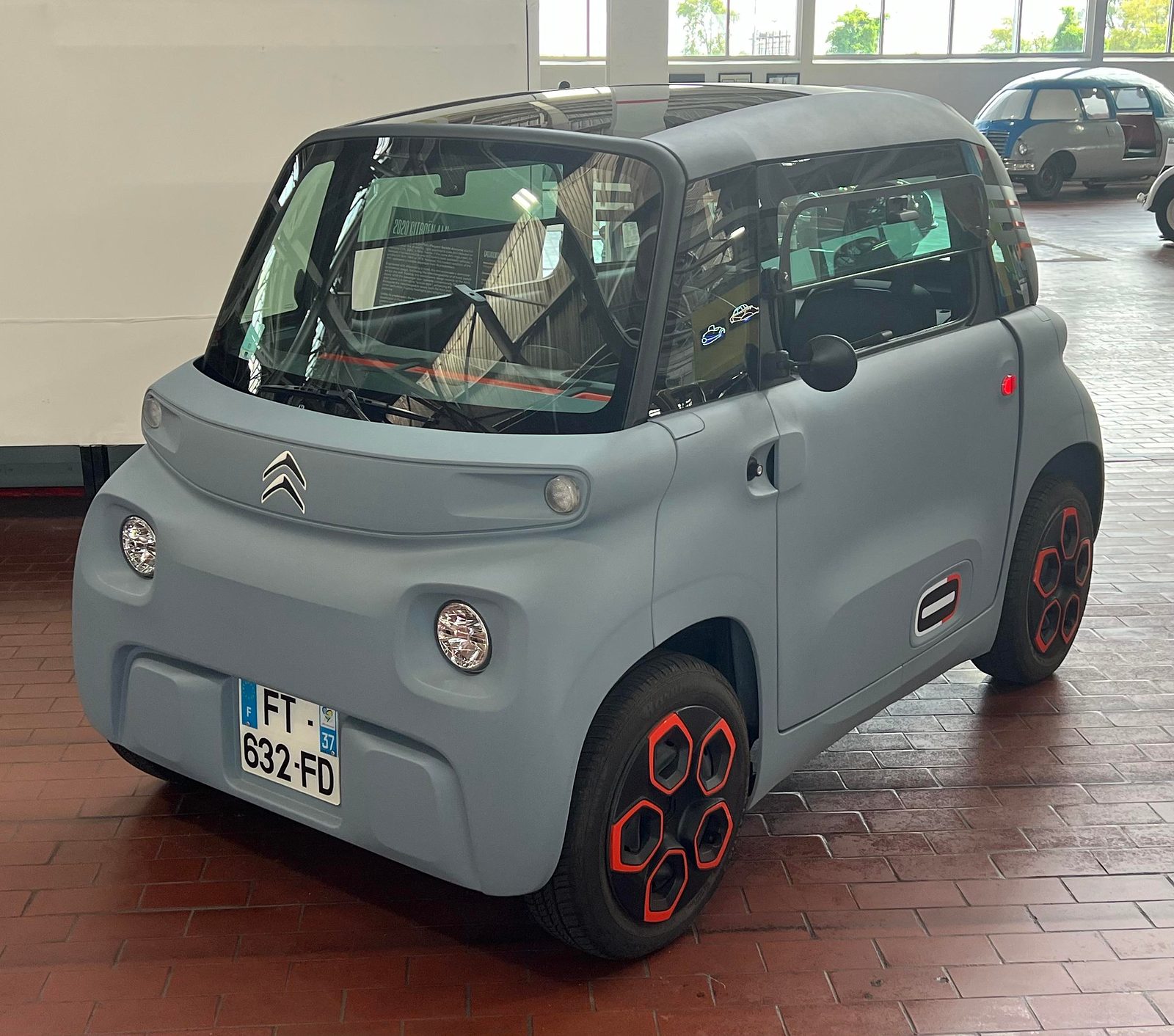
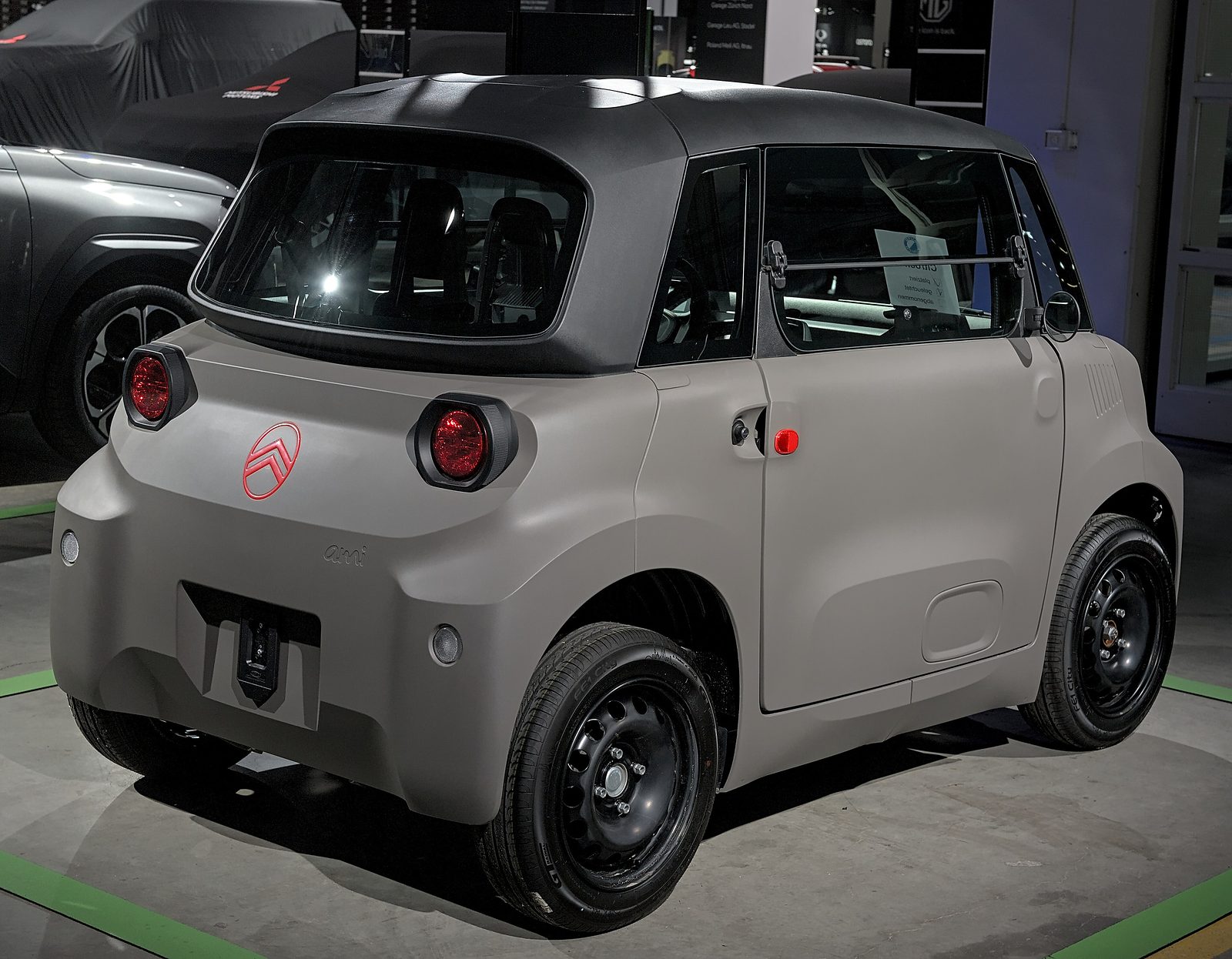
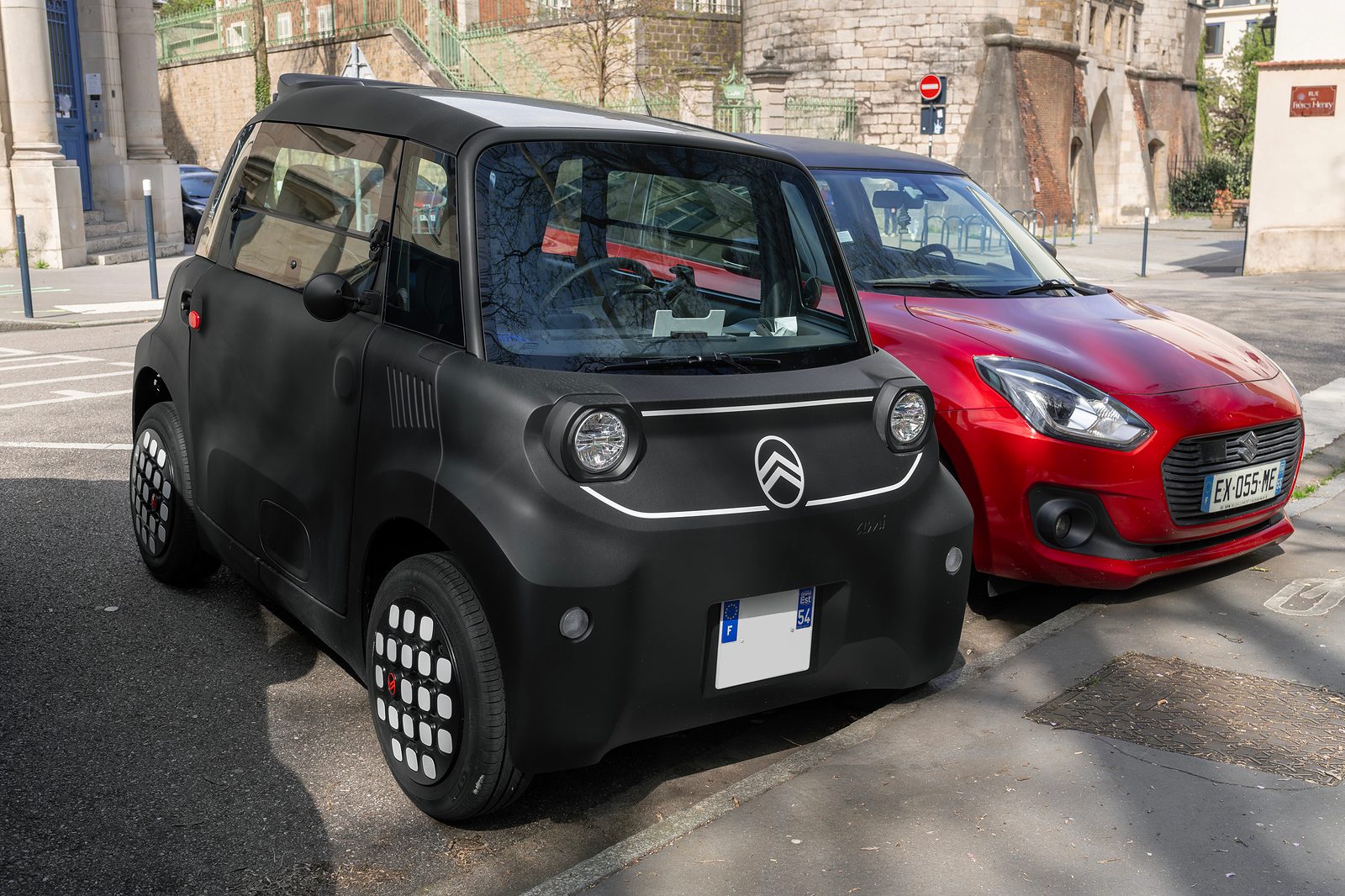
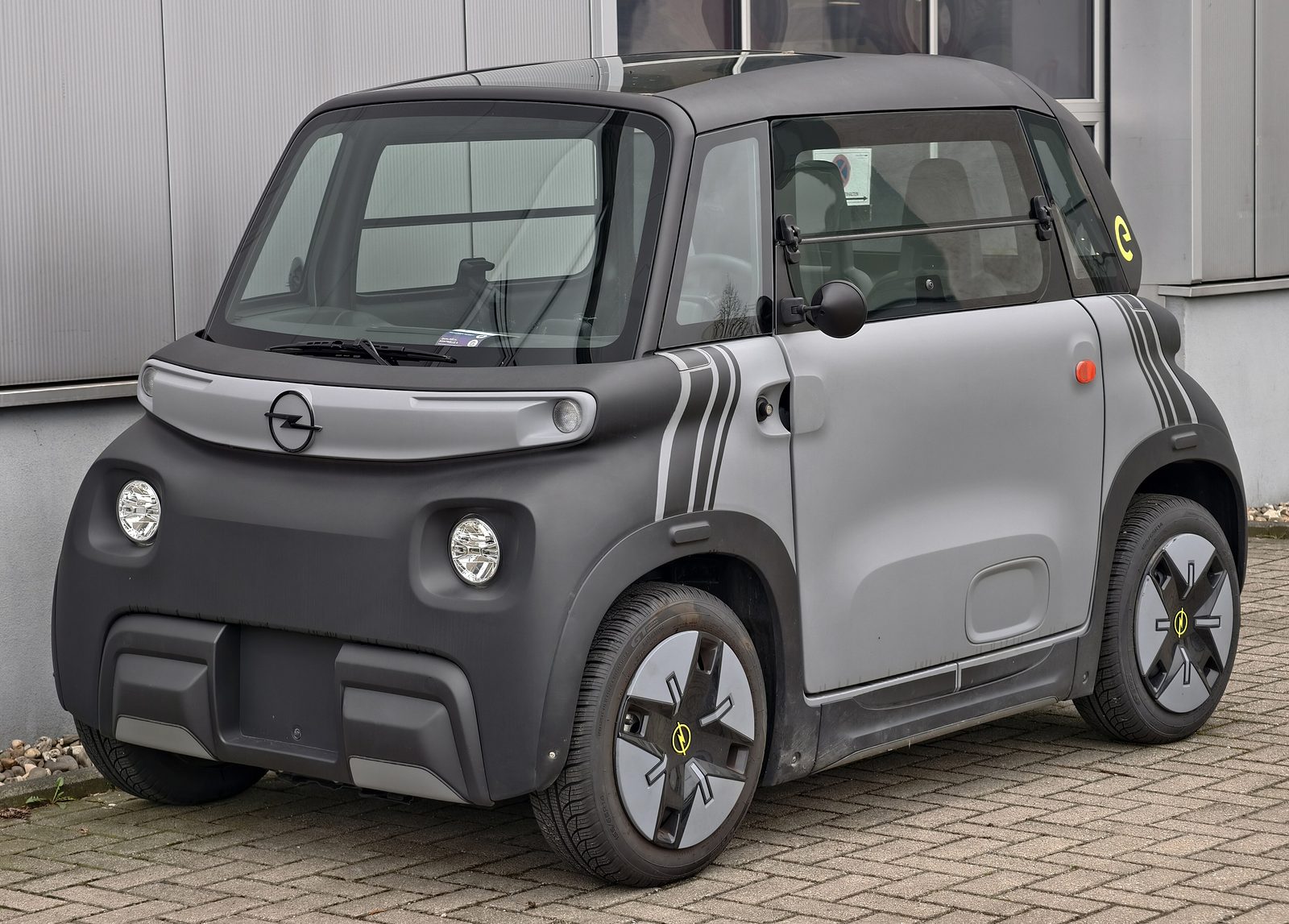
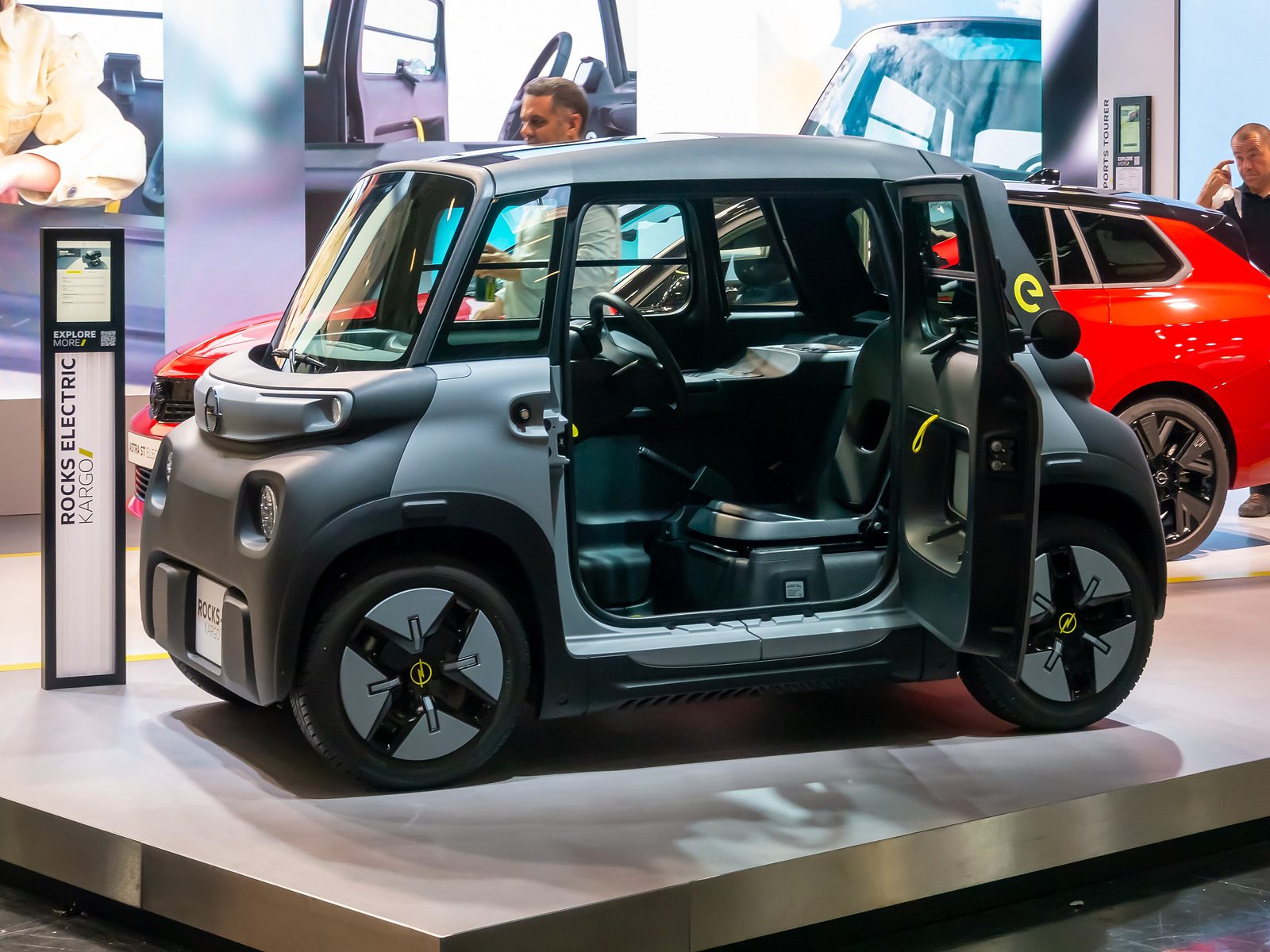
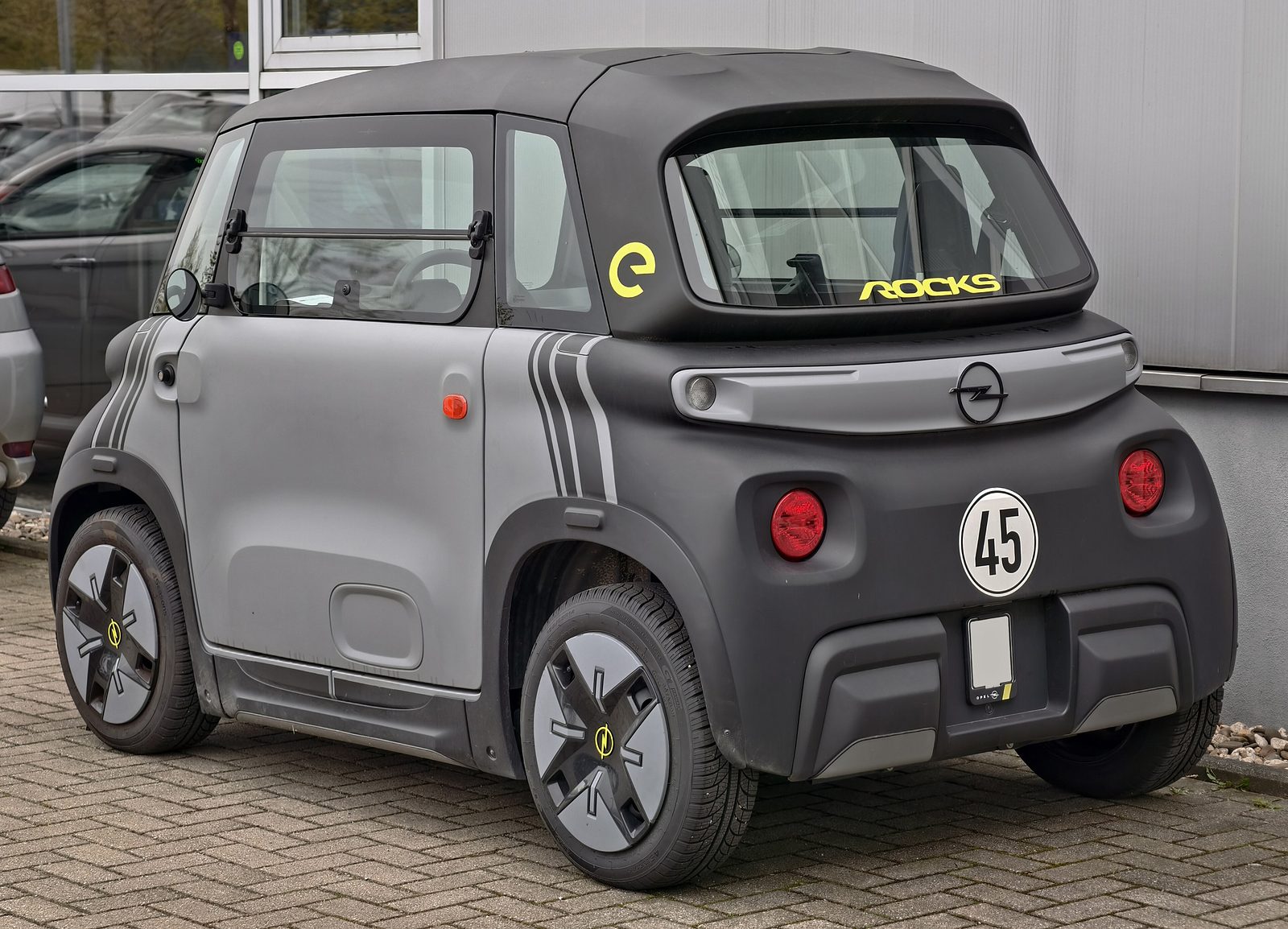
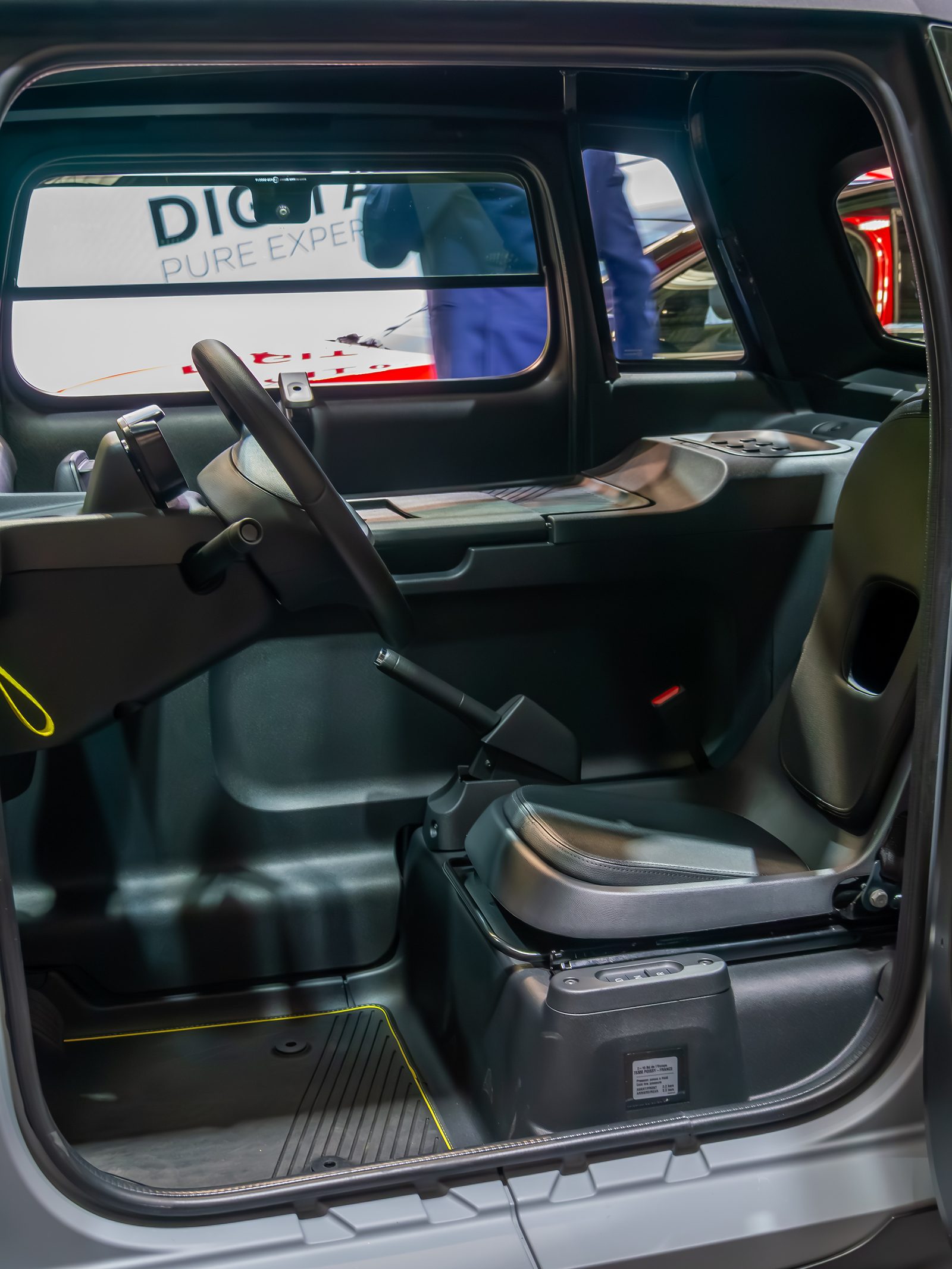
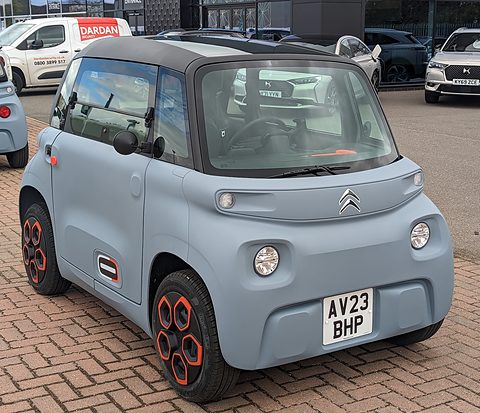
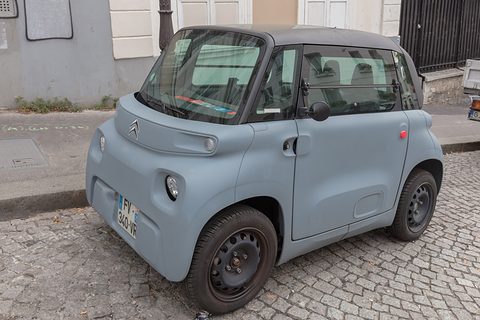
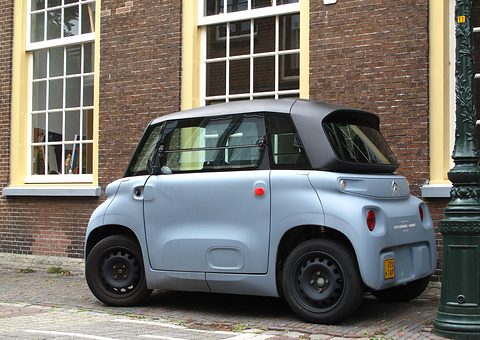
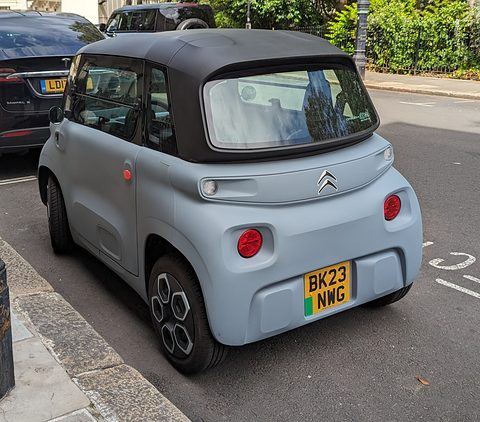
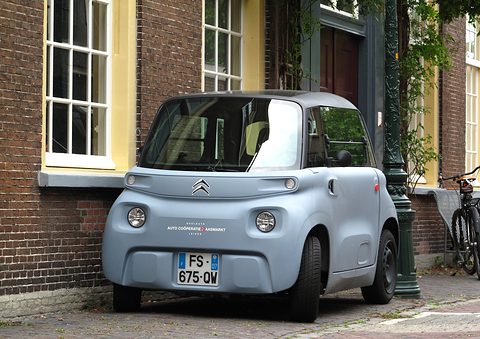
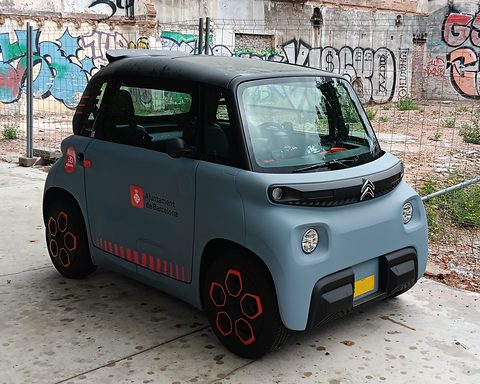
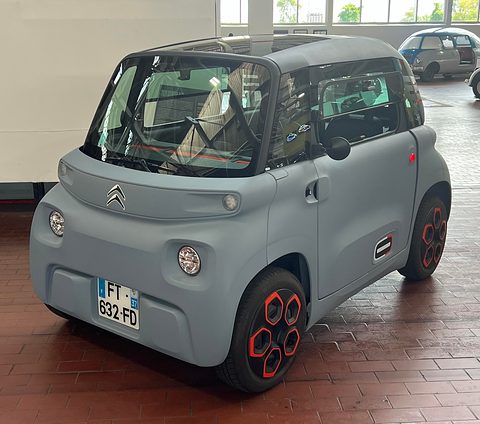
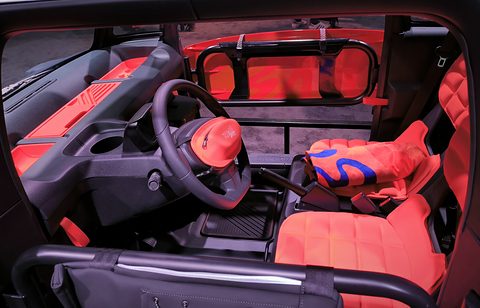
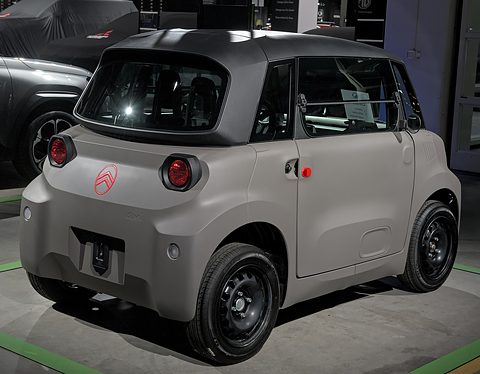
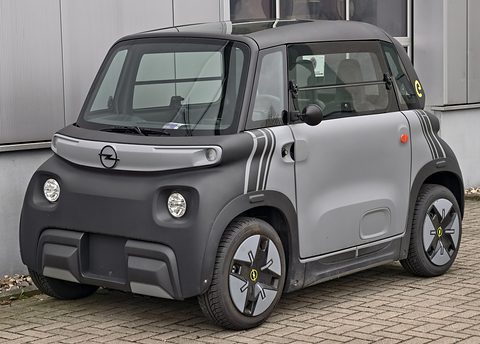
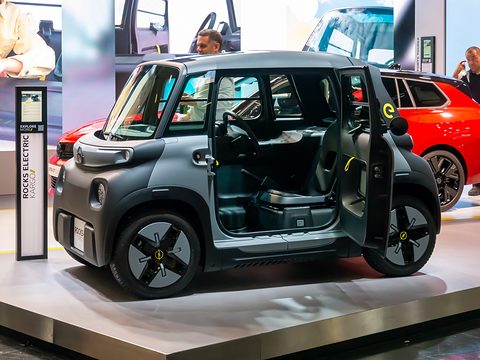
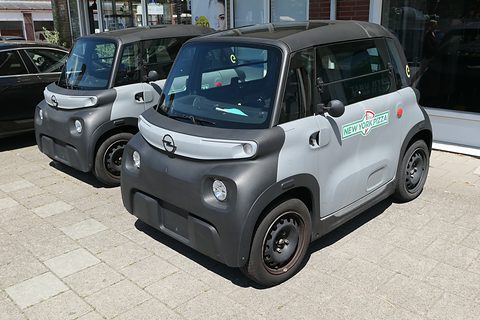
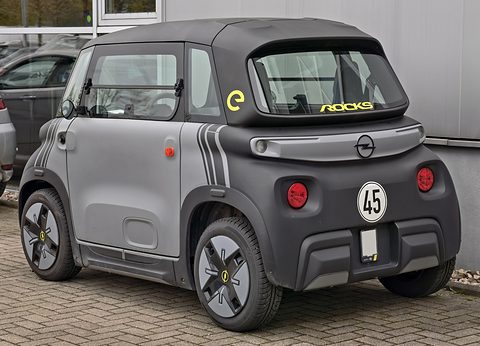
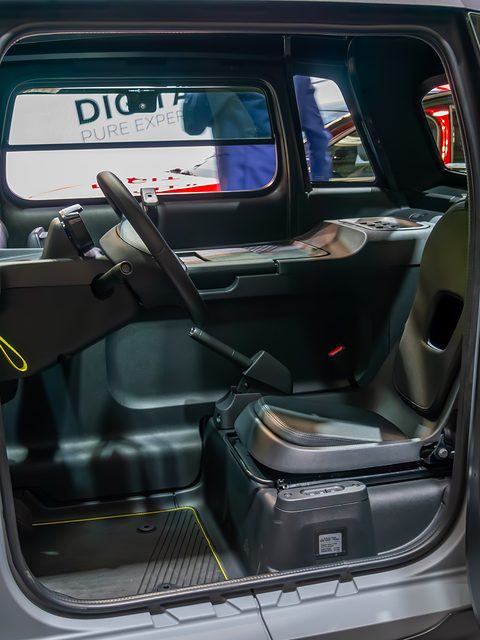
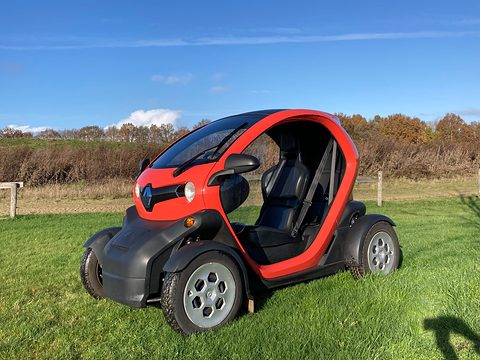
The front and rear bumper panels are the same part, and the two doors are the same panel, so the driver’s door is hinged at the back and the passenger’s at the front.source 1source 2source 3 German Wikipedia counts about 250 assemblies, roughly a tenth of a normal car’s.source 3 Plastic panels hang on a tubular steel frame that shows inside the cabin, under a fixed glass roof.source 2source 3source 4
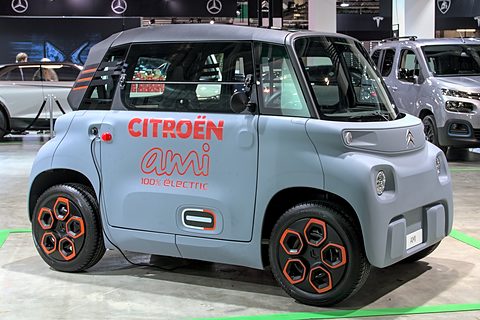
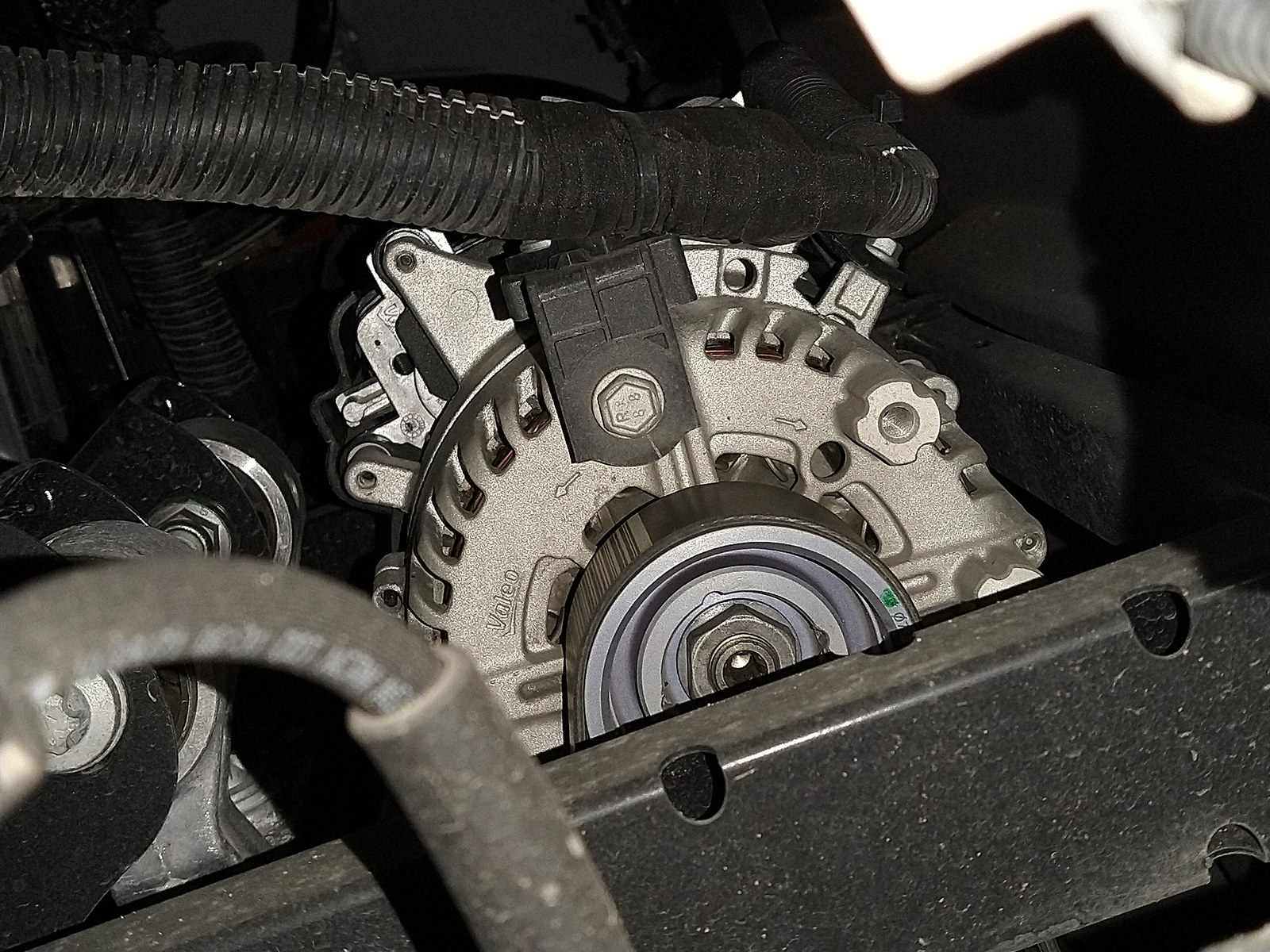
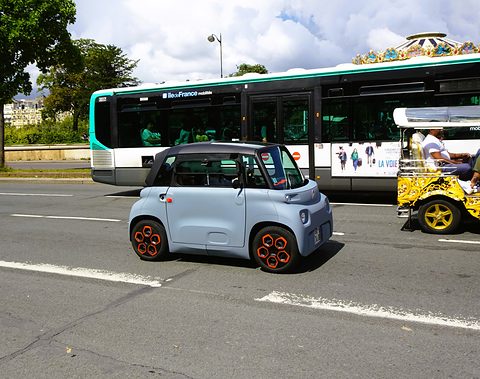
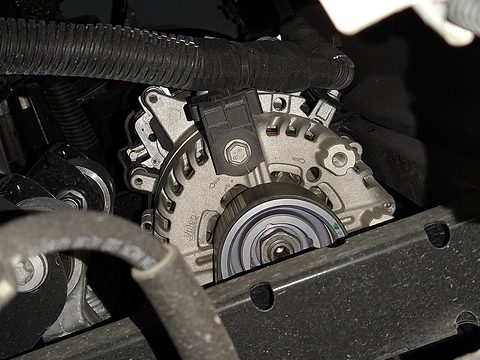
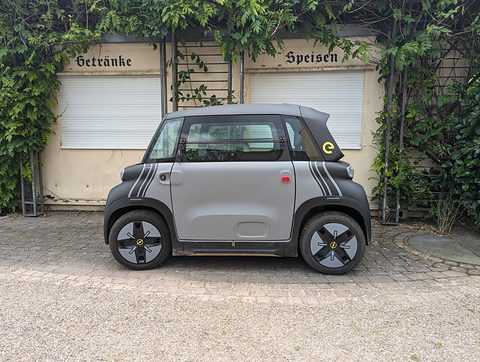
It is 2,410 mm (95 in) long, 1,390 mm (55 in) wide and 1,520 mm (60 in) high.source 1source 4source 5 A 6 kW (8 PS) motor of 48 V, made by Valeo, drives the front wheels, and the battery is 5.5 kWh by Citroën’s figure; French Wikipedia gives 5.8 kWh for the E4V pack, perhaps its gross capacity.source 1source 2source 5 The range is 75 km (47 miles) on the WMTC cycle, though 70 km was quoted at the launch, and the car charges in about three hours from an ordinary 230 V socket, through a cable stowed in the door frame on the passenger’s side.source 1source 3source 4source 2 There is no air conditioning, no built-in audio and no airbag, only a fan to demist the screen, and 63 litres of space for luggage.source 2source 3source 6 English Wikipedia gives a weight of 485 kg (1,069 lb) with the battery; German Wikipedia gives 471 kg with it and 416 kg without, and explains that an electric quadricycle is weighed without its battery, which keeps the Ami under the class limit of 425 kg.source 1source 3
Licence-free from 14
In law the Ami is not a car but a light quadricycle, class L6e, more exactly L6e-BP, the light quadricycle for passengers of up to 6 kW.source 2source 3 In France that makes it a licence-free car, a voiture sans permis, though not for everyone: anyone born before 1988 may drive it with no licence at all, but younger drivers need the AM licence, the old BSR, with its seven hours of road training, which can be had at 14.source 1source 2 In most other European countries, Electrek reported, the minimum age is 16.source 5 It is the electric microcar as an appliance, and Citroën sold it as one.
Sold like an appliance
The production car was unveiled on 27 February 2020 at the Paris La Défense Arena.source 2source 3 Citroën’s chief executive, Vincent Cobée, presented it as an answer to getting about in town.
Citroën has come up with a new urban mobility solution accessible to everyone: compact, protective, 100% electric, without driving licence, and affordable.
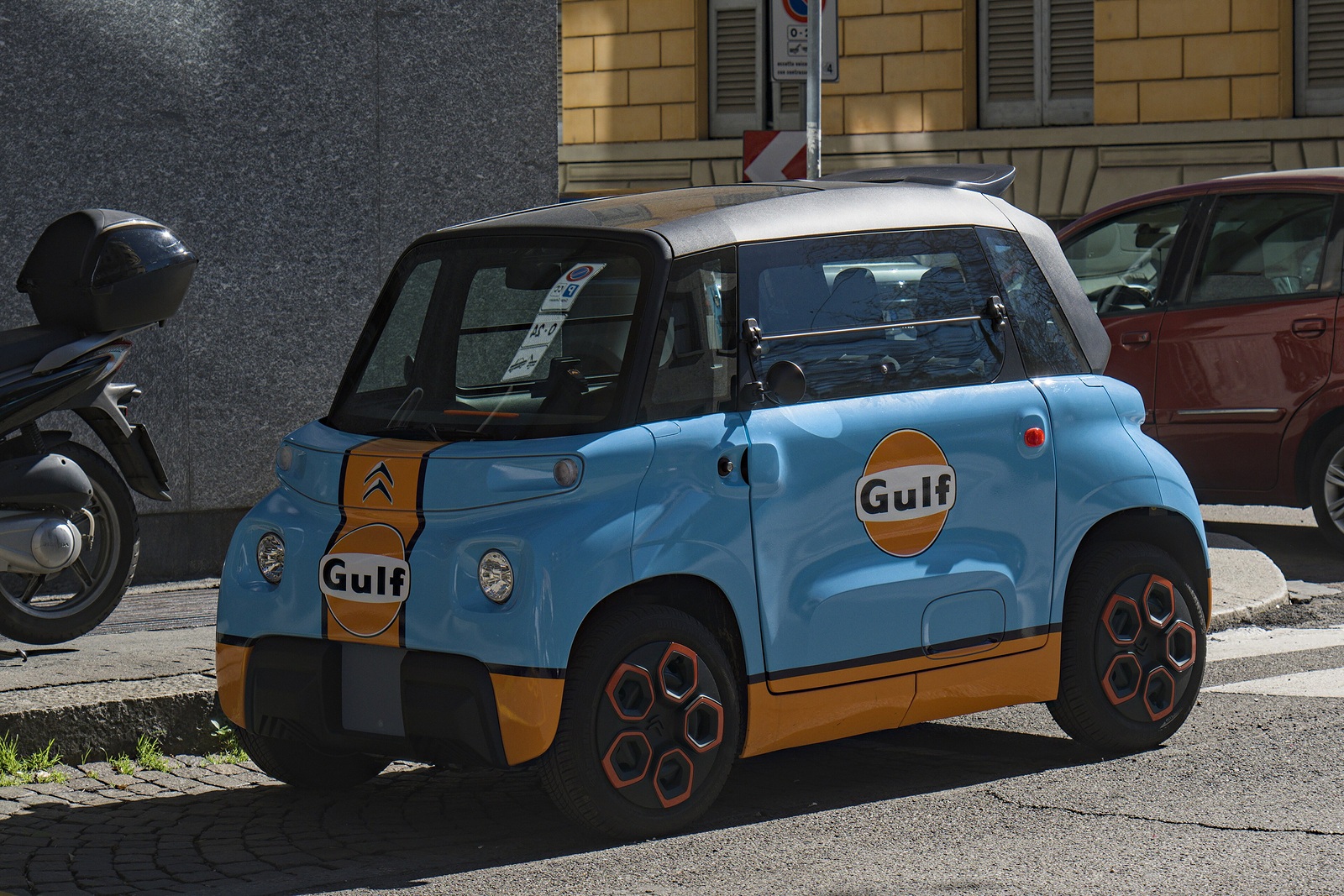
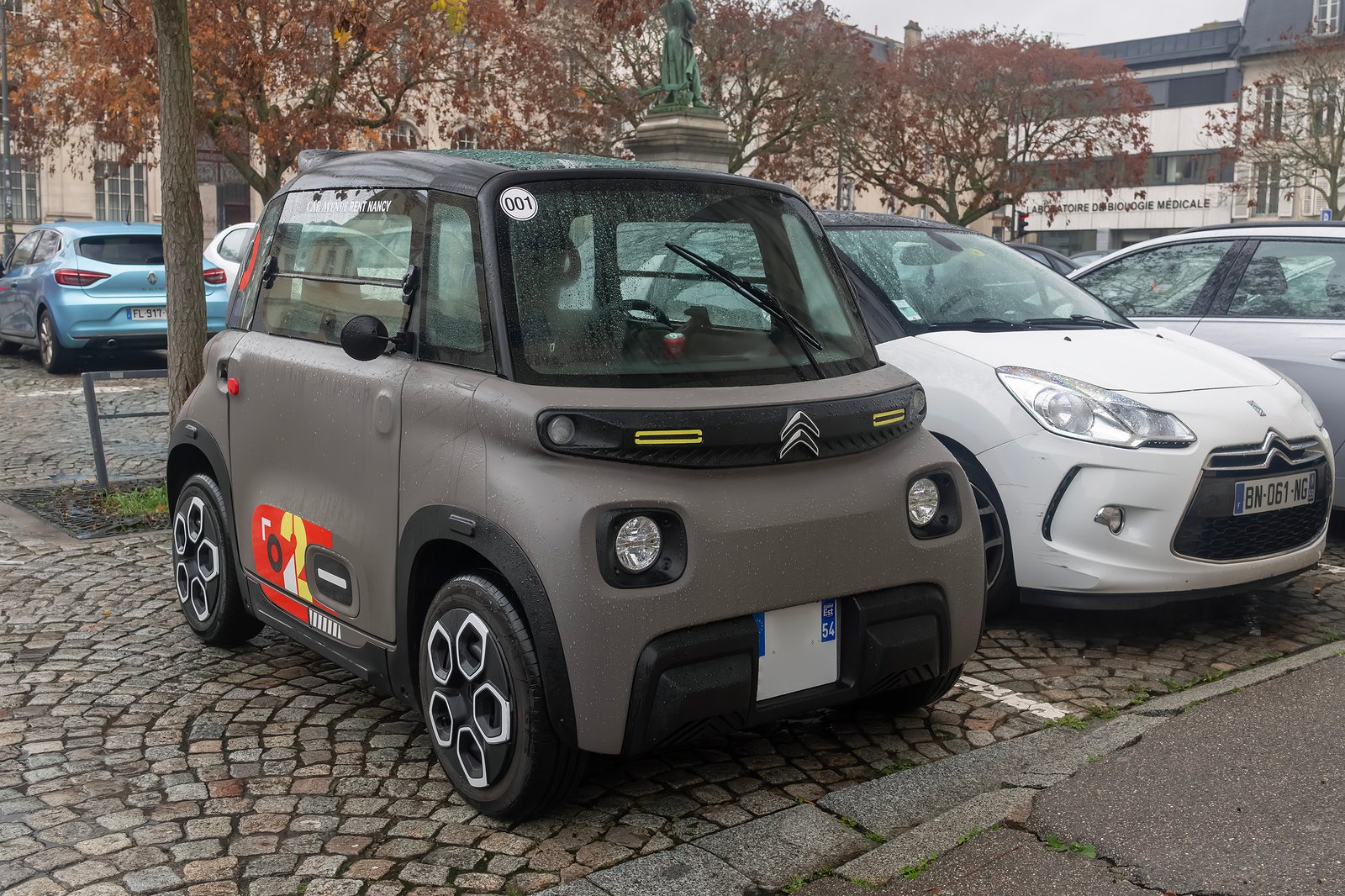
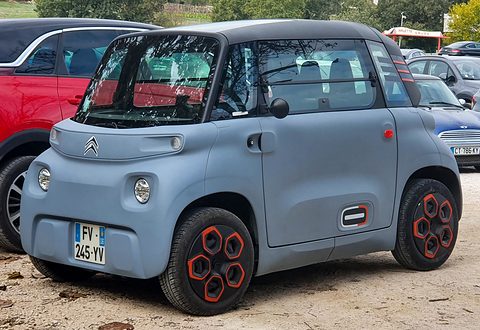
From 30 March 2020 it could be seen, bought and rented in the Fnac and Darty electrical shops; it was also sold online and by Citroën’s dealers, with delivery to the door, and could be shared through Free2Move for €9.90 a month and €0.26 a minute.source 1source 2source 4source 5 Orders opened on 11 May 2020, production began at PSA’s plant in the free zone at Kenitra, in Morocco, in June, and the first cars were delivered at the end of July.source 2source 4source 1 It came in one colour, Ami Blue, a blue-grey, to be personalised with packs of stickers. It cost €6,900, or €6,000 after France’s €900 green bonus, or could be rented long-term for €19.99 a month for 48 months after a first payment of €2,644.source 2source 4source 5
In February 2021 Citroën called back every Ami on the road for a three-week recall and modernisation campaign. French Wikipedia lists the faults: leaks, doors that opened and shut badly, wiper motors that seized, weak spot welds under the car, battery software, the brakes, and a handbrake sensor that interfered with charging. It suggests, as its own view, that Citroën may have expected too much of Altran; most faults were cured by changing how the cars were put together at Kenitra, though some new cars still leaked.source 2 German Wikipedia adds that a car with no airbags, in a class with no crash-test rules, is not without problems for safety.source 3 A reviewer for The Telegraph described the cabin.
being inside a Lego brick
Teenagers, Chalki and the Buggy
Citroën described its typical buyer as a family with several cars and two teenagers, and said that 40 per cent of the Ami’s users were under 18; Deauville was reported to have more Amis per inhabitant than anywhere else. By July 2022, 83 per cent of the French orders, and 94 per cent of the Italian, came from private buyers.source 2
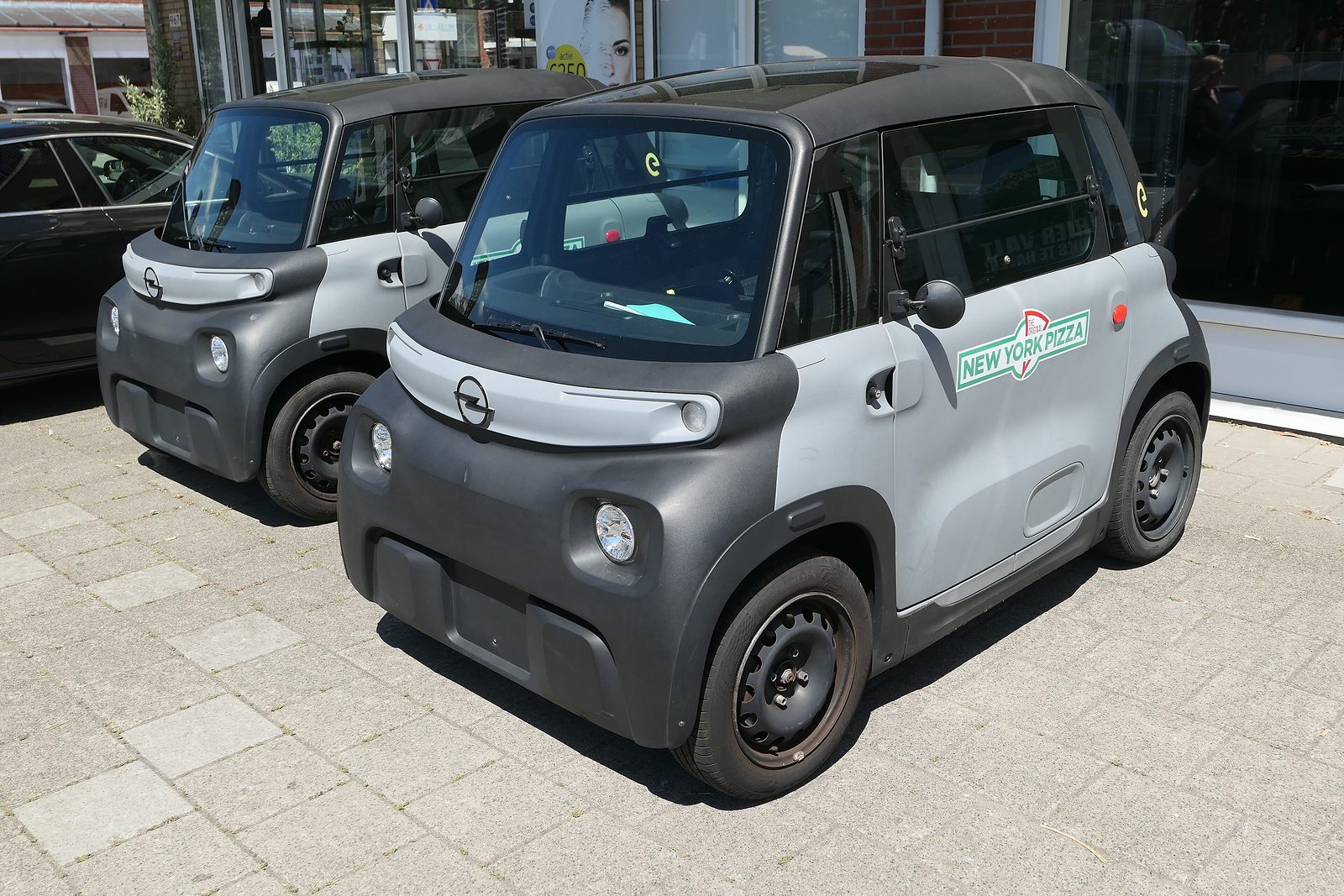
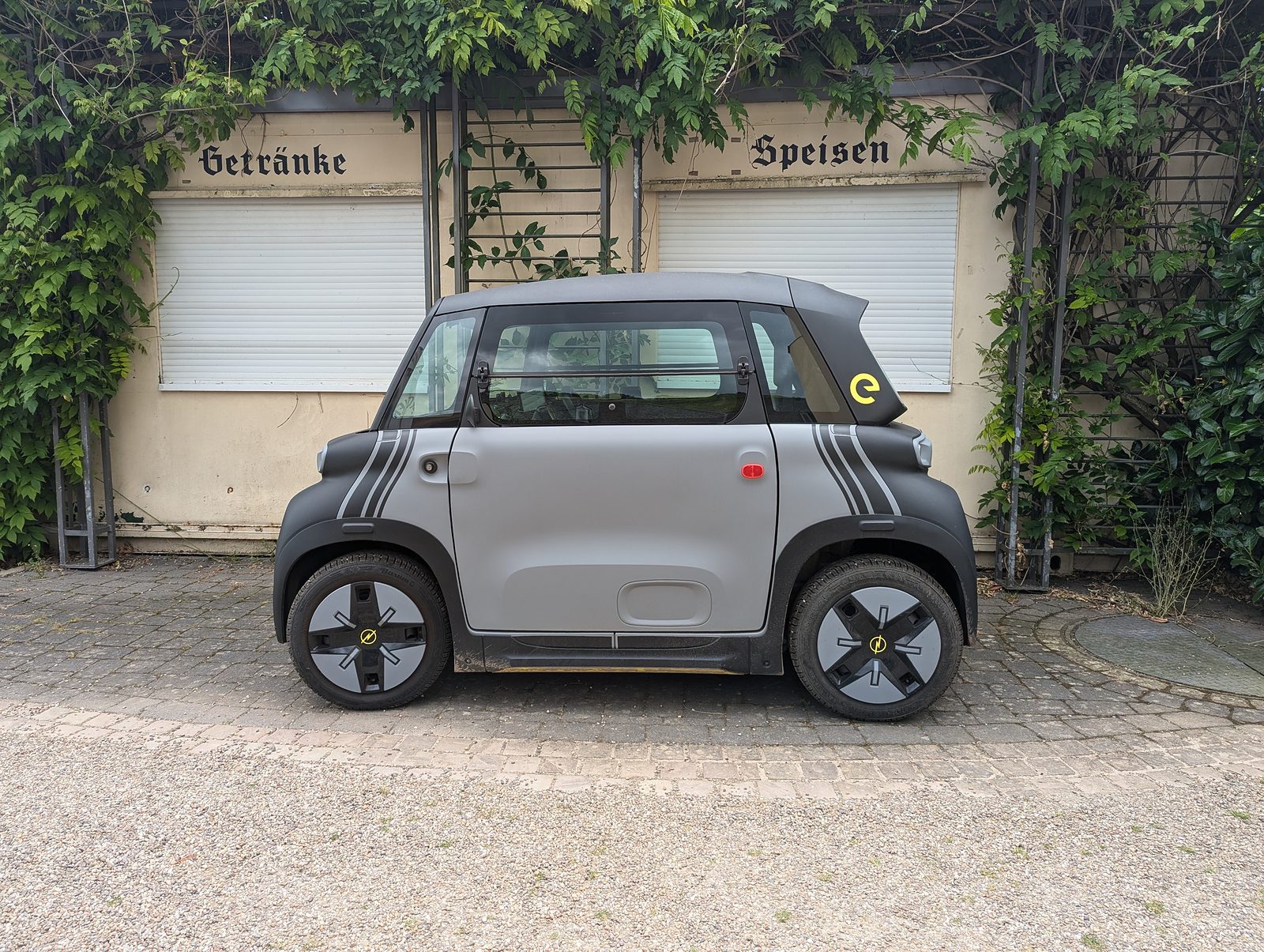
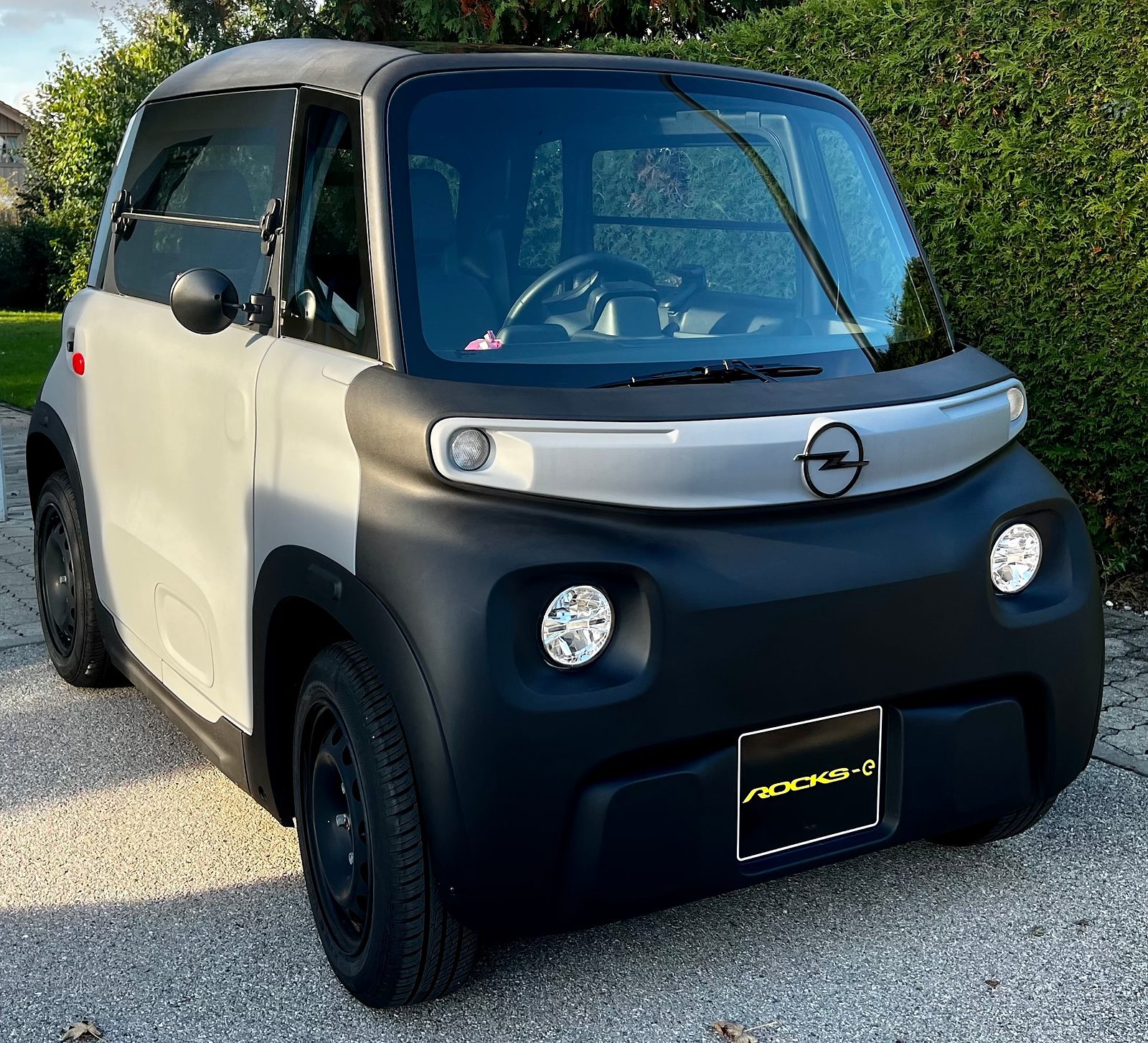
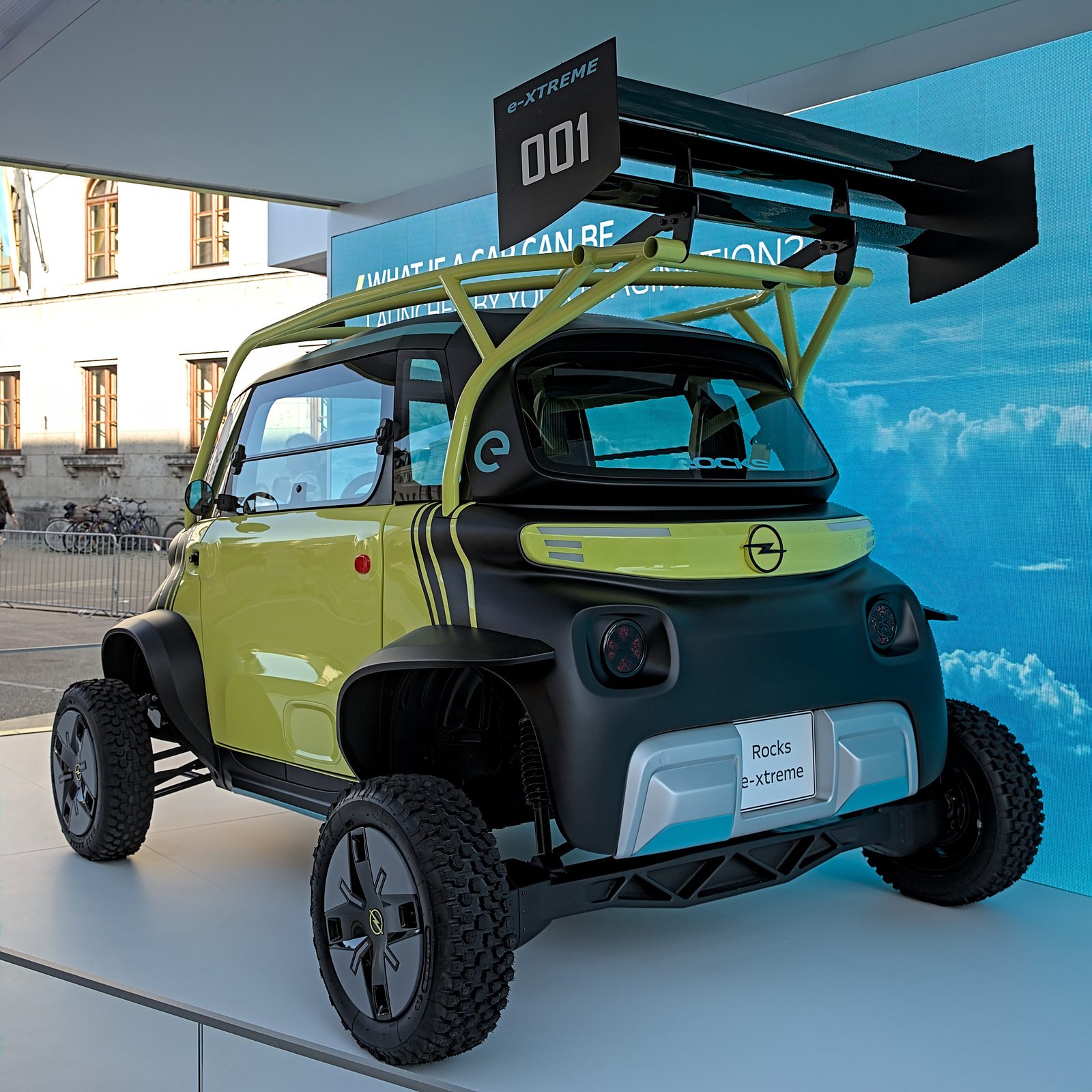
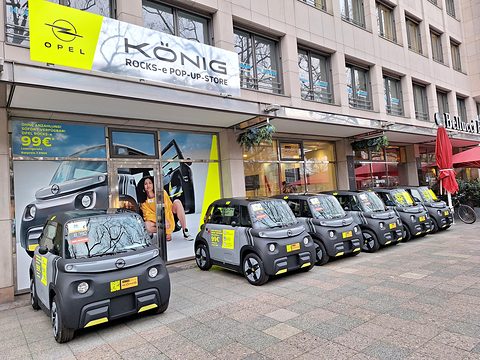
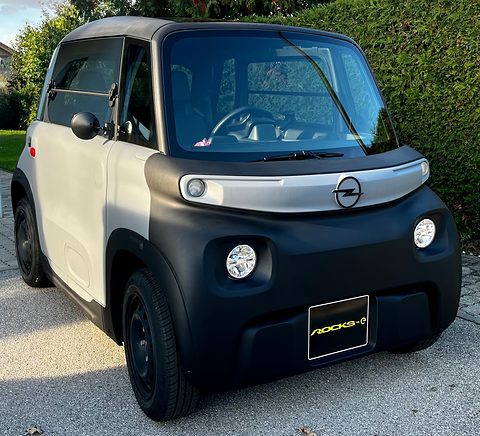
It spread through Europe. Spain and Italy had it in 2021, and Italy quickly became its second market, then Belgium and Portugal; Morocco from December 2021, Greece and Turkey in 2022, Switzerland in June 2023.source 2 British pre-orders opened in September 2021 for 2022, and the British car stayed left-hand drive.source 1source 2 Germany had to wait until the summer of 2024, after several postponements, and had the Opel Rocks-e instead.source 2source 3 On 9 November 2021 two Amis were delivered to the police and the coastguard of the Greek island of Chalki, and the press called the police car the slowest in the world.source 2
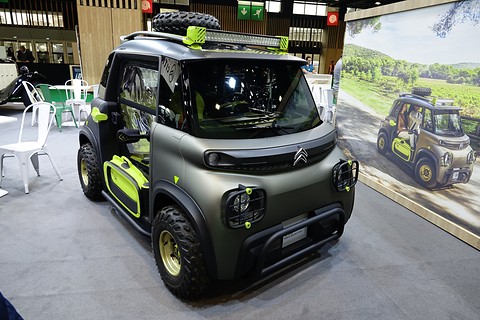
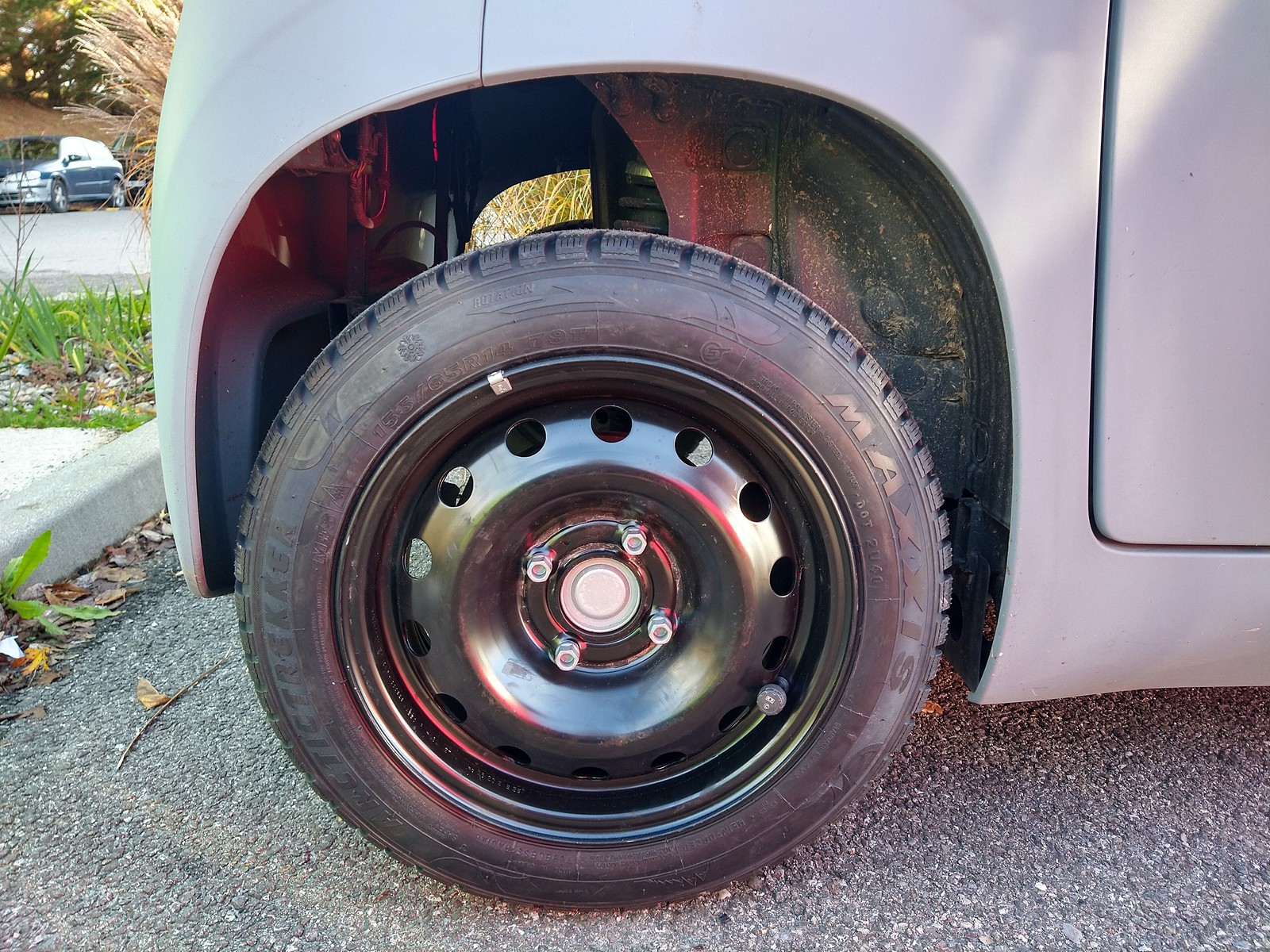
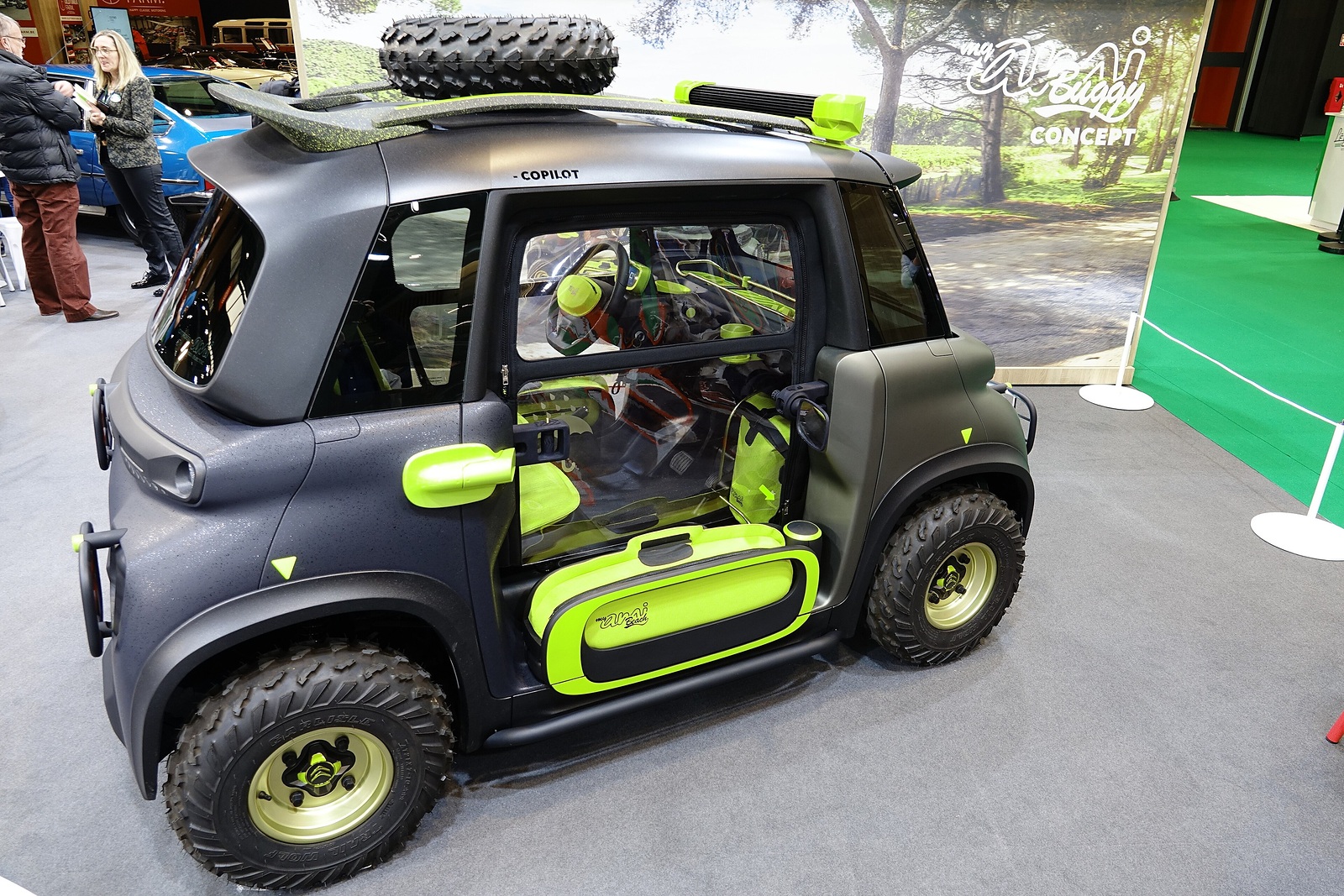
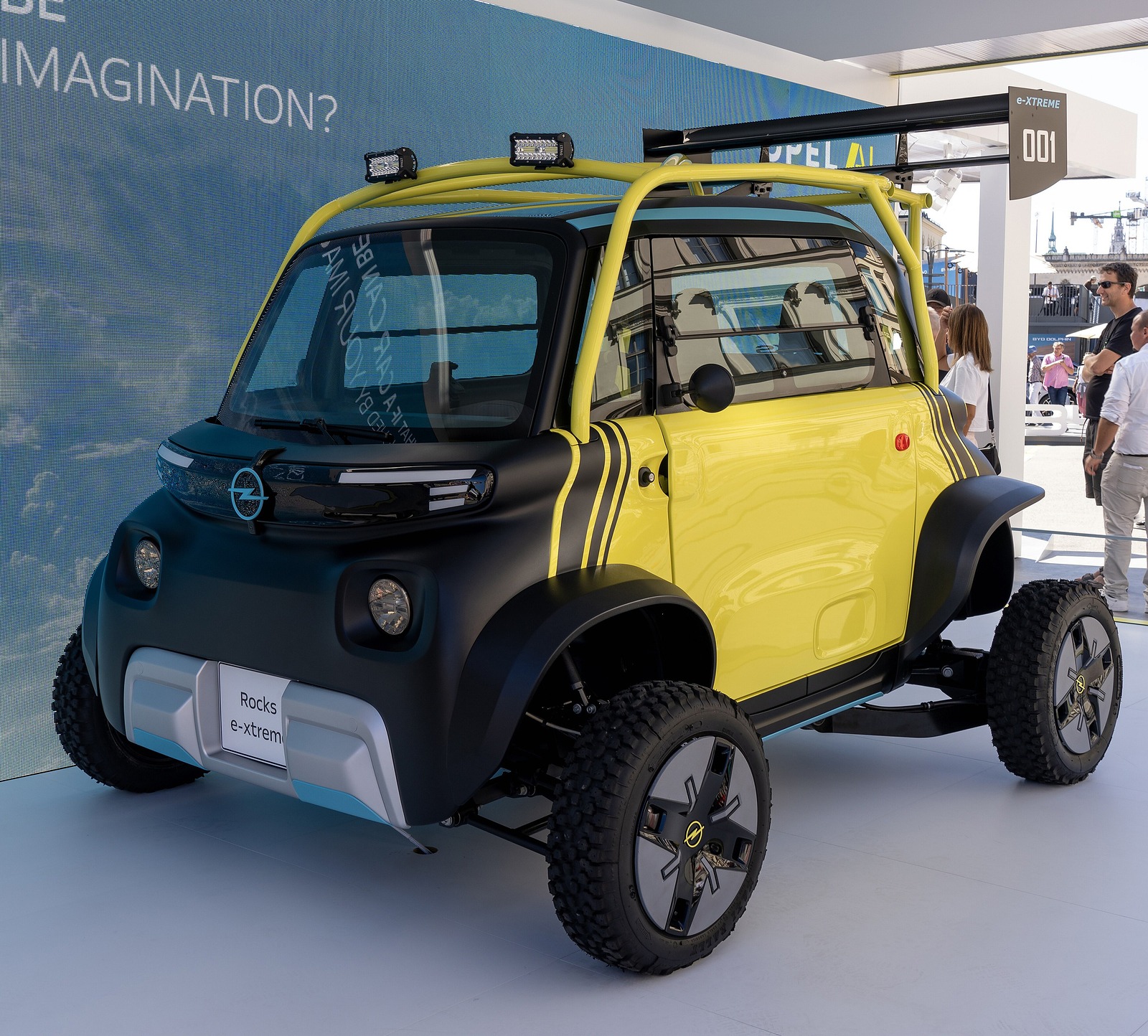
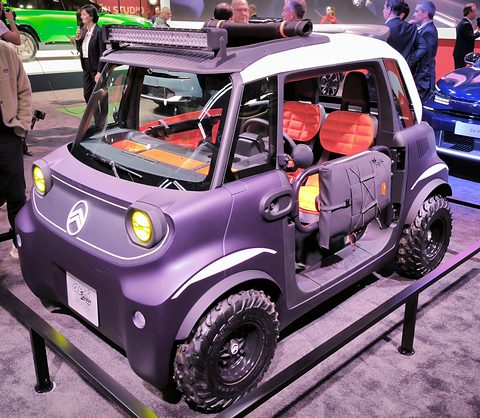
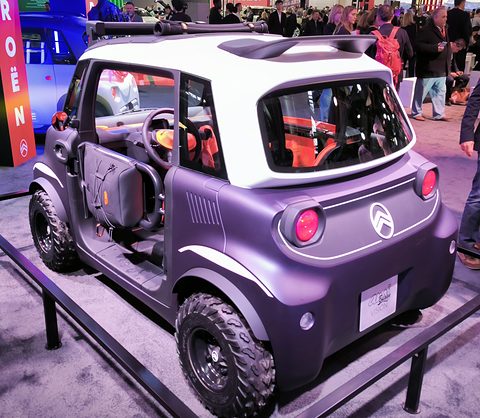
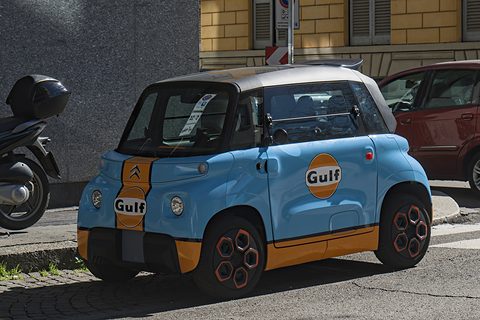
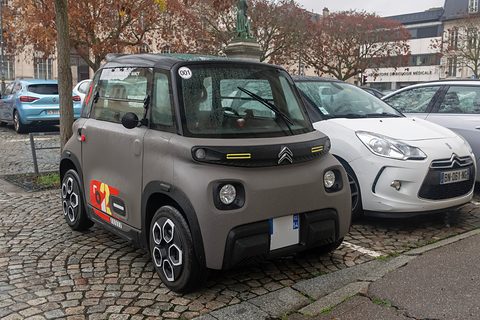
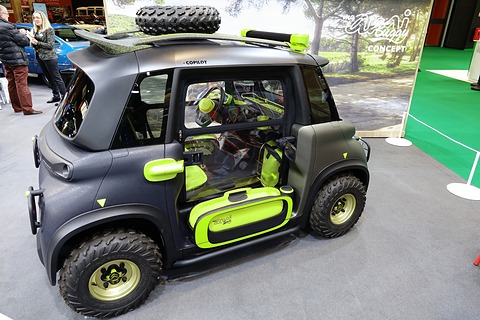
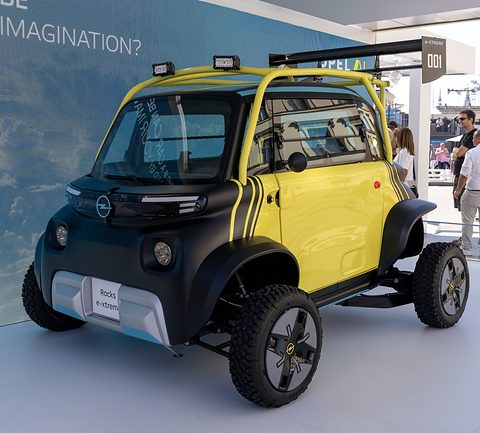
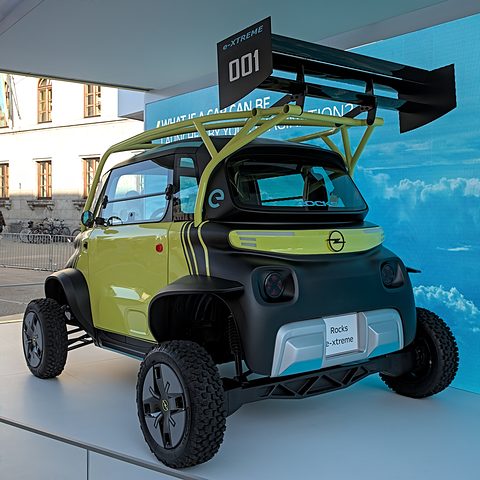
The micro-van, the My Ami Cargo of May 2021, replaced the passenger seat with a polypropylene partition and a lid, giving 260 litres behind the right-hand door and 400 litres in all, for 140 kg.source 3 A My Ami Buggy concept, with knobbly tyres, a spare wheel on the roof, bull bars and lamp guards, followed in December 2021.source 2source 3 Fifty production Buggies went on sale online in June 2022 at €9,790 before the bonus, and were gone in 17 minutes and 28 seconds; a second run of 1,000 came in 2023, and the 800 offered online sold in ten hours.source 2source 1 There was a My Ami Deezer edition of 2,000 cars with a music subscription in November 2022, and a My Ami For All adapted for wheelchair users.source 2 In May 2024 the single blue gave way to brown, and the drive-selector buttons moved to the dashboard.source 1source 2
The new face
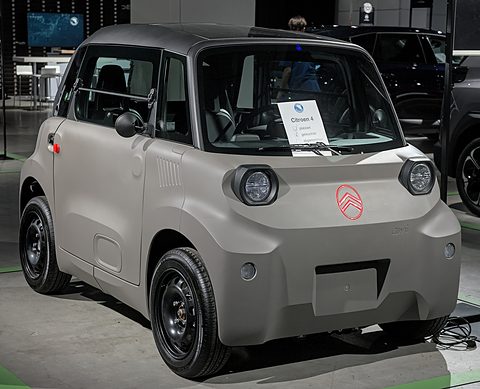
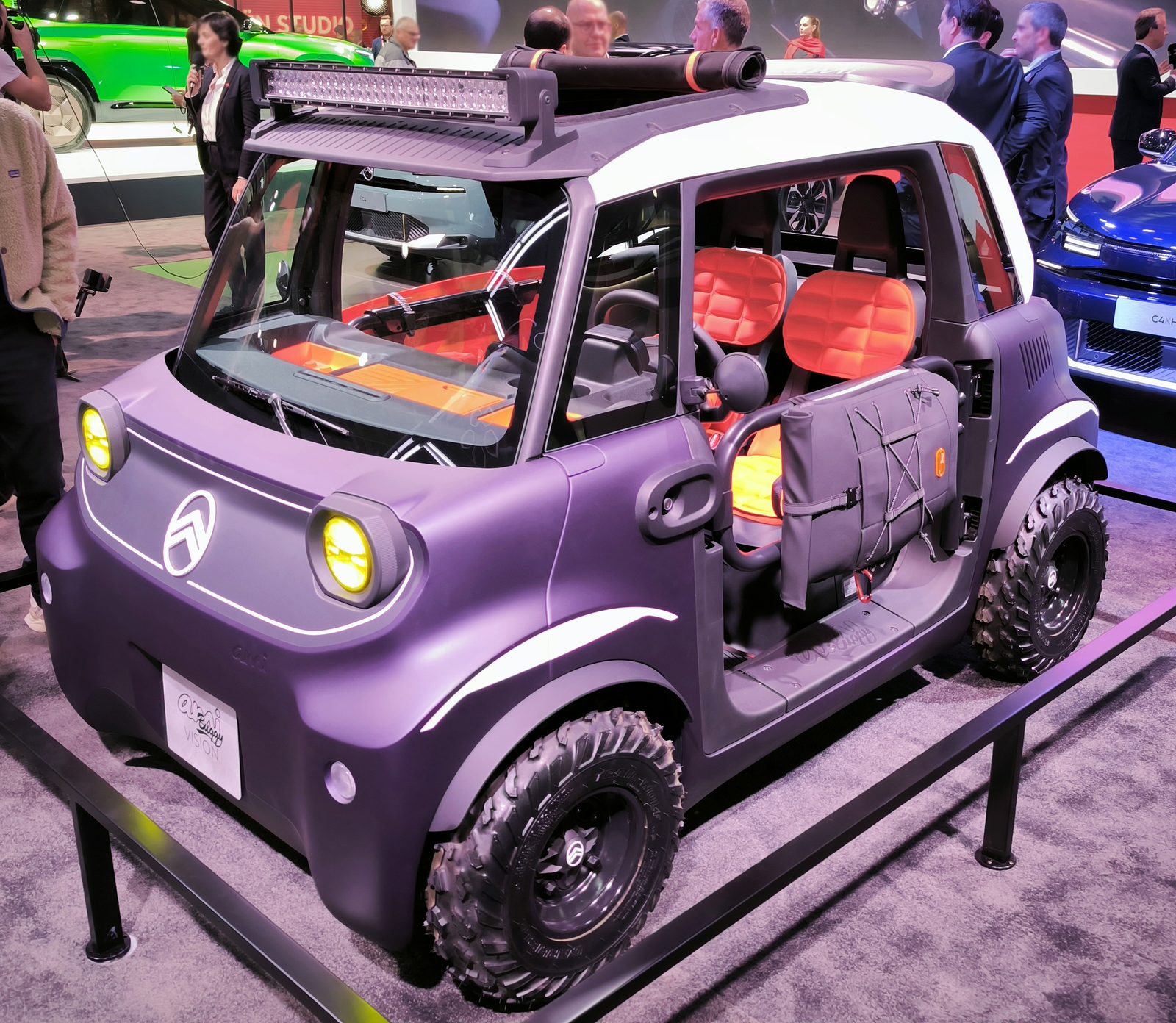
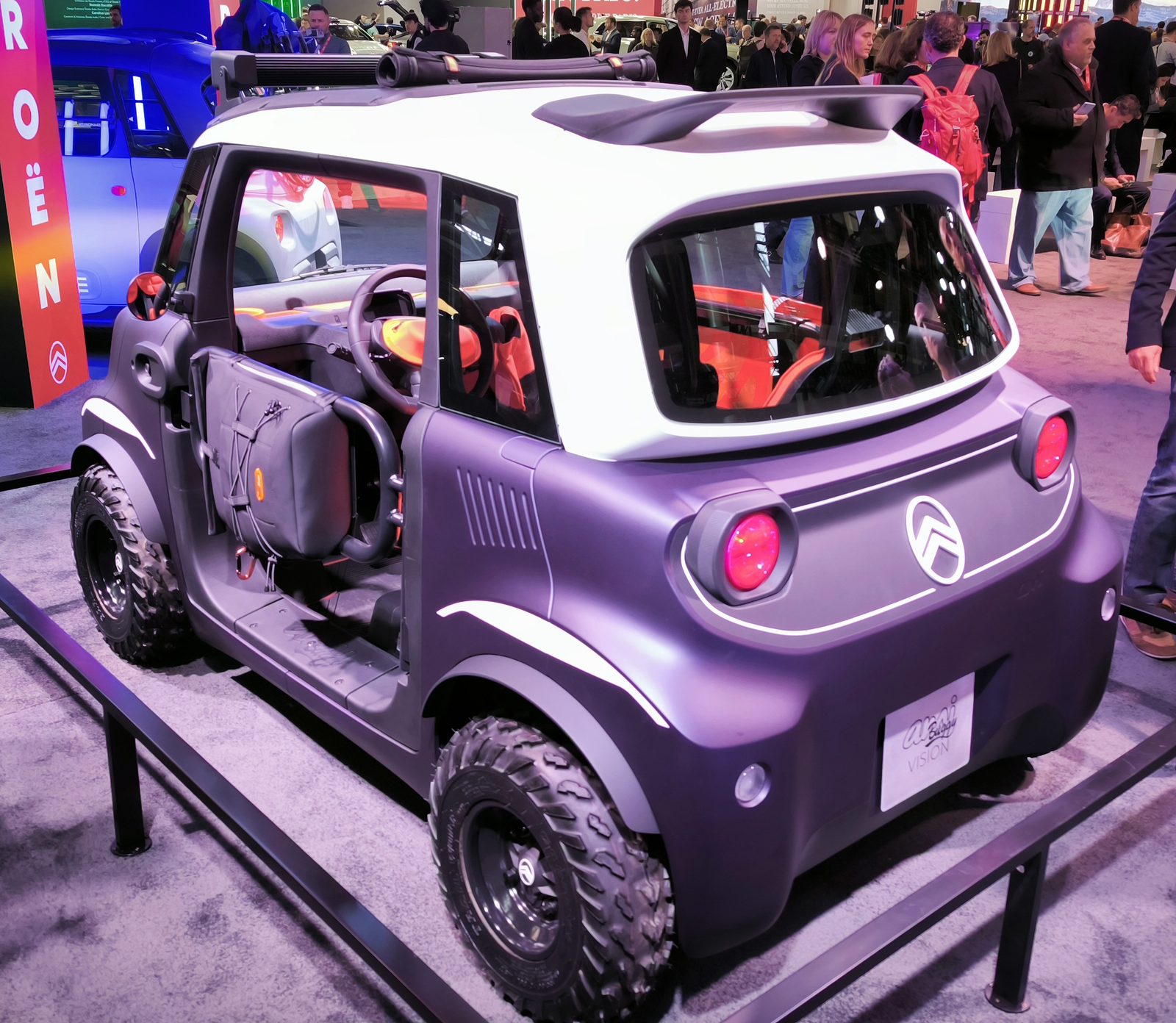
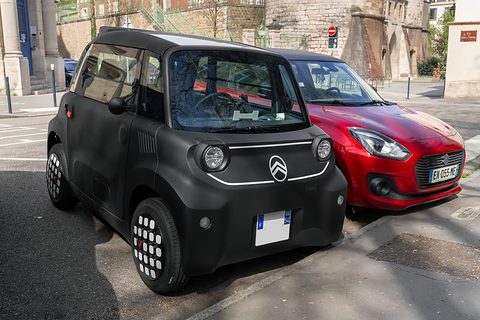
At the Paris Motor Show in October 2024 Citroën showed the first facelift. The front and rear panels gained relief, the headlamps moved up to where the indicators had been and the indicators down towards the tops of the wheels, and there was a new Citroën logo; the middle of the car and its technical data were unchanged.source 1source 2 autohaus.de described black surrounds like eyelids round the lamps, a smile pressed into the front, and grooves on the rear wings in memory of the 2CV.source 7source 8 Citroën’s product and strategy director, Laurence Hansen, pointed to the need for mobility in rural areas.source 7 Beside it stood the Ami Buggy Vision concept, with tubes for doors, a canvas roof, off-road tyres, a light bar and hooks for a kiteboard.source 2source 7
The facelifted car went on sale in 2025, the year of a limited Dark Side edition, a one-off Formul’Ami for the launch of Citroën’s Formula E team, and a Buggy concept with Rip Curl.source 3source 2 Caselani showed a body kit at Rétromobile that recalled Citroën’s Type H van, on sale from February 2025.source 2source 3 By then it was sold in 14 markets, and in Spain from €7,990.source 6