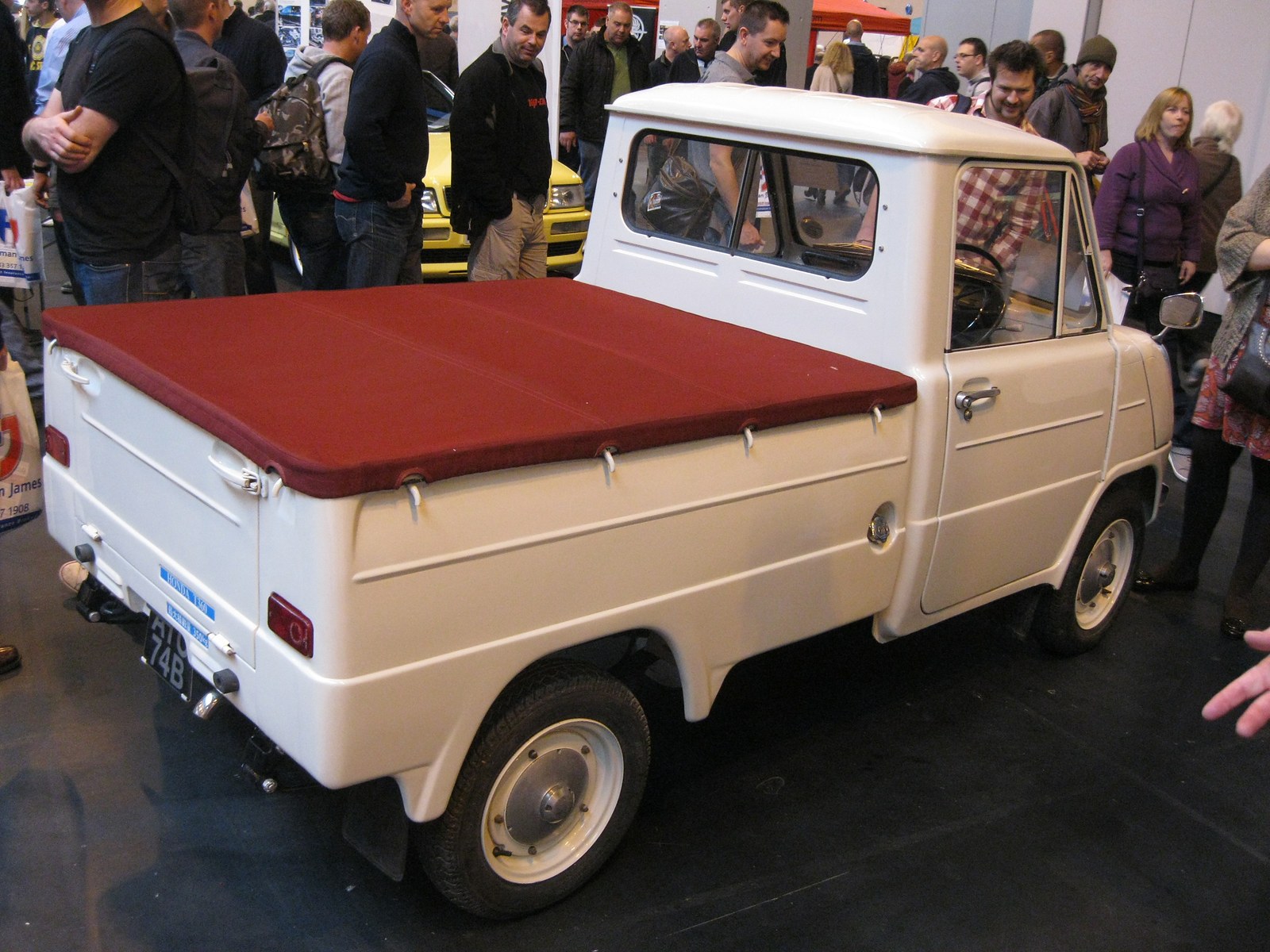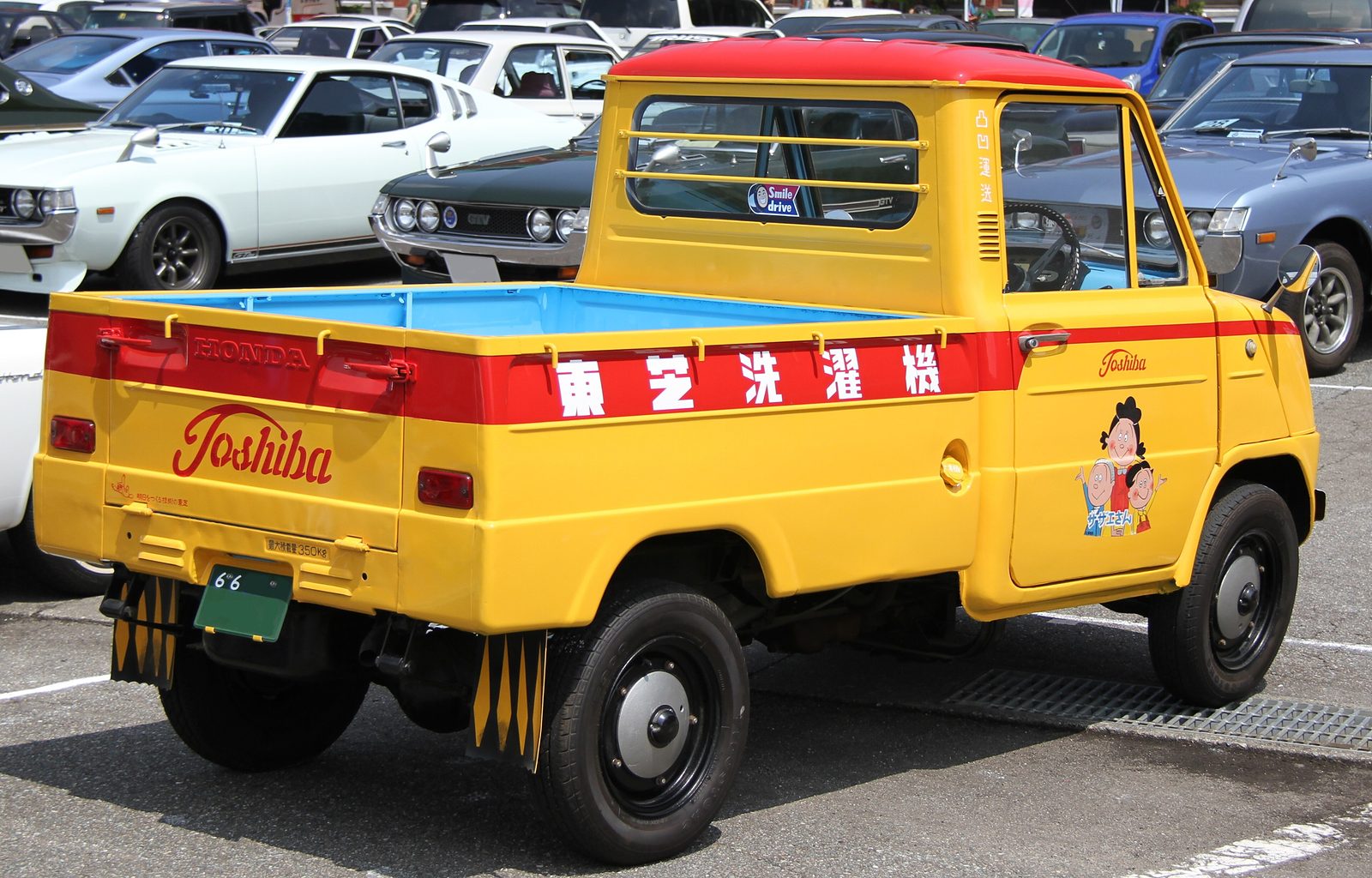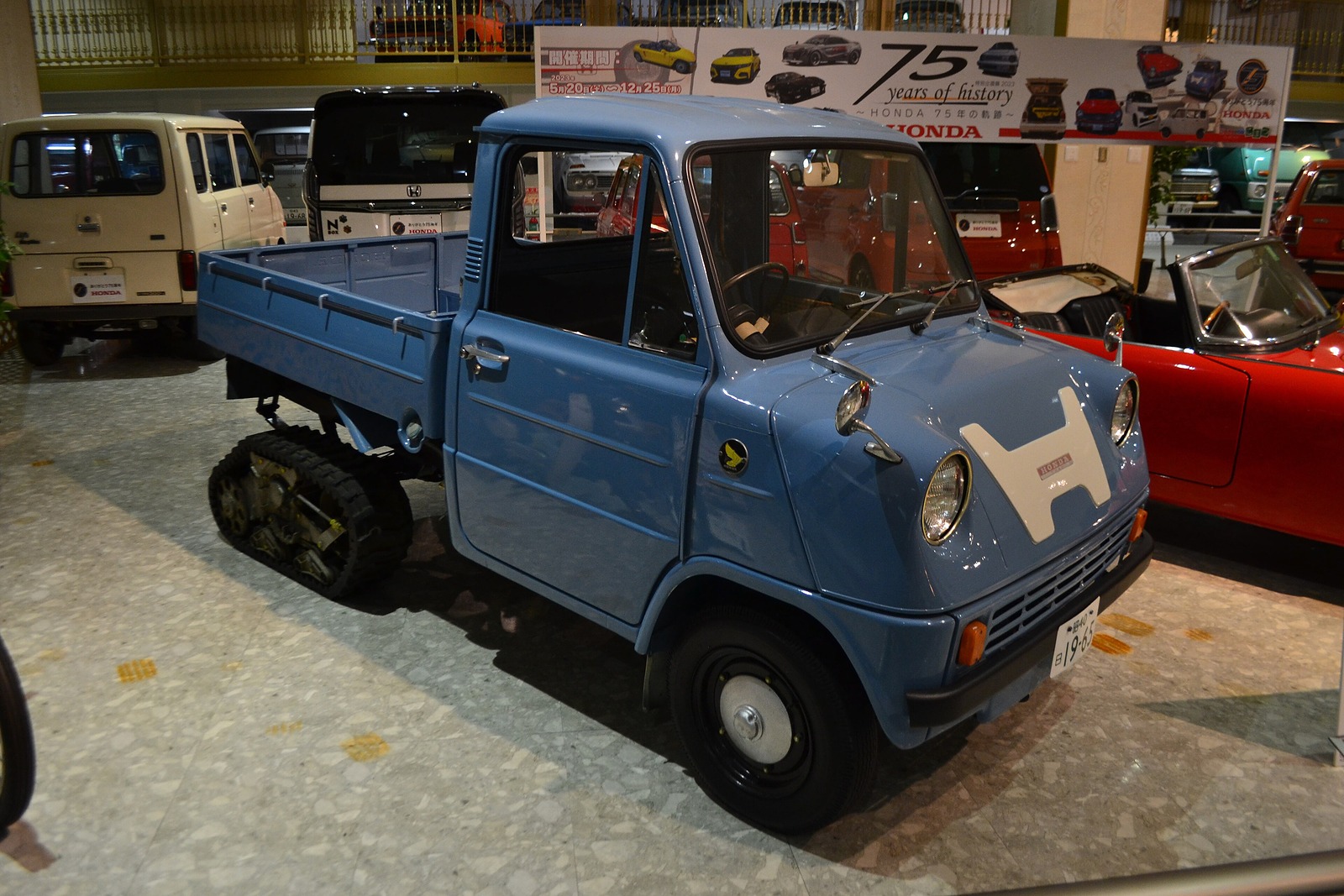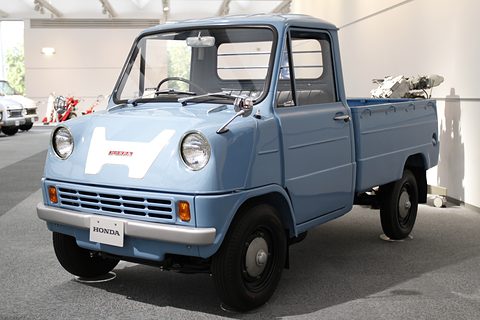
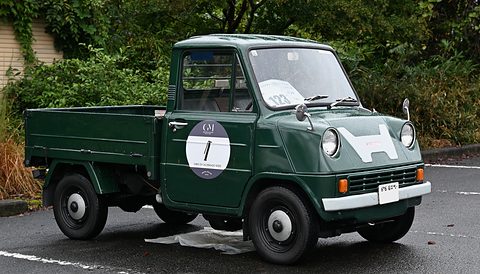
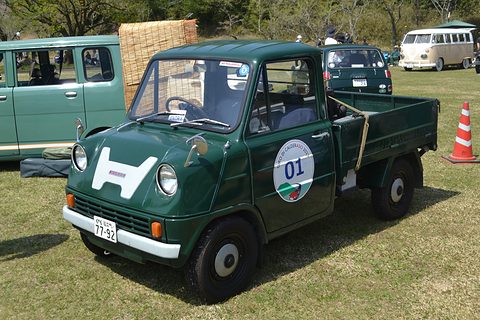
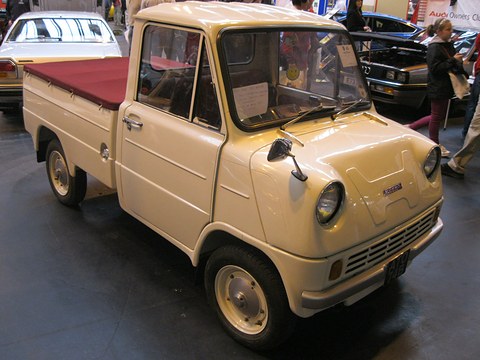
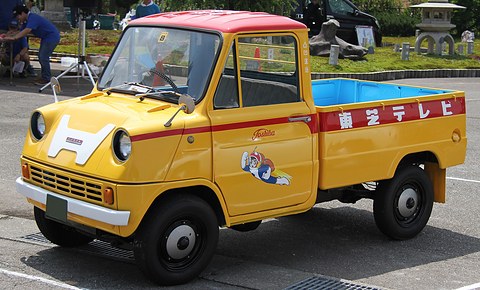
The story
History
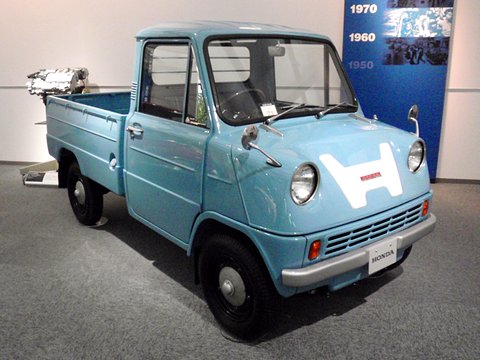
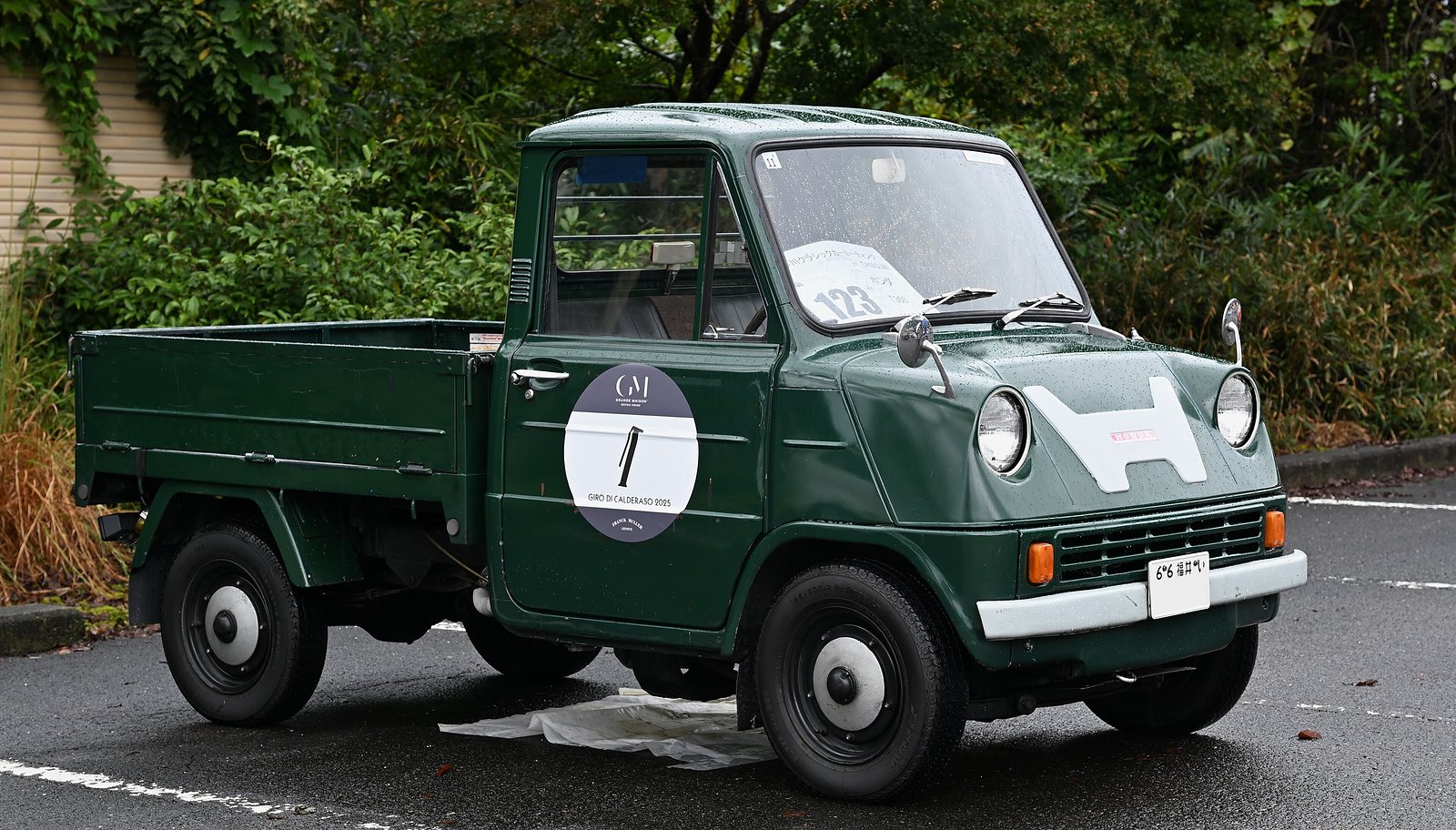
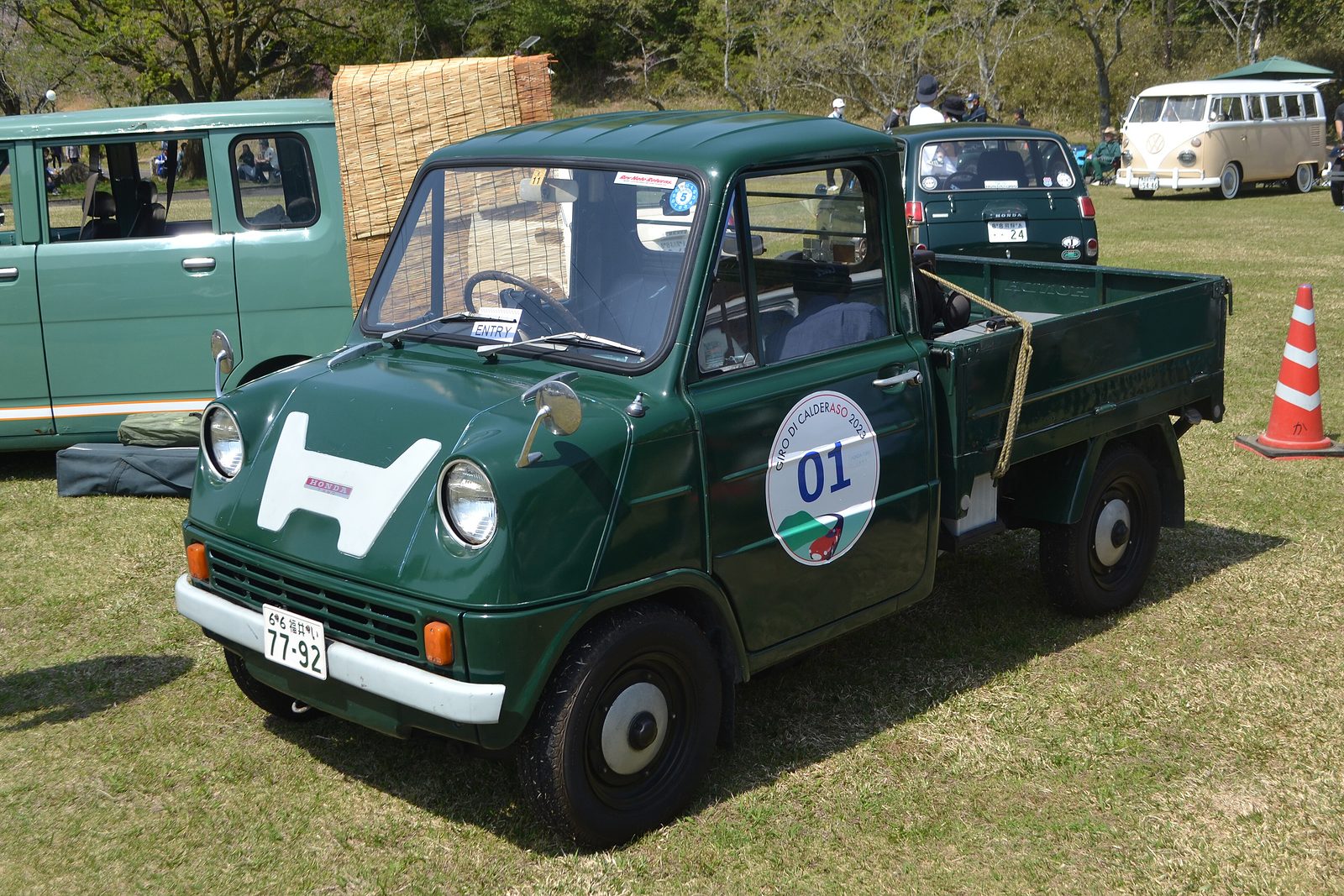
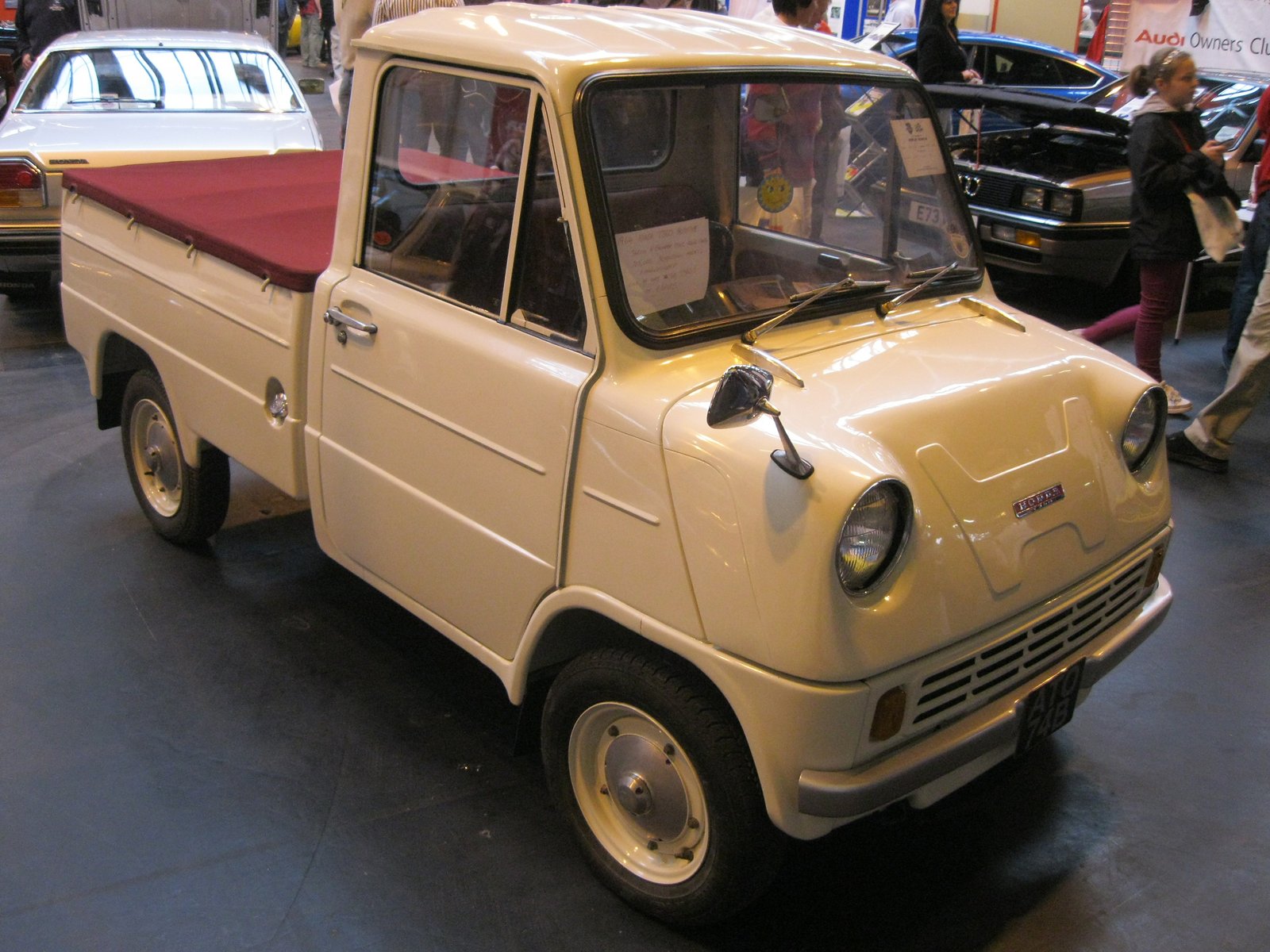
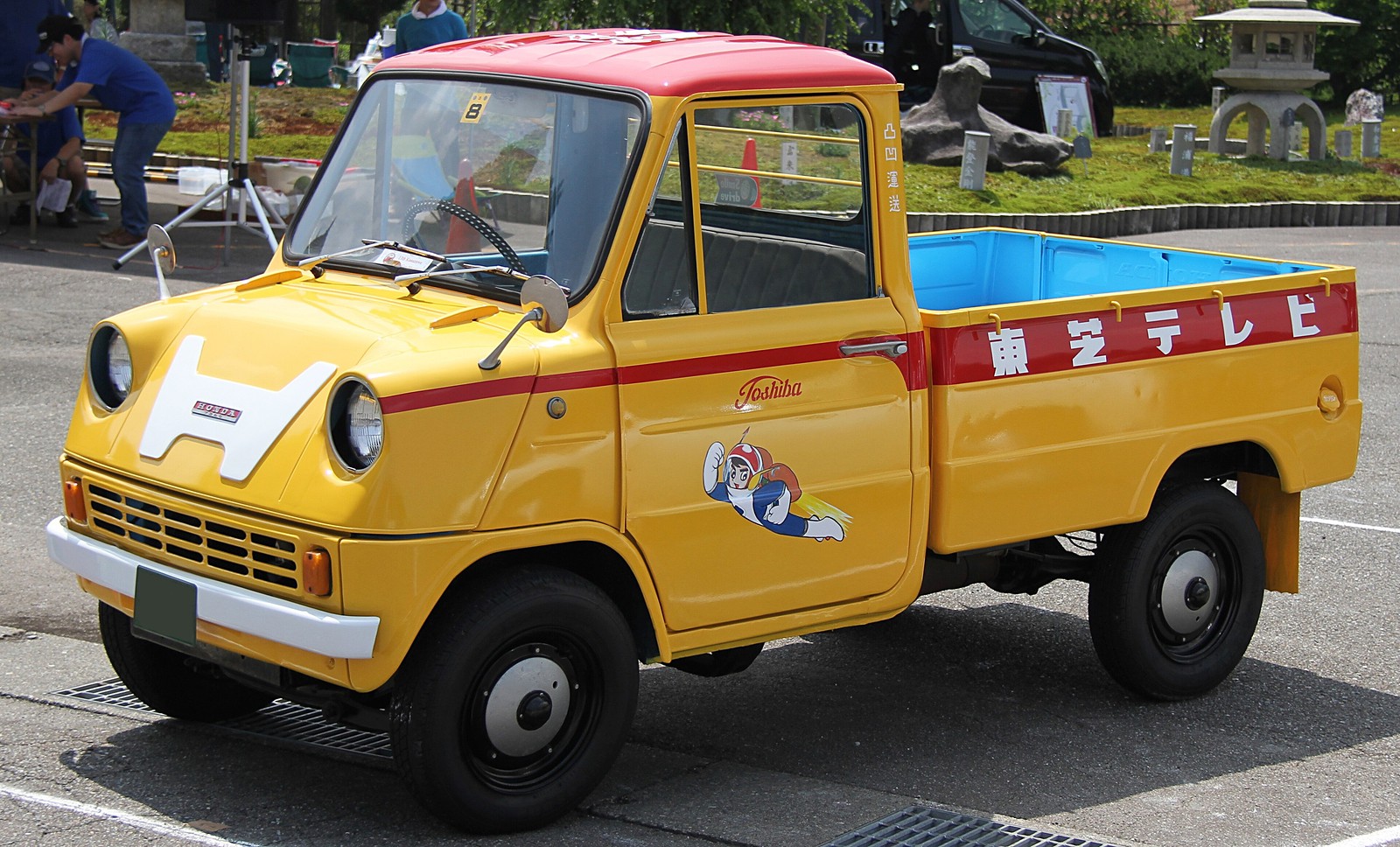
In 1961 MITI brought in a bill to limit the number of car makers, and by The Truth About Cars’s account that pushed Honda to get vehicles into production quickly.source 1 Honda was already developing two small sports cars, the Honda S360 and the S500.source 2 Its managing director, Fujisawa Takeo, argued for a light truck: commercial vehicles were then the larger part of demand, and a truck would give Honda’s motorcycle shops something to sell in winter in place of motorcycles.source 2source 1 Nakamura Yoshio led the four-wheel work, and Japanese Wikipedia says the T360 was the only car in every part of which Honda Sōichirō himself was involved.source 2
The engine is often described as the S360’s, dropped into a truck.source 3source 1 Japanese Wikipedia calls that wrong. It began as an air-cooled in-line four from a light-truck prototype, the 3X-120, was converted to water cooling, and was designed from the start to serve both: the truck’s engine project was XAK-250 and the sports car’s TAS260.source 2 The two were shown together at the 9th All Japan Motor Show in 1962.source 2source 4
A racing engine under the seat
The four was all alloy, with iron liners, and made 30 PS (22 kW) at 8,500 rpm from 356 cc. Early engines breathed through four Keihin carburettors or two Mikuni twin-chokes.source 2source 3 It sat under the bench seat, which hinged up for access, on a ladder frame, and drove the rear wheels.source 2source 3 Honda Sōichirō insisted on a built-up crankshaft running on needle-roller bearings, as on Honda’s racing motorcycles and its RA271 Formula One engine; assembling one needed tweezers. Honda then had no machine tools to make a one-piece crankshaft, and the needle rollers were his wish, to astonish the market with revs.source 2
必ずしもローラーベアリングが必要だとは思わなかった
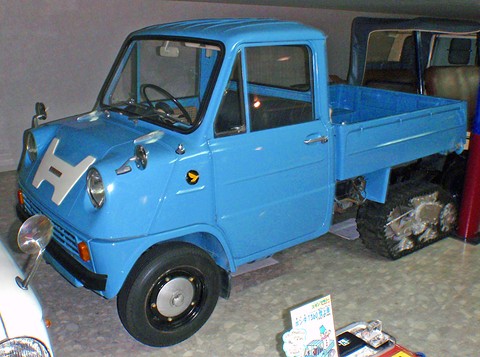
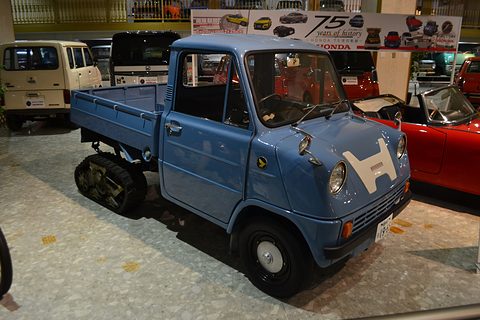
The details were as unusual. An alternator, then a new thing, carried the cooling fan, and the engine drew its air through it, the alternator working as a centrifugal separator to give clean air to an engine under the floor. Two radiators were switched by temperature, and one warmed the cab as its heater. Rumour had it that the engine cost more to make than the truck sold for. Nakamura later called it a monster of an engine.source 2 Every T360 was painted May Blue.source 3
On sale
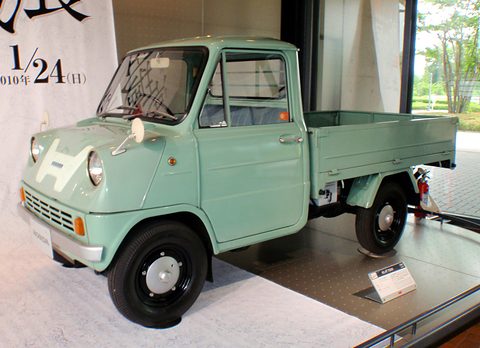
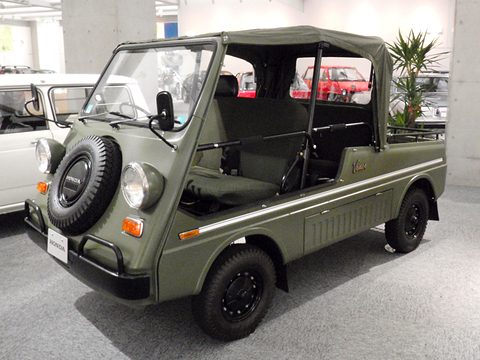
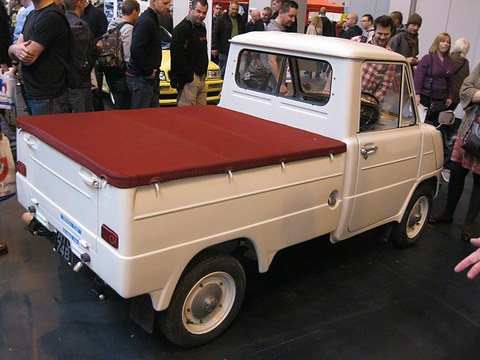
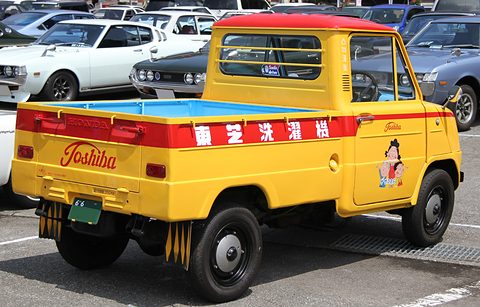
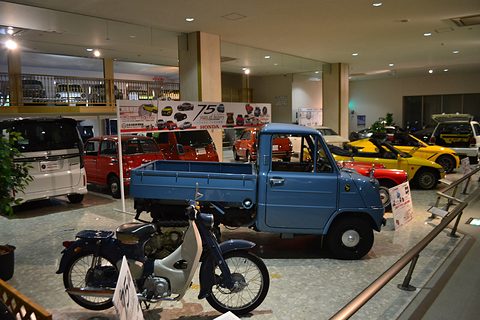
The T360 went on sale in the summer of 1963: in June, four months before the S500, by English Wikipedia, or on 1 August by Japanese Wikipedia. Honda’s own history gives only the year and counts it as Honda’s first car product.source 2source 3source 4 Besides the pickup there were a flatbed, the T360F, a flatbed with folding sides, the T360H, and a covered van, the T360V. For snowy regions the Snowler kit replaced the rear wheels with rubber tracks and put skis at the front.source 2source 3 In September 1964 came the T500, with a 531 cc engine derived from the S500’s, 38 PS, a longer load bed and a 400 kg (882 lb) payload. Registered as a small truck rather than a kei, it was mainly for export, and every one was Moss Green.source 2source 3
The truck was complex and costly. In four years the block was redesigned nine times and the crankshaft six, and a small difference in engine number could decide whether an ordered part fitted. Later trucks had a single carburettor and a combined dynamo-starter, and from October 1966 small round indicators on the front wings.source 2 Even mechanics who knew Honda’s S600 and S800 engines hesitated to overhaul one.source 2 Yet, Nakamura said, there were no customer complaints.source 2 It took only about 6 per cent of the kei-truck market, against the 1,543,154 its rivals sold in the same four years, and a later writer judged the truck a mistake from the start.source 2 A writer looking back in 2010 saw it otherwise.
a perfectly successful and reliable little beast
In November 1967 the cab-over TN360 replaced it, with the air-cooled 354 cc twin of the Honda N360 under its load floor.source 2source 5 The TN line ran to July 1977, about 700,000 strong, and was followed by the TN Acty.source 5 Its tracks had an heir too: Honda’s Acty Crawler of 1994 was a purpose-built half-track.source 2 (The other small working vehicles are on our micro-vans page.)