microcarfan
  • Three-wheeler
  • Germany
  • Three wheels
  • Fabric body

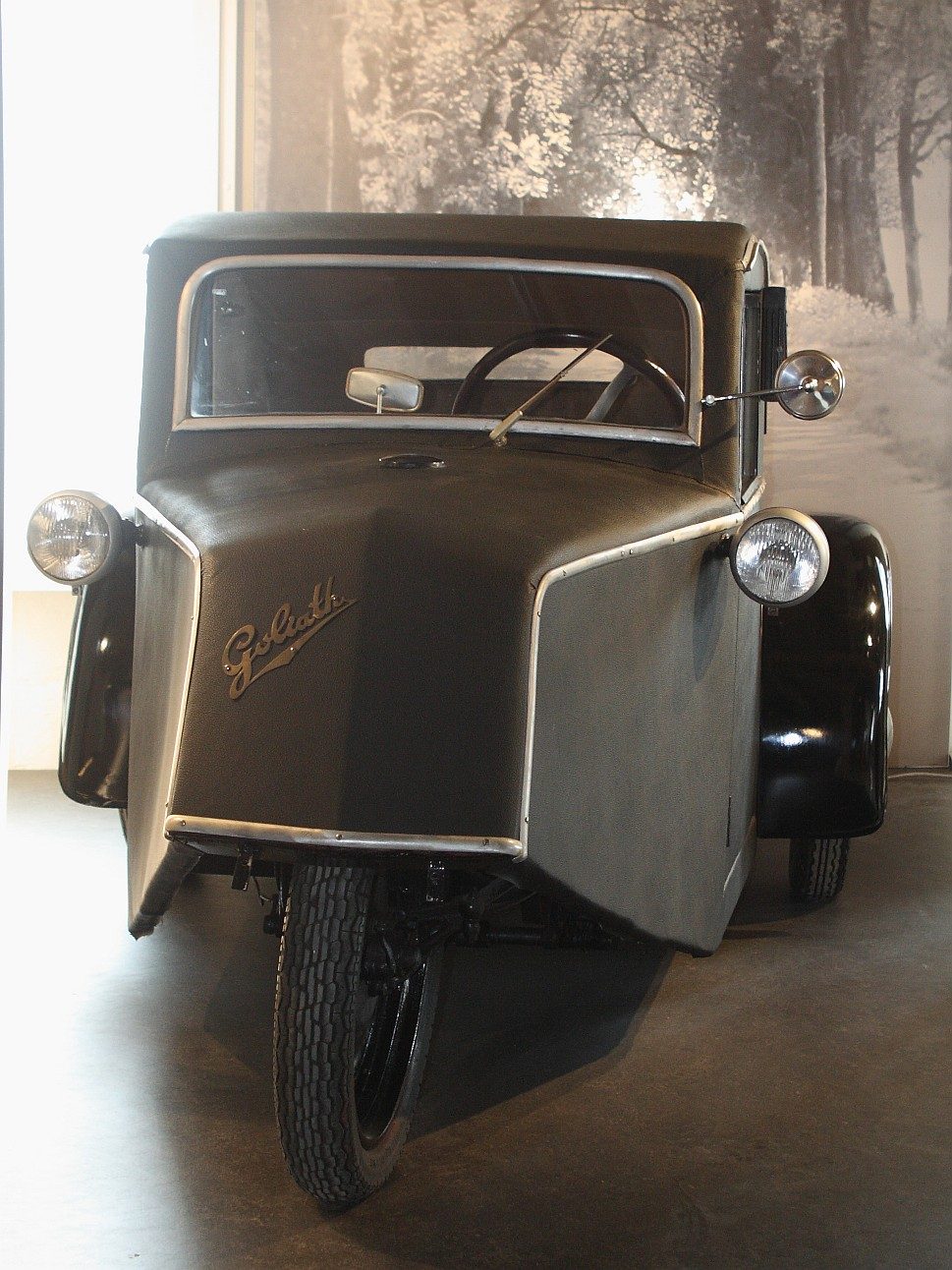
Goliath Pionier

Also known as Borgward Goliath Pionier

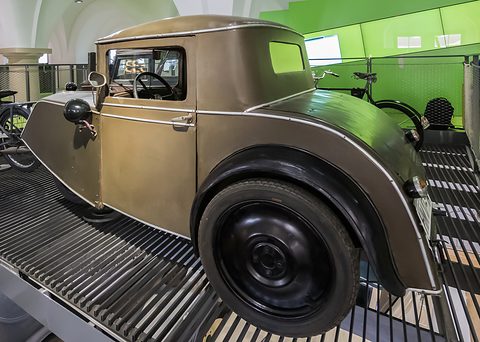
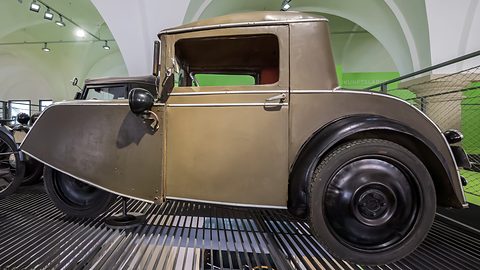
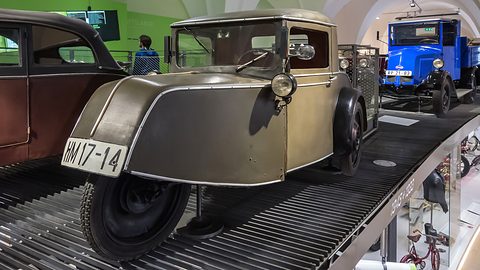
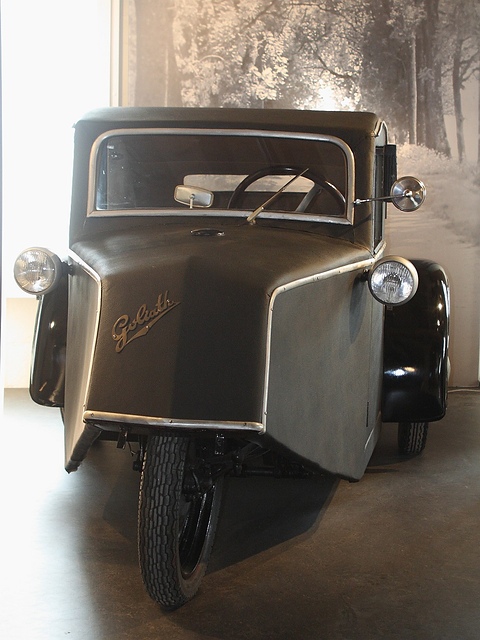
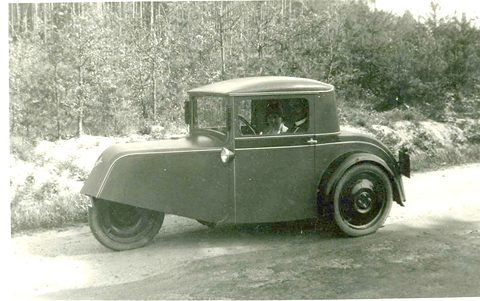
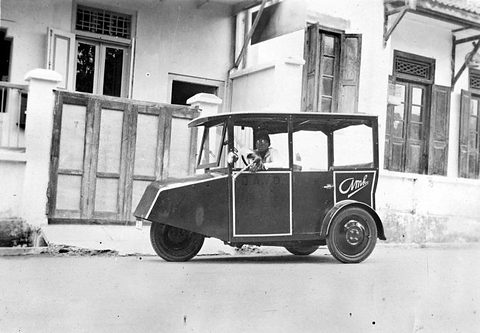
Carl Borgward’s first car was a wooden frame covered in fabric, with one wheel at the front and a two-stroke of 198 cc. It existed because a German three-wheeler paid no vehicle tax and could be driven without a licence. When the tax rules changed, so did the car.

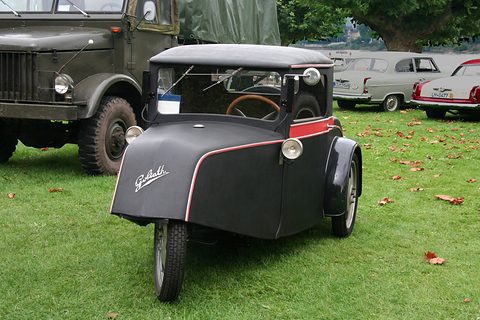
A small black three-wheeled coupé with a single front wheel and Goliath script on its nose, on grass.
Black Goliath Pionier coupé with a red stripe at the Borgward meeting in Andernach in September 2007.Photo: Lothar Spurzem, CC BY-SA 2.0 de, via Wikimedia Commons

At a glance

The spec plate

Goliath Pionier

Pionier · Bremen

Built
1931–⁠1934Shown at the Berlin motor show in 1931
Country
GermanyBremen
Maker
Goliath-Werke Borgward & Co.Carl F. W. Borgward’s firm
Engine
198 cc or 247 cc two-stroke singleILO, air-cooled; at the back by the Lane museum, at the front by English Wikipedia
Power
5.5 PS4 kW at 3,200 rpm; 6.7 PS (5 kW) with the 247 cc engine
Length
3,100 mm1,500 mm wide, 1,400 mm high
Weight
350 kgEmpty; 500 kg laden
Seats
2Two doors, in a coupé or a cabriolet
Wheels
3One at the front, two at the back
Price new
RM 1,400By German Wikipedia
Production
about 4,0001931–⁠34; the fastback only a few hundred
Top speed
64km/h64 km/h40 mph; 50–60 km/h by German Wikipedia

How big is it?

True proportion

3.10 m

It is 130 mm longer than a Fiat 500, about 1.8 adults laid end to end.

  • 1.50 m wide
  • 350 kg: about five adults
  • A wooden frame covered in fabric
  • Wheelbase 1,280 mm (50 in)
Drawn at true proportion. The track is 3.6 metres long; the adult stands at the same scale. The Peel P50 is the smallest production car, on every page for comparison.

The story

History

Carl F. W. Borgward started the Bremer Kühlerfabrik Borgward & Co., a radiator firm, in Bremen in 1921.source 1 His first complete production vehicle, from 1924, was a three-wheeled delivery cart, the Goliath Blitzkarren, and its successors were the Goliath Rapid and Goliath Standard.source 1source 2 In 1929 Borgward and Wilhelm Tecklenborg took over the Hansa-Lloyd works in Bremen too, the start of what became the Borgward group.source 1source 2

A car for the Depression

Borgward showed his first car at the Berlin motor show in 1931, by German Wikipedia’s account; the Lane Motor Museum, on another page, has it born in 1932.source 3source 1 It was aimed at people the Depression had left unable to afford a car. A light three-wheeler could be driven without a driving licence and paid no vehicle tax, and German Wikipedia says no insurance either; the Lane museum says Borgward designed it to escape the annual tax on four-wheelers.source 3source 4

Three-wheel vehicles escaped this tax until 1933, and this made for sales of about 4,000 vehicles.

The Lane Motor Museum in Nashville, describing its 1933 Goliath Pionier online.source 4

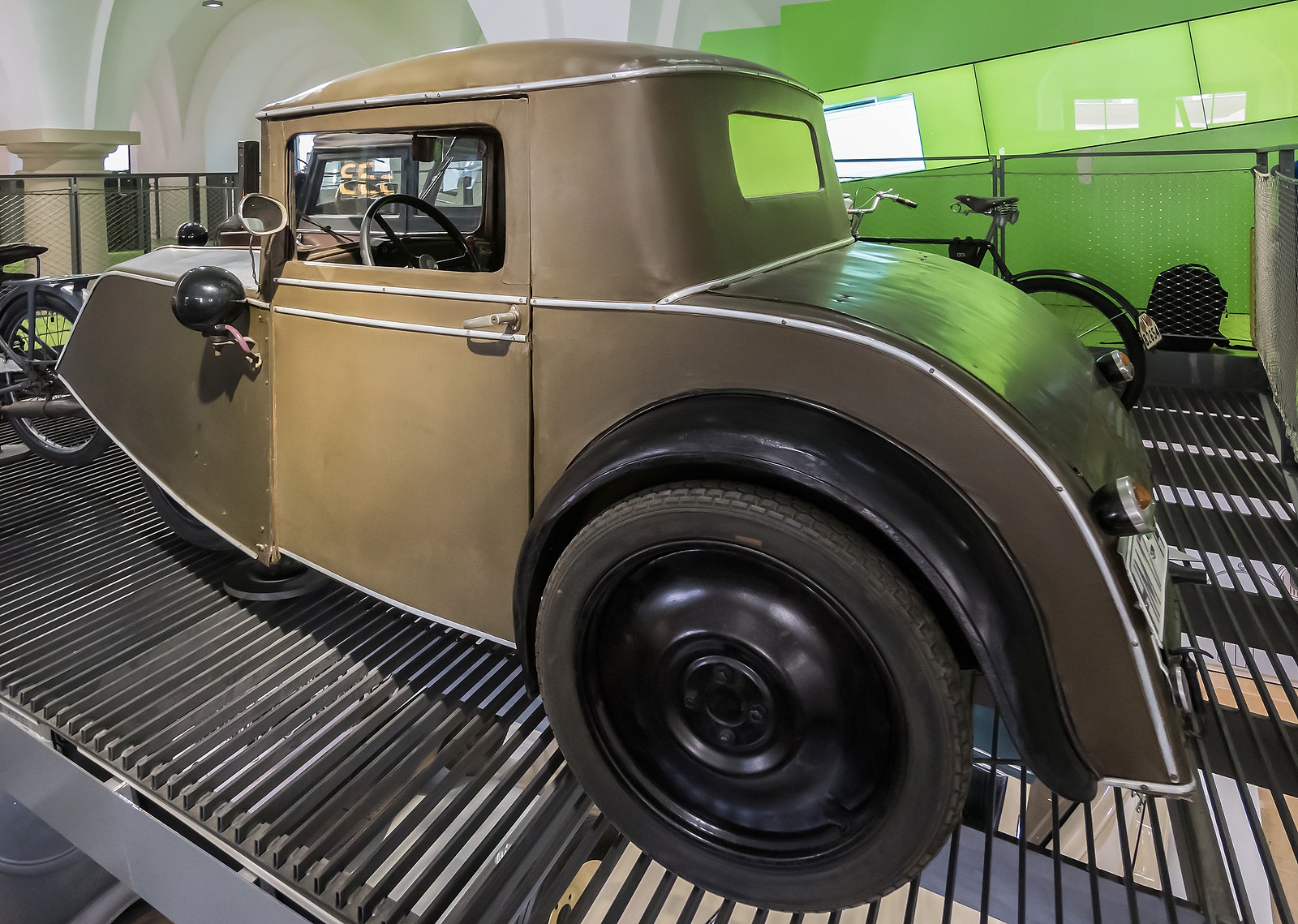
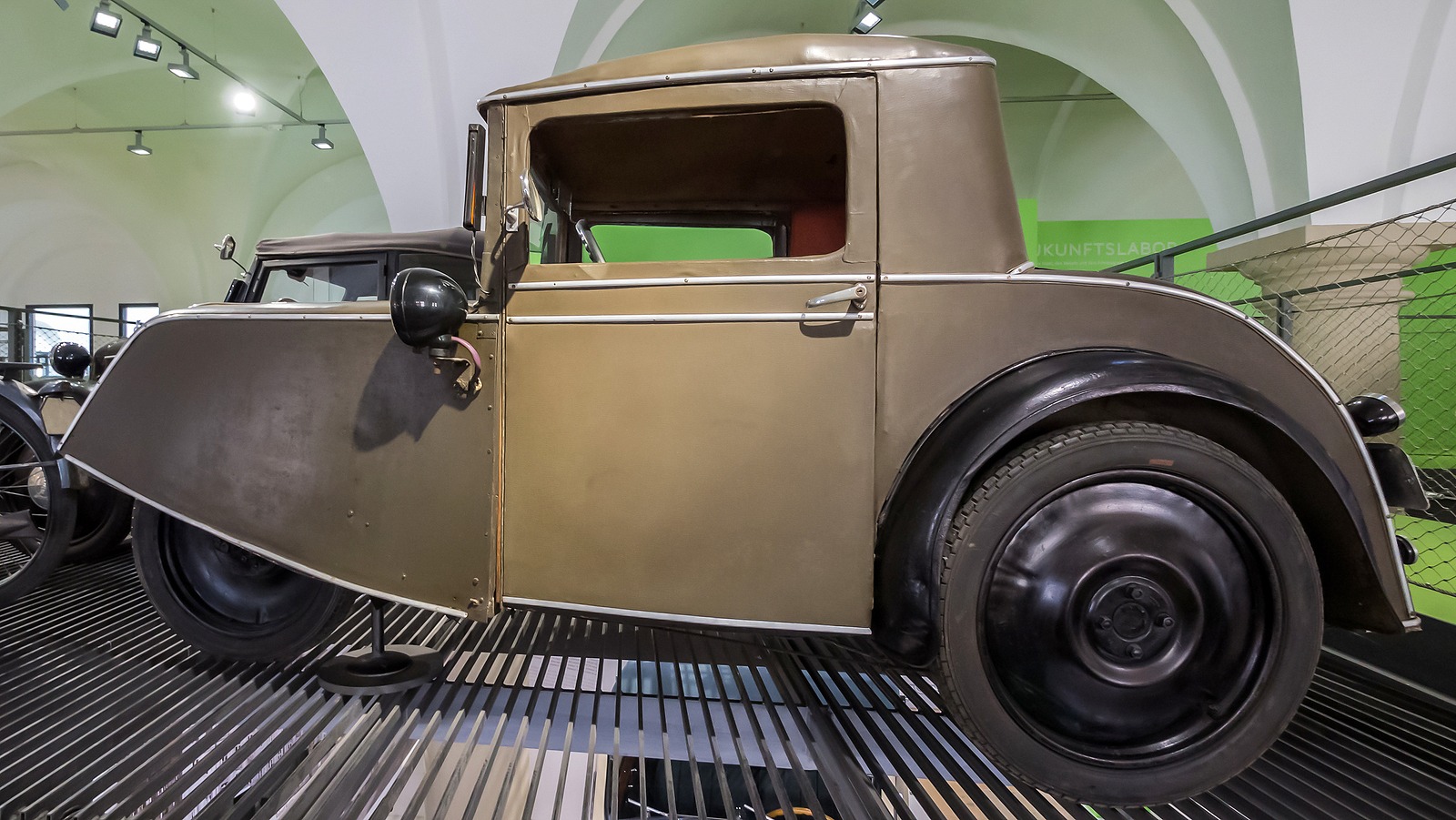
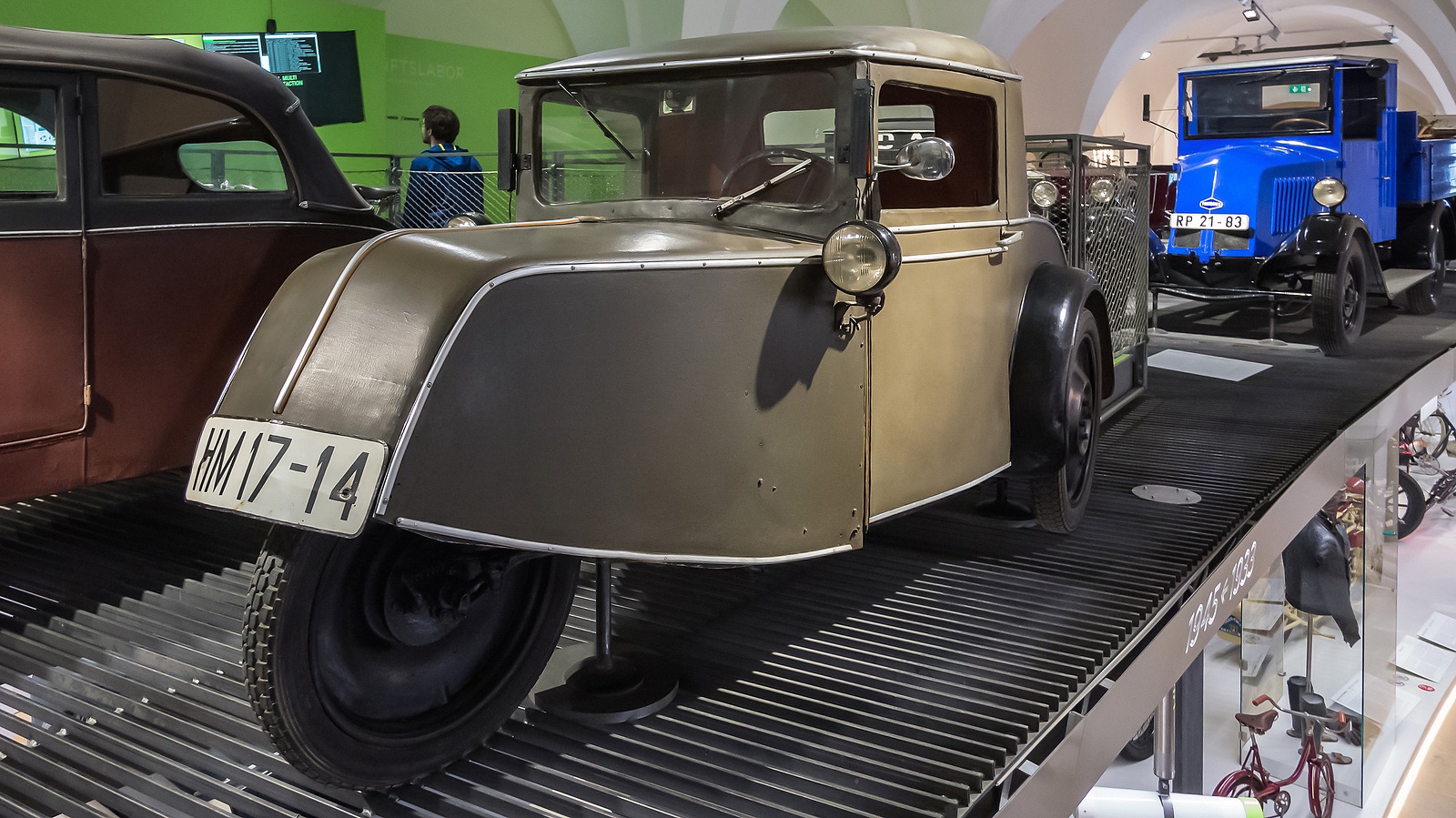
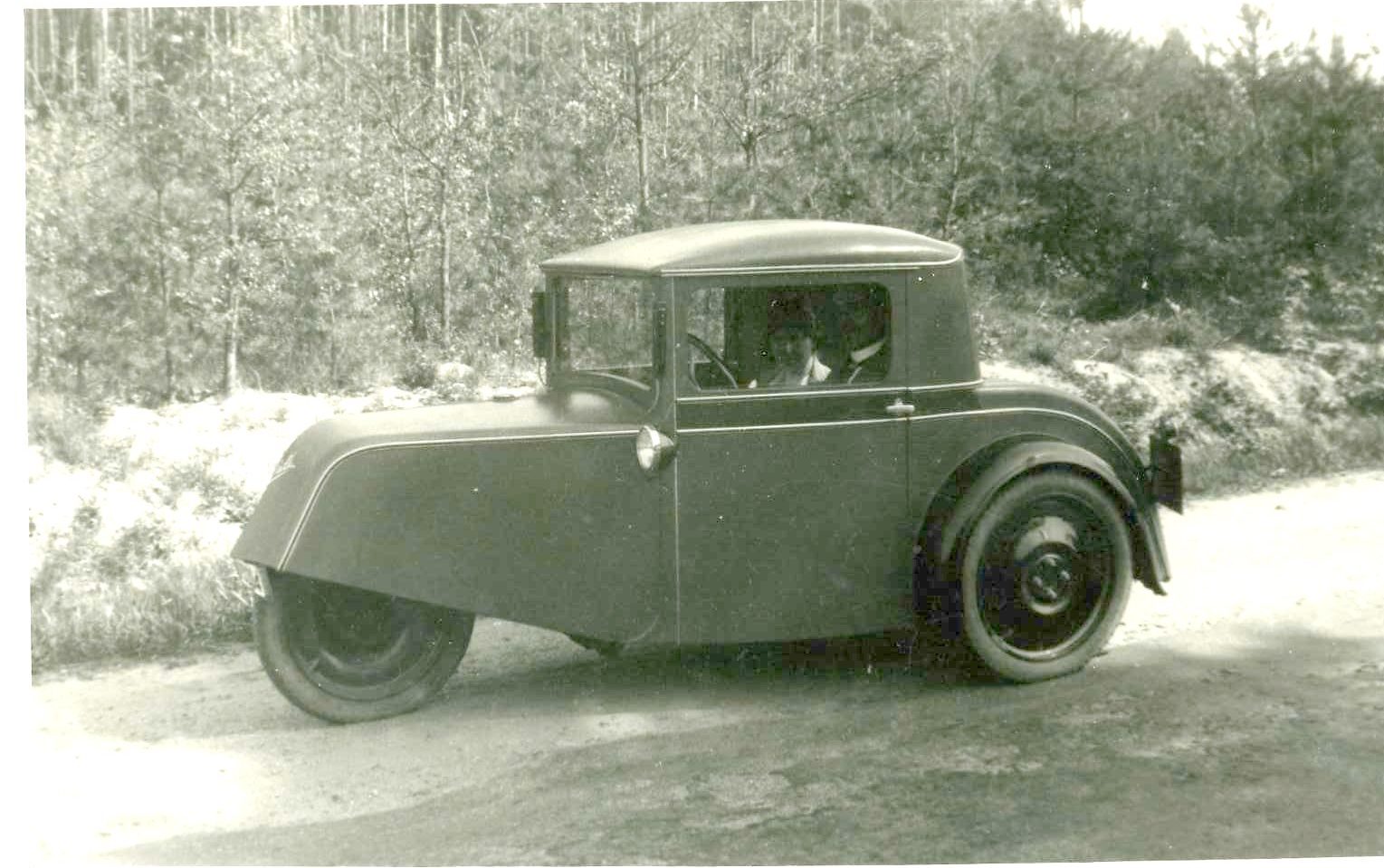
Everything was kept light. The body was synthetic fabric over a wooden frame, and the car weighed about 350 kg (772 lb) empty.source 4source 3source 5 An ILO single-cylinder two-stroke, air-cooled, gave 5.5 PS (4 kW) at 3,200 rpm from 198 cc, or 6.7 PS (5 kW) from 247 cc, through three speeds.source 3source 5source 4 Where it sat is disputed: the Lane museum, which owns a Pionier, says at the back, driving the rear wheels, and English Wikipedia’s summary table says at the front.source 4source 5 The single wheel was at the front.source 5 The two-door, two-seat body came as a coupé or a cabriolet, 3,100 mm (122 in) long and 1,500 mm (59 in) wide.source 3source 5 It cost RM 1,400, used about 5 litres per 100 km, and reached 50–60 km/h by German Wikipedia or 40 mph (64 km/h) by the Lane museum.source 3source 4

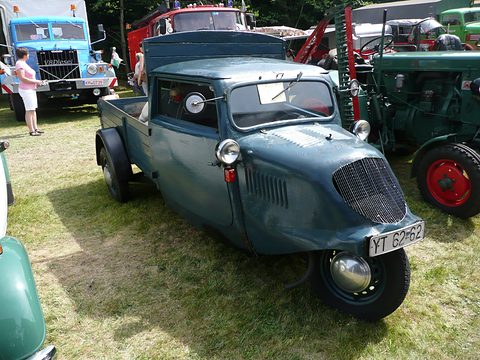
About 4,000 were sold, out of some 24,500 three-wheelers sold in Germany in those years.source 4source 3source 5 In 1933 a three-wheeled light lorry, the Goliath F400, was derived from it, and in 1934 a streamlined fastback was added, of which only a few hundred were made.source 5source 3

The end of the loophole

The sources agree that the tax advantage ended, but not on when or how. The Lane museum’s Pionier page says three-wheelers escaped the tax until 1933 and that the change in the law in 1934 extended it to all vehicles; its page on the Atlas says the concessions ended in 1933; English Wikipedia gives the tax period as 1906–⁠1933.source 4source 1source 5 The Atlas page blames a “socialist” government, which is wrong: from 30 January 1933 the government was Hitler’s. No German legal source settling it has been found.source 1 Goliath’s answer was four wheels, the Hansa 400 or Goliath Atlas of 1932–⁠35, with a two-cylinder two-stroke, at RM 2,450.source 1 Goliath-Werke went on after the war until 1959.source 1
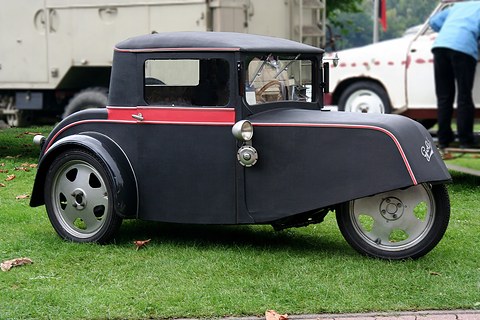
Side view of a black three-wheeled coupé with a red waist stripe, rounded tail and disc wheels on grass.
The same black Pionier coupé in profile, its single front wheel under the pointed nose, at Andernach in 2007.Photo: Lothar Spurzem, CC BY-SA 2.0 de, via Wikimedia Commons
Side view of a grey three-wheeler with a sloping fastback roof and black wheel spats on a dark plinth.
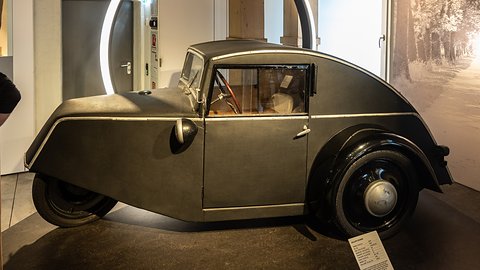
The streamlined fastback of 1934, of which only a few hundred were made, at the PS.Speicher, Einbeck.Photo: MPW57, CC BY-SA 4.0, via Wikimedia Commons

Goliath Blitzkarren

1924–⁠1927 · a record on this page

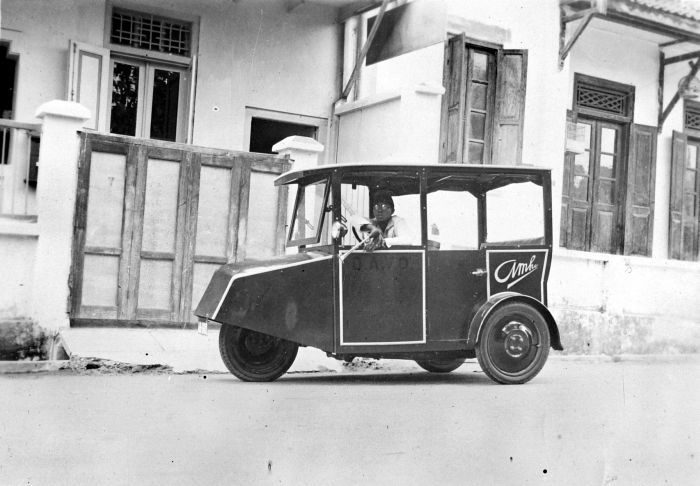
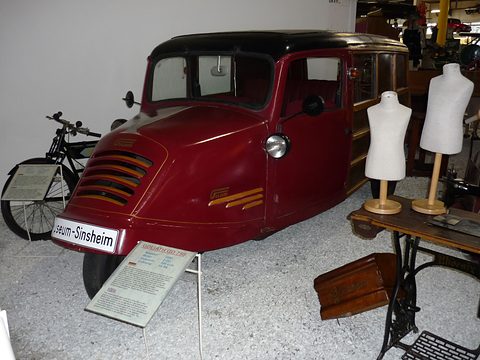
Borgward’s first vehicle came out of a complaint. In the spring of 1924 his designer, Dietrich Klie, objected to pushing handcarts of radiator material between the works halls, and Borgward built a motor cart instead.source 6source 7 It was the Blitzkarren, the “lightning cart”: an open delivery tricar with no cab (more on micro vans), a load platform ahead of the driver for 250 kg (550 lb), and a single front wheel on a motorcycle fork, which the driver steered from his open seat at the back.source 6source 2source 7 A two-stroke of 120 cc and 2.2 PS (1.6 kW), from DKW and later from ILO, drove the left rear wheel by a V-belt. There was no clutch, no gearbox and no starter: it was pushed to start and stopped by stalling the engine.source 6source 2source 7 It cost RM 980.source 6source 7

Borgward saw that traders and small businesses could drive it without a licence. He patented the front-loader layout, in Germany on 20 June 1925, and in Britain as GB 248625, “Improvements in motor tricycle box carriers”, granted on 11 March 1926.source 6source 2 Six to eight a day were built at first. With no dealers, Borgward gave demonstration drives himself and found only five agents; on one drive, early in March 1925, he met the wealthy Wilhelm Tecklenborg, who became his partner. The Reichspost used Blitzkarren too.source 6 No production total and no survivor have been found, and the name Goliath, often given to it now, came only with the successor of 1925: still a front-loader, but with two front wheels and an ILO engine of 200 or 250 cc. Klie had proposed calling it Liliput.source 6

ein Riese in seinen Leistungen

Wilhelm Tecklenborg, about 1925, on the new Goliath, as quoted by German Wikipedia from Georg Schmidt’s Borgward (1986). In English: “a giant in its performance”.source 6

By 1929, according to the Weser-Kurier as both Wikipedias cite it, a quarter of the registered commercial vehicles in Germany came from Bremen.source 6source 2

Pictures

More photographs, old and new

Variants

Two engines and three bodies

The Pionier family
VariantYearsWhat differsHow many
Pionier 2001931–⁠34ILO 198 cc single, 5.5 PSIn about 4,000
Pionier 2501931–⁠34ILO 247 cc single, 6.7 PSIn about 4,000
Coupé and cabriolet1931–⁠34Two doors, two seatsNot found
Fastback1934A streamlined tailA few hundred
Goliath F4001933A three-wheeled light lorry derived from itNot found

Specification

From English Wikipedia unless noted

Engine and drive

Engine and drive
EngineILO single-cylinder two-stroke, air-cooled, 198 cc or 247 ccsource 4source 3source 5
Power5.5 PS (4 kW) at 3,200 rpm, or 6.7 PS (5 kW)source 3source 55 hp for the Lane museum’s 198 cc carsource 4
GearboxThree speedssource 4source 5
Engine positionAt the back, driving the rear wheels, by the Lane museum, which owns onesource 4English Wikipedia’s summary table puts it at the frontsource 5

Body and chassis

Body and chassis
BodySynthetic fabric over a wooden framesource 4
WheelsOne at the front, two at the backsource 5

Dimensions

Dimensions
Length3,100 mm (122 in)source 5
Width1,500 mmsource 5
Height1,400 mmsource 5
Wheelbase1,280 mmsource 5
Weight350 kg (772 lb) empty, 500 kg ladensource 3source 5

Performance and running

Performance and running
Top speed40 mph (64 km/h)source 450–60 km/h in German Wikipediasource 3
ConsumptionAbout 5 litres per 100 kmsource 3
Price newRM 1,400source 3

How many were built?

Every figure, with its source

About 4,000 builtAbout 4,000 in 1931–⁠34, the figure the Lane museum and both Wikipedias give. No breakdown by year or engine has been found.

  1. about 24,500three-wheelers of all makes sold in Germany, 1931–⁠34, for scaleOne source

    English Wikipediasource 5

  2. about 4,000Pioniers, 1931–⁠34Two sources agree

    Lane Motor Museum, German and English Wikipediasource 4source 3source 5

  3. a few hundredfastbacks, 1934Two sources agree

    German and English Wikipediasource 3source 5

  • Two sources agreetwo good sources give the figure
  • One sourcea good source, alone
  • Unconfirmeda lead only, not yet checked

Famous for

Three points

  1. Borgward’s first car

    Carl Borgward began making cars with this three-wheeler, shown in Berlin in 1931.

  2. Built for a tax law

    No vehicle tax and no driving licence for a light three-wheeler: it lasted as long as the rule did.

  3. Fabric and wood

    Synthetic fabric over a wooden frame kept it to about 350 kg.

Survivors and collecting

Today

Only about four Pioniers are believed to survive, by the Lane Motor Museum’s count, and it has one of them, a 1933 car, in Nashville.source 4 No dated auction result has been found.

Sources

Numbered as in the text

The Pionier rests on the Lane Motor Museum, which owns one, and on the two Wikipedias; no period road test was found. The Blitzkarren rests mainly on German Wikipedia, which draws on Georg Schmidt’s history of Borgward. Sources are given as plain text; the links are on the Credits page.

  1. Lane Motor Museum, “Goliath Atlas – 1934”, collection page, with a history of Borgward and the tax rules, read in full.
  2. English Wikipedia, Blitzkarren, read in full; largely a translation of the German article.
  3. German Wikipedia, Goliath Pionier.
  4. Lane Motor Museum, “Goliath Pionier – 1933”, collection page, read in full.
  5. English Wikipedia, Goliath Pionier.
  6. German Wikipedia, Blitzkarren, read in full. It cites Georg Schmidt, Borgward – Carl F. W. Borgward und seine Autos (4th edition, 1986), pp. 35–39, the Weser-Kurier and British patent GB 248625.
  7. Goliath Veteranen-Club, “Typenblatt Blitzkarren” (2010), read in full from an archived copy.