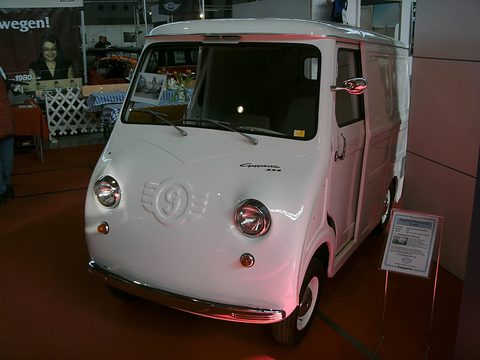
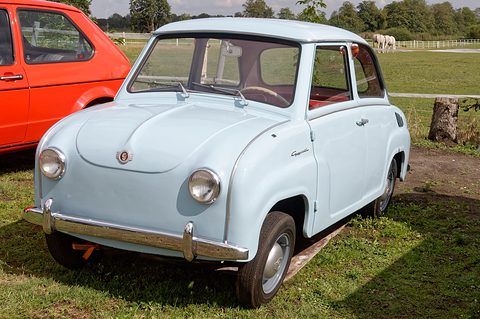
The story
History
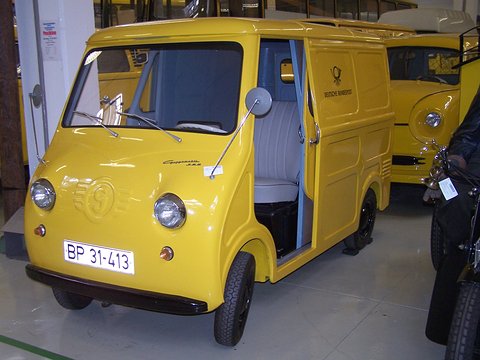
Hans Glas GmbH of Dingolfing made farm machinery before it made the Goggo scooter, and in 1955 it launched the Goggomobil T250 saloon.source 1 The TL was built on the same platform, with the engine in the tail and swing axles at each corner.source 1source 2 It was made largely for the Deutsche Bundespost. The post office had been using three-wheeled Tempo vans, and RM Auctions’ catalogue names the small one, the Tempo Boy, as the model whose end left it needing something new; the Glas van was the only small vehicle that offered a quarter-ton payload.source 3source 4 English Wikipedia says the Transporter was built largely at the Bundespost’s request.source 2
Deutsche Bundespost, the German post office, had been using three-wheel Tempo delivery vans. When the Tempo went out of production, a new vehicle was required.
It was shown at the IFMA, the two-wheeler and small-car show in Frankfurt, in the autumn of 1956. auto motor und sport reported a Goggomobil Transporter with sliding doors for the Bundespost there, at the same show as Getrag’s “Selectromat” preselector gearbox.source 6source 2source 7 Production began in 1957, and in its fourth issue of 1958 the magazine reported the Transporter in series production, with the first 100 delivered to the post office.source 1source 2source 8 One RM catalogue says the Bundespost took about 2,000 in 1956. It cannot have: the van was only being shown that year.source 3source 2source 8
Doors that slide
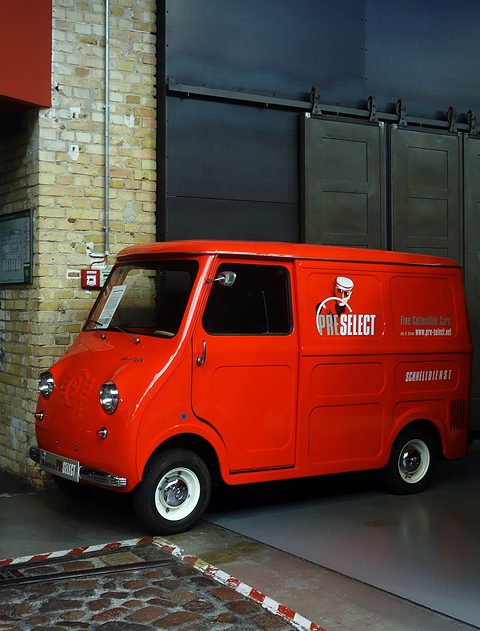
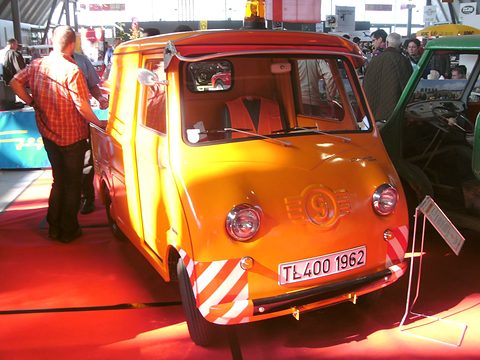
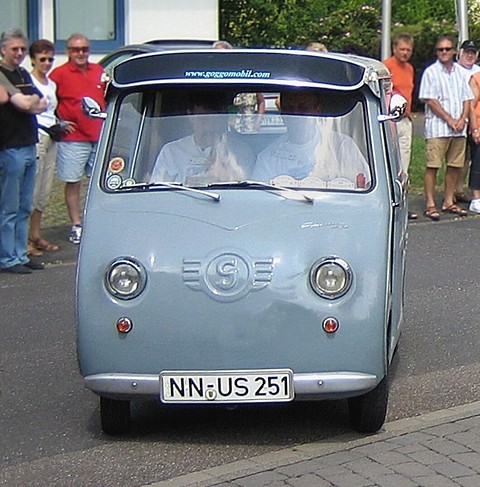
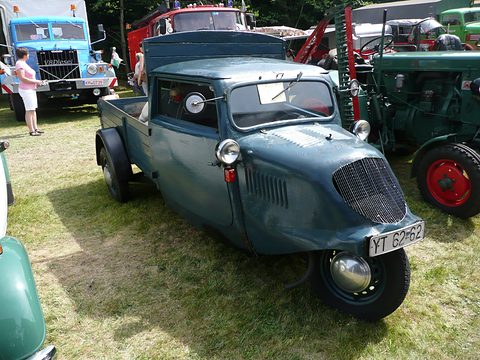
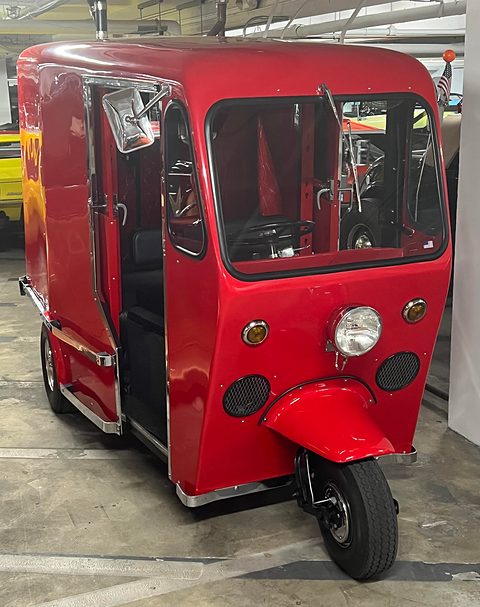
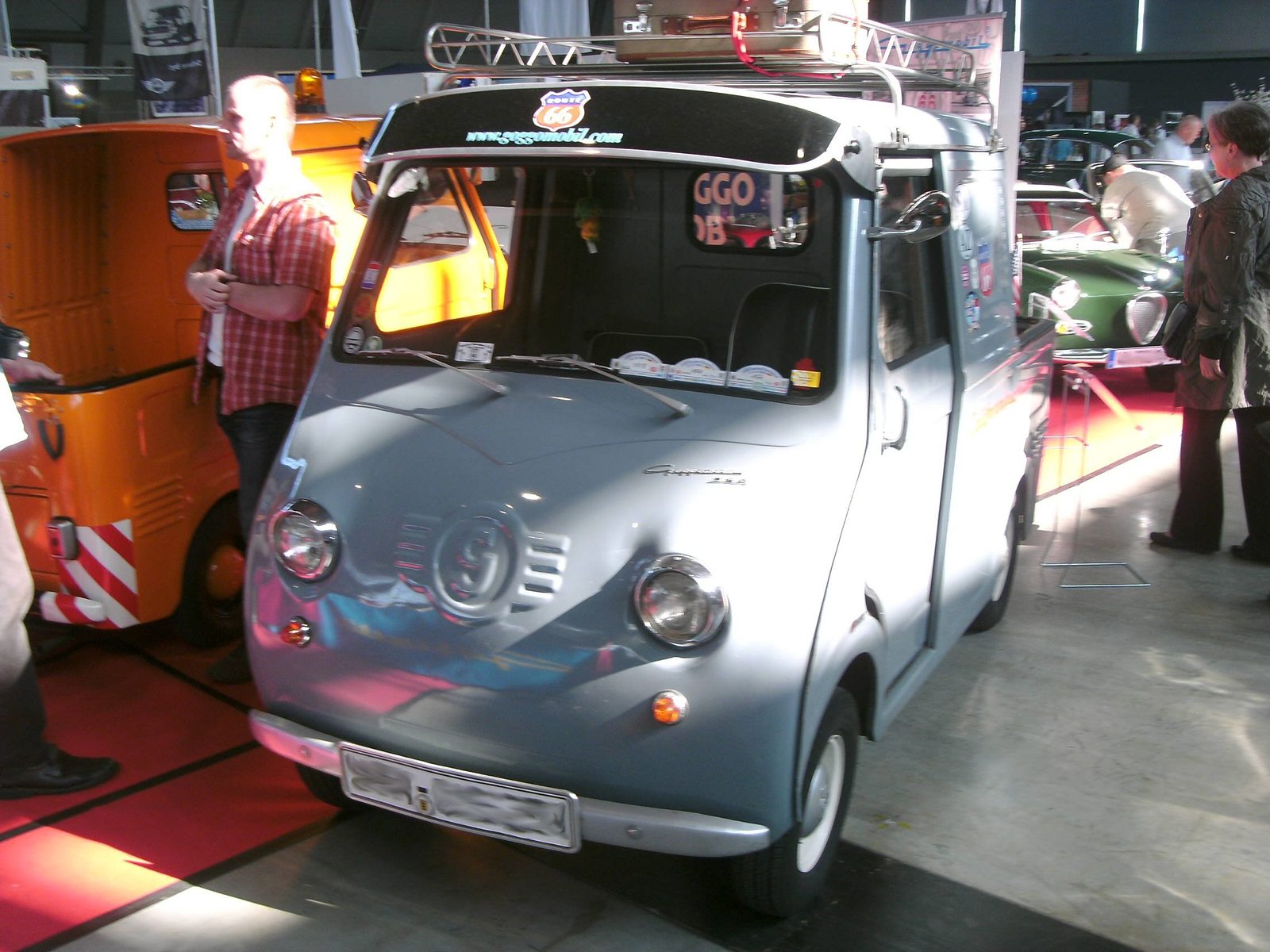
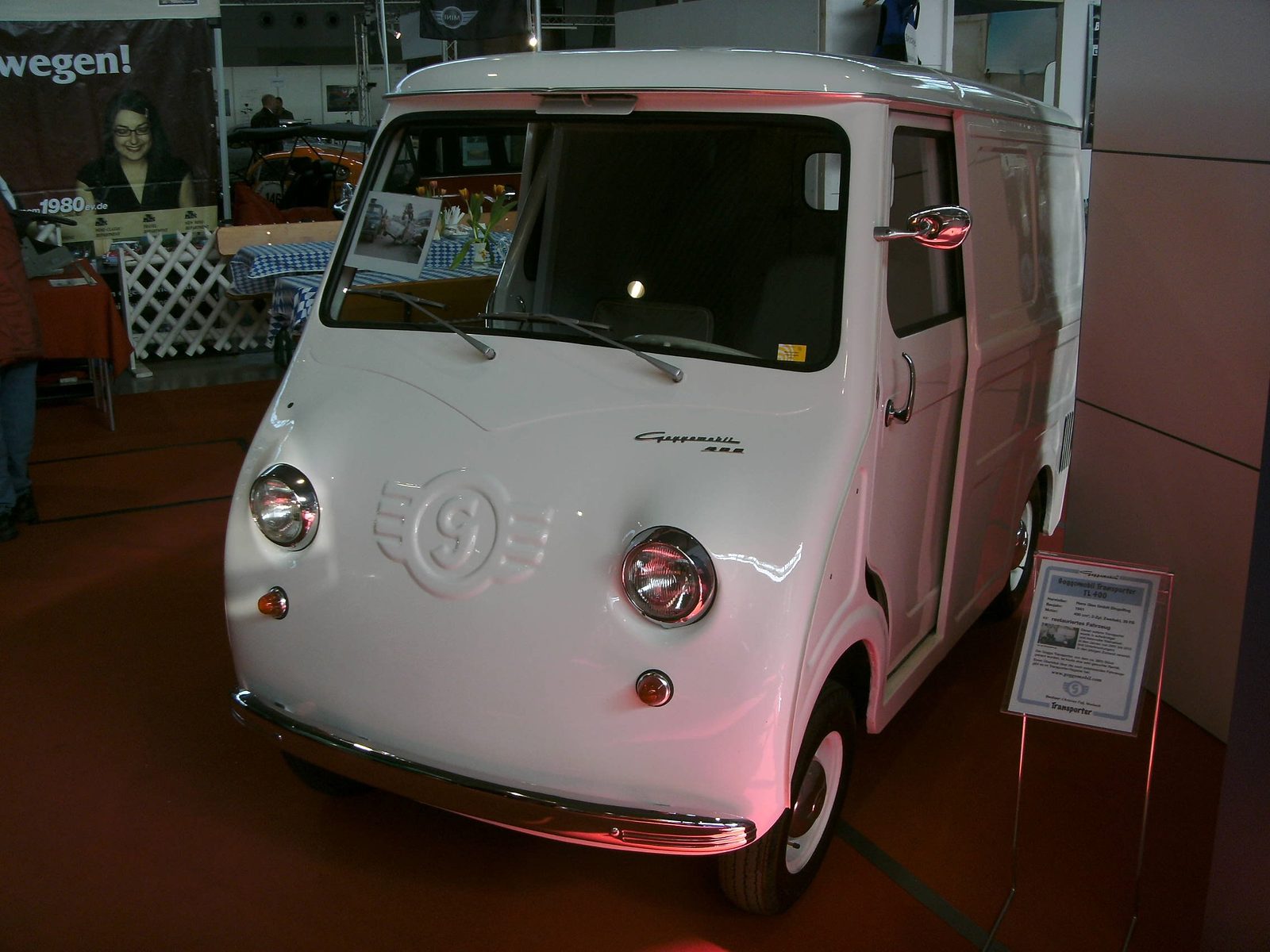
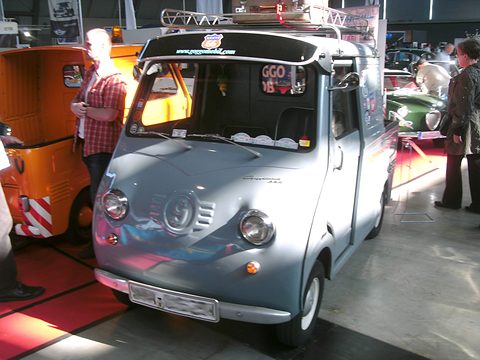
It is the forward cab that makes the TL look unlike the saloon. Driver and passenger sit over the front wheels, with the load space behind them and the fan-cooled two-stroke twin under its rear end.source 1source 2 Each side of the cab has a sliding door, chosen so that the driver could get in and out in narrow streets and tight parking places, which was new on so small a commercial vehicle.source 6source 2 At the back of the van were twin doors; the pick-up had a tailgate, and could carry a tarpaulin or a short canopy.source 6source 2source 9 To keep the load floor clear, the fuel tank went under the driver’s seat, and the floor itself was made of wooden slats.source 3
There were three engines, of 250, 300 and 400 cc, as in the saloons, but with lower gearing, marked “L”.source 3source 6 The smallest needed only the old class 4 licence.source 1source 6 With about 14 hp and a top speed near 65 km/h (40 mph), the TL-250 was a town and village delivery vehicle, as Secret Classics puts it; the TL-400 reached about 75 km/h (47 mph).source 6 Later vans used the 400 cc engine with the lower ratios.source 4 The four-speed gearbox had no synchromesh; on the saloon it could be shifted like a motorcycle’s, without double-declutching.source 1 The whole van is 2,910 mm (115 in) long, 1,316 mm (52 in) wide and 1,695 mm (67 in) high, and weighs 460 kg (1,014 lb).source 2source 6 How much it could carry is less clear: Secret Classics says 440 kg, RM Auctions about 250 kg (550 lb).source 6source 3 No period road test has been found.
Yellow vans and others
About 2,000 went to the post office, in Bundespost yellow; English Wikipedia puts it at more than 2,000 between October 1957 and November 1965.source 1source 2 The rest went to tradespeople and to towns, which used them as service vehicles and for street cleaning and snow clearing, and some were sold in the United States through the Continental Car Combine.source 9source 6source 1 In all, 3,667 were built.source 1source 6source 2
Production stopped in 1965, and no reason for it has been found. The Goggomobil saloon and coupé went on: BMW took Glas over with effect from 10 November 1966 and built them until 30 June 1969.source 1