microcarfan
  • Three-wheeler
  • Germany
  • Three wheels
  • Front-wheel drive

Framo Stromer

Also known as Framo FP 200, Framo FP 300

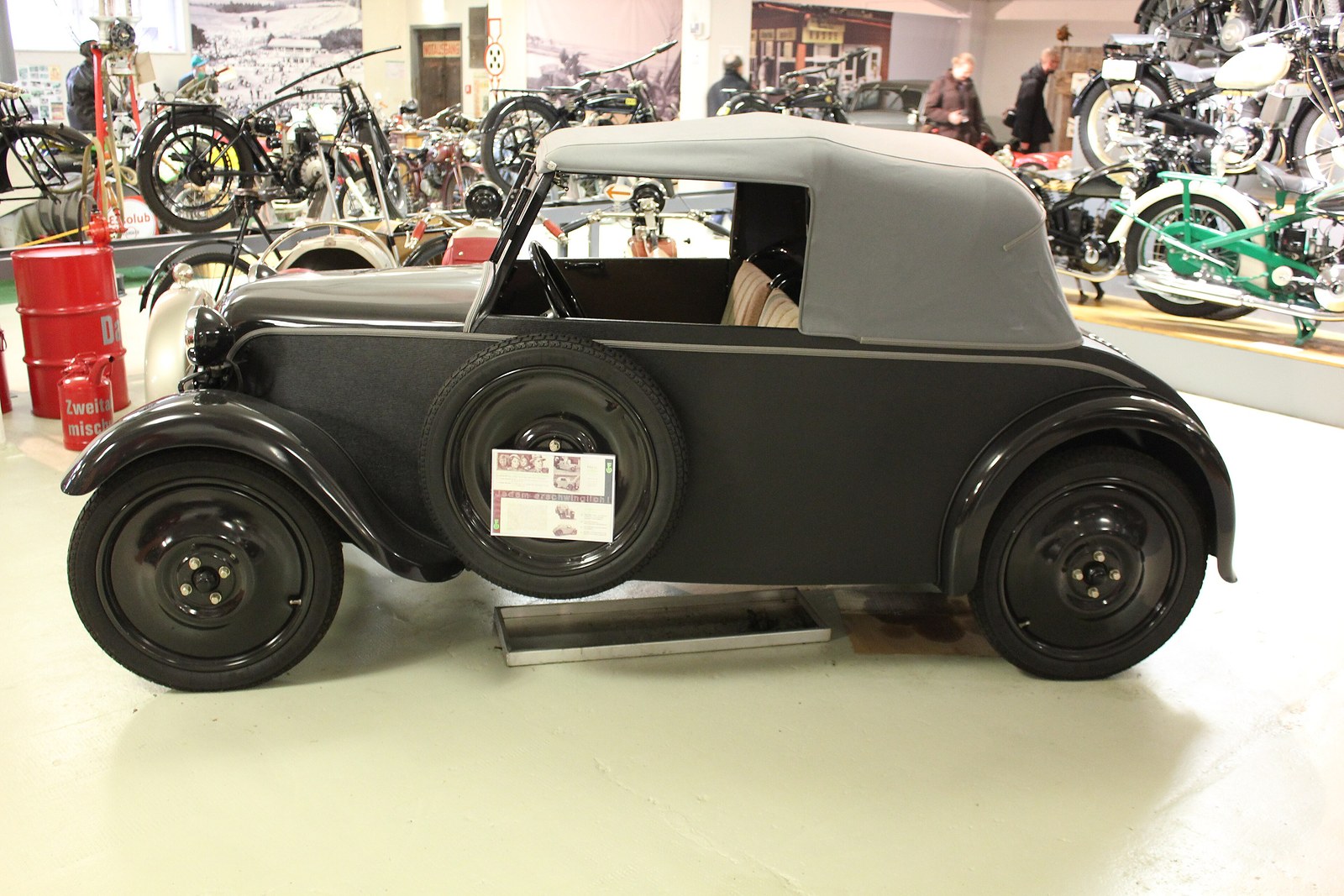
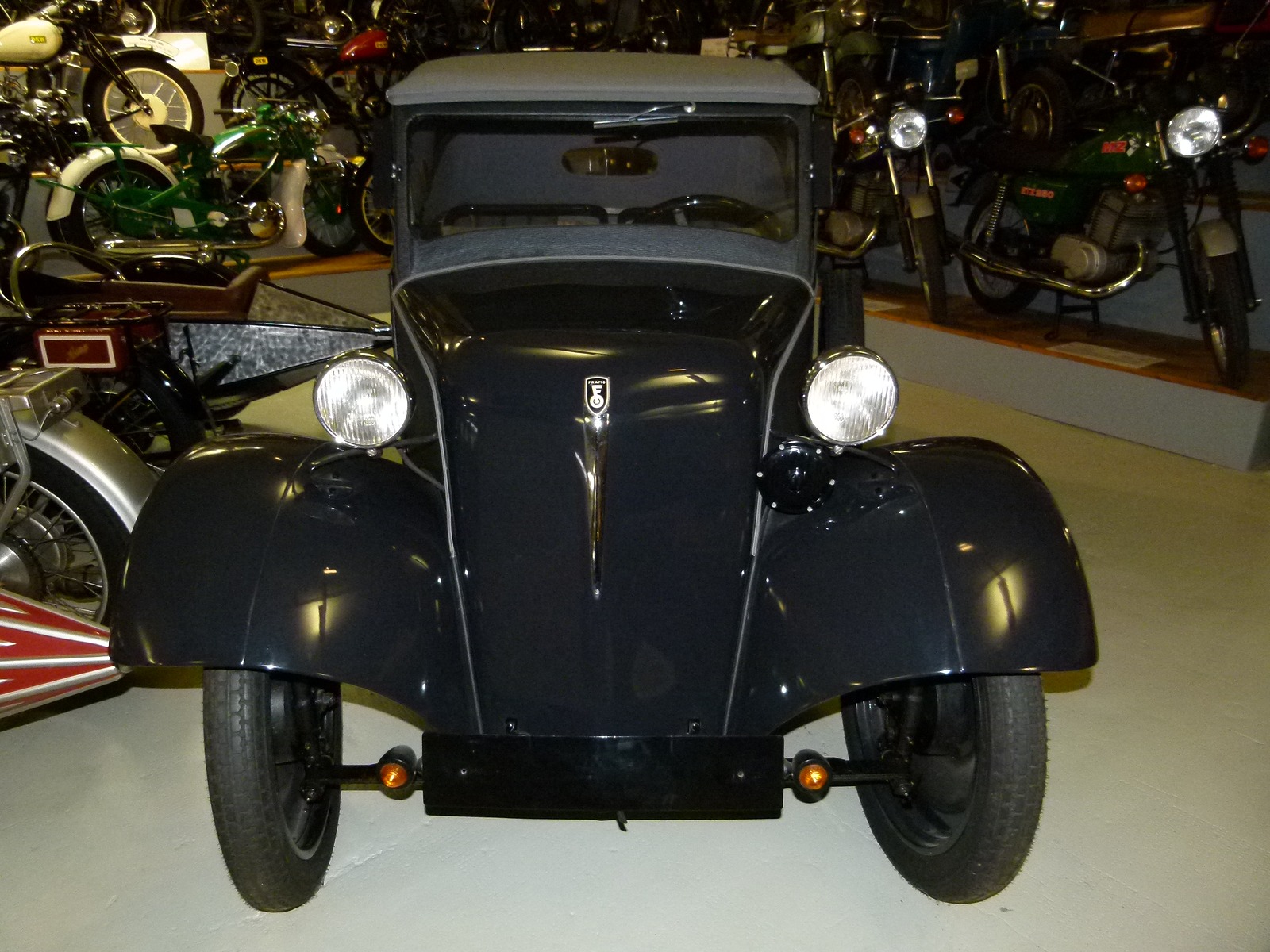
A plywood body covered in artificial leather, a DKW two-stroke driving the front wheels, and the exhaust piped through the backbone of the frame. In the summer of 1933 the ADAC’s magazine counted it among the most original small cars of the day.

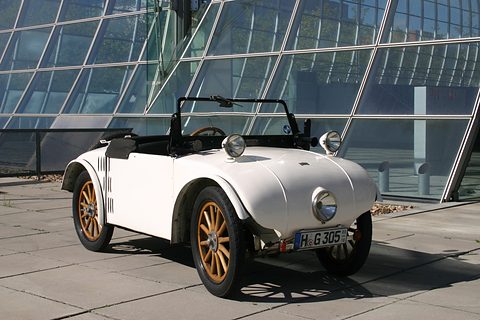
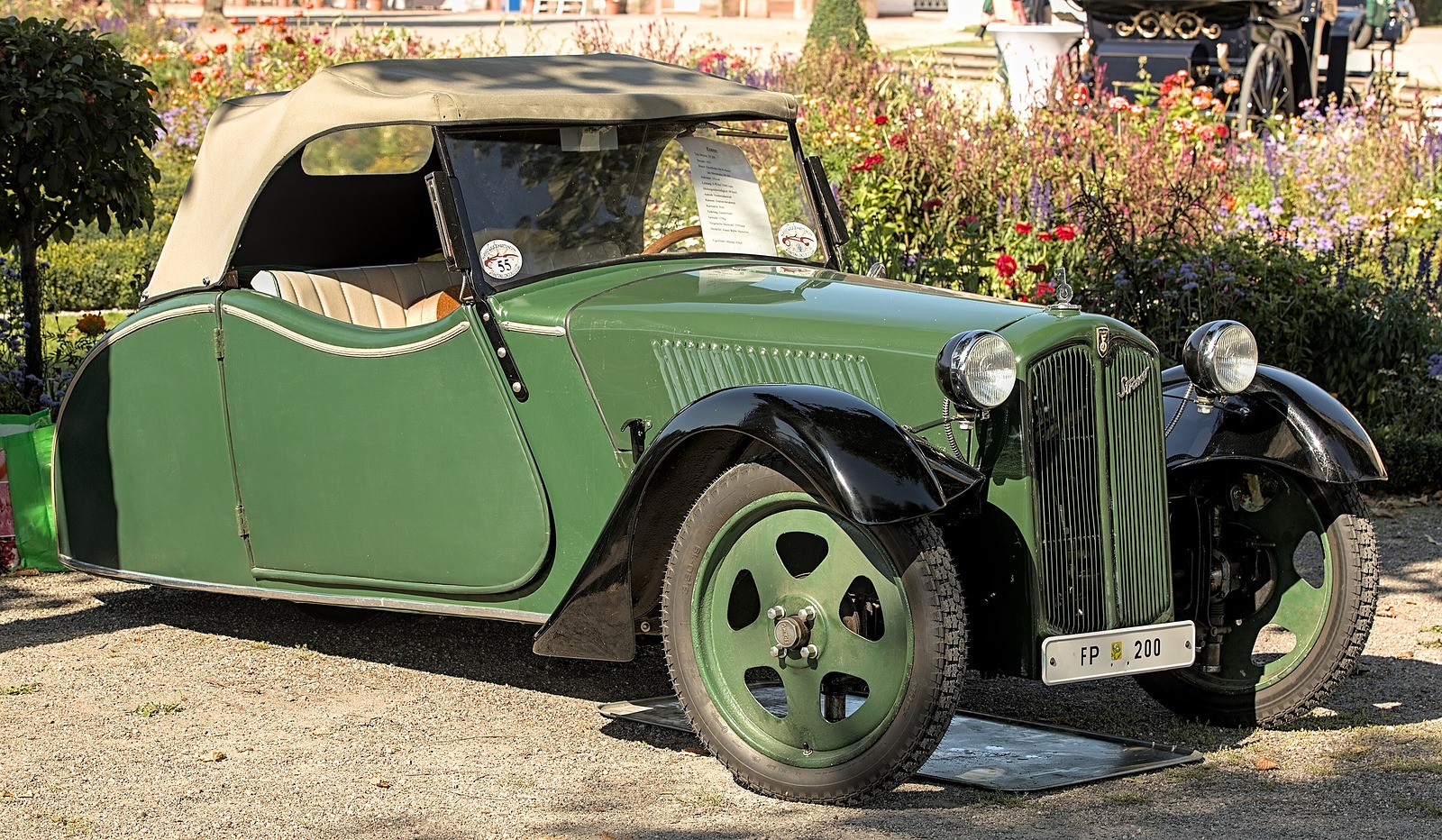
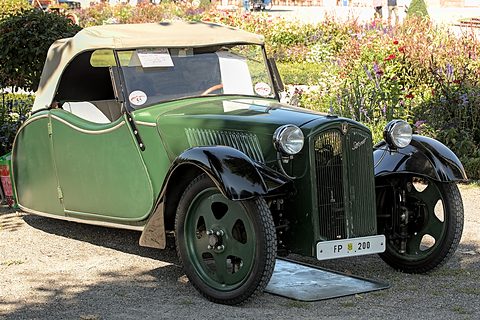
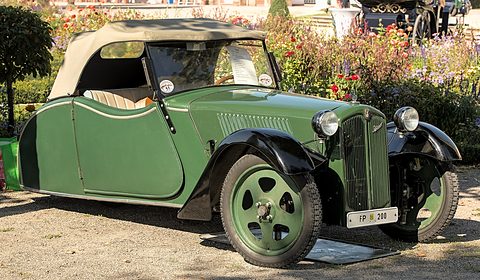
Small green open car with a beige hood, black wings and two front wheels, parked on gravel before a flower bed.
A green Framo Stromer FP 200 roadster at the Classic-Gala, Schwetzingen, in September 2021.Photo: Alexander Migl, CC BY-SA 4.0, via Wikimedia Commons

At a glance

The spec plate

Framo Stromer

FP 200 and FP 300 · Saxony

Built
1933–⁠1935Launched in 1932/33 by German Wikipedia, 1934 by the club’s type list; the Piccolo that followed was built to 1935
Country
GermanyFrankenberg and Hainichen, Saxony
Maker
Metallwerke Frankenberg; Framo-Werke from 1934J. S. Rasmussen’s firm, founded as a parts supplier to DKW
Engine
192 cc or 295 cc DKW two-stroke singleAir-cooled; FP 200 and FP 300
Power
6 PS or 9 PS4.4 or 6.6 kW, by the club’s type list
Seats
2 + 2Two adults and two children; the club lists two seats
Wheels
3Two at the front, driven; one at the back, by German Wikipedia
Production
about 1,070Stromers and Piccolos together, in three years
Top speed
60km/h60 km/h

Not yet recordedlength and weight.

How big is it?

True proportion

Length unknown

No reliable length has been found. The Fiat 500, the Peel P50 and the adult stay, so the gap is shown, not hidden.

  • Plywood covered in artificial leather
Drawn at true proportion. The track is 3.6 metres long; the adult stands at the same scale. The Peel P50 is the smallest production car, on every page for comparison.

Beside its contemporaries

The German microcars on the road in 1933, on the same 3.5 m scale. Lengths of cars without a page yet come from the census and are unverified.

  1. Goliath Pionier1931–⁠1934 · Germany

    3.10 m
  2. Standard Superior1933–⁠1935 · Germany

    3.30 m
  3. Framo Stromer1933–⁠1935 · Germany

    length unknown

The story

History

Jørgen Skafte Rasmussen, who founded DKW, set up Metallwerke Frankenberg in 1923 in a former army barracks at Frankenberg in Saxony. At first it made saddles, clutches and carburettors for DKW’s motorcycle works at Zschopau.source 1source 2 From 1927 it built cheap three-wheeled delivery vans, and with them it came through the Depression well (see Framo / DKW delivery tricars, below).source 1source 2 In the early 1930s Framo turned what it had learned about light construction to passenger cars.source 2 The first was the Stromer.

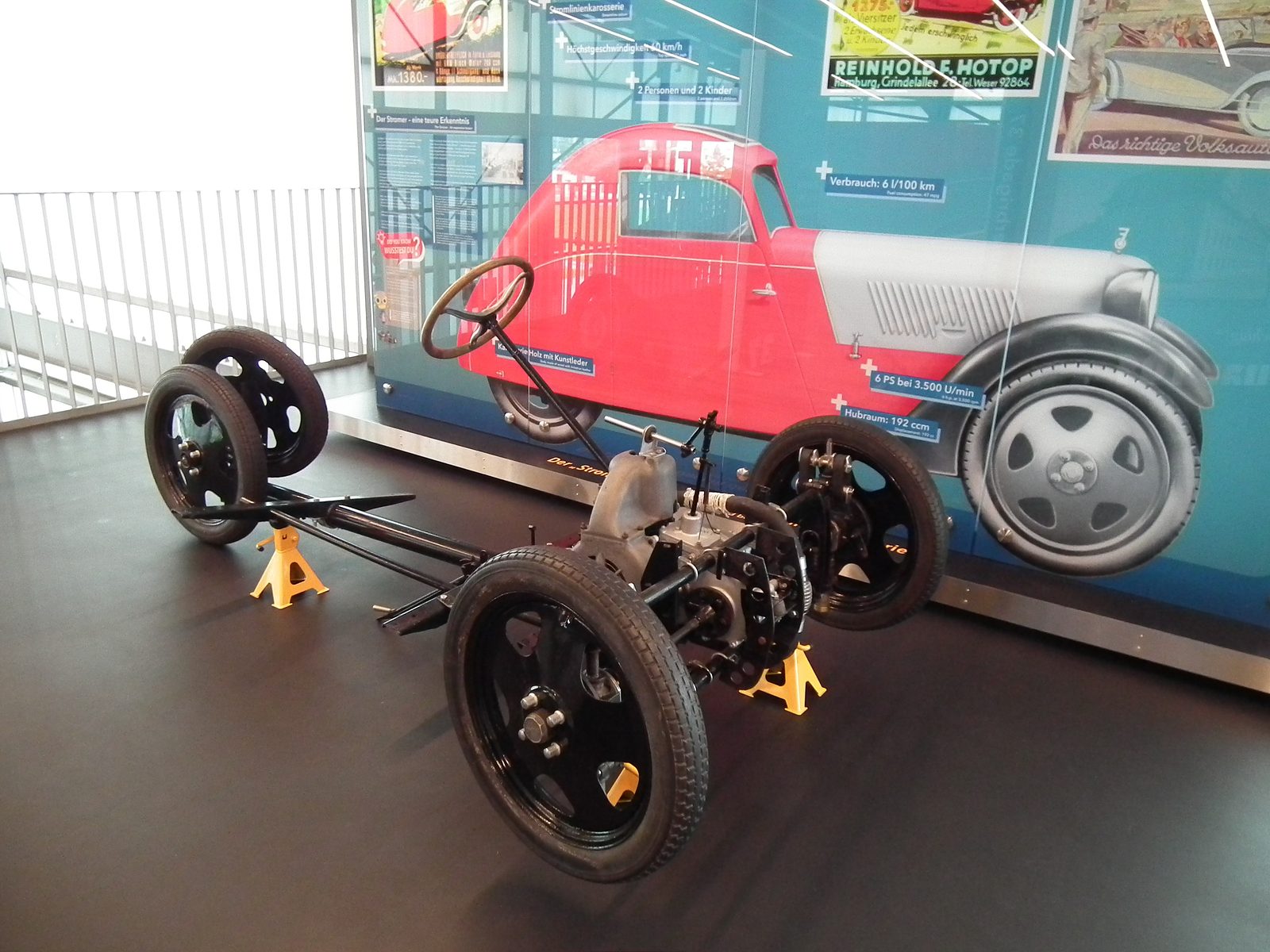
Of the three wheels on this three-wheeler, it was the front pair that drove. An air-cooled DKW single sat ahead of them, with four speeds and a reverse. The frame was a single central tube, and the exhaust gases ran through it.source 1 The body was plywood, covered in artificial leather, and German Wikipedia says it carried two adults and two children; the club’s type list says two.source 1source 3 There were two engines: the FP 200 had 192 cc and 6 PS (4.4 kW), the FP 300 295 cc and 9 PS (6.6 kW). It would reach 60 km/h (37 mph).source 1source 3

It was free of vehicle tax, and it could be driven without a driving licence, which put it among Germany’s licence-free cars of the day.source 1 ADAC Motorwelt, on 14 July 1933, rated it one of the most original and advanced small cars of its time, by German Wikipedia’s report of the review.source 1 When it was launched is not settled: German Wikipedia says 1932/33, and the club’s type list dates both Stromers to 1934.source 1source 3 The firm itself became Framo-Werke GmbH, from FRAnkenberger MOtorenwerke, on 1 January 1934, and from 1933 production moved, stage by stage, to Hainichen.source 1source 2

The Piccolo

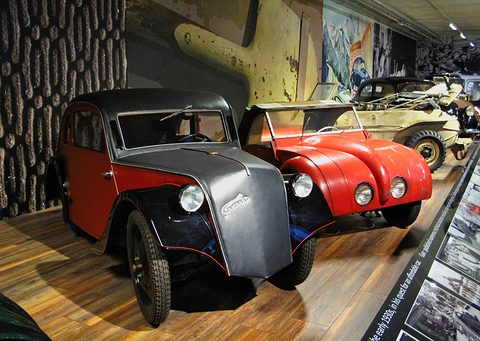
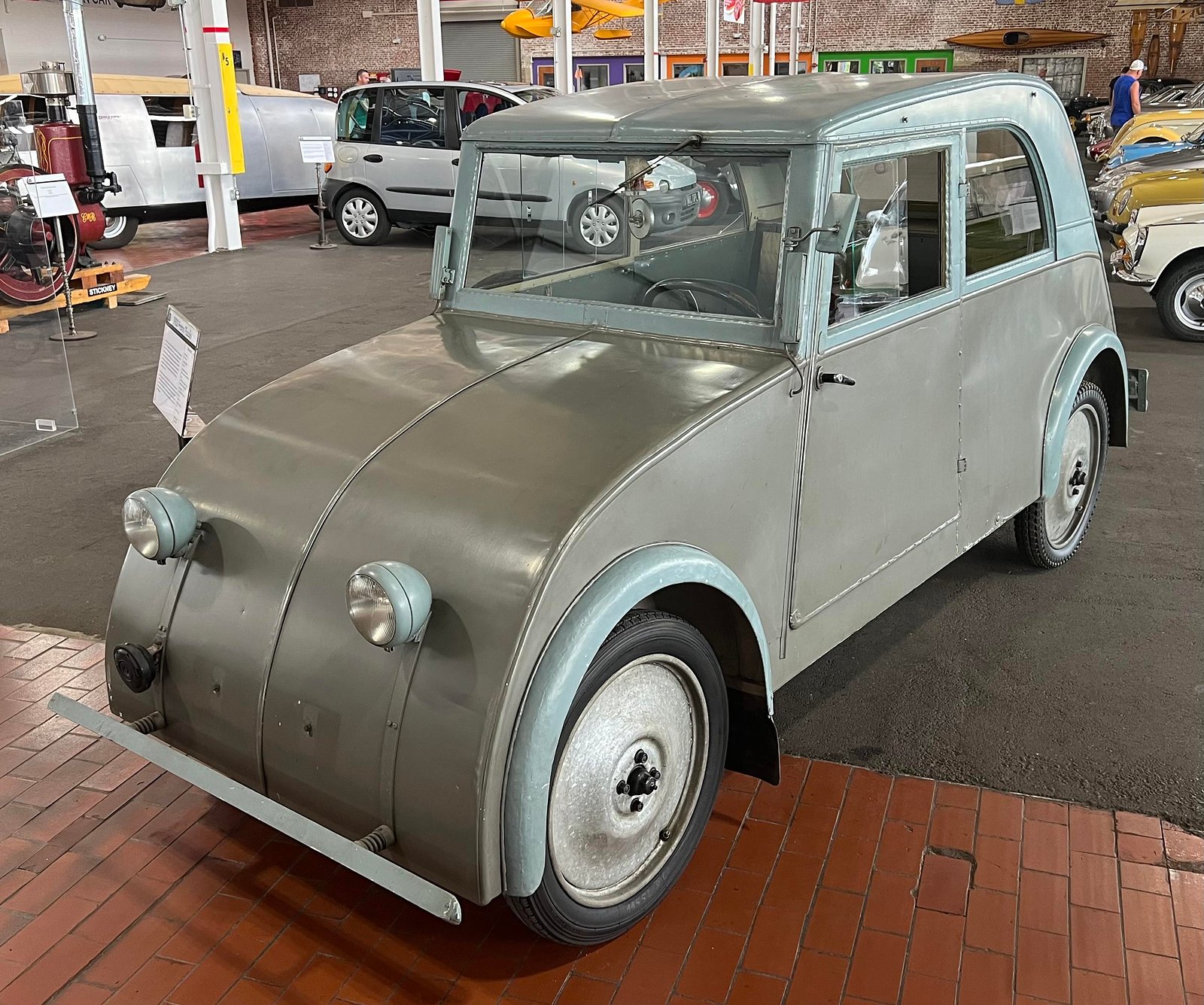
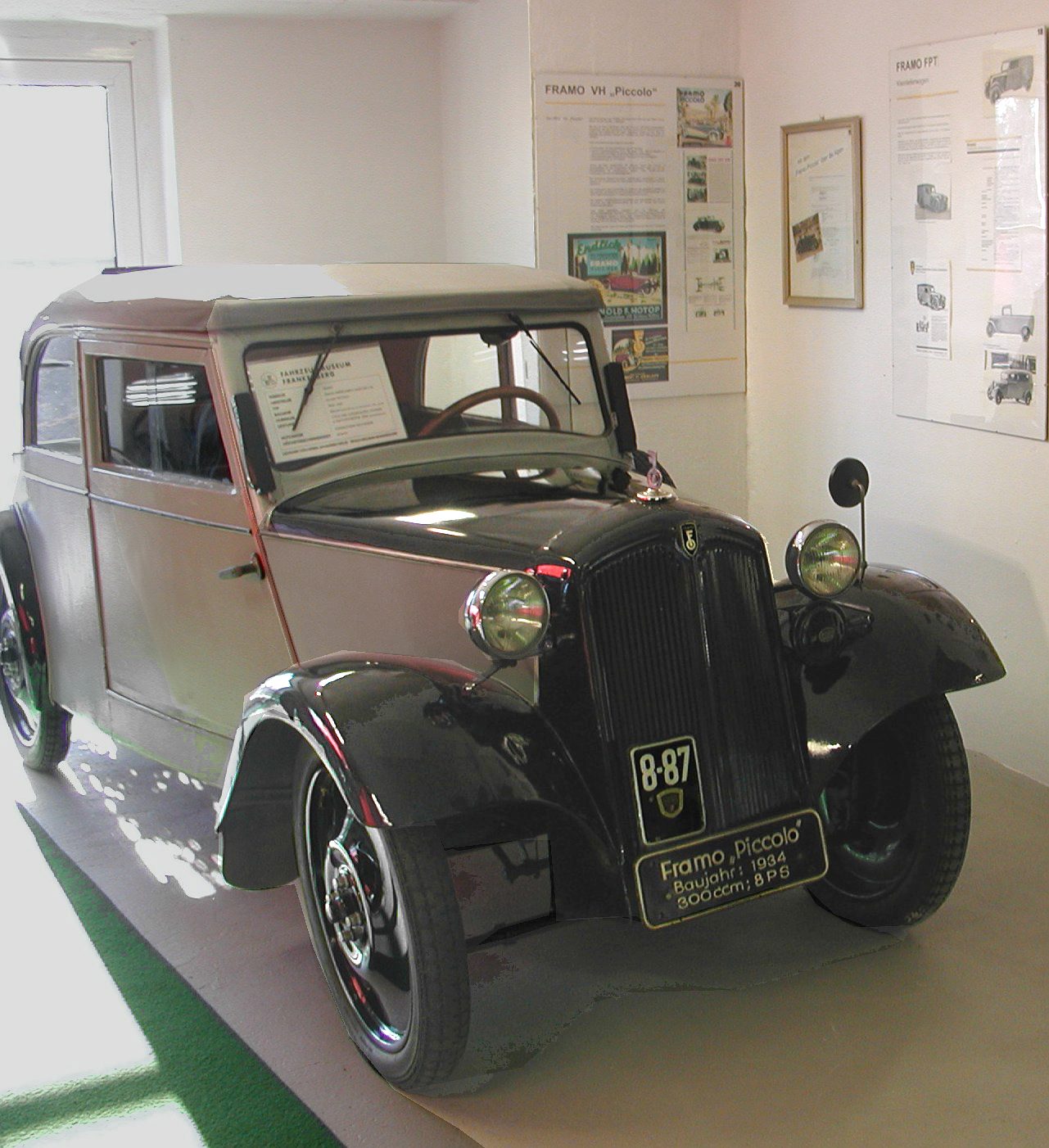
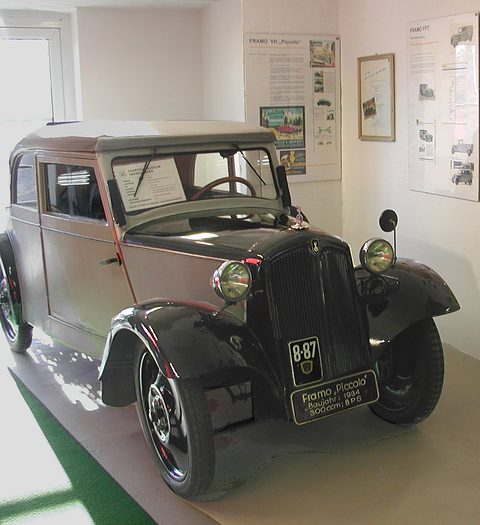
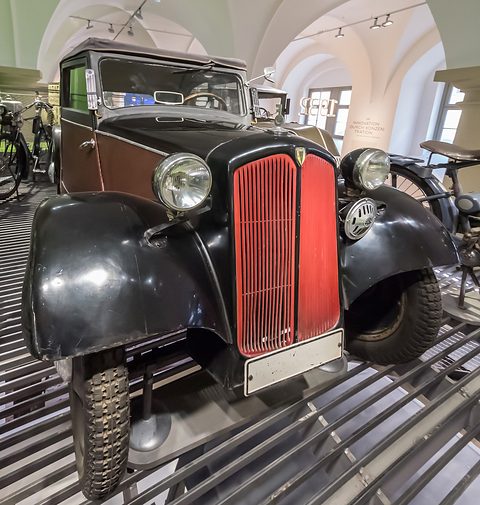
The Stromer’s successor had four wheels. The Piccolo, launched in 1934 as an attempt at a German people’s car by the Lane museum’s account, put its engine at the back and drove only the left rear wheel, by chain; later Piccolos wore a dummy radiator at the front. It came as the VH 300 in 1934–⁠35 and the VH 200, with 192 cc and 7 PS, in 1935.source 1source 3source 4

Neither car stood much chance, by the firm’s own history, against small cars that buyers already knew, the Opel Laubfrosch, the Dixi DA 1 and the Hanomag 2/10 PS, the “Kommissbrot”.source 2 In three years only about 1,070 of the three series were sold.source 1 The Stromer’s chassis lived on under Framo’s first four-wheeled van, the FPT 300,source 1 and Framo went back to what it knew, which was vans.
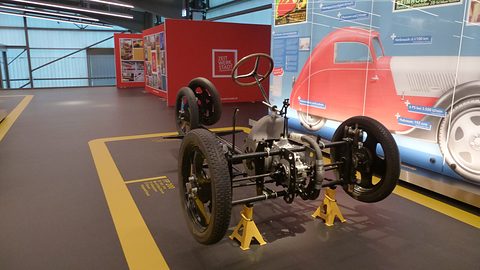
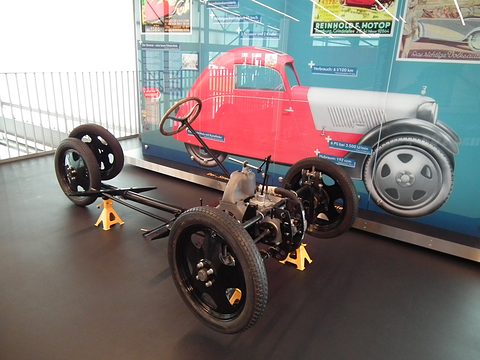
Rolling chassis on yellow stands: engine between wide-set front wheels, a backbone tube and closely set rear wheels.
A bare Stromer chassis at the ZeitWerkStadt museum in Frankenberg, the DKW engine between the front wheels. This chassis has two close-set rear wheels, where the sources read give the Stromer one; which is right is not settled.Photo: Buch-t, CC BY-SA 3.0 de, via Wikimedia Commons
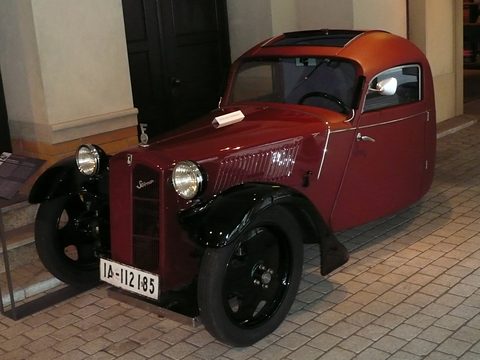
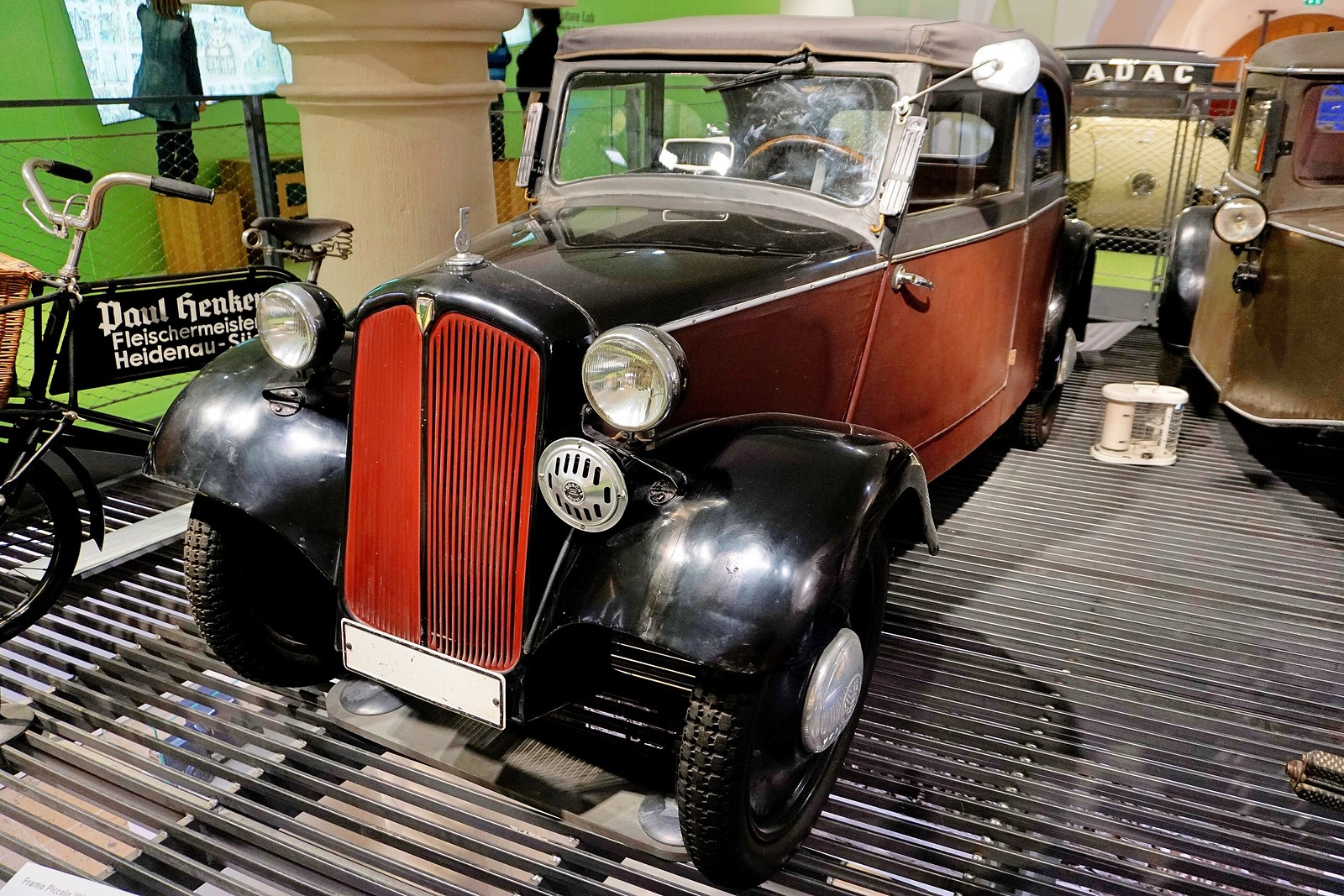
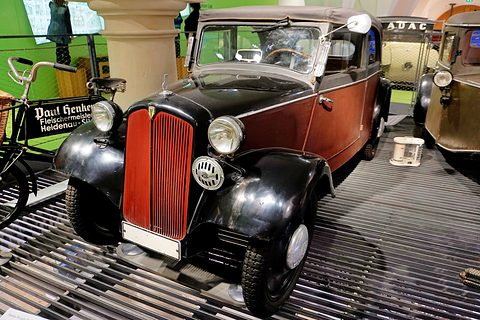
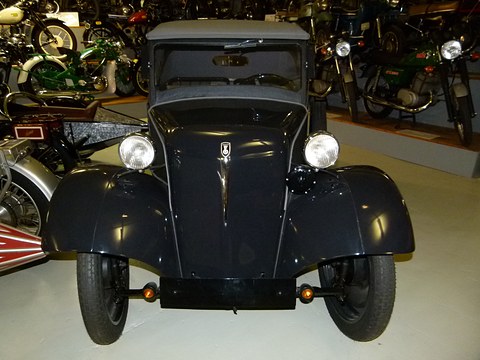
Maroon three-wheeled small car with a closed roof, black wings and a slim grille, on a tiled museum floor.
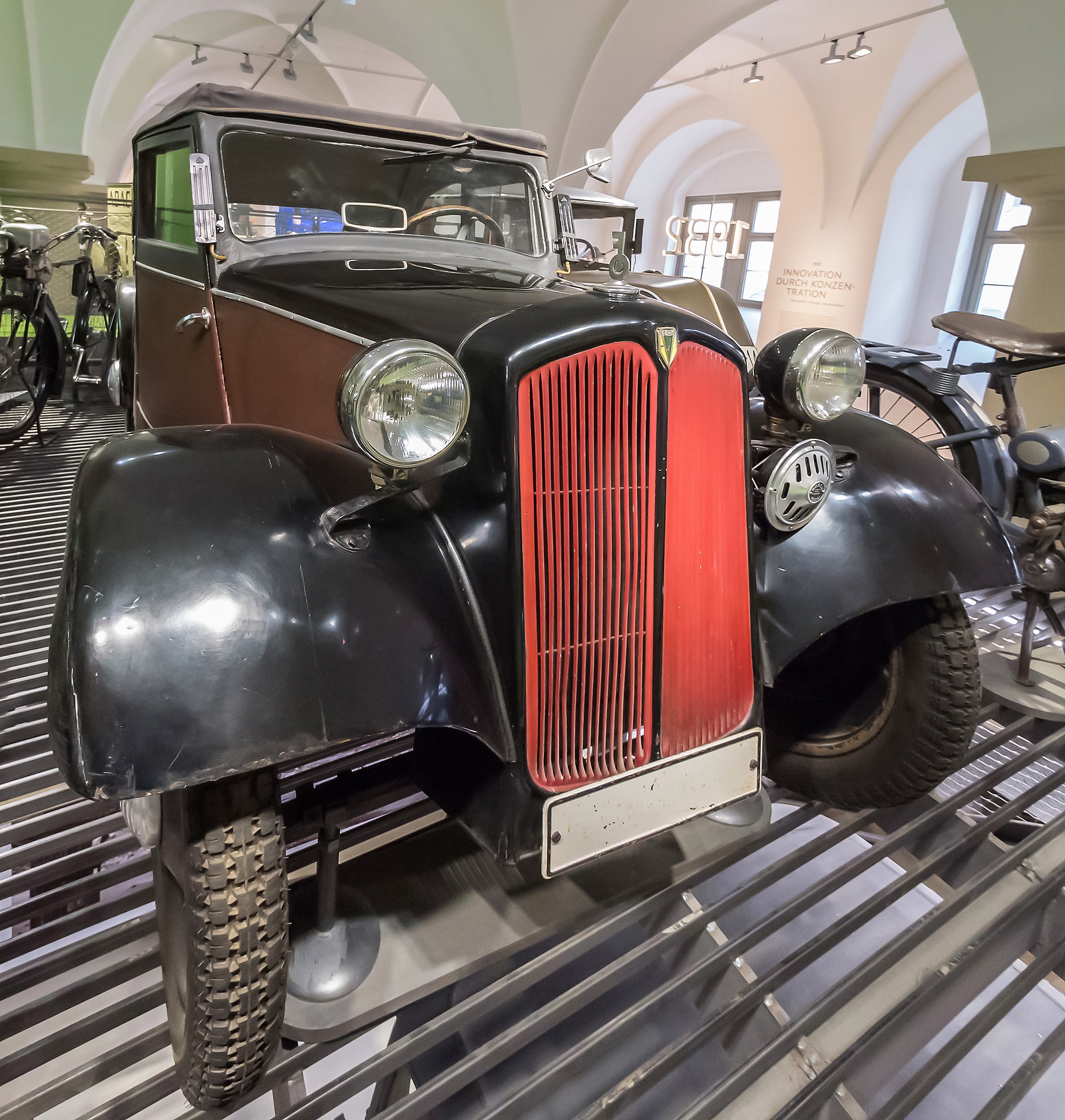
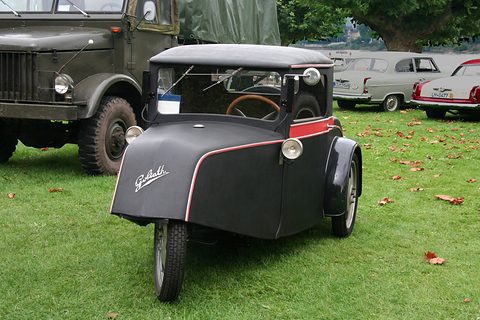
A closed Stromer FP 200 in maroon and black at the August Horch Museum, Zwickau, in 2017.Photo: Rainerhaufe, CC BY-SA 4.0, via Wikimedia Commons

Framo / DKW delivery tricars

1927–⁠1935 · a record on this page

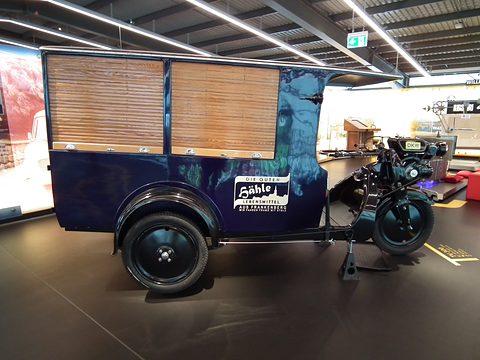
Framo’s first vehicle, the TV 300 of 1927, was a delivery tricar at its barest: the front of a motorcycle, a load bed for 500 kg, a chain driving the front wheel, and up to 40 km/h (25 mph). It had no steering wheel, no cab, no starter and no reverse, and anyone holding a motorcycle licence could drive one.source 1source 2 (Germany’s other tax tricars, and what came after them, are on the micro-vans page.)

A prototype three-wheeler for Sunday outings, the ZW 200, came before the LT 200, by the firm’s history.source 2 The chassis of the LT 200 and LT 300 of 1931 were exported to India to be given rickshaw bodies; the LTH 200 and 300 of 1933 at last had a steering wheel and a reverse gear.source 1 How many of these tricars were built has not been found.

The vans outlived the cars. Framo built the V 500 from 1939. In 1943 vehicle production stopped, and the works made armaments using forced labour from a subcamp of the Flossenbürg concentration camp; the managing director, Hans Werner Skafte Rasmussen, died in Soviet internment at Toszek in 1945. The firm was nationalised in 1949 and renamed Barkas in 1957.source 1source 2

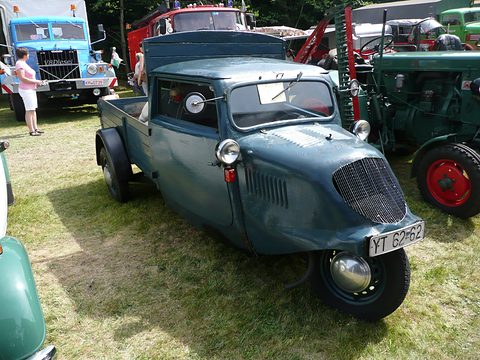
Three-wheeled delivery van with a motorcycle front end and a blue box body with wooden slatted sides.
A Framo TV 300 delivery tricar, motorcycle front and box body, at the ZeitWerkStadt museum in Frankenberg in 2023.Photo: Stefan Kühn, CC0 1.0, via Wikimedia Commons

Pictures

More photographs, old and new

Variants

Two Stromers and the Piccolo

Framo’s passenger cars
VariantYearsWhat differsHow many
Stromer FP 2001932/33–34Three wheels, front-wheel drive; 192 cc, 6 PSWithin the 1,070
Stromer FP 3001932/33–34The larger engine: 295 cc, 9 PSWithin the 1,070
Piccolo VH 3001934–⁠35Four wheels; the engine at the back, driving the left rear wheel by chain; 295 ccWithin the 1,070
Piccolo VH 2001935The smaller engine: 192 cc, 7 PSWithin the 1,070
Piccolo prototype1933/34192 cc, 4 bhp, three speeds and reverse; the engine mid-rear, by the Lane museum1, at the Lane Motor Museum

Specification

The Stromer FP 200 and FP 300

Engine and drive

Engine and drive
EngineDKW single-cylinder two-stroke, air-cooledsource 1source 3
CapacityFP 200: 192 cc; FP 300: 295 ccsource 3
PowerFP 200: 6 PS (4.4 kW); FP 300: 9 PS (6.6 kW)source 3
GearboxFour speeds and reversesource 1
DriveEngine at the front, driving the front wheelssource 1source 3

Body and chassis

Body and chassis
FrameA central tube, with the exhaust led through itsource 1
BodyPlywood covered in artificial leathersource 1
SeatsTwo adults and two childrensource 1Two, in the club’s type listsource 3

Performance and running

Performance and running
Top speed60 km/h (37 mph)source 1
Tax and licenceFree of vehicle tax; no driving licence neededsource 1
Length, weight, priceNot found

How many were built?

The one figure found

About 1,070, with the PiccoloGerman Wikipedia says only about 1,070 of the three series, the Stromer and the Piccolo together, were sold in three years. No split by model and no factory figure has been found, so the number of Stromers alone is not known.

  1. about 1,070Stromers and Piccolos, all three series, in three yearsOne source

    German Wikipediasource 1

  • Two sources agreetwo good sources give the figure
  • One sourcea good source, alone
  • Unconfirmeda lead only, not yet checked

Famous for

Three points

  1. Exhaust through the frame

    The gases ran through the Stromer’s central backbone tube.source 1

  2. No tax, no licence

    A front-drive car that could be driven without a licence, and paid no vehicle tax.source 1

  3. Before Barkas

    Framo’s short run of passenger cars came from the firm that became the van maker Barkas.source 1source 2

Survivors and collecting

Today

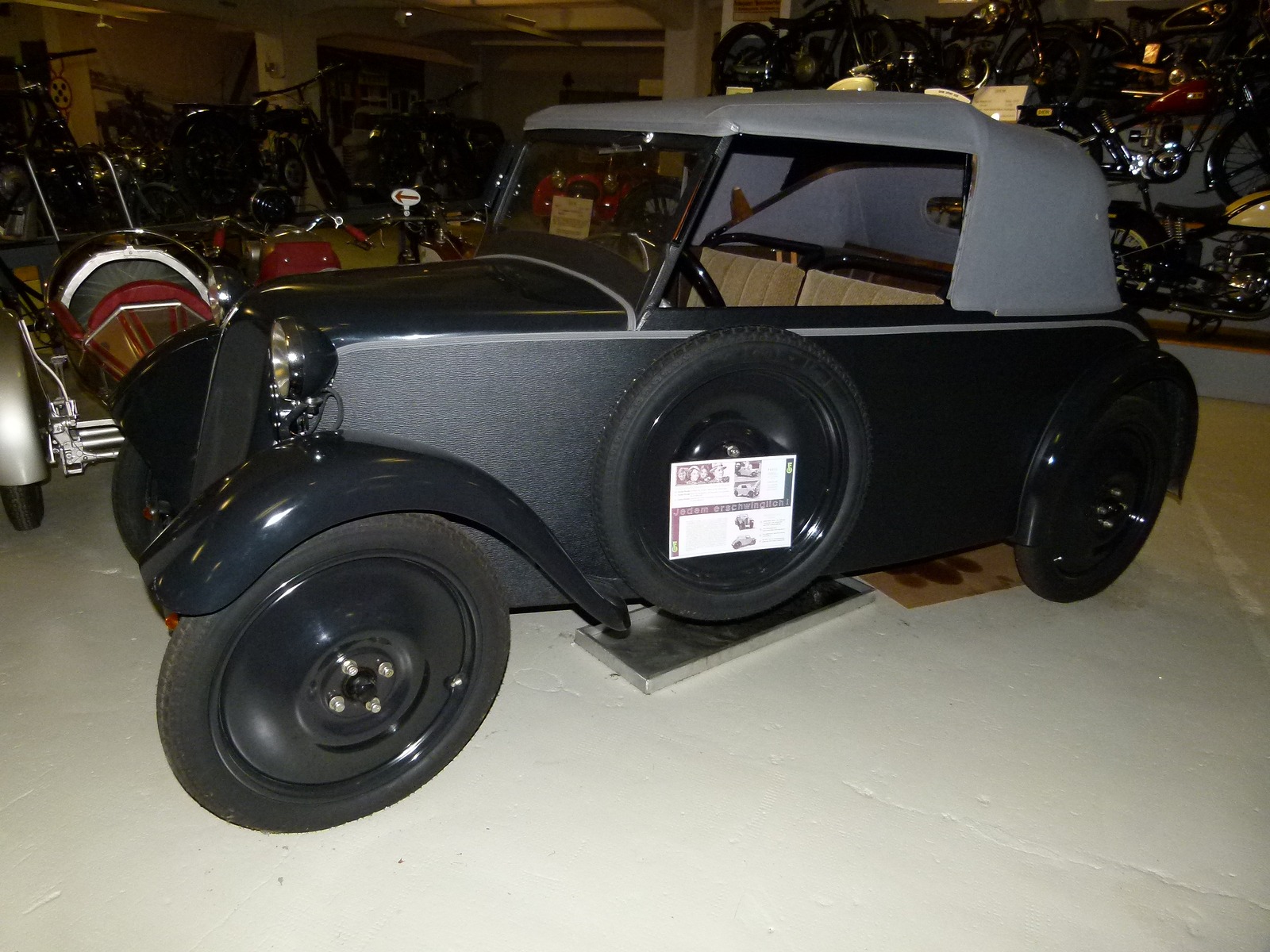
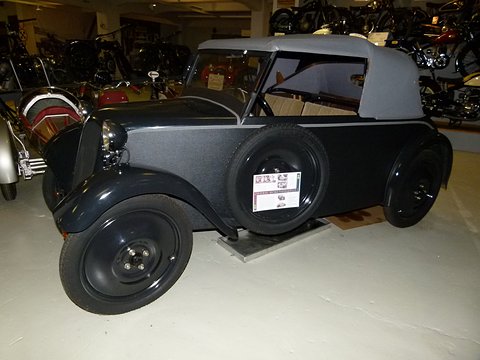
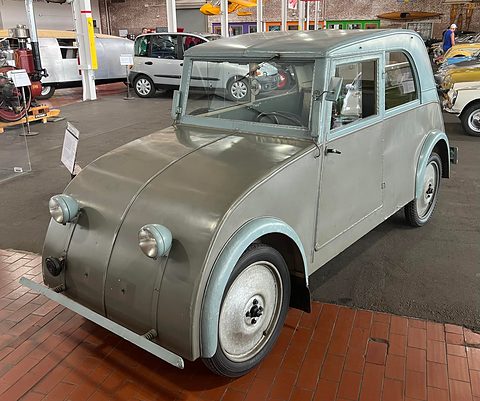
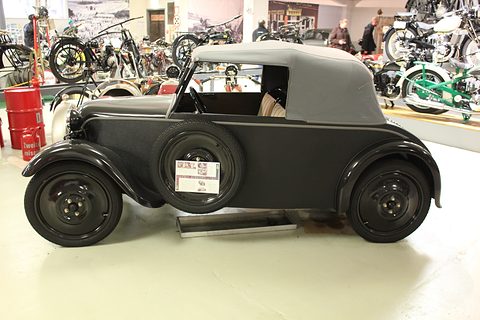
No count of surviving Stromers has been found; nor has any auction result. The photographs on this page show a green FP 200 roadster at a classic-car gala in Schwetzingen in 2021, a closed FP 200 at the August Horch Museum in Zwickau and a bare chassis at the ZeitWerkStadt museum in Frankenberg. The Lane Motor Museum in Nashville owns a Piccolo prototype of 1933/34, with 192 cc, 4 bhp and three speeds and reverse.source 4

Frankenberg keeps the name alive. A new Framo museum opened there after the old one, at Mühlbacher Straße 7, closed on 22 December 2020, and the Framo and Barkas enthusiasts hold a meeting in the town every year; the 2026 meeting was in June.source 5

Sources

Numbered as in the text

No primary source was read: the history rests on German Wikipedia and the Framo and Barkas enthusiasts’ site. Werner Oswald’s Deutsche Autos 1920–⁠1945 would settle the specifications. Sources are given as plain text; the links are on the Credits page.

  1. German Wikipedia, Framo, read in full. Used as a lead; it cites Werner Oswald’s Deutsche Autos (1996), Kraftfahrzeugtechnik 7/1967 and ADAC Motorwelt of 14 July 1933.
  2. f-r-a-m-o.de, “Firmengeschichte”, a history of the firm, read in full.
  3. f-r-a-m-o.de, “Typenübersicht”, the Framo type list, read in full.
  4. Lane Motor Museum, “Framo Piccolo, 1933”, collection page, read in full.
  5. f-r-a-m-o.de, home page and news items, read.