The story
History
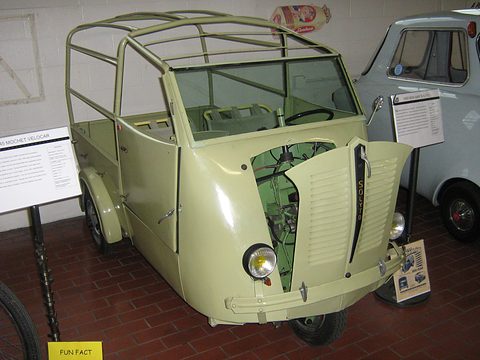
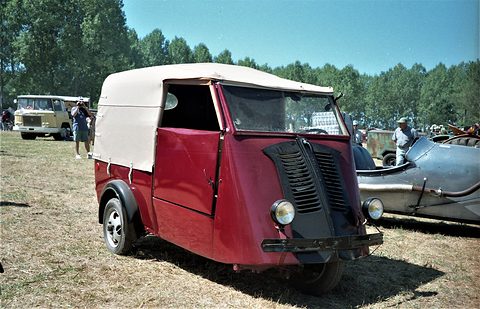
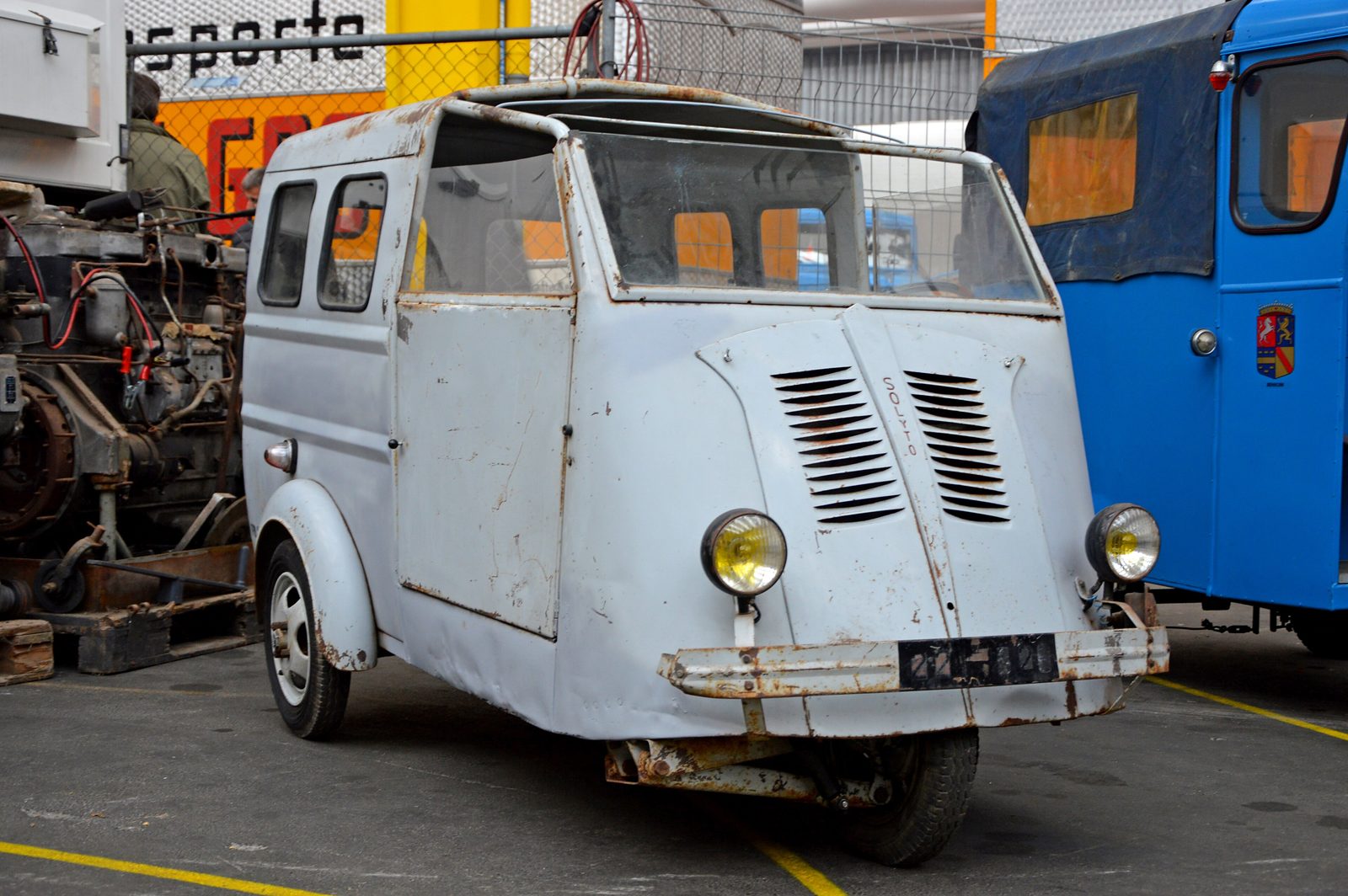
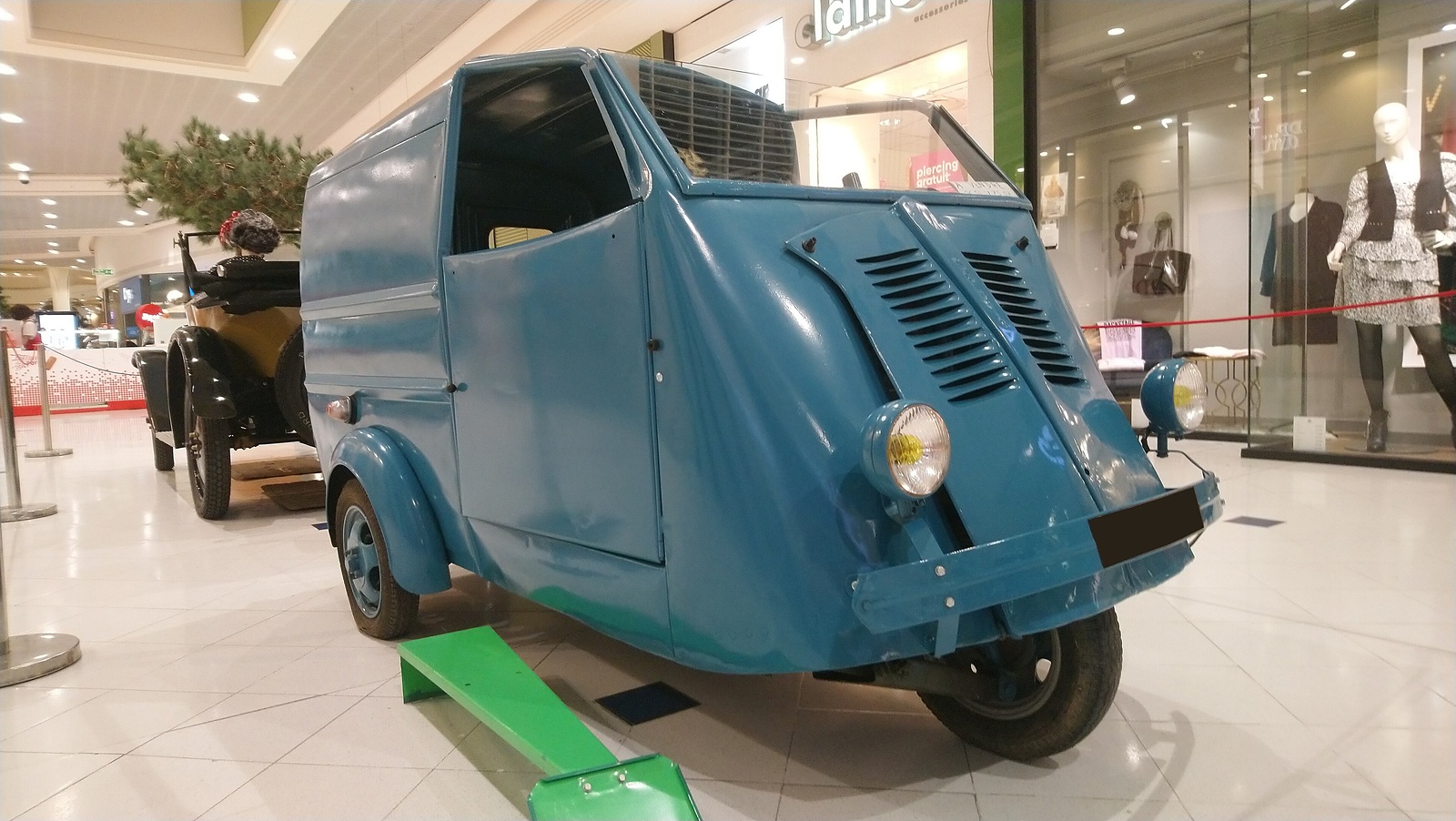
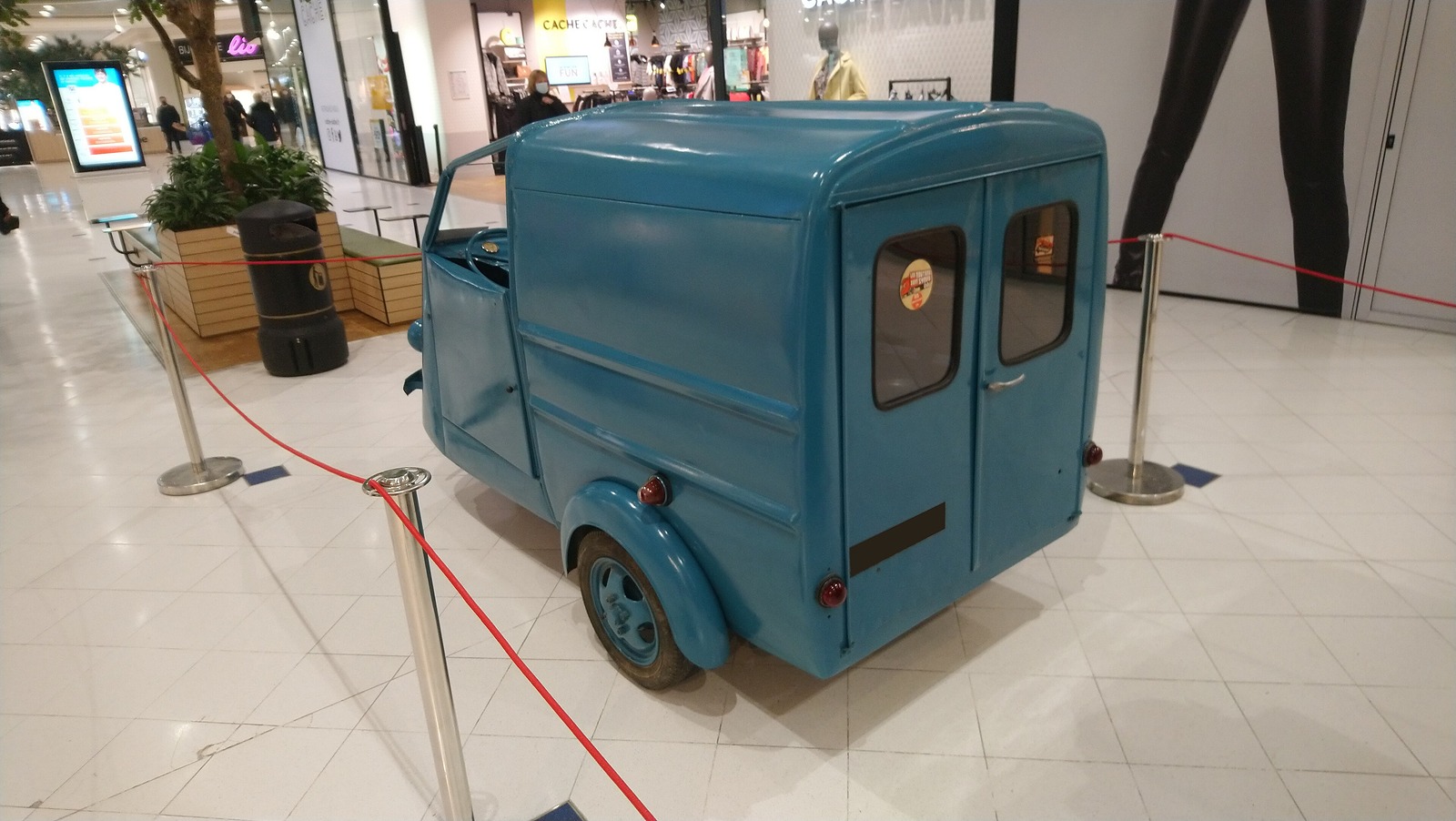
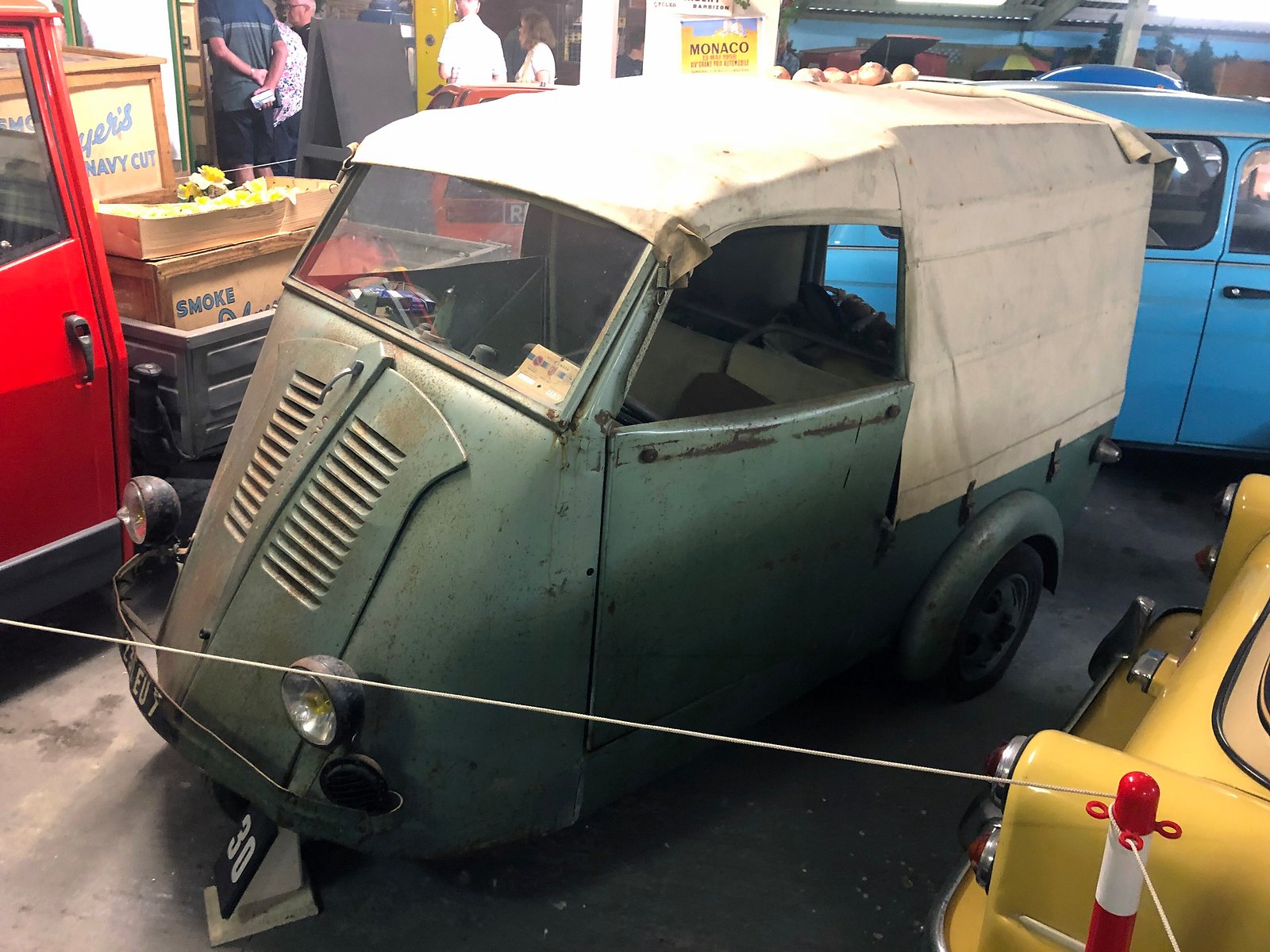
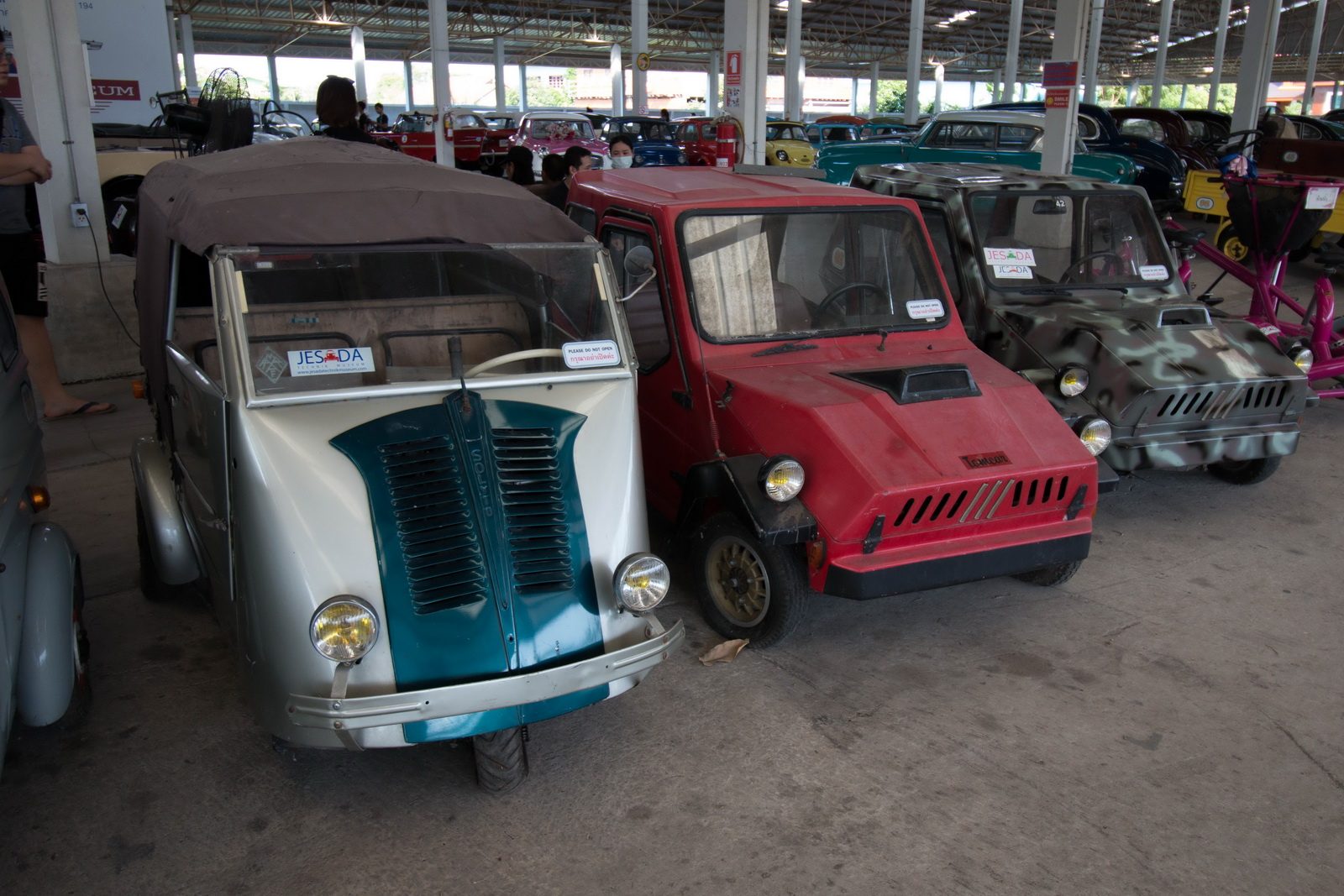
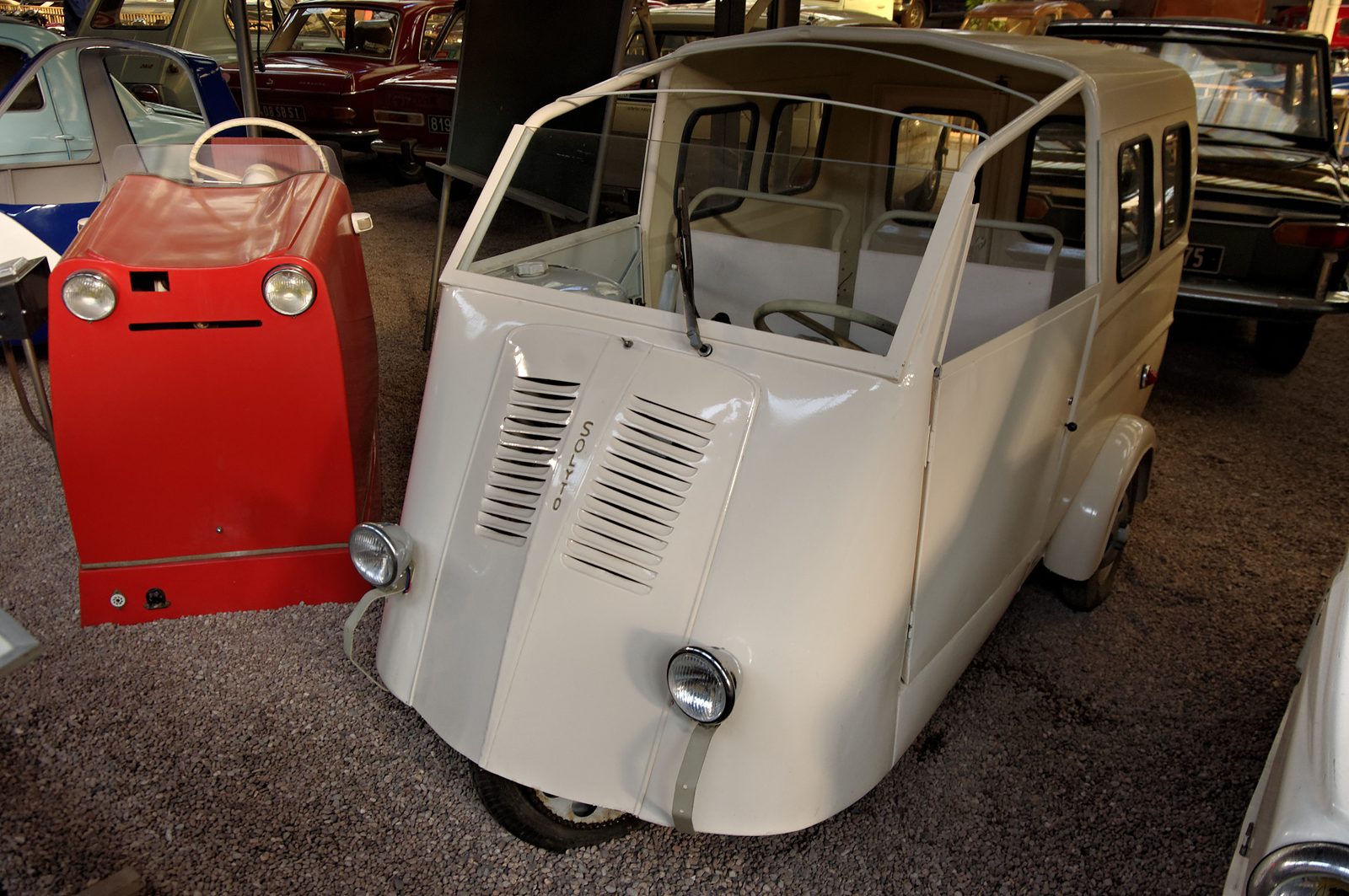
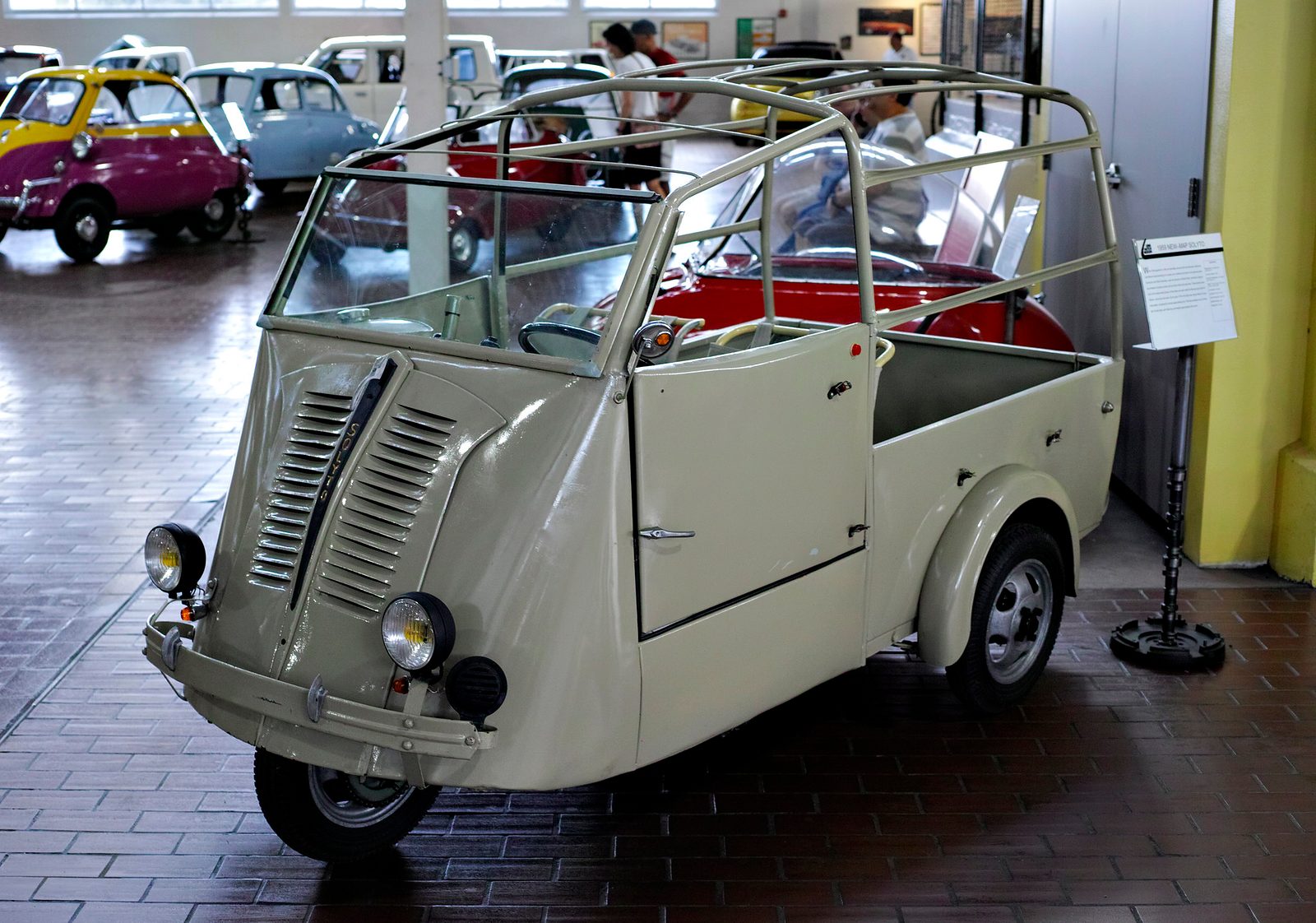
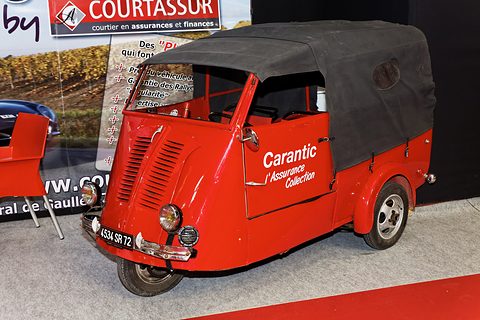
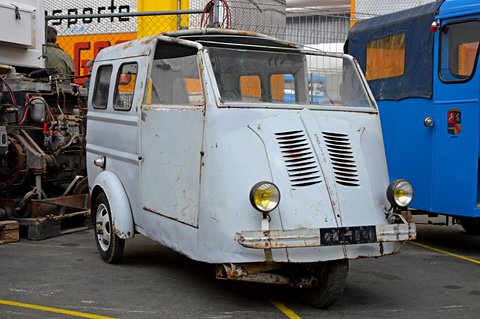
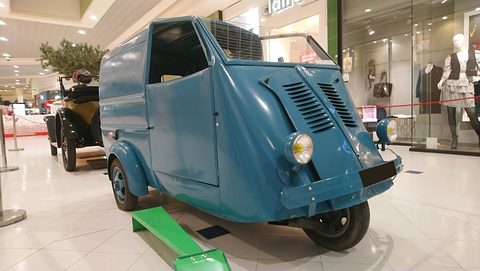
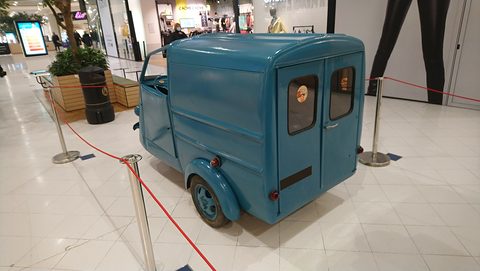
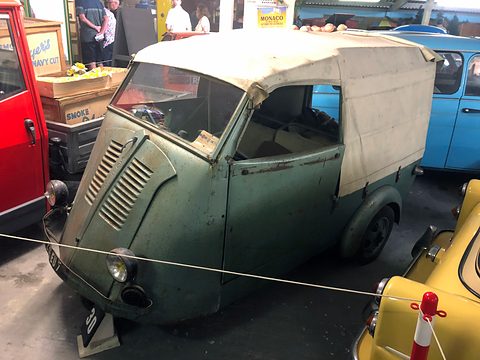
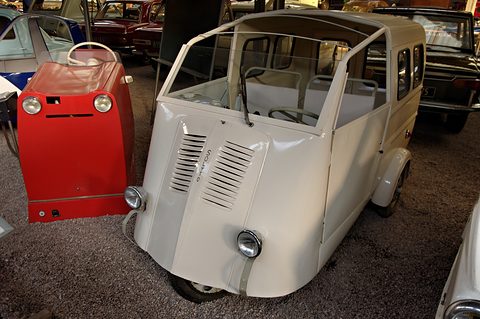
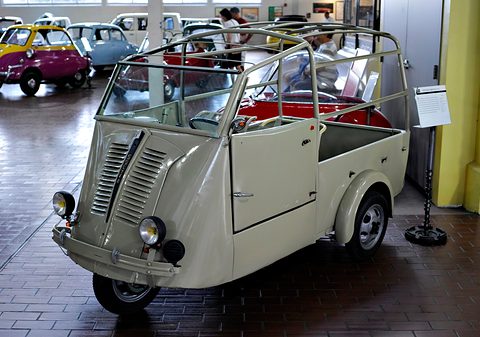
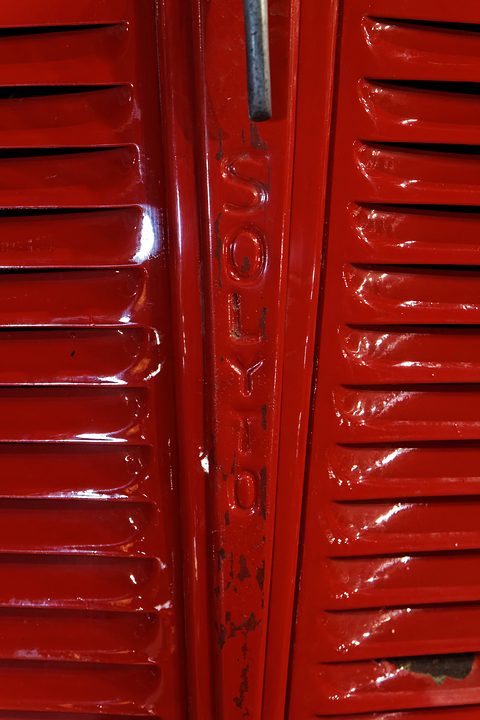
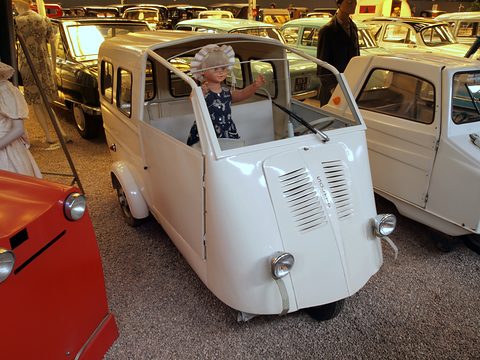
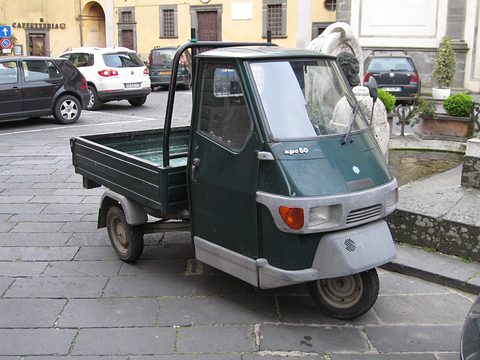
The Solyto’s engine turned with its front wheel. A 125 cc Ydral two-stroke sat on the fork, and the driver steered the fork with a round steering wheel, so the single wheel at the front did the steering and the driving at once.source 1source 2 Behind the cab, two wheels carried a box with a canvas or a steel back. It was a three-wheeler and a micro-van, meant for artisans and small shopkeepers, and because the engine was a 125 it needed no driving licence: it was among France’s post-war licence-free cars of 125 cc. It was offered as a stylish, enclosed alternative to the scooter-based triporteurs of Vespa and Lambretta, with a wheel instead of handlebars.source 1source 2source 3
Its maker was the sheet-metal shop of New-Map, a Lyon motorcycle firm.source 4source 3 New-Map had grown from a cycle workshop that Joseph Martin opened in 1898; the name dates from 1926, under his son Paul.source 5 It built motorcycles with bought-in engines, among them AMC, JAP and Ydral, a delivery triporteur in 1935 and, in 1938, a small roadster, the New-Map Baby.source 6source 7source 3 In 1940 the firm was reorganised, and, by Gazoline’s account, its accountant, Robert Robin, quietly bought up the shares and took control. Paul Martin stayed on as technical adviser until October 1950.source 3
Designed under the Occupation
The van was the work of New-Map’s workshop foreman, M. Castellano, who designed it during the Occupation. A prototype was built in the sheet-metal shop, but Gazoline says the politics of occupied France and the company’s own social climate kept it from going further; RM agrees that it was shelved.source 3source 2 When it reached the market is disputed. Gazoline, working from Joseph Spalek’s memories, says New-Map offered only three 125 cc moped models after the war until 1947, when the Solyto went on sale. RM says the Rolux was built until New-Map replaced it with Castellano’s little truck in 1952, and the Weiner museum also starts the Solyto in 1952.source 3source 2source 1 The question is open.
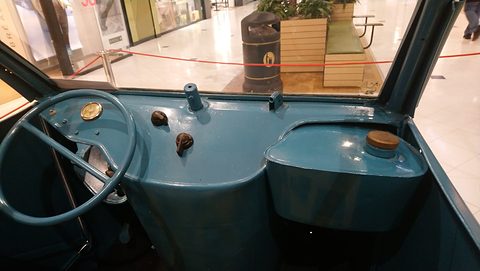
The early vans were simple. They came in two colours, ocean green and metallic grey, and had no heater, no spare wheel, no second seat, no locking doors and, by Gazoline’s account, no reverse.source 3 The engine was kicked into life once the front grille had been released, the fuel tank sat on the dashboard inside the cab, and the seats were canvas slung on tube frames.source 2
Il se conduit comme un cyclomoteur avec ses deux pédales (une pour les gaz, la seconde pour les freins).
It turned in a radius of 1.75 m (5 ft 9 in), went 250 km (155 miles) on a tank at 50 km/h (31 mph), and Gazoline gives it a payload of about 350 kg (772 lb), where the Weiner museum says 200 kg.source 3source 1 A Break Camping followed, with four windows in the back; take out the front seat, Gazoline says, and you could lie down inside.source 4source 3
Spalek’s improvisations
In 1959 New-Map went into liquidation, its motorcycles stopped, and the works in rue Lacassagne closed.source 4source 3 What was left moved to the sheet-metal shop in rue Rockfeller and made a pedal triporteur, a bicycle trailer and the Solyto. Castellano left to set up on his own, and Robin brought in Joseph Spalek, who with his father had been New-Map’s agent for the Lyon area since 1949 and who inherited half the shares. Five workers remained, where both workshops had once employed about 70.source 3
Gazoline’s account of the next few years is a run of forced inventions. The works was expropriated, and the line moved to a new factory at Chassieu. The Ydral had given way to a 125 cc Ultima with an Ultima four-speed gearbox, and then Ultima went bankrupt. Spalek turned to a boat engine from Sotecma, which came without a gearbox, so he designed a V-belt variator automatic and the tools to make it. When Sotecma closed in the early 1960s he designed and built his own engine in three months, buying in cylinders, pistons and heads from Gnome-et-Rhône, and an electric starter replaced the pull cord, the kind found on lawnmowers.source 3 The Weiner museum tells it differently, with the automatic designed for the Ultima.source 4 Gazoline calls the Solyto the first automatic vehicle sold in France, ahead of the DAF; that is the maker’s side’s claim, and Gazoline itself grants that Manurhin’s scooter came earlier on two wheels.source 3
KV, 1963–74
To survive, the shop made sheet-metal parts, telephone cabinets above all, for the electrical-equipment firm KV, which became its main customer.source 4source 3 In 1963 Robin retired, KV’s director, M. Valentin, bought his shares, and the old Société Lyonnaise de Tôlerie became part of KV.source 3 In 1965 the van gained capacitor-discharge electronic ignition. A friend of Spalek’s who was keen on electronics talked him into it, it briefly revived sales, and Gazoline and RM both say it had until then been found only on Formula 1 cars, a claim that comes from the maker’s side.source 3source 2 From 1971 the van was sold as the KV TC-8, with three backs.source 4source 8
It never went faster than 50 km/h, later 60 km/h, the limit for licence-free vehicles. Some of the workshop staff, for fun, did better: with a 175 cc piston, a rotary valve or a special carburettor, a few vans reached 100 km/h (62 mph).source 3
Mais la stabilité de l’engin, déjà précaire à l’origine, devenait utopique, et les quelques Solyto survitaminés ont souvent fini… sur le toit.
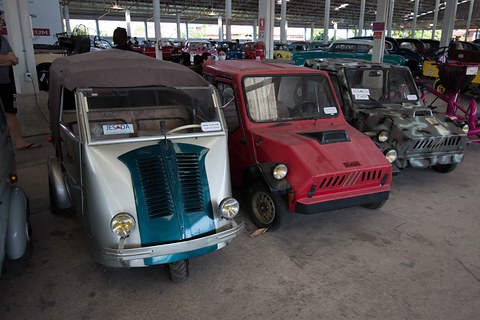
The last Solyto was built in February 1974, after about 4,000.source 4source 3 It had outlived the motorcycle firm that made it by 15 years, and a version was built under licence in Spain as the Delfín.source 6source 7 Spalek’s next idea was already on sale: a small car, the KV Mini.