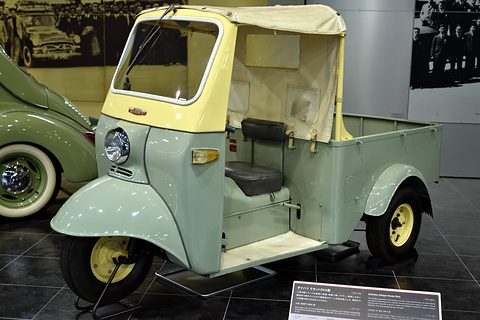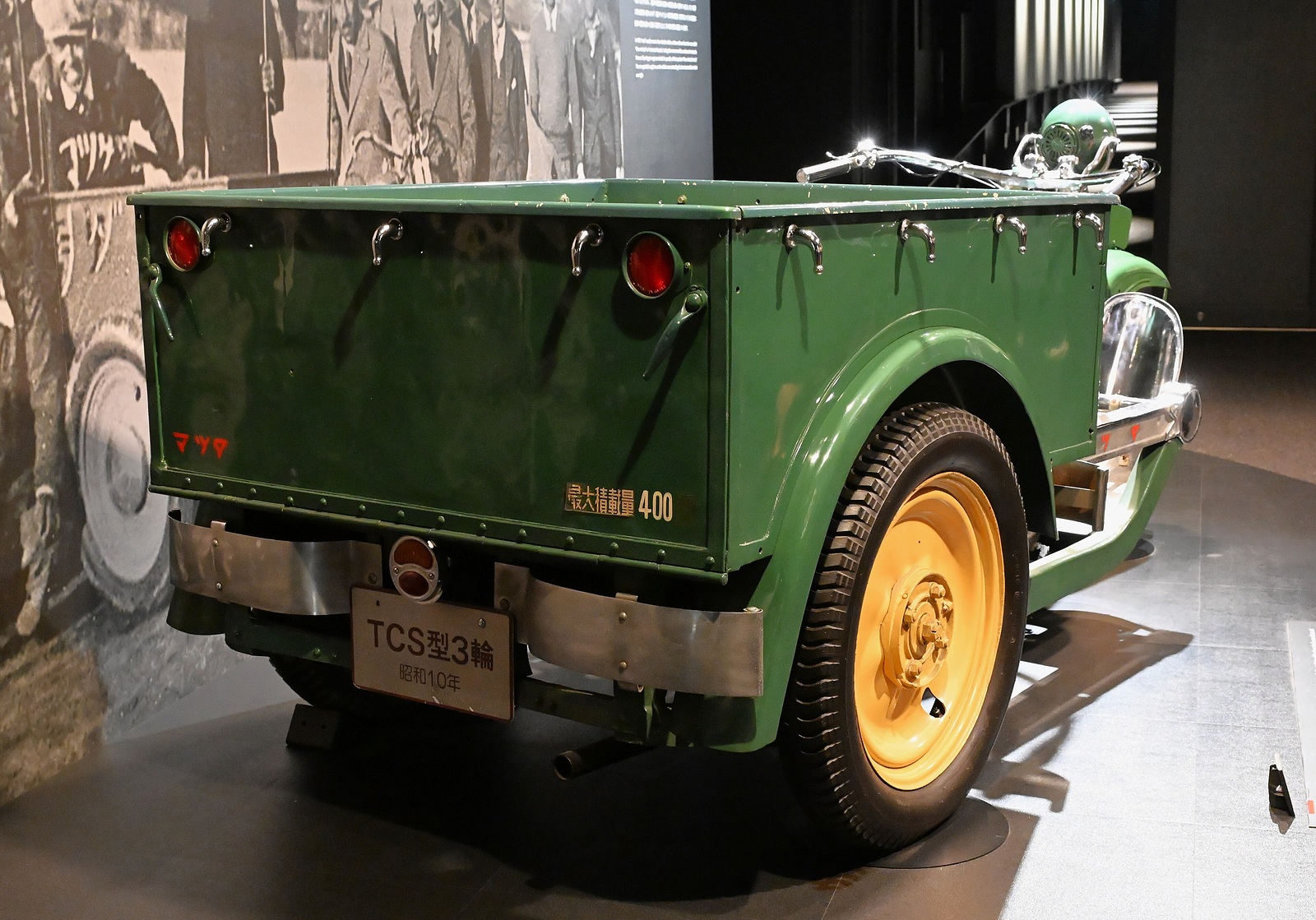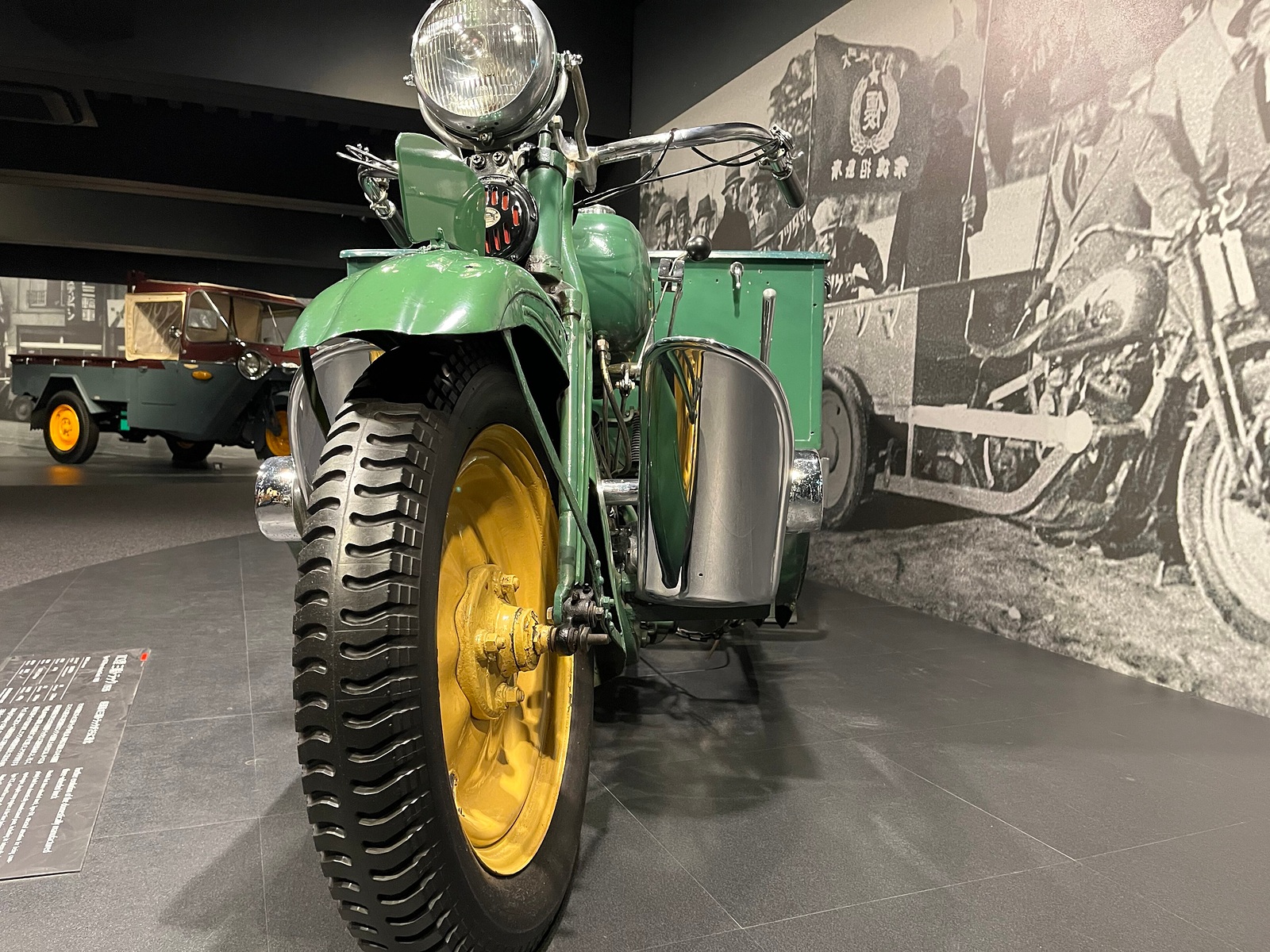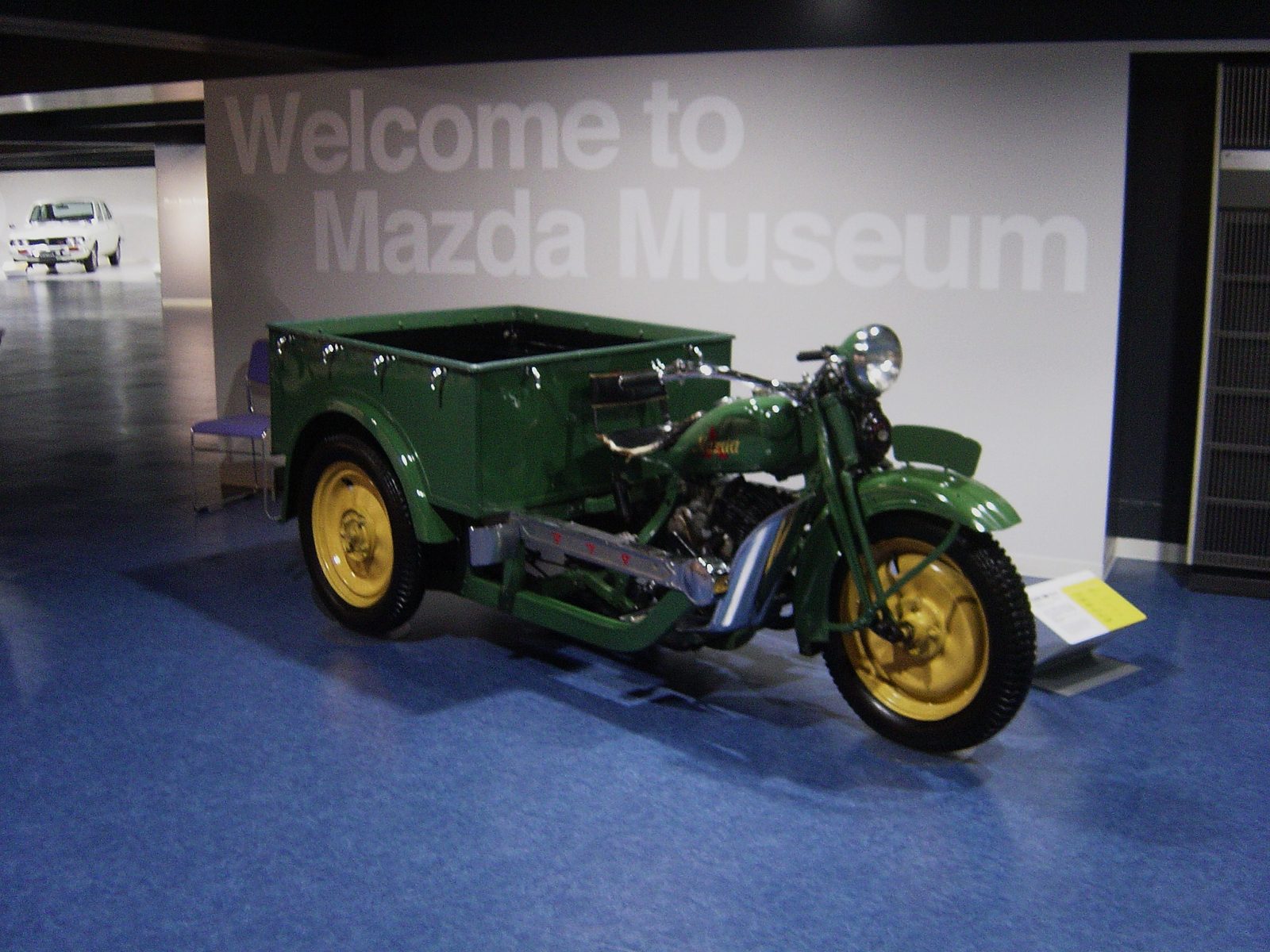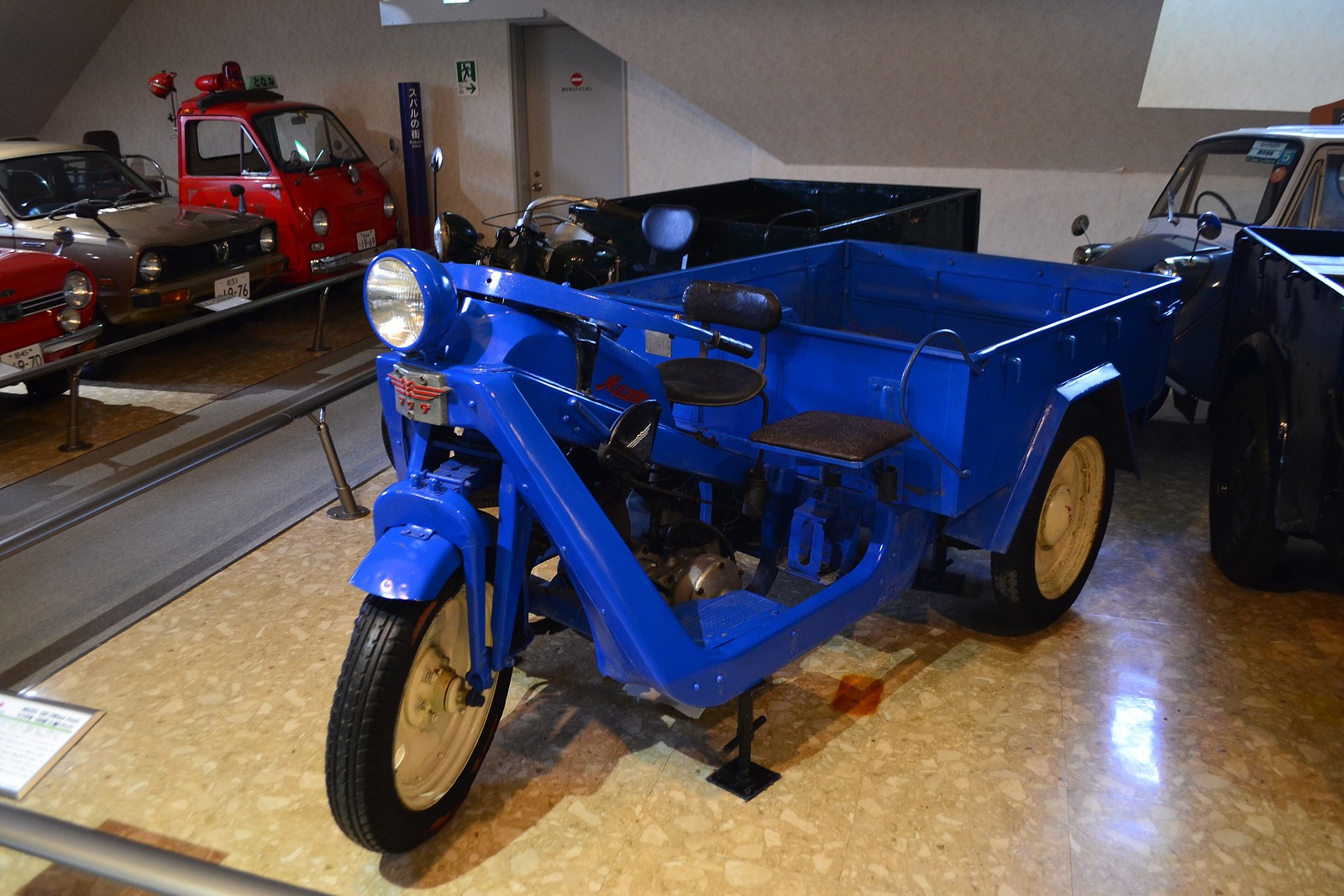
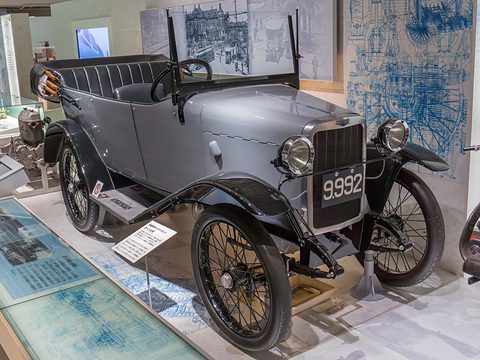
The story
History
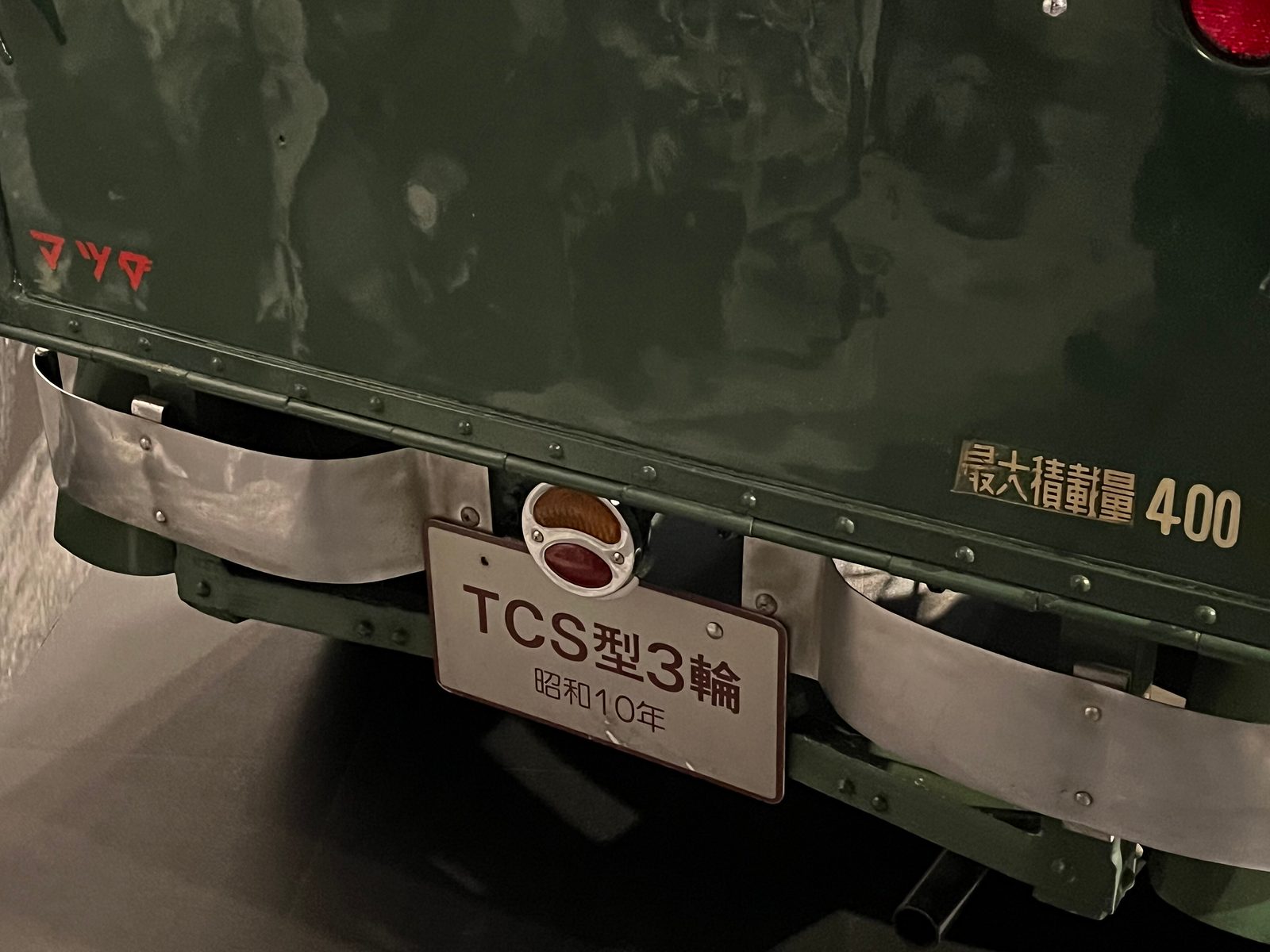
Tōyō Kōgyō began as Tōyō Cork Kōgyō, a cork maker in Hiroshima. Jujiro Matsuda took charge in 1921 and moved the firm into machine tools.source 1source 2 In 1929 it built its first engine, a 250 cc two-stroke, and in March 1930 six motorcycles; about 30 more were sold through Mitsubishi’s dealers, and one of them won a race in Hiroshima that October.source 2 Then Matsuda turned to three-wheelers, which paid better.source 2 Work on the truck had begun in 1929, by the account of Mazda’s own 1990 history as English Wikipedia reports it.source 3
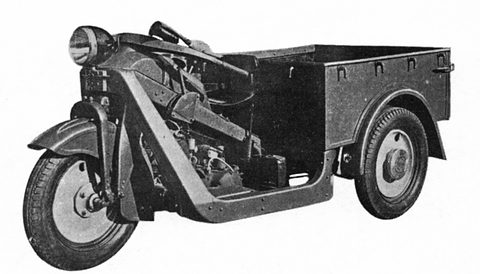
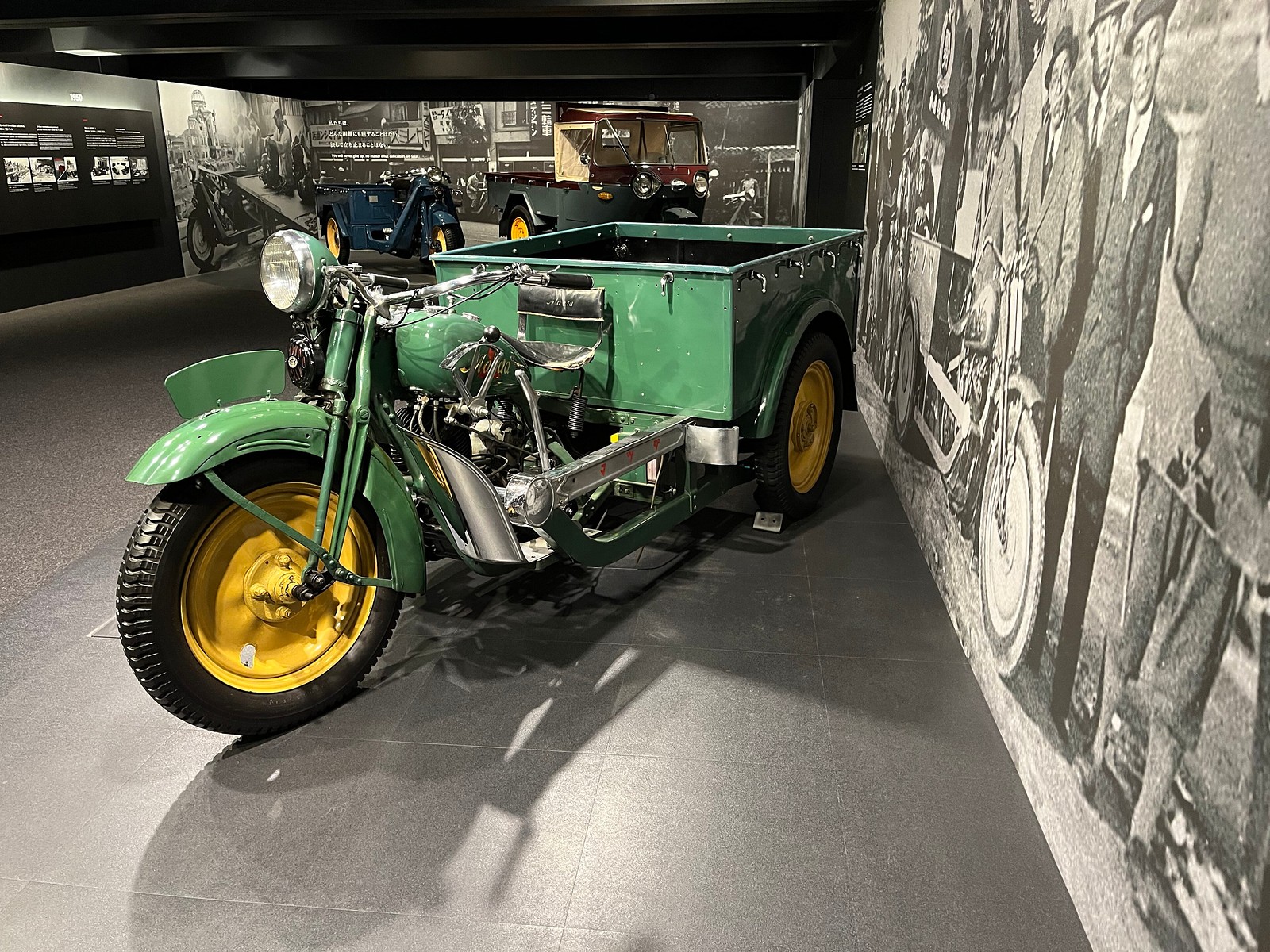
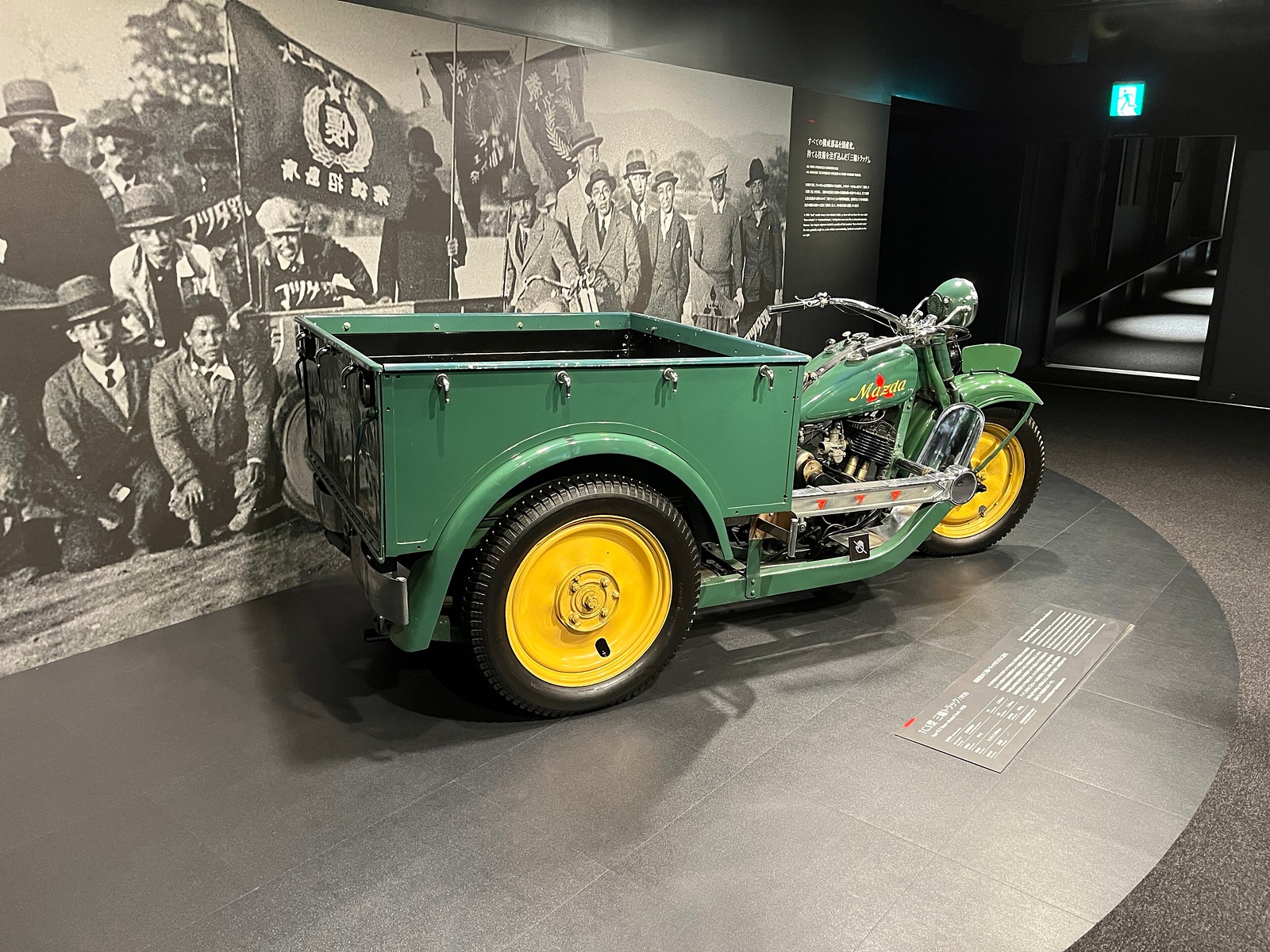
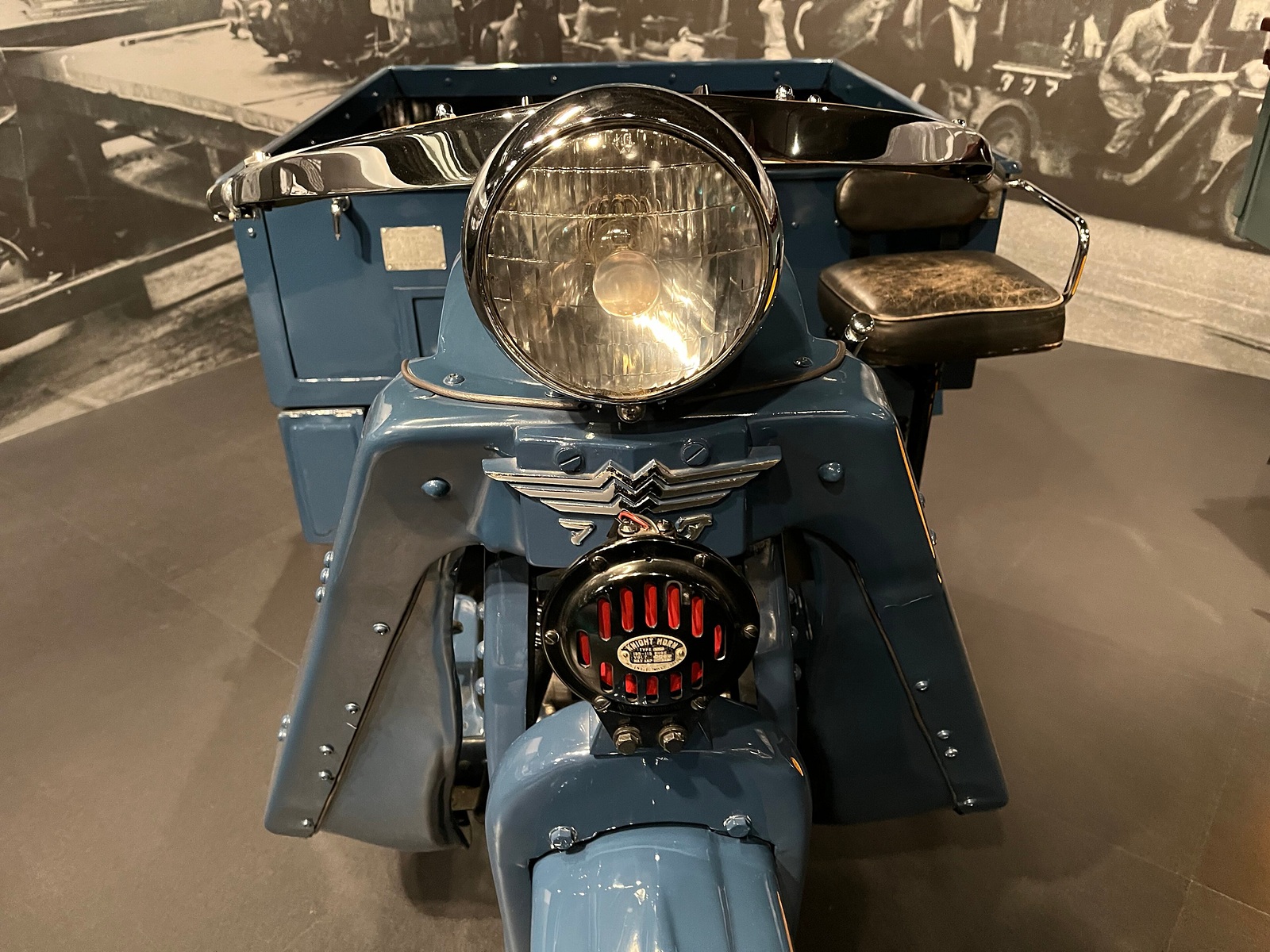
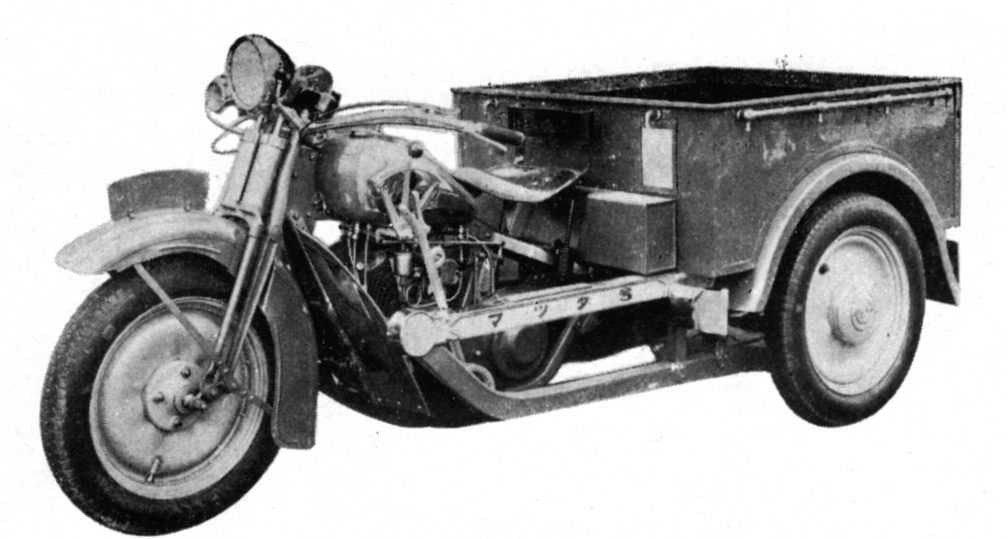
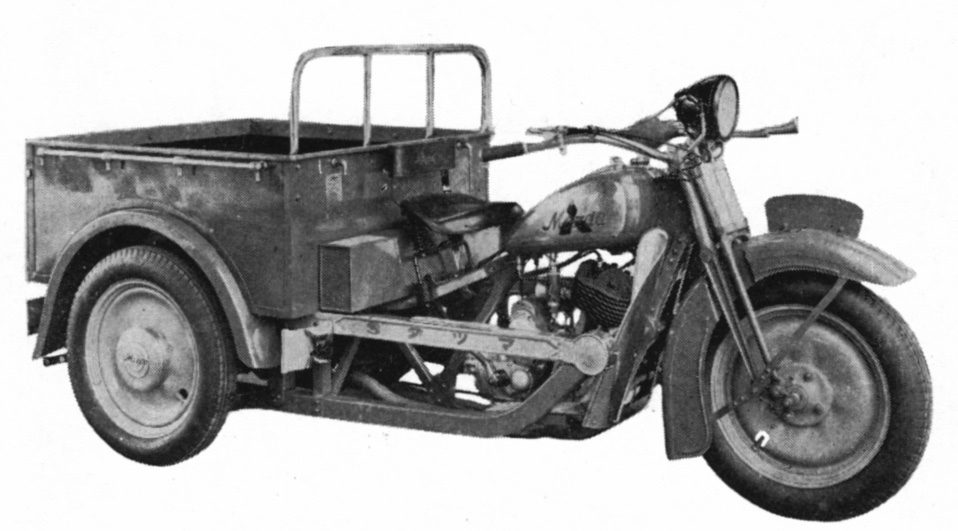
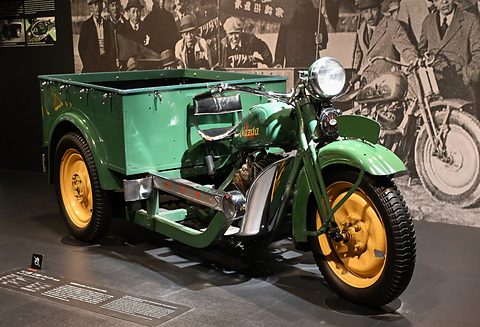
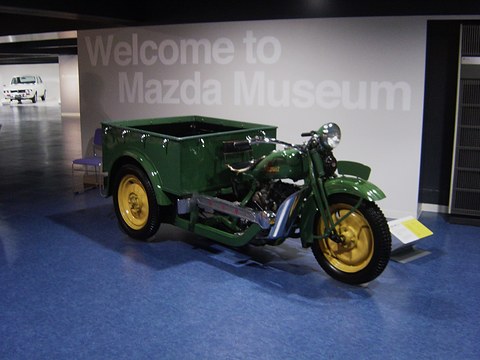
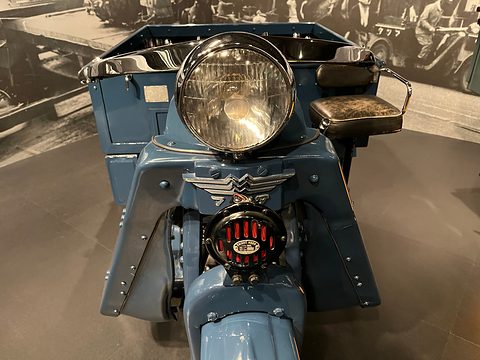
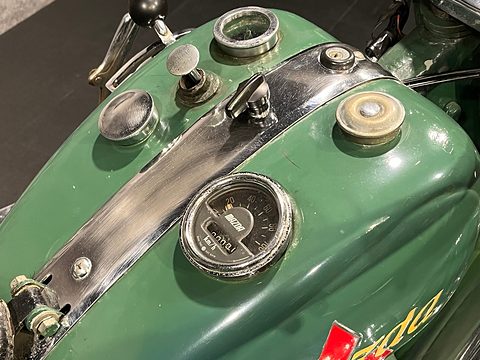
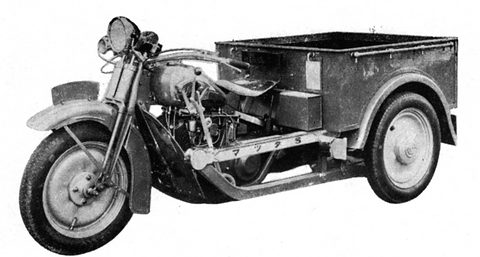
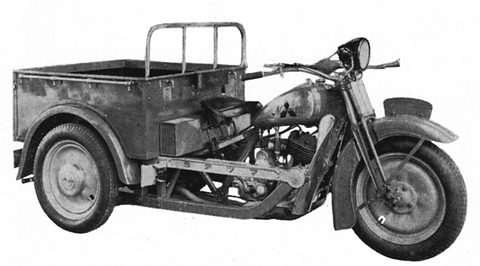
Japan’s economy was picking up, and there was demand for plain working vehicles.source 1 In July 1931 Tōyō Kōgyō agreed that Mitsubishi would sell the truck, with the rights in Japan until August 1936 and abroad until December 1937, and Mitsubishi’s logo went on the tank.source 3source 1 The Mazda-Go Type DA went on sale on 3 October 1931, and the first batch was 66.source 3source 1source 2 It was the first vehicle to carry the name Mazda, which Mazda’s own account takes from two places at once: Matsuda’s surname and Ahura Mazda, the Zoroastrian god of light and wisdom.source 1
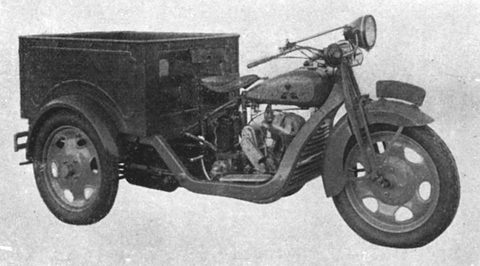
A motorcycle with a load bed
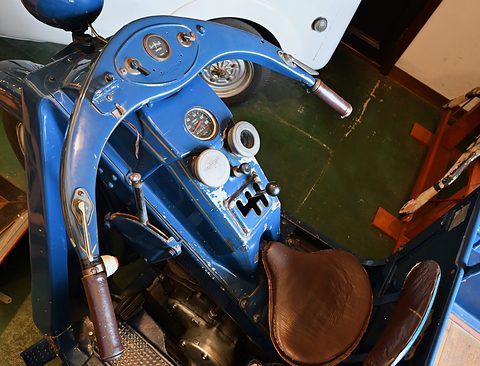
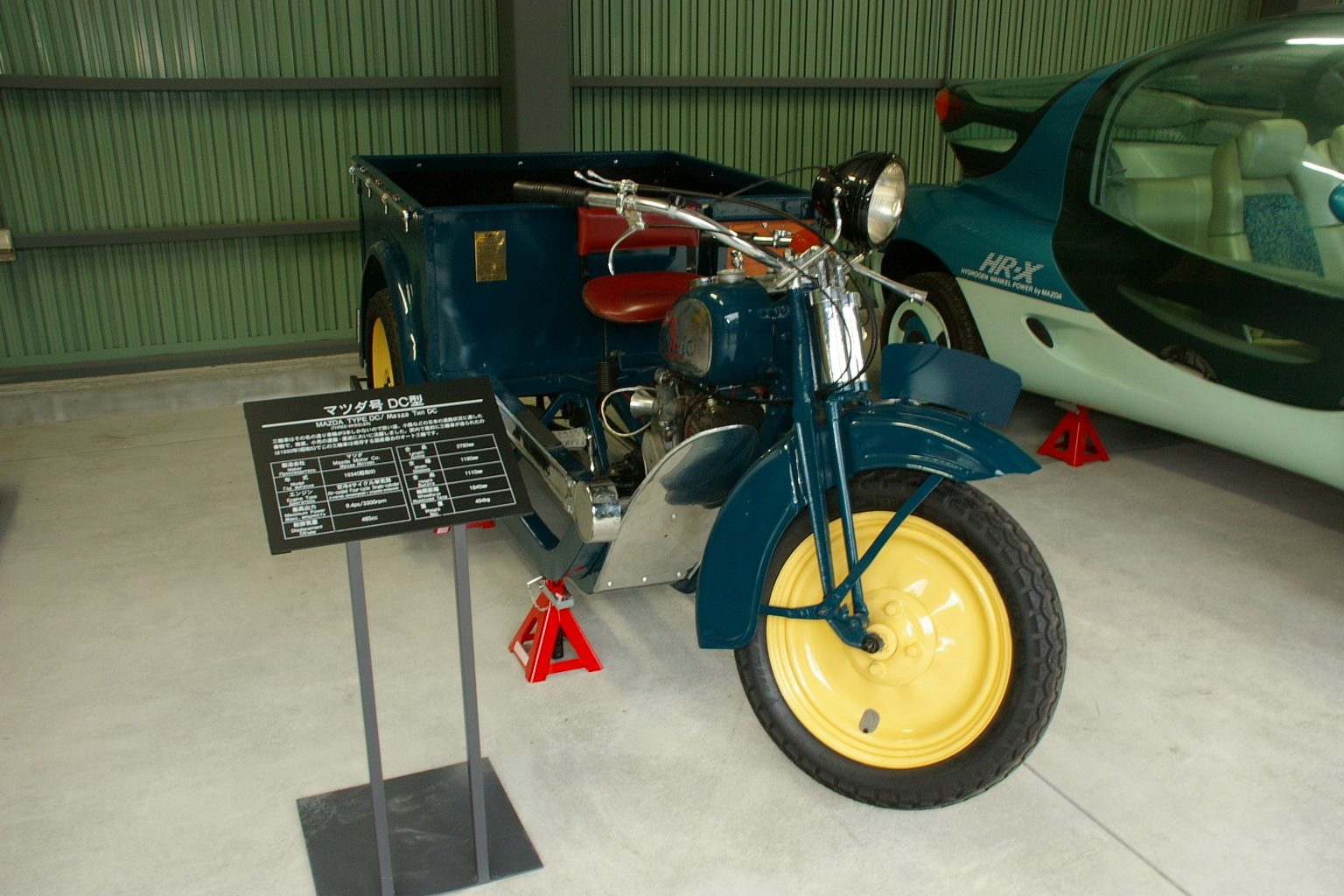
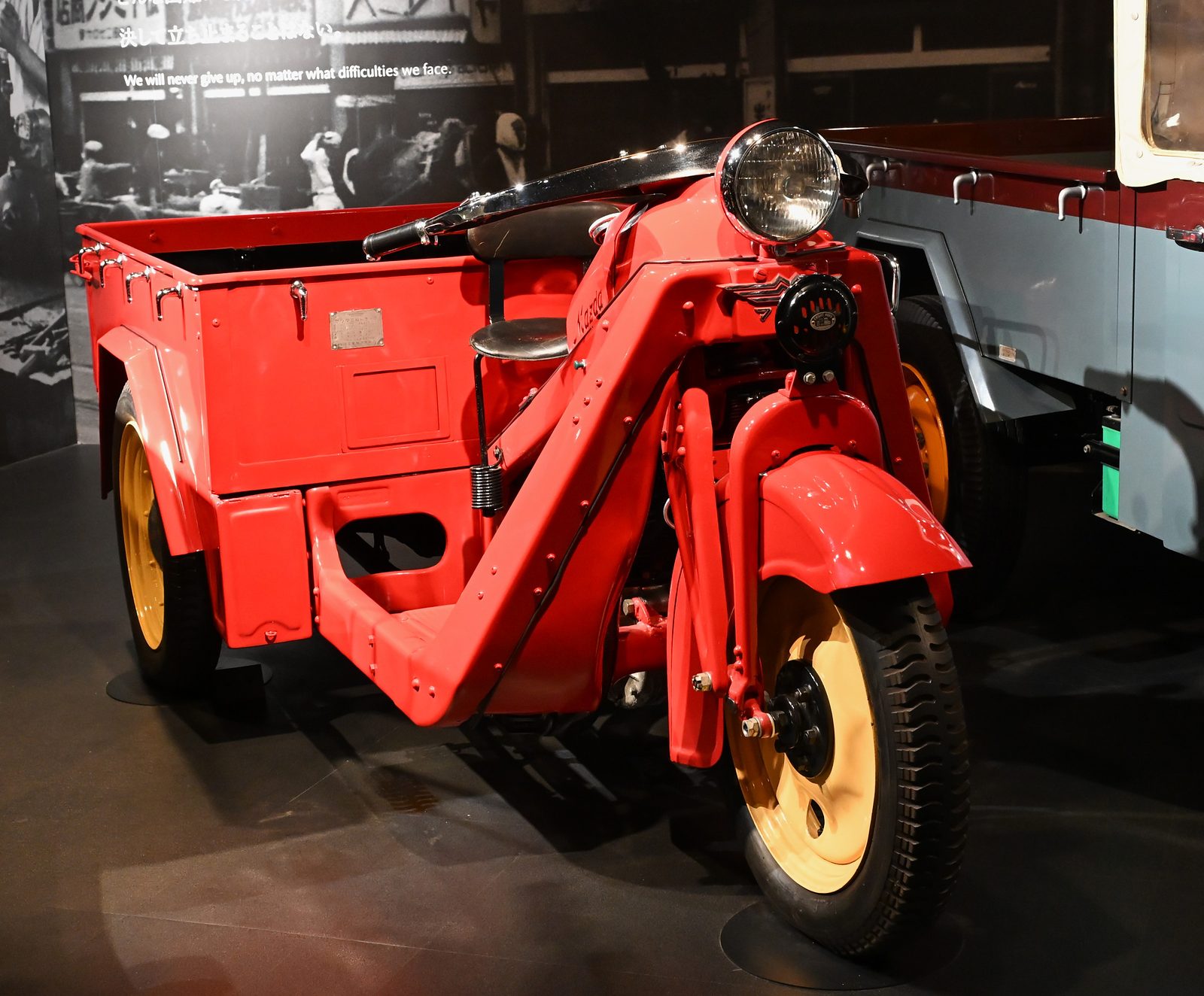
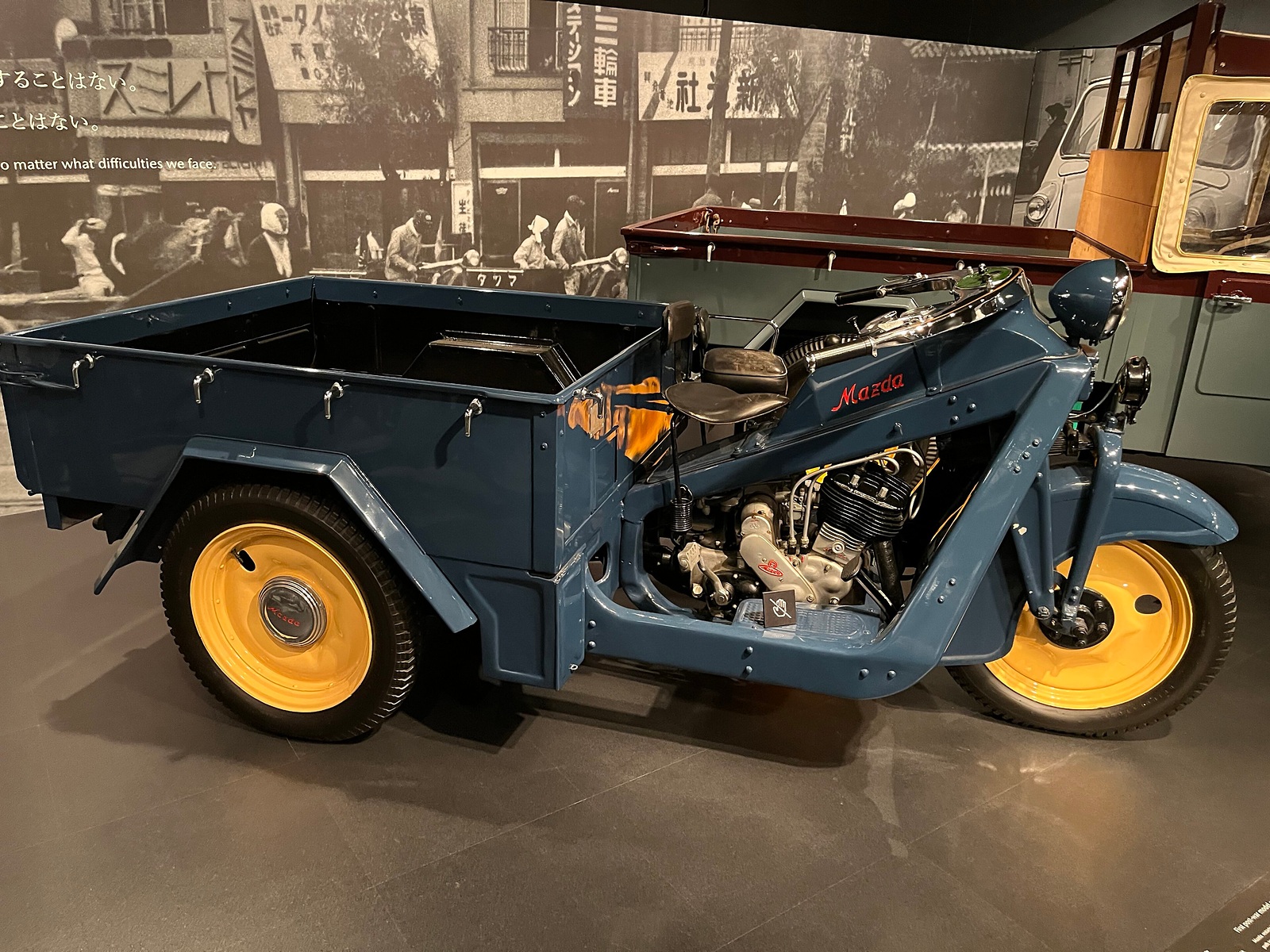
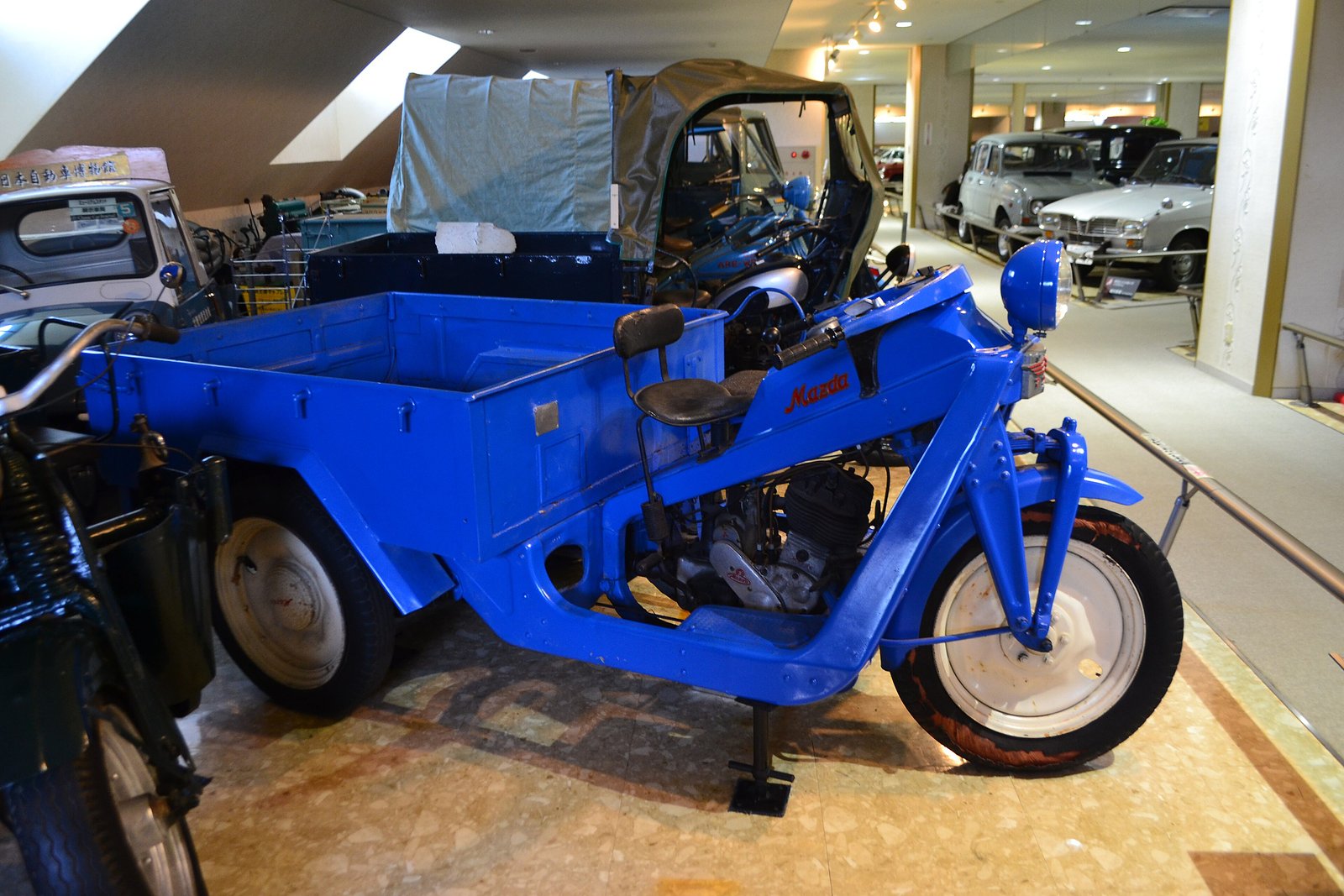
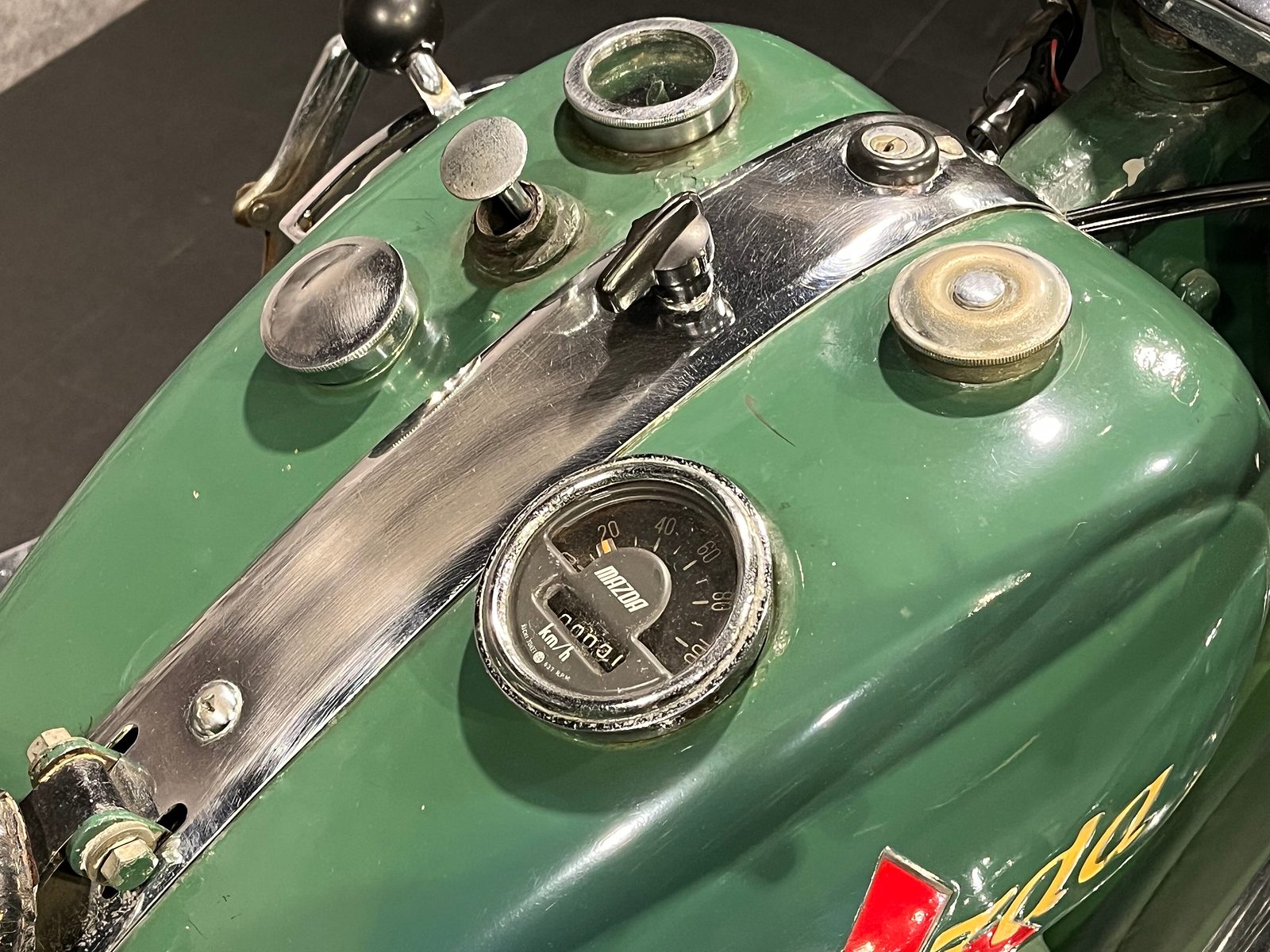
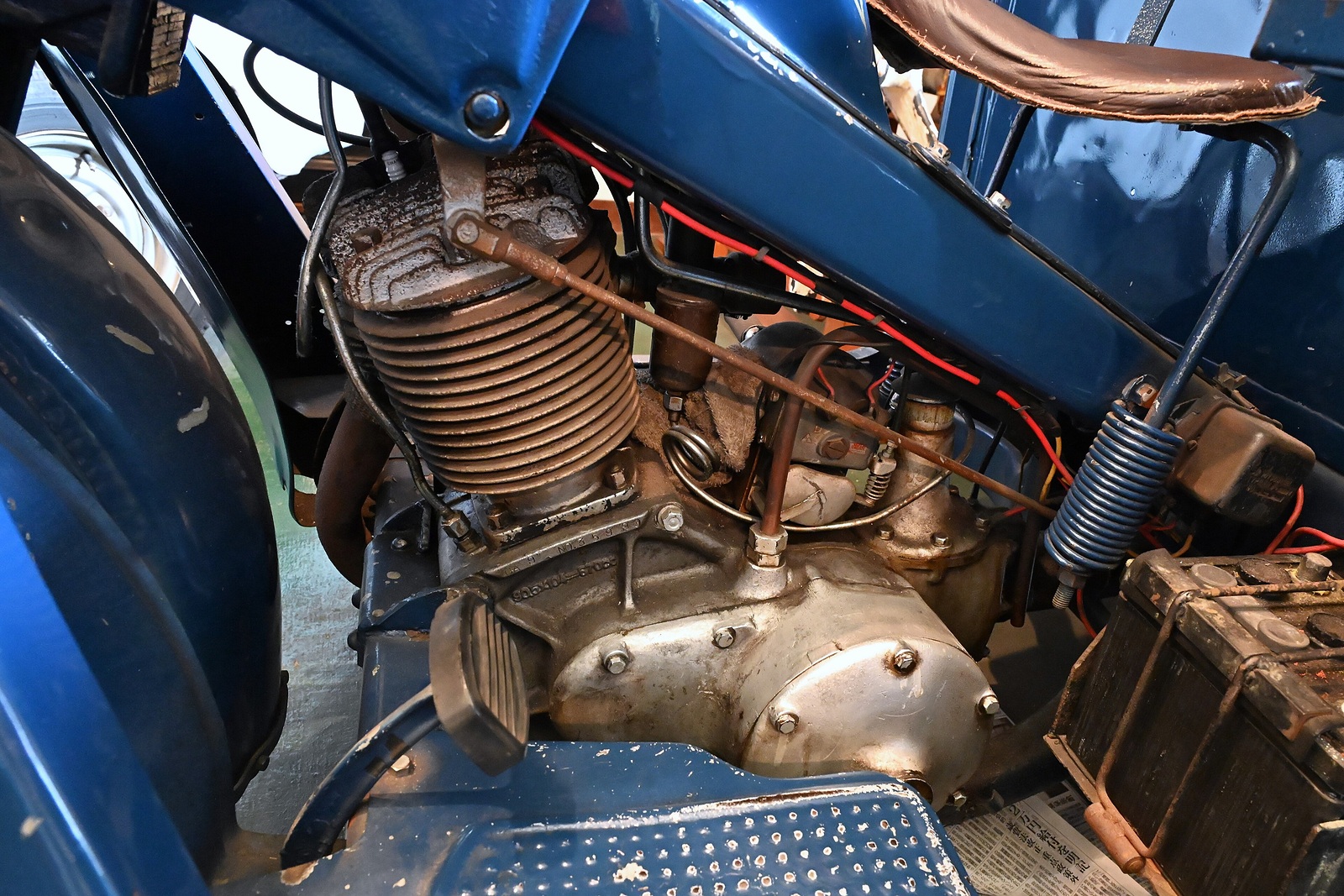
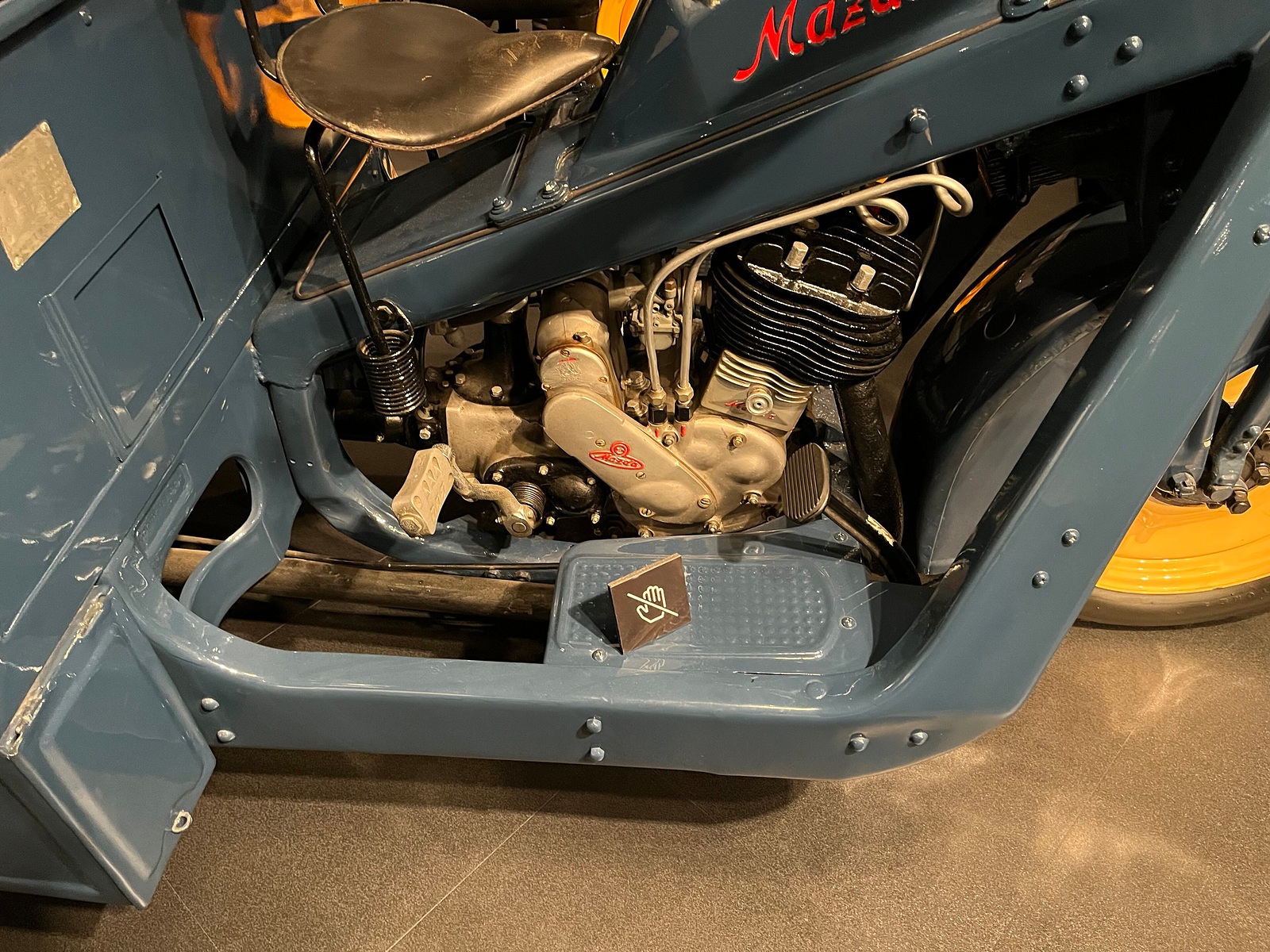
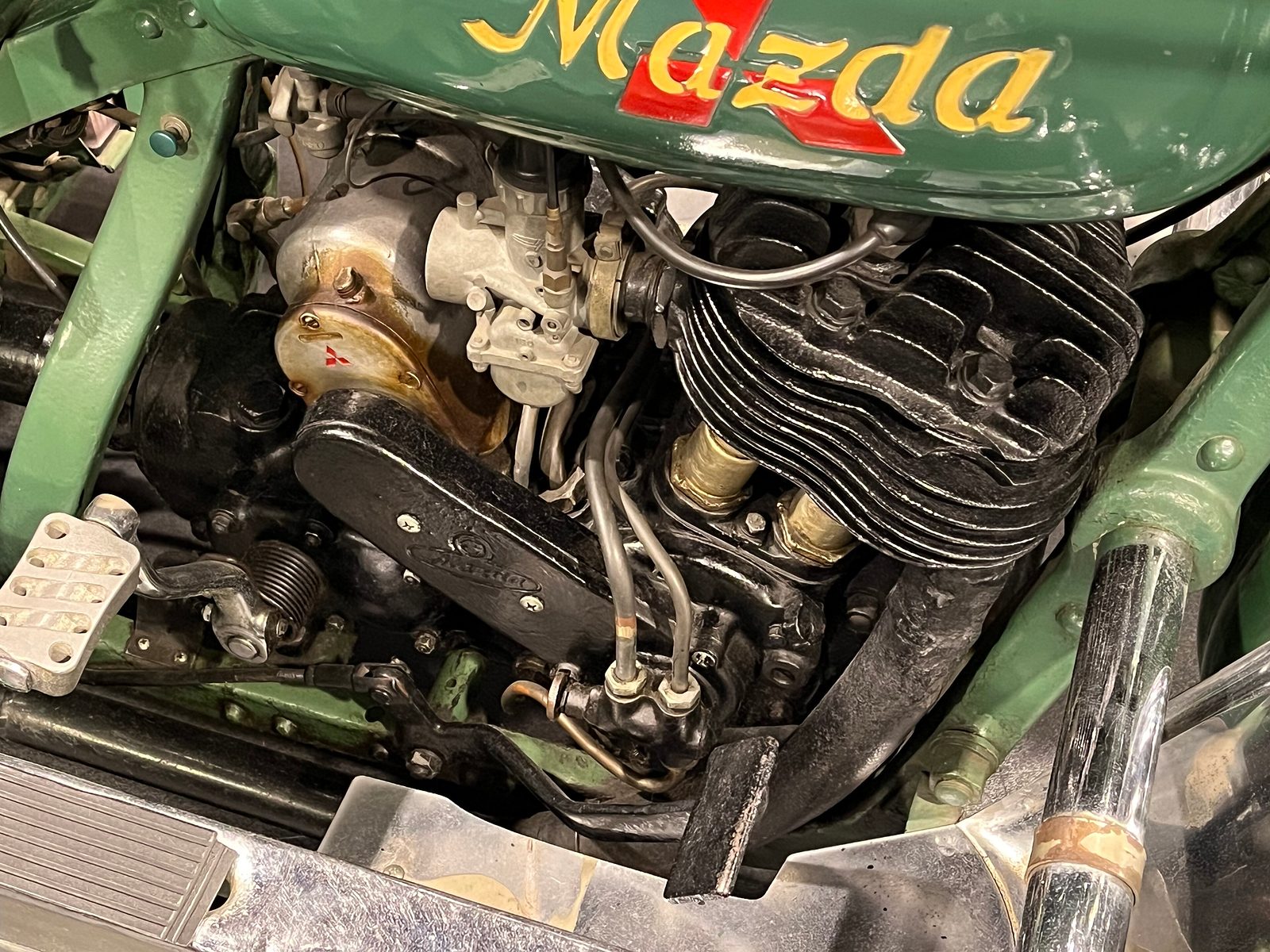
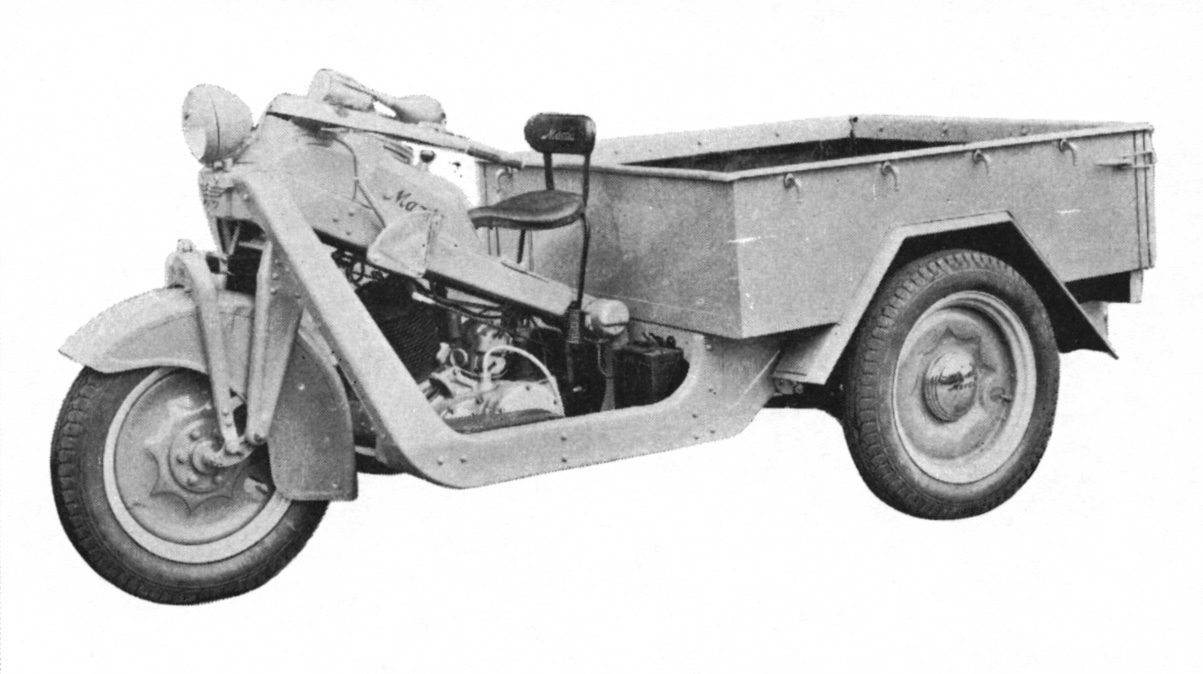
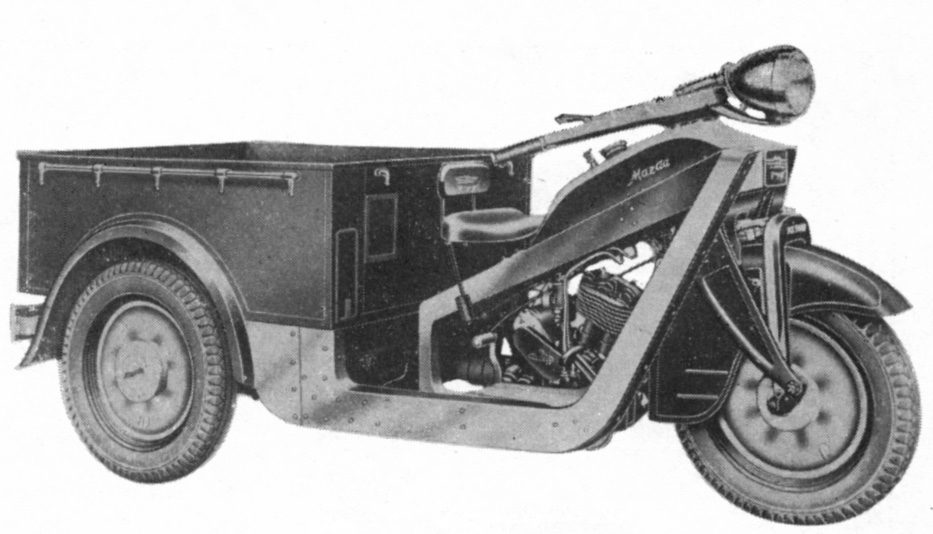
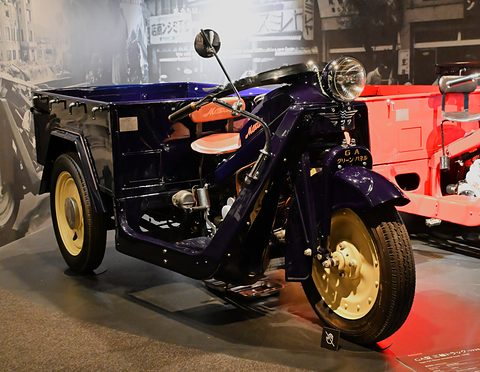
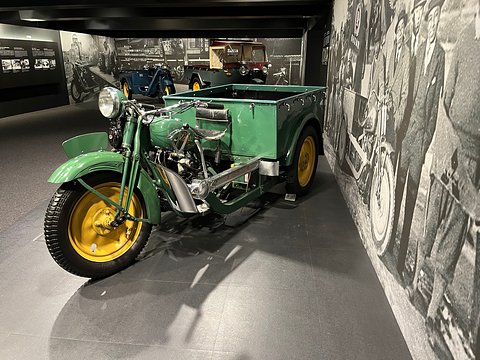
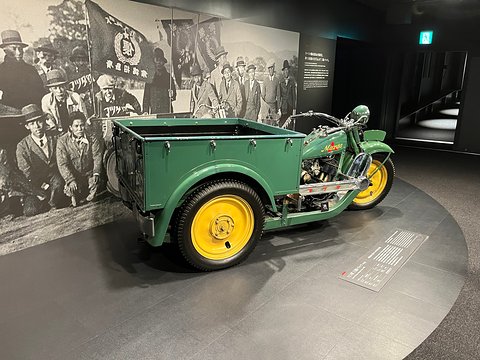
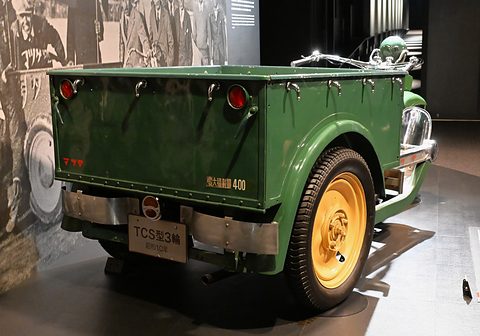
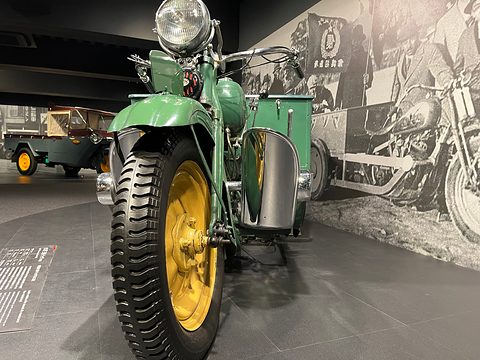
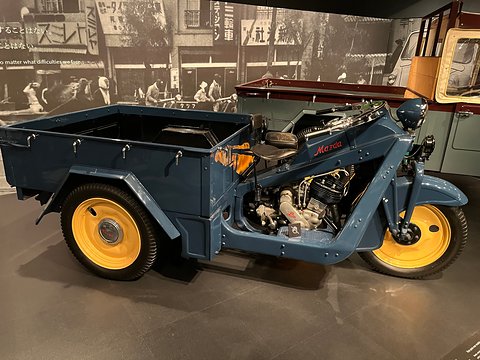
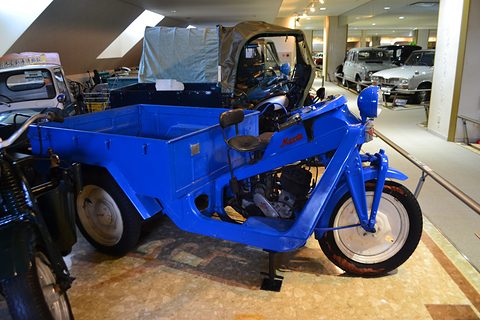
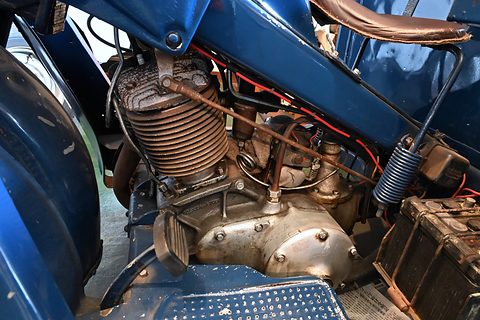
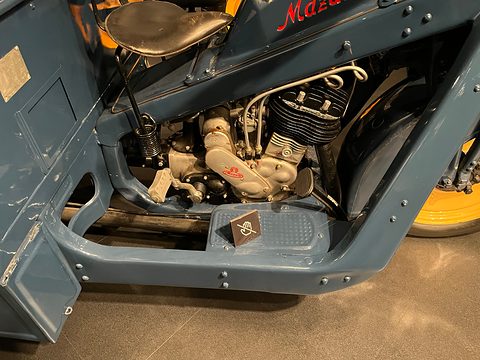
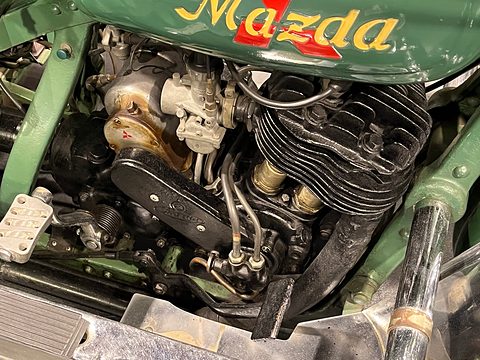
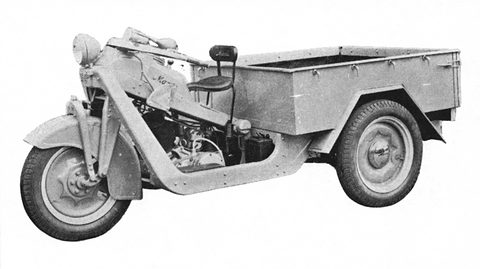
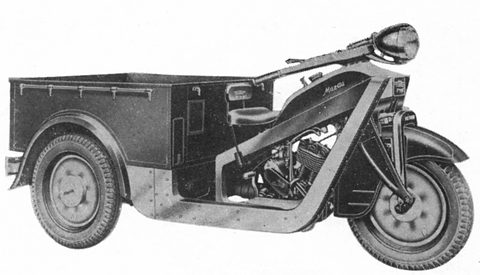
The rider sat on a saddle and steered by handlebars, over a single front wheel, with the engine beneath him and an open load bed behind, carried on two rear wheels.source 3source 1 The engine was the company’s own, an air-cooled single of 482 cc giving 9.4 PS (6.9 kW). It drove both rear wheels through a differential, and the gearbox had three speeds and a reverse.source 3source 1 Mazda’s account calls the result a sales success.source 1
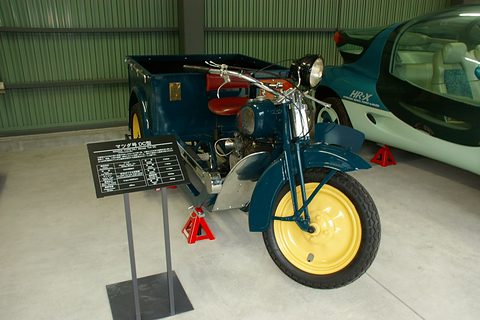
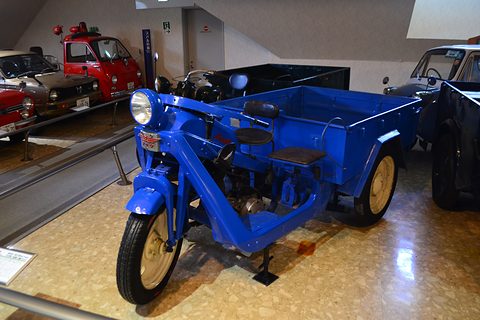
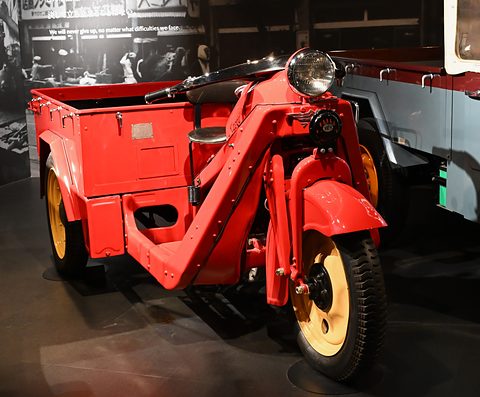
More types followed: the DB, with more power, the DC and the heavy-duty KC.source 3source 1 No length, weight or price for any of the early trucks has been found.
Kagoshima to Tokyo
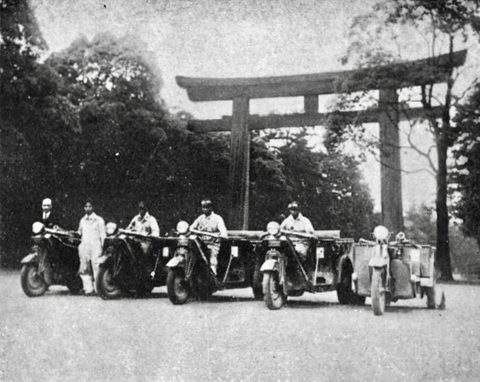
In 1936 five Mazda-Gos, KC and DC trucks, drove from Kagoshima to Tokyo: about 2,700 km (1,680 miles) in 25 days. It was a publicity run, and by Mazda’s account it lifted sales a good deal.source 1 (More long runs are on our page of records and feats.) That August, Mitsubishi’s rights to sell the truck in Japan came to an end, and its export rights followed in December 1937.source 3
The GA, before and after the war
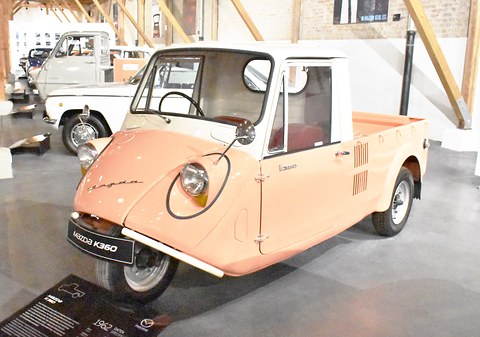
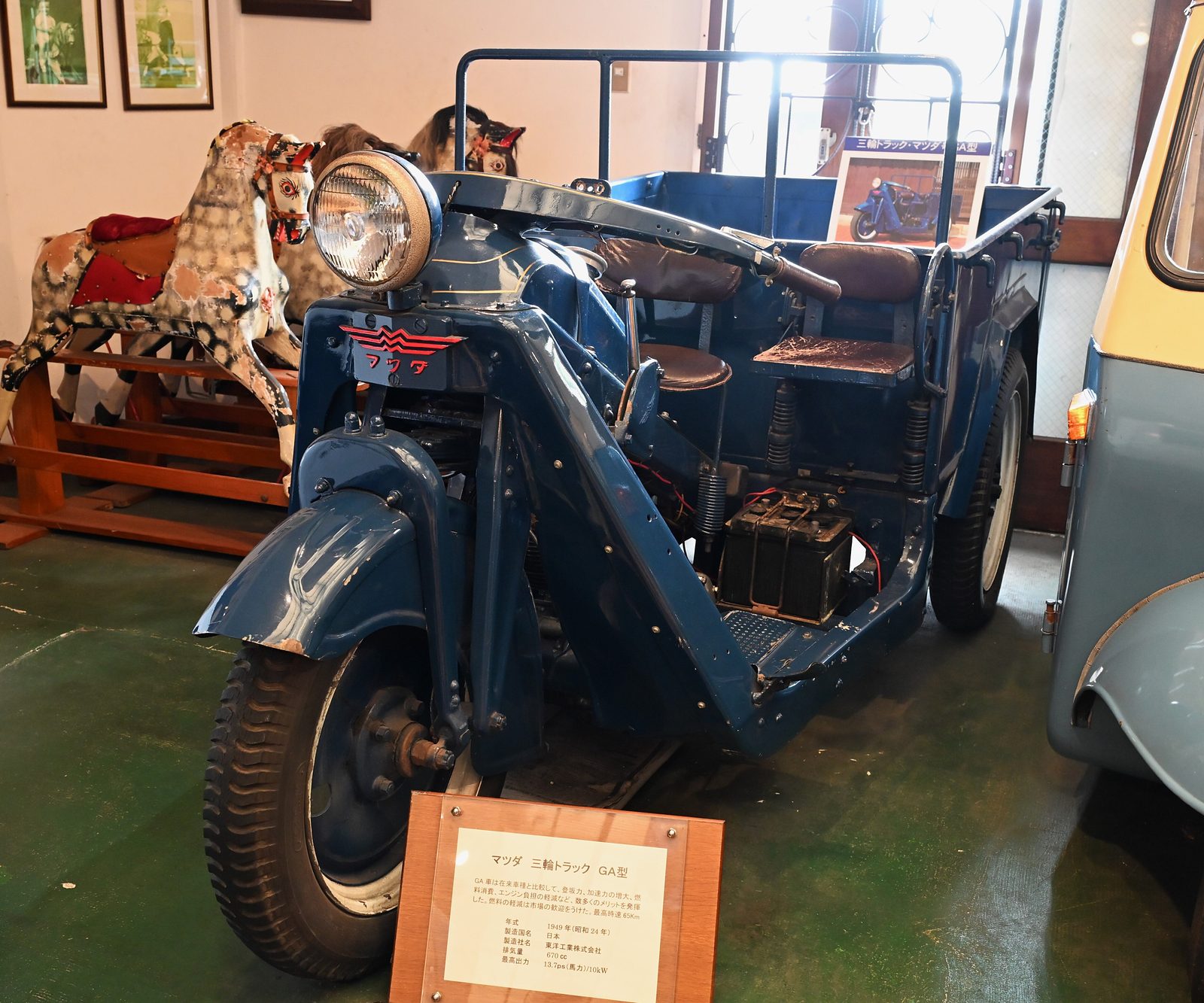
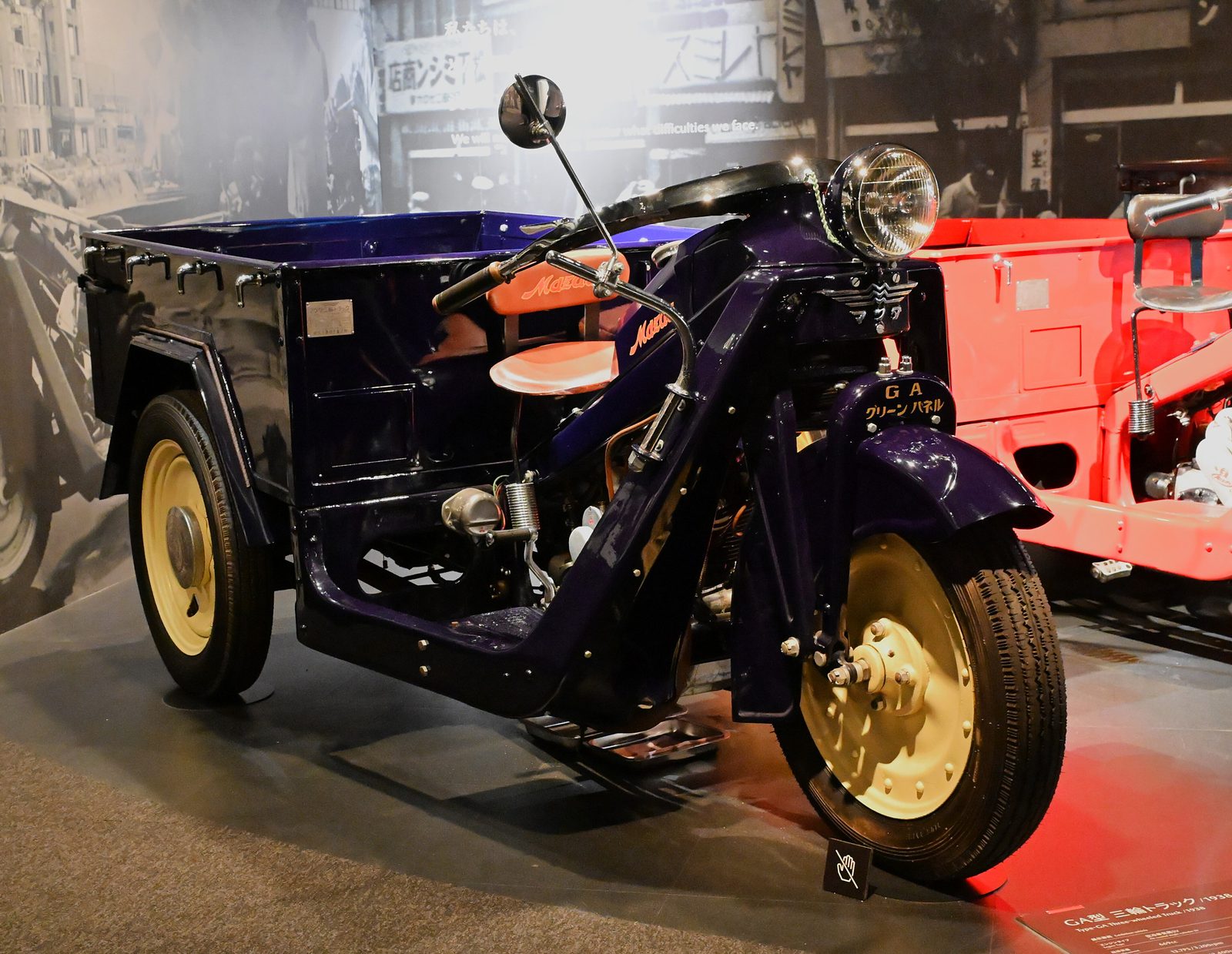
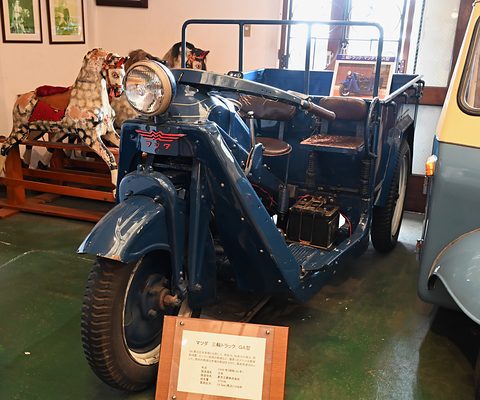
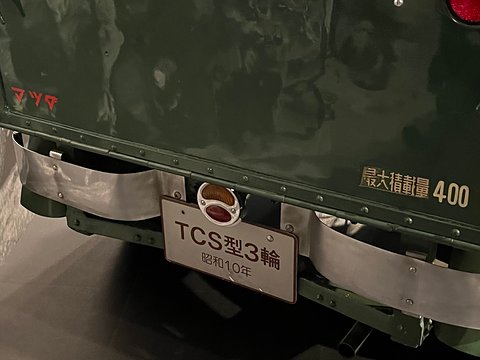
The last of the pre-war types, the GA of 1938, had a side-valve single of 669 cc and 13.7 PS (10.1 kW). It weighed 580 kg (1,280 lb) and carried 500 kg (1,100 lb).source 3 In December 1945 it went back into production, the first vehicle Mazda built after the war.source 3 New three-wheelers, the T2000 among them, and the Mazda K360 eventually took its place.source 3 (The micro-vans page follows the small working vehicles that came after.)