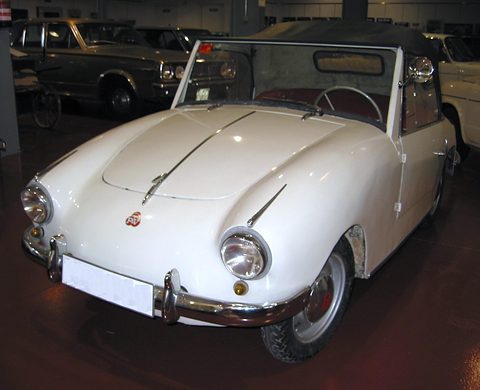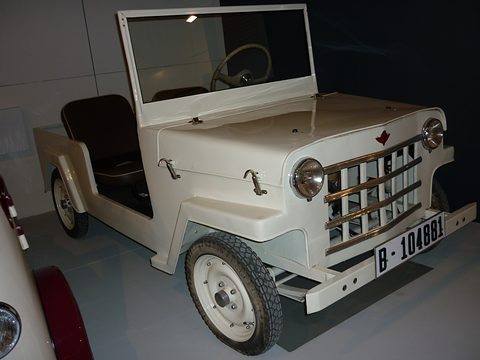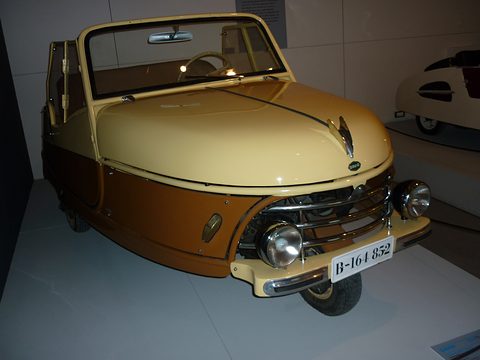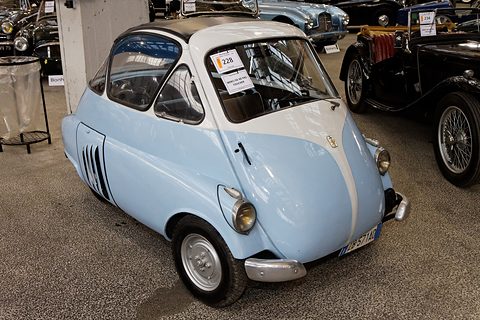
microcarfan
  • Microcar
  • Spain
  • 26 makers

Spanish microcars: the minor makers

A safe-maker’s car in 3 mm armour plate, a gas-mask firm’s people’s car and a pedal car built by the thousand: Spain’s smaller microcar makers, 10 of the 26 in Barcelona, and the commonest engine a 197 cc single.

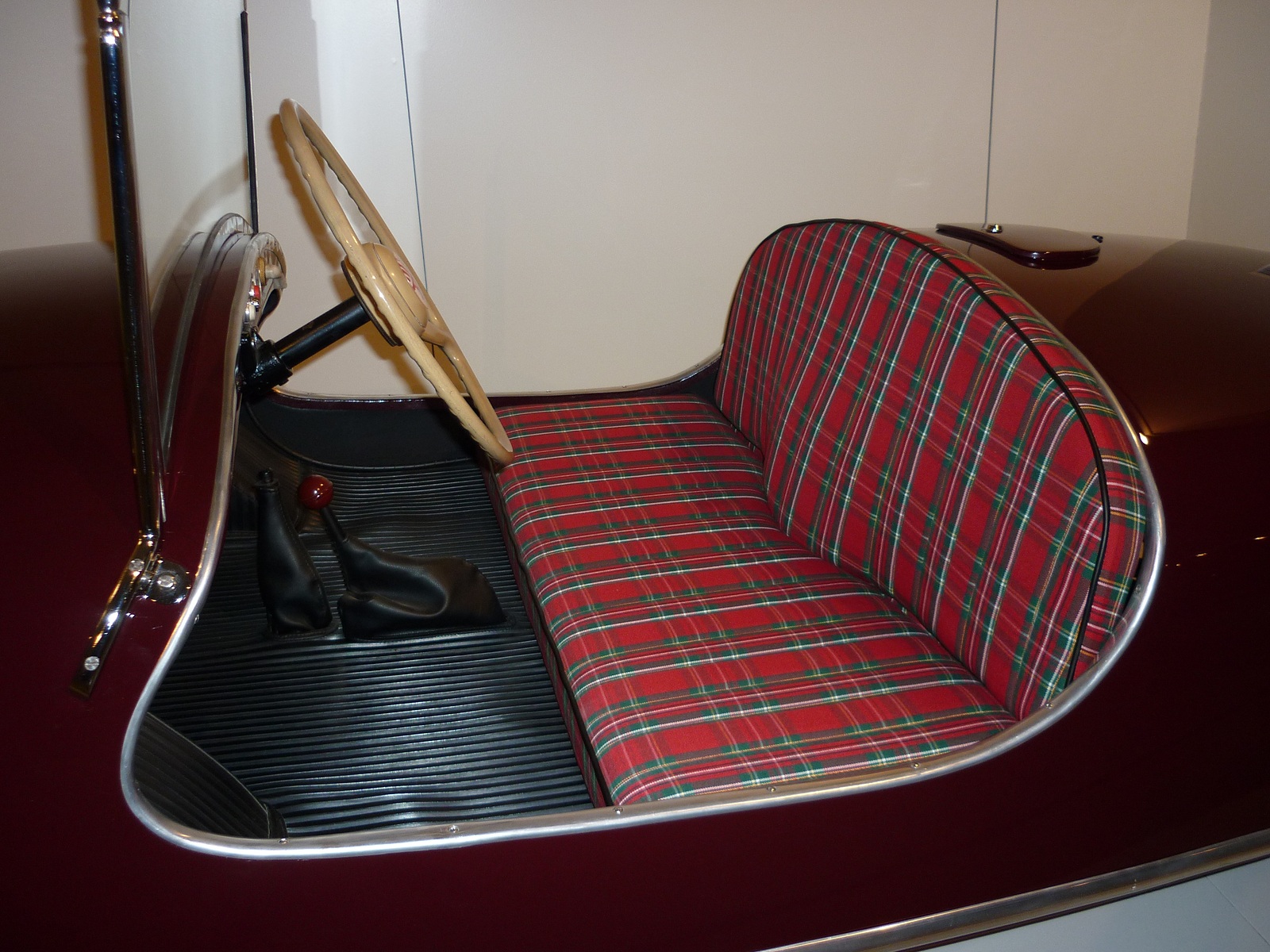
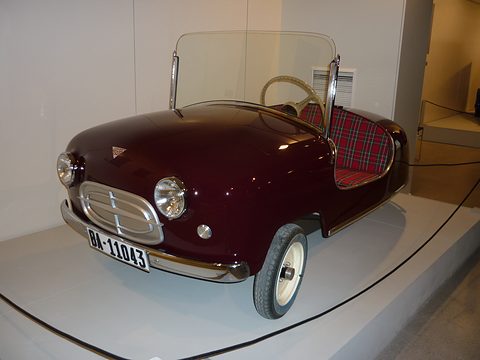
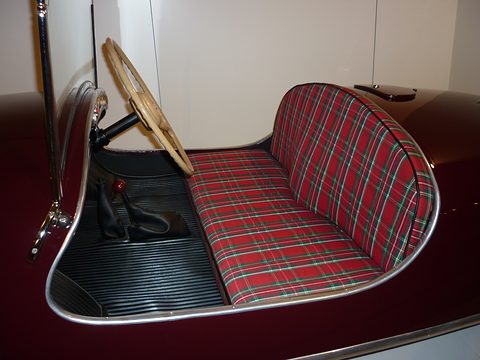
Small maroon open three-wheeler with a chrome-ringed grille, a windscreen and a tartan seat, on a white plinth.
A maroon Junior 3R-197 three-wheeler at the Microcotxes de Barcelona exhibition in 2013.Photo: Peprovira, CC BY-SA 3.0, via Wikimedia Commons

At a glance

The spec plate

Spanish microcars: the minor makers

Small makers · Spain

Built
1941–⁠1969Pedal and electric cars from 1941; most between 1951 and 1958; a last prototype in 1969
Country
SpainMostly Barcelona; also the Basque Country, Valencia, Madrid, Zaragoza, Seville and Segovia
Maker
26 makers, 10 of them in BarcelonaMotorcycle and motocarro makers above all
Engine
Most often the 197 cc Hispano-Villiers two-stroke singleOverall, pedals, electric motors and petrol engines of 65 cc (Topolino) to 770 cc (Dyesa)
Power
9 CVThe Hispano-Villiers 197 cc in the Junior; 17 CV for the Clúa 500’s twin
Length
1,940 mm1,370 mm wide
Seats
2 to 5Four in the TZ Sider and the Mymsa; the Dagsa took four or five
Wheels
3Most had three; the Clúa, Triver and one Kover-Capilla had four
Price new
25,000–64,000 pesetasThe Topolino’s target price (1951) to the Clúa 500’s (1957)
Production
about 100 at mostThe Clúa 500, the largest figure for a microcar; the Autopedal pedal car claims about 2,000
Top speed
80km/h80 km/hThe Movilutil Automach claimed 100 km/h; the electric Electrociclo 45

The story

History

Franco’s Spain wanted to make everything itself. Autarky blocked imports and starved the car industry. The INI, founded in 1941, pushed industry away from Barcelona: La Hispano-Suiza became ENASA in 1946, General Motors was not allowed back, and Ford was held to small lorries. When SEAT built its first car in 1953, it was a luxury.source 1

The know-how came from motorcycles. Spanish output rose from a little over 500 motorcycles in 1945 to more than 5,000 in 1950, and to almost 70,000 five years later. Hispano Villiers S.A. was set up in Barcelona in 1951 as an offshoot of The Villiers Engineering Co., next door to Harry Walker, its importer of long standing, on Passeig de Valldaura, and its engines went on sale in 1953. They became the standard power for the motocarros, three-wheelers built to carry loads, and for the microcars, and the 197 cc single became the commonest engine.source 1source 2 The shop window was Barcelona’s trade fair, the Feria de Muestras.source 1 Getting a licence to build was another matter: the authorities obstructed several projects, the Huracán, the IMFAP, the TZ Sider and the Cimera among them.source 2 The end came with the SEAT 600 in June 1957 and the Stabilisation Plan of 1959, which made the people’s car a SEAT.source 1source 3

Spain’s bigger makers have pages of their own: the Biscúter, the PTV 250, the Kapi, the David, the Madrid-built Iso Isetta and the Goggomobil of Munguía. The enthusiast Toni Solans’s site grupo7.com indexes about 70 Spanish marques.source 2 This page takes 26 makers: 14 with a section of their own below, in the order they began, and 12 in brief, here and in the section on the motocarros. Most of the record on them comes from grupo7, which Spanish Wikipedia reproduces; the Barcelona history museum’s booklet of 2012 and, for the F.G.L., the Weiner museum cover some of them independently.source 3source 1

The others, in brief

In Eibar, Norma Electromotor S.L. built electric prototypes and delivery tricycles in the 1940s, and was declared a firm of national interest in 1942. In 1953, as Electrociclo, it made a three-wheeled microcar and a van: a 1 CV, 24 V motor by General Electric Española, Tudor batteries, a range of 100 km (62 miles) and 45 km/h (28 mph). Very few were built.source 2 They belong among the electric microcars. The Topolino from Mallorca, also called the coche pulga, the flea car, was presented in Barcelona on 23 November 1951, with a rear engine of 65 or 125 cc (the sources are unsure), 65 km/h and a target price under 25,000 pesetas.source 3

In Valencia José Bolinches built Boli motocarros from 1952 and then Cimera microcars, on three wheels because he was not authorised to build four-wheelers. Plásticos Samoes made a plastic body for the Cimera in 1955, closed at 38,000 pesetas or open at 33,000, with a Hispano-Villiers engine and about 75 km/h; grupo7 suspects the Samoes and the Cimera are one car.source 2 AISA, Martí Martí’s firm at Cervera, in Lleida, built a few cars in 1955 with an omega-section chassis and the 197 cc at the back; its advertised 80 km/h and all-round visibility were, grupo7 thinks, optimistic. The veteran motorcycle maker Rieju showed an egg-shaped car at the 1955 Feria, with a rear 175 cc Fita-AMC engine, on chassis left over from a motocarro that had not sold. It was not built in series.source 2

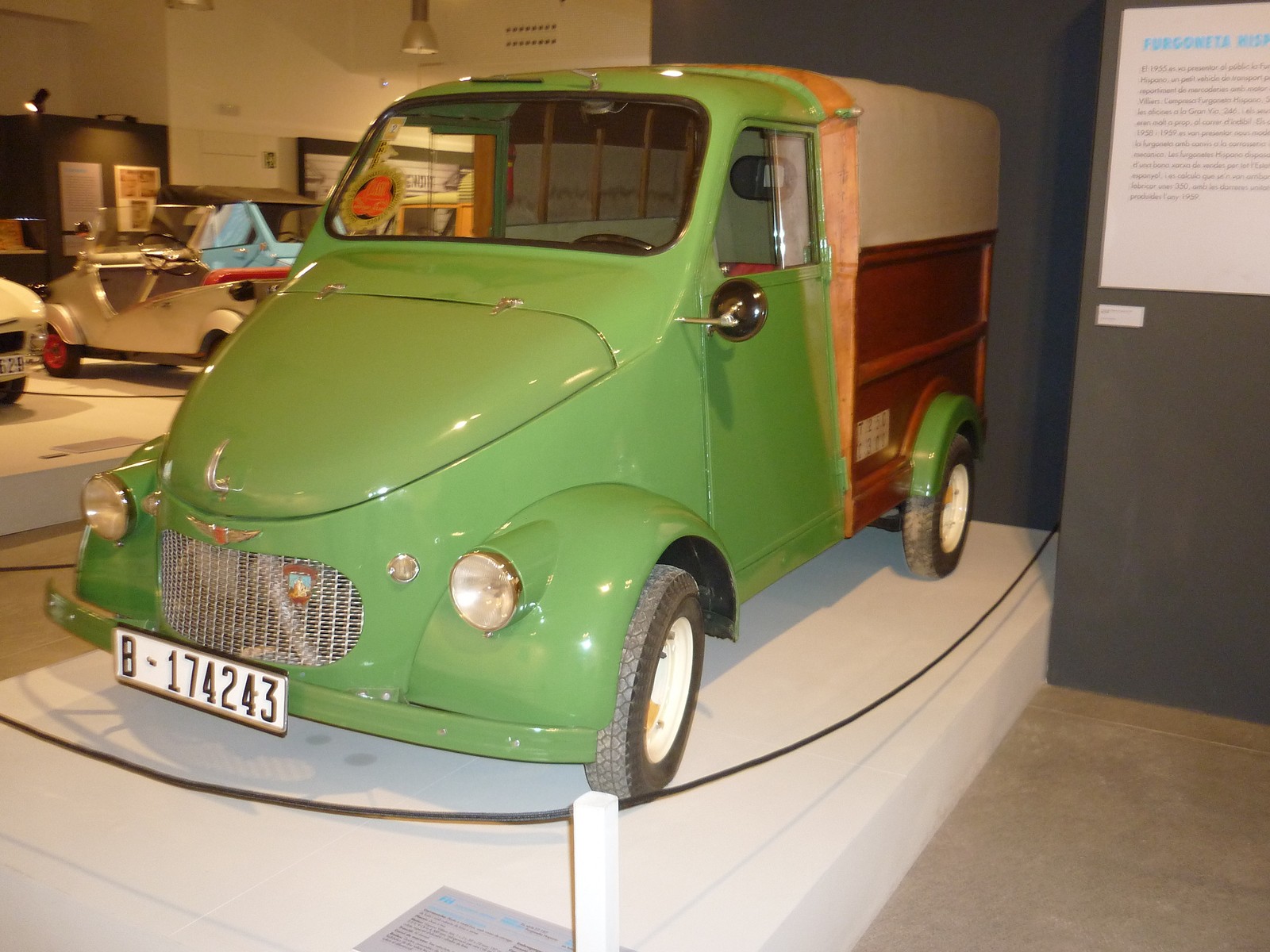
In Barcelona, Furgoneta Hispano S.A., with works in Carrer d’Indíbil, presented a small Hispano-Villiers delivery van in 1955 and new models in 1958 and 1959; it had dealers across Spain and built about 350, the last in 1959, one of the city’s larger runs among the micro-vans.source 1 In Madrid Natalio Horcajo, who had built the Nacional G cars in Zaragoza in 1939–⁠40, designed three microcar projects for Talleres Soto, makers of Raid motorcycles: the IMFAP I with the Raid engine, for the owner’s son; the squarer, glassier IMFAP II; and the IMFAP III, meant as a proper car, with a 700 cc two-stroke twin. The Ministry of Industry’s intransigence stopped series production.source 2

In 1957 Barcelona saw two more. The Movilutil Automach, advertised as the superutilitario español, the Spanish super-utility car, had a 350 cc twin of 15 CV and claimed 100 km/h (62 mph); series production was planned for 1959, when the SEAT 600 was already on sale, and probably only a prototype car and van were built. Miguel Simó, a famous Catalan racer of the 1920s and 1930s, showed a fibreglass egg-shaped car with the 197 cc at that year’s Feria, made with the coachbuilder Carrocerías Marugat; whether it went into production is not known.source 2 Last and oddest came the Barrio coche ciudad, shown by Manuel Barrio S.A. at the Zaragoza fair in 1969. It was 1,940 mm (76 in) long and 1,370 mm wide, and you got in through its only door, at the back, which let it park nose to the kerb. It had a folding roof, a four-stroke engine and 80 km/h (50 mph), at a planned 45,000 to 50,000 pesetas. Only the prototype is known; one was recovered by a private collector in Zaragoza.source 2

Spanish Wikipedia’s list adds more names with less behind them: ACEDO’s motor-and-pedal hybrid in Madrid in 1941, José Estancona’s 770 cc Dyesa convertible at Durango in 1949, the IMCAMP of Bilbao, of which about 12 were built and even the number of wheels is unknown, and others.source 3 The Barcino, the JBR and the Montesa BCB, all of Barcelona, never passed the prototype stage.source 1
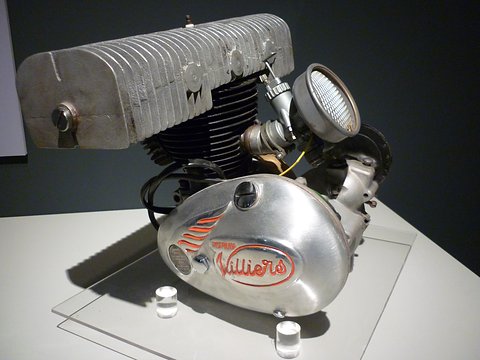
Finned silver single-cylinder engine with a fan cowl and a Villiers script on its crankcase, on a glass stand.
A 1959 Hispano-Villiers two-stroke single, the engine of most Spanish microcars, on show in Barcelona in 2013.Photo: Peprovira, CC BY-SA 3.0, via Wikimedia Commons

Autopedal

1941 · a record on this page

In 1941, in the petrol famine, Fernando Luciarte, a Santander man of French origin, began building the Autopedal, or Autociclo, backed by a group of industrialists led by Julián del Valle. It had a simple chassis, a wooden body, bicycle wheels and two sets of pedals, one for the driver and one for the passenger, and it weighed 40 kg (88 lb). In a demonstration Julián del Valle and a lad, Lorenzo Chicón, pedalled it up the Cuesta de Santo Domingo, with difficulty, and it was claimed to have covered Santander to Bilbao in 10 hours.source 4 The account comes from Miguel Martín Zurimendi’s history of the motor car in Biscay, as quoted by grupo7, and it is frank about the sales:

“Se llegaron a construir unos dos mil, no vendiéndose más allá de quinientos.”

Miguel Martín Zurimendi, El Automóvil en Vizcaya (1896–⁠1996). Crónica de un centenario, as quoted on grupo7.com. In English: “Some two thousand were built, no more than five hundred being sold.”source 4

With no engine at all it is a curiosity rather than a microcar, and it falls outside any engine-size definition of what a microcar is.

Dagsa

1951–⁠1952 · a record on this page

Defensa Anti Gas S.A., of Carretera de San Ildefonso 38, Segovia, supplied the military and made car parts, for SEAT and for Vespa among others. In 1951 it took on a people’s car with four doors and four or five seats, much like a Citroën 2CV, as a saloon and a van. Very few were made, and some say only the prototypes.source 5 Its specification survives in an advertisement for Anís Castellana, which offered one as a prize: a front-mounted, air-cooled two-stroke twin of 538 cc (70 × 70 mm) and 20 hp, rated 4 CV for tax; a single dry-plate clutch; three speeds and reverse; 3 m (118 in) long and 1.40 m high, on a 1.10 m track; about 30,000 pesetas. Another report gives it a German 500 cc engine.source 5

Auto-Tri

1953 · a record on this page

Construcciones Gaitán S.L., of Seville, made invalid carriages. Its founder, Francisco Gaitán Sánchez, had built a pedal car as early as 1939. In 1953 the firm built a range of small three-wheelers, the Auto-Tri, in Turismo (passenger), Comercial and even Ambulance versions. Among them were an egg-shaped saloon with a tail fin built into the body and an all-aluminium prototype. They had, it seems, a 125 cc engine and front-wheel drive.source 6

Everything known comes from one source, grupo7, which rests on photographs supplied by the founder’s grandson, Fran Gaitán. How many were made, and whether any survives, is not recorded.source 6

Kover-Capilla

1953 · a record on this page

The industrialist José Capilla Hurtado and the engineer Alejandro Kover made their cars in Valencia, at Calle Sagunto 37, and showed them at the Exposición Siderúrgica y Eléctrica in Madrid in 1953. There were three: a closed three-wheeler, a four-wheeled cabriolet and a motocarro with its load box in front.source 7 grupo7 thinks they were built under licence from, or copied from, the French Atlas, which was also sold as the Kover, the Le Piaf and the Livry; that is its own conjecture (see built under licence). Whether any were made beyond the show cars is not known.source 7

Aleu Bambi

1954–⁠1956 · a record on this page

Manufacturas Aleu S.L. made motorcycles in Barcelona. At the 1954 Feria it showed the Micro-Auto Bambi, also called the Bambi or Autobambi, a three-wheeler. Its engine, at the back, was the single-cylinder two-stroke of the Aleu Nito 200 cc motorcycle, with three speeds, and it drove a single rear wheel so that the car needed no differential, leaving two wheels at the front. It had independent suspension and reached 75 km/h (47 mph).source 8

Aleu also showed the Cachorro, a delivery three-wheeler of 125 or 200 cc for loads up to 250 kg, which was hardly produced, and built an M‑125 cargo tricycle. Production of the Bambi was scarce. In 1956 the frame maker Manufacturas Metálicas Monfort absorbed Aleu and kept building its motorcycles under its own name, but not the car.source 8 An English-language list gives the Bambi 1952 and 125 cc instead.source 9 It has nothing to do with the British Bamby of 1983, nor with the Argentine Fuldamobil called Bambi, as grupo7 also points out.source 8

M.T. Mototriciclo

1957 · a record on this page

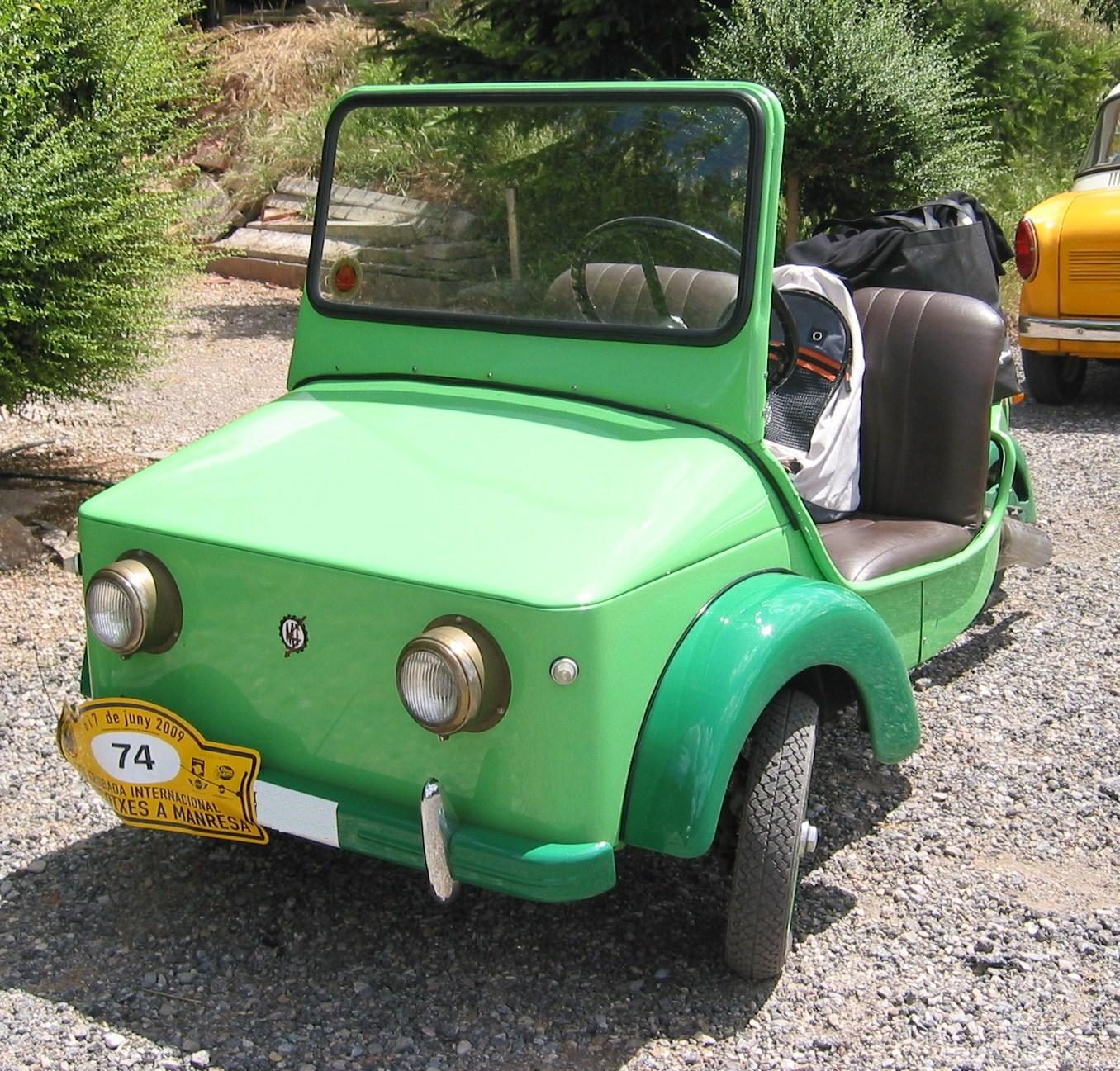
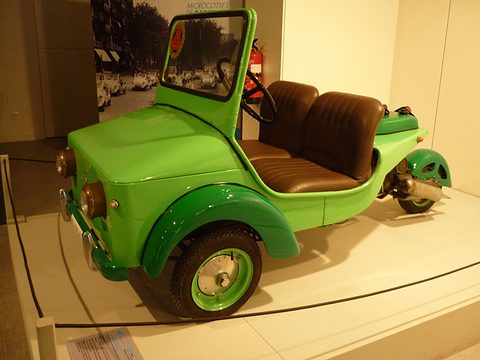
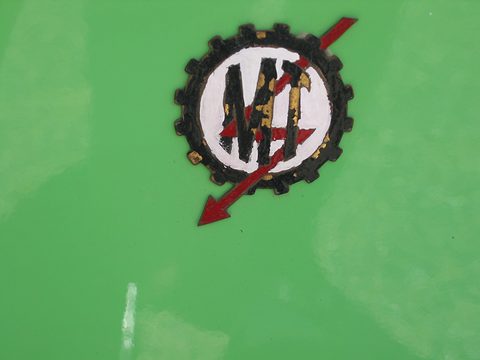
Maquinaria y Elementos de Transporte S.A., Maquitrans, began by repairing and rebuilding transport vehicles in Barcelona after the war. It showed a motocarro of its own design in 1952, built a microcar prototype in 1954 and a second model in 1957, of which only about a dozen were made. In 1958 came a new motocarro, and later the licence to build Ducati motorcycles, under the name Mototrans.source 1source 10

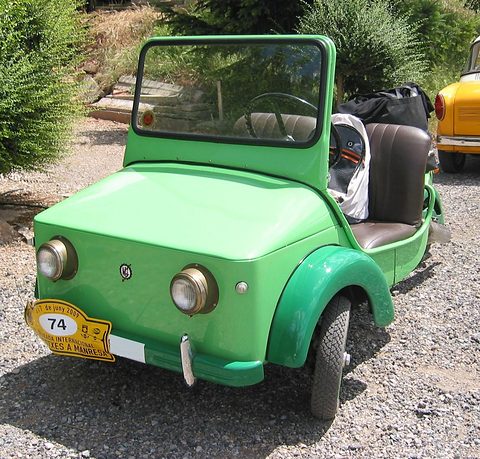
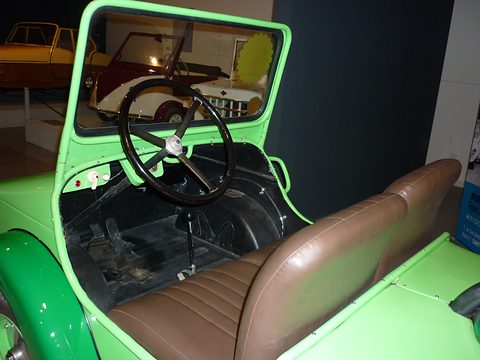
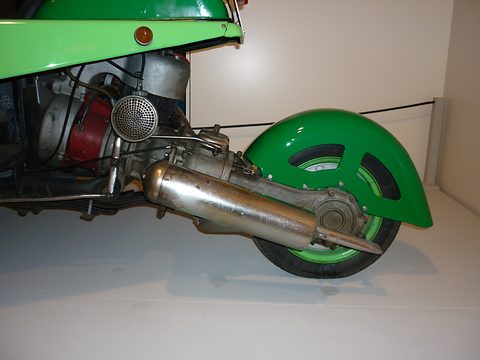
The 1957 car was an open three-wheeler with the firm’s own 175 cc engine at the back, 6.9 CV at 4,500 rpm and an electric starter; it reached 67 km/h (42 mph), used 4 litres per 100 km (71 mpg) and had hydraulic brakes in front and mechanical ones behind. grupo7 likens it to a car out of the TBO comic.source 10 Spanish Wikipedia says about 20 were made, without a source; the museum’s dozen is the better figure.source 11source 1

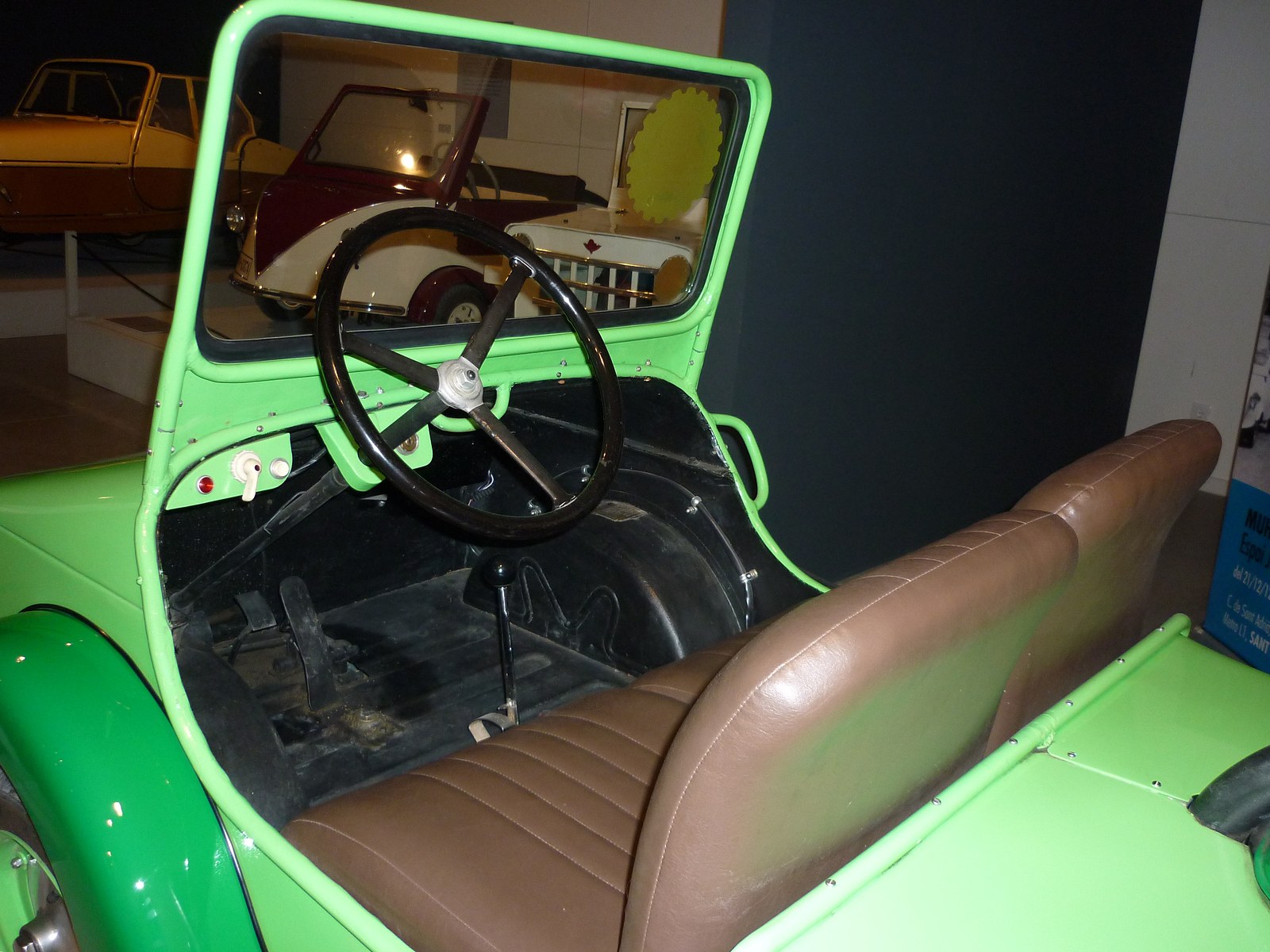
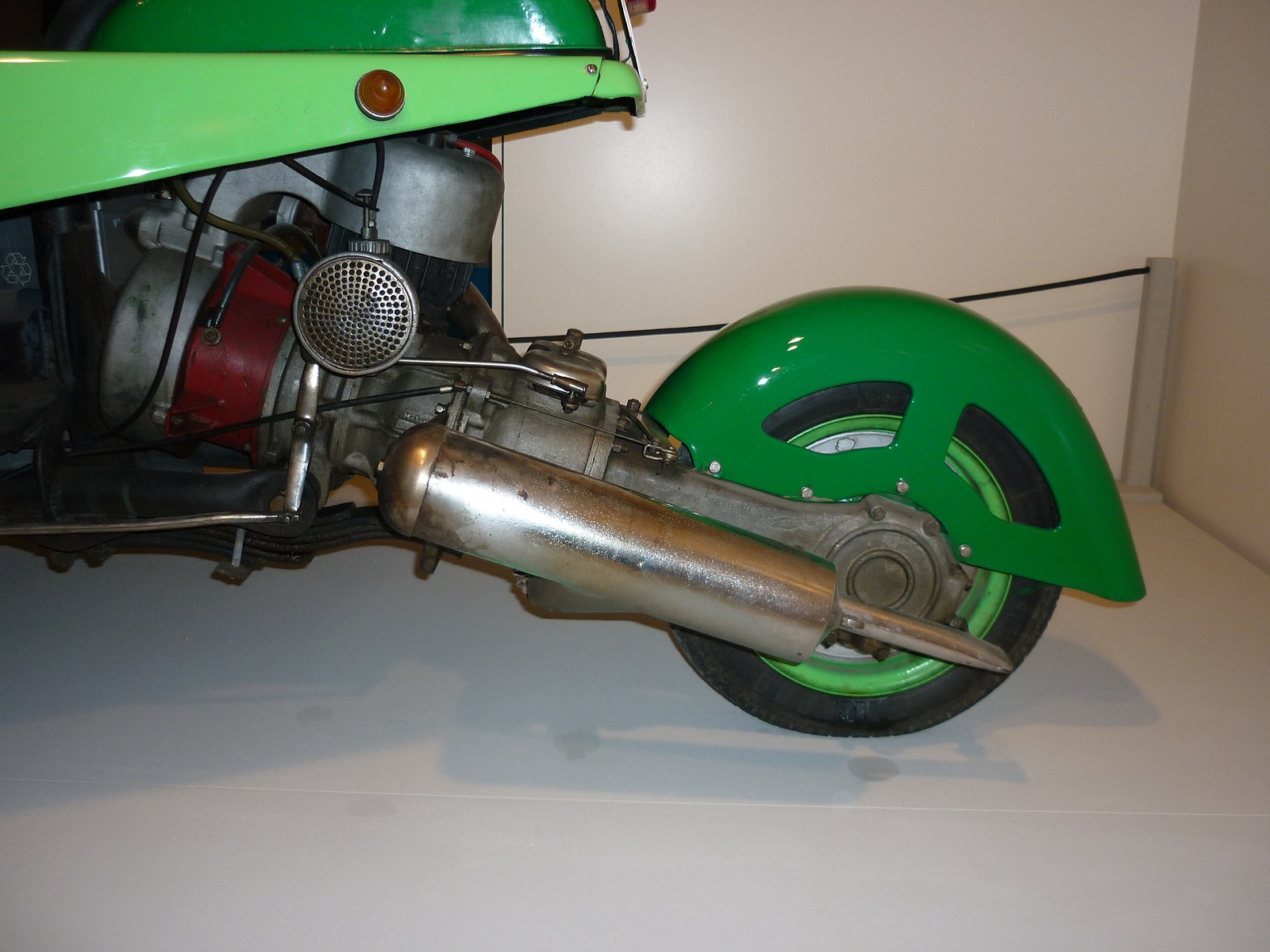
A green 1954 MT is in the Claudi Roca collection.source 1 At the Motor Club del Bages microcar meet in 2001 grupo7 saw what it believed to be the only survivor, without the rear fairing and with separate front wings, so perhaps an earlier model.source 10 It may be the same car.

Bright green open three-wheeler with a brown leather bench seat, a tall windscreen and a single rear wheel.
The green 1954 MT prototype by Maquitrans, with separate front wings, on show in Barcelona in 2013.Photo: Peprovira, CC BY-SA 3.0, via Wikimedia Commons

Spanish motocarros

1954–⁠1974 · a record on this page

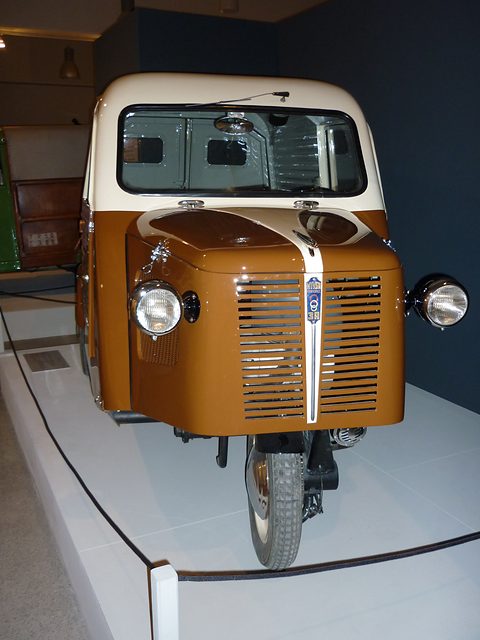
Many of the makers on this page also built motocarros, three-wheeled delivery motorcycles. From 1954 Iso’s Madrid affiliate, Iso Motor Italia, built Isocarro three-wheeled trucks in its factory at Carabanchel, and grupo7 says “isocarro” became the Spanish word for every three-wheeled load carrier.source 12source 13 The same firm built the Isettacarro under licence: 4,900 of them, the Weiner museum says, a figure the catalogue of its February 2013 sale repeats.source 14source 15 In 1961 Moto Vespa presented the Vespacar, its licence version of the Piaggio Ape, with open or closed bodies; grupo7’s author recalls that it was easy to tip onto two wheels.source 16

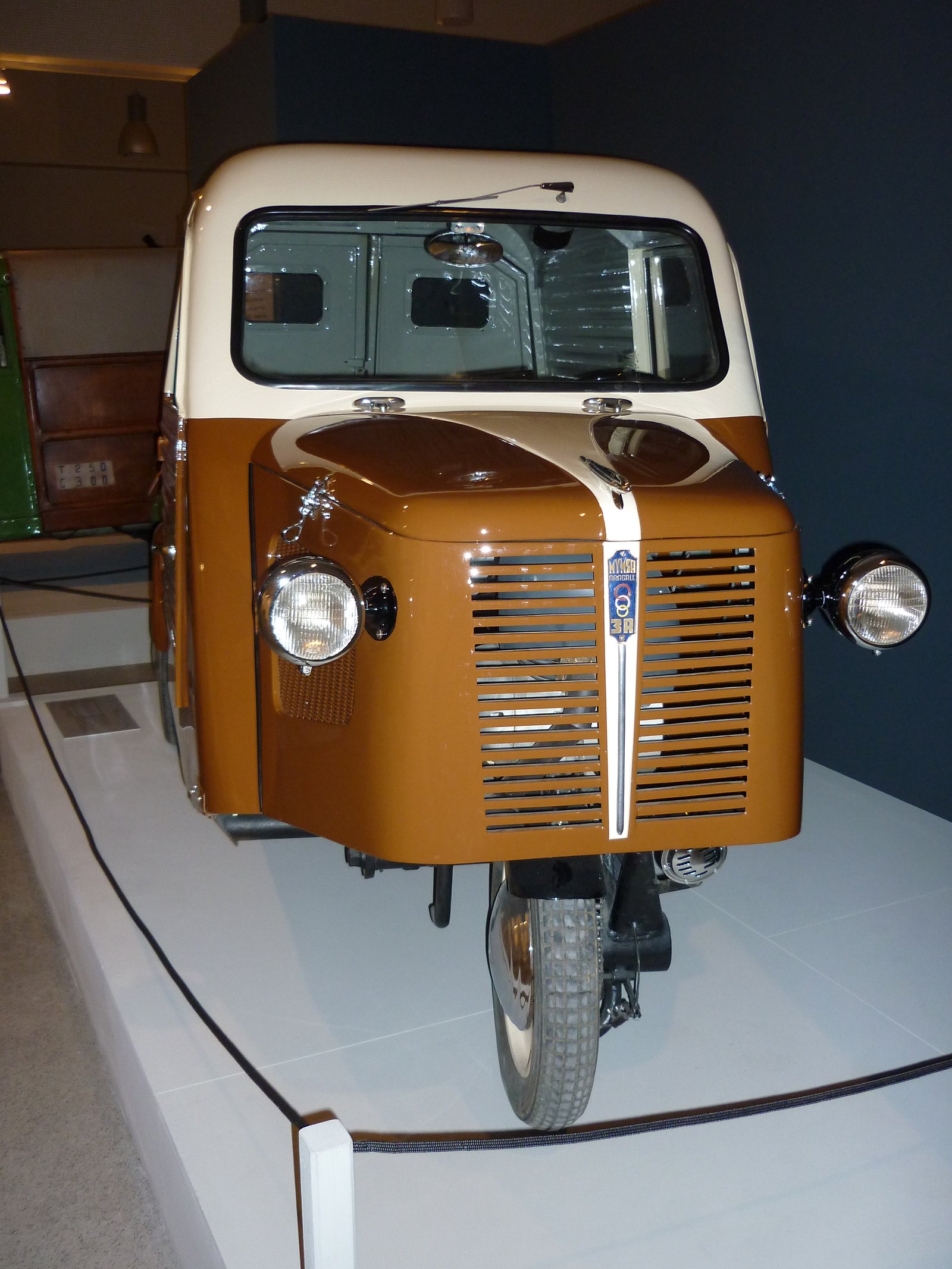
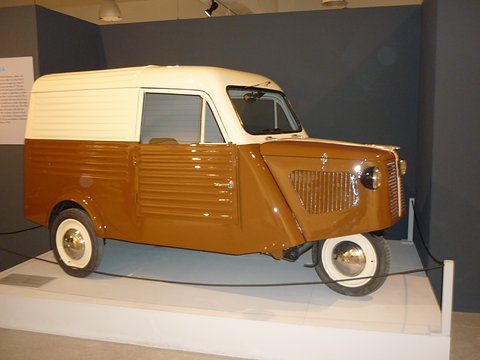
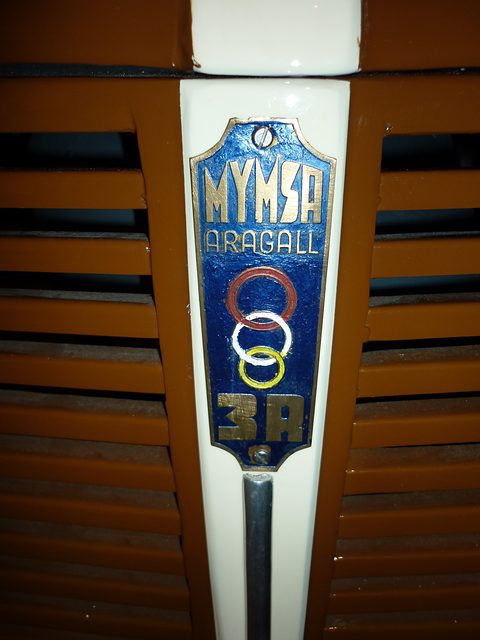
In Barcelona, the Aragall brothers’ Mymsa, Motores y Motos S.A., which grew out of a Ford workshop in el Clot, showed its Rana motocarro, with its own 125 cc engine, at the 1955 Feria, and made about 150 of a 175 cc model from 1957; it built by hand, latterly in Sant Andreu, until 1963.source 1 In 1957 Mymsa also built a passenger-car prototype, which grupo7 describes as inspired by the German Tempo, with a front 175 cc engine of 8.8 CV and four doors and four seats on three wheels.source 1source 2 At Eibar, Lambretta Locomociones, founded to build Lambretta scooters under licence, made fewer than 100 three-wheeled vans in 1958.source 17source 2 How many motocarros Spain built in all has not been found.

Brown and cream three-wheeled van with a louvred nose and ribbed side panels, on a white museum plinth.
A 1956 Mymsa Rana three-wheeled van, in cream and brown, on show in Barcelona in 2013.Photo: Peprovira, CC BY-SA 3.0, via Wikimedia Commons

Clúa 500

1955–⁠1960 · a record on this page

Construcciones Metálicas Clúa made motorcycles in Barcelona, sold earlier as MC and CMC, with Hispano-Villiers engines; the museum’s map of the city’s microcar works marks it as Construcciones Mecánicas Clúa.source 18source 1 In 1955 it began an elegant spider with a 247 cc two-stroke twin in front, later 350 and 400 cc, driving the front wheels through four speeds and reverse, with an electric starter, a central-beam chassis, independent suspension and 4.50 × 10 wheels. A second prototype followed in 1955–⁠56.source 18

From 1956 it had a 497 cc four-stroke twin of 17 CV at 5,000 rpm, and some cars were bodied by the Barcelona coachbuilder Pedro Serra in the style of the Pegaso Z‑102; Serra also designed the Biscúter Pegasín. The advertising promised hydraulic brakes on all four wheels, 75–80 km/h (47–50 mph) and 5 to 6.5 litres per 100 km, though the same advertisement calls the engines two-strokes too. In grupo7’s view it was Spain’s prettiest microcar.source 18

Clúa launched it at the 1957 Feria at 64,000 pesetas, close to the price of a SEAT 600. It was a hit, and many ordered it under a promise that any buyer would be refunded if a fault appeared. One did: body panels bought in from another firm came out of true, a fault not of Clúa’s making, and many buyers asked for their money back. The last cars were sold off in 1960 at 49,300 pesetas, and the firm went bankrupt in 1962, after about 100 cars. Clúa had also nearly built the Maico scooter-car under licence.source 18 An English-language list dates the car 1958–⁠59.source 9 No dimensions or weight have been found.

Junior 3R-197

1955–⁠1956 · a record on this page

The Junior 3R-197 took its name from its three wheels and its 197 cc engine. Its maker, Reina Junior S.L., owned by Antoni Cases, built motorcycles and motocarros under the RE.I.NA name, in a workshop on Carrer de Mallorca, between Comte Borrell and Viladomat, with six workers and a foreman.source 1source 19 It made 16 cars in 1955–⁠56, with Hispano-Villiers engines of 125 and 197 cc, all by hand, the bodies made by hand in a workshop in L’Hospitalet de Llobregat. The first had no reverse gear and no electric starter.source 1

grupo7’s specification, probably of later cars, has the 197 cc with fan cooling and 9 CV, three speeds and reverse, a 12 V electric starter, a central steel-tube chassis, independent suspension with hydraulic dampers, large mechanical brakes on all three wheels, Pirelli 3.50 × 10 tyres, 70 km/h (43 mph), 4 to 5 litres per 100 km and a luggage rack with two compartments. A later version had a hood, a mirror and a slightly changed front. Marcom sold it.source 19 grupo7 calls its lines those of a comic book, and wonders whether the artists Coll and Blanco of the comic TBO drew it, or it them.source 19 Which end carried the single wheel is not stated. A first-series car of 1955 is in the Claudi Roca collection.source 1

Delfín

1956–⁠1959 · a record on this page

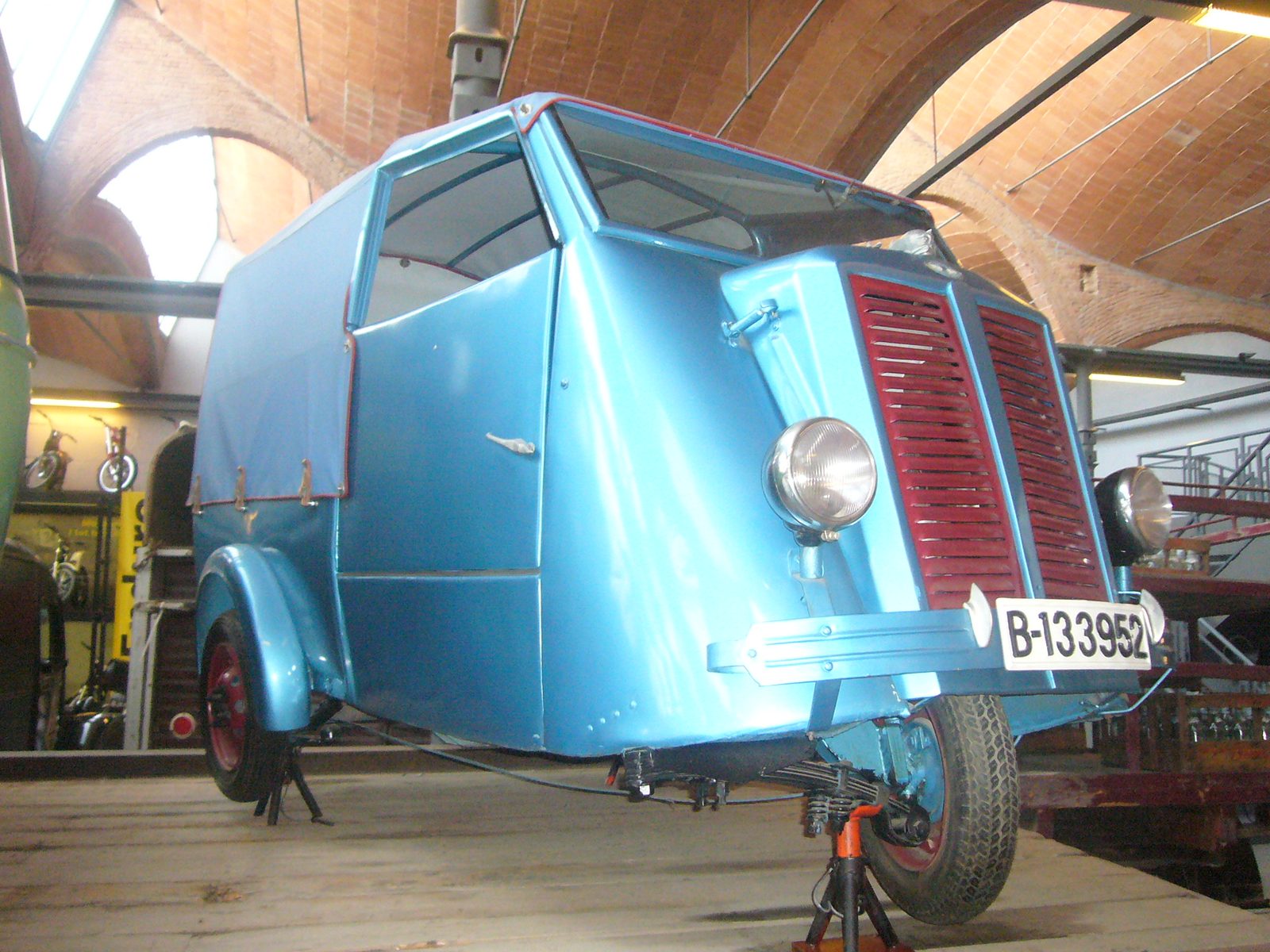
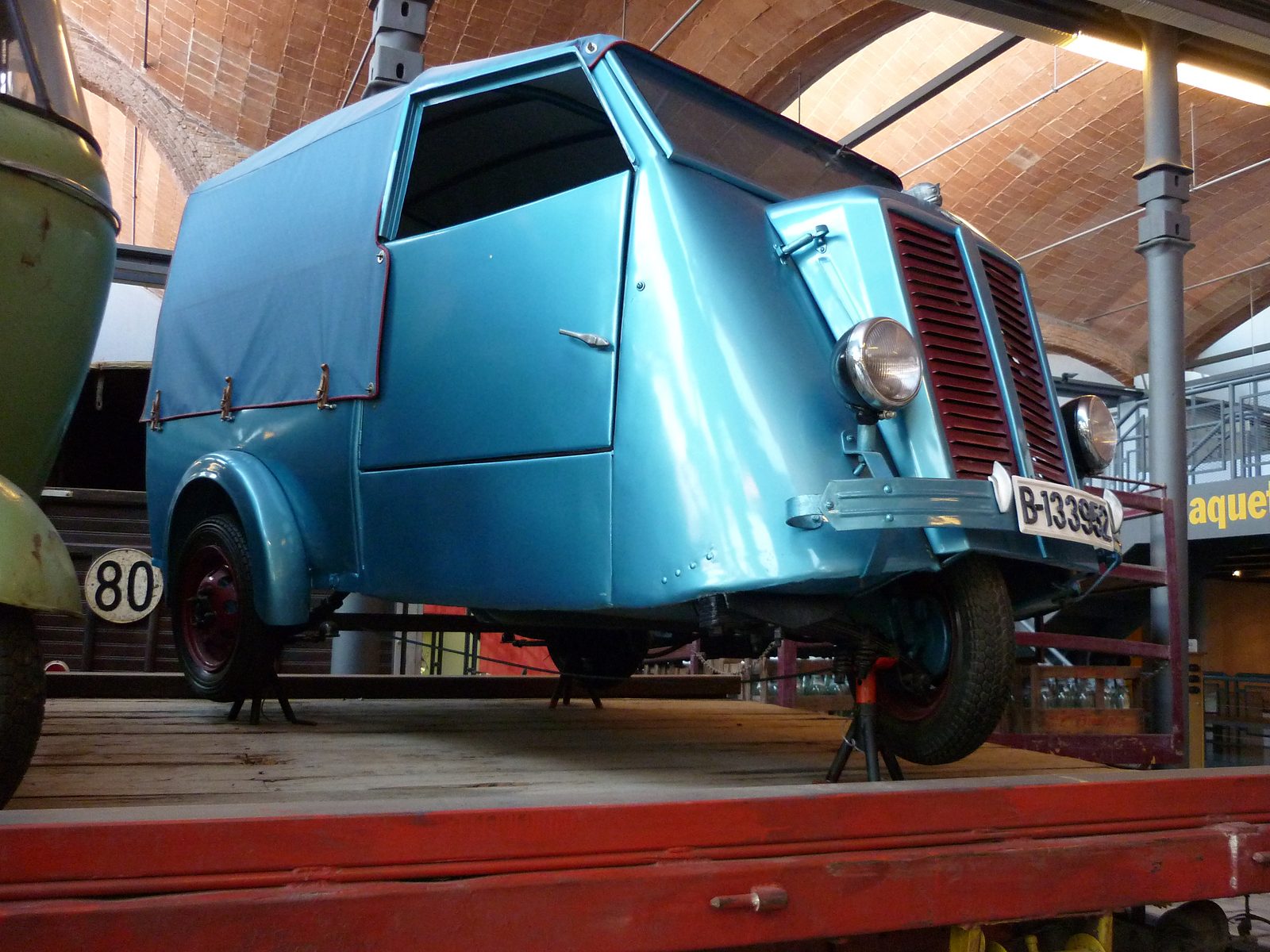
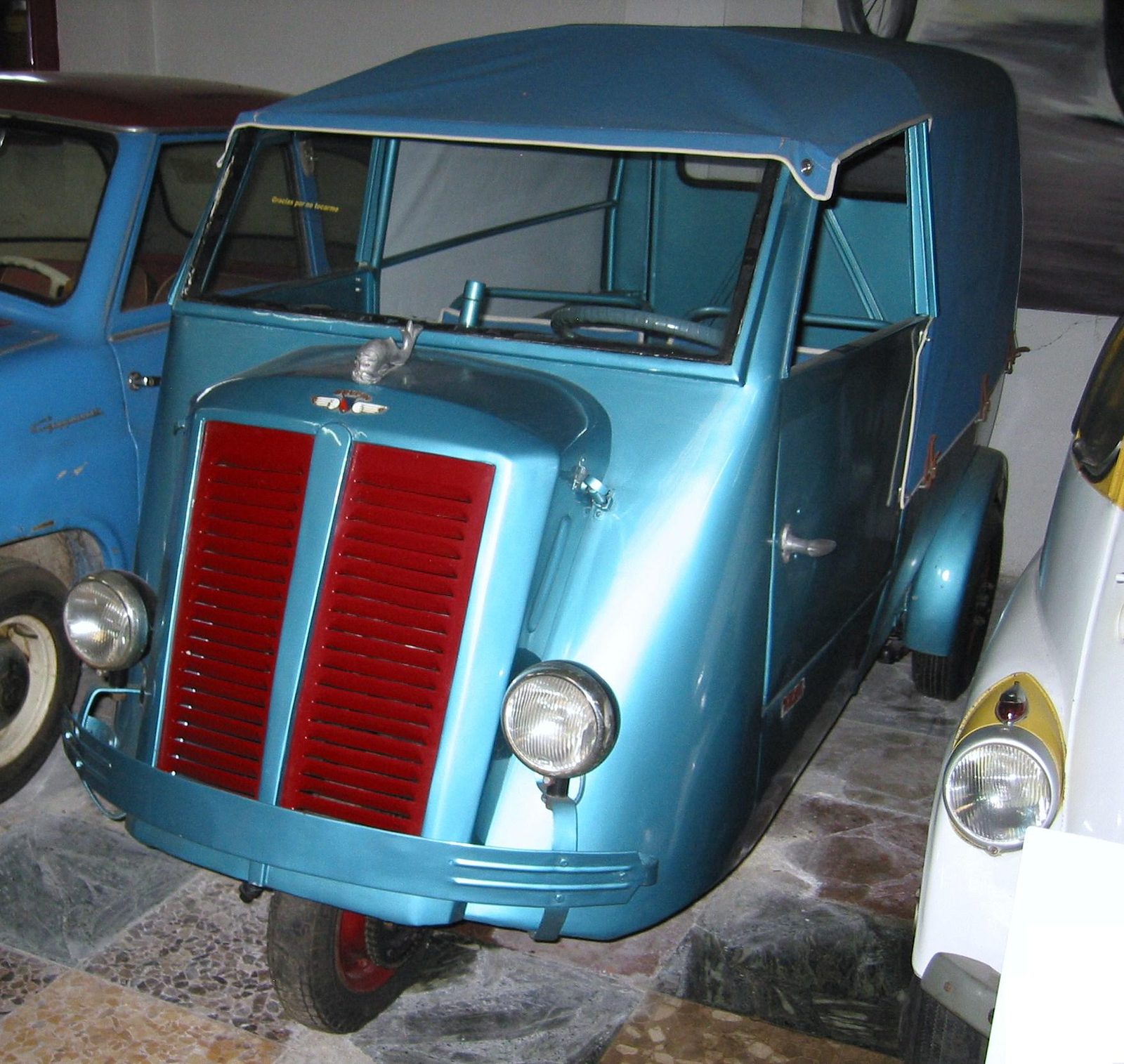
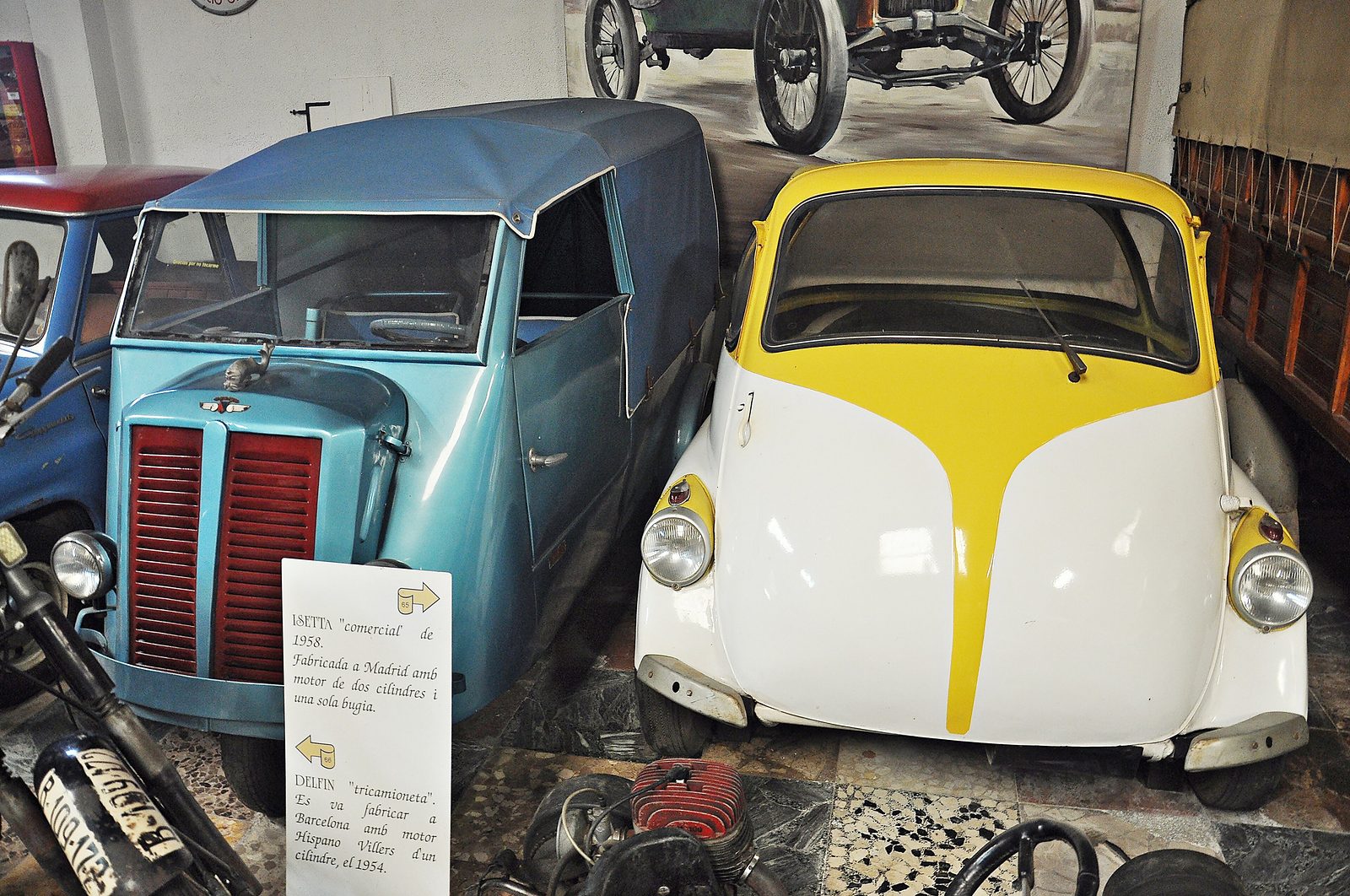
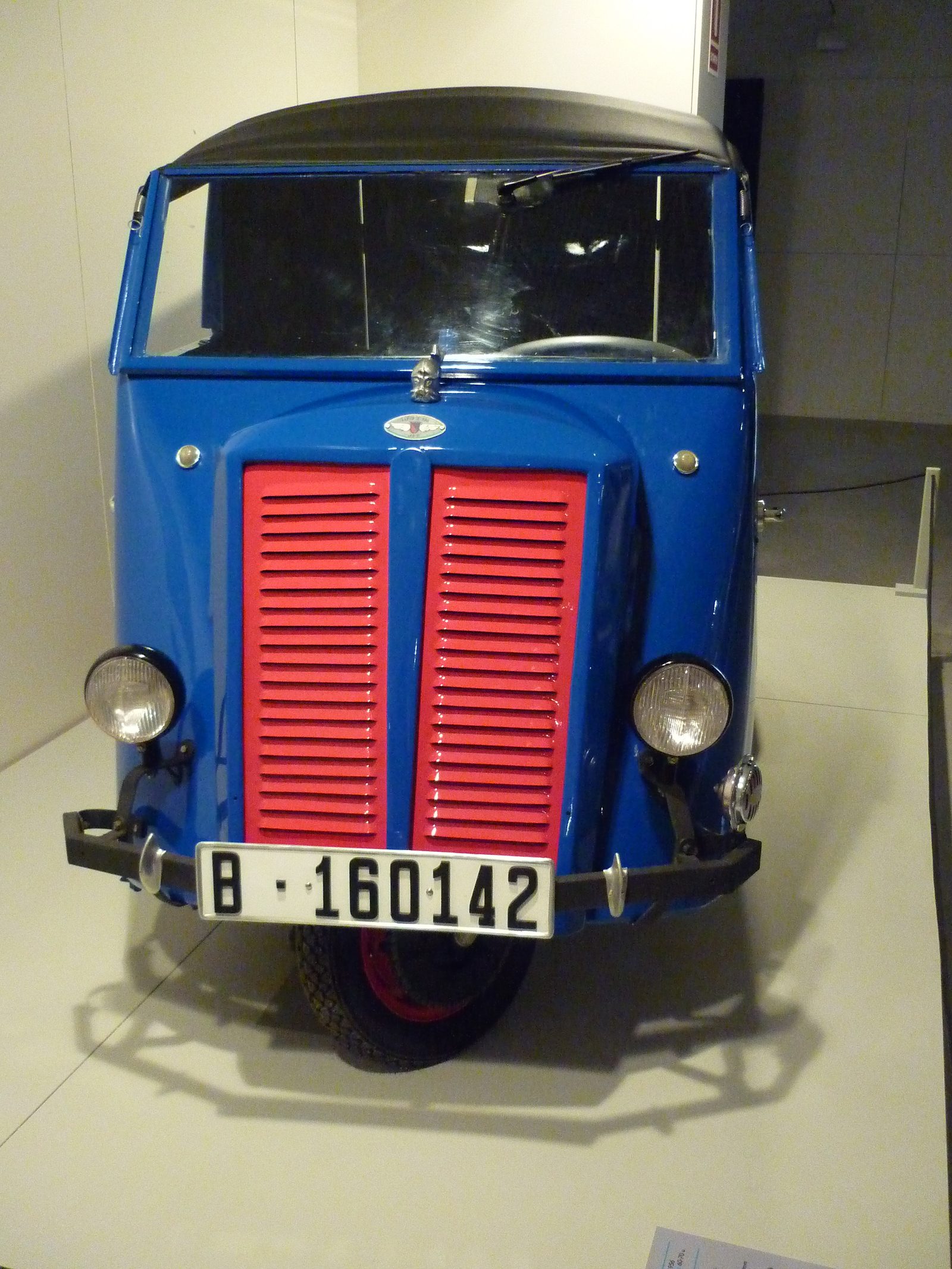
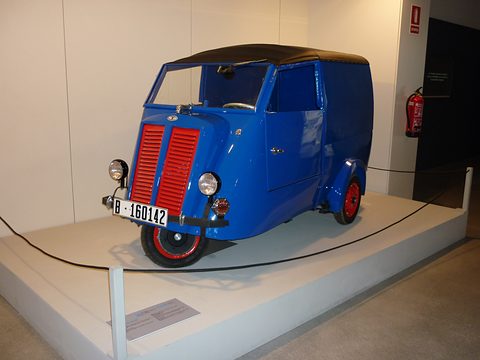
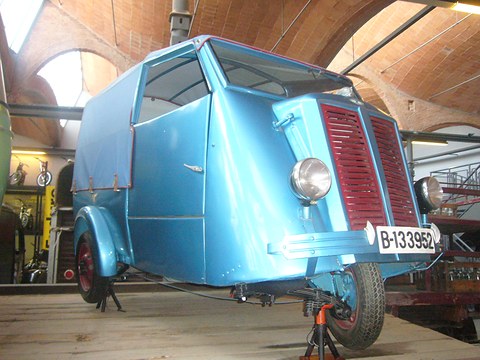
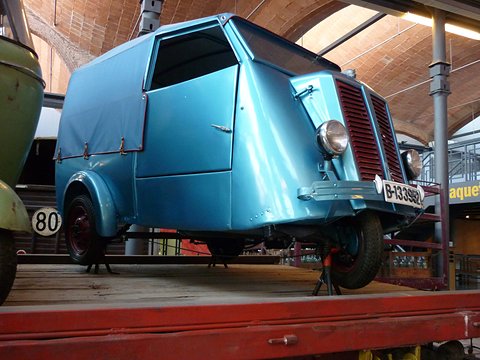
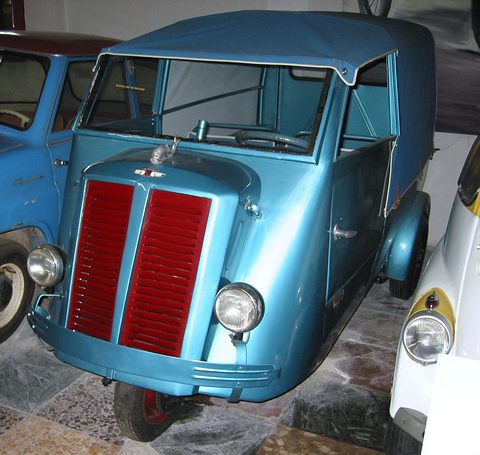
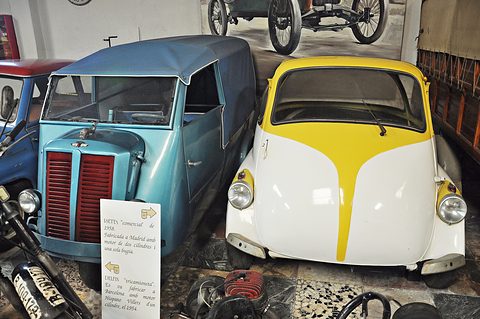
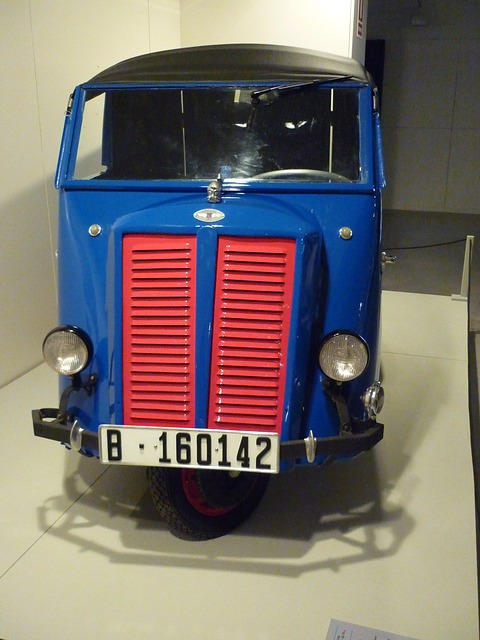
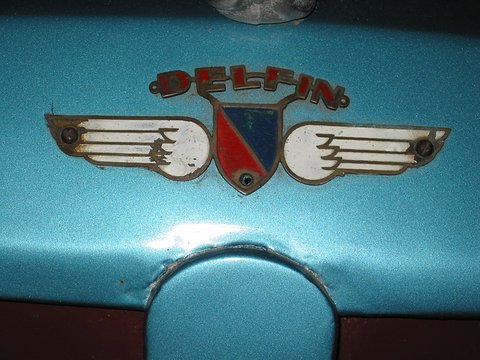
Juli Fusté’s Fábrica Española de Motocicletas y Triciclos, at Carrer de València 29, Barcelona, made motorcycles under the names Fusté, JFC, Olímpic and Delfín. From 1956 to 1959 it built about 20 small three-wheeled vans, the tricamionetas.source 1 grupo7 describes a two-seater for 250 kg of load, from 1958, often used as a microcar.source 20 The design followed the French New Map Solyto, but the Hispano-Villiers 197 cc was bigger than the Solyto’s engine, so the front had to be changed. Some sources mention 125 cc versions too.source 1source 20

A 1956 Delfín is in the Claudi Roca collection.source 1 Another, at Vic, was reported in 1999, in Motor Clásico no. 140, to run on two electric motors.source 20

Blue three-wheeled van with a single red-hubbed front wheel and red louvred grille on a white plinth.
A blue 1956 Delfín tricamioneta with red grilles, on show in Barcelona in 2013.Photo: Peprovira, CC BY-SA 3.0, via Wikimedia Commons

TZ Sider

1956–⁠1960 · a record on this page

Talleres Zaragoza S.A., of Paseo de San Juan de la Peña 42, Zaragoza, meant to call its car the Líder; patent trouble made it the Síder.source 21 Spanish Wikipedia says it was really built at Talleres Jordá, which had the same owner, with bodies made at the Army’s motor base at Casetas. That account comes from a man who joined Jordá in 1962 and saw three or four half-finished cars rusting in a yard: a witness, not a document.source 3

By the figures of a local history, it had an air-cooled two-stroke twin of 296 cc and 14.8 CV, driving the front wheels through four speeds and reverse, coil springs at every wheel, and a two-door, four-seat unitary body 3,280 mm (129 in) long, weighing 460 kg (1,014 lb) and reaching 80 km/h. Other sources give 350 cc, 18 CV, 450 kg and 95 km/h. Its advertising promised that it would neither overheat on mountain passes nor freeze in winter, and Talleres Zaragoza sent its data to the Swiss Revue Automobile, whose catalogue printed them for years.source 21

grupo7 counts 15 to 20, or 10, or even two, all red; Spanish Wikipedia says no more than 10. The SEAT 600 and, reportedly, frozen manufacturing licences finished it.source 21source 3

Triver

1957–⁠1960 · a record on this page

Construcciones Acorazadas S.A. of Bilbao made safes and armour plate, and had once made FRASO bicycle engines. Its car was an egg-shaped bubble car on four wheels, the rear pair set close together, with its own 339 cc two-stroke twin just ahead of them. The body panels were steel 3 mm thick, which made it, in grupo7’s phrase, a safe on wheels. It reached 80 km/h (50 mph) and wore a toad, a sapo, as its badge.source 22 A photograph of one was taken in Madrid in 1958, the year of an advertisement for it.source 22

About 75 were built between 1957 and 1960, and none is believed to survive.source 22 The English-language list gives 80 made and 75 sold, from 1956 to 1961.source 9

Roa

1958 · a record on this page

Rafael Onieva Ariza founded ROA in Madrid in 1953 to make motorcycles and motocarros. In 1958 it built a small number of microcars inspired by the Isetta, with the Hispano-Villiers 197 cc. They failed, probably because of their price, 45,000 pesetas.source 23 Little more is recorded.

Huracán

1958 · a record on this page

Huracán Motors S.A. of Barcelona made motocarros and tricycles, and in 1957 a small four-wheeled van with the Hispano-Villiers engine. At the 1958 Feria it showed a sporting microcar designed by Nilo Masó Miró, a former motorcycle racer who had made Alpha motorcycles, with the 197 cc and four speeds and reverse.source 17 It was never built in series: its estimated price of about 60,000 pesetas was a SEAT 600’s, and the administration, by grupo7’s account, put obstacles in its way.source 17

F.G.L. Alicante

1958–⁠1961 · a record on this page

Francisco Gómez López, of Almoradí in the province of Alicante, held a diploma in mechanical and electrical engineering and ran a service and repair garage. In February 1958 he began a tubular frame, using Peugeot, Ford and other parts. A year later it got an IRESA 197 cc engine, made by Industrias Reunidas Españolas S.A., and a roadster body was made in Alicante. The licensing paperwork took two more years, and the car became road-legal on 14 February 1961.source 24

It had 8.5 hp, three speeds, direct steering, coil springs, cable brakes, 4.00 × 8 wheels, a 6 V Dynastart and a weight of 250 kg (551 lb). It stayed in the family for 15 years, and by 1977 a nephew was driving it. Then Francisco Espinosa Mora, a used-car dealer in Almoradí, bought it and restored it, and showed it at the 8th Trobada Internacional de Microcotxes at Manresa in 2001, where Bruce Weiner bought it for his microcar museum in the United States (see museums and meets). One was built, and it survives.source 24

Pictures

More photographs, old and new

Variants

The makers, in date order

Spain’s small makers
VariantYearsWhat differsHow many
Autopedal1941A wooden pedal car for two, 40 kgAbout 2,000 built, no more than 500 sold
Dagsa1951–⁠52A four-door people’s car like a 2CV; 538 cc twinVery few, perhaps only prototypes
Auto-Tri (Gaitán)1953Three-wheeled saloon, van and ambulanceNot known
Kover-Capilla1953A three-wheeler, a four-wheeled cabriolet and a motocarroShow cars; no more known
Aleu Bambi1954–⁠56The Aleu Nito’s 200 cc engine at the backScarce
M.T. Mototriciclo1954–⁠57Open three-wheeler; own 175 cc at the backAbout a dozen of the 1957 model
Clúa 5001955–⁠60Front-drive spider; 497 cc twin from 1956About 100
Junior 3R-1971955–⁠56Hand-built three-wheeler; Hispano-Villiers 125 or 197 cc16
Furgoneta Hispano1955–⁠59A small delivery vanAbout 350
Delfín1956–⁠59A three-wheeled van after the SolytoAbout 20
TZ Sider1956–⁠58 or 1960Front-drive four-seater, 3,280 mm long2 to 20, by source
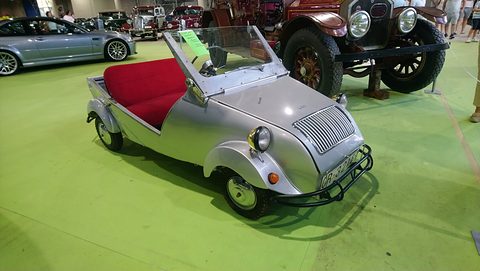
Mymsa1957Four doors and four seats on three wheelsA prototype
Triver1957–⁠60An egg on four wheels, in 3 mm steelAbout 75
Roa1958Isetta-inspired; Hispano-Villiers 197 ccA small number
Huracán1958A sporting car by Nilo MasóNot series-built
F.G.L. Alicante1958–⁠61A home-built roadster; IRESA 197 cc1
Barrio1969One door, at the back; 1,940 mm longA prototype

Specification

Four of them, by the sources

Clúa 500

Clúa 500
EngineFour-stroke twin, 497 cc, 69 × 65 mm, 17 CV at 5,000 rpmThe 1955 prototypes: a 247 cc two-stroke twin, later 350 and 400 cc
DriveFront wheels; four speeds and reverse
ChassisCentral beam; independent suspension all round
BrakesHydraulic, on all four wheels
Top speed75–80 km/h claimed; 5–6.5 l/100 km

Junior 3R-197

Junior 3R-197
EngineHispano-Villiers 197 cc, fan-cooled, 9 CVSome cars had the 125 cc
GearboxThree speeds and reverseThe first cars had no reverse and no electric start
ChassisCentral steel tube; independent suspension with hydraulic dampers
BrakesMechanical, on all three wheels
Top speed70 km/h; 4–5 l/100 km

Triver

Triver
EngineOwn two-stroke twin, 339 cc, 60 × 60 mm, just ahead of the rear wheels
WheelsFour, the rear pair close together
BodySteel panels 3 mm thick
Top speed80 km/h

TZ Sider

TZ Sider
EngineAir-cooled two-stroke twin, 296 cc, 14.8 CV at 5,000 rpmOther sources: 350 cc, 18 CV
DriveFront wheels; four speeds and reverse
Size3,280 × 1,300 × 1,300 mm; wheelbase 2,000 mm
Weight460 kgOther sources: 450 kg
Top speed80 km/hOther sources: 95 km/h

How many were built?

Maker by maker

About 100 at most for any one microcarThe Clúa 500’s about 100 is the largest figure found for a microcar proper. The vans and motocarros ran to a few hundred, and the Autopedal pedal car to about 2,000 built. Each bar is one maker’s figure; they are not added together.

  1. about 2,000Autopedal pedal cars built, no more than 500 of them soldOne source

    Martín Zurimendi’s history, quoted by grupo7source 4

  2. about 350Furgoneta Hispano vans, 1955–⁠59One source

    The MUHBA bookletsource 1

  3. about 150Mymsa’s 175 cc motocarro, from 1957One source

    The MUHBA bookletsource 1

  4. about 100Clúa 500sOne source

    grupo7, copied by Spanish Wikipediasource 18

  5. 80 made, 75 soldTriver, 1956–⁠61Unconfirmed

    English Wikipedia’s list of microcarssource 9

  6. about 75Triver, 1957–⁠60One source

    grupo7source 22

  7. about 20Delfín vans, 1956–⁠59One source

    The MUHBA bookletsource 1

  8. about 20M.T. MototriciclosUnconfirmed

    Spanish Wikipedia, with no source givensource 11

  9. 16Junior 3R-197s, 1955–⁠56One source

    The MUHBA bookletsource 1

  10. about a dozenthe 1957 M.T. modelOne source

    The MUHBA bookletsource 1

  11. about 12IMCAMP cars, BilbaoOne source

    Spanish Wikipediasource 3

  12. no more than 10TZ SidersUnconfirmed

    Spanish Wikipediasource 3

  13. 1F.G.L. AlicanteOne source

    The Bruce Weiner Microcar Museumsource 24

  • Two sources agreetwo good sources give the figure
  • One sourcea good source, alone
  • Unconfirmeda lead only, not yet checked

Famous for

Three points

  1. Armour plate

    The Triver came from a Bilbao maker of safes, and its body panels were steel 3 mm thick.

  2. A refund that sank a firm

    Clúa promised buyers their money back for any fault, and a supplier’s bad body panels bankrupted it.

  3. Nose to the kerb

    The 1969 Barrio had its only door at the back, so it could park facing the pavement.

Survivors and collecting

Today

Spain’s microcar collectors meet at Manresa, at the Trobada Internacional de Microcotxes run by the Clàssic Motor Club del Bages. The club dates its first meet to 1989, and held the 20th in 2026, together with the 70th anniversary of the town’s own PTV.source 25 The 8th was in 2001.source 24 The 11th, on 9–10 June 2007, which the old microcarfan.com reported, was limited to 125 microcars under 3 m long, with fewer than four cylinders and built between 1940 and 1964, others coming only by exception, for display; there was a gymkhana, a parade through the town and a concours d’élégance.source 26

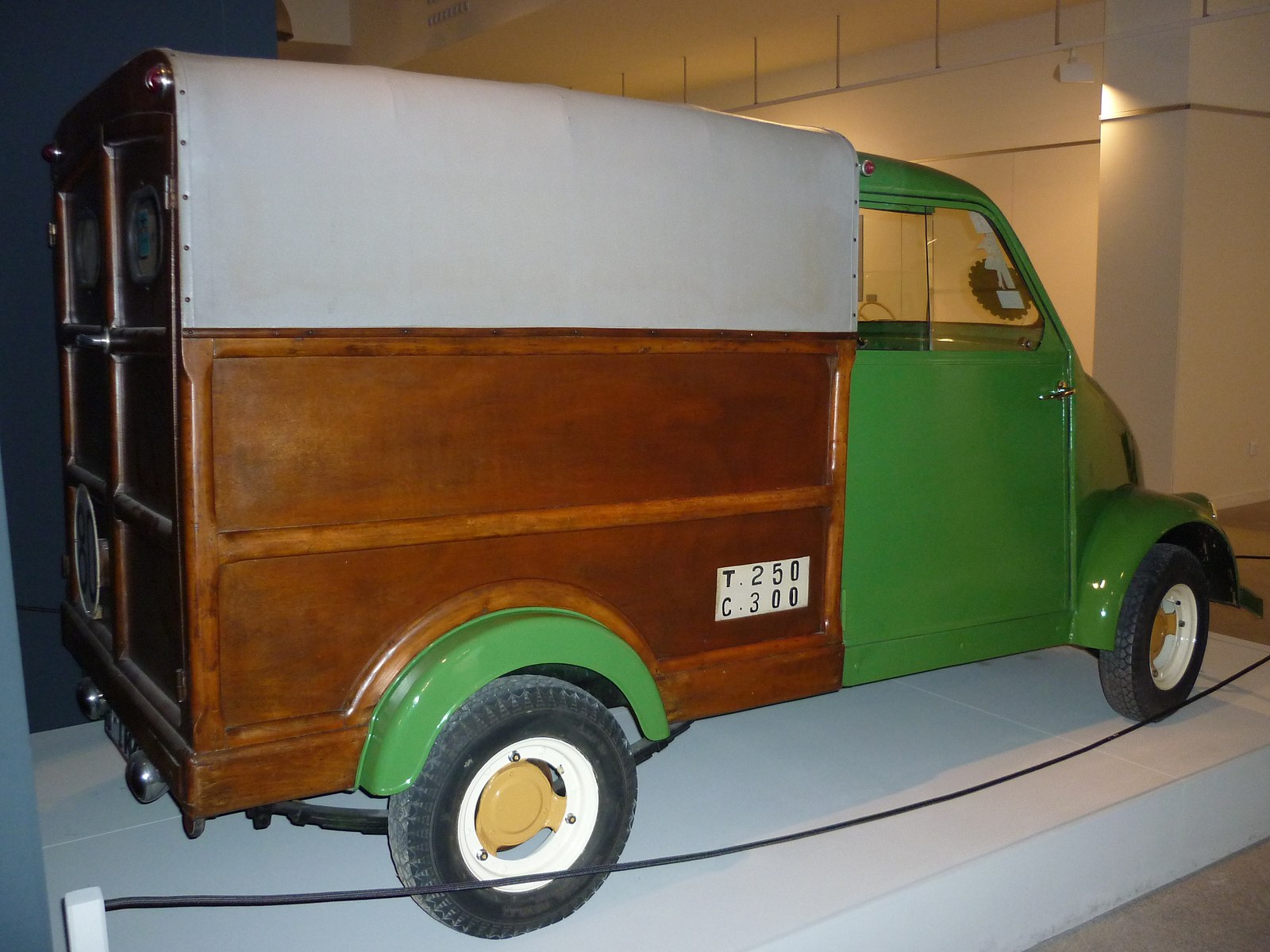
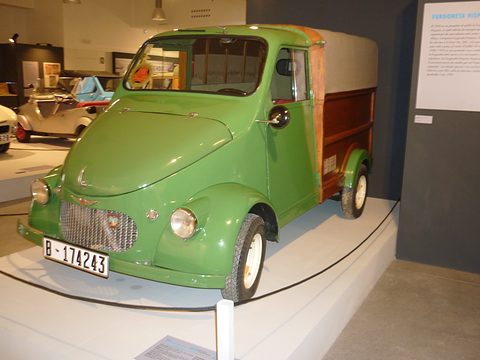
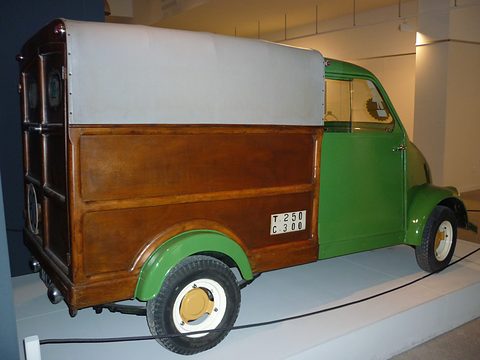
From 21 December 2012 to 15 March 2013 the Barcelona history museum, MUHBA, showed the city’s microcars at Fabra i Coats, in L’enginy de postguerra. Microcotxes de Barcelona, curated by Albert Cubeles with the collector Claudi Roca; Salvador Claret, the Museu de la Moto de Barcelona and Manuel Garriga lent cars. Its booklet includes a 1958 map of the city’s microcar factories and workshops. The Claudi Roca collection holds a Junior, the 1954 MT, a 1956 Delfín and a Mymsa, as well as a Biscúter Pegasín and a David; Salvador Claret’s car museum at Sils and the Museu de la Moto de Barcelona hold others.source 1 Most of the photographs on this page were taken at that exhibition; others show Delfín vans at Sils and at mNACTEC in Terrassa, and an M.T. at the Manresa meet in 2009.

Sources

Numbered as in the text

Most of this page rests on one source, Toni Solans’s site grupo7.com, read maker by maker; Spanish Wikipedia copies it. The MUHBA booklet is the independent account for the Barcelona makers. Sources are given as plain text; the links are on the Credits page.

  1. MUHBA (Museu d’Història de Barcelona), L’enginy de postguerra. Microcotxes de Barcelona, Llibrets de sala 11 (Barcelona, 2012), read in full (Catalan).
  2. Toni Solans, La web de los microcoches (grupo7.com): the index of makers and the pages on AISA, Barrio, Cimera, Electrociclo, IMFAP, Lambretta Locomociones, Movilutil, Mymsa, Rieju, Samoes and Simó, read in full (Spanish).
  3. Spanish Wikipedia, Microcoches de España, read in full; its text is licensed from grupo7.com.
  4. grupo7.com, “Autopedal”, read in full (Spanish); it quotes Miguel Martín Zurimendi, El Automóvil en Vizcaya (1896–⁠1996). Crónica de un centenario.
  5. grupo7.com, “Dagsa”, read in full (Spanish); it transcribes an advertisement for Anís Castellana.
  6. grupo7.com, “Auto-Tri (Gaitán), Sevilla”, read in full (Spanish); it rests on the Gaitán family’s photographs.
  7. grupo7.com, “Kover”, read in full (Spanish).
  8. grupo7.com, “Aleu”, read in full (Spanish).
  9. English Wikipedia, List of microcars by country of origin: S, used for its dates and figures.
  10. grupo7.com, “MT (Maquitrans), Barcelona”, read in full (Spanish).
  11. Spanish Wikipedia, Mototriciclo M.T., read in full; it is based on grupo7.com.
  12. cybermotorcycle.com, “Iso Motor Italia, Spain”, read via the page summary; it cites vehiculosclasicos.com.
  13. grupo7.com, “Iso Isetta”, read in full (Spanish).
  14. Bruce Weiner Microcar Museum, “1957 Isettacarro”, archived copy, read in full.
  15. RM Auctions, Bruce Weiner Microcar Museum sale, February 2013, lot 561, “1957 Iso Isettacarro”, read.
  16. grupo7.com, “Vespa”, on the Spanish Vespacar, read in full (Spanish).
  17. grupo7.com, “Huracán”, read in full (Spanish).
  18. grupo7.com, “Clua”, read in full (Spanish); Spanish Wikipedia’s Clúa copies it.
  19. grupo7.com, “Junior (Re.i.na), Barcelona”, read in full (Spanish).
  20. grupo7.com, “Delfín”, read in full (Spanish).
  21. grupo7.com, “TZ Sider”, read in full (Spanish); its specification comes from Historia del automóvil en Zaragoza.
  22. grupo7.com, “Triver”, read in full (Spanish).
  23. grupo7.com, “Roa”, read in full (Spanish).
  24. Bruce Weiner Microcar Museum, “1959 F.G.L. (Alicante)”, archived copy, read in full.
  25. Clàssic Motor Club del Bages, Manresa, the club’s website, read 7 October 2026.
  26. The old microcarfan.com, “Manifestations: Manresa 2007”, a collector’s notice of the 11th meet, archived page read.