microcarfan
  • Cyclecar
  • Germany
  • 10 makers

German cyclecars and Kleinwagen: the minor makers

A boatyard’s BMW-engined two-seater, a Thuringian car with no reverse gear, and a three-wheeler that folded into three parts and was driven up the Berlin radio tower: Germany’s cyclecars of the inflation years.

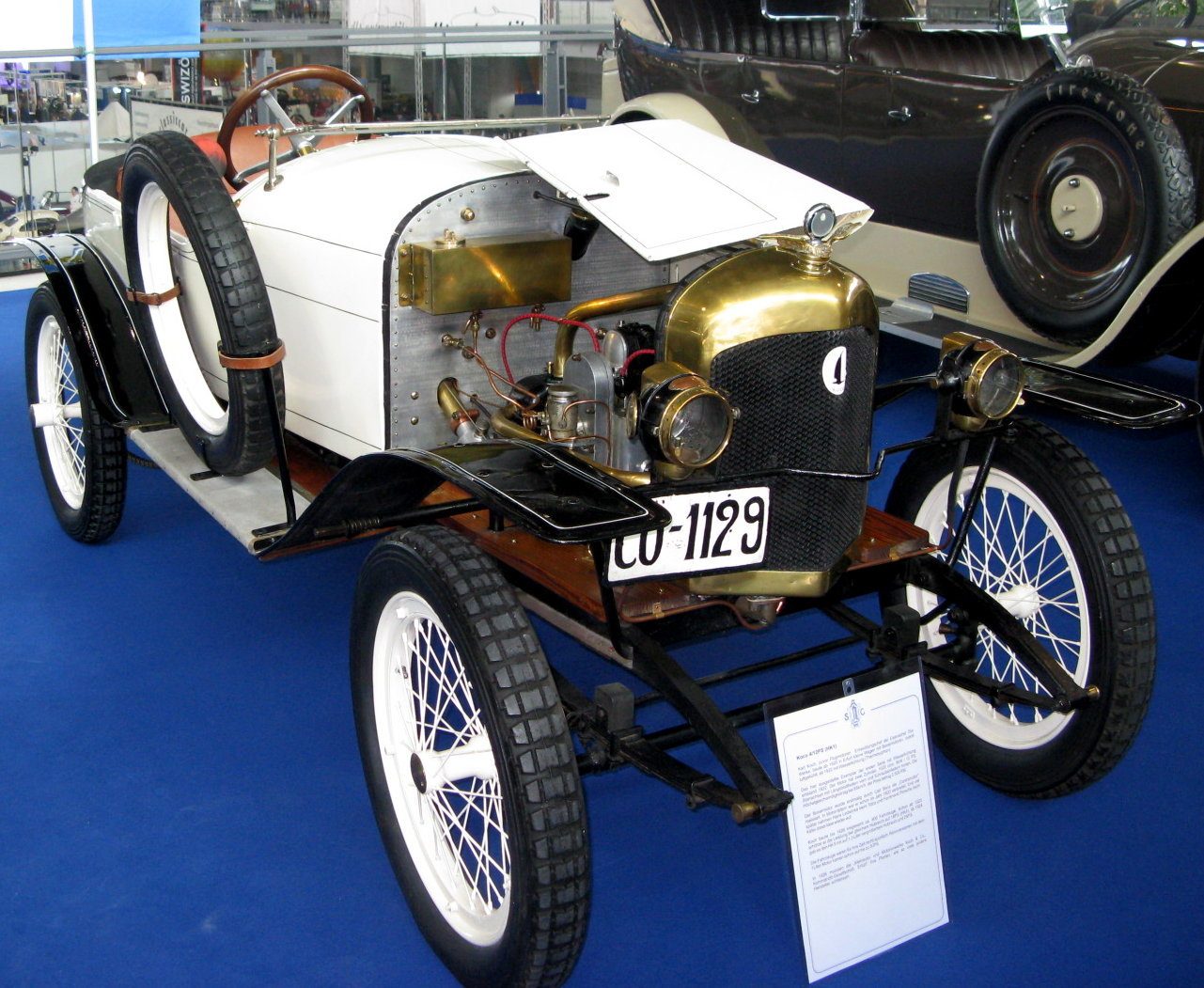
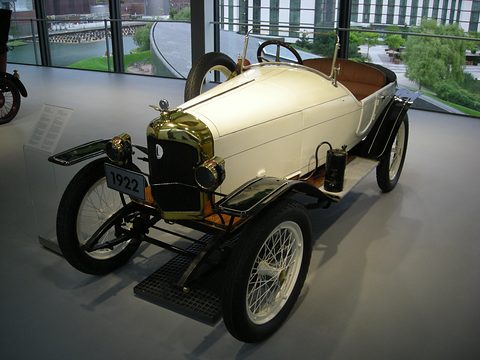
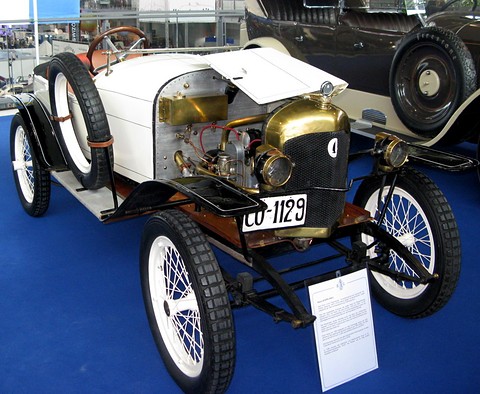
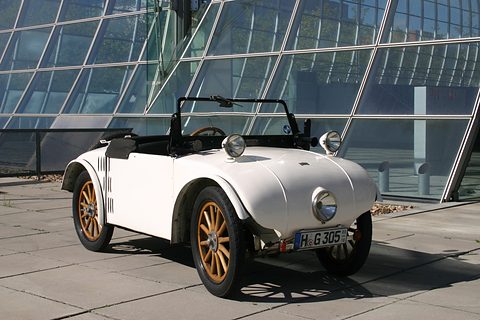
A small cream open two-seater with a brass radiator, black wings and white wire wheels on a pale floor by a glass wall.
Cream 1922 Koco two-seater at the Autostadt, Wolfsburg, Germany, in June 2012.Photo: Michael Barera, CC BY-SA 4.0, via Wikimedia Commons

At a glance

The spec plate

German cyclecars and Kleinwagen: the minor makers

Ten makers · Germany

Built
1919–⁠1933Most in the inflation years of 1919–⁠25; Rollfix went on to the Rekord of 1933
Country
GermanyNuremberg, Thuringia, Erfurt, Potsdam, Hamburg, Berlin, Stuttgart and Zella-Mehlis
Engine
Motorcycle-type singles and twins to small foursFrom the Dehn’s two-stroke single to Peter & Moritz’s flat-twin of 1,308 cc
Seats
2Nearly all were two-seaters
Wheels
4Most had four; Rollfix and Zaschka built three-wheelers
Production
About 800 at most per makerKoco about 800, Peter & Moritz 500–800, Staiger about 500; the rest few or not known

Not yet recordedpower and top speed.

The story

History

After the First World War a big car was out of reach for most Germans, and small makers sprang up to sell cars built round motorcycle engines, from BMW, DKW, Motosacoche and others, through the inflation of 1919–⁠23.source 1source 2source 3source 4 The currency reform of 1923–⁠24 ruined their customers and many of the makers with them.source 2 Most lasted a year or two. The Slaby-Beringer electric single-seater and the Hanomag 2/10 PS have their own pages, and the Viennese Schasche, sometimes counted as German, appears among the cyclecars elsewhere.source 5 Here are ten of the rest, by the year each began.
Peter & Moritz, 1920–⁠25

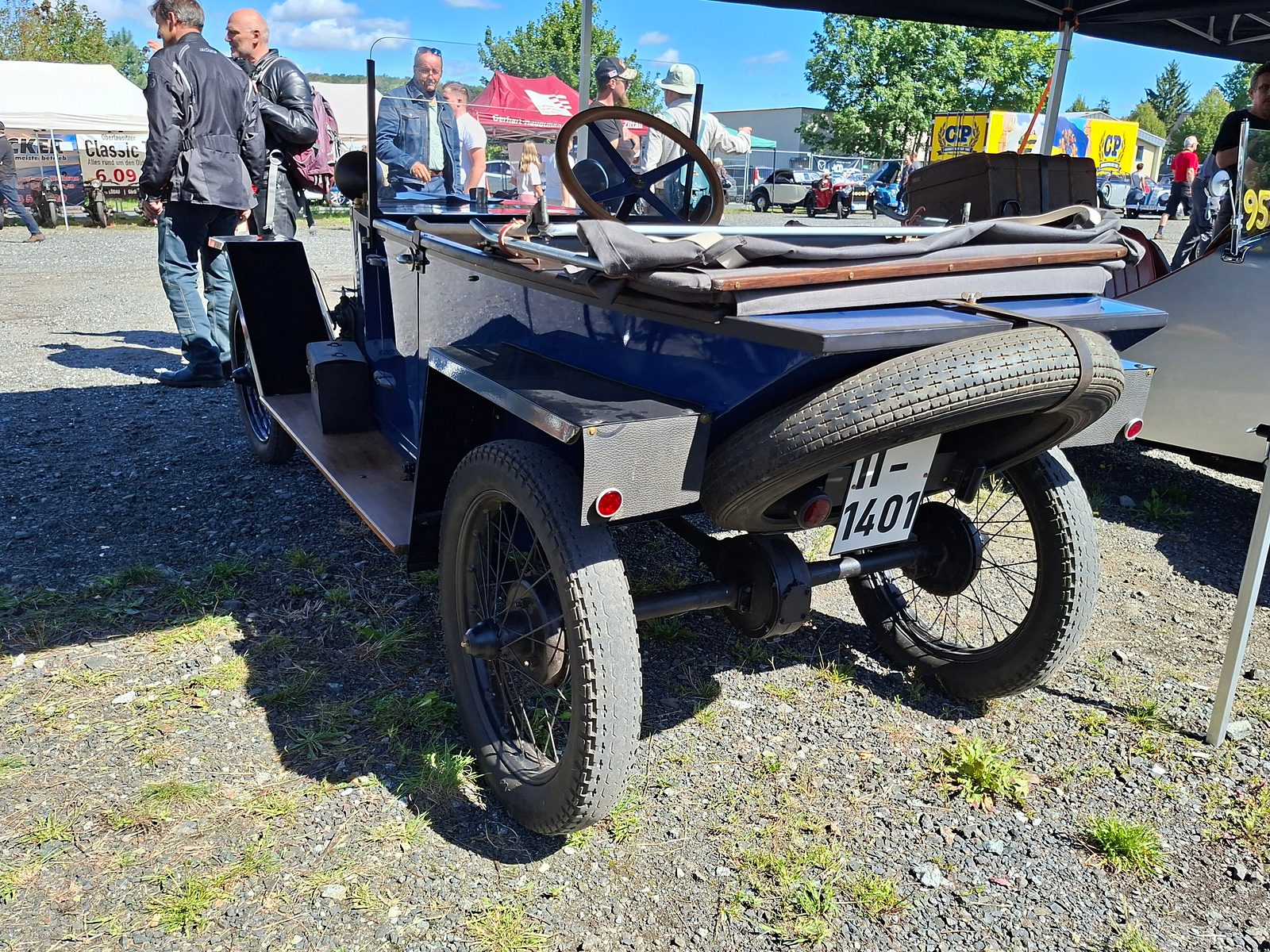
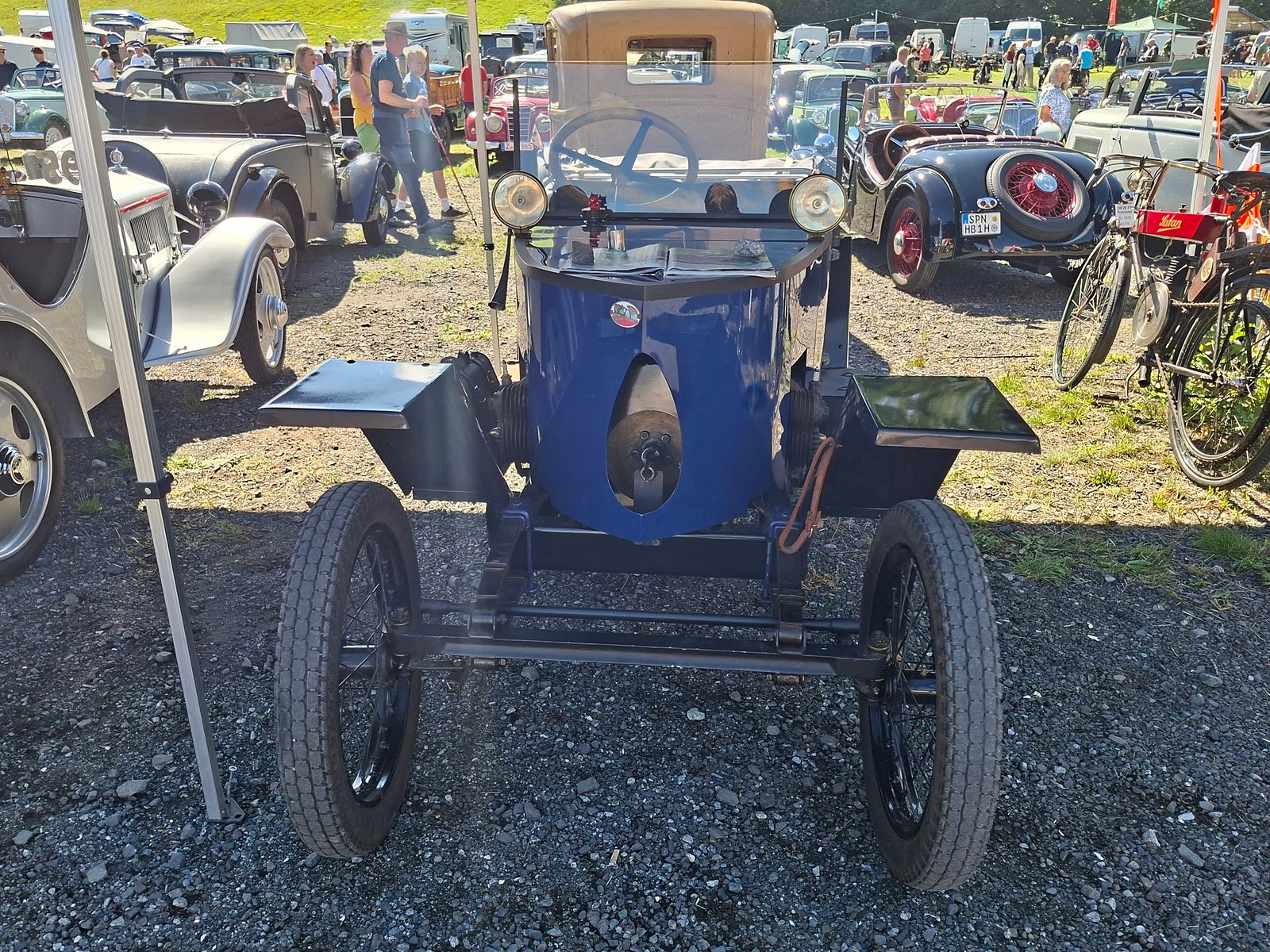
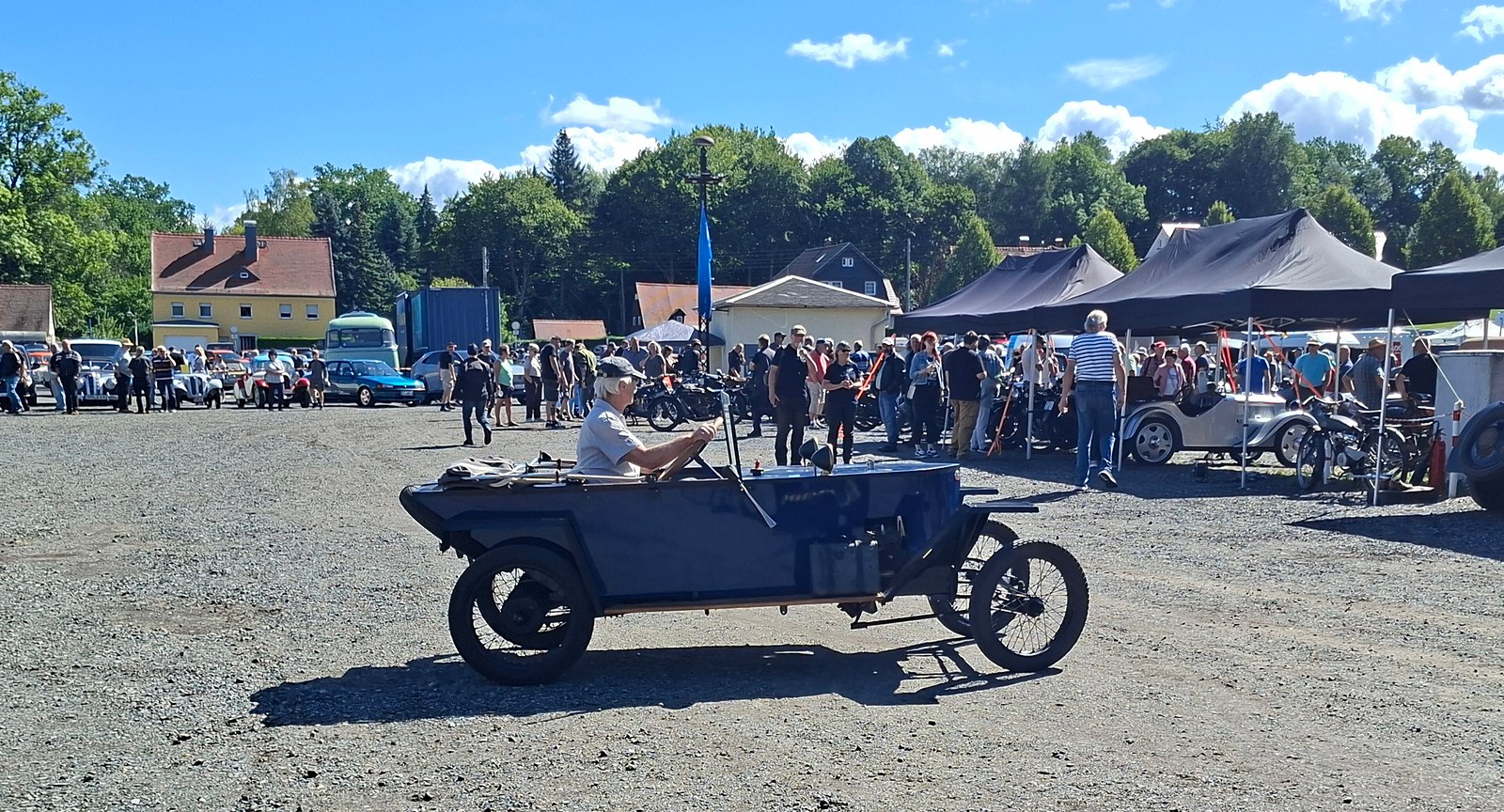
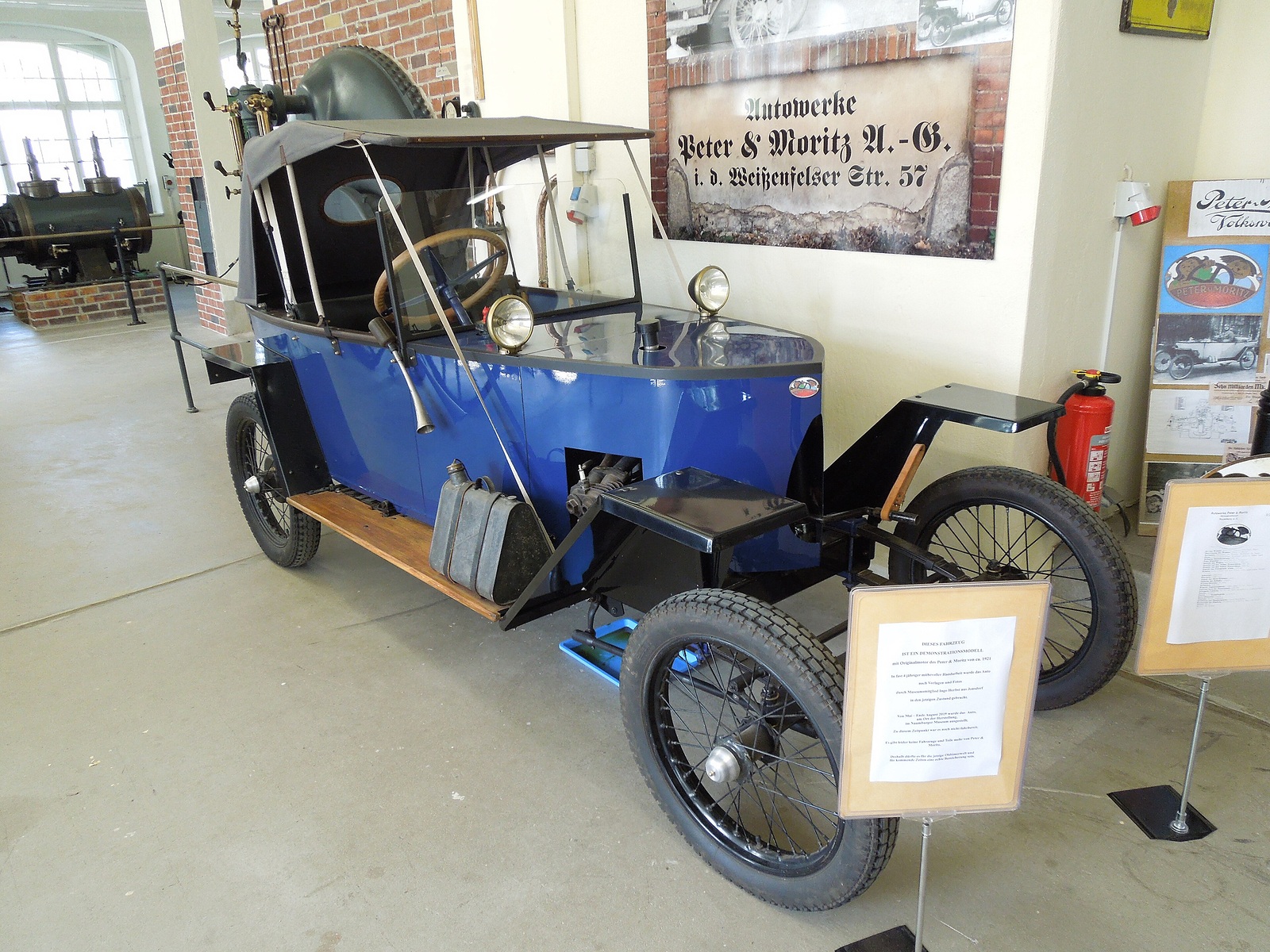
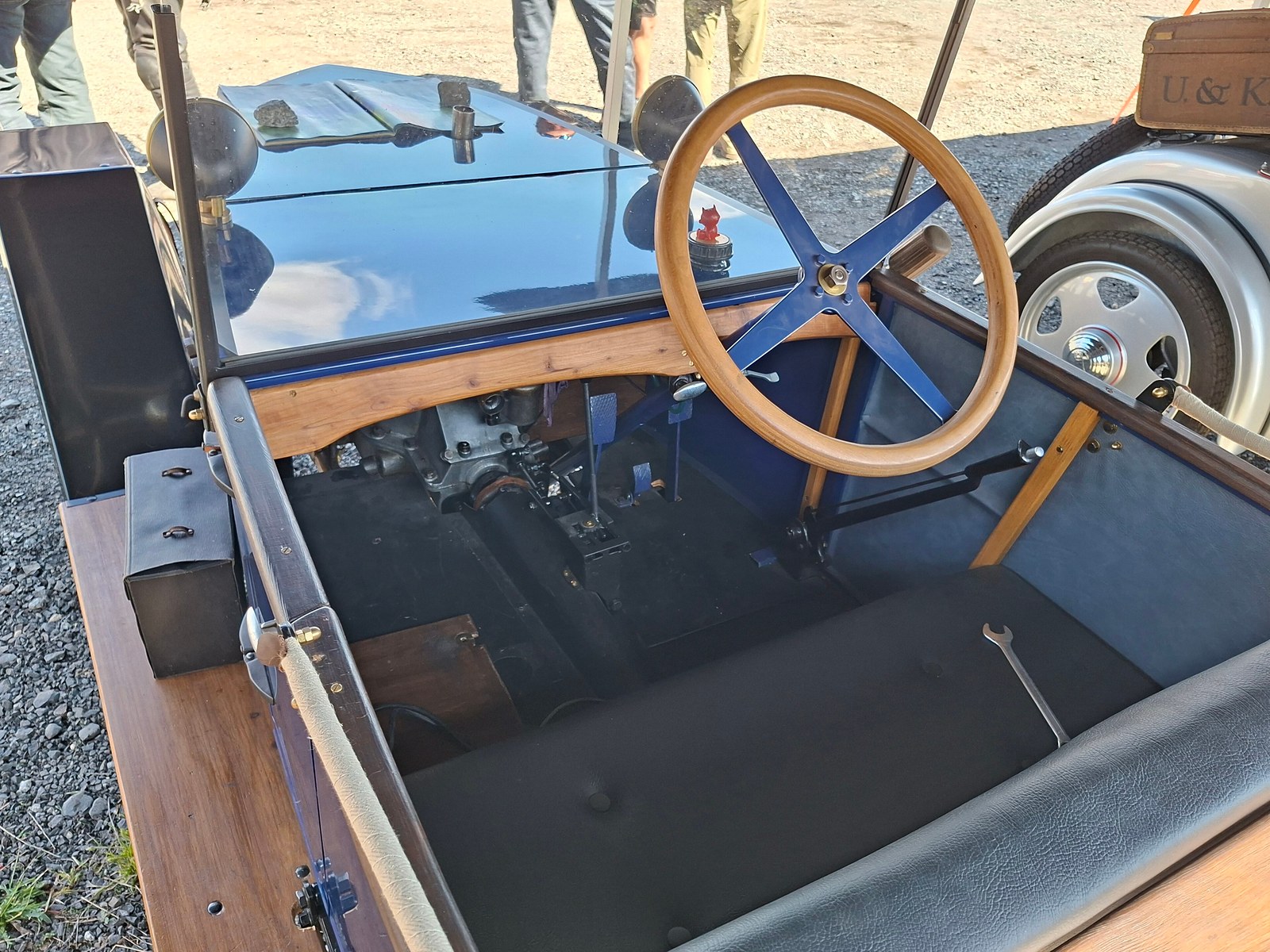
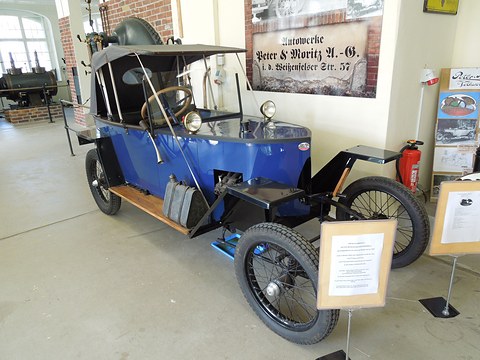
The Eisenberg merchant Paul Peter and the Berlin engineer Karl Moritz founded their firm on 25 March 1919, in Thuringia. Its first car, the 5/12 PS of 1920–⁠21, had an air-cooled flat-twin of 1,219 cc, two speeds, no differential and no reverse, and cost 10,000 marks. A water-cooled 5/15 PS of 1,308 cc followed in 1922, then the 5/20 and 5/22 PS with sporting versions, besides vans and light lorries; a six-cylinder 5/40 PS shown in Berlin in 1924 never went into production. In 1922–⁠23 the firm moved to Naumburg an der Saale, where 250 workers could make 60 to 80 cars a month. About 100 had been built by the winter of 1922–⁠23, and an estimated 500 to 800 in all, before the firm went bankrupt in December 1925.source 2 With engines of 1.2 and 1.3 litres these were light cars more than cyclecars. The works manager, Wilhelm Gehring, bought the machinery and founded a firm that still trades.source 2

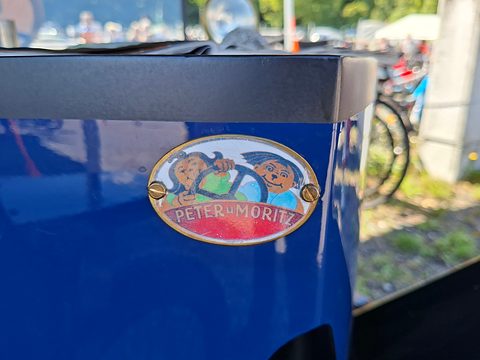
An oval enamel badge with two cartoon boys and the words Peter u. Moritz, screwed to dark blue bodywork.
Enamel badge of the Peter & Moritz reconstruction, showing the two boys of the name, at the Motorrad- und Technikmuseum Großschönau, Germany, in August 2026.Photo: Dk0704, CC BY-SA 4.0, via Wikimedia Commons

Koco, 1921–⁠26

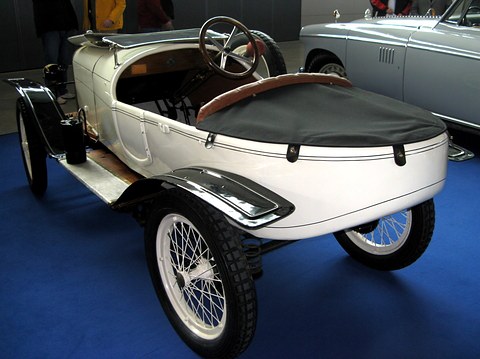
Karl Koch’s Kleinauto- und Motorenwerke Koch & Co. of Erfurt made as its first model, dated to 1920, a two-seat sports car with a 4/16 PS flat-twin and a chain to an axle with no differential, and in 1925 moved up to a 6/24 PS four. The firm went bankrupt in 1923, yet made cars until 1926, about 800 of them, and at least one Koco ran in the small-car race at the AVUS in Berlin in 1923.source 6source 7

Staiger, 1922–⁠24

Paul Staiger of Stuttgart began building a small four-cylinder 4/12 PS two-seater in 1922, because Opel could supply too few cars of its own. He made about 500, and stopped about 1924, when he found that selling Opel’s own 4/12 PS paid better. It was a light car rather than a cyclecar.source 8

Maurer, 1923–⁠24

Ludwig Maurer of Nuremberg showed his 2/6 PS at the Berlin motor show in the autumn of 1923: an open aluminium two-seater with a 450 cc two-stroke flat-twin of 6–8 PS, three speeds and a chain to the rear axle. It was 2,800 mm long and weighed 260 kg, and it did 55 km/h (34 mph) on 4 litres per 100 km. Sales stayed low.source 1 The firm was linked to the earlier Maurer-Union cars with friction drive.source 1source 7

Bootswerft Zeppelinhafen, 1923–⁠24

At Potsdam-Wildpark a boatyard built the “B.Z. Cyclecar”: a two-seater with a light-metal body and a BMW flat-twin of 494 cc and 6 PS, with three speeds and reverse. It weighed 300 kg, reached 60 km/h (37 mph) and could climb a 20 per cent gradient. Only a limited number were made, and the company was dissolved in 1924.source 3

Rollfix, 1923 or 1926 to 1933

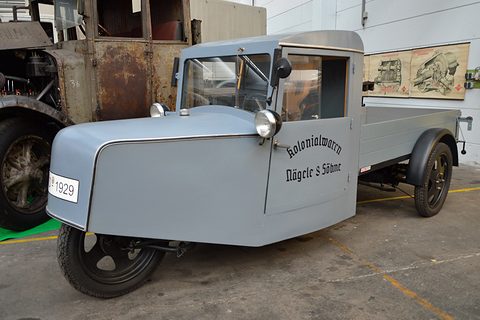
Rollfix-Eilwagen of Hamburg-Wandsbek mostly built three-wheeled delivery vans, with one rear wheel driven by chain and DKW engines of 127 or 297 cc, later ILO engines of 200 to 500 cc. Among a few passenger cars was the Rekord of 1933, a two-seat three-wheeler with an opening roof. In 1934 the firm became Rollfix-Werke Frederic Schröder, with the Motrix brand.source 9

A grey three-wheeled van with a rounded nose, single front lamp and open cargo bed, lettered Kolonialwaren Nägele & Söhne.
A grey Rollfix Heck 200 three-wheeled delivery van, lettered for a grocer, in October 2016.Photo: Spielvogel, CC BY-SA 4.0, via Wikimedia Commons

Dehn, 1924

H. C. Dehn’s Fahrzeug- und Maschinenfabrik in Hamburg built a single model, a Motorradwagen, or motorcycle-car: an open two-seater without doors, with a light canvas roof, room for luggage and a removable cargo carrier, and its own air-cooled two-stroke single of 8 PS, of 346 cc or about 440 cc by different figures. It was hoped to sell as a cheap people’s car, but it came and went in 1924.source 10

Pluto, 1924–⁠27

Gustav Ehrhardt’s Pluto Automobilfabrik at Zella-Mehlis built the French Amilcar under licence (more in built under licence): the 4/20 PS, based on the C4, with 1,004 cc, the 5/30 PS, based on the CGS, with 1,074 cc, and a supercharged 5/30/65 PS racer, driven by Friedrich, Glockenbach, Mederer and von Einem. Pluto also supplied engines to Voran of Berlin, and ended in 1927. At least one 1924 Pluto survives.source 11

Spinell, 1924–⁠25

Spinell Motorfahrzeuge of Berlin-Dahlem, led by Otto Krell junior, made a sporting two-seater with a light-metal body on leaf springs, three speeds, chain drive and a starting lever, with engines of 3/12 or 4/18 PS, or a Motosacoche of 5/20 PS. At 3.25 m long it was hardly small. Few were built.source 4

Zaschka, 1928–⁠29

Engelbert Zaschka’s three-wheeler had an air-cooled single at the back, driving the rear wheel through spur gears, a folding frame of steel tube under a light fabric body, independently sprung front wheels and a radiator grille that was only for show. Two people could take it apart into three pieces in about five minutes. In 1928 Zaschka drove it up to the top platform of the Berlin Funkturm, the radio tower. It would do 40–50 km/h and was meant to cost over 1,000 Reichsmark, but the tube frame was too costly to make, and it stayed a prototype. It is often called the first folding car.source 12

Pictures

More photographs, old and new

Variants

Ten makers, in date order

The minor German makers
VariantYearsWhat differsHow many
Peter & Moritz1920–⁠25Eisenberg, then Naumburg: flat-twins of 1,219–1,308 cc; the first with no reverse500–800, estimated
Koco1921–⁠26Erfurt: a 4/16 PS flat-twin two-seater, later a 6/24 PS fourAbout 800
Staiger1922–⁠24Stuttgart: a 4/12 PS four-cylinder two-seaterAbout 500
Maurer 2/6 PS1923–⁠24Nuremberg: a 450 cc two-stroke flat-twin in an aluminium roadsterLow
B.Z. Cyclecar1923–⁠24Potsdam boatyard: a 494 cc BMW flat-twinLimited
Rollfix1923 or 1926 to 1933Hamburg: mainly three-wheeled vans; the Rekord two-seater of 1933A few cars
Dehn1924Hamburg: a two-stroke single of 8 PS in an open two-seaterFew
Pluto1924–⁠27Zella-Mehlis: Amilcars under licence, 1,004 cc and 1,074 ccNot found
Spinell1924–⁠25Berlin-Dahlem: a sporting two-seater, 3.25 m longFew
Zaschka1928–⁠29Berlin: a folding three-wheeled prototype1

Specification

The two makers with full figures

Maurer 2/6 PS, 1923

Maurer 2/6 PS, 1923
EngineTwo-stroke flat-twin, 450 cc (64 × 70 mm), 6–8 PS (4.4–5.9 kW)source 1
DriveThree speeds, chain to the rear axlesource 1
Size2,800 × 1,300 × 1,200 mm; wheelbase 2,000 mm, track 1,100 mmsource 1
Weight260 kg (573 lb)source 1
Running55 km/h (34 mph); 4 litres per 100 km; an 18-litre tanksource 1

B.Z. Cyclecar, 1923–⁠24

B.Z. Cyclecar, 1923–⁠24
EngineBMW flat-twin, 494 cc (68 × 68 mm), 6 PS (4.4 kW)source 3
GearsThree speeds and reversesource 3
Size2,900 × 1,300 × 1,250 mm; wheelbase 2,150 mm, track 1,100 mmsource 3
Weight300 kg (661 lb)source 3
Running60 km/h (37 mph); climbs a 20 per cent gradientsource 3

How many were built?

Each from one source

Up to about 800 per makerEvery figure here comes from one German Wikipedia article used as a lead, and none has been checked against the makers’ records. Peter & Moritz’s figure is itself an estimate of 500 to 800.

  1. about 800Koco, 1921–⁠26One source

    German Wikipediasource 6

  2. 500–800Peter & Moritz, 1920–⁠25, estimatedOne source

    German Wikipediasource 2

  3. about 500Staiger 4/12 PS, 1922–⁠24One source

    German Wikipediasource 8

  4. 1Zaschka folding car, 1928–⁠29One source

    German Wikipediasource 12

  • Two sources agreetwo good sources give the figure
  • One sourcea good source, alone
  • Unconfirmeda lead only, not yet checked

Famous for

Three points

  1. A boatyard’s car

    The B.Z. Cyclecar came from a boatyard at Potsdam, with a BMW flat-twin.

  2. Up the radio tower

    Zaschka drove his folding three-wheeler to the top platform of the Berlin Funkturm in 1928.

  3. No reverse

    The first Peter & Moritz had two speeds forward and none backwards.

Survivors and collecting

Today

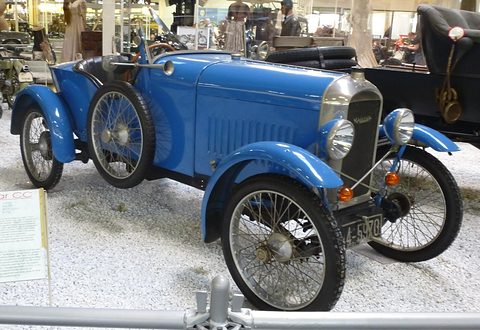
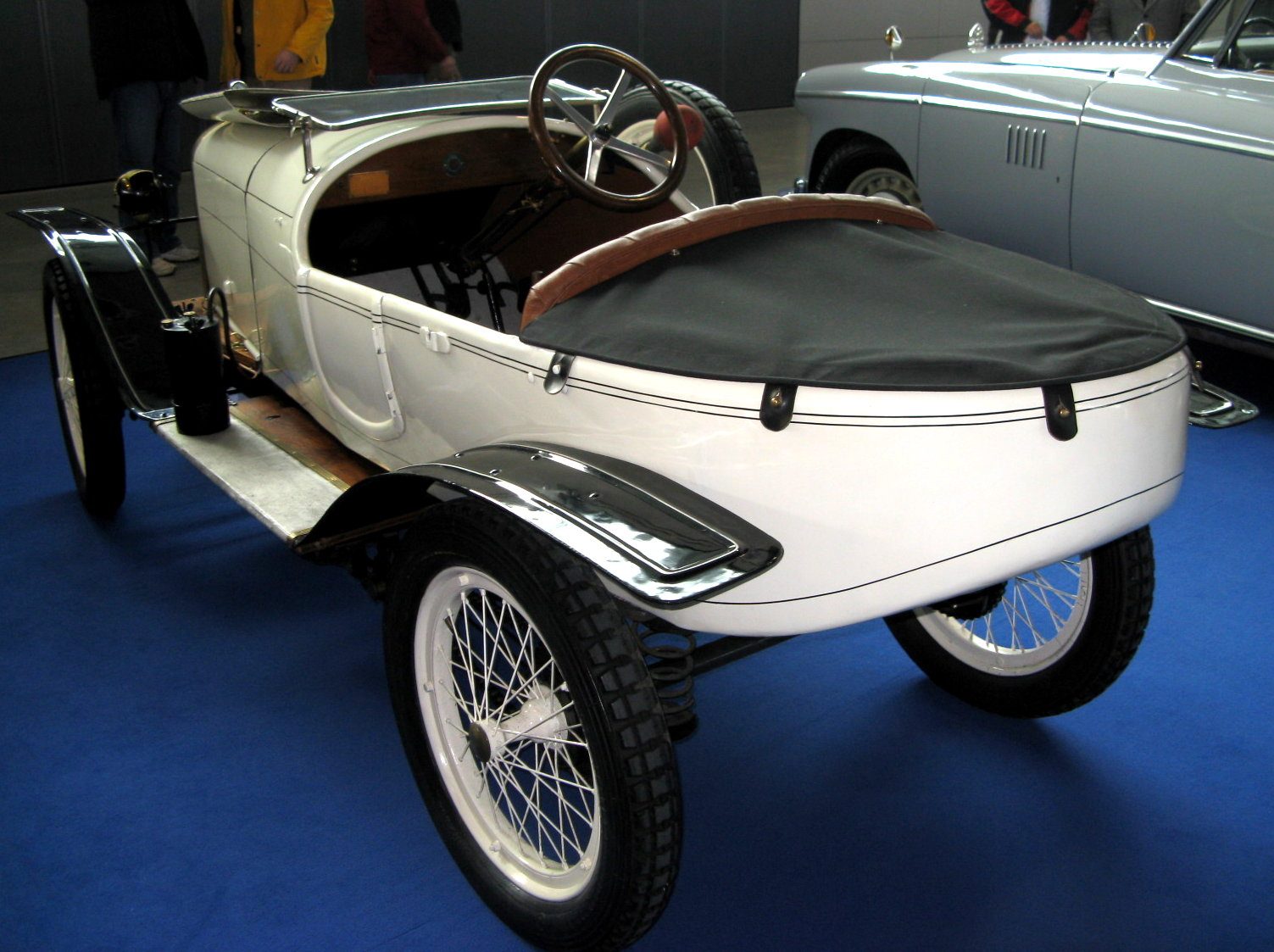
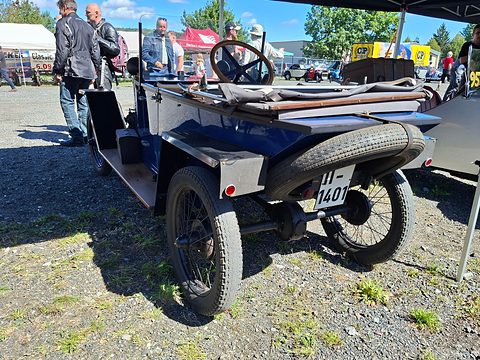
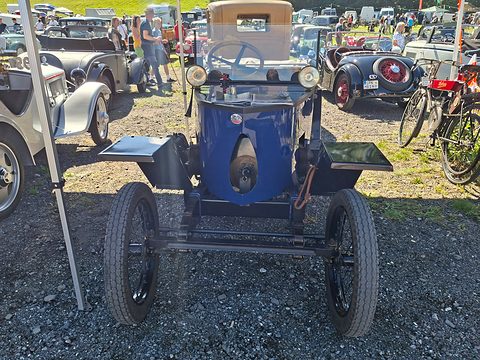
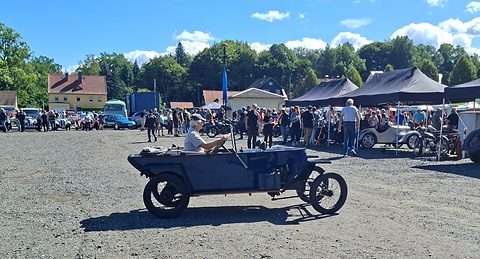
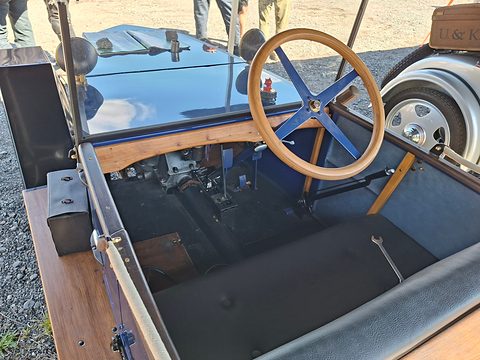
A reconstruction of a Peter & Moritz, built round original engine parts, has been shown at the Motorrad- und Technikmuseum Großschönau, and at least one Pluto of 1924 survives.source 2source 11 No survivor of the other makers has been identified in the sources read, though the pictures on this page show a 1922 Koco at the Autostadt in Wolfsburg and at a show in Stuttgart.

Sources

Numbered as in the text

Every maker here rests on one German Wikipedia article, used as a lead; several cite Linz and Schrader, Oswald or period magazines, but none of those was read. No German period magazine was found. Sources are given as plain text; the links are on the Credits page.

  1. German Wikipedia, Maurer 2/6 PS, summary read. Used as a lead; it cites Ludwig Maurer, Maurer-Union. Firmengeschichte (2000).
  2. German Wikipedia, Peter & Moritz, summary read. Used as a lead; it cites Linz and Schrader (2008), Busch, Geschichte des Thüringer Automobilbaus 1894–⁠1945 (2001), and the Gehring company history.
  3. German Wikipedia, Bootswerft Zeppelinhafen, summary read. Used as a lead; it cites Linz and Schrader, Europa Motor (1924) and the Illustrierte Motorzeitung of April 1924.
  4. German Wikipedia, Spinell Motorfahrzeuge, summary read. Used as a lead; it cites Oswald, Deutsche Autos 1920–⁠1945 (1996), and the Illustrierte Motorzeitung of 1 May 1925.
  5. German Wikipedia, Schasche-Cyclecar, summary read.
  6. German Wikipedia, Kleinauto- und Motorenwerke Koch & Co., summary read. Used as a lead.
  7. G. N. Georgano (ed.), The New Encyclopedia of Motorcars 1885 to the Present (1982), entries Koco and Maurer, snippets only.
  8. German Wikipedia, Autohaus Staiger, summary read. Used as a lead; it cites Linz and Schrader.
  9. German Wikipedia, Rollfix, summary read. Used as a lead; it cites Oldtimer Markt (2008) and Linz and Schrader.
  10. German Wikipedia, Fahrzeug- und Maschinenfabrik H. C. Dehn, summary read. Used as a lead; it cites Georgano, Kubisch and Oswald.
  11. German Wikipedia, Pluto Automobilfabrik, summary read. Used as a lead.
  12. German Wikipedia, Engelbert Zaschka, the folding-car section, summary read. Used as a lead.