microcarfan
  • Microcar utility
  • Japan
  • Four wheels
  • One seat
  • Hand-built

Daihatsu Midget II

Also known as ダイハツ・ミゼットII, K100P Pick, K100C Cargo

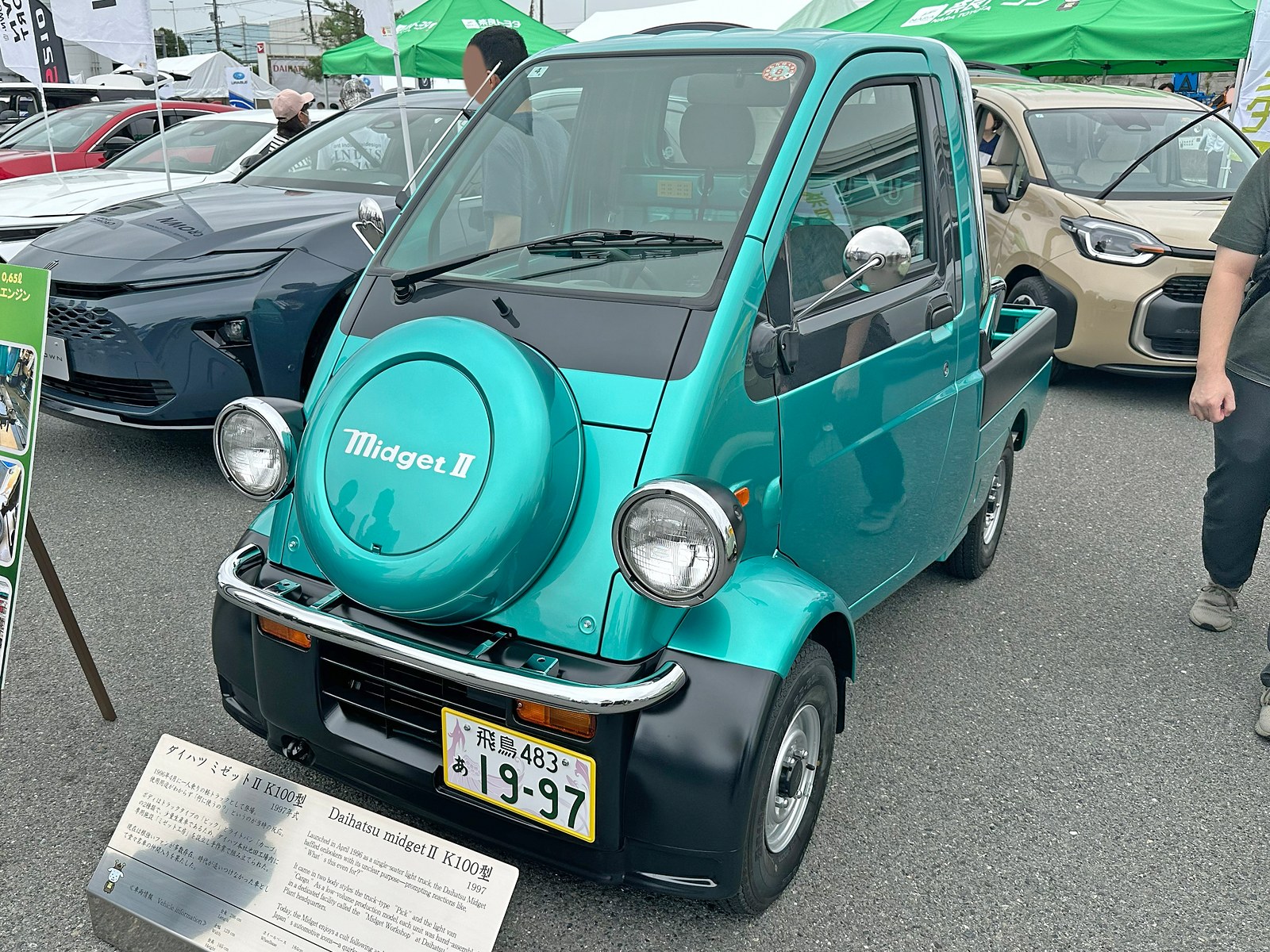
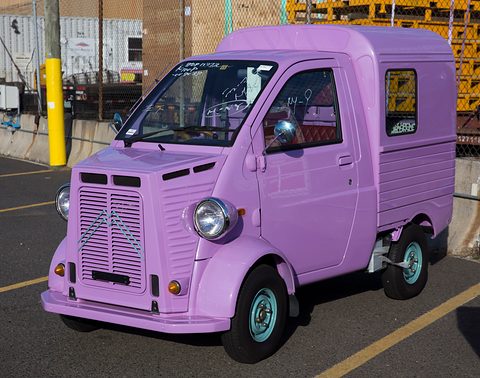
A truck for one, with its spare wheel on the nose, built by hand in a workshop of its own and advertised as something to keep, like a pet. It took its name from Daihatsu’s three-wheeled Midget of 1957.

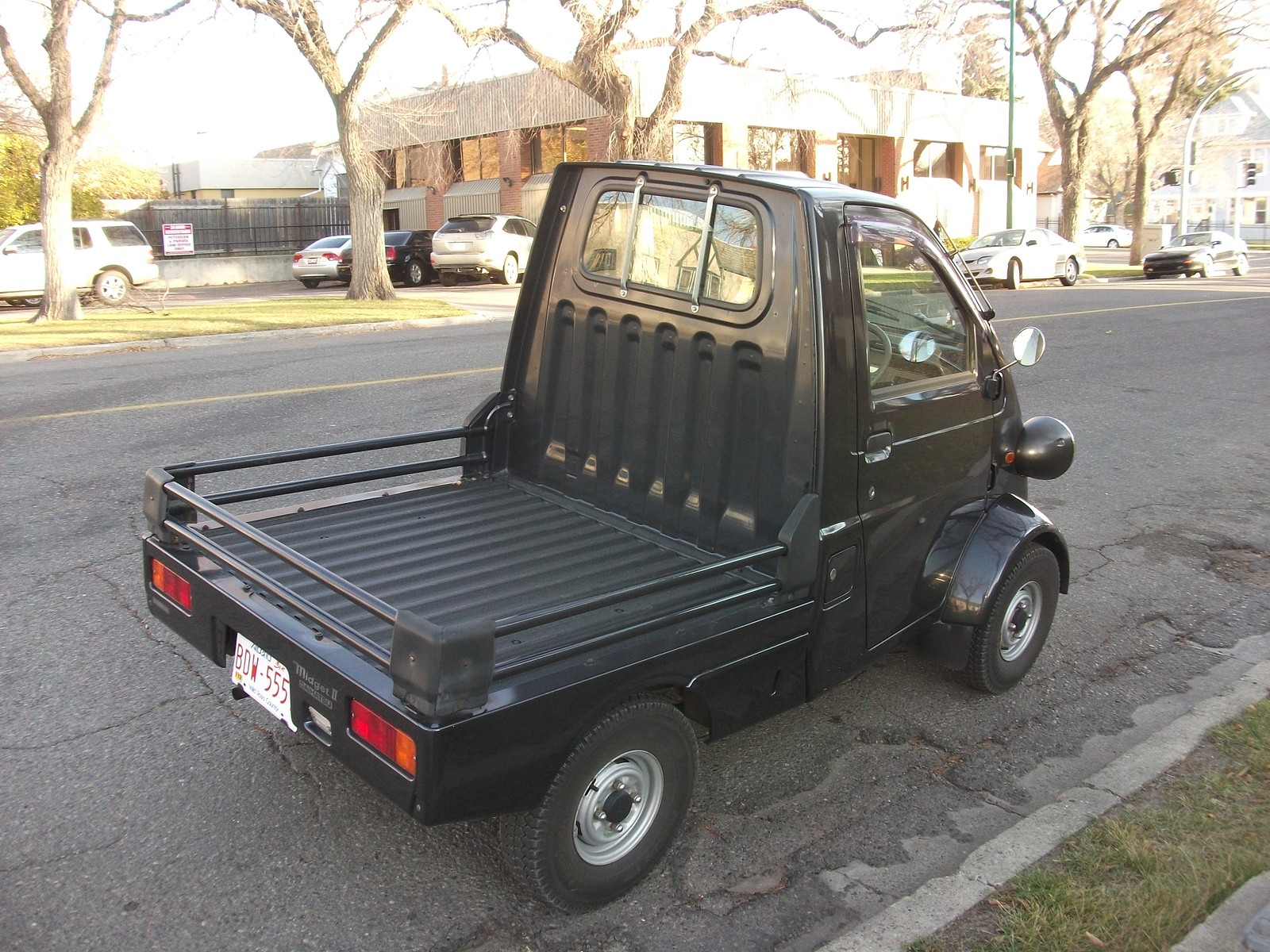
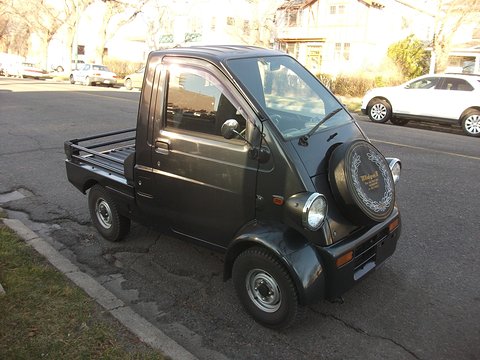
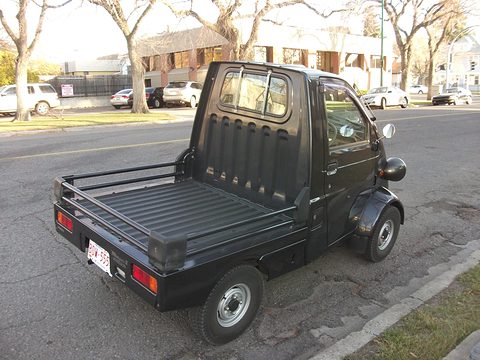
Black tiny one-seat pickup with a spare wheel mounted on the nose and round headlamps parked at a kerb.
A black single-seat Daihatsu Midget II Pick, imported to the United States, with its spare wheel on the nose, in October 2011.Photo: dave_7, CC BY 2.0, via Flickr

At a glance

The spec plate

Daihatsu Midget II

K100P Pick, 1996 · Ikeda

Built
1996–⁠2001On sale from 5 April 1996; production ended in June 2001
Country
JapanDaihatsu’s head-office plant at Ikeda, Osaka
Maker
Daihatsu Kōgyō, Ikeda, OsakaBuilt by hand in the Midget Kōbō, the Midget workshop
Engine
EF-CK 659 cc three-cylinder, SOHCCarburettor; from September 1999 the EF-SE, with fuel injection, of about 33 PS
Power
31 PS23 kW at 4,900 rpm
Length
2,790 mm1,295 mm wide, 1,650 mm high
Weight
580 kgA late Pick, by the Wikipedias
Seats
1Two in the automatic models, from January 1997
Wheels
4Engine at the front, under the cab; rear-wheel drive
Price new
¥469,000The B type at launch, April 1996; ¥489,000 and ¥599,000 for the D and R types

Not yet recordedtop speed.

How big is it?

True proportion

2.79 m

It is 180 mm shorter than a Fiat 500, about 1.6 adults laid end to end, and twice the length of a Peel P50.

  • 1.29 m wide
  • 580 kg: about eight adults
  • One seat, with a 150 kg payload behind it
  • A turning circle of 3.6 m radius
Drawn at true proportion. The track is 3.6 metres long; the adult stands at the same scale. The Peel P50 is the smallest production car, on every page for comparison.

The story

History

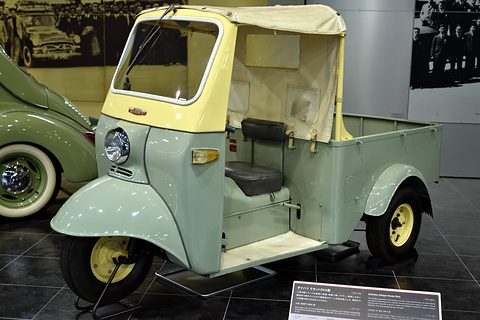
Daihatsu’s first Midget, a three-wheeler for small deliveries, was built from 1957 to 1972, and in 1996 the company revived its name, and its job, for a new kei truck.source 1source 2 The maker’s own model history calls the Midget II the second generation.

現代の軽自動車よりもさらに小さく、狭い路地でも走り抜けられる敏捷さを備え、小口配達業務を強力にサポート。

Daihatsu, U-CATCH model history. In English: “Even smaller than today’s kei cars, with the agility to run through narrow alleys, it strongly supported small-lot delivery work.”source 2

It was shown first as a reference exhibit at the 30th Tokyo Motor Show in 1993, on 12-inch wheels and with disc brakes at the front, which production cars did not have.source 1source 3 At the 31st show, in 1995, it stood beside the Midget III, a passenger car with one seat in front and two behind in a triangle, and doors that differed from side to side, the driver’s on the right and the rear passengers’ on the left.source 1

The Midget II went on sale on 5 April 1996, as a pickup only, the Pick, with one seat, a four-speed manual gearbox and a payload of 150 kg (331 lb).source 1source 4 There were three grades: the budget B type, the standard D type and the dressed-up R type, at ¥469,000, ¥489,000 and ¥599,000.source 1source 4 Kuruma News gives about ¥580,000–730,000, perhaps with tax or at a later date; the difference is unresolved.source 5 At 2,790 mm (110 in) long and 1,295 mm (51 in) wide, it sat far inside the kei limits of the day, 3,300 by 1,400 mm (130 by 55 in), and the Cargo, the micro van that followed, was only 35 mm wider than a kei car of the 360 cc era had been allowed to be.source 1

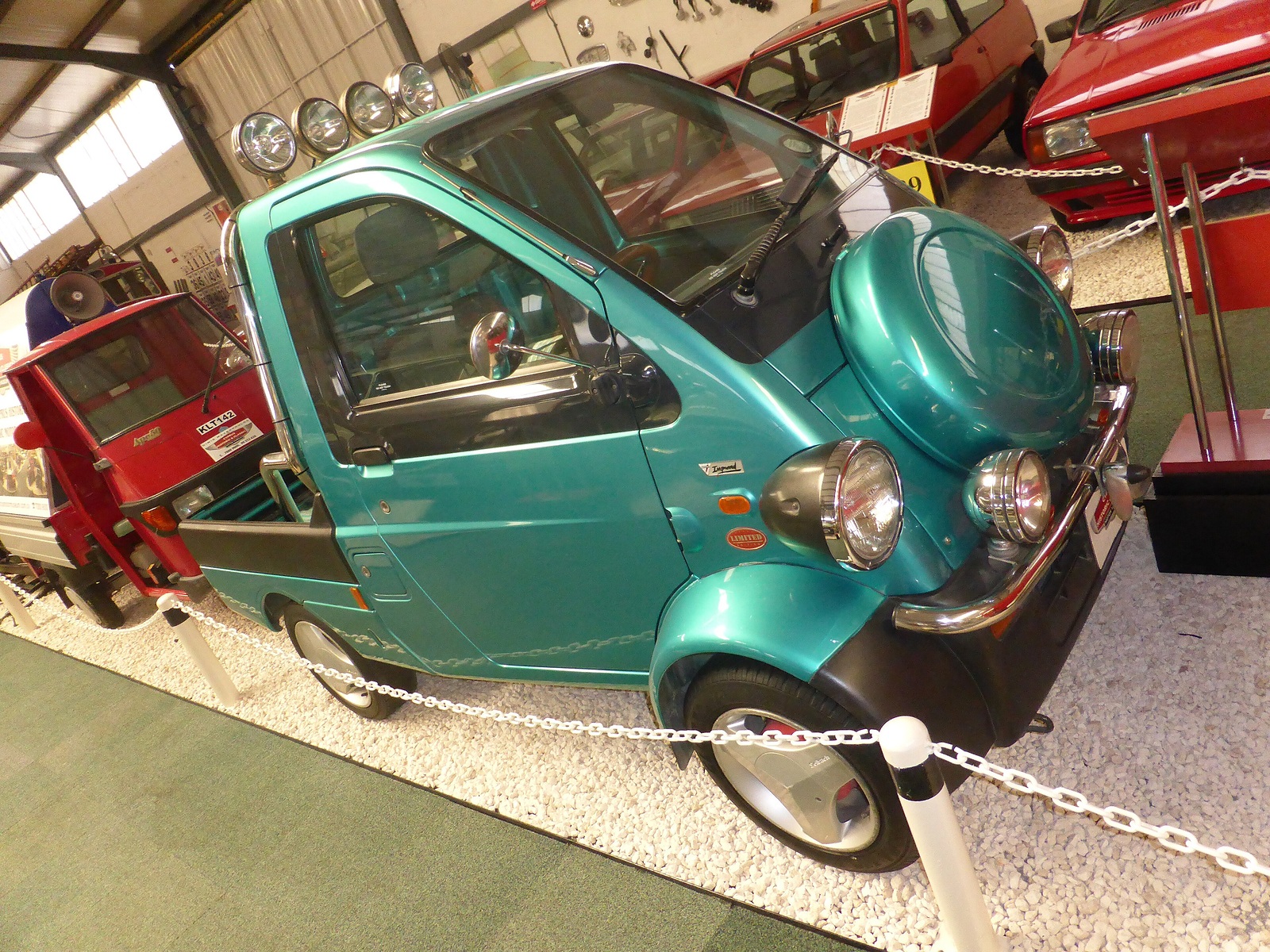
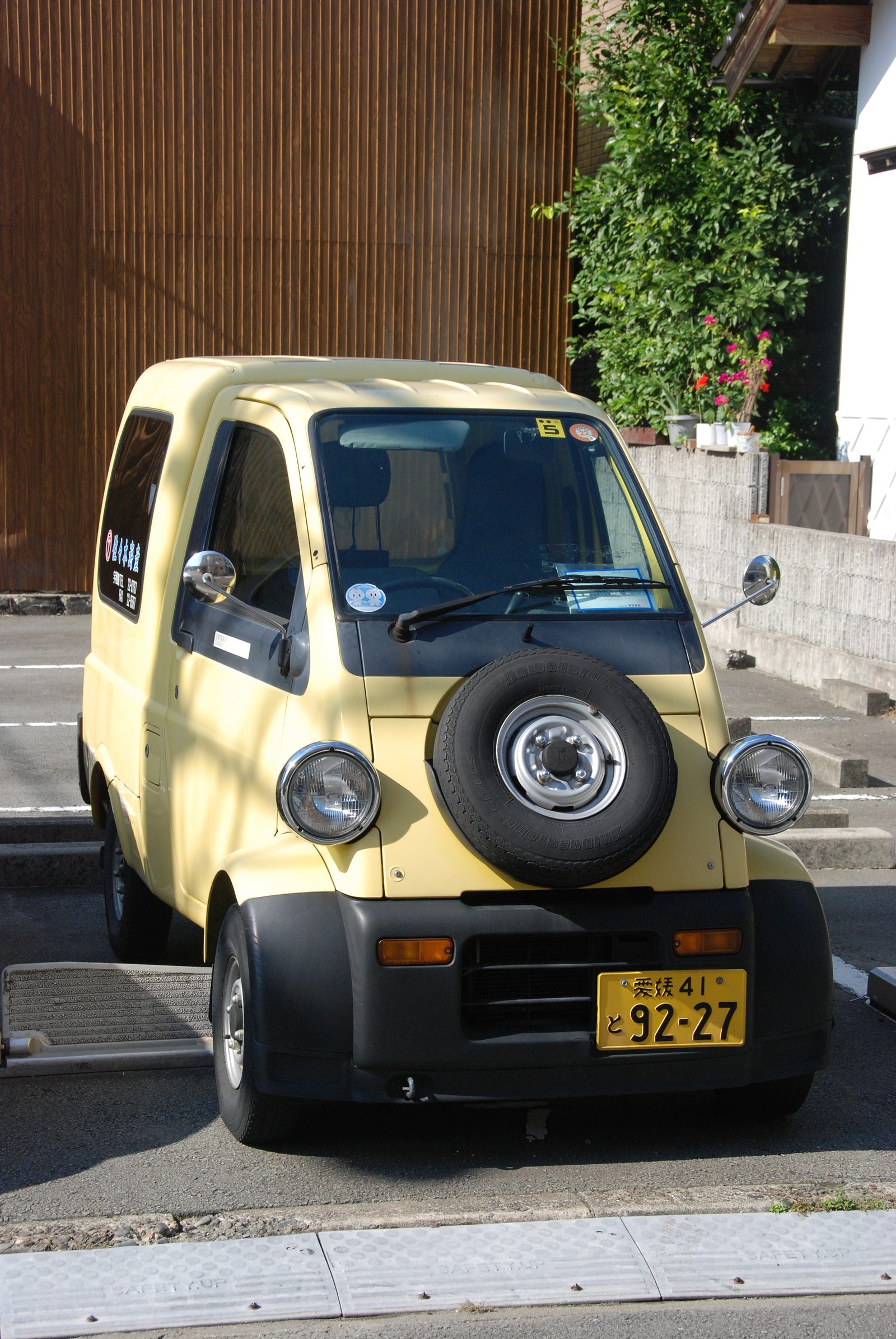
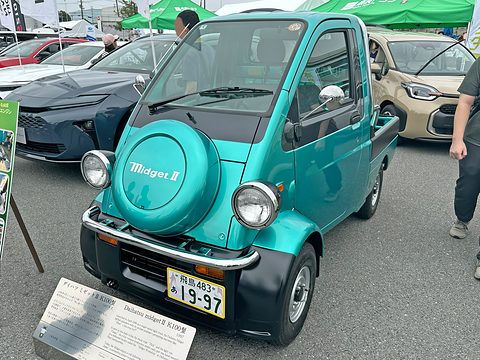
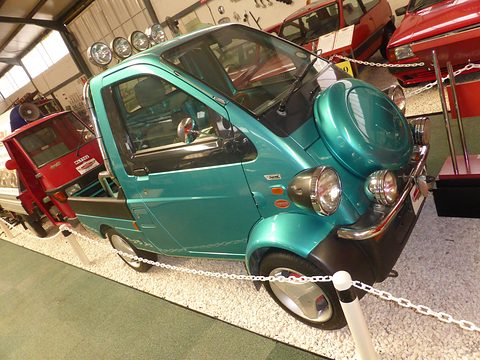
Its look was its spare wheel, mounted on the nose, and its headlamps and front wings, which stood out from the body.source 1source 3 Under the cab was a 659 cc EF three-cylinder of 31 PS (23 kW), without a catalytic converter, which it shared with the Daihatsu Hijet; because the Midget II was so light, it used about half the Hijet’s fuel.source 1source 5 It shared many other parts with the eighth-generation Hijet to keep costs down, and its tail lamps came from the Suzuki Carry.source 1 The instruments were a speedometer and a fuel gauge, without even a warning light for the water temperature, and the window in the left-hand door did not open.source 1 It turned in a radius of 3.6 m (11 ft 10 in).source 1source 5

It was planned from the start as a small-volume car, and it was built by hand in a separate workshop at the head-office plant at Ikeda, in Osaka, the Midget Kōbō.source 1source 3 By Kuruma News’s account there was no conveyor and no robot, so that experienced workers could pass their skills on to younger ones.source 5 Daihatsu’s advertising invited buyers to keep a Midget, in the words one uses of a pet, and its comic television advertisements had a Midget II attacked by a lion and sprayed by a skunk.source 1

Two seats, and a cargo van

New colours and an R Limited special came in September 1996.source 1 In January 1997 Daihatsu added the Cargo, in D and R types, to the slogan “ふたりで飼おう”, “Let’s keep one together”, for there were now two-seat models, Pick and Cargo, with a three-speed automatic and a column shift.source 1 The Cargo was 40 mm longer and wider and 55 mm taller than the Pick, and the Pick gained a left window that wound down.source 1 English Wikipedia calls the two-seaters “one and a half seaters”; Japanese sources say two seats.source 3source 1 The American Custom of October 1997 had two-tone paint, a leather-rimmed wheel and seats in “protein leather”, and in September 1998 the Custom joined the range for good and the R type was dropped.source 1 A passenger version of the Cargo, the Midget IV, appeared at the 1997 show, the 32nd, and like the Midget III was never built.source 1

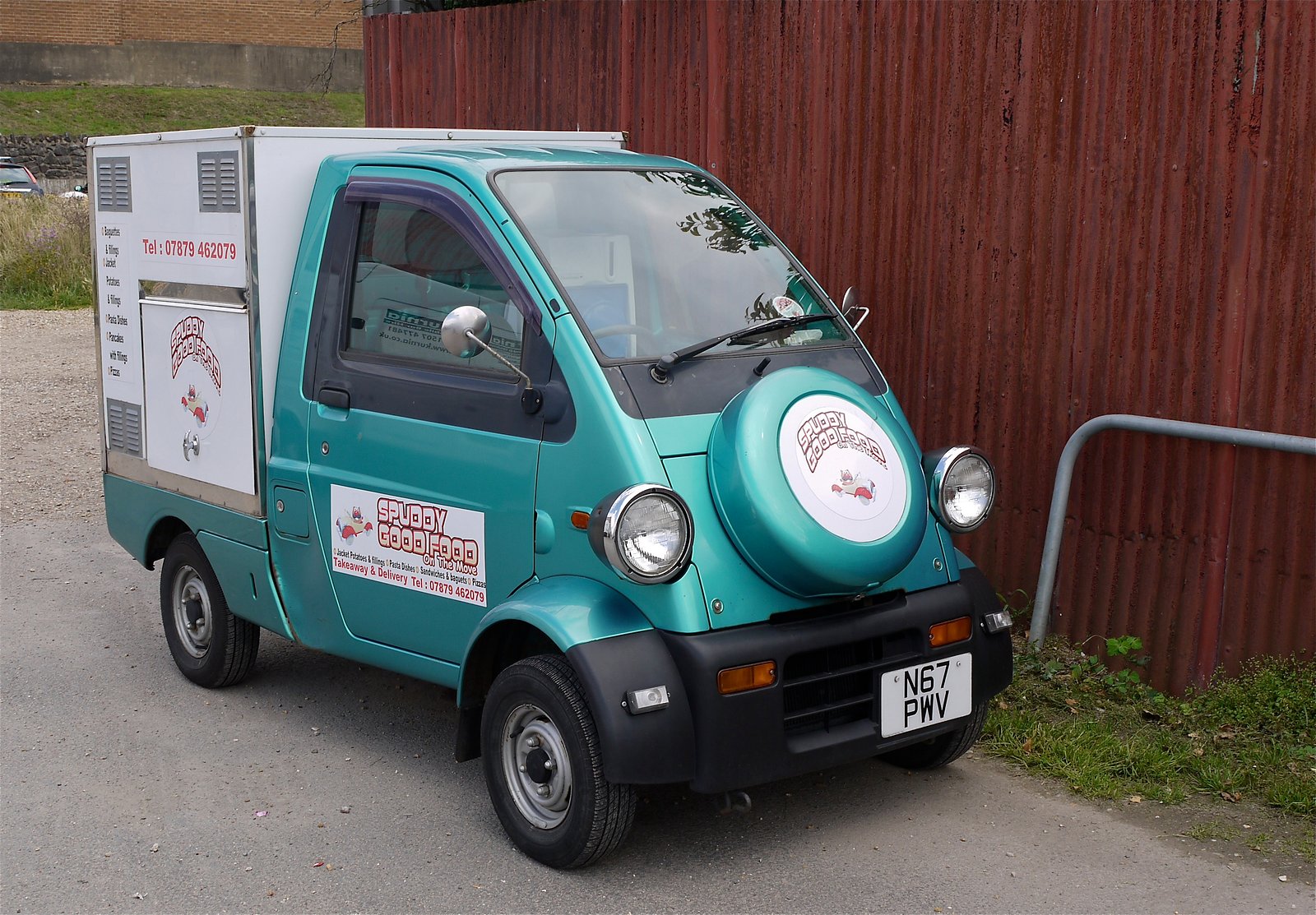
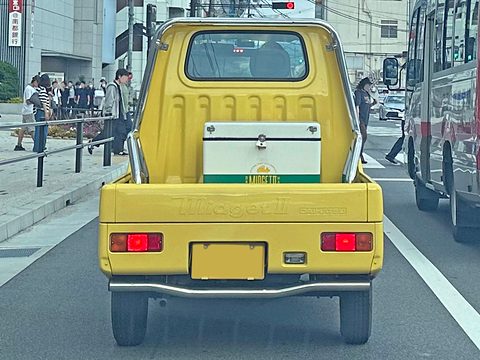
The kei rules changed in October 1998, and the crash rules grew tougher, and in September 1999 the Midget II was reworked. The spare wheel moved behind the driver, and a round cover with Daihatsu’s “D” took its place on the nose; a longer front bumper, to absorb a crash, added 105 mm, making the Pick 2,895 mm long and the Cargo 2,935 mm. It had a collapsible steering column, a force-limiting seat belt and a brake servo, a driver’s airbag as an option on the two-seat automatics, and the EF-SE engine, with fuel injection, of about 33 PS.source 1source 3 Production ended in June 2001 and sales in July, and the Hijet range took over its work.source 1source 2 The Midget workshop became the Expert Centre, and from 2002 it built the Daihatsu Copen.source 1 In 2025 Daihatsu used the name again, for the Midget X, an electric concept car.source 3
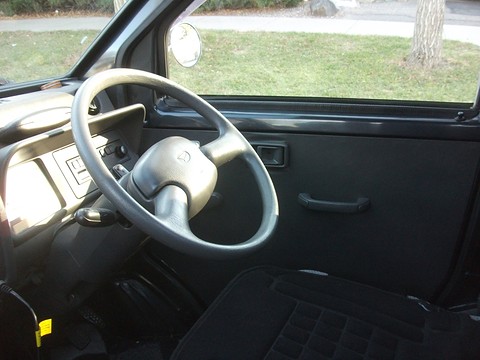
Grey two-spoke steering wheel and plain dashboard in front of a single black seat, seen through the door.
The cab of a single-seat Midget II Pick: steering wheel, a plain dashboard and one seat, in October 2011.Photo: dave_7, CC BY 2.0, via Flickr
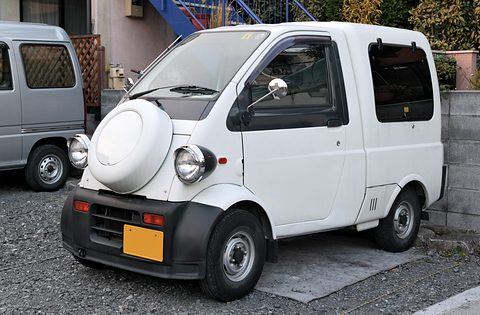
White tiny one-box van with a round spare-wheel cover on the nose and a yellow plate on gravel.
A white Midget II Cargo van with its spare-wheel cover on the nose, in Japan in December 2007.Photo: Tennen-Gas, CC BY-SA 3.0, via Wikimedia Commons

Pictures

More photographs, old and new

Variants

Two bodies, three grades

The Midget II and its concepts
VariantYearsWhat differsHow many
Pick B type1996–⁠98The budget grade: one seat, four-speed manualNot found
Pick D type1996–⁠2001The standard grade; two seats and an automatic from 1997Not found
Pick R type1996–⁠98The dressed-up grade, 2,865 mm longNot found
Cargo D and R1997–⁠2001A van, 40 mm longer and wider and 55 mm taller than the PickNot found
American Custom, then Custom1997–⁠2001Two-tone paint, leather-rimmed wheel, “protein leather” seats; a regular model from 1998Not found
Facelift1999–⁠2001Spare wheel behind the cab, a longer bumper, fuel injectionNot found
Midget III and IV1995, 1997Passenger concepts for the Tokyo Motor ShowNever built

Specification

The 1996 Pick, from Japanese Wikipedia unless noted

Engine and drive

Engine and drive
EngineEF-CK water-cooled 659 cc in-line three, SOHC, with a carburettorsource 1source 3
Power31 PS (23 kW) at 4,900 rpmsource 1source 3source 5
Torque5.1 kgm (50 Nm) at 3,200 rpmsource 1
GearboxFour-speed manual; a three-speed automatic with column shift from 1997source 1source 3
From 1999EF-SE with fuel injection, 24 kW (33 PS) at 4,900 rpmsource 1source 3

Body and chassis

Body and chassis
BodiesTwo-door pickup (Pick); three-door van (Cargo)source 1source 3
SuspensionMacPherson struts at the front; a rigid axle on leaf springs at the rearsource 1
BrakesDrums all roundsource 1
Tyres145/95 R10, on 10-inch wheelssource 1
InstrumentsA speedometer reading to 120 km/h (75 mph), and a fuel gaugesource 1

Dimensions

Dimensions
Length2,790 mm (110 in); 2,895 mm from 1999source 1source 3The Cargo 2,830 mm, then 2,935 mm
Width1,295 mm (51 in)source 11,335 mm in English Wikipedia’s table and in Kuruma News; the Cargo was 40 mm wider
Height1,650 mm (65 in)source 1
Wheelbase1,840 mm (72 in)source 1source 3
Weight580 kg (1,279 lb), a late Picksource 1source 3

Performance and running

Performance and running
Payload150 kg (331 lb)source 1source 4
Turning radius3.6 m (11 ft 10 in)source 1source 5
Economy15.8 km per litre in the 10·15 test cycle; 20.0 km/L for the manual from 1999source 1
Price new¥469,000, ¥489,000 and ¥599,000, April 1996source 4About ¥580,000–730,000 by Kuruma News, perhaps with tax or later

How many were built?

What was counted

No total foundDaihatsu planned the Midget II as a small-volume car from the start, and no production total from the maker has been found. One Japanese article says more than 10,000 were sold; it was read only in summary.

  1. over 10,000sold, 1996–⁠2001Unconfirmed

    Kuruma News, read in summarysource 5

  • Two sources agreetwo good sources give the figure
  • One sourcea good source, alone
  • Unconfirmeda lead only, not yet checked

Famous for

Three points

  1. A spare wheel on its nose

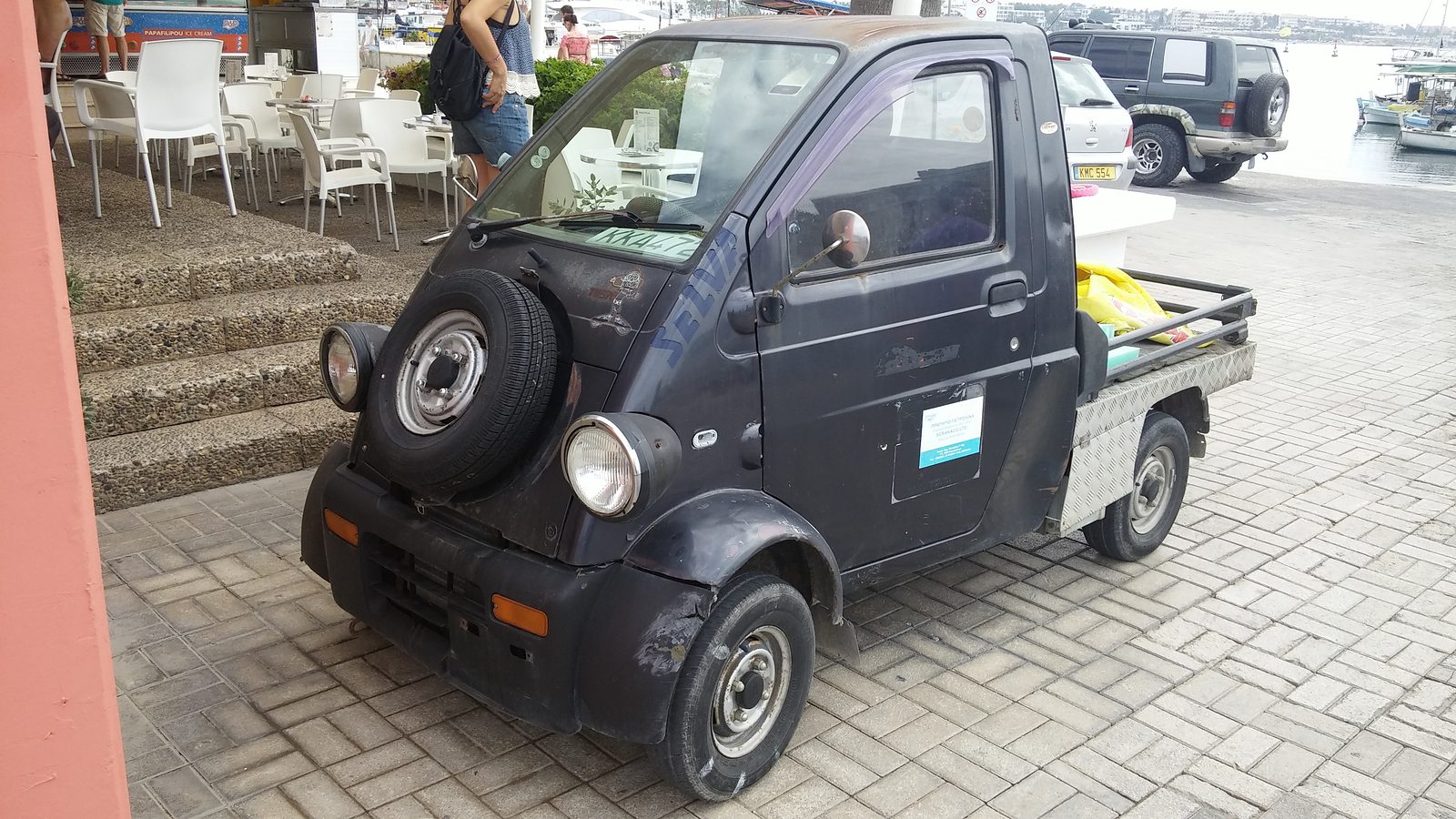
    Until September 1999 the spare wheel sat on the bonnet, between headlamps that stood proud of the body.

  2. A truck for one

    One seat and a 150 kg payload, in a kei truck far smaller than the rules allowed.

  3. Made by hand

    Built in its own workshop at Ikeda, which went on to build the Daihatsu Copen.

Survivors and collecting

Today

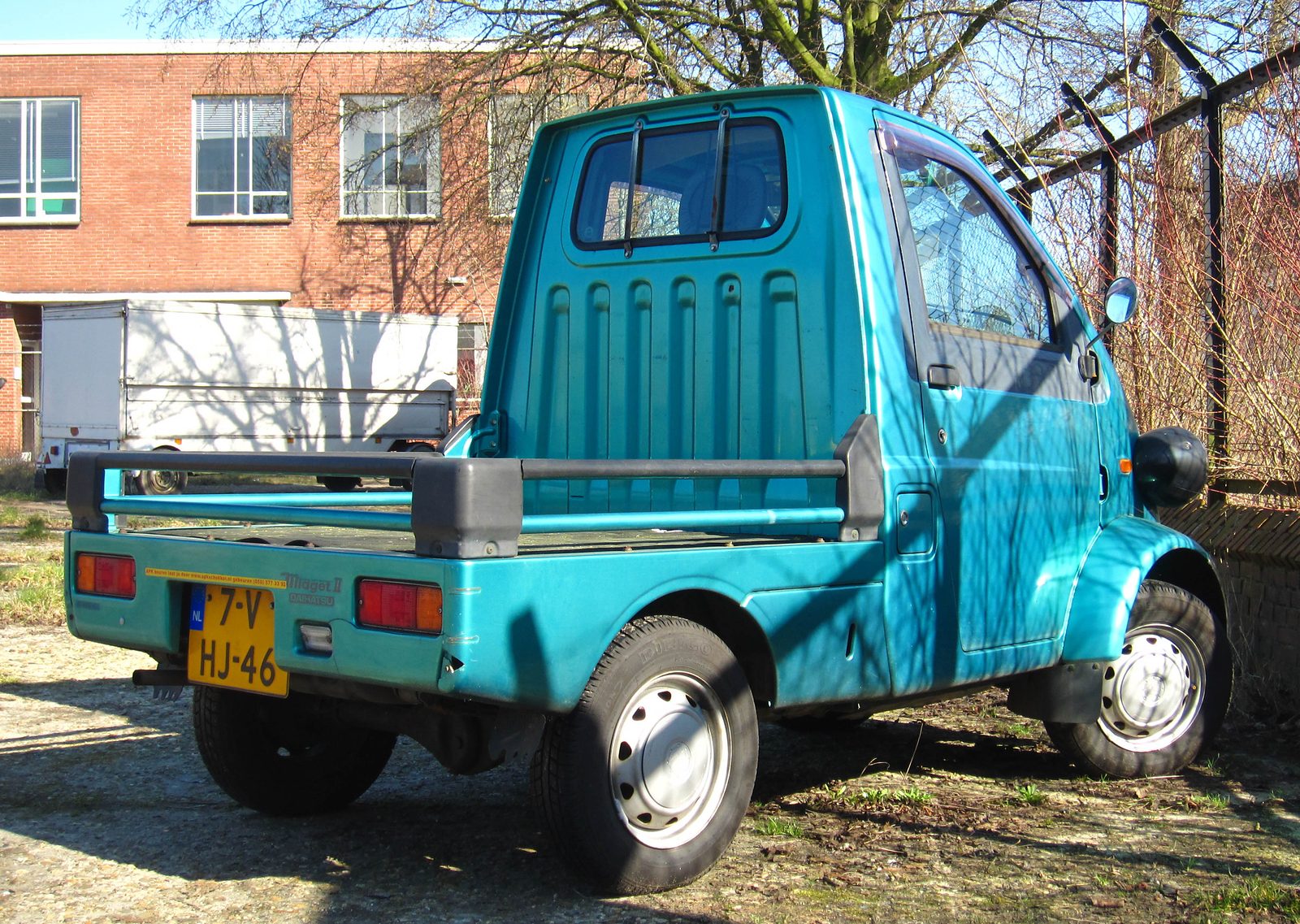
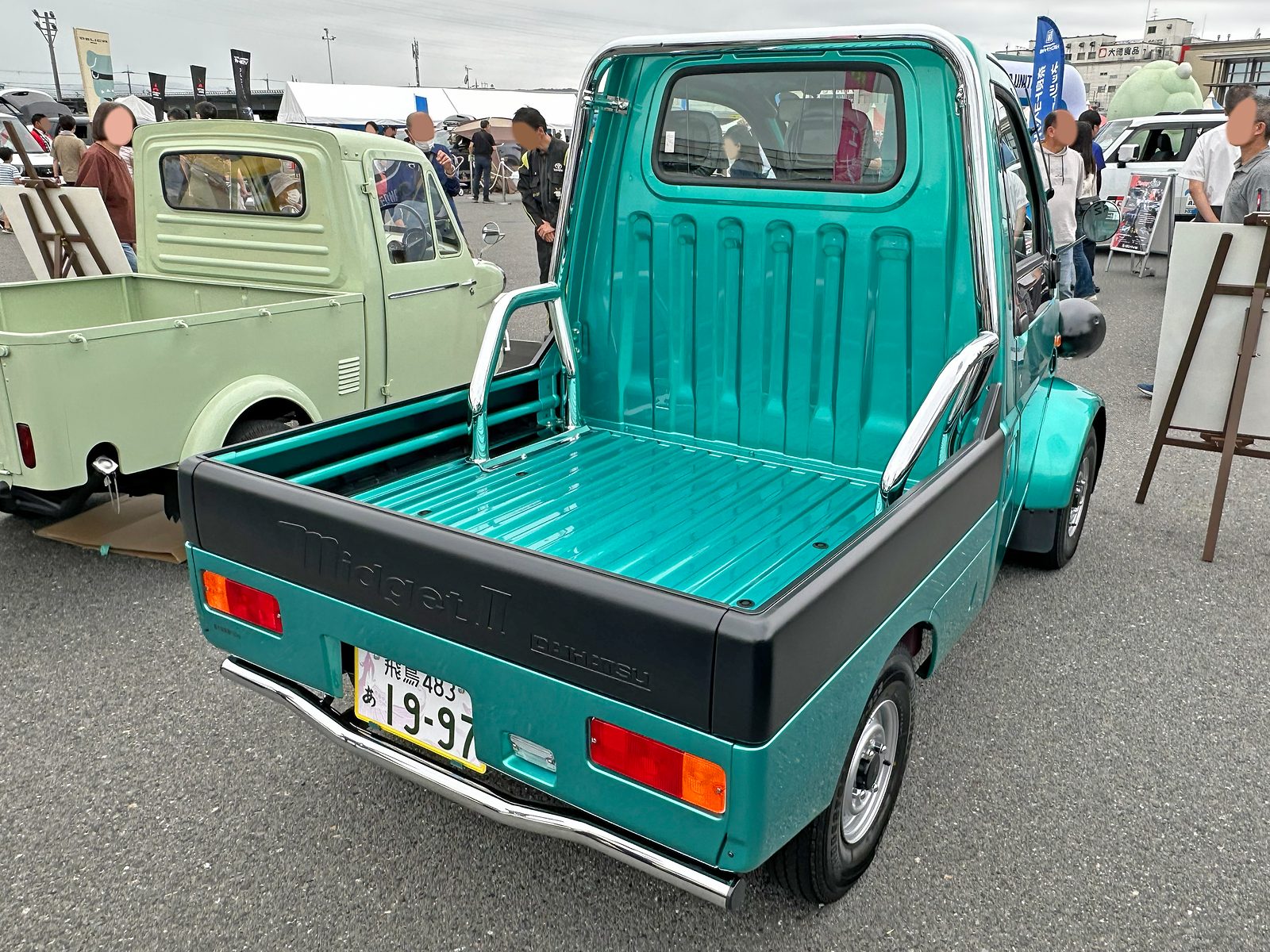
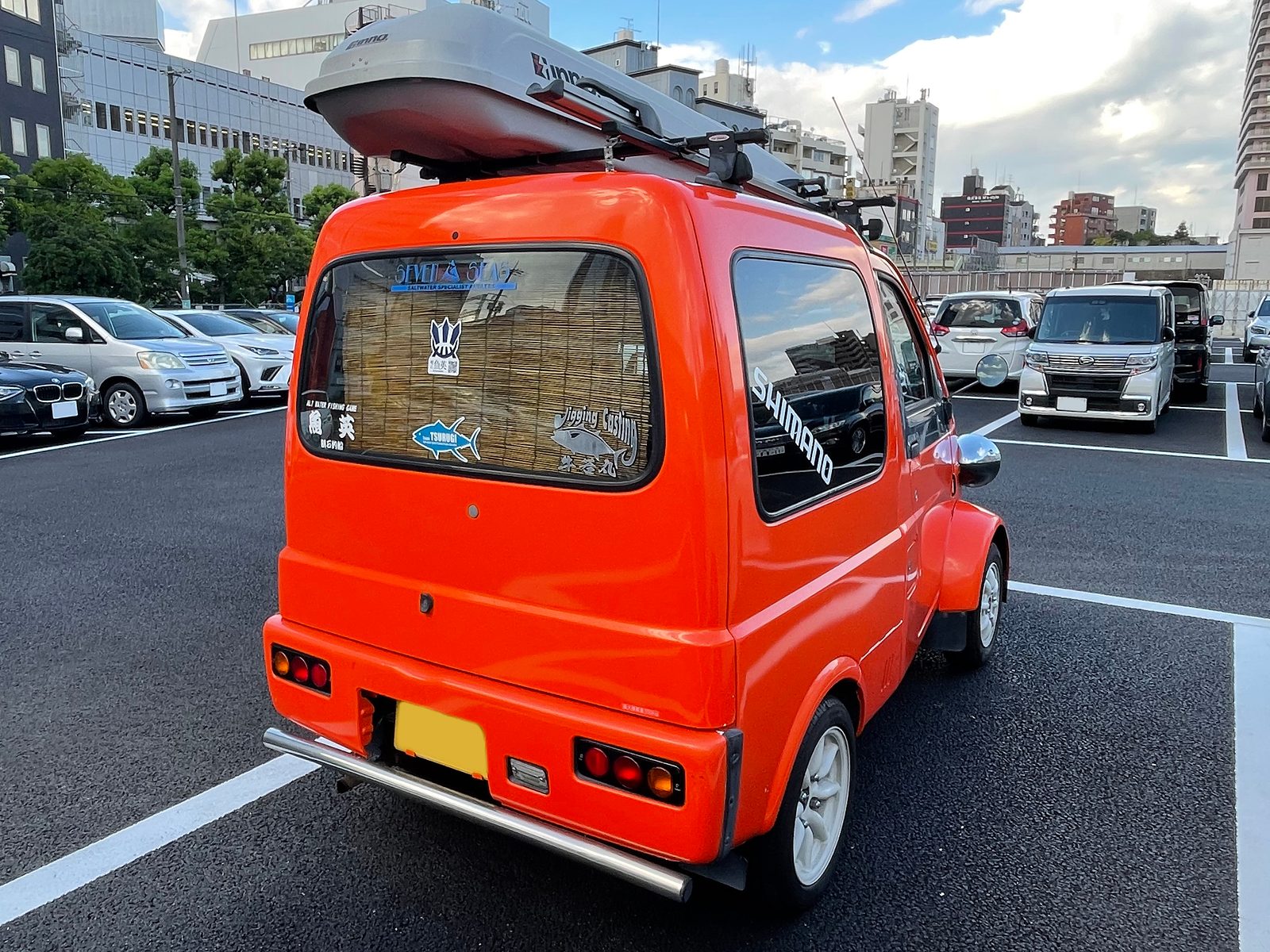
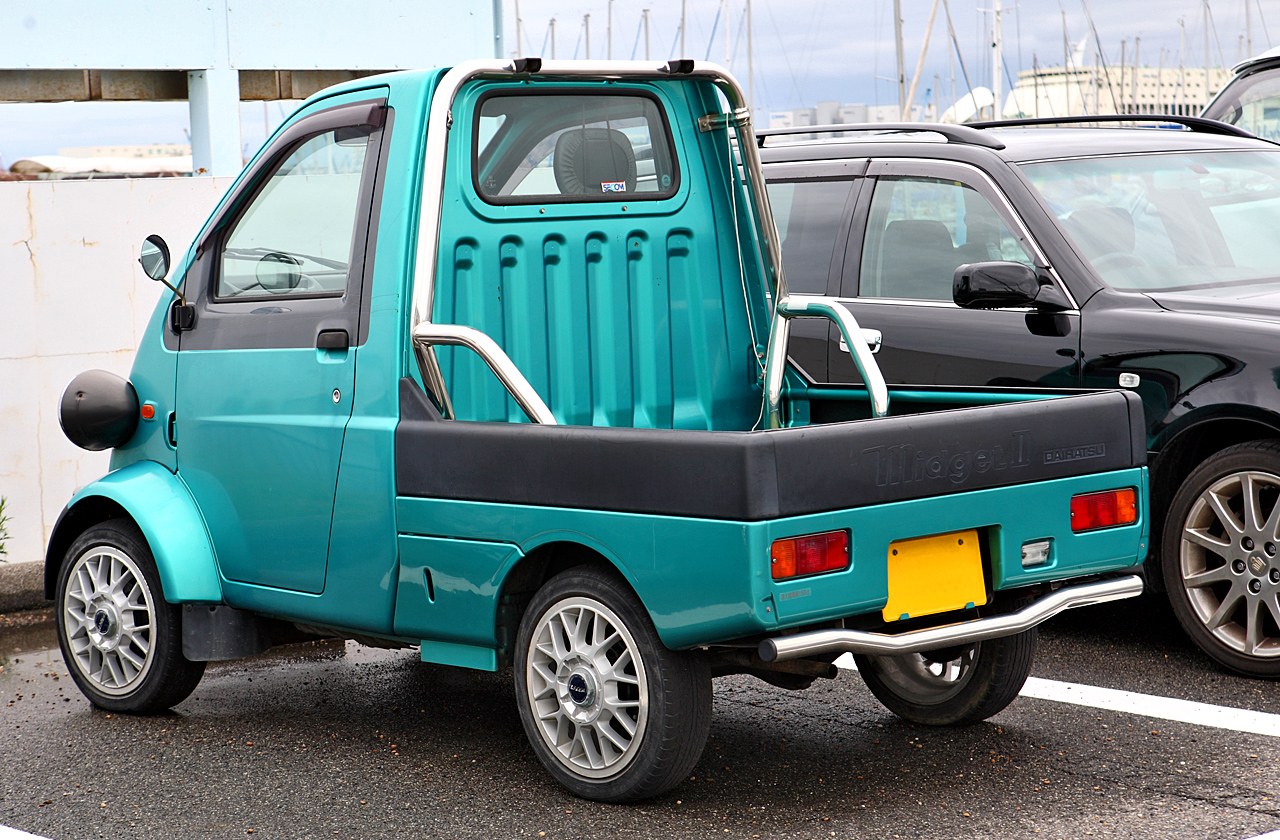
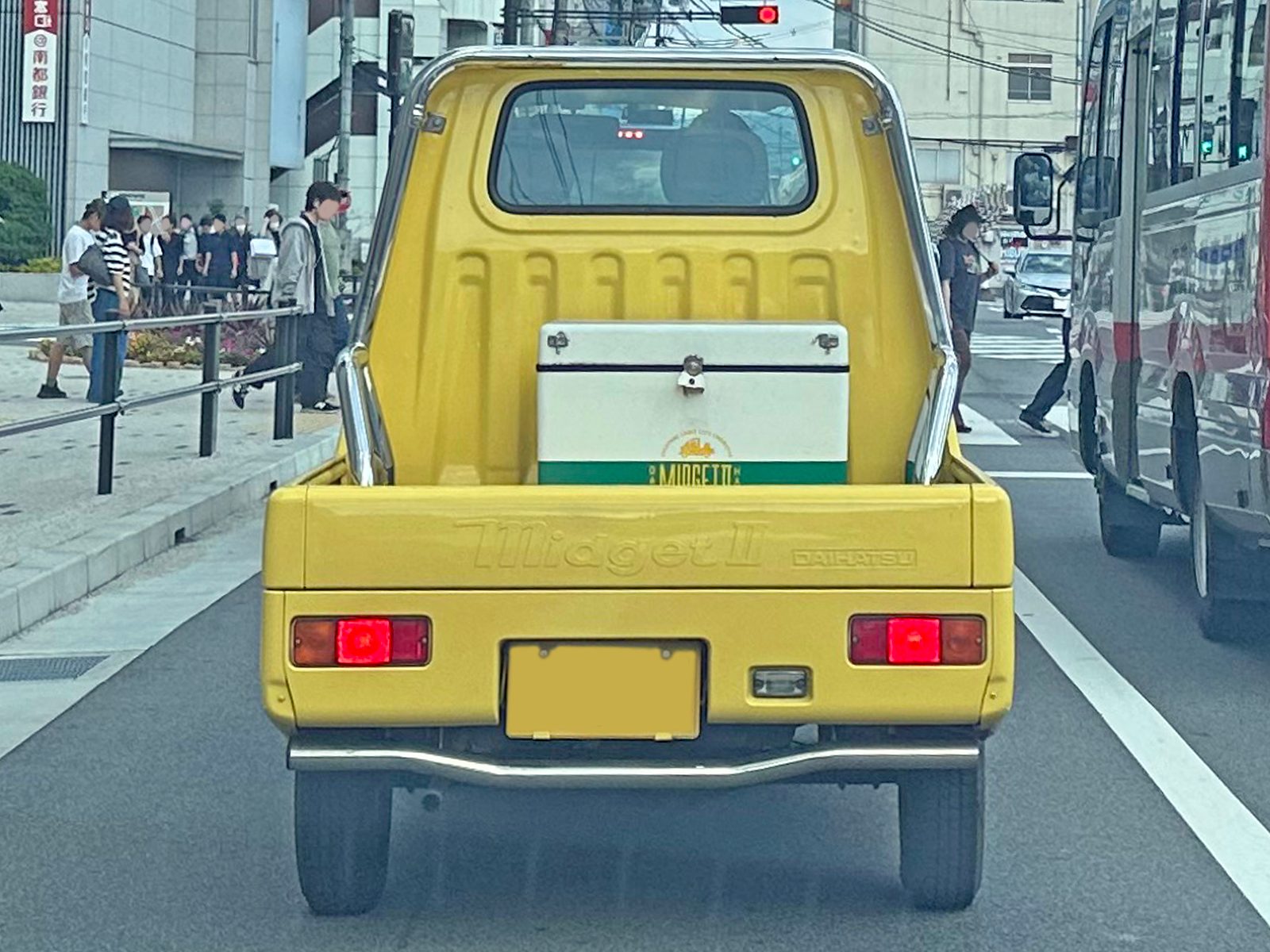
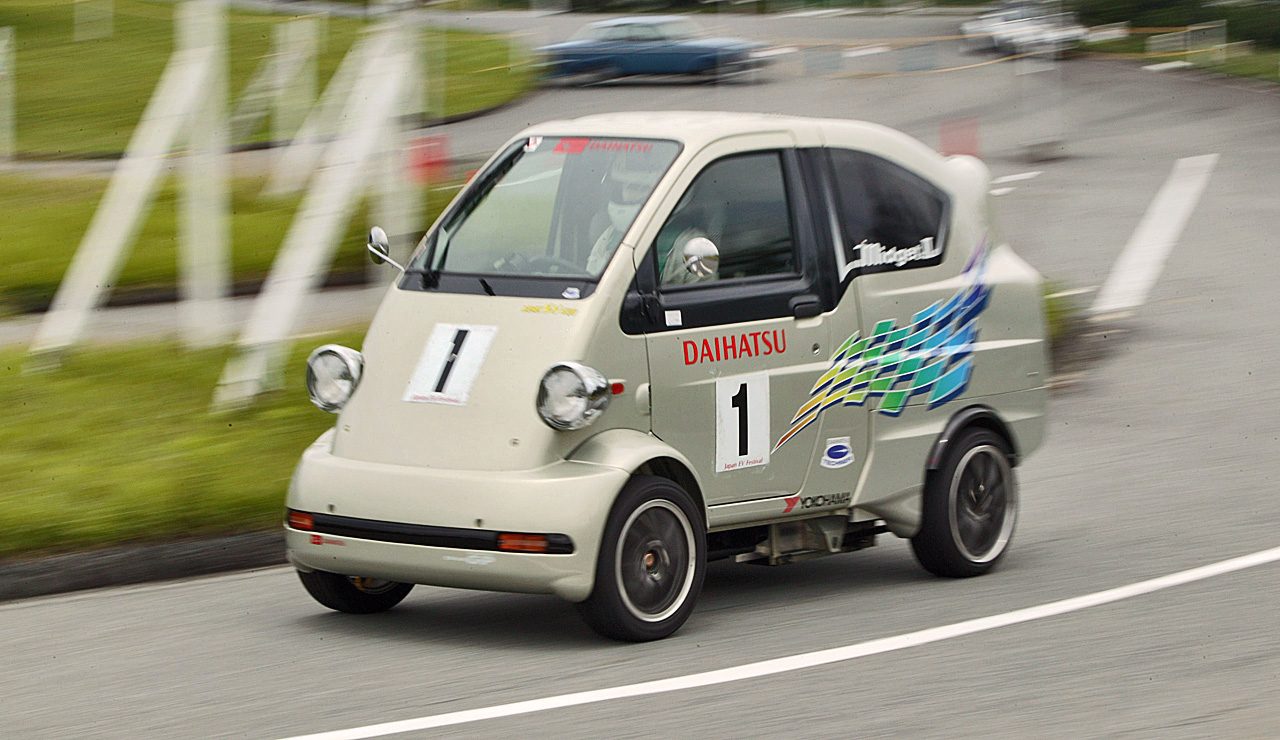
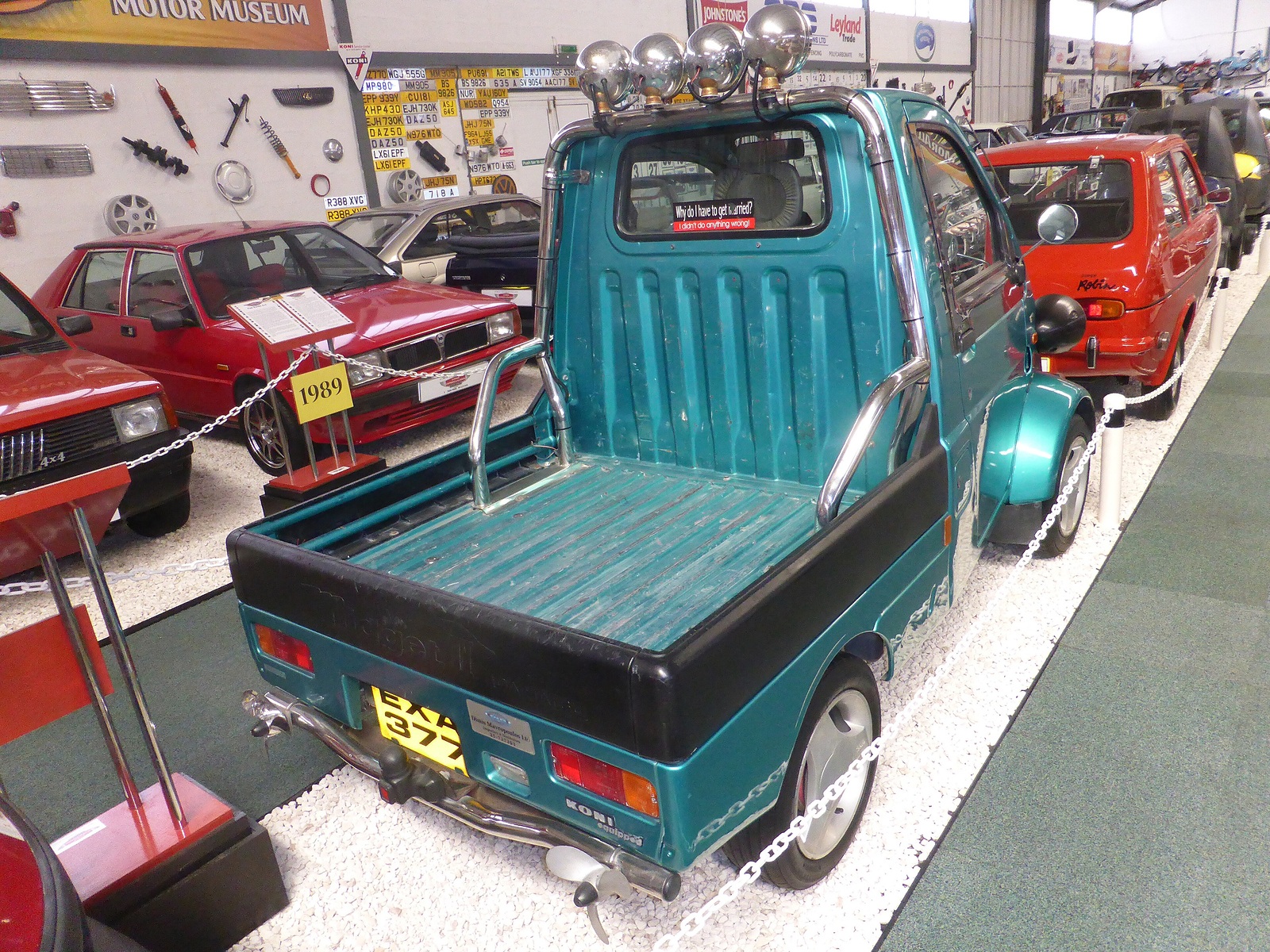
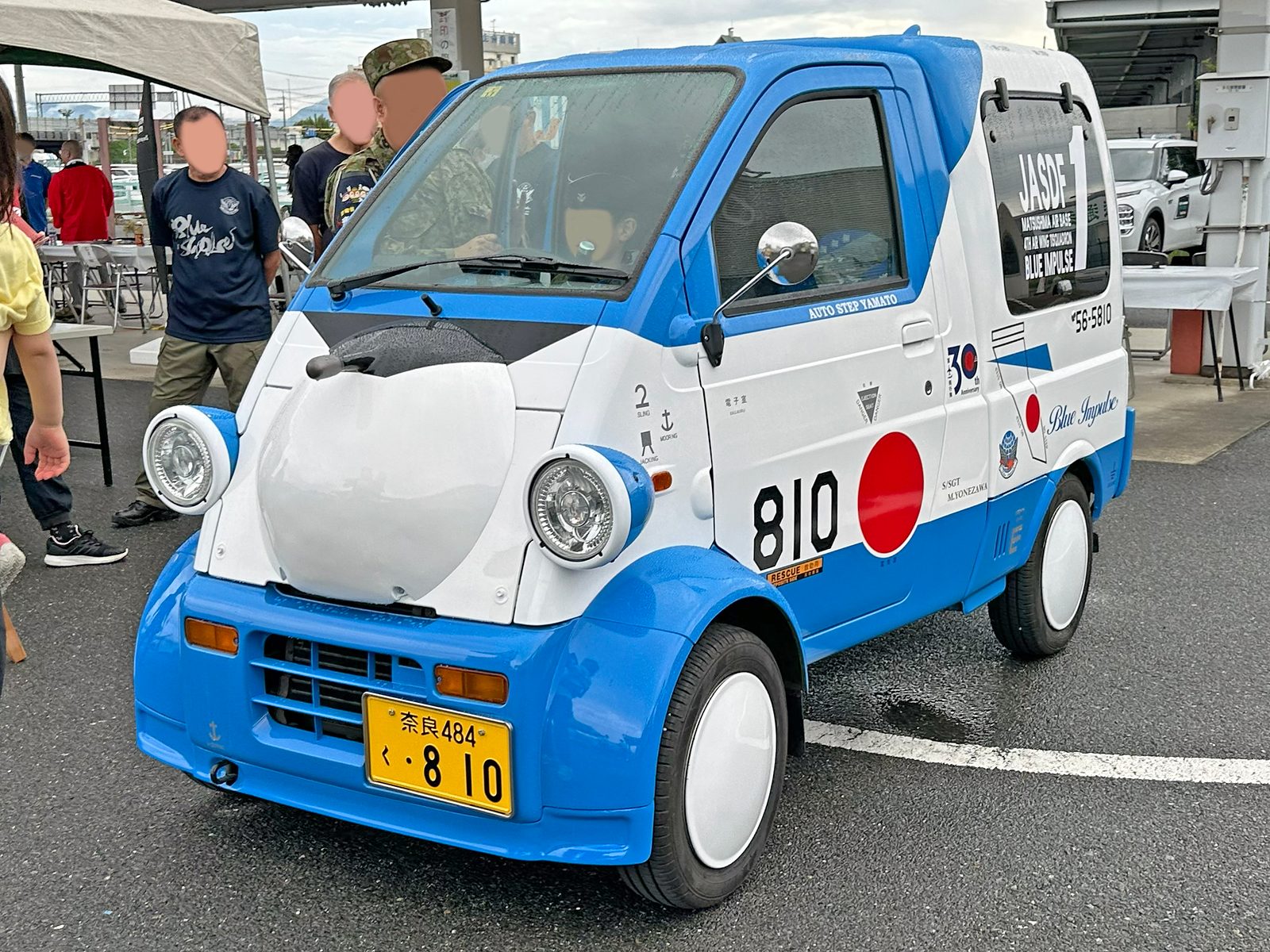
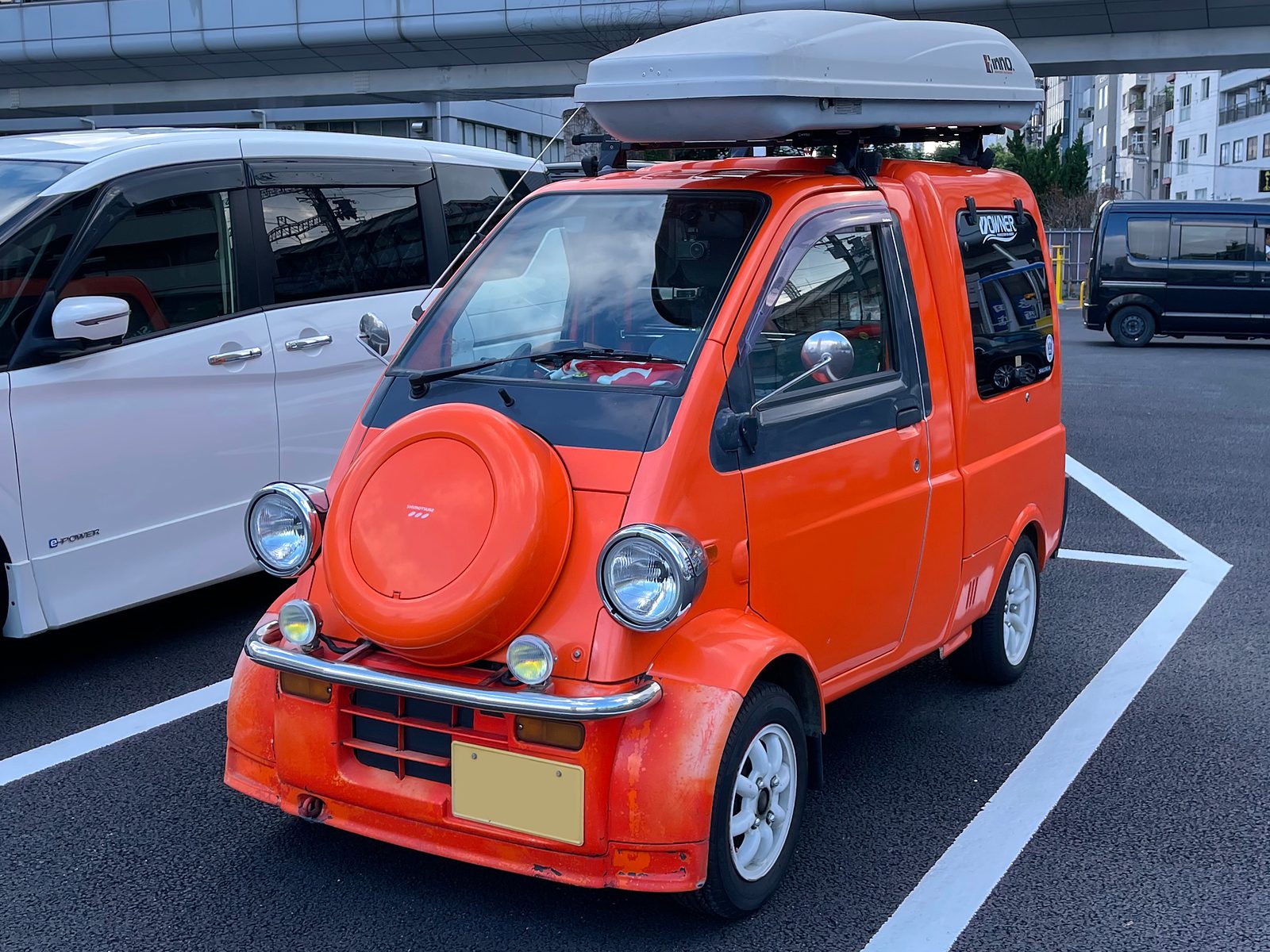
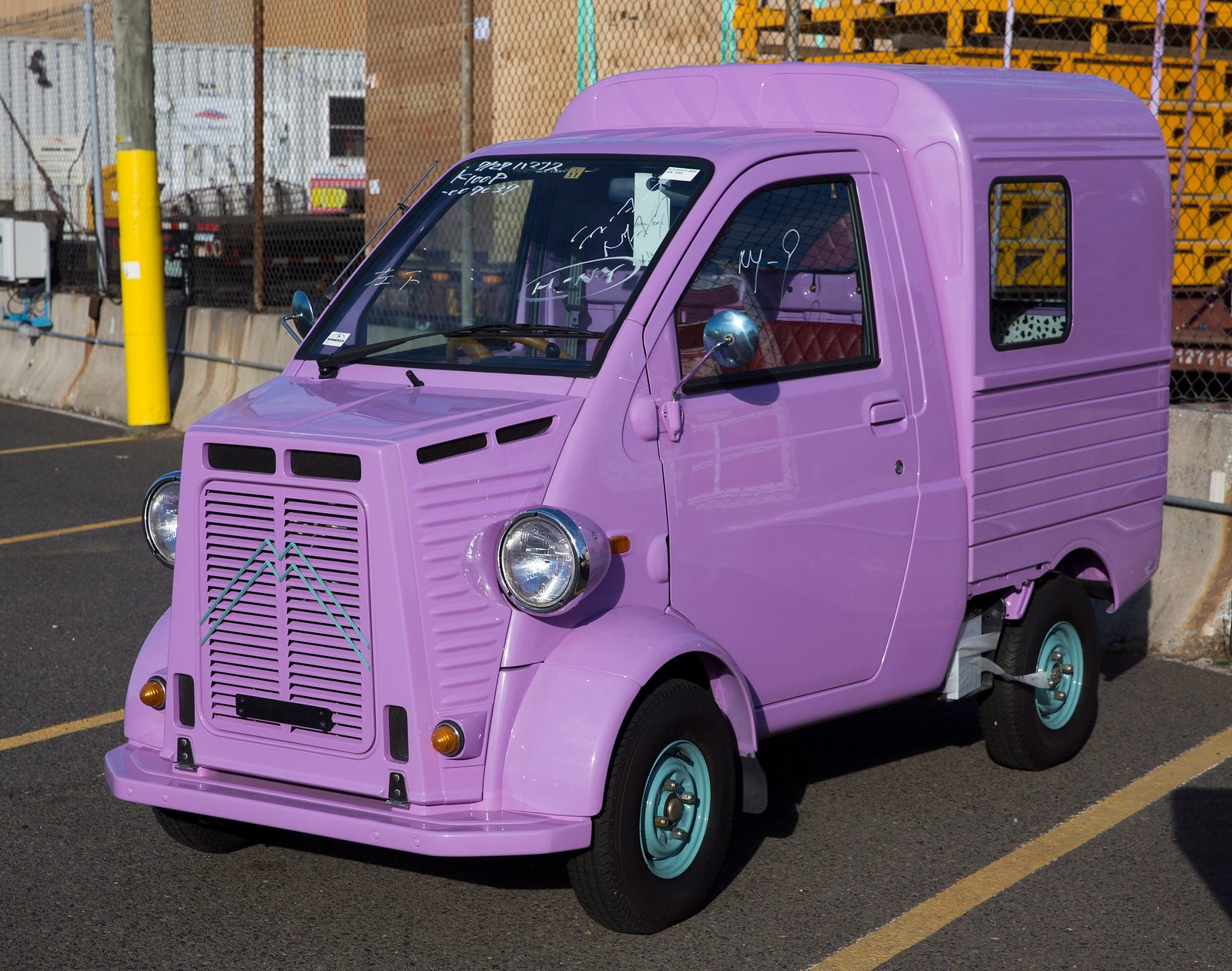
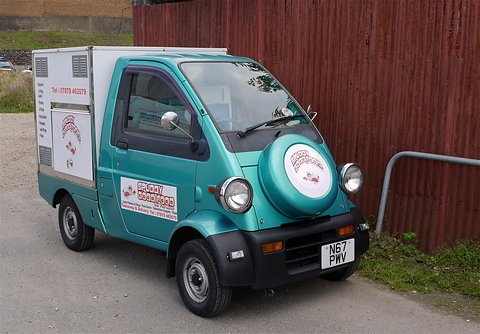
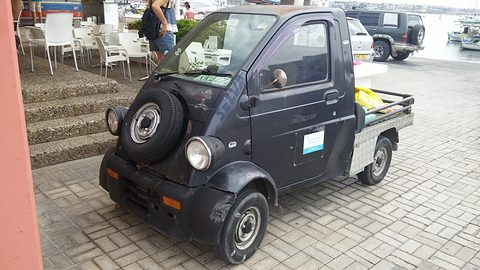
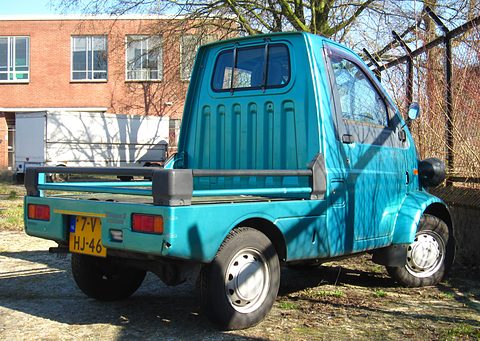
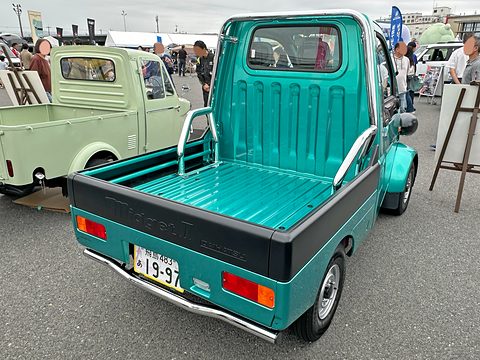
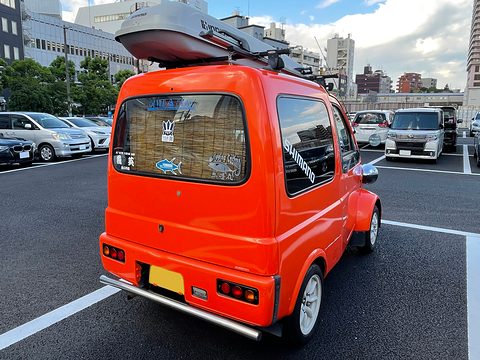
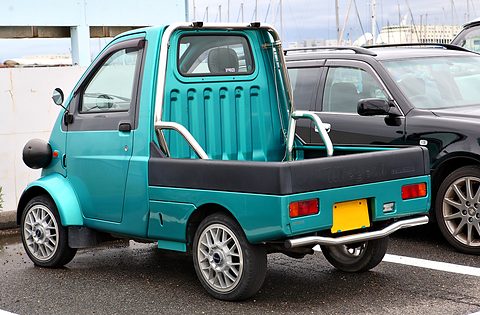
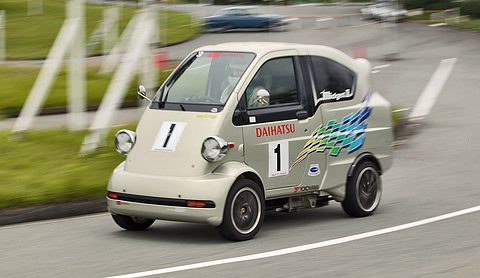
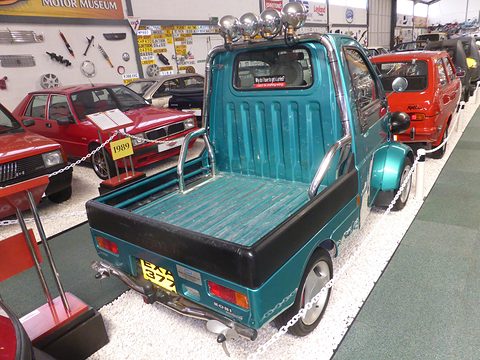
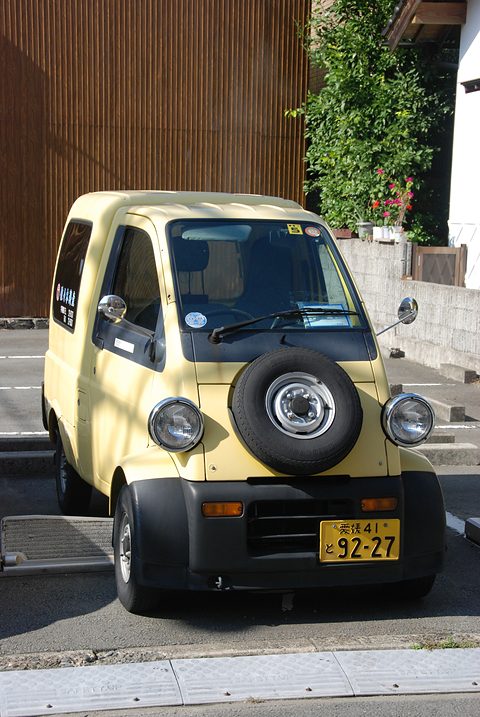
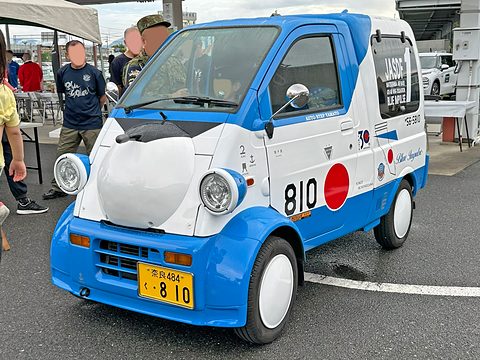
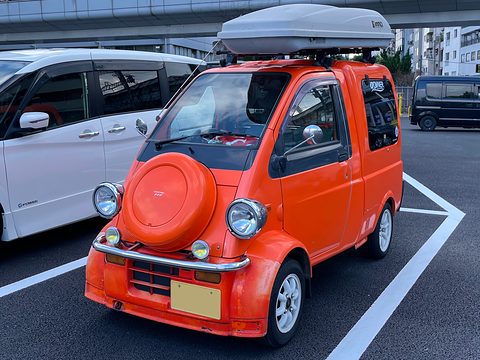
No survivor count has been found; the Midget II is a cult car in Japan, a regular in lists of the country’s most unusual kei cars, and has been exported second-hand to the United States.source 1source 3 Owners have converted single-seaters to a column shift with a passenger seat, or to a five-speed gearbox, with parts from three generations of Hijet.source 1 The photographs on this page show Midget IIs in the United States and England in 2011, at Paphos in 2016, in the Cyprus Historic & Classic Motor Museum at Limassol in 2017, and at a show in Japan in 2025. Auction sales by the major houses have not been found.

Sources

Numbered as in the text

Most of the detail comes from Japanese Wikipedia’s timeline; the prices from one magazine article, read in summary. No period road test was read. Sources are given as plain text; the links are on the Credits page.

  1. Japanese Wikipedia, ダイハツ・ミゼットII, read in full.
  2. Daihatsu U-CATCH, “モデルヒストリー: ミゼットII”, the maker’s model history.
  3. English Wikipedia, Daihatsu Midget, the section on the second generation.
  4. motor-fan.jp, article 215381, on the launch, read in summary.
  5. Kuruma News, “約58万円! ダイハツ製の「“ひとり乗り”軽トラ」…MIDGET II”, read in summary.