microcarfan
  • Microcar utility
  • Soviet Union
  • Three wheels
  • Cargo scooter

Tula Muravei

Also known as Муравей, Muravey, TG200 and TGA-200, Muravei-2

For many years it was the only small truck an ordinary Soviet citizen could get. The Tula works put a load platform and a second rear wheel on its scooter, called it the Ant, and built it for 36 years.

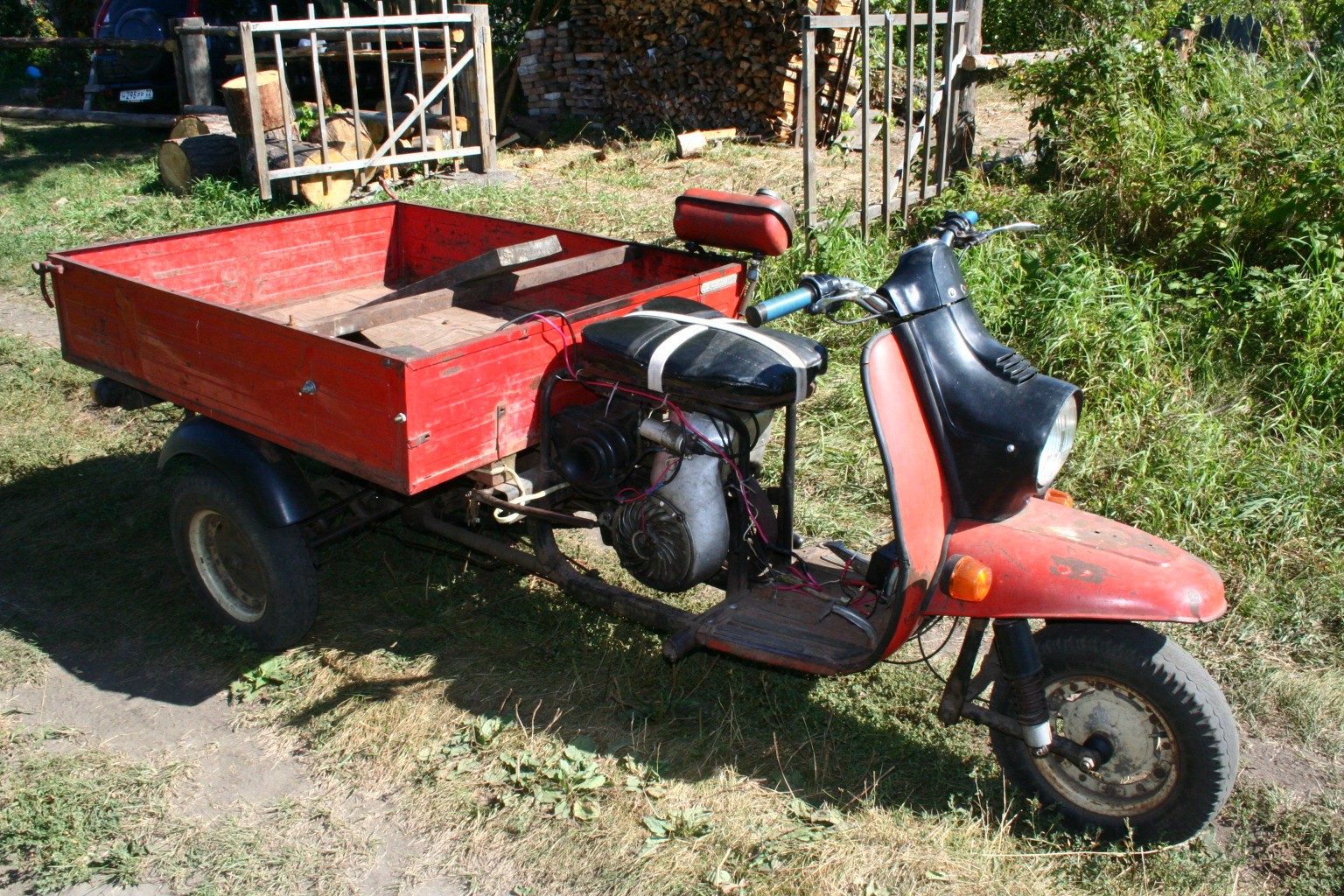
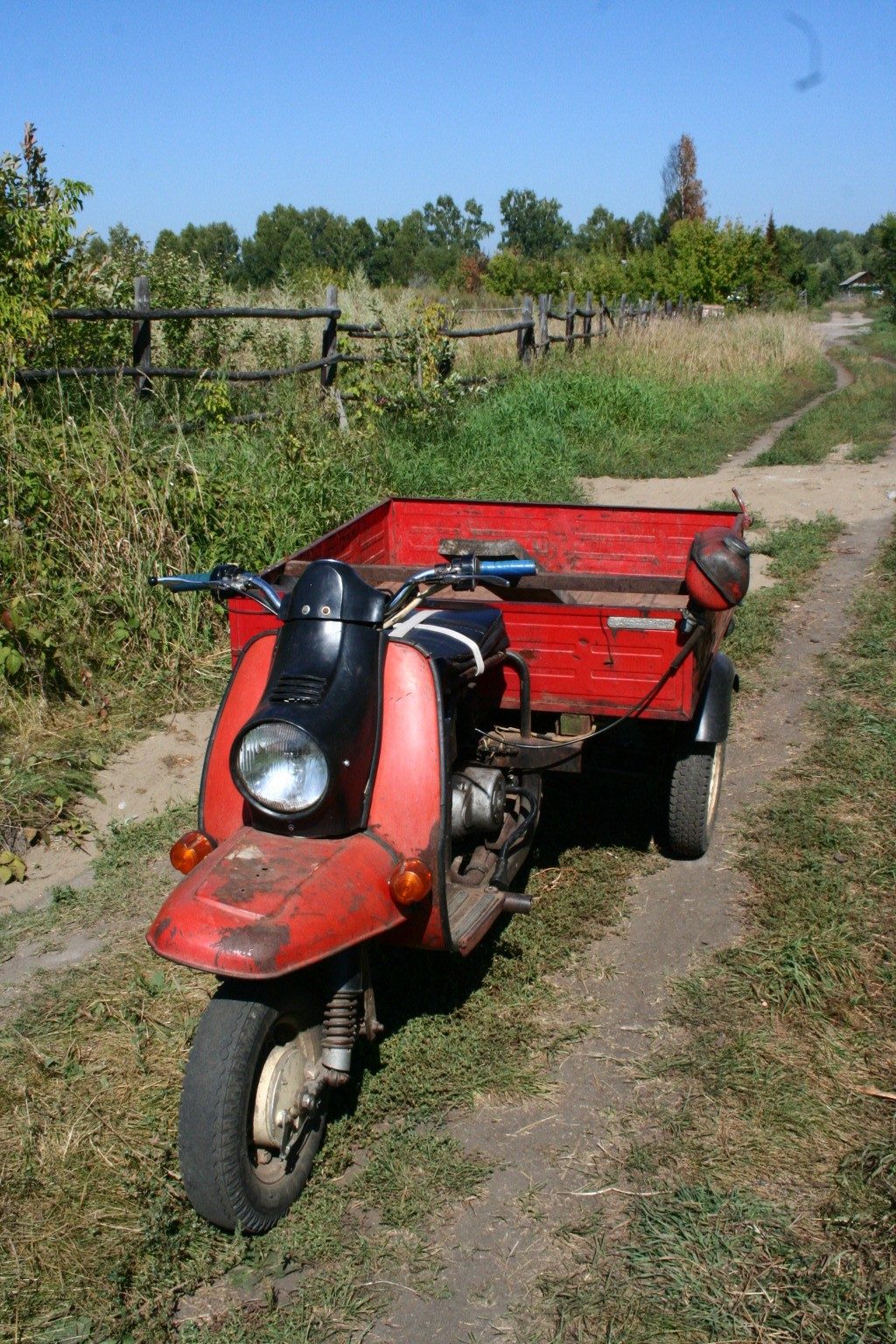
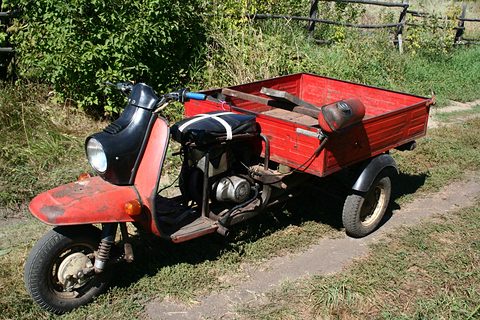
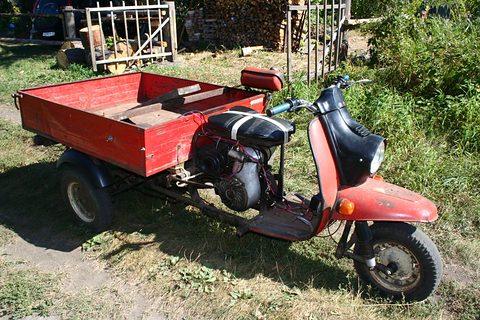
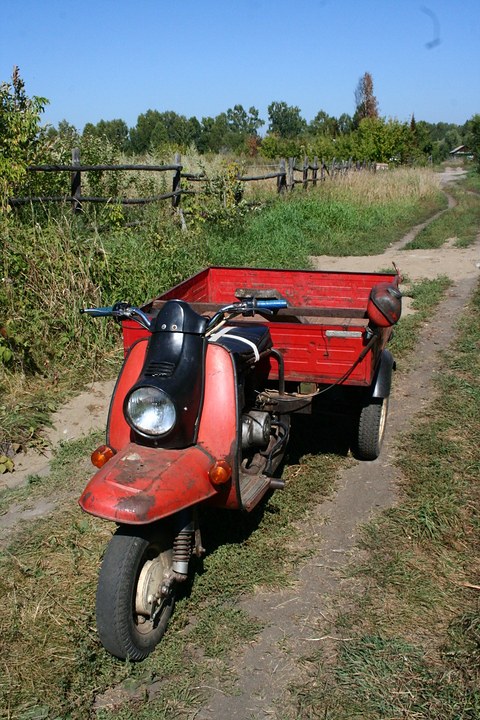
Side view of a red three-wheeled scooter with a black seat and a red box behind, on a grassy track.
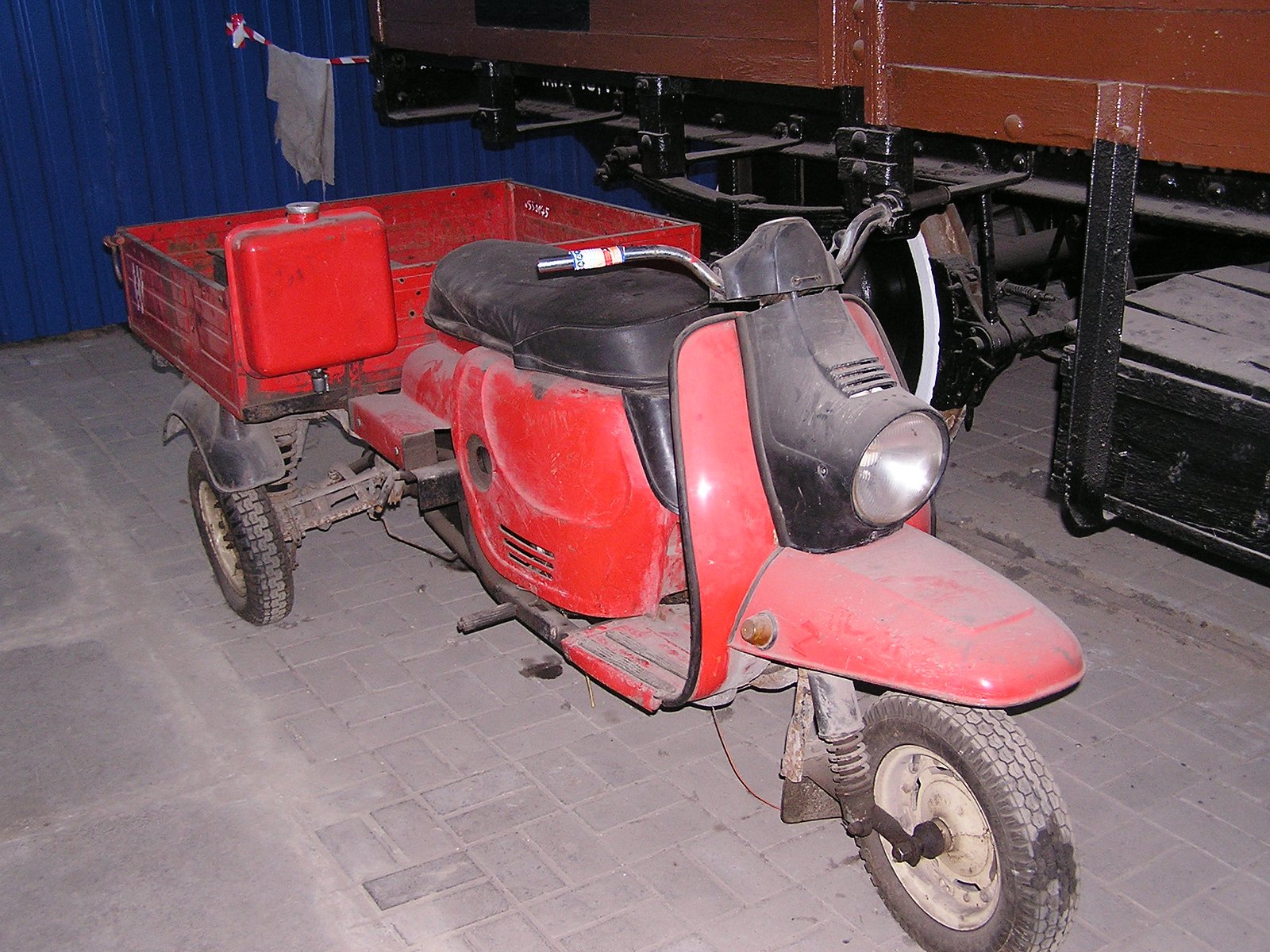
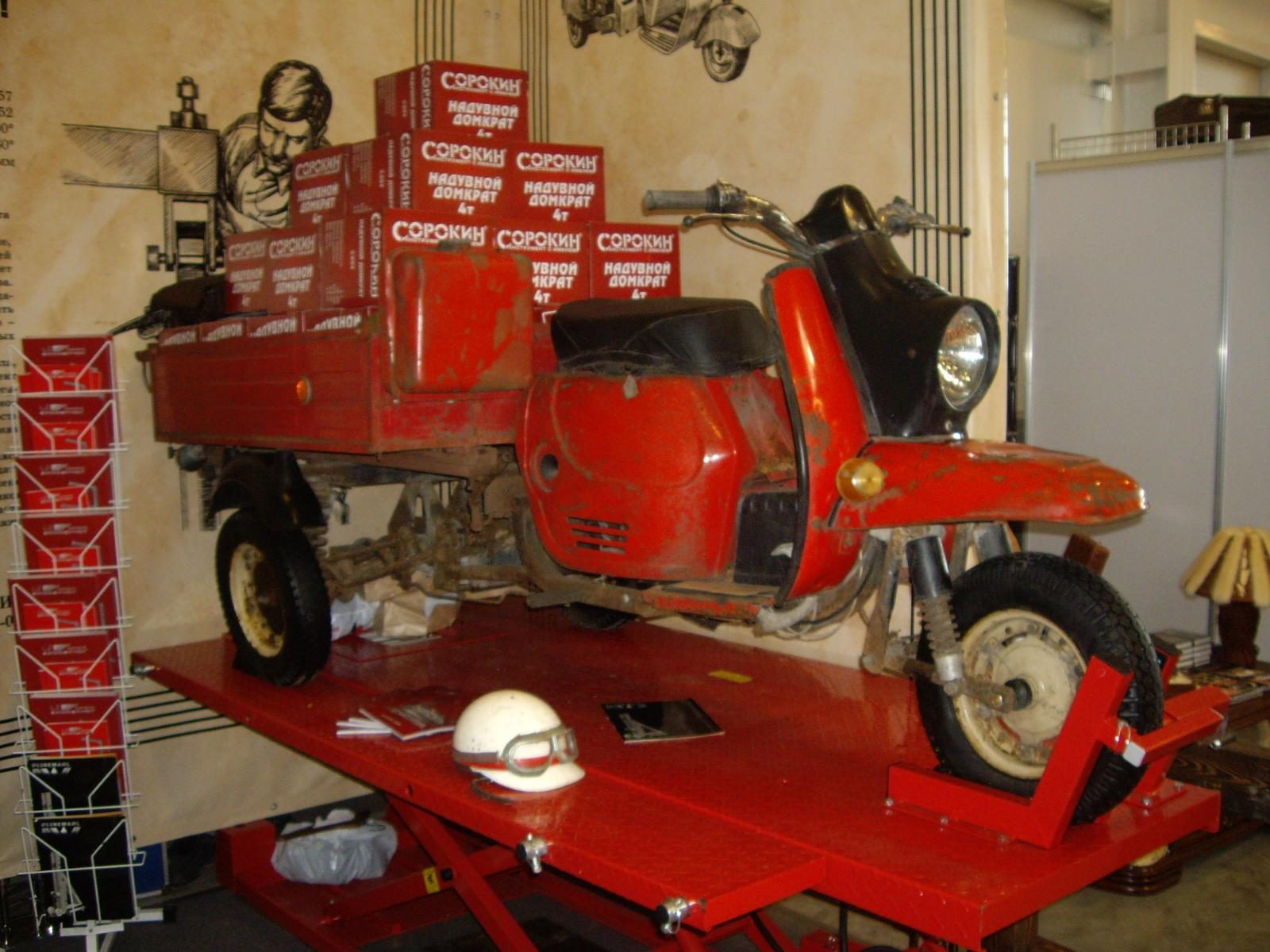
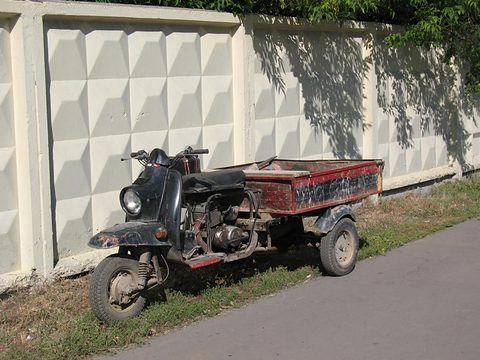
A red Tula Muravei cargo scooter from the left, showing its scooter body and steel load box, in Russia in August 2010.Photo: Игоревич, Public domain, via Wikimedia Commons

At a glance

The spec plate

Tula Muravei

TG200 to Muravei-2 · Tula

Built
1959–⁠1995The first model, the TG200, did not yet carry the name
Country
Soviet UnionTula Machine-Building Plant, Tula; in Russia from 1991
Maker
Tula Machine-Building Plant (TMZ)Later Tulamashzavod
Engine
199 cc two-stroke singleFan-cooled, from the Tula scooters
Power
11 hpAt 4,600 rpm, the late 5.402 series
Length
2,880 mm
Weight
258 kgDry, the late 5.402 platform model
Wheels
3One wheel at the front, two driven at the back
Price new
775 roublesThe TGA-200K, to private buyers, 1978
Production
no total foundNor any figure by year
Top speed
60km/h60 km/h

Not yet recordedseats.

How big is it?

True proportion

2.88 m

It is 90 mm shorter than a Fiat 500, about 1.6 adults laid end to end, and twice the length of a Peel P50.

  • 258 kg: about three adults
  • A payload of 250 kg in 1978, and 340 kg (platform) or 375 kg (van) in the last models
Drawn at true proportion. The track is 3.6 metres long; the adult stands at the same scale. The Peel P50 is the smallest production car, on every page for comparison.

The story

History

The Tula Machine-Building Plant began making its T‑200 “Tula” scooter in 1957: 199 cc, 8 hp and 80 km/h (50 mph), with an electric starter, painted bright blue. By one popular account it was based on the Goggo 200 scooter of Hans Glas GmbH, the Bavarian firm that went on to build the Goggomobil, with larger, 254 mm (10 in) wheels for Soviet roads.source 1 In 1959 a cargo version, the TG200, joined it. It was not yet called the Muravei, the Ant.source 2source 3

It was a three-wheeler with the scooter in front and a load platform behind: one wheel at the front, two at the back, driven by a chain in a sealed case to a differential and on through swinging half-shafts.source 2 In January 1960 Tula’s chief designer, A. Pototsky, wrote in Za Rulyom that cargo scooters were a new type of transport for the Soviet Union. He listed their virtues as low weight, a relatively large payload and low fuel use, and a turning circle under 2.5 m (8 ft), so that one could work inside workshops and warehouses; versions with insulated bodies were to be tried that year.source 4

A scooter for each Ant

Each new Tula scooter brought a new Ant. The TG200 was built on the T‑200, the TGA200 on the T‑200M, the TGA200-01 on the Turist, and the Muravei-2 01, 02 and 03 on the Tulitsa and Tulitsa-2; the 03 was the last model as of 1991.source 2 The odd part was the reverse gear, which sat in the differential housing. People who build home-made all-terrain vehicles on low-pressure tyres, the karakaty, still look for it.source 2

In June 1978 Za Rulyom reported that the TGA-200K had been coming off the line in recent years. It had an open platform of 1,250 × 1,130 mm (49 × 44 in), 600 mm (24 in) off the ground, and carried 250 kg (550 lb); there was a micro van version too, the TGA-200F. Now it was sold to private buyers too, for 775 roubles, and aimed at gardeners, dacha owners and villagers.source 5

The last models were the 5.402 series. Their 199 cc fan-cooled two-stroke gave 11 hp through four speeds, for 60 km/h (37 mph). The platform model weighed 258 kg (569 lb) dry and carried 340 kg (750 lb), the van 375 kg, and the whole machine was 2,880 mm (113 in) long.source 2 No period road test has been found. Russian Wikipedia credits it with a strong payload, reasonable strength and decent ability on rough roads, especially with bigger wheels taken from hay rakes or quad bikes.source 2

After 1995

A diesel engine, the TMZ-450D, was developed for it in the early 1990s, but production ended in 1995.source 2source 3 The name came back in 2020, when the works began selling four-wheeled electric carts, the VTS-01 with a diesel generator and the VTS-02 with a battery, at 1.25 million roubles; a revival had been under discussion since 2016, and a prototype was built in 2017.source 2
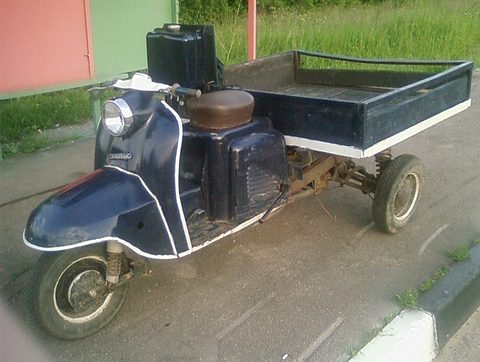
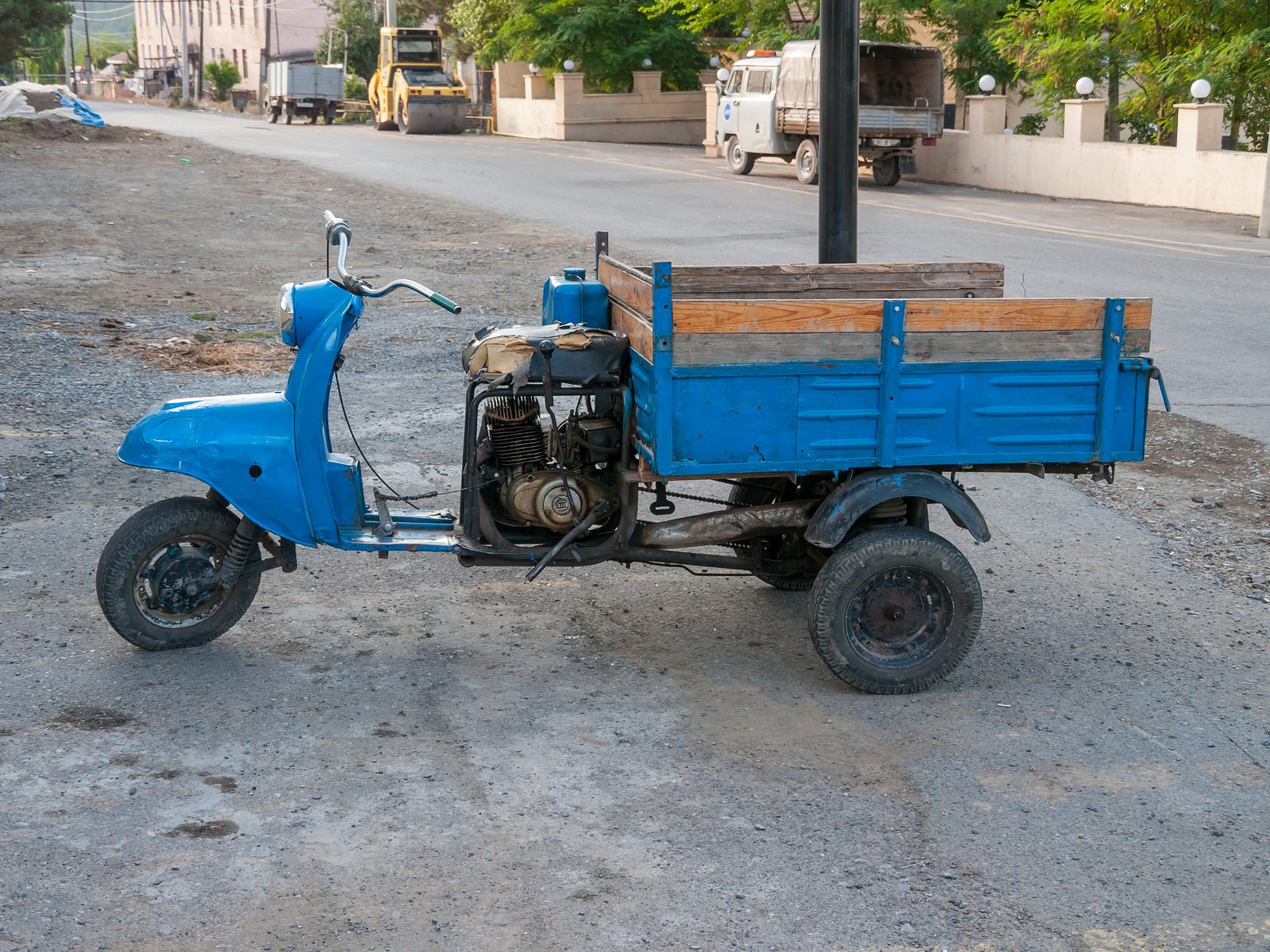
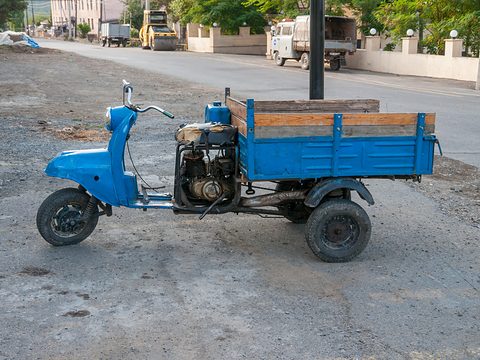
Dark blue three-wheeled scooter with white piping and a flat cargo platform on tarmac.
An early Muravei with the rounded body of the first Tula scooters and a flat platform, in Russia in 2006.Photo: Вагин Александр, Public domain, via Wikimedia Commons
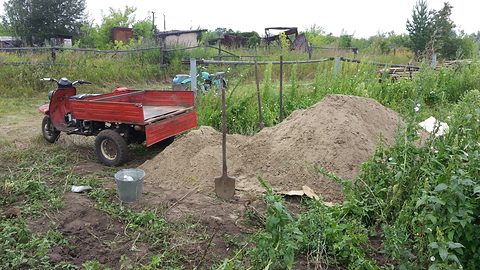
A small red three-wheeled cargo scooter parked by a sand heap and a spade in a vegetable garden.
A red Muravei at work in an allotment beside a heap of sand, in Talitsa, Russia, in August 2013.Photo: Igor Savin, Public domain, via Wikimedia Commons
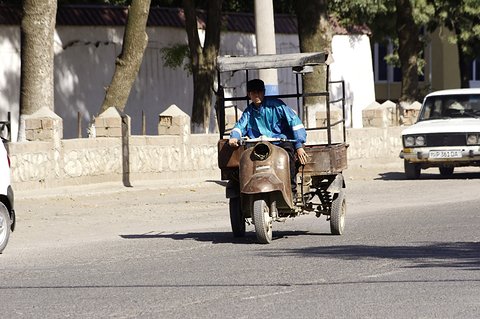
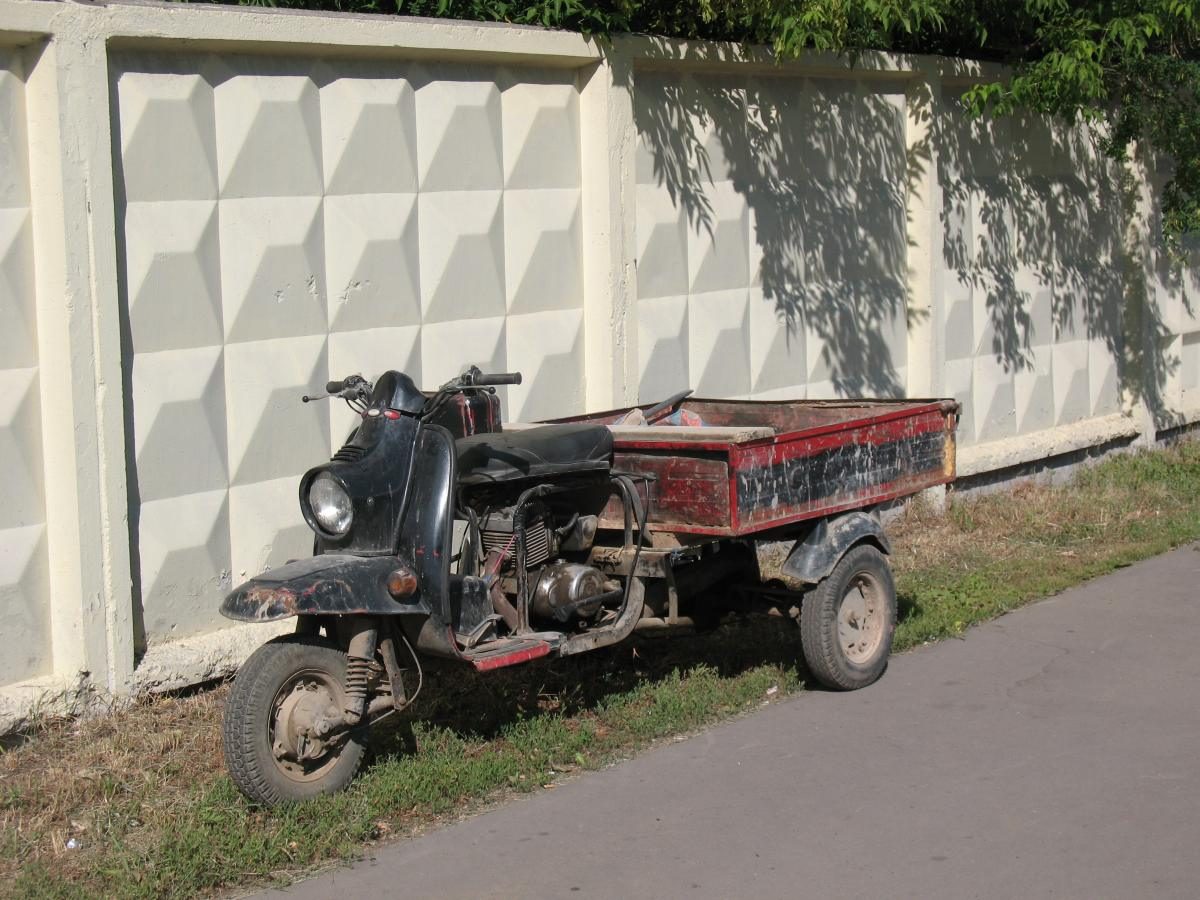
A man in a blue shirt rides a rusty three-wheeled cargo scooter with a cab frame along a road.
A Muravei with a home-made cab frame on a street in Uzbekistan in 2015.Photo: w0zny, CC BY-SA 3.0, via Wikimedia Commons

Pictures

More photographs, old and new

Variants

On the back of each Tula scooter

The Muravei family, with the passenger scooter each was built on
VariantYearsWhat differsHow many
TG200From 1959The first, on the T‑200 “Tula” scooter; not yet called MuraveiNot found
TGA200Not recordedOn the T‑200M scooterNot found
TGA200-01 and -01PNot recordedThe -01 on the Turist scooter; no base recorded for the -01PNot found
TGA-200K and TGA-200F1970sOpen platform with 250 kg payload, and a vanNot found
Muravei-2 01, 02 and 03To 1995On the Tulitsa and Tulitsa-2 scooters; 11 hp, four speeds; the 03 the last model as of 1991Not found
5.403-03FNot recordedVan, 375 kg payloadNot found

Specification

The late 5.402 series, from Russian Wikipedia

Engine and drive

Engine and drive
EngineSingle-cylinder two-stroke, fan-cooled, 199 cc, compression 6.5:1source 2
Power11 hp at 4,600 rpm; torque 16.3 Nm at 4,900 rpmsource 2
StartingElectric starter or kick-startsource 2
GearboxFour speeds; reverse by a reversing gear in the differential housingsource 2
DriveRoller chain in a sealed case to the differential, then swinging half-shafts with universal jointssource 2

Chassis

Chassis
Front suspensionLong leading armsource 2
Rear suspensionIndependent, transverse armssource 2
Tyres4.00-10source 2

Dimensions

Dimensions
Length2,880 mmsource 2
Wheelbase1,840 mmsource 2
Ground clearance115 mmsource 2
Weight258 kg dry, platform; 285 kg, vansource 2
Platform1,250 × 1,130 mm, 600 mm off the ground, on the TGA-200K of 1978source 5

Performance and running

Performance and running
Top speed60 km/hsource 2
Payload340 kg, platform; 375 kg, vansource 2250 kg for the TGA-200K of 1978; a 2021 news report’s “up to 500 kg” is not a rating
Consumption5.5–7.5 litres per 100 kmsource 2
Fuel10-litre tank; petrol and oil mixed 1:30 when running in, 1:35 aftersource 2
Price new775 roubles for the TGA-200K, 1978source 5

Famous for

Three points

  1. The only small truck

    For many years the only small lorry an ordinary Soviet citizen could get.

  2. Reverse in the differential

    The reversing gear sits in the differential housing, a part still sought by builders of home-made all-terrain vehicles.

  3. Thirty-six years

    Built from 1959 to 1995, on each new Tula scooter in turn.

Survivors and collecting

Today

No survivor count has been found, but many Ants are still at work in the countryside, and spare parts are still made, some in China. A used one cost about 50,000–60,000 roubles in 2021.source 2source 3 That September a Yekaterinburg owner fitted a 250 cc Zongshen engine to his and set off from the Urals for Crimea.source 3 The UGMK museum complex at Verkhnyaya Pyshma shows one among its Soviet scooters; no club or auction results have been found.source 2

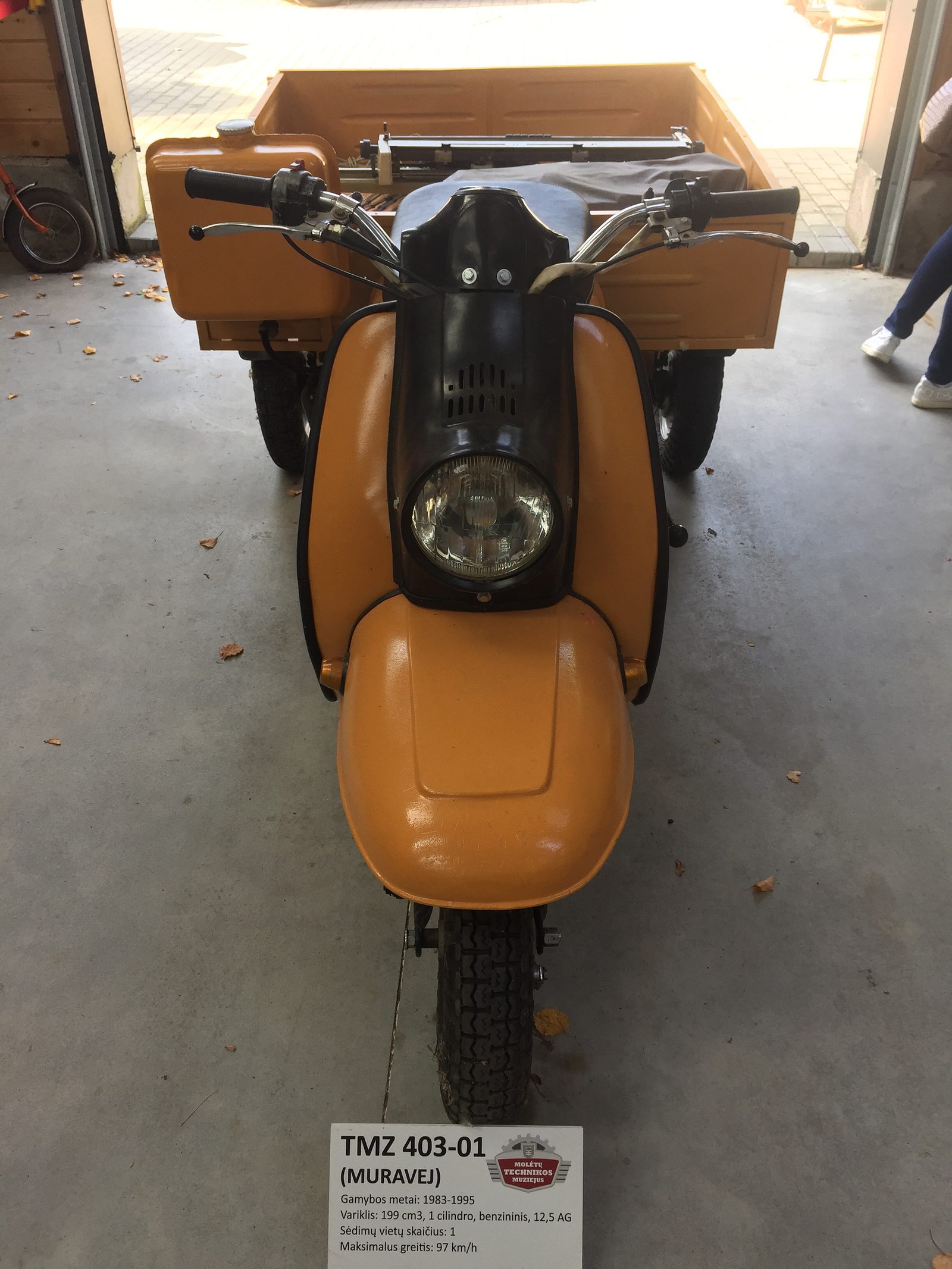
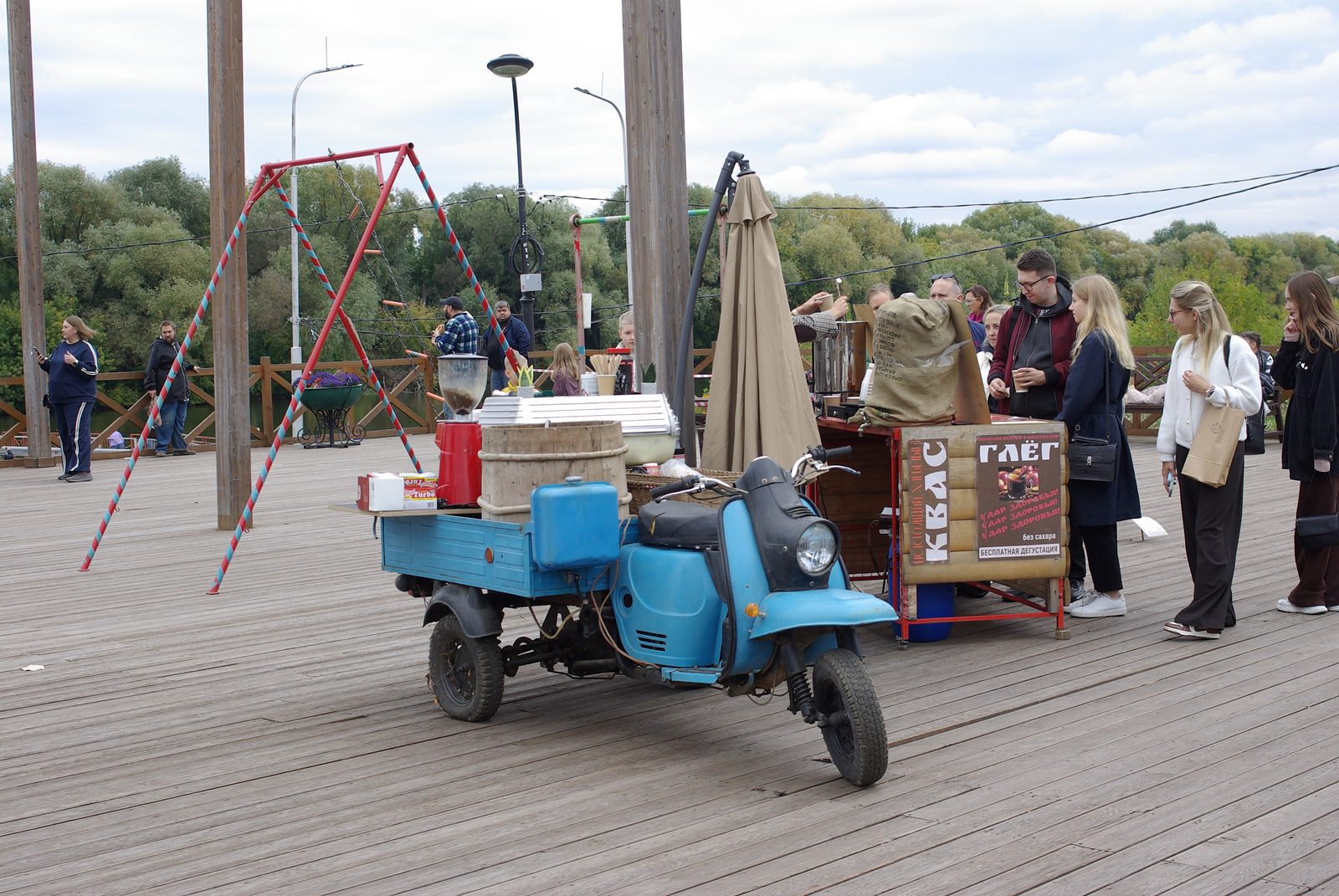
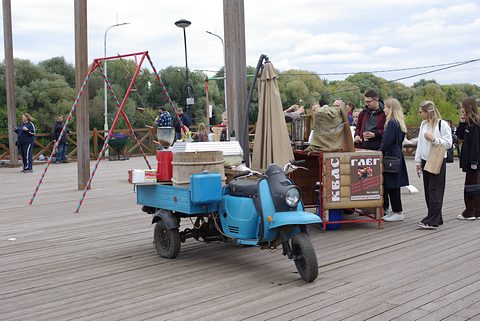
Russian Wikipedia lists it in Soviet and post-Soviet films, among them Мама вышла замуж (Mama Got Married), Очкарик and Чебурашка, and in the series Участок, and in Kyrgyzstan it has advertised national drinks.source 2 Ants have been photographed in museums in Molėtai, Lithuania, and in Donetsk, and one was selling kvass in Kolomna in 2026.

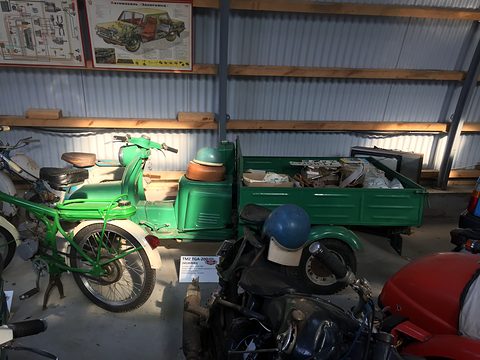
Green three-wheeled cargo scooter among motorcycles and posters in a corrugated-iron museum shed.
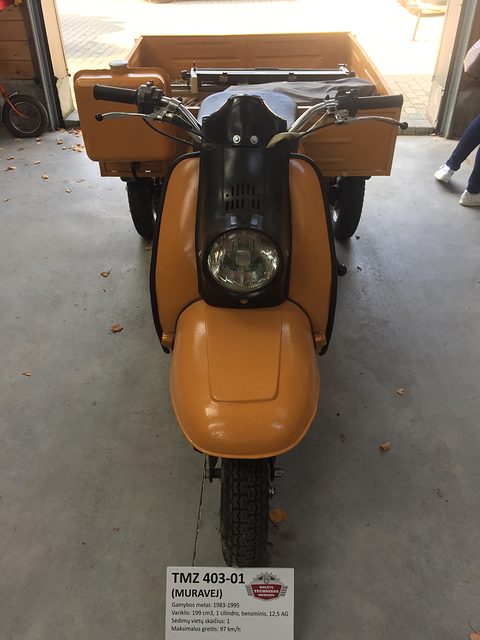
A green TGA-200 at the technology museum in Molėtai, Lithuania, in 2021.Photo: Terminator216, CC BY-SA 4.0, via Wikimedia Commons

Sources

Numbered as in the text

Most of this history rests on Russian Wikipedia, which cites a catalogue published by Za Rulyom in 1999, and on two articles from the magazine itself, read through summaries. No production figures of any kind have been found, and the Goggo origin of the Tula scooter rests on one popular source. Sources are given as plain text; the links are on the Credits page.

  1. Overclockers.ru blog, «Тула-200 – „дедушка“ русских мотороллеров», a popular history, read through a summary.
  2. Russian Wikipedia, Муравей (мотороллер), read in full in a plain-text copy. It cites the catalogue Мир мотоциклов (Za Rulyom, 1999).
  3. E1.ru, Yekaterinburg, news report, 17 September 2021, read through a summary.
  4. A. Pototsky, «Тула будет лучшей», Za Rulyom, January 1960, read through a summary of the archive page.
  5. «По письму приняты меры», Za Rulyom, June 1978, read through a summary of the archive page.