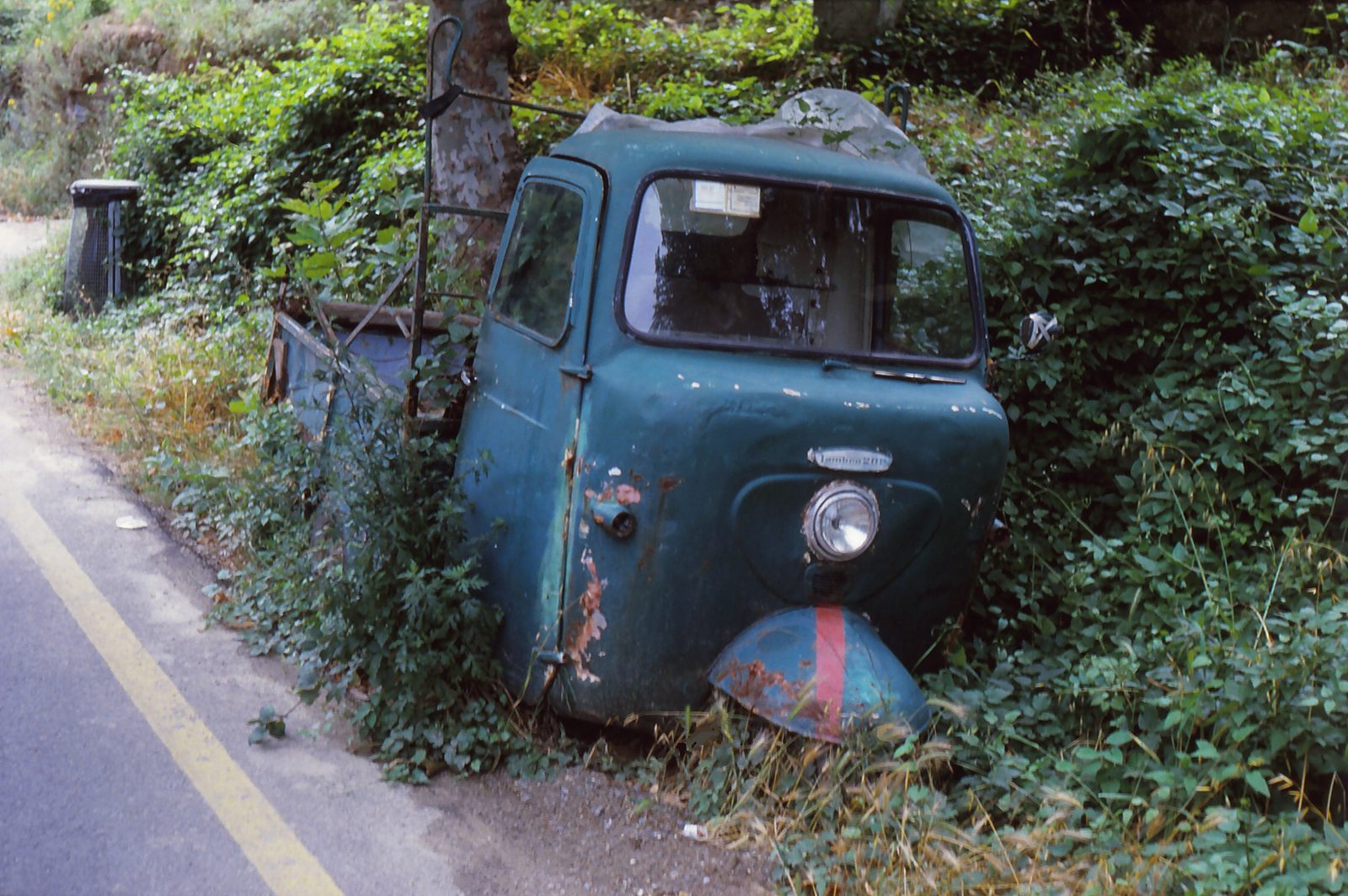
microcarfan
  • Microcar utility
  • Italy
  • Three wheels
  • Van and pick-up

Lambretta Lambro

Also known as Lambretta FB, FC, FD and FDC, Lambro 175, 200, 450, 550 and 600, Vikram (India)

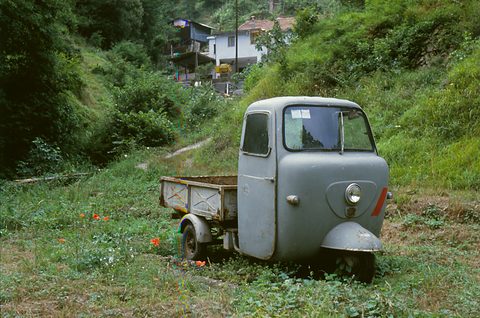
The river Lambro ran past Innocenti’s works at Lambrate in Milan and gave its name to the Lambretta scooter. In 1949 the scooter grew a load box and a third wheel. For 23 years it carried goods, post and refuse, and by the end it had a steering wheel and a cab by Bertone.

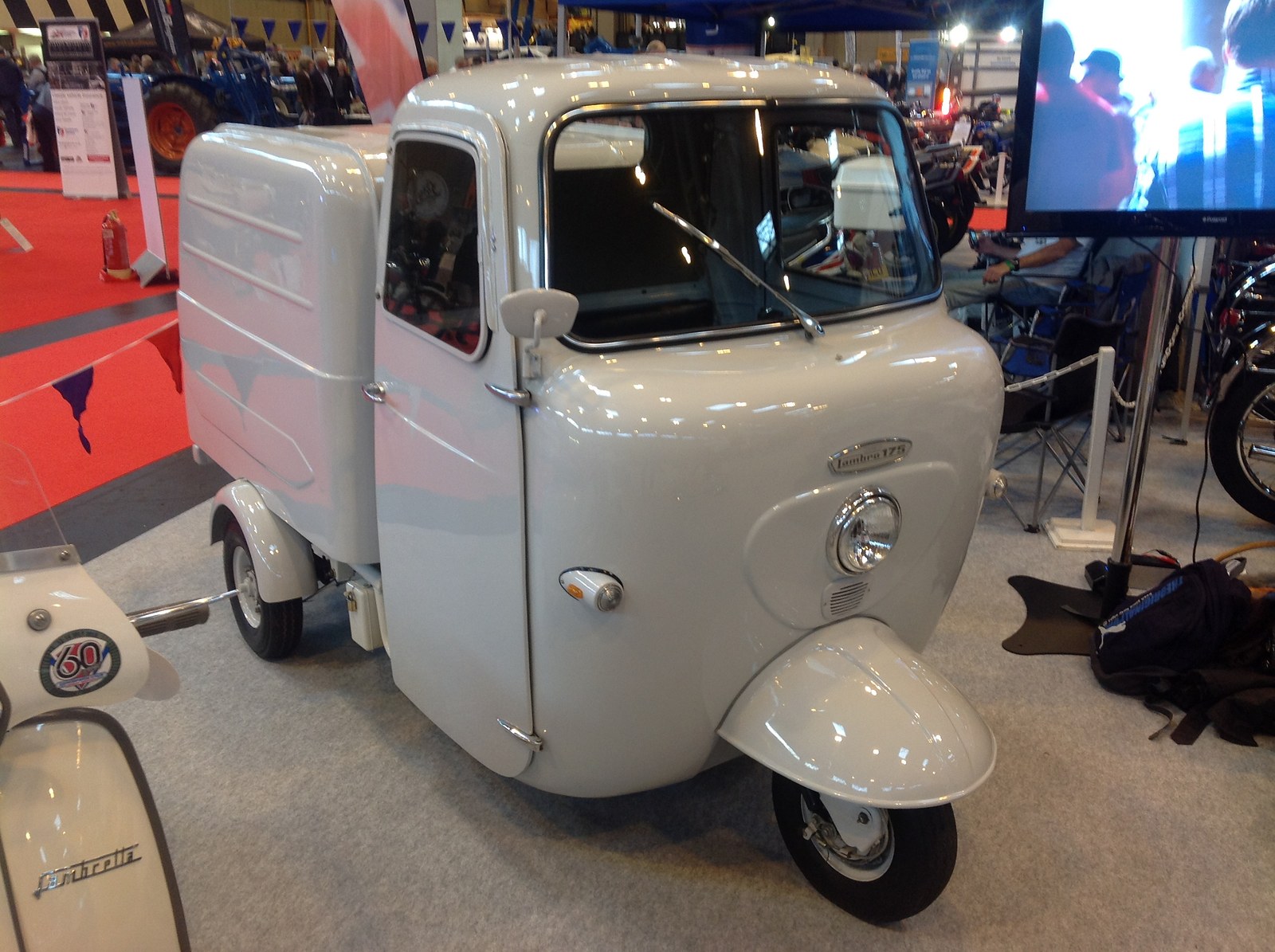
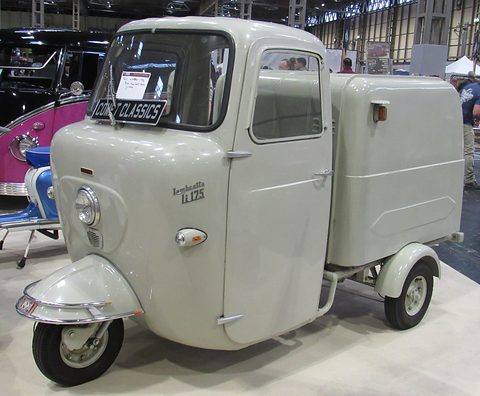
Pale grey three-wheeled cab-over van with a rounded nose and ‘Lambretta Li’ script on a show stand.
A pale grey 1960 Lambretta Li 175 Series 2 van at the Classic Motor Show, NEC Birmingham, England, in November 2017.Photo: Vauxford, CC BY-SA 4.0, via Wikimedia Commons

At a glance

The spec plate

Lambretta Lambro

FB to 600V · Lambrate, Milan

Built
1949–⁠1972February 1949 to January 1972 in Milan; later in India as the Vikram
Country
ItalyInnocenti, Lambrate, Milan
Maker
Innocenti, MilanThe maker of the Lambretta scooter, and of cars from 1960
Engine
123 cc to 198 cc two-stroke singleLambretta scooter engines, from the FC’s 123 cc to the 198 cc of the Lambro 200 and 550
Power
4.3 to 9.9 hp4.3 CV in the FC of 1950; 9.9 hp in the 550ML of 1970
Length
2,915 mm1,380 mm wide
Weight
455 kgThe Lambro 550 of 1965, dry, with its driver
Seats
1 or 2A saddle until 1957, then a two-seat bench in a cab
Wheels
3Two wheels in front, carrying the load, until 1952; then one in front and two driven at the back
Production
no total foundFor any model, or for the range
Top speed
62km/h62 km/h45 km/h for the FC of 1950

How big is it?

True proportion

2.92 m

It is 55 mm shorter than a Fiat 500, about 1.7 adults laid end to end.

  • 1.38 m wide
  • 455 kg: about six adults
  • From 2,480 mm (the FC of 1950) to 3,480 mm (the 550V pick-up of 1969)
  • Payloads from 200 kg to 600 kg
Drawn at true proportion. The track is 3.6 metres long; the adult stands at the same scale. The Peel P50 is the smallest production car, on every page for comparison.

The story

History

Ferdinando Innocenti’s group in Milan launched the Lambretta scooter in 1947, and work on a three-wheeled micro van began early that year: an Innocenti drawing of a wheel spindle for the motor van “F” is dated 12 April 1947. At least three prototypes, the FA, were built, and two of them, one with an open box and one closed, were shown at the Milan fair on 29 April 1948; none was sold.source 1 The F stood for furgone, van. The name Lambro, from the same river as the scooter’s, is used today for all of Innocenti’s three-wheelers, but it became official only in 1963.source 2

The first on sale, the FB 125 of February 1949, was a front-loader. Its load box, open, closed in aluminium or wood, sat between two front wheels, and behind it was, in effect, the back half of the Lambretta B scooter, driving a single rear wheel and carrying about 200 kg (440 lb).source 1 The FC of November 1950 had a new frame, a transverse leaf spring across the front wheels and hydraulic brakes on all three; its 123 cc engine gave 4.3 CV through three gears, with no reverse, and it reached 45 km/h (28 mph).source 1

The load goes behind

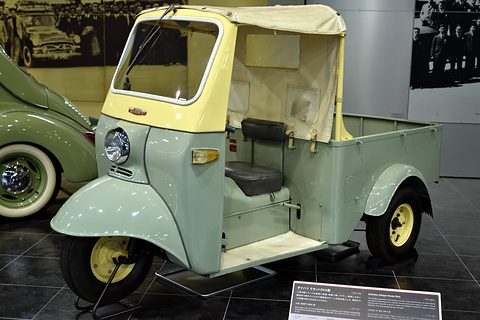
In December 1952 the FD turned the layout round. It had one wheel at the front and the load behind the driver, with the scooter engine in the middle driving the two rear wheels through a tubular shaft and a bevel differential. The FD 125 carried 300 kg (660 lb), and from 1955 the 150 cc version carried 350 kg (770 lb) at up to 60 km/h (37 mph).source 1 Up to then the driver had sat on a saddle in the open. The FDC of October 1957 brought the first cab, with a canvas sunroof, a bench for two, a wiper and a speedometer, and the first reverse gear, selected by a pedal.source 3 In 1959 the Li 175 had four speeds and reverse, and its second series of 1960 a larger cab with a solid roof and 12-volt electrics. With the Lambro 175 that followed it, theLambro.com calls it the most successful of the Lambretta three-wheelers.source 4source 5

France had its own version. A French-built F300 of 125 cc was sold beside the Italian FD 125, and later a Lambro 125 built in Milan was open to drivers from 16 without a licence, a licence-free vehicle.source 6

Named for the load

The name Lambro arrived in June 1963 with the Lambro 200, of 198 cc and 8.9 hp, which ran on 10-inch wheels and carried 500 kg (1,100 lb).source 7 From 1965 the models were named for what they carried, not for their engines: the Lambro 450, with one headlamp and 175 cc, and the 550, with two and 198 cc.source 8source 2 The engine of the early cabs sat under the bench, and with it came noise, vibration and heat. The 550N of 1967 moved it out of the cab on four rubber mountings, and the long 550A of 1968, with a tipping body, outsold the 550N by 19 per cent while both were built.source 9

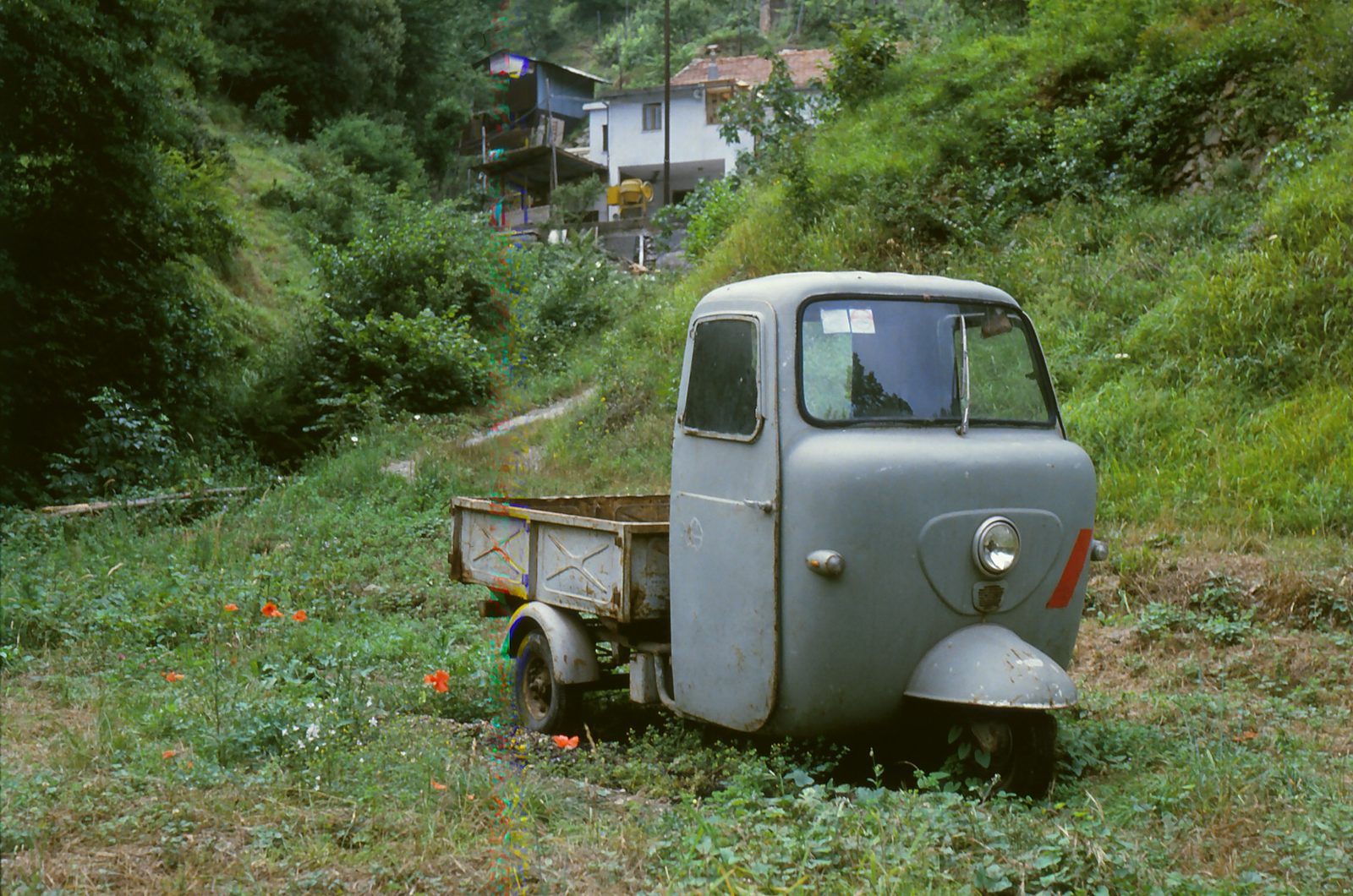
In April 1969 Innocenti told its dealers of a new line. It had a square cab drawn by Bertone with Innocenti, a low floor, a heater and electric starting, and the whole body tilted 45 degrees to reach the engine. The 550V had a steering wheel, on the left, working through a reduction box that lightened the steering and stopped road shocks reaching the wheel; the 550M kept the handlebars. Until the 550V the front brake had been worked by a lever on the handlebar, a habit carried over from the scooter.source 10source 7

… the new line of three-wheelers - thanks to its main characteristics, very similar to those of a van - is directed towards a market till now applied to the traditional commercial vehicles.

Innocenti, letter to its dealers, 28 April 1969, in the English given by theLambro.com.source 10

On 20 January 1970 Innocenti told its licensees that the Italian authorities had approved a working load of 600 kg, and the 550s were renamed 600V and 600M at once.source 11 The 600M ended in November 1971 and the 600V in January 1972.source 2 Its leaflets of 1963 and 1969 had offered bodies for refuse, fire and police work, a microbus, post, hospital, farm and airport work, and fuel and drinks; by 1969 only chassis were being shipped overseas.source 12 The Lambro 550 became an everyday vehicle in Vietnam.source 8

India

Innocenti stopped building scooters and three-wheelers in 1971–⁠72, and in 1972 the Indian government bought the machinery and formed Scooters India Ltd at Lucknow. Its Lambro, later sold as the Vikram, went into production in about 1977 or 1978, and the three-wheelers carried on, later with CNG and electric power, after the scooters ended in 1997, until the firm’s closure was approved in about 2020 or 2021.source 13 Automobile Products of India also built a three-wheeler based on the Lambro, the API-175 (see built under licence).source 14
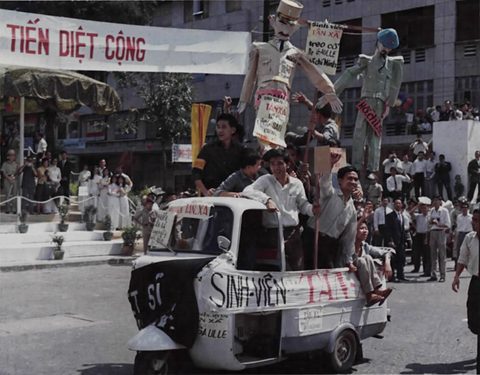
A white three-wheeled vehicle covered in slogans carries students and two effigies past a crowd.
Plate I · 1964 Students ride a Lambro decorated with slogans and effigies at the National Shame Day demonstration in Saigon on 19 July 1964.Photo: SP5 Gilbert L. Meyers (US Army), Public domain, via Wikimedia Commons
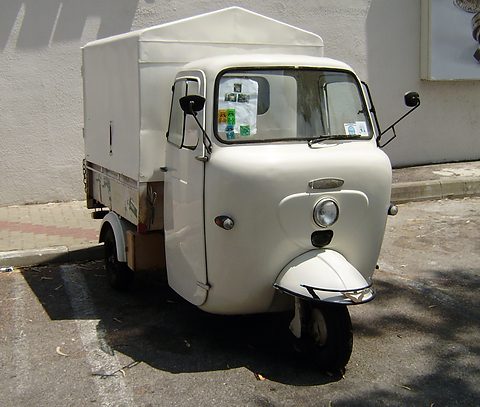
White three-wheeled cab-over van with a box body and a single front wheel parked by a wall.
A Lambro 200 with a box body, its single front wheel under a scooter-style mudguard, in Israel in 2009.Photo: Rastaman3000, CC BY-SA 3.0, via Wikimedia Commons
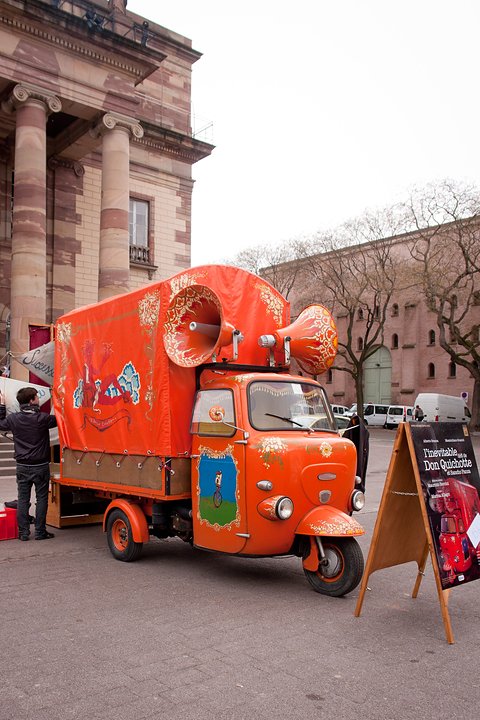
Orange three-wheeled van with large horn loudspeakers on its roof parked on a square by columns.
An orange Lambro 550 A, the lengthened model, carrying loudspeakers as a promotional van in 2010.Photo: Yaisog Bonegnasher, CC BY-SA 2.0, via Wikimedia Commons
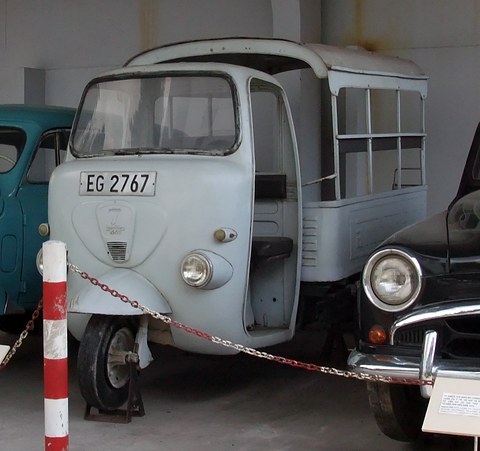
Pale grey three-wheeled minibus with open sides behind a red and white post and chain.
A Lambro 550 with a bus body at the War Remnants Museum, Ho Chi Minh City, in 2008.Photo: Yun Huang Yong, CC BY 2.0, via Wikimedia Commons

Pictures

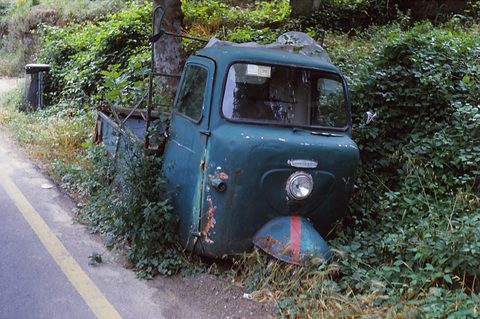
More photographs, old and new

Variants

From FA to 600V

The Italian models by theLambro.com’s dates; the Vikram from Scooternova
VariantYearsWhat differsHow many
FA1947–⁠48Prototypes only, two shown at the Milan fair in April 1948At least three
FB 125February 1949–March 1950Load box between two front wheels; the Lambretta B scooter’s rear endNot found
FCNovember 1950–October 1952New frame, hydraulic brakes on all three wheels; 123 cc, 4.3 CV, no reverseNot found
FD 125 and FD 150December 1952–June 1959One front wheel, the load behind the driver, shaft drive to a differential; 5 hp, then 6.5 hpNot found
FDC 150October 1957–May 1959The first cab, with a canvas sunroof and a bench for two; the first reverse, by pedalNot found
Li 175 Series 1 and 2July 1959–⁠1963Four speeds and reverse; from 1960 a larger cab with a solid roof and 12-volt electricsNot found
Lambro 200 and 175June 1963–August 1965The Lambro name; the 200 on a new chassis with 10-inch wheels and a 500 kg payloadNot found
Lambro 450 and 550August 1965–December 1967Named for the payload; the 550 with twin headlamps and 198 ccNot found
550N, 550A and 500L1967–⁠69The engine out of the cab; the 550A lengthened, with a tipping bodyThe 550A outsold the 550N by 19 per cent
550V, 550M, 500ML and 550ML1969–⁠70Square cab by Bertone; the V with a steering wheel, the M with handlebarsNot found
600V and 600M1970–January 1972Renamed when a 600 kg load was approvedNot found
VikramFrom about 1977–⁠78The square-cab Lambro, built in India by Scooters IndiaNot found

Specification

From Innocenti’s data as given by theLambro.com

Lambro 550, 1965: engine and drive

Lambro 550, 1965: engine and drive
Engine198 cc (66 × 58 mm) two-stroke single, cooled by forced air; Dell’Orto SH 1/20source 8
Power9.2 hp at 4,800 rpmsource 8
GearboxFour speeds and reverse; multi-plate clutch in oilsource 8
DriveHollow shaft to a differential and the two rear wheelssource 8

Lambro 550, 1965: chassis

Lambro 550, 1965: chassis
BrakesFront by a lever on the handlebar; hydraulic at the rear, by pedalsource 8
Tyres4.50 × 10source 8
Length2,915 mm, open bodysource 8
Width and wheelbase1,380 mm; 1,970 mmsource 8
Weight455 kg dry with the driver; 995 kg grosssource 8
Payload540–550 kgsource 8
Consumption6.2 litres per 100 km by the CUNA standardsource 8

550V, 1969

550V, 1969
Engine198 cc, 9.8 hp at 4,800 rpmsource 10“Approximately 10 BHP” in Innocenti’s letter to its dealers
SteeringA wheel on the left, through a reduction boxsource 10
BrakesHydraulic drums on all three wheelssource 10
Dimensions3,480 × 1,510 × 1,635 mm; wheelbase 2,270 mmsource 10
Weight and load390 kg; payload 550 kgsource 10
Top speed62.3 km/h fully ladensource 10
Consumption5.4 litres per 100 km by the CUNA standardsource 104.7 litres in Innocenti’s letter

FC, 1950

FC, 1950
Engine123 cc (52 × 58 mm) two-stroke single, 4.3 CV at 4,200 rpmsource 1
GearboxThree speeds, no reversesource 1
Dimensions2,480 × 1,200 × 1,060 mm; wheelbase 1,557 mmsource 1
Weight and load140 kg; payload 200 kgsource 1
Top speed45 km/hsource 1

Famous for

Three points

  1. A scooter that grew

    The first Lambro used the Lambretta B scooter’s rear end, with a load box between two front wheels.

  2. Reverse at last

    The driver sat on a saddle with no reverse gear until the FDC’s cab of 1957.

  3. A second life

    After Milan stopped, Scooters India built the square-cab Lambro as the Vikram at Lucknow.

Survivors and collecting

Today

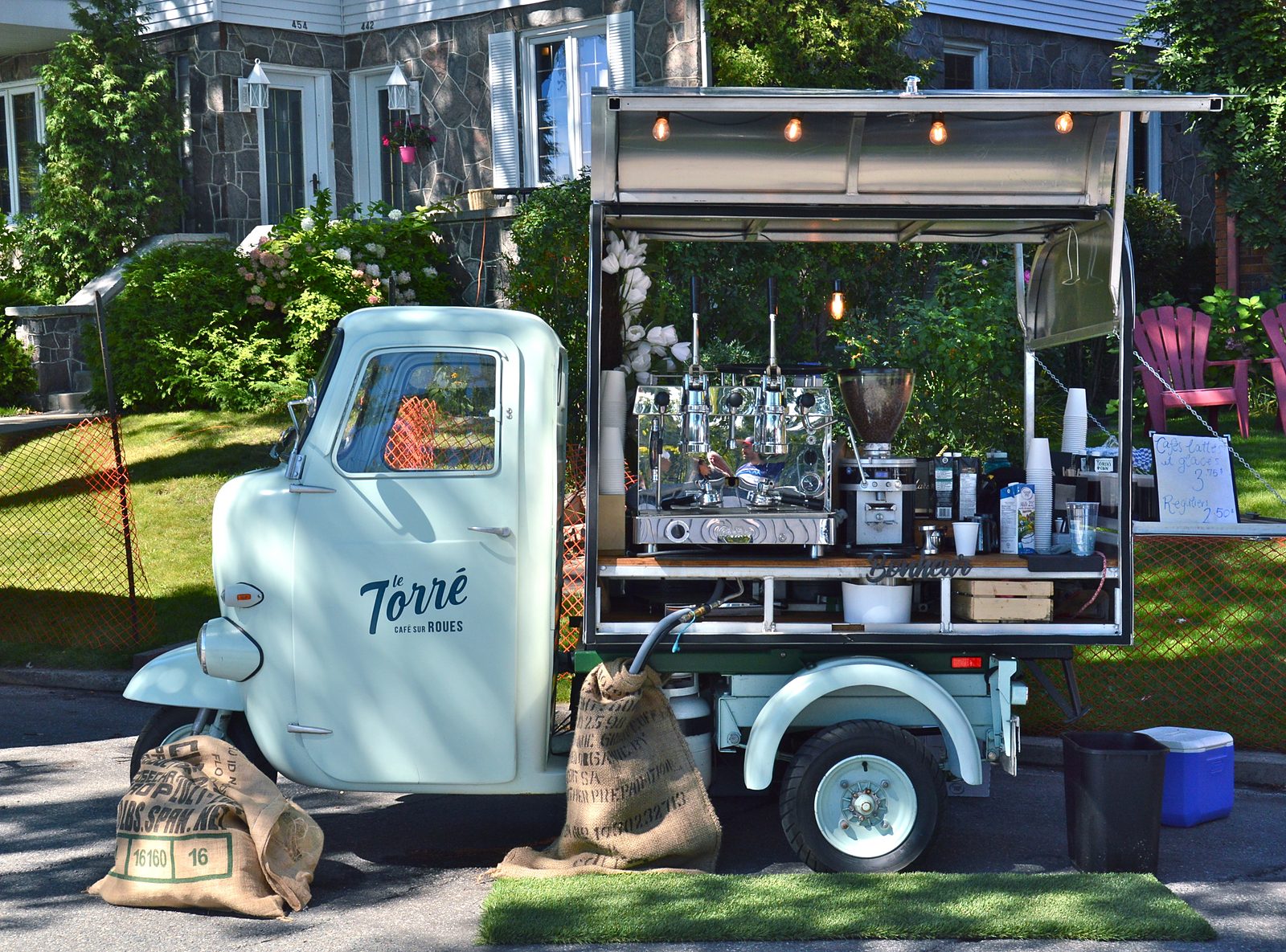
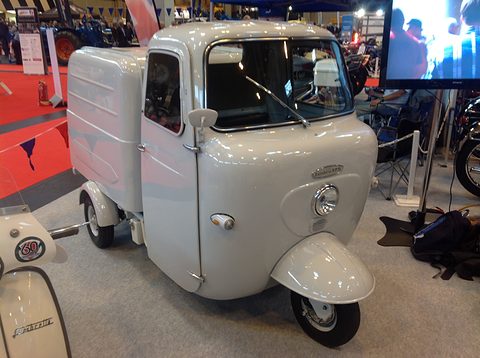
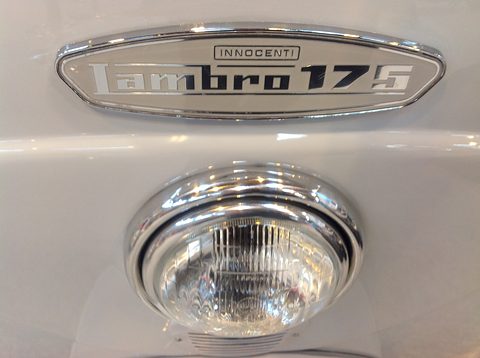
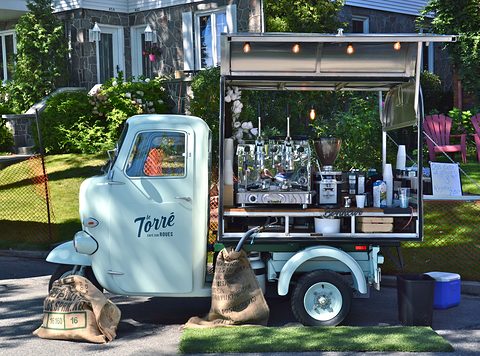
No survivor count or auction result of note has been found. Many 550s are said to be still at work in Vietnam.source 8 The Lambro Club UK was founded early in 2013 and has members around the world, and theLambro.com, the British firm whose pages supply most of this history, restores and sells them.source 9source 2 A working replica of the FA prototype was built from Innocenti’s drawings by the enthusiast Bruno Strigini, over about three years from 2016.source 1 A Li 175 and a Lambro 175 have been shown at the Classic Motor Show in Birmingham, and a 550 was photographed serving coffee in Quebec in 2022.

Sources

Numbered as in the text

Almost everything known here about the Italian years rests on one source, theLambro.com, a British firm that restores and sells Lambros and reproduces Innocenti’s brochures, manuals and circulars on its pages. No second source for its dates and figures has been found, no production figures of any kind, and no period road test. Sources are given as plain text; the links are on the Credits page.

  1. theLambro.com, “Lambretta 3 Wheeler – FA, FB, FC and FD Models”, crediting Bruno Strigini, read in full.
  2. theLambro.com, “History of the Lambro”, read in full.
  3. theLambro.com, “Lambretta 150 FD-C”.
  4. theLambro.com, “Lambretta Li 175 Series 1” and “Series 2”.
  5. theLambro.com, “Lambro 175”.
  6. theLambro.com, “Lambros and France”.
  7. theLambro.com, “Lambro 200”.
  8. theLambro.com, “Lambro 550 and Lambro 450”.
  9. theLambro.com, “Lambro 550N, 550A and 500L”.
  10. theLambro.com, “Lambro 550/V, 550/M and 500ML”, quoting Innocenti’s letter to its dealers of 28 April 1969.
  11. theLambro.com, “Lambro 600V and 600M”, with Innocenti’s circular of 20 January 1970.
  12. theLambro.com, “Special Uses of the Lambro”.
  13. Scooternova, “Has Scooters India Ltd finally finished?”, 22 January 2021.
  14. BK Micro Car Collection, Helsinki, “Lambretta” page, read through a summary.