The story
History
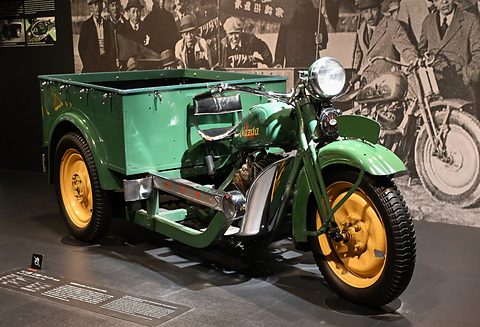
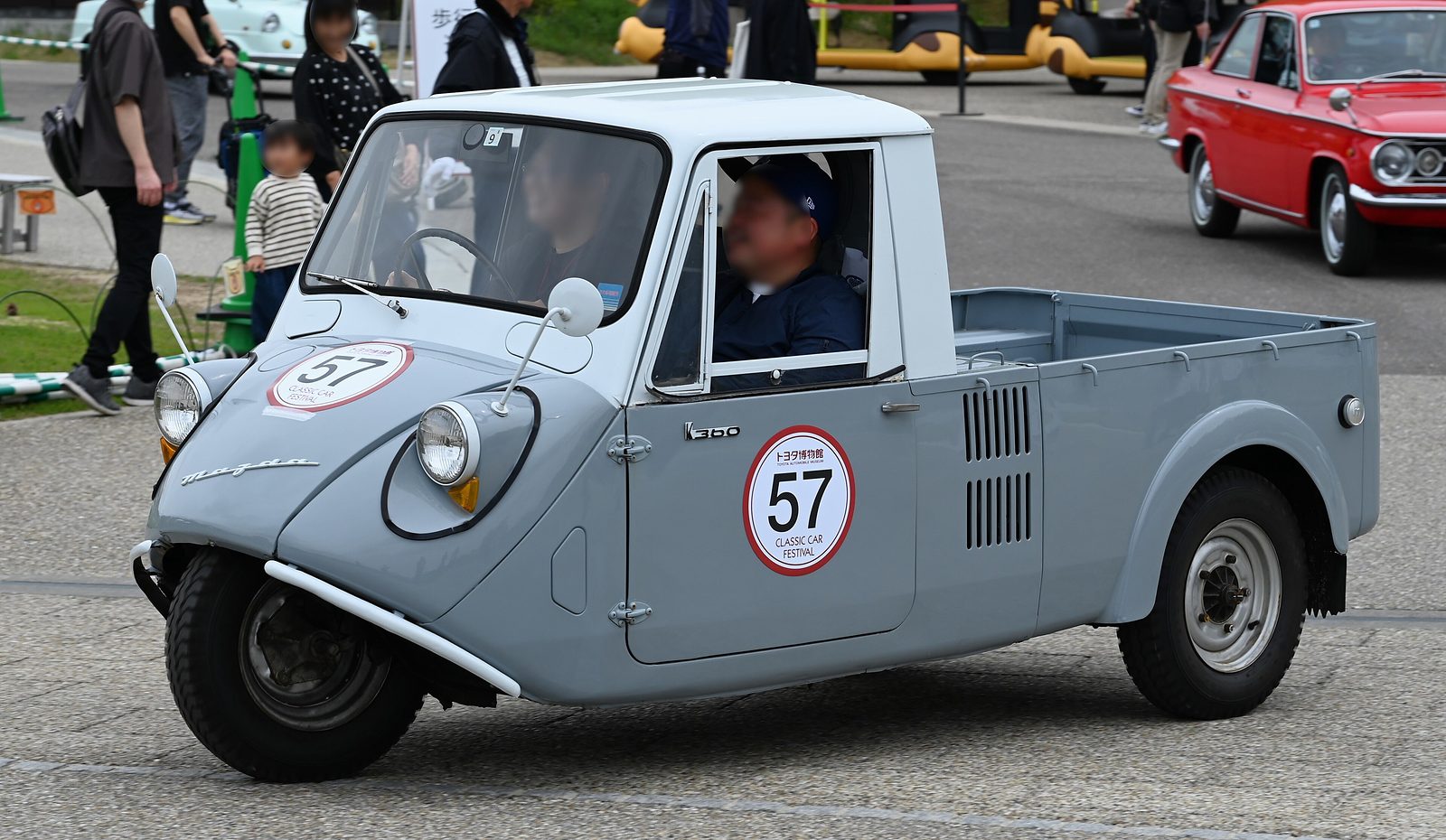
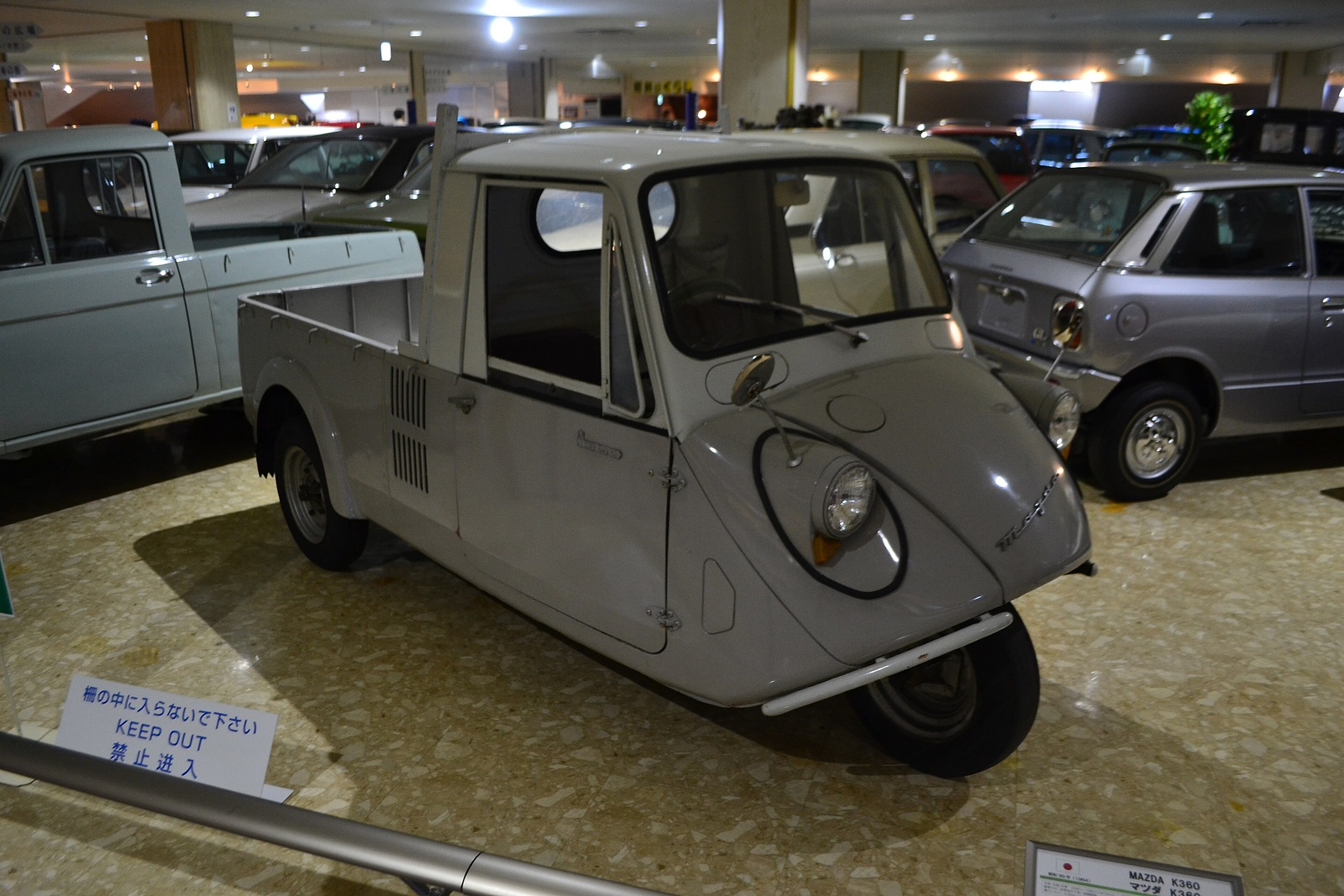
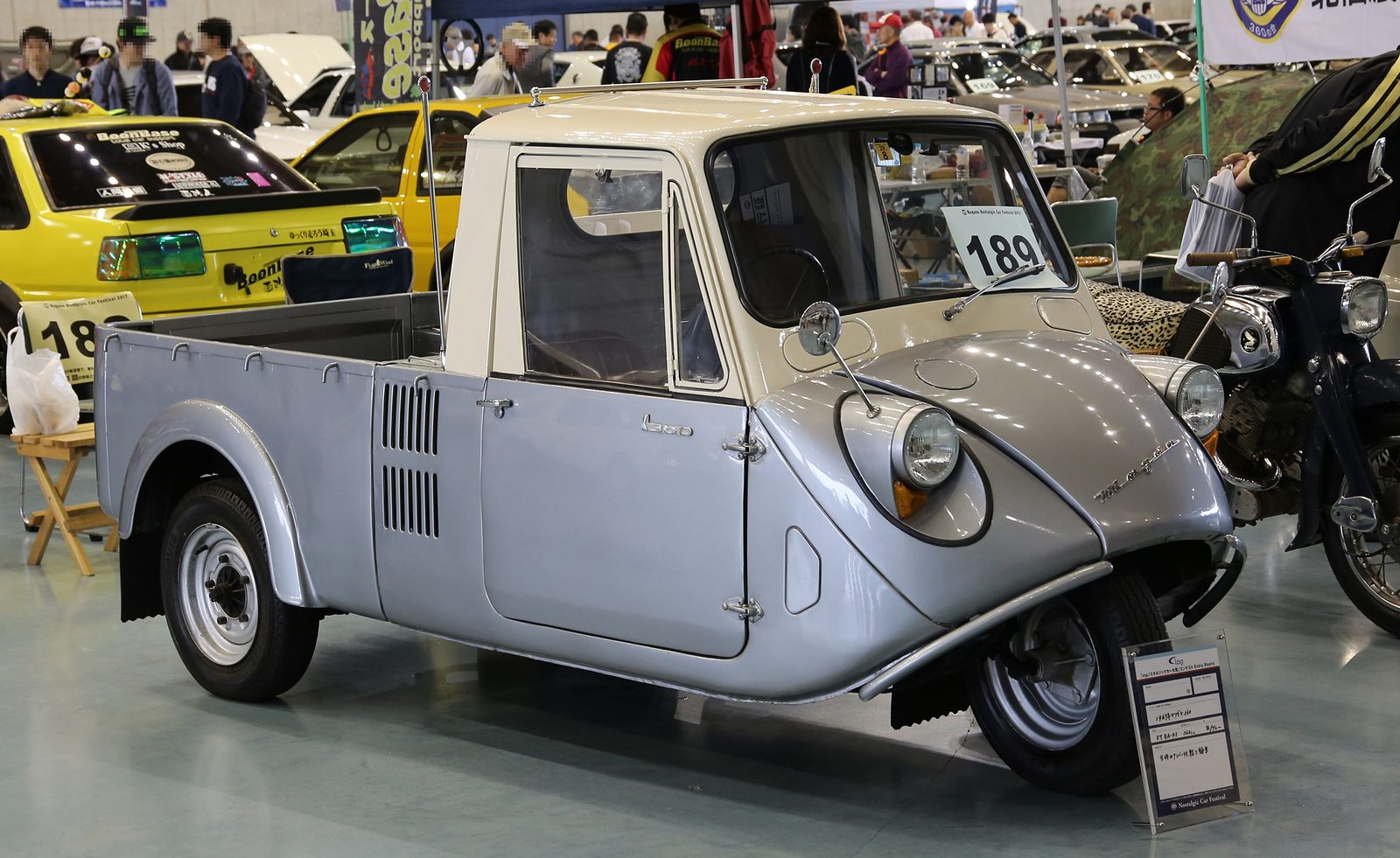
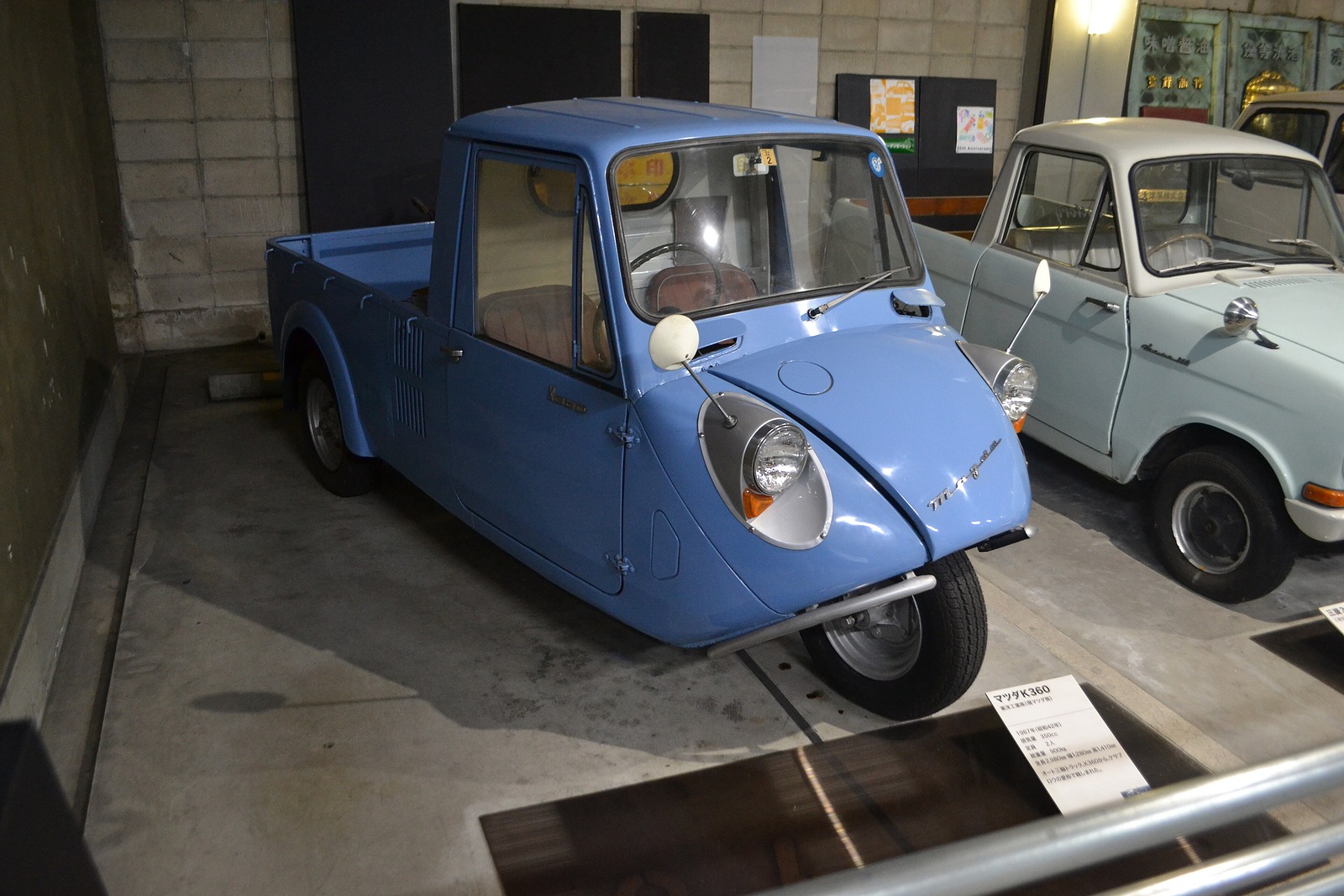
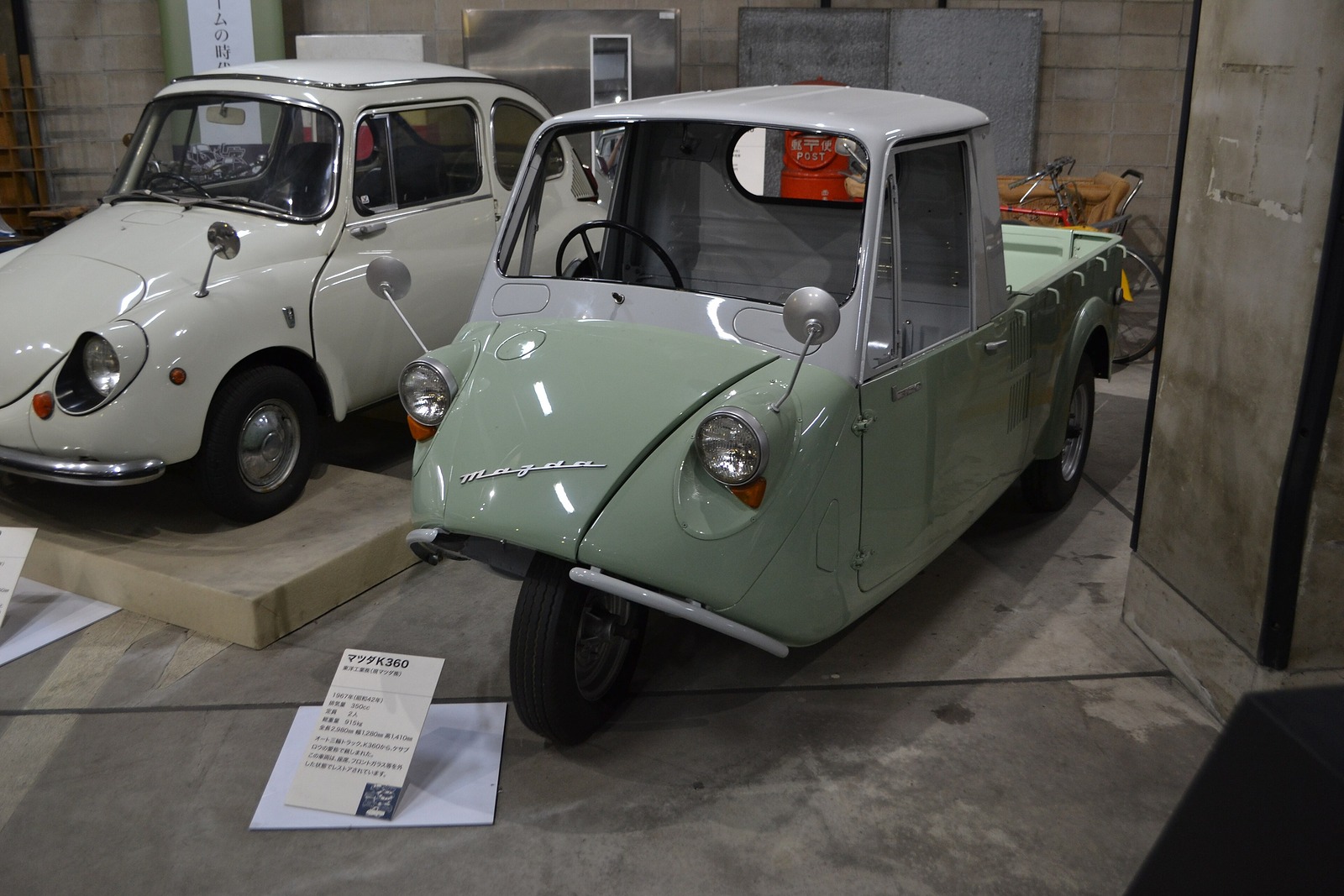
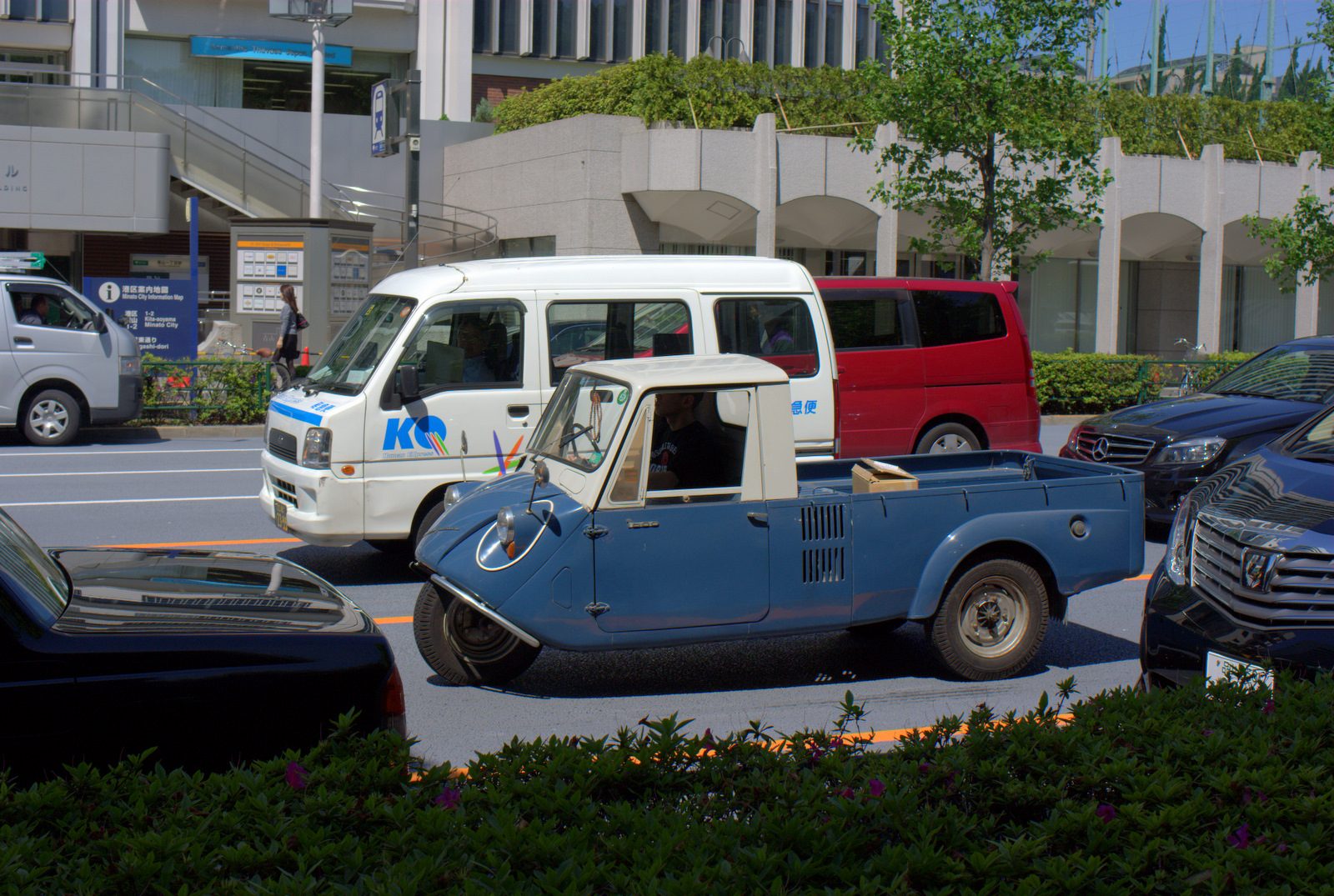
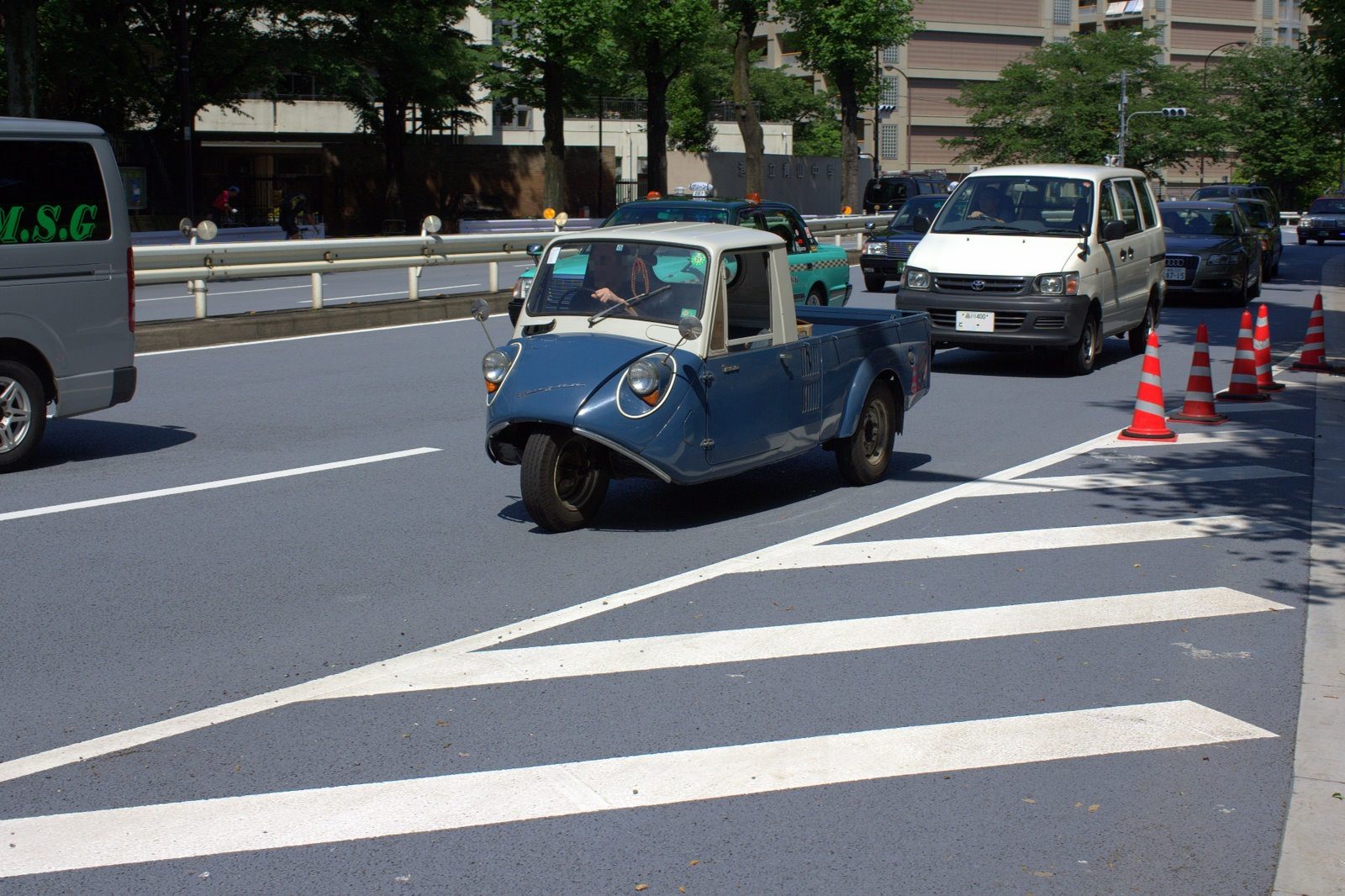
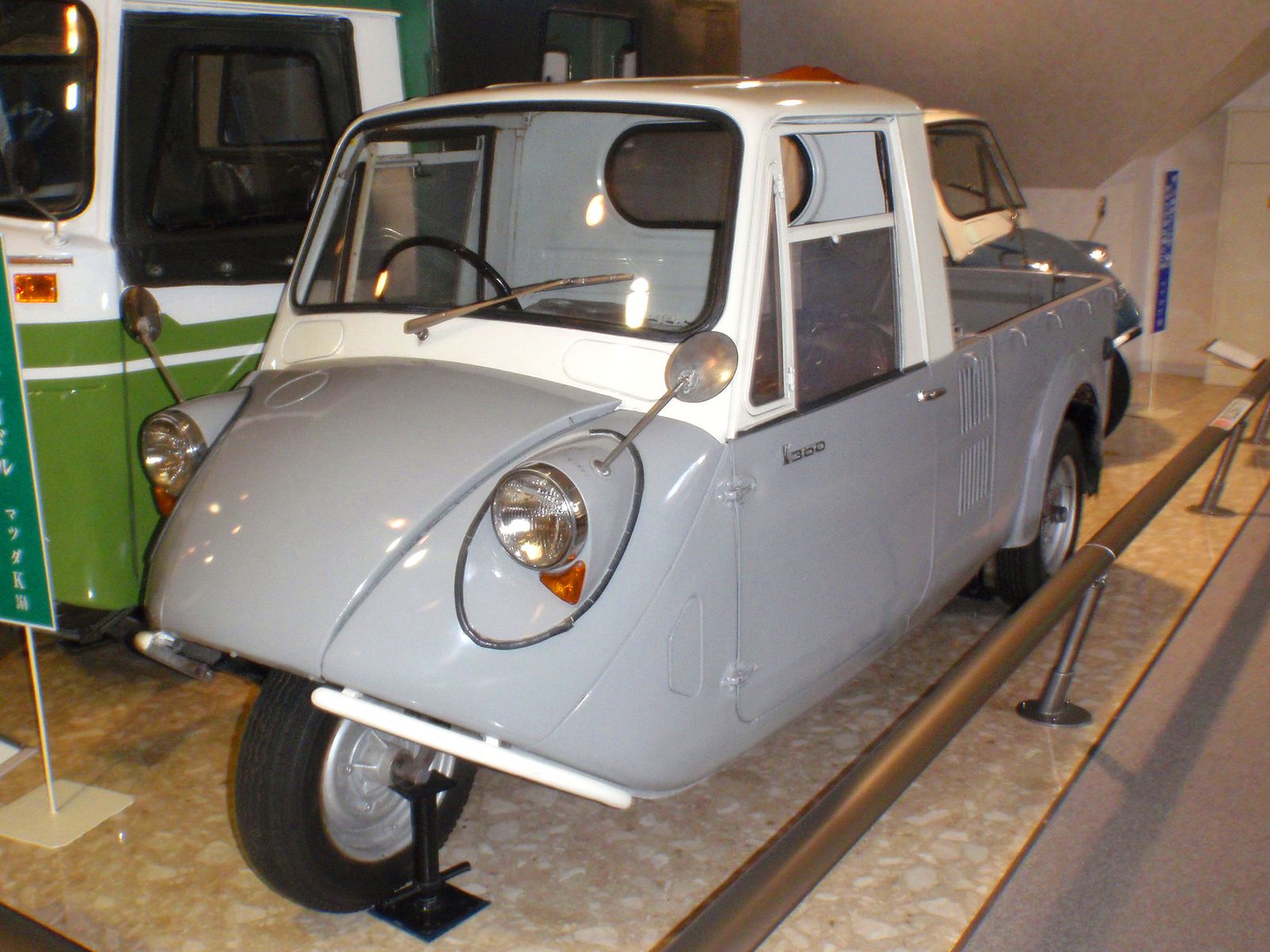
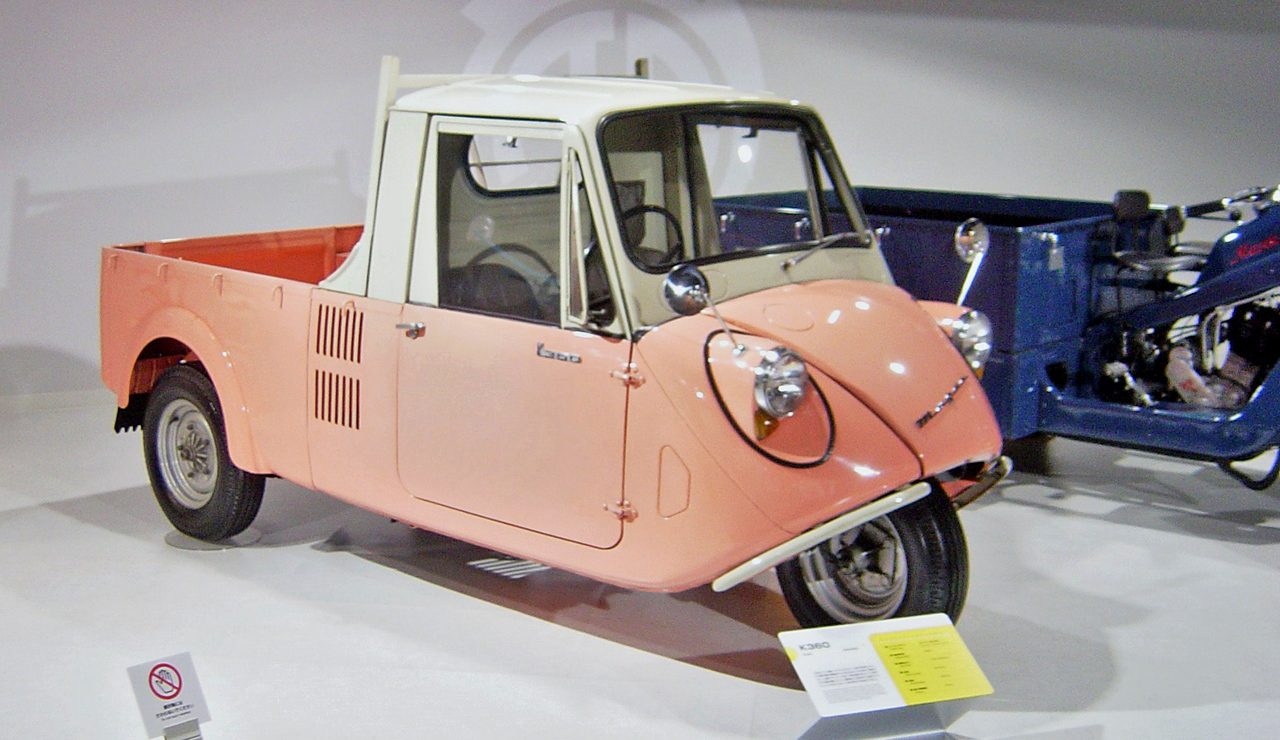
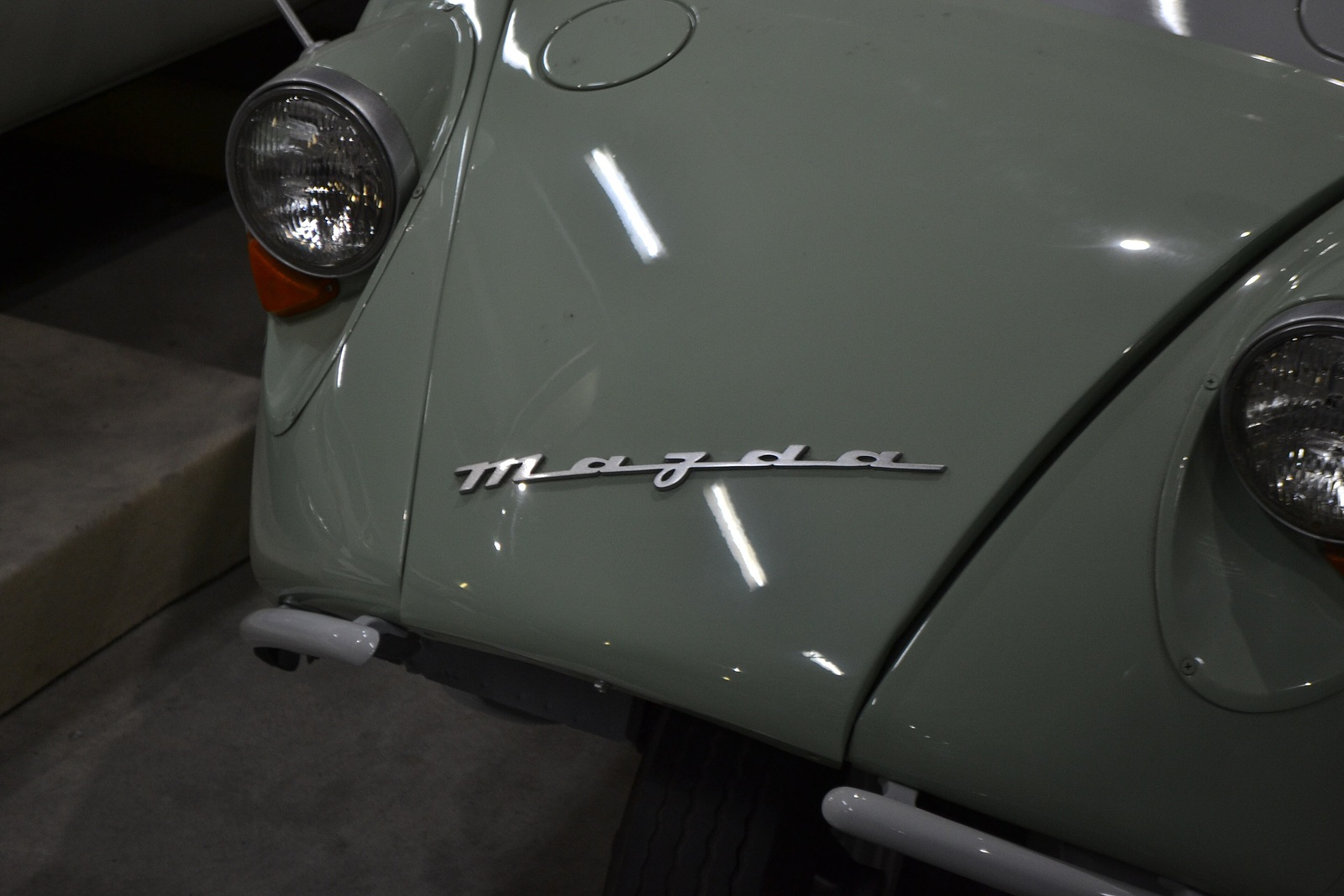
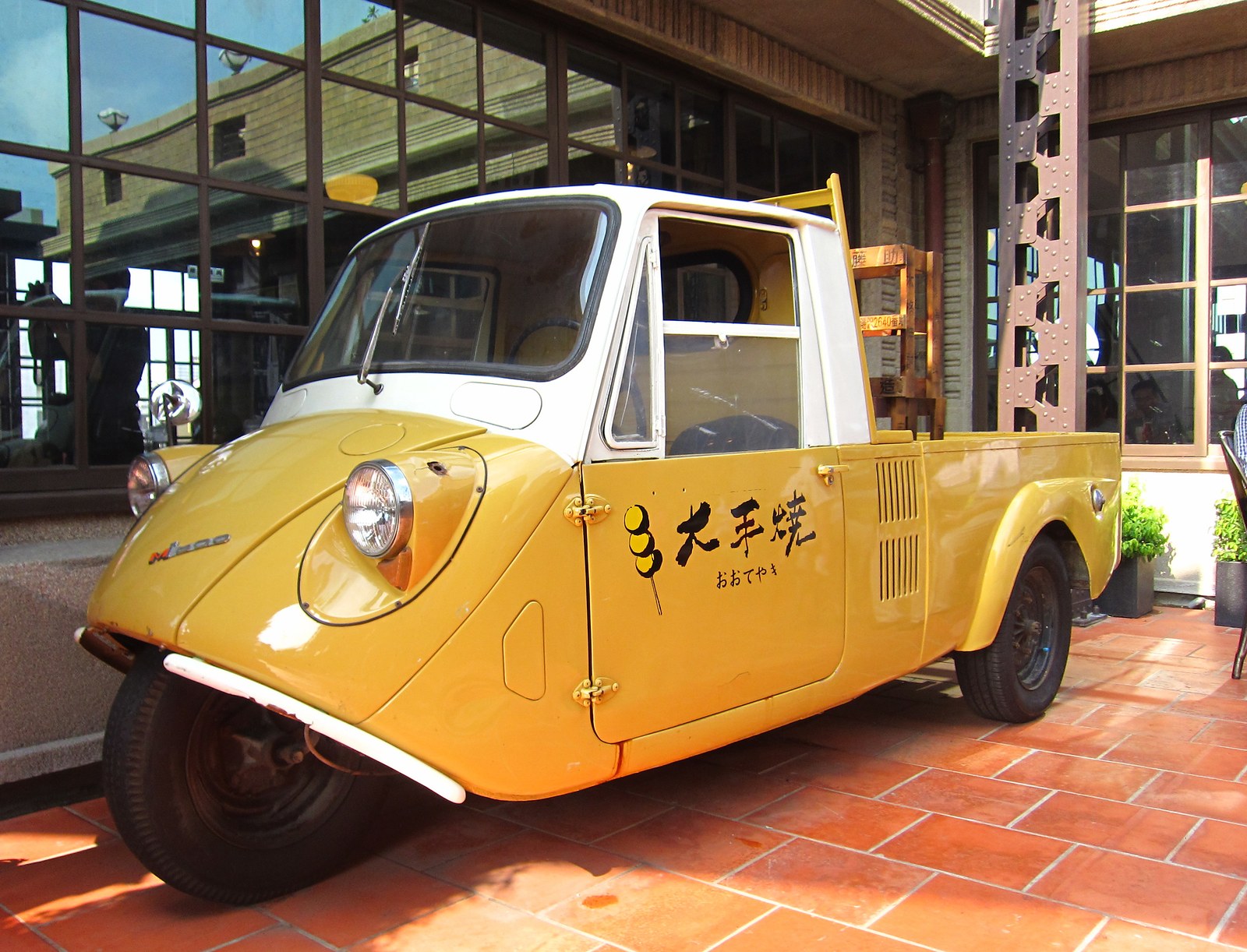
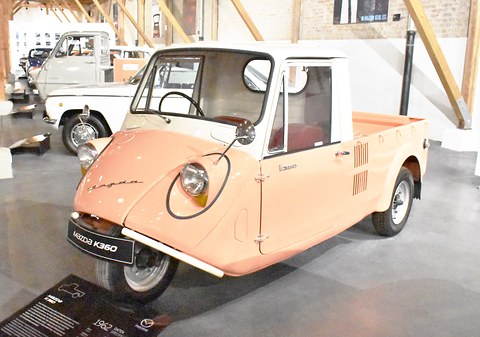
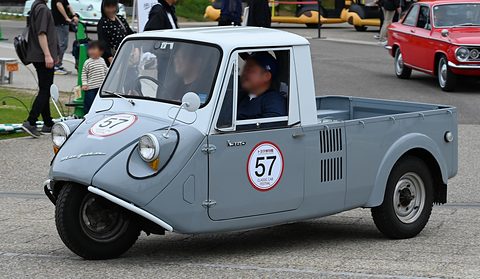
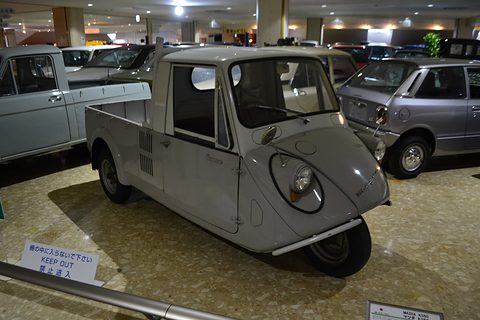
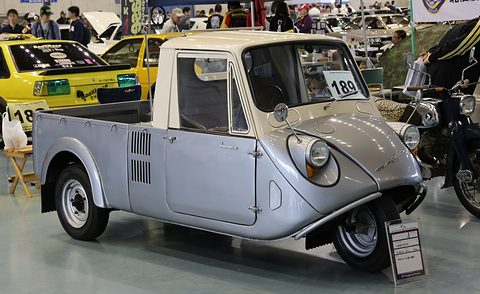
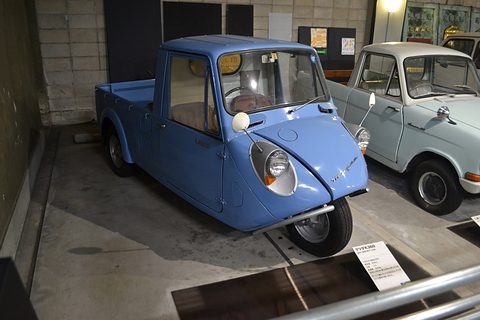
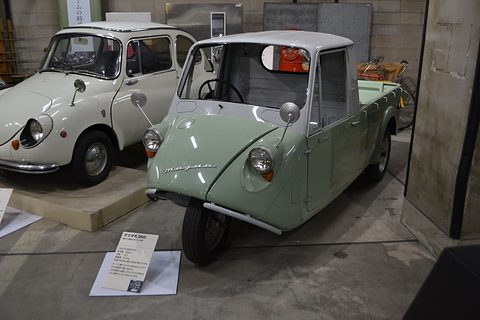
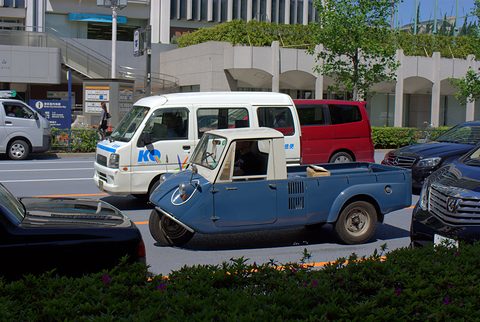
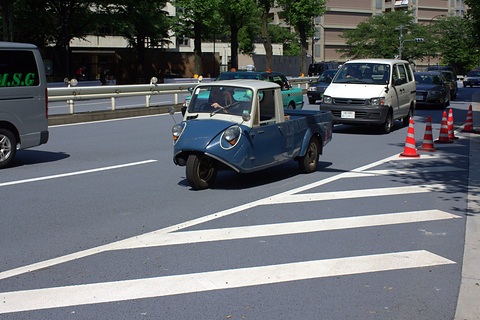
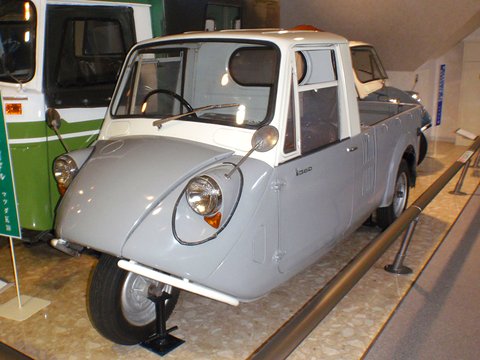
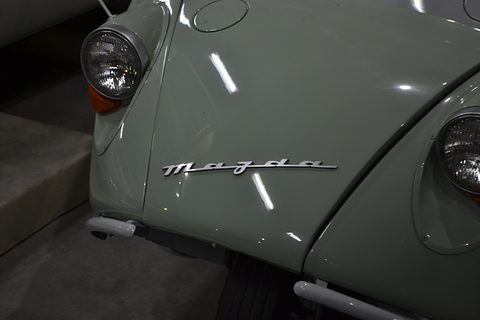
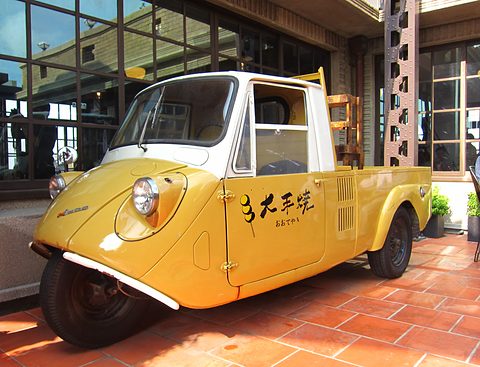
Tōyō Kōgyō had built three-wheeled trucks since the Mazda-Go of 1931, and English Wikipedia says the K360 took over from that line.source 3 Launched in May 1959, it was the company’s first three-wheeled truck built to the kei rules for light vehicles (see kei cars), and it went straight at the Daihatsu Midget. Its nickname, Kesaburō, is a pun on “K-san”, K-three.source 1
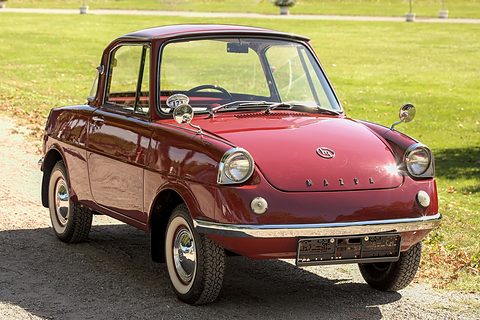
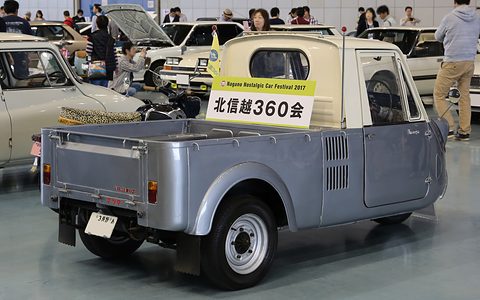
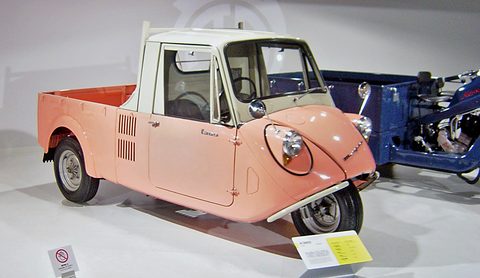
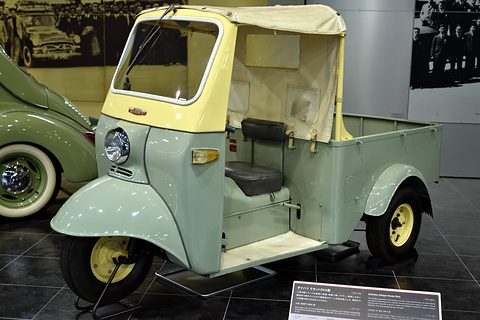
Kosugi, who also styled Mazda’s first car, the R360 Coupe, chose its two-tone colours, and Japanese Wikipedia credits them with its success.source 1 Daihatsu’s Midget MP, steered by a wheel, appeared almost at the same moment, and the two were compared head-on (their kind is followed on our page of micro-vans). The K360 had the advantage of sharing parts with Mazda’s bigger three-wheeler, the T600.source 1
An engine in the middle
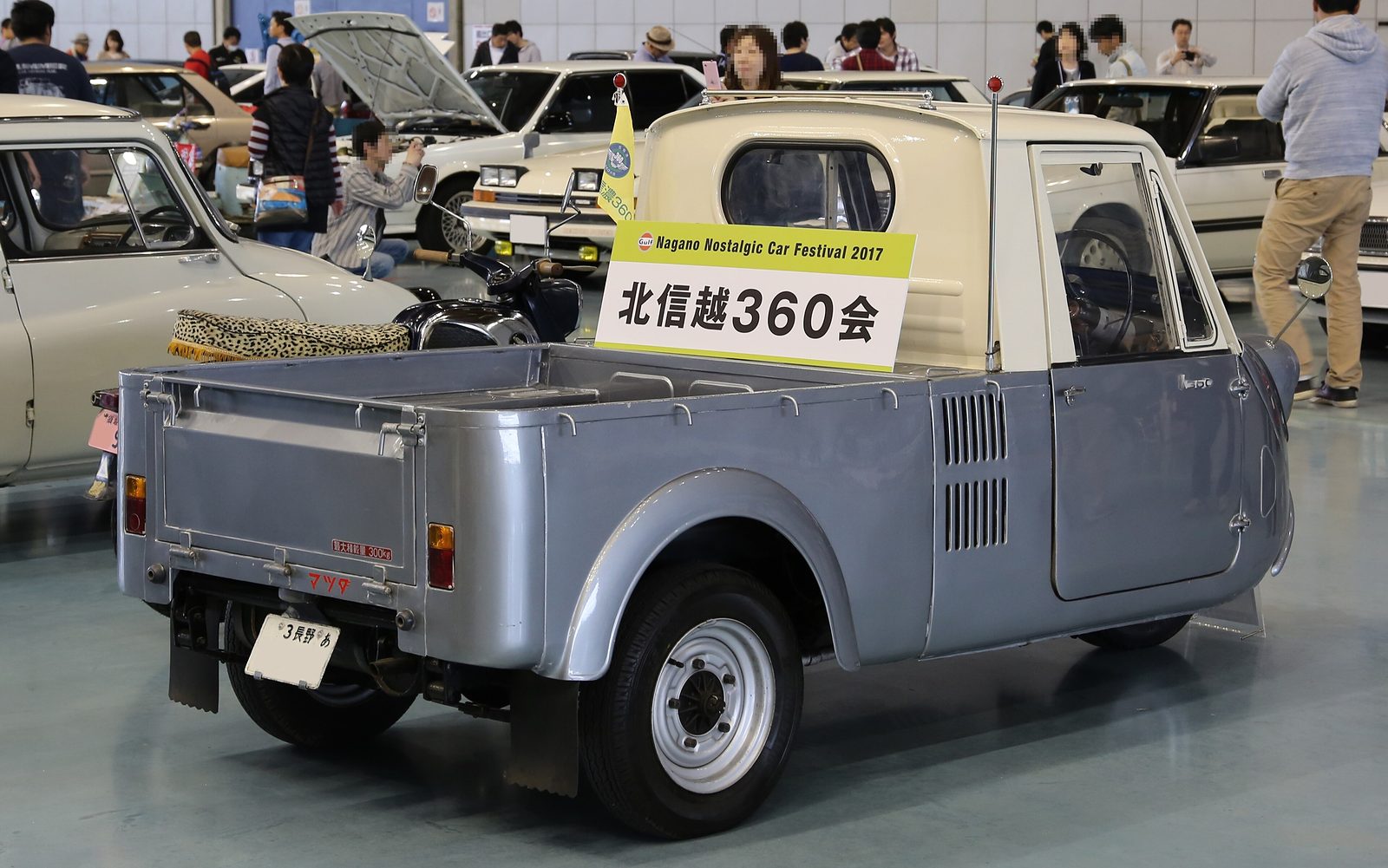
The engine was an air-cooled four-stroke V-twin of 356 cc, its cylinders at 76°, with overhead valves and a dry sump; it gave 11 PS (8 kW) at 4,300 rpm.source 1 It sat lengthwise behind the two-seat cab and ahead of the load bed, driving the rear wheels through a propeller shaft.source 1source 4 That cost bed length, but it lowered the centre of gravity, made servicing easier and kept the cab quieter than its rivals’.source 1 Hiroshima Aluminium helped make the engine light, and Mazda became that firm’s main customer.source 1
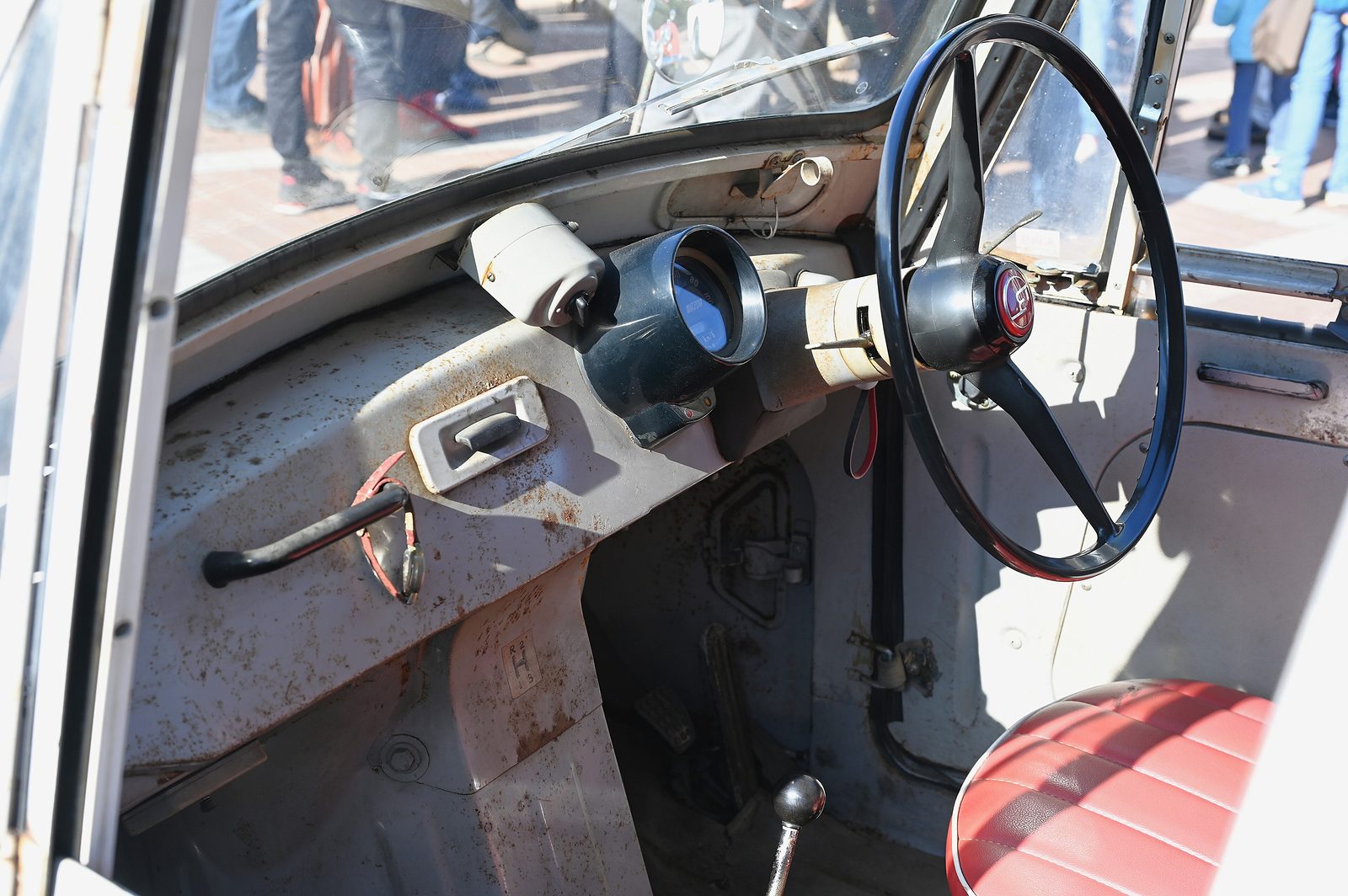
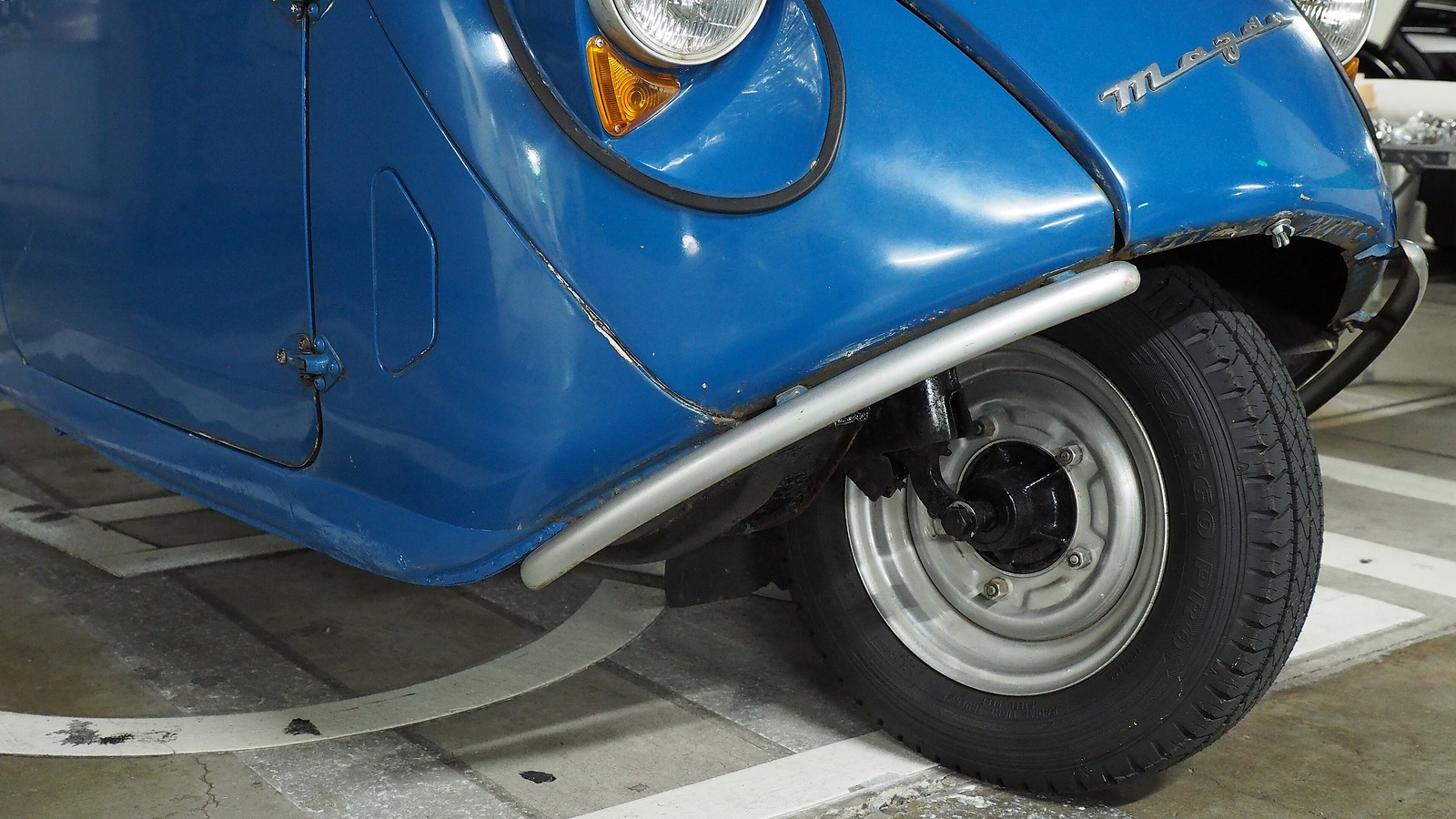
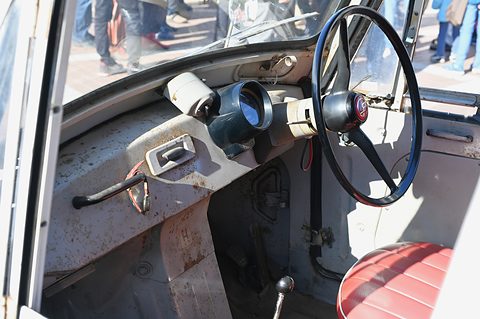
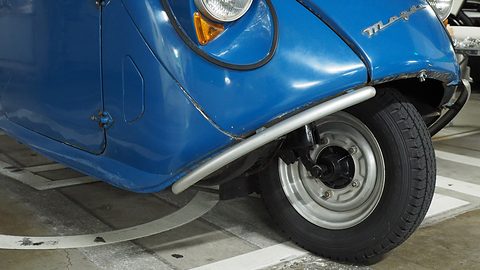
Its 12-inch wheels, against the Midget’s 9-inch, made it more stable and surer on the road, and it was said to feel a size bigger than a Midget of the same dimensions.source 1 The front fork was deliberately old-fashioned, with a bottom link and a coil spring, chosen because it would last, and only the rear wheels were braked. The 12-litre tank was read through a clear tube beside it.source 1source 2
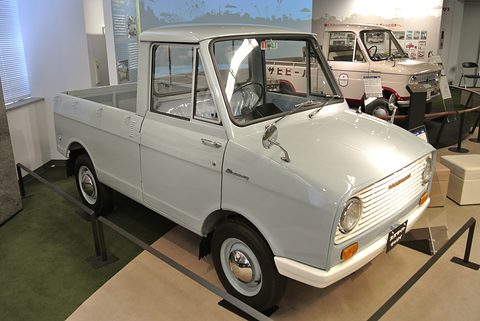
In August 1962 winding windows with four positions replaced the sliding ones, and quarter lights and side vents were added. In January 1964 the wheelbase grew by 35 mm and the cab’s part-fabric roof became steel.source 1 Production ended in March 1969, and the last K360s were sold that September.source 1 Its four-wheeled sister, the Mazda B360 truck, had been on sale since 1961.source 6
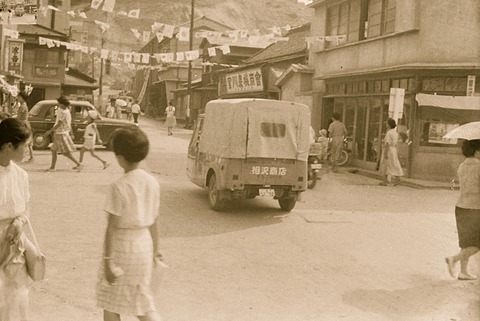
Korea and Burma
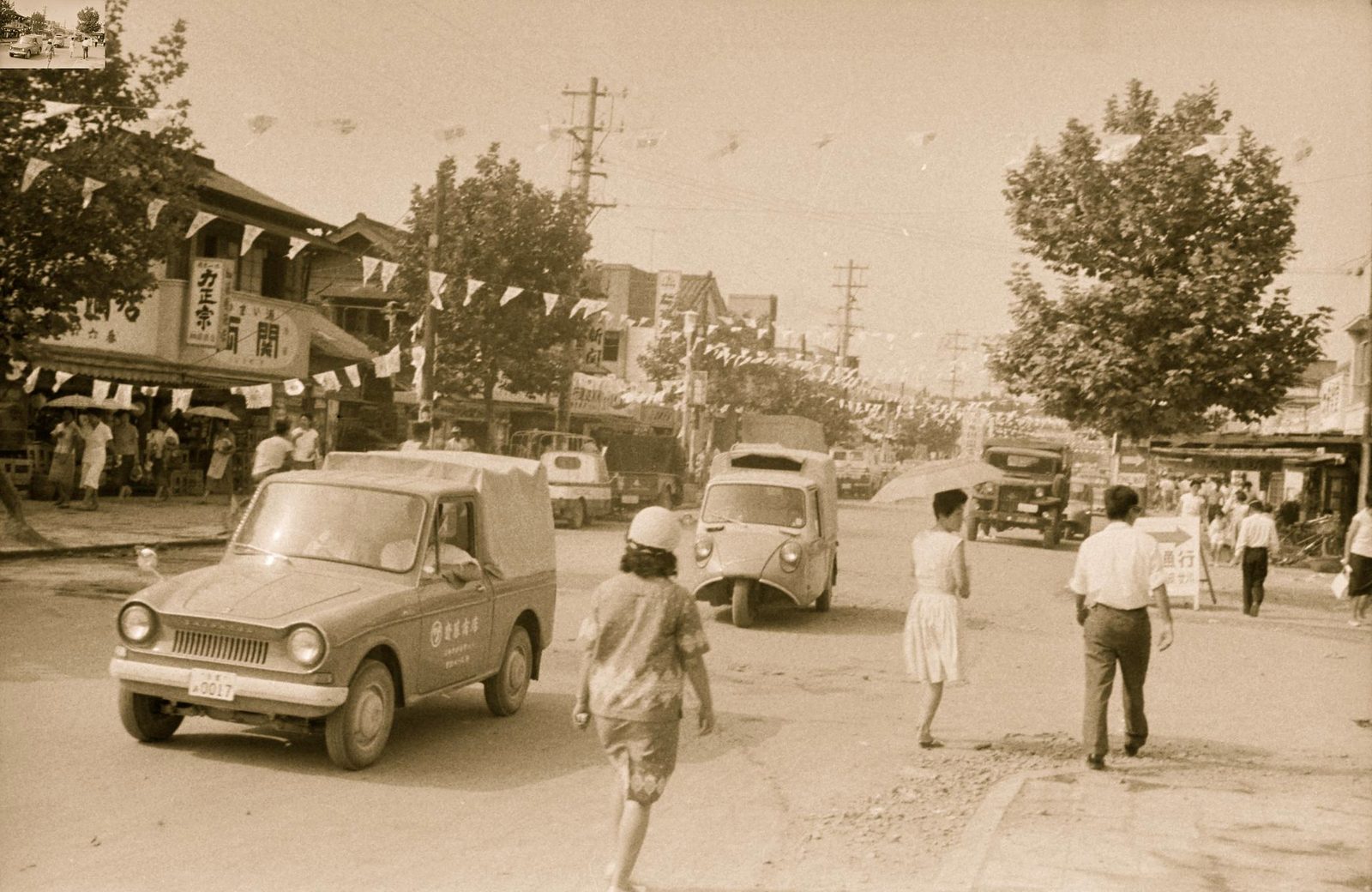
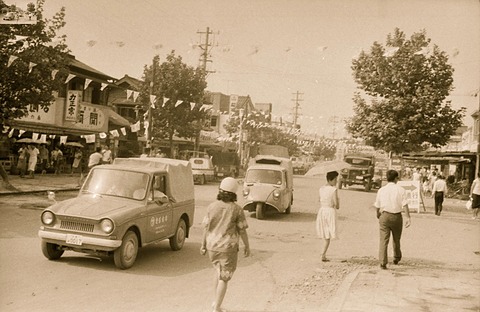
Early in 1962 Kia began to assemble the K‑360 under licence on its Shiheung line. Kia’s heritage archive calls it Korea’s first three-wheeled vehicle, and the step that led to Korea’s first licence to build cars (see built under licence).source 4source 7 Kia lists its engine as 577 cc, which matches the larger T‑600 rather than the K360’s 356 cc and is probably a copying error.source 4 Kia’s T‑600 of 1969 also began as a Mazda design; Korea barred three-wheelers from its highways in 1972, and in 2008 a T‑600 was registered as a Cultural Property.source 8
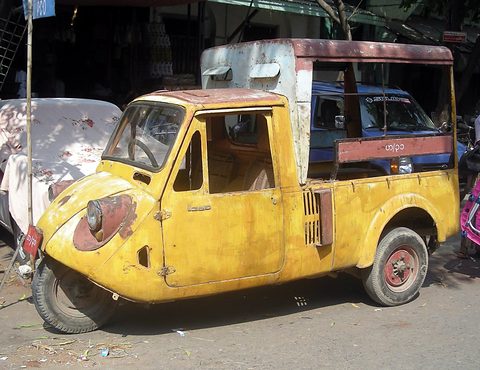
Burma imported K360s, T600s and Mazda’s four-wheeled B360s and B600s in the 1960s. In 1973 the state company MADI took over Mazda’s tooling and built the B360 and the K360 itself, into the 1990s.source 6 K360s were still working there in the 2000s.source 1source 6