The story
History
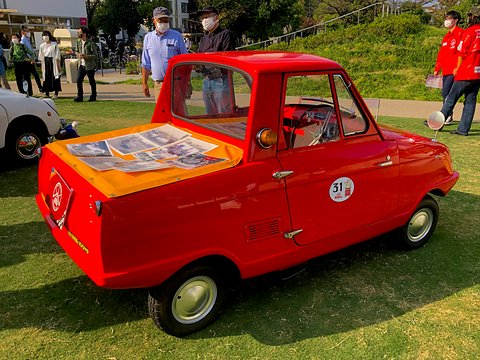
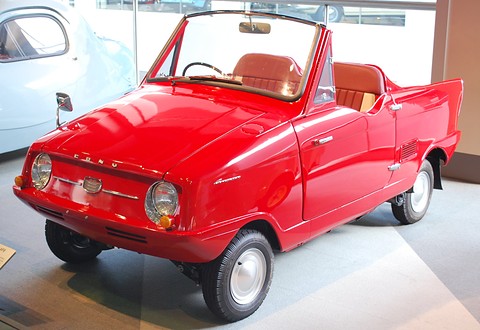
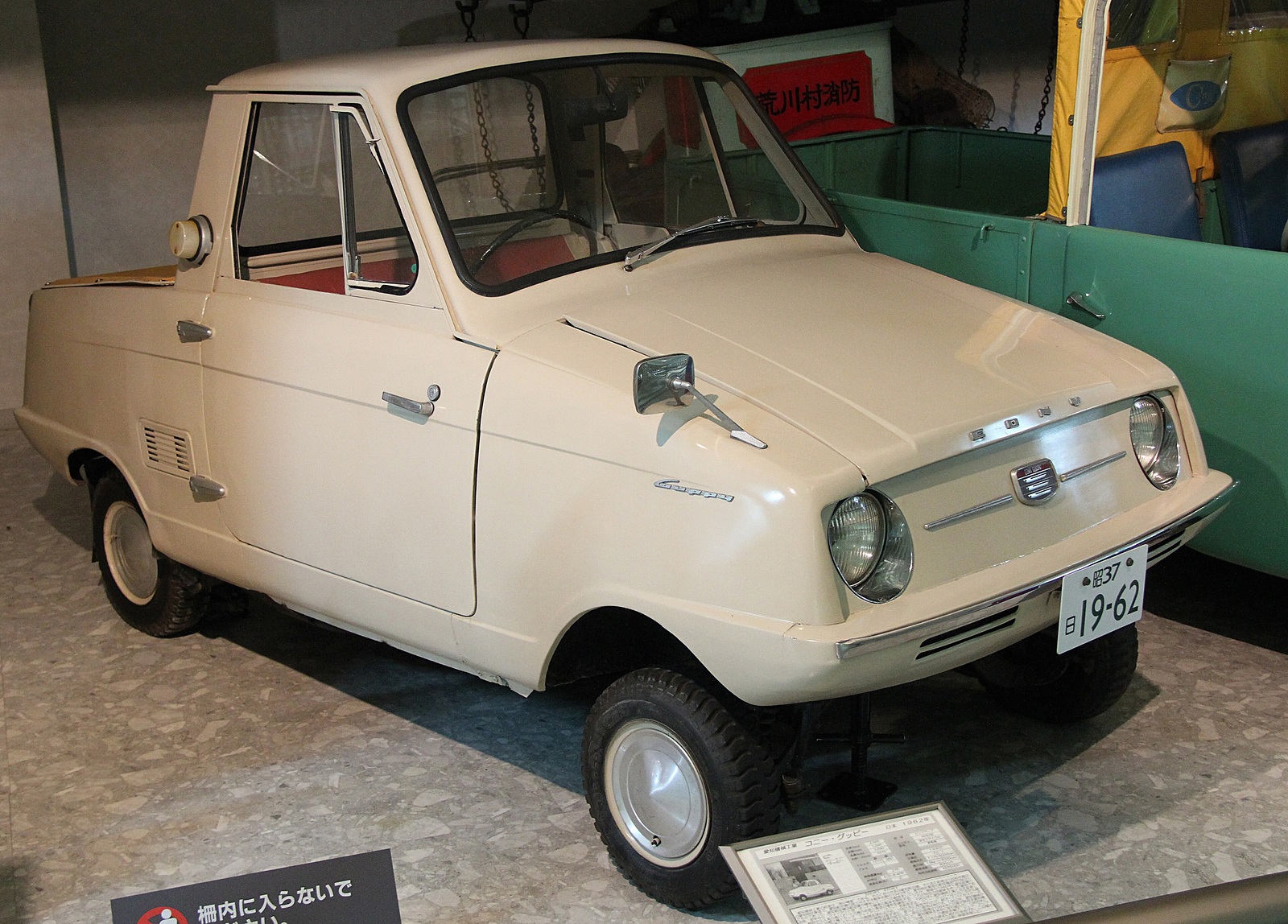
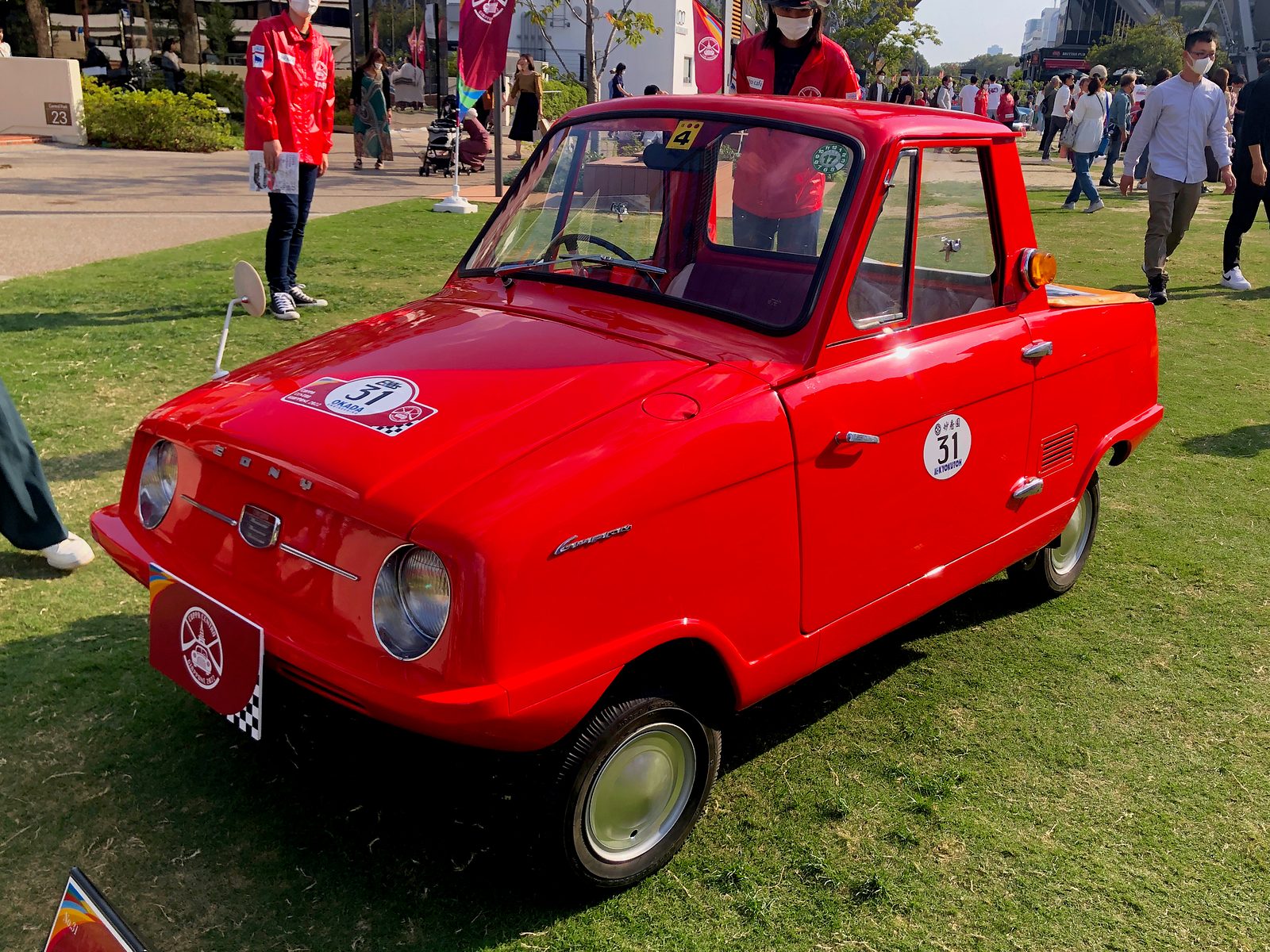
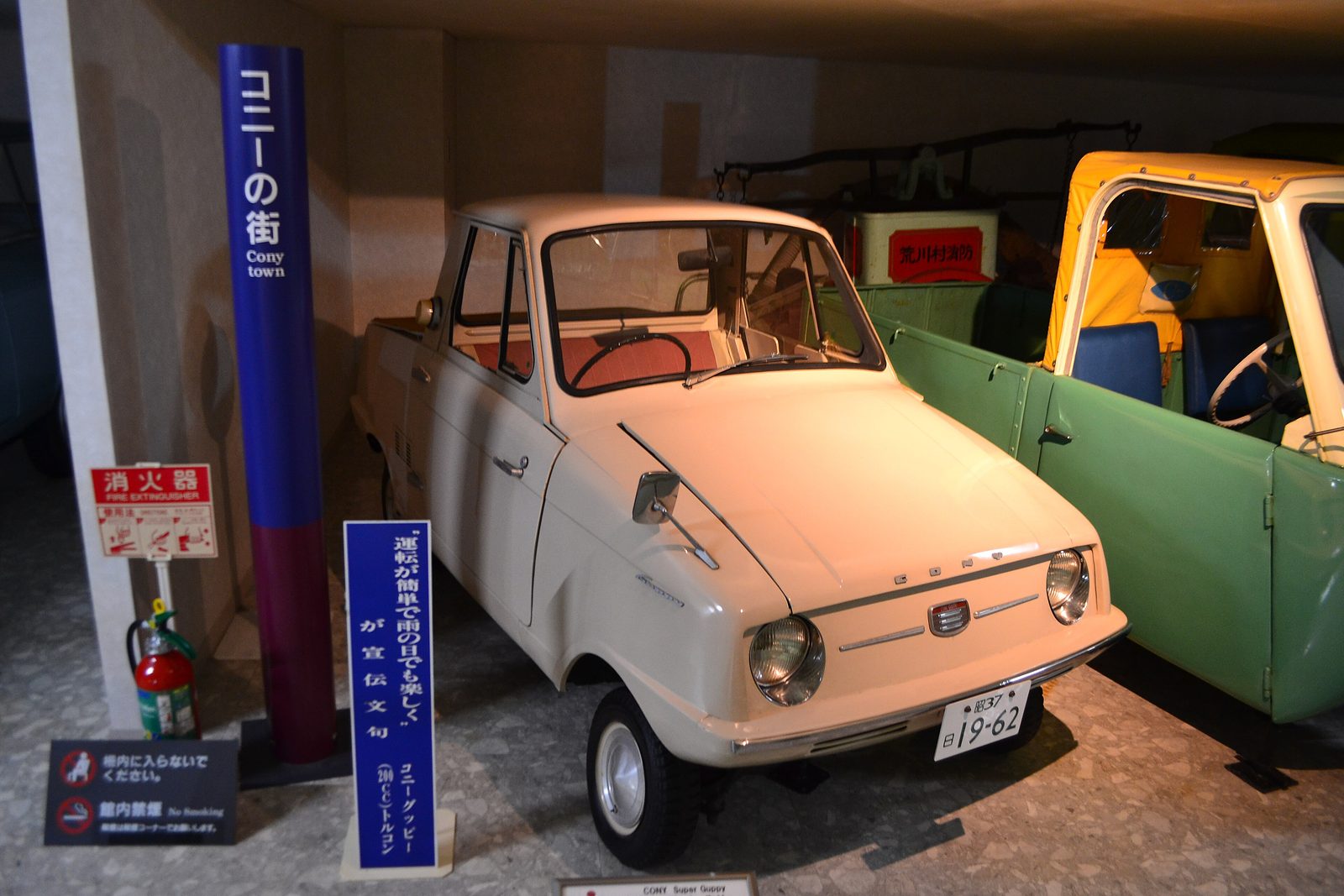
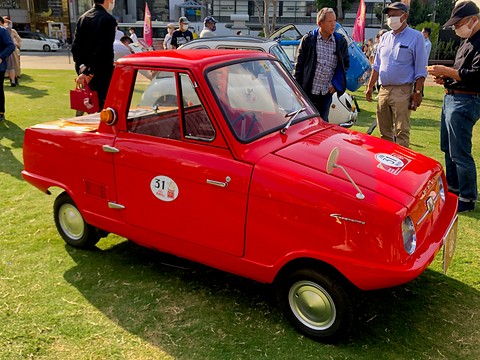
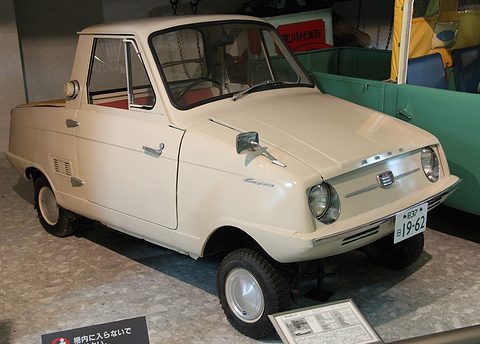
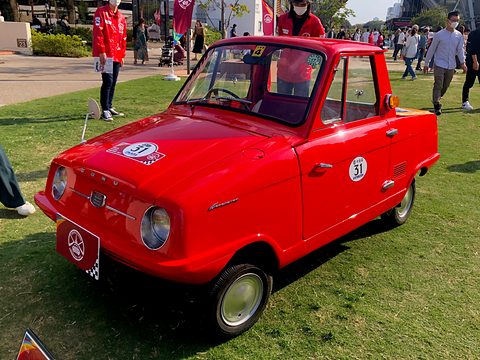
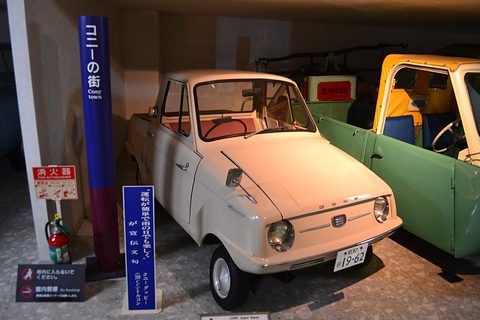
Aichi Kikai Kōgyō, Aichi Machine Industry, of Nagoya sold its vehicles under the name Cony.source 2source 1 It first considered a one-seat three-wheeled truck, and ended with a two-seat four-wheeler a class below the existing kei commercials (see kei trucks and vans, and our page of micro-vans). Its engine, of 199 cc, was roughly half the 360 cc the kei rules allowed. It was designed by a young industrial designer, Miyata Shūhei.source 2 Announced in April 1961, it went on sale in May at ¥225,000, rated to carry 100 kg (220 lb).source 2source 1
Two pedals
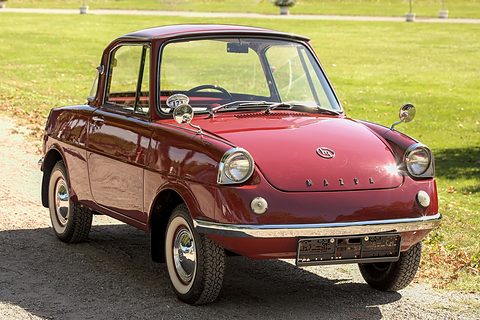
There was no clutch pedal. The air-cooled two-stroke single, mounted behind the seats under the little load bed, drove through a torque converter from Okamura Seisakusho and a single reduction gear; a lever on the steering column chose only forward or reverse. Without a clutch, it was meant to be as easy to drive as a scooter, for people moving up from one.source 2source 1 With the two-stroke’s pull at low speed, the light car and its modest top speed, the converter could serve as a stepless transmission on its own.source 2 Okamura had supplied the converter for the Mazda R360 Coupe’s automatic the year before.source 3
For its price it was advanced. All four wheels were independently sprung, by double wishbones in front and trailing arms behind, on 8-inch wheels, and the electrics were 12-volt.source 2source 1 It had its oddities: the handbrake, shaped like a walking stick, came out of the middle of the dashboard; two round indicators stuck out of the rear pillars, visible from in front and behind, so that only two were needed; and a single tail lamp, like a motorcycle’s, sat at the back. The fuel tank was under the front bonnet, on the passenger’s side, with its own filler lid.source 2 English Wikipedia’s rotating beacons on the pillars appear to be these indicators, misread.source 4
Too gentle for the work
Through the converter, 11 PS (8 kW) was not much. The Guppy took 21.7 seconds to cover 200 m from rest, and its official top speed was 81 km/h (50 mph).source 2 Its independent suspension and 100 kg payload did not suit the bad roads of the day, or the overloading that was normal then.source 2 A more powerful Super Guppy was added, but it did not save the car; no specification for it has been found.source 2 A dealer, Aichi Giant, built open Guppy Sports.source 1
Aichi had planned 300 a month at first, rising to 5,000 a month in 1962. By March 1963 it had built 4,645, less than one month of that target, and sales ended in May.source 2 The Guppy and the Cony 360 Coach van between them put Aichi in the red for the business term to September 1962, with no dividend, and led to its tie-up with Nissan; English Wikipedia says Nissan gradually took the company over.source 2source 4
The Datsun Babies
The Guppy had an afterlife. In 1965 Nissan designed a body of its own for the leftover Guppy parts and built 100 cars for Kodomo no Kuni, Children’s Land, a park that opened that year. Nissan gave them to the park, where until 1973 they let children drive real cars and learn the rules of the road.source 2 English Wikipedia says they were limited to 30 km/h (19 mph).source 4 It also places the park at Hazu, in Aichi; Japanese Wikipedia puts it in Kanagawa, which fits Nissan’s celebration of the park’s fiftieth year in 2015.source 4source 2
A yellow Datsun Baby went to the Tomakomai City Science Centre, where it was put on static display after 1981; Nissan’s Hokkaido service centre repaired it in 2011, and it went back on show in December 2012. In March 2015, for the park’s fiftieth anniversary, Nissan’s volunteer restoration club brought car number 100 back to running order, and it was shown in the gallery at Nissan’s global headquarters.source 2