The story
History
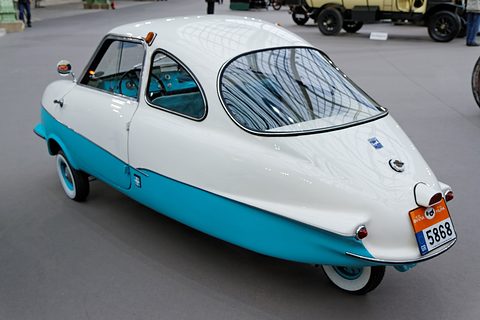
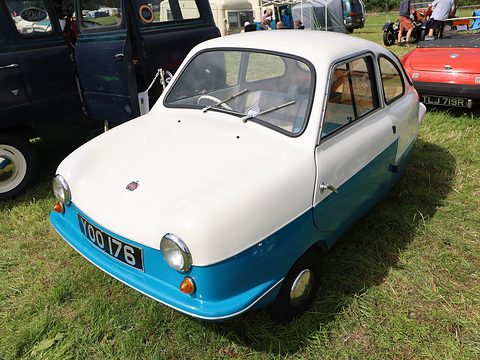
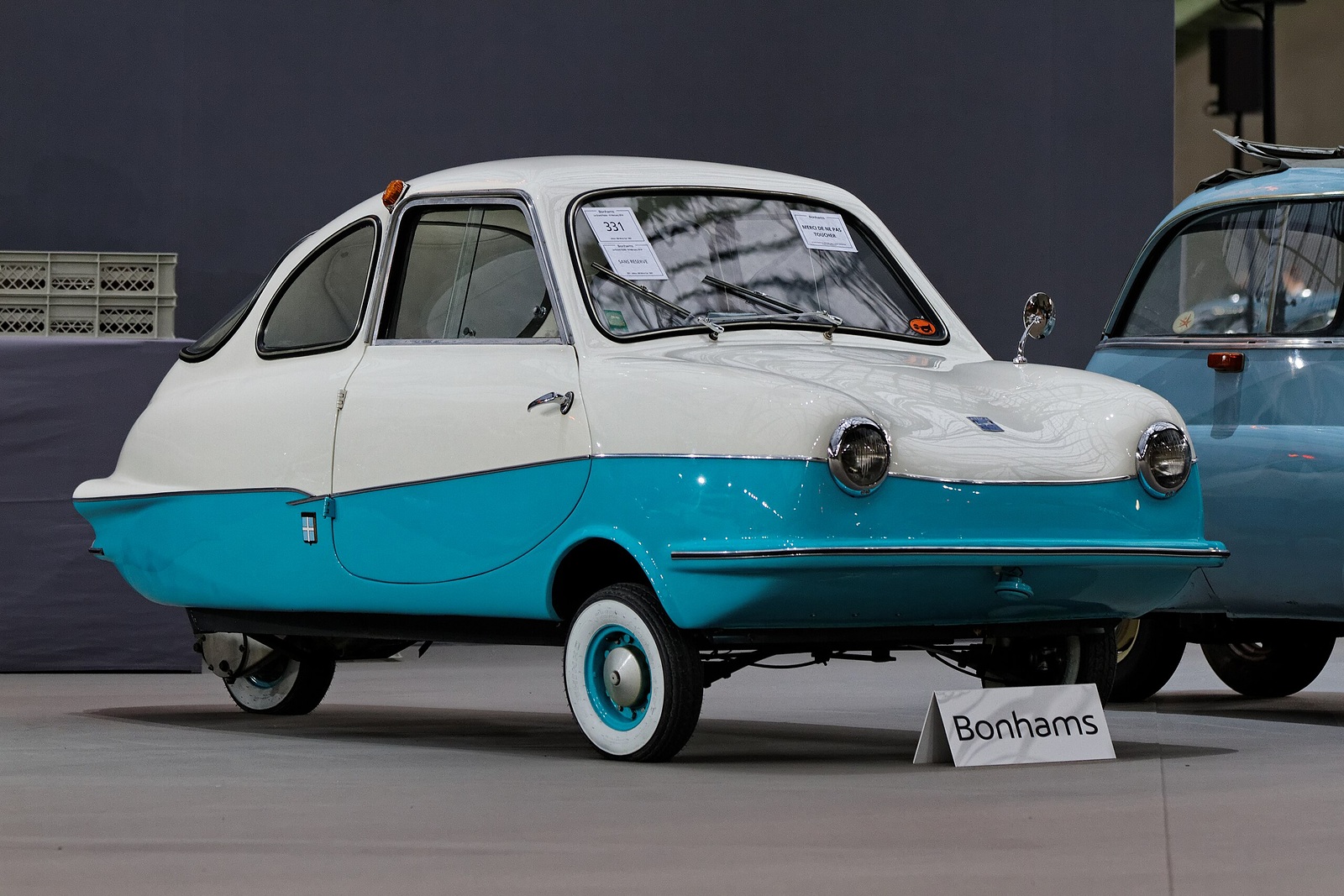
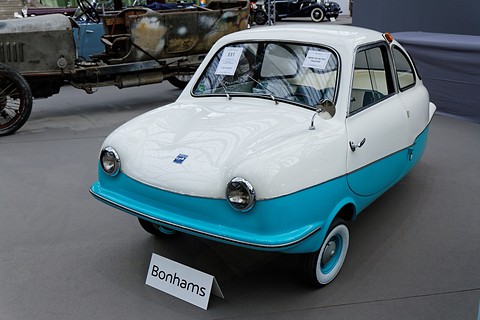
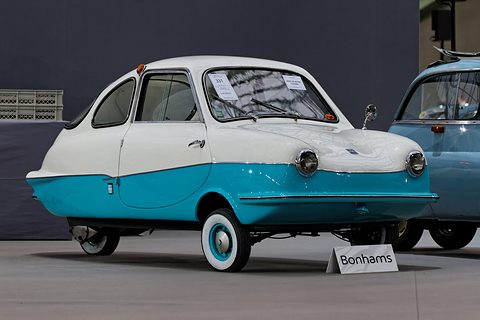
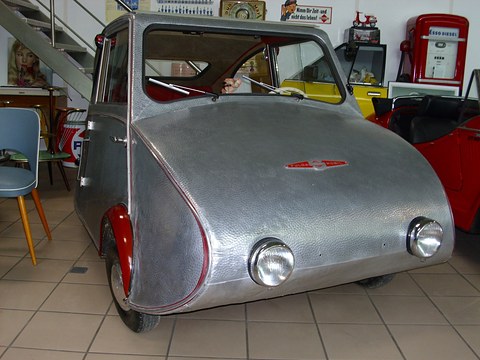
Georgios Dimitriadis ran Bioplastic, a maker of glass-fibre panels and boats, in Moschato, Athens, or in neighbouring Piraeus, by other accounts.source 1source 2source 3 In 1958 he had designed a small four-wheeled car of his own, the Dimitriadis 505. It got no help from the state, and he judged that it could not pay against three-wheelers, which Greek law did not put in the same tax and other categories as four-wheeled cars: they were classed as motorcycles.source 1source 3source 4 Instead he took a licence for the Fuldamobil, a German bubble-shaped three-wheeler (see bubble cars), with a pair of wheels in front and a single one behind. English Wikipedia notes that a design already approved abroad was much easier to get certified for production in Greece.source 1source 2
When production began is disputed. English Wikipedia, citing the Greek reference books, and the dealer who sold a 1967 car give 1962; German Wikipedia, citing the German encyclopaedias, and the Small Cars Club date the licence to 1964.source 1source 5source 2source 3 The car was built with few changes from the German one.source 1source 3 Most sources give it Heinkel’s 198 cc four-stroke single, with four speeds and reverse; English Wikipedia adds Sachs engines and Attica’s own, all of about 200 cc.source 1source 2source 5source 3 The Attica 200 was very popular in Greece and is still remembered there, yet Georgano’s encyclopaedia and the Small Cars Club put the closed cars at only about 100.source 1source 2source 3 It belongs to the Fuldamobil’s wide licence family, with the Nobel 200 in Britain, the Fram King Fulda in Sweden, the Bambino 200 in the Netherlands and the Bambi in Argentina (more cars built under licence).source 6
A beach car, a truck and an Israeli four-wheeler
In 1966 came the Cabrioletta, an open beach car with no doors, a frameless windscreen, a sun canopy and wicker seats for four; the Small Cars Club counts five built. English Wikipedia says Attica developed two different open versions, and there was also a convertible prototype.source 3source 1 In 1968 the design became a light truck, the Delta: the rear half of the 200 served as the truck’s front end, now on a single front wheel, and it sold modestly.source 1source 2 Attica also built a four-wheeler, the Carmel 12 of 1965, under licence from Autocars of Israel, whose own cars were based on Reliants; it was assembled mostly from imported parts, and about 100 were made.source 1source 2
The 200 ended in 1971, or 1972 by the Small Cars Club’s account.source 1source 5source 3 German Wikipedia says Bioplastic ran into money trouble in 1968 and sold its licence to Alta, which built a three-wheeler of its own, the Alta A200; no other source read says so.source 2