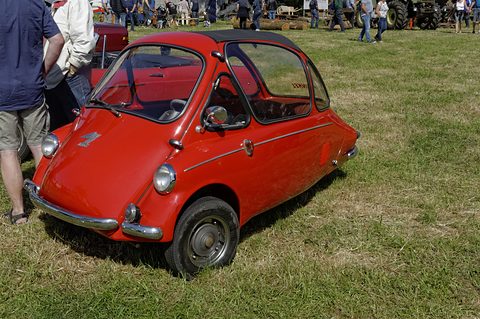
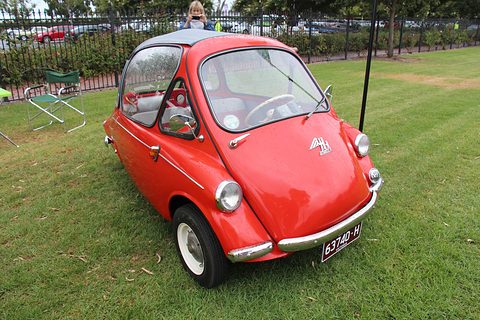
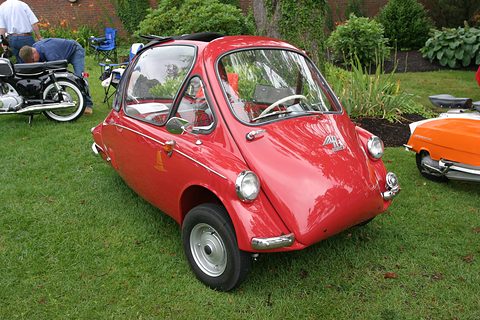
microcarfan
  • Bubble car
  • West Germany
  • Three or four wheels
  • Front door

Heinkel Kabine

Also known as Heinkel-Kabine 175, Types 150, 153 and 154, Heinkel Cabin Cruiser

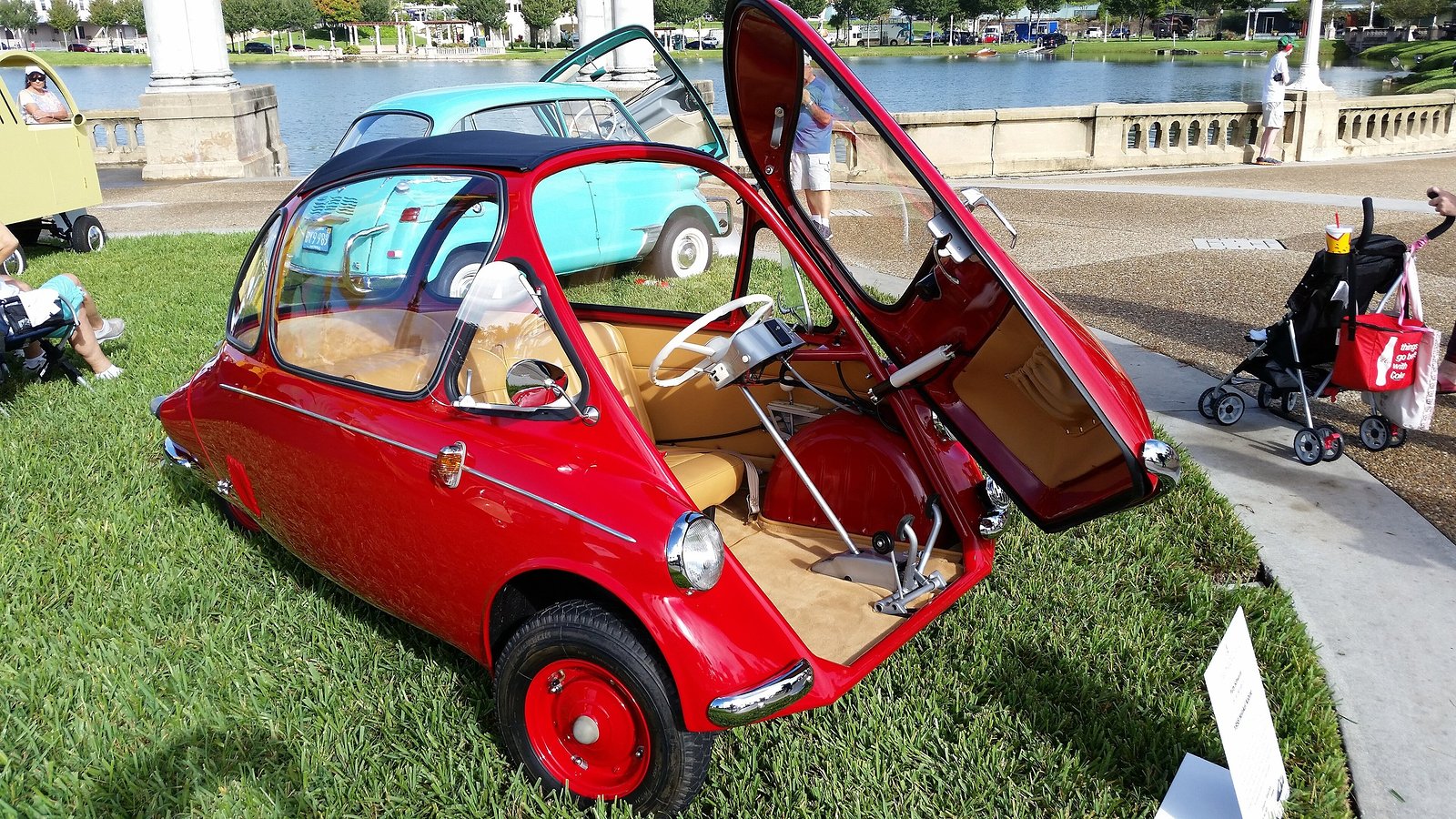
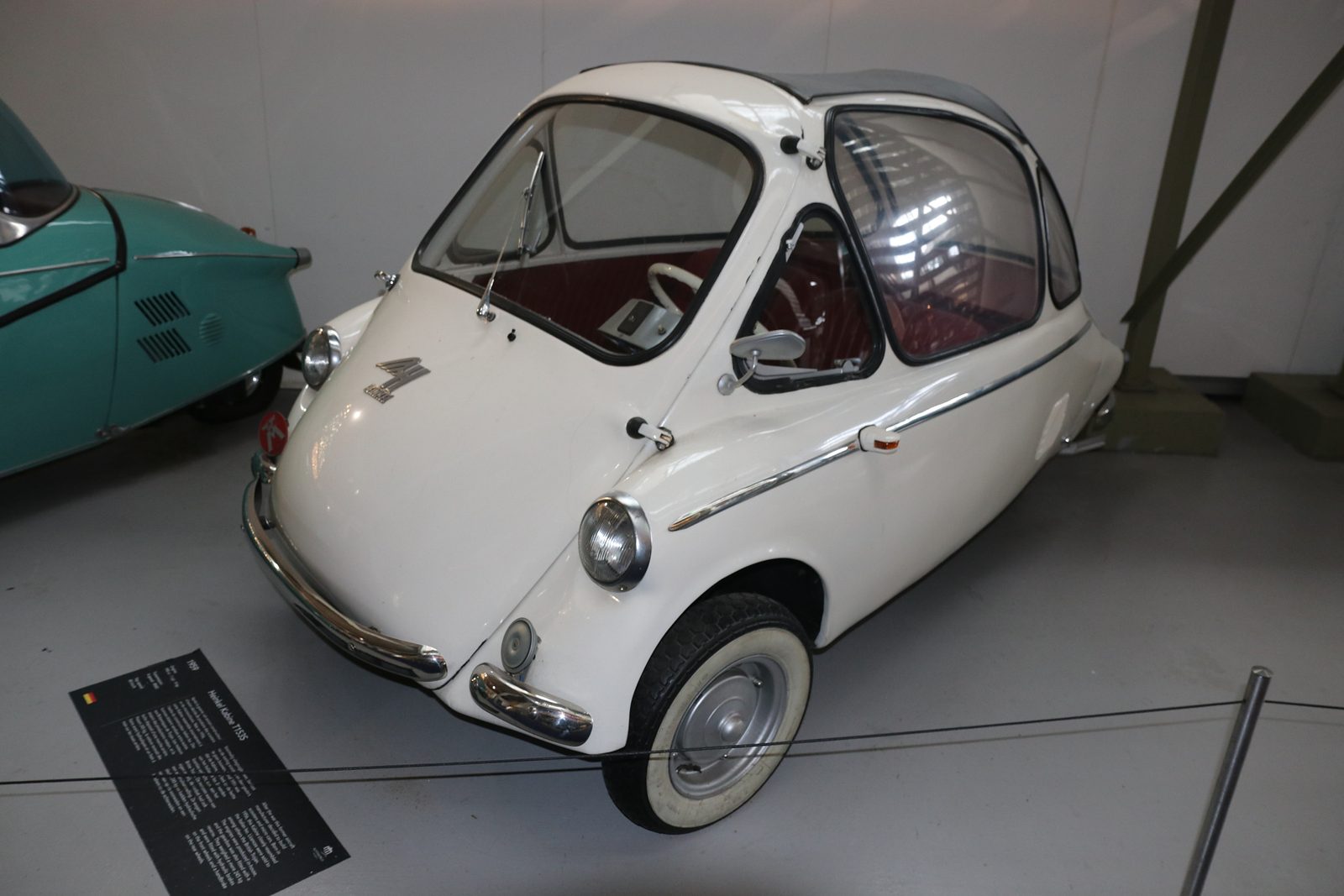
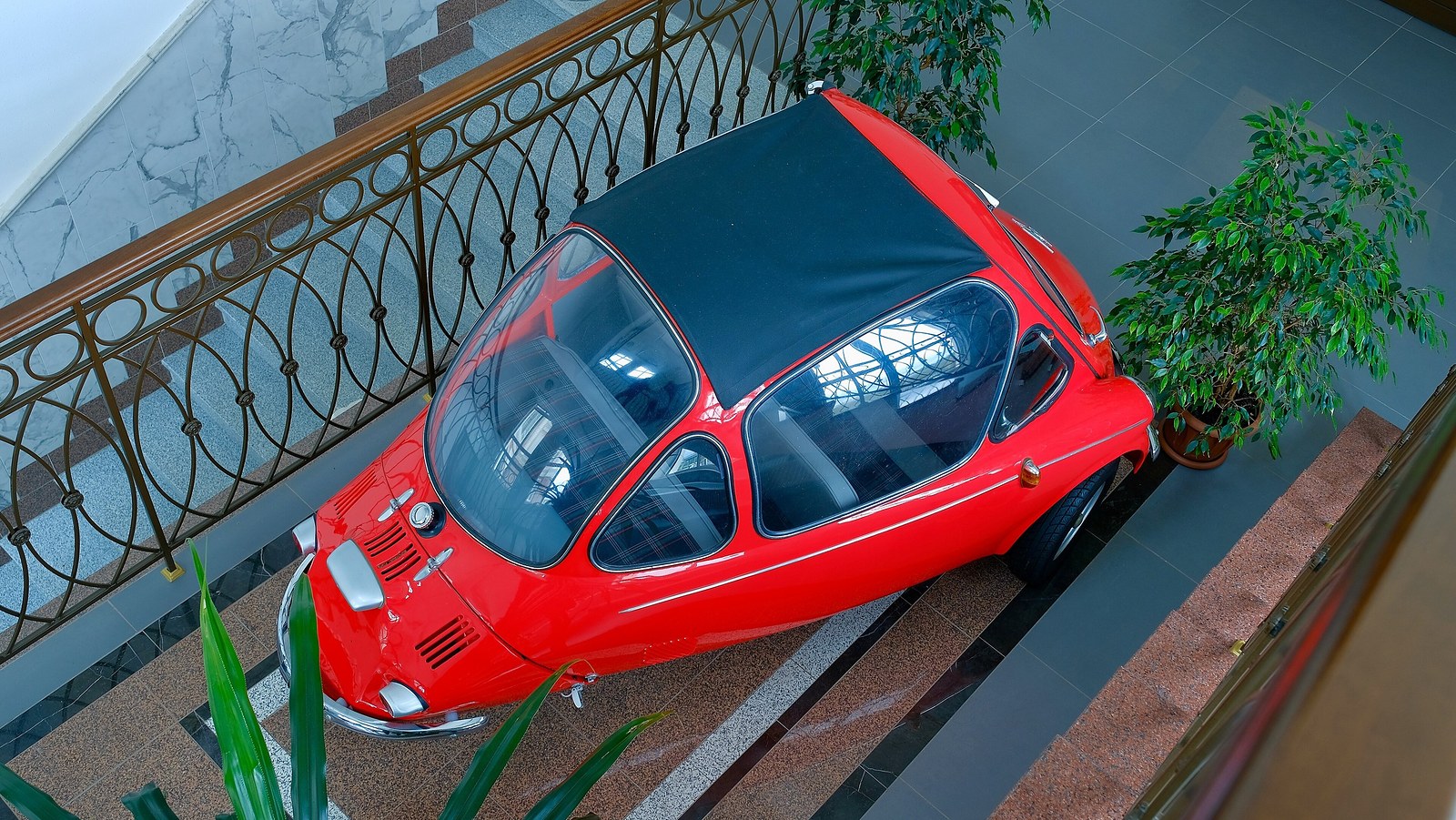
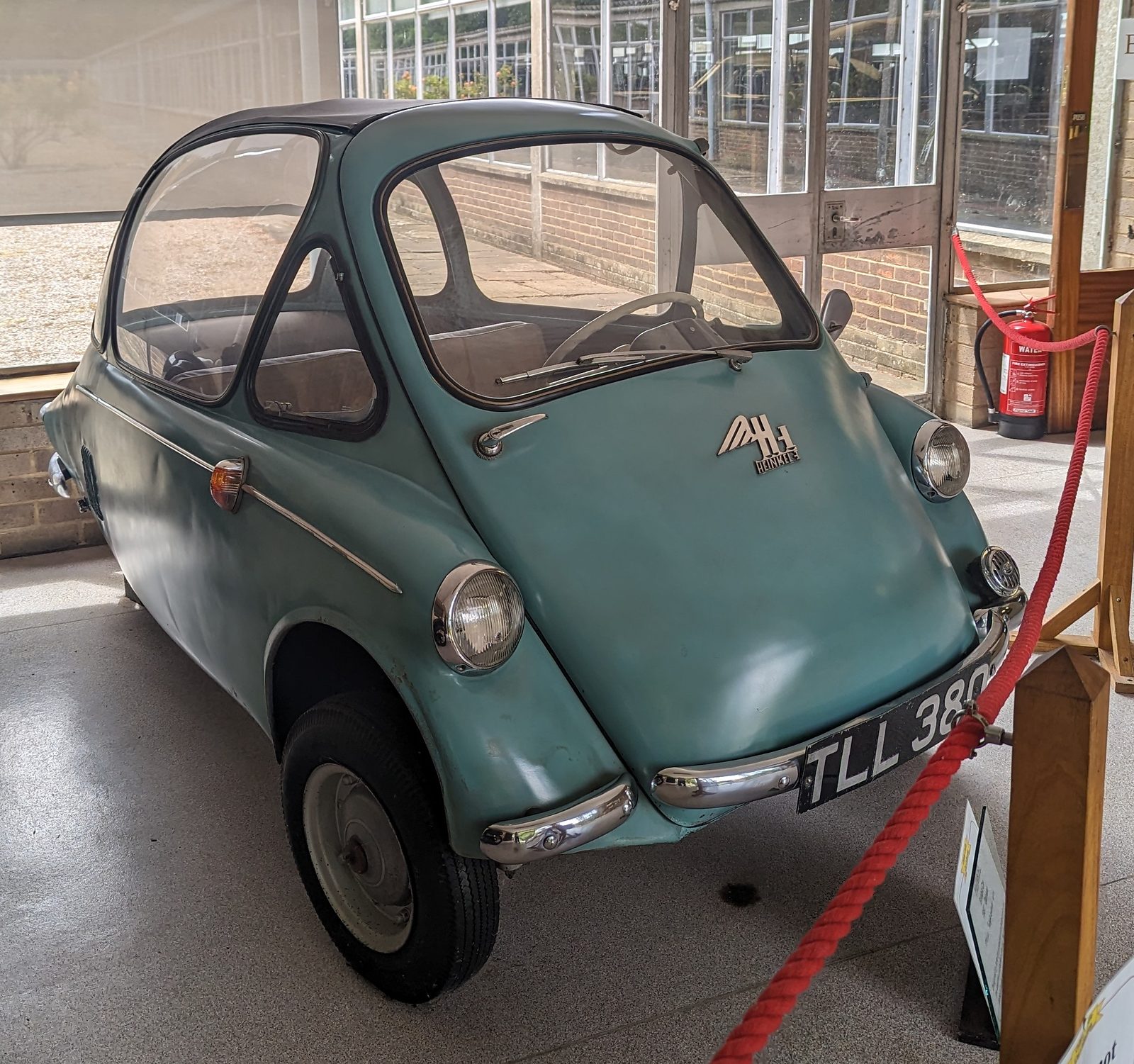
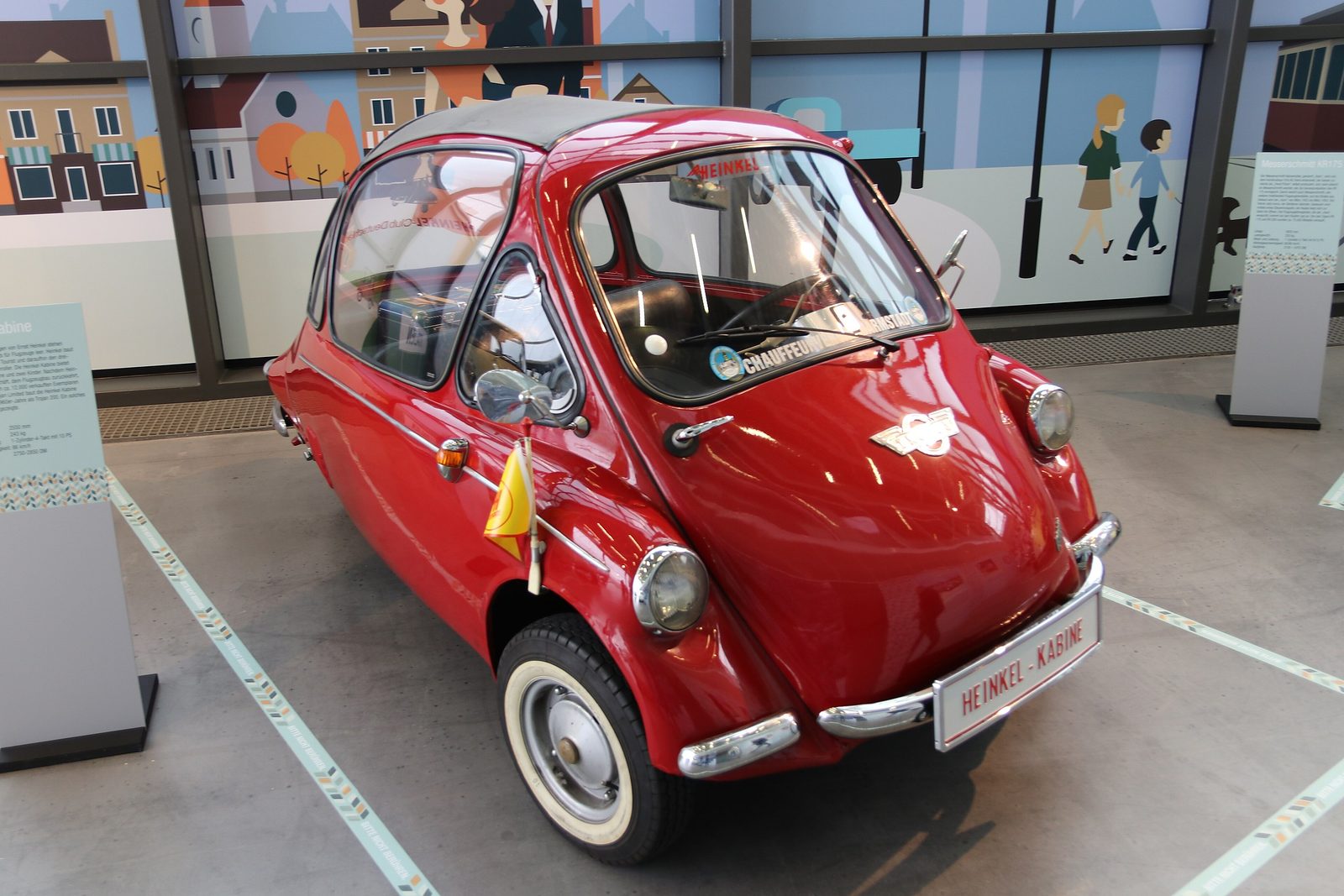
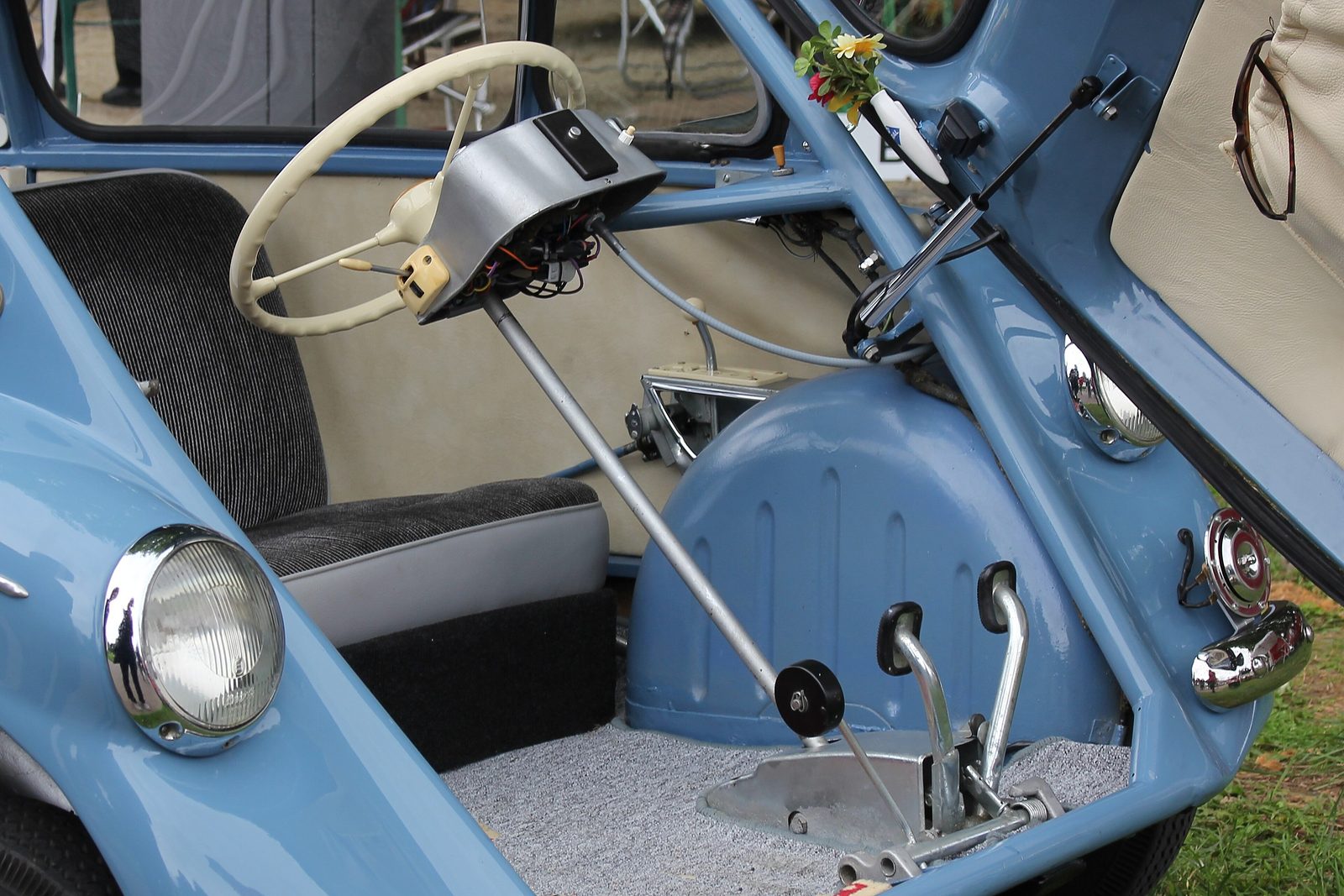
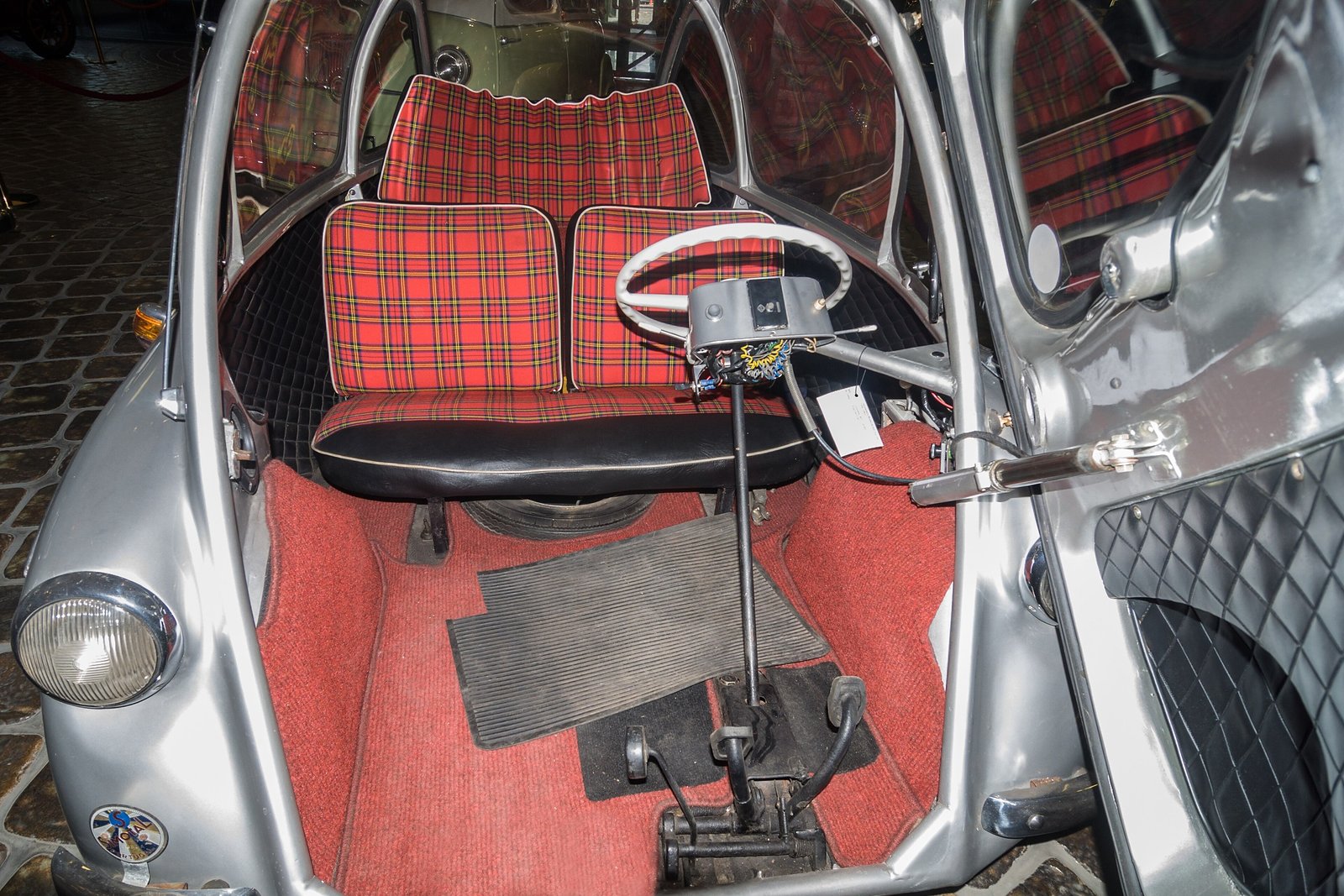
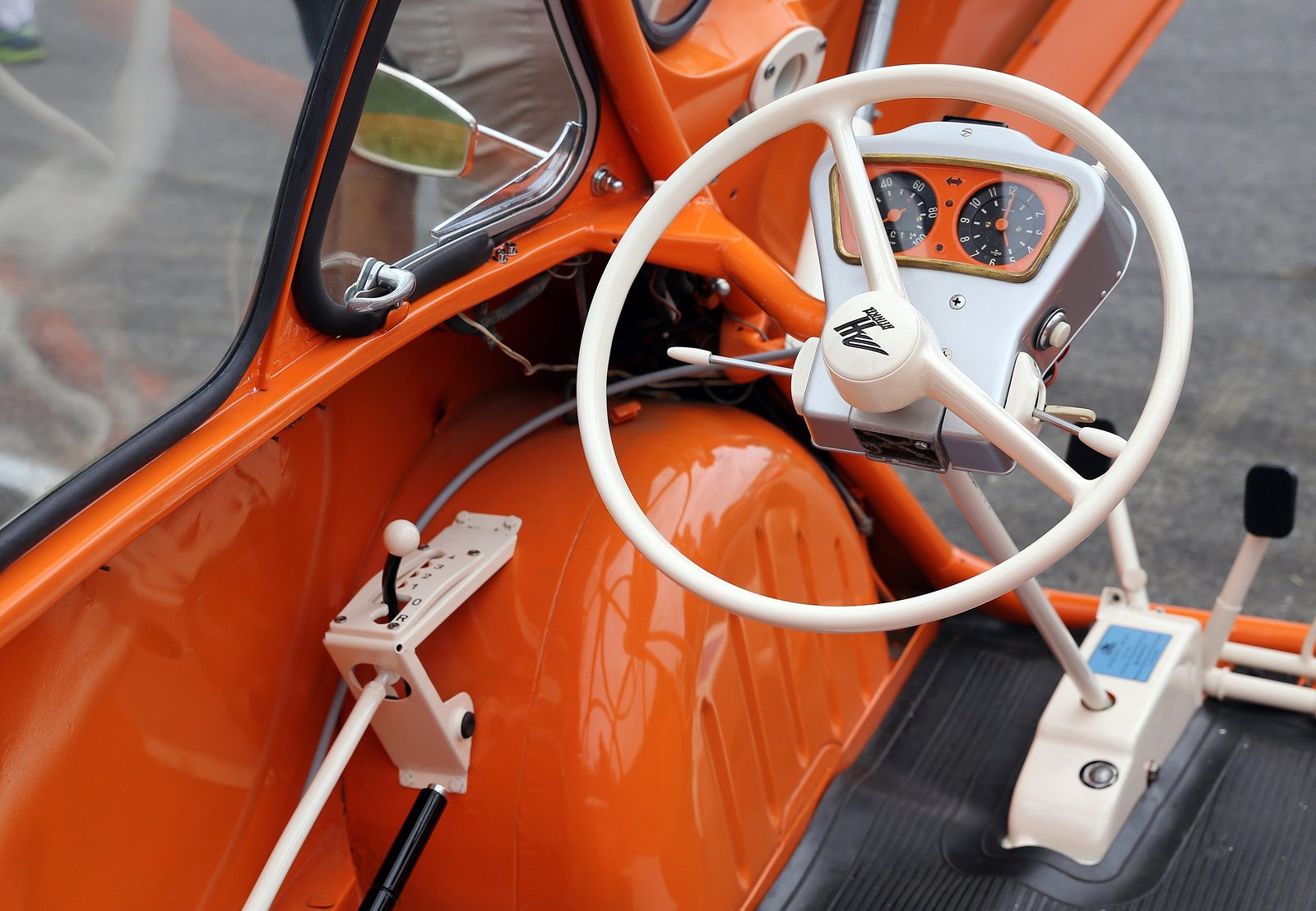
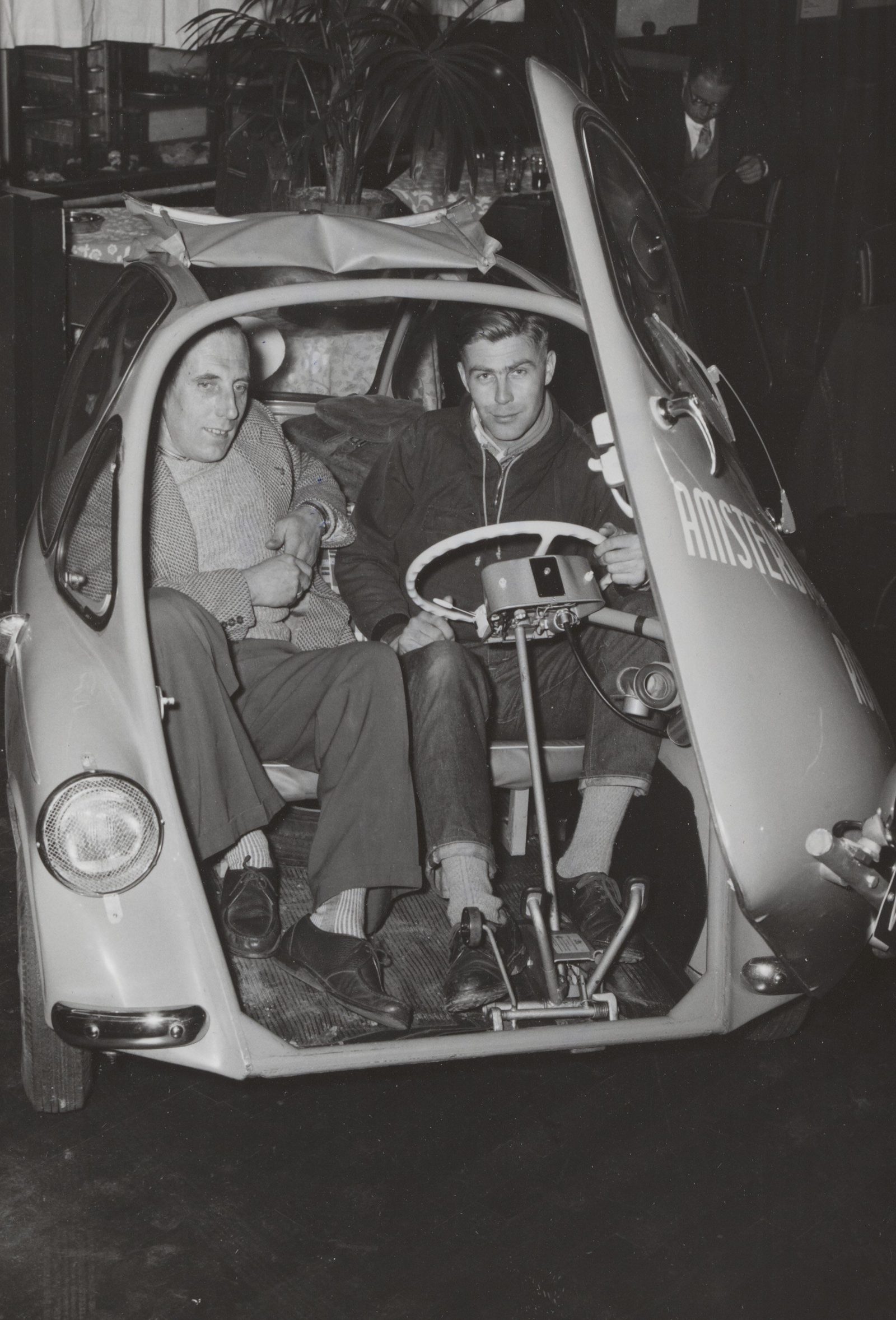
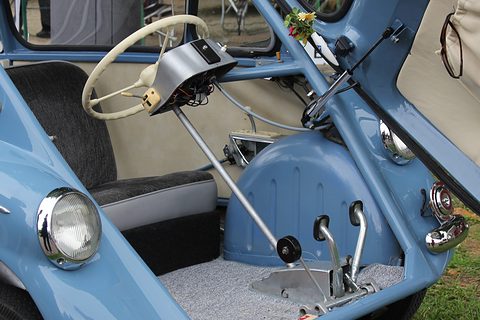
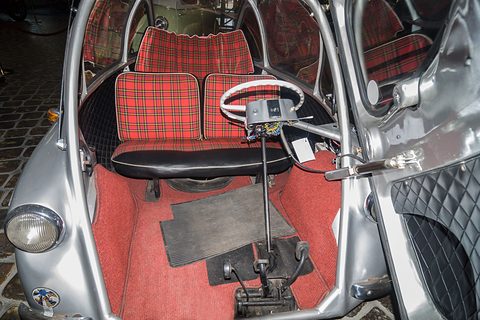
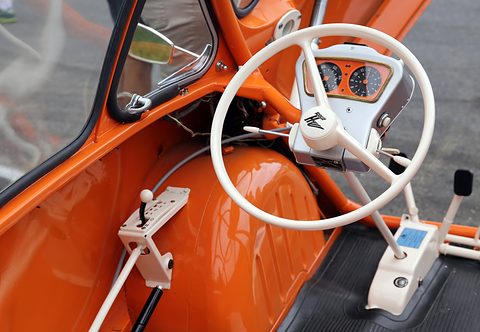
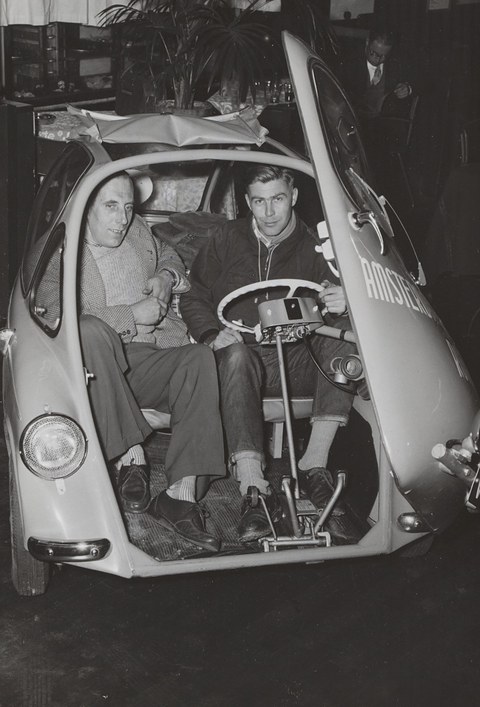
The door is the whole front of the car, as on the Isetta, but the steering wheel stays where it is when you open it. Behind the bench sits a scooter engine of 174 cc, and the whole bubble car weighed about 100 kg less than the rival it was built to beat.

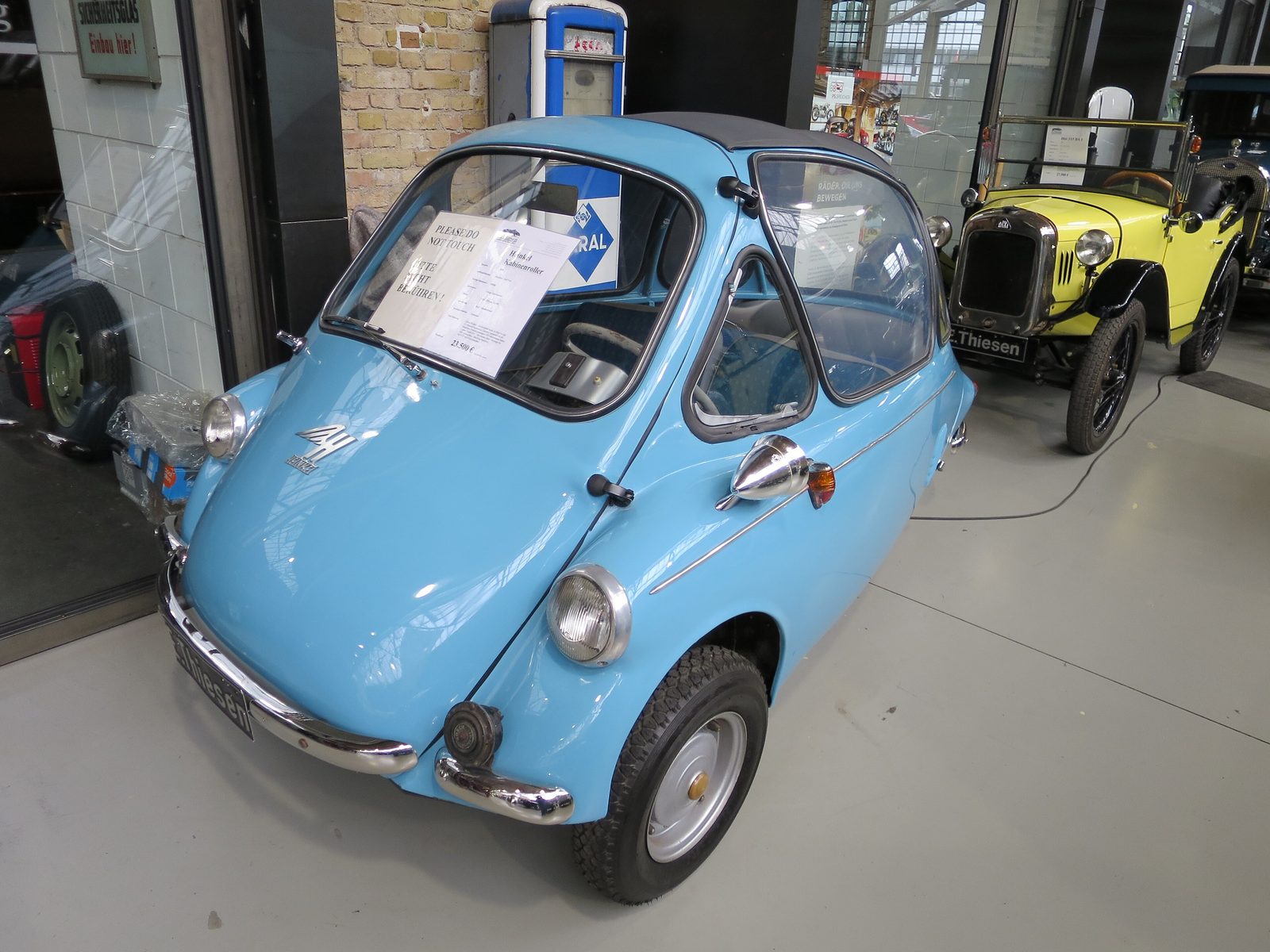
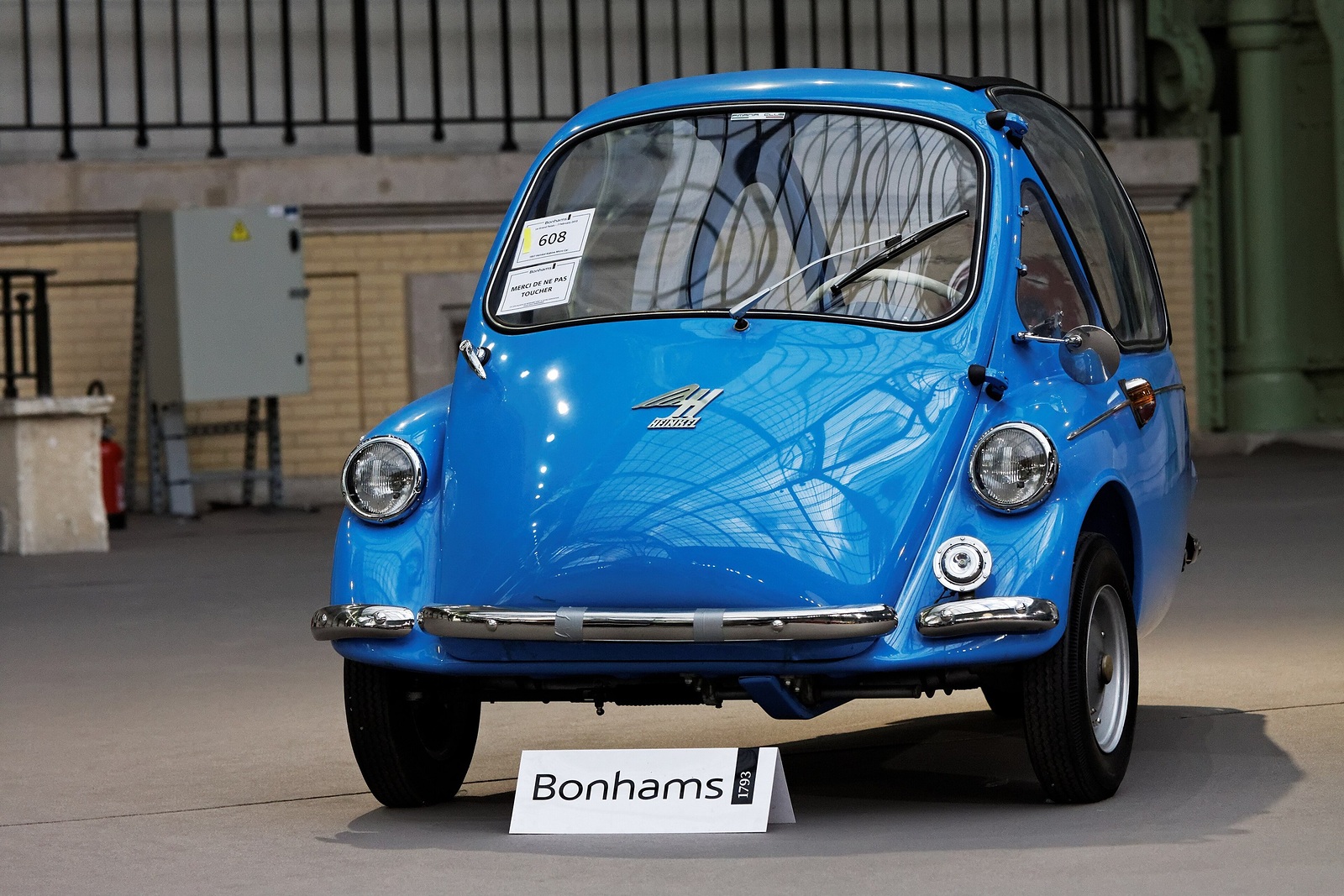
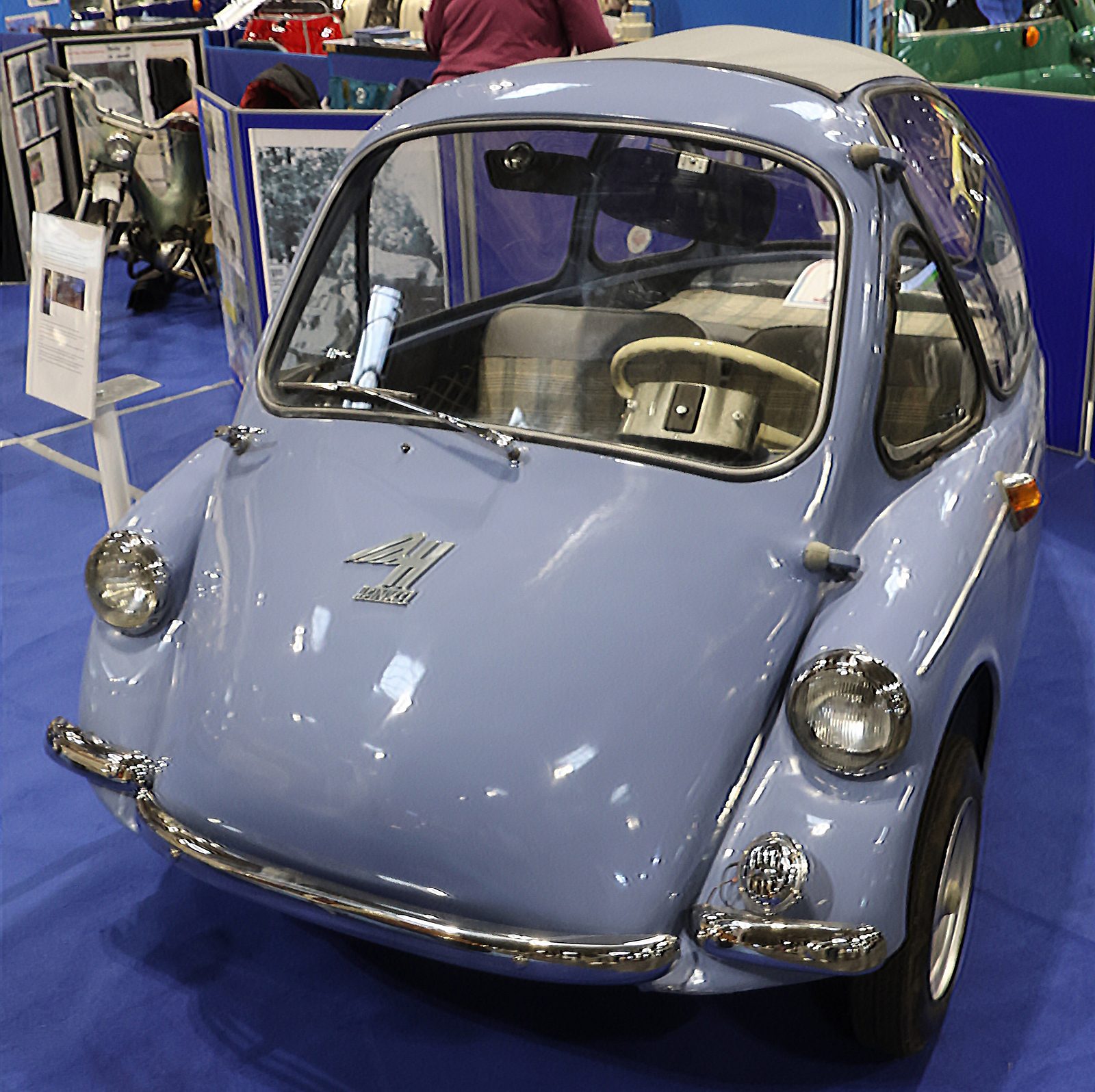
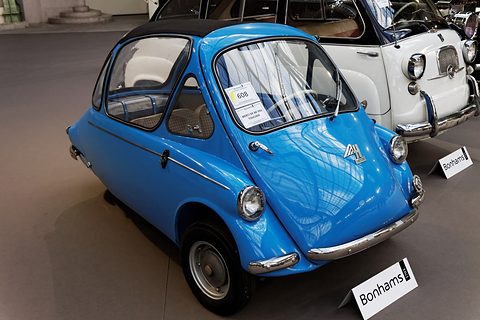
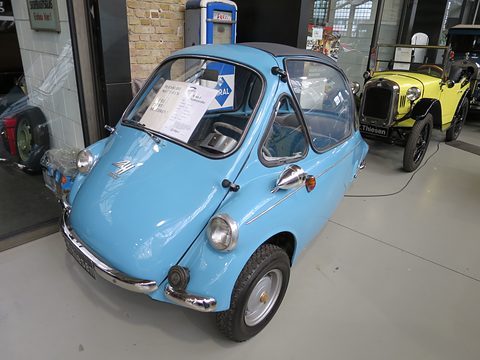
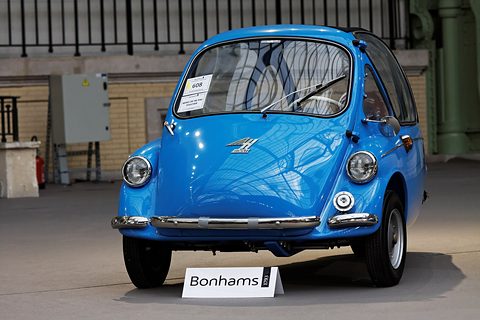
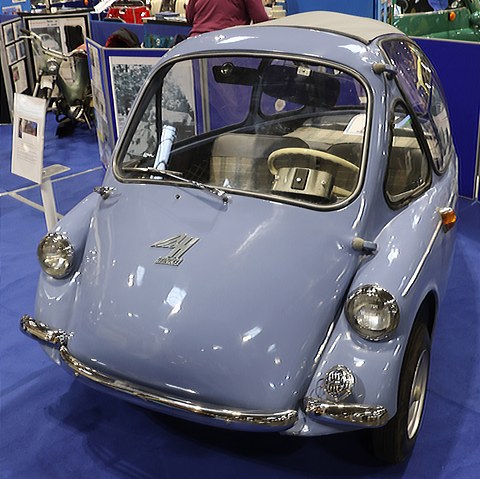
Bright blue bubble car with a black roof on a grey floor, a white saloon and a sale sign beside it.
A blue 1957 Heinkel Kabine at the Bonhams sale in the Grand Palais, Paris, in February 2013.Photo: Thesupermat, CC BY-SA 3.0, via Wikimedia Commons

At a glance

The spec plate

Heinkel Kabine

Heinkel-Kabine 175, Type 150 · Stuttgart

Built
1955–⁠1958December 1955 to June 1958 in Germany; then under licence abroad
Country
West GermanyErnst Heinkel AG, Stuttgart-Zuffenhausen; built at Speyer, by the club’s account
Maker
Ernst Heinkel Fahrzeugbau GmbHPart of Ernst Heinkel AG, the aircraft, scooter and engine maker
Engine
174 cc Heinkel four-stroke singleThe Tourist scooter’s; 204 cc from October 1956, then 198 cc
Power
9.2 PS6.8 kW at 5,500 rpm; 10 PS (7.4 kW) for the 198 cc engine
Length
2,550 mm1,370 mm wide, 1,320 mm high
Weight
243 kgWith a full tank, the Type 150; 290 kg for the 198 cc cars by German Wikipedia
Seats
2 + childrenA bench for two, with room behind for a child or two
Wheels
3Two at the front, one driven at the back; the Type 154 has two rear wheels 220 mm apart
Price new
DM 2,7501956, the price of an Isetta 250; £398 15s in Britain
Production
11,975In Germany, December 1955 to June 1958; about 27,000 with the licence-builds
Top speed
87km/h87 km/h54 mph; about 75 km/h on slight gradients

How big is it?

True proportion

2.55 m

It is 420 mm shorter than a Fiat 500, about 1.5 adults laid end to end.

  • 1.37 m wide
  • 243 kg: about three adults
  • About 100 kg lighter than the Isetta it was built to rivalsource 1
  • Room behind the bench for luggage, or a slim adult of up to about 60 kgsource 1
Drawn at true proportion. The track is 3.6 metres long; the adult stands at the same scale. The Peel P50 is the smallest production car, on every page for comparison.

The story

History

Professor Ernst Heinkel (1888–⁠1958) had designed aircraft; after the war his company in Stuttgart-Zuffenhausen built the Tourist scooter and supplied engines to other firms, among them Tempo’s vans and the Maico.source 2source 3 In 1955 auto motor und sport noticed that, apart from BMW, the firms taking up the small cabin car were outsiders, above all aircraft makers: Messerschmitt, Heinkel and then Dornier, whose Delta became the Zündapp Janus.source 4 So the Kabine is often called the car an aircraft maker built because it could not build aircraft (see aircraft makers). The record is plainer than that. Heinkel was already a scooter and engine maker, the car used its scooter’s drive, and the firm let it go once aviation and scooter work needed the room.source 4source 1source 2

The magazine showed the prototype early in 1955 under the caption “Ei auf 3 Rädern”, an egg on three wheels. It had the scooter’s 175 cc four-stroke, hydraulic brakes on the two front wheels only, a door at the front like the Isetta’s but with the steering column fixed, a Plexiglas dome with swinging quarter-lights and a folding roof, and two seats side by side with a generous luggage space behind. At a careless glance, the caption said, you might take it for a cross between a Messerschmitt and an Isetta.source 5source 6 It missed the Frankfurt show that September, though the show’s data table listed it: 9.5 PS, four gears, 250 kg and 85 km/h.source 7

Lighter than an Isetta

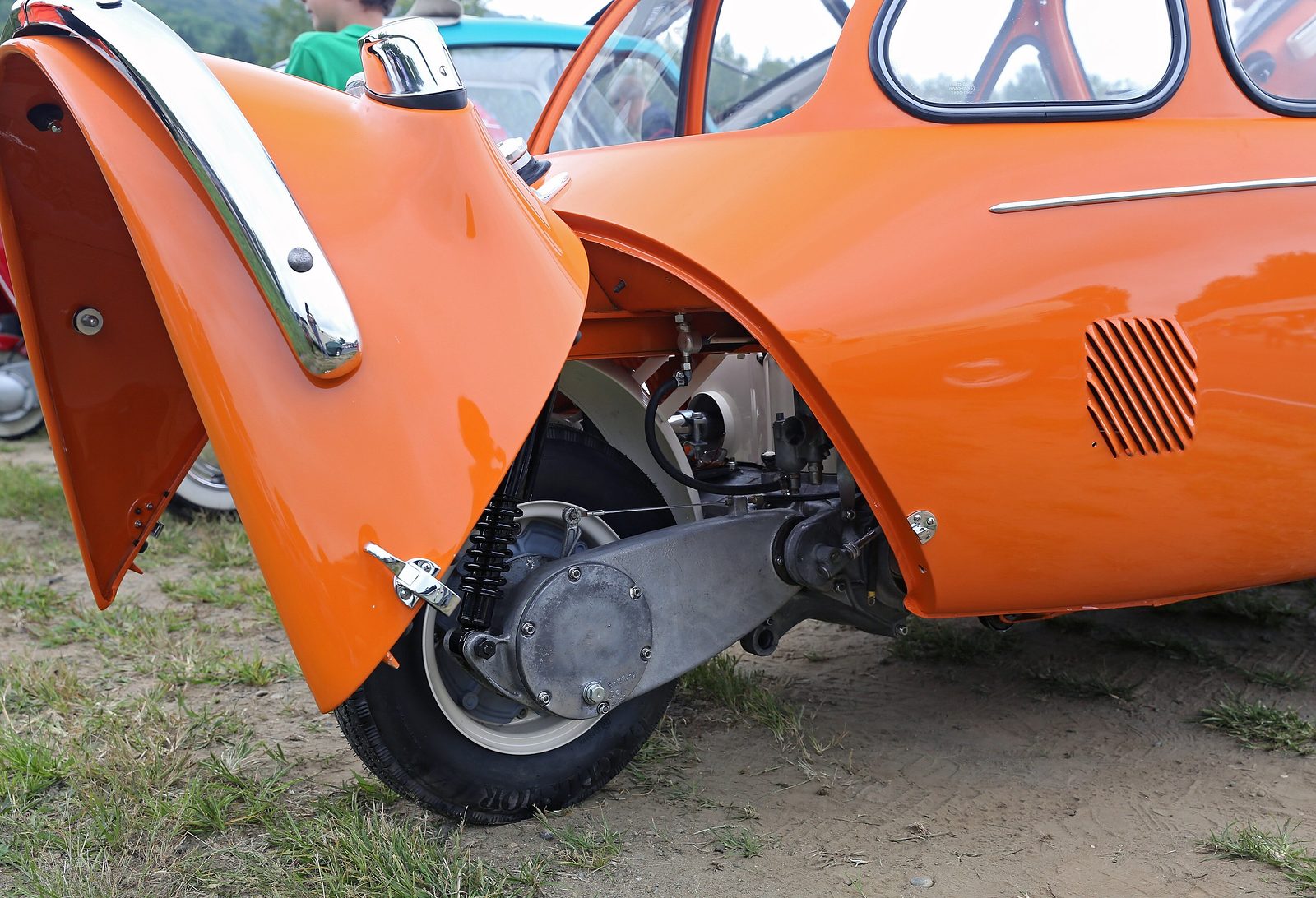
Production began in December 1955, at Speyer by the Heinkel Trojan Club’s account, and the car was on sale in 1956.source 8source 6 It was built round the Tourist scooter’s complete engine, gearbox and swinging-arm drive, almost unchanged, and auto motor und sport knew of no other attempt to drive a vehicle with more than two wheels with an unaltered mass-produced scooter unit.source 1 The four-stroke single sat at the back and drove the rear wheel by chain, inside a cast, oil-filled chaincase that was also the swinging arm.source 1source 6 The body was sheet steel on a tubular cage, with a big Plexiglas glasshouse and a roll-back roof as standard. The front door opened as the Isetta’s did, but the steering column did not swing out with it.source 6source 1 Behind the bench for two was room for luggage, for one larger or two smaller children, or at a pinch for a slim adult of up to about 60 kg (130 lb).source 1 Unlike some of its rivals, it had a proper reverse gear.source 1source 9

At about 245 kg (540 lb) it weighed some 100 kg less than the Isetta, 28 per cent less, so its 9.5 PS had as little weight to pull per horsepower as the Isetta’s 13 PS: 27 kg each.source 1 A price of DM 2,300 had been talked of in mid-1955; once the series began it cost DM 2,750, DM 200 more than the Isetta had cost in 1955, but the Isetta 250 had gone up by as much, so the two cost the same. The Messerschmitt cabin scooter cost about DM 2,200, and a Goggomobil DM 2,940 or 3,050.source 1source 10

The coffee cup

Dr Paul Simsa tested a Kabine for auto motor und sport in September 1956. At first sight, he wrote, it looked like Isetta at the front, Messerschmitt at the back and a Heinkel scooter engine inside, but that was unjust: Heinkel had gone its own way and made clear improvements.source 1 The little four-stroke got its power from revs, not capacity, and wanted changing up at 20, 35 and 55 km/h and keeping on the boil; the gate change on the left was simple and light, and the driver’s left hand hardly left it.source 1

Beim Volumen einer dreiviertel gefüllten Kaffeetasse kann man nicht erwarten, daß der Motor in den oberen Gängen des Vierganggetriebes viel Kraftreserven hat.

Dr Paul Simsa, road test of the Heinkel-Kabine 175, auto motor und sport 19/1956. In English: “With the volume of a three-quarter-full coffee cup one cannot expect the engine to have much in reserve in the upper gears of the four-speed box.”source 1

Yet over a 200 km test route on which a Renault 4CV usually averaged 75 km/h and an Isetta 66 km/h, the Kabine averaged 65 km/h (40 mph) with three adults and a child aboard. It never used more than 4.5 litres per 100 km, even driven hard, and most owners reported about 3.5: Simsa called it undoubtedly the most economical small vehicle on the German market.source 1 Its ride was clearly better than the Messerschmitt’s and a notch better than the Isetta’s, and its handling astonishingly good, though the three-wheeler was very sensitive to tram rails in summer and icy ruts in winter.source 1 He disliked the very low seats, and the fixed column made getting out awkward, so much so that he doubted it would serve as a car for disabled drivers. The engine hatch was inside, so checking the oil meant crawling back, unloading the luggage and removing the children. The plain cabin, he wrote, strongly recalled an aircraft, and for a scooter rider the car was a revelation.source 1

Over 200 cc, then under it

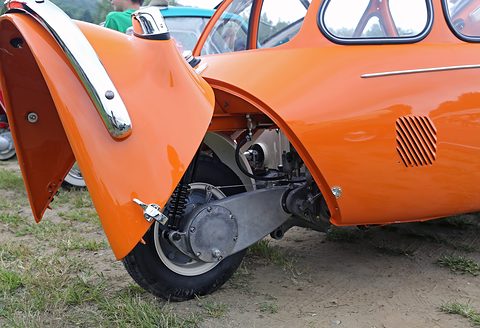
At the IFMA show in October 1956 Heinkel showed a four-wheeler, the Type 154. Its two rear wheels sat either side of the chaincase arm, only 220 mm (8.7 in) apart, so it needed no differential: the arrangement of the Fuldamobil.source 11source 6 Its engine was enlarged to what the magazine called a curious 204 cc. That put it over 200 cc, so a commuter could claim 50 pfennigs per kilometre against tax, as for a car, instead of the motorcyclist’s 22. The price stayed the same, and the magazine thought the second wheel would make the car less sensitive to rails and easier to start on slippery ground: a step forward without a drawback.source 11 The three-wheeled Type 153 came with it.source 2source 8

In the spring of 1957, in March by the Bruce Weiner Microcar Museum’s date, the engine was cut to 198 cc by narrowing the bore from 65 to 64 mm. The museum says this was for insurance, the club that the first enlargement had gone too far, German Wikipedia that the aim was to get back under 200 cc.source 2source 8source 6 The type numbers are muddled too. The club makes the 150 and 153 three-wheelers and the 154 the four-wheeler, and the magazine confirms the 154; German Wikipedia’s table labels them differently, and we follow the club.source 8source 11source 6 Britain and Austria kept to three wheels, which paid less tax, and in Austria could be driven on a motorcycle licence (see three-wheelers).source 6 In 1957, 68 per cent of the cars built went abroad.source 12

Flown in by Dakota

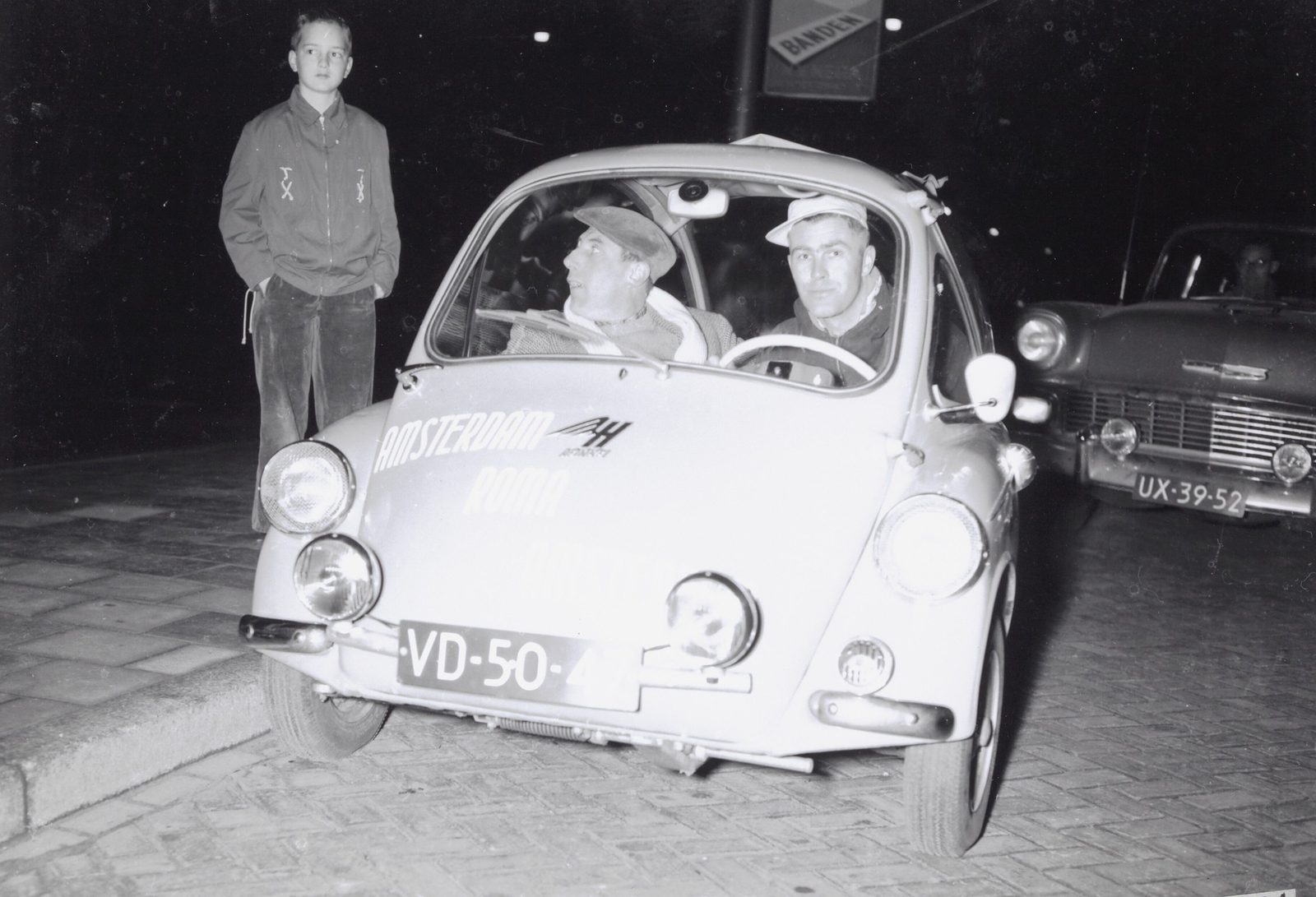
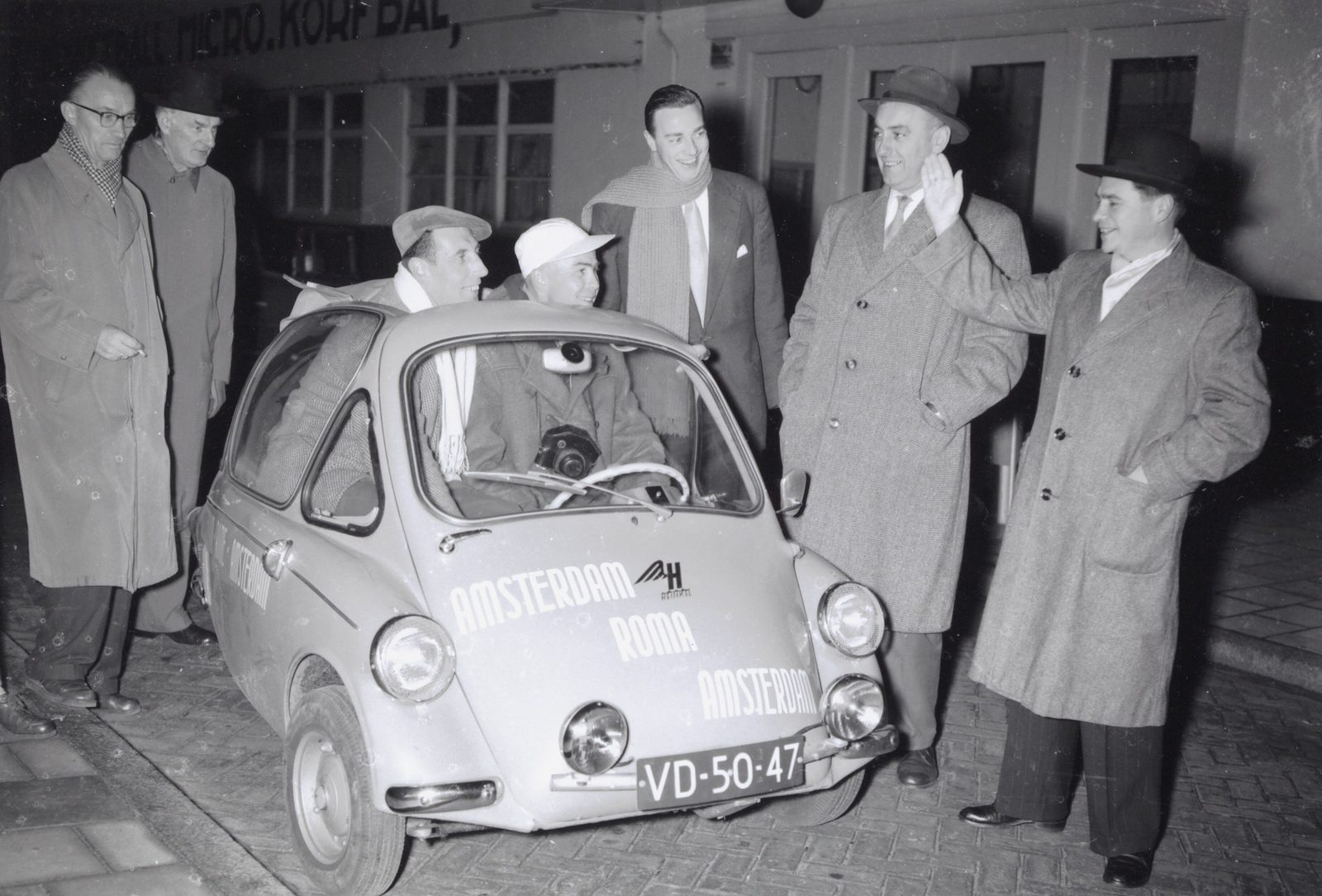
Britain was the big market. Noble Motors of Piccadilly began importing in July 1956, at £398 15s 0d with purchase tax, when the cheapest Ford, the Popular, cost £443 17s 0d. After Suez brought petrol rationing and a 30 per cent rise in the price of petrol, five cars a day came from Hanover to Croydon aboard a Dakota, and from February 1957 consignments of 60 arrived through Rotterdam every ten to twelve days, until that summer.source 8 York Noble, through whom RM says half the cars reached England, later built a small car of his own, the Nobel 200.source 13

Sold to Ireland

The Weiner museum says that the factory made about 50 cars a day and still lost DM 400–500 on each, a claim no other source makes.source 2 Ernst Heinkel turned 70 on 24 January 1958 and died within days.source 14source 2 In March the magazine reported that the Kabine was no longer built in Germany: the rights had been sold to Dundalk Engineering in Ireland, and Heinkel would go on supplying the engines.source 15

Die Tatsache, daß eine Firma, die nicht davon leben muß, aus dem Kleinwagenbau aussteigt, sollte zu denken geben.

auto motor und sport 6/1958, reporting the end of the Kabine in Germany. In English: “The fact that a firm which does not have to live from it is getting out of small-car building should give pause for thought.”source 15

The club records the last 174 cc cars in February 1958 and the last 198 cc cars that June.source 8 The Weiner museum puts the sale down to Heinkel’s death, the return to building aircraft and the need for space for the scooter and engine work; the death was one reason among several.source 2 Dundalk made it as the Heinkel-I from about October 1958 to early 1961, and Trojan then made it in Croydon as the Trojan 200 until 1964 or 1965 (see built under licence). A third licence went to Argentina.source 8source 9
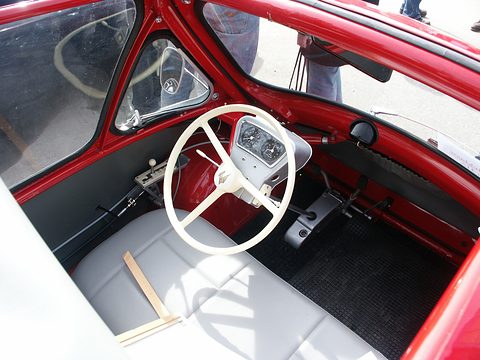
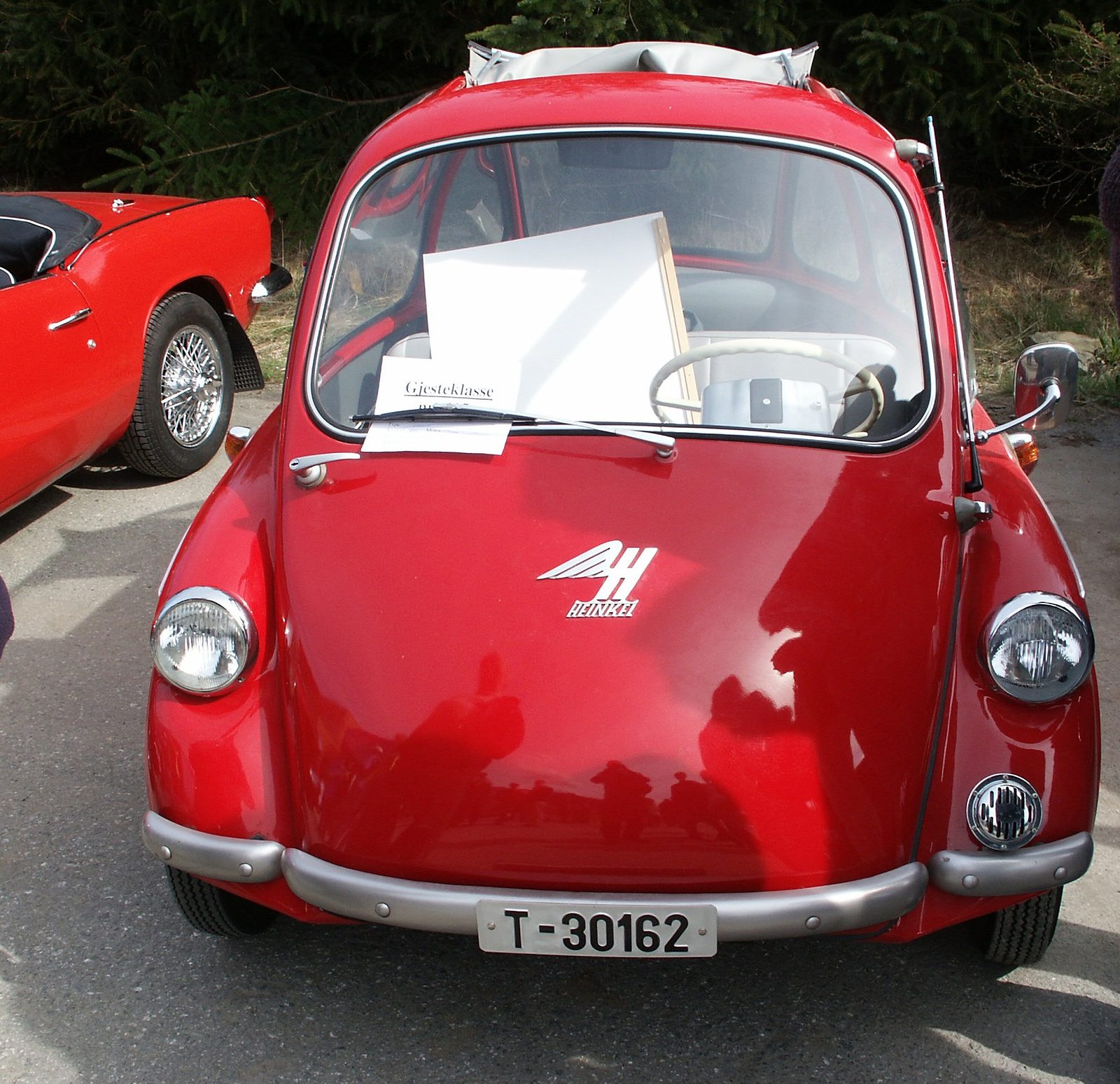
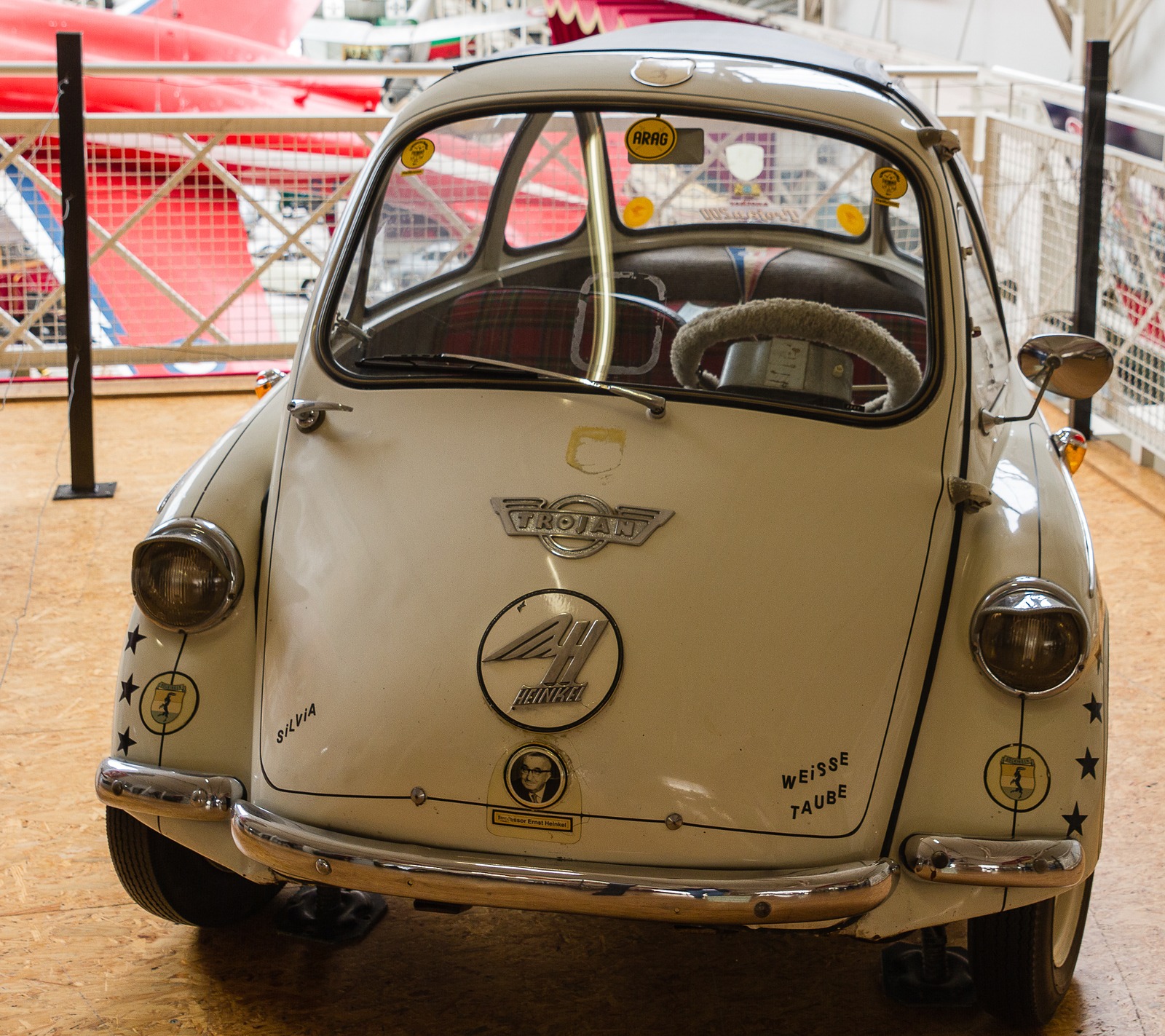
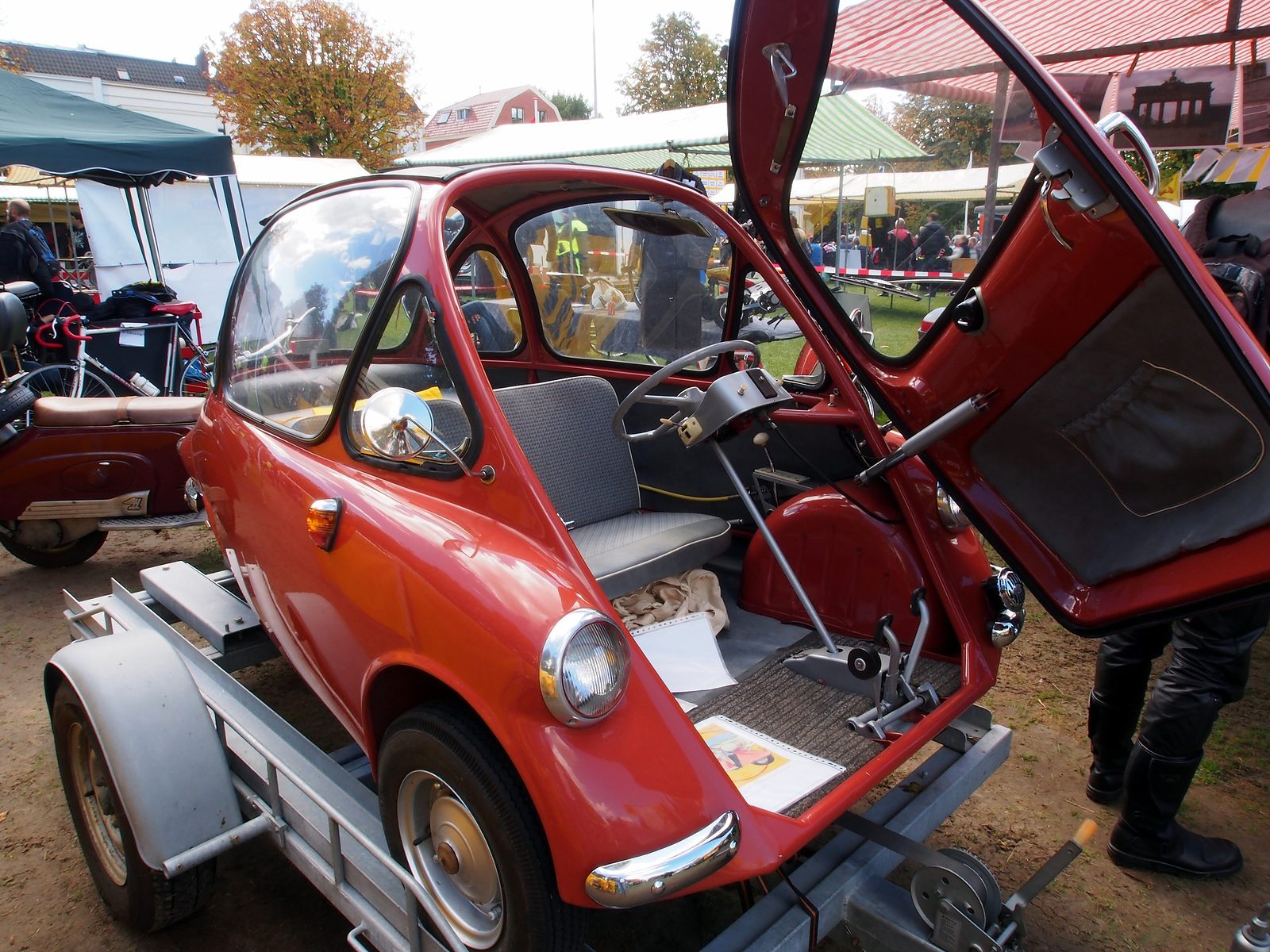
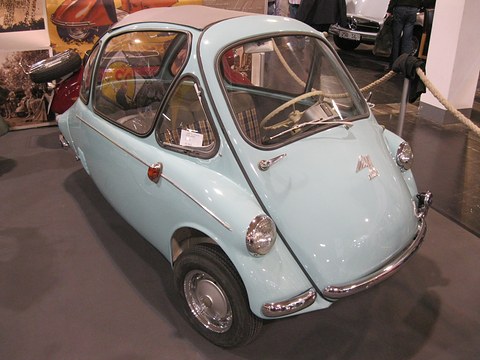
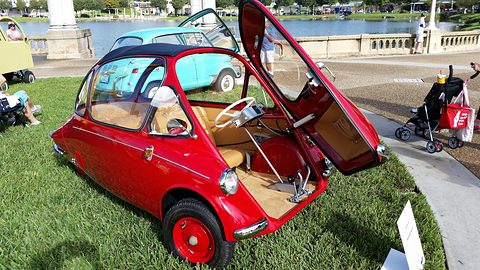
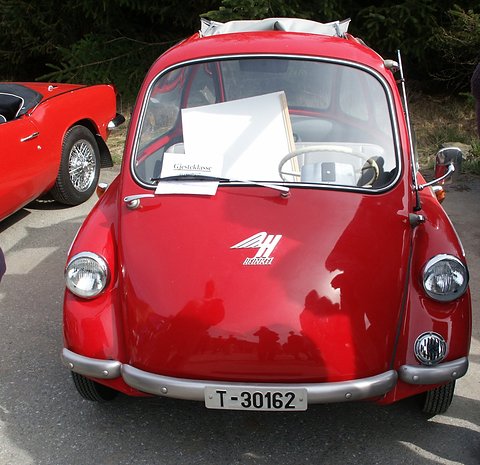
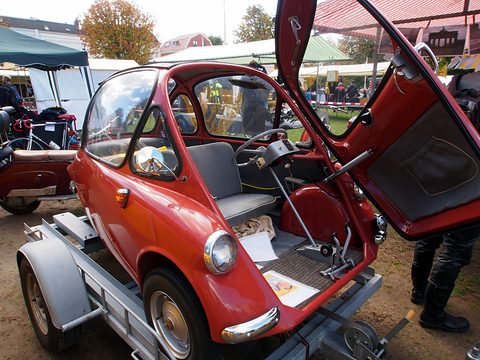
Looking down into a red bubble car: white two-spoke steering wheel, small instrument pod and pale grey bench seat.
Through the open front door: the steering wheel stays on its fixed column, with the gear lever to its left.Photo: Frode Inge Helland, CC BY 2.5, via Wikimedia Commons
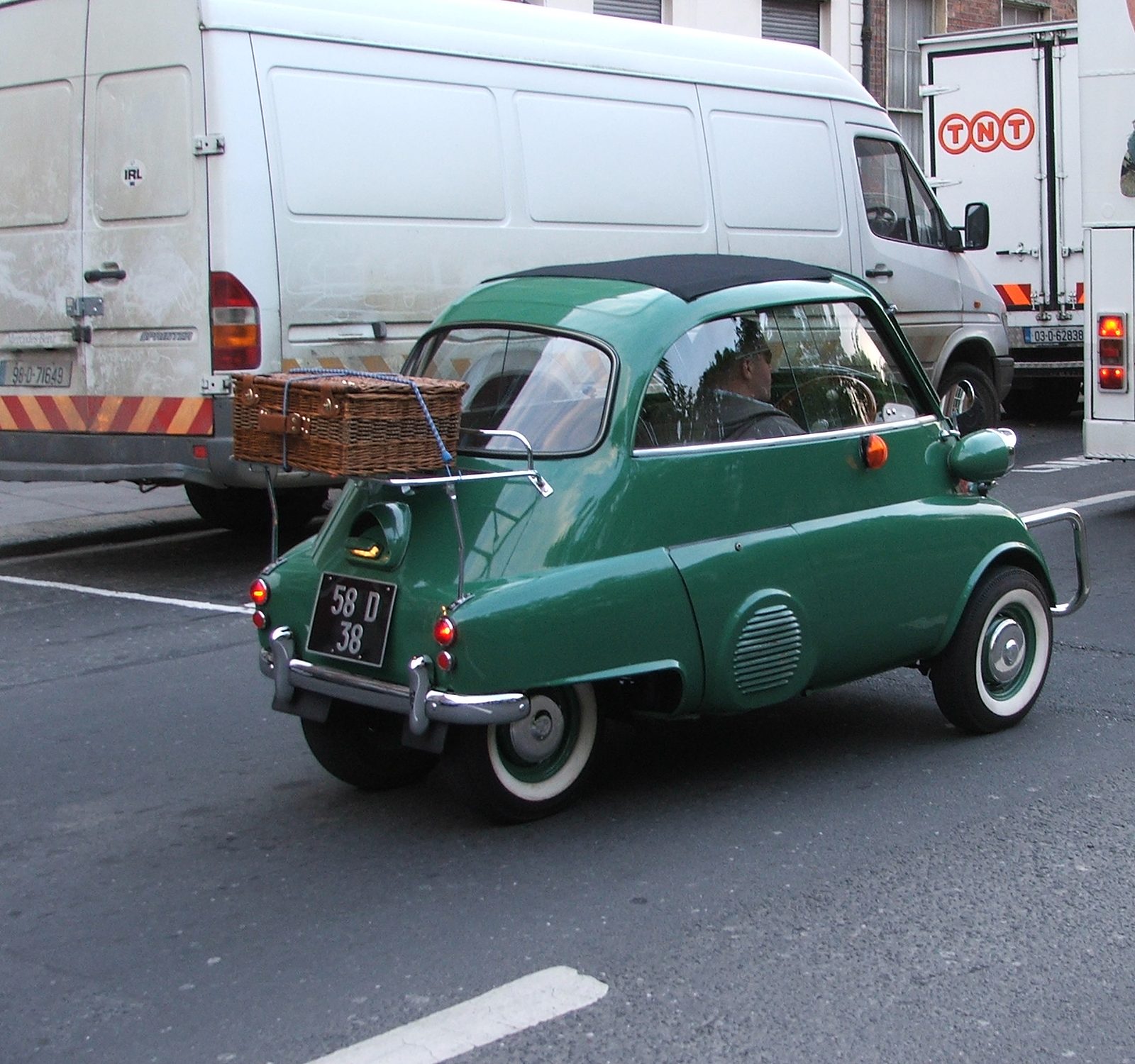
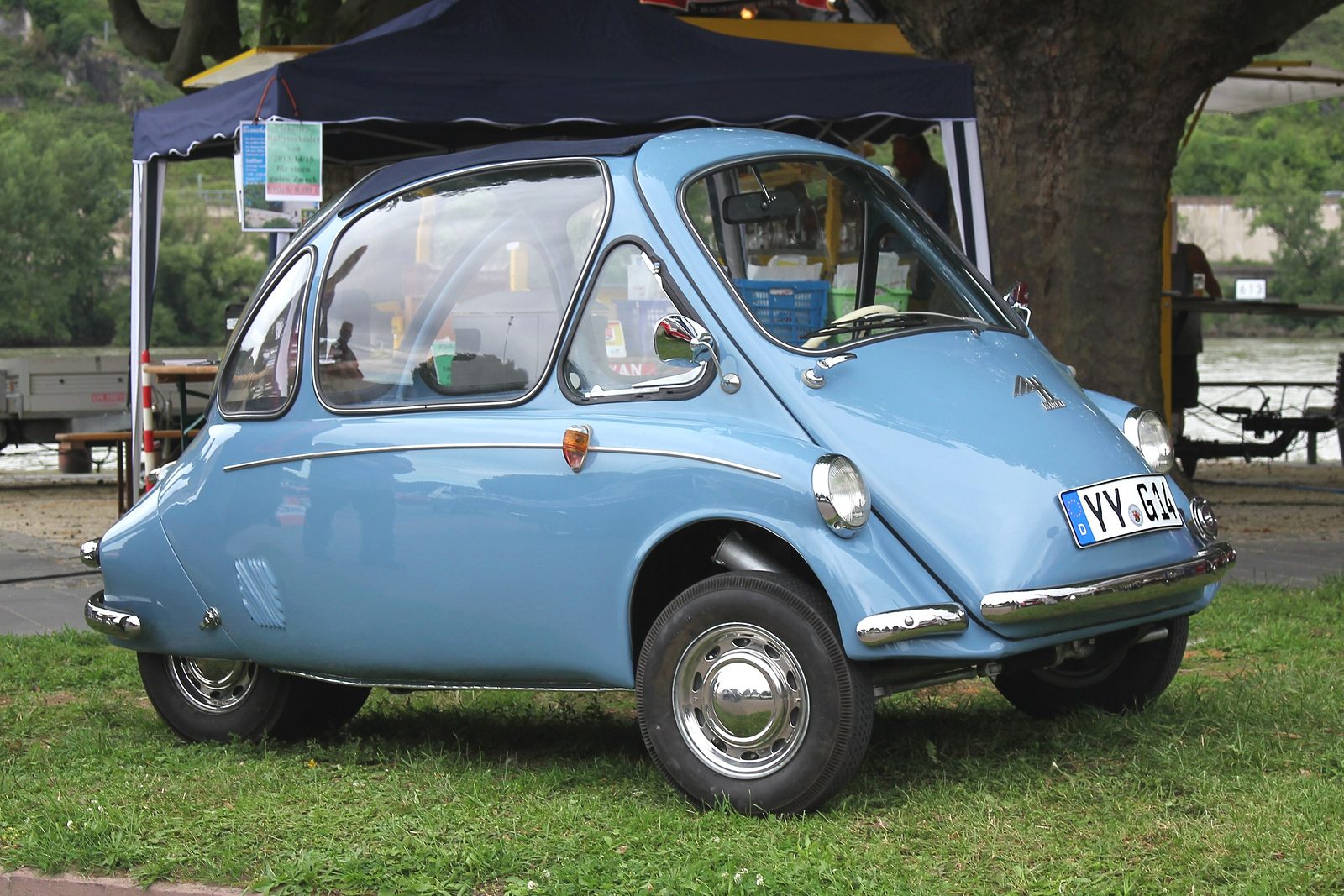
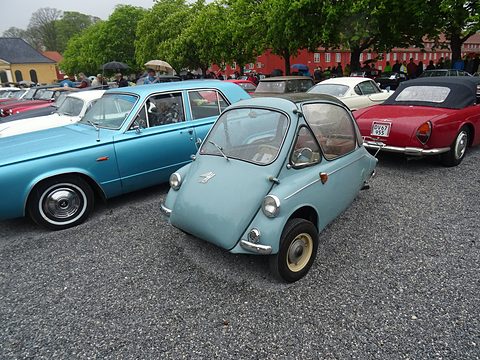
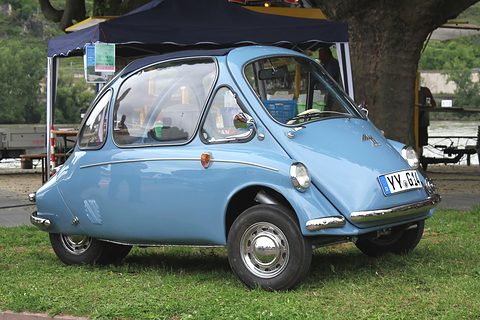
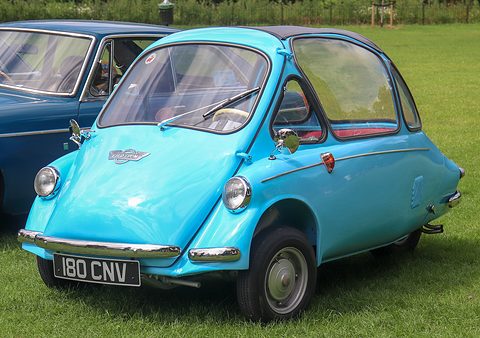
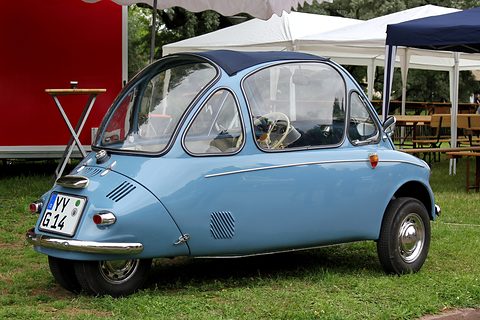
Pale blue bubble car from behind on grass, louvred tail and number plate, marquees behind.
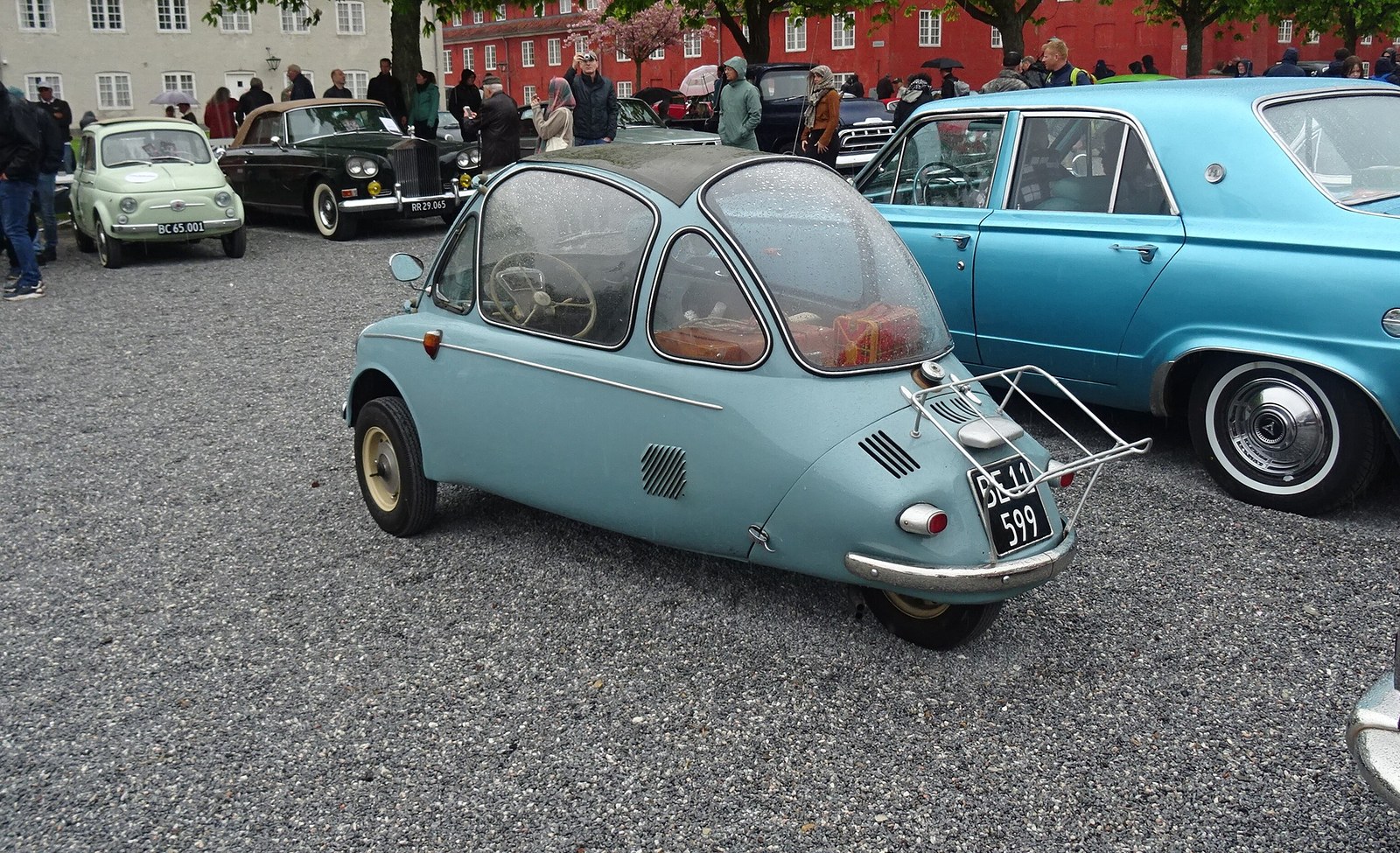
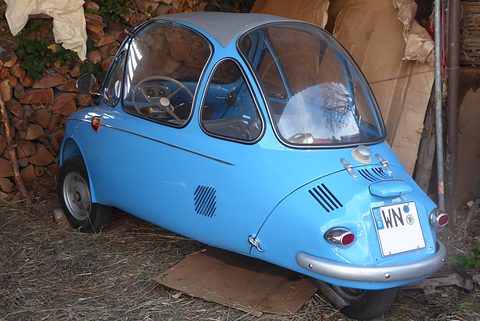
A blue 1957 Type 154 at Andernach in 2016: the two rear wheels sit close together, with no differential.Photo: Lothar Spurzem, CC BY-SA 2.0 de, via Wikimedia Commons
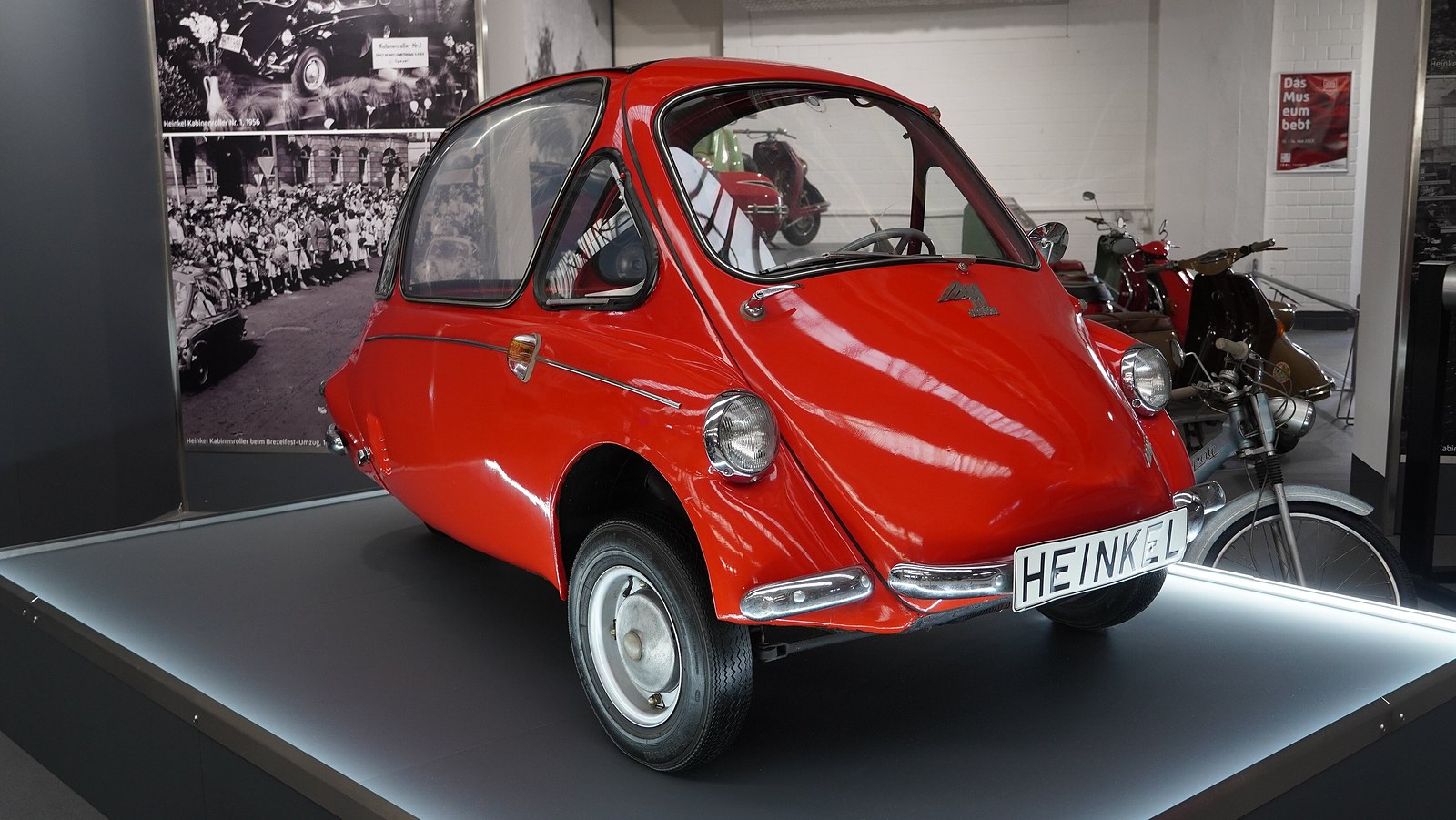
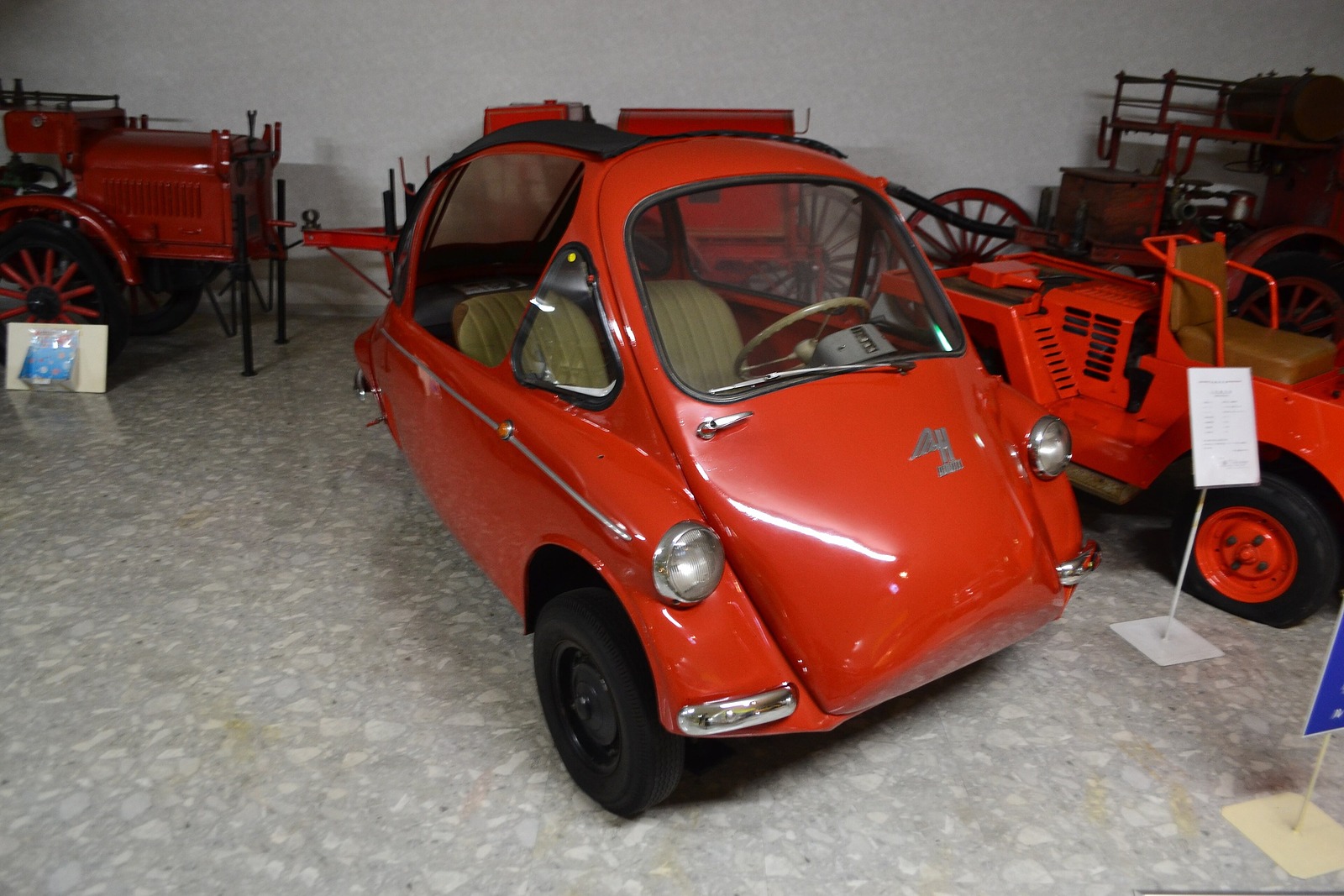
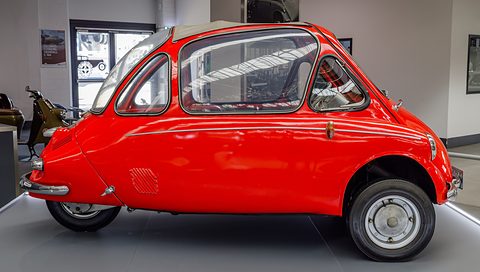
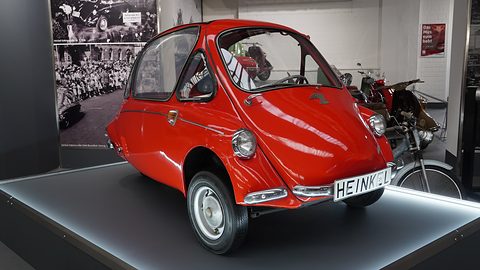
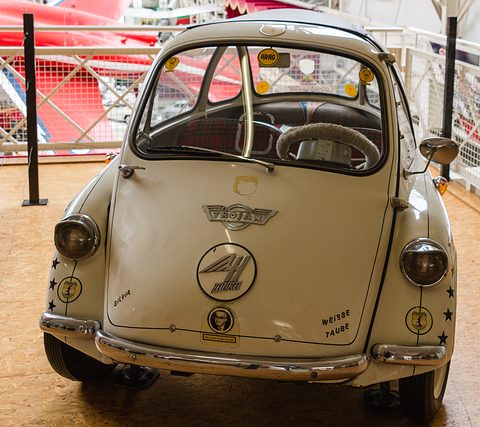
Red bubble car in side view on a grey platform, its rounded glasshouse and tail fully visible.
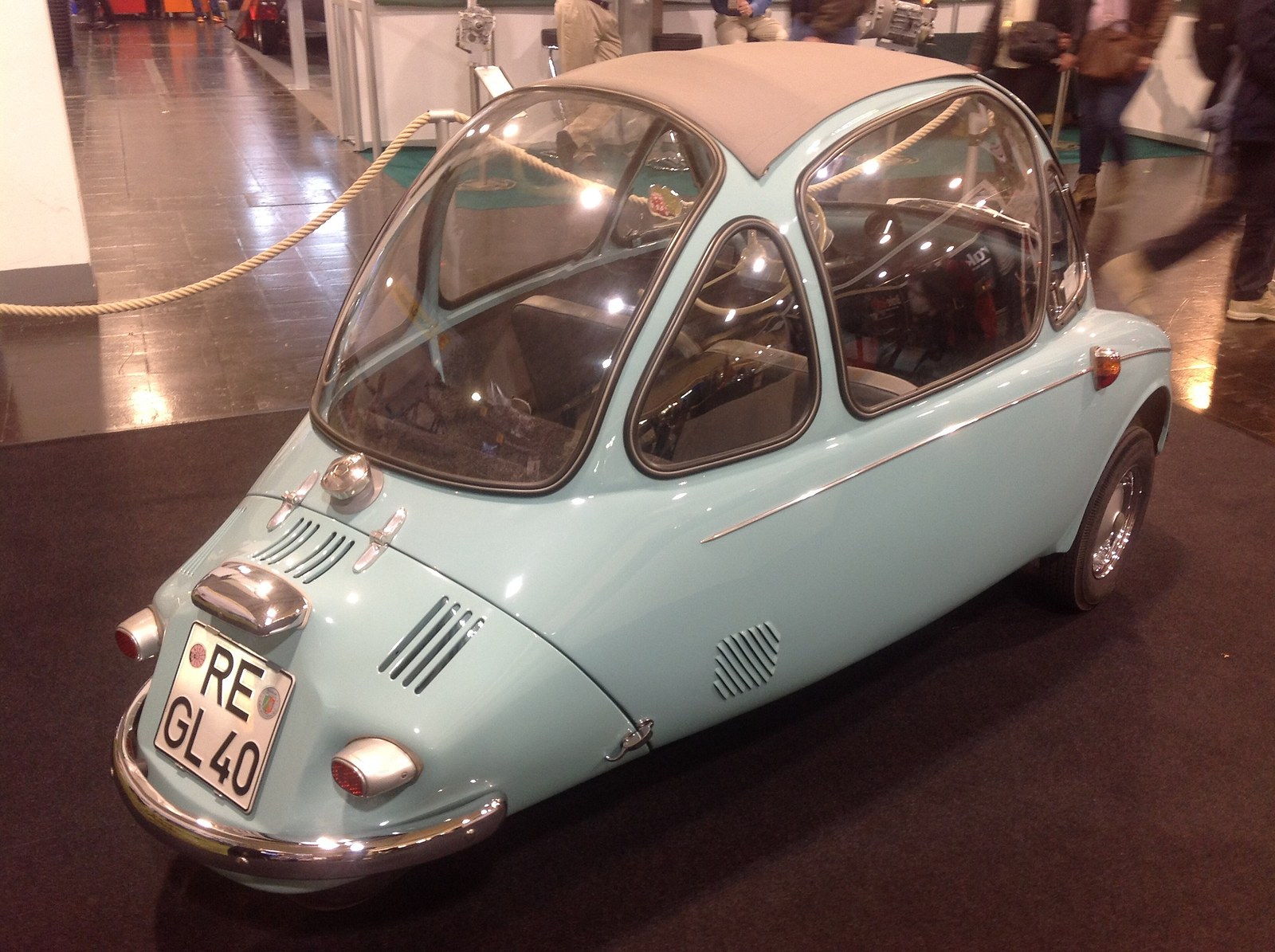
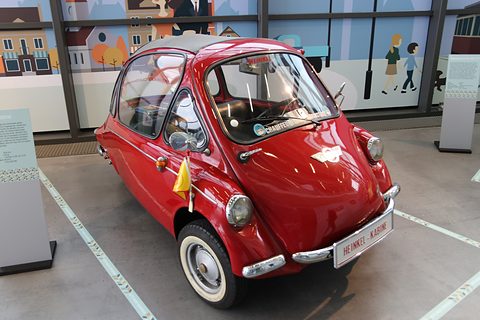
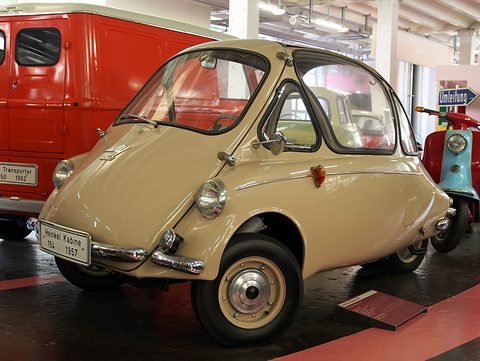
The red Heinkel Kabine at the Technik Museum Speyer, in profile.Photo: Friedrich Haag, CC BY-SA 4.0, via Wikimedia Commons

Heinkel Kabine (Argentina)

1959–⁠1962 · a record on this page

The Heinkel Trojan Club names the Argentine licensee as Los Cedros S.A. and dates its cars to about 1959–⁠61; English Wikipedia gives 1959–⁠62.source 8source 9 Even before it began, in March 1958 auto motor und sport reported that Argentina’s central bank had banned imports of car and motorcycle parts for assembly, and that Heinkel was among the firms hit.source 15
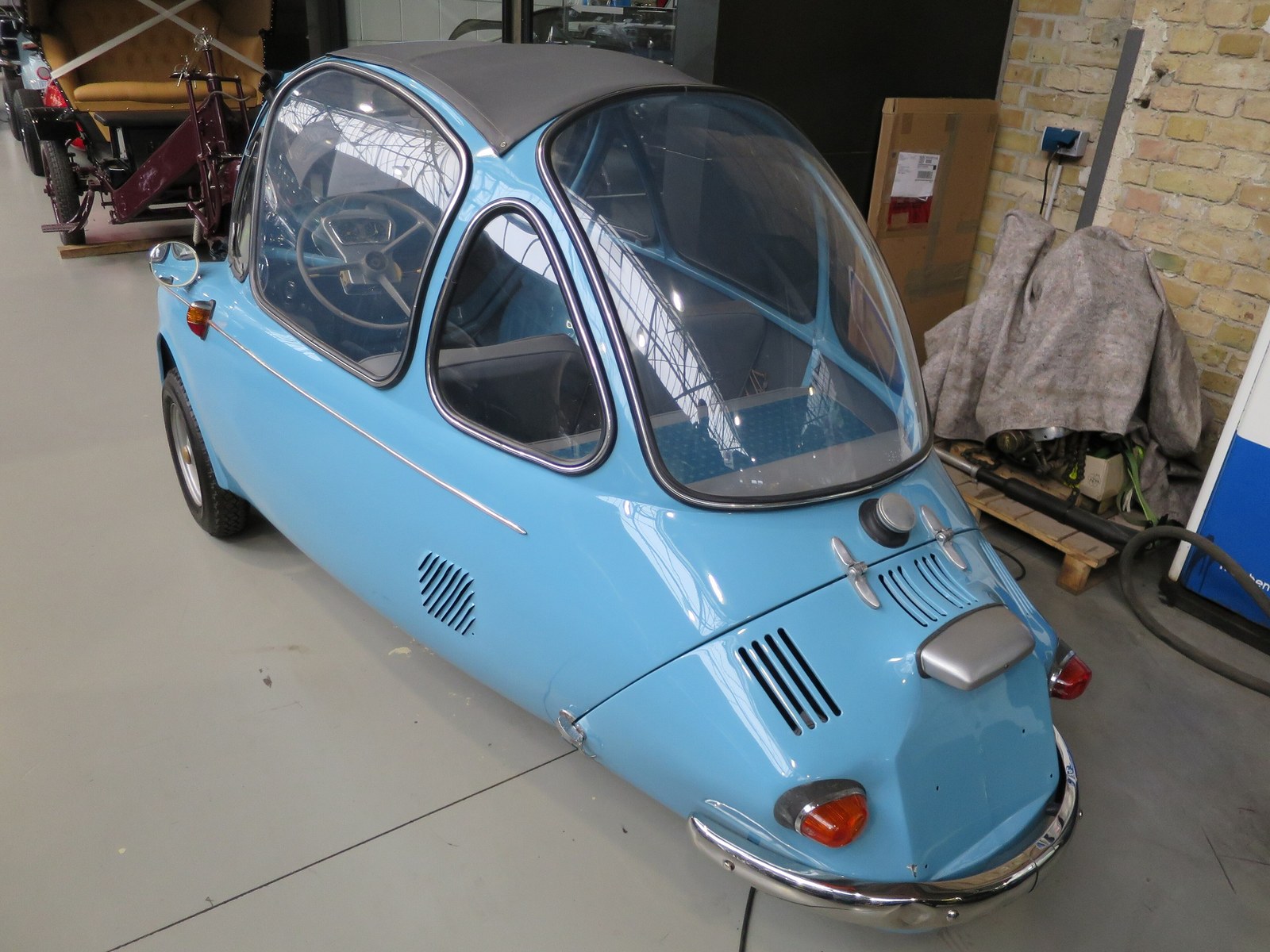
How many were made is not known. The Weiner museum says some 2,000 were sold until 1961; the club’s figure of about 2,500 is its own guess, and it notes Trojan papers that mention 2,500 kits sold, with an enquiry for 600 more.source 2source 8 The sources read say nothing of how the Argentine cars differed from the German ones, and no photograph of one has been found.

Pictures

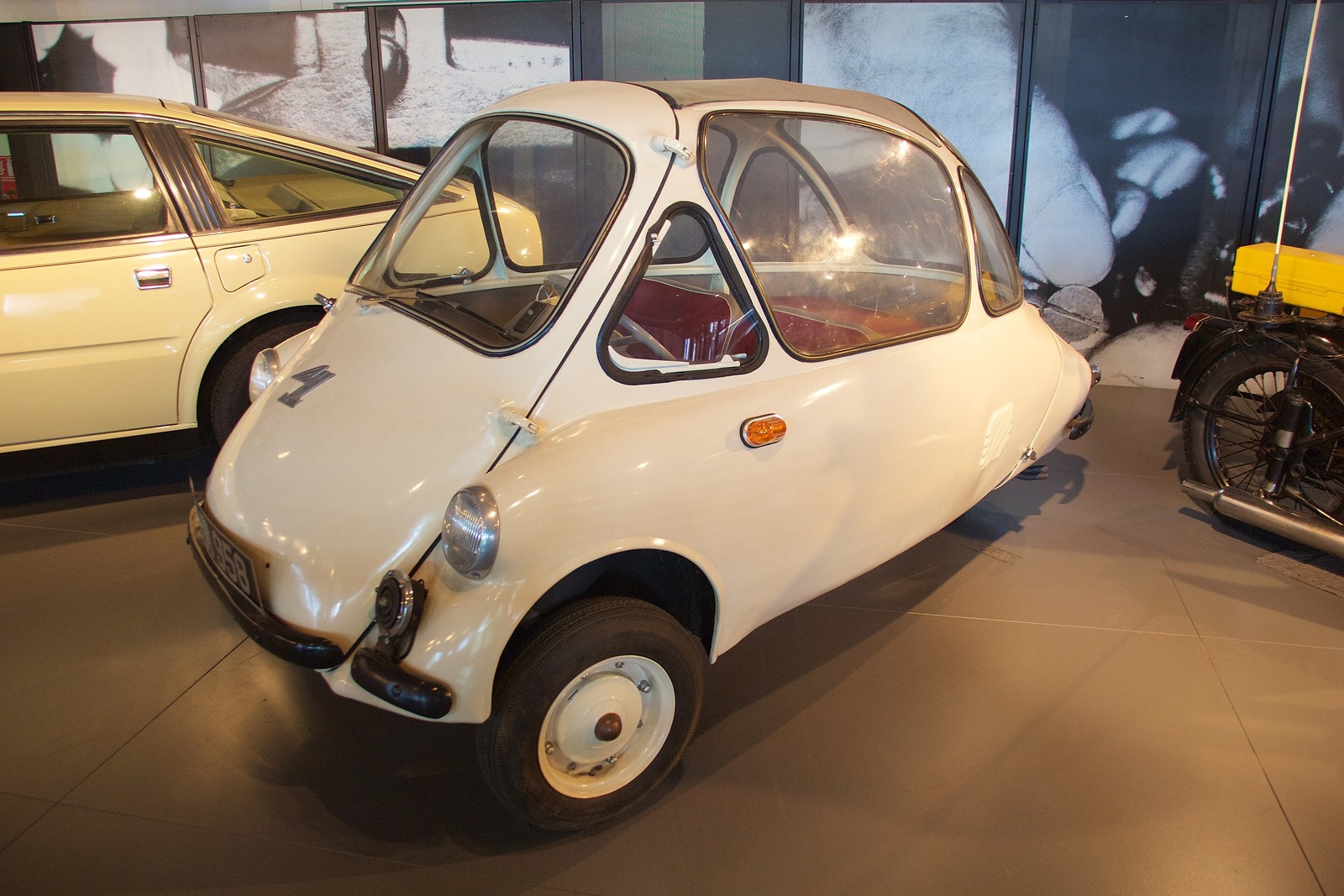
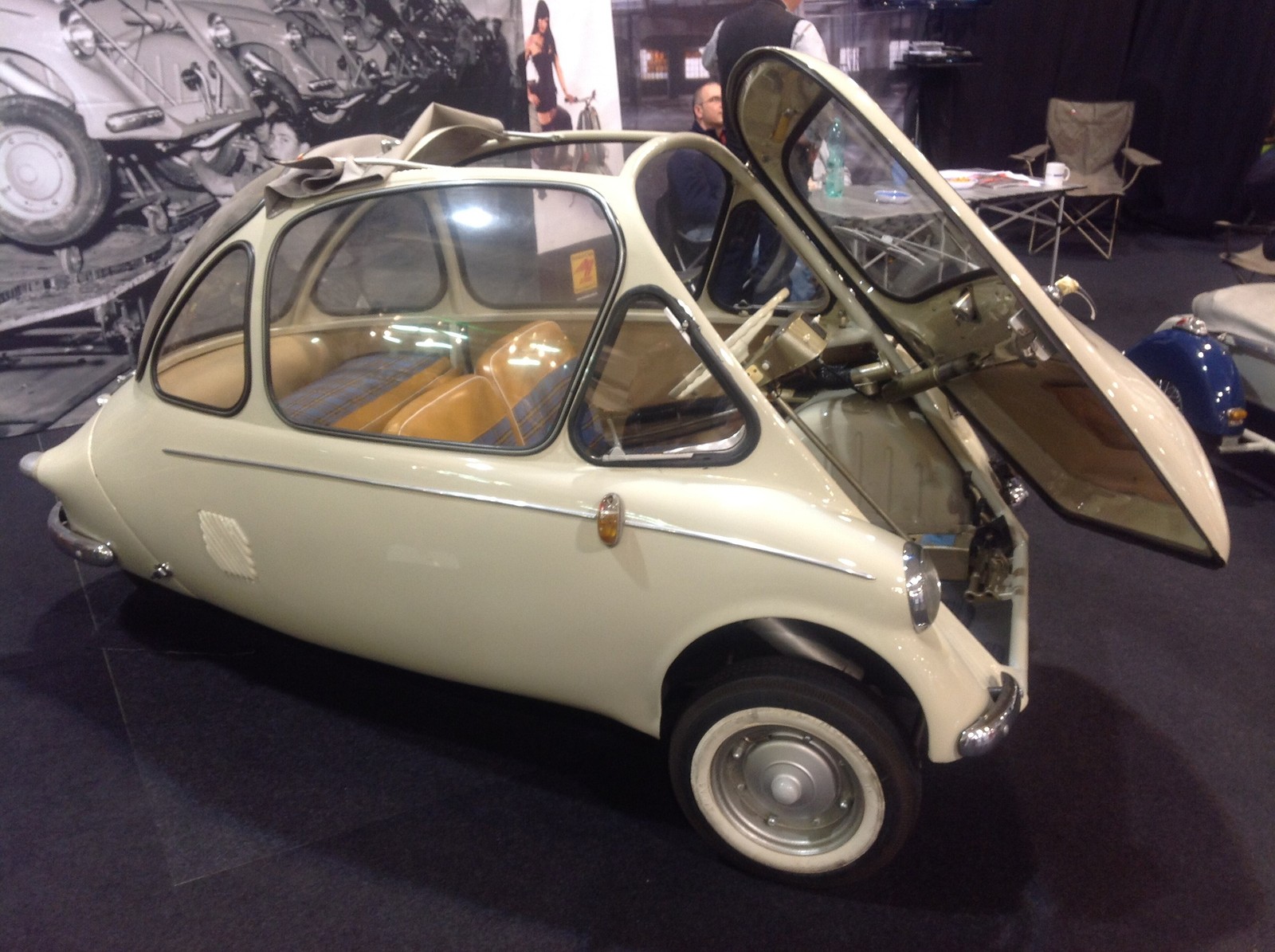
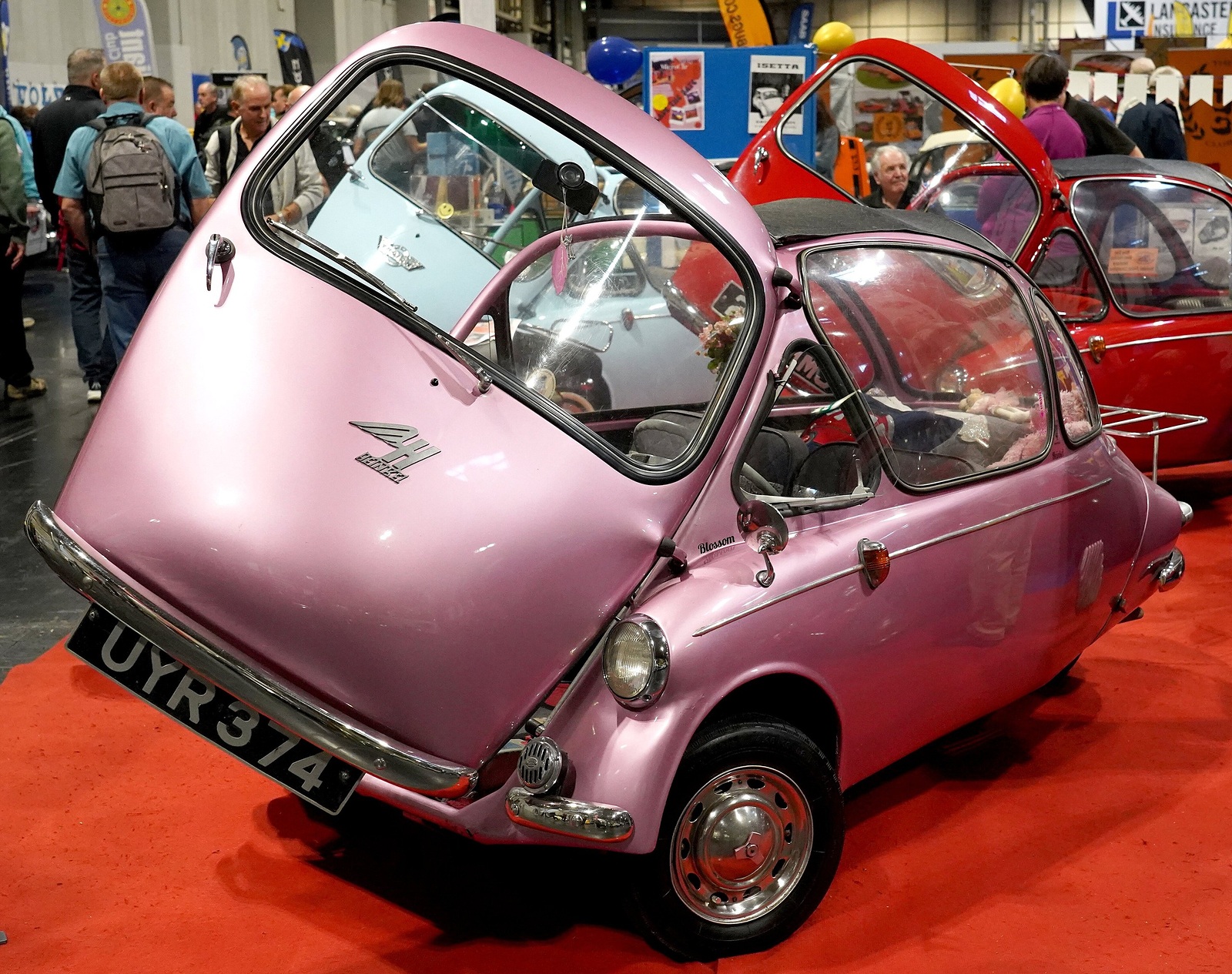
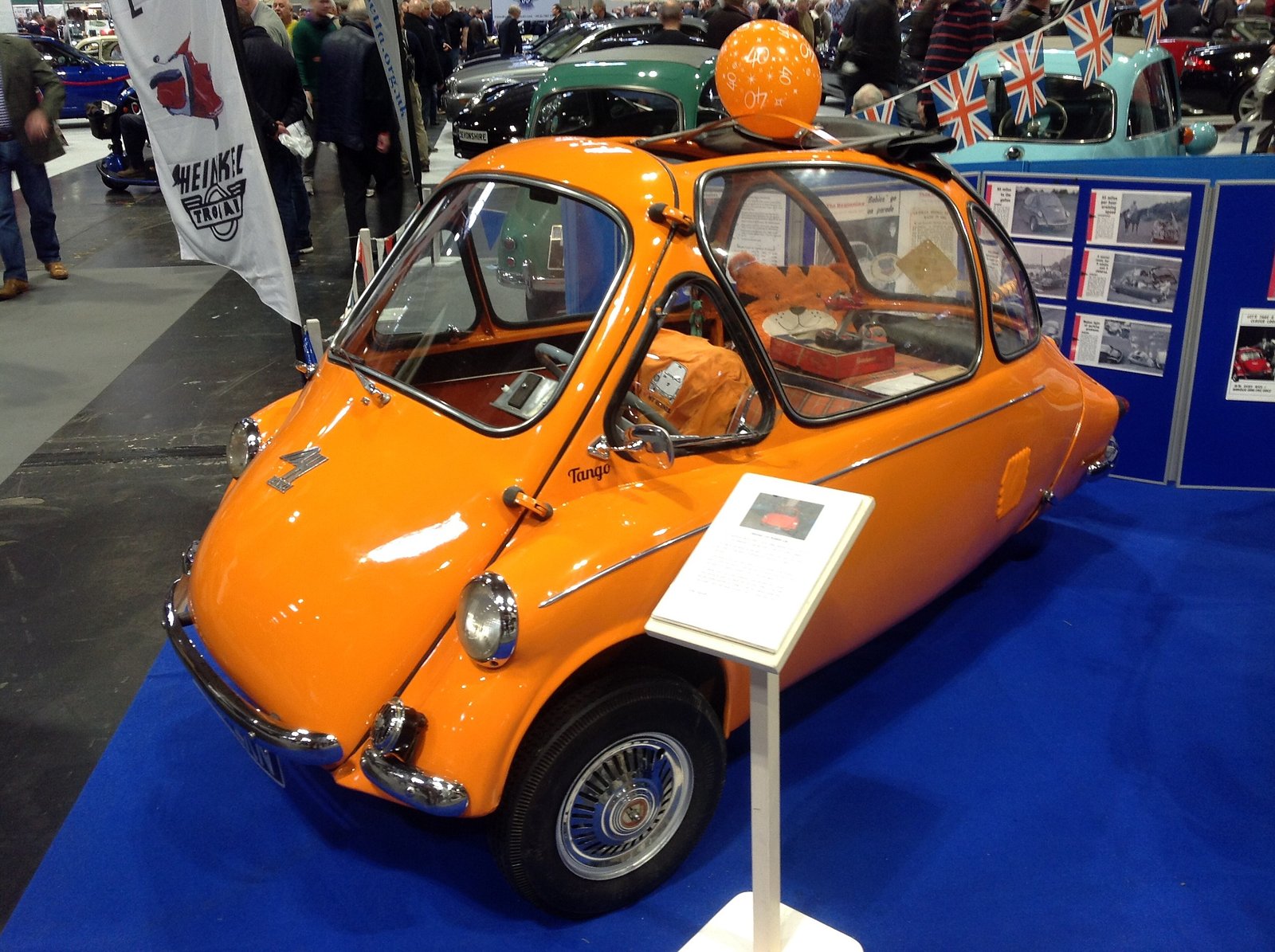
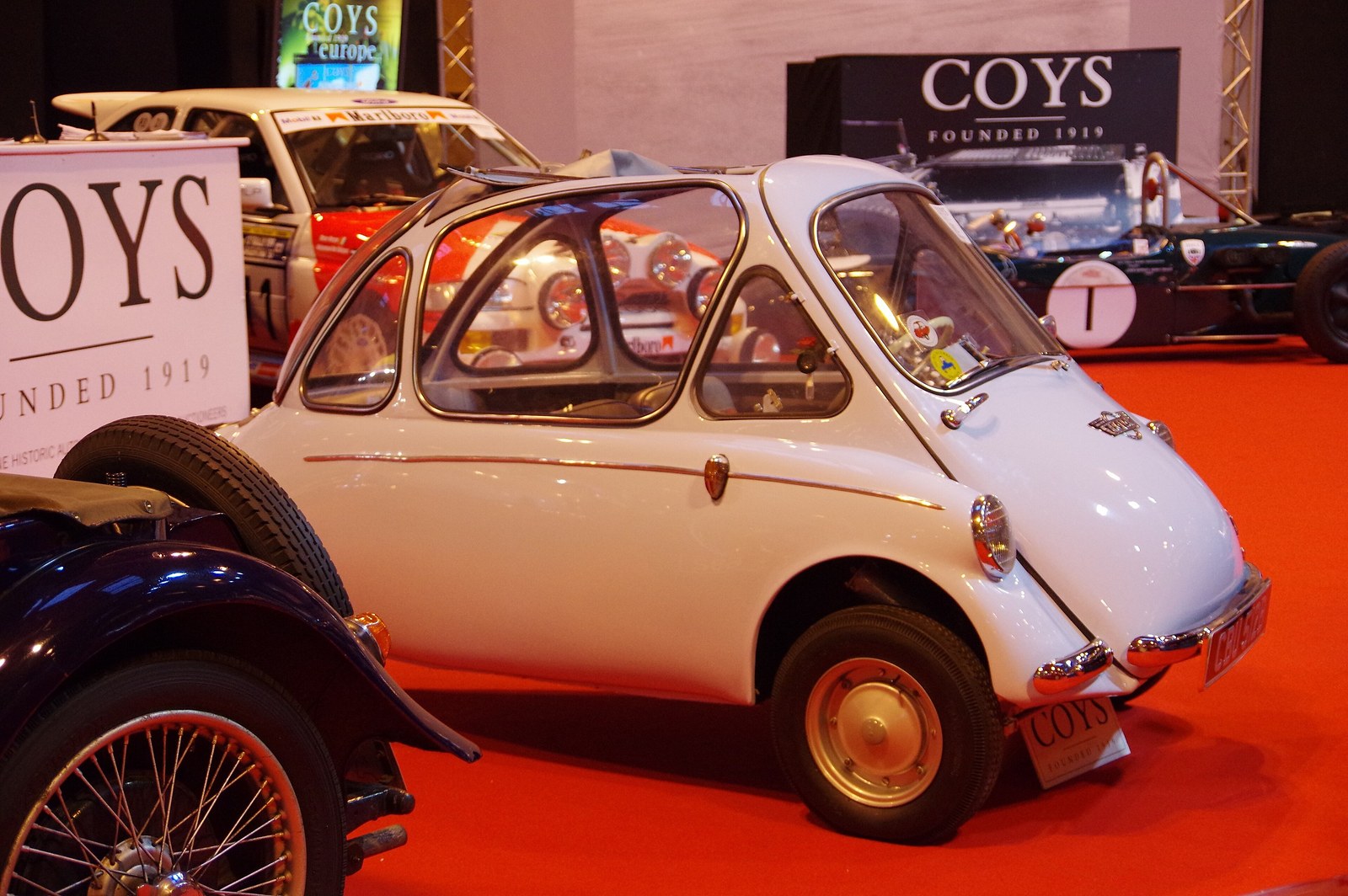
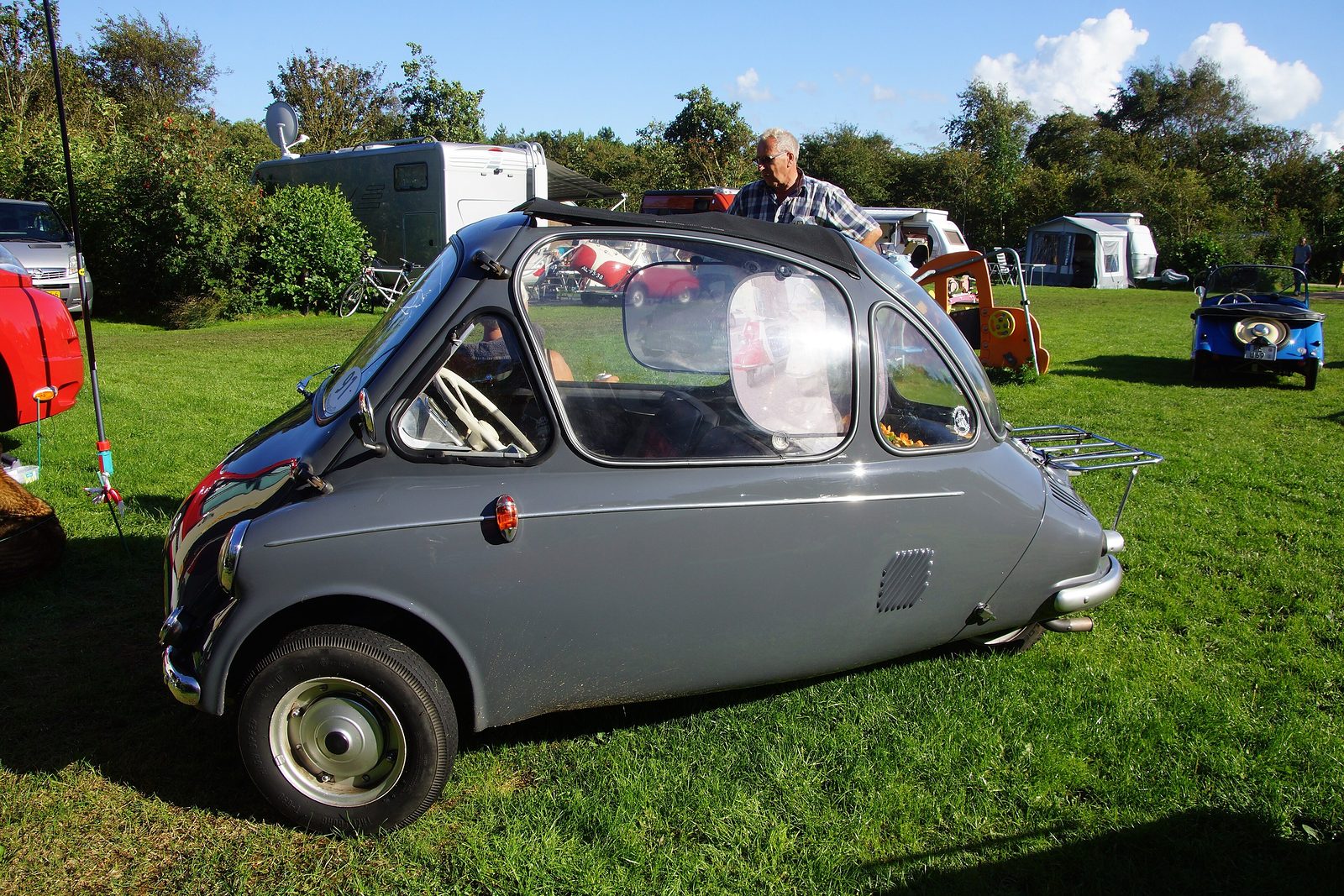
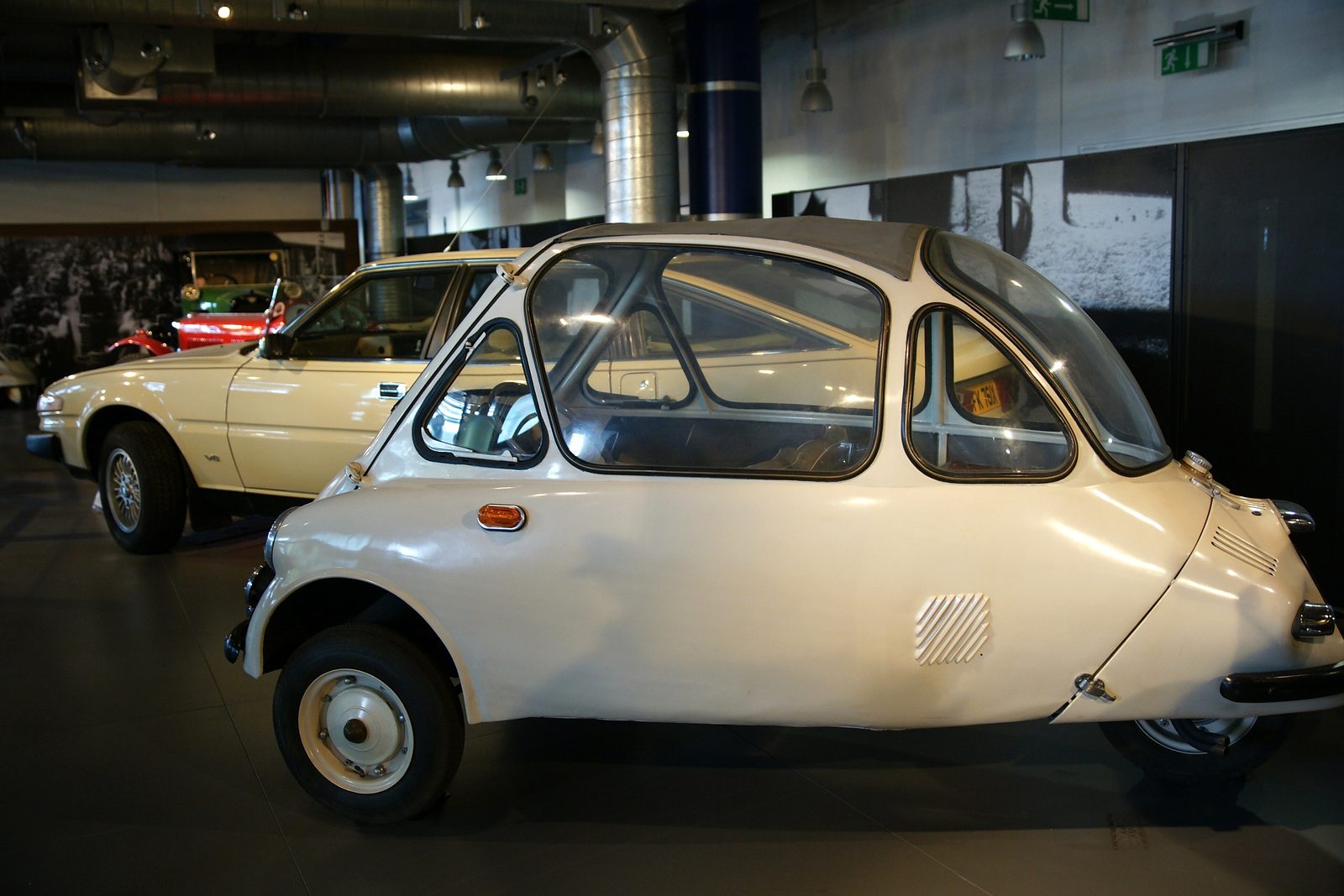
More photographs, old and new

Variants

Three type numbers, two engine sizes

The German Heinkel Kabine
VariantYearsWhat differsHow many
PrototypeEarly 1955Three wheels, the scooter’s 175 cc engine, hydraulic brakes on the front wheels only1 shown
Type 150Dec 1955 – Feb 1958Three wheels; 174 cc, and 198 cc in later cars from chassis 350961Part of 11,975
Type 153Oct 1956 – Jun 1958Three wheels, 198 cc; how it differs from the 150 is not known5,537 or 6,438, disputed
Type 154Oct 1956 – Jun 1958Four wheels, the rear pair 220 mm apart with no differential; 204 cc, then 198 ccDisputed: see production
Right-hand drive1956–⁠58Front door hinged on the leftPrototype
Heinkel-I, Trojan 200 and Argentina1958–⁠65Built under licence in Ireland, England and Argentina; Heinkel engines in the Irish and English carsSee the Trojan 200

Specification

The Heinkel-Kabine 175 (Type 150), as tested in September 1956, unless noted

Engine and drive

Engine and drive
EngineHeinkel 407 B‑0 four-stroke single, overhead valves, fan-cooled, 174 cc (60.0 × 61.5 mm)source 1source 6198 cc (64 × 61.5 mm) in the later cars; 204 cc (65 × 61.5 mm) in the first 154s
Power9.2 PS (6.8 kW) at 5,500 rpmsource 1source 69.5 PS in the test’s text and the 1955 show table; 10 PS for the 198 cc engine
Torque12.9 Nm at 4,450 rpmsource 1source 6
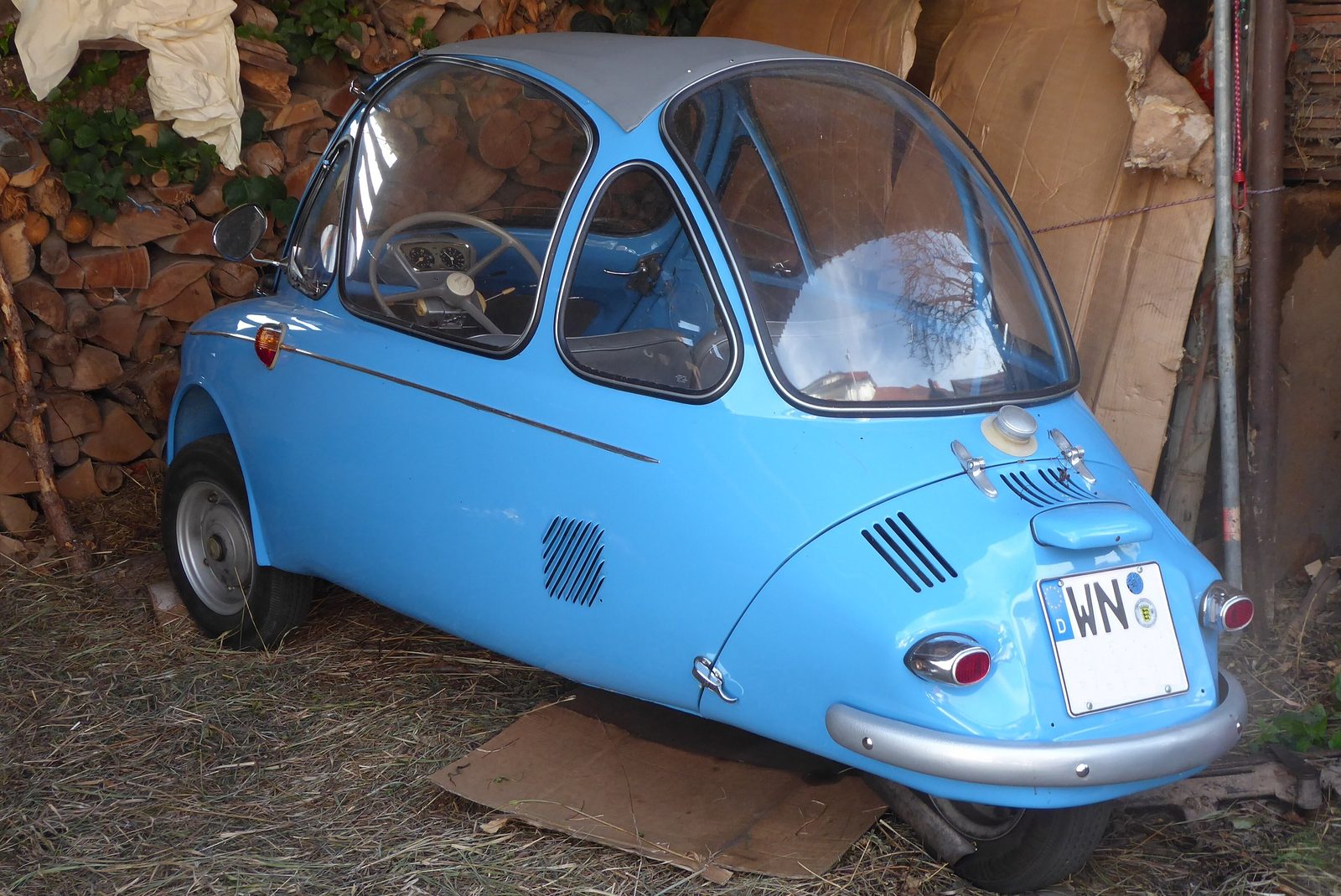
GearboxFour speeds and reverse, gate change on the left; multi-plate clutch in oilsource 1
DriveBy chain to the rear wheel, inside a cast, oil-filled chaincase that is also the swinging armsource 1source 6
StarterSiba 12 V Dynastartsource 1Siba or Bosch, by the club

Body and chassis

Body and chassis
BodySheet steel on a tubular cage, Plexiglas glasshouse, roll-back roofsource 6source 1
DoorOne, at the front; the steering column stays fixedsource 6source 1
SuspensionTrailing arms and spring struts at the front; the chaincase as a swinging arm at the backsource 1source 6
SteeringRack and pinionsource 1source 2
BrakesHydraulic on the two front wheels; handbrake on all threesource 1source 6
Tyres4.40-10source 6source 24.00 × 10 in the 1956 test’s data

Dimensions

Dimensions
Length2,550 mm (100.4 in)source 6source 22,551 mm in the 1956 test; 2,660 mm in the 1955 show table
Width1,370 mm (53.9 in)source 6source 2
Height1,320 mm (52 in)source 6source 2
Wheelbase1,760 mmsource 1source 6
Weight243 kg with a full tanksource 1source 2250 kg by German Wikipedia; 290 kg for the 198 cc cars
Turning circleAbout 8 msource 18.5 m by German Wikipedia

Performance and running

Performance and running
Top speed87 km/h (54 mph), measuredsource 1source 686 km/h by the Weiner museum; 90 km/h for the 198 cc cars by German Wikipedia
ClimbingAbout 28 per centsource 1
Consumption3 to 4.5 litres per 100 km; oil 0.3 litres per 1,000 kmsource 1
Running costsTax DM 28.80 a year; third-party insurance from DM 50source 1
Price newDM 2,750 (1956)source 1source 10£398 15s with tax in Britain, July 1956

How many were built?

Every figure, with its source

11,975 built in Germany11,975 in Germany between December 1955 and June 1958. The club gives that total, and German Wikipedia’s two type figures add up to exactly the same number. How it divides between the types is not settled.

  1. about 27,000Heinkel-type cabins of every maker: Germany, Ireland, Argentina and EnglandOne source

    Heinkel Trojan Club, with a guessed 2,500 for Argentinasource 8

  2. 11,975built in Germany, December 1955 – June 1958Two sources agree

    Heinkel Trojan Club; German Wikipedia’s type figures add up to itsource 8source 6

  3. 6,998built in 1957, by the official German tableOne source

    auto motor und sport 4/1958source 16

  4. 6,948built in 1957, by the registrations tableOne source

    auto motor und sport 20/1958source 12

  5. 6,438“Type 153”, stopped in 1957One source

    German Wikipedia, whose type labels the club contradictssource 6

  6. 5,537Type 153 by the Weiner museum and RM; “Type 154” by German WikipediaUnconfirmed

    Weiner museum, RM Sotheby’s and German Wikipedia, which disagree on the typesource 2source 13source 6

  7. 3,362built in 1956, by the official German tableOne source

    auto motor und sport 4/1958source 16

  • Two sources agreetwo good sources give the figure
  • One sourcea good source, alone
  • Unconfirmeda lead only, not yet checked

Famous for

Three points

  1. Lighter than the Isetta

    About 100 kg lighter, so its 9.5 PS had as little to pull per horsepower as the Isetta’s 13 PS.

  2. The wheel stays put

    A front door like the Isetta’s, but the steering column is fixed to the car.

  3. By air to Croydon

    After Suez, cars were flown into Britain five a day aboard a Dakota.

Survivors and collecting

Today

No world count of survivors has been found. The Weiner museum’s 2002 panel gave 20 surviving Type 153s.source 2 The Heinkel Trojan Club keeps a register, and all the German-built cars it knows in Britain are three-wheelers, most of them Type 150s; a German Heinkel club exists too.source 8 The Weiner museum had a 1956 Type 153 and a 1957 Type 150, and when the collection was sold in Madison, Georgia, in February 2013, the 153 made US$54,050 and the 150 US$35,650.source 2source 13source 17

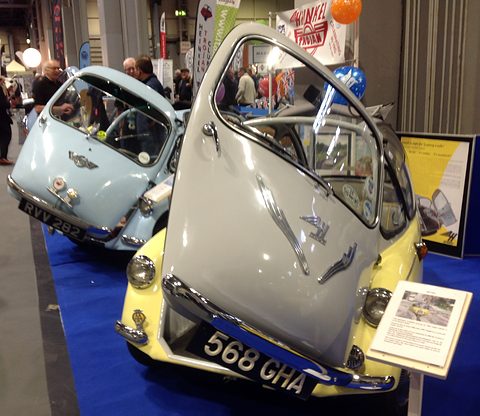
Two bubble cars on a blue carpet: a cream and yellow one with its front door raised, a pale blue one behind.
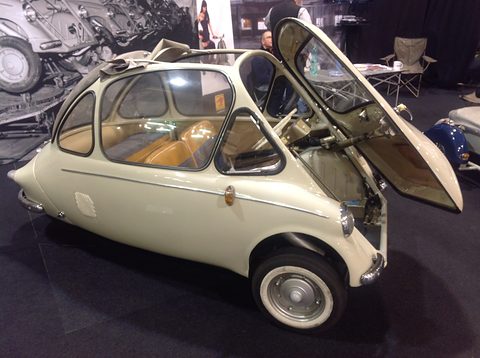
A 1958 Heinkel Kabine, door open, beside a 1963 Trojan 200 at the NEC Classic Motor Show, Birmingham, in 2019.Photo: Andrew Bone, CC BY 2.0, via Wikimedia Commons

Sources

Numbered as in the text

Sources are given as plain text; the links are on the Credits page.

  1. Dr Paul Simsa, “Unser Test: Heinkel-Kabine 175 ccm”, with data table, auto motor und sport 19/1956 (15 September 1956), read in full.
  2. Bruce Weiner Microcar Museum, “1956 Heinkel Kabine”, tour page for its Type 153 (2002), archived, read in full.
  3. auto motor und sport 8/1955 and 20/1955, on Tempo vans and the Maico Champion with Heinkel engines.
  4. Werner Oswald, on the Dornier Delta, auto motor und sport 11/1955, read in full.
  5. “Ei auf 3 Rädern”, photograph and caption of the Heinkel prototype, auto motor und sport 5/1955.
  6. German Wikipedia, Heinkel Kabine, read in full. Used as a lead; it cites Oswald, Deutsche Autos 1945–⁠1990, vol. 4, Simsa’s test and ROLLERei und MOBIL 10/1955.
  7. Report and data table from the Frankfurt motor show, auto motor und sport 20/1955.
  8. Heinkel Trojan Club, “Cabin Cruisers”: German, Irish, Argentine and English production and the British imports, archived 2015, read in full.
  9. English Wikipedia, Heinkel Kabine, read; used as a lead only.
  10. New-car price list, auto motor und sport 18/1956.
  11. Report from the IFMA show, on the new four-wheeled Kabine 154, auto motor und sport 22/1956.
  12. Table of 1957 production, registrations and exports, auto motor und sport 20/1958.
  13. RM Auctions, the Bruce Weiner Microcar Museum sale, Madison, Georgia, February 2013, lot 301, “1956 Heinkel Kabine 153”.
  14. Birthdays: Ernst Heinkel, 70 on 24 January 1958, auto motor und sport 2/1958.
  15. News: “Die Heinkel-Kabine wird in Deutschland nicht mehr gebaut”, and Argentina’s ban on imported parts, auto motor und sport 6/1958.
  16. “Produktionszahlen 1957”, production by model for 1955–⁠57, auto motor und sport 4/1958.
  17. RM Auctions, the same sale, lot 597, “1957 Heinkel Kabine 150” (from the sale’s listing).