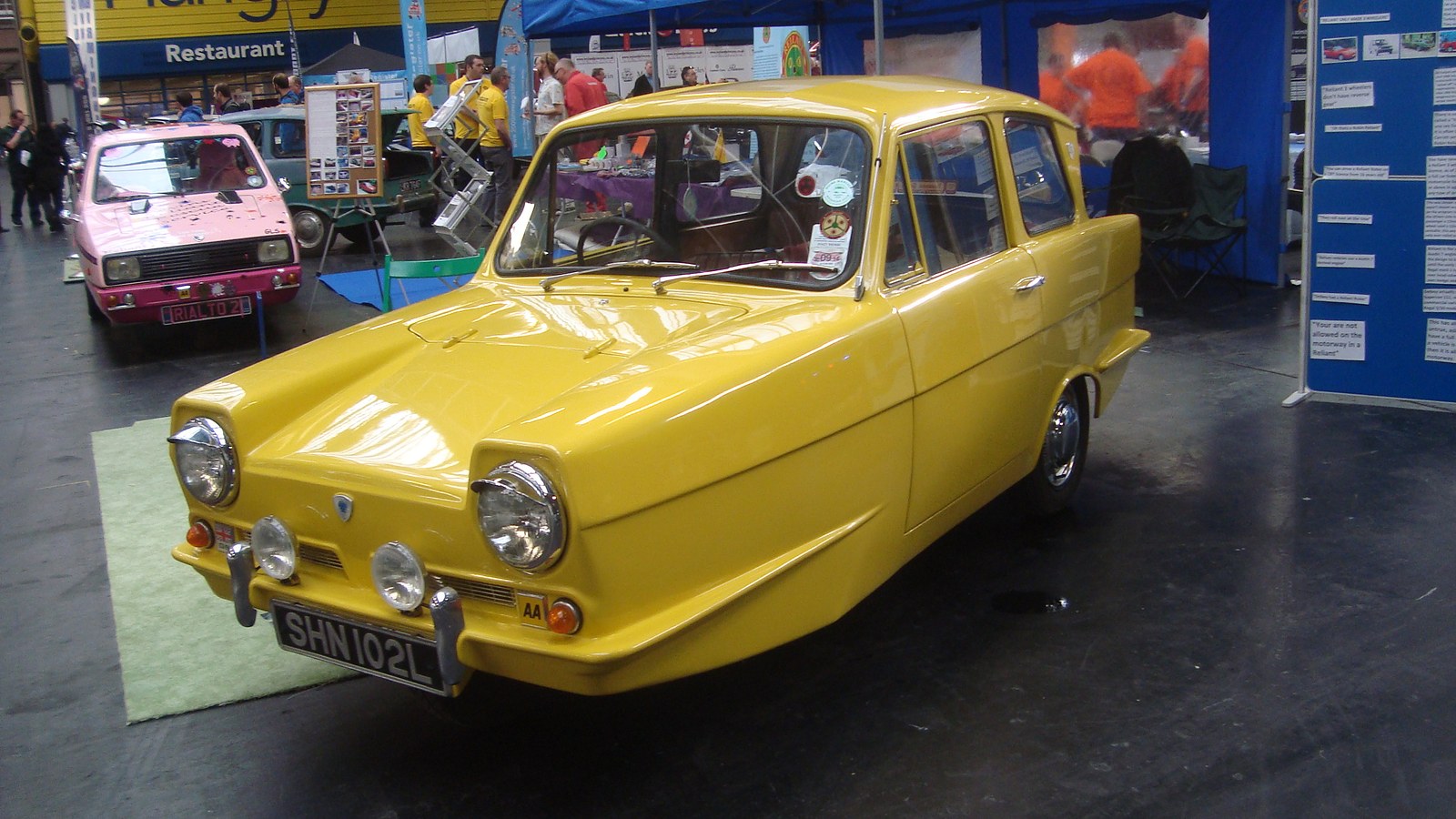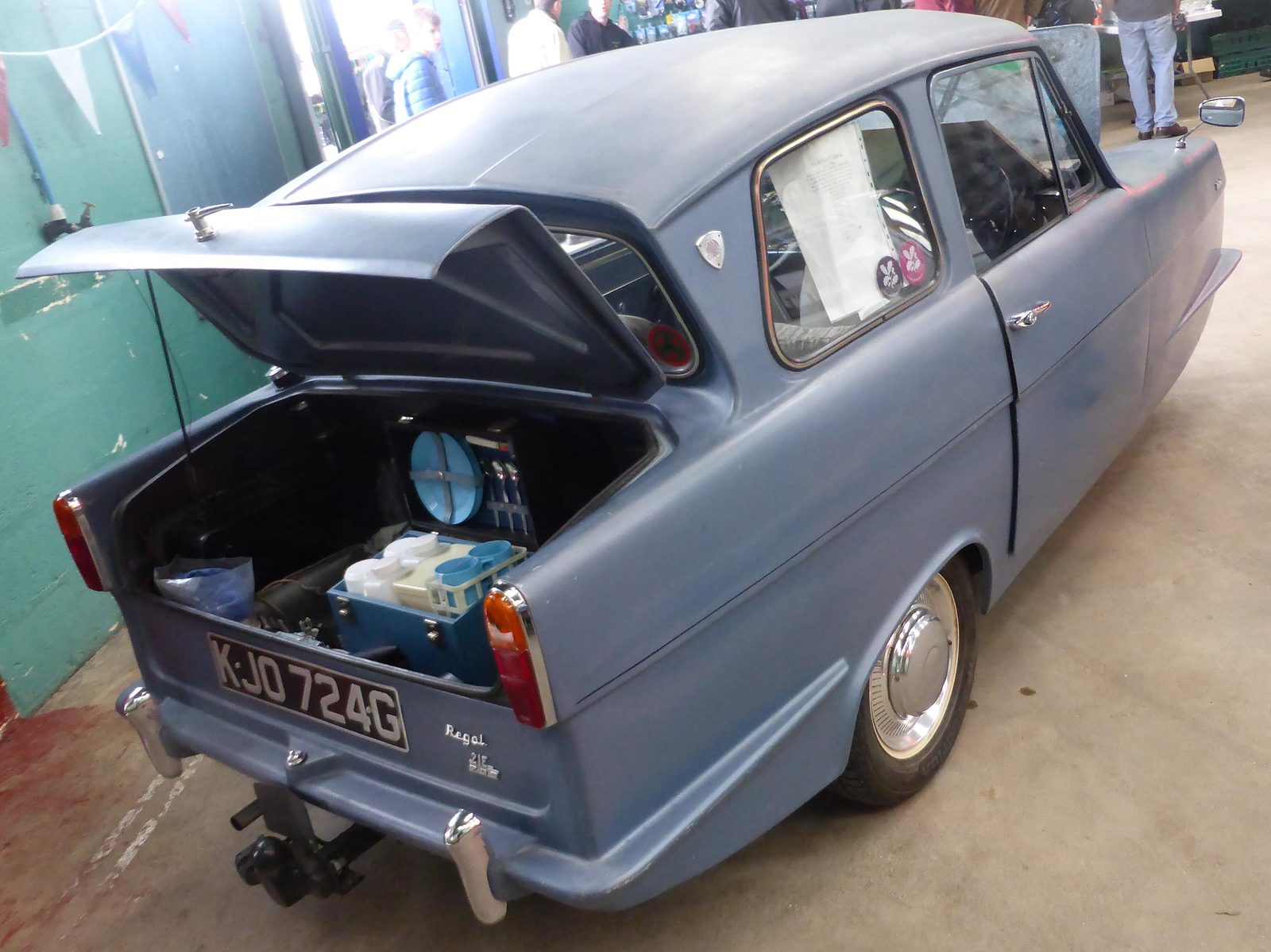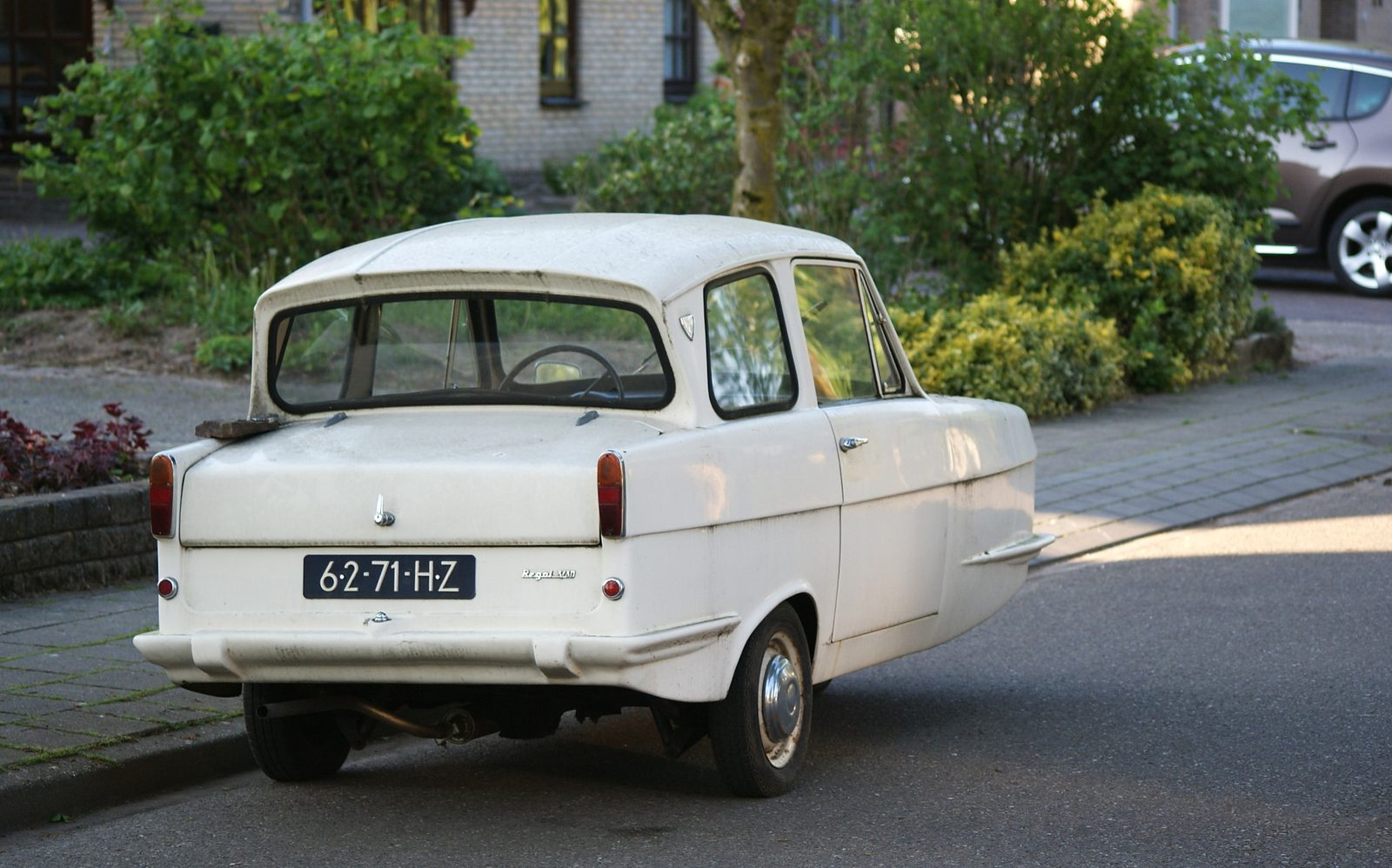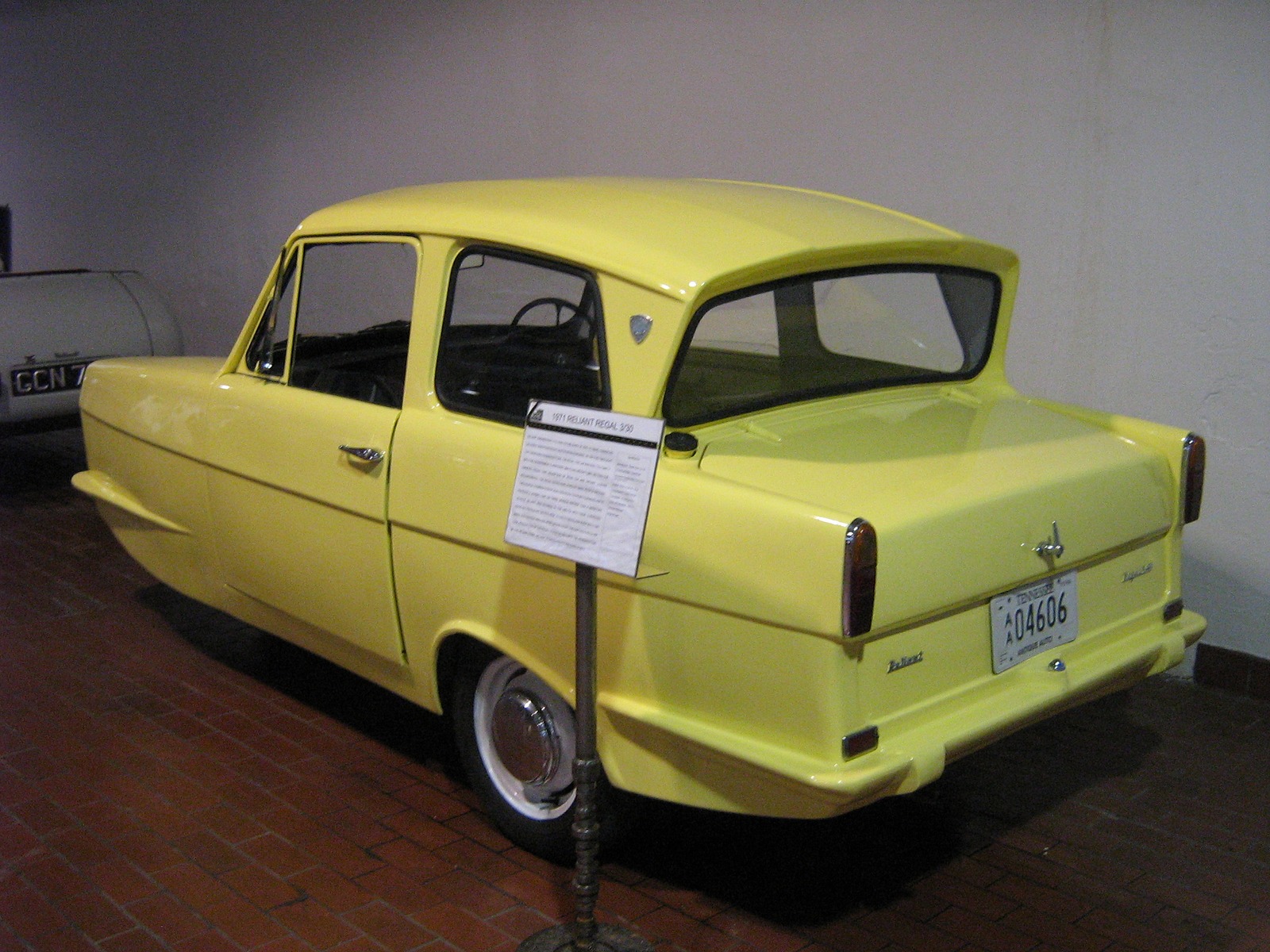
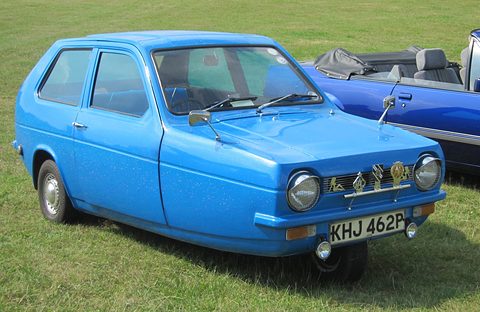
The story
History
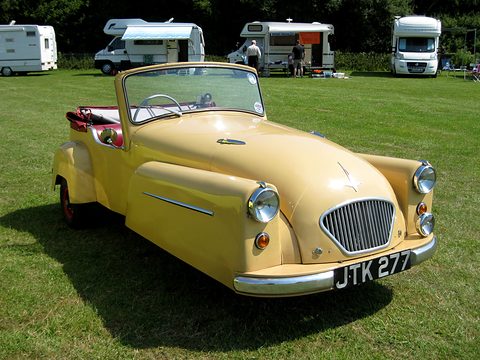
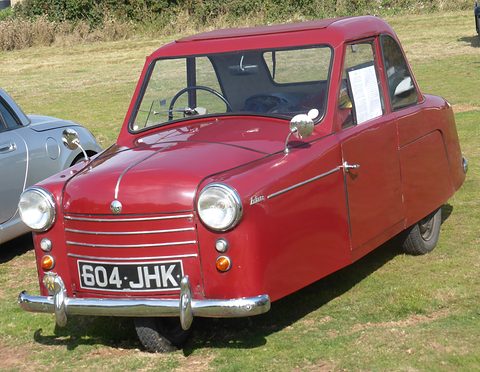
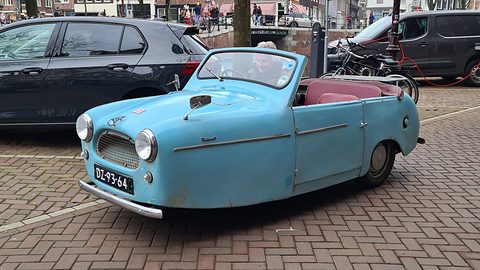
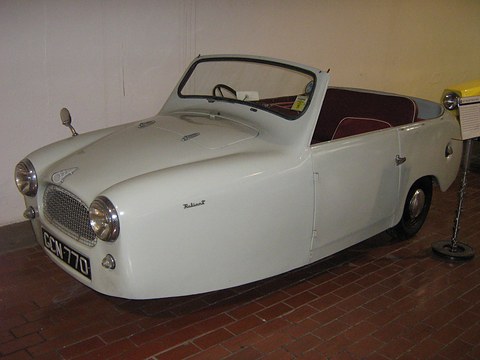
Under British law a three-wheeler that weighed no more than 8 cwt unladen, about 406 kg, could be taxed at the motorcycle rate and driven on a motorcycle licence, and Reliant built its whole business on that rule.source 1source 2 German Wikipedia traces the flat rate, £4 a year whatever the engine, to a law of 1921, though the law itself has not been found.source 2 Motor Sport put the designer’s problem plainly in 1964: for three-wheeler taxation, a total weight of no more than 8 cwt was essential.source 1 English Wikipedia’s figure of 7 cwt is contradicted by both.source 3 The Bond Minicar answered the rule with a two-stroke on the front wheel; the Regal answered it with a family car on three wheels.source 1source 2
Reliant’s founder, Tom Williams, had been works manager at Raleigh. With E. S. Thompson he built the first Reliant, a three-wheeled van, in his garden at Kettlebrook, Tamworth, and licensed it on 1 January 1935: a van of 7 cwt, powered by a single-cylinder JAP of 600 cc.source 4 From 1938 Reliant used the Austin Seven’s engine, until Austin stopped making it, and then its own 747 cc side-valve four, closely based on it; the club says the first one fired up on 3 September 1939, as news of the war came over the radio.source 4source 1source 5 It was not interchangeable with the Austin’s, which Motor Sport said disappointed the builders of 750 Formula racers; the club believes the differences were made to send owners to Reliant for spares.source 1source 5 After the war came the Regent van, and in 1951 Williams decided on a four-seat car.source 4
The side-valve Regals
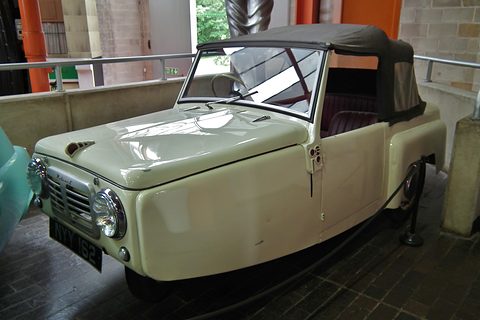
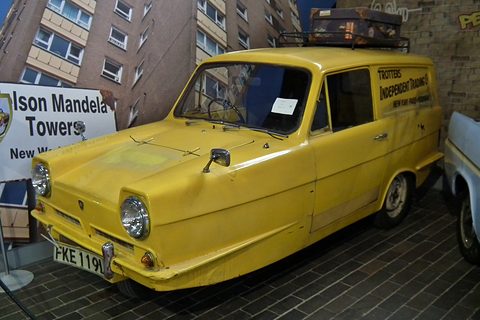
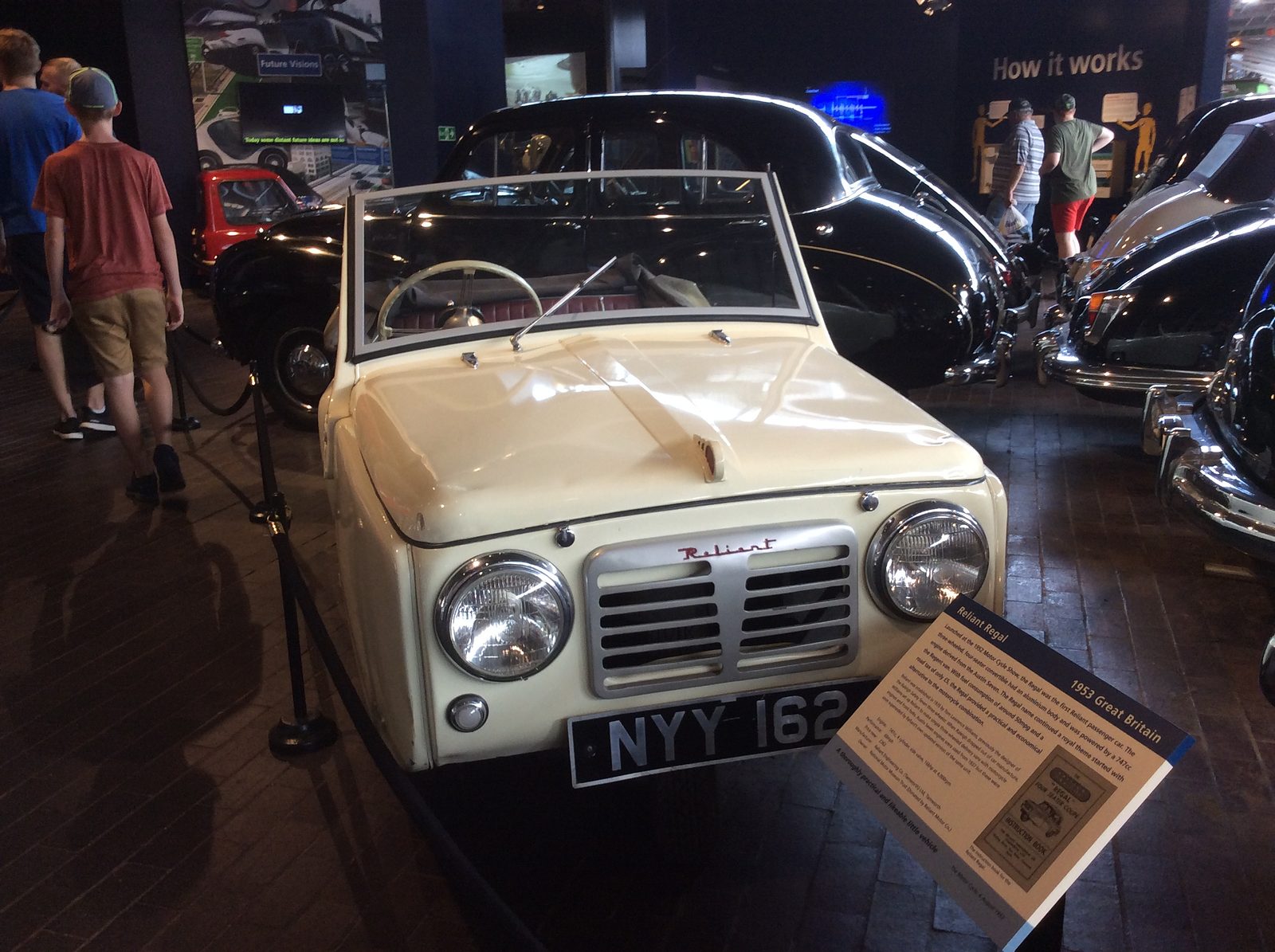
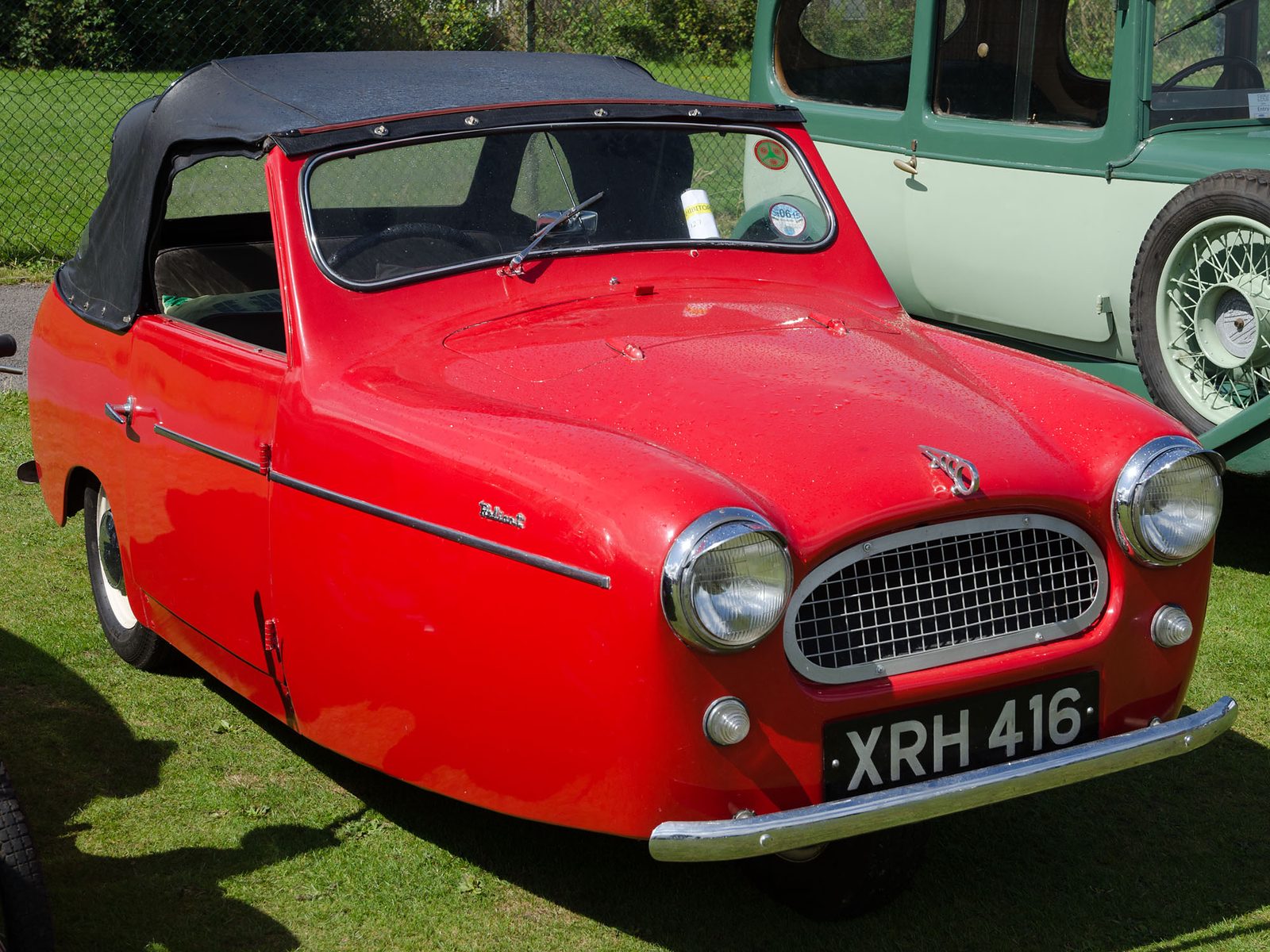
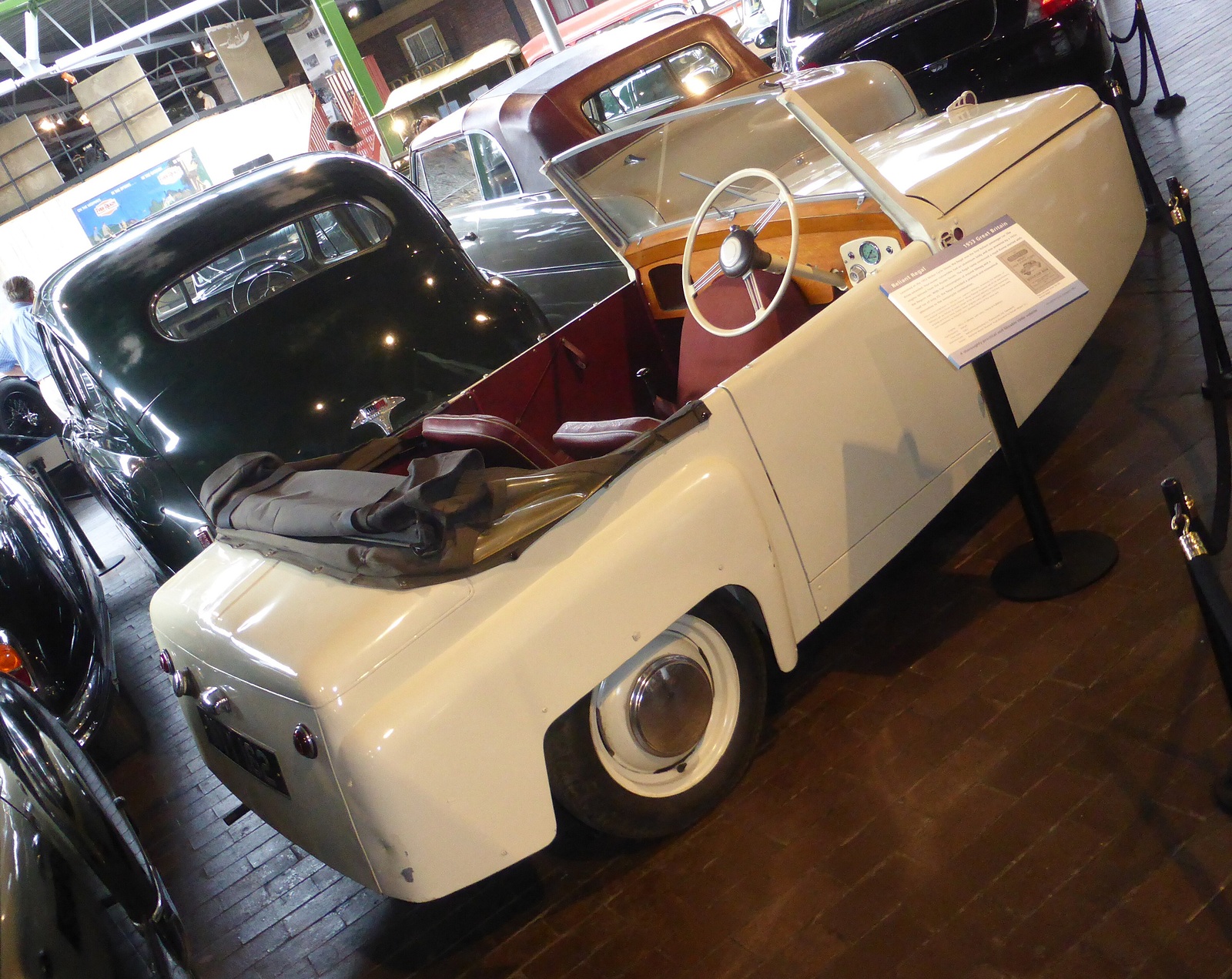
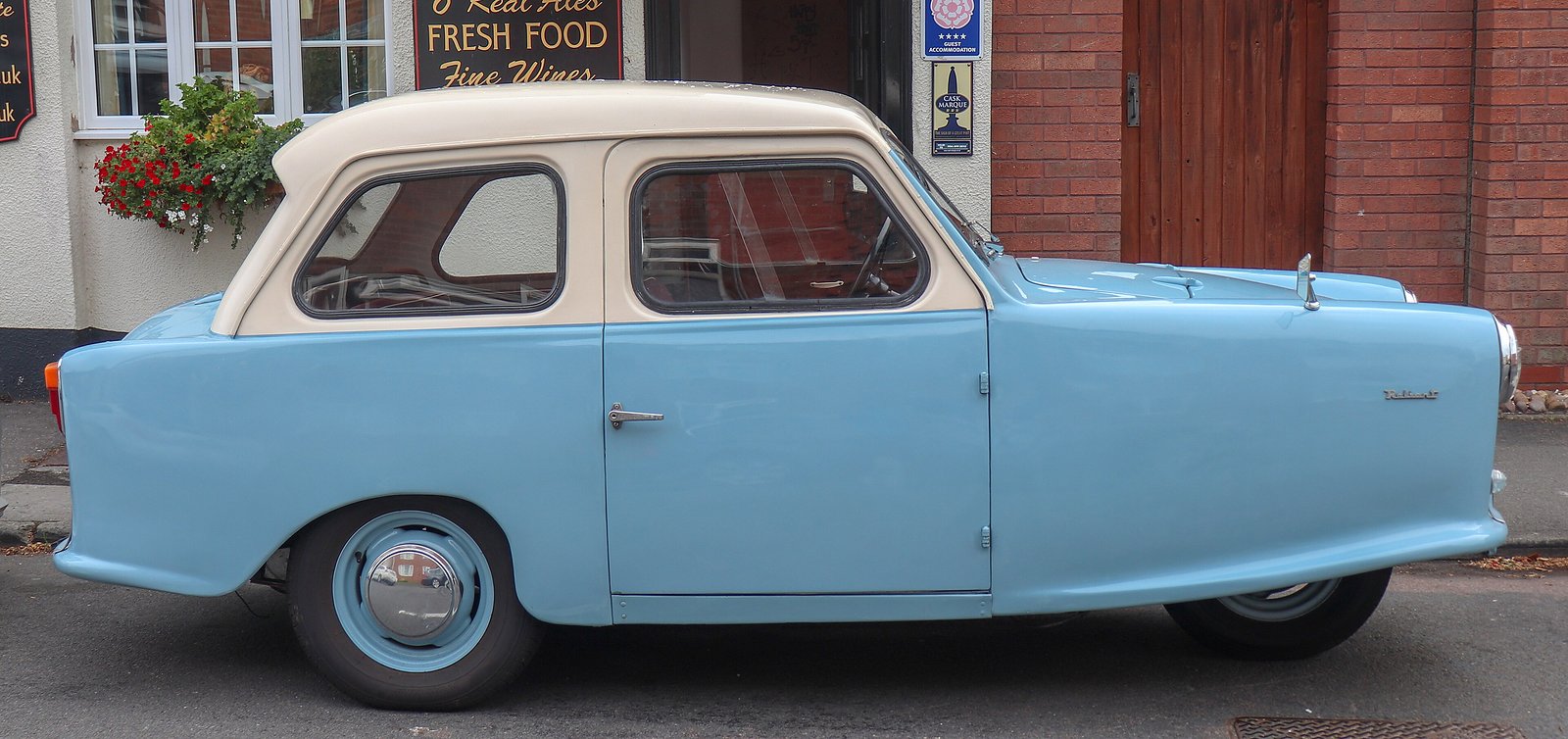
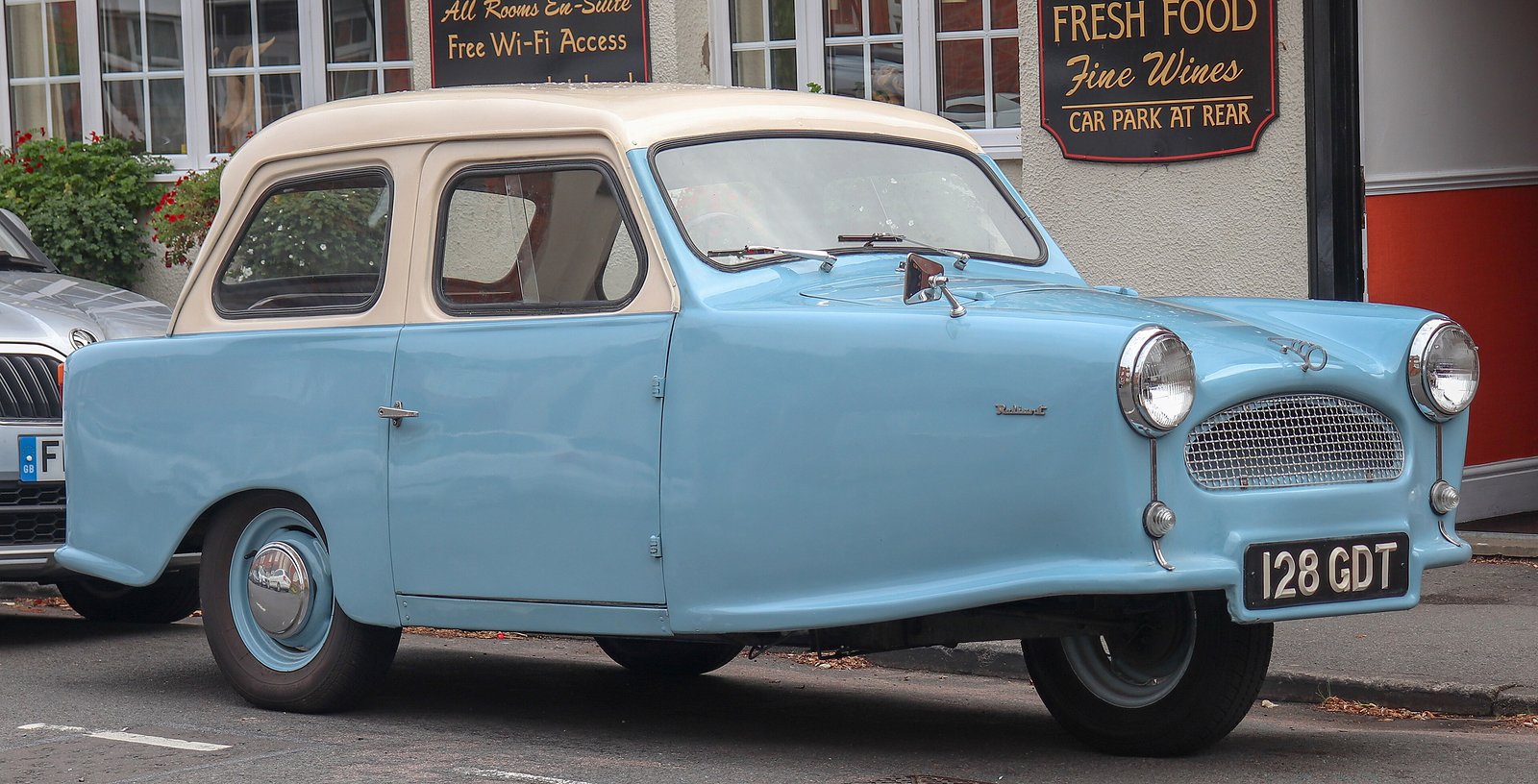
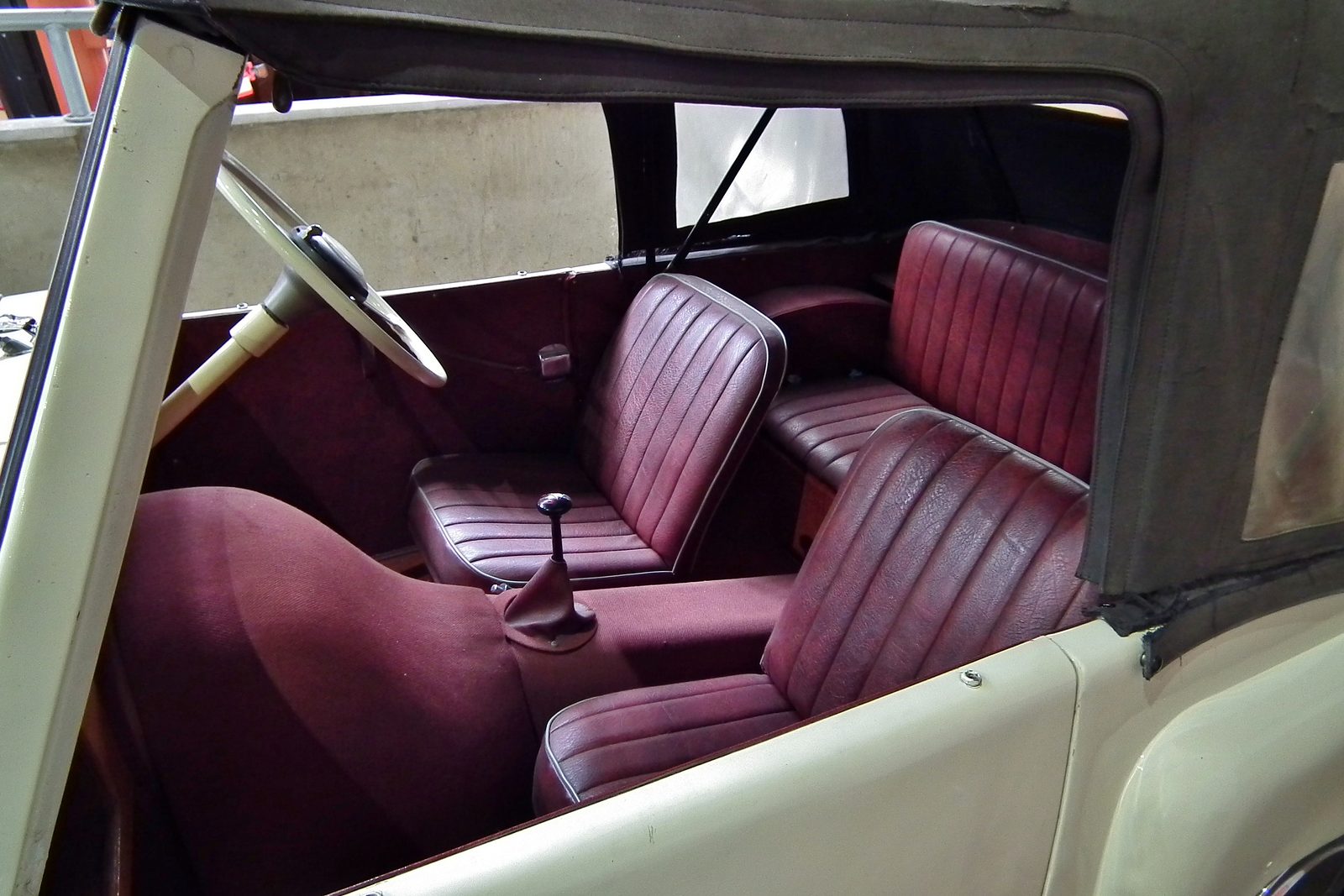
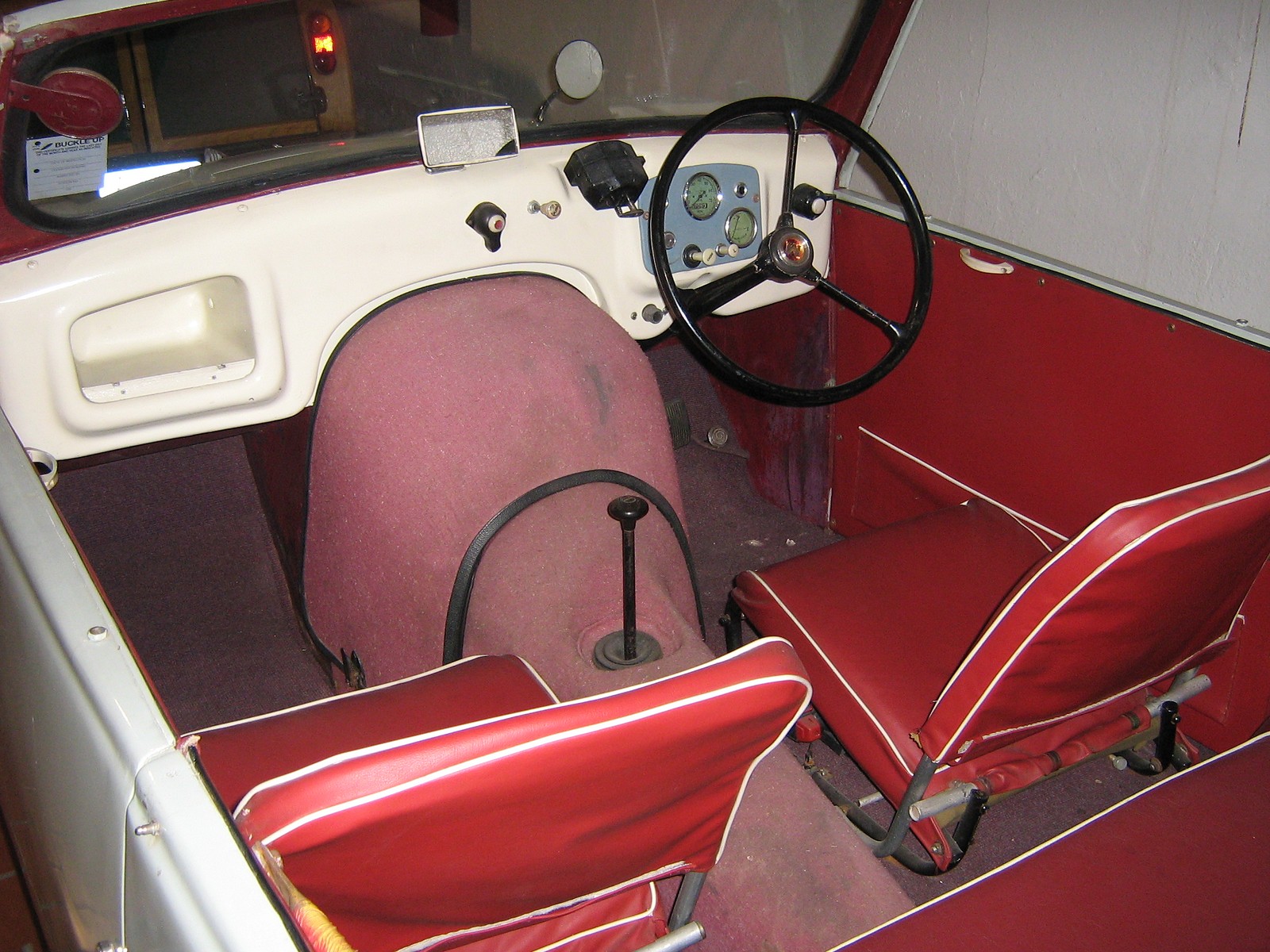
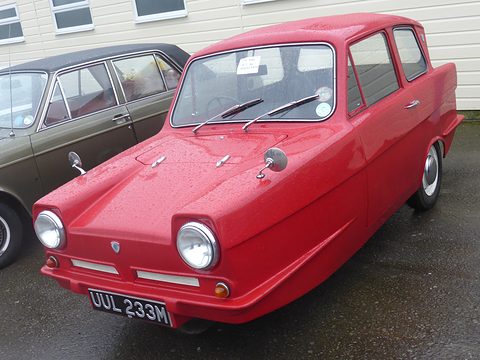
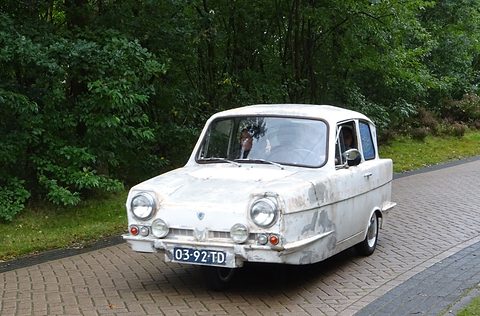
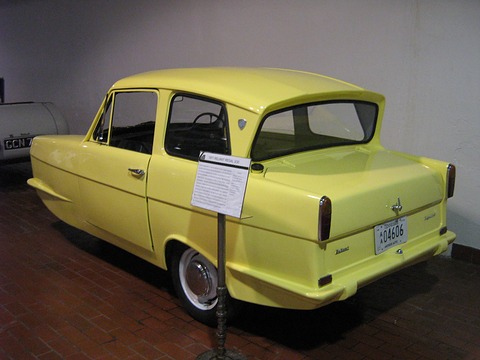
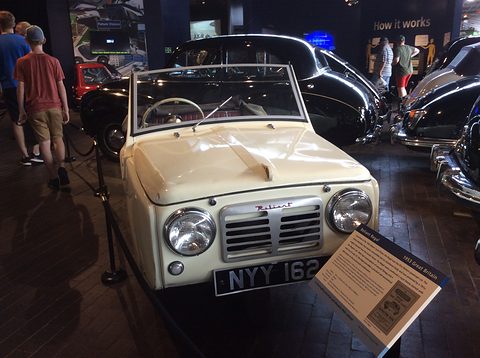
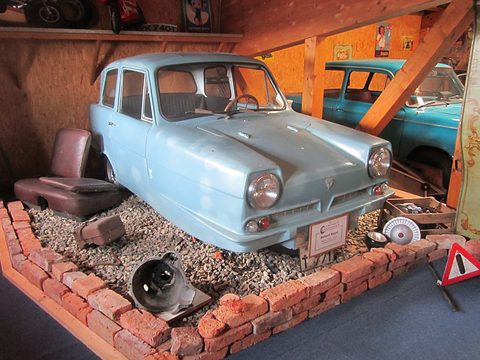
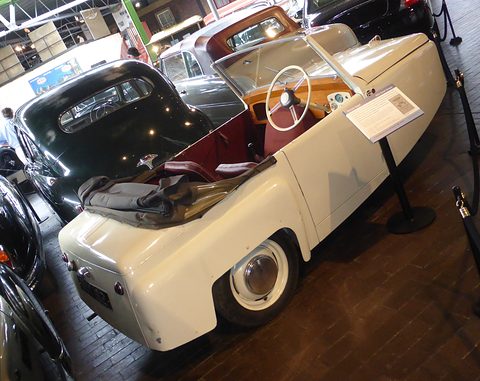
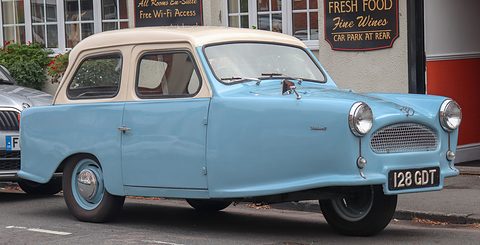
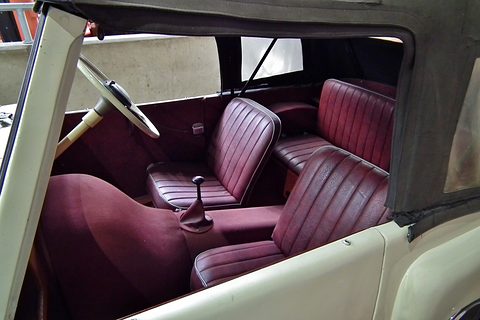
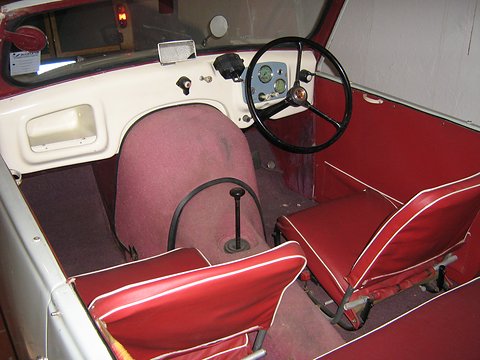
The prototype Regal appeared at the Cycle and Motor Show at Earls Court in November 1951, and the production Mk I a year later. It was not built until 1953, because Reliant made many changes to shave off weight and price so that it would qualify for the lower road tax; the prototype’s wind-down glass windows and outside door handles went, and the car became smaller.source 6source 2 The Mk I had the 747 cc side-valve engine at the front, driving the rear axle, and an ash frame clad in aluminium panels, on a steel box chassis, with Perspex sidescreens, a single wiper and a pram-type hood.source 4source 6source 1source 2 The factory claimed 16 PS and 105 km/h (65 mph).source 2 In its whole life it had only one change: a front-seat cushion 2 inches thicker, to stop the occupants touching the seat frame.source 6
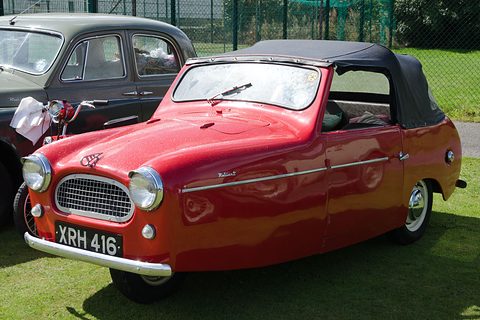
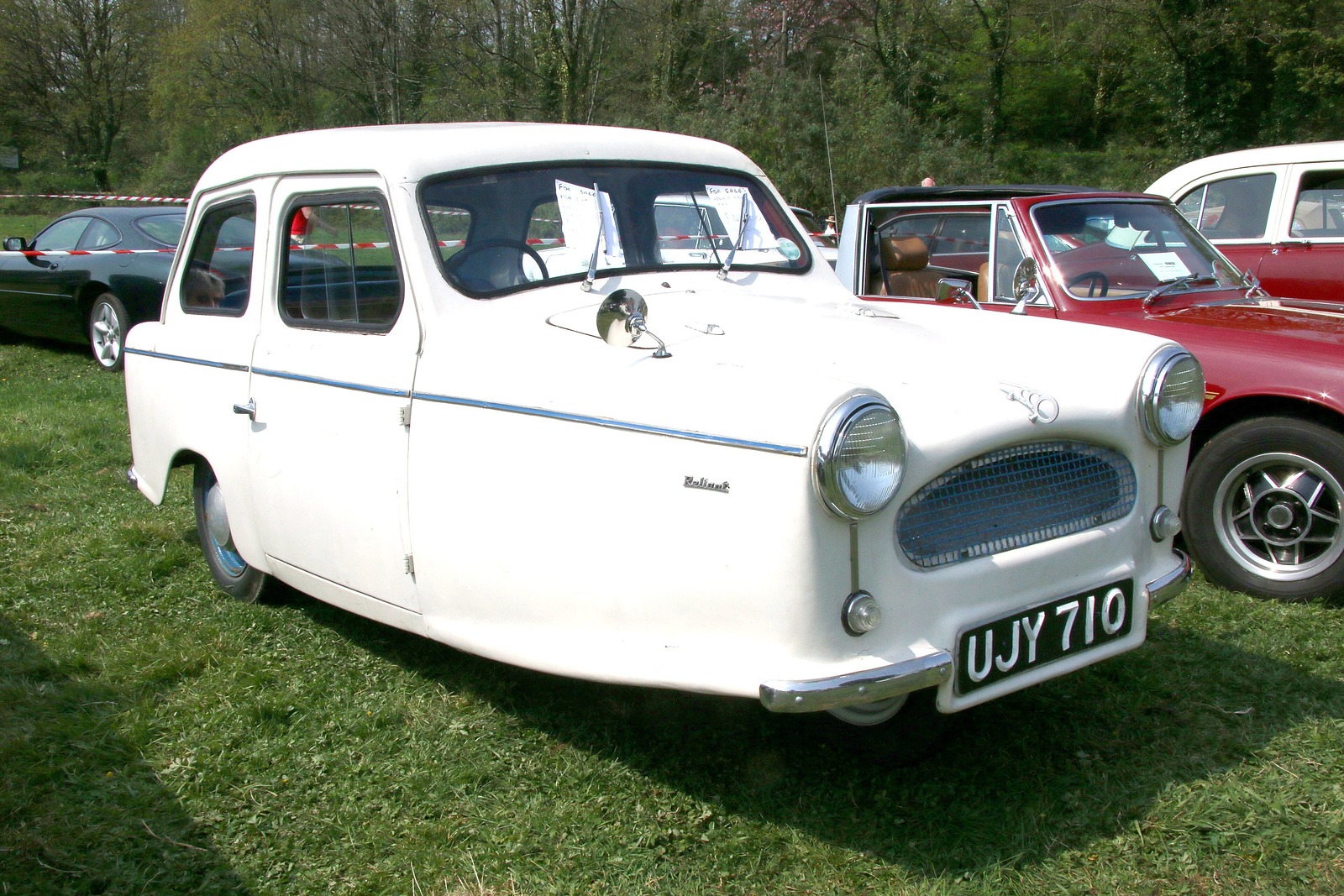
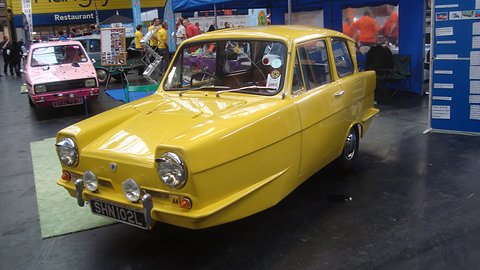
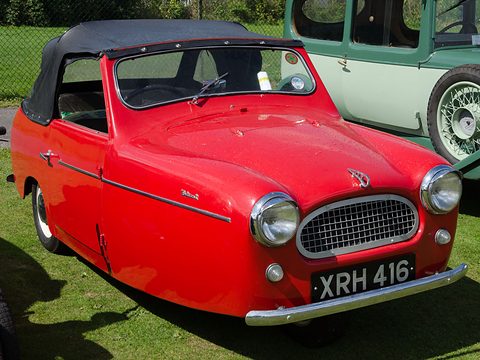
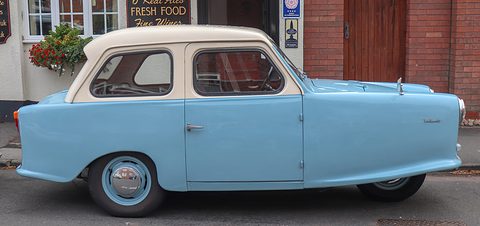
The Mk II of May 1954 dropped the large grille and was claimed to seat four adults; it was the last Reliant three-wheeler with a full-size bonnet, and a hardtop with a glass-fibre top followed in 1955.source 6source 2 A 5 cwt van replaced the Regent, in 1956 by the club’s date, though German Wikipedia gives 1954; it led to the Reliant Supervan (more in micro vans).source 6source 2
Aluminium was dear, and Reliant turned to glass fibre.source 7source 2 The Mk III of November 1956 had the first all-glass-fibre Reliant body, still on an ash frame, 6 inches wider than before, with dummy front wings carrying the headlamps, flashing indicators instead of semaphores, sliding windows, and synchromesh on every gear but first. German Wikipedia counts 2,787 in two years.source 6source 2 The Mk IV of November 1958 brought 12-volt electrics, new suspension and steering, and 13-inch wheels instead of 14-inch; an air cleaner cut its power to 17.5 hp. It was the last Regal offered as both soft-top and hardtop, and the rarest of the side-valve cars: only two were known to survive when 3wheelers.com wrote, and the club still says few.source 6source 8
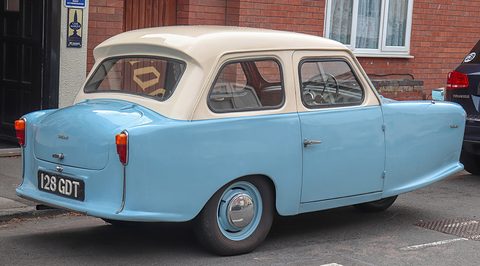
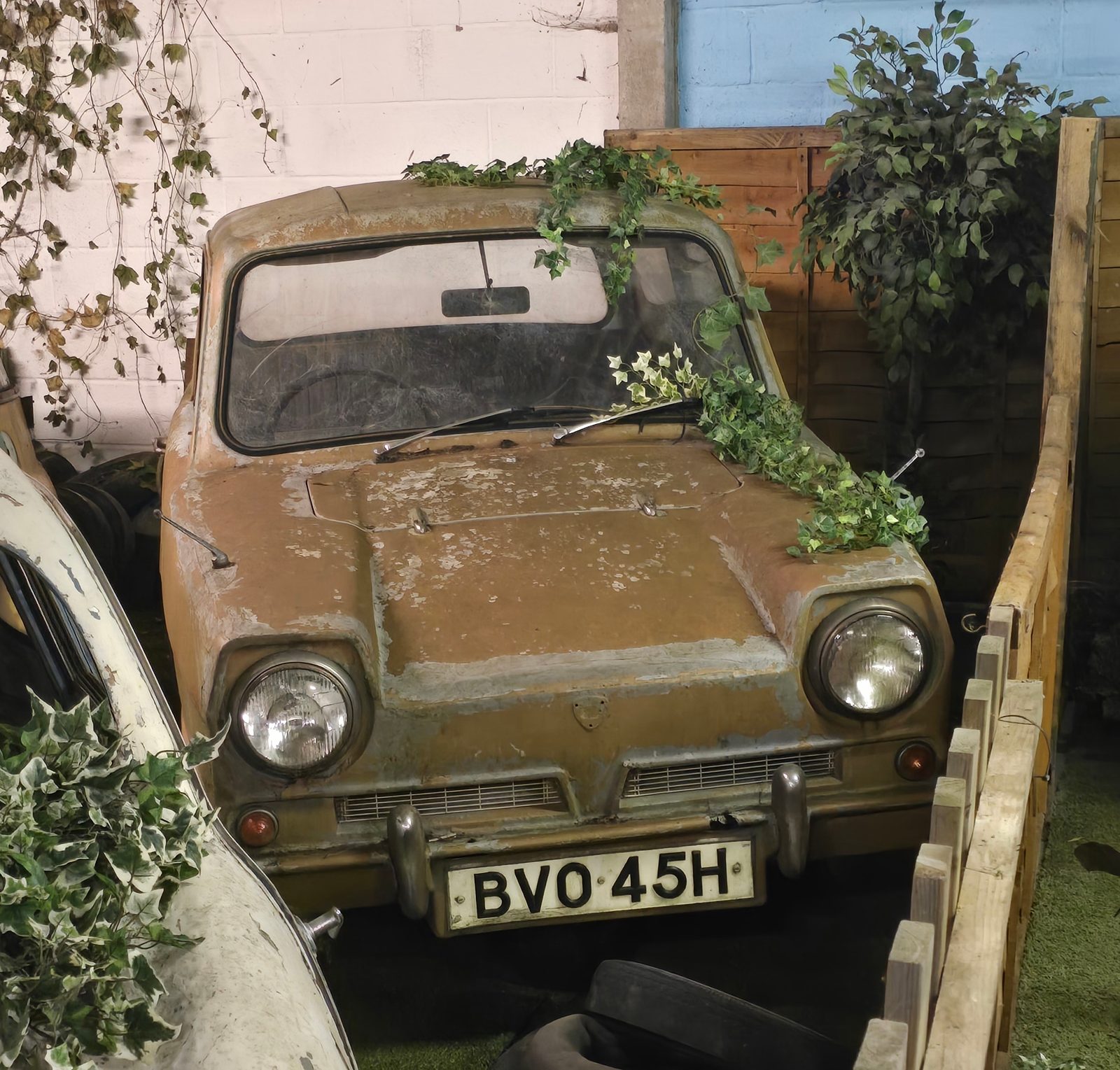
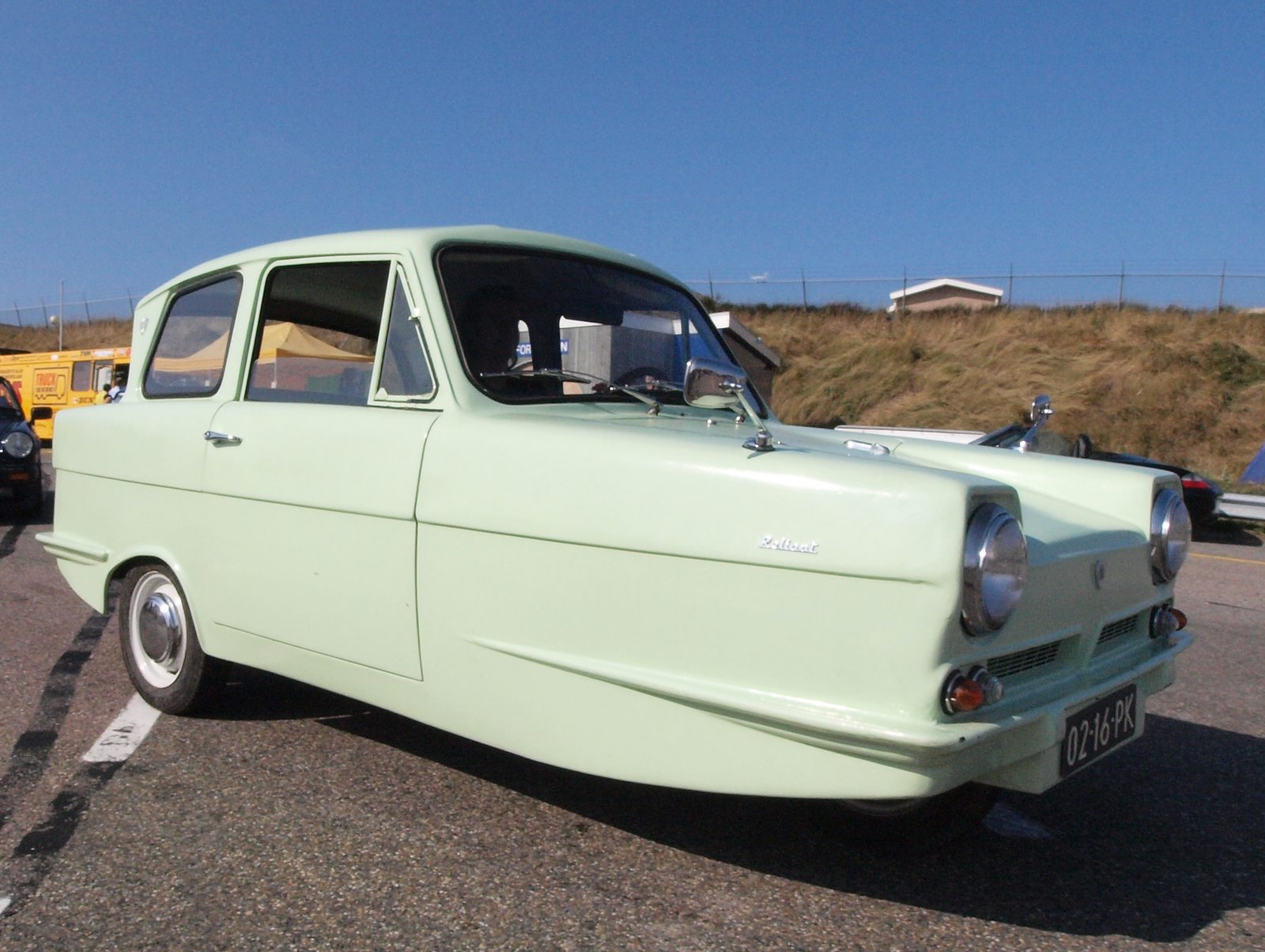
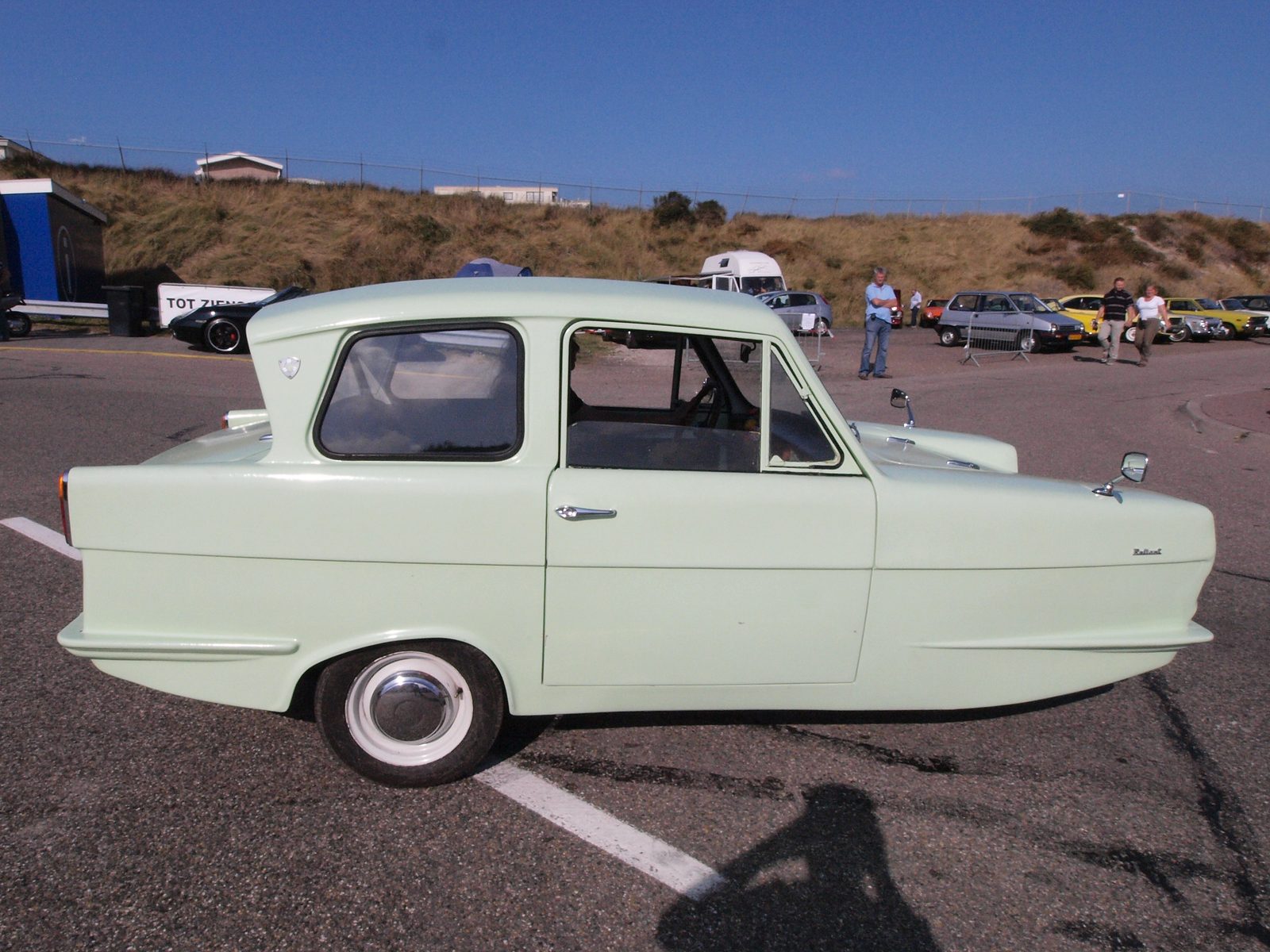
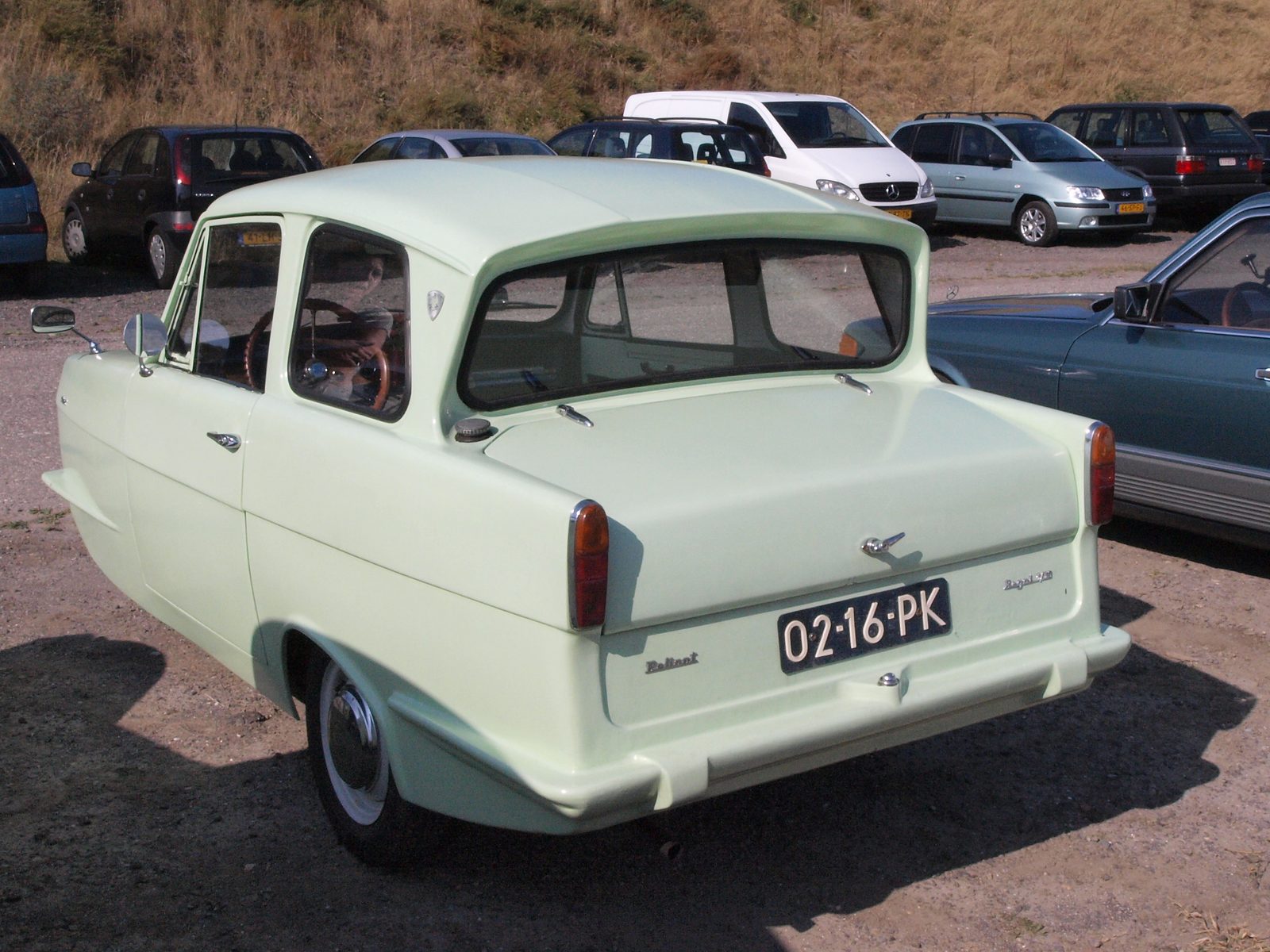
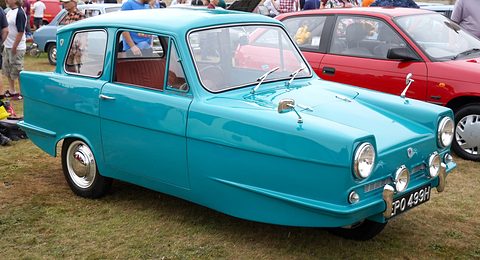
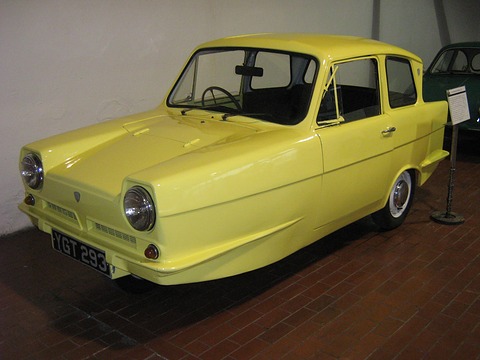
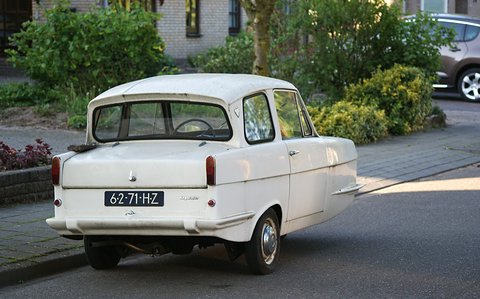
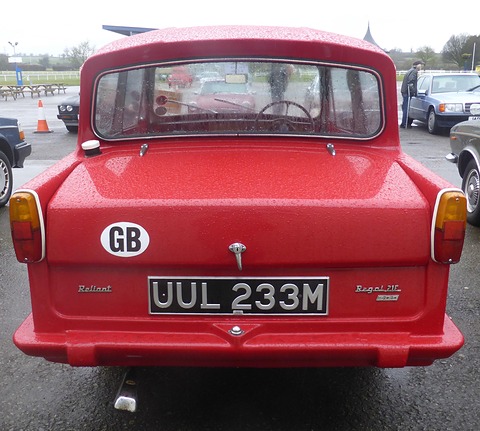
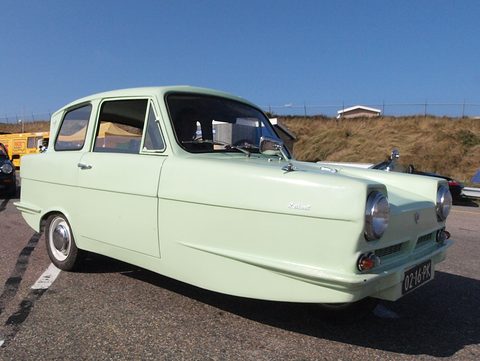
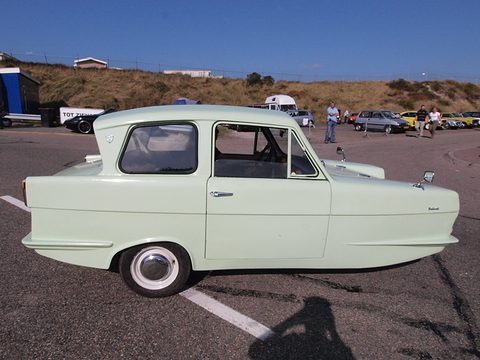
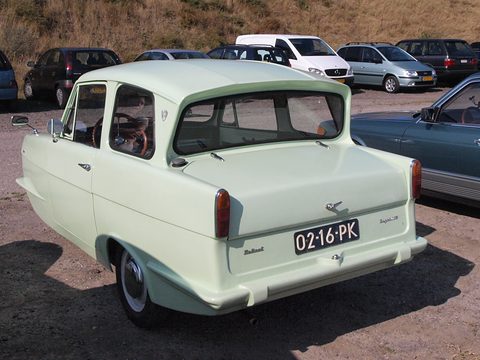
The Mk V of June 1959 had its roof moulded with the body for the first time, an outside boot, a body 8 inches longer, instruments in the middle and a very shallow screen with two wipers. The Mk VI of November 1960 had a deeper screen and a roof that overhung the rear window in the manner of the Ford Anglia, and it was the first Regal started with a key.source 6source 2 It was also the last with the side-valve engine, and possibly, by one claim, the last new car in the world sold with one.source 4source 6source 8
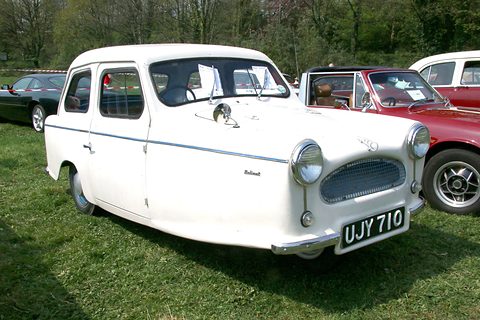
This simple vehicle makes no concessions to bubble-car practice.
The 3/25: an engine of aluminium
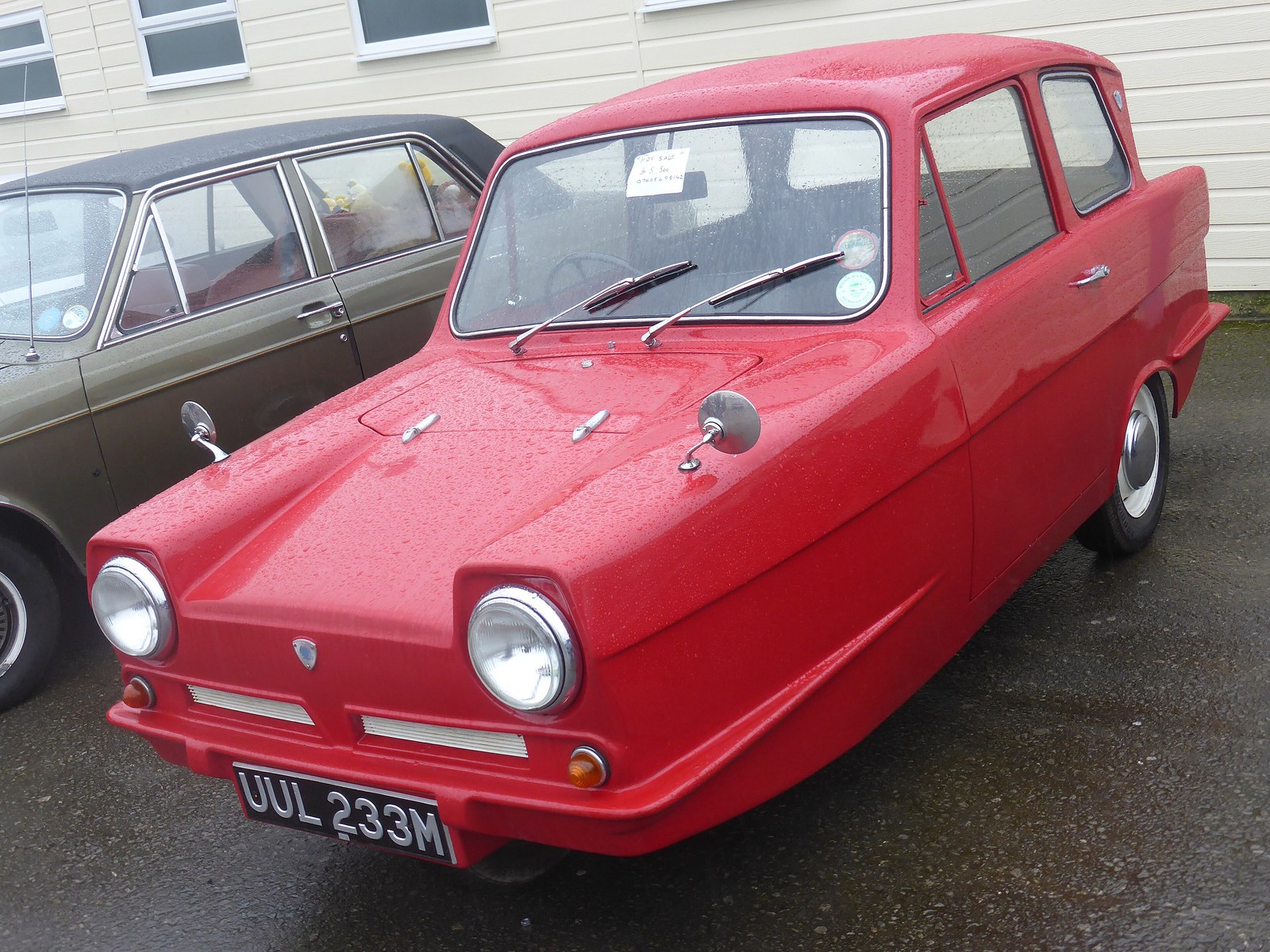
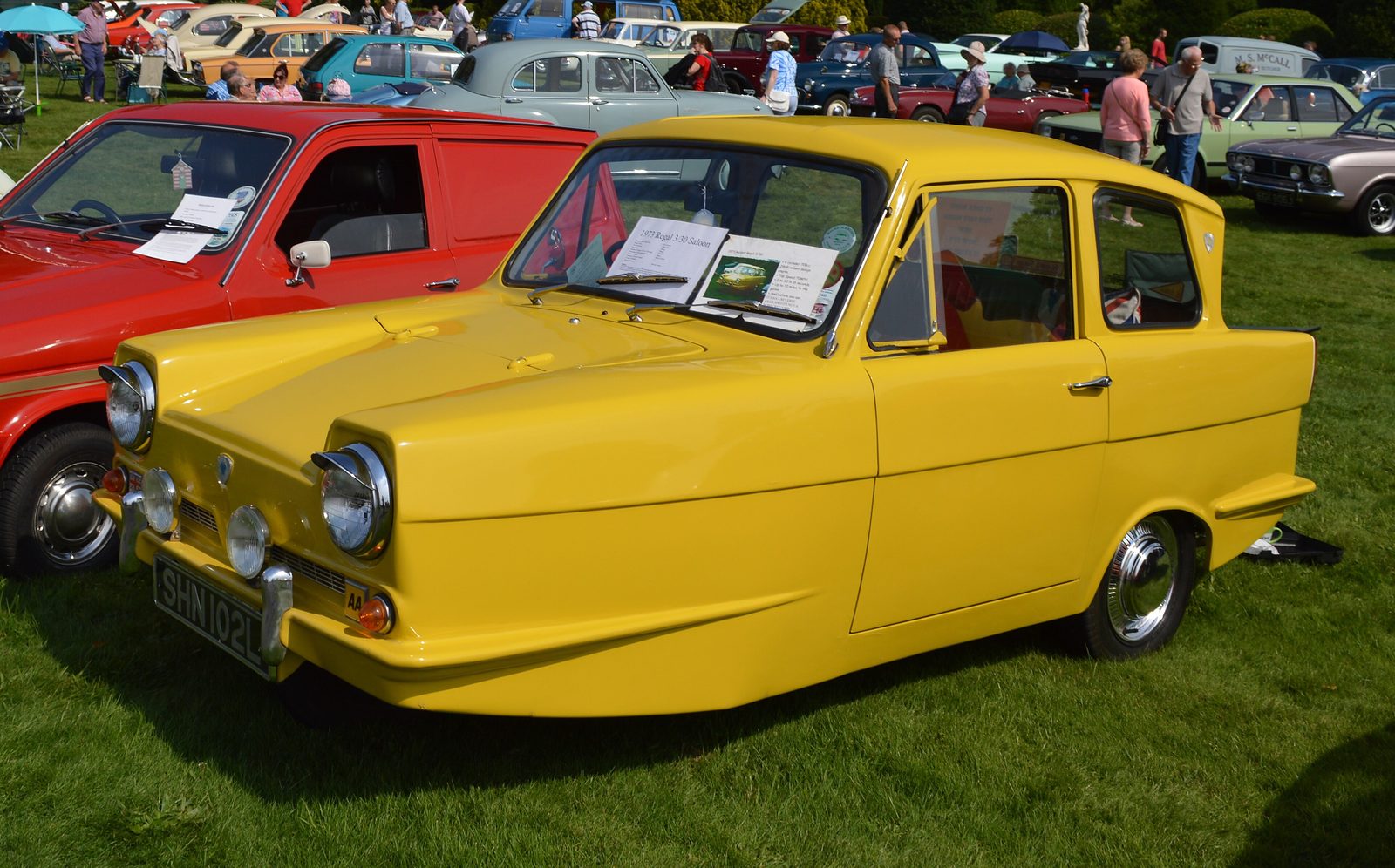
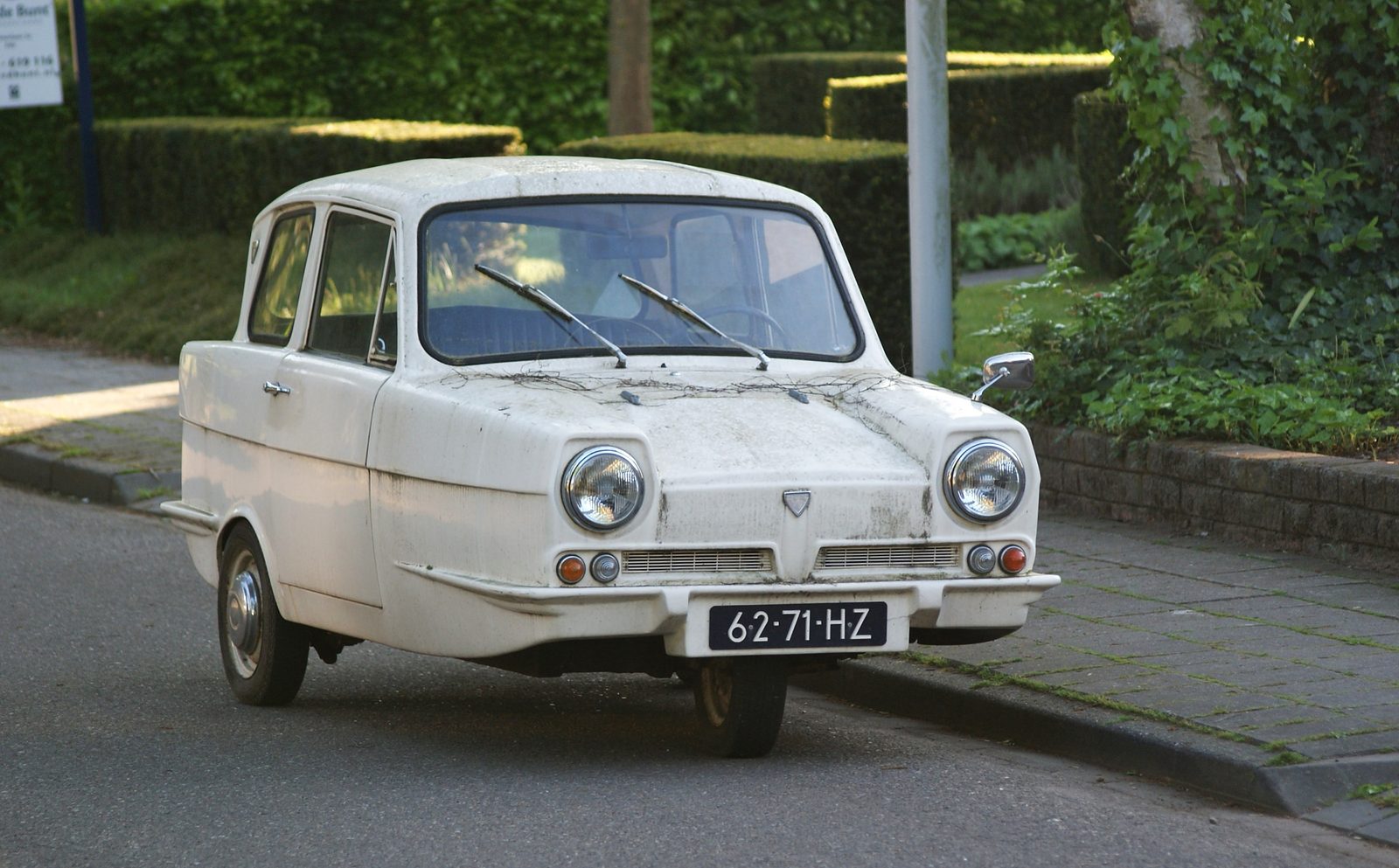
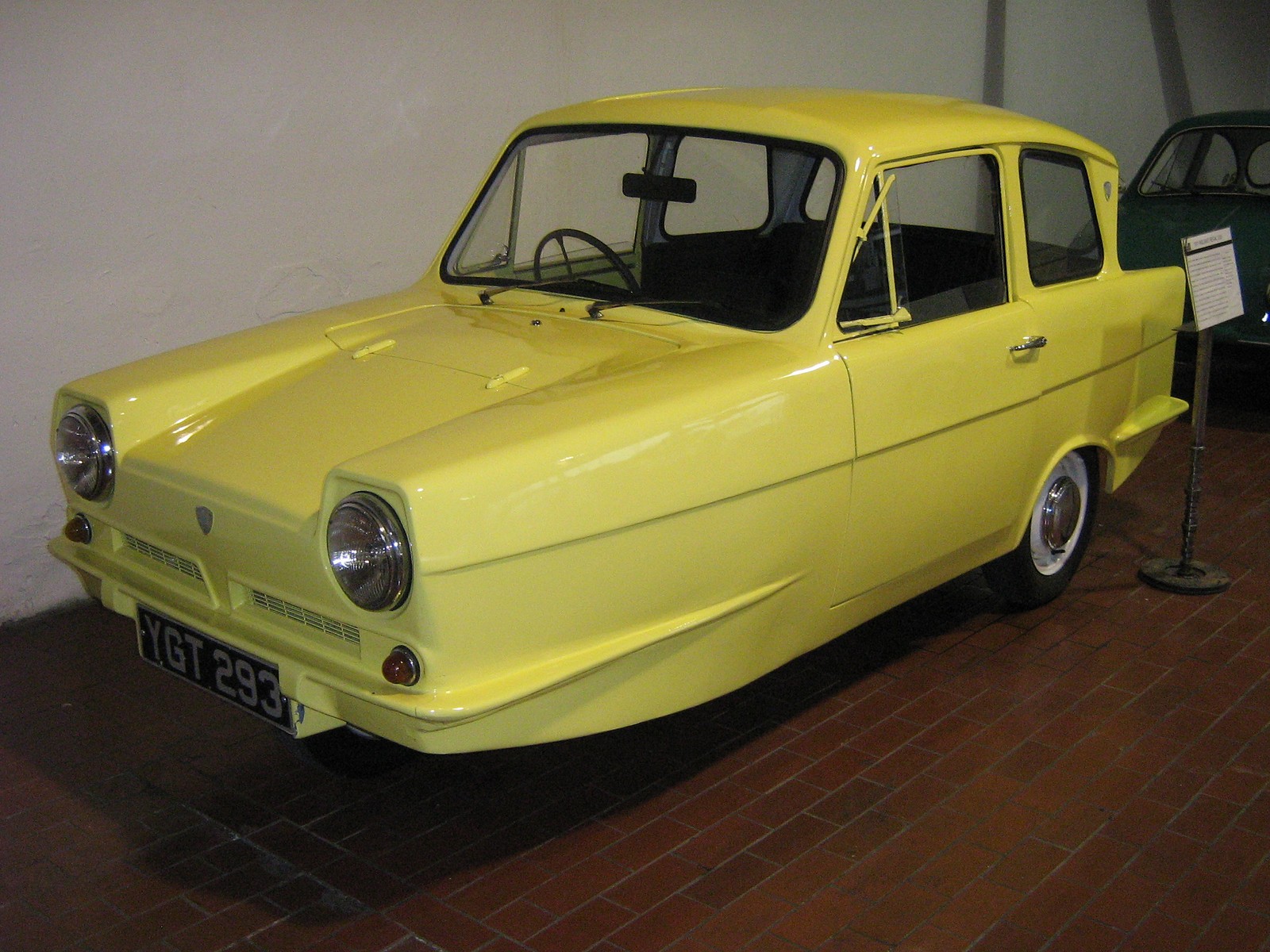
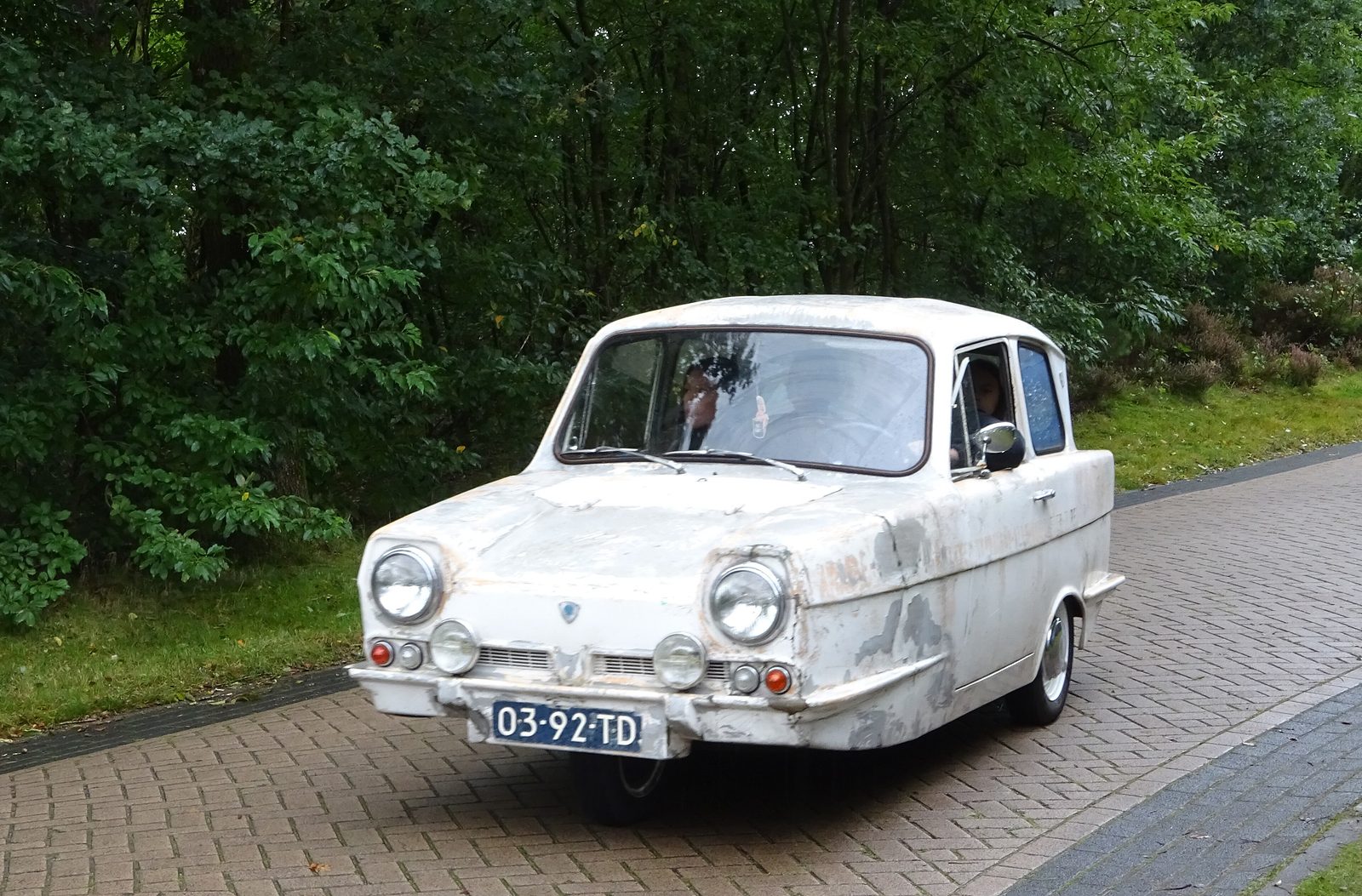
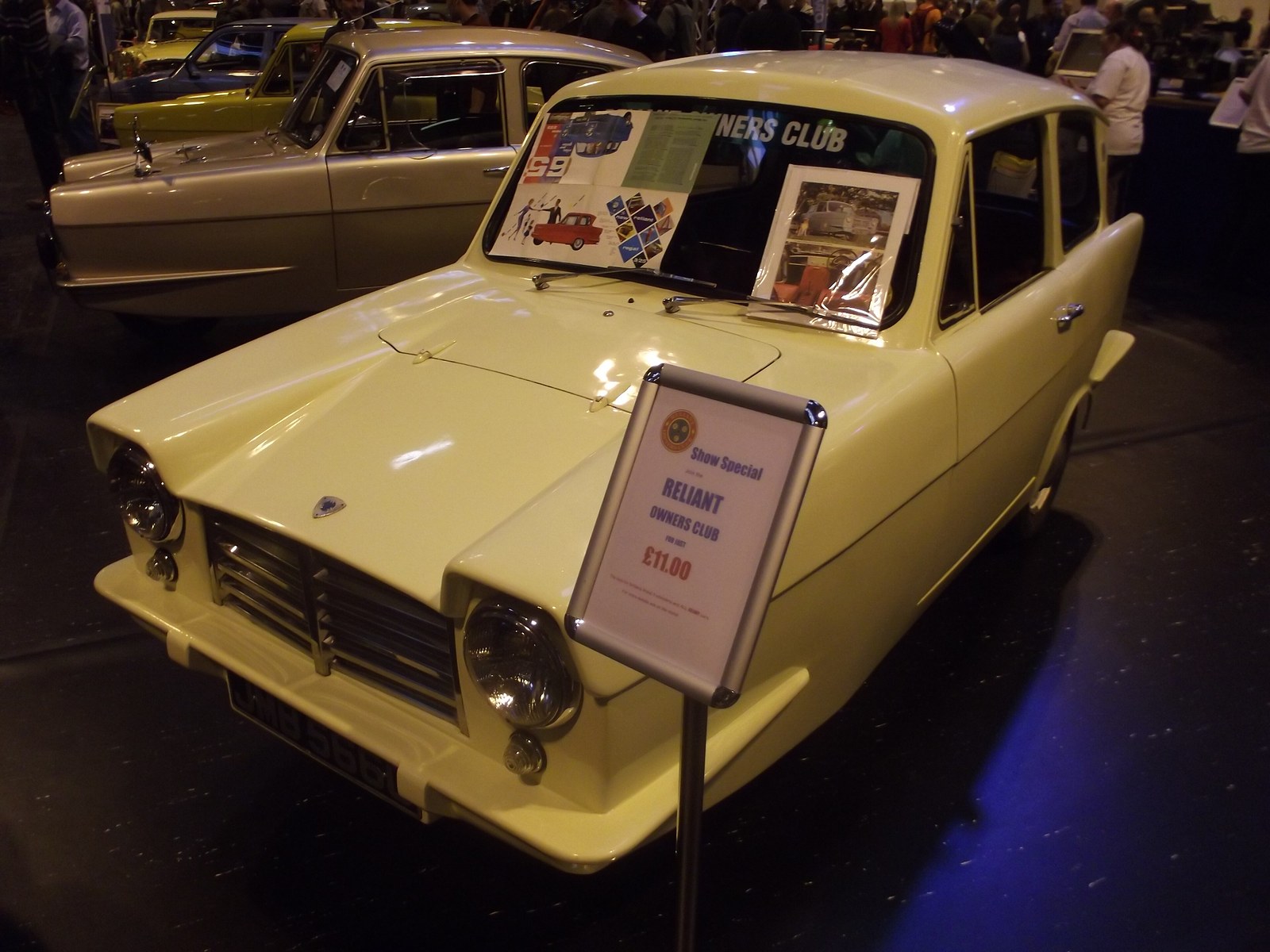
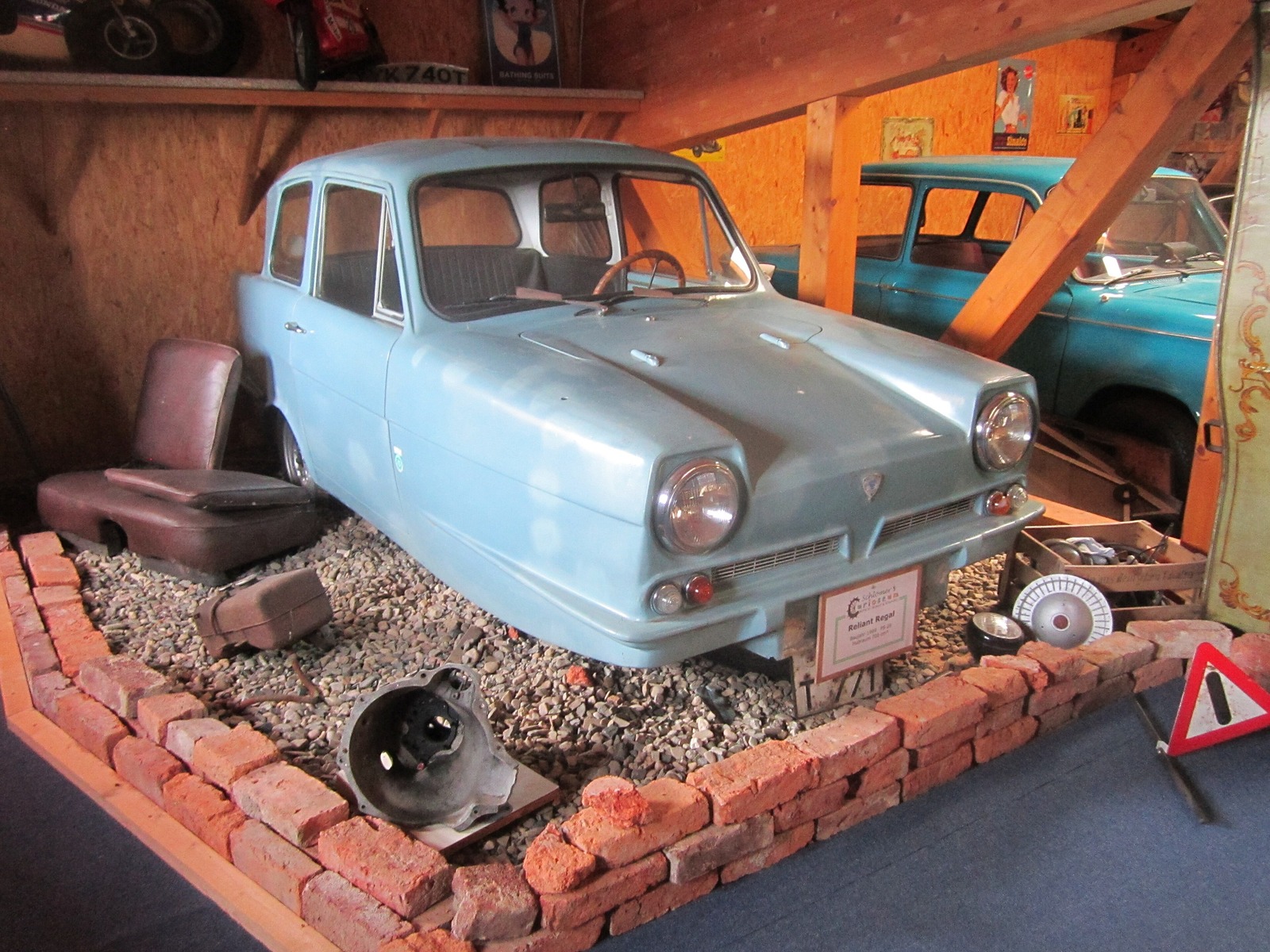
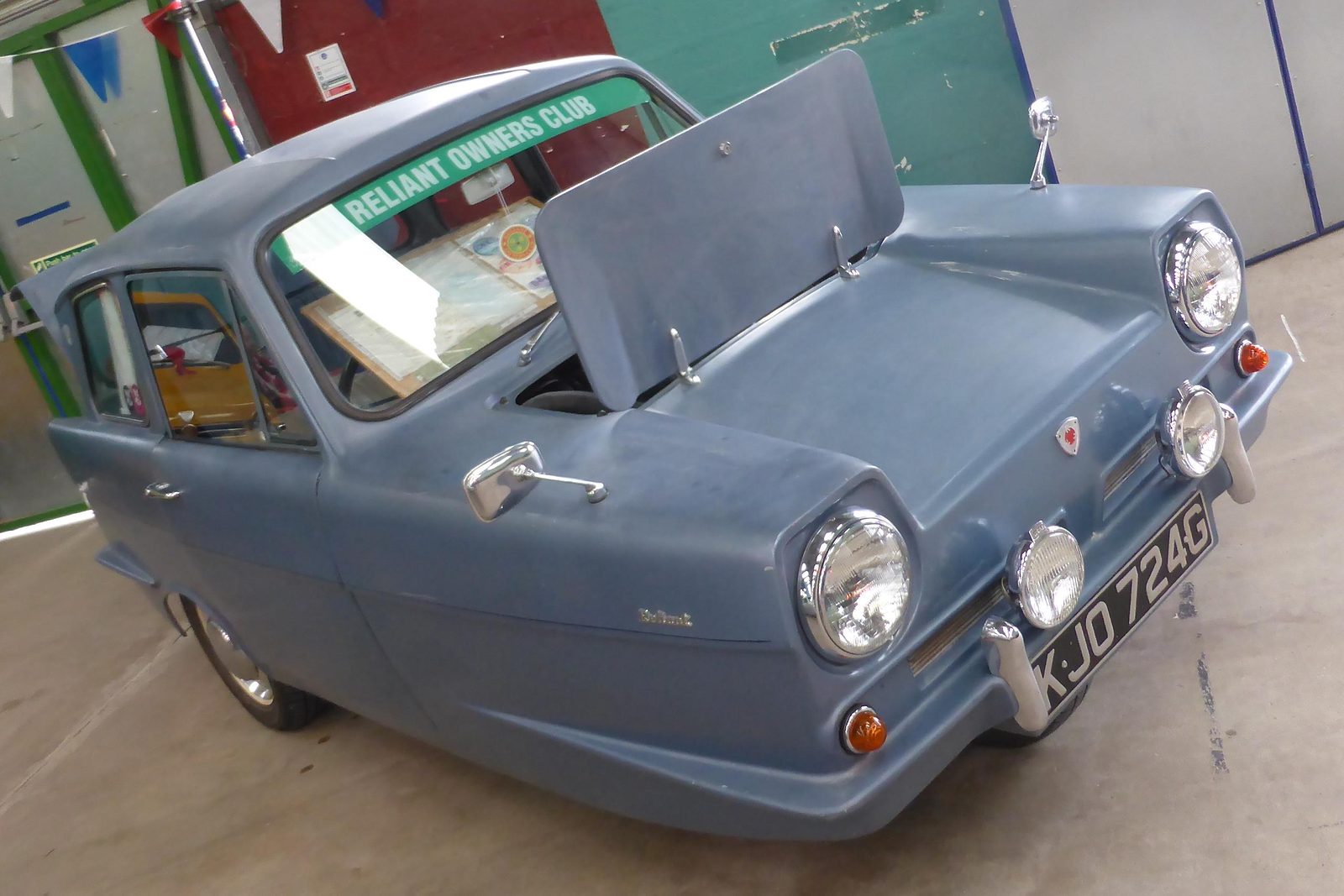
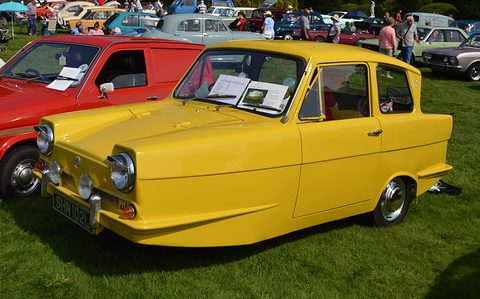
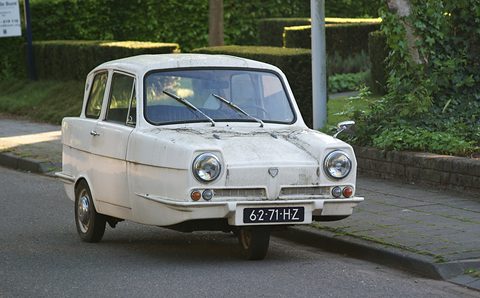
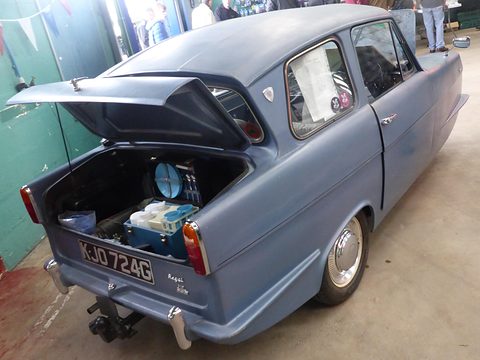
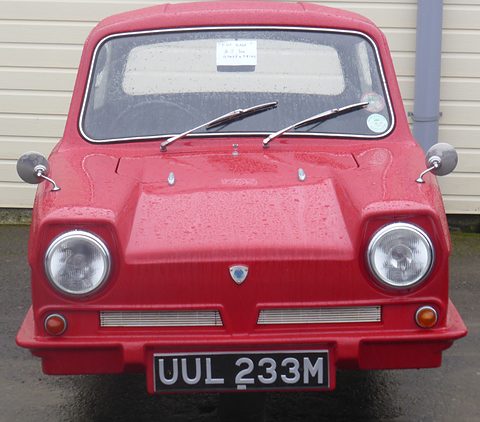
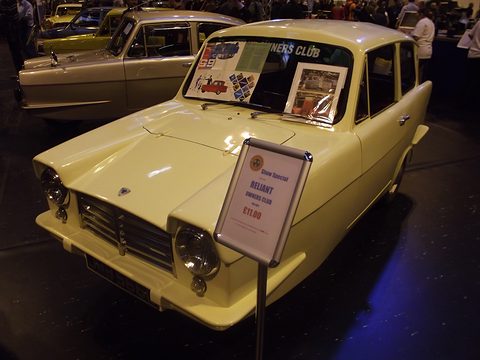
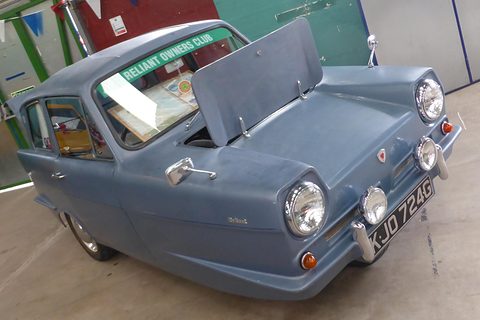
The Regal 3/25 of October 1962 was all new. Its name meant three wheels and 25 bhp.source 7source 2 The body was two glass-fibre mouldings, outer and inner, bonded together and bolted to a steel chassis, with no wood at all, even in the floor. It had a full-size windscreen, winding windows with quarter-lights and a water heater, and a reverse-rake rear window like the Anglia’s; Reliant drew a similar design at the same time for the Sabra Carmel in Israel.source 7source 3source 2 Under the front was Reliant’s new 598 cc four, with a die-cast aluminium block and head and wet liners, which the company claimed as Britain’s first mass-produced all-alloy car engine.source 4source 5 Its design came from the Standard Eight’s engine: English Wikipedia calls it a reverse-engineered alloy version of the 803 cc Standard unit, and the club, unexplained, says it was based on a Chinese copy of a Standard engine.source 3source 5
Weight was the point. Motor Sport found that the alloy engine cost Reliant about £4 a car more than a cast-iron one would, but weighed only 138 lb without its gearbox, and the car had to stay under 8 cwt.source 1 When the paper visited Tamworth in 1964, Reliant was making about 10,000 vehicles a year and 250 Regal 3/25s a week, about a third of them vans, with 1,000 workers; 3,000 vehicles a year went abroad as kits.source 1 Every three-wheeler had a seven-mile road test before delivery, and every engine ran for an hour and a half or two on a bench at Shenstone. Since a fire had destroyed the old body shop, chassis had to be wheeled across the busy A5 to the new one.source 1 Reliant also explained the dipstick on the gearbox: its owners, very often ex-motorcyclists, did most of their own servicing.source 1
The Regal always had a reverse gear in its four-speed box, which shows that reverse was never a condition of the cheap tax.source 6source 1 The licence was another matter. A club history and a specialist site agree that, until about 1963, anyone driving on a motorcycle licence alone had to have the reverse gear blanked off.source 9source 10 The rules have since changed: from 19 January 2013 motor tricycles moved into motorcycle category A on new licences, and only physically disabled learners may ride one on a provisional licence.source 11
Super, 21E and 3/30
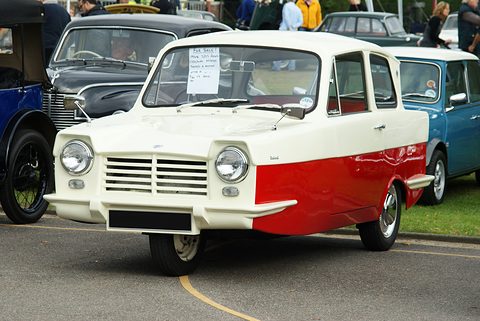
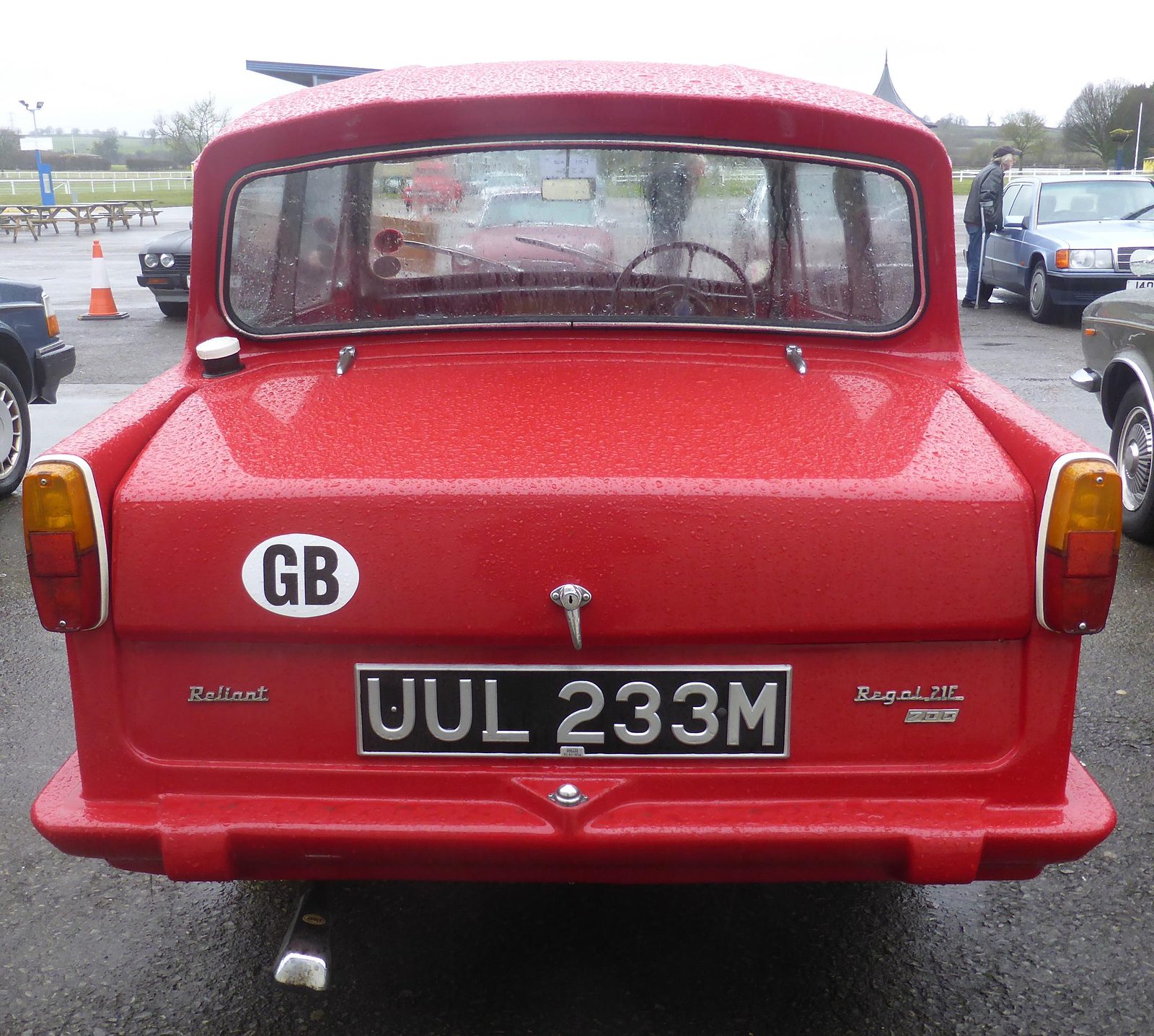
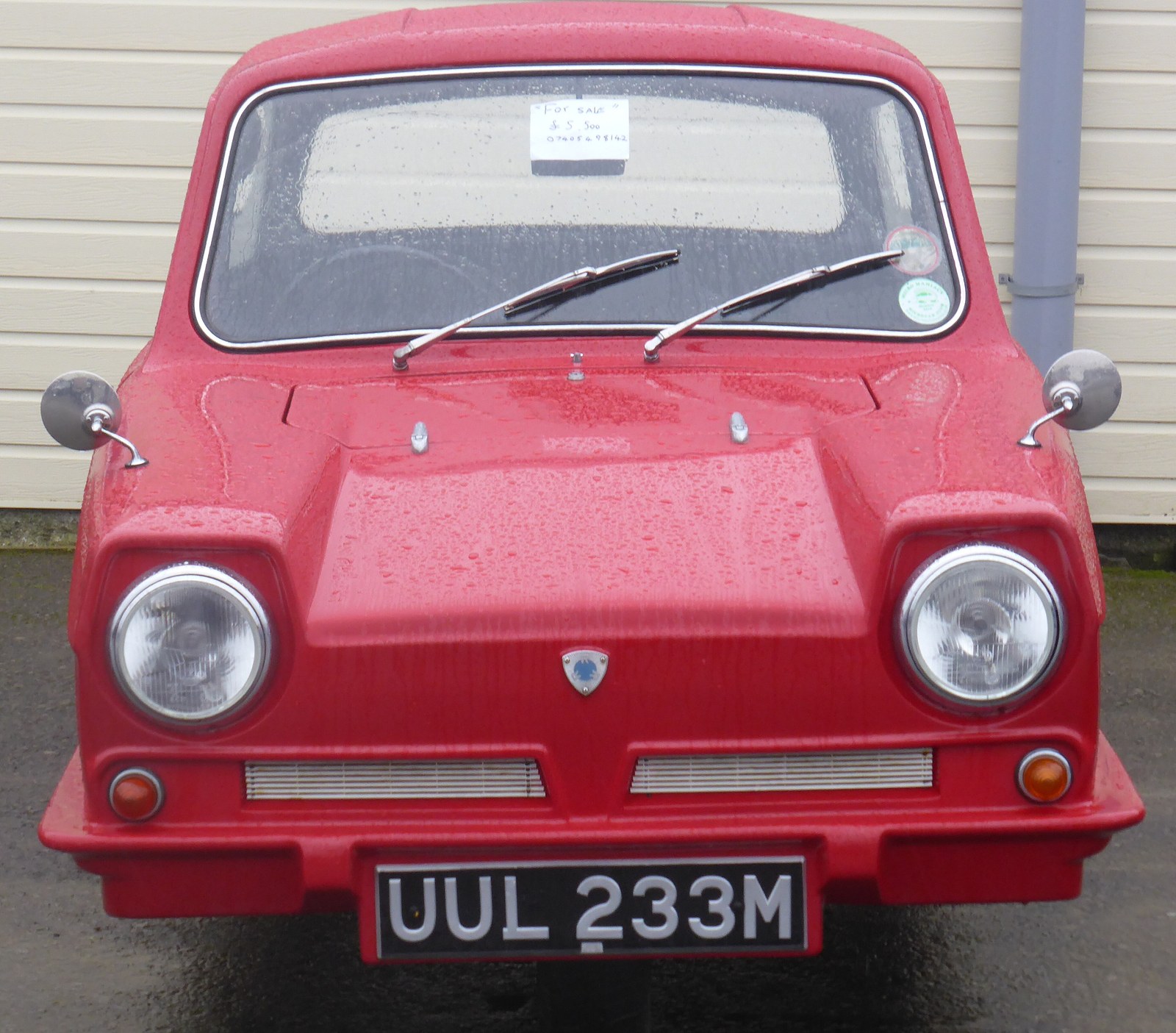
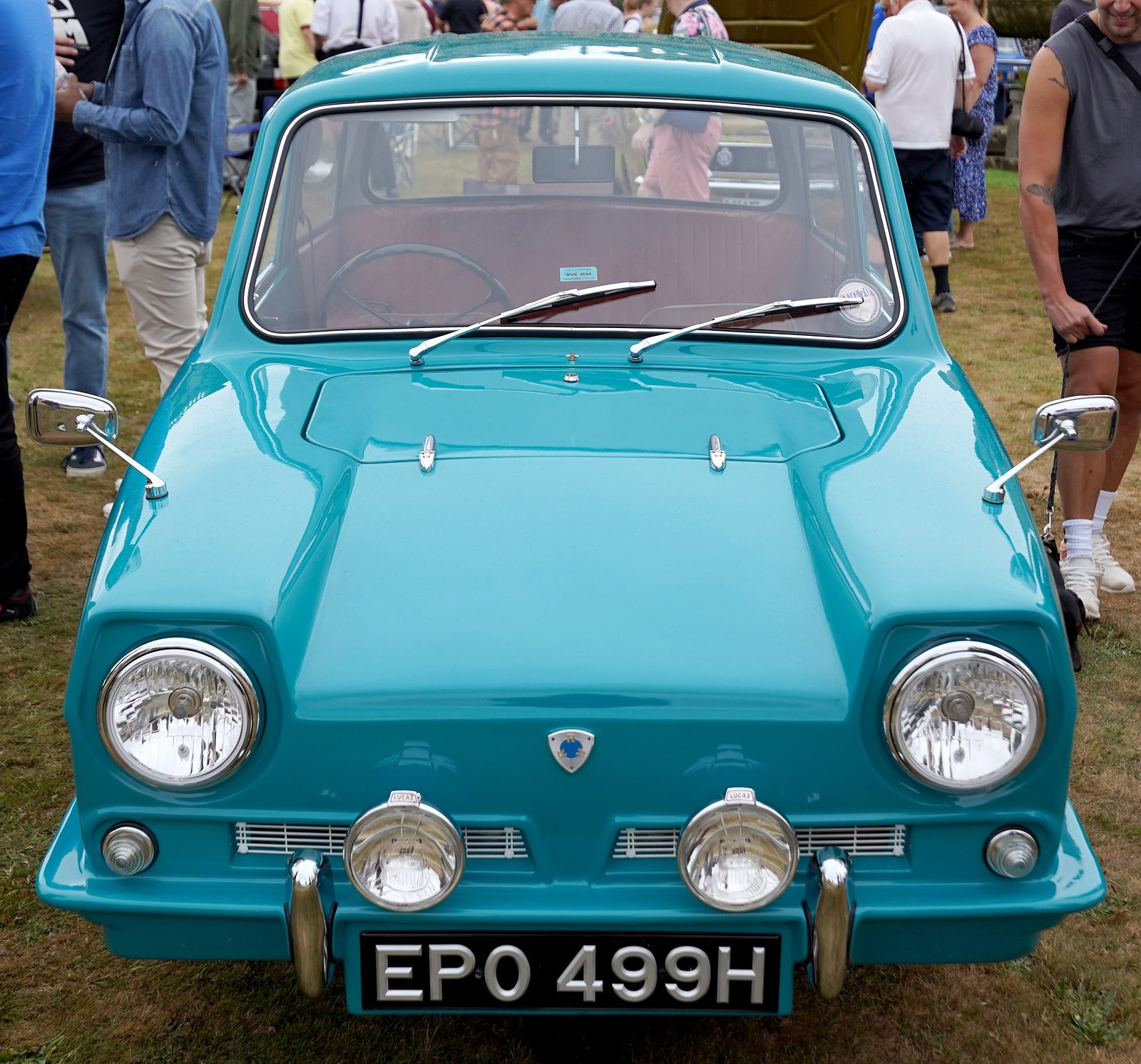
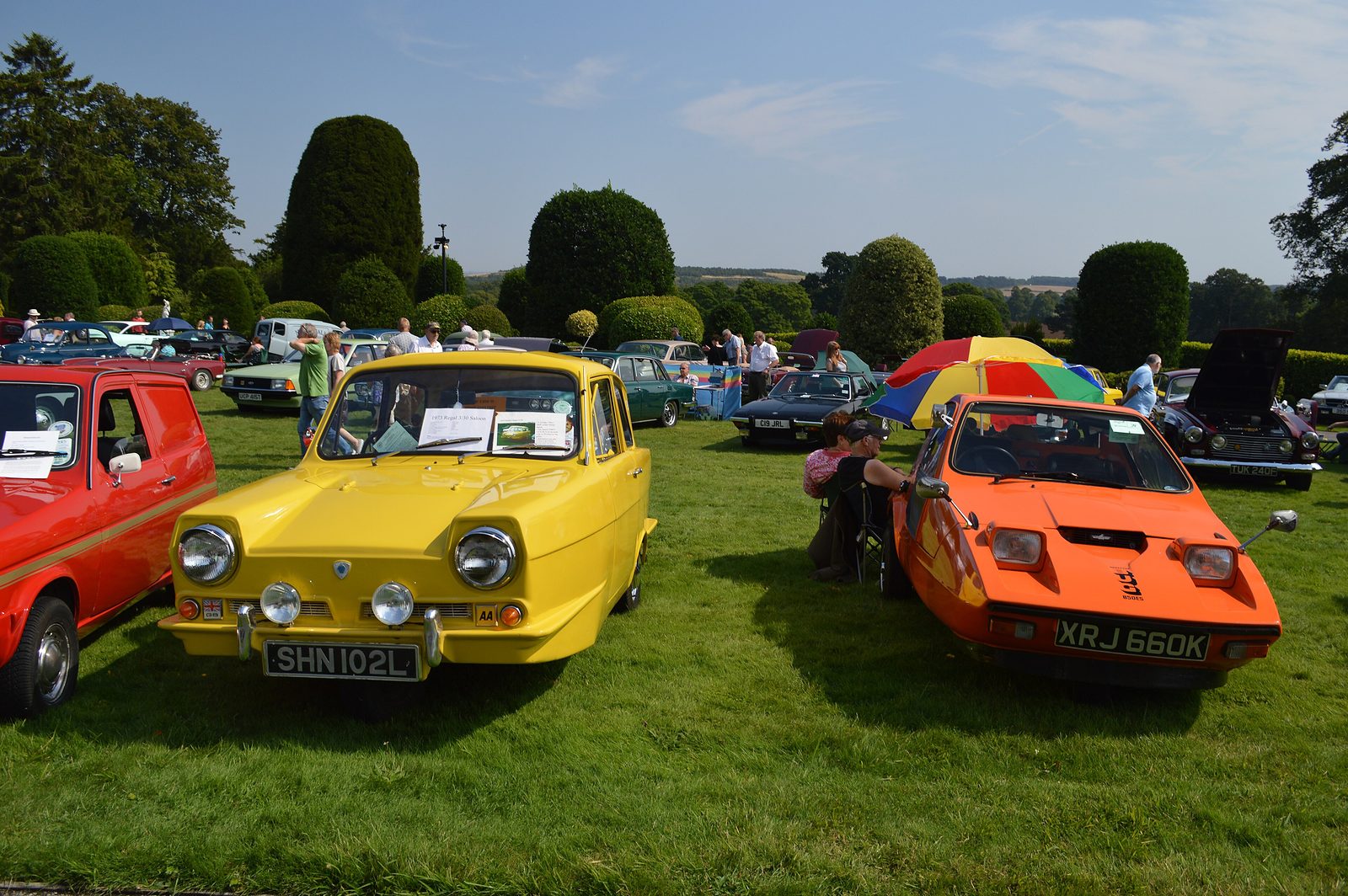
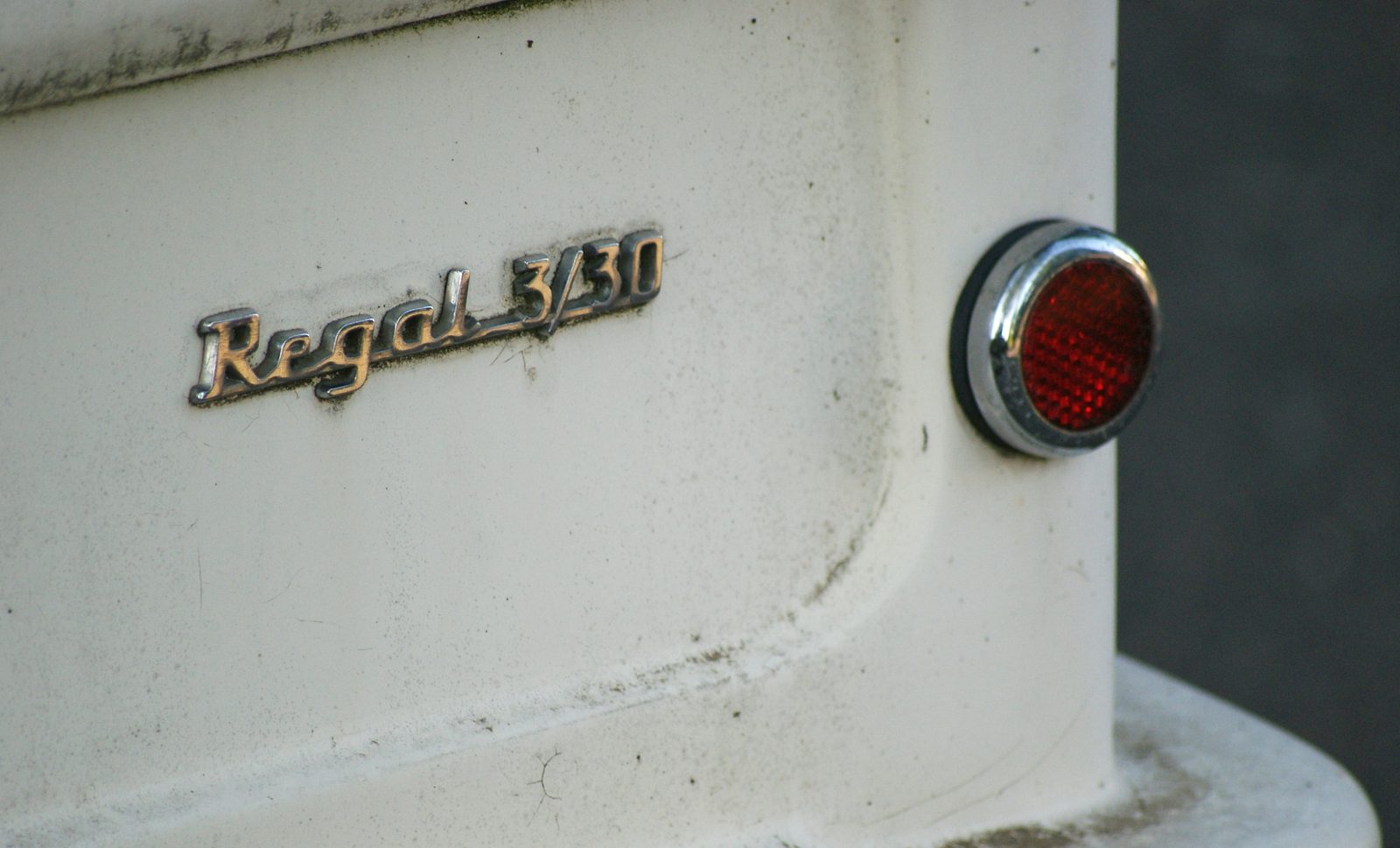
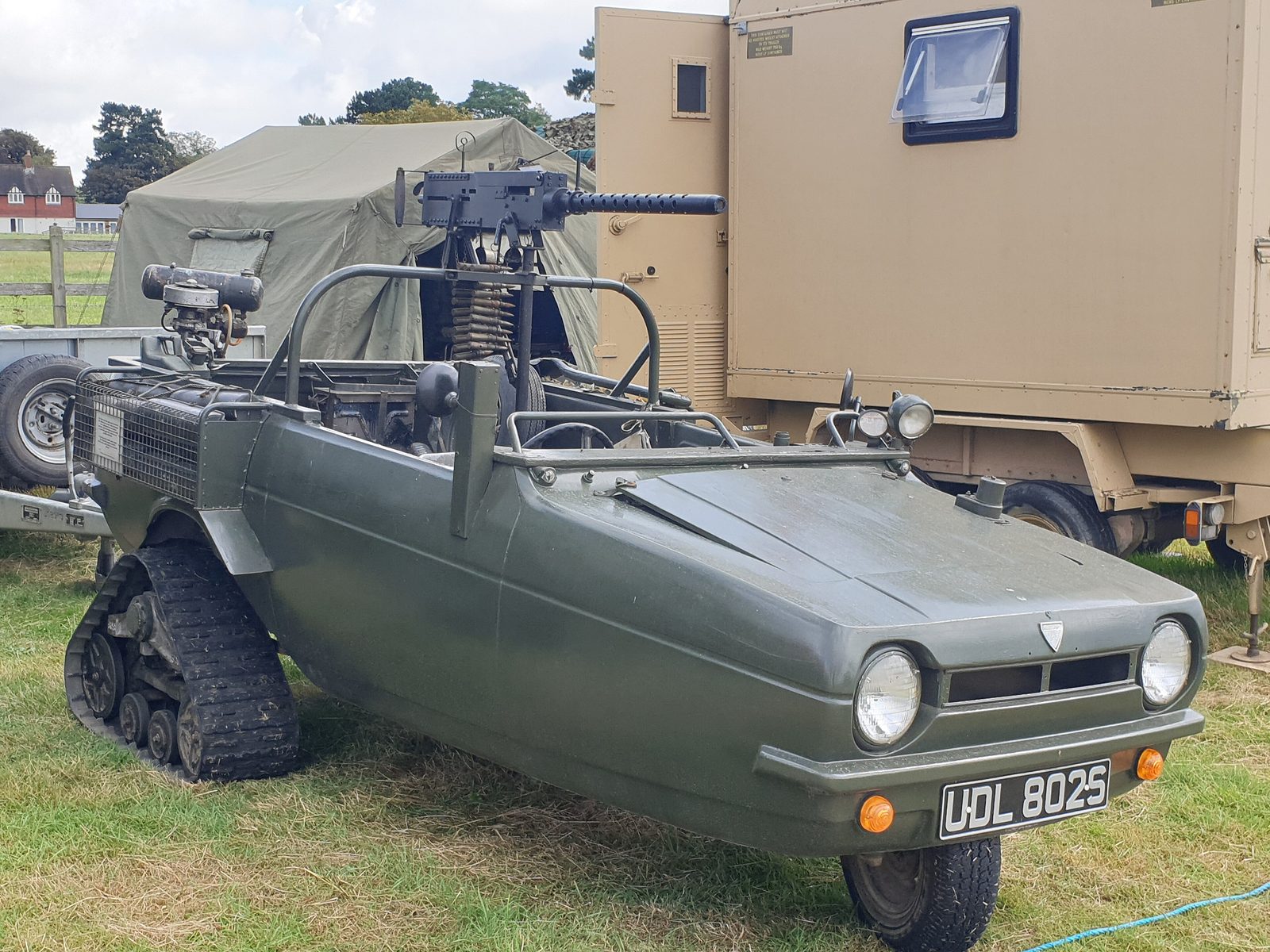
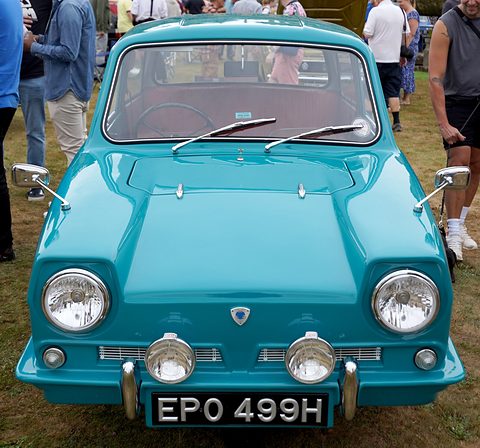
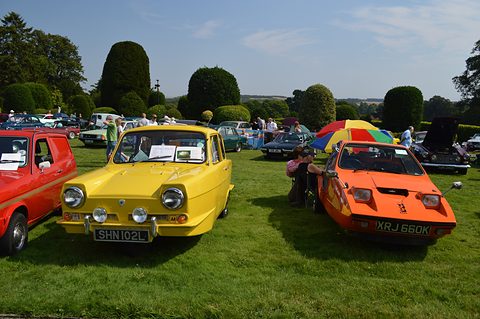
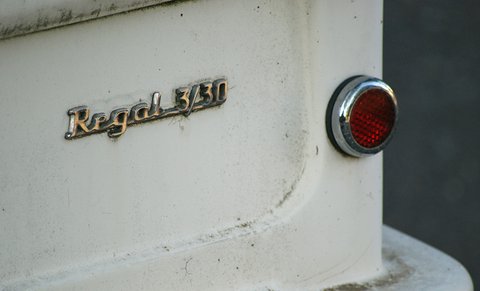
The 3/25 Super of 1965 replaced the slatted nose with a smooth one, with smoother rear styling, a new dashboard and six colours.source 7source 2 The Regal 21E of 1967 came with 21 factory extras, among them metallic paint in Manhattan Blue, Silver Streak, Golden Sands or Caribbean Green, carpets, a Lucas spot and fog lamp, chrome over-riders and a locking fuel cap.source 7 On 25 April 1968 the sales director, T. H. Scott, drove the 50,000th Regal 3/25 off the line at Tamworth.source 3 In August 1968, by Autocar’s report, or in 1969, by the club’s and German Wikipedia’s, the Regal 3/30 took the 701 cc engine of the Reliant Rebel, with its compression lowered to 7.5:1, giving 29.5 bhp against the Rebel’s 35.source 3source 5source 7source 2 The 100,000th Regal was built in 1972.source 7 A Middlesex dealer, Two Strokes Ltd, built its own Regal GT and a TS Safari version of the Supervan, but these were not factory models.source 7source 12
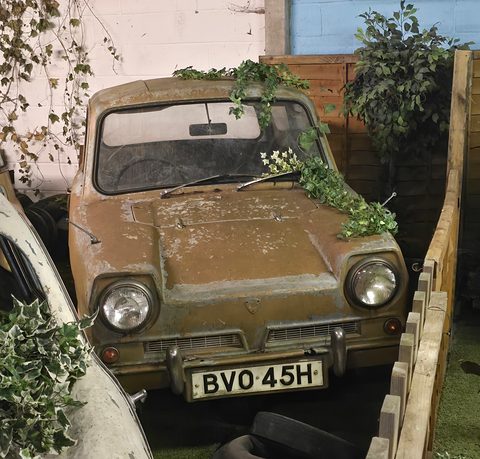
In 1973 the Reliant Robin replaced the Regal.source 7source 3 By then Reliant had also bought its old rival Bond, in February 1969, and was building the Bond Bug.source 4