microcarfan
  • Microcar
  • Austria
  • 5 makers

Austrian microcars

Five small makers, all building three-wheelers: two whose cars lived only while Austria restricted car imports, one coachbuilder’s aluminium egg, and two firms that put a cabin round a Puch moped engine.

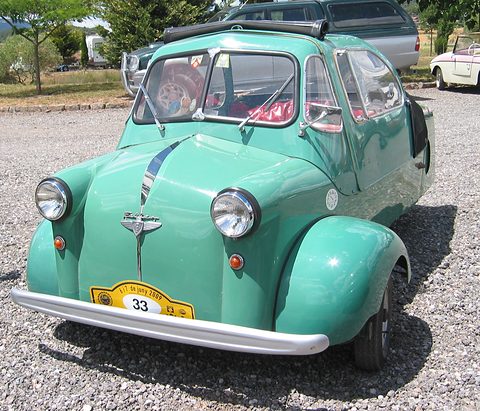
Light green three-wheeler with roll-back roof, chrome bumper and a yellow rally plate on gravel.
A light green 1954 Felber Autoroller with rally number 33 at an outdoor meeting.Photo: Buch-t, Public domain, via Wikimedia Commons

At a glance

The spec plate

Austrian microcars

Five makers · Austria

Built
1952–⁠1979Autorollers 1952–⁠54; moped cabins to 1979
Country
AustriaVienna, Graz and elsewhere
Engine
49 cc to 398 cc, by makerRotax engines in the 1950s, Puch moped engines later
Power
15 PSThe Felber T 400’s 398 cc Rotax twin
Length
2,750 mm
Seats
3The Felber: driver, passenger and a child-size seat
Wheels
3The Felber T 400: two at the front, one driven at the back
Production
about 1,950Our sum of four makers’ figures, most of them Meister vehicles; Megu’s numbers are not known

Not yet recordedtop speed.

The story

History

Austria’s early-1950s microcars were built while car imports were restricted, and they died when the borders opened. English Wikipedia dates the liberalisation to 1954. A report in auto motor und sport in mid-1955 shows cars already freed, and only one class still protected: motorcycles under 250 cc.source 1source 2

„… jener einzigen Fahrzeugsparte, die in Österreich mit Rücksicht auf Puch noch nicht liberalisiert ist …“

auto motor und sport 12/1955, on the Austrian used-vehicle market. In English: “… the only vehicle class that in Austria has not yet been liberalised, out of consideration for Puch …”source 2

A German reader wrote in 1956 of the many German cars the Austrians had imported since the change.source 3 Austrian rules also shaped cars built elsewhere. The Goggomobil was given a 300 cc engine for tax reasons for export to Austria in 1955, and the three-wheeled export BMW Isetta was built chiefly for Austria, which taxed and licensed three-wheelers as motorcycles.source 4source 5 Austria’s own makers are below, roughly in the order they began. The Steyr-Puch 500, a car of a different kind, has its own page.
Felber Autoroller

1952–⁠1954 · a record on this page

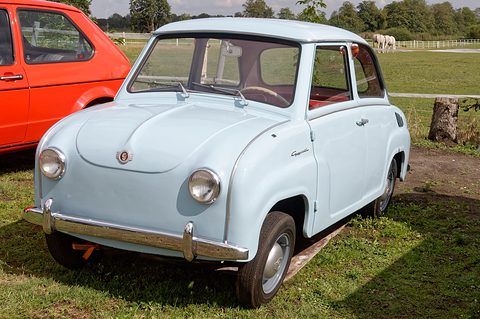
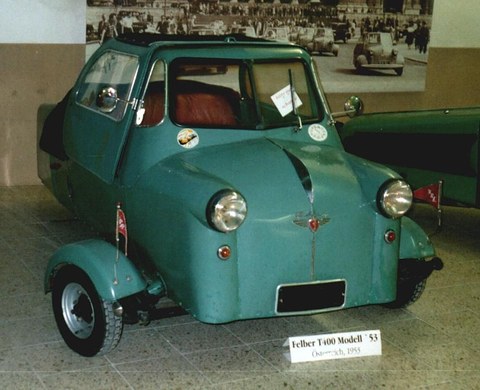
A. Felber & Co, originally Adolf Felber, had made motorcycle sidecars and trailers in Vienna since 1923.source 6 In September 1952 it showed a prototype Autoroller with a 350 cc engine of 12 PS, at a planned price of about 20,000 Schilling. The production T 400 had a 398 cc Rotax twin two-stroke of 15 PS, driving the single rear wheel; it was 2,750 mm (108 in) long and was designed by Ernst Marold.source 6source 1

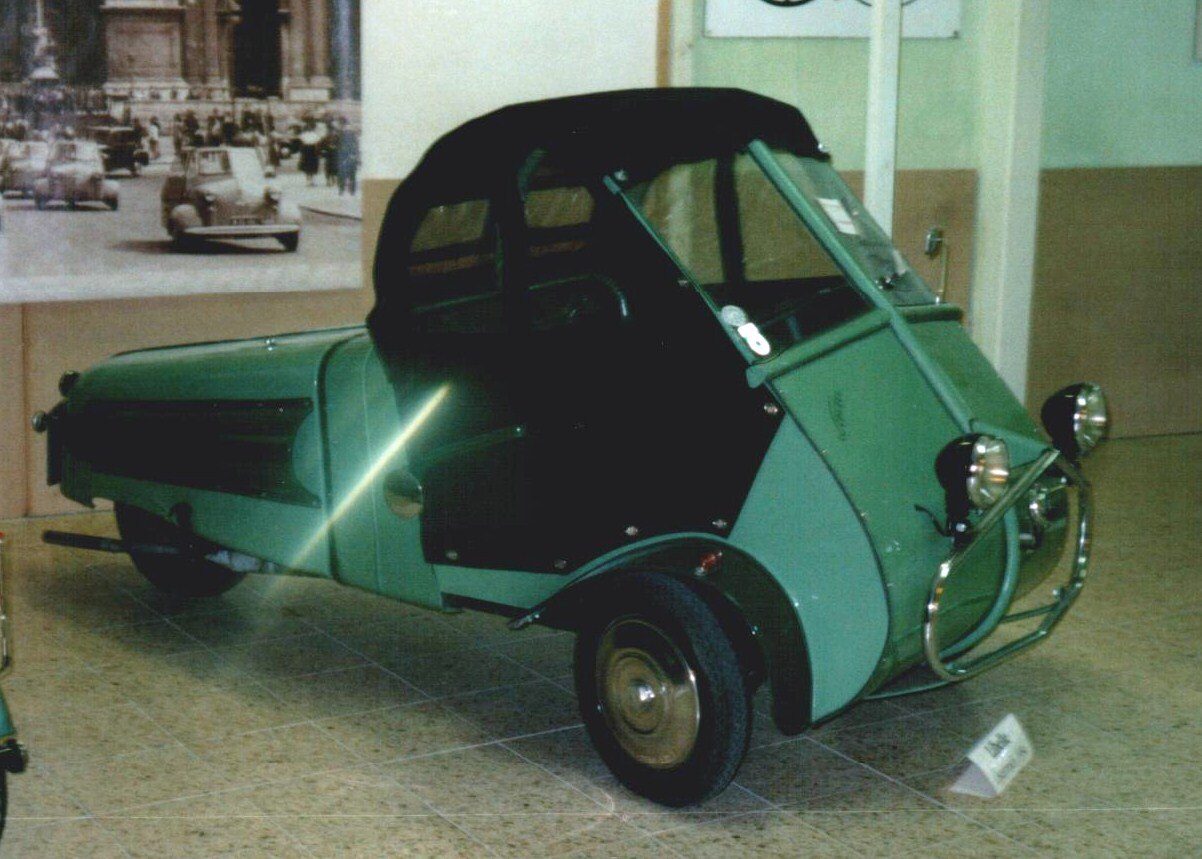
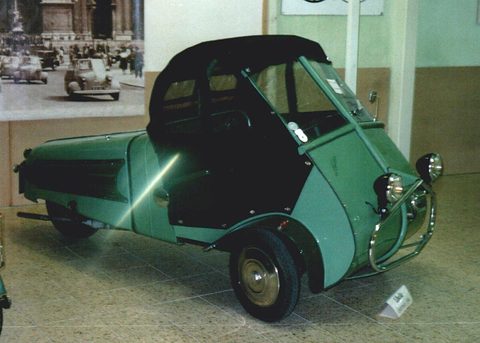
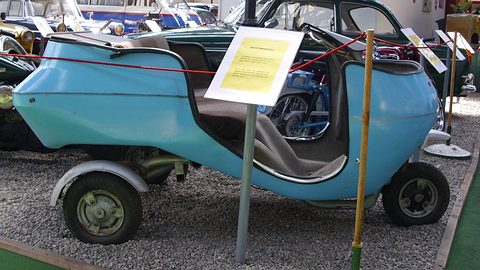
It had no doors. To get in, you tilted the roof and side windows back as one unit. Inside, the driver sat in front, a child-size seat sat behind on the left, and a normal passenger seat sat diagonally behind on the right. Early cars had cycle wings that turned with the front wheels, later ones fixed wings, and all of them were painted the same light green, in machinery paint.source 1 About 400 were built, in 1952–⁠54 by German Wikipedia’s dates or 1952–⁠53 by English Wikipedia’s.source 6source 1

The owners had a club, the Austrian Autoroller Club, whose newsletter is held by the Austrian National Library. In 1954, at Marold’s own wedding, a procession of Felbers escorted the wedding car past the Karlskirche in Vienna.source 1 Once imports were free, Felber stopped making cars. It sold Heinkel, Trojan, Reliant and Spatz three-wheelers instead, and its main business became Austromat industrial washing machines.source 6source 1

Green three-wheeled cabin scooter with a fabric roof, a card reading Felber T400 Modell 53 in front.
A green 1953 Felber Autoroller T 400 with its model card in the museum at Eggenburg in 2003.Photo: Buch-t, Public domain, via Wikimedia Commons

Libelle Allwetter-Autoroller

1952–⁠1954 · a record on this page

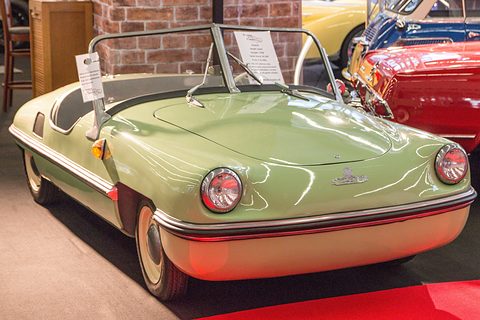
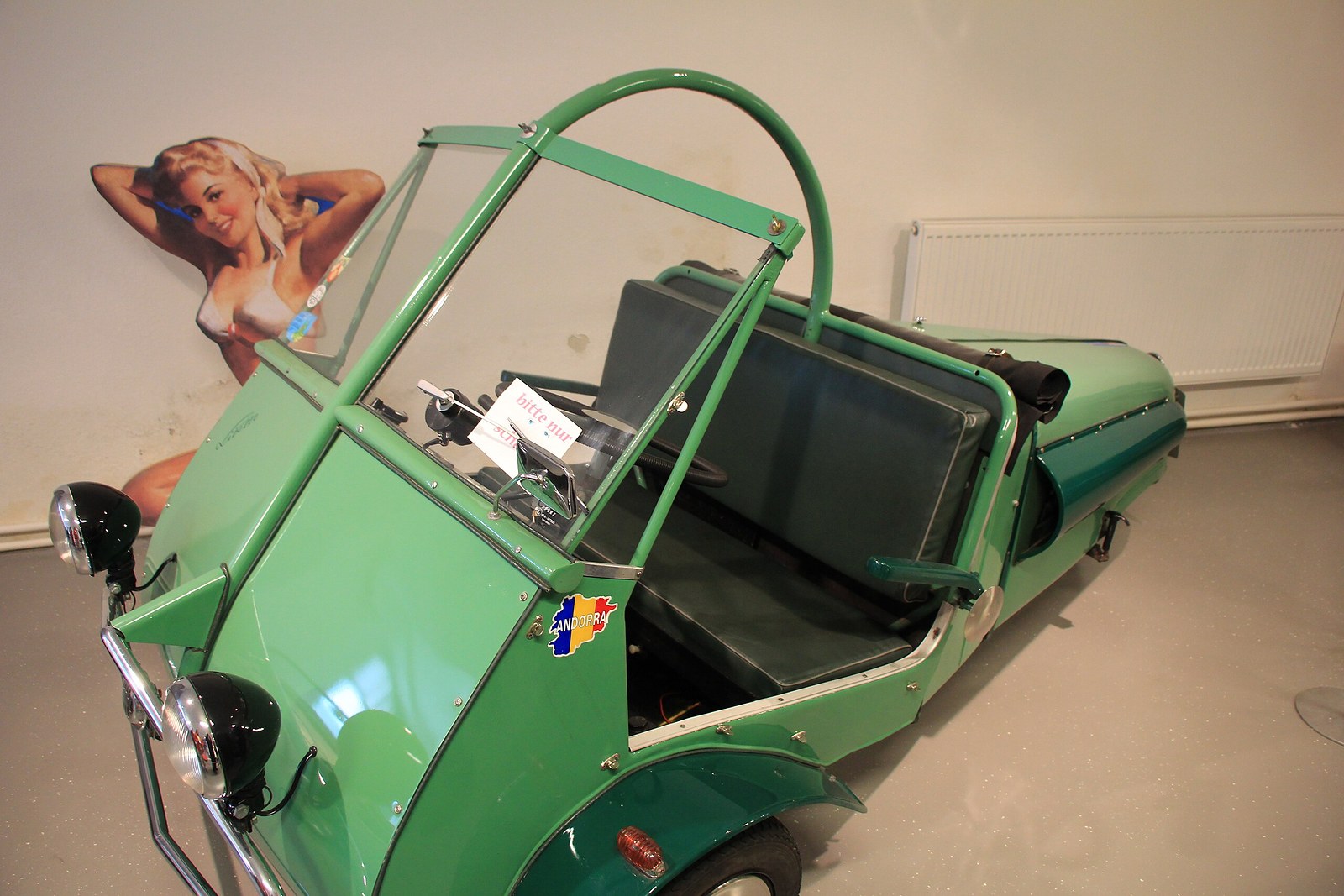
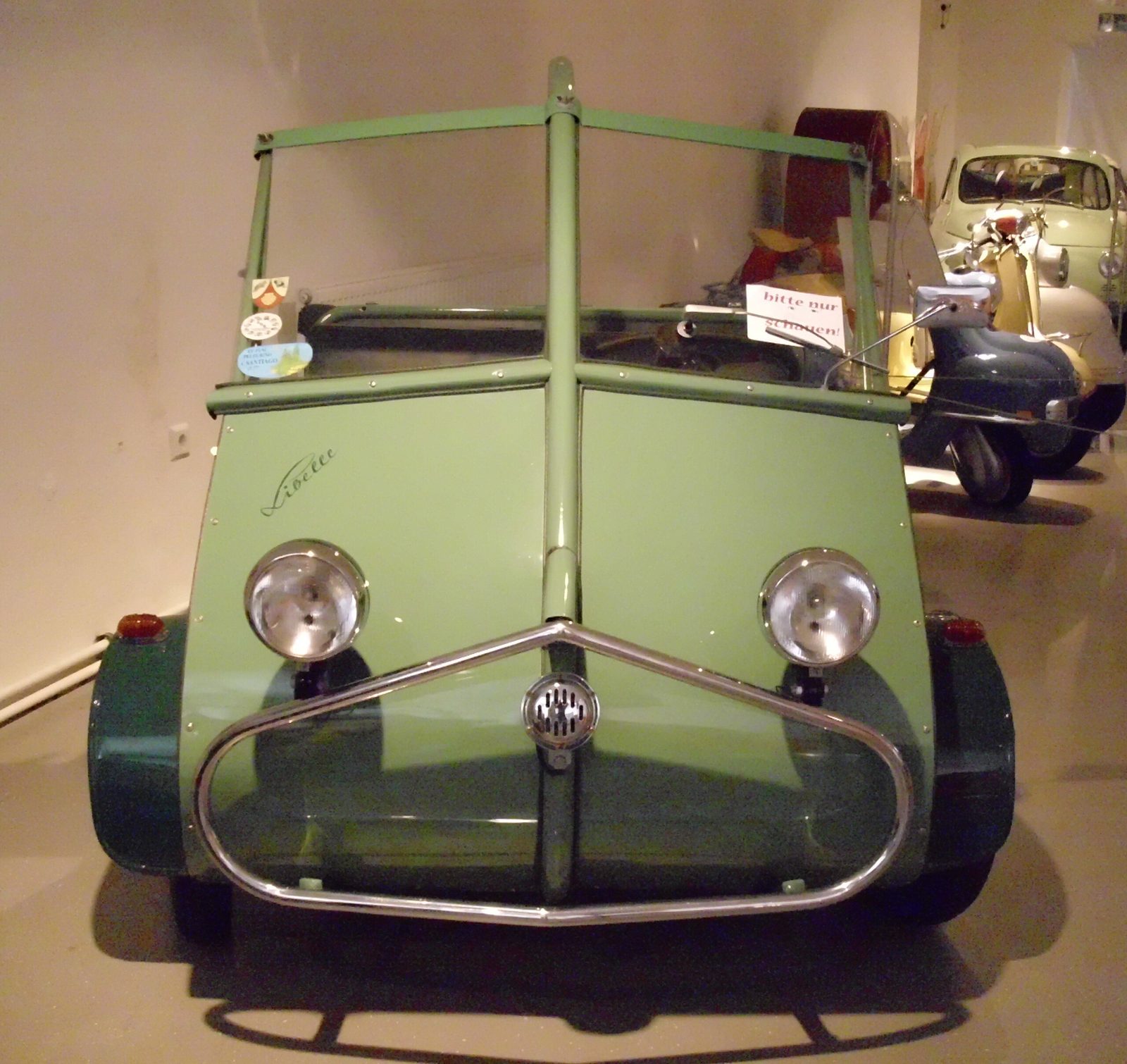
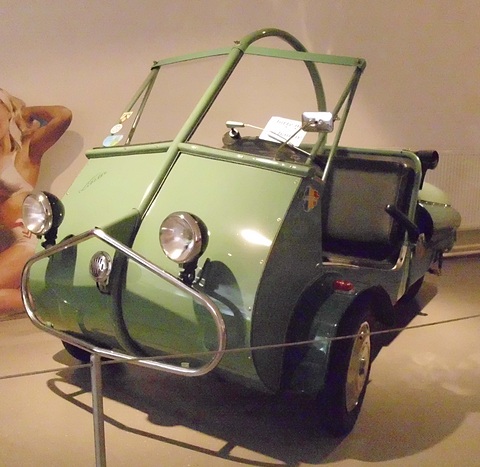
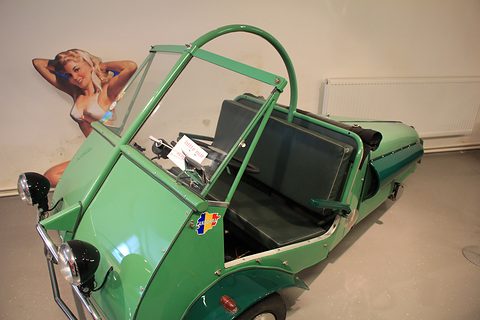
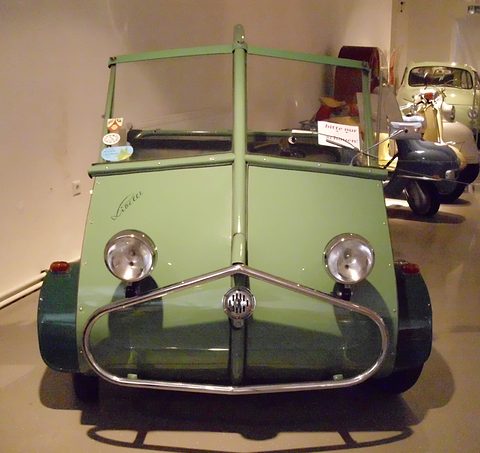
The Libelle Fahrzeugbau- und Vertriebsgesellschaft built its Allwetter-Autoroller, the “all-weather auto-scooter”, from 1952 to 1954. In spite of the name it was an open two-seater without doors, with an emergency hood.source 7 It had a 199 cc Rotax single of 8.5 PS (6.25 kW) and four gears, reached 80 km/h (50 mph), climbed 28 per cent and used 3 litres of mixture per 100 km (94 mpg). Forty were built.source 7 Where the firm was based, and who designed the car, is not recorded.

Green open three-wheeler with a hood frame and chrome nose bar, a pin-up cut-out behind.
The 1954 Libelle Allwetter-Autoroller at Eggenburg in 2013, with the frame of its hood raised.Photo: Buch-t, CC BY-SA 3.0 de, via Wikimedia Commons

Möve 101

1953–⁠1954 · a record on this page

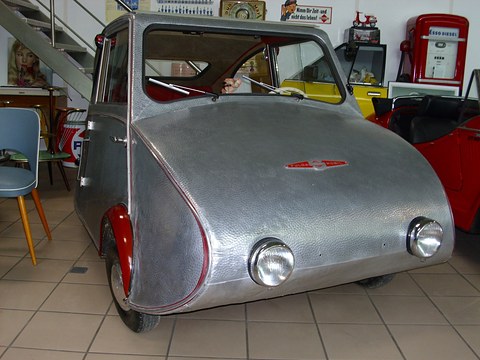
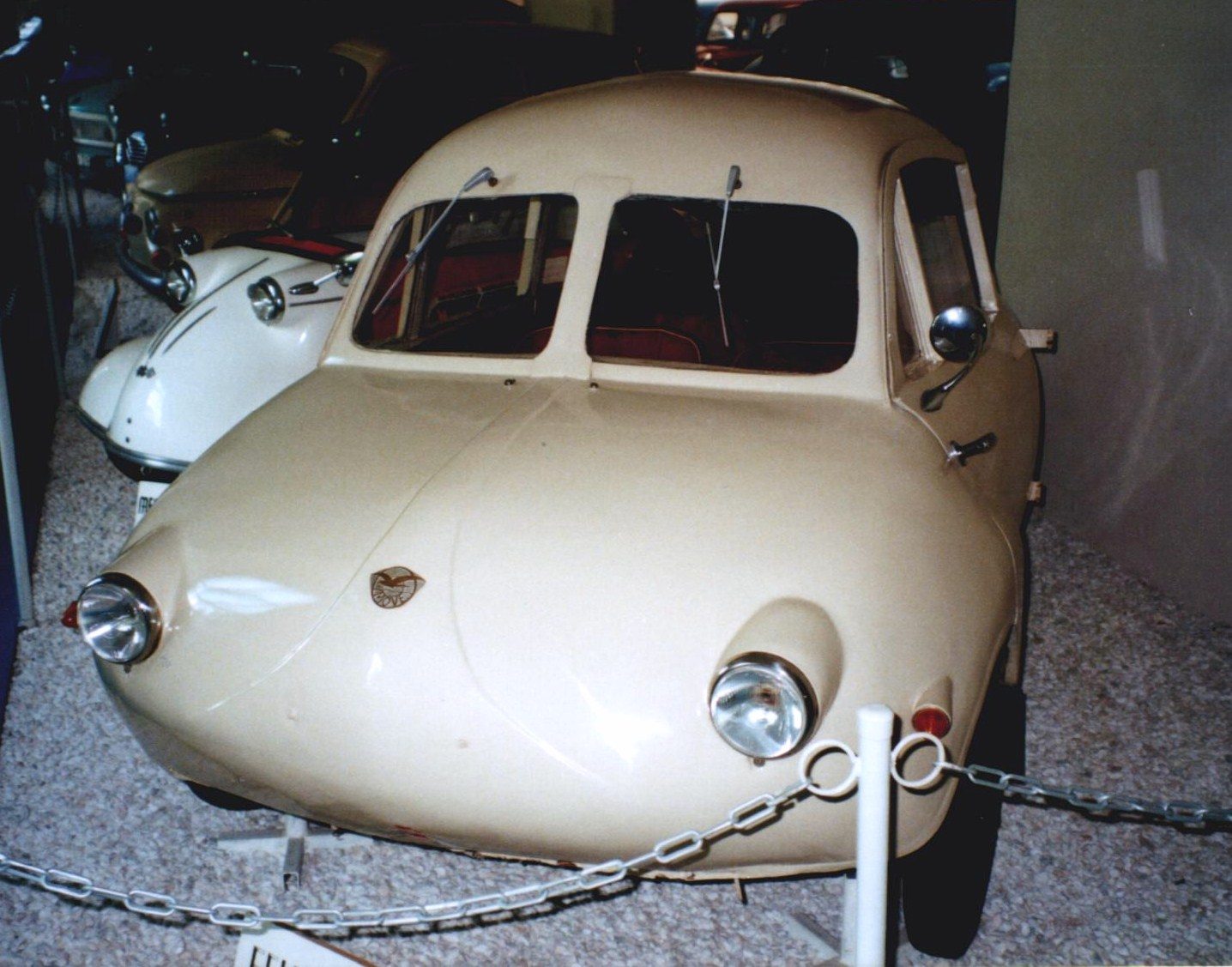
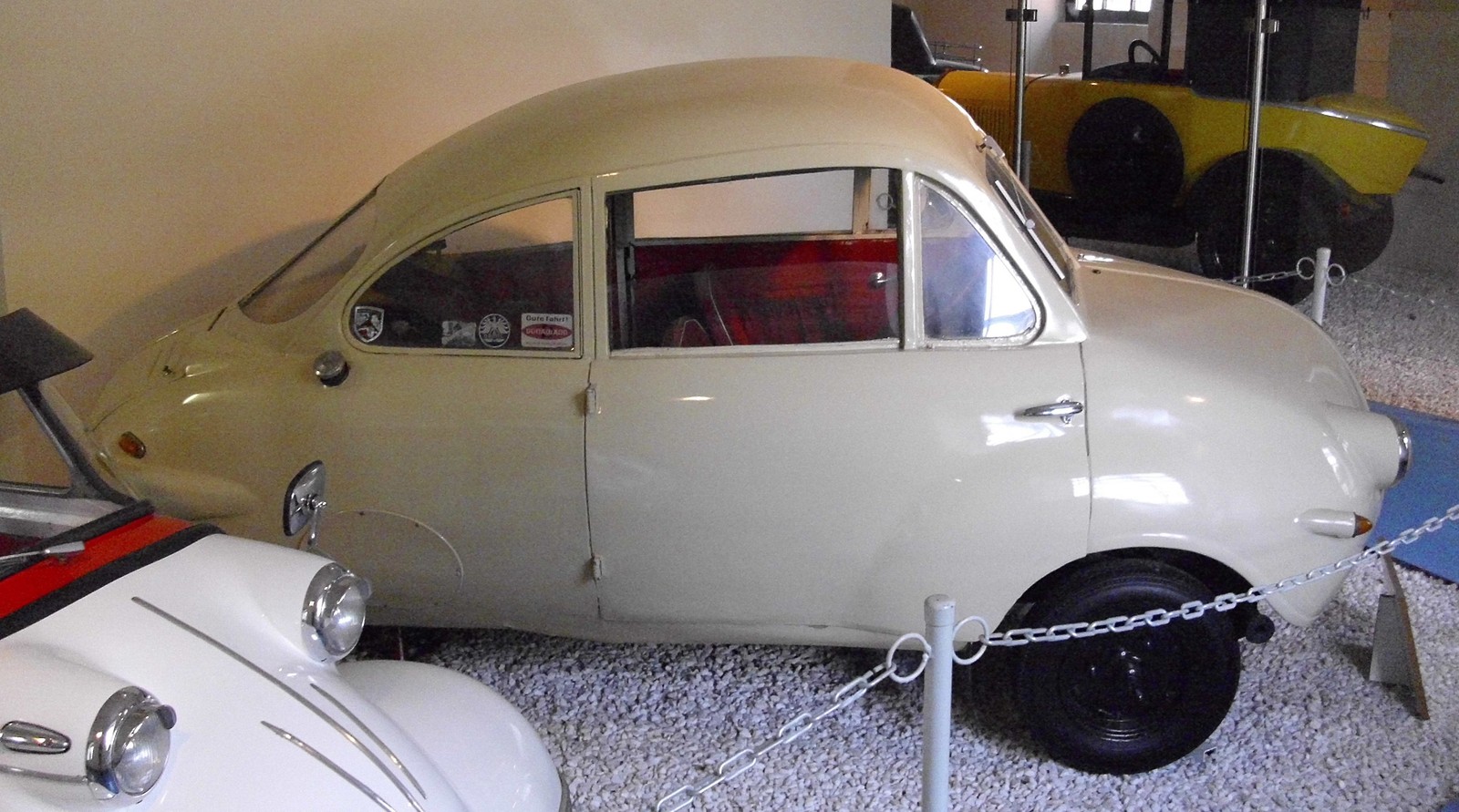
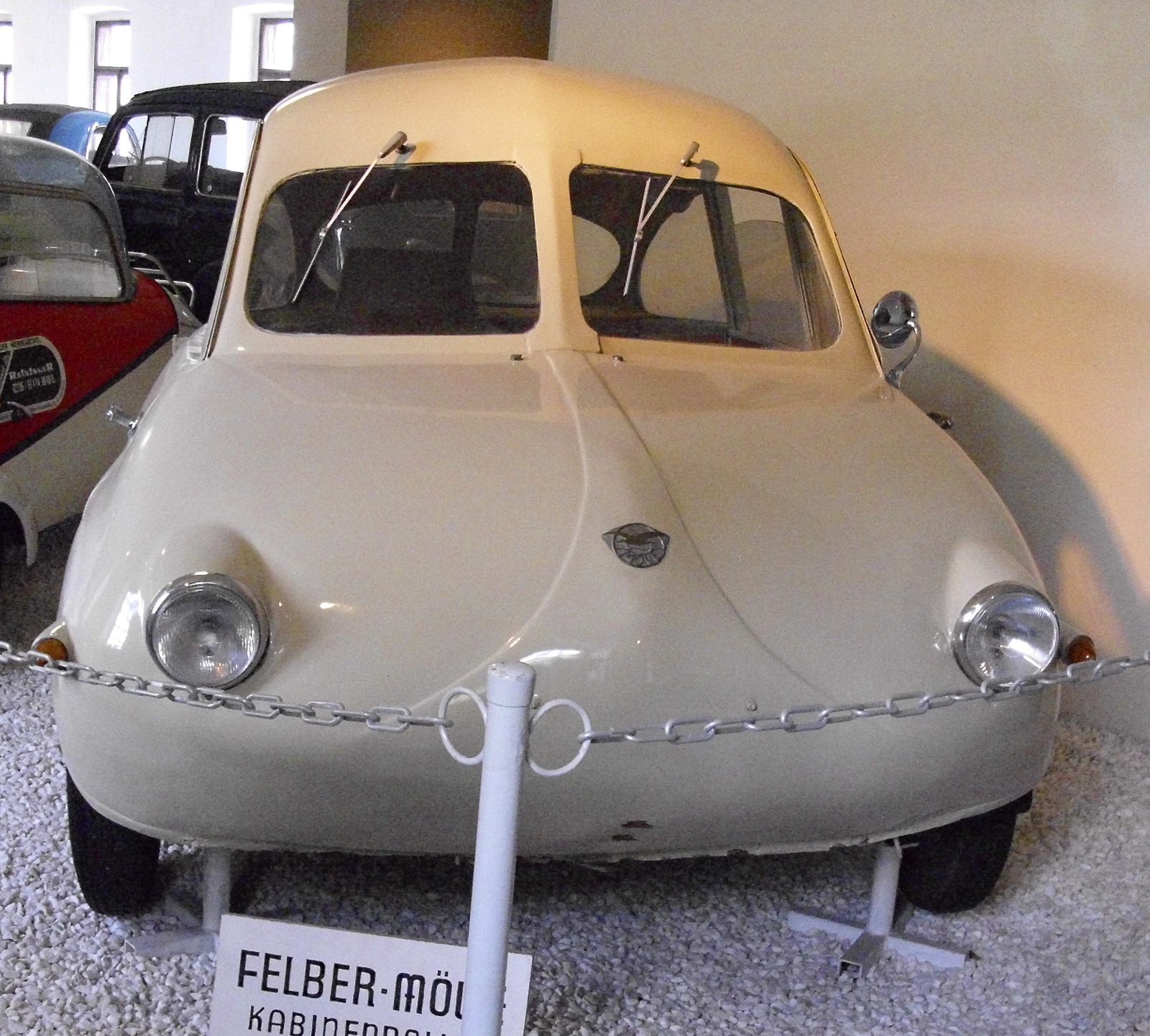
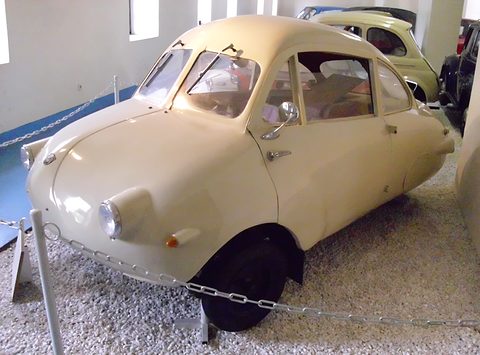
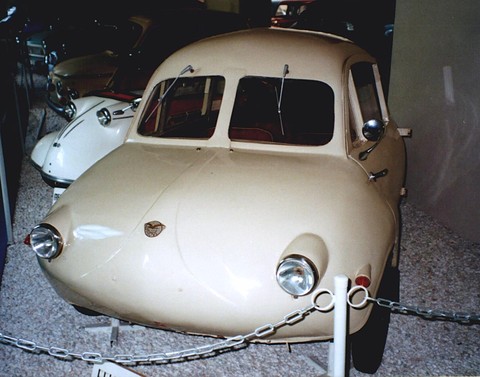
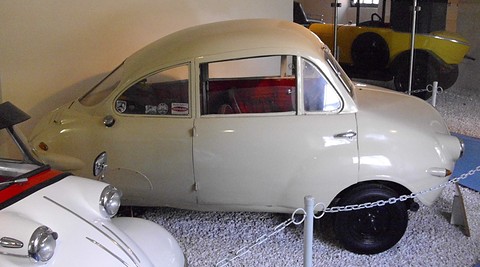
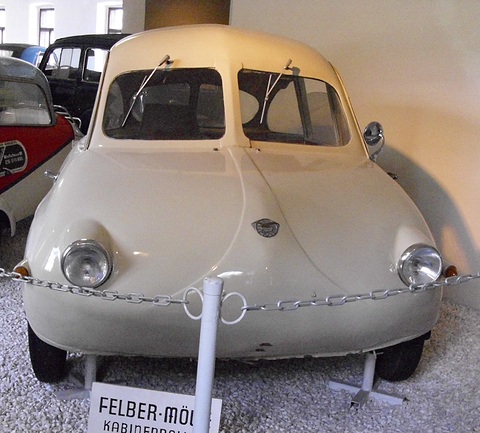
The Viennese coachbuilder Hofmann & Moldrich took Felber rolling chassis and gave them an egg-shaped coupé body in 0.8 mm (1/32 in) aluminium, rather like the Fuldamobil. It built 10 or 12 of them in 1953–⁠54.source 6source 1 One survives, in the Automobil-Museum Aspang, in Lower Austria.source 6source 1

Cream egg-shaped two-door coupé on white gravel inside a museum, chain barrier in front.
The surviving 1954 Möve 101, its aluminium body painted cream, at the Automobil-Museum Aspang in 2013.Photo: Buch-t, CC BY-SA 3.0 de, via Wikimedia Commons

Meister K5

years not recorded · a record on this page

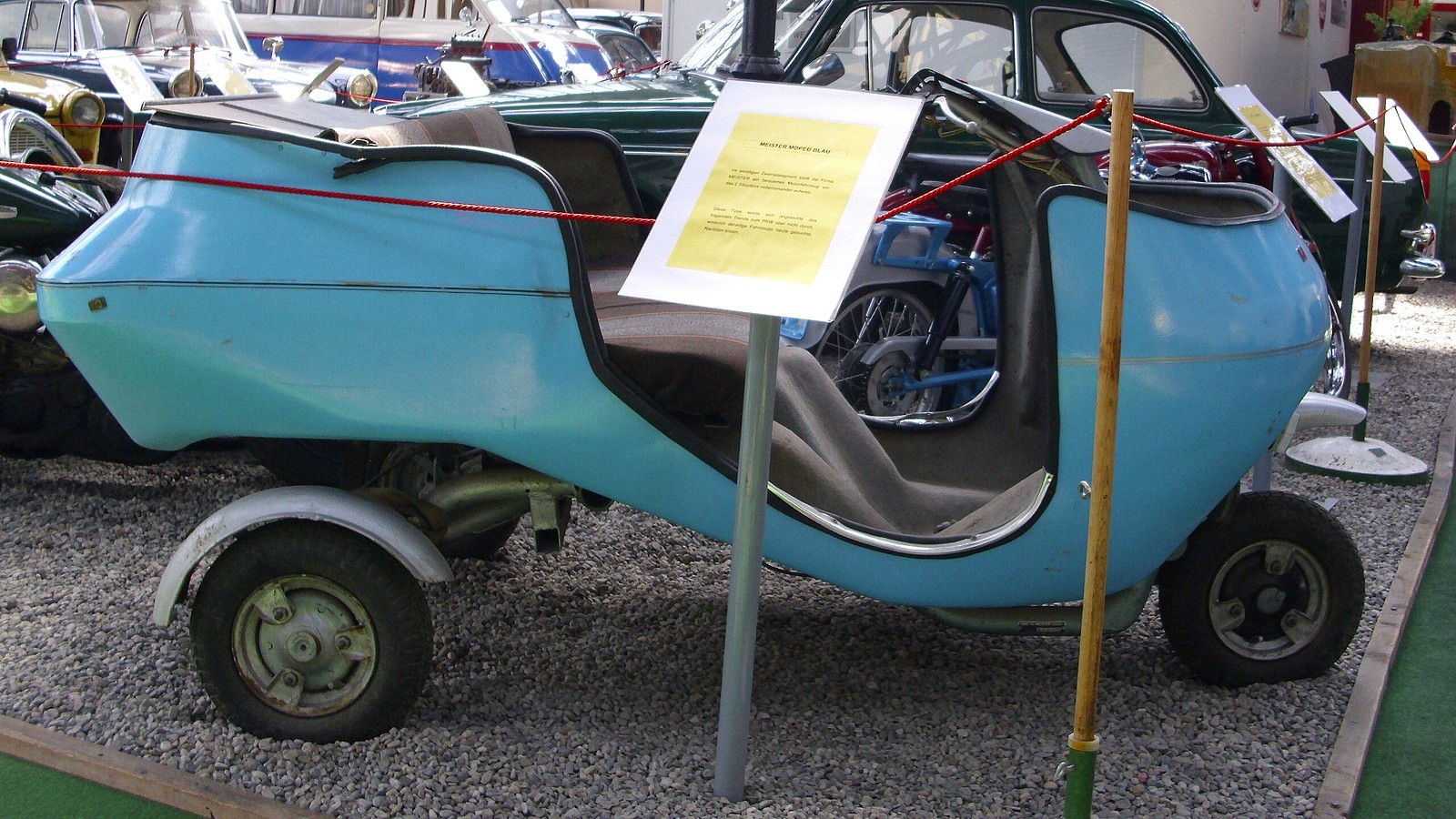
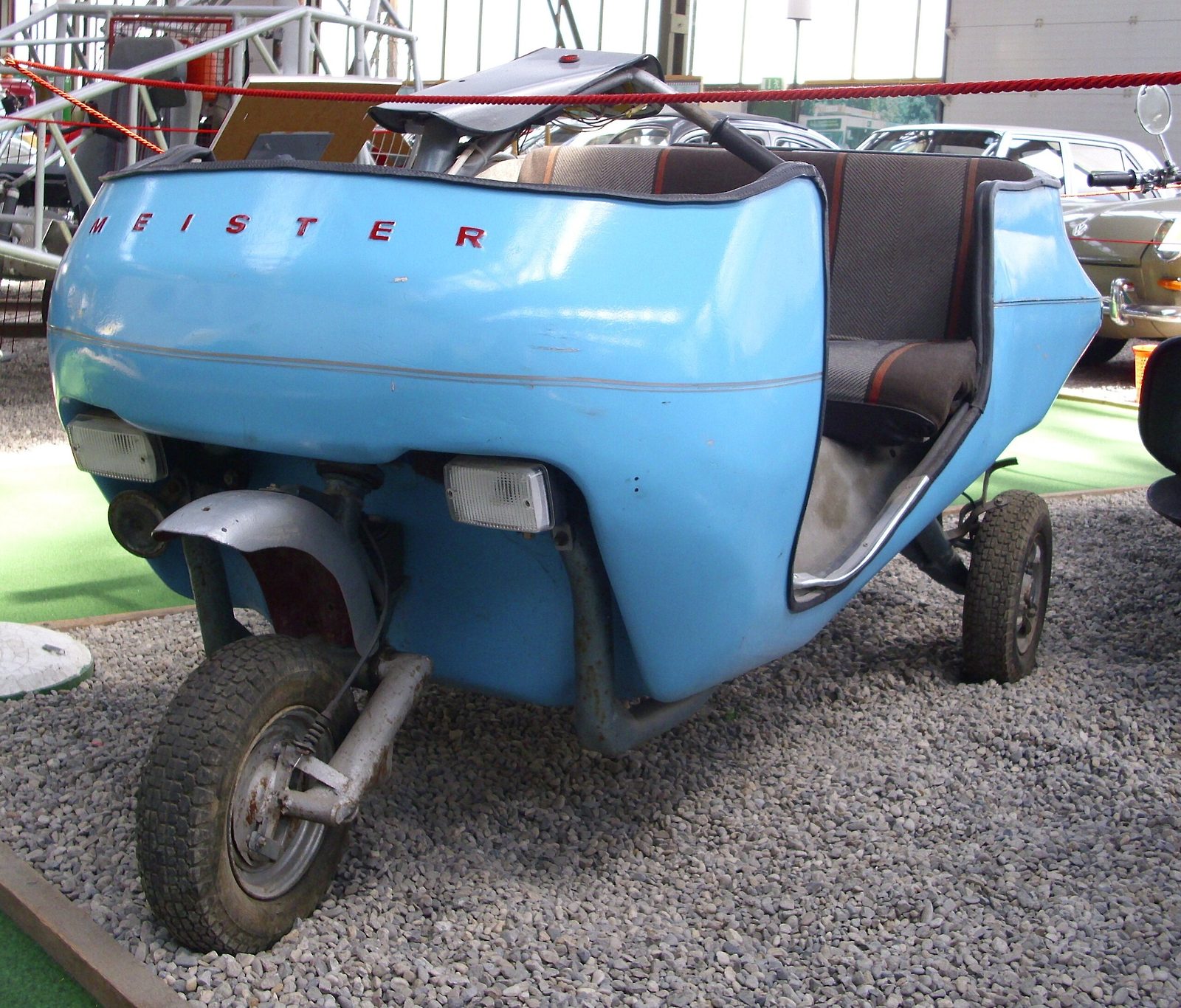
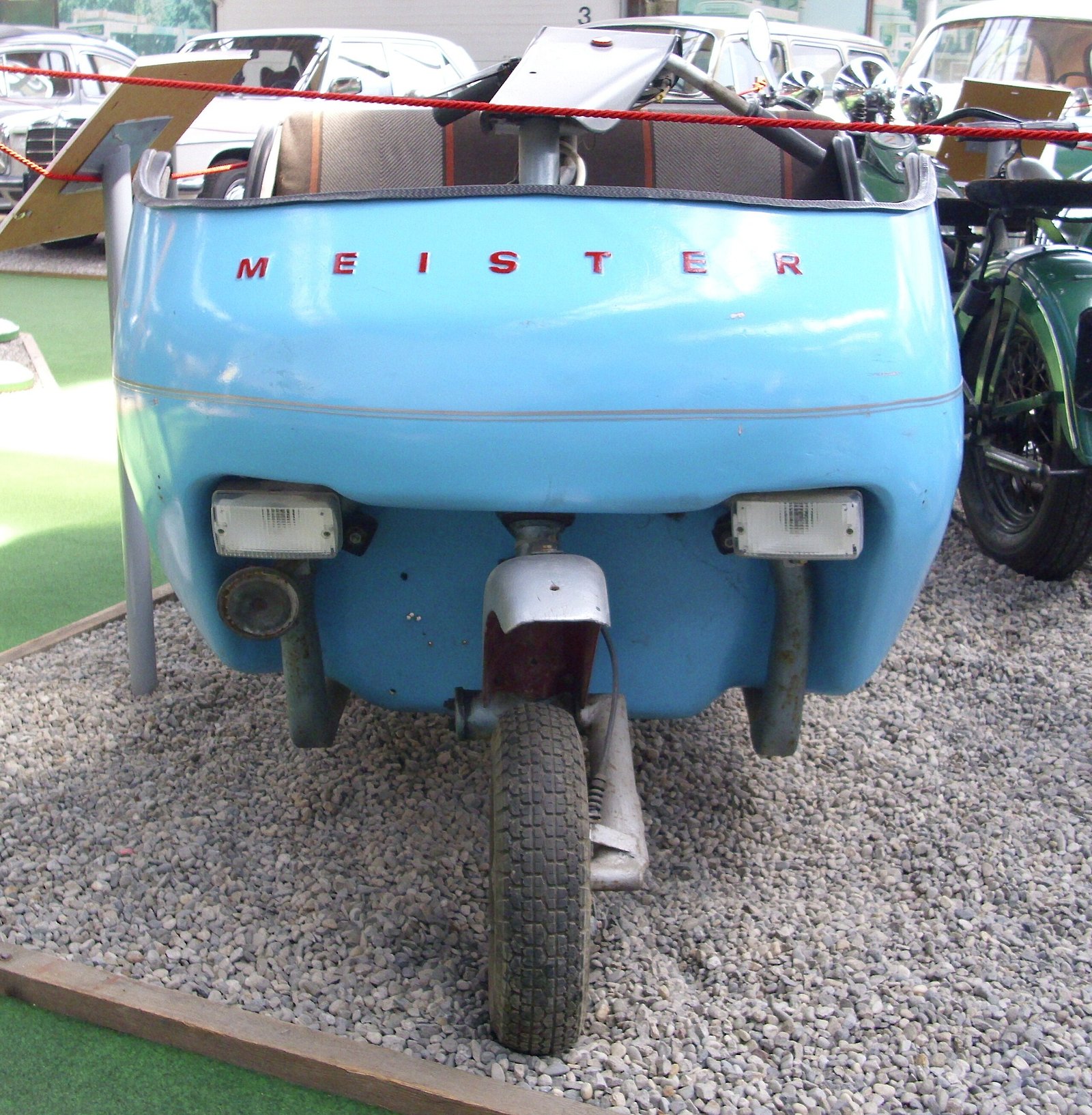
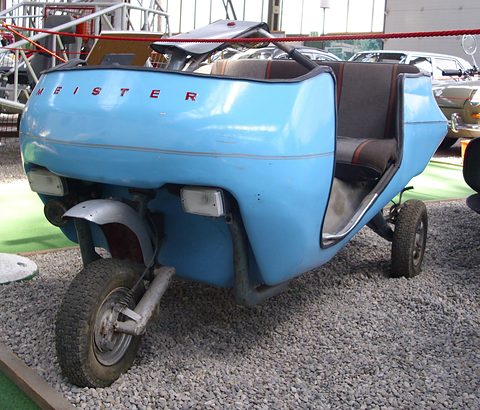
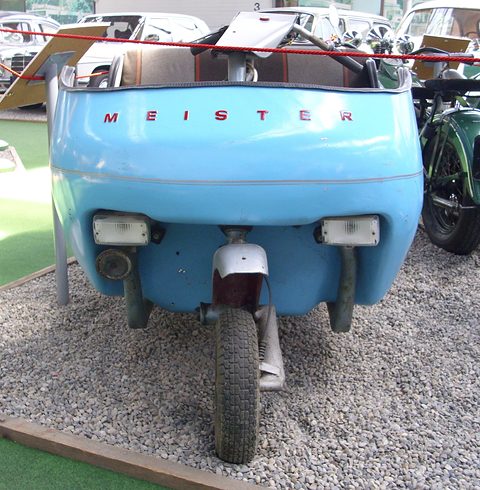
Hans Jörg Meister (1939–⁠2024) founded Fahrzeugbau Ing. Hans Meister in 1962 at Elisabethinergasse 8 in Graz. He began with vehicles for disabled drivers, which places his firm among the makers of invalid carriages, and in 1969 added larger, more car-like vehicles. Production moved to Thal, near Graz, and ended in 1979, after about 1,500 vehicles of all types.source 8

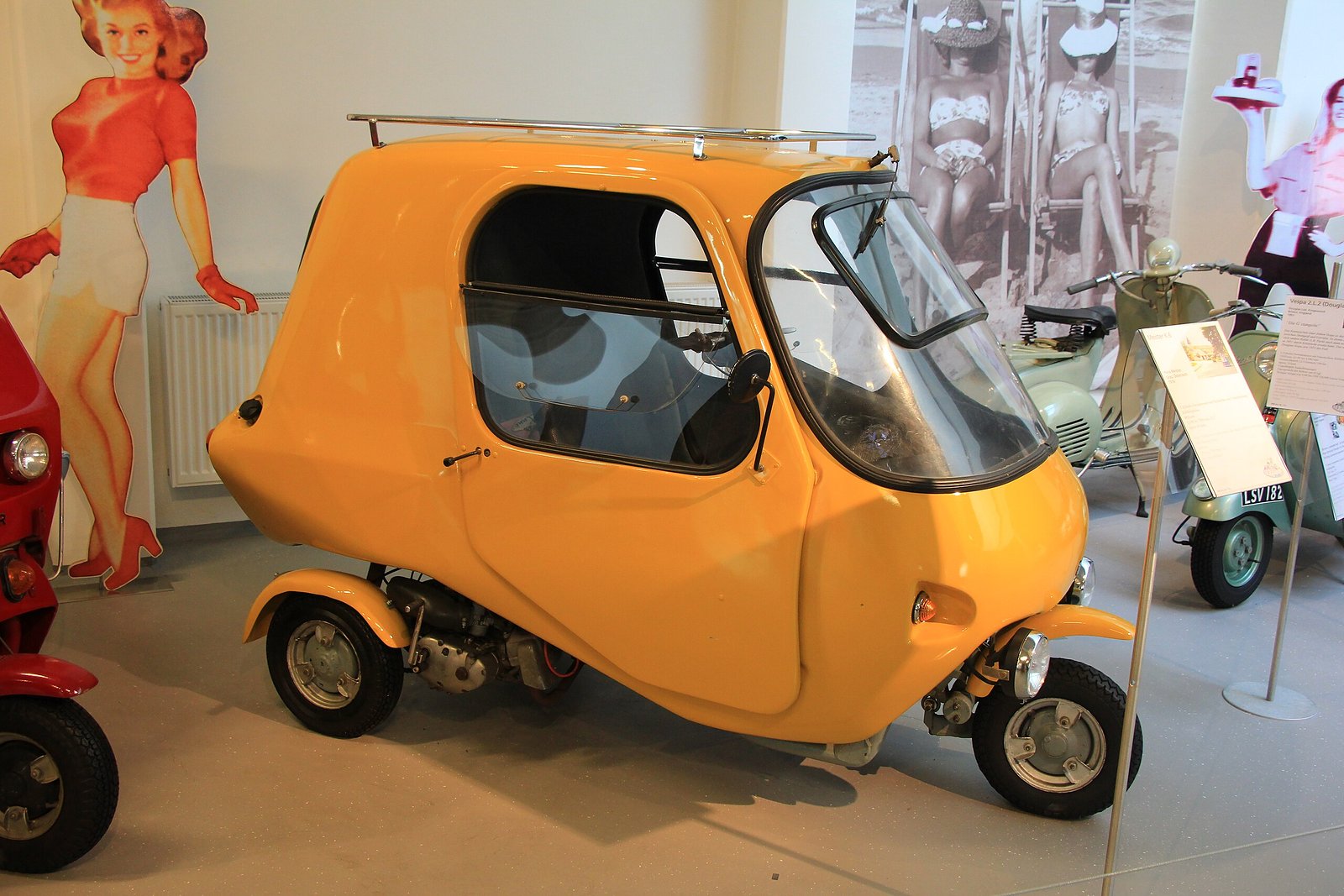
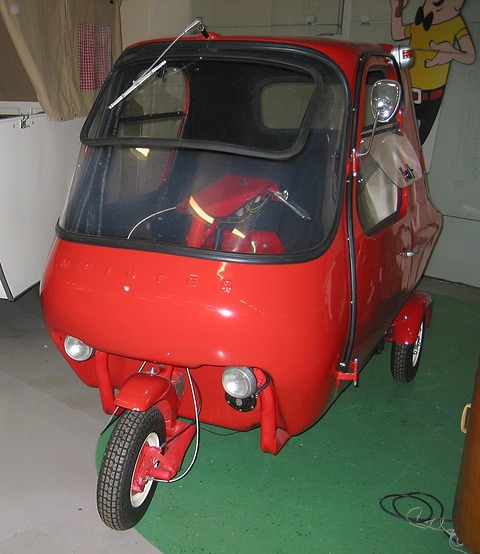
The G 5 N, K5 and T 5 had Puch moped engines of 49 cc. The G 5 N Mopedkabine had a plastic body on a tubular frame, drove one rear wheel and reached 40 km/h (25 mph); the K5 came open or closed, and the T 5 was a transporter. Alexander Diego Fritz has written their history, Die Knatterkugel (2013), and a red closed K5 has a leading role in Karl Markovics’s film Nobadi (2019).source 8

Small red closed cabin three-wheeler with a big curved windscreen, on a green floor.
A red Meister K5 Kabine, the closed version, in St. Ingbert in 2009.Photo: Buch-t, CC BY-SA 3.0 de, via Wikimedia Commons

Megu Mopetta

years not recorded · a record on this page

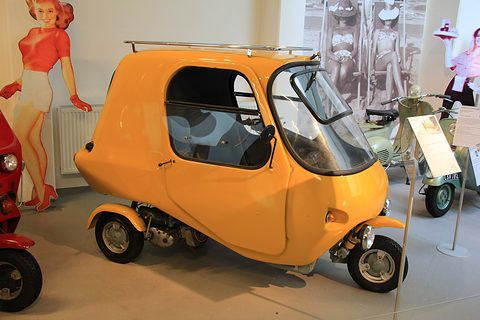
Megu Metall- und Gußwarenhandels-Ges.m.b.H. was a Viennese trading company, bought in 1958 by Ragnar Alexander Mathéy (1920–⁠2003), once general secretary of the Österreichische Saurerwerke. He had sold Lohner and Kosty scooters, financed Otto Kauba’s Kauba Lux scooters and designed the Bobby scooter of 1955–⁠56.source 9 Megu’s vehicles, the Mopetta, the Student, the Boy and the Dienstmann, were three-wheelers with one wheel at the back and a 50 cc Puch engine, built with Wilhelm Gesierich’s workshop in Vienna-Favoriten and Dr. Mathéy-Fahrzeugbau of Haslau.source 9

In the Mopetta the front, with its windscreen, roof and moped handlebars, swung aside to let you in. The two seats were in tandem, with the driver far forward over the front axle, and a hood cost extra.source 9 When they were built is not settled: the dates given are 1967 alone, 1958–⁠74 and 1966–⁠72. The company was dissolved in 2005.source 9 Apart from the name, the Megu Mopetta seems to have nothing to do with the Brütsch Mopetta.

Pictures

More photographs, old and new

Variants

Five makers

Austria’s own microcars
VariantYearsWhat differsHow many
Felber Autoroller T 4001952–⁠53/54Doorless; roof and side windows tilt back as one; 398 cc Rotax twinAbout 400
Libelle Allwetter-Autoroller1952–⁠54Open, doorless two-seater with an emergency hood; 199 cc Rotax40
Möve 1011953–⁠54An aluminium egg-shaped coupé body on the Felber chassis10 or 12
Meister G 5 N, K5, T 51960s–70sMoped cabins, open or closed, and a transporter; 49 cc PuchAbout 1,500, all types
Megu Mopetta, Student, Boy, DienstmannNot settledMoped three-wheelers for passengers and deliveries; 50 cc PuchNot found

Specification

What is known, maker by maker

Felber Autoroller T 400

Felber Autoroller T 400
EngineRotax two-cylinder two-stroke, 398 cc, 15 PSThe 1952 prototype: 350 cc, 12 PS
DriveTo the single rear wheel
Length2,750 mm; wheelbase 1,850 mm
PriceAbout 20,000 Schilling planned (1952)

Libelle Allwetter-Autoroller

Libelle Allwetter-Autoroller
EngineRotax single-cylinder two-stroke, 199 cc, 8.5 PS (6.25 kW)
GearboxFour speeds
Top speed80 km/h
RunningClimbs 28 per cent; 3 litres of mixture per 100 km (94 mpg)

Meister G 5 N

Meister G 5 N
EnginePuch single, 49 cc, 3.5 PS
BodyPlastic, on a tubular frame
Top speed40 km/h

How many were built?

Maker by maker

About 1,950 known, by our sum of the makers’ figuresAbout 1,950 vehicles from four makers, most of them Meisters, which include invalid vehicles and transporters. Megu’s output has not been found.

  1. about 1,500Meister vehicles of all types, 1962–⁠79One source

    German Wikipediasource 8

  2. about 400Felber AutorollerTwo sources agree

    German and English Wikipediasource 6source 1

  3. 40Libelle Allwetter-AutorollerOne source

    German Wikipediasource 7

  4. 10 or 12Möve 101Two sources agree

    German and English Wikipediasource 6source 1

  • Two sources agreetwo good sources give the figure
  • One sourcea good source, alone
  • Unconfirmeda lead only, not yet checked

Famous for

Three points

  1. No doors

    To get into a Felber you tilted the roof and side windows back in one piece.

  2. A wedding in green

    In 1954 a procession of Felbers escorted Ernst Marold’s wedding car past the Karlskirche.

  3. One egg left

    Of the 10 or 12 aluminium Möve coupés built on the Felber chassis, one survives, at Aspang.

On screen

Confirmed appearances only

Survivors and collecting

Today

Two Felbers belonged to the RRR museum (Roller, Rollermobile & Wurlitzer) at Eggenburg. That collection was dissolved and largely sold by the Dorotheum in July 2020, but the two Felbers were not in the sale.source 6 English Wikipedia knows of one more under restoration in Serbia and one in Bavaria, and two Felbers attended the Nordkapp rally in 1999.source 1 The only Möve is at Aspang.source 6 The Eggenburg museum also had a Libelle, and where it went after 2020 is not known.source 7 Some Meisters survive, but their numbers have not been found.

Sources

Numbered as in the text

Each maker’s history here rests on one or two encyclopaedia articles (German and English Wikipedia); only the import background comes from period magazines.

  1. English Wikipedia, Felber Autoroller, read in its source text. Used as a lead; it cites Georgano (1982) and Vokins, Weird Cars (2004).
  2. Report on the Austrian used-vehicle market, auto motor und sport 12/1955.
  3. “Winkeritis in Österreich”, reader’s letter, auto motor und sport 19/1956.
  4. News item on the Goggomobil’s 300 cc engine for Austria, auto motor und sport 14/1955.
  5. German Wikipedia, BMW Isetta, read.
  6. German Wikipedia, A. Felber & Co, read in full. Used as a lead; it cites Linz and Schrader, Georgano, Mylius, Roller Rollermobile Raritäten (2000), and Marshall, Microcars (1999).
  7. German Wikipedia, Libelle Allwetter-Autoroller, read in full. Used as a lead; it cites Zeichner, Kleinwagen International (1999), and Linz and Schrader (2008).
  8. German Wikipedia, Fahrzeugbau Ing. Hans Meister, read in full. Used as a lead; it cites Georgano and Alexander Diego Fritz, Die Knatterkugel (2013).
  9. German Wikipedia, Megu, history and products read.