microcarfan
  • Prototype
  • Britain
  • Four wheels
  • One door, at the back

Minissima

Also known as Townscar, Elswick Envoy (its production descendant)

One door, and it was at the back: William Towns drew a four-seat town car short enough to park nose-in to the kerb. British Leyland bought it and never built it, and it came back as a car you could drive from your wheelchair.

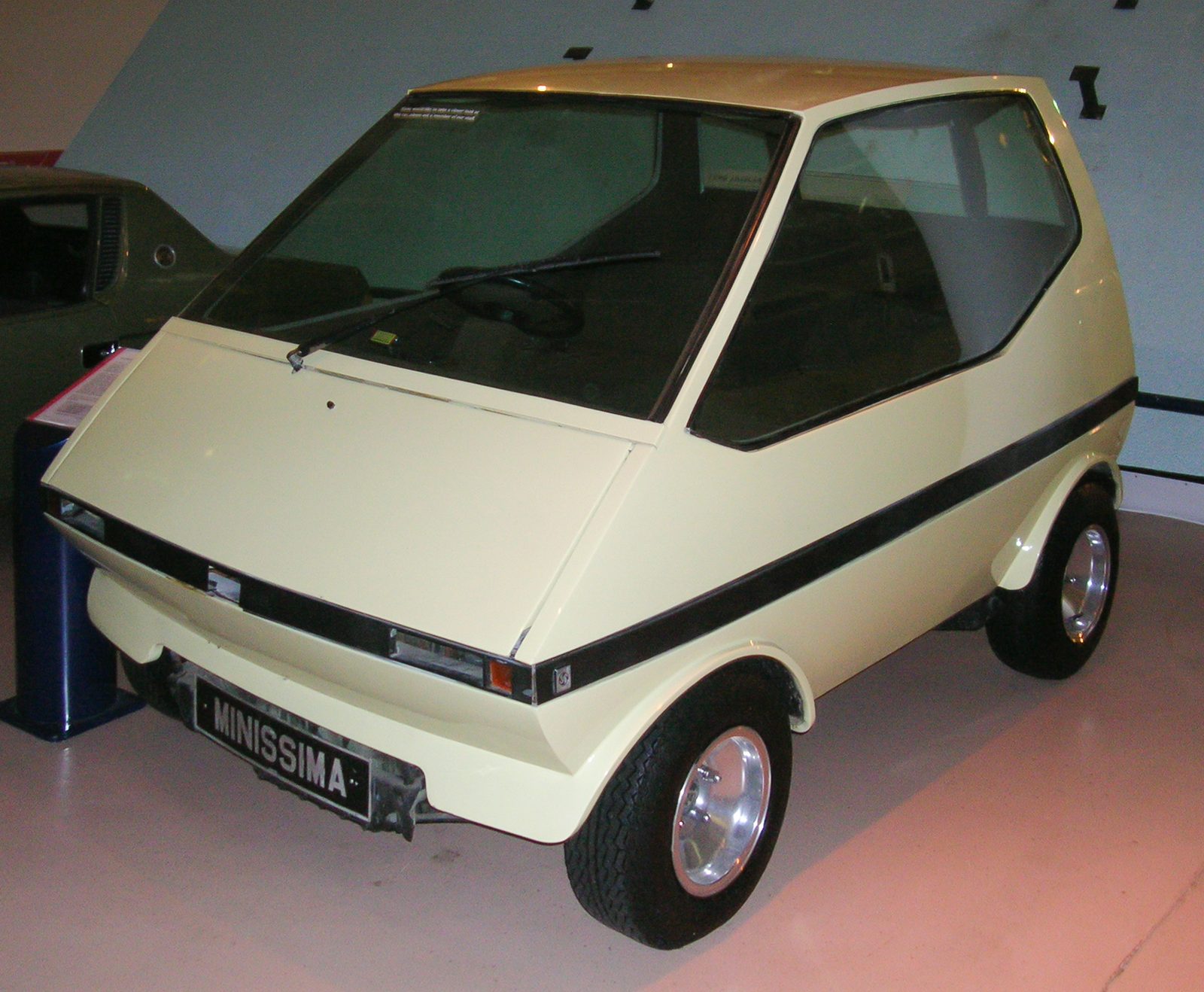
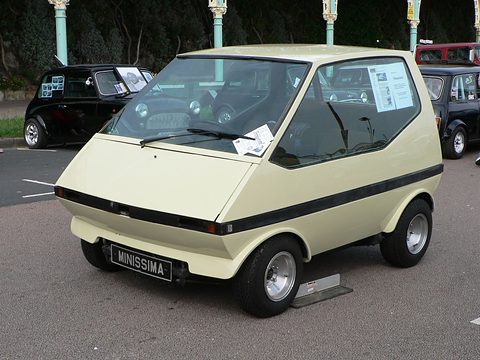
Cream upright city car with a black stripe parked on tarmac, a Mini behind it.
The Minissima shown outdoors at the London to Brighton Mini Run in 2007.Photo: foshie, CC BY 2.0, via Wikimedia Commons

At a glance

The spec plate

Minissima

Townscar prototype · 1972

Built
1972–⁠1987The prototype 1972; as the Elswick Envoy 1981–⁠87
Country
BritainDesigned by William Towns; shown by British Leyland
Maker
William TownsBought by British Leyland; later the Elswick Envoy
Engine
BMC A-SeriesCapacity not recorded; the Envoy used Mini 1000 Automatic running gear
Seats
4Two facing forward, two at the back facing each other
Wheels
4
Production
1One Minissima; fewer than 200 Elswick Envoys, 1981–⁠87

Not yet recordedpower, top speed, length and weight.

How big is it?

True proportion

Length unknown

No reliable length has been found. The Fiat 500, the Peel P50 and the adult stay, so the gap is shown, not hidden.

  • About 750 mm (30 in) shorter than a Mini
Drawn at true proportion. The track is 3.6 metres long; the adult stands at the same scale. The Peel P50 is the smallest production car, on every page for comparison.

Beside its contemporaries

The British microcars on the road in 1972, on the same 3.5 m scale. Lengths of cars without a page yet come from the census and are unverified.

  1. Bond Bug1970–⁠1974 · Britain

    2.79 m
  2. Invacar1946–⁠1977 · Britain

    2.97 m
  3. Reliant Regal1952–⁠1973 · Britain

    3.43 m
  4. Reliant Supervan1963–⁠1973 · Britain

    3.43 m
  5. Minissima1972–⁠1987 · Britain

    length unknown

The story

History

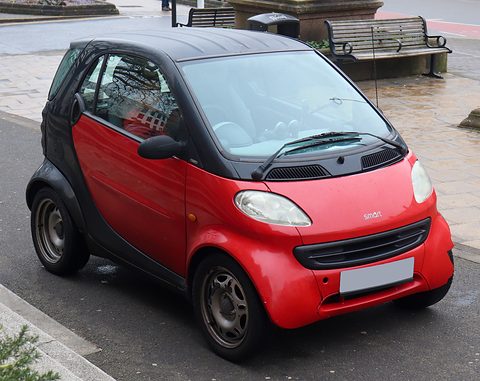
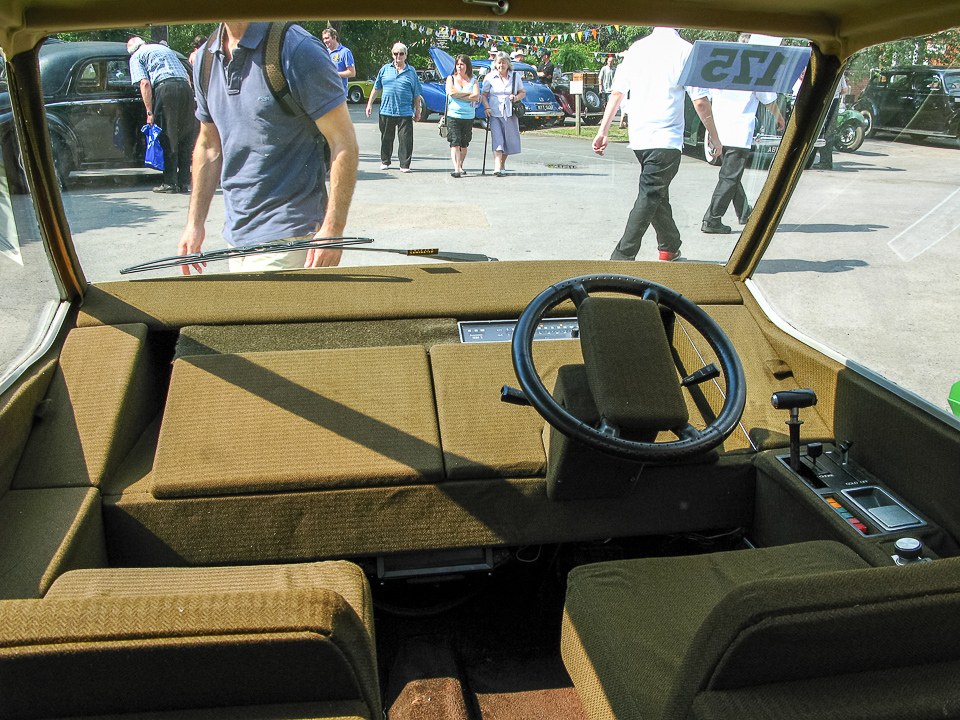
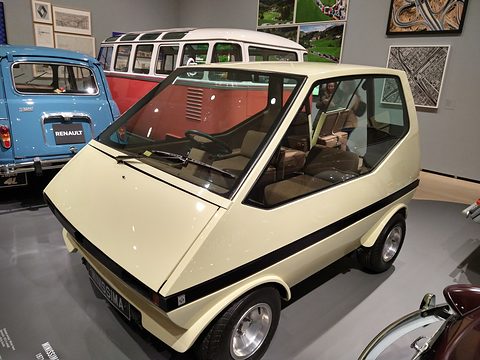
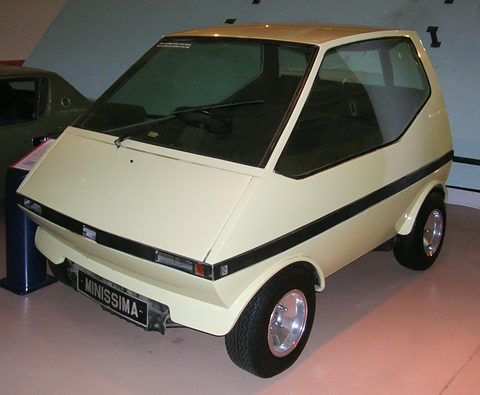
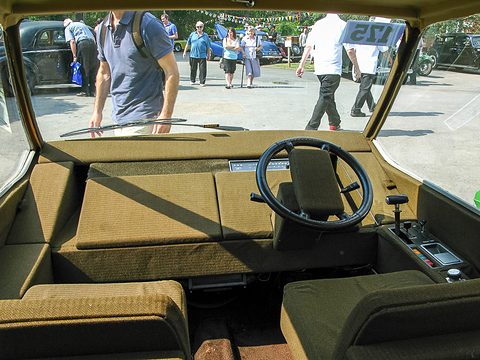
William Towns had worked at Rootes and at Rover before going freelance, and drew the Aston Martin DBS of 1967 and, later, the wedge-shaped Lagonda; he died in 1993.source 1source 2source 3 In 1972 he built his own proposal for a new Mini and called it the Townscar, a pun on his name.source 3source 1 It was a neat box with wedge touches, built around the Mini’s 10 in wheels and A-Series engine, and about 750 mm (30 in) shorter than a Mini.source 1source 3source 2source 4 It had a single door, at the back, so that it could park end-on to the kerb, as the Smart Fortwo would much later.source 3source 2source 4 Inside were four seats, two facing forward and two at the back facing each other; the Dutch magazine that wrote about it in 2018 has the back pair facing backwards.source 3source 2source 4

British Leyland liked it, bought the prototype and the commercial rights from Towns, renamed it Minissima and showed it on its stand at the 1973 London Motor Show.source 3source 1source 4 Hagerty writes that it rather stole the show from BL’s new Austin Allegro, and that crash regulations kept it from production; the Mini itself went on until 2000.source 5 Hagerty also has the Townscar shown first and bought after, the reverse of the other accounts.source 5source 3

The Microdot

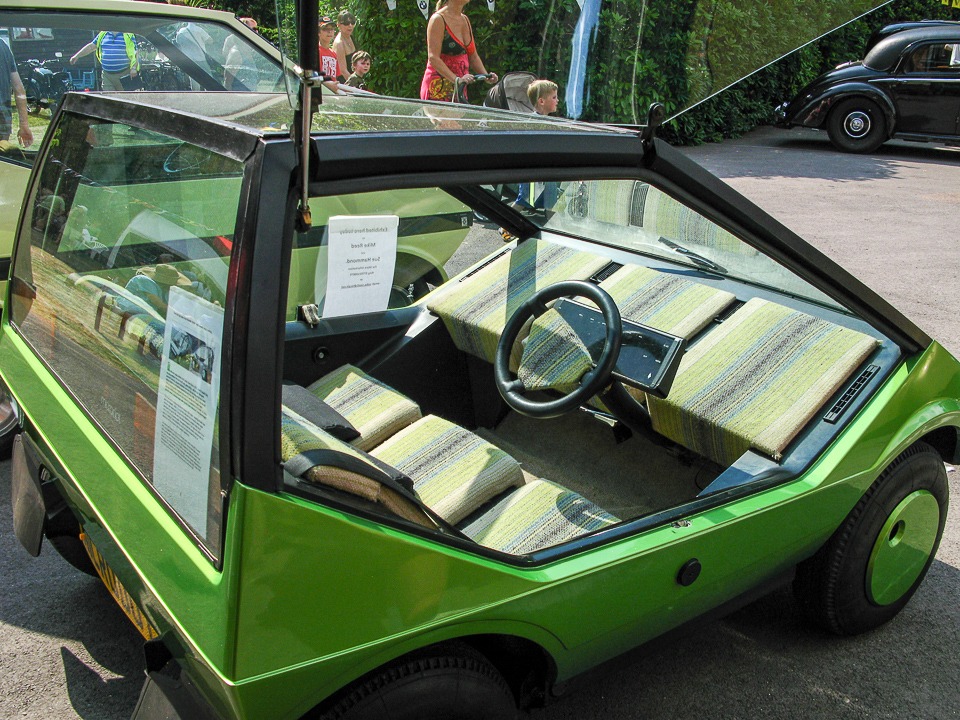
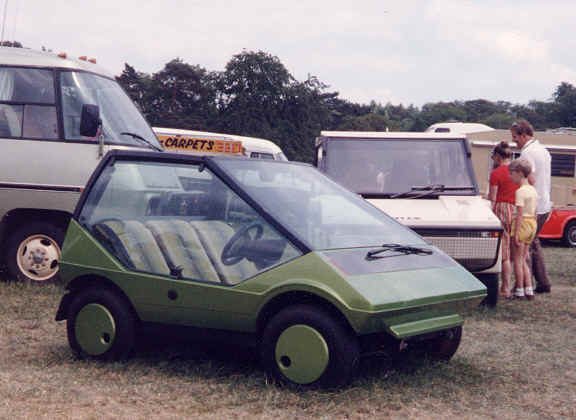
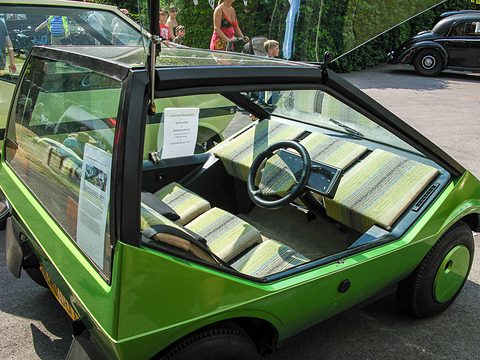
Towns tried again with the Microdot, shown at the British International Motor Show in 1976: three people abreast with the driver in the middle, glass panels that lifted instead of doors, and a 400 cc petrol engine driving a 3.5 kW generator, a hybrid. It was 2.03 m (6 ft 8 in) long and weighed 457 kg (1,008 lb).source 6source 1 In 1978 Mallalieu Engineering, of Wootton near Abingdon, built a version on a cut-down Mini chassis, with opening doors and a nose 150 mm (6 in) longer to take Reliant’s aluminium engine. It sought money from the Post Office pension fund, which declined after doubts from a government scientific adviser; the project stalled in 1980, and Mallalieu Microdot Ltd was dissolved on 23 June 1987.source 6

A car to drive from a wheelchair

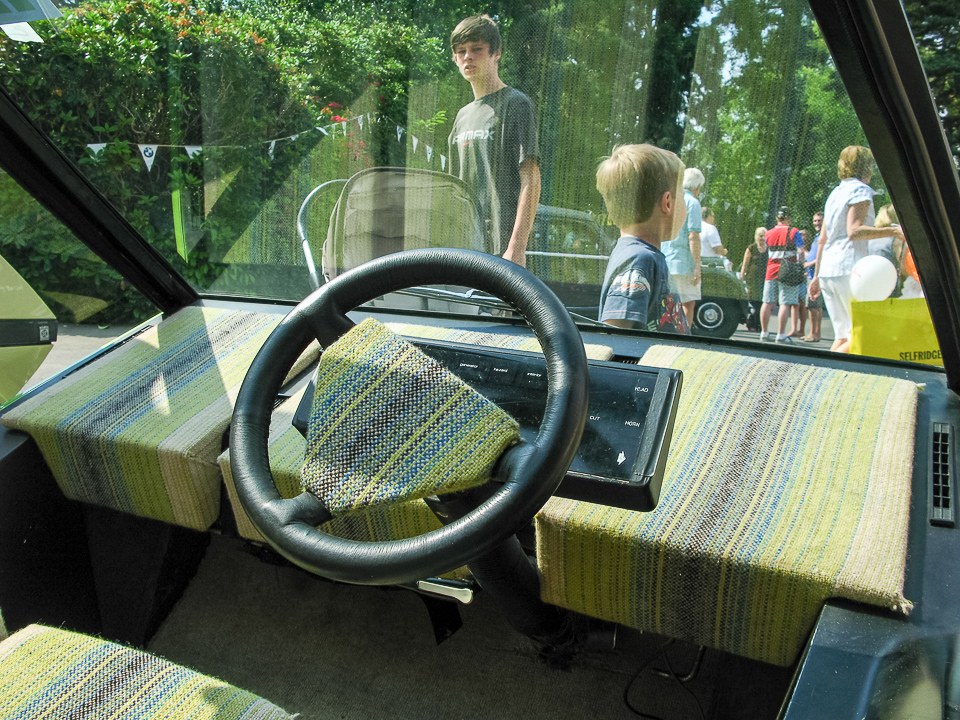
The Minissima’s design came back later in the 1970s, as a prototype for disabled drivers. GKN Sankey, working with Fred Hart, an engineer from Ford, moved the driving position to the centre and fitted a fold-down ramp at the back, so that a wheelchair user could roll in through the rear door and drive away without leaving the chair.source 3source 4 Towns simplified the styling for production, and in 1978 the car won a Design Council award. It needed government support, though, and its costs were too high to get it.source 3source 4 It belongs to the long British story of invalid carriages, as one of the few cars driven from the wheelchair itself.

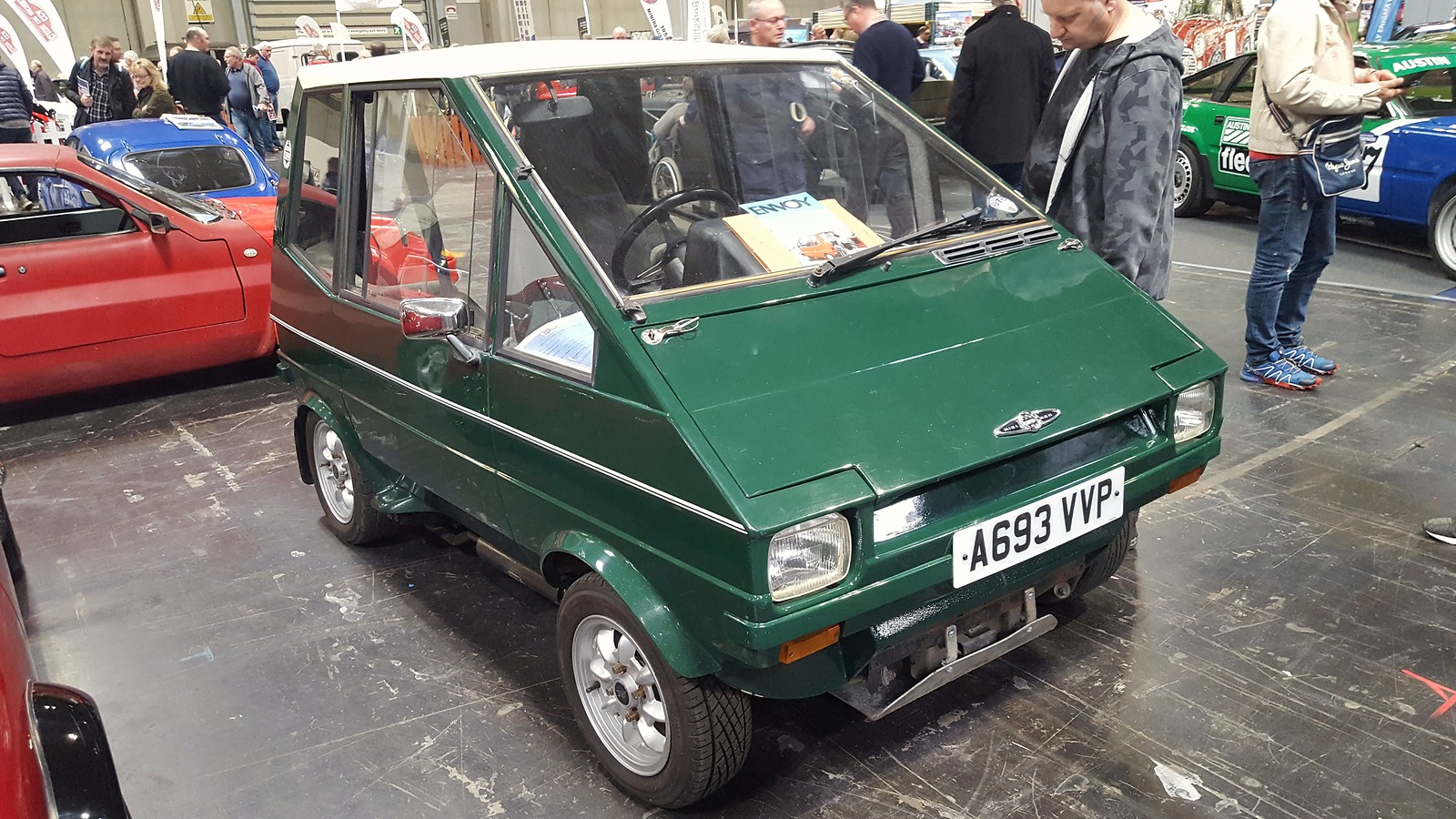
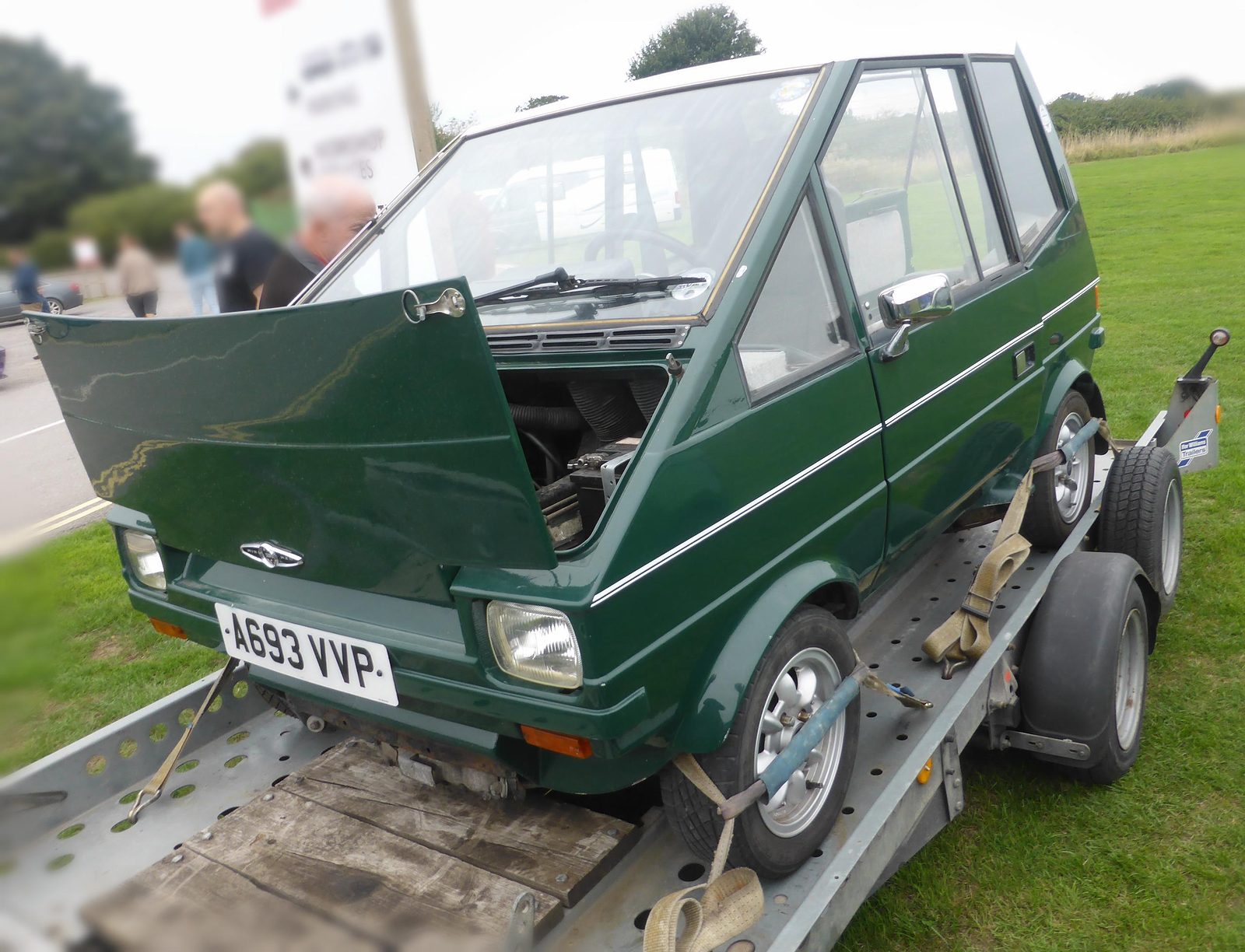
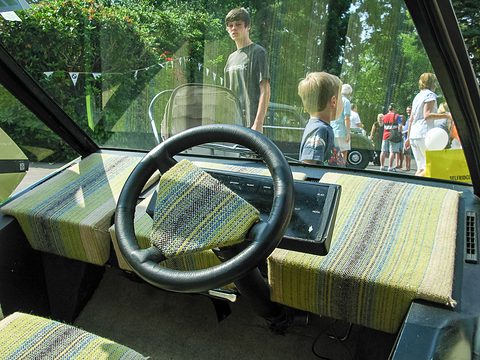
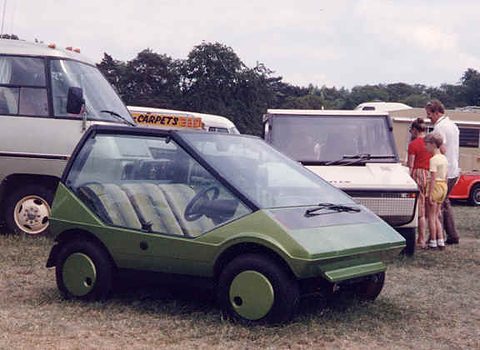
GKN sold the rights to Elswick, a British bicycle maker, which built the car as the Elswick Envoy from 1981 to 1987.source 3source 5source 4 It was previewed at the National Rally for Disabled Drivers in 1981, where a production car was the winner’s prize, and advertised as the car you can drive from a wheelchair.source 5 It had Mini 1000 Automatic running gear and a glass-fibre body made by Reliant, and the driver’s special Vessa wheelchair locked into place behind steering mounted in the middle, neither right- nor left-hand drive.source 5source 7 A basic Envoy cost £7,228 in 1984. Fewer than 200 were made.source 5

The last and most successful car that could be driven from a wheelchair.

Science Museum Group, collection entry for its 1986 Elswick Envoy.source 7

In 2007 the disabled artist Nancy Willis made a 24-minute film about her own Envoy for Channel 4, Elegy for the Elswick Envoy, and it shared the prize for best documentary at Aspen Shortsfest in 2008 (more in microcars on screen).source 3source 5source 7 Her car is now in the Science Museum Group’s collection, so Towns’s end-on town car, which British Leyland never built, survives in the form that reached the road.source 7
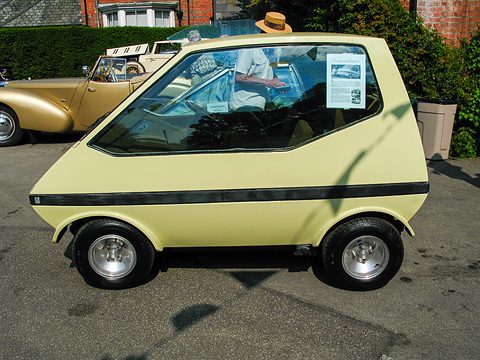
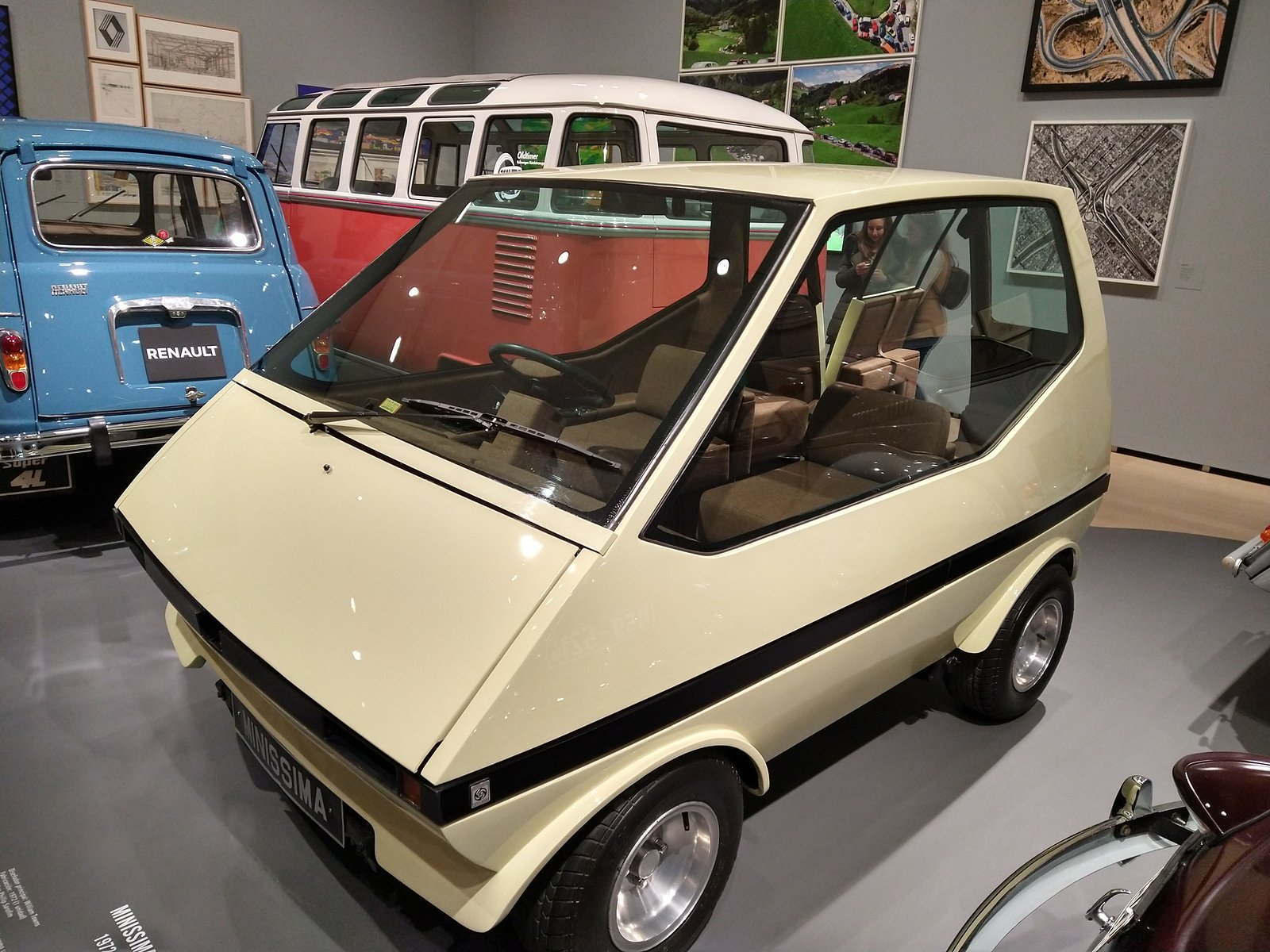
Cream city car side-on with a long sloping windscreen and no side doors, vintage cars behind.
The Minissima in profile in 2010: no doors in the sides; the only one is at the back.Photo: Smu95rp, CC BY-SA 4.0, via Wikimedia Commons
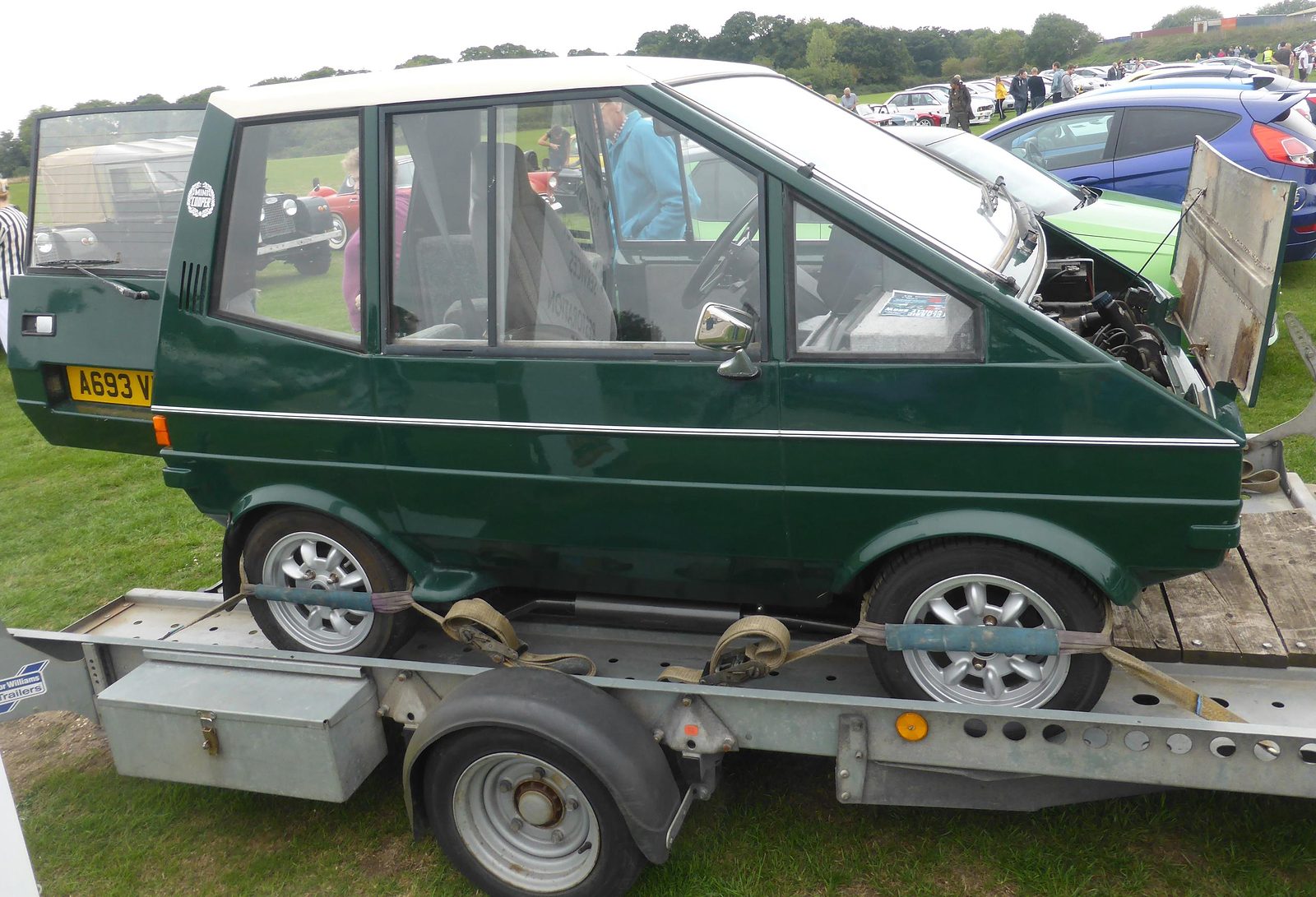
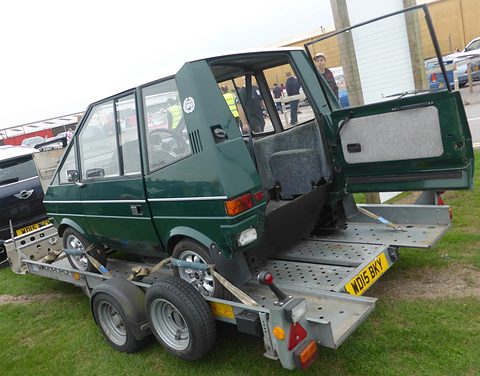
Green car on a trailer with its rear door open onto an empty floor space inside.
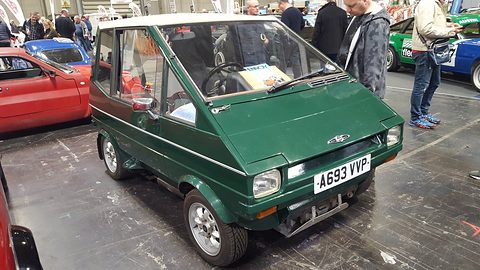
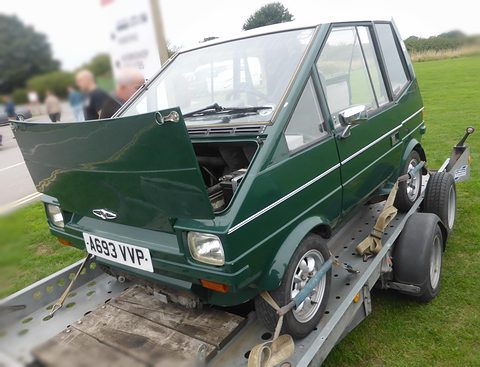
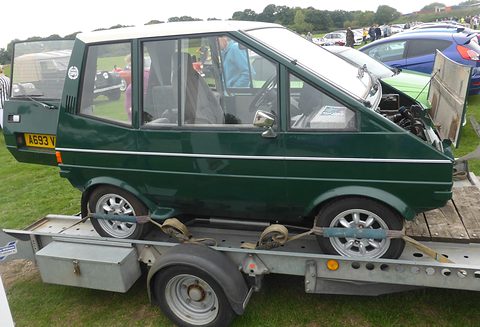
An Elswick Envoy with its rear door open in 2018, showing the space where the driver’s wheelchair locks in.Photo: andreboeni, CC BY 2.0, via Flickr
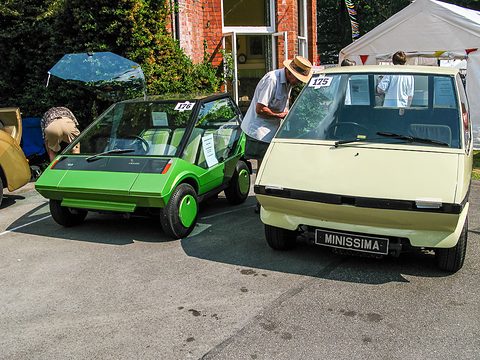
A green three-seat concept car beside the cream Minissima on a forecourt.
Towns’s green Microdot, left, beside the Minissima in 2010.Photo: Smu95rp, CC BY-SA 4.0, via Wikimedia Commons

Pictures

More photographs, old and new

Variants

From Townscar to Envoy

The Minissima and what came of it
VariantYearsWhat differsHow many
Townscar, renamed Minissima1972–⁠1973Four seats, one door at the back, Mini wheels and engine1
Microdot1976Towns’s next idea: three abreast, glass lift-up panels for doors, a petrol-electric hybrid1
Mallalieu Microdot1978–⁠1980On a cut-down Mini chassis, with opening doors and a longer nose for a Reliant enginePrototype
GKN Sankey car for wheelchair usersLate 1970sCentral driving position and a rear ramp; simplified styling; Design Council award, 1978Prototype
Elswick Envoy1981–⁠1987Driven from a locking Vessa wheelchair; Mini 1000 Automatic running gear, Reliant glass-fibre bodyFewer than 200

Specification

Three cars, as far as they are recorded

Minissima, 1972

Minissima, 1972
EngineBMC A-Seriessource 3
Wheels10 in, from the Minisource 3
Doors and seatsOne door, at the back; four seatssource 3source 2
LengthAbout 750 mm shorter than a Minisource 2source 430 in (762 mm) shorter in English Wikipedia; no length is given outright

Elswick Envoy, 1981–⁠87

Elswick Envoy, 1981–⁠87
Running gearMini 1000 Automaticsource 5
BodyGlass fibre, from Reliantsource 5source 7
SteeringCentre-mountedsource 7
Size1,750 × 1,800 × 2,600 mm, for the 1986 carsource 7The museum does not say which figure is which
Price£7,228, basic, 1984source 5

Microdot, 1976

Microdot, 1976
DriveA 400 cc petrol engine driving a 3.5 kW generatorsource 6
SeatsThree abreast, the driver in the middlesource 6
Length2.03 m (6 ft 8 in)source 6
Weight457 kg (1,008 lb)source 6

How many were built?

Every figure, with its source

One Minissima; fewer than 200 EnvoysThe Minissima itself was a single prototype. Its descendant, the Elswick Envoy, was made in fewer than 200, by Hagerty’s figure; no exact count has been published.

  1. fewer than 200Elswick Envoys, 1981–⁠87One source

    Hagerty; English Wikipedia says a small number, the Science Museum very fewsource 5source 3source 7

  2. 1Minissima prototypeOne source

    English Wikipediasource 3

  3. 1Microdot, 1976One source

    English Wikipediasource 6

  • Two sources agreetwo good sources give the figure
  • One sourcea good source, alone
  • Unconfirmeda lead only, not yet checked

Famous for

Three points

  1. One door, at the back

    Built to park nose to the kerb, decades before the Smart.

  2. Shown in 1973

    Shown on British Leyland’s stand at the 1973 London Motor Show, and never built.

  3. Driven from a wheelchair

    As the Elswick Envoy, 1981–⁠87, with the driver’s chair locked in place.

On screen

Confirmed appearances only

Survivors and collecting

Today

Where the Minissima prototype is now is not recorded. The Microdot concept was bought by the Heritage Motor Centre, now the British Motor Museum at Gaydon.source 6 Nancy Willis gave her 1986 Envoy to the Science Museum, object 2007-39, and Hagerty reported another, with 21,000 km (13,000 miles) on it, offered for sale on eBay.source 7source 5

Sources

Numbered as in the text

No period report of the 1973 show was read, and where the Minissima prototype is now was not established. Sources are given as plain text; the links are on the Credits page.

  1. Classic & Sports Car, “Tailored by Towns”, read in full.
  2. Hagerty UK, “10 cars by William Towns”, read in full.
  3. English Wikipedia, Minissima, revision of 21 September 2025, read in full. Used as a lead; it cites Keith Adams, AROnline, the Science Museum and IndieWire of 17 April 2008.
  4. Auto Motor Klassiek, “De Minissima. Het leek zo’n leuk idee”, 22 August 2018, English edition, read in full; partly drawn from Wikipedia, with errors.
  5. Hagerty UK, “Elswick Envoy: the 1970s concept car you can buy”, read in full.
  6. English Wikipedia, Microdot (car), read in full. Used as a lead; it cites Motor of 30 October 1976, AROnline (2016), the Oxford Mail (2017) and Companies House.
  7. Science Museum Group, “Elswick Envoy Road Car”, 1986, object 2007-39, read.