microcarfan
  • Licence-free car
  • France
  • Three wheels
  • One seat

Acoma Mini Comtesse

Also known as Mini Comtesse, Mini-Comtesse

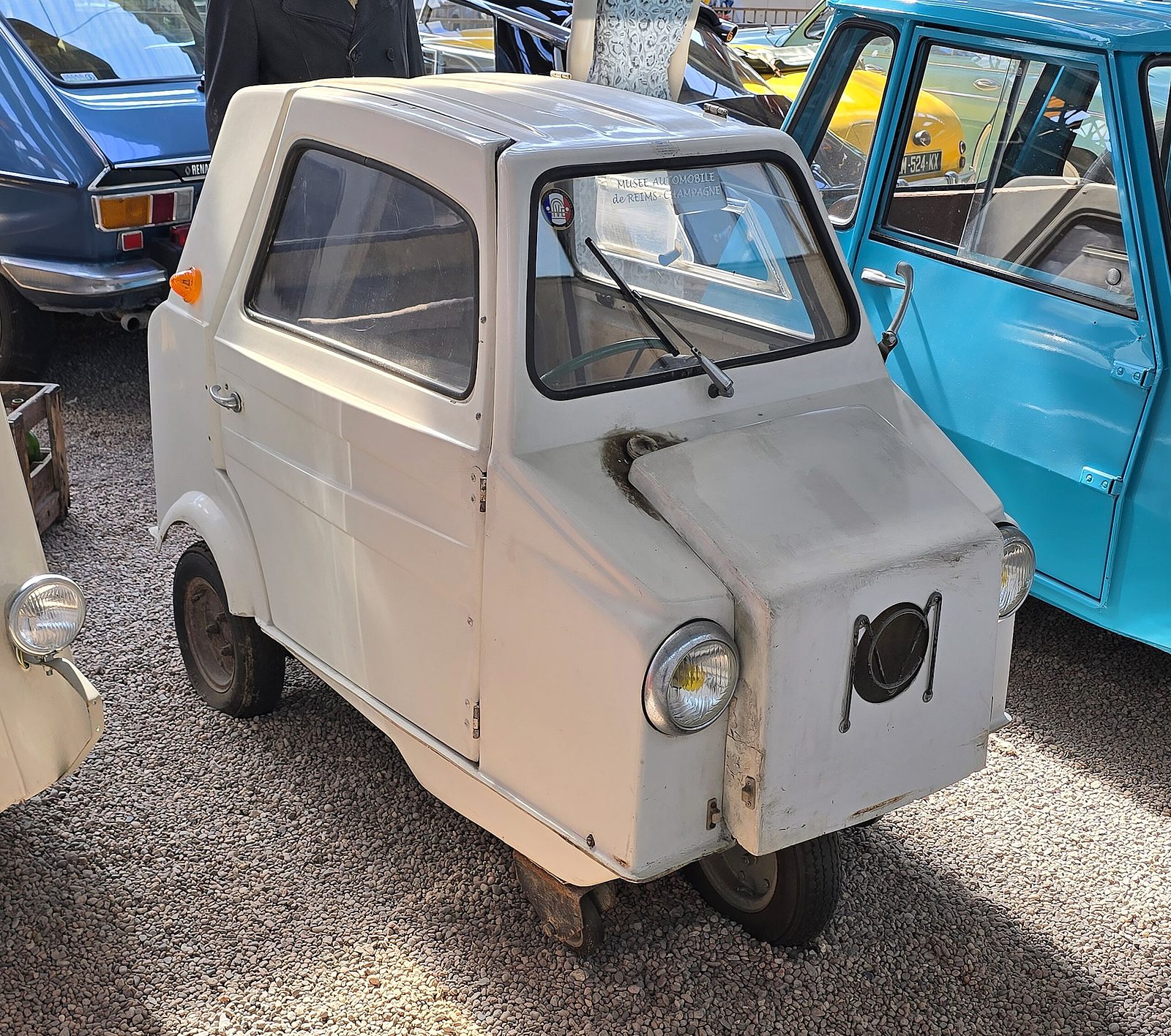
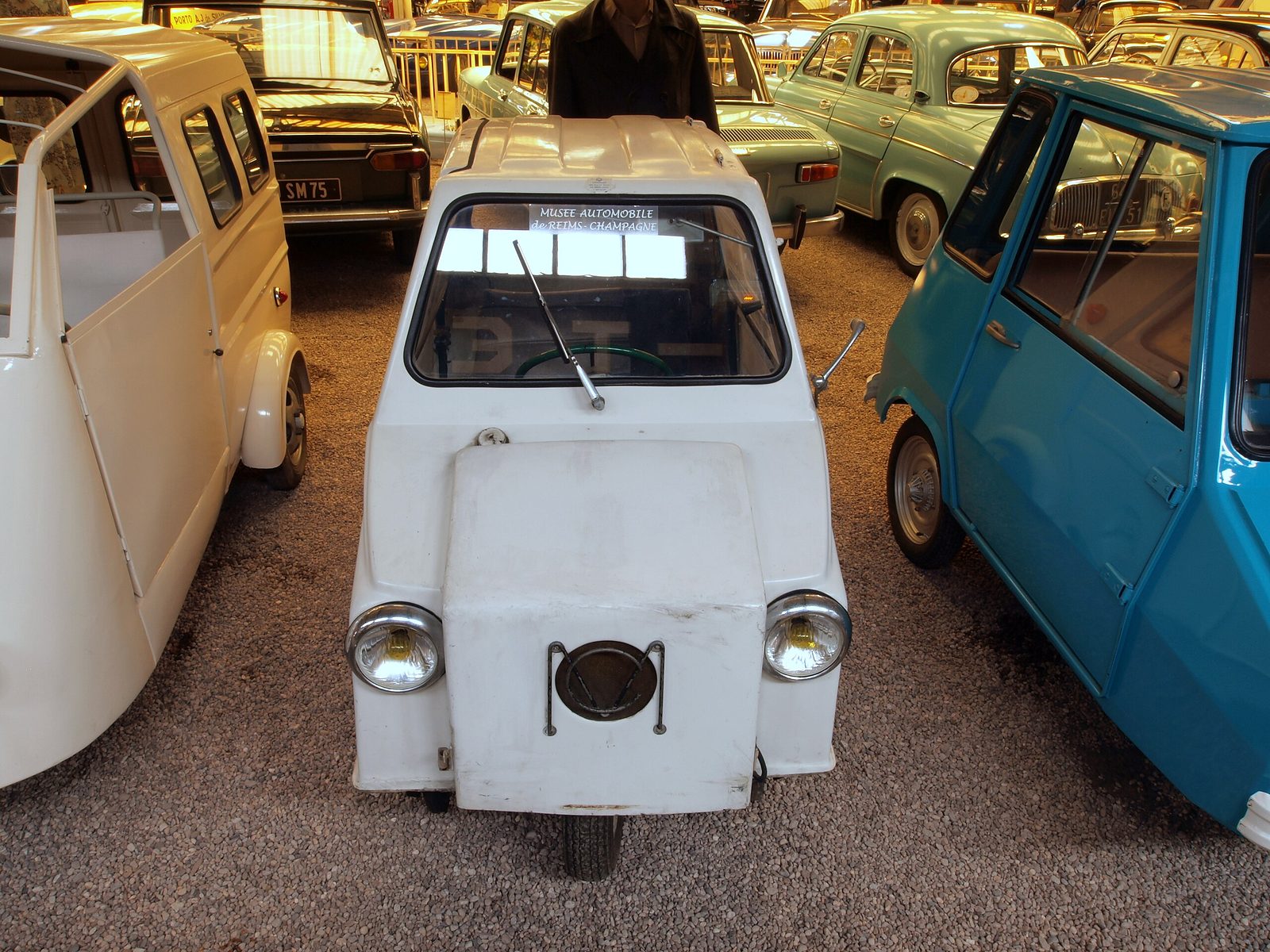
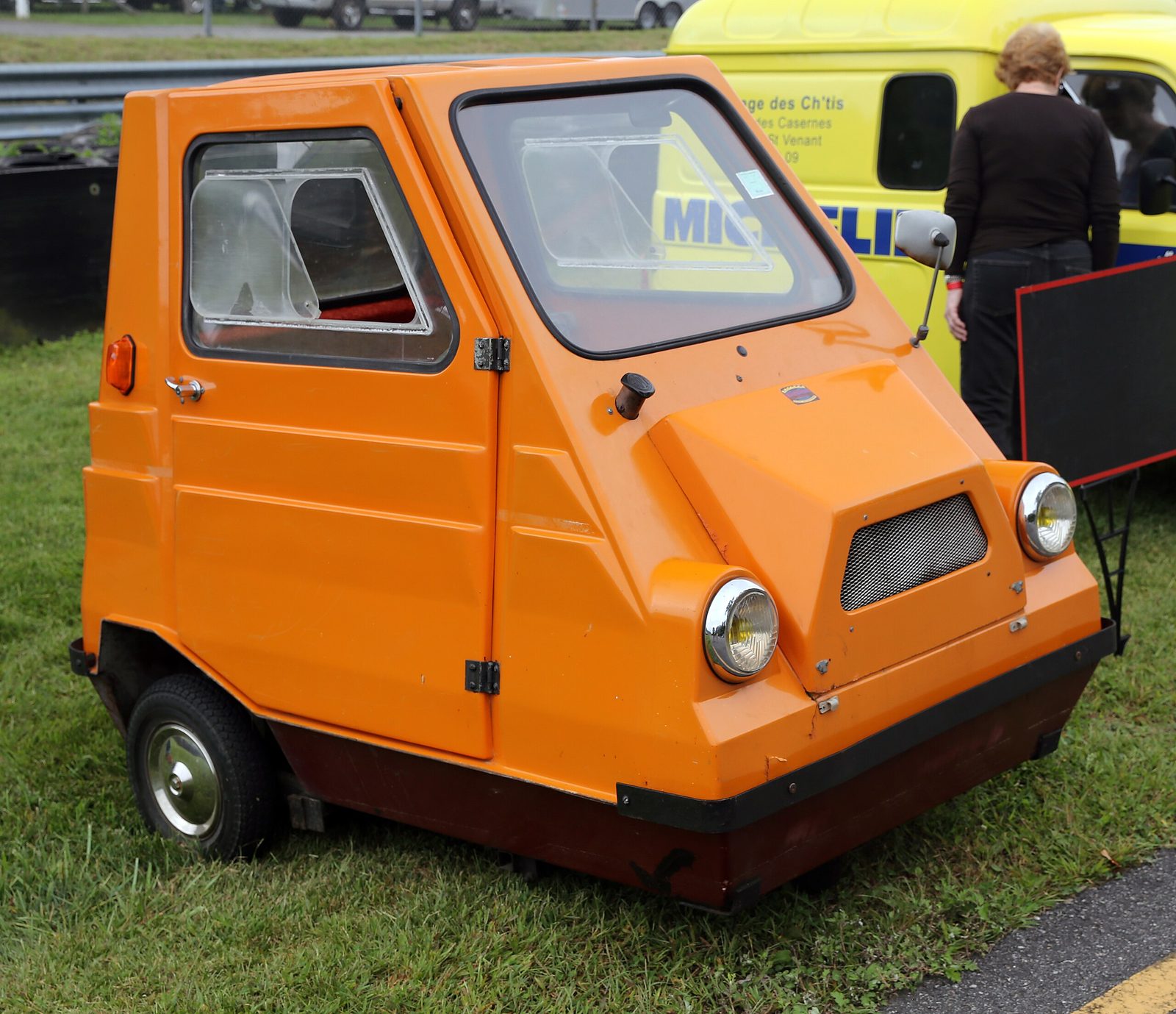
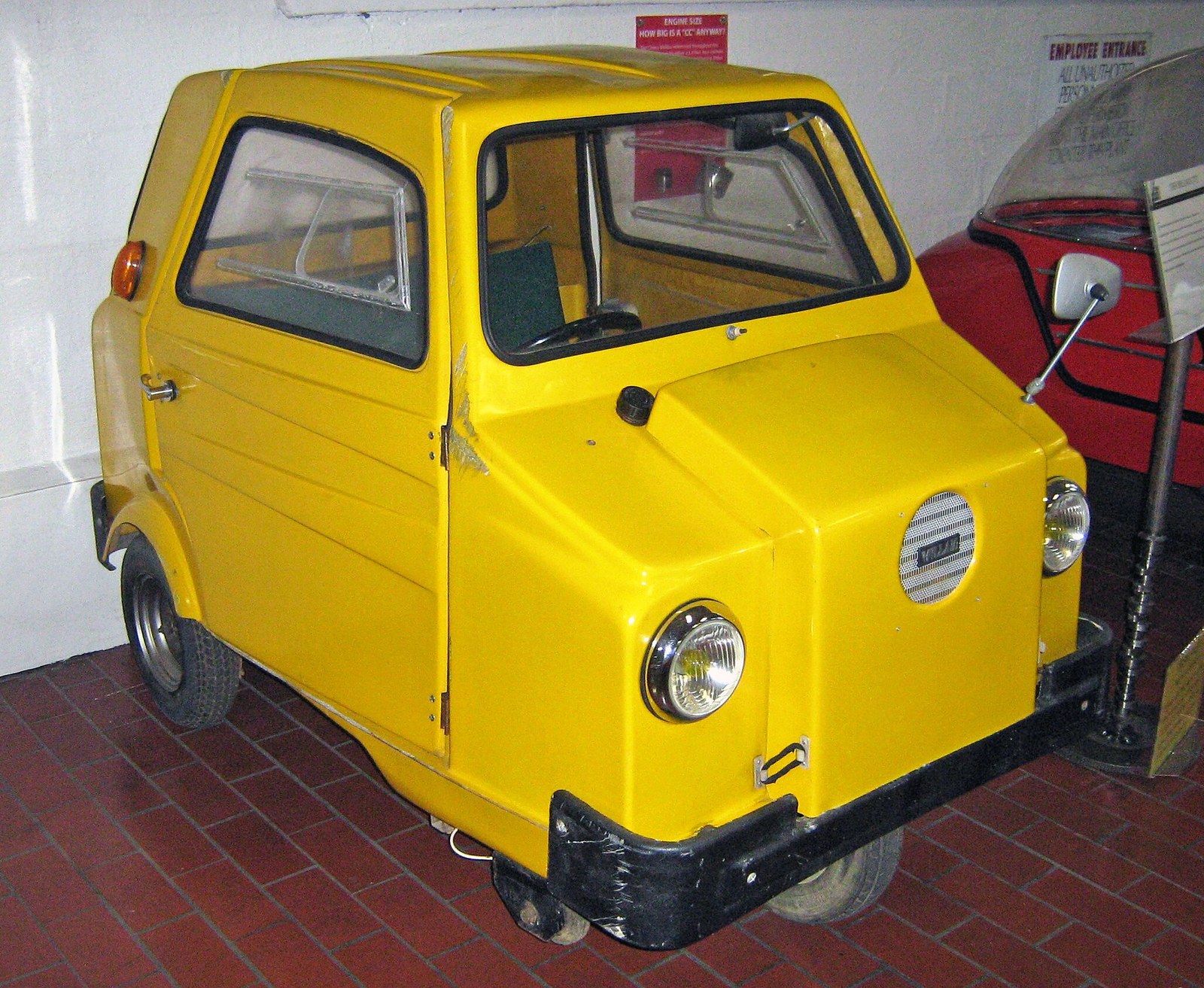
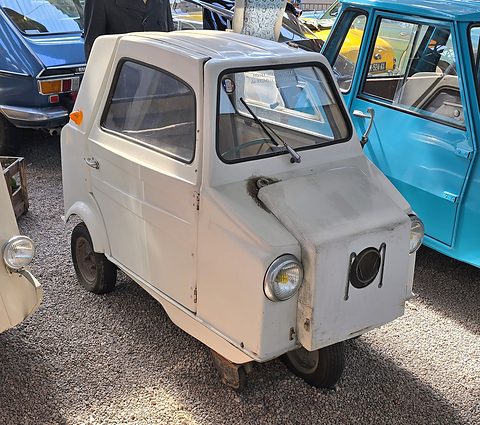
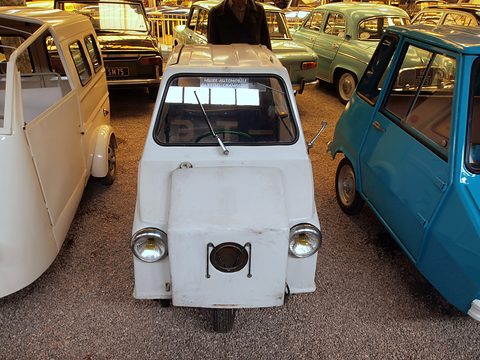
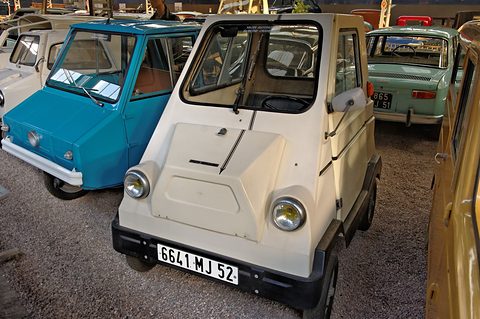
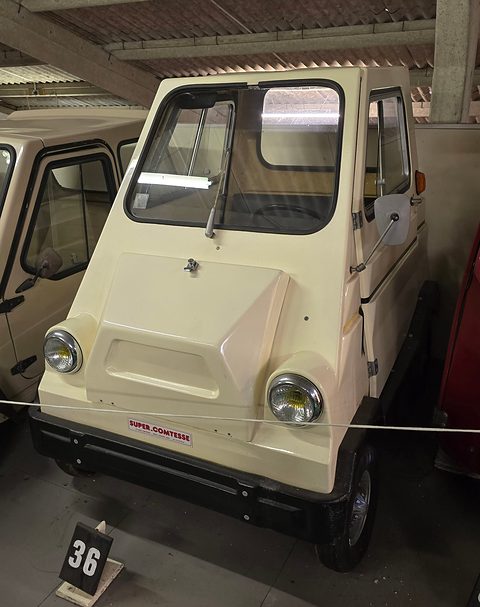
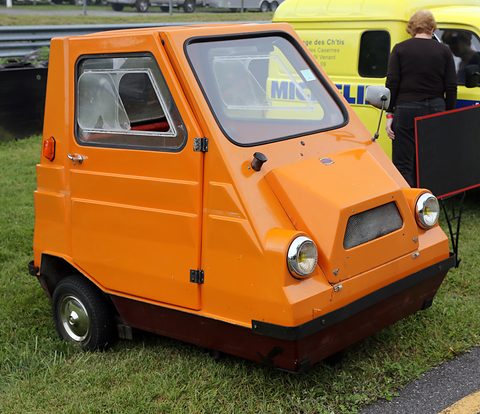
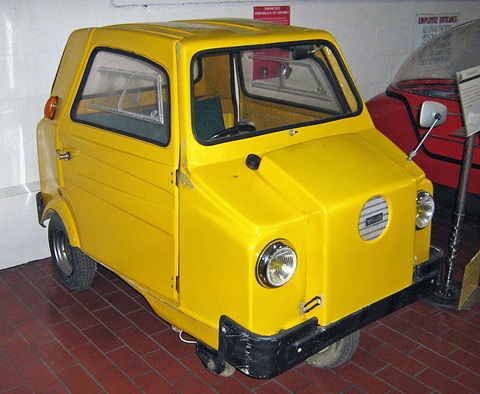
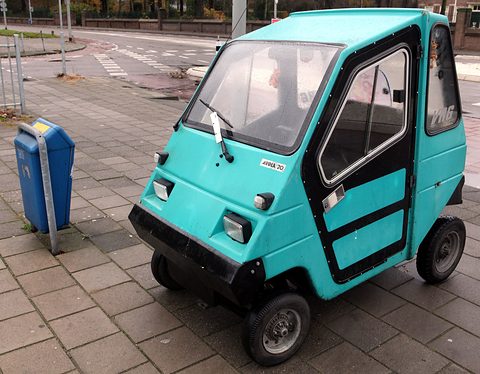
A one-seater named after a village, Villeneuve-la-Comtesse, with its engine sitting on the single front wheel and turning with it, a pair of training wheels under the nose, and a different door on each side.

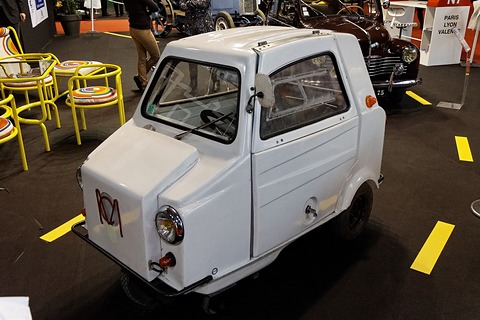
White single-seat three-wheeler with a red MC emblem on its nose cowl, on a black and yellow show floor beside yellow chairs.
A white Mini Comtesse with its MC emblem at Rétromobile in Paris in 2012.Photo: Thesupermat, CC BY-SA 3.0, via Wikimedia Commons

At a glance

The spec plate

Acoma Mini Comtesse

Types 73 and 730E · Saint-Barthélemy-d’Anjou

Built
1972–⁠1984Series cars from about 1972 to March 1984; sources give starts from 1970 to 1974
Country
FranceLaval, then Saint-Barthélemy-d’Anjou, on the edge of Angers
Maker
ACOMA (Ateliers de Construction de Matériel)A forklift-truck maker in the west of France
Engine
47 cc Sachs Saxonette or 50 cc Motobécane two-strokeMounted on the front wheel, and turning with it
Power
2.6 hpAbout 1.9 kW; Lane gives 3 bhp
Length
1,680 mm890 mm wide, 1,230 mm high
Weight
135 kgThe type 73, by the old site’s figures
Seats
1A child could ride in the later type 770
Wheels
3One at the front, carrying the engine and turning with it; two small stabiliser wheels under the nose
Production
3,500 in 1979All ACOMA types, in the peak year; no lifetime total is confirmed
Survives
YesOne is in the Lane Motor Museum, Nashville
Top speed
32km/h32 km/hAbout 20 mph

How big is it?

True proportion

1.68 m

It is 1,290 mm shorter than a Fiat 500, about one adult laid end to end.

  • 0.89 m wide
  • 135 kg: about two adults
  • One seat, and a boot reached from inside
  • Brakes on the rear wheels only
Drawn at true proportion. The track is 3.6 metres long; the adult stands at the same scale. The Peel P50 is the smallest production car, on every page for comparison.

The story

History

It began as one man’s answer to one man’s problem. Émile Boussereau, the village mechanic at Villeneuve-la-Comtesse in Charente-Maritime, built a small vehicle for a disabled young man who needed to get about.source 1source 2 CarJager dates that first Comtesse to the 1960s; the English Wikipedia says the request came in 1970.source 1source 2 The French Wikipedia says Boussereau built about 20 before he sold the rights, though it gives no source for the number.source 3 The village gave the car its name.source 4

ACOMA took it on: the Ateliers de Construction de Matériel, an industrial firm in the west of France that built forklift trucks.source 4source 1 It began at Laval, but according to the old microcarfan.com very few cars left the works there, because within months the factory moved to Saint-Barthélemy-d’Anjou, on the edge of Angers.source 4 The French Wikipedia puts the move in 1972.source 3

One door, then two

The collector who ran the original microcarfan.com printed what he called a rare document of 1972, showing the first form of the car with one door only. He also passed on a legend. An early owner lost control and went into a ditch, the car fell onto its door side, and she was trapped inside; after that the cars got a second door, a folding gullwing on the other side, and two small stabiliser wheels at the front. In twenty years of looking he had never seen a one-door car survive.source 4 The Lane Motor Museum gives a plainer reason for the gullwing: it lets the driver climb out when the car is parked nose-in between two others.source 5 Both may be true.

An engine on the steering

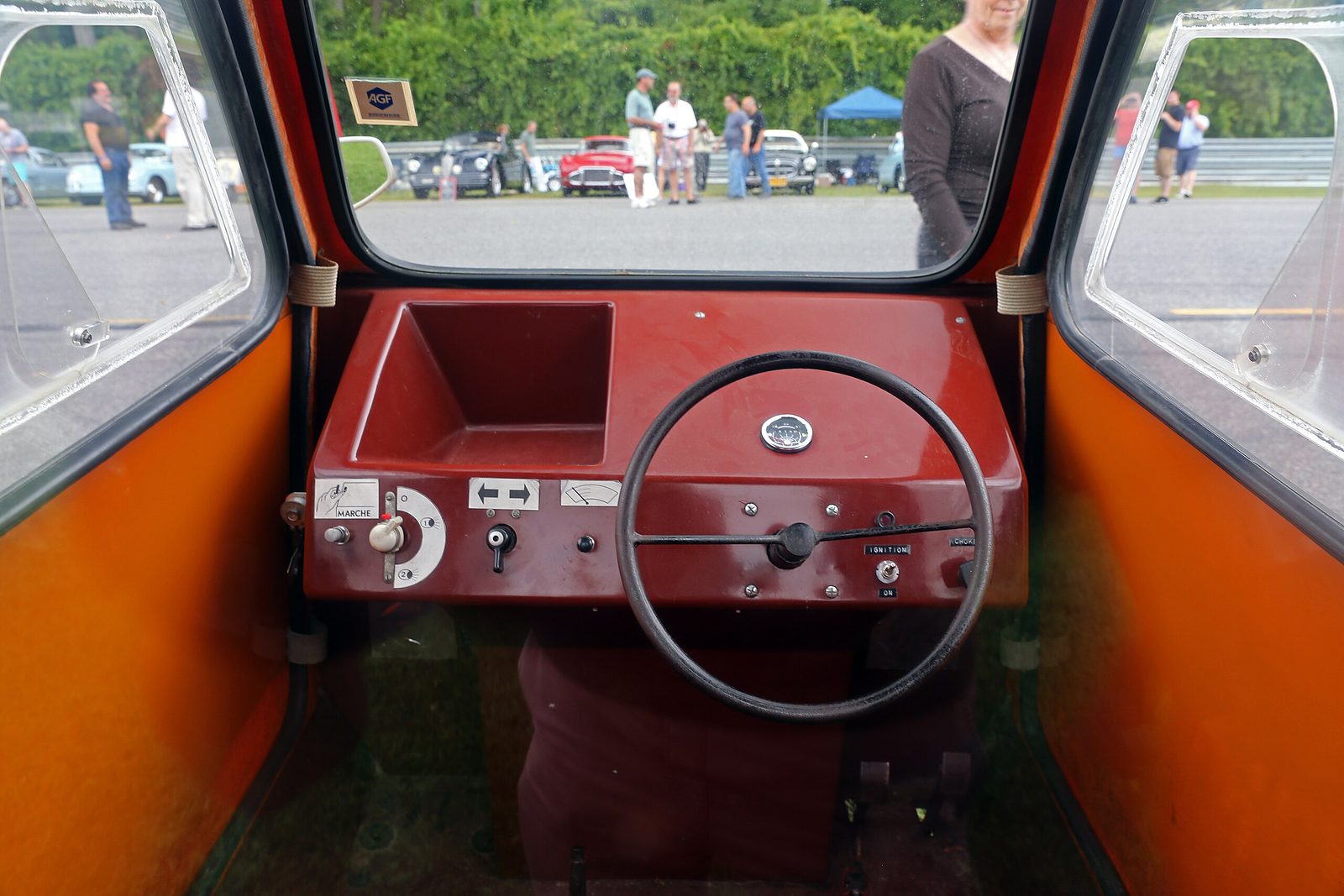
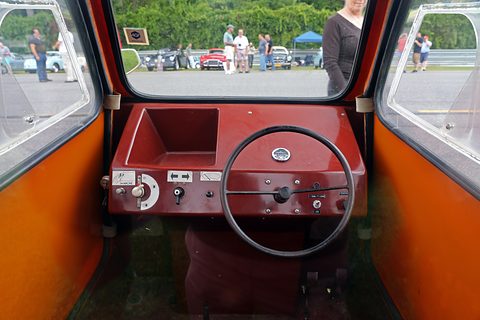
The series car, the stripped type 73 and the 730E, was a tall glass-fibre pod on three wheels and a steel-tube frame, with one seat and a boot reached from inside.source 4source 6 The engine, a 47 cc Sachs Saxonette or a 50 cc Motobécane, sat on top of the single front wheel and drove it, so the whole assembly swung from side to side as the driver turned a steering wheel. Both were unusual in its class: for a long time it was the only front-wheel-drive car in it.source 4source 1 Behind it were a centrifugal clutch and two speeds, and no reverse at all. Only the rear wheels had brakes.source 5source 6 The stripped type 73 had no speedometer and no electric wiper, and was started by pulling a cord.source 4 Over the years the round lamps became rectangular and the windscreen grew a few centimetres taller.source 4

The law of the day added one more oddity. A cyclomoteur carrossé, an enclosed moped, had to be movable by pedal, so ACOMA fitted a ratcheting foot pedal chained to the left rear wheel through a one-way clutch. It moved the car only a little, and the requirement was later dropped.source 5 In 2016 Jason Torchinsky drove the Lane museum’s car for Jalopnik, found the pedal close to useless on a hill, and watched the engine swivel with the wheel.source 7

a tiny, slow, stifling porta-potty/probable coffin, and it barely qualifies as driving

Jason Torchinsky, after driving the Lane Motor Museum’s Mini Comtesse, Jalopnik, 1 September 2016.source 7

The biggest of the boom

None of this held it back. In 1979 ACOMA sold 3,500 vehicles of all types, which made it France’s largest maker of licence-free cars; the Weiner museum puts its share at about 30 per cent of the market.source 6source 8

The odd styling, folding gullwing door on one side and regular door on the other, and dangerous instability didn’t hurt sales at all.

Bruce Weiner Microcar Museum, virtual-tour page on its 1975 Mini Comtesse, about 2002.source 6

The range spread out. The type 770 of 1977 had a roomier body that could take a child, with the steering wheel on the right, and there was a very rare electric Electro-Comtesse with a sheet-steel body.source 4 In 1978 the Super Comtesse 780E put the idea on four wheels, with a Motobécane engine under the seat, rear-wheel drive and, at last, a reverse gear.source 4 The Comtesse Break of 1979, in white or beige only, was a two-seat box with about a cubic metre (35 cu ft) inside. To carry two adults legally it was approved as a special vehicle limited to 25 km/h (16 mph), a restriction lifted at the end of 1980. The old site compares it to a telephone box or a sedan chair, and its driving position to a 35-tonne lorry’s.source 4 A Berline, a Coupé and an open red Sport followed in 1980, and the old-site author noticed the original shapes fading away.source 4source 2

March 1984

The Star and Starlette of 1982 were the first front-wheel-drive four-wheelers of the range, with disc brakes; they arrived just as the money began to run out.source 4 The Weiner museum blames rising competition and a shrinking number of older people driving sans permis.source 6 The factory doors closed for good in March 1984, and an auction dispersed everything, including a diesel Starlette prototype whose fate is unknown.source 4source 3source 8 The old site called the Mini Comtesse the first true voiture sans permis.source 4 That is one collector’s opinion: the Willam City and the Casalini Sulky were licence-free earlier.
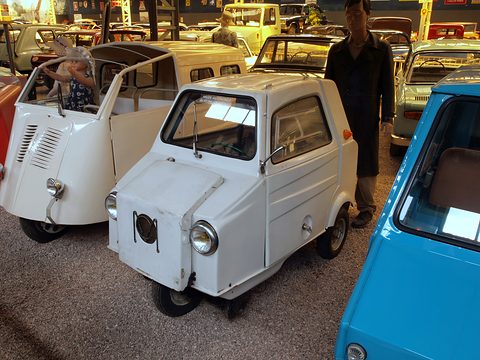
Two small white three-wheelers in a museum hall, the left one with its side door folded up, a figure in a dark coat behind.
Two Mini Comtesses side by side at the Reims museum in 2010, one with its folding gullwing door open.Photo: AlfvanBeem, CC0, via Wikimedia Commons
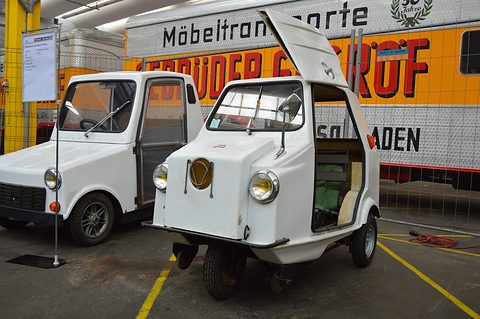
White three-wheeler with its upper door hinged up showing green seats, next to a white four-wheeled microcar and a removals lorry.
A Mini Comtesse in a museum display in 2016, beside a car the museum’s sign names as a Bel Motors Véloto.Photo: Spielvogel, CC0, via Wikimedia Commons
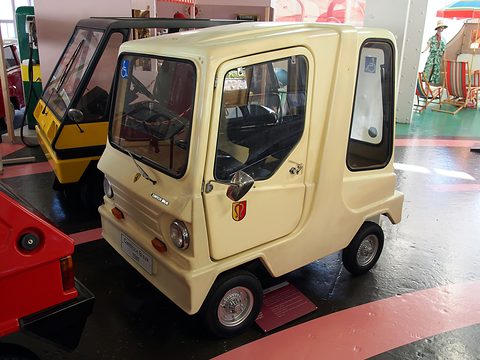
Cream tall box-shaped microcar with a large glasshouse and a wheelchair sticker, on a dark floor with pink stripes.
A 1981 Comtesse Break, the box-shaped estate, in a museum in 2015.Photo: Alf van Beem, CC0, via Wikimedia Commons
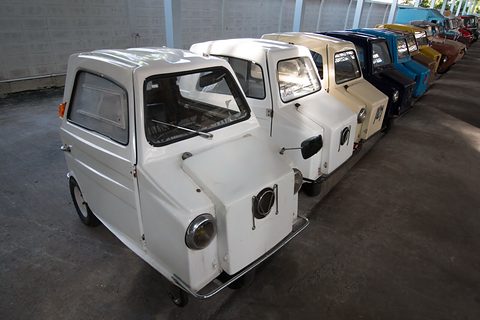
Line of small three-wheelers, white ones in front and blue, black and yellow ones behind, under a long shed roof.
A row of Mini Comtesses and other microcars at the Jesada Technik Museum, Nakhon Chai Si, Thailand, in 2017.Photo: km30192002, CC BY 2.0, via Wikimedia Commons

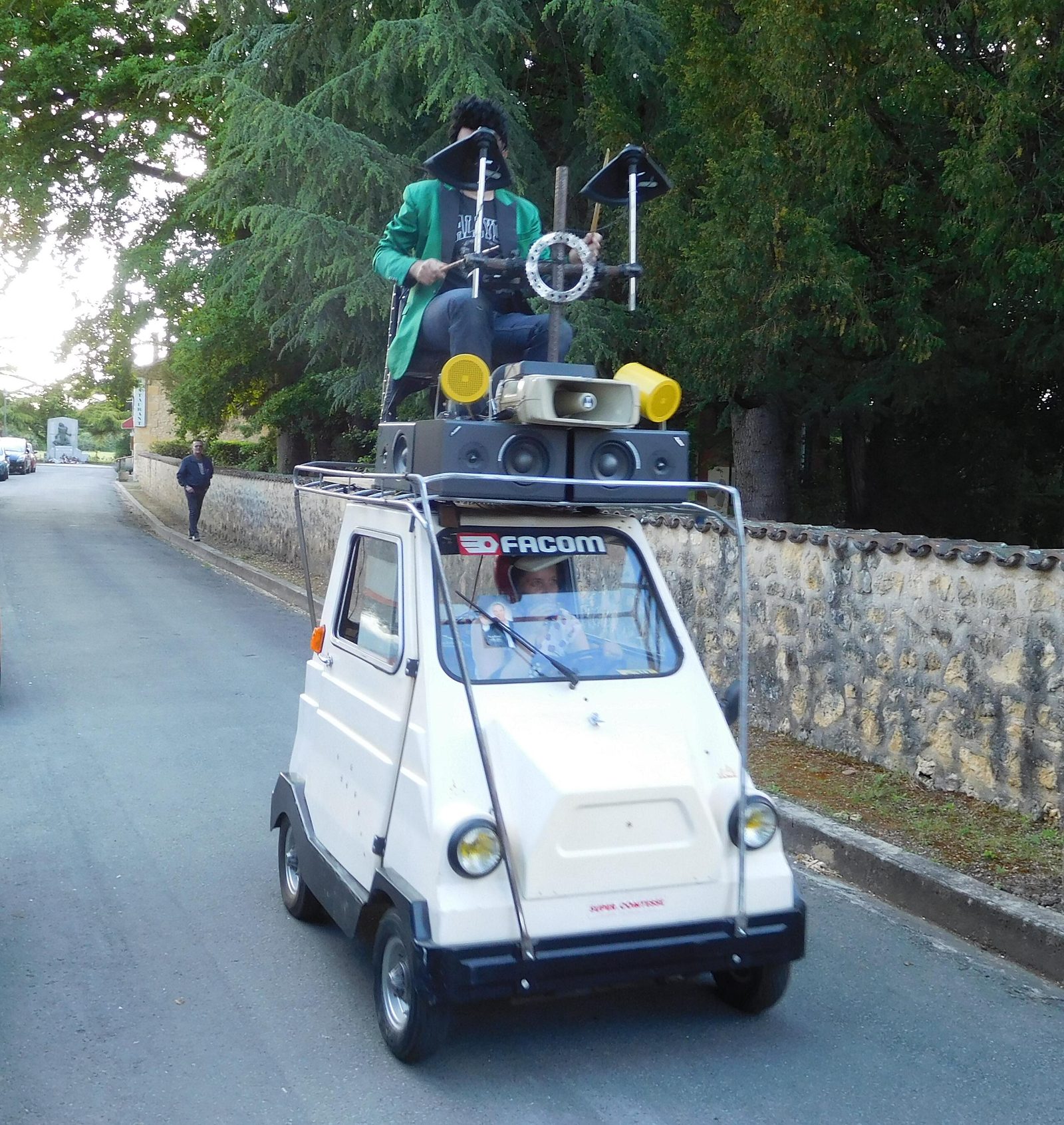
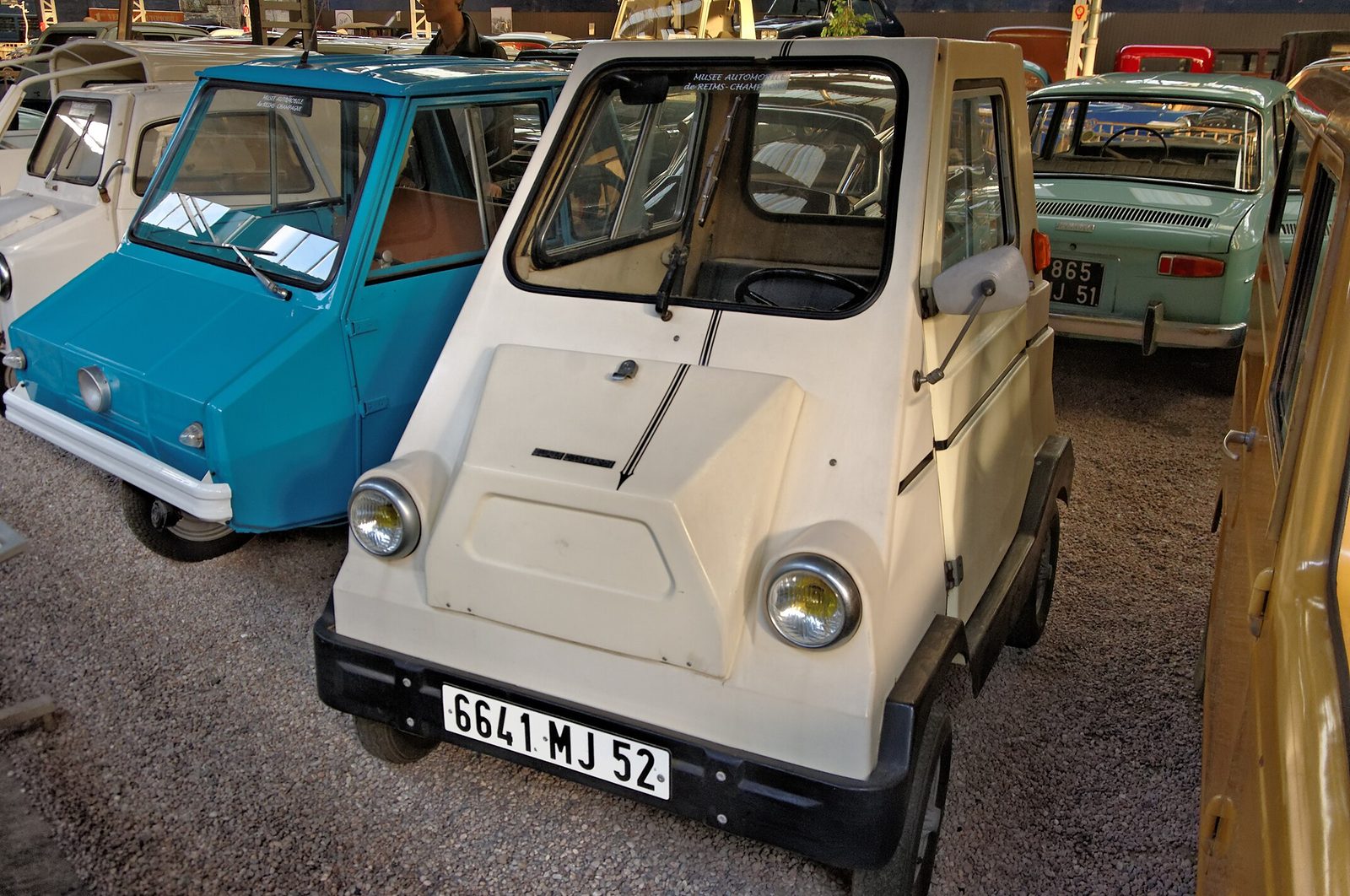
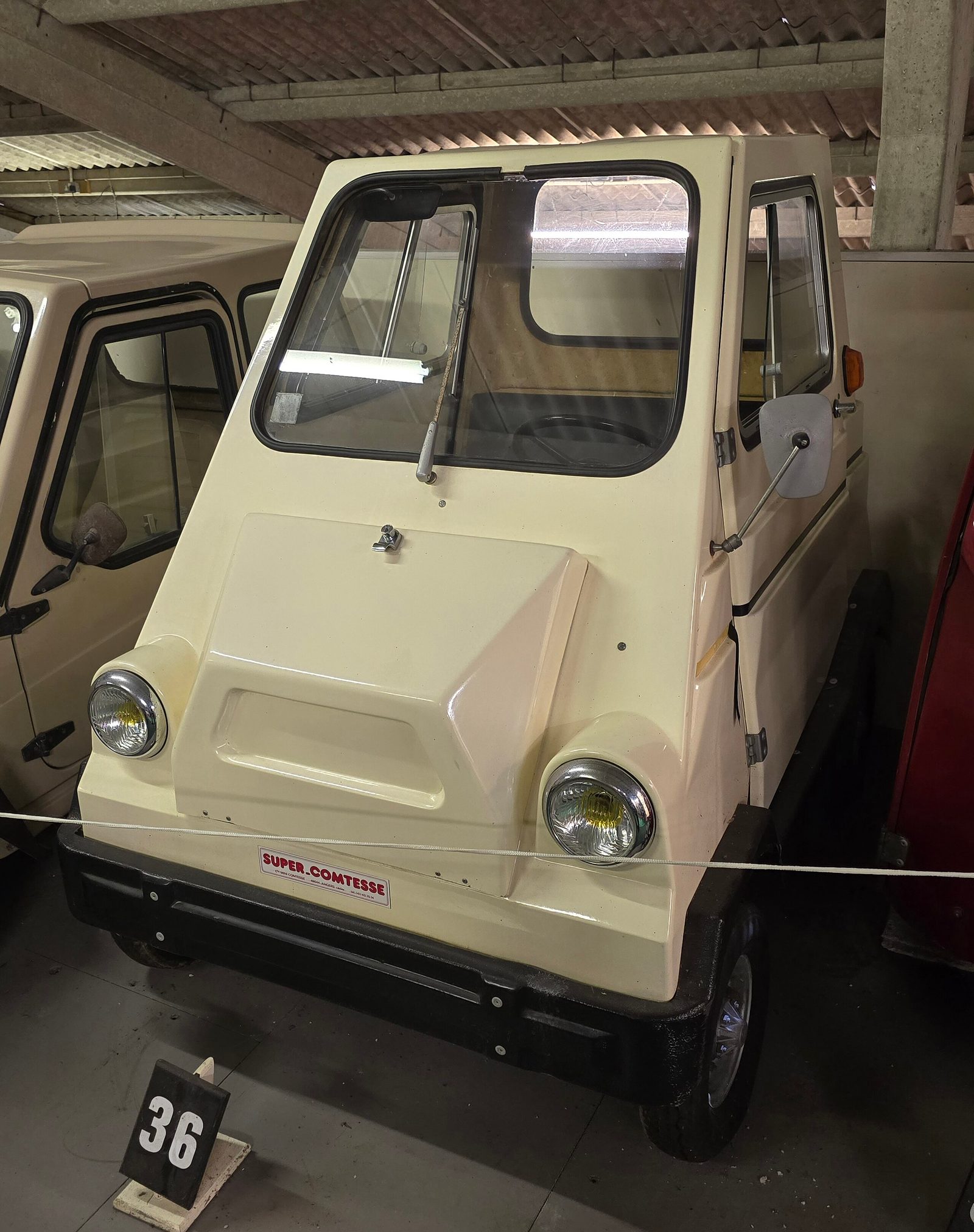
Pictures

More photographs, old and new

Variants

From one wheel at the front to four

The Comtesse family, by type number
VariantYearsWhat differsHow many
First versionc.1972One door only, no stabiliser wheels“Very few”, says the old site
Mini Comtesse type 73c.1972–⁠1979The stripped model: pull-cord start, no speedometer, no electric wiperNot known
Mini Comtesse type 730Ec.1972–⁠1979The series modelNot known
Comtesse type 7701977–⁠1980A roomier body, room for a child, the wheel on the rightNot known
Electro-Comtesselate 1970sElectric, with a sheet-steel body; homologated as a “125”Very rare
Super Comtesse 780E1978–⁠1981Four wheels, a new chassis, engine under the seat, reverse, rear-wheel driveNot known
Comtesse Break 7901979–⁠1984A two-seat box with about 1 m³ inside; 25 km/h until the end of 1980Not known
Berline 810E1980–⁠1982Saloon, Motobécane 50 ccNot known
Coupé and Sport 800E1980–⁠1984The Sport an open red carNot known
Star and Starlette1982–⁠1984Front-wheel drive on four wheels, disc brakes; Sachs 125 cc (Star) or Motobécane 50 cc (Starlette)Not known
Starlette diesel1984A prototype, sold at the closing auctionOne

Specification

The three-wheeled type 73 and 730E

Engine and drive

Engine and drive
EngineSachs Saxonette 47 cc (type 50 AMALX) or Motobécane 50 cc (type 93D), two-stroke singlesource 4source 1
Power2.6 hpsource 33 bhp in Lane’s figure
Clutch and gearboxCentrifugal clutch, two speeds, no reversesource 5
DriveThe front wheel, which carries the engine and steers with it
StartingPull-cord on the type 73source 4
PedalA ratcheting pedal chained to the left rear wheel through a one-way clutchsource 5

Body and chassis

Body and chassis
FrameSteel tubesource 6source 3
BodyGlass fibre (polyester)
DoorsA conventional door on one side, a folding gullwing on the other
SteeringA steering wheel, not handlebars
BrakesRear wheels onlysource 6
StabilisersTwo small wheels at the front

Dimensions

Dimensions
Length1,680 mmsource 4
Width890 mm
Height1,230 mm
Weight135 kg

Performance and running

Performance and running
Top speedAbout 32 km/hsource 5
Super Comtesse39 km/h, 190 kg, 1,800 × 1,170 mmsource 6
Price newNot foundLane’s “$4,000” is not a period French price

How many were built?

Every figure, with its source

3,500 in the peak year3,500 vehicles of all types in 1979, the one figure two sources agree on. No lifetime total is confirmed.

  1. about 18,000all ACOMA modelsUnconfirmed

    Lane Motor Museumsource 5

  2. about 10,000all ACOMA carsUnconfirmed

    French Wikipedia, with no source givensource 3

  3. 3,500all types, in 1979Two sources agree

    Weiner museum; German Wikipediasource 6source 8

  4. 3,000 a yearall modelsOne source

    Weiner museum, card for the Super Comtessesource 6

  5. about 20Boussereau’s own cars, before ACOMAUnconfirmed

    French Wikipedia, with no source givensource 3

  • Two sources agreetwo good sources give the figure
  • One sourcea good source, alone
  • Unconfirmeda lead only, not yet checked

Famous for

Three points

  1. Two different doors

    An ordinary door on one side and a folding gullwing on the other, to get out when hemmed in.

  2. An engine on the steering

    The two-stroke sits on the single front wheel and swings with it when you steer.

  3. A pedal by law

    A ratcheting foot pedal, chained to a rear wheel, met the rule that a moped could be pedalled.

On screen

Confirmed appearances only

Survivors and collecting

Today

The Lane Motor Museum in Nashville has a Mini Comtesse, catalogued as a 1972 car, which Jalopnik drove as a 1975 one.source 5source 7 The Bruce Weiner Microcar Museum showed a 1975 Mini Comtesse, a Super Comtesse and a 1979 Comtesse Break.source 6 The original microcarfan.com was built around this marque, and its owner kept a Comtesse Break in his collection.source 4

No count of survivors, no club and no result from a serious auction house has been found.

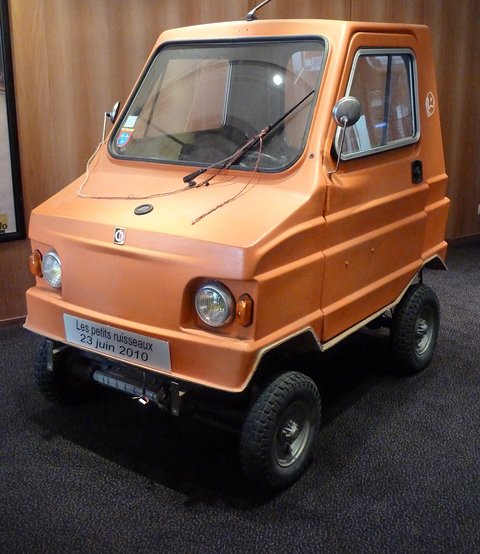
Orange boxy four-wheeled microcar with a roof aerial and a card reading Les petits ruisseaux 23 juin 2010 on its bumper.
A four-wheeled Comtesse with a card naming the film Les Petits Ruisseaux and its release date, 23 June 2010.Photo: Sémhur, CC BY-SA 4.0, via Wikimedia Commons

Sources

Numbered as in the text

Sources are given as plain text; the links are on the Credits page.

  1. Paul Clément-Colin, “Acoma Comtesse, Mini et Super Comtesse : la voiturette des seventies”, CarJager, 3 January 2017.
  2. English Wikipedia, ACOMA; its references include CarJager, the Lane museum and IMCDb.
  3. French Wikipedia, Mini Comtesse.
  4. The original microcarfan.com (2006–⁠2016), marque page “ACOMA”, one collector’s account, read in full from the archived copies of 2007 and 2013.
  5. Lane Motor Museum, “ACOMA Mini Comtesse – 1972”, collection page.
  6. Bruce Weiner Microcar Museum, tour pages “1975 Mini Comtesse”, “Comtesse Super Mini” and “1979 Mini Comtesse Break”, read via the Internet Archive (2015).
  7. Jason Torchinsky, “What It’s Like To Drive A Tiny Car Designed For Drunk French Kids”, Jalopnik, 1 September 2016.
  8. German Wikipedia, Mini Comtesse, citing Linz and Schrader (2008) and Georgano (2001).
  9. French Wikipedia, Les Petits Ruisseaux (the film).