microcarfan
  • Microcar
  • India
  • Four seats
  • Quadricycle

Bajaj Qute

Also known as Bajaj RE60

Four seats, a 217 cc single-cylinder engine at the back, a motorcycle-type sequential gearbox and a limiter at 70 km/h (43 mph). India created a new kind of vehicle in law to let it exist, and then spent six years deciding whether to let it on the road.

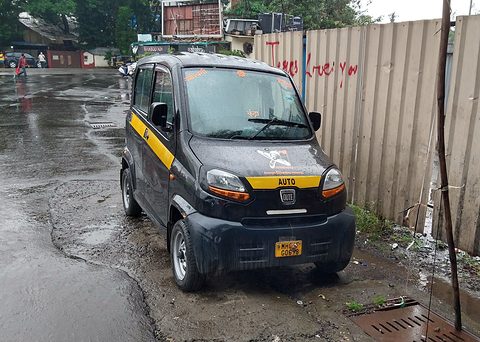
Black tiny four-door car with a yellow stripe and AUTO lettering parked on a wet street by a metal fence.
A black and yellow Bajaj Qute used as an auto-rickshaw at JVPD bus station, Andheri, Mumbai, India, in September 2020.Photo: Srikanth Ramakrishnan/BESTpedia, CC BY-SA 4.0, via Wikimedia Commons

At a glance

The spec plate

Bajaj Qute

RE60 · Aurangabad

Built
2013–Production from 2013, first for export; no end date found
Country
IndiaWaluj plant, Aurangabad, Maharashtra
Maker
Bajaj AutoPune; the world’s biggest maker of auto-rickshaws
Engine
216.6 cc single-cylinder four-strokeWater-cooled, at the back; petrol, CNG or LPG
Power
15 kW20 hp by English Wikipedia; 13.2 PS (9.71 kW) by German Wikipedia, which gives 20 PS for another version
Length
2,752 mm1,312 mm wide, 1,652 mm high
Weight
400 kgBy English Wikipedia; German Wikipedia gives 450 kg
Seats
4
Wheels
4Engine at the back
Price new
₹1.25–2.5 lakhIndia, the range across sources and years; about €1,900 at the start by one source; about €6,600 online in the EU in 2018
Top speed
70km/h70 km/hThe limit set by India’s quadricycle rules

How big is it?

True proportion

2.75 m

It is 218 mm shorter than a Fiat 500, about 1.6 adults laid end to end, and twice the length of a Peel P50.

  • 1.31 m wide
  • 400 kg: about five adults
  • Four seats
  • Taller than it is wide
Drawn at true proportion. The track is 3.6 metres long; the adult stands at the same scale. The Peel P50 is the smallest production car, on every page for comparison.

The story

History

Bajaj Auto, of Pune, is the world’s biggest maker of the three-wheeled auto-rickshaw, and the Qute was meant to replace it.source 1source 2 It began in 2010 as an ultra-low-cost car developed with Renault and Nissan, aimed at a price of $2,500, 30 km on a litre of fuel and 100 g/km of carbon dioxide. The two partners withdrew.source 1source 2 On 3 January 2012 Bajaj unveiled the car at the Auto Expo in Delhi as the RE60, the letters standing for rear engine.source 1 German Wikipedia says that a concept had first been shown at the Auto Expo of 2008.source 2

By Indian law it was not a car. On 22 May 2013 the Government of India classified it as a quadricycle, a class new to the country, with an electronic limit of 70 km/h and use restricted to commercial work, as a replacement for the auto-rickshaw.source 1source 2 Production began that year at Bajaj’s Waluj plant at Aurangabad, in Maharashtra, at first for export.source 1source 2 How much it could make is told two ways: 5,000 a month by English Wikipedia, and 5,000 a year, rising to 60,000 once it was approved, by German Wikipedia.source 1source 2

Approval at home was slow. The planned Indian launch of 2015 was put off over safety concerns, and legal challenges and objections to its safety kept it off Indian roads until 2019, when, after six years of litigation, six states approved it: Kerala, Gujarat, Rajasthan, Uttar Pradesh, Odisha and Maharashtra.source 2source 1 Its Indian price is given as anything from ₹1.25 lakh to ₹2.5 lakh over the years; German Wikipedia puts it at about €1,900 at the start.source 1source 2

A rickshaw with four doors

The body is 2,752 mm (108 in) long, 1,312 mm (52 in) wide and 1,652 mm (65 in) tall, and it seats four.source 1source 2 Behind them sits a water-cooled single-cylinder four-stroke with an overhead camshaft and multipoint injection, of 216.6 cc in its European form, running on petrol, compressed natural gas or liquefied petroleum gas.source 1source 2 Its gearbox is of the motorcycle type: five speeds in sequence, plus a reverse.source 1source 2 It stops on discs in front and drums behind.source 2 English Wikipedia gives 20 hp (15 kW) and a kerb weight of 400 kg (882 lb); German Wikipedia gives 13.2 PS (9.71 kW), with 20 PS for another version, and 450 kg.source 1source 2 Bajaj claimed 35 km on a litre at the launch, and German Wikipedia records 36 km, or 2.8 litres per 100 km.source 1source 2

One star in Europe

Europe took it as an L7e heavy quadricycle. German Wikipedia says that exports to more than 35 countries were planned, among them Turkey, Sri Lanka, Russia, Poland and Ukraine, that Germany, Poland and Turkey were among its European markets, and that in 2018 it was offered online in the European Union for about €6,600.source 2 In Euro NCAP’s quadricycle tests of 2016 it earned one star. It had no airbags and its belts no pre-tensioners; ADAC scored it 4 out of 16 in the frontal test and 6 out of 16 in the side impact, found the passenger cell unstable, and saw a door come off in the side test.source 1source 2 No total of cars built or sold, and no end of production, has been found.
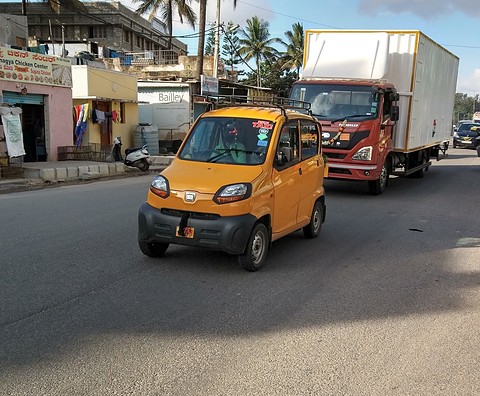
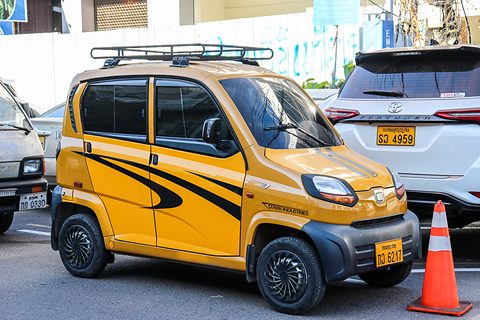
Yellow tiny four-door car driving along a city road with a red lorry behind and shops at the side.
A yellow Bajaj Qute “mini taxi” with a roof rack in traffic on Bannerghatta Road, Bengaluru, India, in November 2020.Photo: Srikanth Ramakrishnan/BESTpedia, CC BY-SA 4.0, via Wikimedia Commons
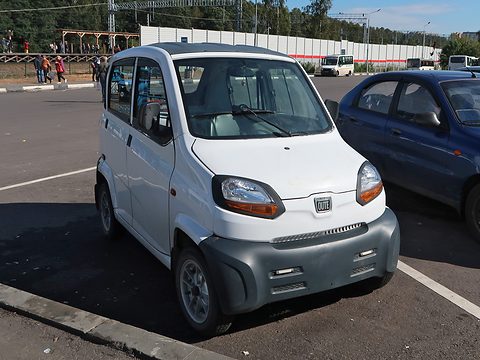
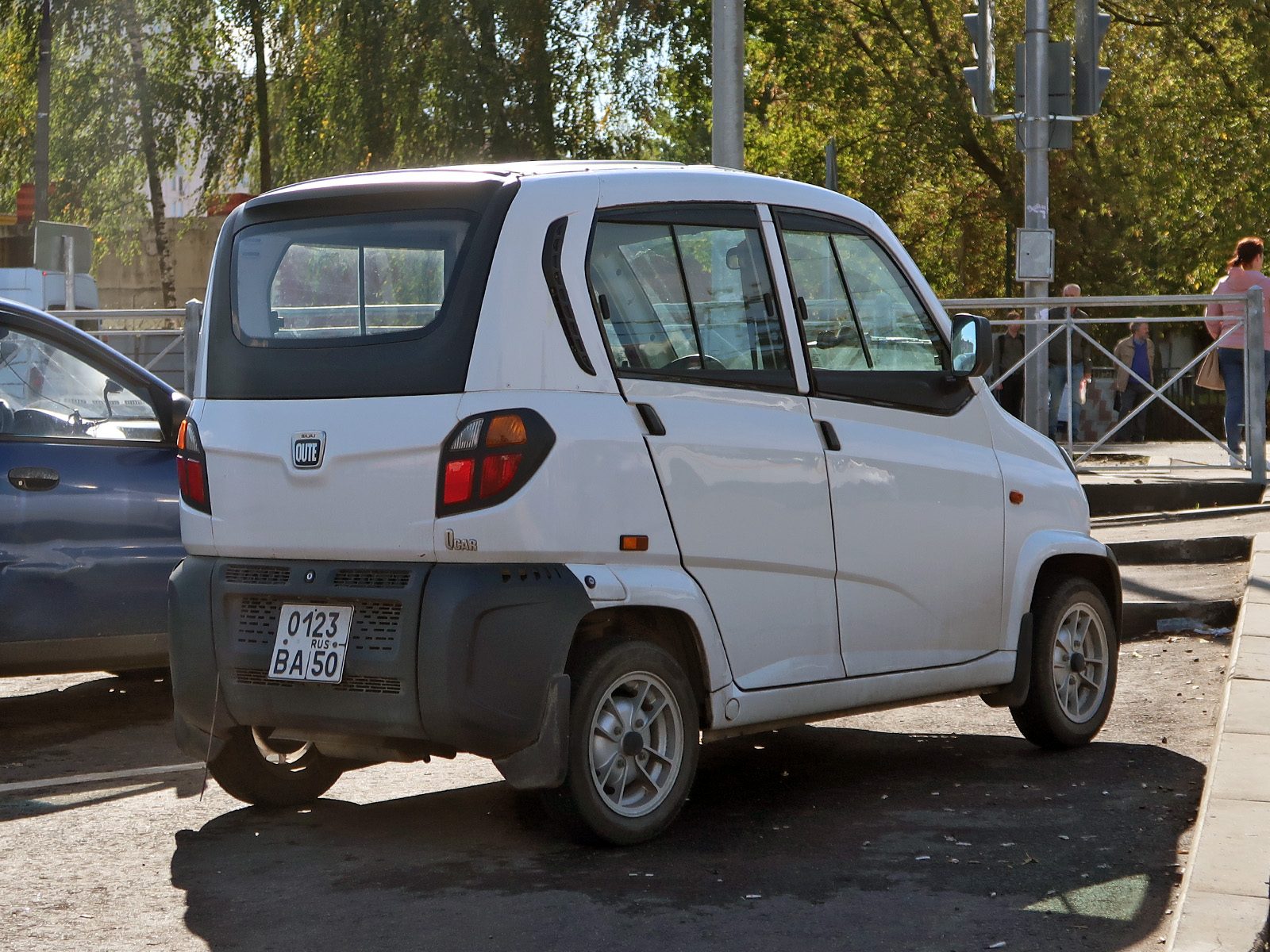
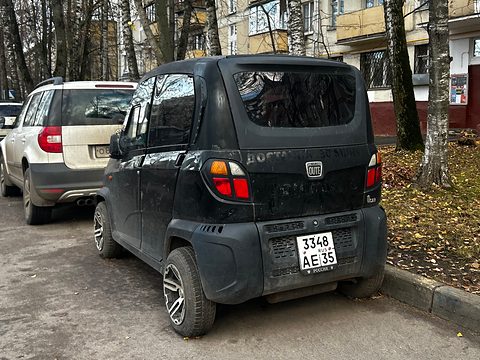
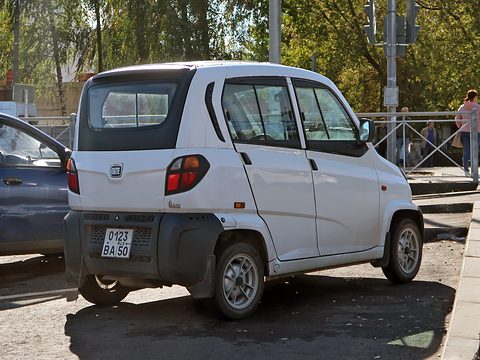
White tall tiny four-door car with a grey bumper and orange-trimmed lamps, parked beside a blue saloon.
A white Bajaj Qute with grey bumpers in a car park in Russia, one of the countries named for its exports, in September 2022.Photo: Южноуралец, CC BY 4.0, via Wikimedia Commons

Pictures

More photographs, old and new

Variants

One car, three fuels

The Qute family
VariantYearsWhat differsHow many
RE602012The Auto Expo show car; RE for rear engineShow car
Qute petrol2013–216.6 cc single on petrolNot found
Qute CNG2013–The same engine on compressed natural gasNot found
Qute LPGNot recordedThe same engine on liquefied petroleum gasNot found
Qute L7eNot recordedEuropean homologation as a heavy quadricycleNot found

Specification

The petrol Qute, from the two Wikipedia articles

Engine and drive

Engine and drive
EngineSingle-cylinder four-stroke, water-cooled, SOHC, multipoint injection, at the backsource 1source 2
Capacity216.6 cc (European figure); “217 cc” elsewheresource 1source 2
Power20 hp (15 kW)source 1German Wikipedia: 13.2 PS (9.71 kW), and 20 PS (14.71 kW) for another version
FuelPetrol, CNG or LPGsource 1source 2
GearboxFive-speed sequential, of the motorcycle type, plus reversesource 1source 2

Body and chassis

Body and chassis
Seats4source 1source 2
BrakesDiscs in front, drums behindsource 2
Turning3.5 m radiussource 17 m by German Wikipedia, perhaps the circle rather than the radius
SafetyNo airbags; belts without pre-tensioners (European car, 2016)source 1source 2

Dimensions

Dimensions
Length2,752 mmsource 1source 2
Width1,312 mmsource 1source 2
Height1,652 mmsource 1source 2
Wheelbase1,952 mmsource 11,925 mm by German Wikipedia; one of the two is probably transposed
Kerb weight400 kgsource 1450 kg by German Wikipedia

Performance and running

Performance and running
Top speed70 km/h, electronically limitedsource 1source 2
Consumption35 km a litre claimed at launchsource 136 km a litre (2.8 litres per 100 km) by German Wikipedia
Price new₹1.25–2.5 lakh in India, across yearssource 1; about €6,600 online in the EU, 2018source 2

Famous for

Three points

  1. A class of its own

    India created the quadricycle class for it in May 2013, with a limit of 70 km/h and commercial use only.

  2. A motorcycle-type gearbox

    Five sequential speeds and a reverse, from the world’s biggest rickshaw maker.

  3. Six years in court

    Legal and safety objections kept it off Indian roads until 2019, when six states approved it.

On screen

Confirmed appearances only

Survivors and collecting

Today

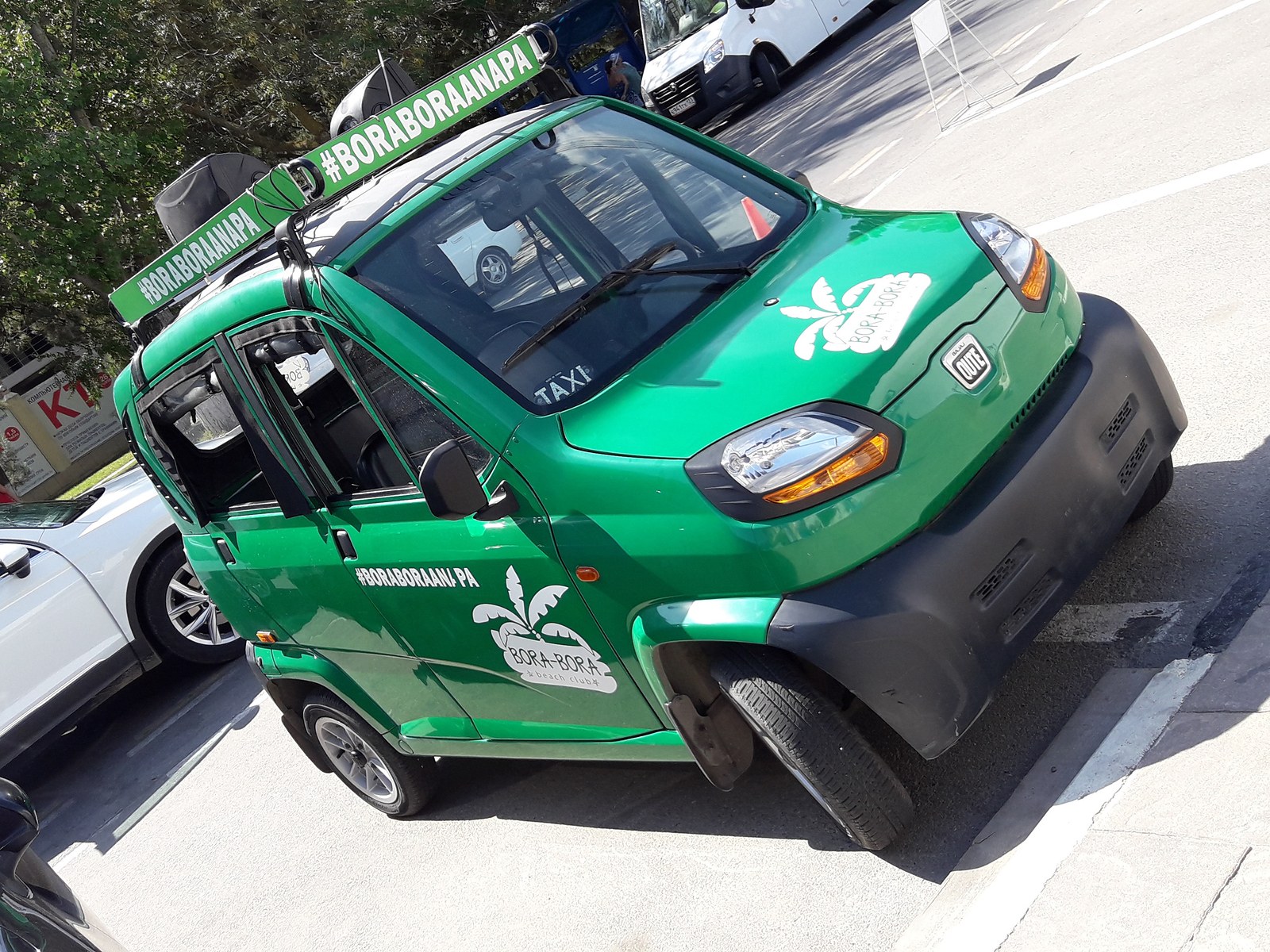
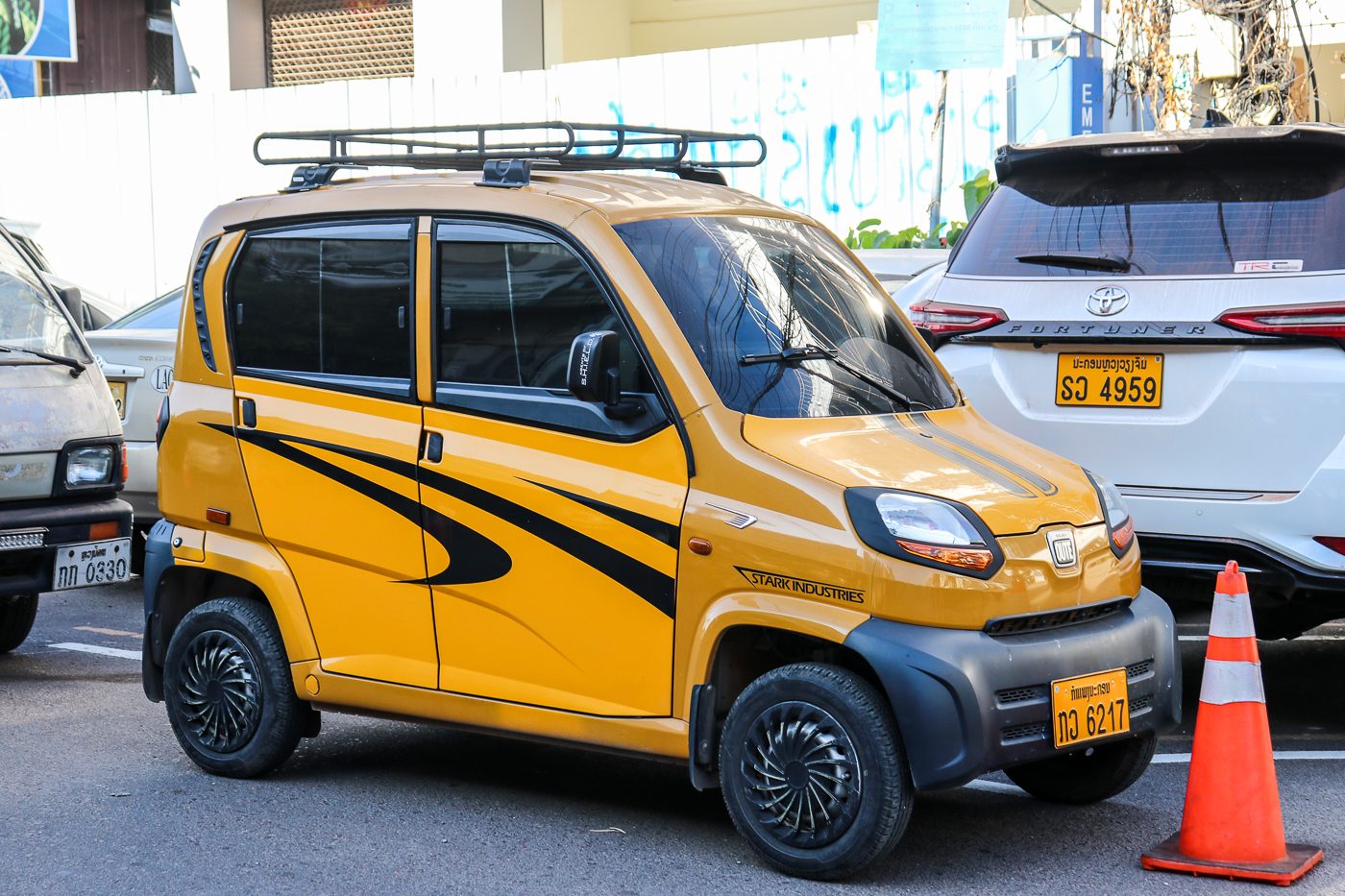
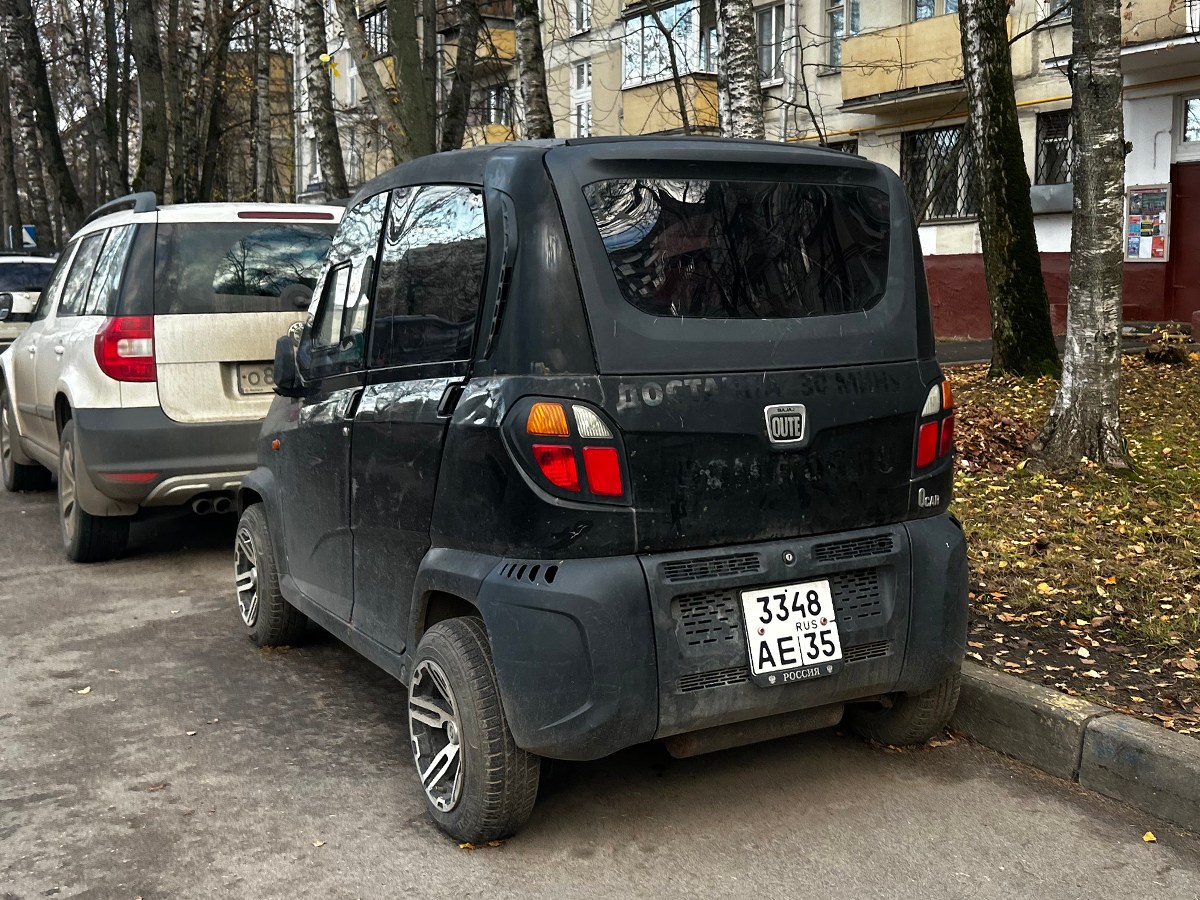
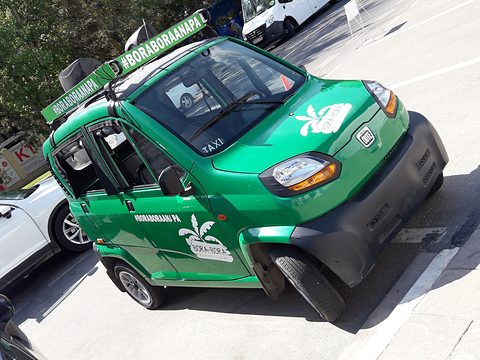
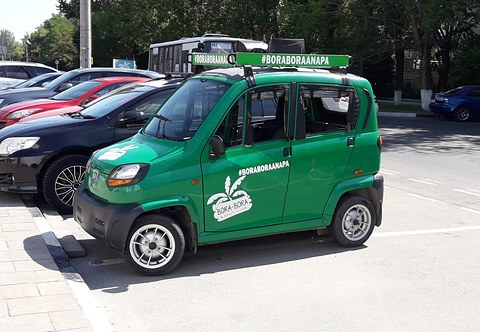
The Qute is a working vehicle of the present, and neither a club nor a sale at auction has been found. Qutes appear in photographs at work as auto-rickshaws and taxis in Mumbai and Bengaluru, at a beach club in Anapa, Russia, and in Vientiane, Laos.

Side view of a green tiny four-door car with white palm-tree graphics and a roof sign, parked by other cars.
A green Bajaj Qute in the livery of the Bora-Bora beach club, with a roof sign, in Anapa, Russia, in August 2019.Photo: Georg Pik, CC0, via Wikimedia Commons

Sources

Numbered as in the text

No Bajaj literature, road test or Euro NCAP report has been found: the account rests on the English and German Wikipedia articles, which agree on most of the history and differ on several figures. Sources are given as plain text; the links are on the Credits page.

  1. English Wikipedia, Bajaj Qute. Used as a lead.
  2. German Wikipedia, Bajaj Qute. Used as a lead.