The story
History
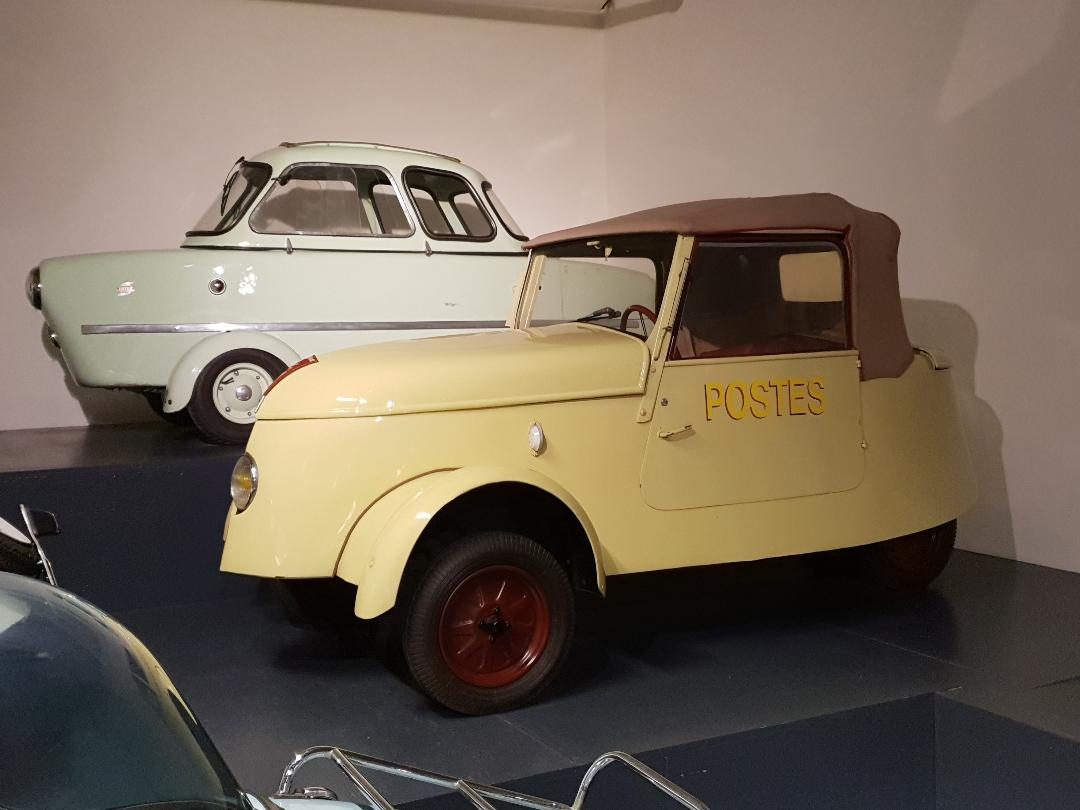
Starting an Inter was a small performance. The driver pulled a lever on the floor, an electric motor spun a flywheel up to speed with a rising whine, and when the lever was slammed down a clutch handed the flywheel’s energy to the engine.source 1source 2 The device was a Westinghouse Gyrostarter, an inertia starter of the helicopter type, and it ran off a 6 V motorcycle battery in the tail.source 1source 2source 3 If the engine did not fire, Richard Dredge writes, “by the time you’d repeated the process three or four times, the battery would be flat and you’d be stuck”.source 3 The same starter went into another French three-wheeler of the decade, the fibreglass P. Vallée Chantecler from Blois, whose owners had to hold the lever up for at least ten seconds.source 4
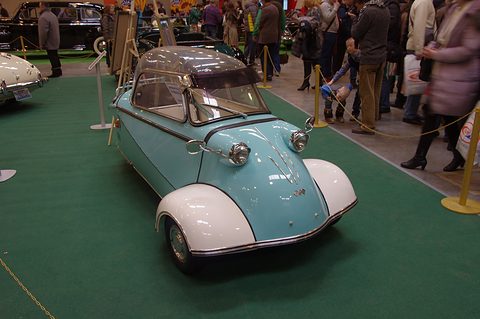
The car was built by an aircraft maker. In the early 1950s SNCAN, the Société Nationale de Constructions Aéronautiques du Nord, began work on an unorthodox “auto-scooter” designed on aeronautical principles, which the Weiner museum calls a kindred spirit of the Messerschmitt KR175.source 1 It was built in SNCAN’s works at Lyon and designed and sold by the Ateliers Électro-Mécaniques de la Seine, AEMS, of Saint-Ouen, a name the German Wikipedia and RM spell Électromagnétiques.source 1source 5source 2source 6 Dredge says SNCAN later became part of Aérospatiale.source 3 SNCAN was a nationalised aircraft maker, which puts the Inter among the aircraft makers’ microcars.source 1source 5source 2
A fuselage for two
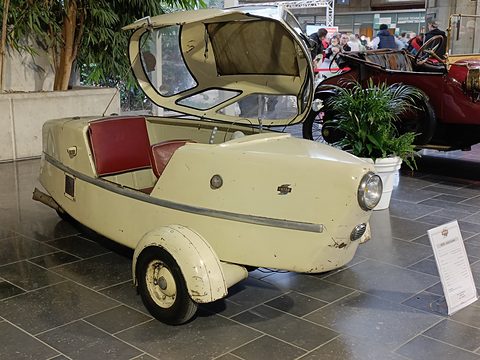
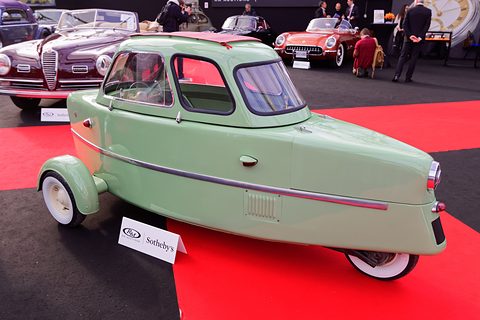
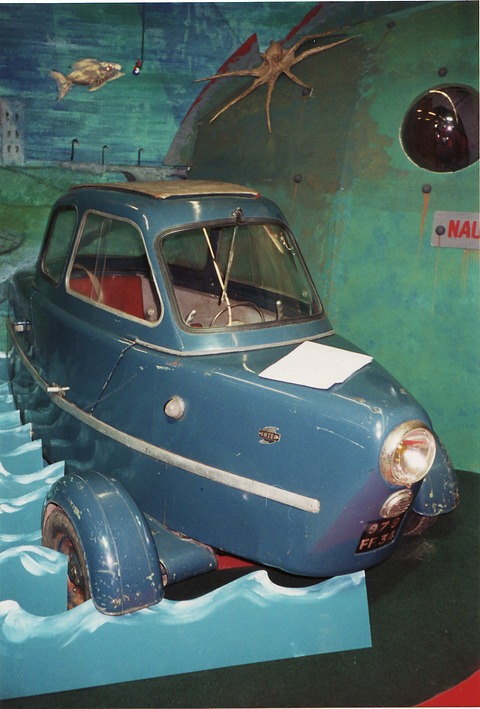
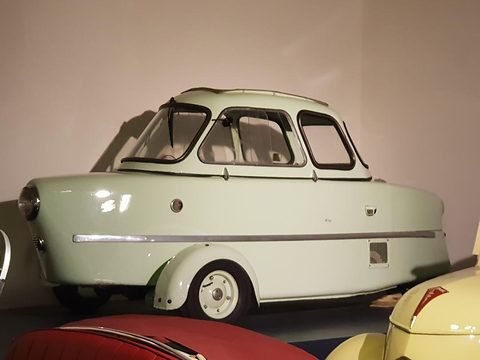
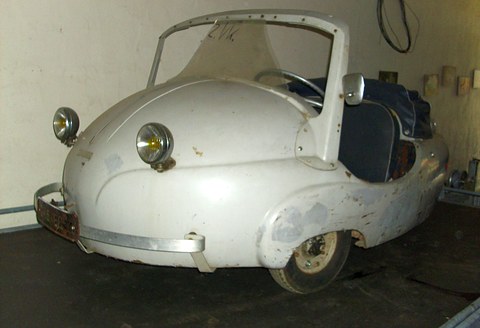
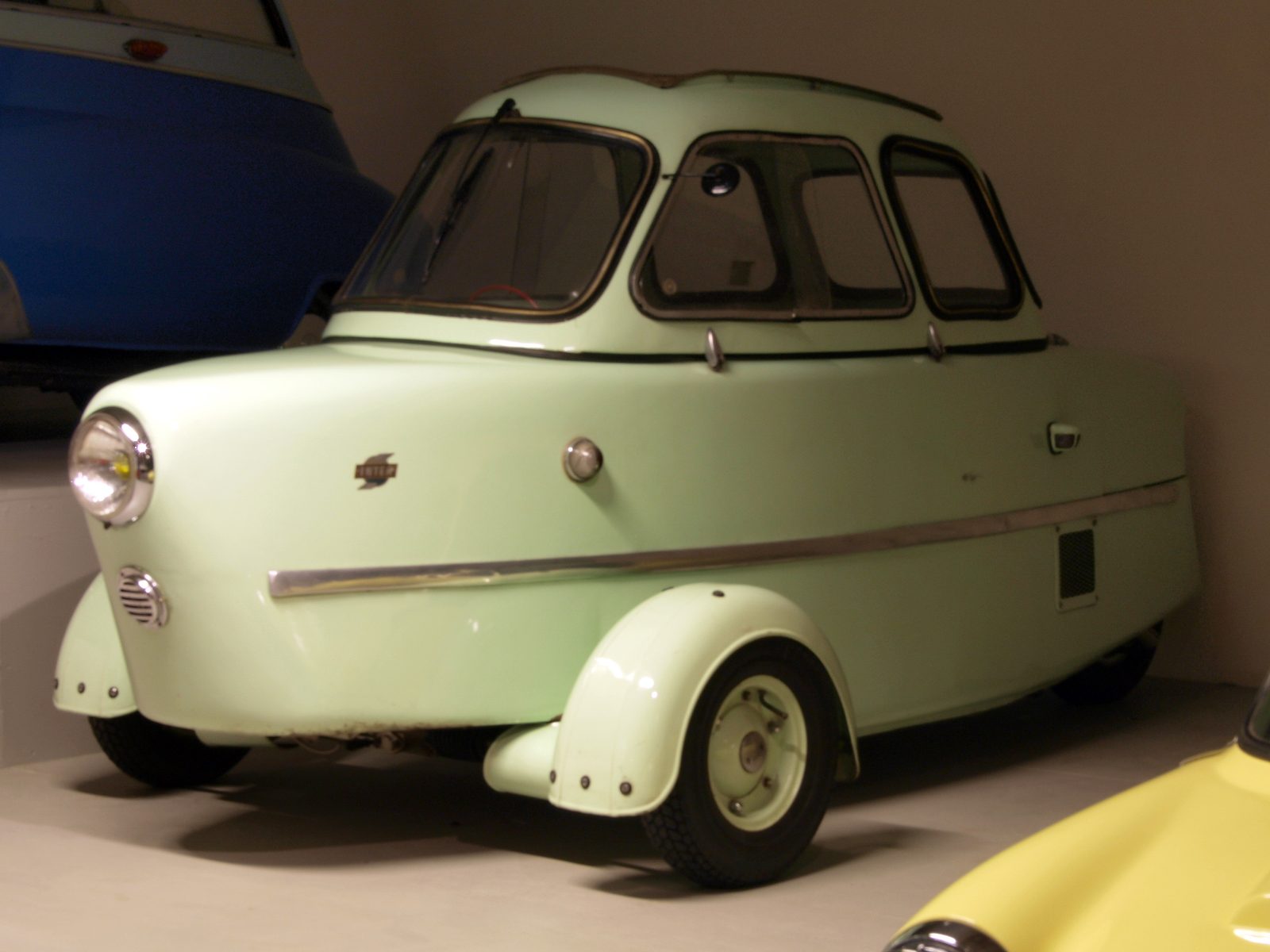
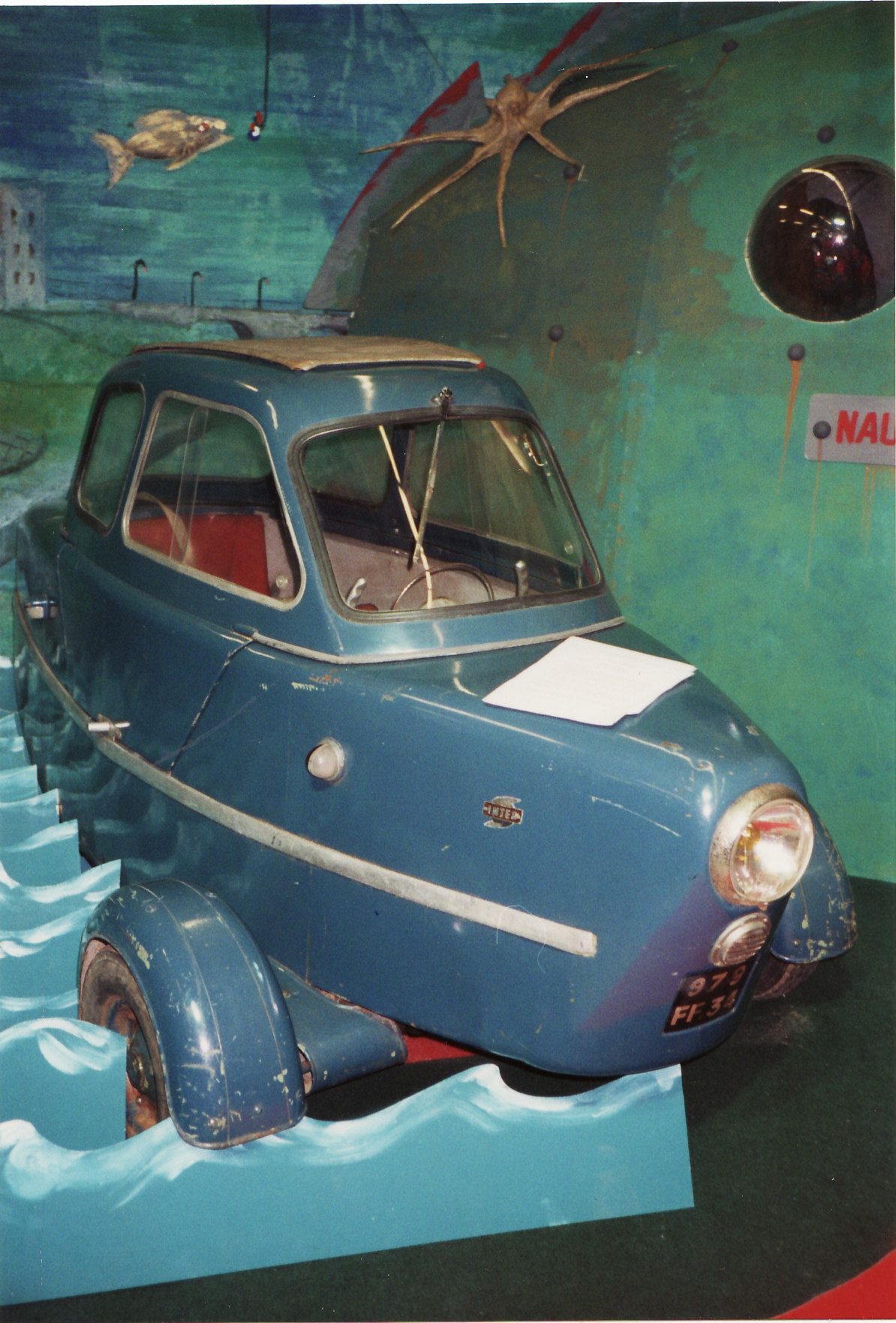
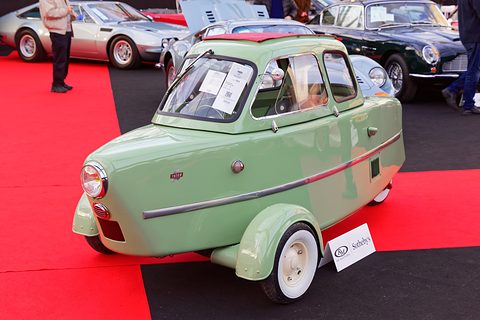
AEMS introduced the Inter at the Paris Salon in the autumn of 1953.source 1source 2 Period publicity photographs show three versions differing only in their canopies, and RM says the three styles on show included a convertible; the one that went into production was the Berline, with its domed roof and skylight.source 1source 5 An open Torpedo was designed, but the Weiner museum says that few if any were made. Dredge, however, illustrates one: the fifth car off the production line, thought to be the only surviving Torpedo, with no weather equipment beyond an aeroscreen.source 1source 3 A single-seater was rumoured, without evidence.source 1
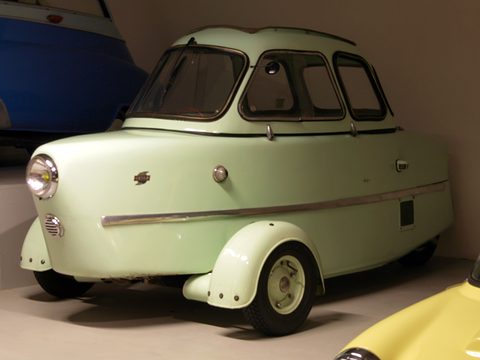
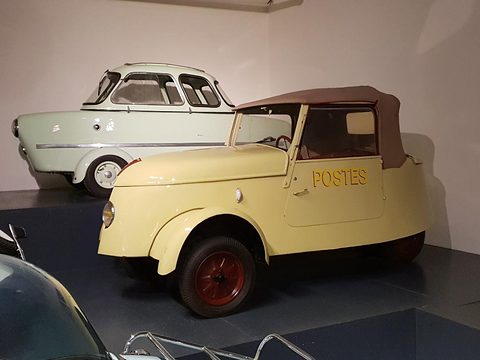
The Berline is a bubble car, the Messerschmitt’s kindred spirit, and a three-wheeler with two steered wheels in front and one driven wheel behind.source 5source 6 Two people sat in tandem under a canopy hinged at the side, on the left by the Weiner museum’s account.source 1source 5 The pointed nose carried a single central headlamp.source 1source 7 A 175 cc Ydral two-stroke single of 8 hp sat ahead of the rear wheel, with a chain to drive it and three speeds and reverse, and gave about 80 km/h (50 mph). Changing gear took a knack: the lever had to move sideways through a stop between each gear.source 1source 5source 2source 3
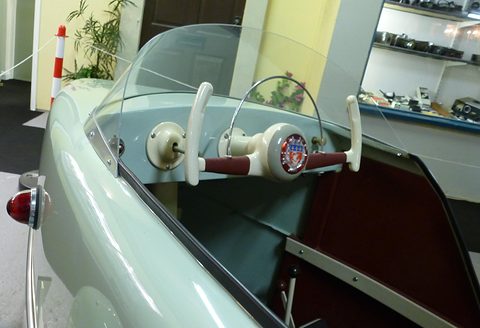
The steering bar with its vertical grips, was even more aircraft-like than the Messerschmitt, as was the pointed ‘fuselage’.
The early cars had another trick. Their front wheels were carried on outriggers that folded forwards under the car, taking the width from 1.35 m (4 ft 5 in) to about 0.9 m (3 ft). RM puts it as some 18 in less, to just 36 in.source 1source 5source 3 The Reyonnah, whose prototype dates from 1947, had front wheels that folded too.source 8 The feature was dropped on later cars, and RM says the majority were built with fixed suspension.source 1source 5source 3
Unreliable and costly
Dredge counts about 300 made “officially” between 1954 and 1956. The last series cars came in the autumn of 1956, but a few were still being assembled until late 1958.source 3source 1 Two things finished it, in his account. One was its name for unreliability, which came mostly from the starter; Ydral, he says, took Westinghouse to court over its quality. The other was cost, because so many parts were unique to the car.source 3 Where it could, it borrowed: engine-cover hinges and a brake master cylinder from Renault, the wheels of the Lambretta LD scooter, a standard 7-inch headlamp and the trim strips on its flanks from a Panhard of the day.source 3
Designed for urban commuters, the Autoscooter was unreliable and costly, yet 300 people bought one.
It is said that no two Inters are identical.source 5source 2 What became of AEMS has not been found.