microcarfan
  • Bubble car
  • Britain
  • Three or four wheels
  • Built under licence

Nobel 200

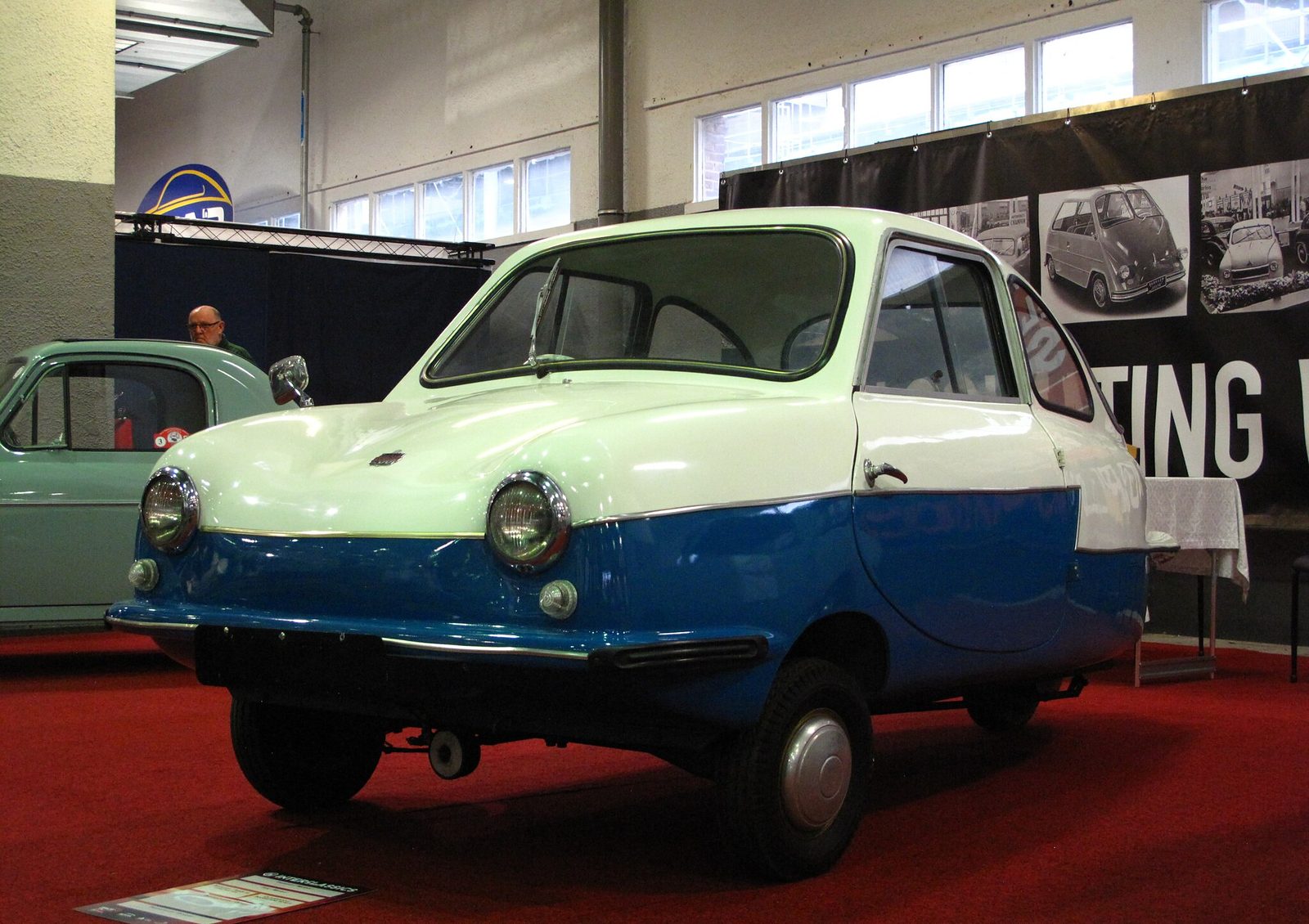
A German bubble car rebuilt by the British aircraft industry: Short Brothers assembled it in Northern Ireland, the Bristol Aeroplane Company moulded its body, a carpet magnate chaired the company, and a Formula One world champion called himself its tea-boy.

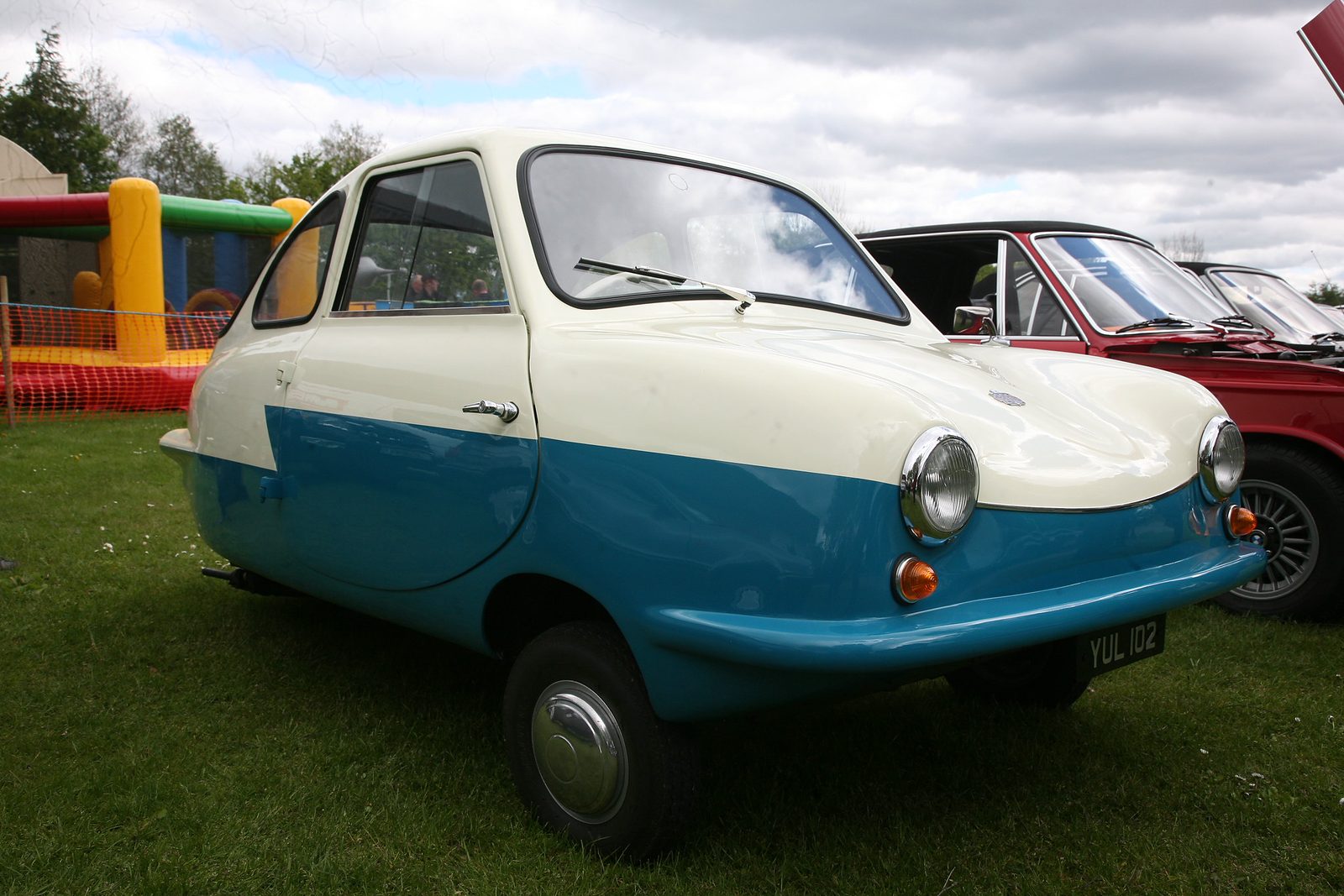
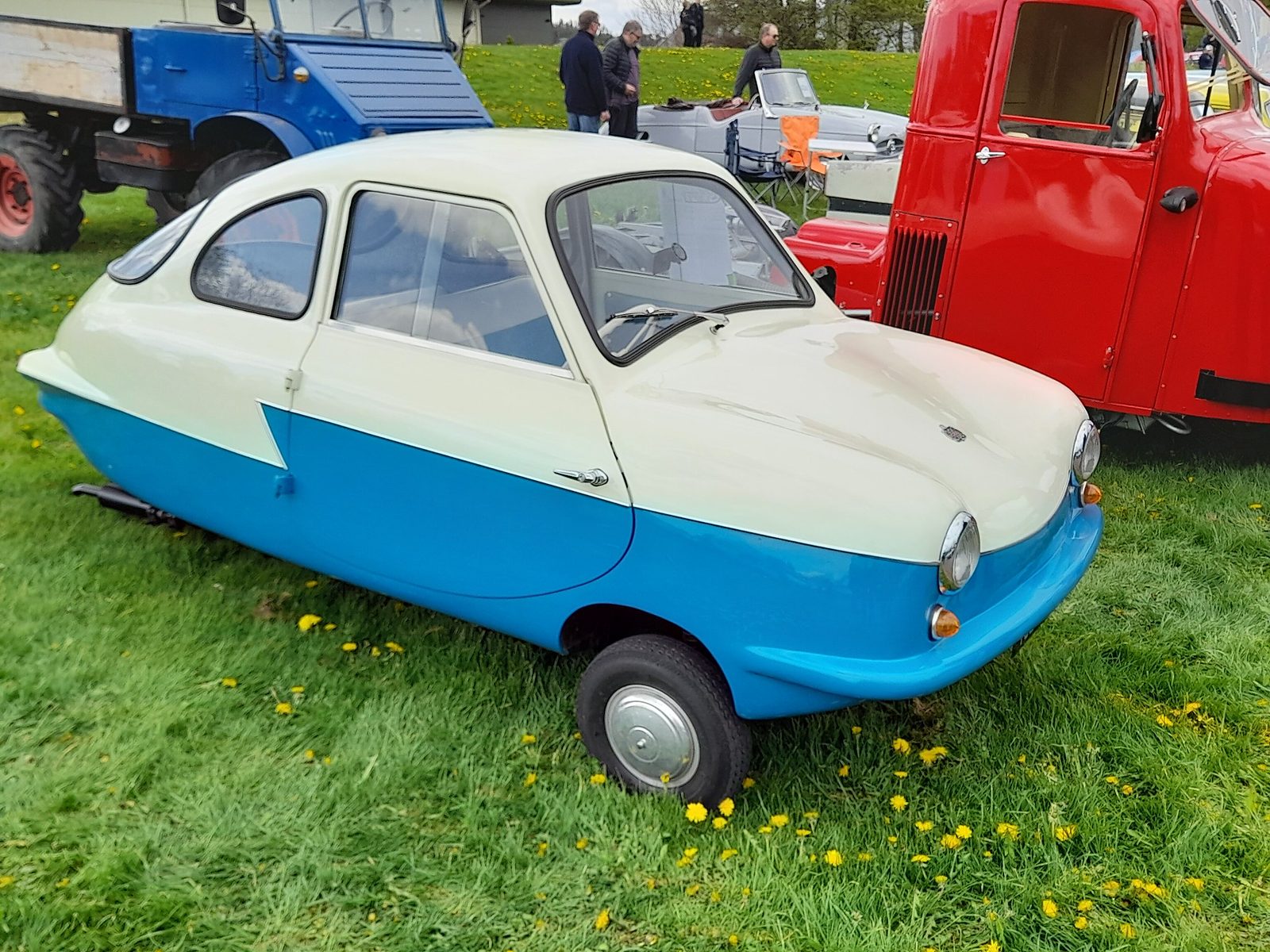
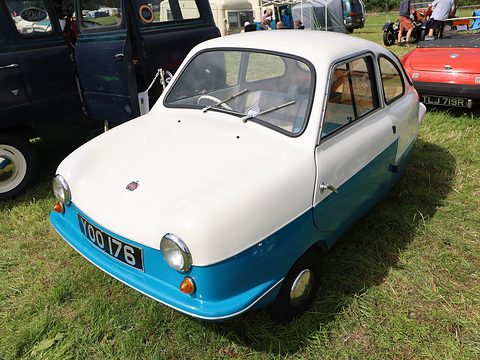
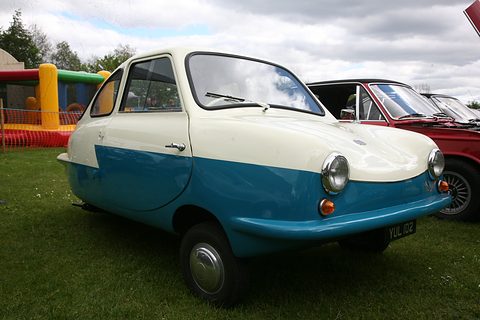
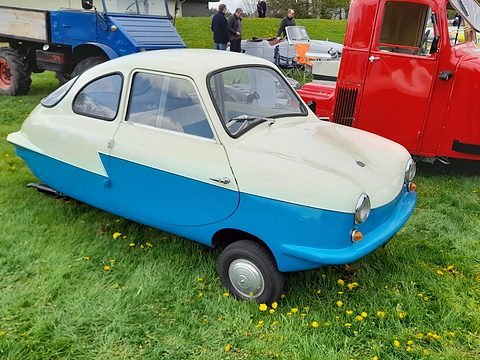
White over blue microcar parked on grass, other classic cars and visitors behind.
A white and blue Nobel 200 on grass at a show in 2023.Photo: Geni, CC BY-SA 4.0, via Wikimedia Commons

At a glance

The spec plate

Nobel 200

200 saloon · Northern Ireland

Built
1958–⁠1962Shown in 1958; assembled from February 1959
Country
BritainAssembled by Short Brothers & Harland at Newtownards, Northern Ireland
Maker
York Noble Industries LtdChairman Cyril Lord; under licence from Fuldamobil
Engine
191 cc Fichtel & Sachs two-stroke singleAt the back; reverse worked electrically
Power
10 PSAbout 7.4 kW; 9.5 hp by RM
Length
3,200 mm1,397 mm wide, 1,295 mm high
Weight
305 kg672 lb
Seats
2With occasional room behind
Wheels
3Two at the front, one at the back; four-wheelers have a narrow rear pair
Price new
£317Before purchase tax, February 1959
Production
about 1,000Only about 400 by January 1960, by chassis numbers

Not yet recordedtop speed.

How big is it?

True proportion

3.20 m

It is 230 mm longer than a Fiat 500, about 1.8 adults laid end to end.

  • 1.40 m wide
  • 305 kg: about four adults
Drawn at true proportion. The track is 3.6 metres long; the adult stands at the same scale. The Peel P50 is the smallest production car, on every page for comparison.

The story

History

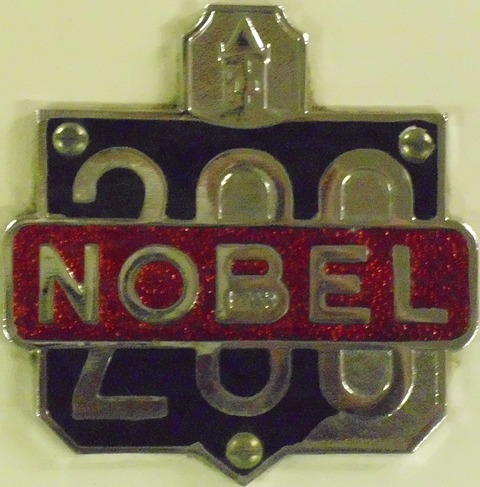
The badge says Nobel, not Noble, though the man behind it was York Noble, the adopted name of the Vienna-born Jakob Knoblauch.source 1source 2 In May 1956 he set up Noble Motors as the British importer of the Heinkel Kabine, and from July that year it sold the cars from 211 Piccadilly.source 1source 3 When Heinkel’s production moved to Dundalk in 1958, on its way to becoming the Trojan 200, Noble needed something else to sell.source 1source 4 He had already formed York Noble Industries in December 1957.source 1

In June 1958 the company announced the Nobel 200 saloon and the 200 Vicky, a pick-up, as kits or complete cars. Both were redesigned versions of the Fuldamobil S‑7, entirely British-built except for the Sachs engine (see built under licence).source 1 Shortly before, Sir Matthew Slattery had sent a team from Short Brothers to see whether they could build it, and in September the carpet manufacturer Cyril Lord was named chairman and manufacture in Northern Ireland was announced.source 1source 2

Hawthorn’s tea-boy

That September Mike Hawthorn flagged away two Nobels on a promotional run called “By Bubble Car to Venice”. At the Paris show in October he was announced as the company’s Technical Director, beside two left-hand-drive four-wheeled saloons, one with a sunroof.source 1

Call me the outfit’s tea-boy.

Mike Hawthorn on being named Nobel’s Technical Director, Paris Motor Show, as reported in the Daily Herald, 7 October 1958.source 1

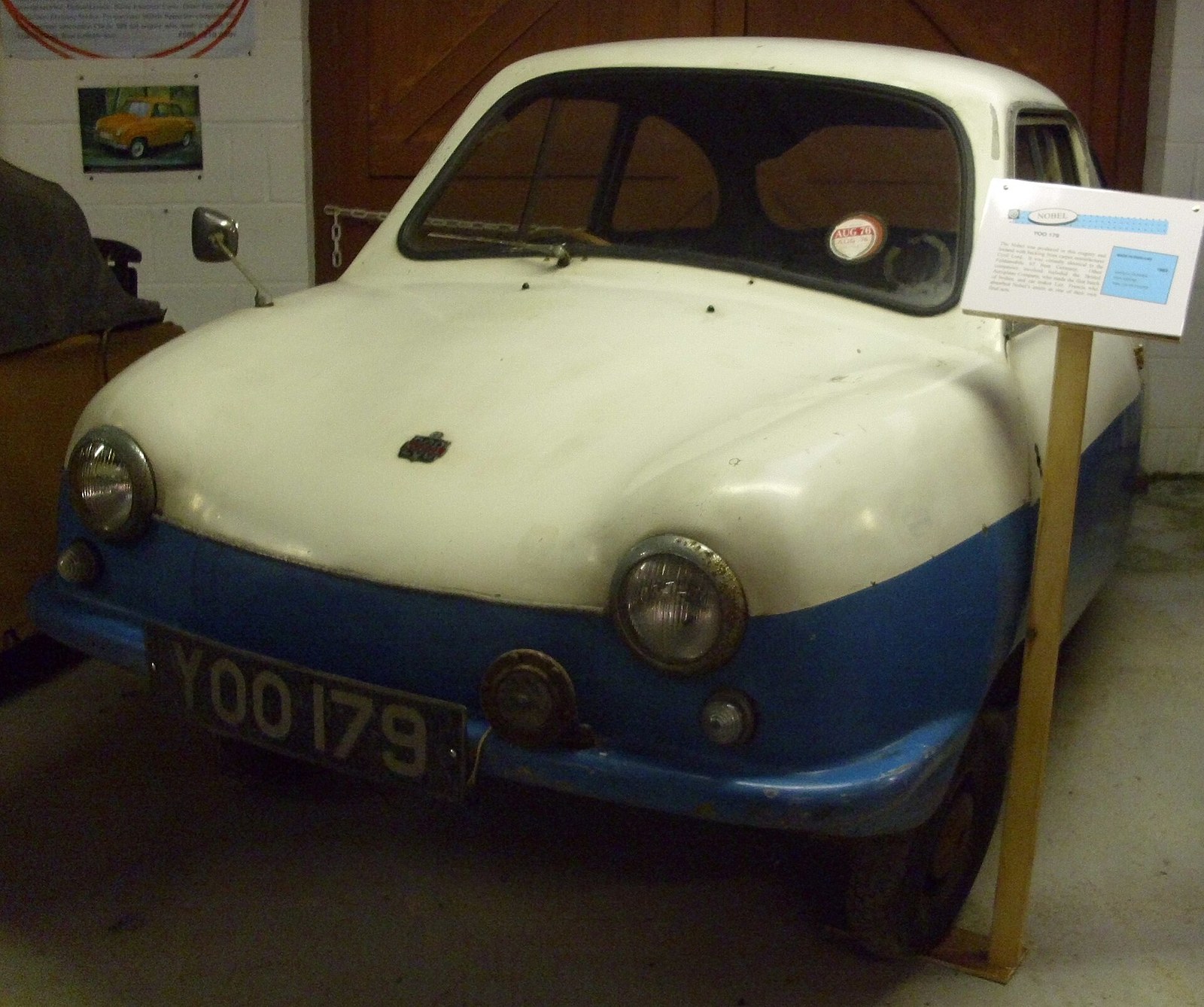
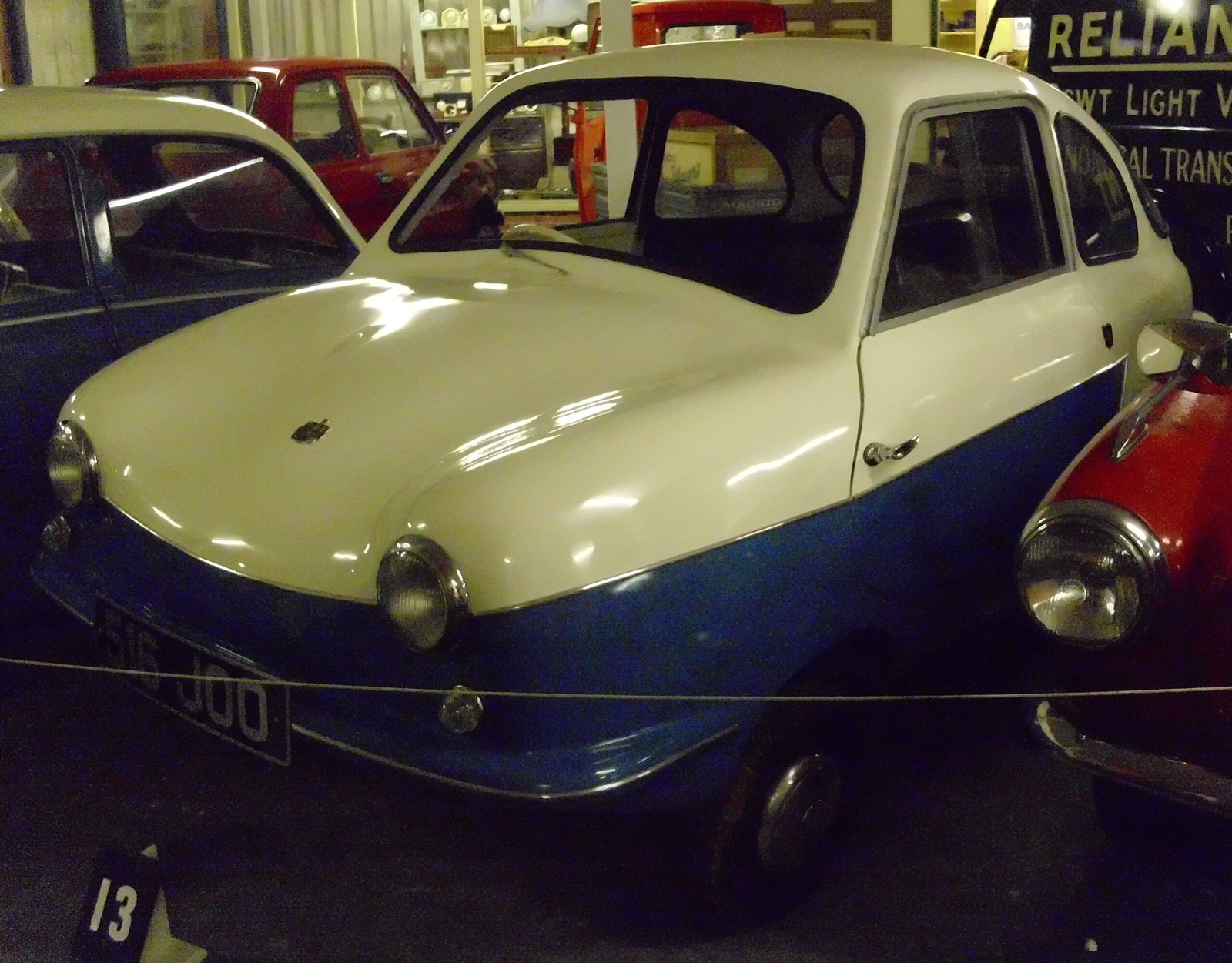
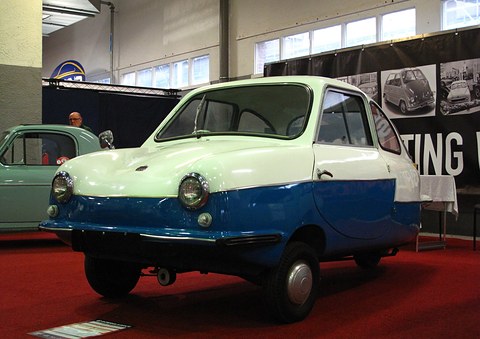
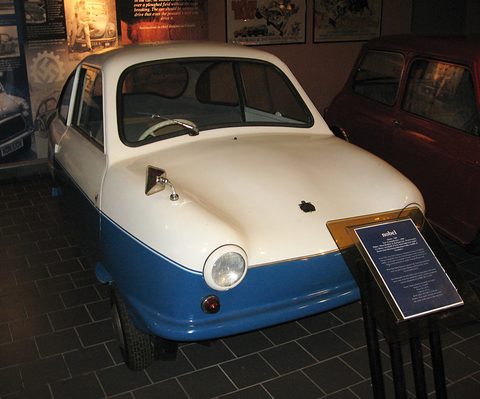
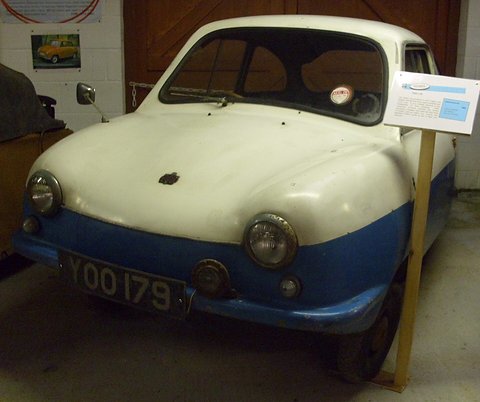
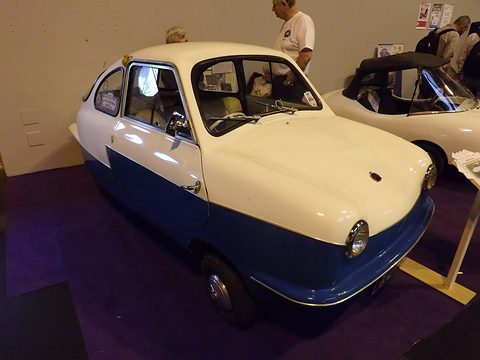
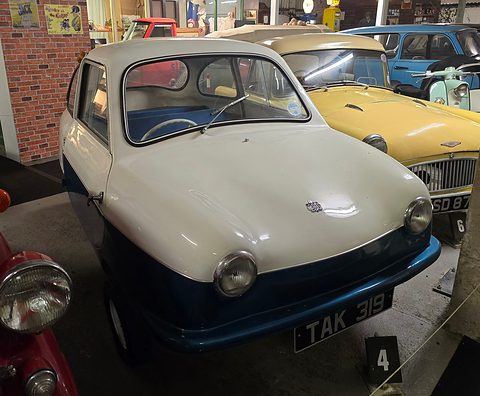
The car itself was spread across the country. Short Brothers & Harland assembled it at its Glen Works in Newtownards, and later at Queen’s Island in Belfast; the Bristol Aeroplane Company moulded the glass-fibre bodies at Coalpit Heath; Rubery Owen made the chassis; and Fichtel & Sachs sent the engines (see aircraft makers).source 1source 4 About 90 per cent of the parts were made somewhere other than the assembly plant.source 1 It was a 191 cc two-stroke bubble car, mostly a three-wheeler in Britain, with a four-speed gearbox and a reverse worked electrically.source 1source 2 Every production car was white, with peacock-blue lower panels.source 1

Problems from the start

The front brakes inherited from the Fuldamobil were faulty, and fixing them delayed production by months. Bristol tried high-pressure injection moulding for the bodies before going back to laying them up by hand, and self-coloured bodies were tried and dropped.source 1 Assembled saloons officially went into production in February 1959, with a capacity of 250 a week claimed; the Beaulieu Encyclopedia says 400 a week were planned.source 1source 2 At £317 before purchase tax it was, apart from the four-seat Reliant Regal, the dearest three-wheeler in Britain.source 1

The publicity ran ahead of the factory. The car was shown in London, Paris, Geneva and New York in 1959, and at New York 1,450 were said to have been sold, “a million dollars for Britain”; no exports to the United States are recorded. One kit went to New York in April 1959, and in May kits were said to be at least six months away.source 1 RM’s catalogue adds that Princess Soraya, the former Queen of Iran, was appointed a co-director, which no other source read confirms.source 4

The end in Northern Ireland

Bristol tried to raise its price for the bodies, and shipping engines and chassis to Northern Ireland and the finished cars back again made the whole arrangement untenable. On 4 August 1959 it was announced that Shorts would stop after the first 1,500 cars. Days later Shorts’ workers struck over redundancies, the Northern Ireland Labour Party took up the Nobel, and it called for the Stormont parliament to be recalled.source 1 Cyril Lord announced talks with English firms and said that Fairey Aviation, at Heaton Chapel in Stockport, would make a Nobel utility and a sports convertible; nothing came of it in the sources read. RM says Shorts sold the moulds late in 1959.source 1source 4 By January 1960 the chassis numbers had reached only about 400.source 1

An open Nobletta appeared in 1960, the company merged with Lea-Francis in 1961, and production ended in 1962; where those last cars were made is not known.source 2source 1 In Chile, Autos Nobel Sud Americana built similar cars as the Nobel Chile.source 2 The York Noble group was struck off in 1969.source 5
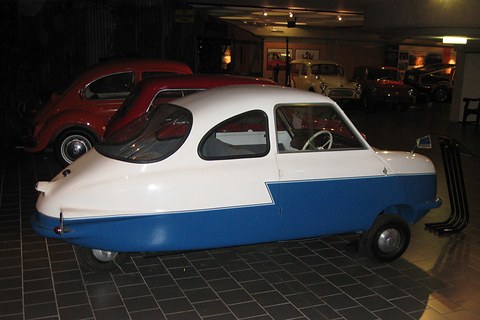
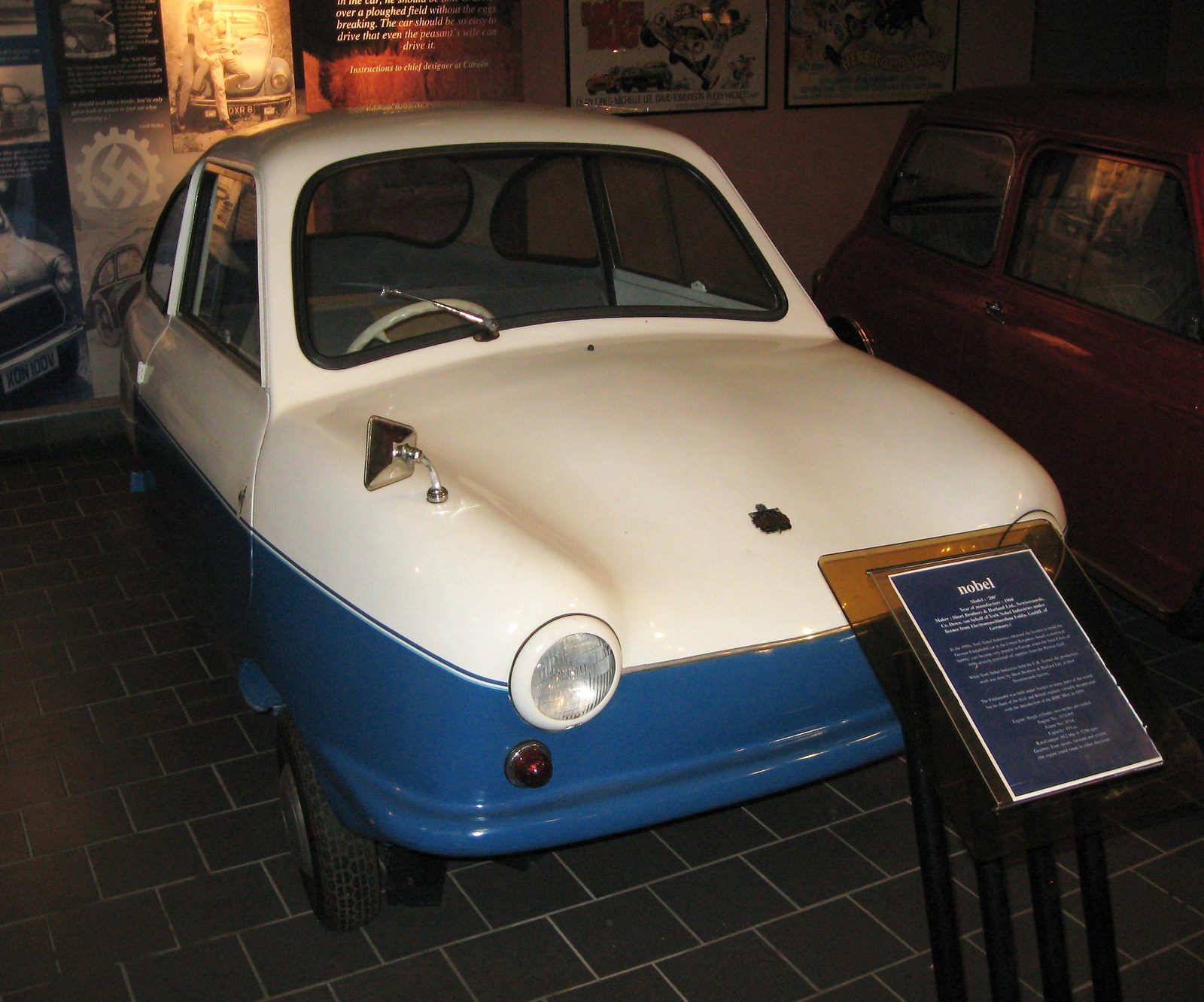
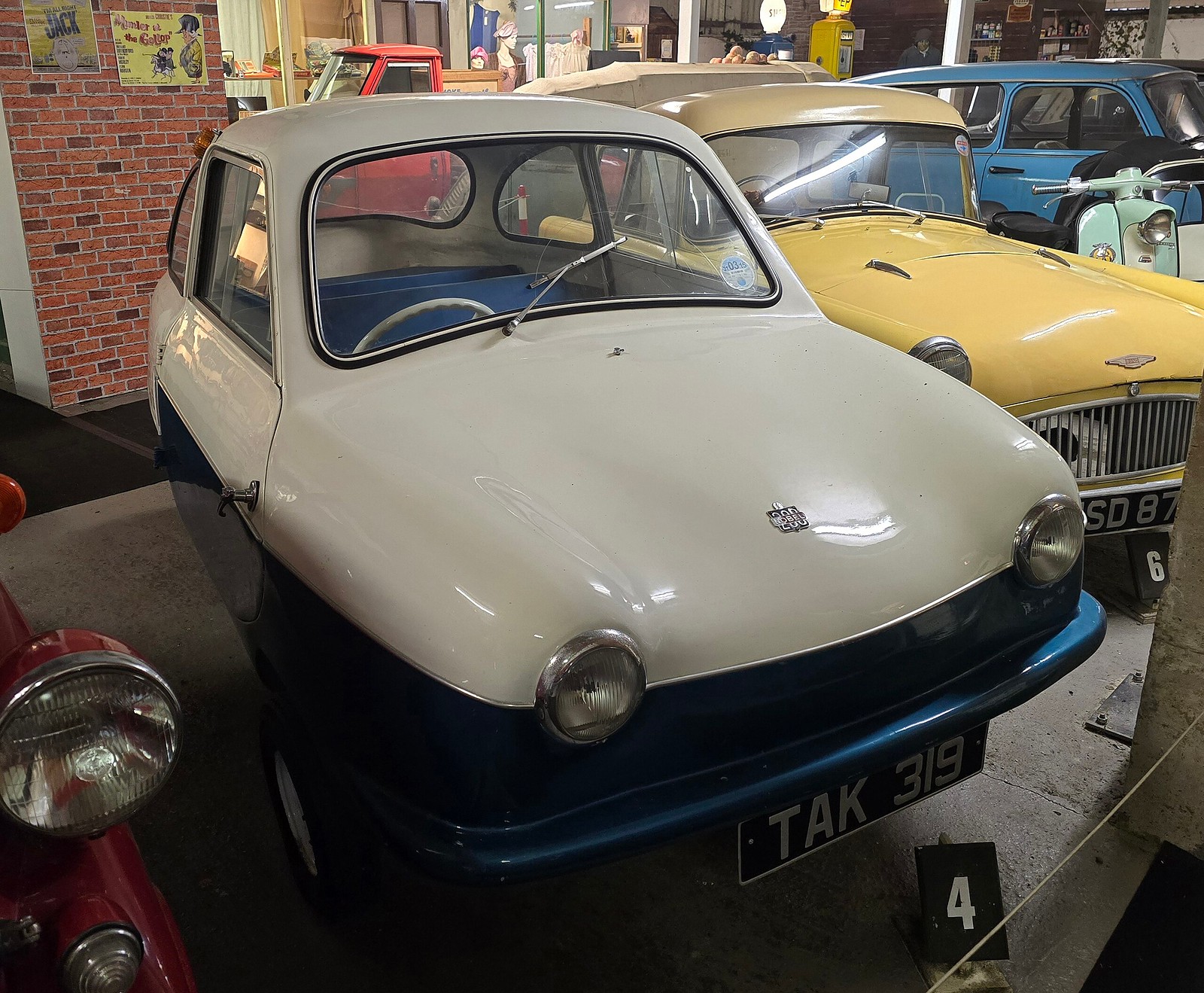
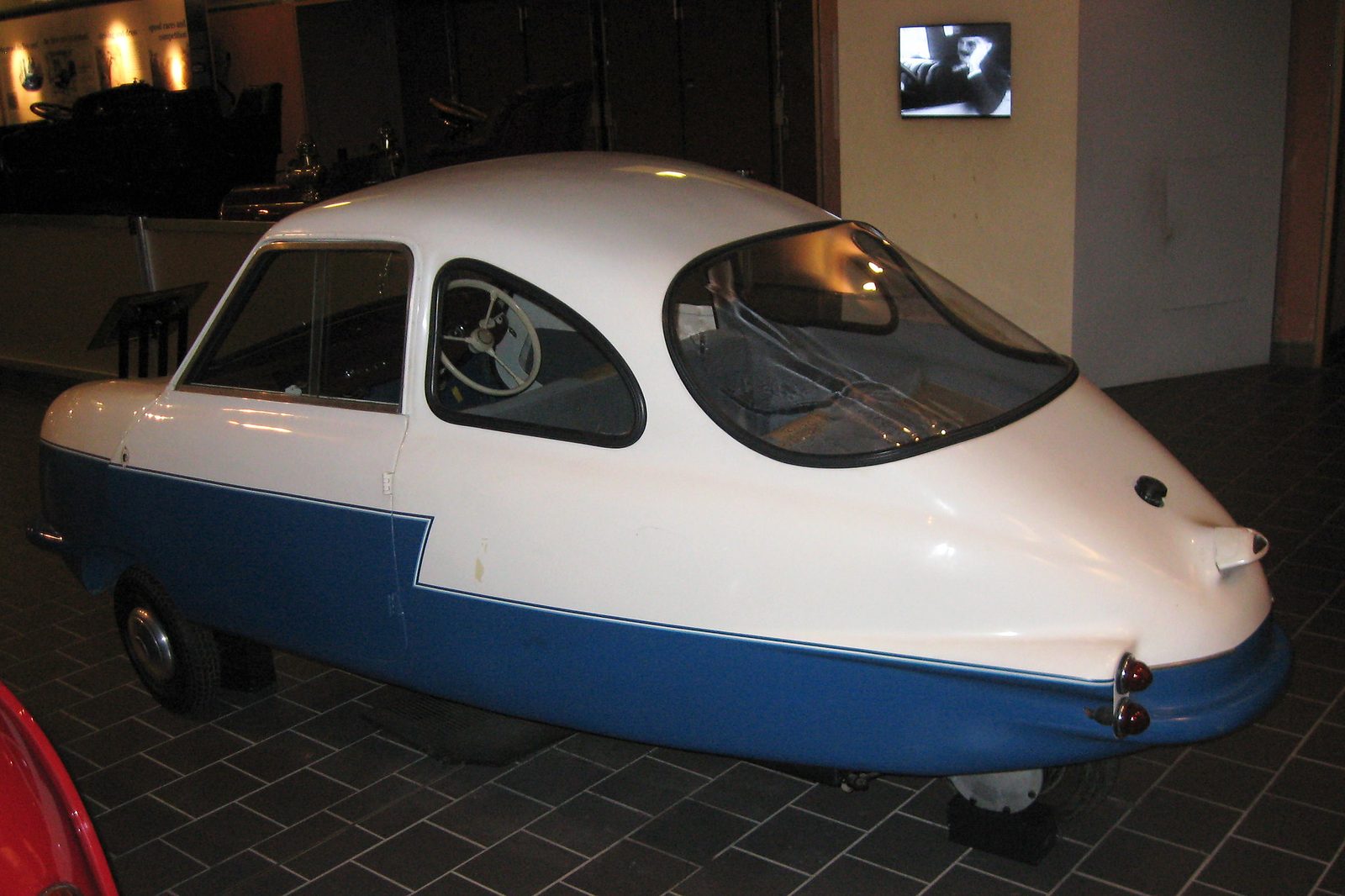
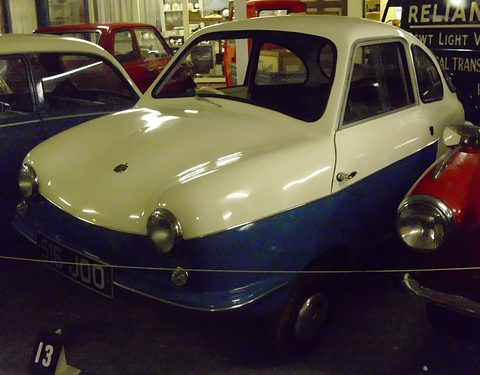
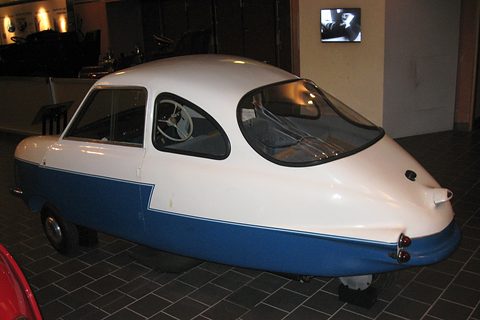
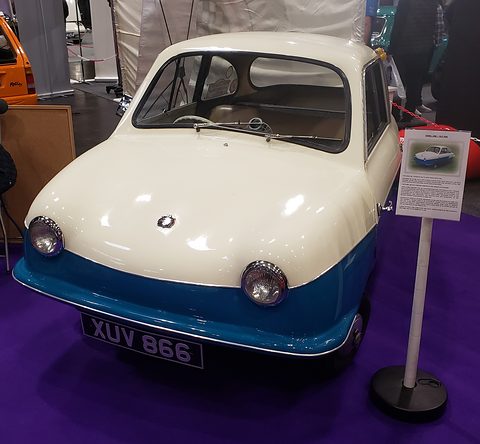
White over blue three-wheeler with bubble rear window, in a dark showroom.
Side profile of a 1960 Nobel 200 in a museum, showing its stepped waistline.Photo: Andrew Bone, CC BY 2.0, via Flickr
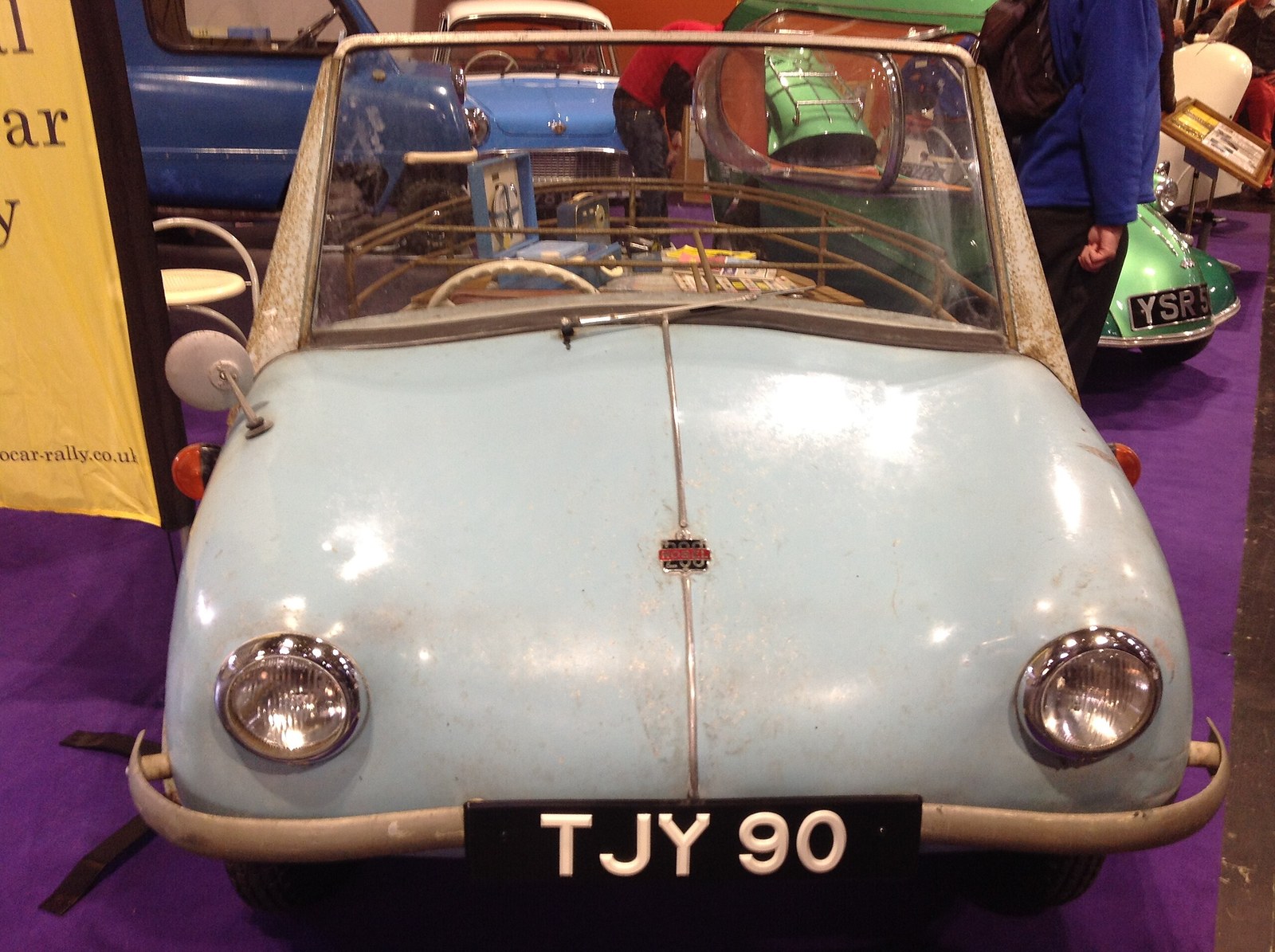
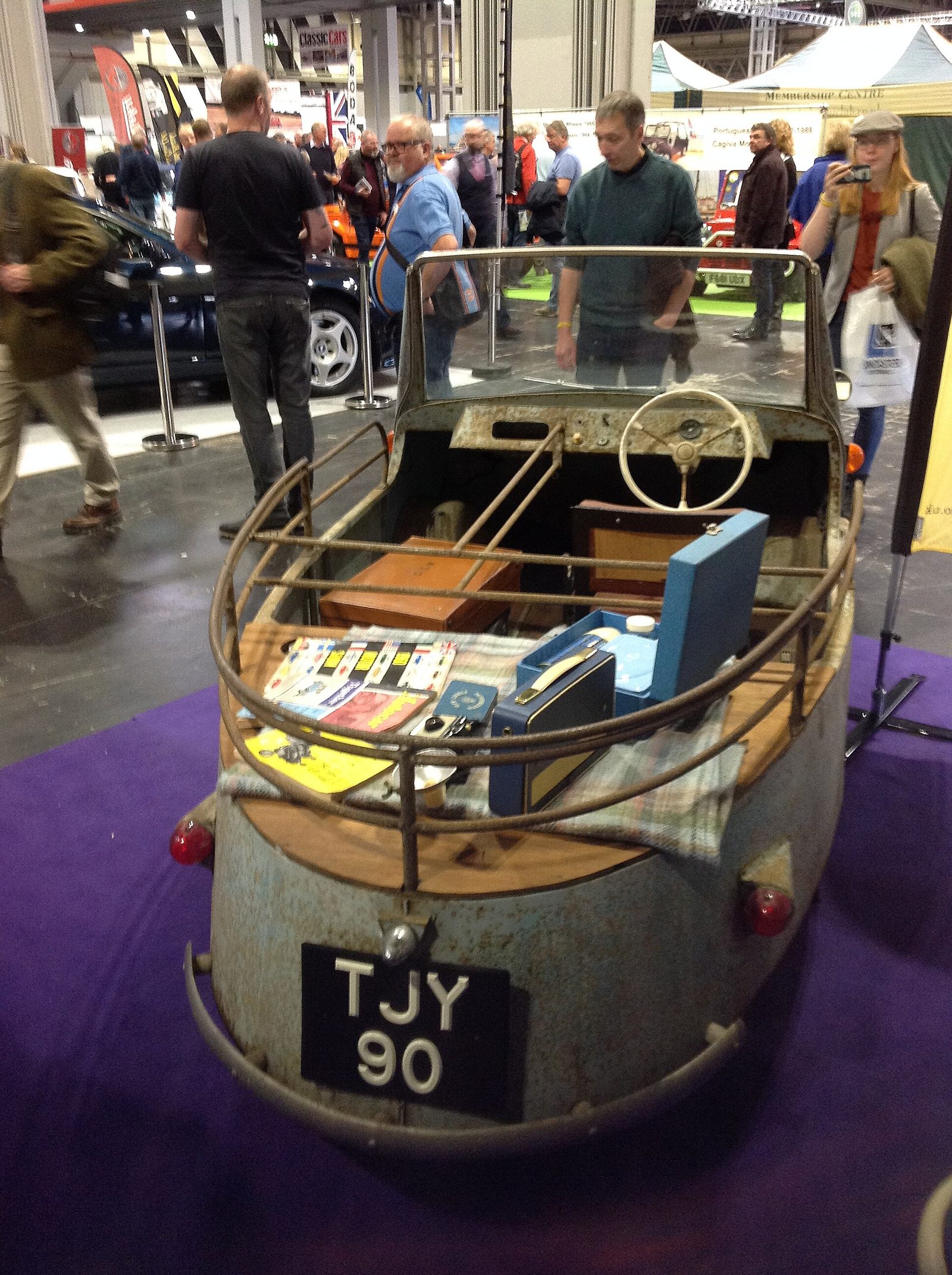
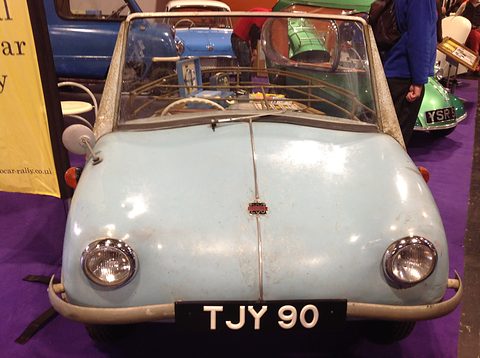
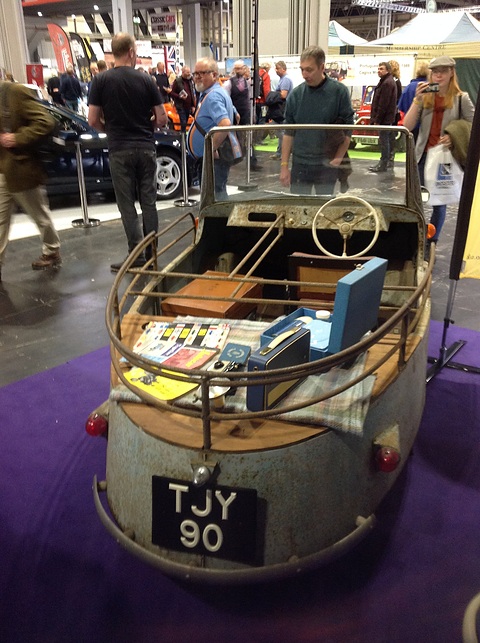
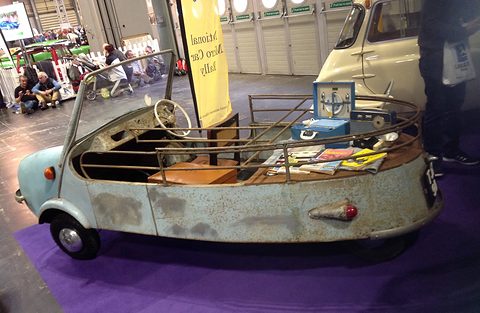
Long open pale blue body with chrome rails, steering wheel and a load bed of papers, on purple carpet.
The 200 Vicky, the pick-up version, unrestored: its canvas top and sides could come off.Photo: Andrew Bone from Weymouth, England, CC BY 2.0, via Wikimedia Commons
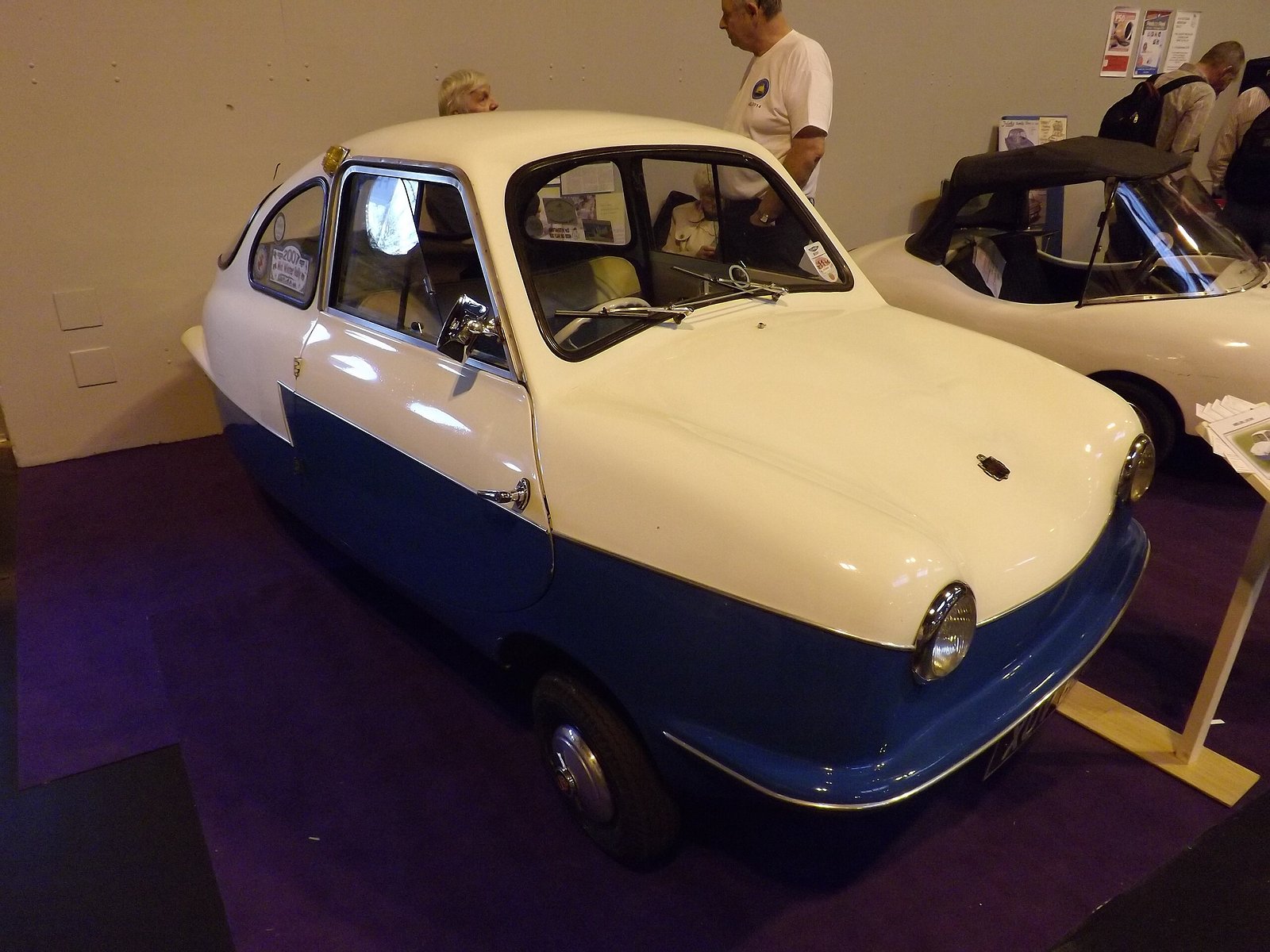
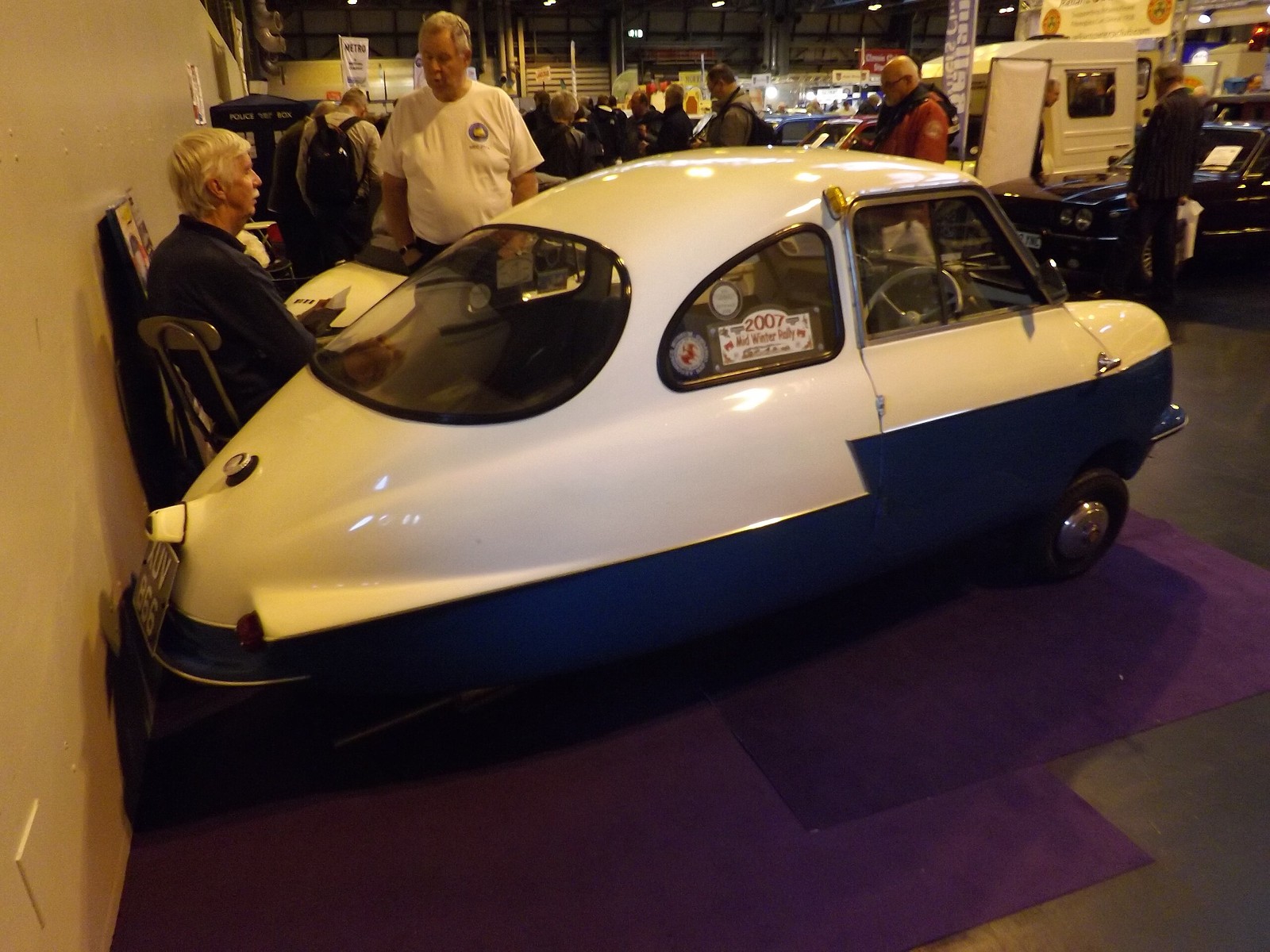
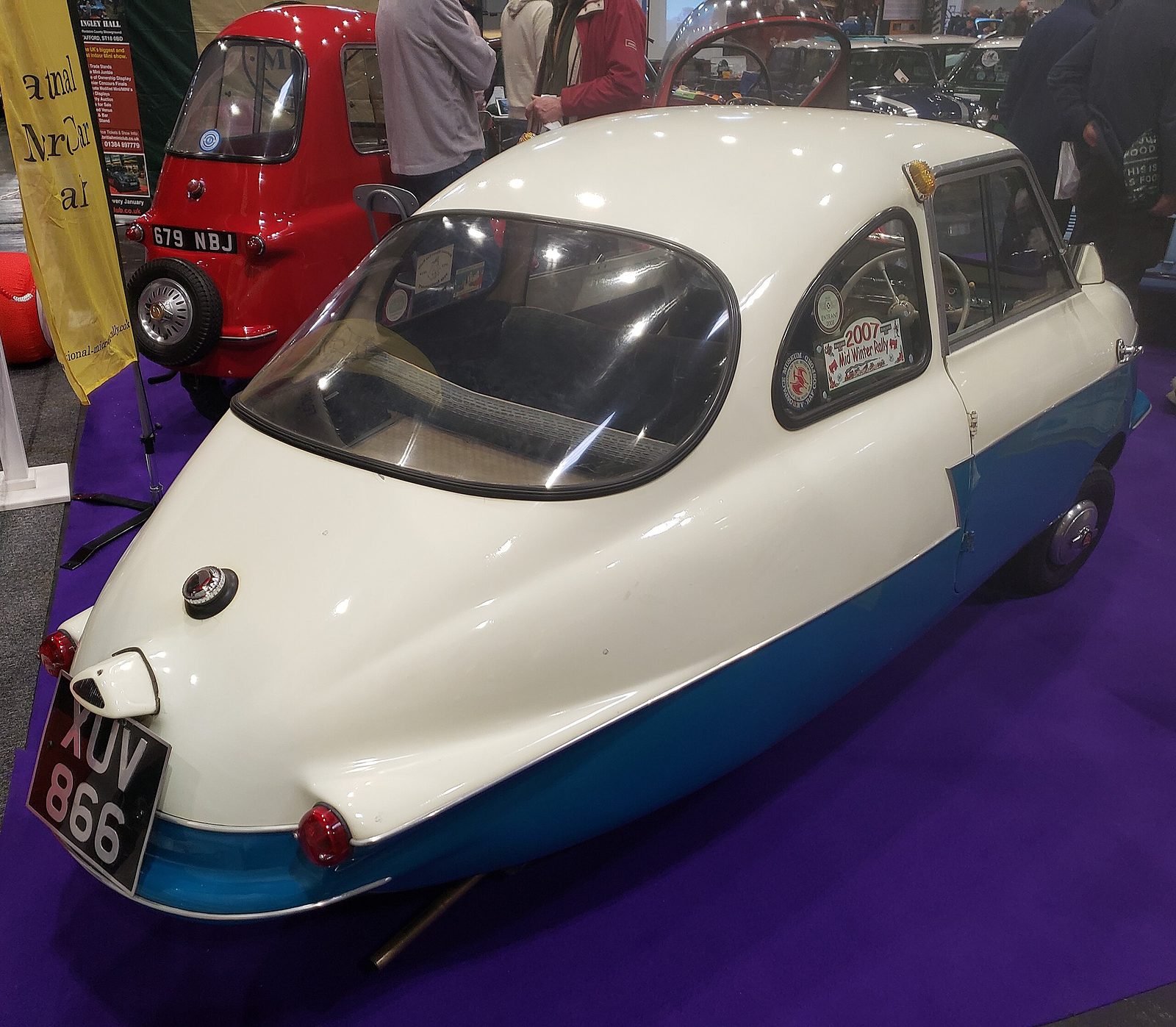
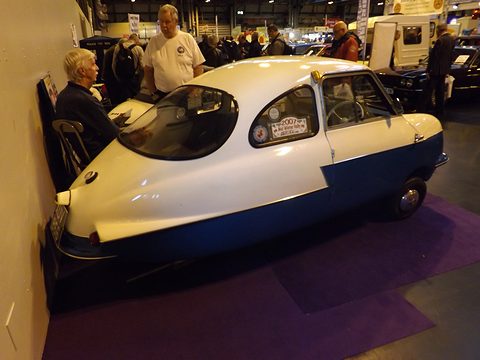
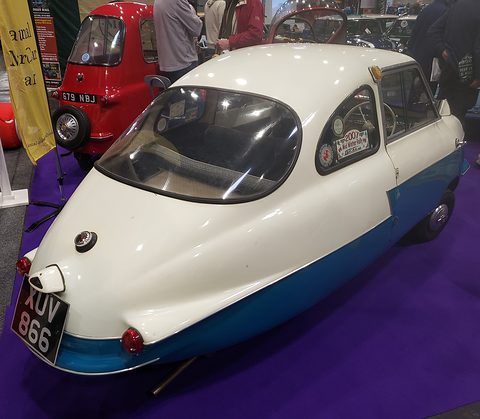
White and blue three-wheeler with a bubble rear window and tapering tail on purple carpet.
Rear three-quarter view of a 1959 Nobel 200 at the Classic Motor Show, Birmingham, in 2023.Photo: Andrew Bone from Weymouth, England, CC BY 2.0, via Wikimedia Commons

Pictures

More photographs, old and new

Variants

Saloon, pick-up, kit

The Nobel range
VariantYearsWhat differsHow many
200 saloon, three wheels1959–⁠1962The standard British car, right-hand driveNot known
200 saloon, four wheels1958–⁠1962For export or to order; a narrow rear track and no differentialNot known
200 Vicky1958–A pick-up with a removable canvas top and sidesSmall numbers
KitAnnounced 1958–⁠1959Self-assembly, to avoid purchase taxNone confirmed sold
Nobletta1960An open versionNot known

Specification

From English Wikipedia unless noted

Engine and drive

Engine and drive
EngineFichtel & Sachs single-cylinder two-stroke, 191 cc, at the backsource 2source 4
Power10 PSsource 29.5 hp in RM’s catalogue
GearboxFour speeds, electrically operated reversesource 1

Body and chassis

Body and chassis
BodyGlass fibre, moulded by the Bristol Aeroplane Companysource 1source 4
ChassisSteel, mostly rectangular box-section tube, by Rubery Owensource 1
ColoursWhite, with peacock-blue lower panelssource 1

Dimensions

Dimensions
Length3,200 mm (126 in)source 1source 4
Width1,397 mm (55 in)source 1
Height1,295 mm (51 in)source 1
Wheelbase2,057 mm (81 in)source 1
Weight305 kg (672 lb)source 1

Performance and running

Performance and running
Top speedNot found
Price new£317 before purchase tax, February 1959source 1

How many were built?

Every figure, with its source

About 1,000 built, perhaps fewerAbout 1,000 in all is the published total. The chassis numbers say only about 400 had been built by January 1960, so the rest would have to come from 1960–⁠62, and where those were built, and how many, is unknown.

  1. 1,500the number after which Shorts would stop, announced in August 1959Unconfirmed

    Belfast News-Letter, via English Wikipedia; a plan, not outputsource 1

  2. about 1,000Nobels in allTwo sources agree

    German Wikipedia, citing the Beaulieu Encyclopedia, and RM’s sale cataloguesource 2source 4

  3. about 400built by January 1960One source

    Chassis numbers in Glass’s guide, via English Wikipediasource 1

  • Two sources agreetwo good sources give the figure
  • One sourcea good source, alone
  • Unconfirmeda lead only, not yet checked

Famous for

Three points

  1. An aircraft industry’s car

    Short Brothers & Harland assembled it and the Bristol Aeroplane Company made its bodies.

  2. The tea-boy

    Mike Hawthorn was its Technical Director, or so the Paris show was told.

  3. A million dollars for Britain

    The New York orders of 1959 were claims; no American exports are recorded.

Survivors and collecting

Today

No count of surviving Nobels has been found. The Register of Unusual Microcars wrote about the car in its magazine in 1985.source 1 The Weiner museum’s car, a 1958 right-hand-drive three-wheeler, chassis 0268, still unrestored and with the early roof-mounted indicators, fetched US$10,350 at the museum’s sale in February 2013.source 4

Sources

Numbered as in the text

Much of the history rests on English Wikipedia’s account, which draws on Moore’s Motor Makers in Ireland (1982); that book was not read, and no period road test or survivor count was found. Sources are given as plain text; the links are on the Credits page.

  1. English Wikipedia, Nobel (automobile), read in full. Used as a lead; it cites Moore, Motor Makers in Ireland (1982); Who’s Who in the Motor Industry (1958); The Autocar (10 October 1958, 27 February 1959); the Daily Herald (7 October 1958); The Guardian; the Belfast News-Letter; and Glass’s guide.
  2. German Wikipedia, York Noble Industries, read in full; it cites Linz and Schrader, and Georgano’s Beaulieu Encyclopedia.
  3. Heinkel Trojan Club, “Cabin Cruisers” (Noble Motors as the Heinkel importers), archived 2015.
  4. RM Auctions, the Bruce Weiner Microcar Museum sale, Madison, Georgia, February 2013, lot 627, “1958 Nobel 200”.
  5. Grace’s Guide, “York Noble Industries”, read in full.