microcarfan
  • Microcar
  • Italy
  • 5 makers

Italian post-war minicars (Volugrafo Bimbo, Fimer, Atomo and others)

Also known as Volugrafo Bimbo 46, Fimer 250, S.A.M.C.A. Atomo, Lucciola, Siata Mitzi

An open car 2.4 metres (7 ft 10 in) long, with no doors and one rear wheel driven by chain, from a Turin firm that had built folding motorcycles to be dropped with paratroops: the Volugrafo Bimbo, the best recorded of the five small cars on this page, all from the years between the war and the Fiat 600 of 1955.

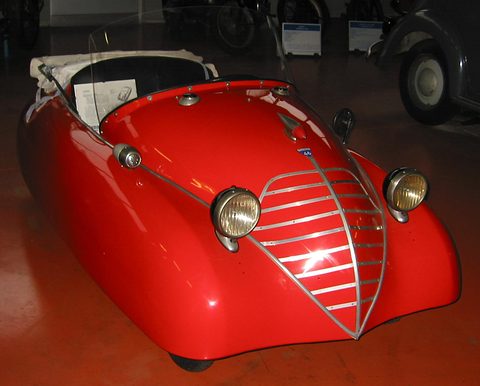
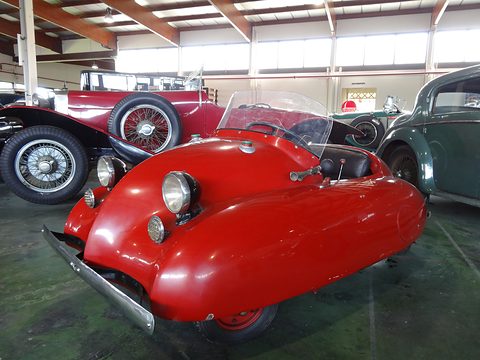
Small red streamlined two-seater with wire wheels and pod headlamps among veteran cars in a museum hall.
A 1946 Volugrafo Bimbo 46 at the Mahymobiles museum, Leuze-en-Hainaut, Belgium, in 2014.Photo: Klaus Nahr, CC BY-SA 2.0, via Wikimedia Commons

At a glance

The spec plate

Italian post-war minicars (Volugrafo Bimbo, Fimer, Atomo and others)

Five makers · Italy

Built
1946–⁠1954The Bimbo shown in November 1945 and built from 1946; the Siata Mitzi a prototype of 1954
Country
ItalyTurin, Milan and Parma
Engine
125 cc to 434 cc, by makerThe Bimbo’s 125 cc single; 246 cc two-strokes in the Fimer and the Atomo; the Mitzi’s 434 cc side-valve twin
Power
5 PS3.7 kW, the Bimbo; 11 ch (8 kW) given for the Mitzi prototype
Length
2,400 mm900 mm high
Seats
2The Bimbo’s one bench took two at a pinch
Wheels
4The Bimbo drove one rear wheel; the Atomo had three wheels
Production
about 60 BimbosThe only figure found; the Fimer few, the Lucciola very few, the Mitzi a prototype, the Atomo not known
Top speed
80km/h80 km/hThe Atomo: 65–75 km/h, claimed

The story

History

Italy’s first post-war minicars were ambitious, and there were very few of them. Turin’s Volugrafo Bimbo, Milan’s Fimer, Parma’s Atomo and the Lucciola were built in small series, or got no further than a pre-series.source 1source 2source 3 Italian Wikipedia names the Bimbo, the Siata Mitzi and the Mi-Val Mivalino as the Italian rivals of the Iso Isetta.source 4 The better-recorded cars of these years have pages of their own: the ALCA Volpe, Italy’s great post-war microcar scandal, and Moretti’s Cita, on the Moretti page. The five below are roughly in date order.

Volugrafo Bimbo 46, Turin, 1946–⁠48

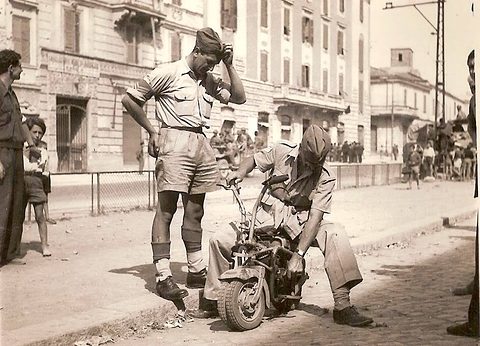
Officine Meccaniche Volugrafo of Turin made trailers, aircraft parts and petrol pumps, which puts it, loosely, among the aircraft makers.source 1source 5 In the war it built the Aermoto 125 for the Italian Army, a folding motorcycle that could go down by parachute. Belmondo designed it from a light motorcycle of 1936, with a 123 cc two-stroke of 2 hp and twin-tyred wheels. The prototype came in 1942 and production in 1943–⁠44; 2,000 were made, the last of them at Favria after the Turin works had been bombed. The first 600 went to the 183rd “Ciclone” Parachute Division, and the Luftwaffe’s paratroops used the Aermoto too.source 1

Belmondo designed the car as well. English Wikipedia calls him Claudio; German Wikipedia, citing Linz and Schrader, calls him Vittorio.source 1source 5 The Bimbo was shown in November 1945 and built from the spring of 1946. It sat on a tubular frame with a track of only 78 cm (31 in), and its front wheels, hung on double wishbones of equal length, were fully enclosed by the body; a chain linked them to a large steering wheel set a little left of centre. The body was open, with no doors and a single bench that would take two in an emergency, under a thin fabric top with no side screens, and it stood 90 cm (35 in) high.source 1source 5 An air-cooled 125 cc single of 5 PS (3.7 kW), mounted ahead of the left rear wheel, drove that wheel alone by chain. A sports version had a second drive unit for the right rear wheel. About 60 had been built when production ended in 1948.source 1source 5
Head-on view of a small red open car with a pointed chrome-barred grille and two round headlamps, in a dark hall.
A red Volugrafo Bimbo 46 head-on in the Museo Ford Gratton in 2006: barred grille, two lamps and enclosed front wheels.Photo: Buch-t, Public domain, via Wikimedia Commons
Two soldiers in shorts and berets, one crouching astride a tiny folding motorcycle on a city pavement, onlookers behind.
Plate I · mid-1940s Soldiers with a Volugrafo Aermoto 125, the firm’s folding paratroop motorcycle, in an Italian street.Photo: Unknown photographer, Public domain, via Wikimedia Commons

Fimer 250, Milan, 1947–⁠49

F.I.M.E.R., the Fabbrica Italiana Motoveicoli e Rimorchi of Milan, built a two-seater with a 246 cc two-stroke motorcycle engine in the back.source 2source 6 The list that cites Georgano dates it to 1947–⁠49, and English Wikipedia, following David Burgess Wise, to 1948–⁠49, adding only that few were made.source 2source 6 Almost nothing else about it has been found.

S.A.M.C.A. Atomo, Parma, 1947–⁠49

The Società Applicazioni Meccaniche Costruzioni Automobilistiche of Parma showed its Atomo at the Milan show of 1947. It was a two-seat three-wheeler with an aluminium body, a folding canvas roof and a water-cooled two-stroke twin of 246 cc with three gears, and was claimed to reach 65–75 km/h (40–47 mph) and to use about 3.3 litres per 100 km (86 mpg).source 7 How its wheels were arranged is not recorded. The list dates it to 1947–⁠48; production stopped in 1949, and the company had been dissolved by 1951.source 2source 7 How many were made is not known.

Lucciola, date not found

Automoto.it names the Lucciola beside the Volpe among the early Italian proposals that stayed at the pre-series stage, built in very few examples.source 3 Its maker, its date and its specification have not been found.

Siata Mitzi, Turin, 1954

SIATA of Turin, the firm that tuned Fiats and built bodies for them, presented the Mitzi in 1954, and it stayed a prototype; French Wikipedia says it was developed from 1953 to 1956.source 8source 9 Its engine was a 434 cc side-valve twin at the back.source 9source 8 By French Wikipedia’s figures, which come without a source, it gave 11 ch (8 kW) through four gears, with torsion-bar independent suspension on every wheel and a two-door monocoque body about 3,100 mm (122 in) long and 420 kg (926 lb), and reached 80 km/h (50 mph).source 9 It matters for what came after: French Wikipedia says its body can be considered the draft of the Vespa 400, and Toni Solans writes that the Vespa’s lines came from Siata’s Mitzi.source 9source 10

Pictures

More photographs, old and new

Variants

Five makers, roughly in date order

Italy’s small post-war minicars
VariantYearsWhat differsHow many
Volugrafo Bimbo 461946–⁠48Turin; open and doorless; a 125 cc single driving the left rear wheel by chainAbout 60source 1source 5
Fimer 2501947–⁠49Milan; a 246 cc two-stroke at the back; 1948–⁠49 by another dateFewsource 6
S.A.M.C.A. Atomo1947–⁠49Parma; a three-wheeler with an aluminium body and a water-cooled 246 cc twinNot known
LucciolaNot foundMaker and specification not foundVery fewsource 3
Siata Mitzi1954Turin; a two-door saloon with a 434 cc side-valve twin at the backPrototypesource 8

Specification

The three cars with figures

Volugrafo Bimbo 46

Volugrafo Bimbo 46
EngineAir-cooled single, 125 cc, 5 PS (3.7 kW), ahead of the left rear wheelsource 1source 5
DriveBy chain to the left rear wheel onlysource 1source 5A sports version had a second drive unit for the right rear wheel
ChassisTubular frame; enclosed front wheels on equal-length double wishbonessource 1source 5
SteeringBy chain, from a large wheel set slightly left of centresource 1source 5
Size2,400 mm long, 900 mm high; track 780 mmsource 1source 5

S.A.M.C.A. Atomo

S.A.M.C.A. Atomo
EngineWater-cooled two-stroke twin, 246 cc; three speedssource 7
BodyAluminium two-seater with a folding canvas roof, on three wheelssource 7
Running65–75 km/h (40–47 mph) and about 3.3 litres per 100 km (86 mpg), claimedsource 7

Siata Mitzi prototype

Siata Mitzi prototype
EngineIn-line side-valve twin at the back, forced-air cooled, 434 cc, 11 ch (8 kW) at 3,600 rpmsource 9source 8
GearboxFour speeds and reverse; multi-plate clutch in oilsource 9
BodyTwo-door monocoque; torsion-bar independent suspension all roundsource 9
SizeAbout 3,100 × 1,400 mm; 420 kg (926 lb)source 9
Running80 km/h (50 mph); under 4 litres per 100 kmsource 9French Wikipedia gives these figures without a source

How many were built?

The one figure found

About 60 Bimbos; the Atomo’s output not knownOnly the Volugrafo Bimbo has a figure, about 60, given by both Wikipedias from the same encyclopaedia, Linz and Schrader. The Fimer was made in few numbers, the Lucciola in very few, the Mitzi as a prototype; the Atomo’s output is not known.

  1. about 60Volugrafo Bimbo 46, 1946–⁠48One source

    English and German Wikipedia, both from Linz and Schradersource 1source 5

  • Two sources agreetwo good sources give the figure
  • One sourcea good source, alone
  • Unconfirmeda lead only, not yet checked

Famous for

Three points

  1. One wheel driven

    The Bimbo’s 125 cc single drove only its left rear wheel, by chain.

  2. From the parachute corps

    Volugrafo had built 2,000 folding motorcycles for paratroops before it built a car.

  3. The Vespa’s sketch

    Siata’s Mitzi prototype of 1954 can be considered the draft of the Vespa 400.

Survivors and collecting

Today

At least five Bimbos survive. Two are on show, one in the Mahymobiles municipal motor museum at Leuze-en-Hainaut, in Belgium, the other in the Museo Ford Gratton at Farra d’Isonzo, in Italy, and photographs of the pair show small differences in the front decoration, the mirror and the hood.source 1source 5 No survivor of the Fimer, the Atomo, the Lucciola or the Mitzi has been found.

Sources

Numbered as in the text

Every maker here rests on encyclopaedia articles, mostly Wikipedia, and on two web pages read only as summaries (Automoto.it and cybermotorcycle.com). Georgano, Linz and Schrader, and the Italian motoring press of 1946–⁠49 were not read. Sources are given as plain text; the links are on the Credits page.

  1. English Wikipedia, Volugrafo, read in full; it cites Linz and Schrader (2008) and Walter Zeichner, Kleinwagen International (1999).
  2. English Wikipedia, List of microcars by country of origin: I, the Italian rows read; it cites Georgano (1982) and the GTÜ archive.
  3. Automoto.it, “Le chiamavano Bubble Cars – Parte I”, read as a page summary.
  4. Italian Wikipedia, Iso Isetta, its list of rivals.
  5. German Wikipedia, Volugrafo, read in full; it cites Linz and Schrader.
  6. English Wikipedia, Fimer, read in full; it cites David Burgess Wise, The New Illustrated Encyclopedia of Automobiles.
  7. cybermotorcycle.com, “Italian marques S”, the S.A.M.C.A. entry, read as a page summary.
  8. Italian Wikipedia, SIATA, the paragraph on the Mitzi.
  9. French Wikipedia, Siata Mitzi, read in full; a short article without sources.
  10. Toni Solans, “Vespa”, La web de los microcoches (grupo7.com), read in full.