microcarfan
  • Three-wheeler
  • Britain
  • Three wheels
  • About 20 built

Allard Clipper

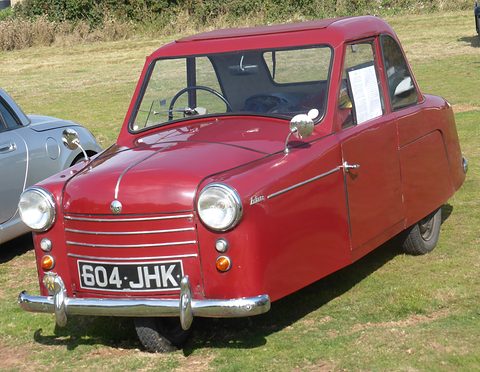
Sydney Allard won the Monte Carlo Rally in 1952. Soon after, his name went on a car with 8 bhp, one door, a body coloured right through the glass fibre and two children’s seats that rose out of the boot. About 20 were finished before the moulds beat him.

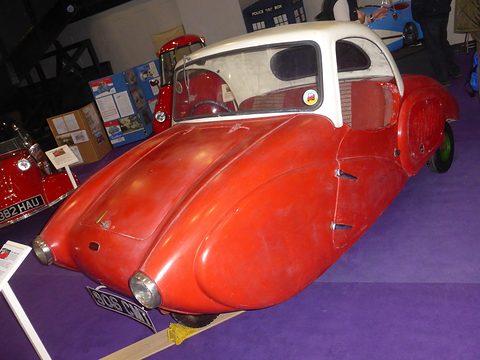
Red streamlined three-wheeler with a cream hard top and long flowing wings on a purple carpet.
The 1954 Allard Clipper 906 CMT at the NEC Classic Motor Show in 2017.Photo: Andrew Bone from Weymouth, England, CC BY 2.0, via Wikimedia Commons

At a glance

The spec plate

Allard Clipper

Clipper · London

Built
1953–⁠1955Prototypes from 1953; the first car registered on 15 April 1954
Country
BritainAssembled by Encon Motors, Fulham, London; bodies from Thame airfield
Maker
Allard Motor CompanyDesigned by David Gottlieb of Power Drive Ltd; bodies by Hordern-Richmond
Engine
346 cc Villiers 24B single-cylinder two-strokeAt the back, ahead of the left rear wheel
Power
8 bhp
Seats
3 + 2A bench for three, and two children’s dickey seats under the boot lid
Wheels
3One wheel at the front; the engine drives only the left rear wheel
Production
about 2022 of a planned 100 by one account
Survives
2 or 3In England, Germany and the United States

Not yet recordedtop speed, length and weight.

How big is it?

True proportion

Length unknown

No reliable length has been found. The Fiat 500, the Peel P50 and the adult stay, so the gap is shown, not hidden.

  • Three abreast, two more in the boot
Drawn at true proportion. The track is 3.6 metres long; the adult stands at the same scale. The Peel P50 is the smallest production car, on every page for comparison.

Beside its contemporaries

The British microcars on the road in 1953, on the same 3.5 m scale. Lengths of cars without a page yet come from the census and are unverified.

  1. Bond Minicar1949–⁠1966 · Britain

    2.69 m
  2. Invacar1946–⁠1977 · Britain

    2.97 m
  3. AC Petite1953–⁠1958 · Britain

    3.12 m
  4. Reliant Regal1952–⁠1973 · Britain

    3.43 m
  5. Allard Clipper1953–⁠1955 · Britain

    length unknown

The story

History

The Allard Motor Company of south London built big sports cars with Ford, Mercury, Jaguar and American V8 engines, and in 1952 Sydney Allard won the Monte Carlo Rally in one of his own cars. But sales of the big cars were sliding, and the Clipper was his attempt at a cheap family car.source 1source 2source 3 It was not his idea. David Gottlieb of Power Drive Ltd conceived it, and Allard was contracted to build two prototype chassis with a self-coloured glass-fibre body; a separate Allard Clipper Company Ltd was formed, and the engineer Gilbert Jepson built the prototype chassis.source 4source 5 Gottlieb went on to design the Powerdrive.source 6

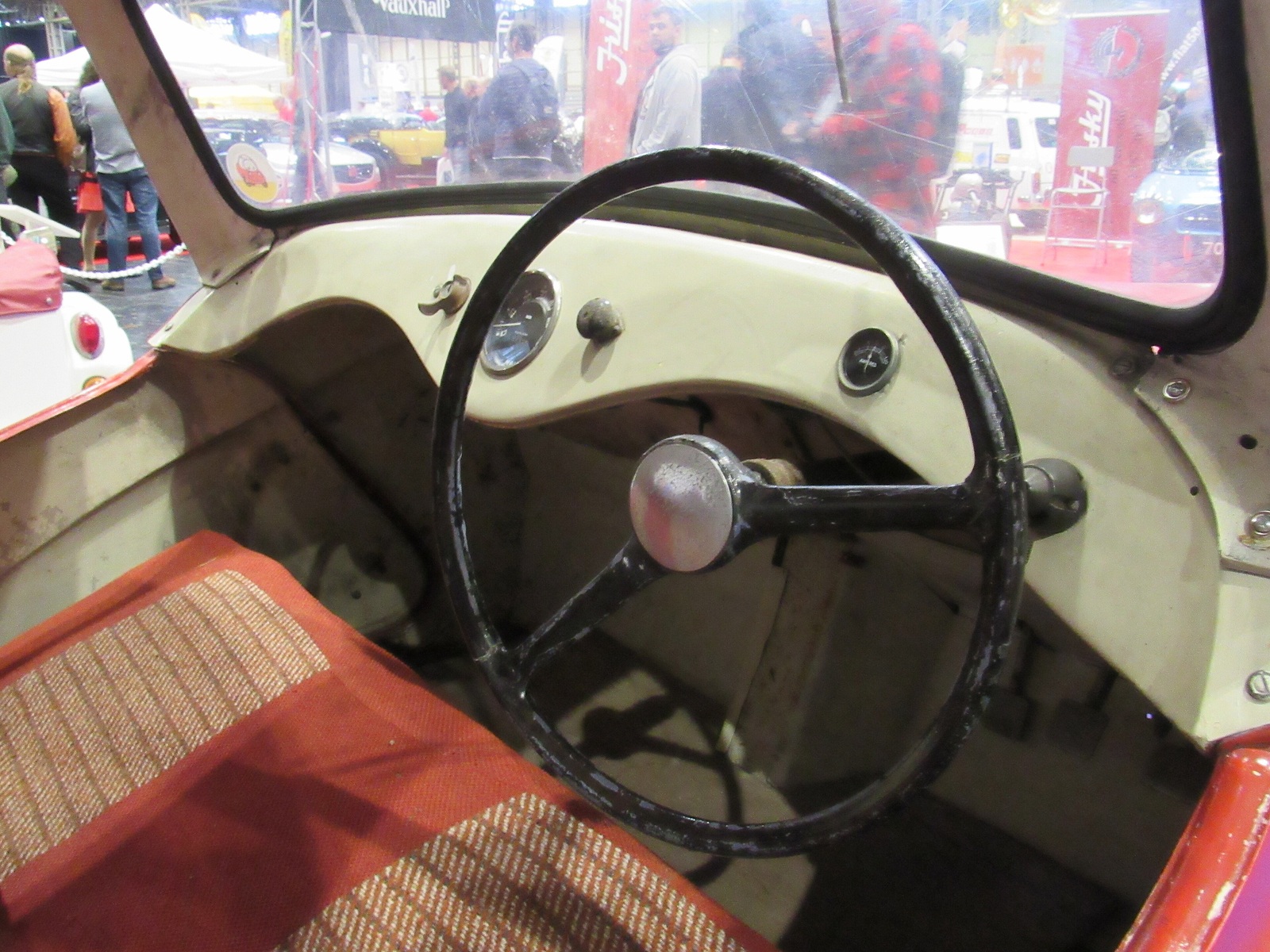
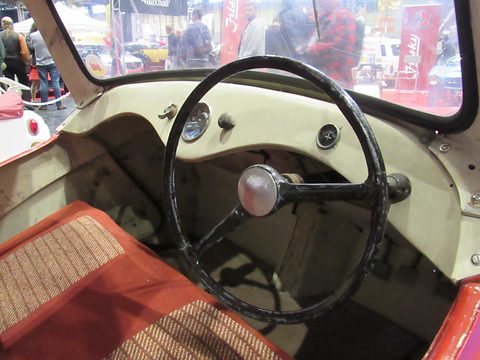
The car was a three-wheeler on 8-inch wheels, the single one at the front, built on a steel chassis.source 1source 3 JAP and British Anzani engines were tried and rejected in favour of the Villiers 24B, a 346 cc single-cylinder two-stroke of 8 bhp, mounted at the back just ahead of the left rear wheel.source 1source 7 It drove that wheel and no other, through a triple V-belt to a Burman gearbox and then a chain.source 4source 1source 7 The suspension used trailing arms on rubber mountings.source 7 Inside was a bench for three adults, and when the boot lid was opened two optional dickey seats for children appeared; the one door was on the nearside.source 5source 7 The 1954 brochure had a slogan for families.source 3

Take the nipper in a Clipper!

Allard’s sales brochure, 1954, as reproduced by Giles Chapman in The Worst Cars Ever Sold and cited by German Wikipedia.source 3

A body from the propeller makers

The bodies came from Hordern-Richmond Ltd of Haddenham, on Thame airfield, an aircraft-propeller and aeronautical firm (more in aircraft makers).source 1source 5 Margaret Woolsey, just out of the WRAF, laid up the moulds and panels for the prototype. She believed the firm was chosen because it was the only one in Britain then working glass fibre on a large scale. The moulds were made panel by panel rather than taken from a full-size buck, and were revised again and again.source 5

I itched like mad with that fiberglass – every single day!

Margaret Woolsey, recalling her work on the Clipper’s body for Forgotten Fiberglass, 2009.source 5

The glass fibre was coloured through, usually an ivory roof over ivory, red or blue.source 1 That makes the Clipper, by 3wheelers.com’s account as English Wikipedia gives it, the first car with a colour-impregnated glass-fibre body, and among the first British cars with a production glass-fibre body of any kind.source 5source 7source 3 The bolder claim on 3wheelers.com, that it was the first car with a plastic body at all,source 2 goes too far: Bond was already trying glass-fibre panels on its Minicar in 1953.source 8

About twenty, and the end

The prototype was tested against a Bond and an AC Petite, and production was then agreed, at the Encon Motors workshop in Fulham.source 4source 7 The first bodyshell arrived on 19 March 1954 and the first car was registered on 15 April.source 5 The bodies were the trouble. New moulds were needed; David Hooper of the Allard Register blames an inadequate understanding of the release agent and a lack of draw angles on the steel pattern. Hordern-Richmond wanted more money for new moulds and bodies, and that could not be agreed.source 4source 5 On the road, cooling was inadequate and the driveshafts weak.source 2source 7 With only the left rear wheel driven and the driver sitting on the right, traction on left-hand bends was poor when the driver was alone.source 1source 3 By Chapman’s account, as German Wikipedia retells it, suspension parts broke under a full load of five, and the press thought the open dickey seats fit only for parents with a sadistic streak.source 3

Of a planned first run of 100, only 22 were completed, by one detailed account; others say about 20, or fewer than 20.source 5source 1source 7source 4 Sydney Allard judged the fixes too costly and dropped the project.source 3 When is disputed: in 1954, says English Wikipedia; in 1955, says 3wheelers.com, and Forgotten Fiberglass records a body that failed to arrive on 24 June 1955 as hastening the end.source 7source 2source 5 Chapman later put the Clipper at number one in The Worst Cars Ever Sold.source 7source 3 The Allard Register, for its part, says the Clipper is often treated as a joke by Allard enthusiasts, but was an earnest attempt by a small firm doing all it could to stay open and keep its staff employed.source 4
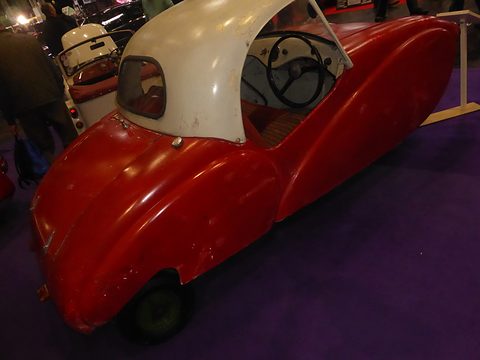
Rear quarter of a red three-wheeler with a cream top, its long rear wing sweeping to the tail.
The 1954 Clipper 906 CMT from behind at the NEC in 2017: the boot lid over the dickey seats, and the long rear wing.Photo: Andrew Bone from Weymouth, England, CC BY 2.0, via Wikimedia Commons
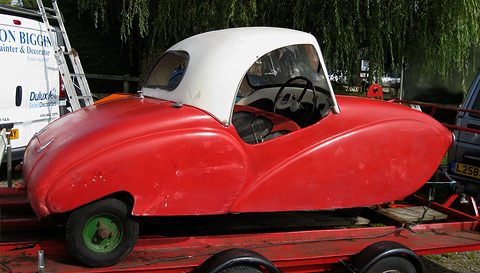
Red streamlined three-wheeler with a white hard top and green wheels on a car trailer under a willow.
An unrestored Clipper on a trailer at the National Microcar Rally at the Atwell-Wilson Motor Museum in 2011.Photo: Mighty Antar, CC BY-SA 3.0, via Wikimedia Commons

Pictures

More photographs, old and new

Specification

What is recorded

Engine and drive

Engine and drive
EngineVilliers 24B single-cylinder two-stroke, 346 cc, at the backsource 1source 7Two sources call it a twin; the 24B was a single
Power8 bhpsource 1source 7
DriveTriple V-belt to a Burman gearbox, then chain to the left rear wheel onlysource 4source 1source 7
Rejected enginesJAP and British Anzanisource 1

Body and chassis

Body and chassis
BodyColour-impregnated glass fibre, by Hordern-Richmondsource 1source 5
ColoursUsually an ivory roof over ivory, red or bluesource 1
ChassisSteelsource 1source 3
SuspensionTrailing arms on rubber mountingssource 7
Wheels8 in; one at the front, two at the backsource 1source 3
DoorsOne, on the nearsidesource 7
SeatsBench for three, with two optional children’s dickey seatssource 5source 7

How many were built?

Every figure, with its source

About 20 builtAbout 20 by most accounts, and 22 of a planned first run of 100 by the most detailed one, which quotes the British Motor Manufacturers website. That dated account is the most specific, but it is second-hand; the round figure is the safer one.

  1. 22Clippers completedOne source

    Forgotten Fiberglass, quoting the British Motor Manufacturers websitesource 5

  2. about 20Clippers builtTwo sources agree

    The Register of Unusual Microcars and English and German Wikipediasource 1source 7source 3

  3. fewer than 20Clippers builtOne source

    The Allard Registersource 4

  • Two sources agreetwo good sources give the figure
  • One sourcea good source, alone
  • Unconfirmeda lead only, not yet checked

Famous for

Three points

  1. Coloured right through

    The first car, by one account, with a colour-impregnated glass-fibre body, made by a propeller firm.

  2. Children in the boot

    Two dickey seats for children rose when the boot lid was opened.

  3. Number one

    Giles Chapman put it first in The Worst Cars Ever Sold.

Survivors and collecting

Today

Two or three Clippers survive, by different counts.source 1source 2source 5source 7source 3 One is in a museum in Germany, which the sources do not name.source 1source 2source 5source 3 In England, 906 CMT, still to its original specification, is on the Register of Unusual Microcars.source 1 In the United States, chassis number 118 was restored by its owner, Tom Chandler, with Geoff Hacker of Undiscovered Classics; its restorer says it can easily seat five adults.source 4 3wheelers.com placed a Clipper in the Hammond Microcar Collection in Kent; when that collection closed in 2022, a Clipper, described as one of three survivors, was among the 47 or so cars auctioned on 27 October.source 2source 9 No price has been found. The Allard Register and the Allard Owners Club keep the marque’s history.source 4

Sources

Numbered as in the text

No period road test or press report of the Clipper was read, and its length, weight, top speed and price have not been found. Giles Chapman’s The Worst Cars Ever Sold and Kinsella’s Allard were known only through Wikipedia. Sources are given as plain text; the links are on the Credits page.

  1. Register of Unusual Microcars, “Allard Clipper”, read in full in an archived copy of 2014.
  2. 3wheelers.com, “Allard Clipper”, read in full in an archived copy of 2014.
  3. German Wikipedia, Allard Clipper, read in full. Used as a lead; it cites Chapman (2011), the Register of Unusual Microcars and 3wheelers.com.
  4. David Hooper, Allard Register, “Clipper Mini Car”, with a restoration update, read in full.
  5. Undiscovered Classics, Forgotten Fiberglass, “1954 Allard Clipper and Margaret Woolsey”, 2009, read in full; it quotes the British Motor Manufacturers website.
  6. English Wikipedia, Powerdrive, read in full. Used as a lead; it cites Motor Cycling, the Daily Mirror and the Daily Express.
  7. English Wikipedia, Allard Clipper, read in full. Used as a lead; it cites Chapman (2008) and Kinsella (1977).
  8. Bond Owners’ Club, “Mark C – October 1952 to May 1956: Vehicle Modifications by Chassis Number”, read in full in an archived copy.
  9. postwarclassic.de, “Farewell to the Hammond Microcar Museum”, read in full.