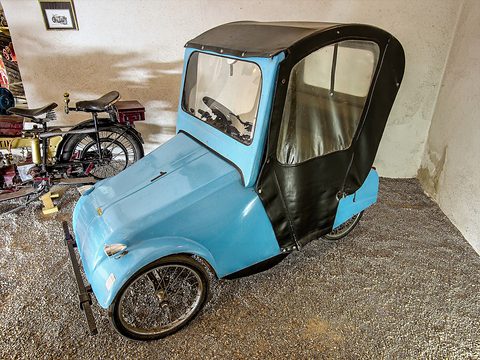
The story
History
SEAB of Villejuif, just south of Paris, knew plastic. For many years it had moulded the ABS bodies of the Citroën Méhari for Citroën, and in 1978 it began to build licence-free cars of its own.source 1source 2 The firm’s name is spelt out in two ways, as the Société d’Exploitation et d’Application des Brevets or the Société d’Études et Applications de Brevets, and the German Wikipedia says the cars were made by Flipper SARL, set up within SEAB in 1978.source 2source 3source 4
The same source names the designer as Roland de la Poype.source 4 He was a Free French fighter ace of the Normandie-Niémen regiment and a Companion of the Liberation, who built a plastics business after the war, founded Marineland d’Antibes, and is called by the French Wikipedia the inventor of the Méhari’s body.source 5 It is a good story with a loose end. The French Wikipedia names his own firm as the Société d’études et d’applications du plastique, and no French source read for this page confirms his part in the Flipper, or says whether SEAB was his firm, a sister company or a separate moulder.source 5
Turning round to go back
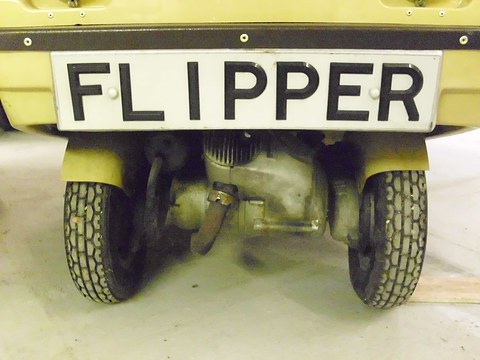
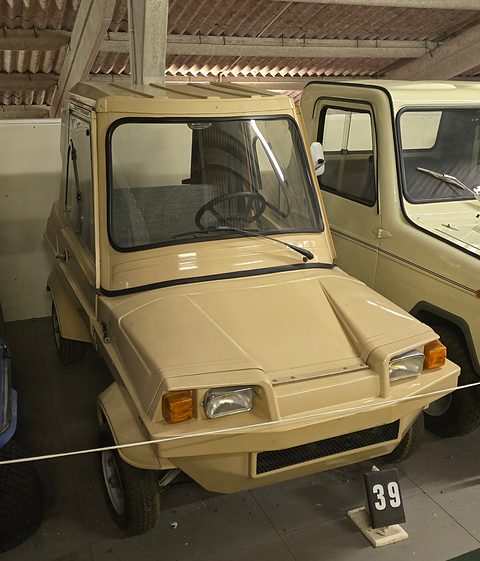
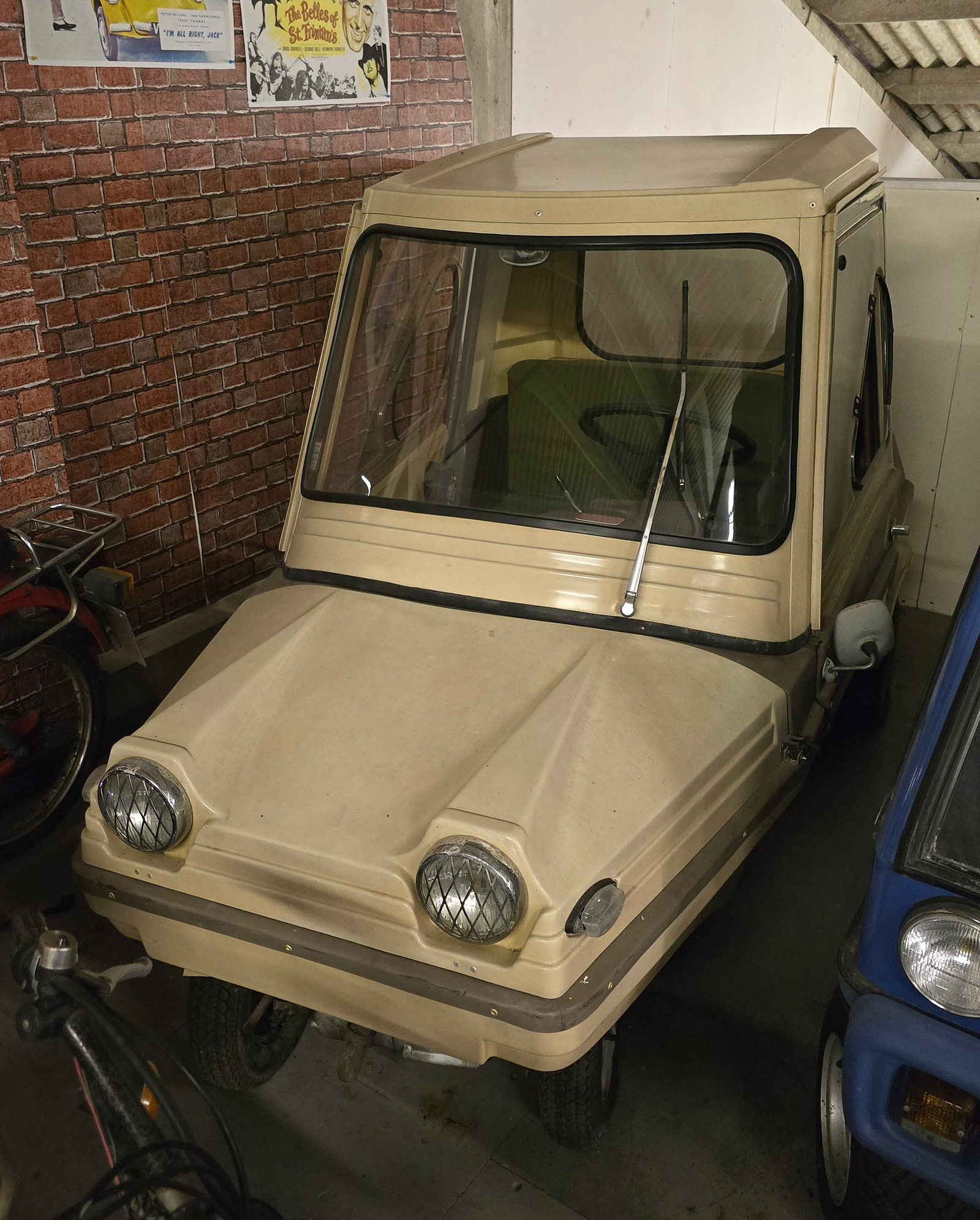
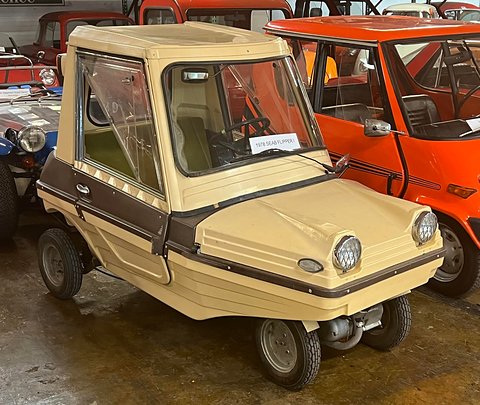
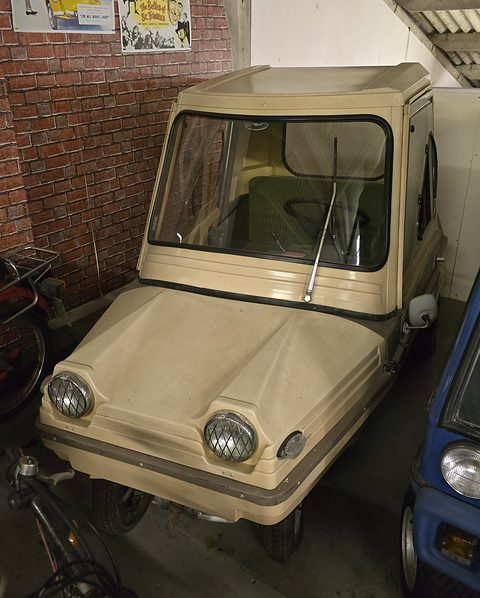
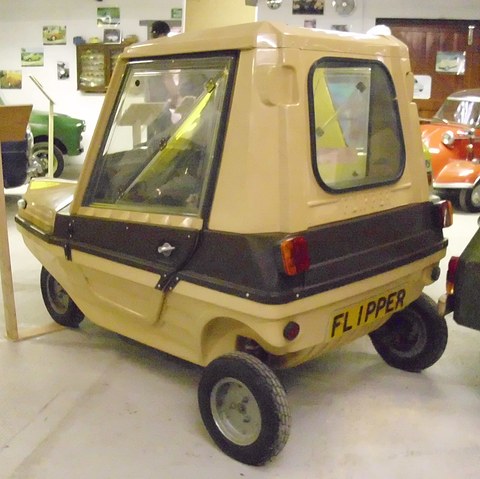
The Flipper I was a two-seater with a steering wheel, a tubular chassis and a body of ABS with acrylic windows. Its engine was a 47 cc Sachs ADLX, air-cooled, with a two-speed automatic.source 1source 2 The whole front axle, carrying the engine, pivots on a single central pin, as on a soap-box cart. To reverse, the driver goes on turning the wheel until the front unit has swung through 180°, and the car then drives back the way it came, like a dodgem.source 1source 2 The Lane Motor Museum notes that the wiring and pipes run through a protective sleeve so that they survive the rotation.source 2
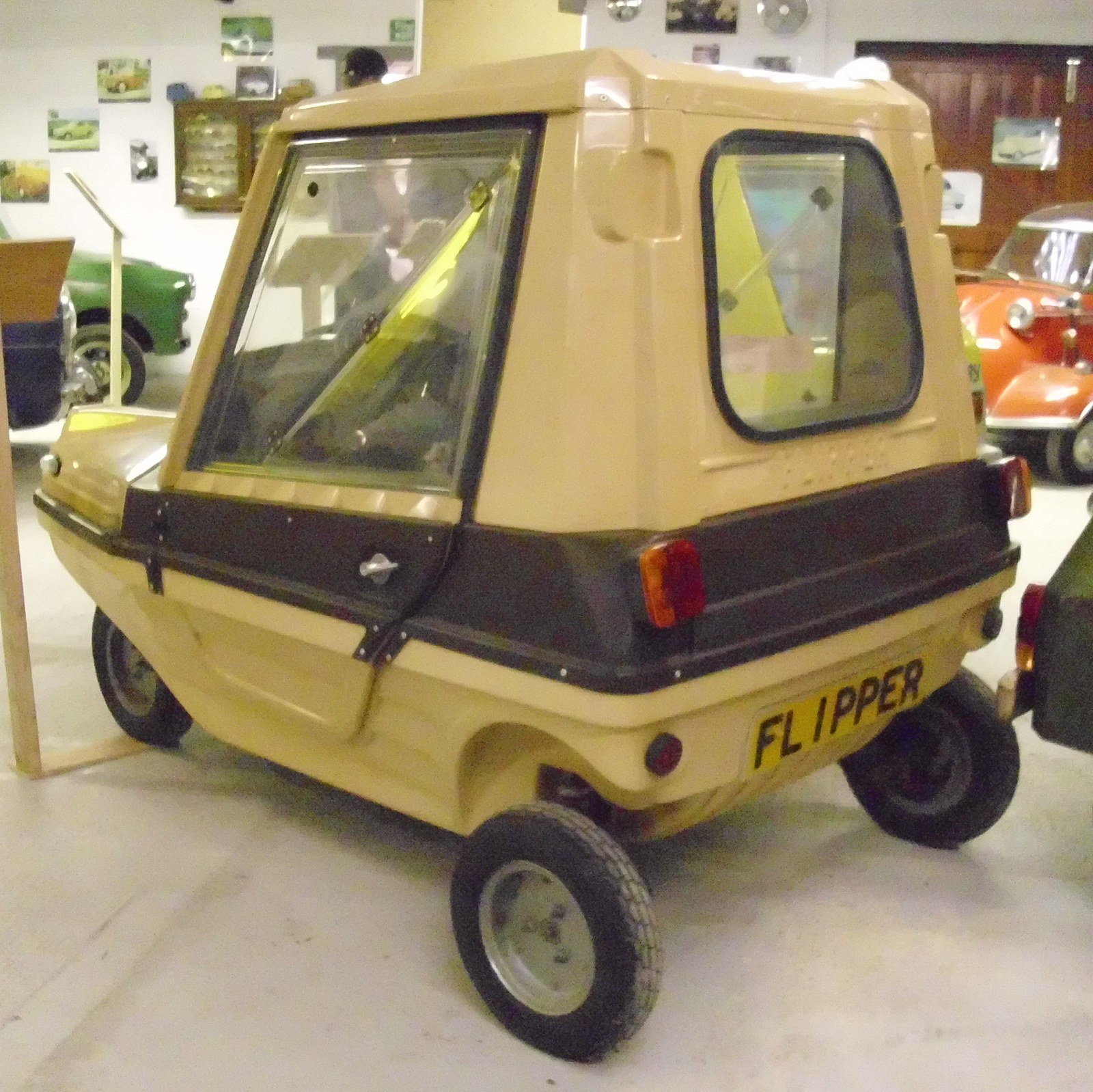
The old microcarfan.com, whose author owned one, found reversing child’s play and parallel parking no fun at all, and joked that some owners simply parked at right angles to the kerb.source 1 There was a small boot at the back, reachable only from inside, big enough for a shopping basket or a school bag.source 1 The car hardly changed in its life, though early ones have much larger triangular opening quarter-lights. The extras were a rear trunk, a heavy ABS front bumper, small rear fins and chrome wheel trims, and it came in beige, brown, or both.source 1source 2
The English Wikipedia adds that the rules of the day let anyone over 14 drive such a car without a licence, provided it met a specification that included a moped-style pedal option.source 3 None of the Flipper’s sources says whether it had one.
driving the Flipper is a blast
Torchinsky found the car strangely nimble, and noted that the driver has to think about the fuel lines when spinning the front end, so as not to twist them.source 6
The Flipper II and the Donky
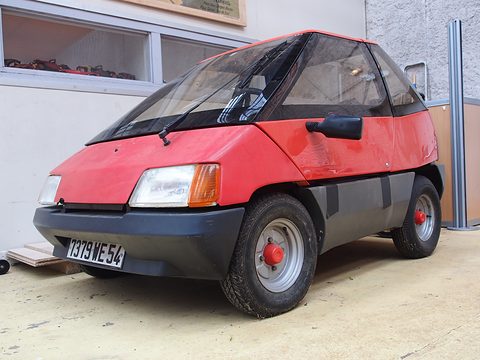
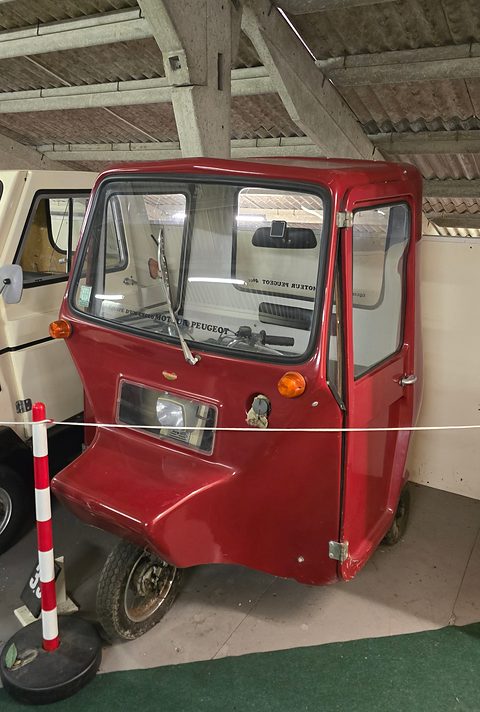
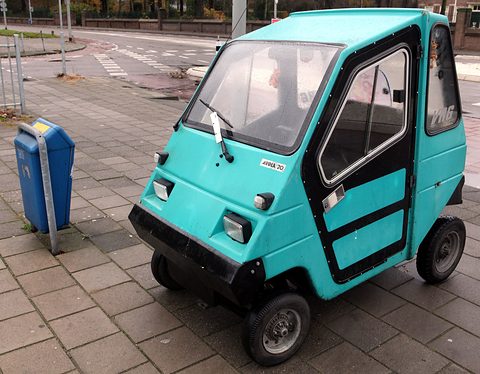
From 1980 the Flipper II replaced it: by the old site’s account a completely new car under the same angular styling. The pivoting axle gave way to a conventional front, and a 50 cc Motobécane with an automatic gearbox and a reverser took over. Only the windscreen and doors were carried over, and the rear window now opened as a hatch, so the boot could be reached from outside.source 1source 4
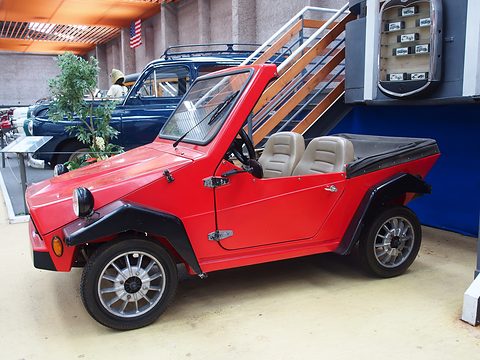
In 1981 came the Donky, a beach car: a Flipper II with no roof, doors or windscreen, a roll bar, a wind deflector and fat 16 × 6.50-8 tyres in place of the 400 × 8s, for sand and forest tracks. The old site warned that it was neither a four-wheel drive nor amphibious, with 2.6 cv (1.9 kW) to its name. A mixed version with a real windscreen and a tonneau cover sold as few as the beach car did.source 1 The German Wikipedia gives the Donky a Polymécanique engine.source 4 If, as seems likely, Polymécanique belonged to the Motobécane group, the two accounts agree.
The Flipper III was shown in 1984 and never put into series production, and with it SEAB’s licence-free venture ended.source 1source 2 The old site adds that a few cars were later built with its body under another marque, which it does not name.source 1