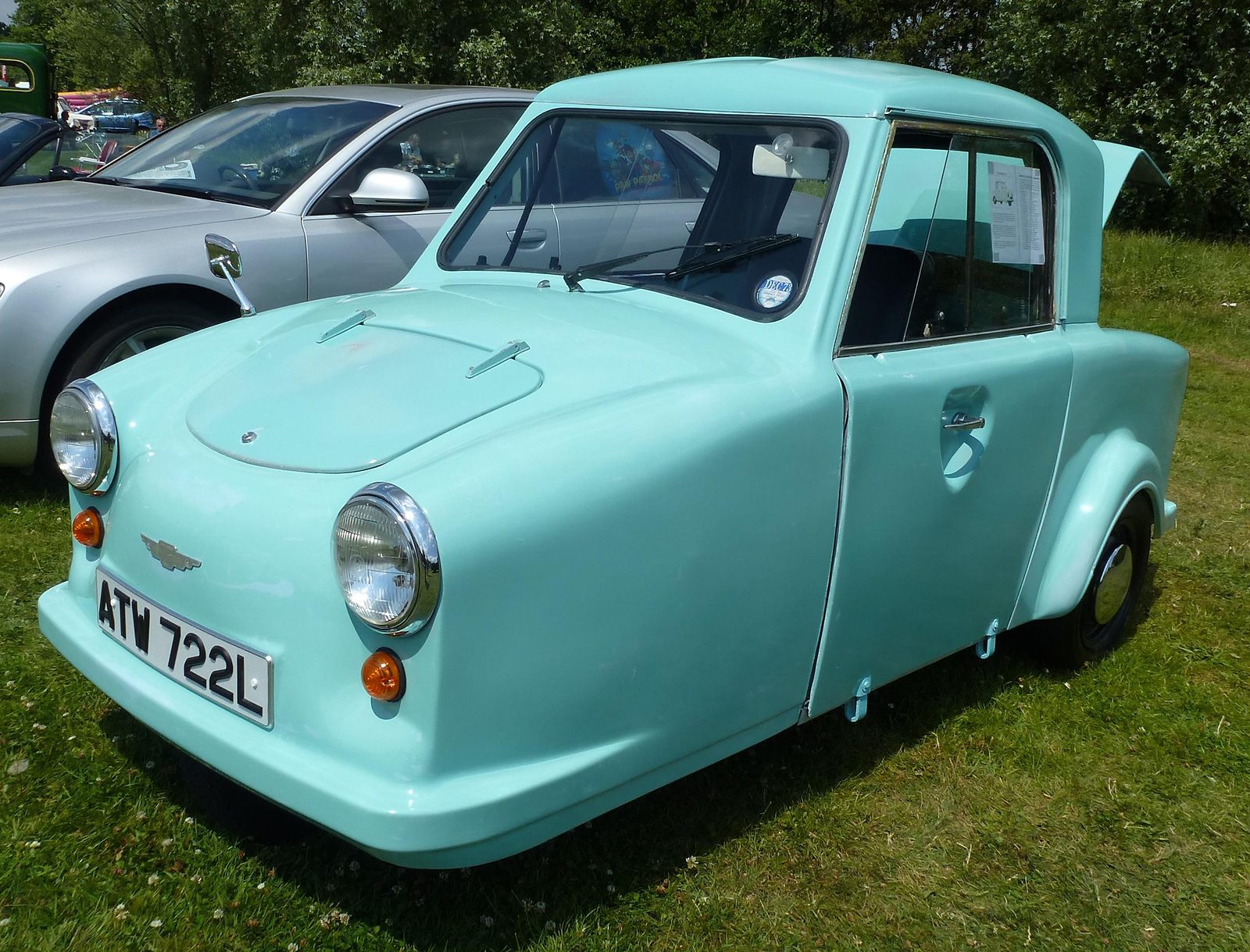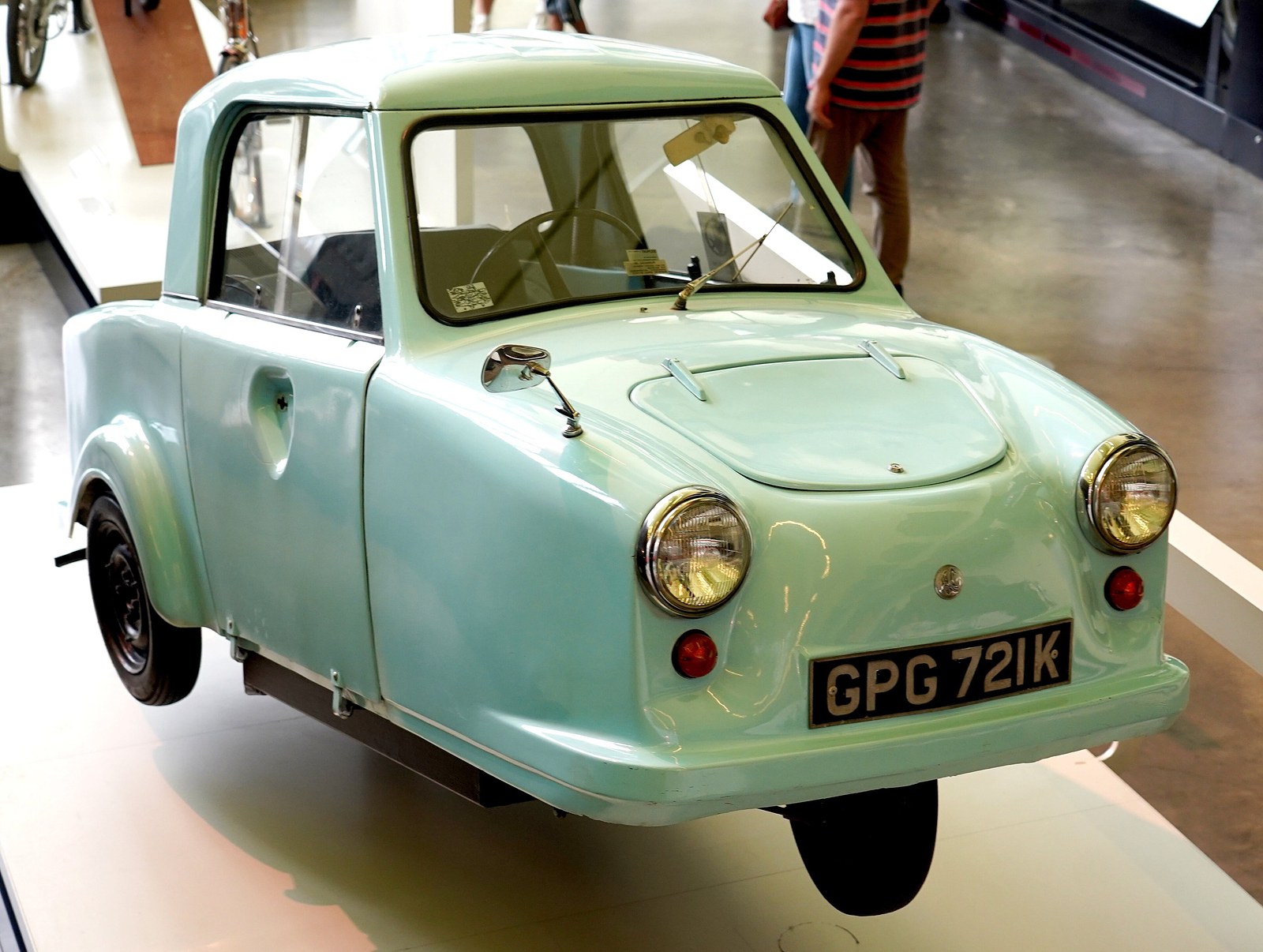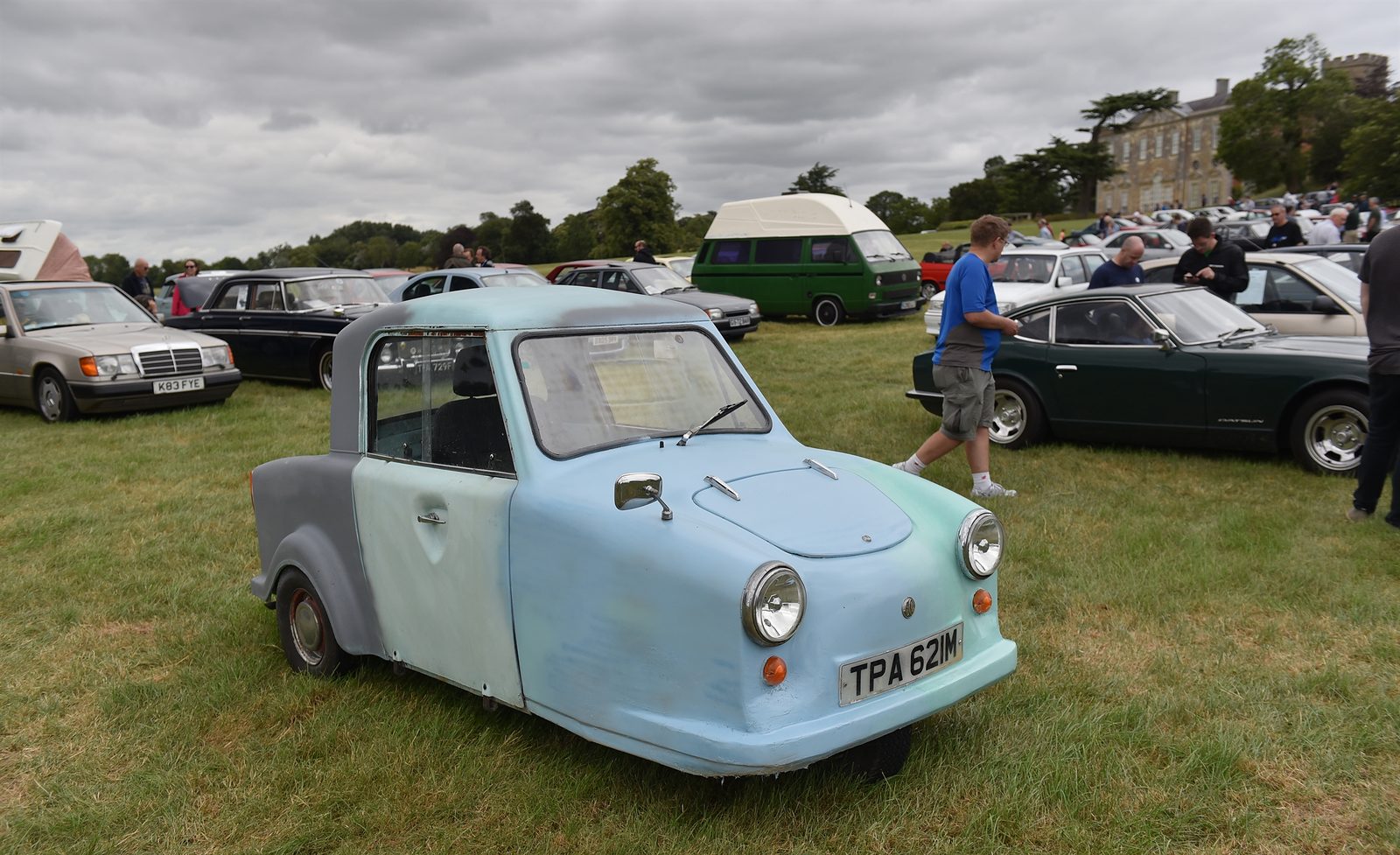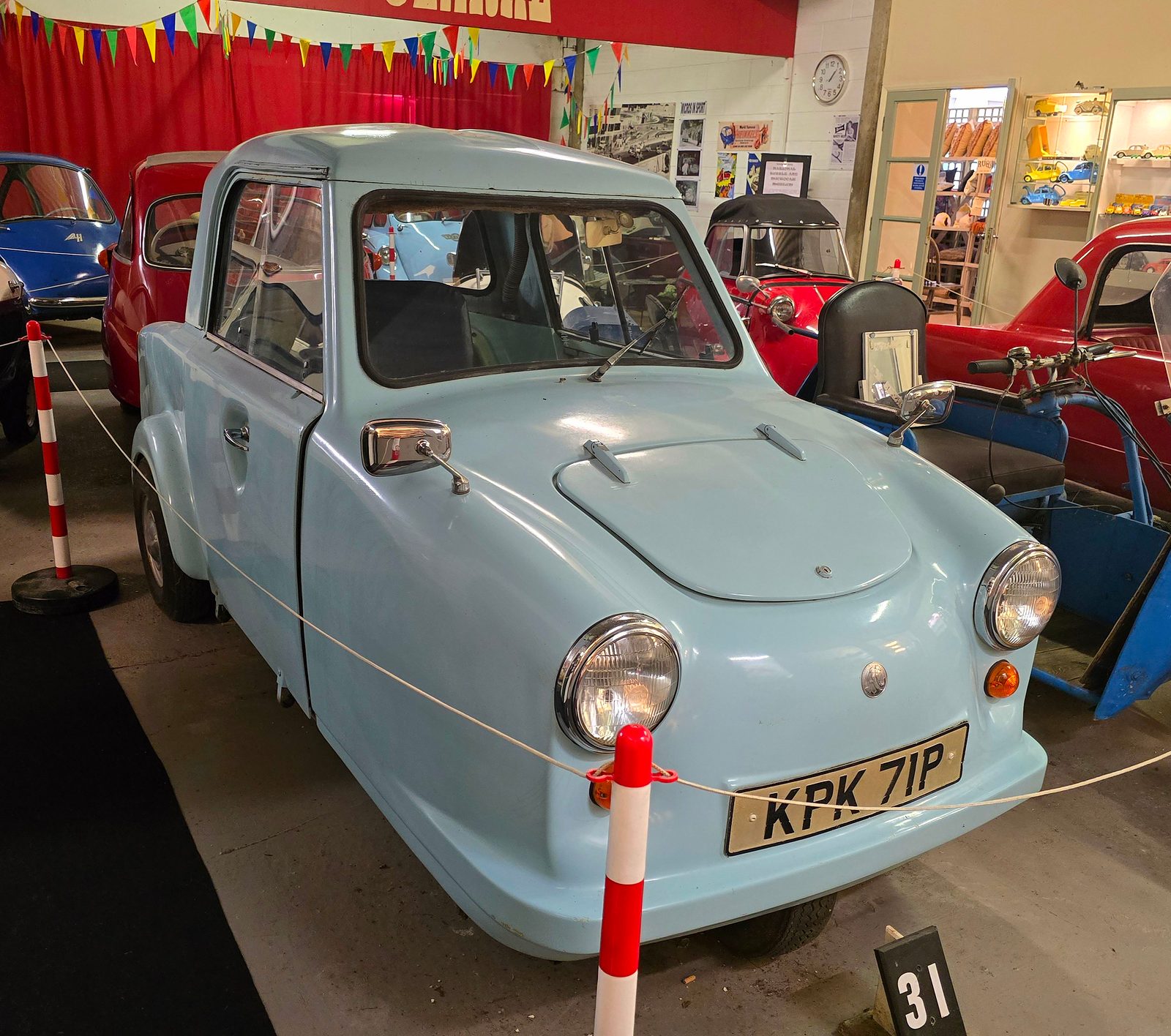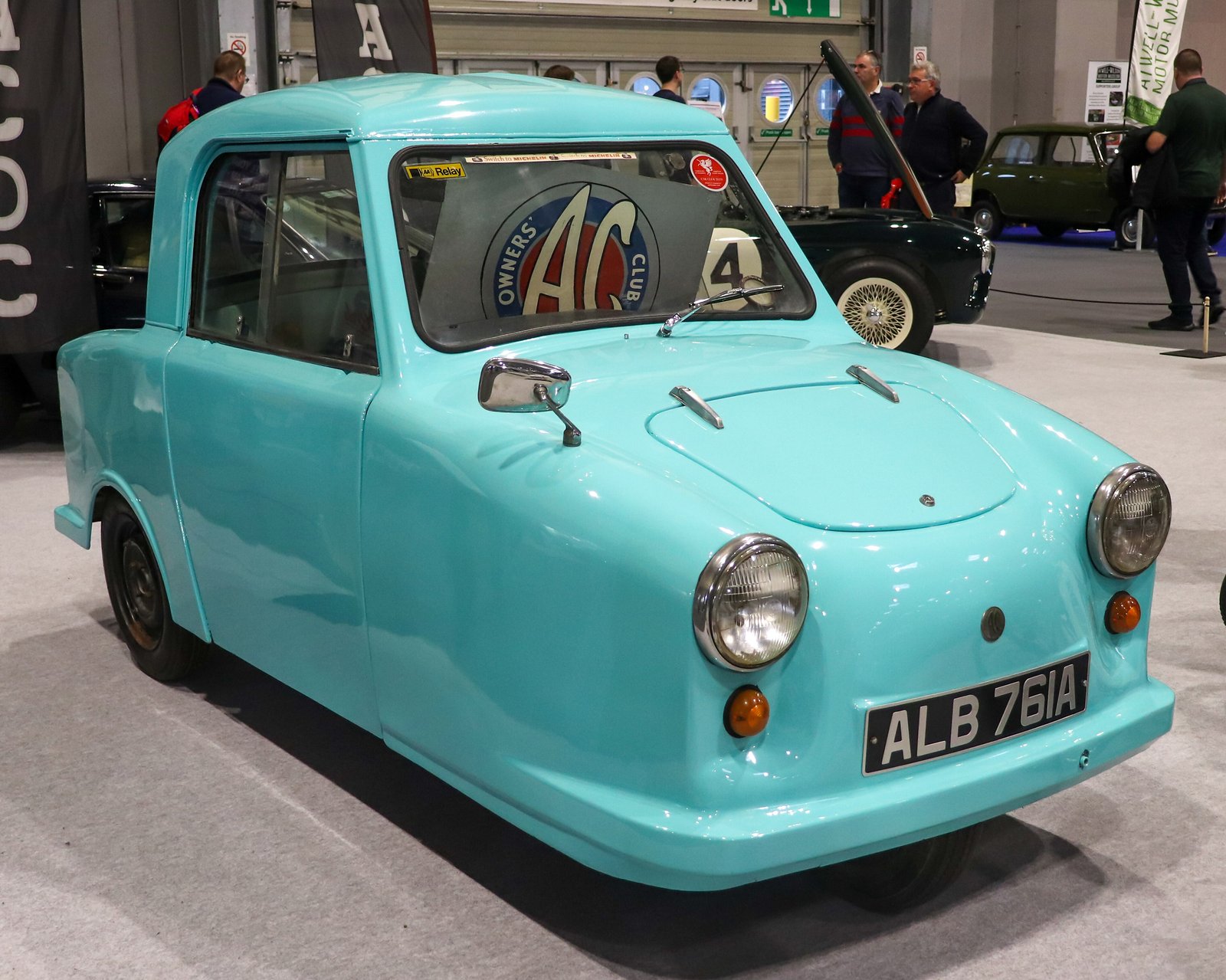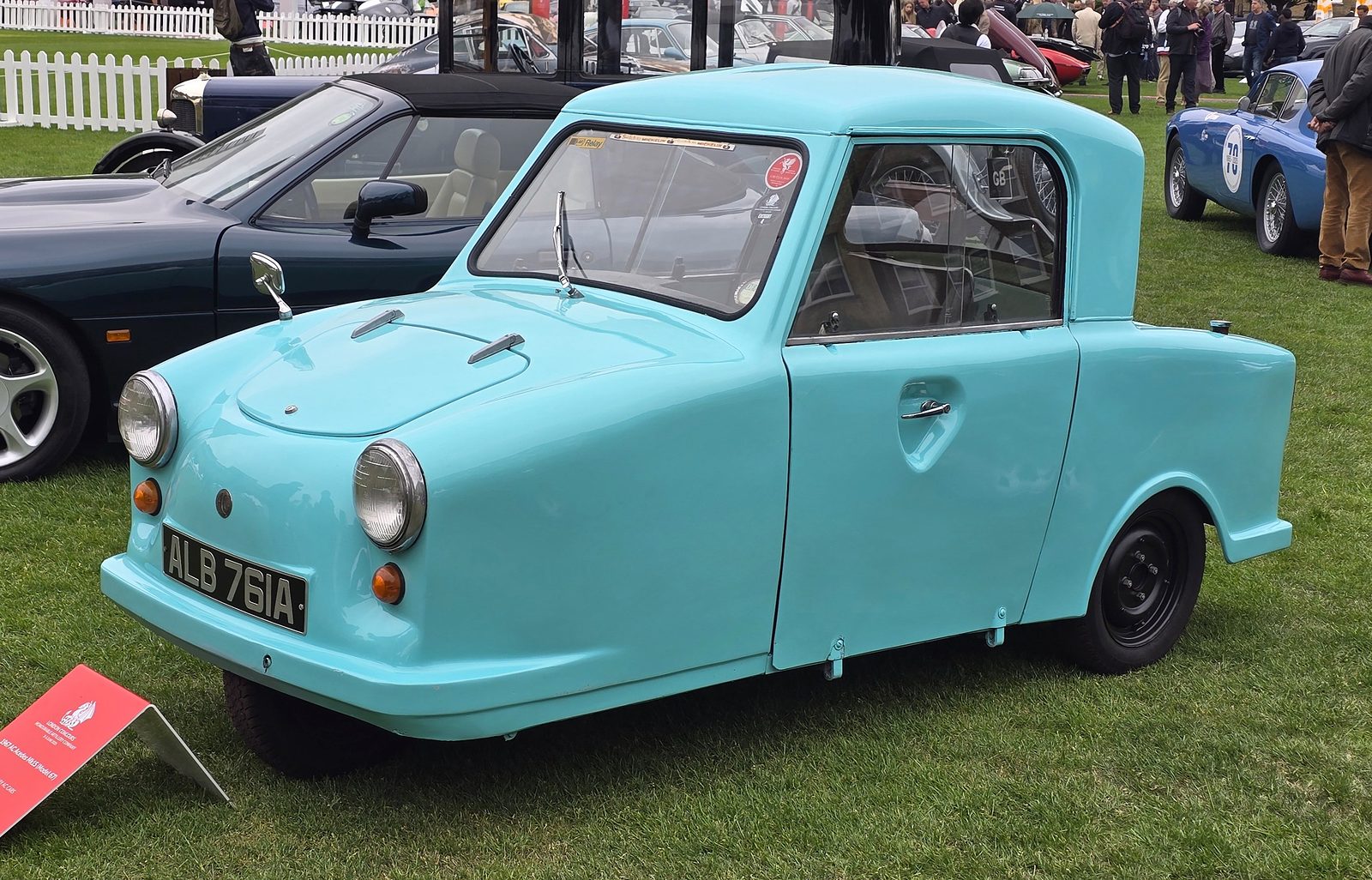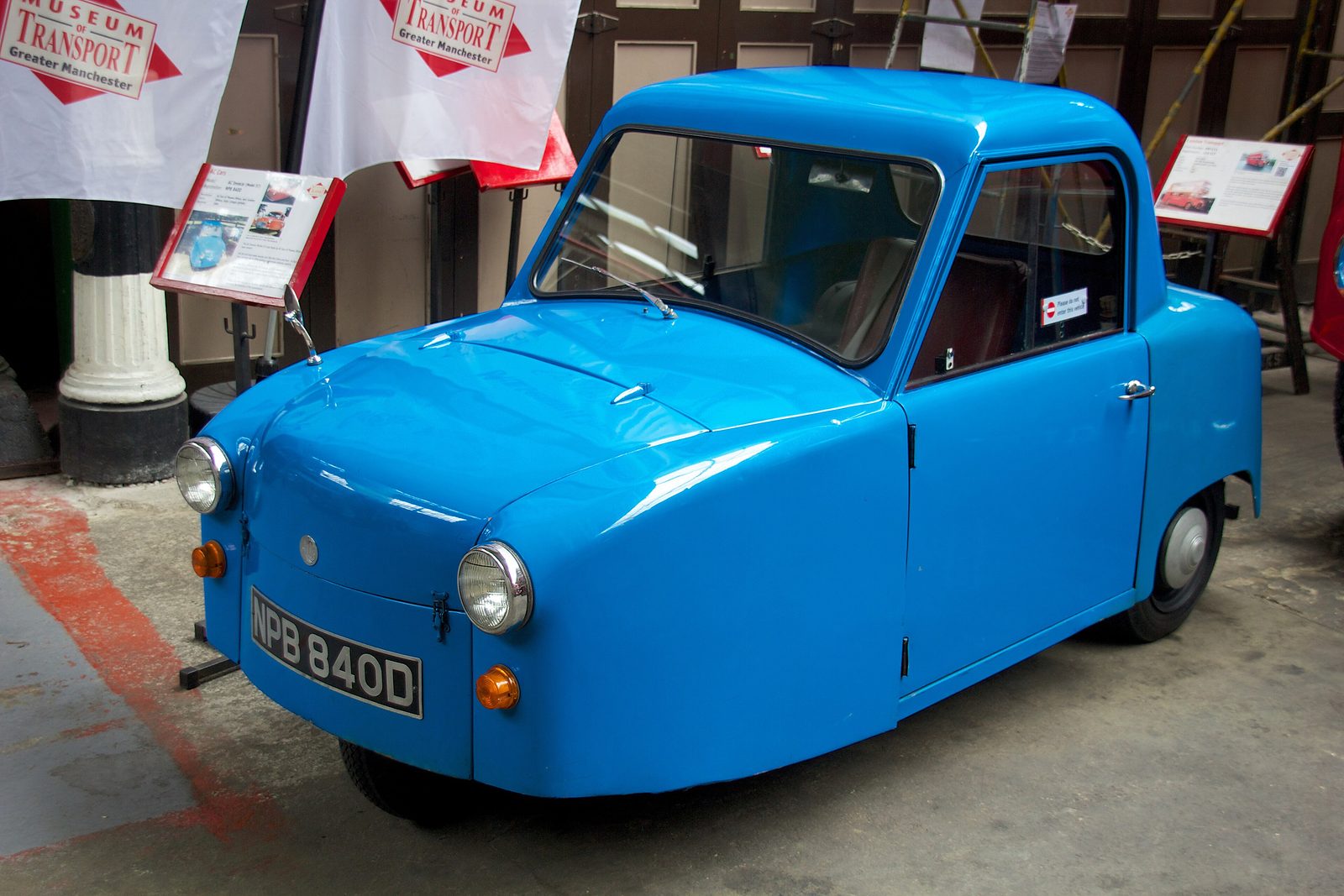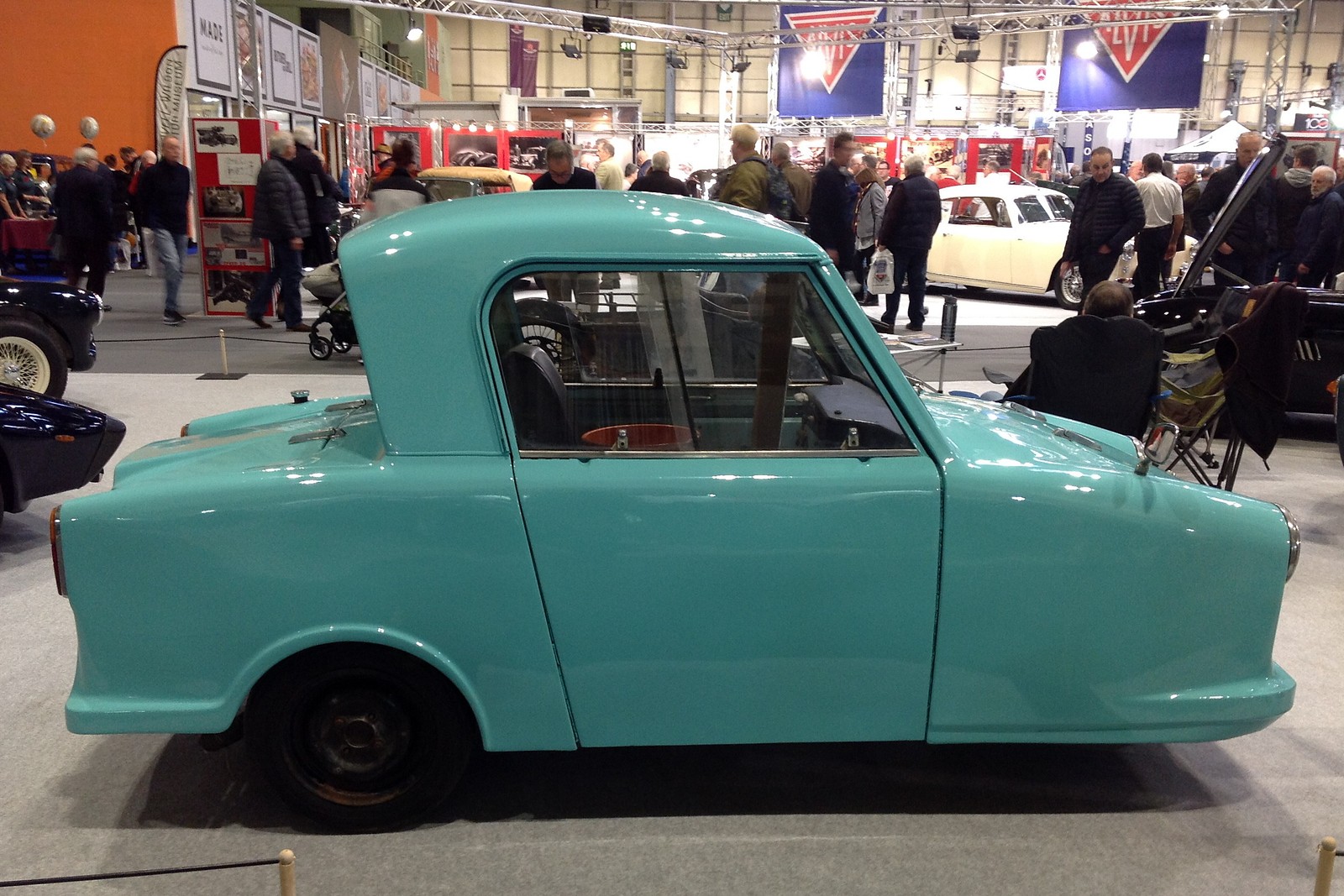
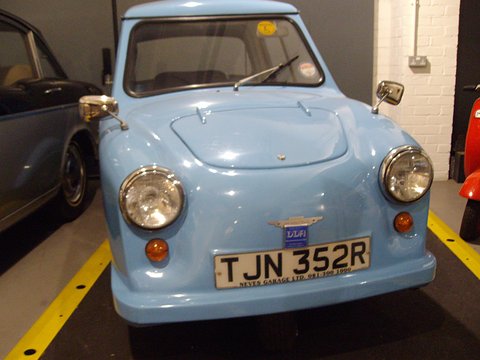
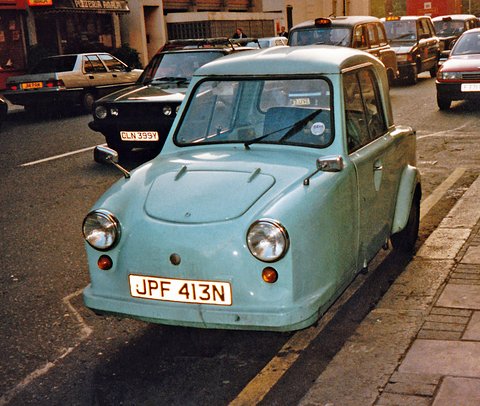
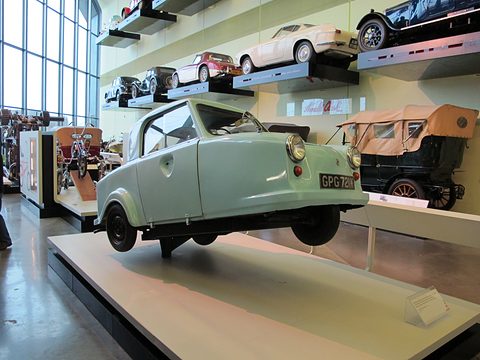
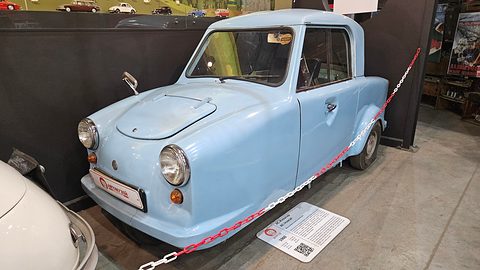
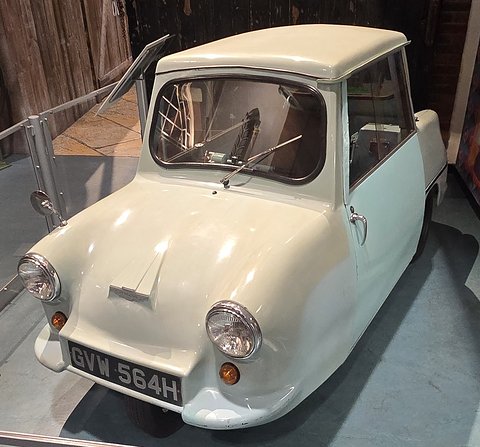
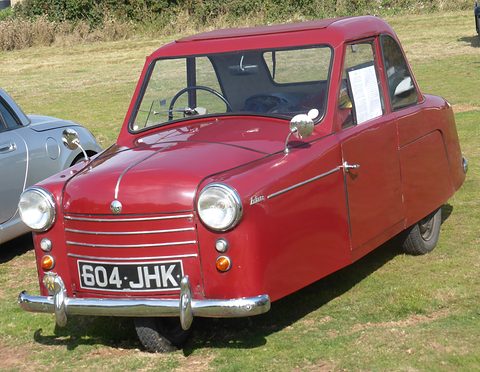
The story
History
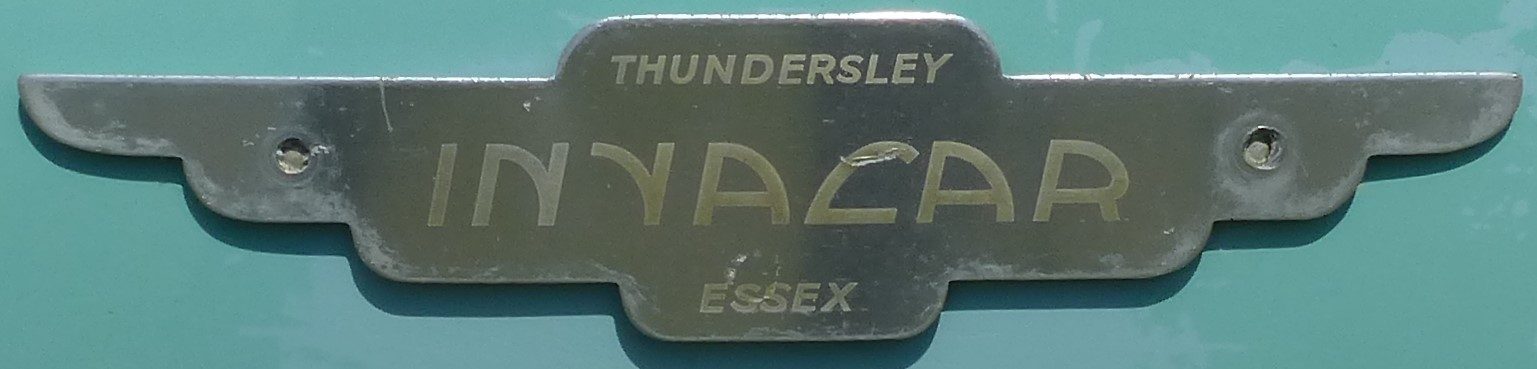
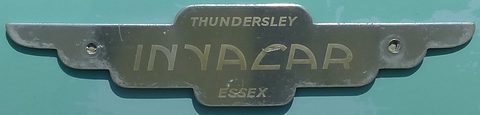
Derry Preston-Cobb was born paralysed from the waist down. His cousin, the engineer Bert Greeves, who later founded Greeves motorcycles, built him a powered machine of his own.source 1source 2 The family story, as Hull Museums and German Wikipedia tell it, is that the first one had a lawnmower engine; no primary source confirms it, and the early production machines used Villiers motorcycle engines.source 1source 2source 3 After the Second World War there were many disabled ex-servicemen, and the cousins saw the need. The government agreed to pay for the vehicles, and Invacar Ltd was formed at Thundersley, near Southend-on-Sea in Essex.source 4source 5
The dates disagree. Hull Museums and the BBC say Greeves designed his machine in 1946; the Invalid Carriage Register says the first Invacar Ltd machines took to the roads in March 1947, each one tailored to its driver; 3wheelers.com and both Wikipedias date the company and its first car to 1948.source 1source 6source 3source 4source 5source 2 In 1949 the firm won substantial supply contracts from the Ministry of Health, and the Register says it held the industry’s first place, taken from Argson, for the next 30 years.source 3
Strictly, Invacar was one maker’s brand. In everyday speech it came to mean every one of the blue state three-wheelers, whoever built them, among them AC Cars of Thames Ditton and the other contractors below.source 6 The vehicles were never sold to their drivers. The Ministry of Pensions issued them first, then the Ministry of Health and later the Department of Health and Social Security, free or on lease, and the state owned and maintained them.source 4source 6 Sir Bert Massie, the disability-rights campaigner, who was given one at 16, explained the thinking.source 6
The government didn’t see these as cars... they saw them as a prosthetic. There was a strange logic to their thinking. They saw the role of the NHS as being there to get you mobile. If you were not disabled, you’d be doing that with your legs. So, if you were disabled, and couldn’t do that, they gave you a one-person invalid carriage as a leg replacement to get you from A to B.
His “test”, at 16, took place at an artificial-limb centre in Liverpool: an engineer pushed him along in the car and checked that he could brake.source 6
Hood, steel, then glass fibre
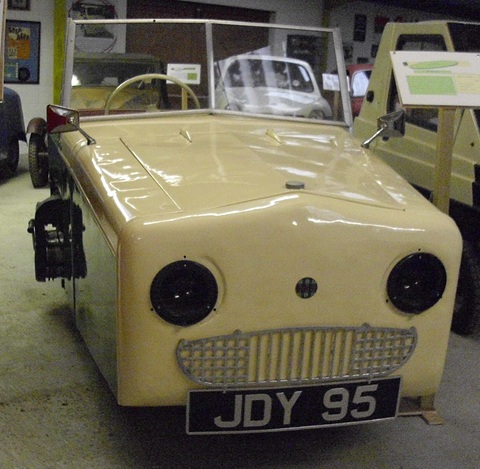
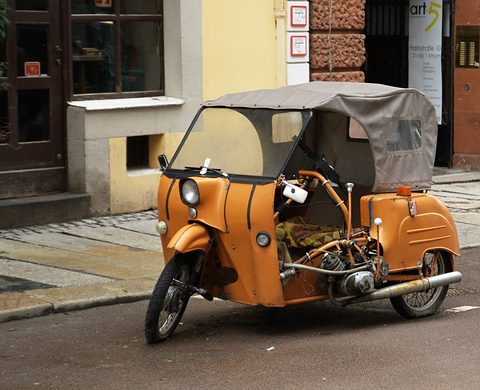
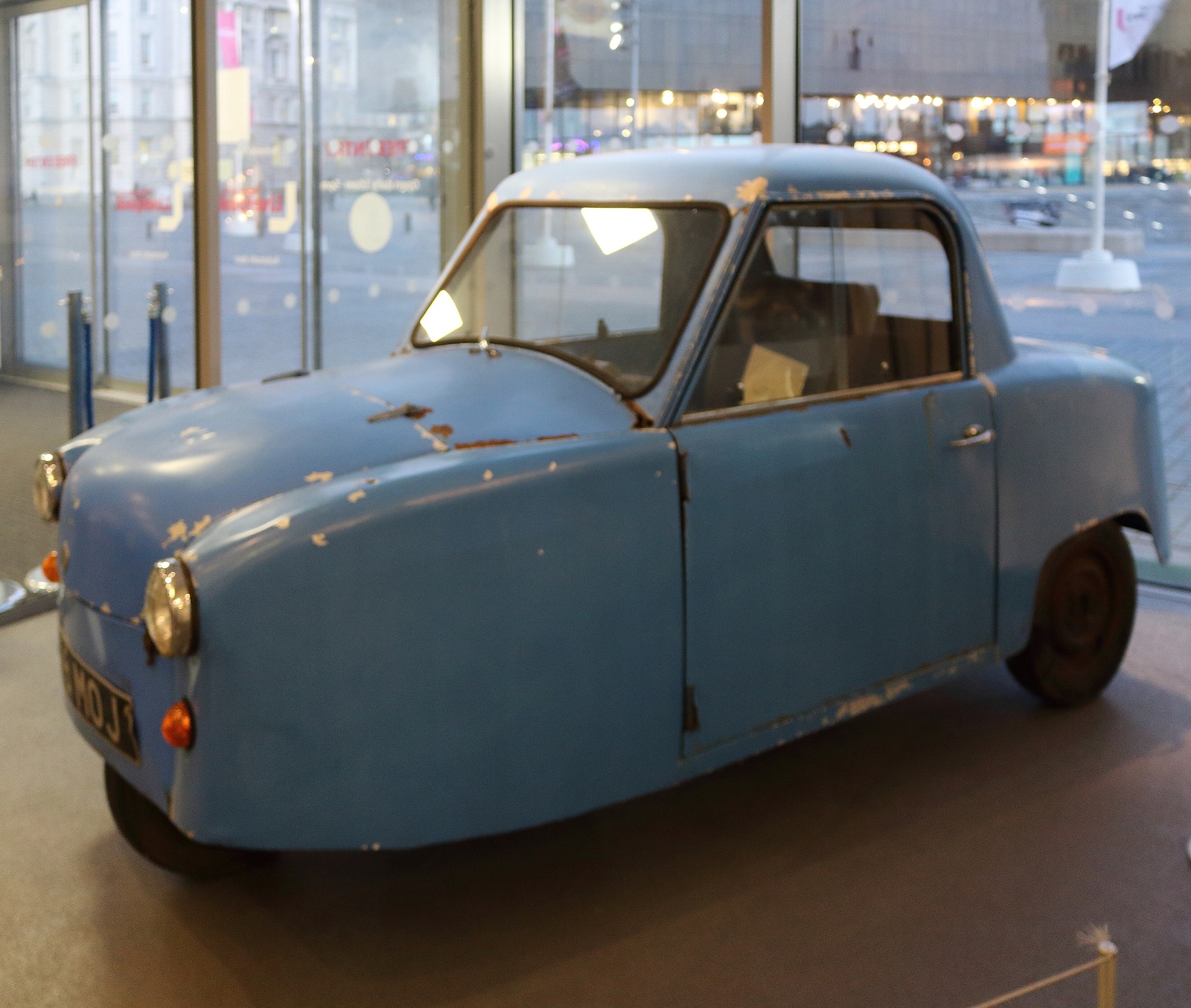
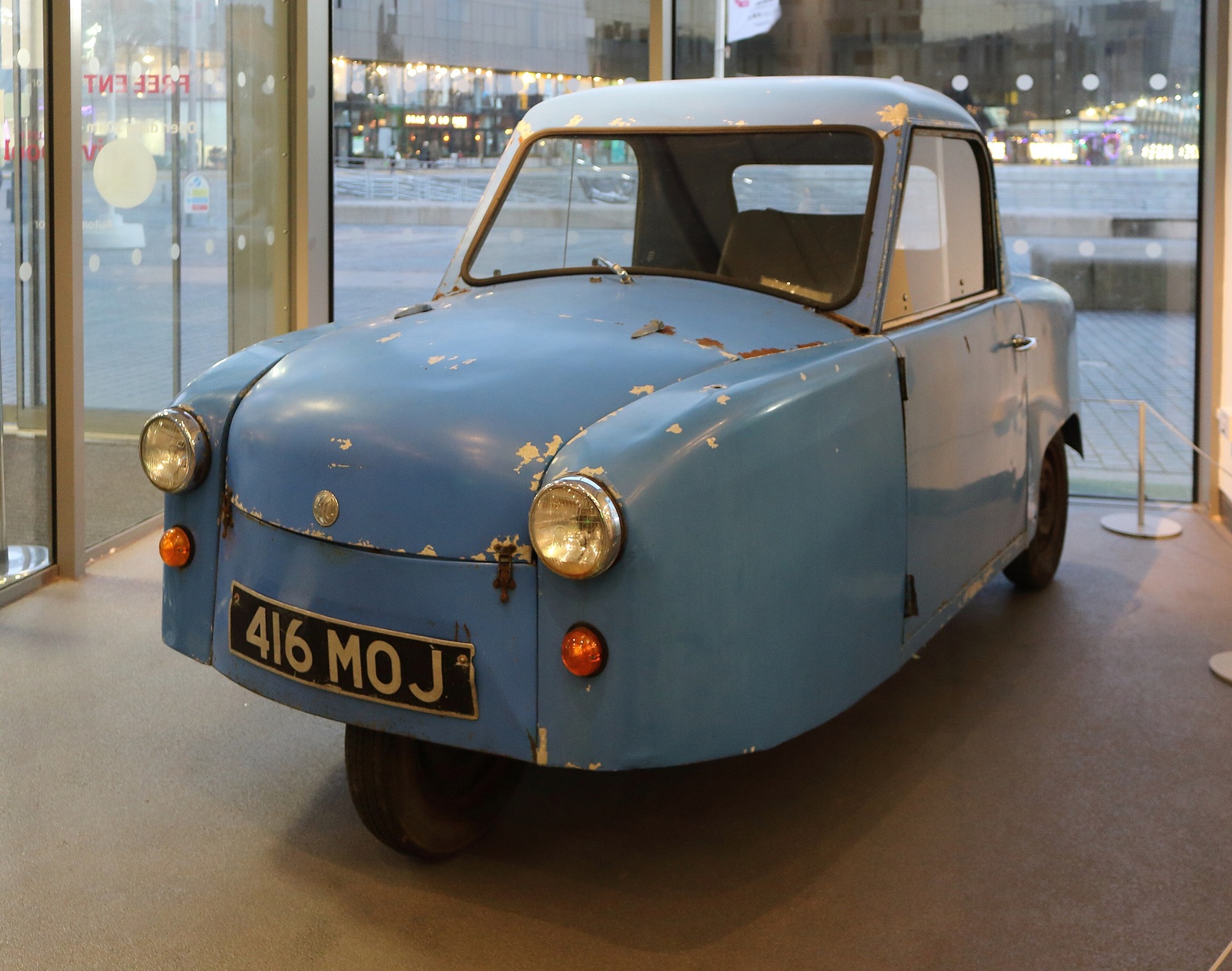
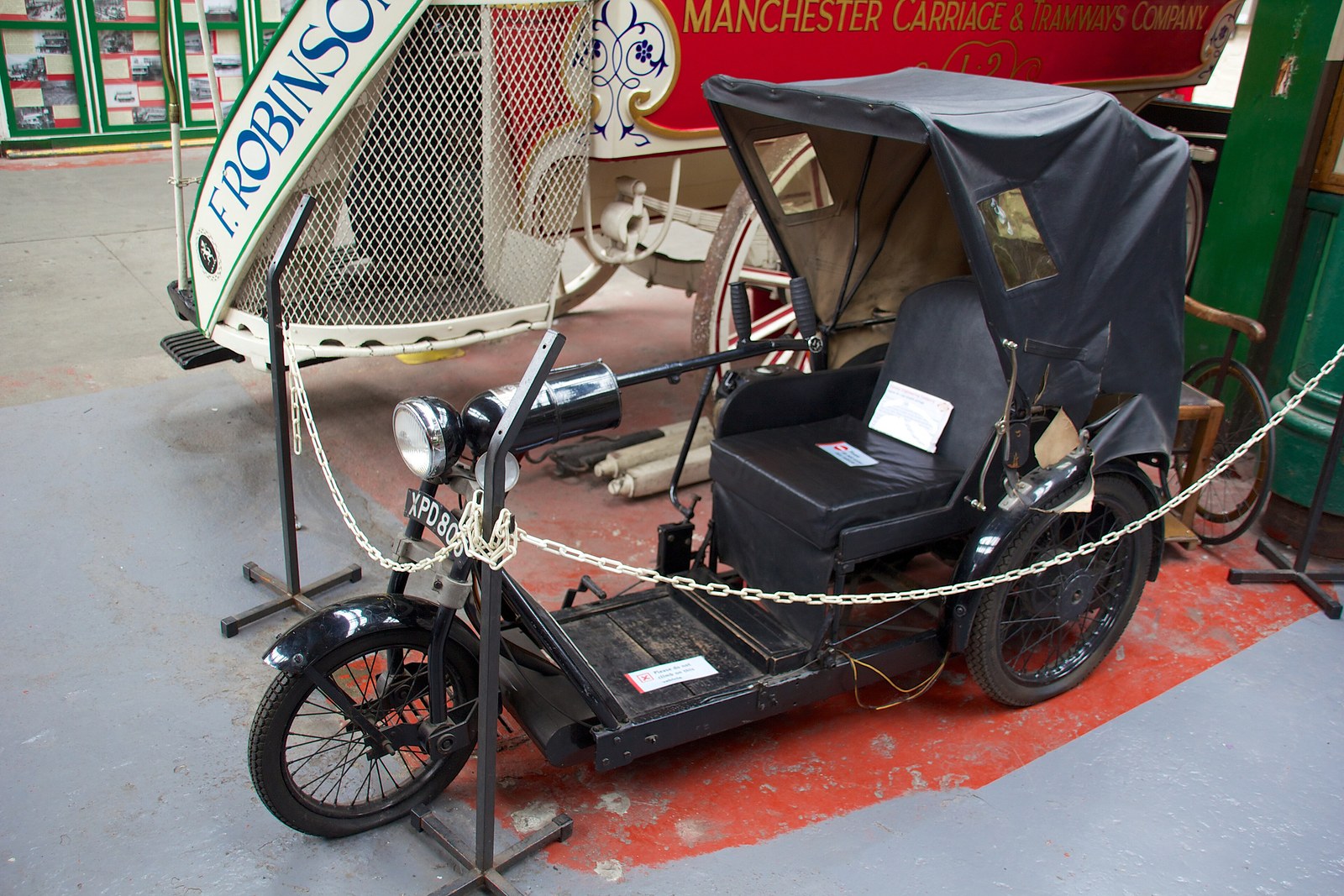
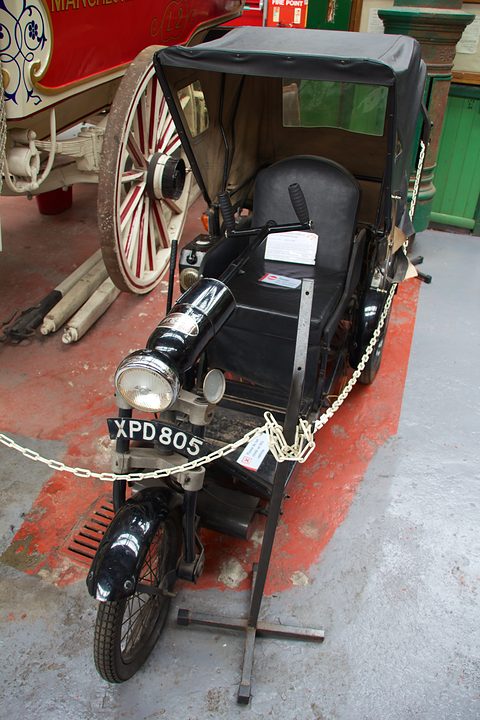
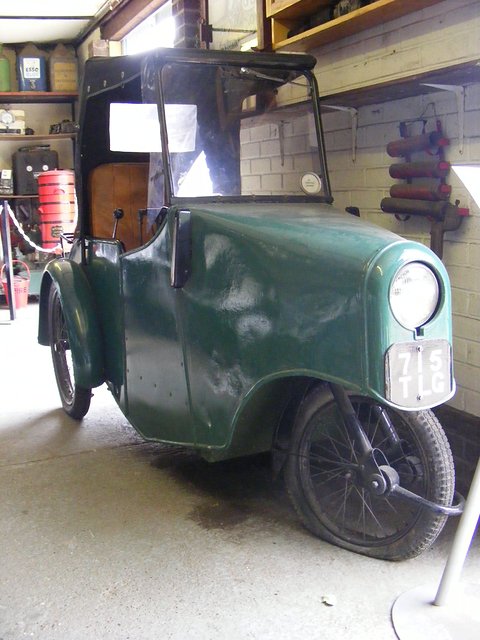
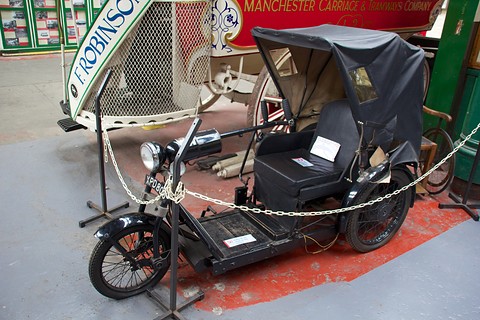
In law, an invalid carriage was a class of its own. The Road Traffic Act 1930 defined invalid carriages as vehicles of no more than 5 cwt unladen, “specially designed and constructed, and not merely adapted”, for people with a physical defect or disability, and “used solely by such persons”.source 7 The first Invacars were open machines with a Villiers engine on the right of the chassis, ahead of the rear wheel: a 122 cc engine at first, then a 197 cc one from 1948, by the Register’s account, though other sources give 147 cc and 197 cc, probably for different years.source 3source 5source 2source 4 In February 1952 the Mk 8 replaced them with one weather-protected model, a fixed hood and screen, leathercloth stretched over a welded tubular frame, and a 197 cc Villiers 8E. The Mk 8A of 1955 added rubber-in-torsion rear suspension and a larger hood.source 3
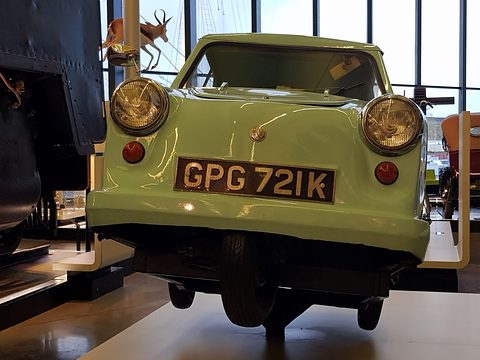
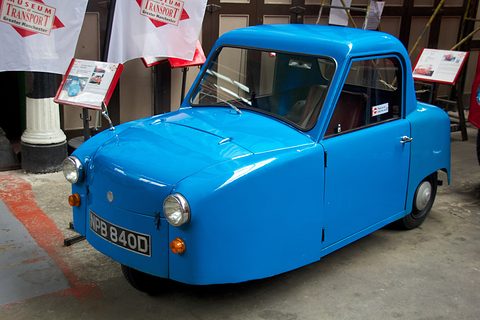
In 1957 the Ministry of Health issued a Standard Specification, and Invacar’s answer that April was the Mk 10, with a pressed-steel body and a Villiers 9E at the back. At 249 kg (550 lb) unladen it came in under the official limit of 254 kg (560 lb, or 5 cwt), and the Register says it was the last new invalid three-wheeler to do so. On the Ministry’s instruction its front wheel grew from 10 to 12 inches in the Mk 10A of 1958–59, of which 1,003 were made.source 3 3wheelers.com sums up the Ministry’s standard as a 147 cc air-cooled Villiers, one seat, pressed-steel wheels, hydraulic brakes, an electric starter and a glass-fibre body in Ice Blue; until then, it says, many designs had appeared, from one seat to two.source 5
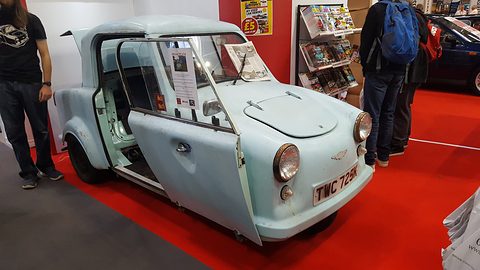
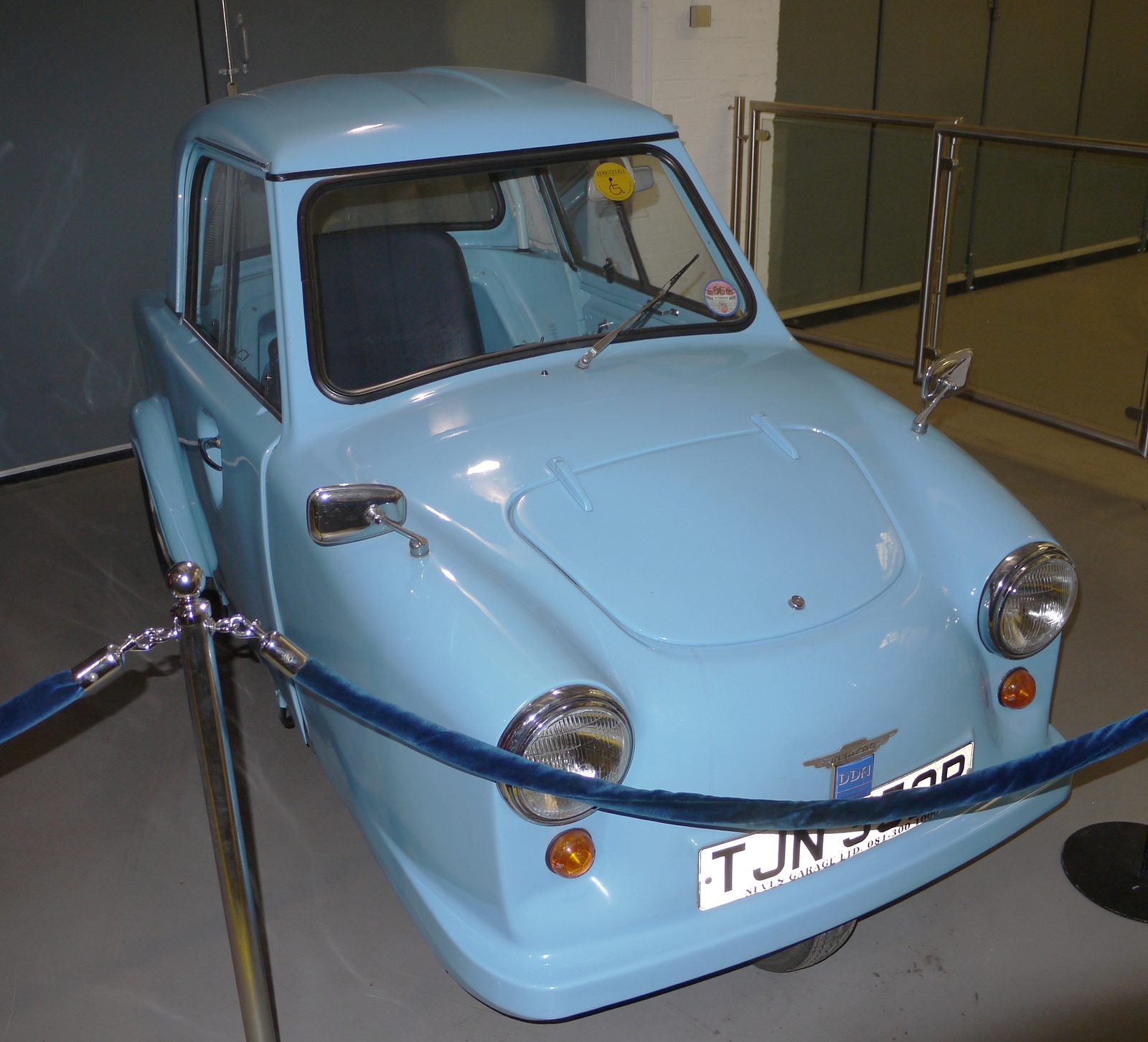
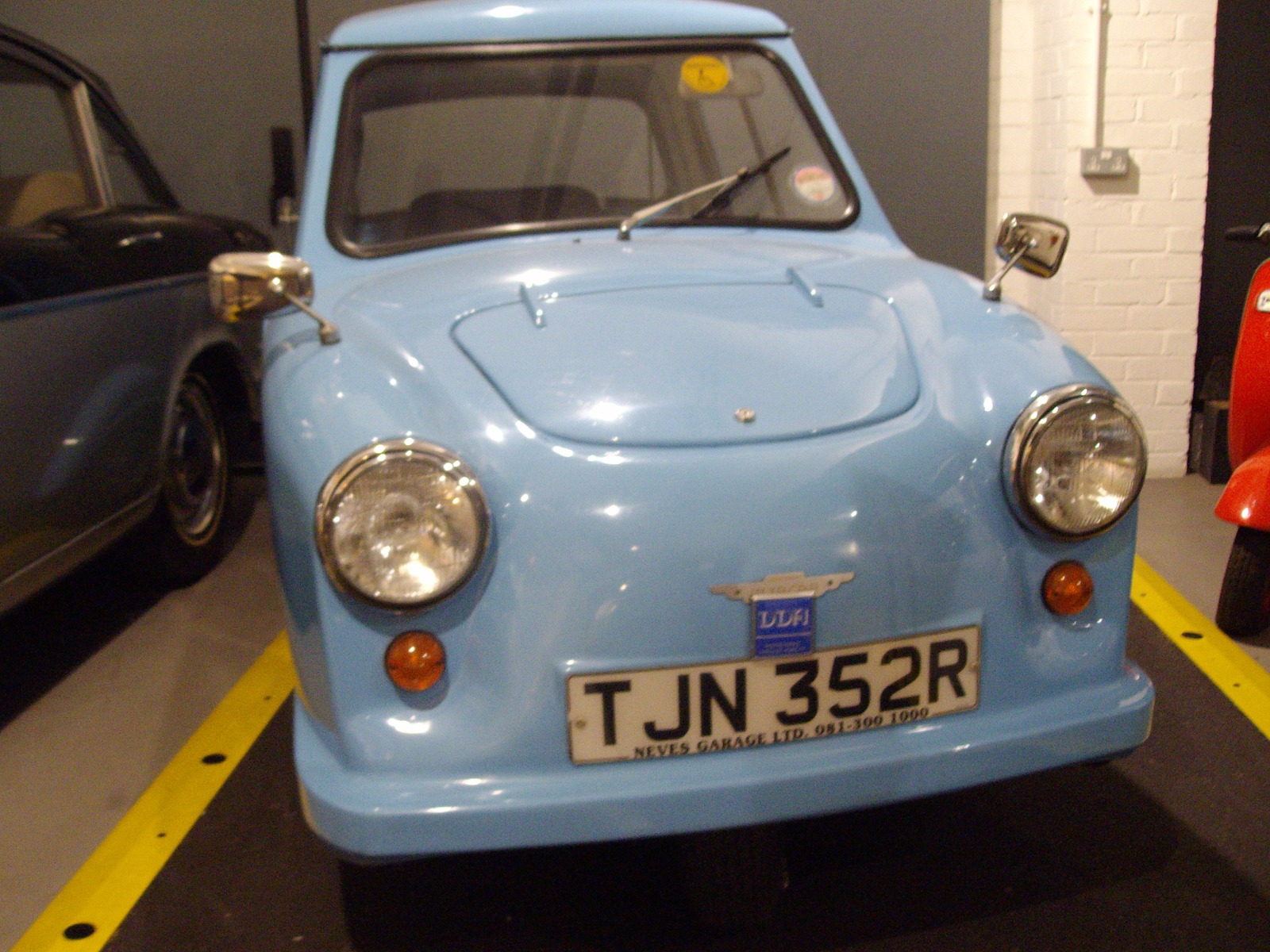
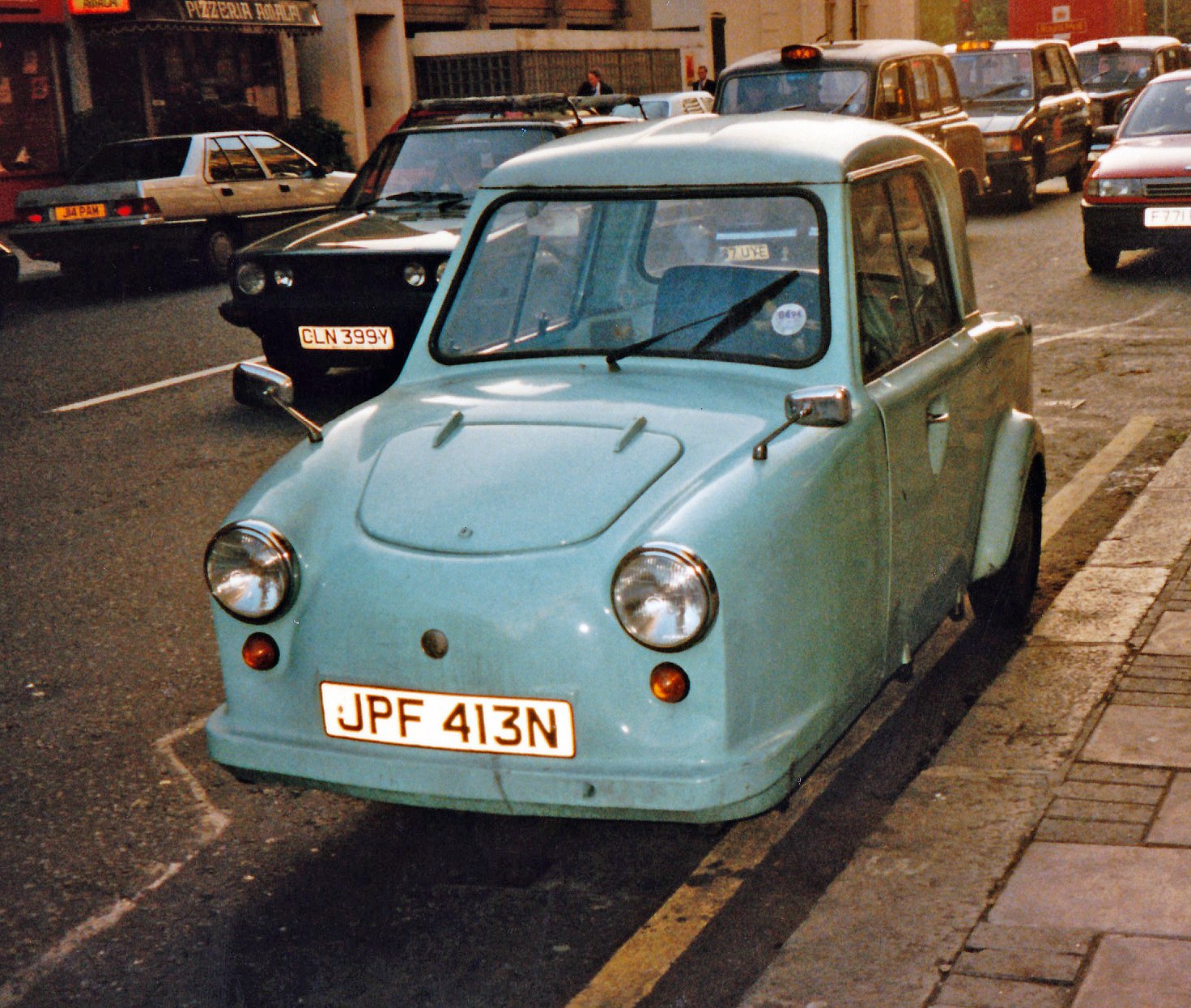
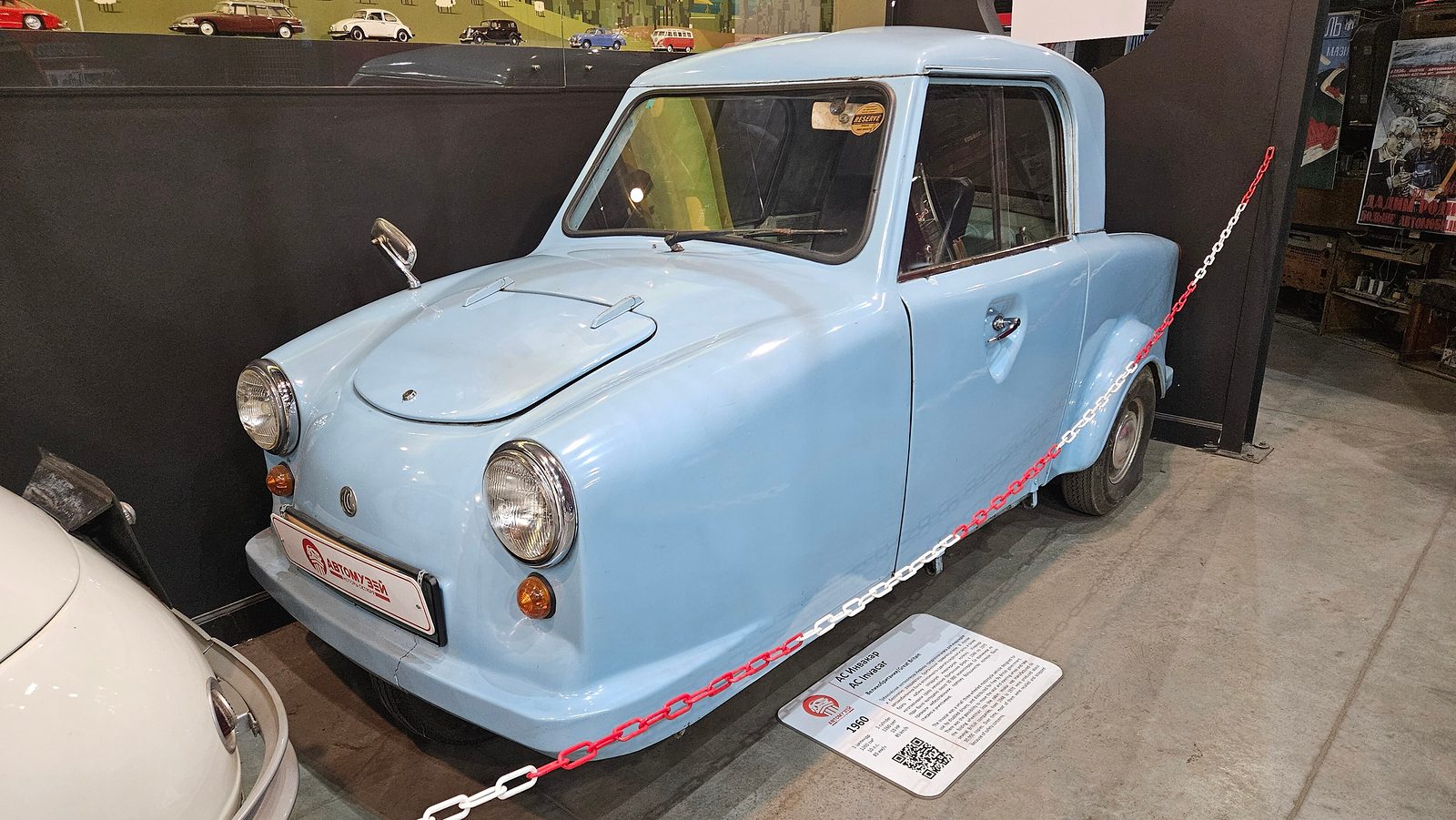
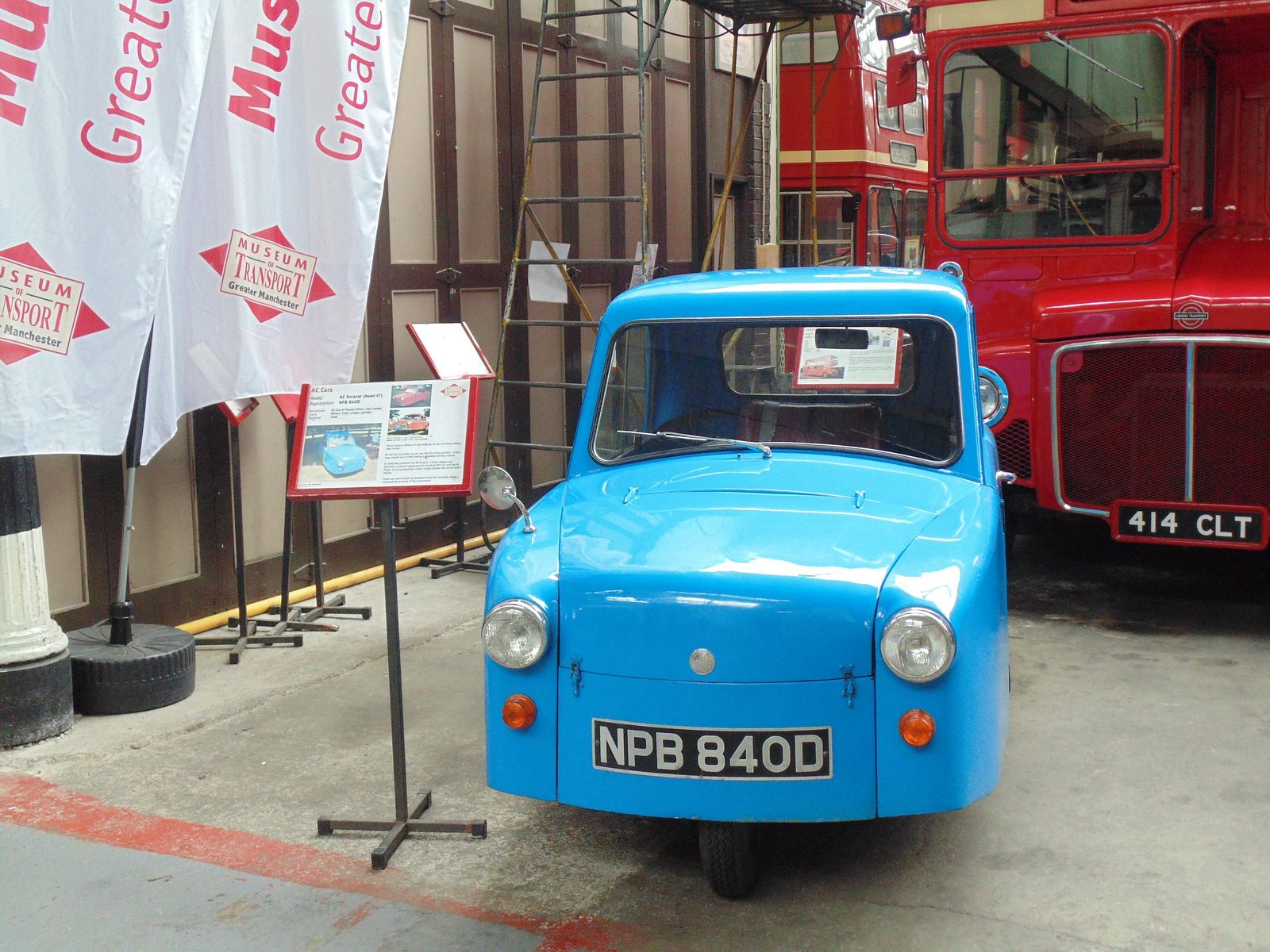
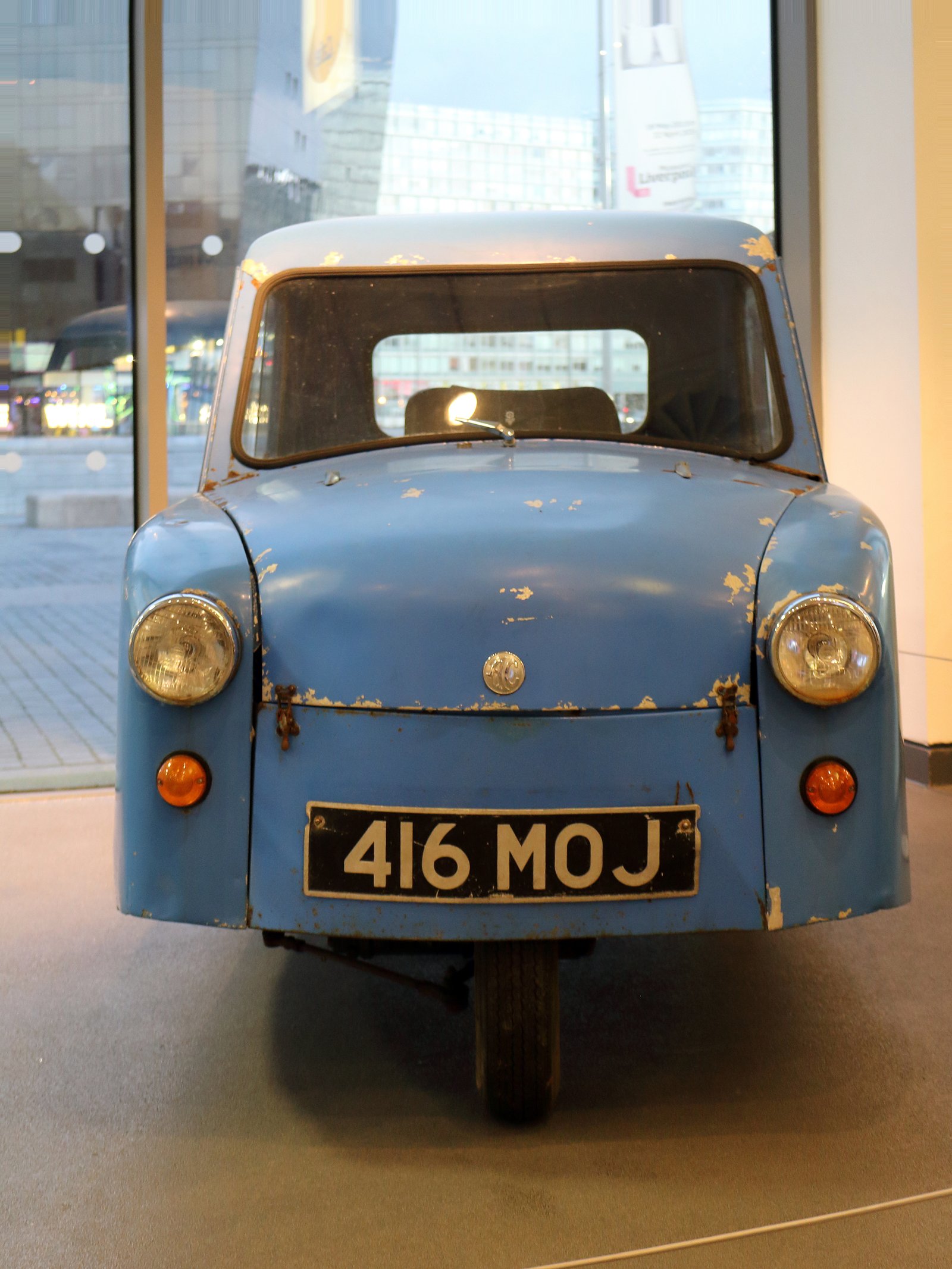
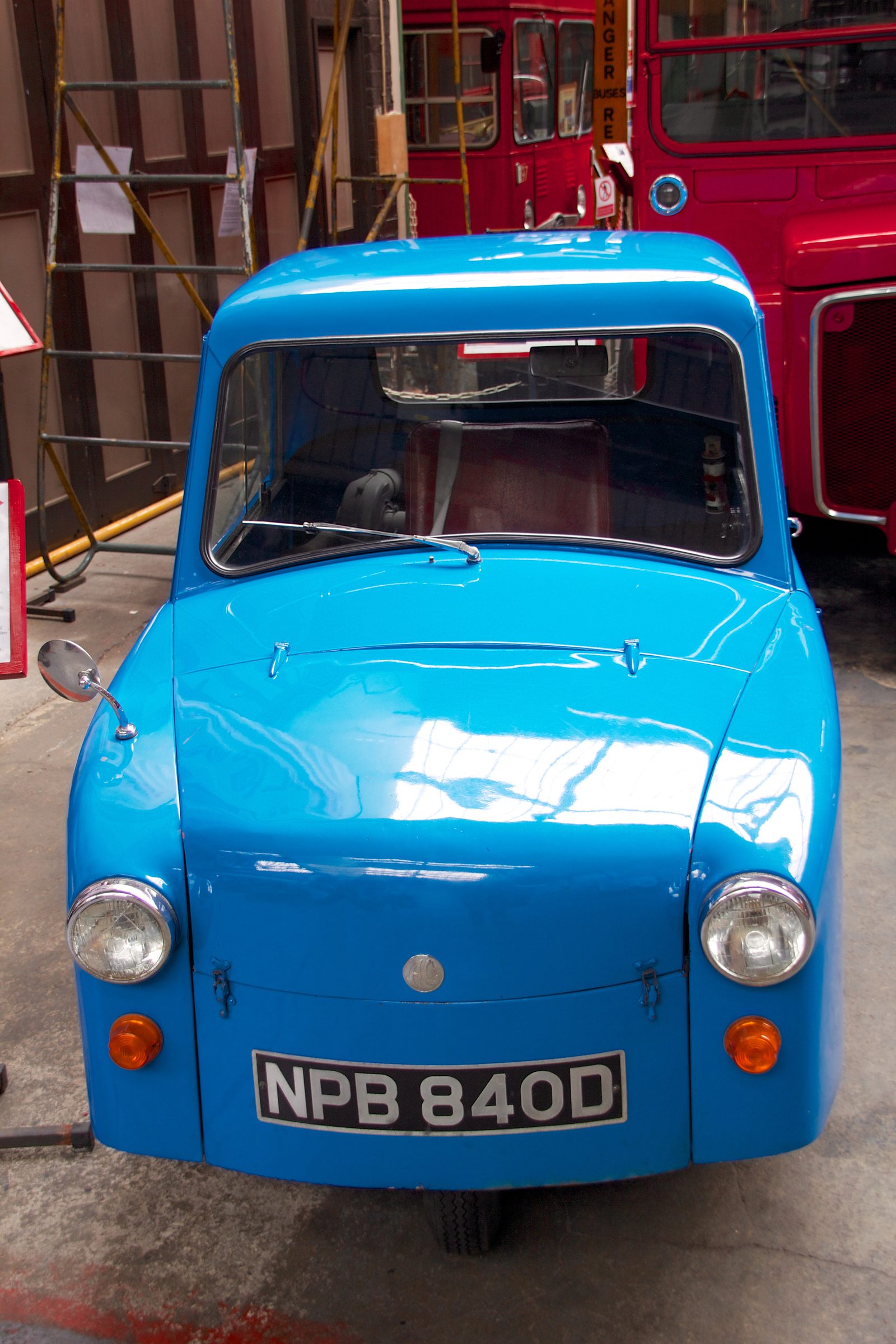
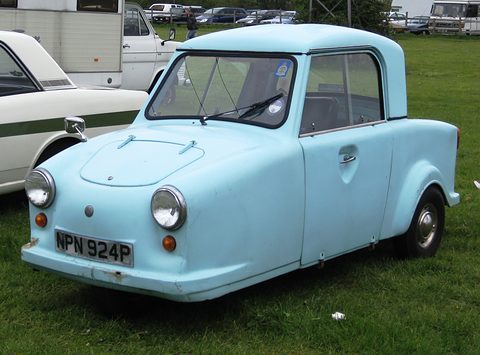
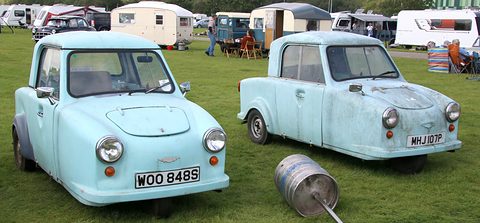
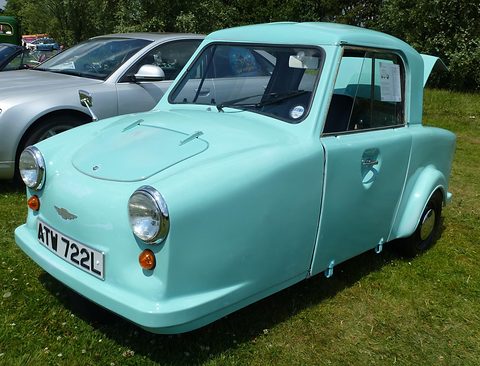
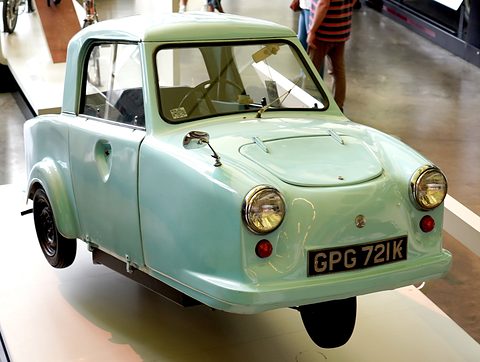
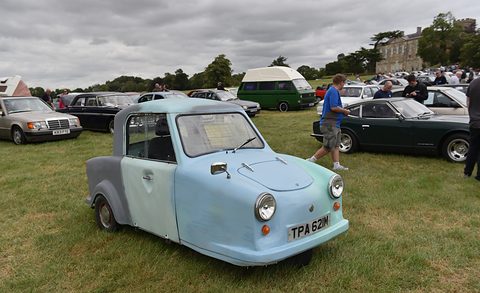
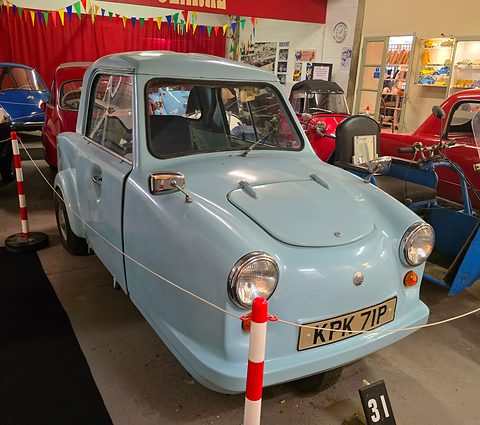
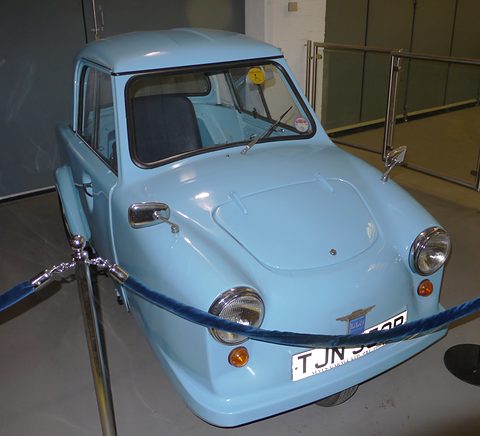
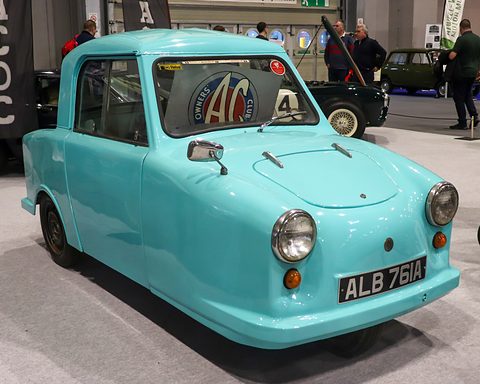
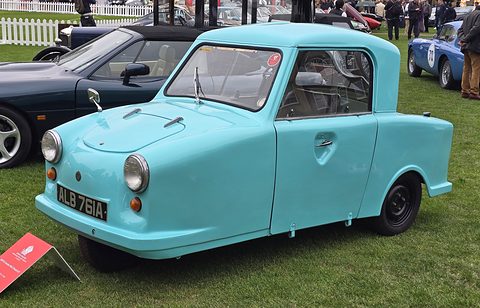
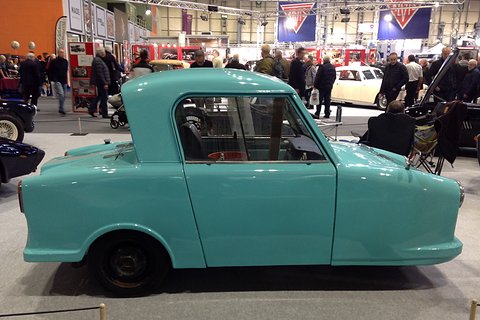
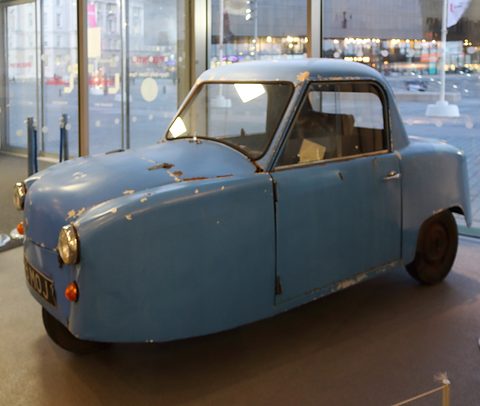
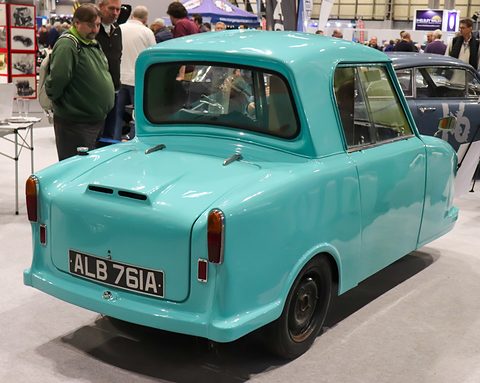
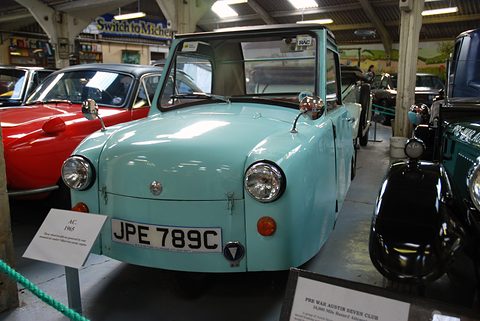
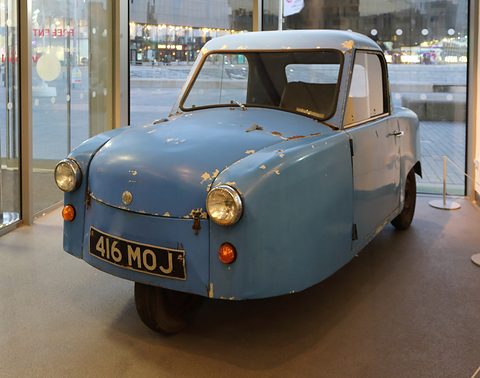
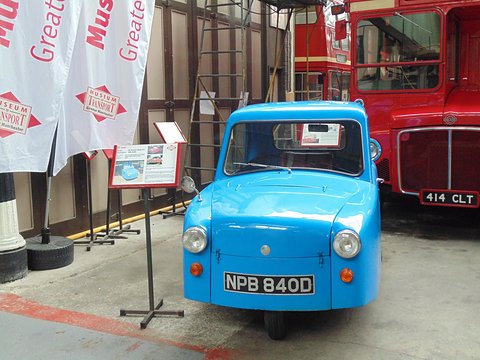
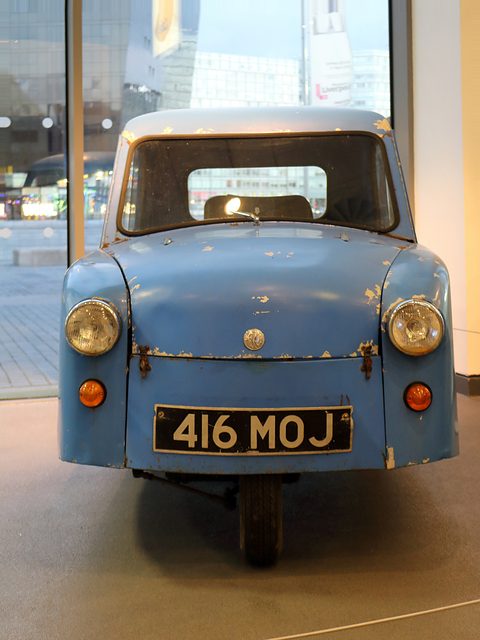
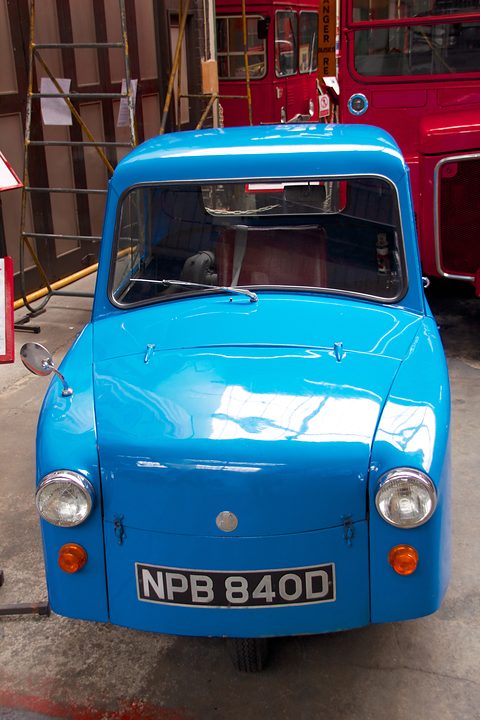
Through the 1960s the carriages had glass-fibre shells on steel tube chassis, in the ice blue that gave them their nickname, “Ministry Blue”, after the Ministry of Health. They were made in the tens of thousands; the wheelbase grew longer, the track wider, and later cars ran on Austin Mini wheels. More than 50 variants appeared over the years.source 4source 5source 2
The Model 70
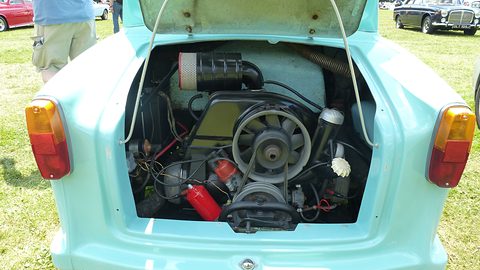
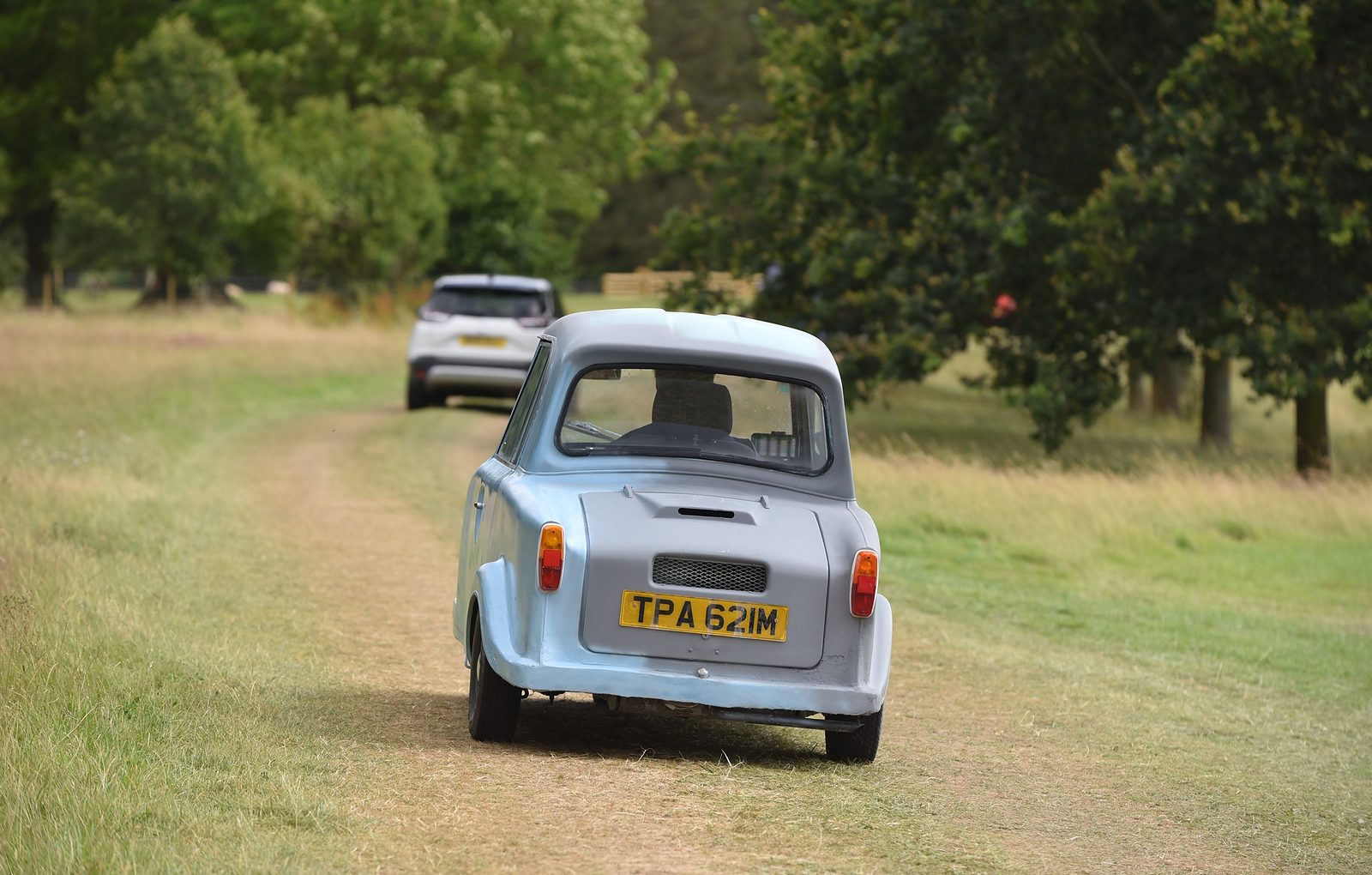
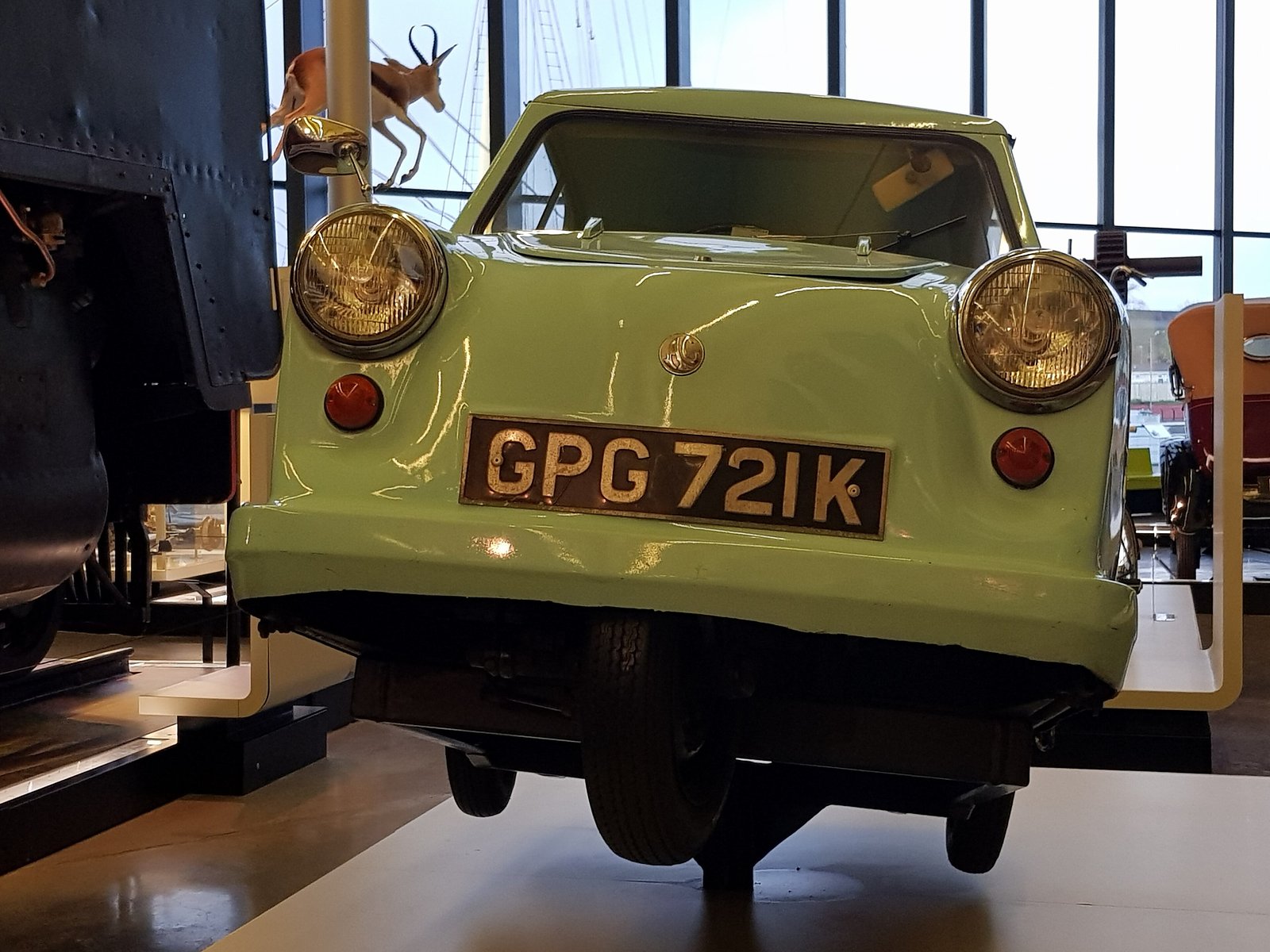
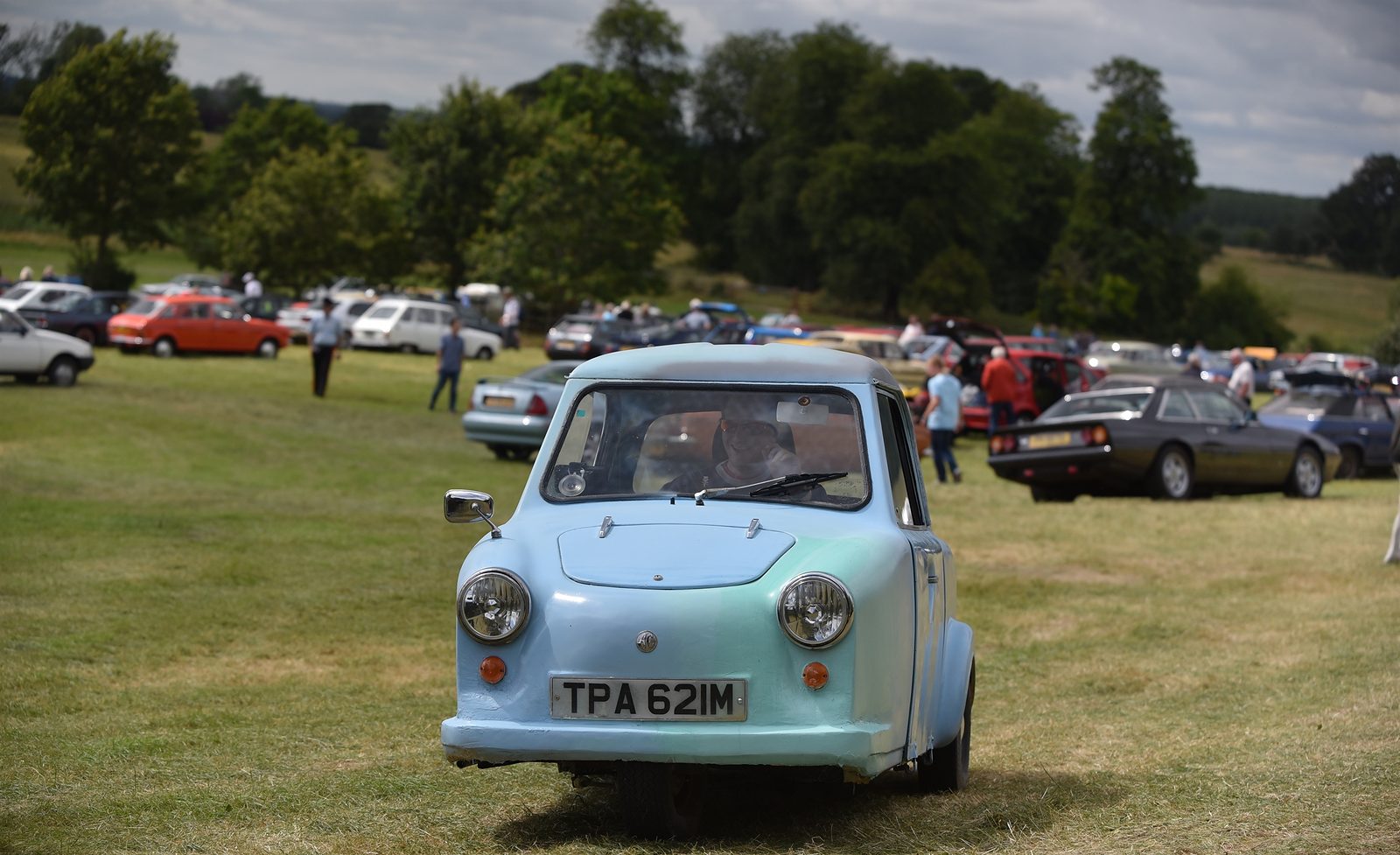
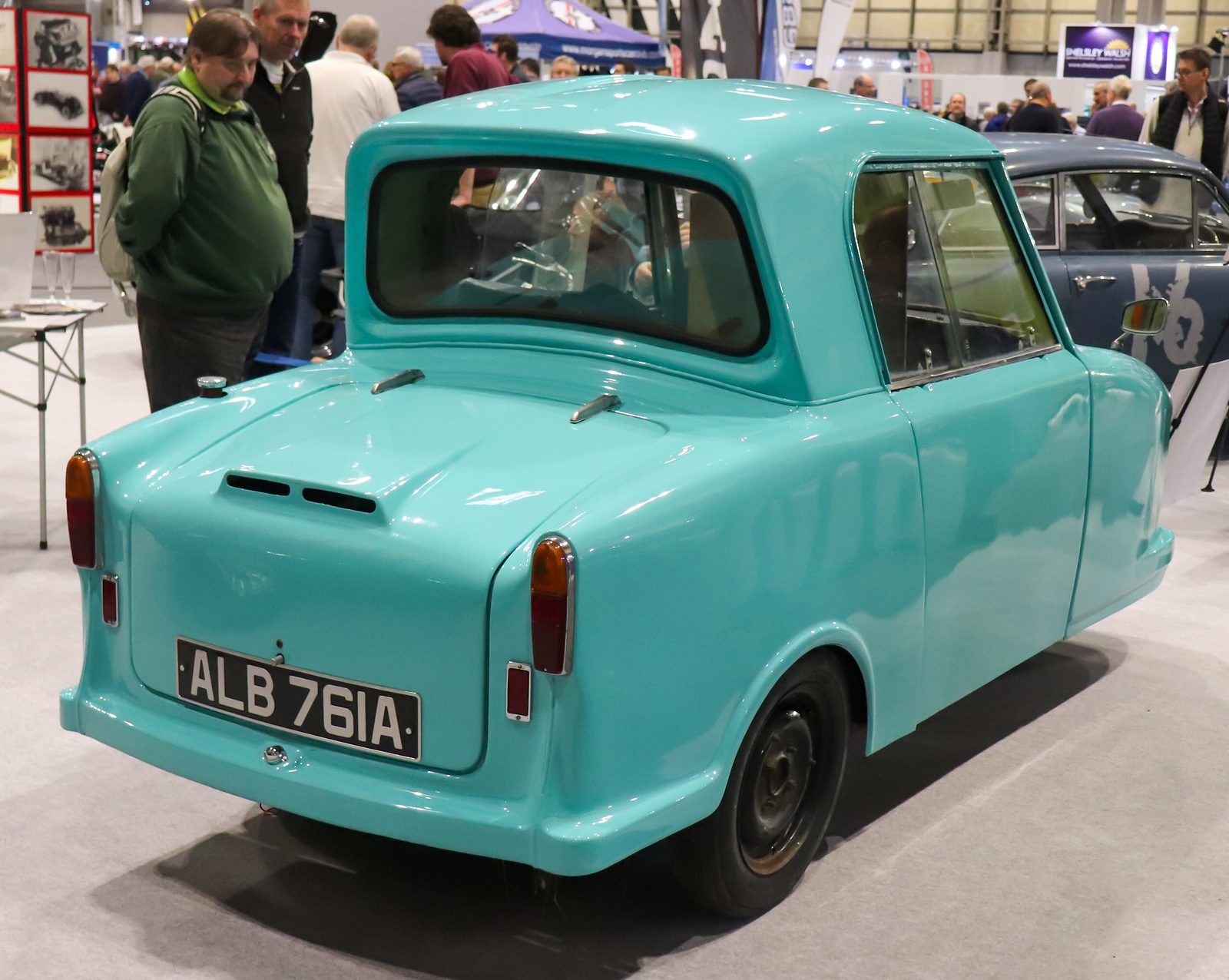
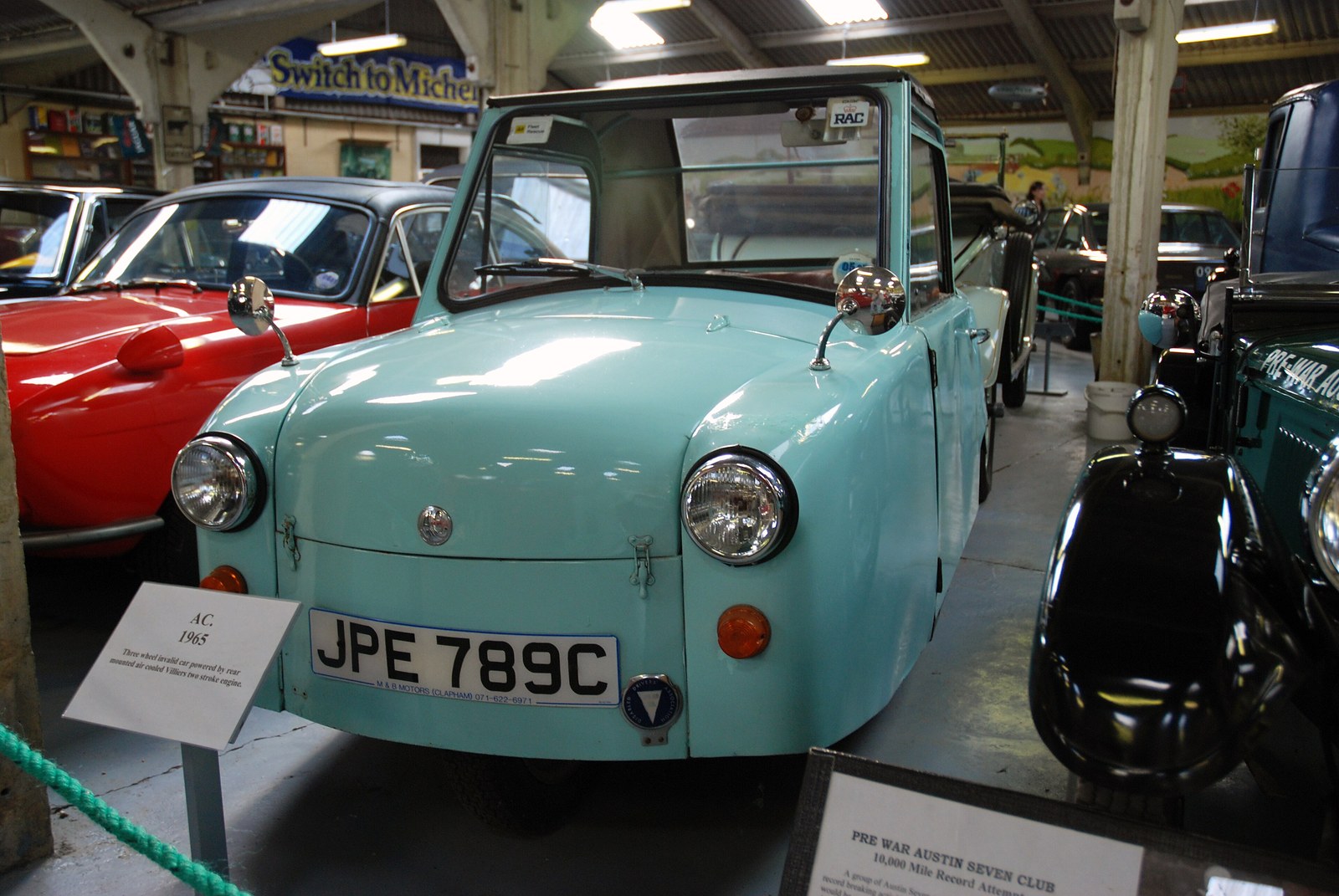
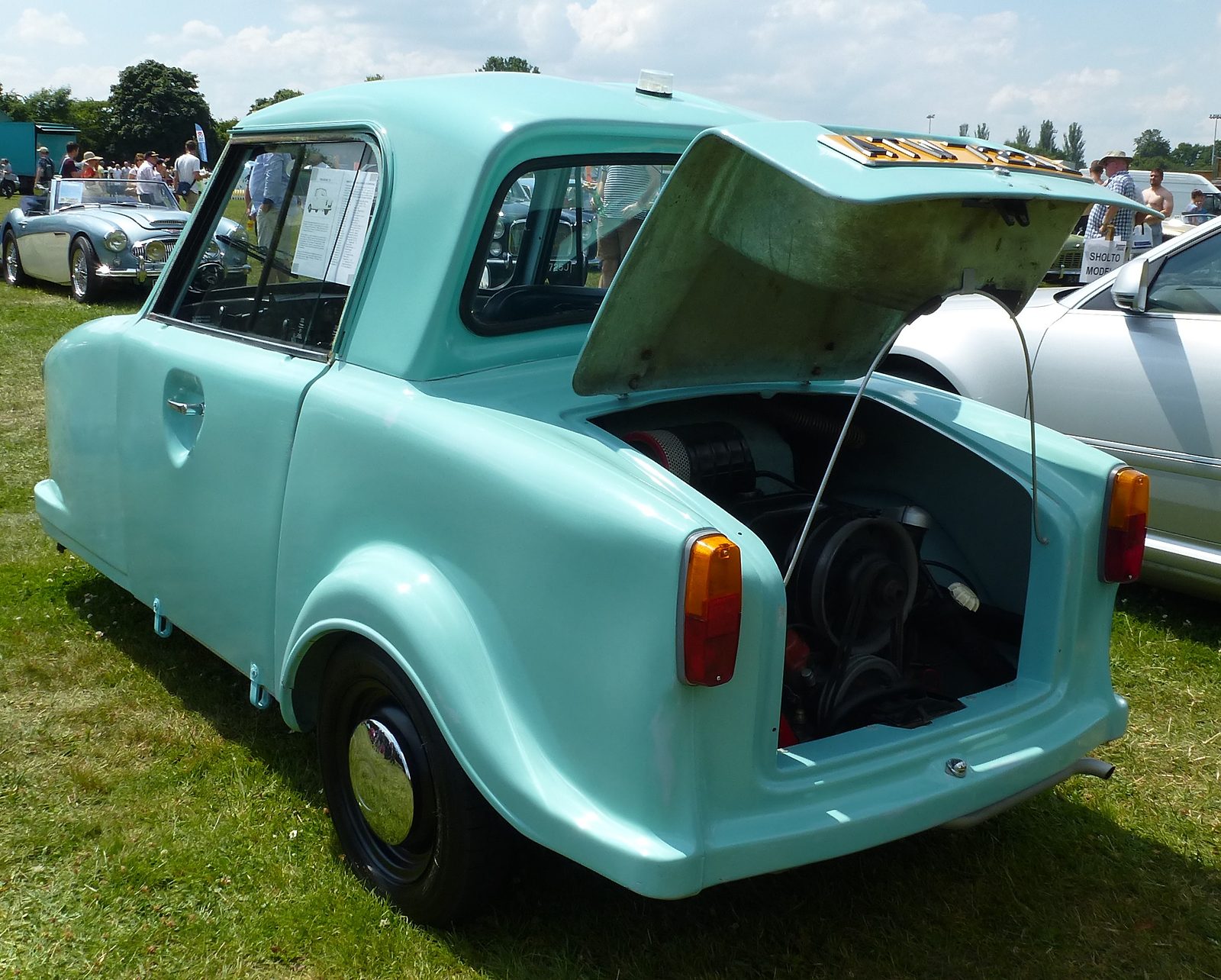
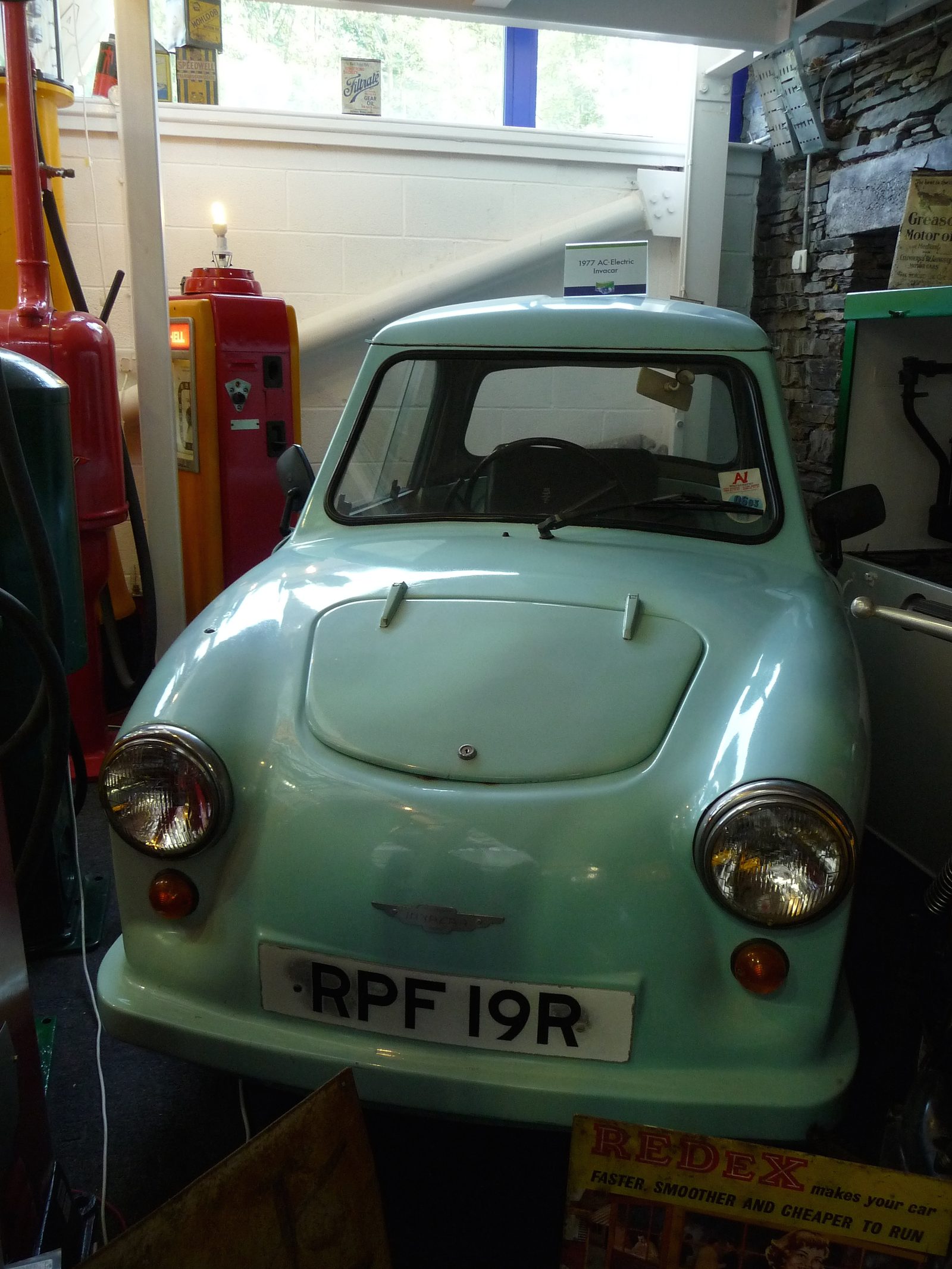
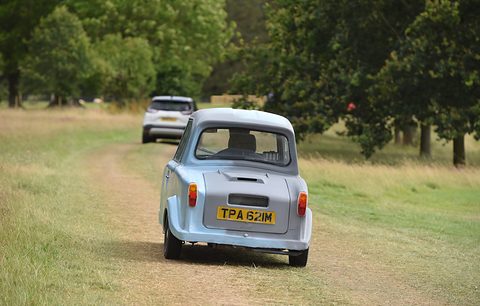
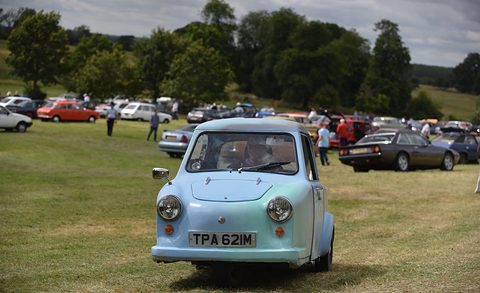
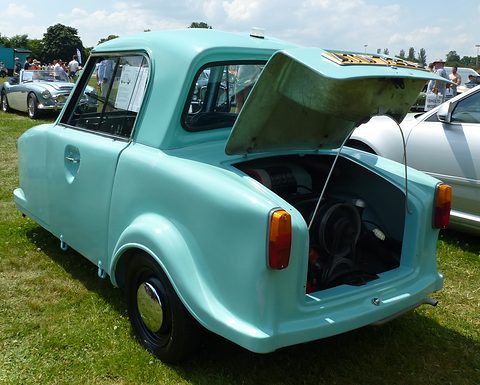
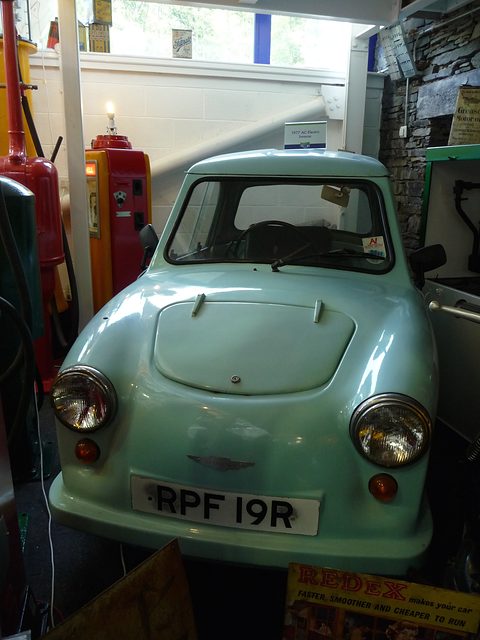
By the early 1970s the Villiers two-stroke had gone out of production, and the government wanted a standard design.source 4source 5source 8 AC, the sports-car maker of Cobra fame, drew the Model 70. It was meant to use Fiat running gear, but Fiat was reluctant to supply engines, so it got the engine of the Austrian-built Fiat 500, the Steyr-Puch 500: an air-cooled flat twin of 493 cc and 20 bhp, mounted behind the driver, and later a 600 cc version.source 8source 5 Around 18,000 were built between 1972 and 1977, half by AC and half by Invacar Ltd; the National Motor Museum says production ran until 1976.source 8source 9
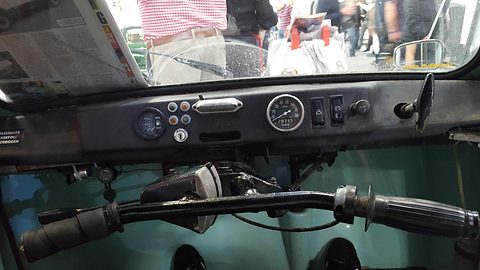
The car was made to fit its driver. It had an automatic clutch, a seat at wheelchair height, and sliding doors on both sides, so that a driver could stow a folded wheelchair beside the seat. The controls were adjustable: a tiller, or handlebars with a motorcycle twist-grip, or a steering wheel.source 10source 9source 1 BBC Ouch remembered them as high up and easy to get into.source 6 A top speed of 82 mph is often repeated for the 600 cc cars, but it comes from one enthusiast site and is not a measured figure.source 5source 10
One seat only
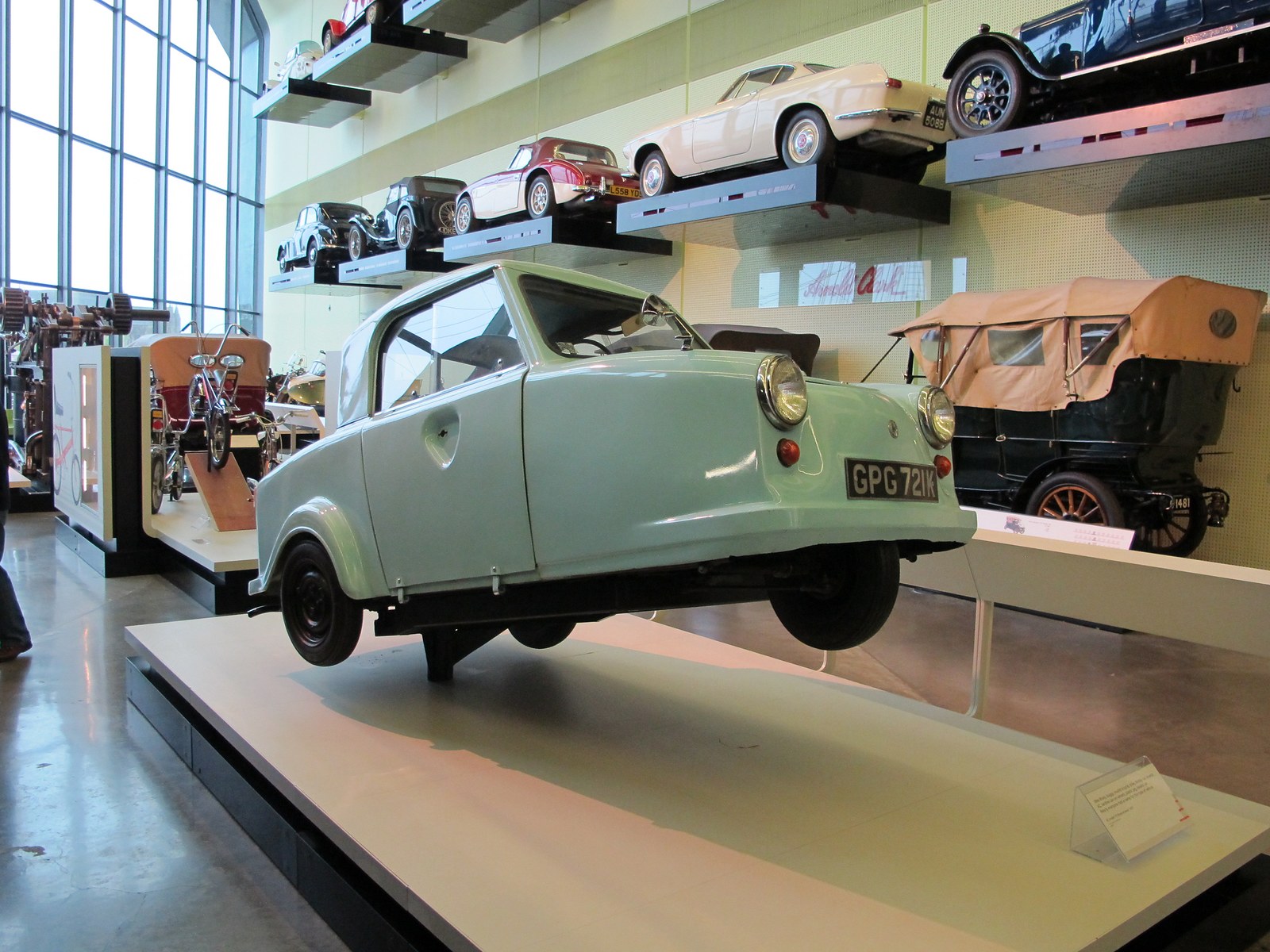
The carriages gave their drivers a way to get about on their own, but only on their own: passengers were forbidden. A disabled parent could not drive the children to school, and campaigners criticised the rule as isolating.source 1source 6 The Register later took it as the title of an exhibition, “The Carrying of Passengers is Forbidden”.source 11 The cars could also be frightening. Hull Museums describes a small, light car easily toppled by strong winds, and there were reports of overturning and of fires.source 1source 6 Massie and Jim Rawlings, the archivist of Disabled Motoring UK, gave the BBC their own accounts.
I had a few go on fire on me, so you’d stop and other motorists would drag you out as the thing went up in flames.
He had to carry half a sack of King Edwards to weigh it down because it was so susceptible to crosswinds.
The end of the scheme
English Wikipedia, citing the BBC, says the carriages failed crash tests at MIRA in 1974.source 4 Disabled people and campaigners pressed for ordinary adapted cars instead, and from the late 1970s cash allowances and the Motability scheme let them lease or buy one; by 2013 more than 600,000 people used Motability.source 4source 6 The closure of the carriage scheme was announced in 1976, when 21,500 invalid carriages were on the road. The last state contract ended in 1977, and the scheme was meant to close completely in 1981, but drivers who had a carriage could keep it.source 6source 5source 10source 1 Invacar Ltd’s Thundersley works, where Greeves motorcycles were also built, closed after a fire in 1977, and the company became insolvent; Greeves and Preston-Cobb had left two years before.source 2
The cars lasted far longer than the scheme. Around 2002, 3wheelers.com counted about 1,300 still in daily use, while service agents crushed about 50 a month and their drivers moved to a four-wheeled, government-approved car, the 340 cc Canta.source 5 Then, on 31 March 2003, the carriages were banned from the road on safety grounds, called in and crushed.source 4source 1source 6 About 200 were still registered, says German Wikipedia; within a week or so, says The Observer, all the remaining Invacars, several hundred of them, were collected.source 2source 8
Gold Lamé
In 2014 the disabled sculptor Tony Heaton took an Invacar, removed its engine, sprayed it with gold automotive paint and hung it in the Vide space of the Bluecoat in Liverpool, for DaDaFest’s exhibition Art of the Lived Experiment, from 8 November 2014 to 11 January 2015. He called it Gold Lamé, a pun on “lame” and “lamé”.source 12source 13source 14 BBC Ouch wrote that it turned an object of ridicule and little value into something of value.source 12
… the power of an iconic ‘disability’ object, the Invacar, subvert it, invert it, ‘disable’ it, remove the engine, transmute it from Spazz Blue to Gold, play with the word Lame/Lamé – it’s an experimental process.