The story
History
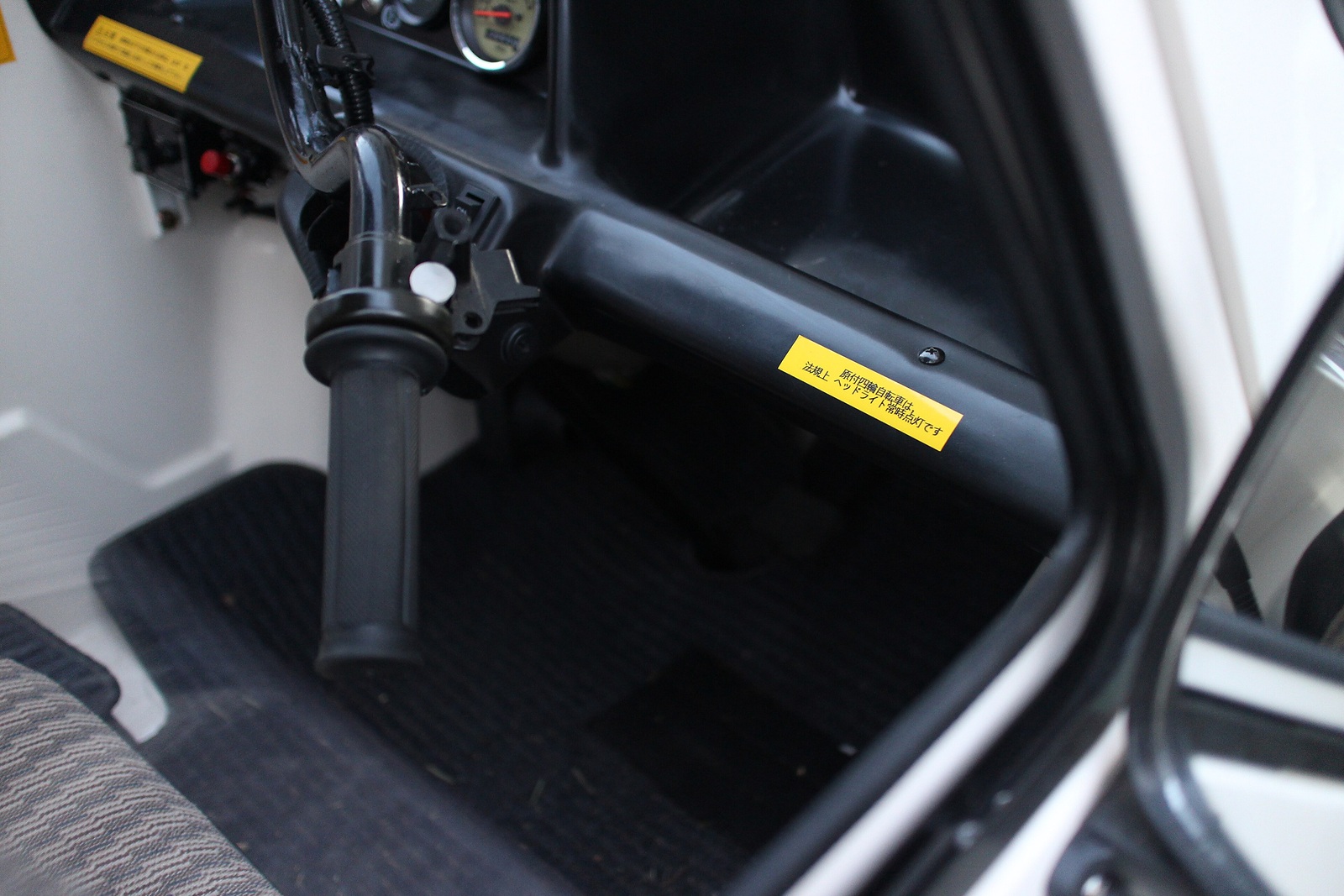
In law these are not kei cars at all. Under the Road Traffic Act a minicar is an ordinary motor vehicle with an engine of more than 20 cc and no more than 50 cc, or an electric motor of 0.25 to 0.6 kW; under the Road Transport Vehicle Act the same machine is a motorised bicycle, a gentsuki, so it needs no roadworthiness inspection and no parking certificate, and may not use the expressways.source 1 It may be at most 2.5 m long, 1.3 m wide and 2.0 m high, and it carries one person.source 1 Some makers call them microcars, to avoid confusion with toys; the slang name is zero-han car, from a word for 50 cc.source 1
In the early 1980s builders put moped-scooter drivetrains under small closed cabins and sold them as all-weather cabin scooters. Until February 1985 they could be driven on a moped or motorcycle licence, and that set off a short-lived boom, Japan’s own version of the licence-free car.source 1source 2source 3 The Louwman Museum says they were often sold to older people.source 4 Three makers are recorded here, in the order their cars appeared.
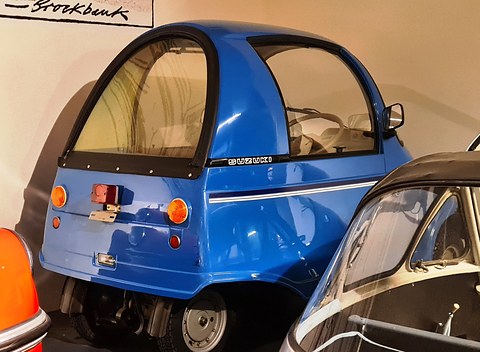
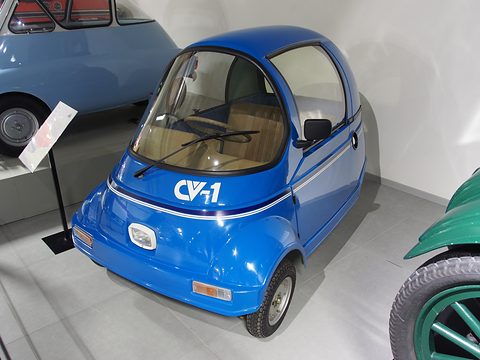
Suzuki CV1, 1981
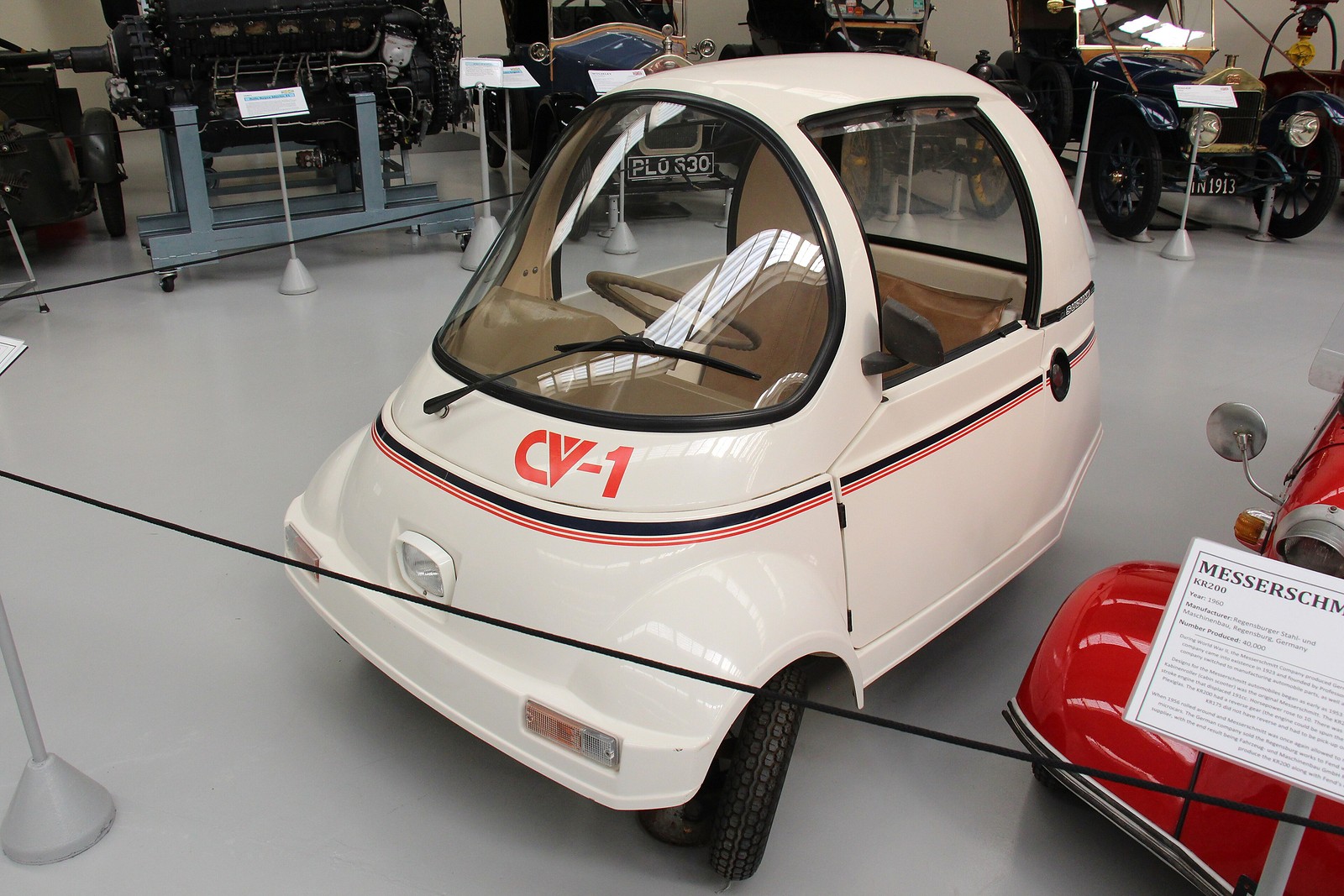
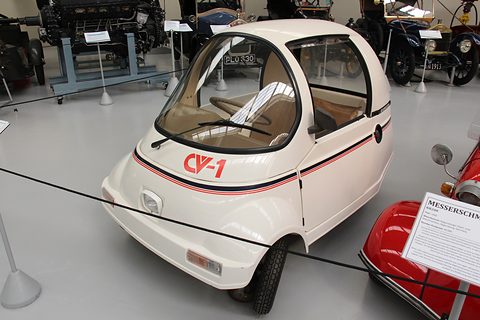
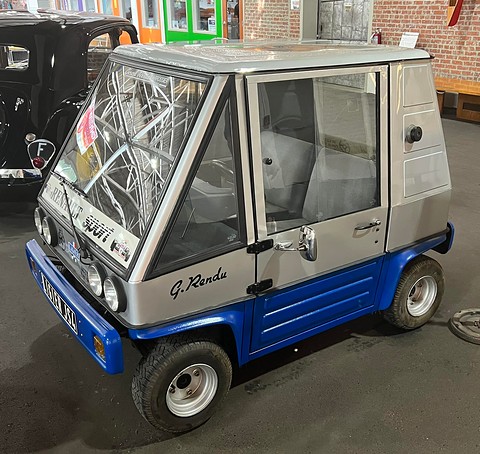
Suzuki showed the CV1, for Community Vehicle, at the 24th Tokyo Motor Show in 1981.source 5 It had one seat and one door, a glass-fibre body whose side windows slid upwards, four wheels with the rear pair set close together, and a 50 cc two-stroke with an automatic gearbox; it was 1.9 m (75 in) long and weighed 145 kg (320 lb).source 4source 5 Suzuki claimed 2.0 litres per 100 km (141 mpg).source 5 The Louwman Museum sums it up as small, light, easy to handle and keenly priced.source 4
It was sold on trial, at ¥300,000. English Wikipedia puts the total at 50 to 100; the Louwman Museum says a few hundred.source 5source 4 It ended in 1985, the year the law changed; the Louwman’s own text, which has it on sale from 1985, may have mistaken “until” for “from”.source 5source 4
Mitsuoka BUBU, 1982
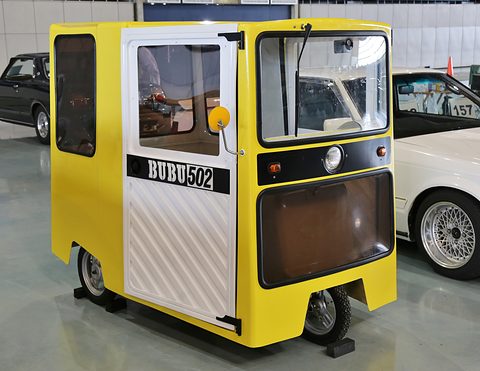
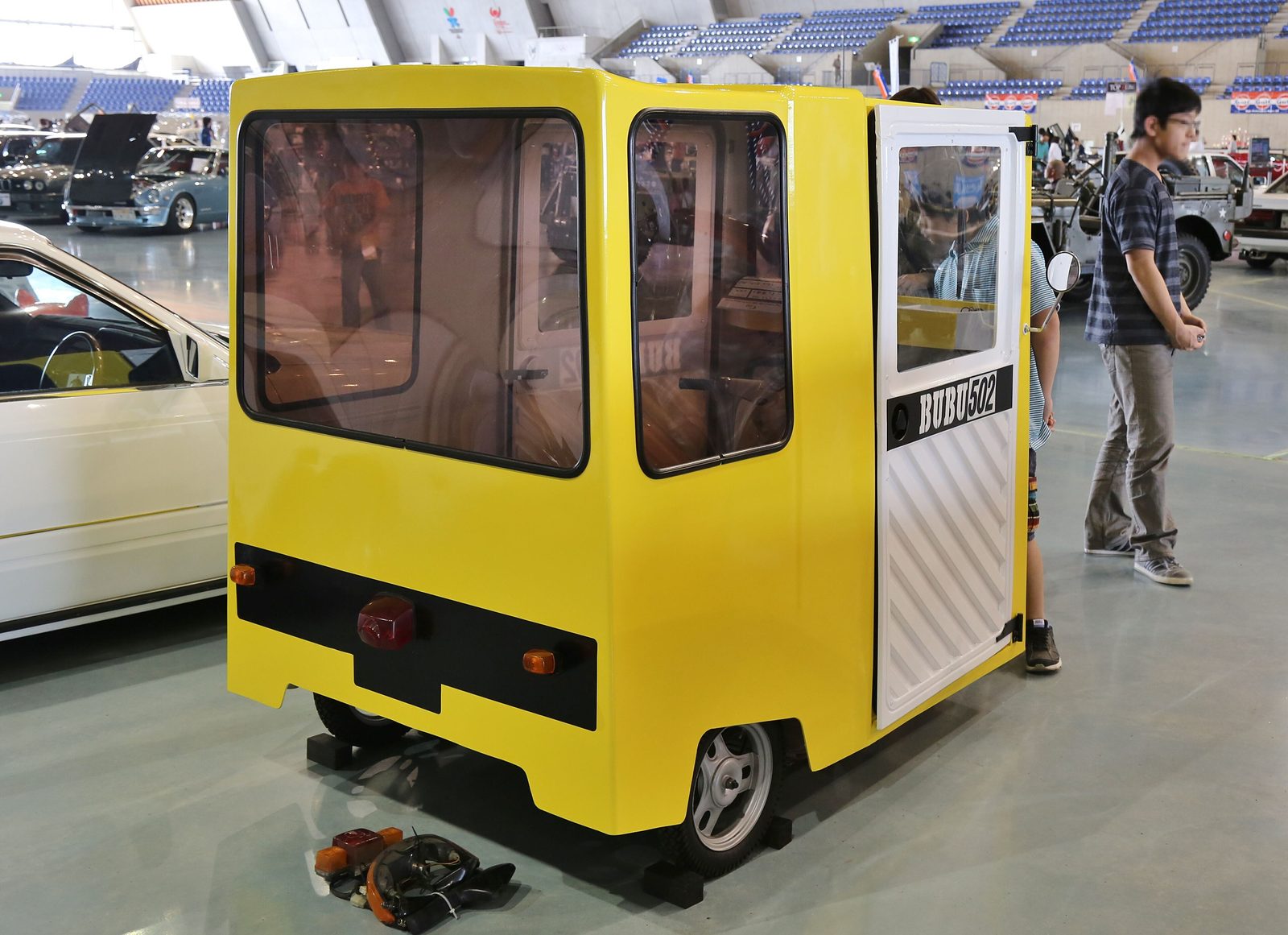
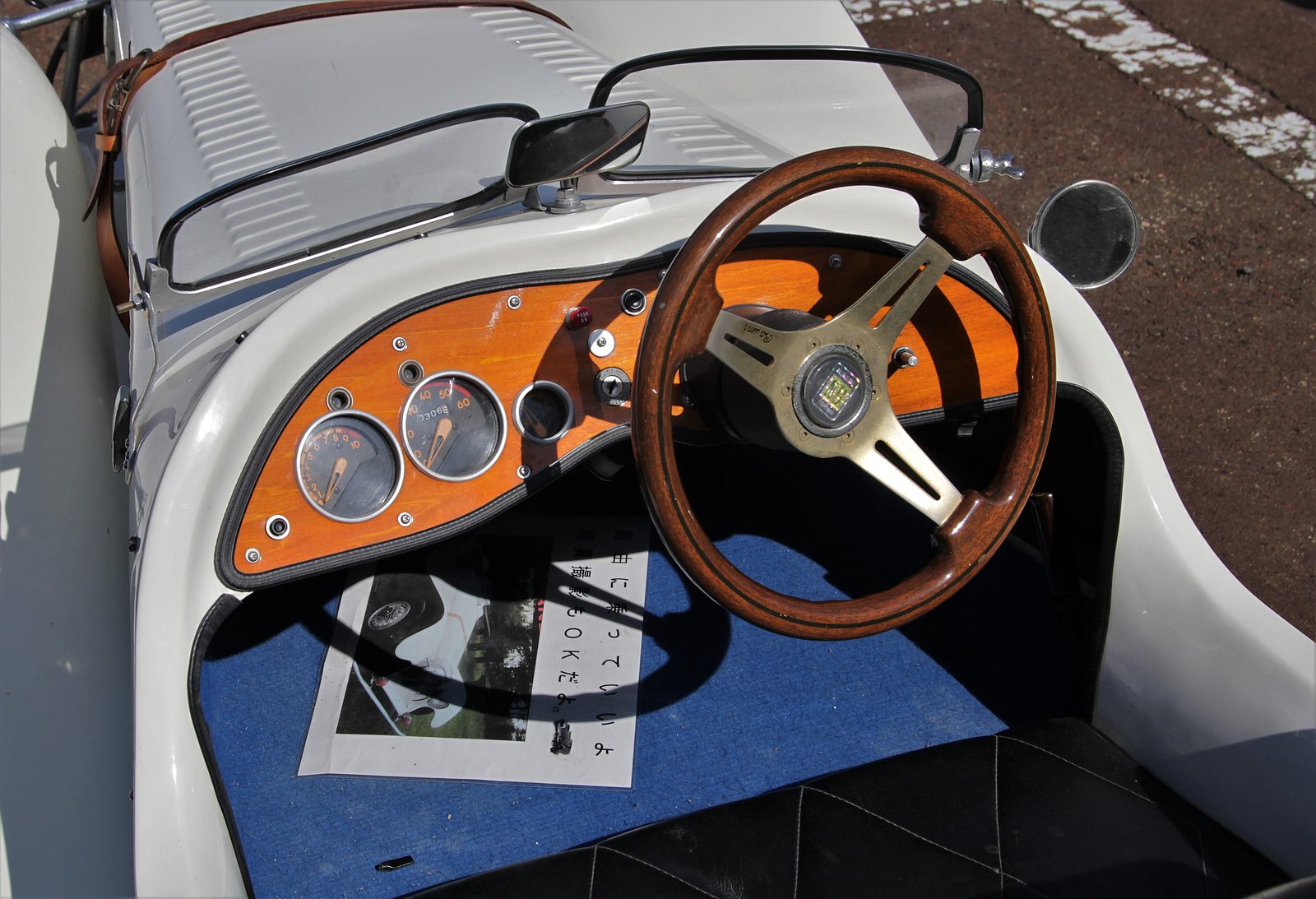
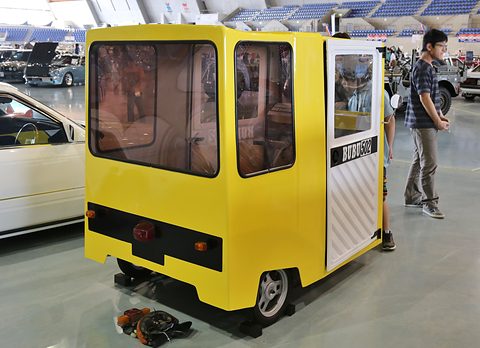
Mitsuoka Motor was a used-car dealer in Toyama, with a chain called BUBU, incorporated in 1979 with a department for development.source 2 In February 1982 it announced the BUBU Shuttle 50, a zero-han car that could be driven on a moped or motorcycle licence. Mitsuoka sold it; another Toyama firm, Takeoka Jidōsha Kōgei, developed and built it.source 2source 6source 3 A series of BUBUs numbered 501 to 504 followed, though their details have not been confirmed by the sources read; a BUBU 502 of 1983, a box on three wheels, appears in the photographs here.
Takeoka Abbey, 1982
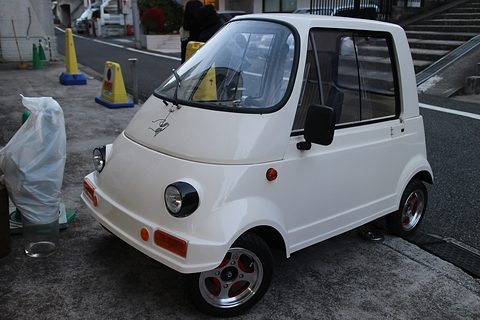
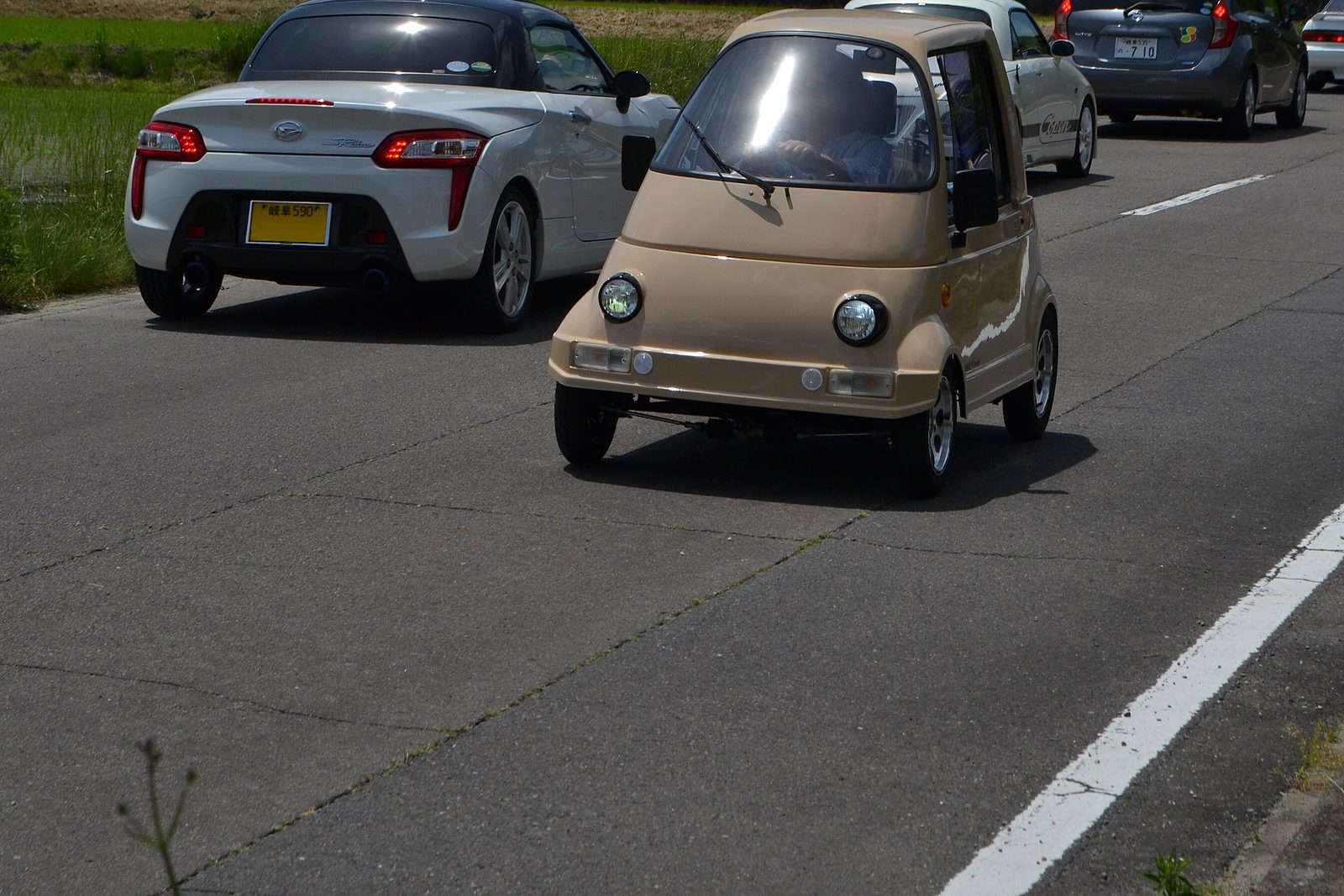
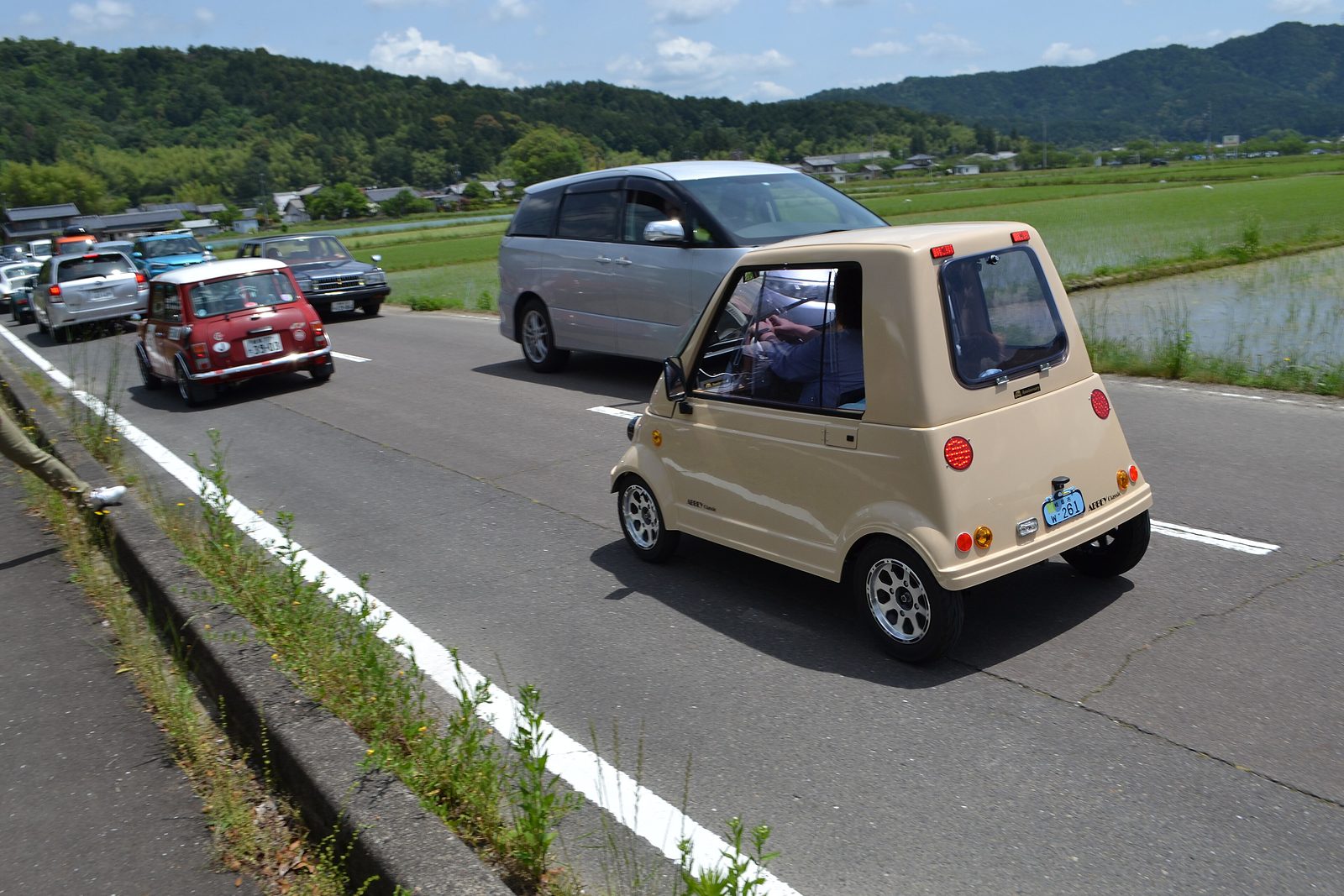
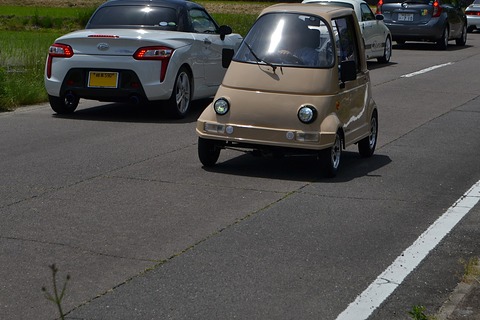
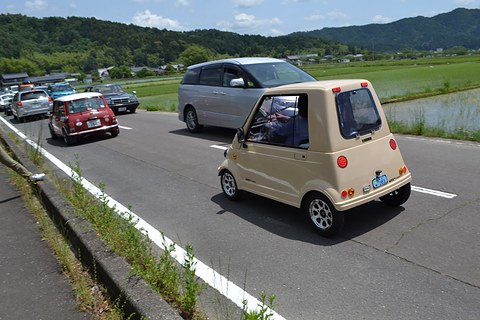
Takeoka had been a sign-maker, skilled at moulding glass-fibre, and it began making minicars in 1981 with the BUBUs.source 6source 2 It fell out with Mitsuoka over price and in 1982 launched a car of its own, the Abbey, a three-wheeler at first. A four-wheeled type followed in 1984, and two more in 1986 and 1988.source 6 (Takeoka’s later cars are told with Japan’s ultra-compact mobility.)
15 February 1985
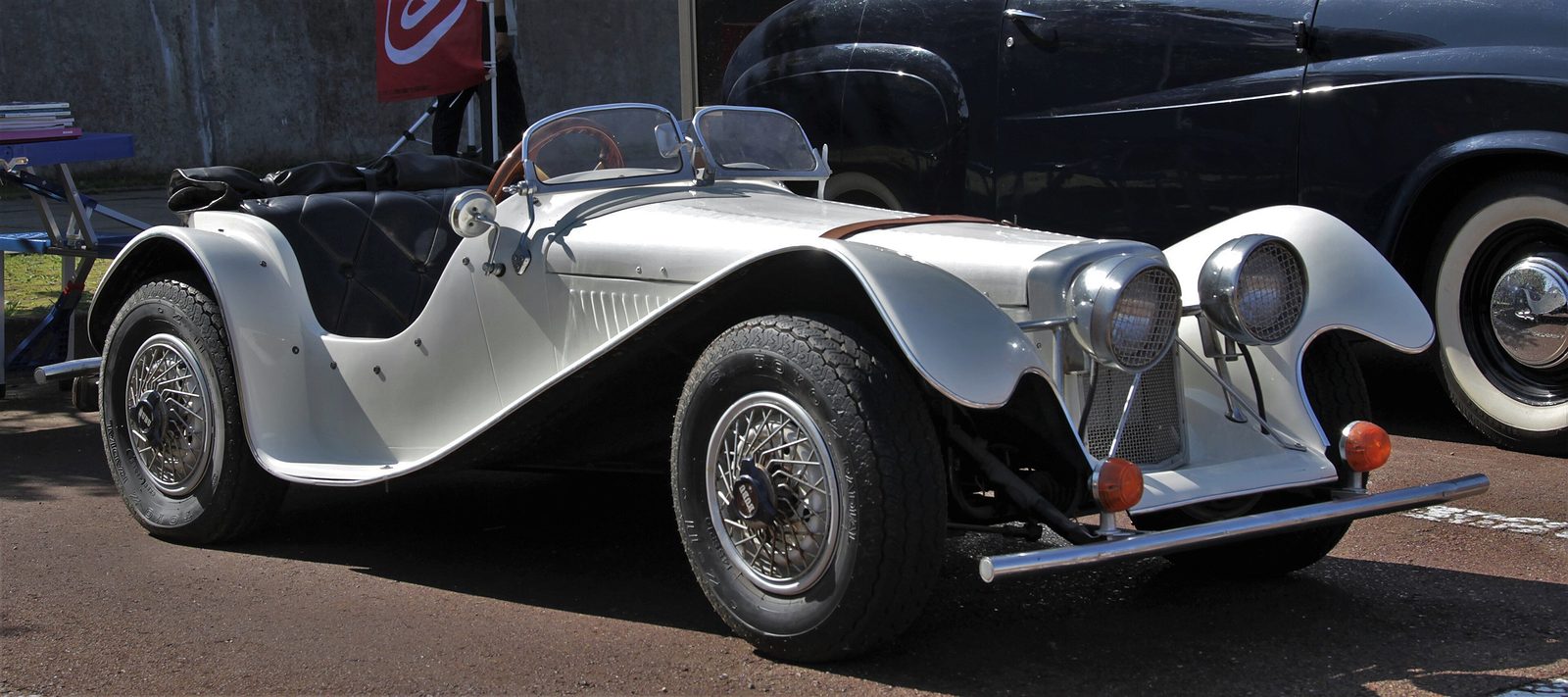
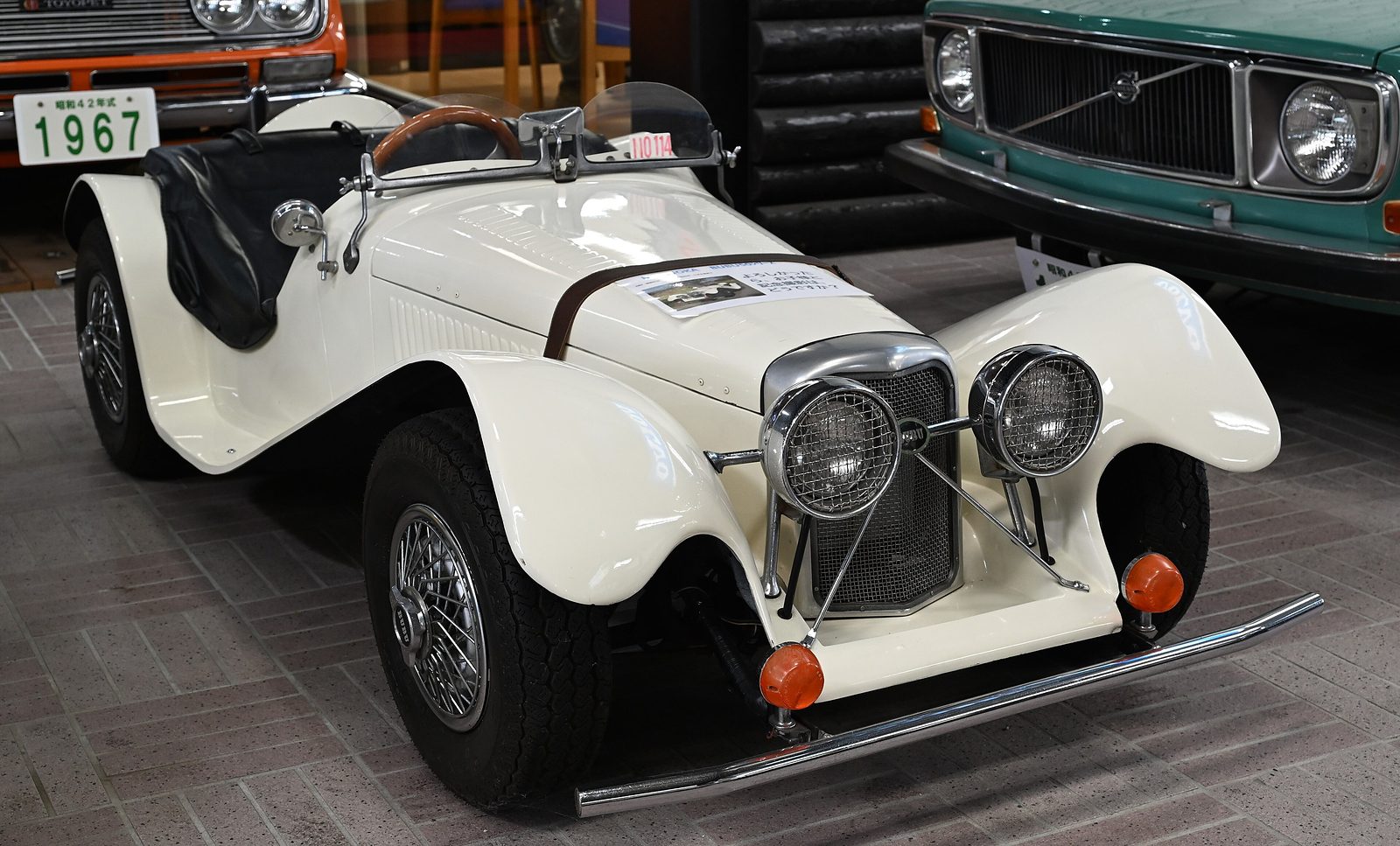
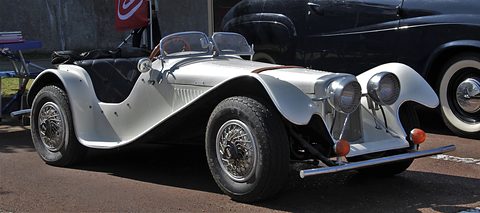
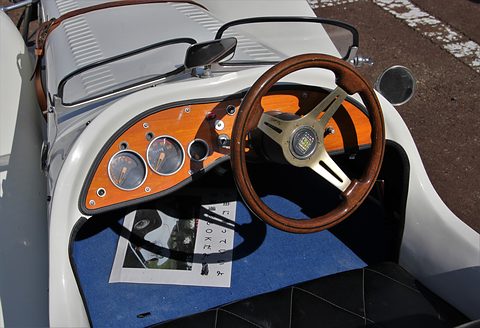
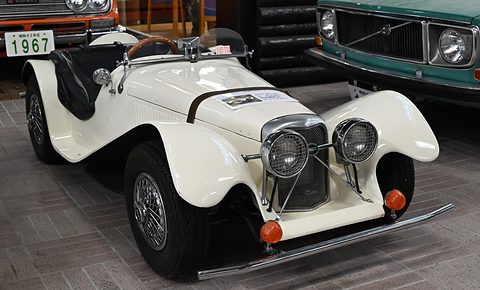
An ordinance of the Prime Minister’s Office, made in 1984, changed the rules from 15 February 1985. A minicar became an ordinary motor vehicle in full, needing a car licence; its speed limit rose from the moped’s 30 km/h (19 mph) to 60 km/h (37 mph), and its driver needed neither a helmet nor the moped’s two-stage right turn.source 1source 5 The boom was over. Mitsuoka closed its factory and gave its remaining cars to vocational schools, then turned to replicas and retro “pike” cars, among them the BUBU Classic SSK of 1987, and in 1996 it was recognised as Japan’s tenth car maker.source 2source 3
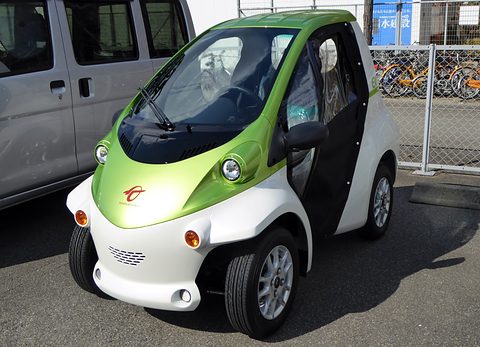
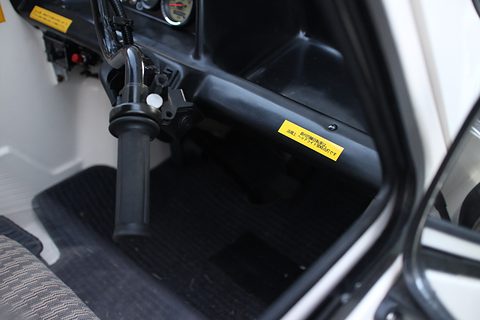
Takeoka carried on. By Japanese Wikipedia’s account, disabled drivers told it that without its cars they could not get about, and it built versions with hand controls to order.source 6 Emission rules of September 2007 drove every other maker of petrol minicars out of the business.source 1 By 2024 more than 2,000 of the fourth Abbey had been made, by then with Honda’s AF74 scooter engine, and on 19 June 2025 Takeoka announced its end, because new 50 cc engines would be unobtainable under the emission rules of that November: a Final Edition of 100 and a Gold Abbey of 10 closed the run.source 6 Since the Toyota COMS of 2012, the class has been mostly electric.source 1