microcarfan
  • Licence-free car
  • France
  • Three wheels

Arola

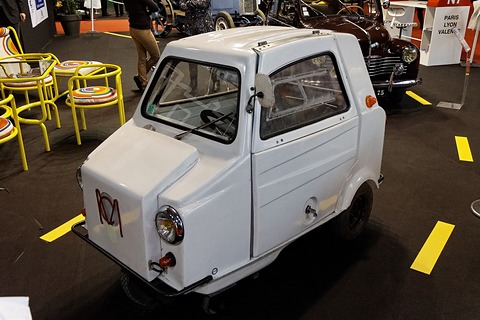
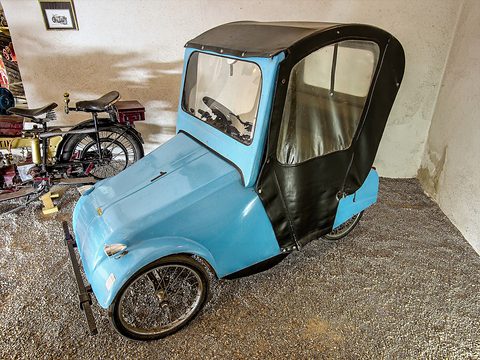
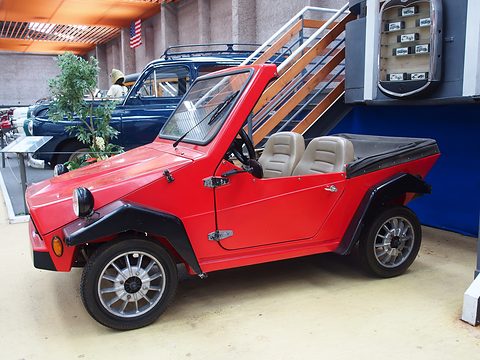
Handlebars, a seat with no back, doors you could lift off in a second and the same controls as a moped: the Arola was built so that someone who had only ever ridden a Mobylette would feel at home.

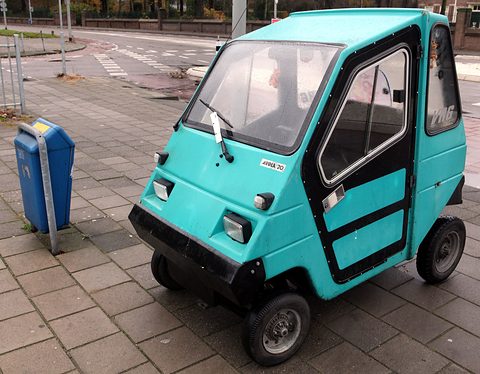
Turquoise box-shaped two-door microcar with black door frames and a black front bumper, parked on brick paving by a bin.
A turquoise Arola 20, one of the last four-wheeled Arolas of the early 1980s, on a Dutch pavement in 2010.Photo: Joost J. Bakker from IJmuiden, CC BY 2.0, via Wikimedia Commons

At a glance

The spec plate

Arola

Type 11 · Lyon-Corbas

Built
1976–⁠1983Firm founded in 1975; cars sold from January 1976 until the 1983 takeover
Country
FranceLyon-Corbas, then Aix-les-Bains by 1982
Maker
Arola SARL, Daniel Manon’s firmTaken over in 1983 and reborn as Aixam
Engine
47 cc Fichtel & Sachs two-stroke singleSaxonette two-speed automatic; a Motobécane 50 cc in the type 12
Power
about 3 hpAbout 2.2 kW
Length
1,840 mm1,050 mm wide, 1,570 mm high
Weight
110 kgThe type 11
Seats
1No backrest on the types 10, 11 and 12
Wheels
3One at the front, judging by the Weiner museum’s card and photographs of the three-wheelers; four on the types 14 to 20
Production
18,000All models, by the Weiner museum’s count, the only one found
Survives
YesOne is shown at the Musée automobile de Vendée
Top speed
40km/h40 km/hAbout 25 mph

How big is it?

True proportion

1.84 m

It is 1,130 mm shorter than a Fiat 500, about 1.1 adults laid end to end.

  • 1.05 m wide
  • 110 kg: about one adult
  • One seat, without a backrest
  • Handlebars, with a moped’s controls
Drawn at true proportion. The track is 3.6 metres long; the adult stands at the same scale. The Peel P50 is the smallest production car, on every page for comparison.

The story

History

Daniel Manon of Lyon introduced the Arola in January 1976.source 1 His company, Arola SARL of Lyon-Corbas, had been founded the year before.source 2source 3 In law the car was a cyclomoteur carrossé, an enclosed moped, and so a licence-free car: a tubular chassis, a polyester body with a fixed roof, one seat and a 47 cc Sachs Saxonette, which the collector behind the original microcarfan.com called, in short, classic for the period.source 4source 2

This little enclosed moped with its distinctive shape set the pattern for a host of such vehicles in the next few years. It was destined to become one of the most successful of the French ‘voiturettes’.

Bruce Weiner Microcar Museum, on the 1977 Arola in its collection, about 2002.source 1

What made it sell, in the old site’s reading, was that nothing was strange to a moped rider. You stepped in easily and sat as on a moped, on a seat without a backrest. The doors, of clear Plexiglas, could be left off or lifted away in a second, and the handlebars carried the same controls as a two-wheeler.source 4source 2 The basic 10 and the 11 had no speedometer and no ashtray; the 11 and the 12 had storage pockets; all three had an electric starter, a wiper and a chromed silencer.source 4 The 12 used a Motobécane engine instead, which needed a relay-and-reversing box, and so it was the one that could reverse.source 4source 2 By 1979 Arola had 500 agents and dealers.source 4

On to four wheels

The range grew from 1978. The SP, which stood for “Super Pratique” and not for Sport, was 43 cm (17 in) longer, a three-wheeler with a small load bed under a tilt cover, and the last Arola on three wheels.source 4source 2 The 14 and 15 of 1979 were the first four-wheelers. A steering wheel replaced the handlebars but stayed in the middle of the cabin, because a voiturette was not yet allowed to carry two adults; the seat gained a backrest, and the 15 had sliding glass windows in place of the 14’s ventilated Plexiglas.source 4source 2 A pick-up version, the Compacity, followed in 1980, though the German Wikipedia doubts it went into series production.source 2

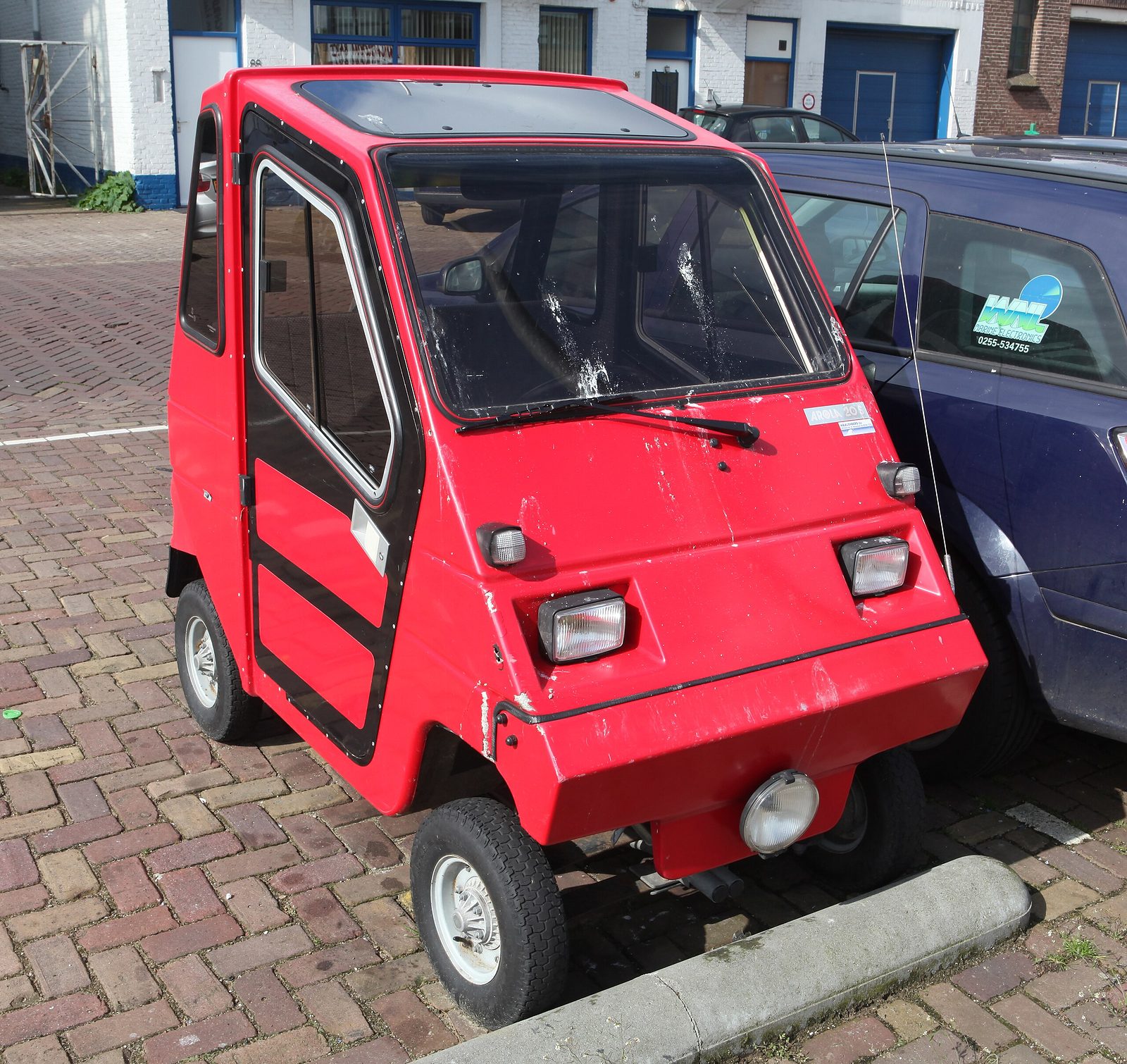
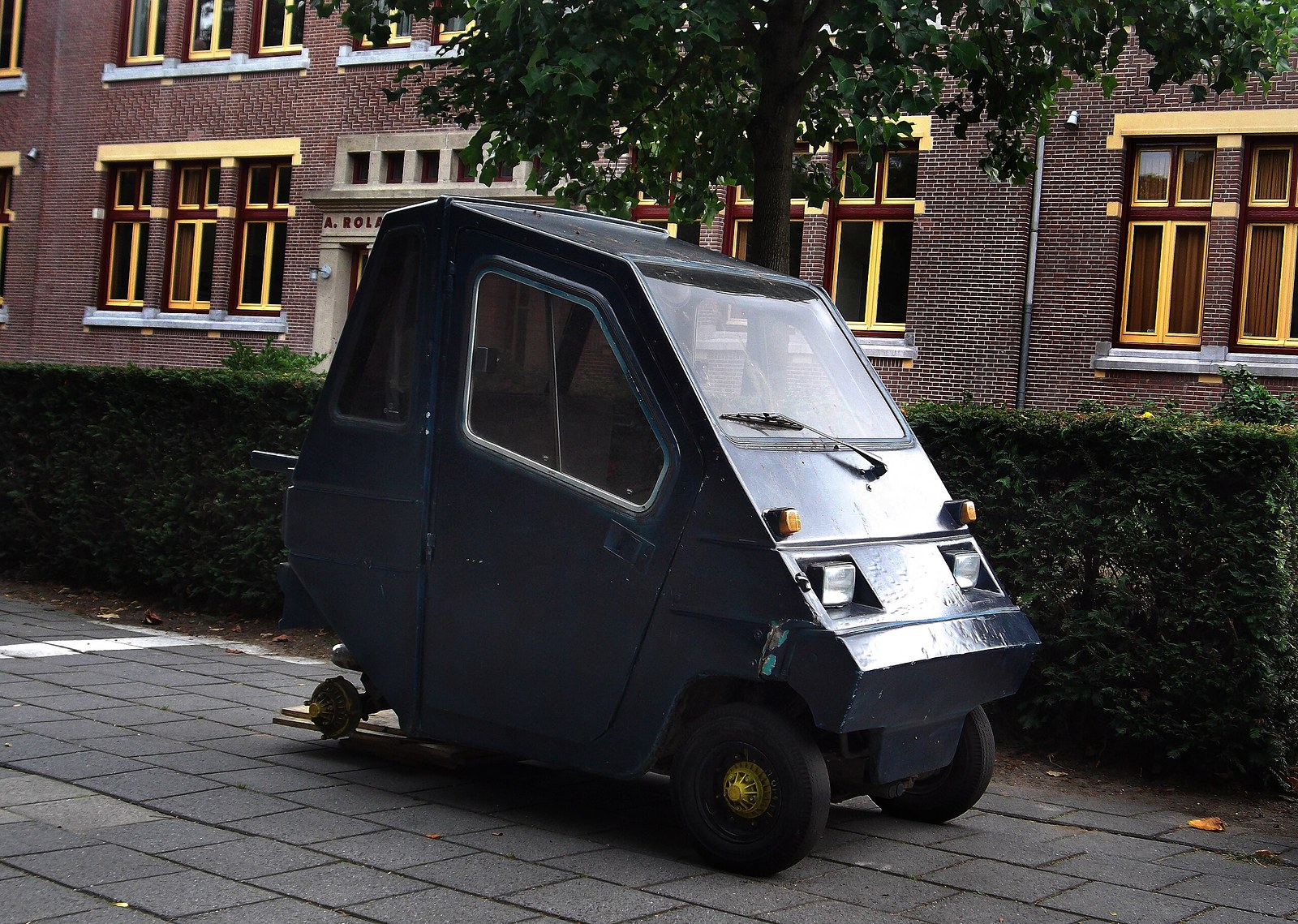
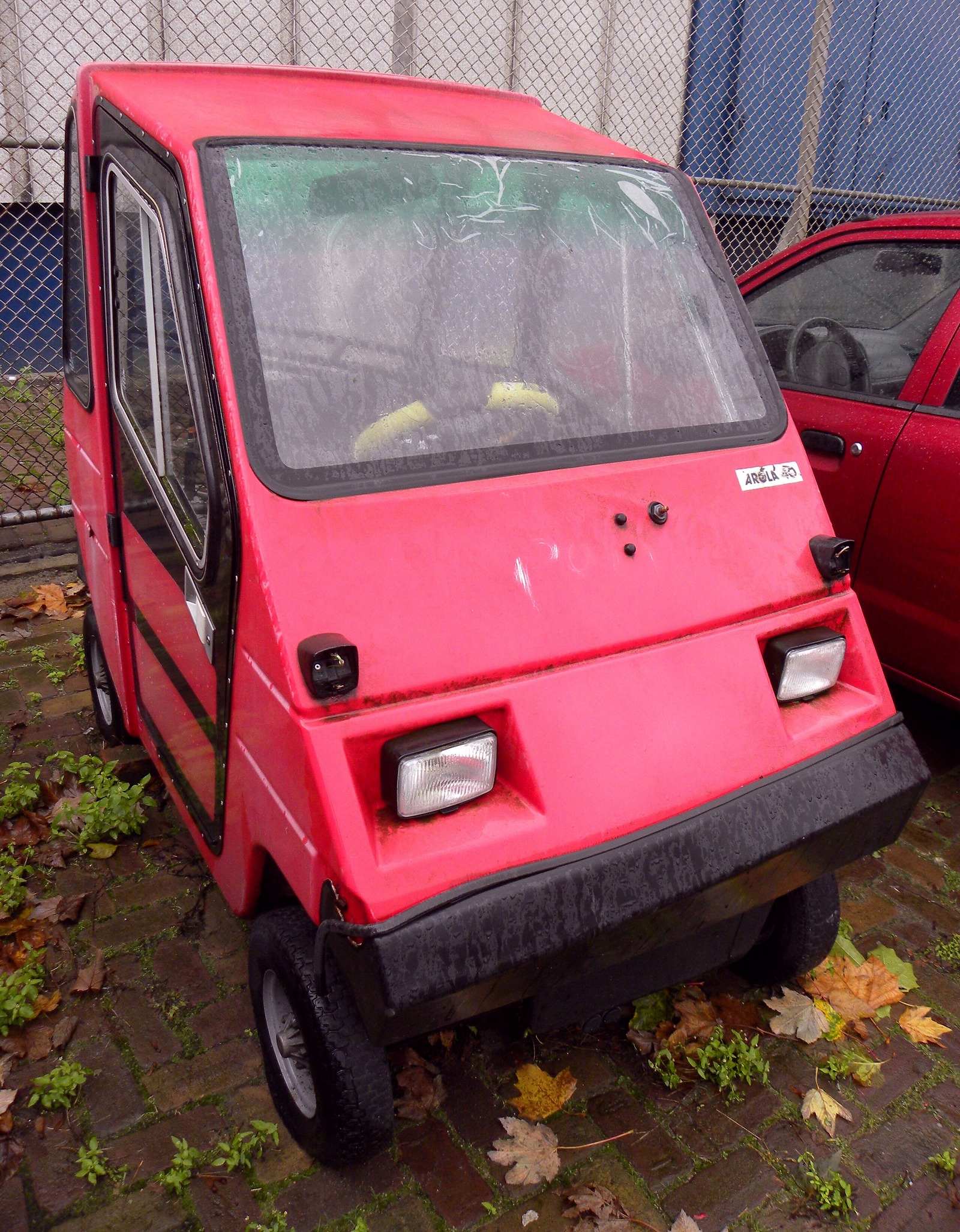
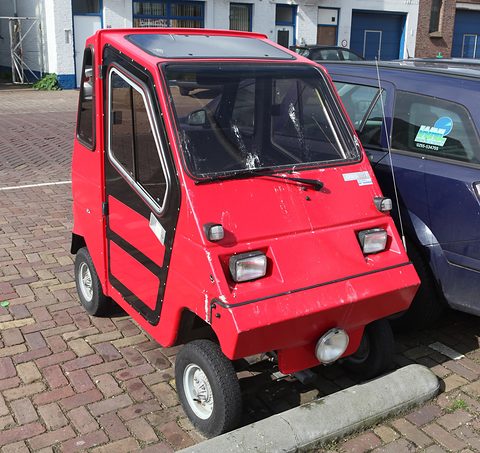
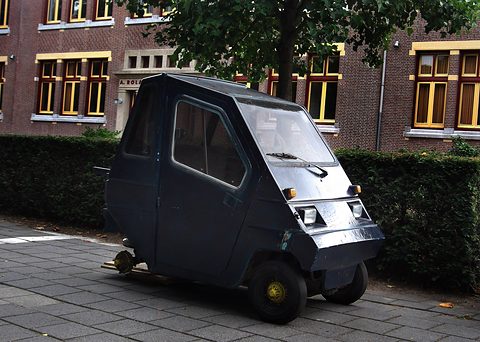
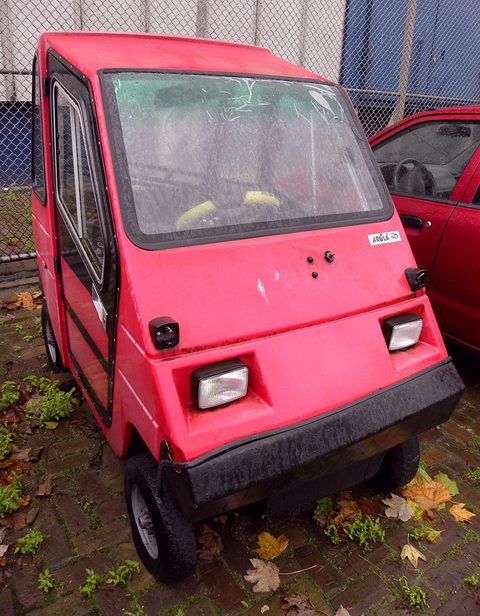
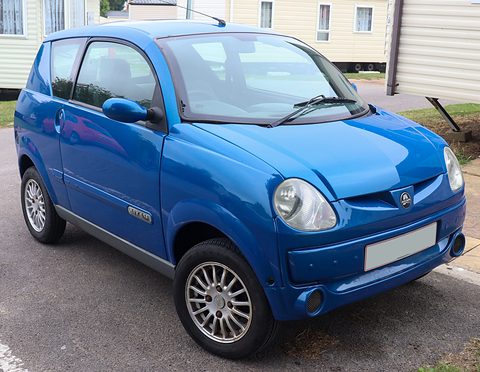
The 18 of 1981 did away with the metal chassis altogether: polyester body panels on an aluminium frame and a polyester floor. It took 50 cc engines from BCB, Motobécane or Peugeot, or a BCB 125 cc good for 65 km/h (40 mph).source 4source 2 The 20, the car in the pictures here, looks much like it but has rear side windows; little more is known of it.source 2

The Minoto, and Aixam

The last Arola was not entirely Arola’s. The Minoto name and body came from Bel Motors, which had failed; Arola rebuilt the car as a self-supporting polyester shell from the autumn of 1982, with Motobécane or Peugeot 50 cc engines and, at the end, a 325 cc Lombardini diesel.source 4source 5source 1 By then the firm had moved to Aix-les-Bains.source 1

It went bankrupt in 1983, and the business was taken over and renamed Aixam the same year.source 1source 6 The old site dates the change of name and range to 1984, probably when the first Aixam-badged cars reached the showrooms.source 4 Aixam now dates its own history to the Arola, which it calls the first licence-free vehicle, in 1975.source 6 That is a company’s claim: the Willam City was sold without a licence in France from 1967.source 7
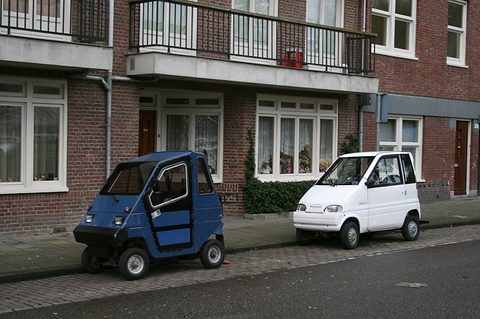
Small blue box-shaped two-door car and a small white car parked on a brick pavement in front of a terrace of flats.
A blue Arola parked ahead of a white Canta microcar in an Amsterdam street in 2007.Photo: Ildar Sagdejev (Specious), CC BY-SA 4.0, via Wikimedia Commons
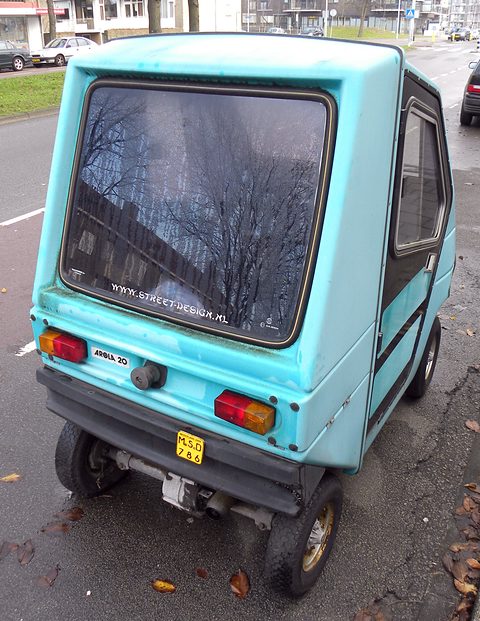
Rear of a turquoise box-shaped microcar with a large rear window, square tail lamps and a yellow Dutch number plate.
An Arola 20 from behind in the Netherlands in 2009, its model badge beside the left tail lamp.Photo: Joost J. Bakker from IJmuiden, CC BY 2.0, via Wikimedia Commons

Bel Motors Minoto

1979–⁠1981 · a record on this page

Bel-Motors International was formed in February 1977 by Jean Bellier, together with SOTRAM, to build and sell the pedal-started Véloto, according to the old site; the German Wikipedia dates the company to 1976.source 8source 9 It was based at Les Sables-d’Olonne in the Vendée.source 9source 10 The Minoto was its last car. It was shown in October 1979 with an 80 cc engine, and sold from 1980 in 50 cc and 80 cc forms, after Bellier had left to start again under his own name.source 5source 8 The Weiner museum calls it the C‑12 Minoto.source 10 Its name, says the German Wikipedia, plays on “miniature” and “automobile”.source 2

It was a conventional little car: a tubular steel chassis, a polyester body and the engine at the back, 2.20 m (7 ft 3 in) long, 1.28 m (4 ft 2 in) wide and 1.50 m (4 ft 11 in) high, weighing 230 kg (507 lb) and reaching 45 km/h (28 mph).source 5 At 80 cc it was above the 50 cc licence-free limit; what licence that version needed is not recorded. Bel Motors filed for bankruptcy in February 1981, and a one-year reprieve from the commercial court let it sell a few more before it closed.source 5 The German Wikipedia says the Minoto never reached the market at all; the old site’s dates and engines are more specific, but they are one collector’s notes.source 9

When the name came back as an Arola, the body shape was the same and the construction was not: a monocoque instead of a chassis.source 5source 4 The Weiner museum says Arola took over production; the German Wikipedia calls the two cars technically unrelated.source 1source 10source 9source 2 Arola, in short, took the name and the styling, not the engineering.

Pictures

More photographs, old and new

Variants

Three wheels, then four

The Arola range, 1976–⁠1984
VariantYearsWhat differsHow many
101976–c.1980The basic three-wheeler: handlebars, no speedometer, no ashtrayNot known
111976–c.1980Adds storage pocketsNot known
121976–⁠1982Better equipped; Motobécane engine, with reverseNot known
SP, “Super Pratique”1978–⁠198243 cm longer, a mini pick-up with a tilt cover; the last three-wheelerNot known
141979–⁠1982Four wheels, a central steering wheel, Plexiglas doors with ventsNot known
151979–⁠1982As the 14, with sliding glass windowsNot known
Compacity1980–⁠1982A four-wheel pick-up; perhaps only a prototypeNot known
18 and 18 S1981–⁠1983No steel chassis: an aluminium frame on a polyester floor; the S adds a clockNot known
20early 1980sLike the 18, with rear side windowsNot known
Minoto1982–⁠1984A self-supporting polyester shell, from a Bel Motors designNot known

Specification

The type 11, from the Weiner museum’s card unless noted

Engine and drive

Engine and drive
EngineFichtel & Sachs two-stroke single, 47 ccsource 1source 2
PowerAbout 3 hp (about 2.2 kW)
TransmissionSaxonette two-speed automaticsource 4source 1
StarterElectric, 12 V
ReverseNone; only the Motobécane-engined cars had onesource 4

Body and chassis

Body and chassis
FrameSteel tube
BodyPolyester, with a fixed roof and clear Plexiglas doorssource 4source 2
SuspensionCoil springs front and rear
SteeringHandlebarssource 4The Weiner card says rack and pinion, probably a template default
BrakesCable
Wheels4.00 × 8 in

Dimensions

Dimensions
Length1,840 mmsource 1source 2
Width1,050 mm1,070 mm in the German Wikipedia
Height1,570 mmsource 2
Weight110 kg (242 lb)source 1source 2

Performance and running

Performance and running
Top speedAbout 40 km/h (25 mph)source 1source 2
Type 182,000 × 1,250 mm, 190 kg; 65 km/h with the BCB 125 ccsource 4
Price newNot found

How many were built?

The one figure

About 18,000, by one countThe Weiner museum gives 18,000, apparently for the marque as a whole. No second source has been found, and there is no split by model or by year. The Lane museum gives the same 18,000 for all Acoma models, perhaps by mistake.source 11

  1. 18,000all Arolas, apparently, 1976–⁠1983One source

    Bruce Weiner Microcar Museum, card for the type 11source 1

  • Two sources agreetwo good sources give the figure
  • One sourcea good source, alone
  • Unconfirmeda lead only, not yet checked

Famous for

Three points

  1. Handlebars in a box

    An enclosed car steered like a moped, with a moped’s controls and a seat with no back.

  2. Super Pratique

    The SP: a three-wheeled mini pick-up, and the last Arola on three wheels.

  3. The start of Aixam

    Bankrupt in 1983, the firm was reborn as Aixam the same year.

Survivors and collecting

Today

An Arola is on show at the Musée automobile de Vendée at Talmont-Saint-Hilaire, and the Bruce Weiner Microcar Museum had a 1977 type 11; its card recorded no estimate of how many survive.source 2source 1 Nothing is known of a club, and no sale by a serious auction house is on record.

Sources

Numbered as in the text

Several apparent confirmations are not independent: the German Wikipedia follows the old microcarfan.com closely. Sources are given as plain text; the links are on the Credits page.

  1. Bruce Weiner Microcar Museum, “1977 Arola”, tour page, read via the Internet Archive (2015).
  2. German Wikipedia, Arola SARL, citing Linz and Schrader, Die große Automobil-Enzyklopädie (1986).
  3. English Wikipedia, Arola (microcar).
  4. The original microcarfan.com (2006–⁠2016), marque page “AROLA”, one collector’s account, read in full from the archived copies of 2007 and 2013.
  5. The original microcarfan.com (2006–⁠2016), marque page “BEL MOTOR”, read in full from the archived copy.
  6. Aixam, “History”, company website.
  7. The original microcarfan.com (2006–⁠2016), marque page “WILLAM”, read in full from the archived copies.
  8. The original microcarfan.com (2006–⁠2016), marque page “BELLIER”, read in full from the archived copy.
  9. German Wikipedia, Bel Motors.
  10. Bruce Weiner Microcar Museum, “1980 Veloto Super Deluxe”, tour page, read via the Internet Archive.
  11. Lane Motor Museum, “ACOMA Mini Comtesse – 1972”, collection page.