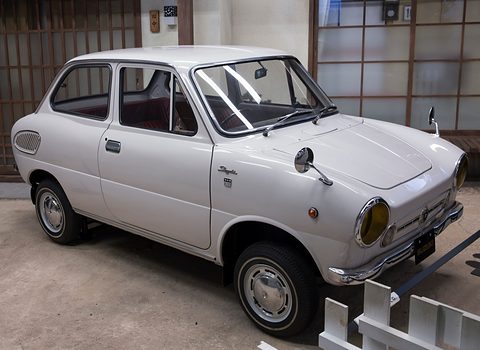
The story
History
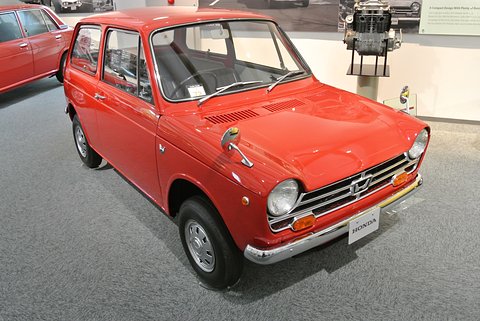
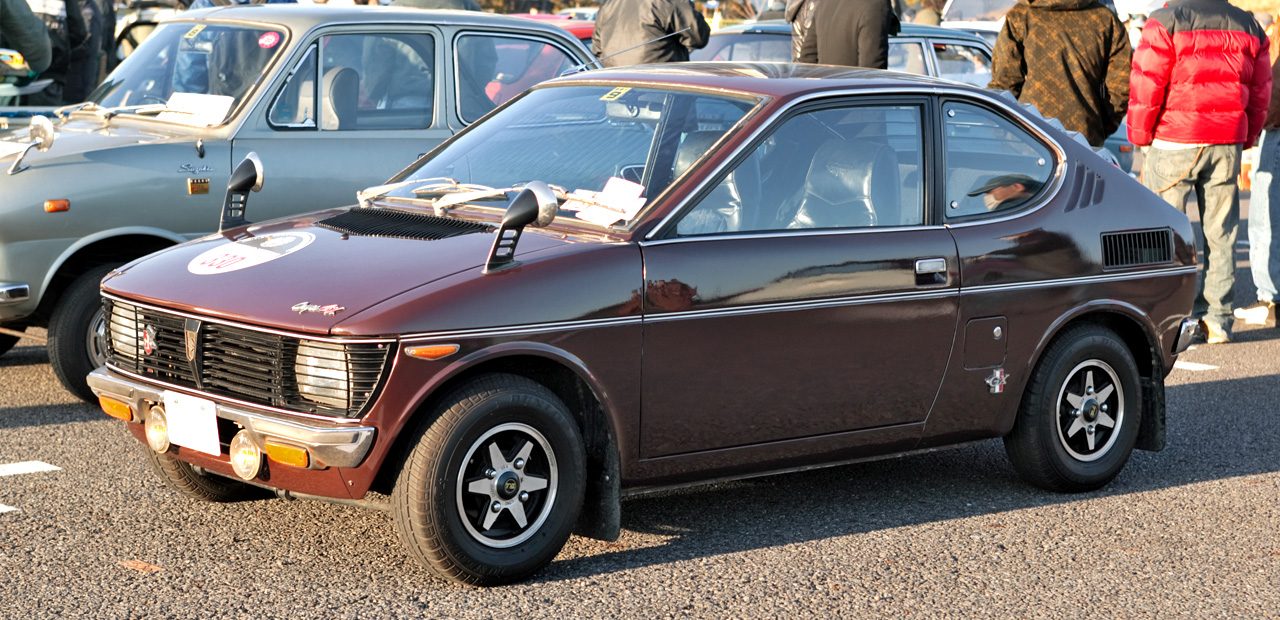
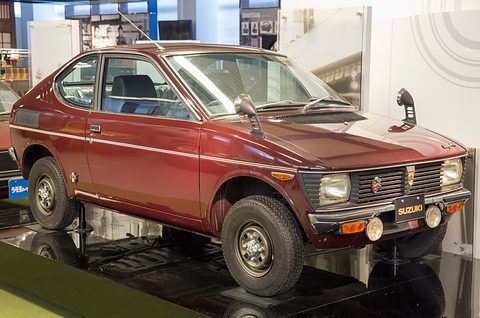
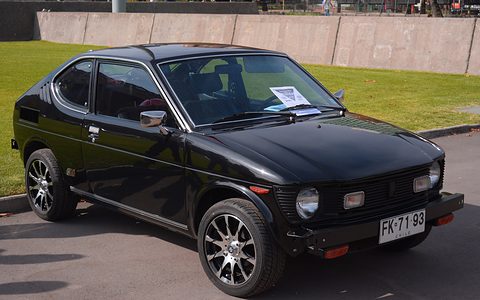
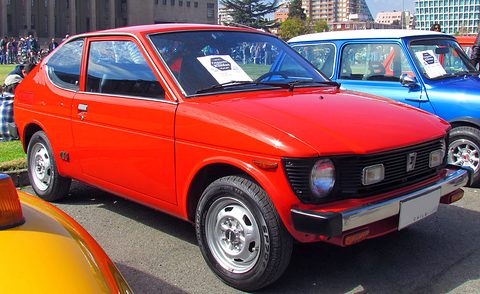
Honda’s N360 of March 1967 started a power race among Japan’s 360 cc kei cars, and Suzuki’s answer, four years on, was a coupé.source 2 Its base was the third generation of the Suzuki Fronte, the Fronte 71W, and its development code was Y71.source 1source 2
Whose design?
All the sources agree that the shape began with Giugiaro, of Italdesign, and that Suzuki’s own team made the coupé; they differ over what Giugiaro was asked for. Italdesign says that in 1969 Suzuki commissioned a city-car prototype, the Microutilitaria, which took up the one-box theme of Giugiaro’s Rowan Elettrica of 1967.source 3
Suzuki considers the proposal for the Microutilitaria too advanced, anyway some solutions are used for the Fronte coupé, that will be produced in 1971.
Japanese Wikipedia tells it differently: Giugiaro’s proposal was a four-seat family saloon for the Fronte 71, code Y60, which Suzuki turned down as too radical in favour of its own “Stingray look”. A team under Sasaki Tōru, chief engineer of Suzuki’s second design department, with the stylists Satō Etsurō, Ōhashi Teruhiko, Tanaka Masao and Naitō Yasuhiro, then made the rejected design into a coupé, choosing a long-nosed wedge for two over a cab-forward 2+2.source 2 English Wikipedia calls it a revision of the Rowan’s one-box design, considerably modified by Suzuki, and Suzuki says it used fluid dynamics to finish a true GT shape on Giugiaro’s base.source 4source 1 “Based on a Giugiaro proposal” is the fair description. Even the dates disagree: Japanese Wikipedia has the Y71 project approved in January 1968, before the commission Italdesign dates to 1969, and one of the two must be wrong.source 2source 3
Two seats and six dials
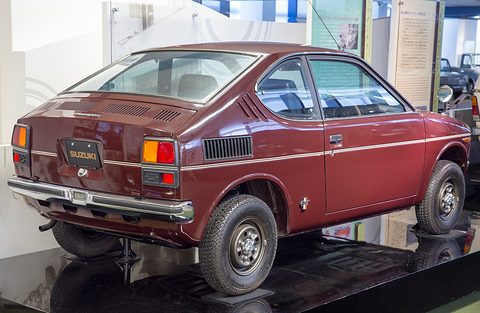
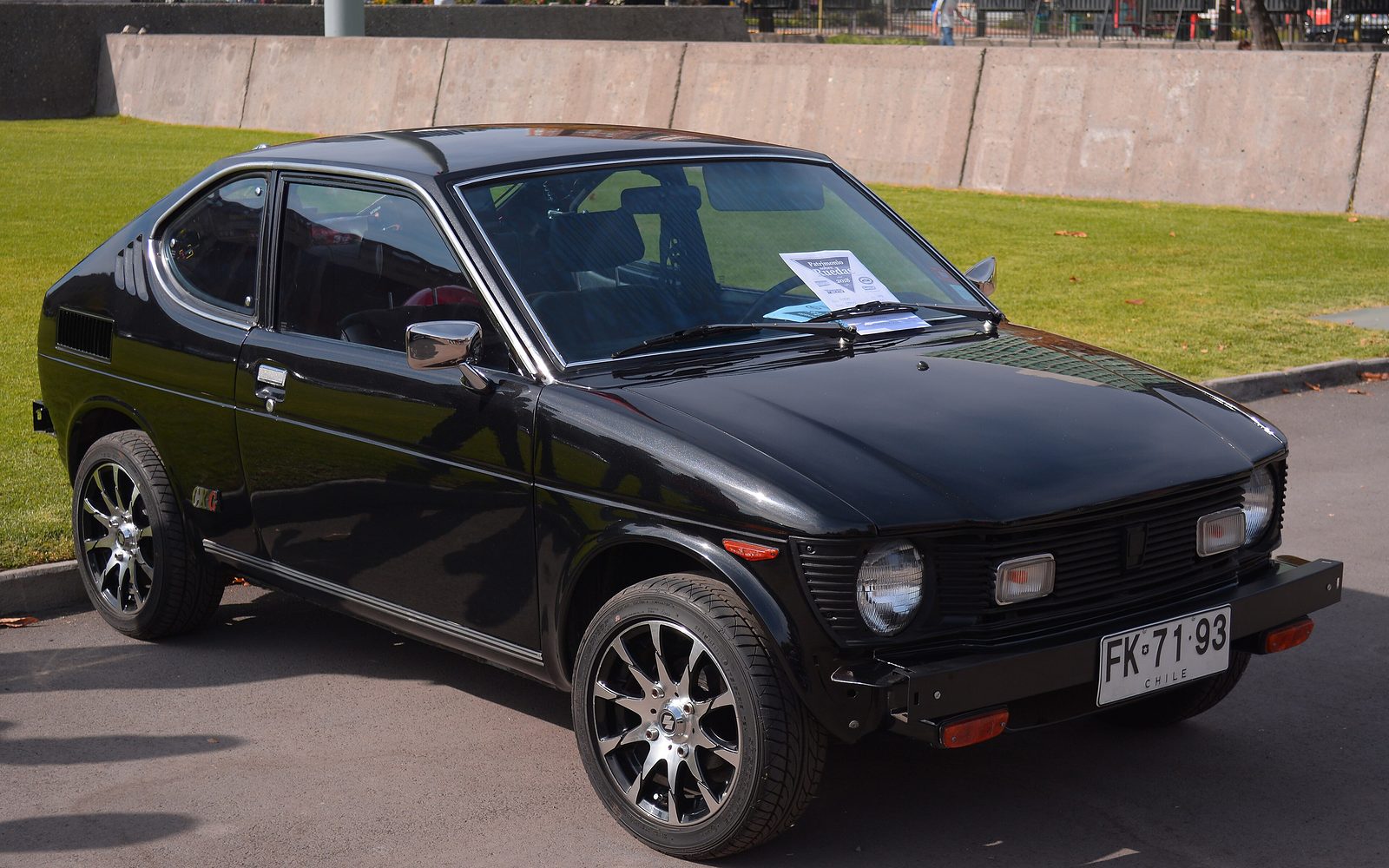
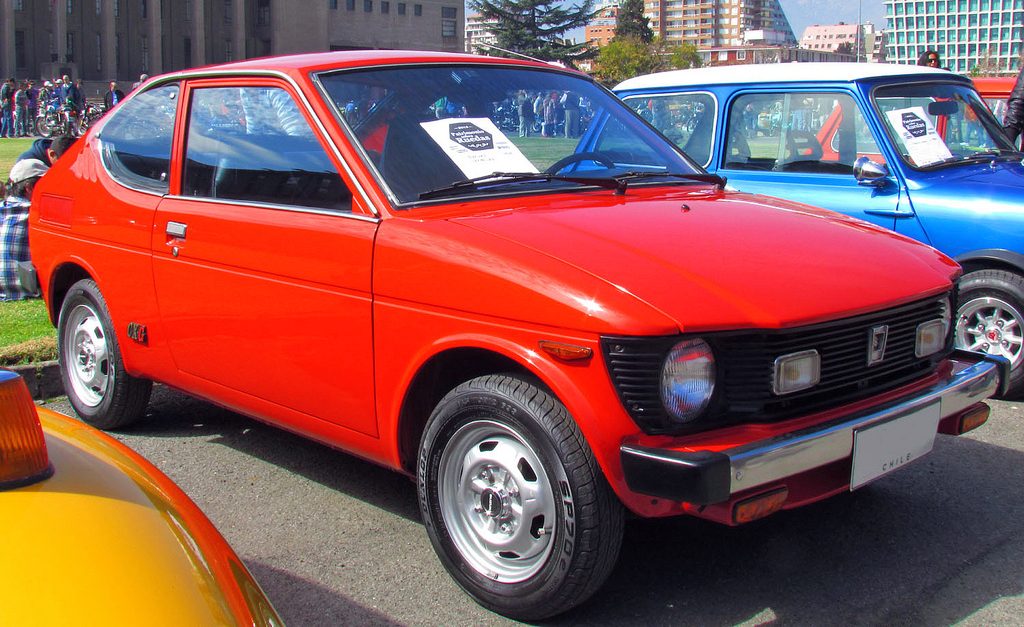
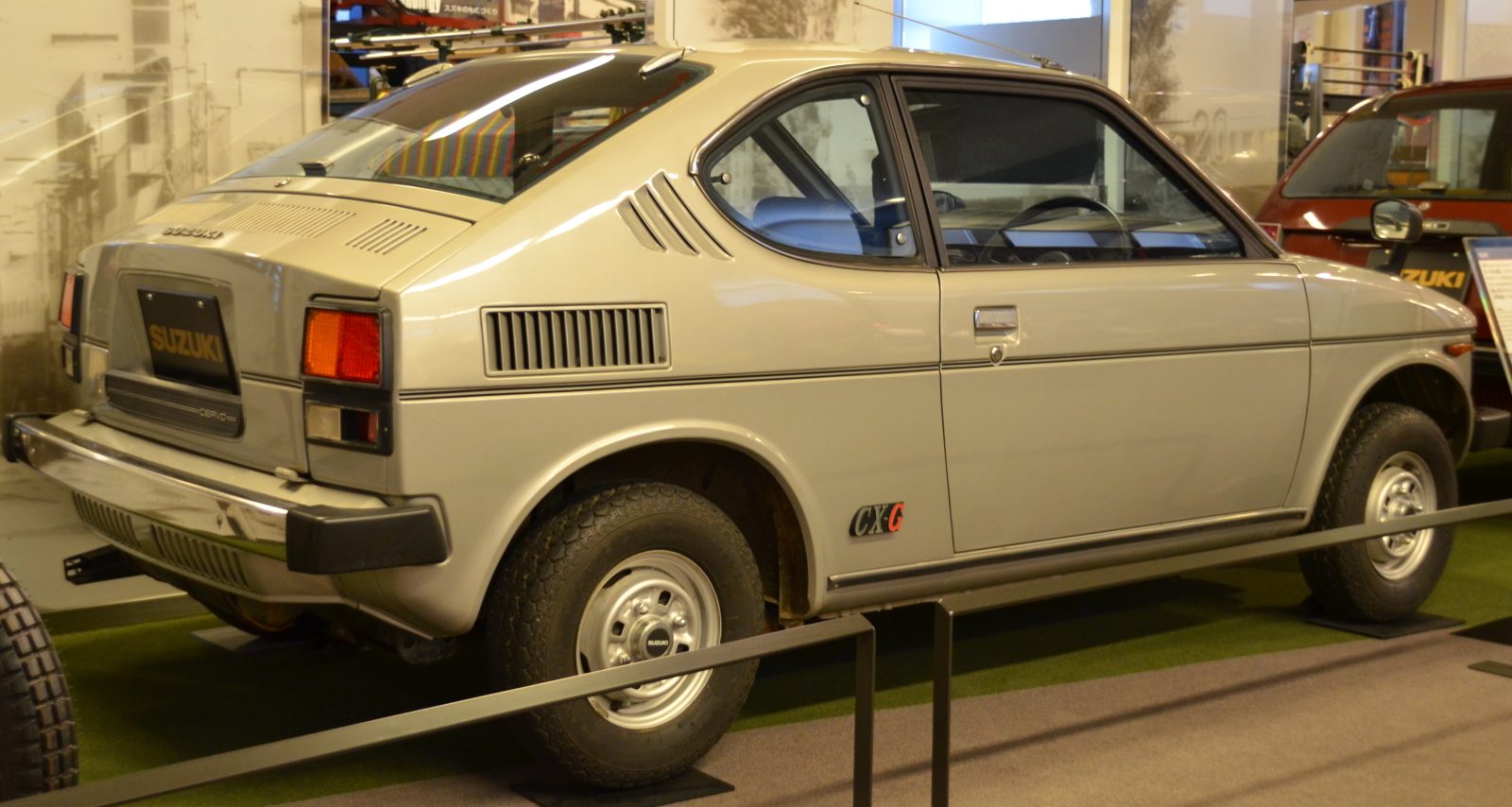
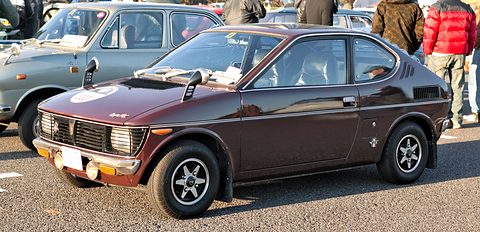
The Fronte Coupé went on sale in September 1971 as a two-seater only, the first two-seat coupé among kei passenger cars, by Suzuki’s account, at ¥433,000 in Tokyo.source 1source 2
ふたりだけのクーペ
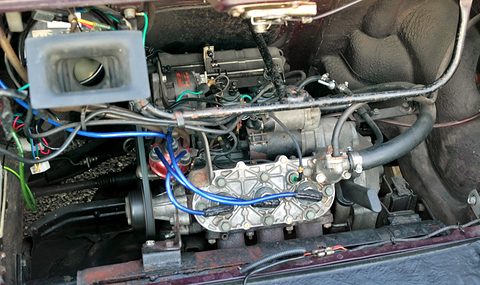
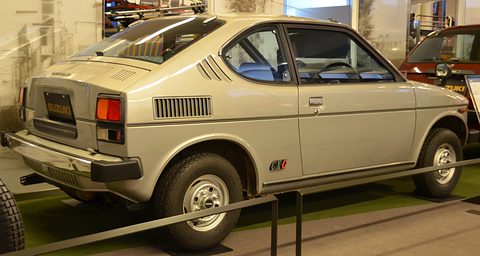
It was 2,995 mm (118 in) long, 1,295 mm (51 in) wide and 1,200 mm high, or 1,190 mm on radial tyres, and it weighed 480 kg (1,060 lb).source 1source 2 On early cars the front wings and the bonnet were glass-fibre.source 2 The engine, the LC10W, was a water-cooled two-stroke three of 356 cc with three carburettors, mounted at the back and driving the rear wheels; it gave 37 PS (27 kW) gross at 6,500 rpm, and 60.5 per cent of the weight sat on the rear wheels.source 1source 2 Japanese Wikipedia gives a standing 400 m in 19.47 seconds.source 2
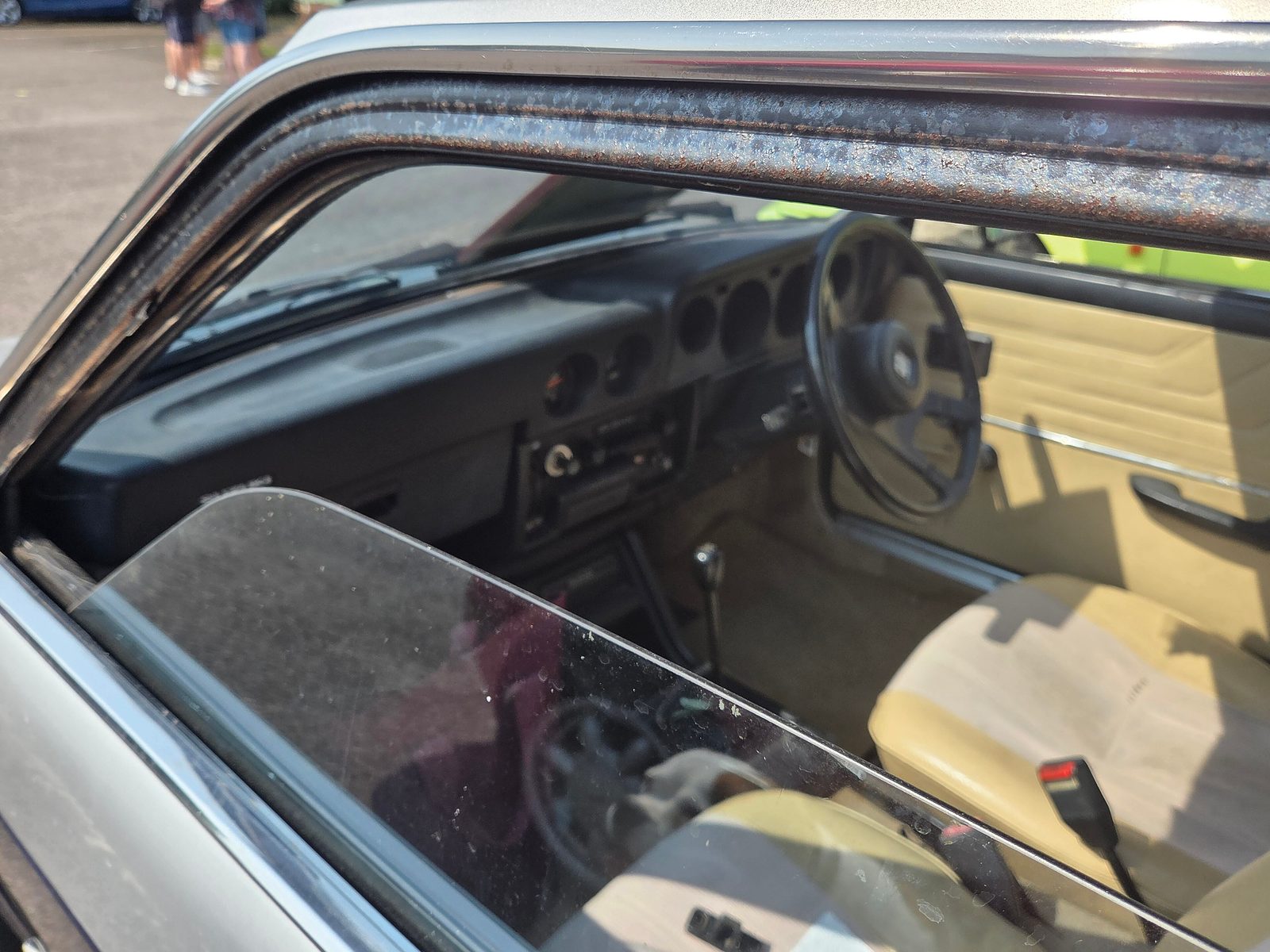
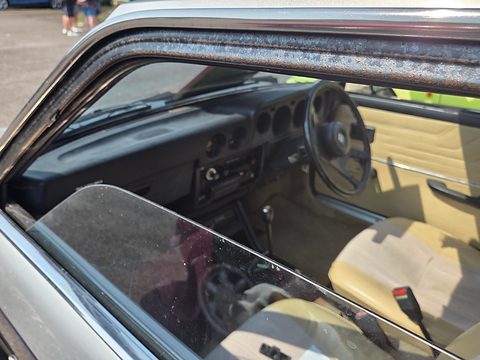
Inside were six separate round dials. Reading from right to left they gave the fuel, the speed, the revs, the water temperature and the charge, and the last was a rally clock with a timer buzzer. The steering column tilted through 57 mm, the seats were buckets, and an overhead console carried a thermometer for the cabin.source 2 Suzuki offered competition parts from the factory: a roll bar, full bucket seats, three-point belts, a leather-rimmed wheel and pedals set for heel-and-toe. Japanese Wikipedia calls it the first proper kei sports car.source 2 Writing of the Cervo, which it says was the same in this, Japanese Wikipedia adds that the low seat stretched the driver’s legs halfway along the bonnet.source 5
Grades, then emissions
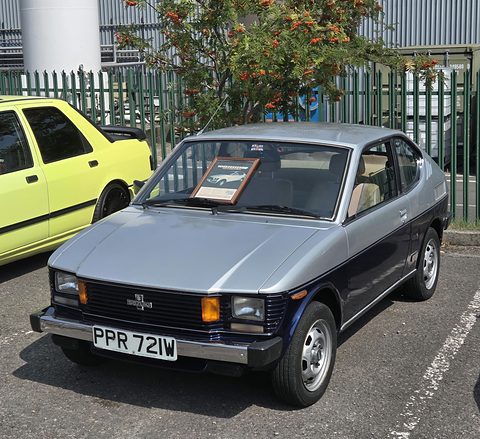
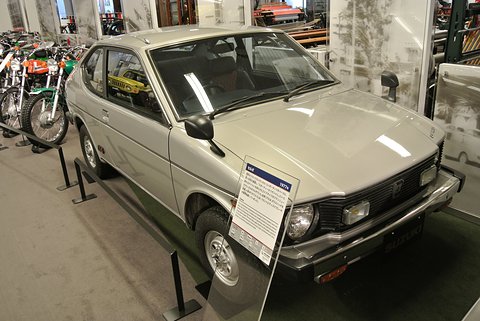
The first grades were the GE, with painted bumpers and none of the console, ammeter, clock or fog lamps; the GER, a GE on 135SR10 radials; and the fully equipped GX, with chrome bumpers.source 2 In February 1972 came the GXF, the F for four seats, a 2+2; in March the cheaper GXDF and GXPF of 34 PS; and in June the GAF, a base model of 31 PS at ¥399,000, and the GXCF, with front disc brakes and a tandem master cylinder. The two-seaters were dropped that October.source 2source 4
Emission rules cut the engine to 35 PS in May 1974, leaving only the GXF and the GXCF, and savings took away the tilting column and the timer clock.source 2source 4 In January 1975 the engine lid and the front skirt were changed to take the larger new kei number plates, and in June 1976 production ended.source 2source 4 Abroad it had been sold simply as the Suzuki LC10W, with 35 PS.source 4 The rear deck of Suzuki’s 2016 Ignis is said to pay homage to it.source 2