microcarfan
  • Kei car
  • Japan
  • Four wheels
  • Mazda’s first car

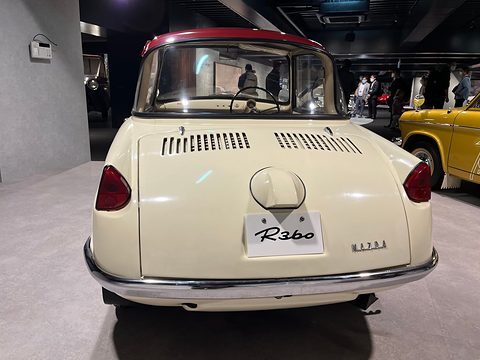
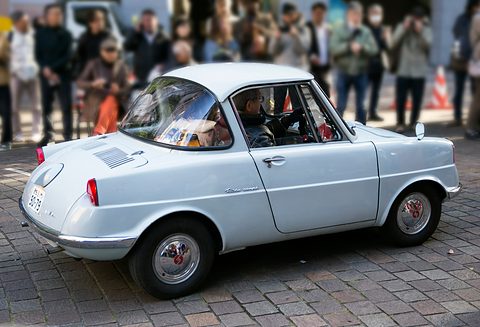
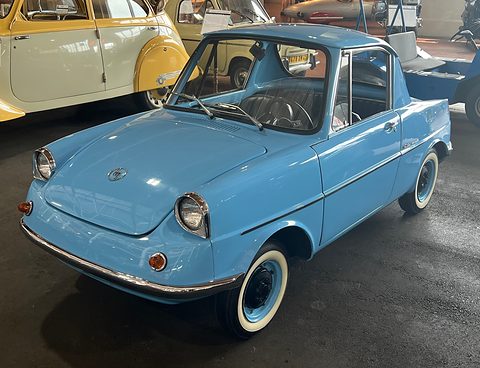
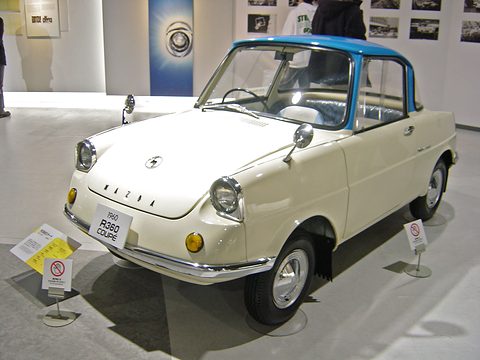
Mazda R360 Coupe

Also known as Mazda R360, R360 Coupe, KRBB, KRBC

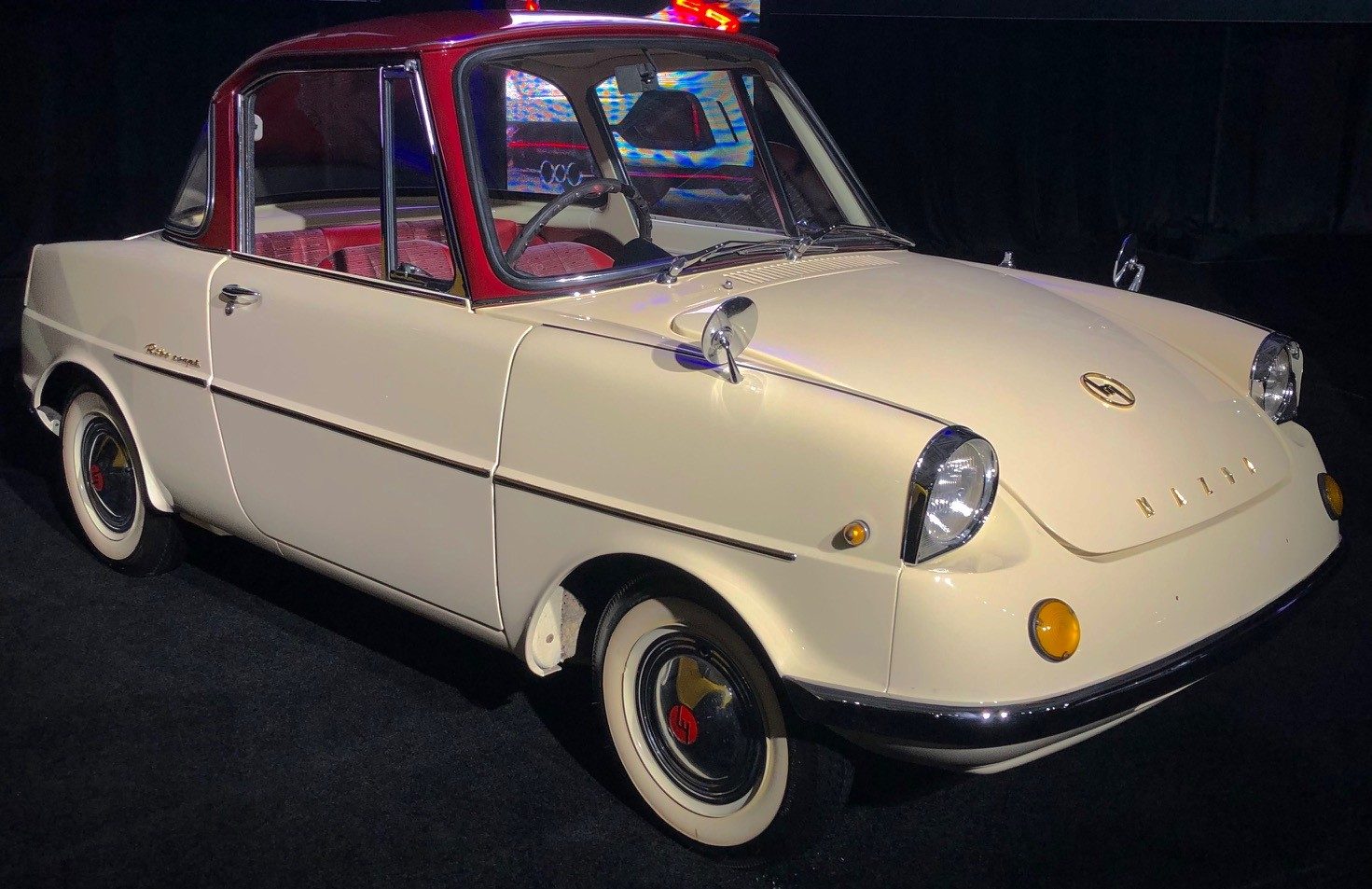
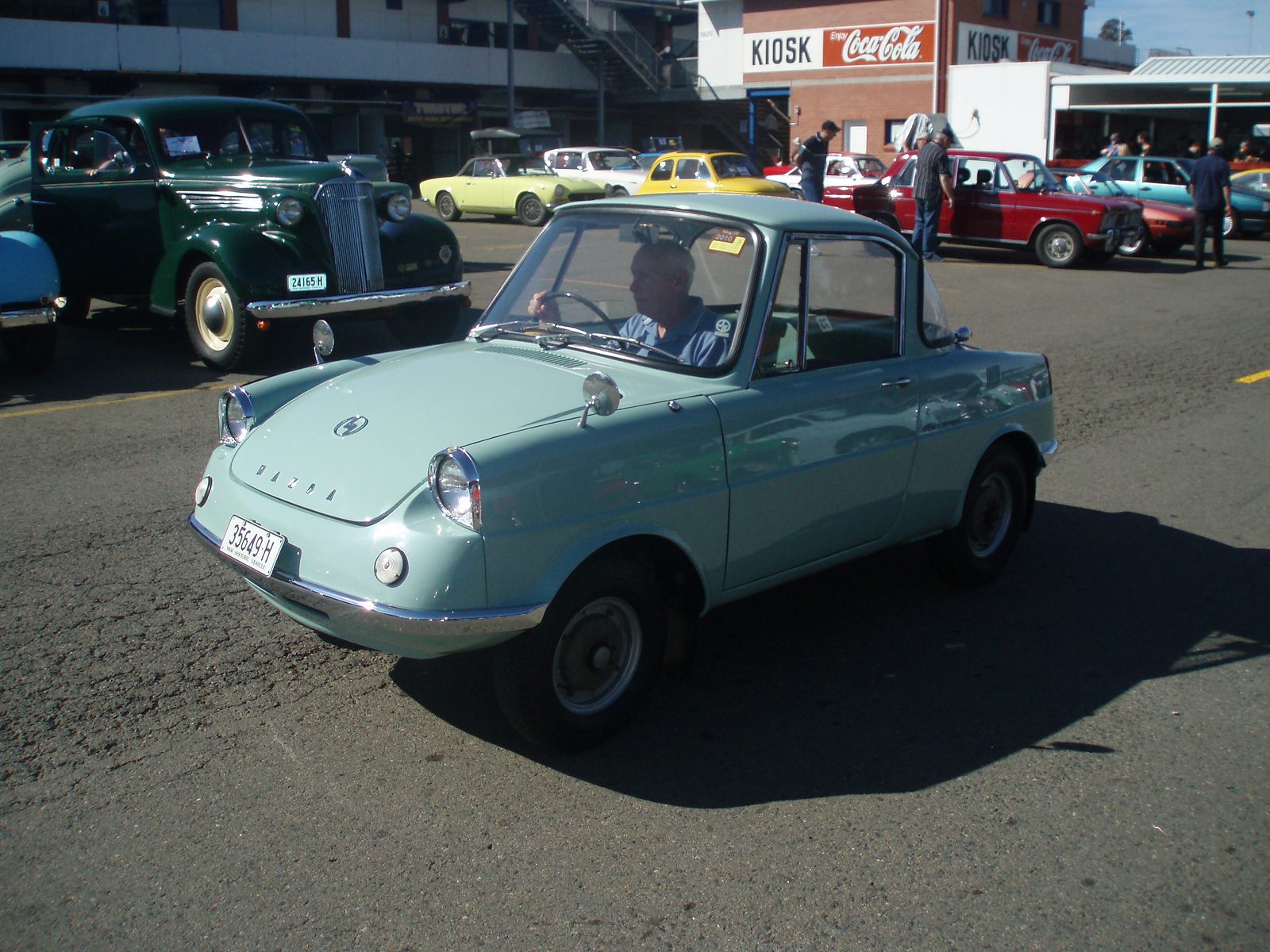
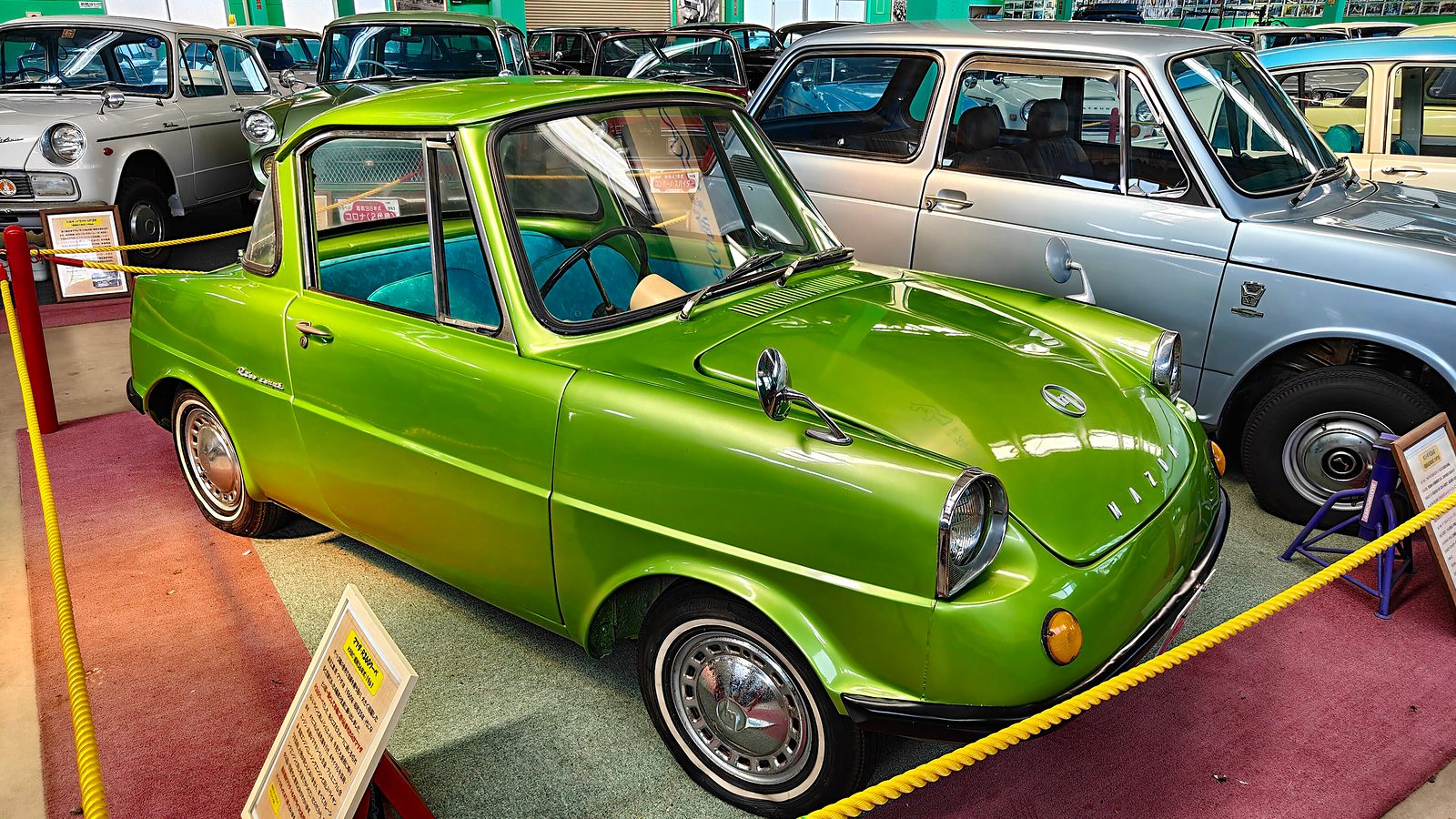
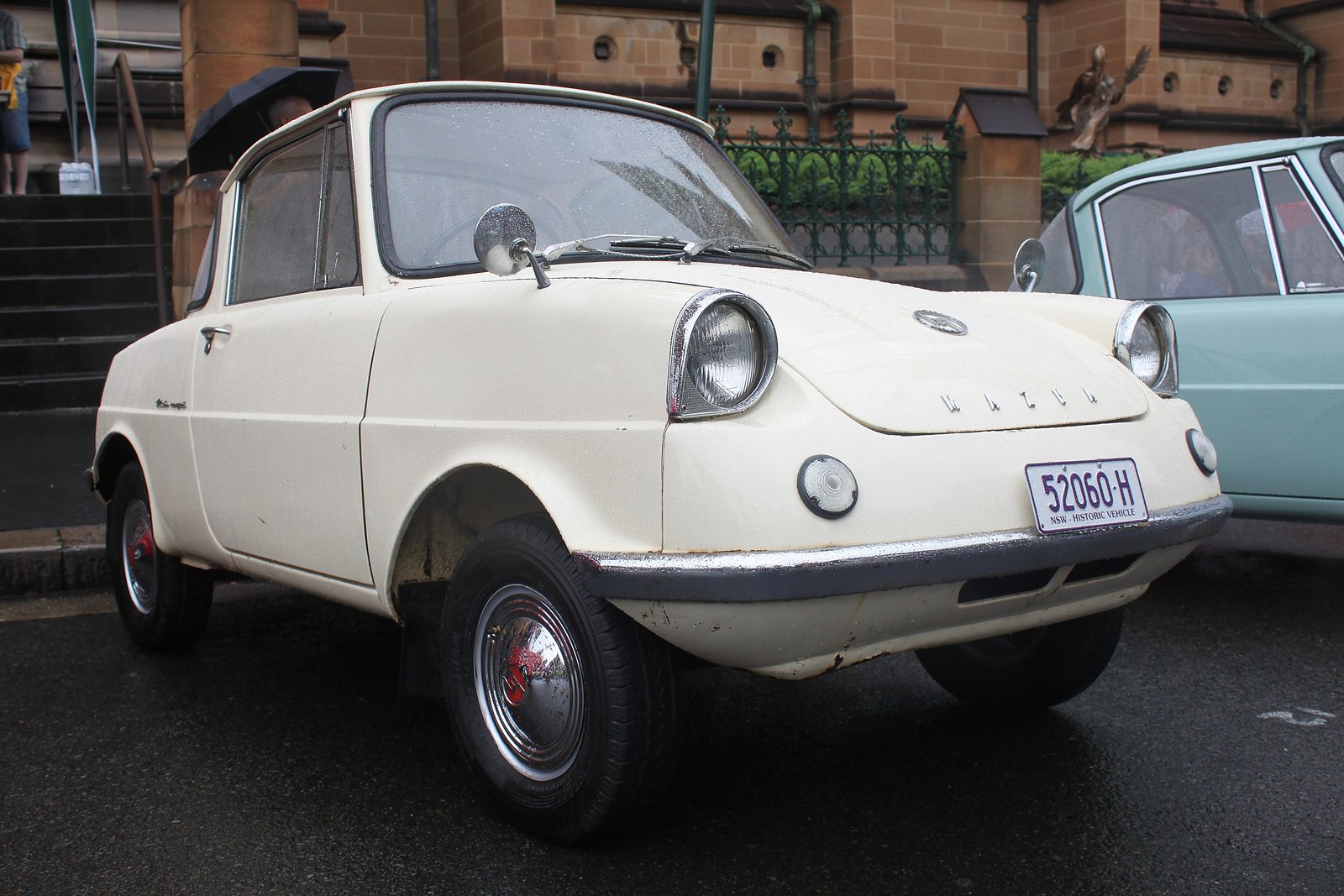
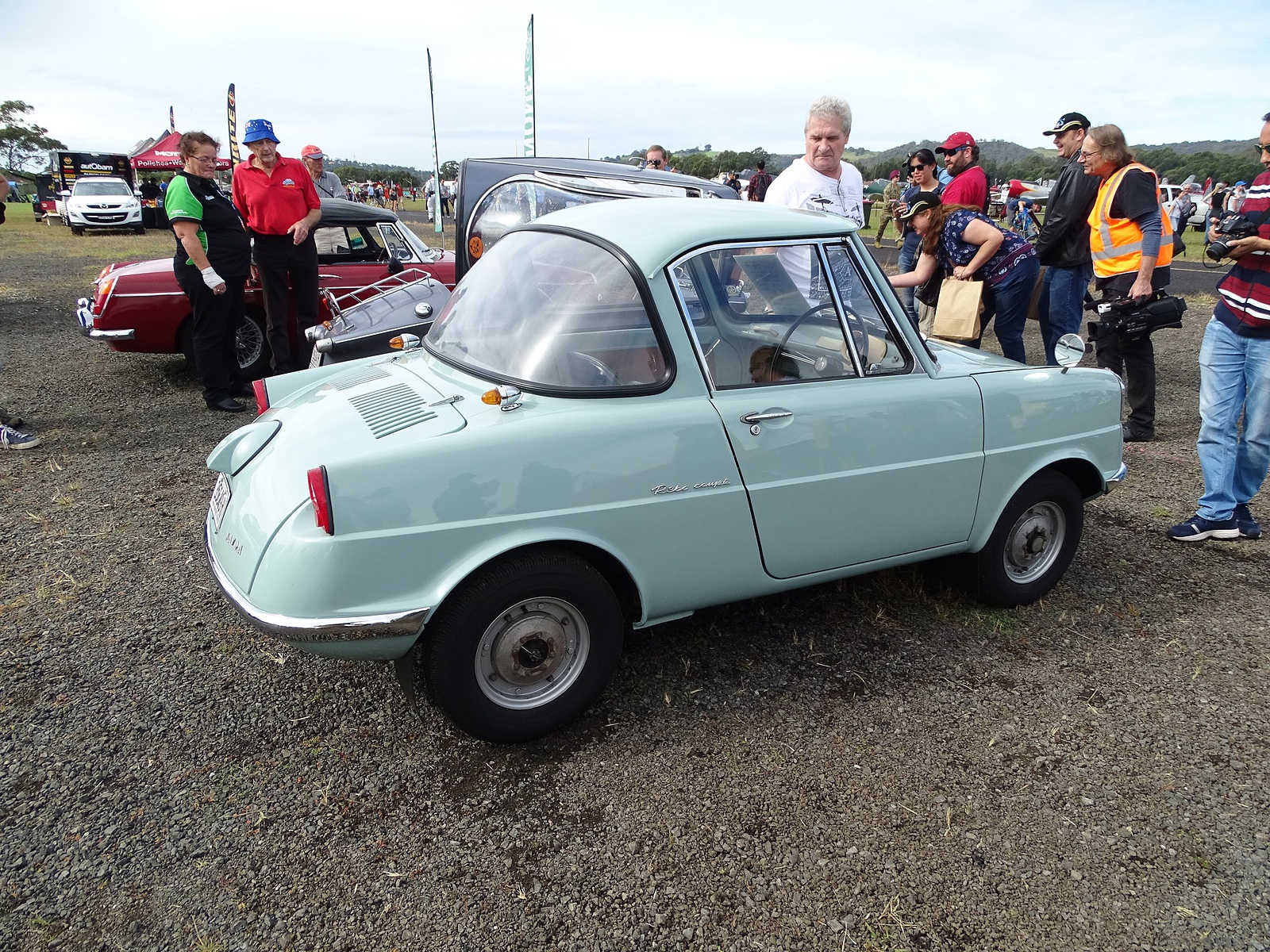
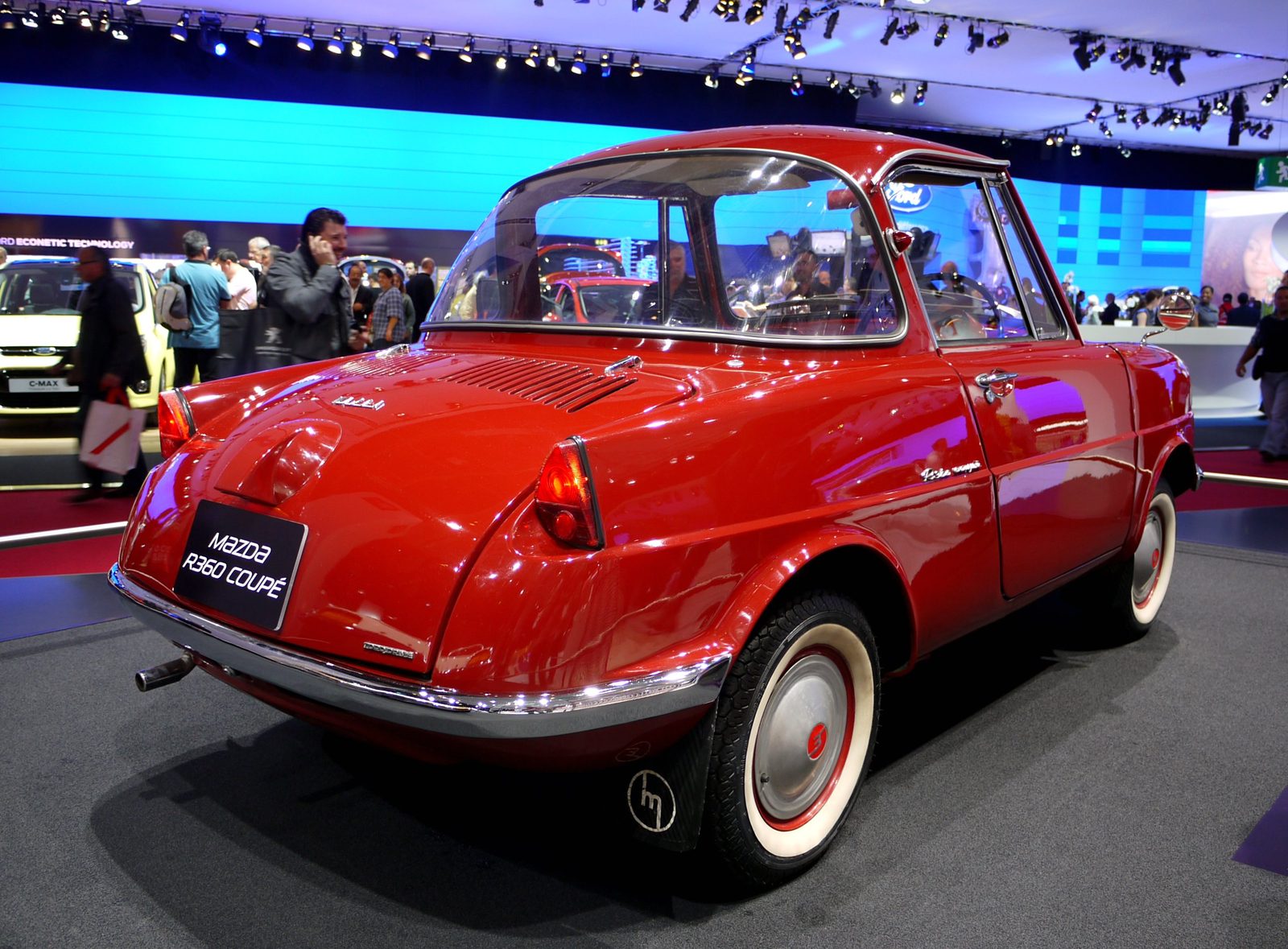
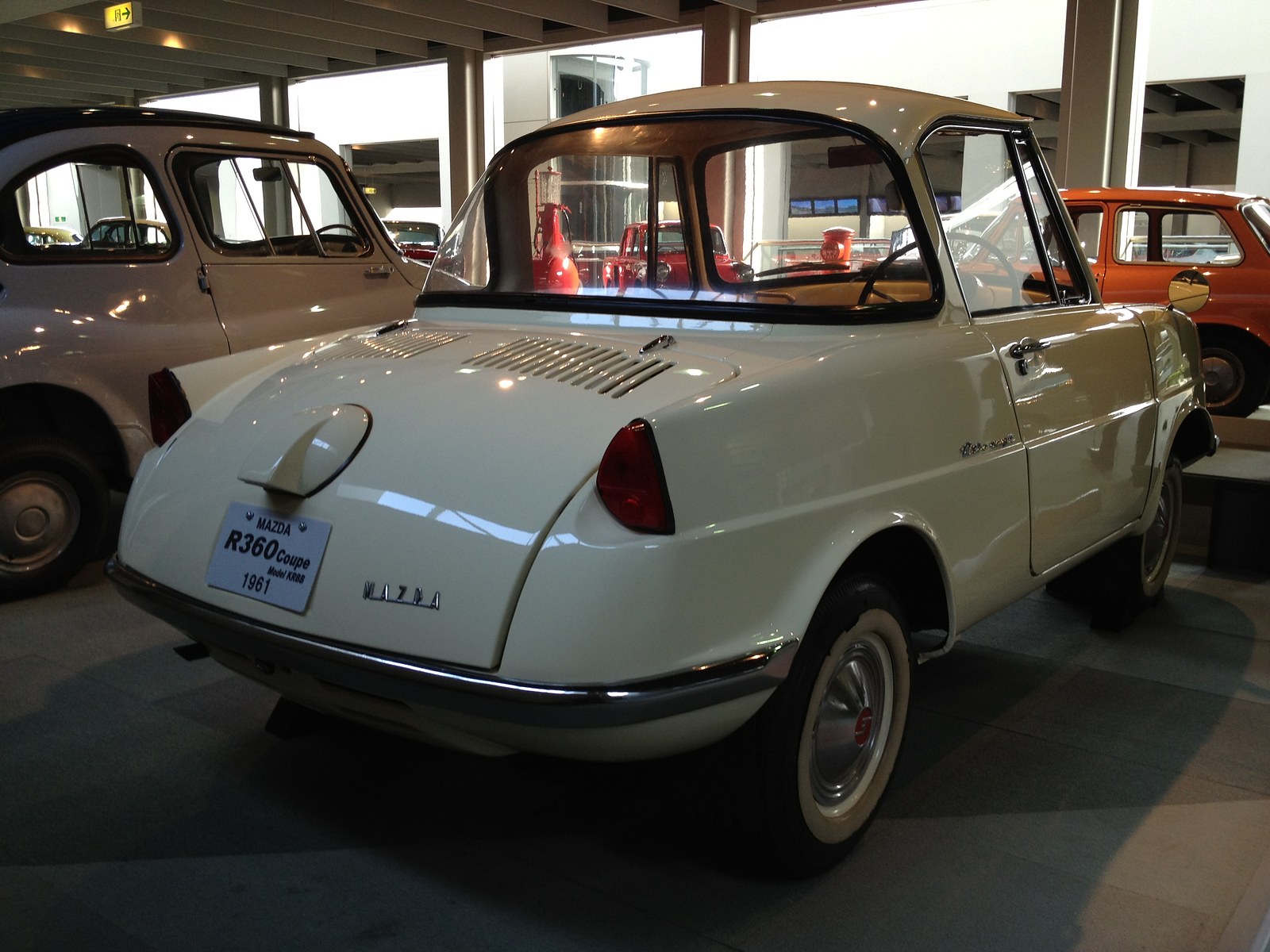
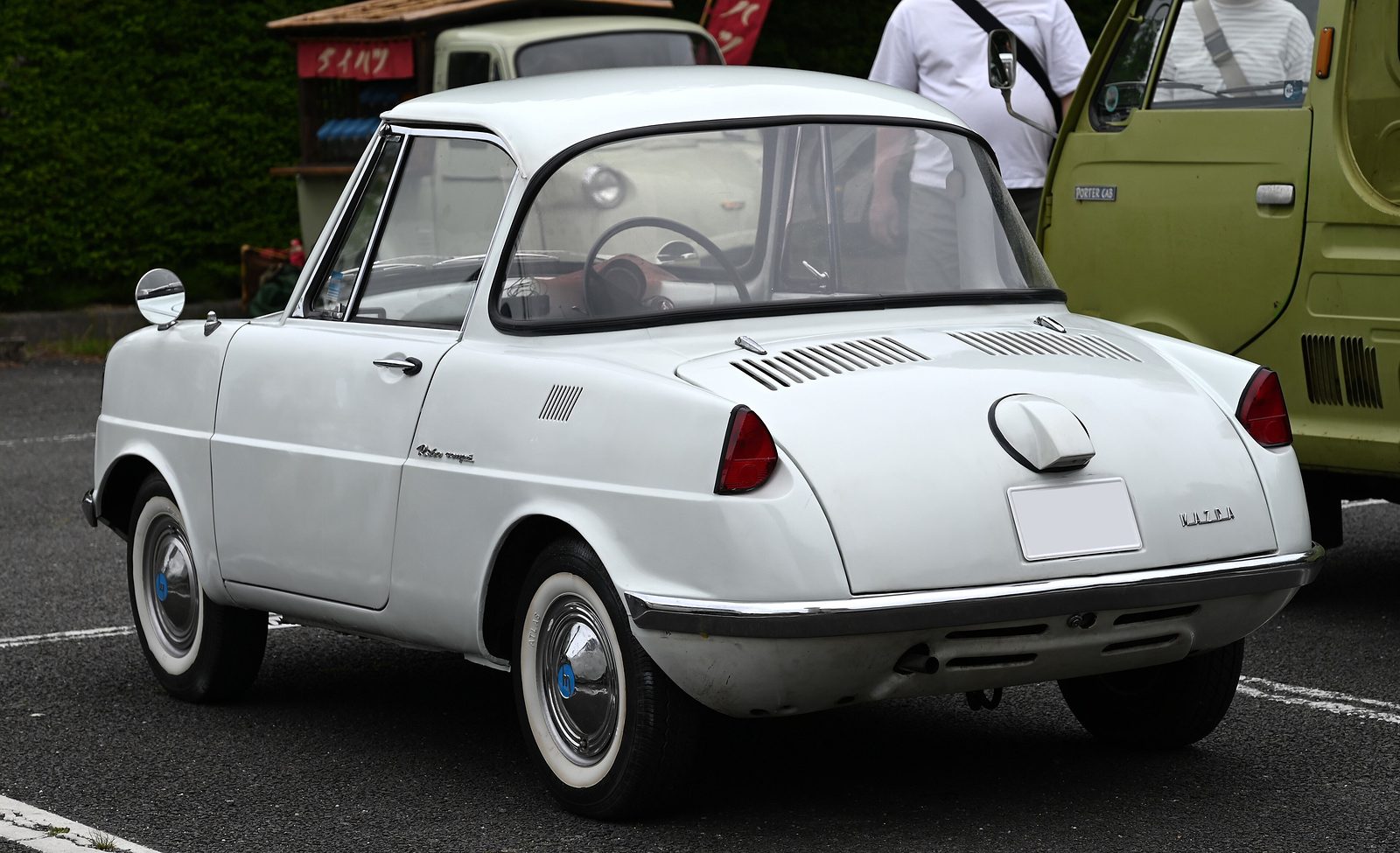
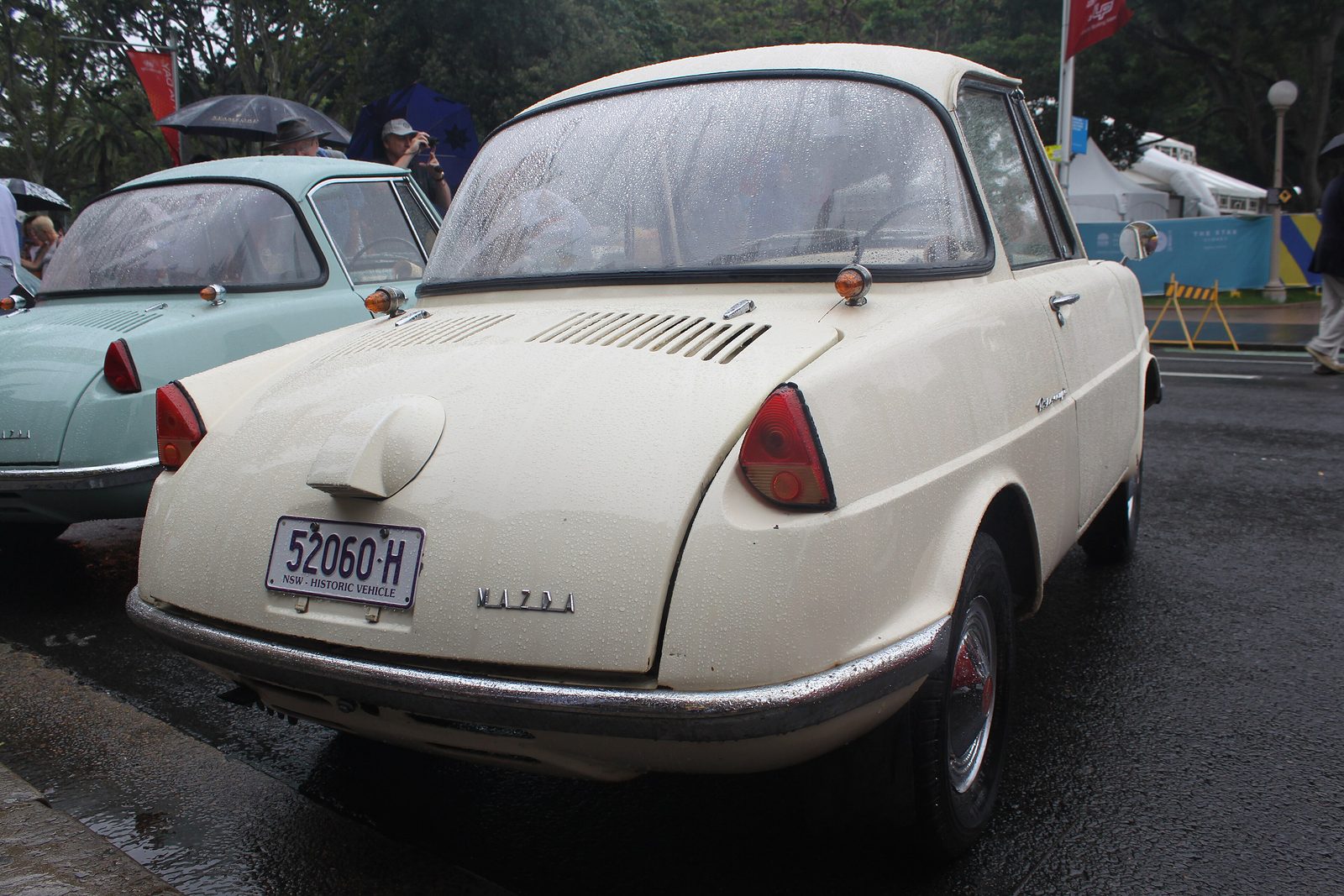
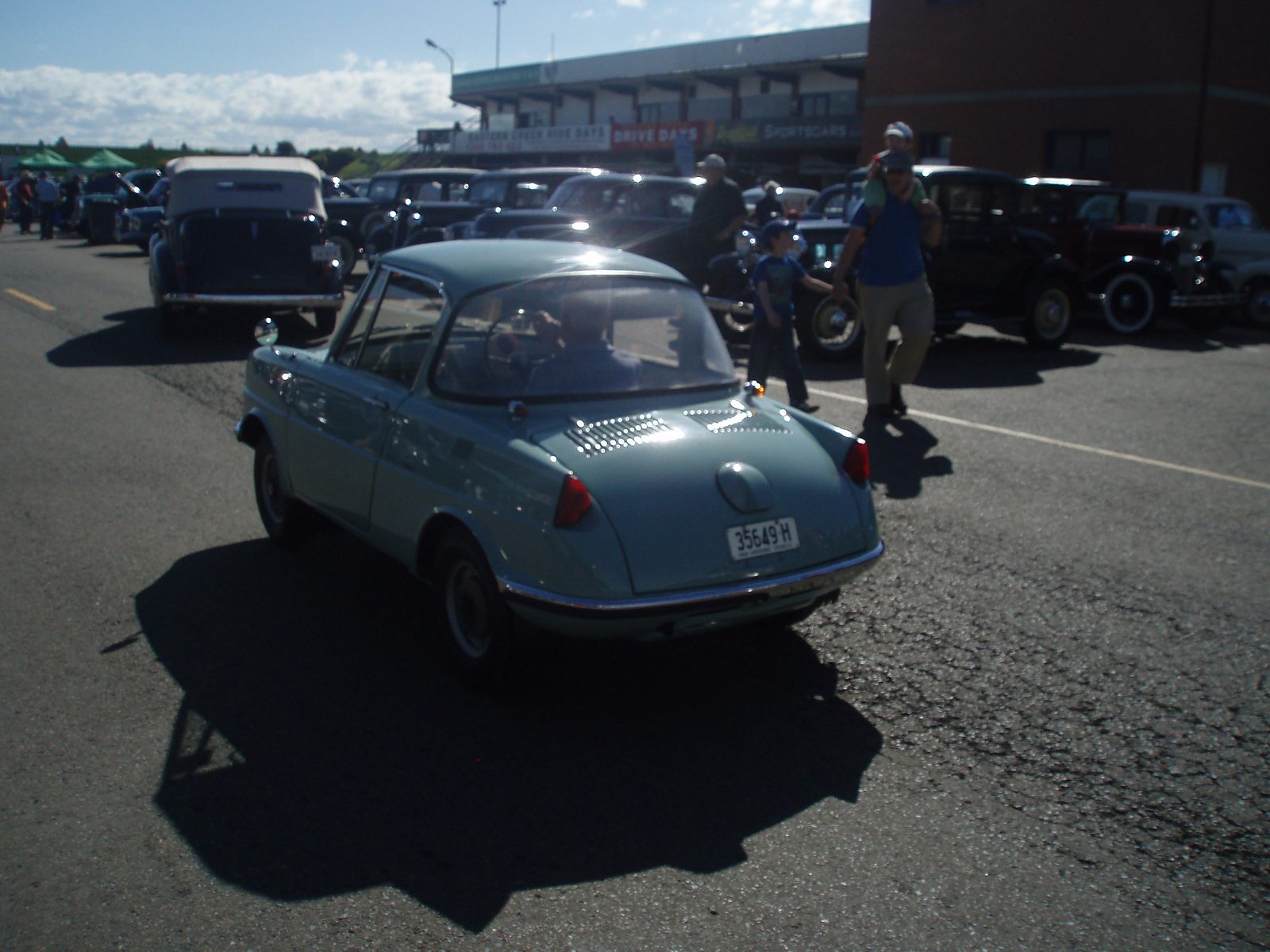
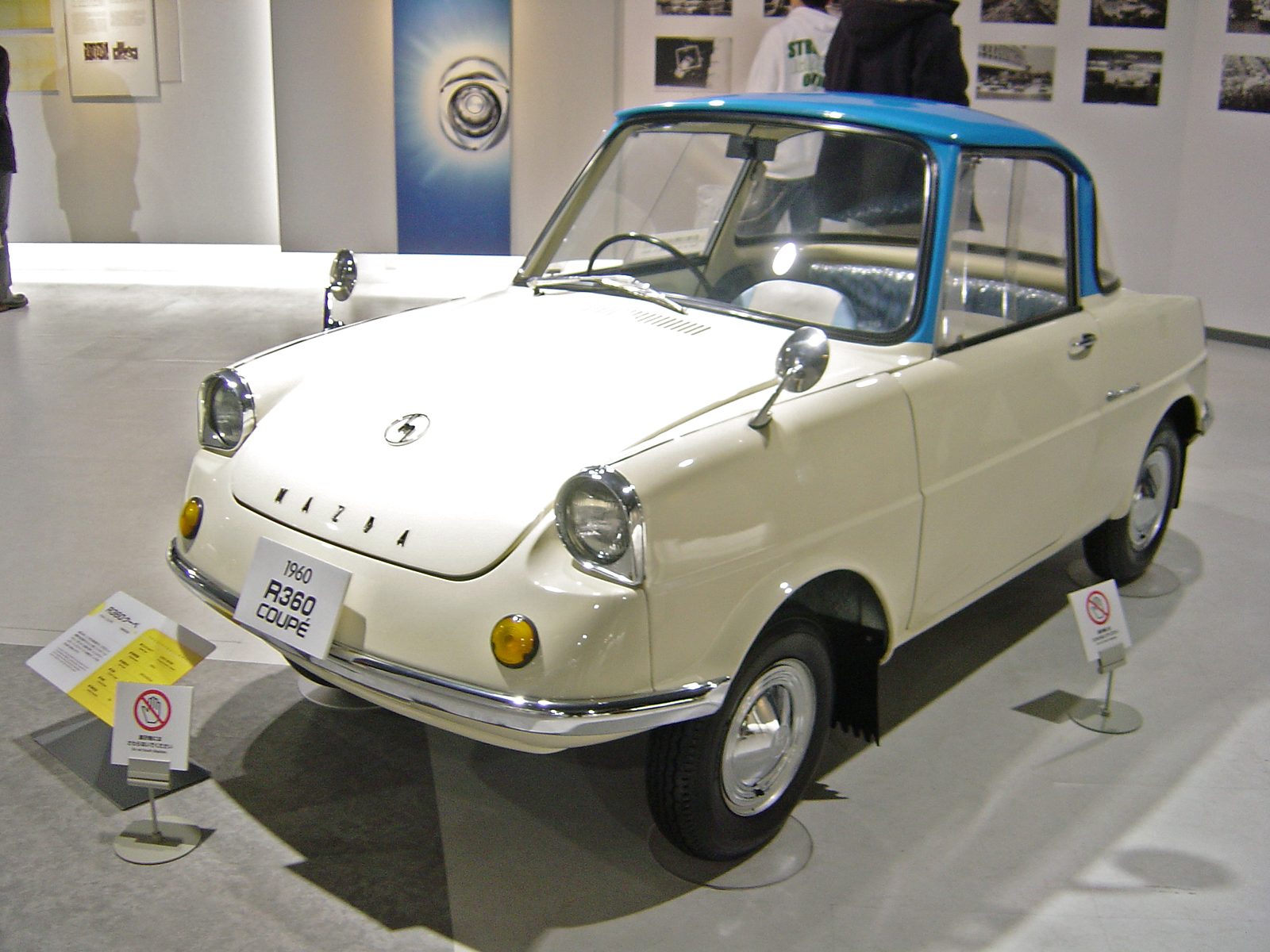
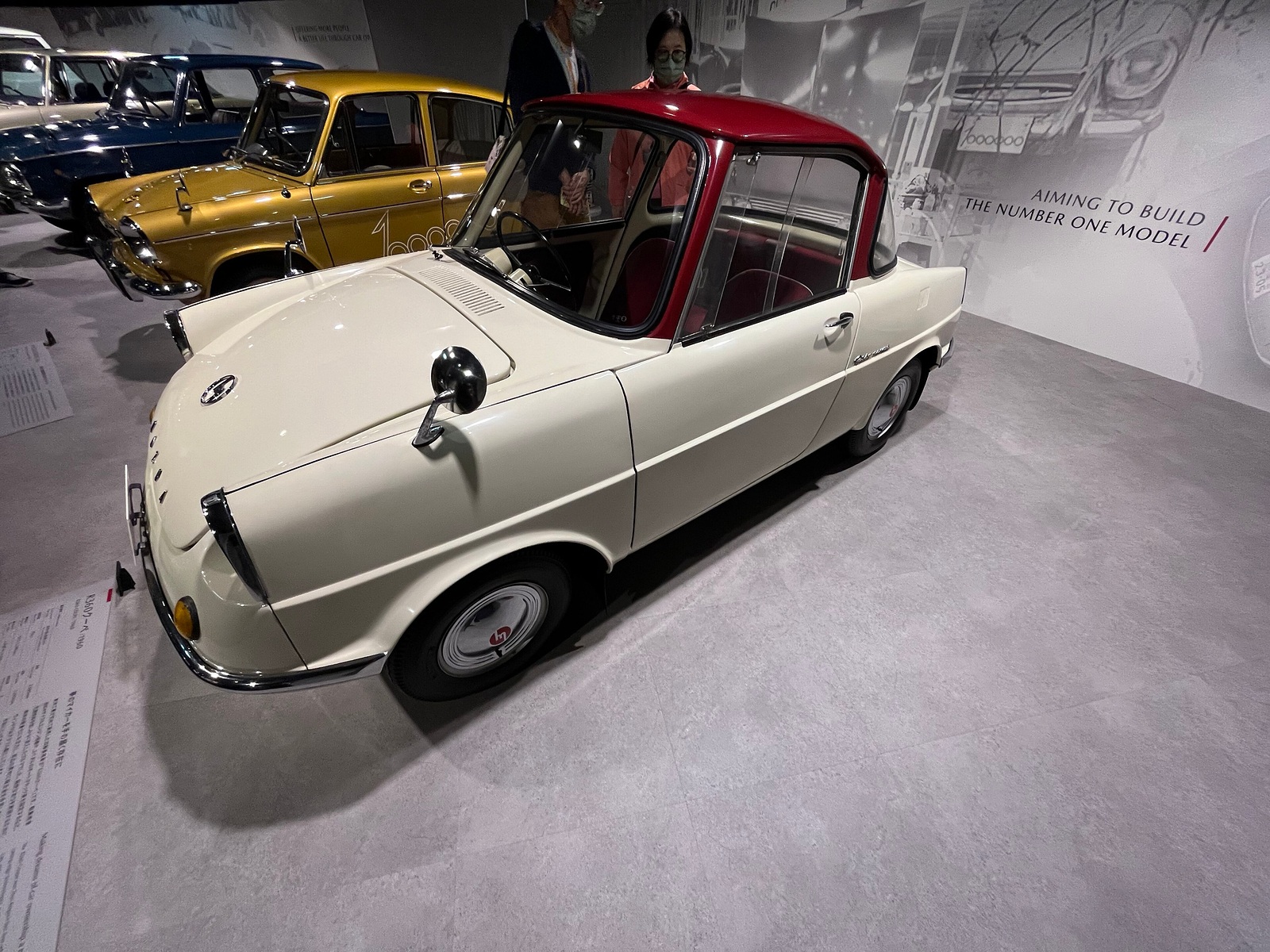
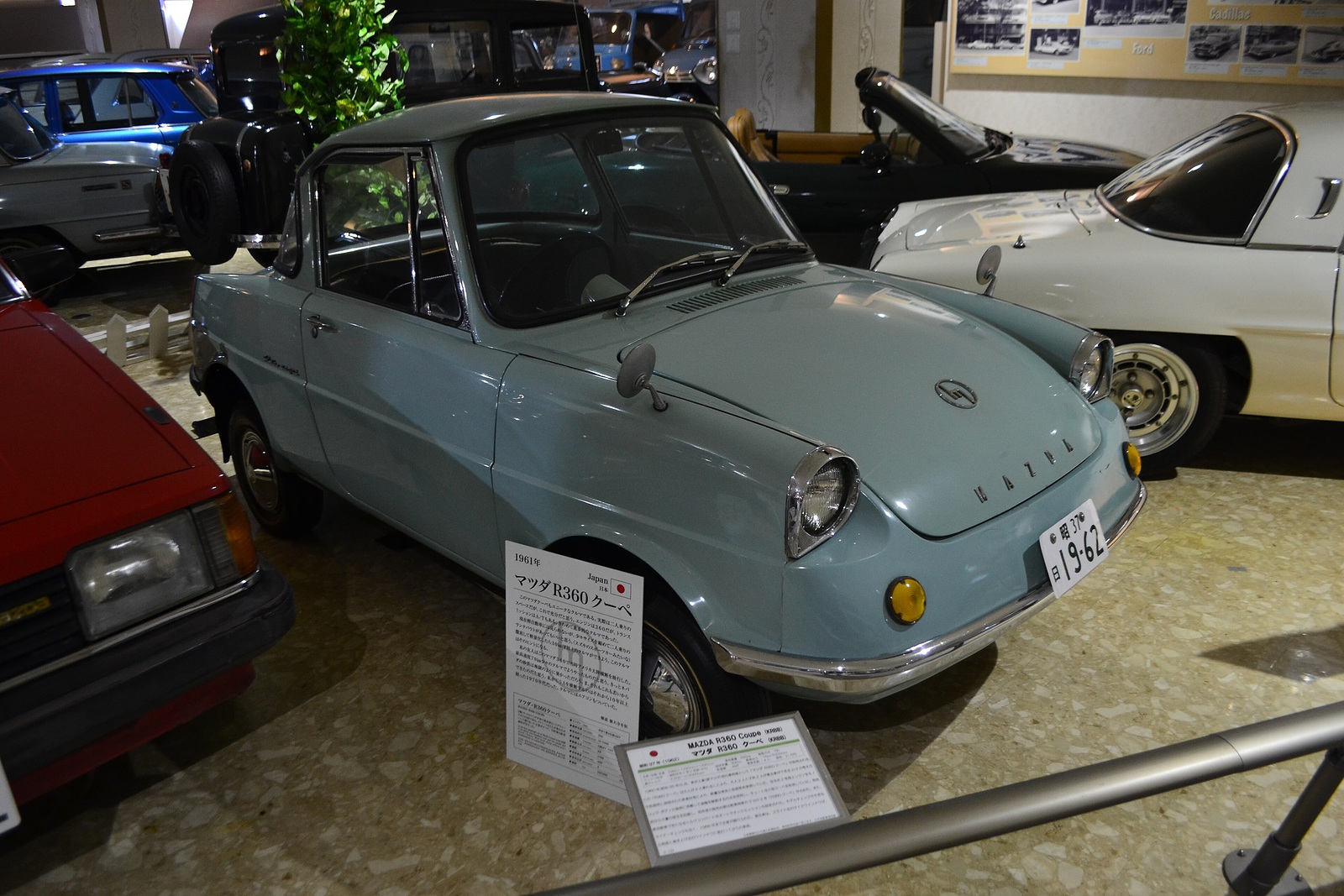
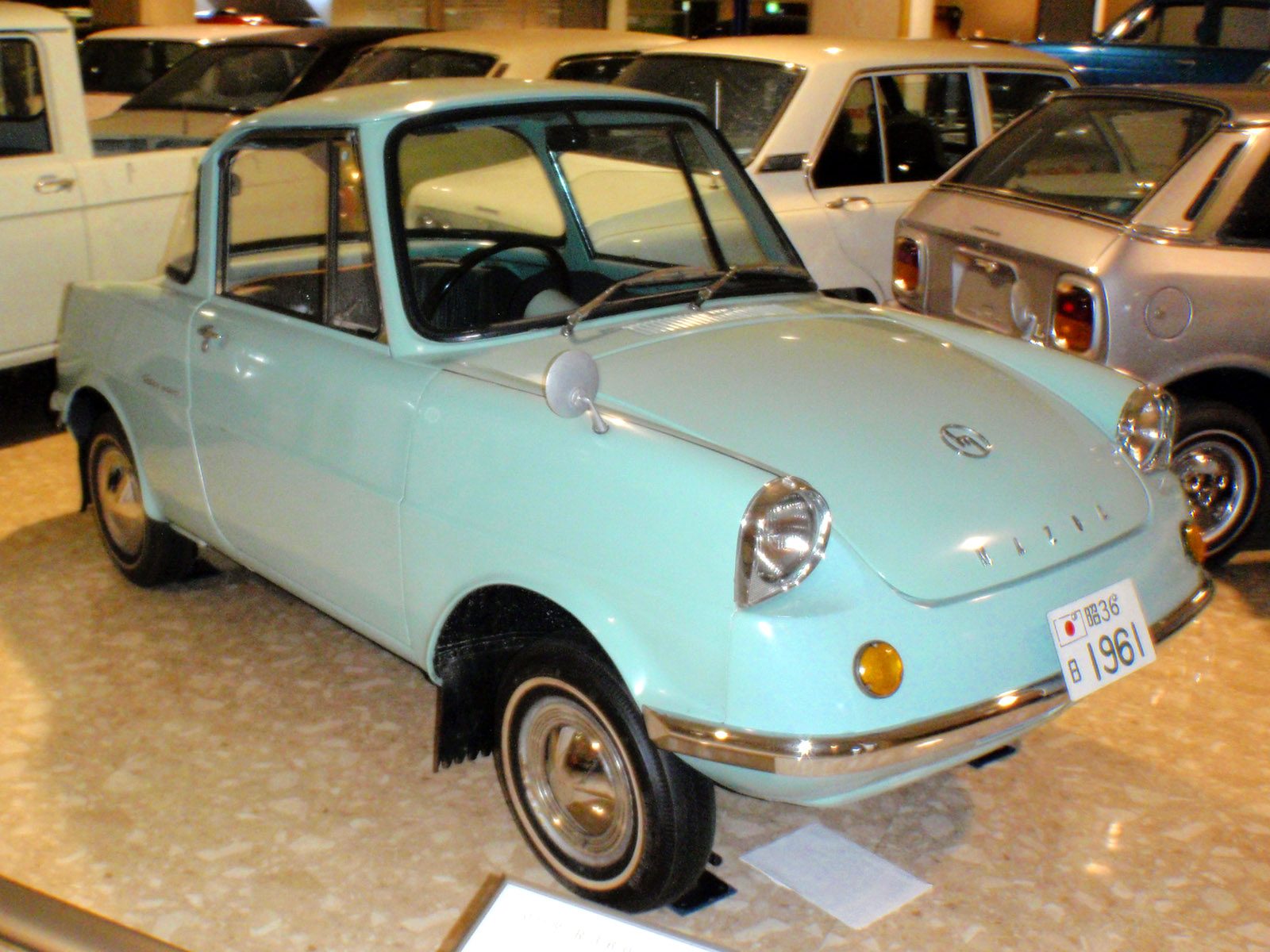
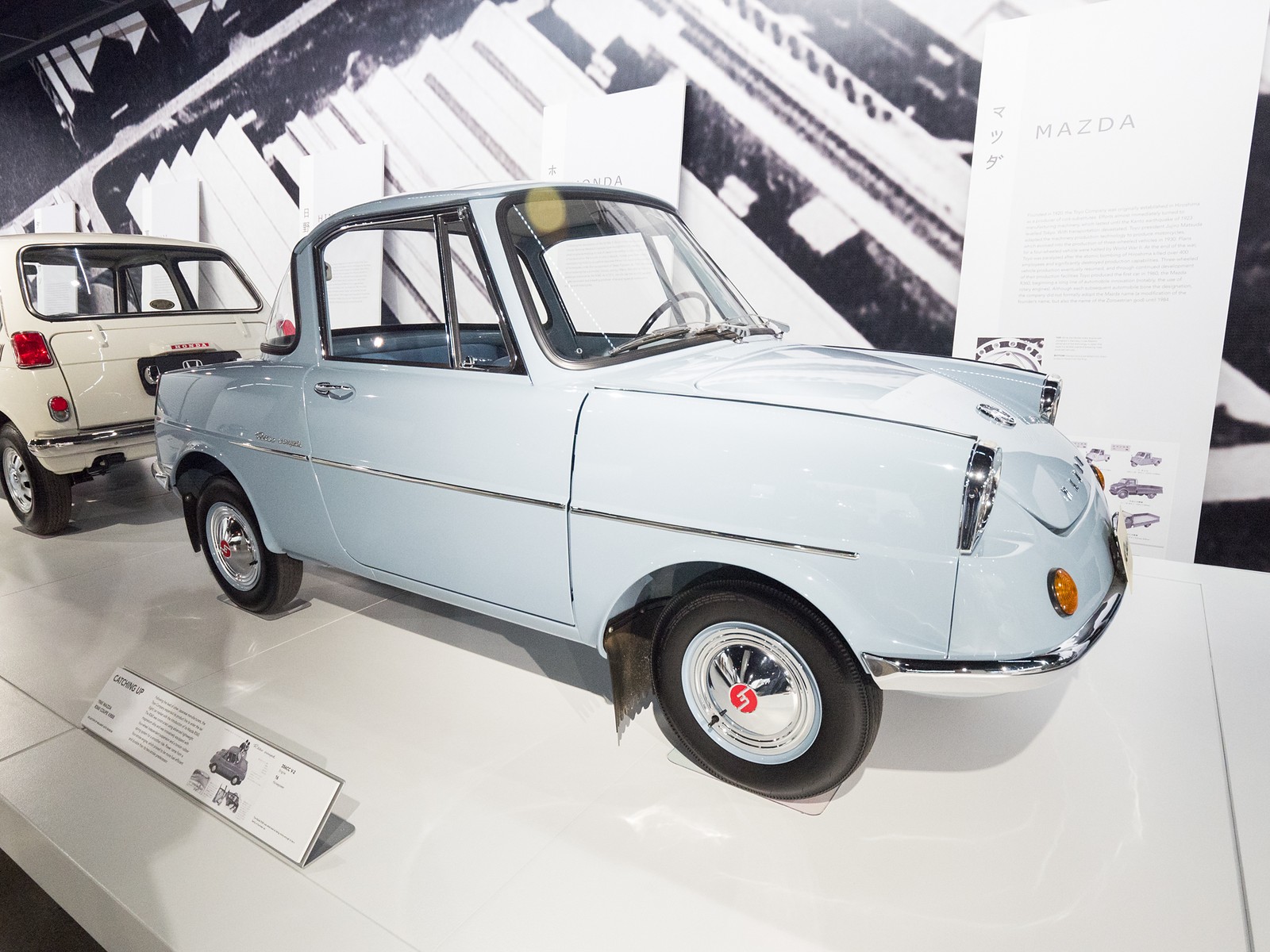
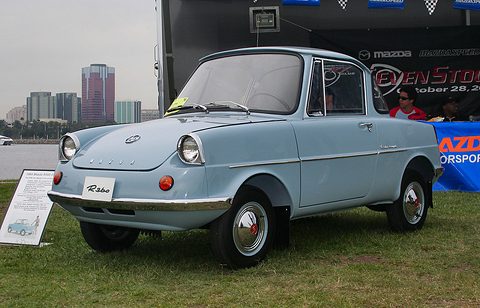
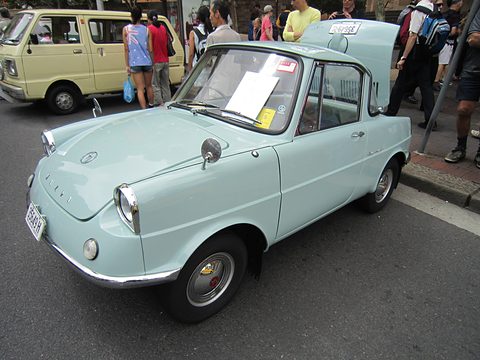
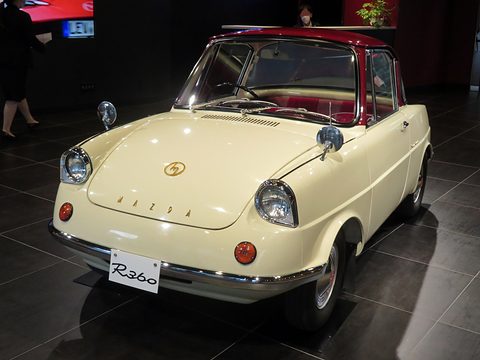
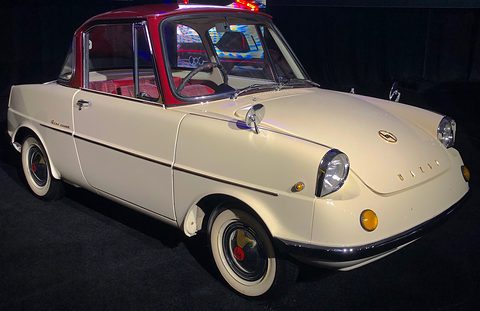
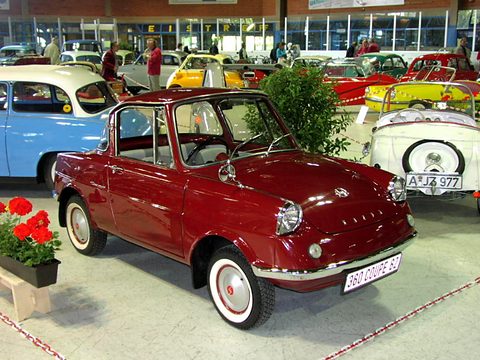
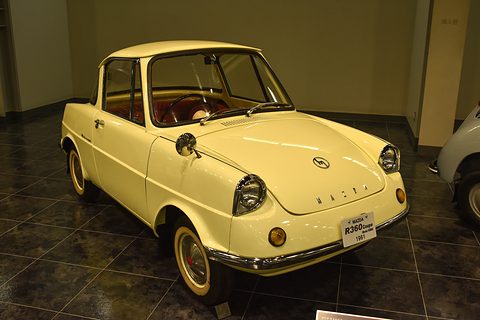
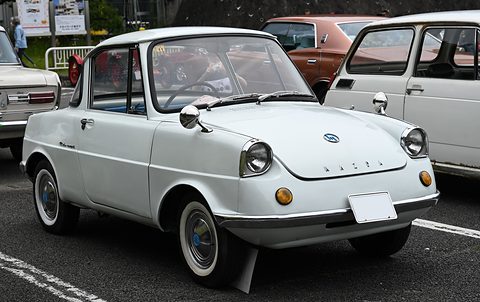
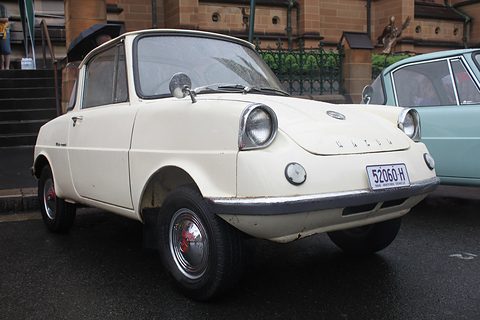
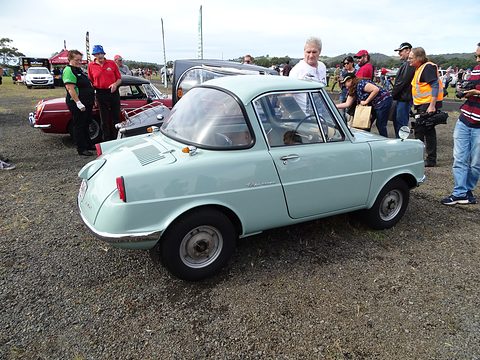
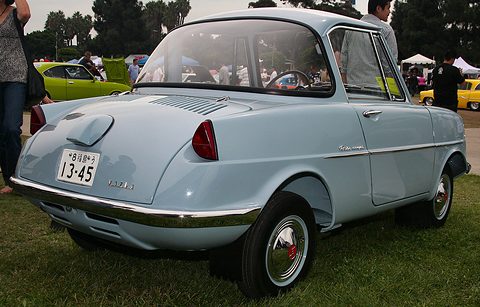
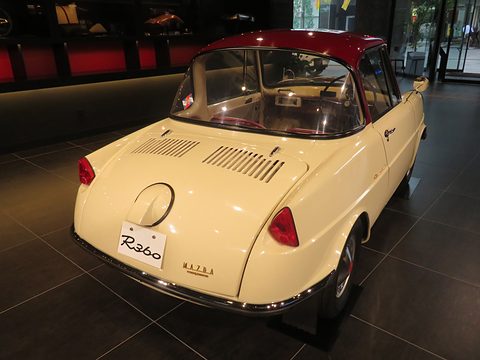
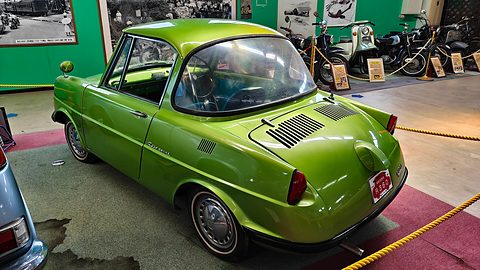
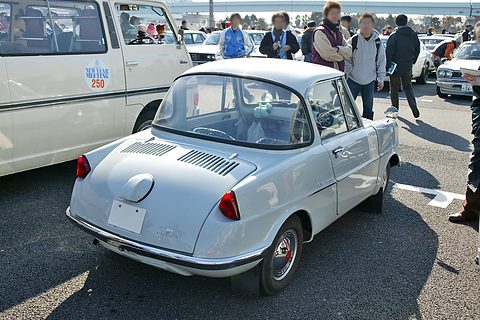
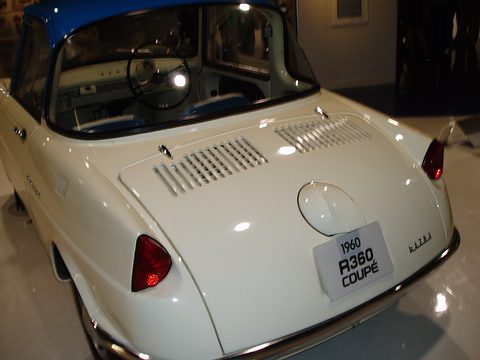
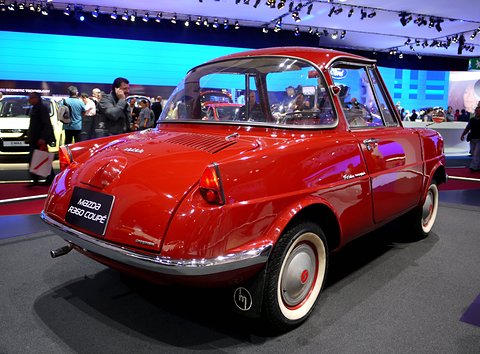
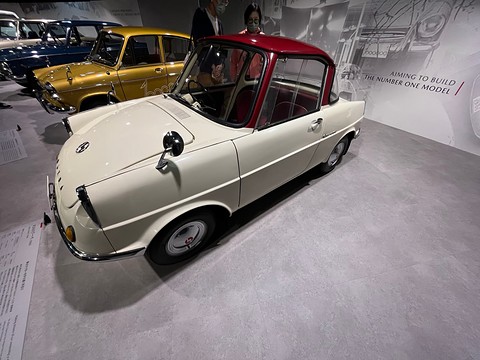
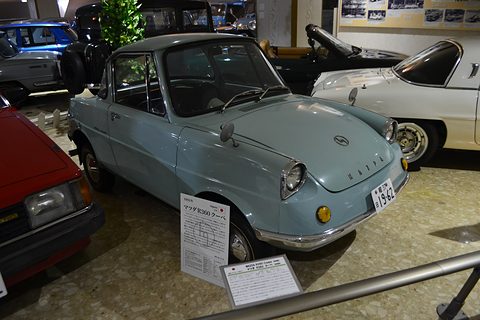
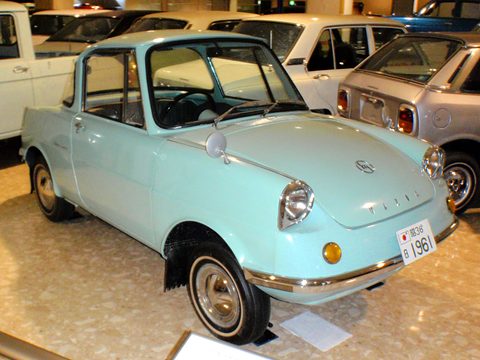
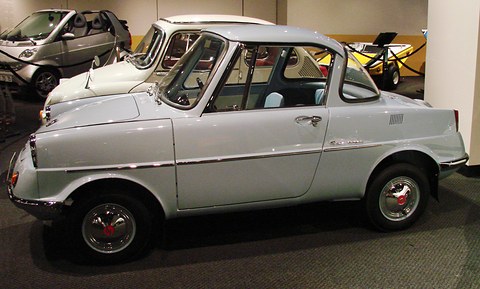
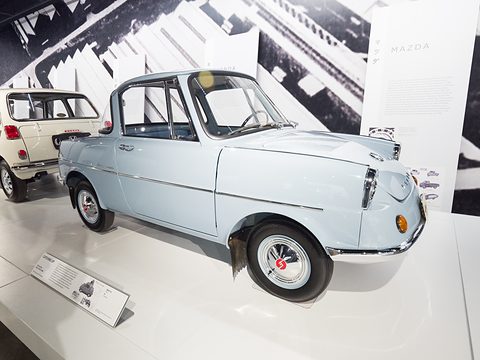
In 1960 ¥300,000 bought the cheapest four-wheeled passenger car in Japan: a two-door coupé of 380 kg, with acrylic for its side and rear windows, magnesium in its engine and rubber for its springs. It was Mazda’s first car, and in its first year it made up nearly two in three of the kei passenger cars built in Japan.

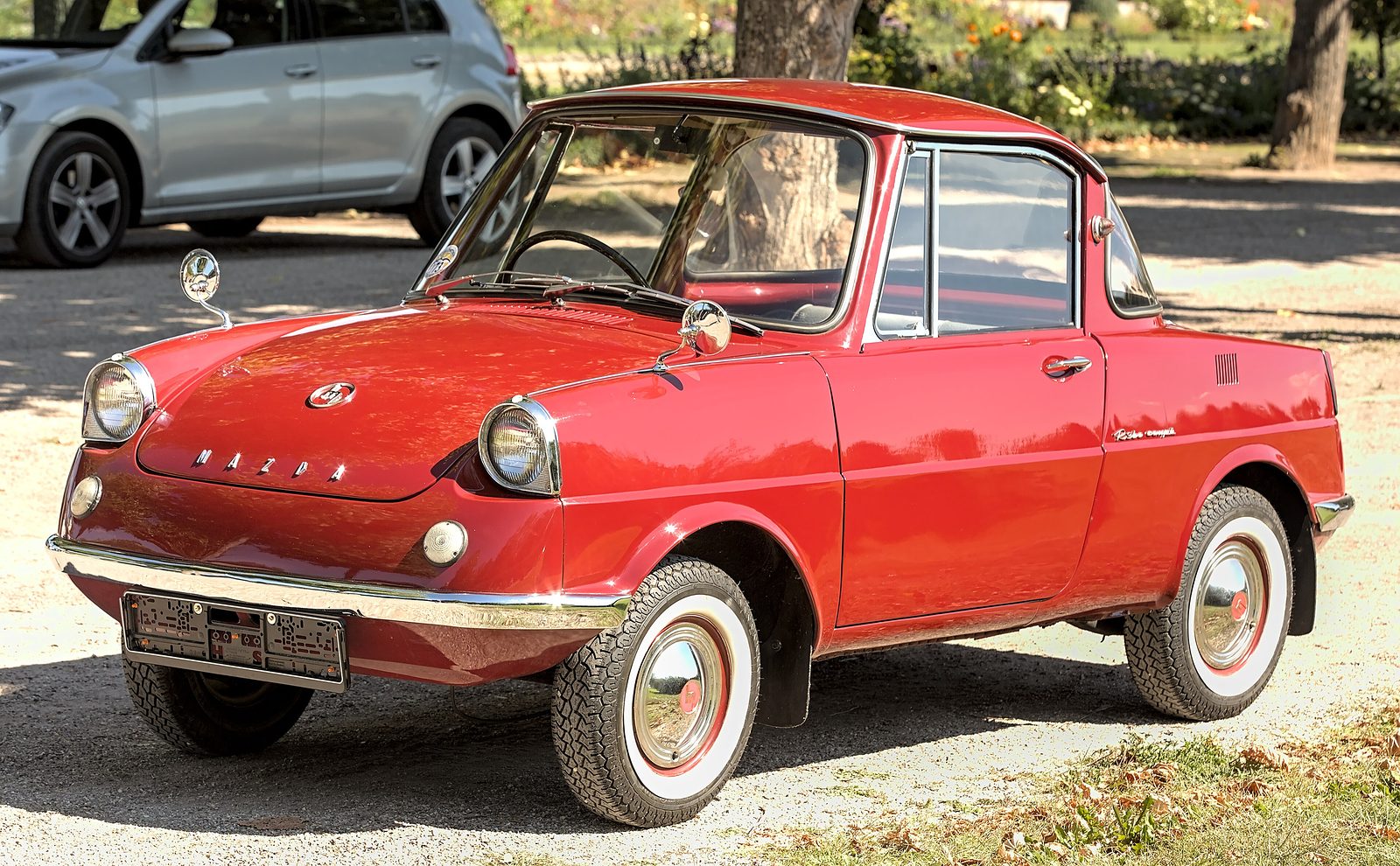
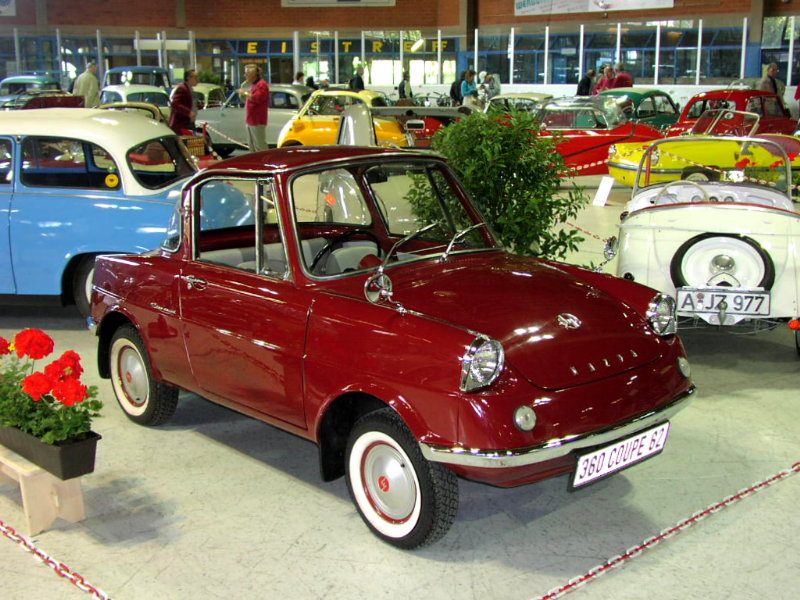
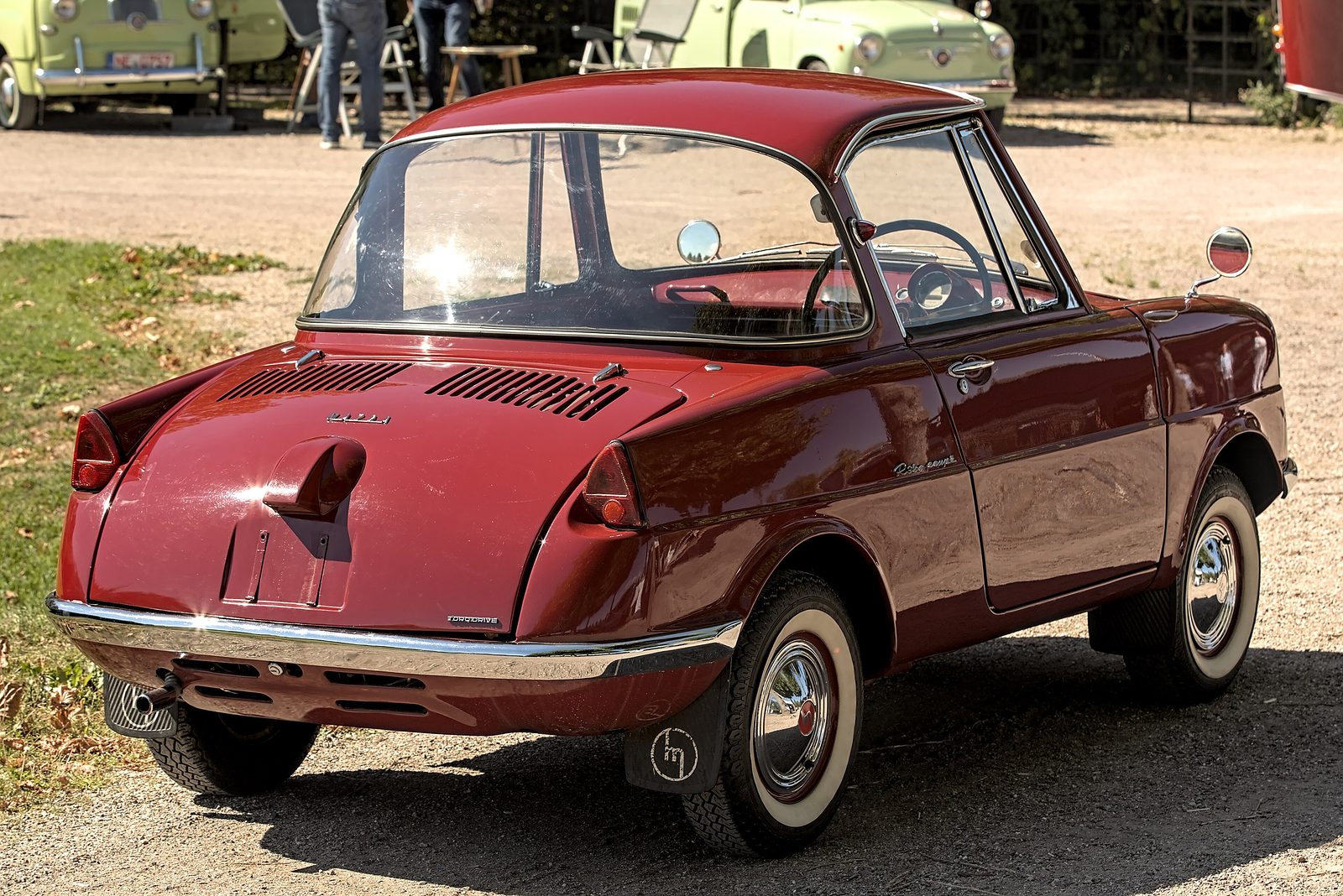
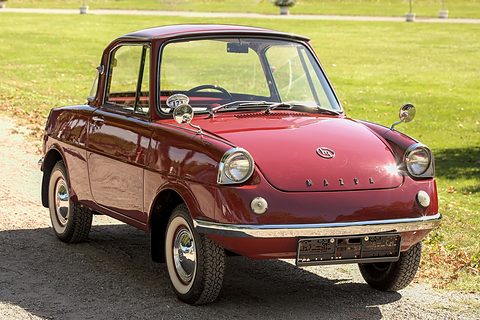
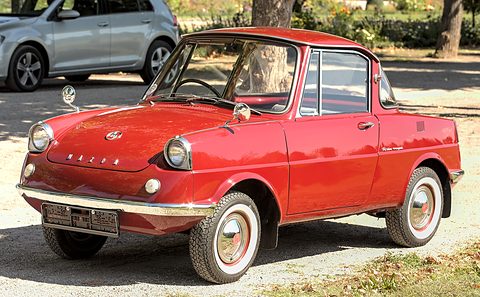
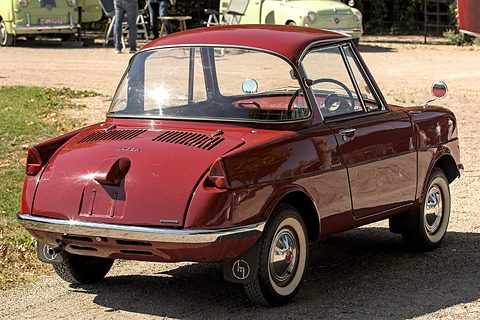
Maroon small coupé with whitewall tyres parked on grass and gravel in sunshine.
A maroon Mazda R360 Coupe at the Classic-Gala, Schwetzingen, Germany, in 2022.Photo: Alexander Migl, CC BY-SA 4.0, via Wikimedia Commons

At a glance

The spec plate

Mazda R360 Coupe

KRBB · Hiroshima

Built
1960–⁠1966On sale from 1960, on 20 May by the Lane Motor Museum’s date; the automatic was built to order until 1969
Country
JapanTōyō Kōgyō, Hiroshima
Maker
Tōyō KōgyōHiroshima; now Mazda
Engine
356 cc air-cooled 90° V-twin, overhead valvesFour-stroke, dry sump, at the back; aluminium head and crankcase, magnesium rocker cover and oil pan
Power
16 PS12 kW, at 5,300 rpm
Length
2,980 mm1,290 mm wide, 1,290 mm high
Weight
380 kg
Seats
2 + 2Legally four; the rear seats were really for children
Wheels
4Engine at the back, mounted lengthwise, driving the rear wheels
Price new
¥300,0001960: the cheapest four-wheeled passenger car in Japan
Production
65,73723,417 of them in 1960
Survives
YesNo count; Mazda, the Toyota Automobile Museum and the Lane Motor Museum each keep one
Top speed
90km/h90 km/h84 km/h in English Wikipedia

How big is it?

True proportion

2.98 m

It is 10 mm longer than a Fiat 500, about 1.7 adults laid end to end.

Drawn at true proportion. The track is 3.6 metres long; the adult stands at the same scale. The Peel P50 is the smallest production car, on every page for comparison.

The story

History

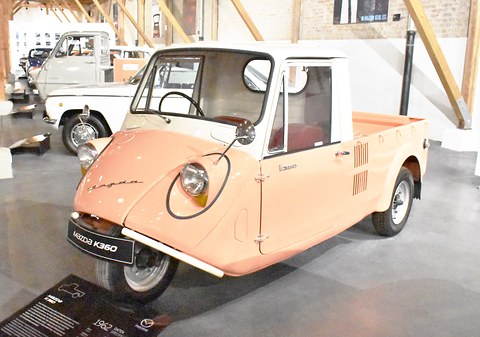
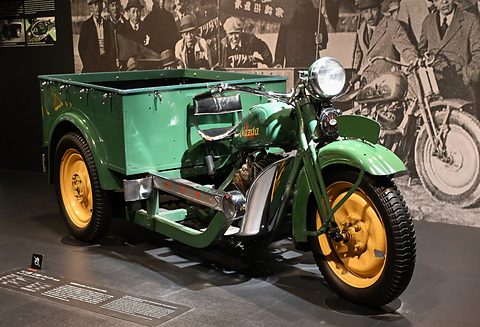
Tōyō Kōgyō of Hiroshima had begun as a cork maker. It built motorcycles, and from 1931 three-wheeled trucks, the first of them the Mazda-Go.source 4source 5 In 1959 it launched the Mazda K360, a light three-wheeled truck with an air-cooled V-twin, and a related engine went into its first passenger car the next year.source 2 Mazda’s own history says the R360 came off the line of a new plant in 1960, which it describes as computer-controlled.source 6

The car was built to Japan’s kei rules for light vehicles, which then held a passenger car to 360 cc. The project was led by Yamamoto Kenichi, who went on to head Mazda’s rotary-engine programme. The body was shaped by the industrial designer Kosugi Jirō (1915–⁠1981), who had styled Mazda’s three-wheelers, working with Tōyō Kōgyō’s own designers.source 2 The pointed nose and the headlamps set into recesses carried motifs over from those trucks; Kosugi called a natural recess of this kind a “happy shape”.source 2

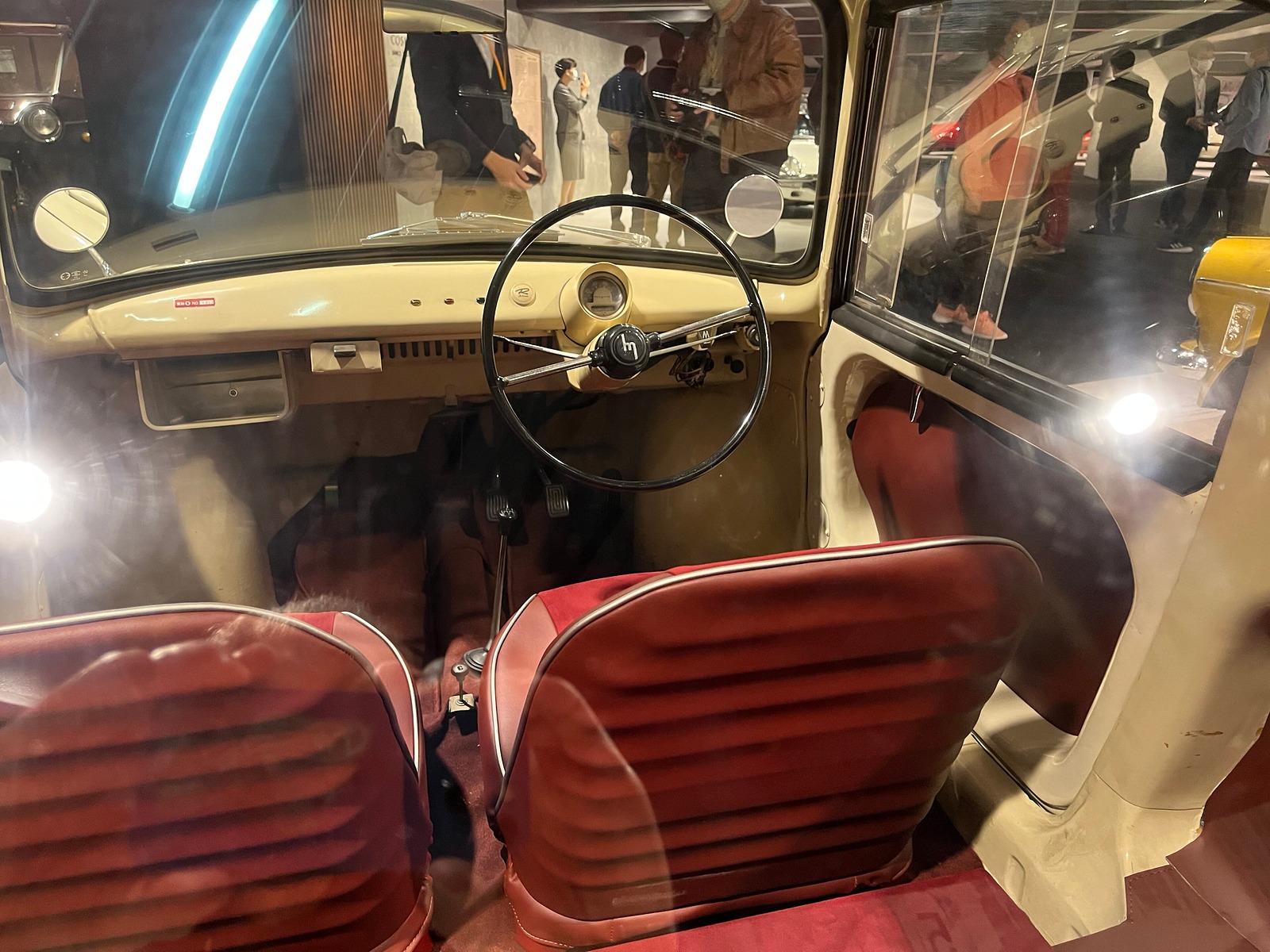
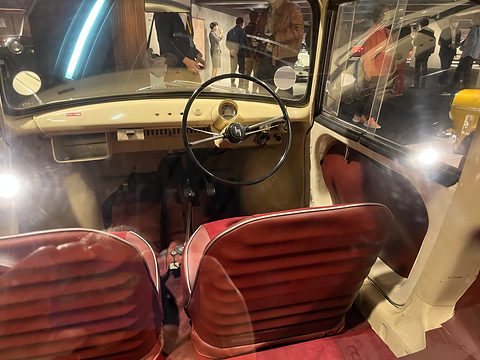
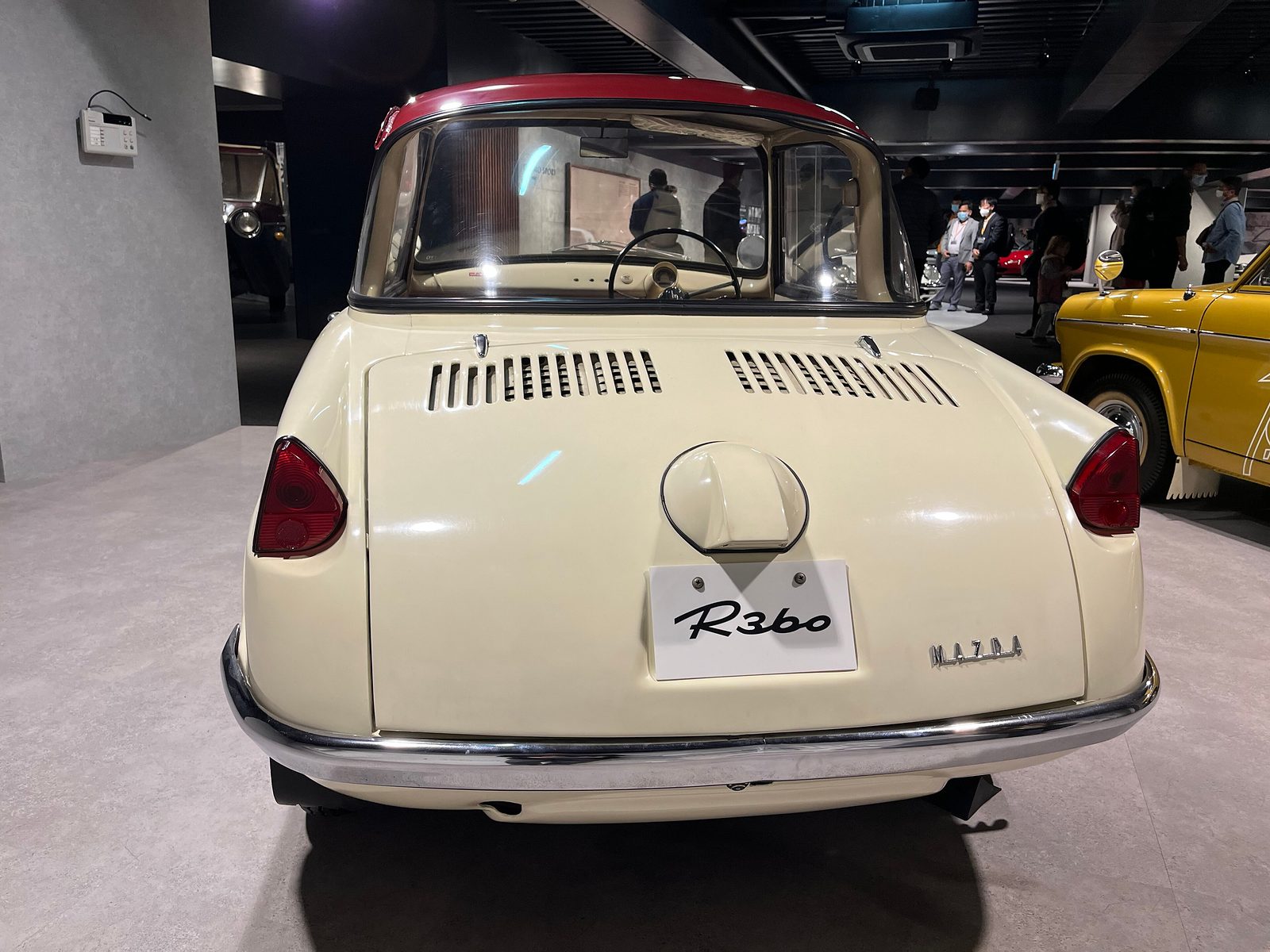
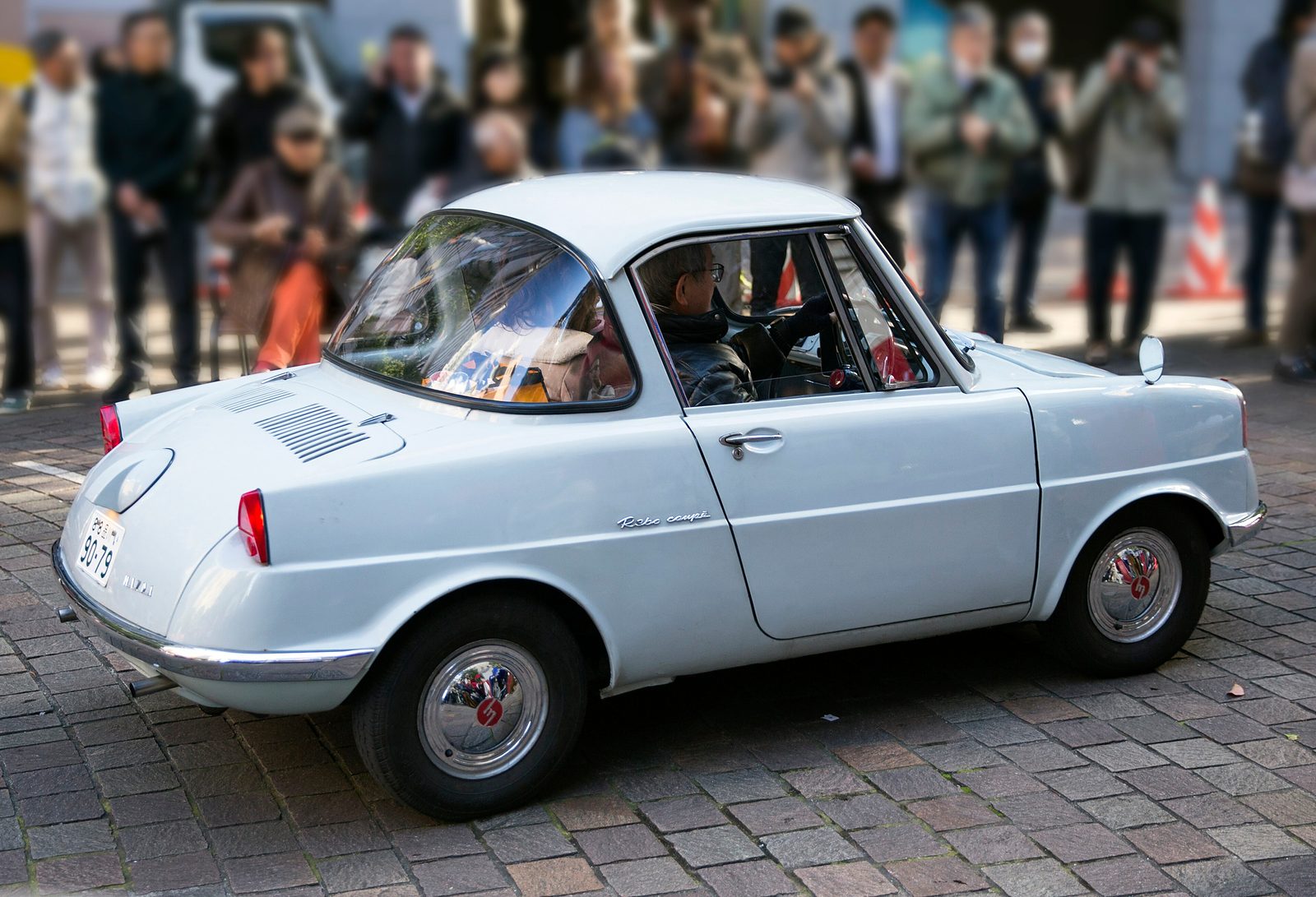
It was planned as a 2 + 2 on purpose. Most kei cars carried one or two people, so the designers put lightness ahead of a full four-seat cabin. The law counted four seats, but the rear pair were very tight, like the back bench of a kei van, and in practice they were for children.source 2 It was the first Japanese car after the war to be called a coupé.source 2

Magnesium, acrylic and rubber

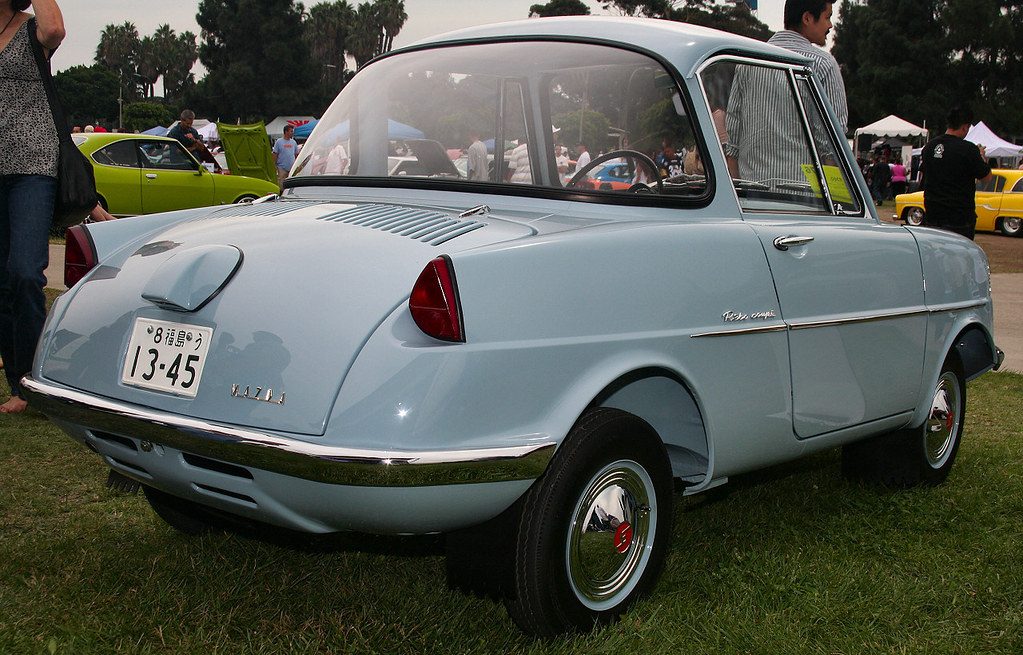
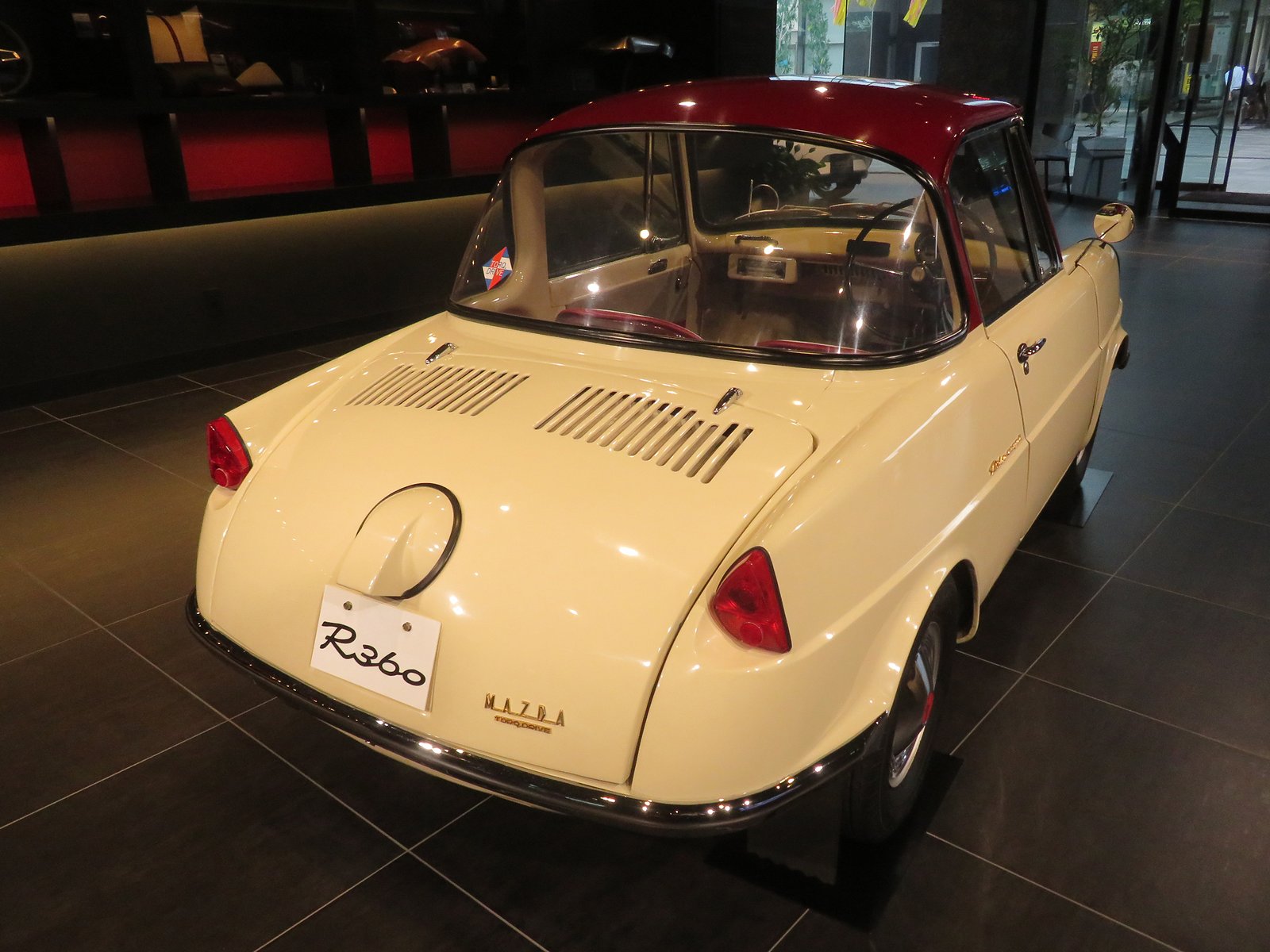
Everything was made to weigh little. The engine, mounted lengthwise in the tail, was an air-cooled 90° V-twin of 356 cc with overhead valves and a dry sump. Its cylinder head and crankcase were aluminium alloy, its rocker cover and oil pan magnesium alloy.source 1source 2 Carscoops adds an aluminium bonnet and a magnesium gearbox casing.source 7 It gave 16 PS (12 kW) at 5,300 rpm and ran past 5,000 rpm, high for an engine of its day, and for a while afterwards Mazda advertised its aluminium engines as “white engines”.source 1source 2 The side and rear windows were acrylic rather than glass, and the whole car weighed 380 kg (838 lb).source 1source 2source 7 With the manual gearbox it would reach 90 km/h (56 mph) by the figures of the JSAE and the Lane museum, though English Wikipedia, citing an Italian article, gives 84 km/h; the claimed consumption was 32 km to the litre.source 1source 4source 8

Each wheel ran on a trailing arm sprung by rubber in torsion, of the Neidhart type, with a rubber anti-roll bar.source 1source 2 Japanese Wikipedia notes that the ride was soft. Trailing arms at the back, rather than the swing axles usual on rear-engined cars, limited the change of camber at the wheels and the jacking of the tail, and the rubber worked through a longer, gentler stroke than the rubber cones of the BMC Mini.source 2

Two pedals

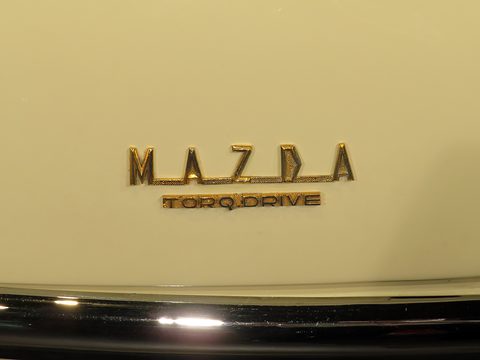
Beside the four-speed manual there was a two-speed automatic with a torque converter. The JSAE names the R360 as the first kei passenger car with a four-stroke engine and the first with a torque-converter automatic.source 1source 2 The converter came from Okamura Seisakusho, which had supplied it before for the Mikasa of 1957 and the Mikasa Touring of 1958.source 2 It went into the Cony Guppy pickup the next year too.source 9 With no clutch to work, the automatic suited drivers whose legs were disabled, and it was for them that it was built to order until 1969, three years after the manual car ended.source 2

¥300,000

The R360 went on sale in 1960 at ¥300,000, which made it the cheapest four-wheeled passenger car in Japan; the Lane Motor Museum dates the debut to 20 May and gives the price as about US$830.source 1source 2source 4 The Lane says 4,500 orders came in before the car was unveiled, and Carscoops says 4,500 were sold on the first day: probably the same figure, told two ways.source 4source 7 None was built for export, the Lane says, yet former Mazda employees remember about 700 with left-hand drive, said to have been for American servicemen in Okinawa and elsewhere in Japan.source 4 In calendar 1960 Tōyō Kōgyō built 23,417, 64.8% of Japan’s kei passenger-car production that year, and Carscoops puts the R360 at more than 15% of the whole Japanese car market.source 2source 10source 7
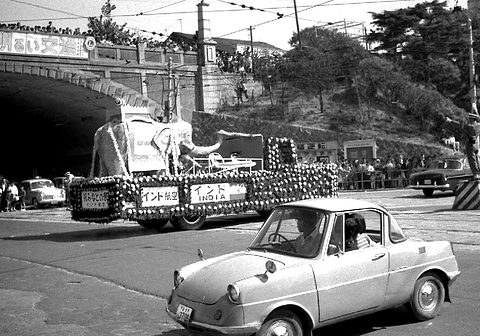
Black-and-white street scene: a small coupé with two occupants in front of a flower-covered float lettered INDIA.
Plate I · 1963 An R360 Coupe passing a festival float in Minatogawa Park, Kobe, in about 1963.Photo: 松岡明芳, Public domain, via Wikimedia Commons

Outgrown

The R360 was really a two-seater, and that told against it once the four-seat Subaru 360 came down in price and Mazda launched its own four-seater, the Mazda Carol, in 1962.source 2source 10 The manual car was built until 1966 and the automatic, to order, until 1969; the Weiner museum’s dates, 1960–⁠70, are not borne out by the other sources.source 2source 3source 4source 5 In 2020 Mazda trimmed its centenary special editions in colours that paid homage to the R360.source 2
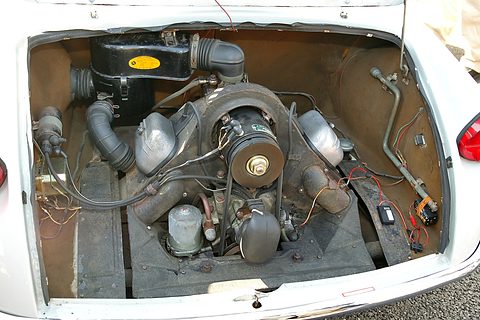
Open rear compartment of a white car showing a small V-twin engine with its fan housing and wiring.
The air-cooled 356 cc V-twin in the tail of an R360 Coupe, its lid open.Photo: Tennen-Gas, CC BY-SA 3.0, via Wikimedia Commons
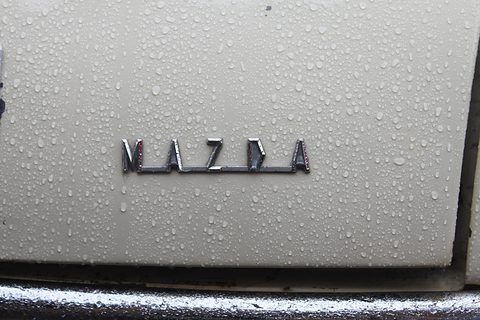
Gold letters reading MAZDA above a smaller TORQDRIVE badge on cream paint.
The MAZDA TORQDRIVE badge on the tail of an automatic R360.Photo: Tokumeigakarinoaoshima, CC BY-SA 4.0, via Wikimedia Commons

Pictures

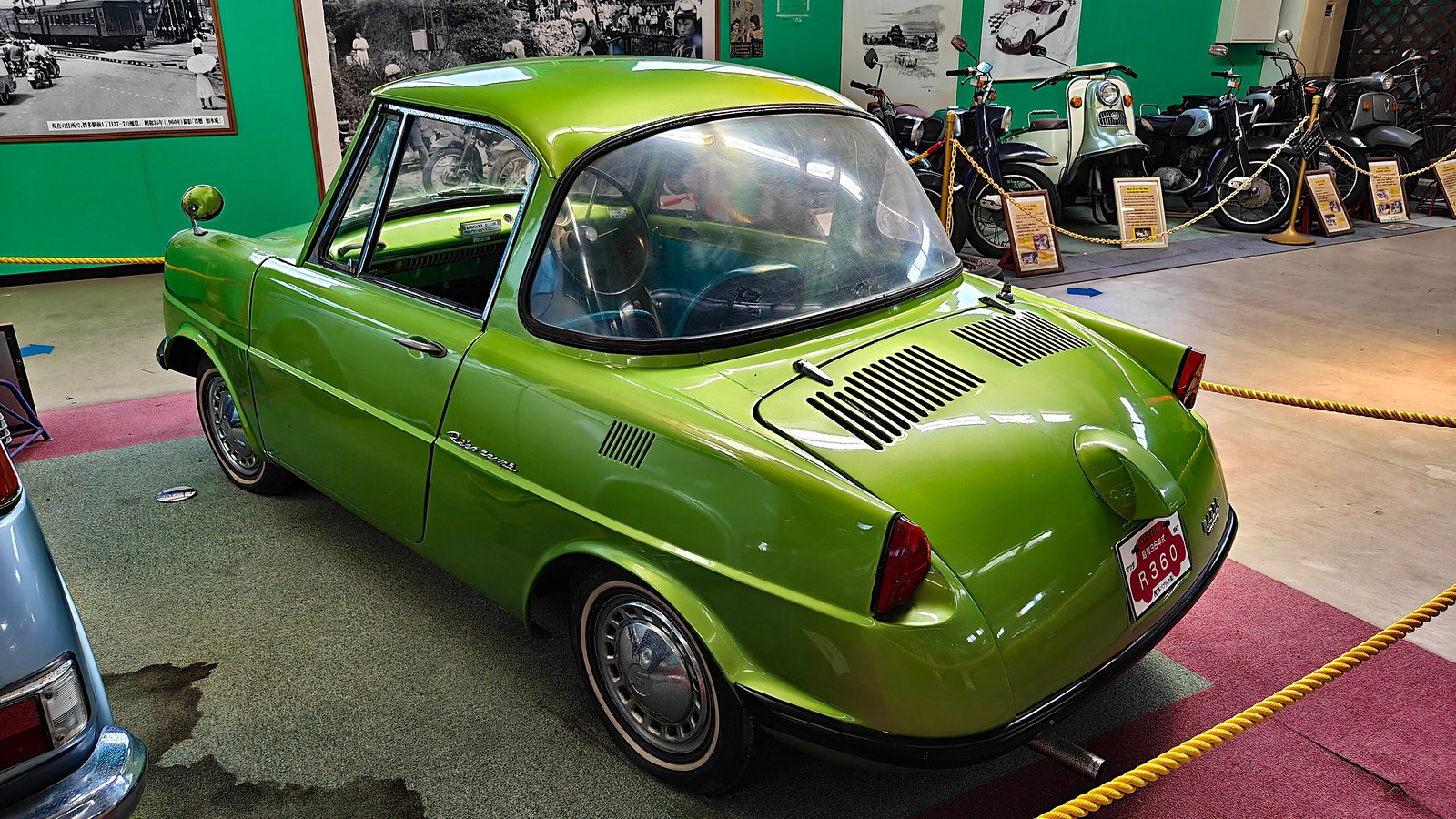
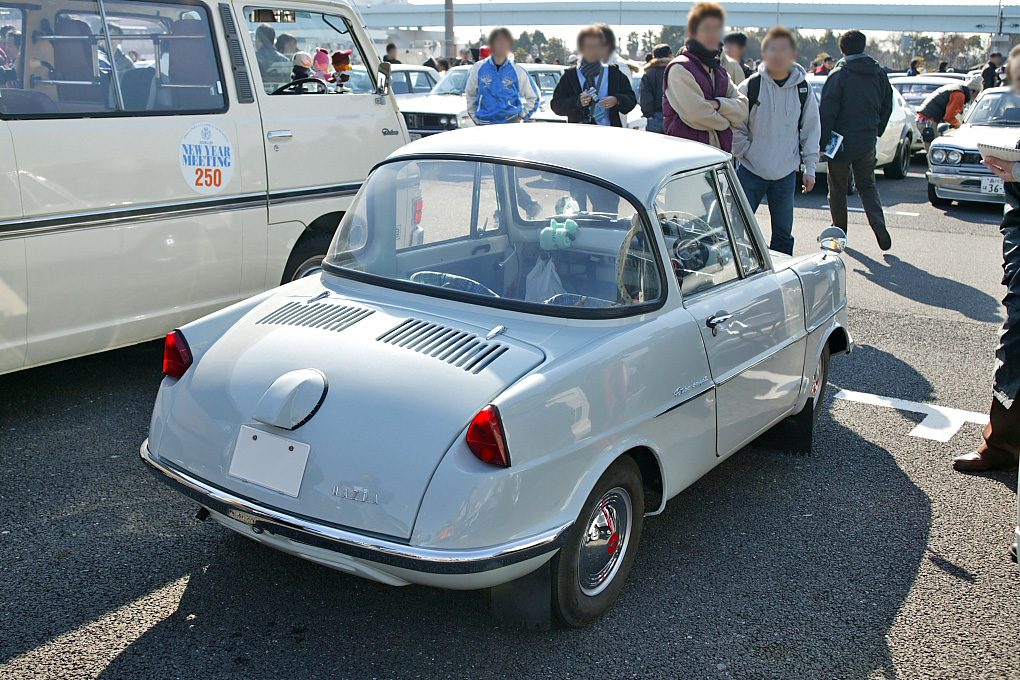
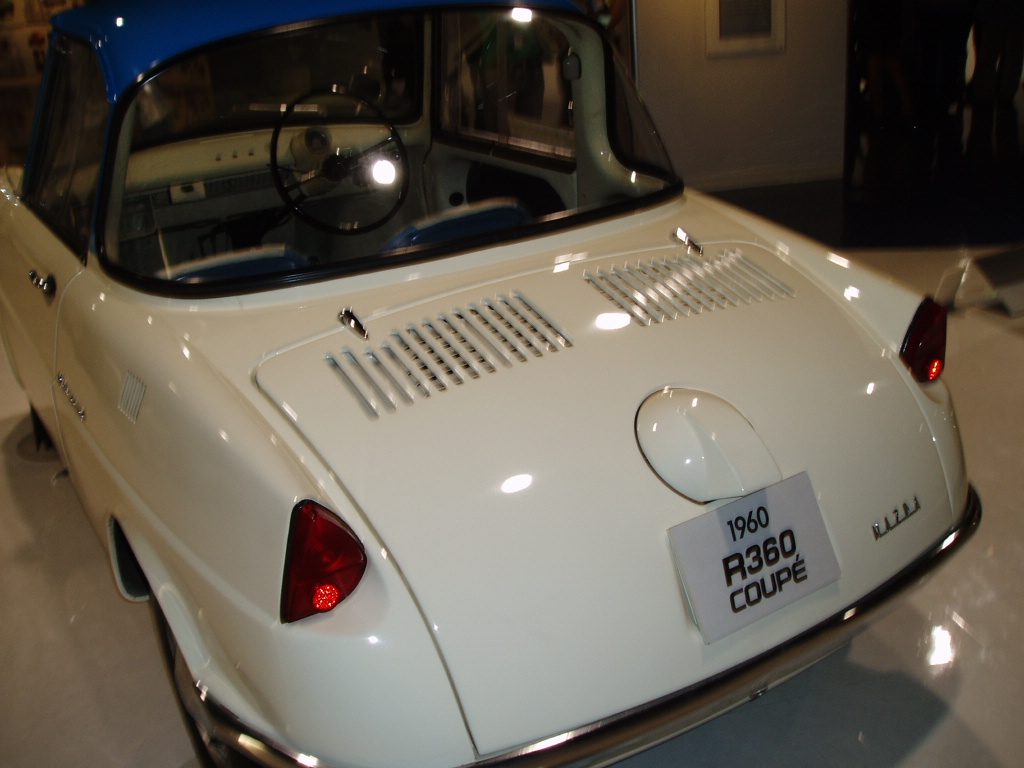
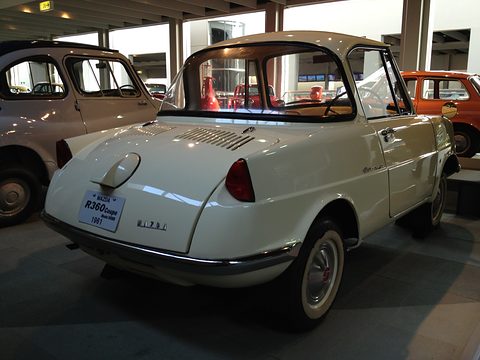
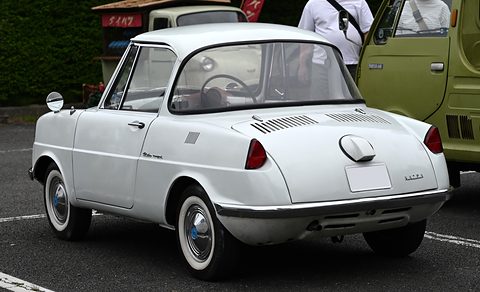
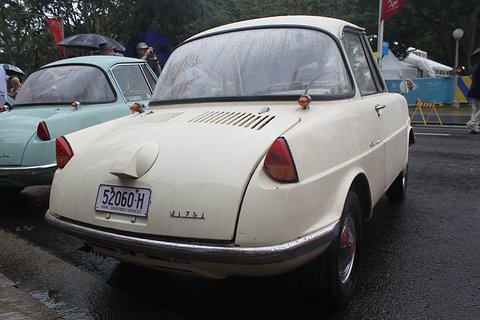
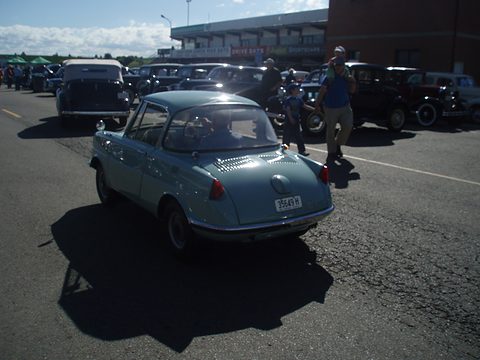
More photographs, old and new

Variants

One body, two gearboxes

The R360 Coupe, 1960–⁠69
VariantYearsWhat differsHow many
R360 Coupe, manual1960–⁠66The standard car, with a four-speed gearboxMost of 65,737
R360 Coupe, automatic1960–⁠69A two-speed automatic with an Okamura torque converter; built to order for disabled drivers after 1966Not found
De LuxeBy 1962A trim level, the Weiner museum’s carNot found
Left-hand drive1960sSaid to be for US servicemen in Okinawa and elsewhere in Japan; none was made for exportAbout 700

Specification

The R360 Coupe of 1960 unless noted

Engine and drive

Engine and drive
EngineAir-cooled 90° V-twin, four-stroke, overhead valves, dry sump; aluminium-alloy head and crankcase, magnesium-alloy rocker cover and oil pansource 1source 2
Capacity356 cc (60 × 63 mm)source 1source 3
Power16 PS (12 kW) at 5,300 rpmsource 1source 3
Torque2.2 kgm (22 Nm)source 8
GearboxFour speeds and reverse, or a two-speed automatic with a torque convertersource 1source 2source 5

Body and chassis

Body and chassis
BodyTwo-door coupé, unit construction; acrylic side and rear windowssource 1source 2source 5
SuspensionTrailing arms all round on rubber torsion springs (Neidhart type), a rubber anti-roll bar and double-acting damperssource 1source 2
SteeringRack and pinionsource 1source 5
BrakesHydraulic drumssource 1source 5
Tyres4.80-10source 1source 5
Electrics12 voltssource 5

Dimensions

Dimensions
Length2,980 mm (117 in)source 1source 3source 5
Width1,290 mm (51 in)source 1source 3
Height1,290 mm (51 in)source 1source 3
Wheelbase1,760 mmsource 1source 3
Track1,040 mm front, 1,100 mm rearsource 1
Kerb weight380 kg (838 lb)source 1source 3source 5

Performance and running

Performance and running
Top speed90 km/h (56 mph), manualsource 1source 4source 584 km/h in English Wikipedia, which cites an Italian article
Consumption32 km per litre, claimedsource 1
Price new¥300,000 (1960), about US$830 by the Lane Motor Museum’s reckoningsource 1source 2source 4

How many were built?

What the sources say

65,737 builtJapanese Wikipedia gives 65,737, and English Wikipedia repeats it, so the total rests on one source; no figure from Mazda itself was found, and the Lane Motor Museum says the official totals are unpublished. The first year is better attested: 23,417 cars in 1960, in two accounts.

  1. 65,737all R360 Coupes, 1960–⁠66 and the automatics afterOne source

    Japanese Wikipedia, repeated by English Wikipediasource 2source 8

  2. 23,417built in calendar 1960, 64.8% of Japan’s kei passenger cars that yearTwo sources agree

    Japanese Wikipedia and Kuruma Newssource 2source 10

  3. about 700left-hand-drive cars, by the recollection of former Mazda employeesOne source

    the Lane Motor Museumsource 4

  • Two sources agreetwo good sources give the figure
  • One sourcea good source, alone
  • Unconfirmeda lead only, not yet checked

Famous for

Three points

  1. Mazda’s first car

    It took Tōyō Kōgyō from three-wheeled trucks into passenger cars in 1960.source 1source 2source 6

  2. ¥300,000

    The cheapest four-wheeled passenger car in Japan when new, and 64.8% of the kei passenger cars built in 1960.source 1source 2source 10

  3. No clutch pedal

    The first kei passenger car with a torque-converter automatic, kept in production for disabled drivers until 1969.source 1source 2
Survivors and collecting

Today

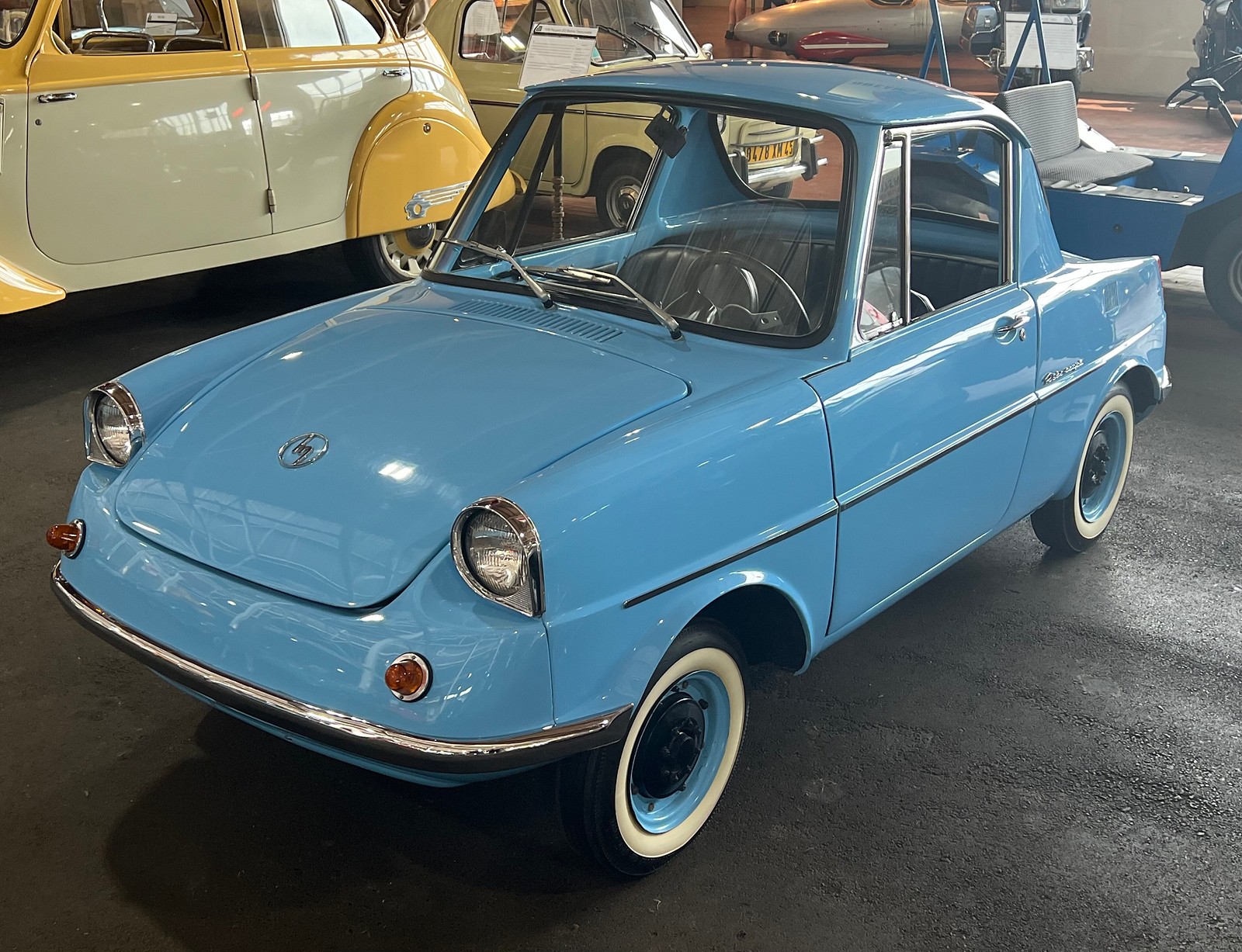
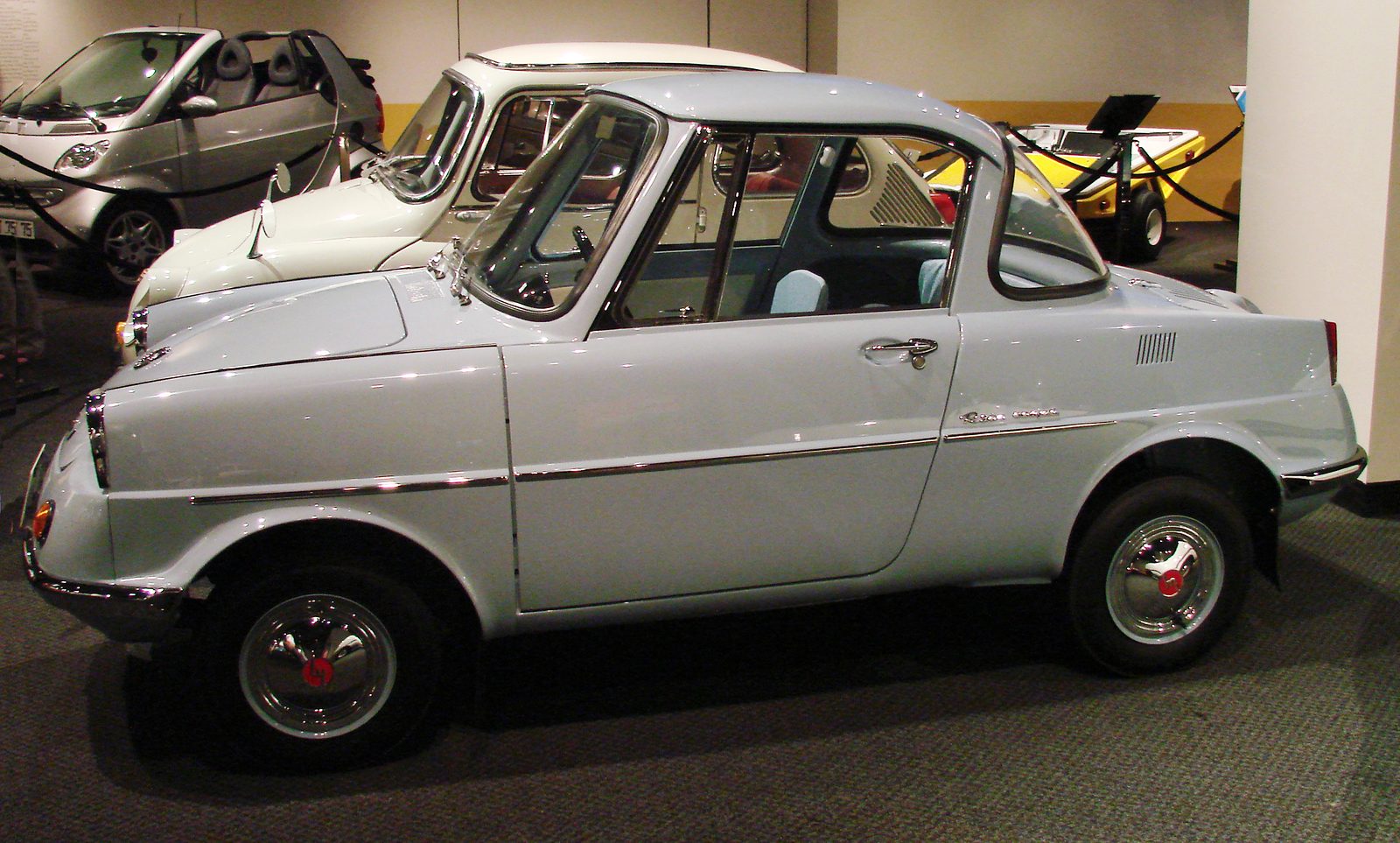
No count of surviving R360s has been found. Mazda keeps one on static display, as the JSAE’s landmark record notes, and the Toyota Automobile Museum at Nagakute has a KRBB in its main building, together with a Bandai tin toy of the car from the 1960s.source 1source 3 In Nashville, the Lane Motor Museum’s R360 is a 1964 car, fitted with a smaller replacement rear window in place of the original wraparound one.source 4 The Bruce Weiner Microcar Museum had a 1962 De Luxe; what it fetched when the museum’s cars were sold in 2013 has not been found.source 5 More of these places, and others, are on our page of museums and meets.
Sources

Numbered as in the text

No period road test was read. The history rests mainly on the JSAE’s landmark record and Japanese Wikipedia, which draws on Tōyō Kōgyō’s company history; the museums and two magazine pieces fill in the rest. Sources are given as plain text; the links are on the Credits page.

  1. JSAE (Society of Automotive Engineers of Japan), 330 Landmarks of Japanese Automotive Technology, 1-22: Mazda R360 Coupe, read in full; its reference is Tōyō Kōgyō’s fifty-year company history.
  2. Japanese Wikipedia, Mazda R360 Coupe, read in full.
  3. Toyota Automobile Museum, collection database, records 100 (Mazda R360 Coupe KRBB) and 5234 (Bandai tin toy), read in full.
  4. Lane Motor Museum, “Mazda R360 1964”, read in summary.
  5. Bruce Weiner Microcar Museum, “1962 Mazda R‑360 Coupe ‘De Luxe’”, read in full from a copy archived about 2015.
  6. Mazda, company history page, the passage on 1960.
  7. Carscoops, feature on the Mazda R360, read in summary.
  8. English Wikipedia, Mazda R360, read as wikitext; used as a lead.
  9. Japanese Wikipedia, Cony Guppy, read in full.
  10. Kuruma News, five great Mazdas, read in summary.