microcarfan
  • Kei car
  • Japan
  • Four wheels
  • Registered as a van
  • ¥470,000

Suzuki Alto

Also known as スズキ・アルト, Alto 47万円, SS30V, SS40V, Alto Works, Maruti 800 (India)

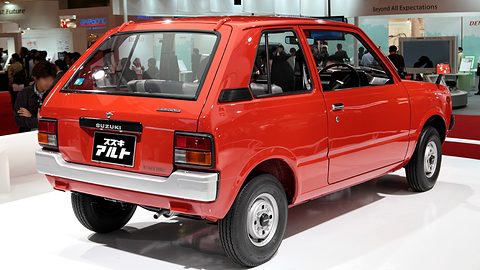
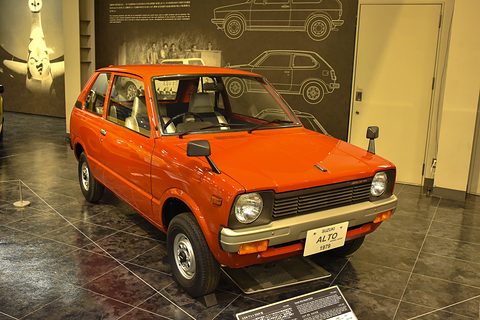
One grade, one price, ¥470,000, the same in every corner of Japan; a lock on the driver’s door only, a hand pump for the screen washer, and van plates to dodge a tax on cars. The Alto of 1979 sold 18,000 a month and lifted the kei class out of its slump.

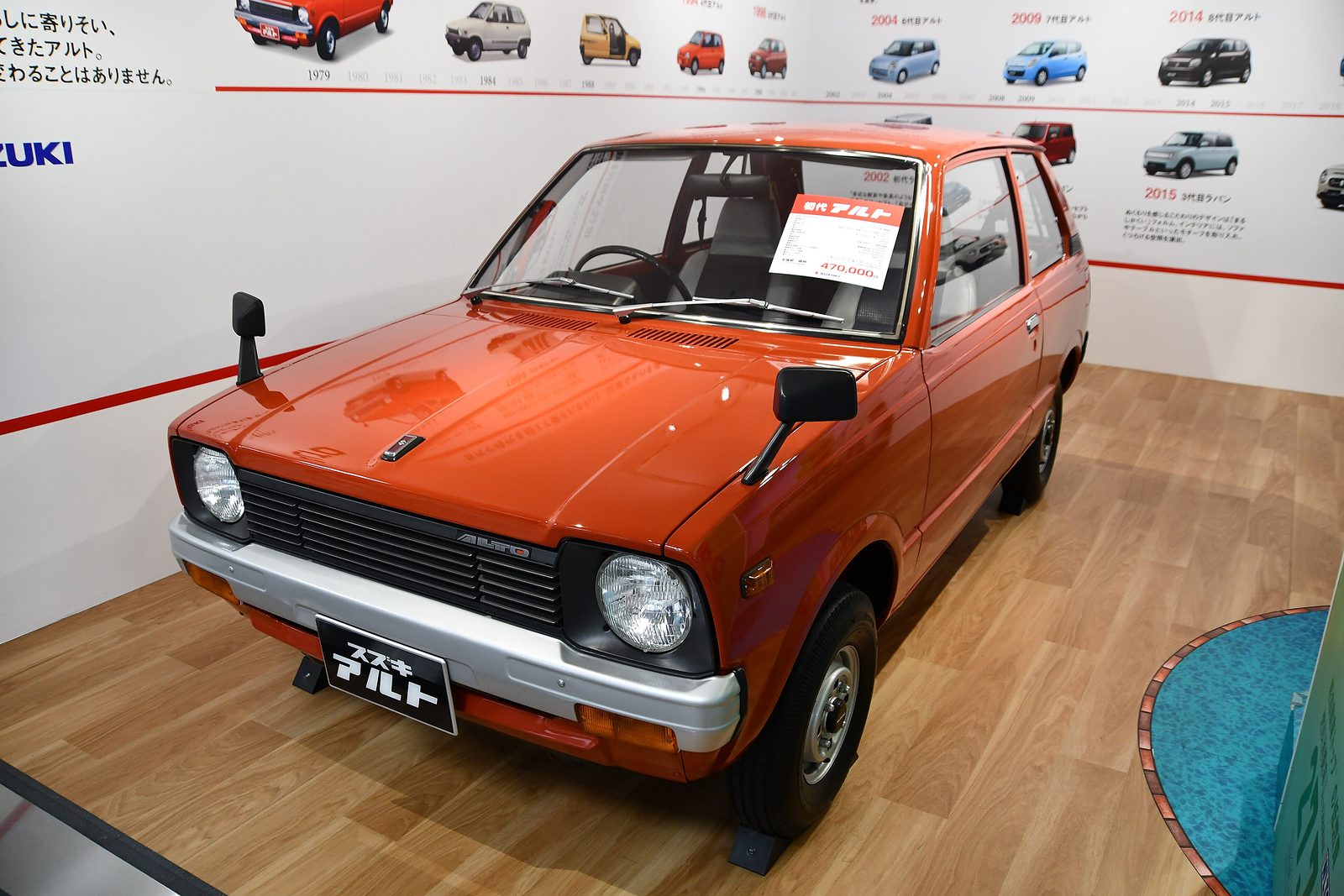
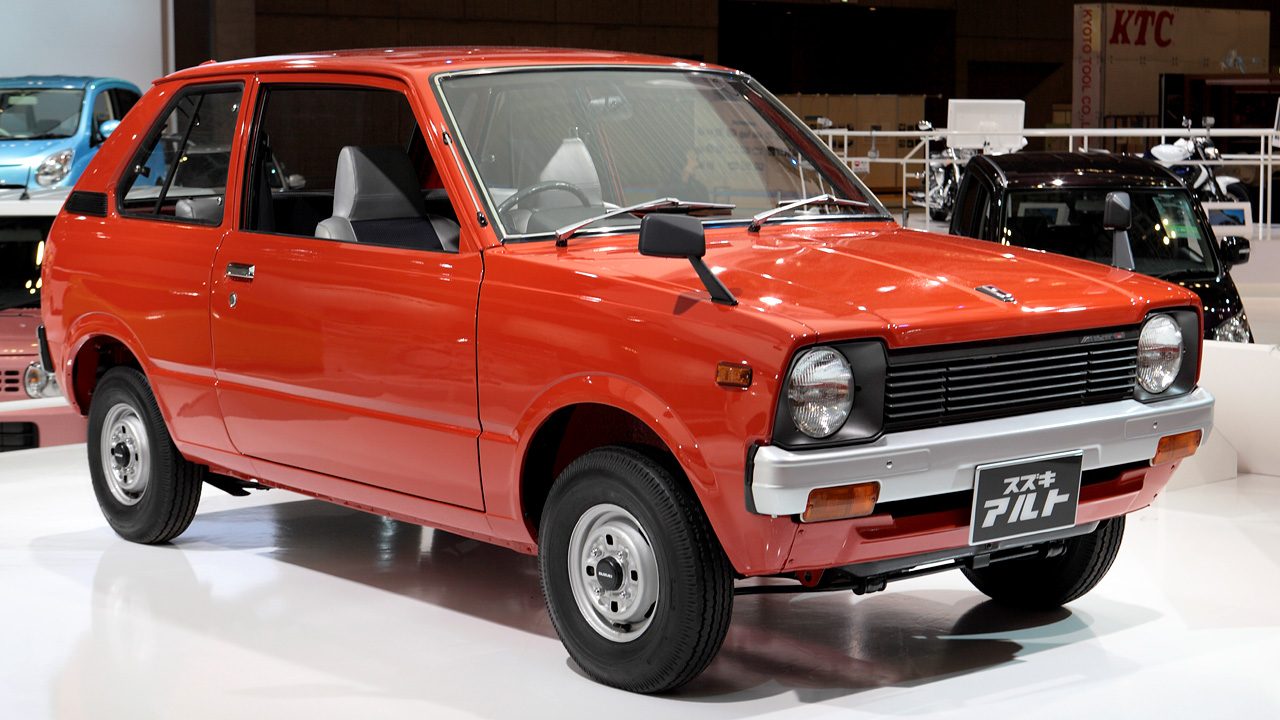
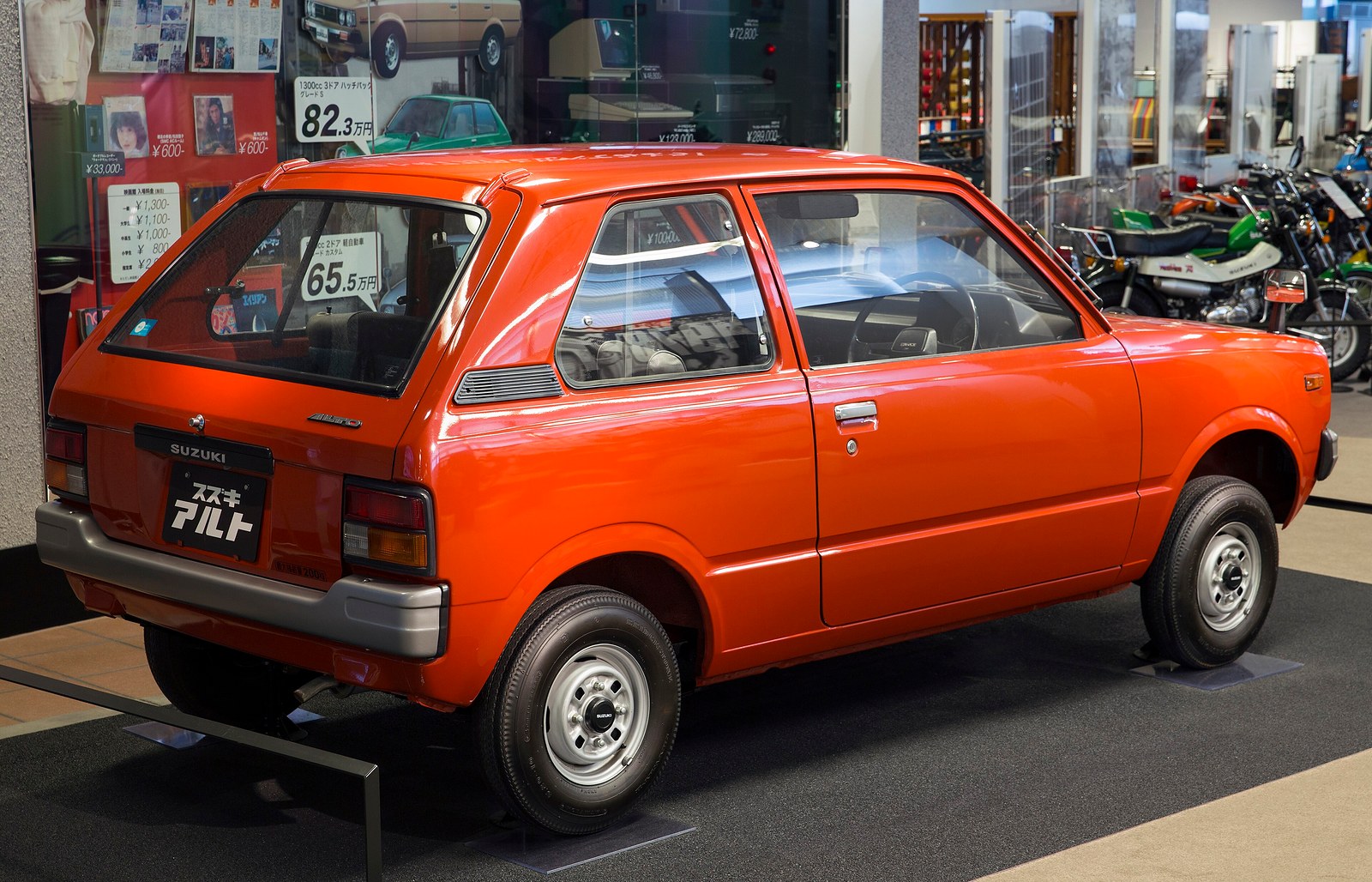
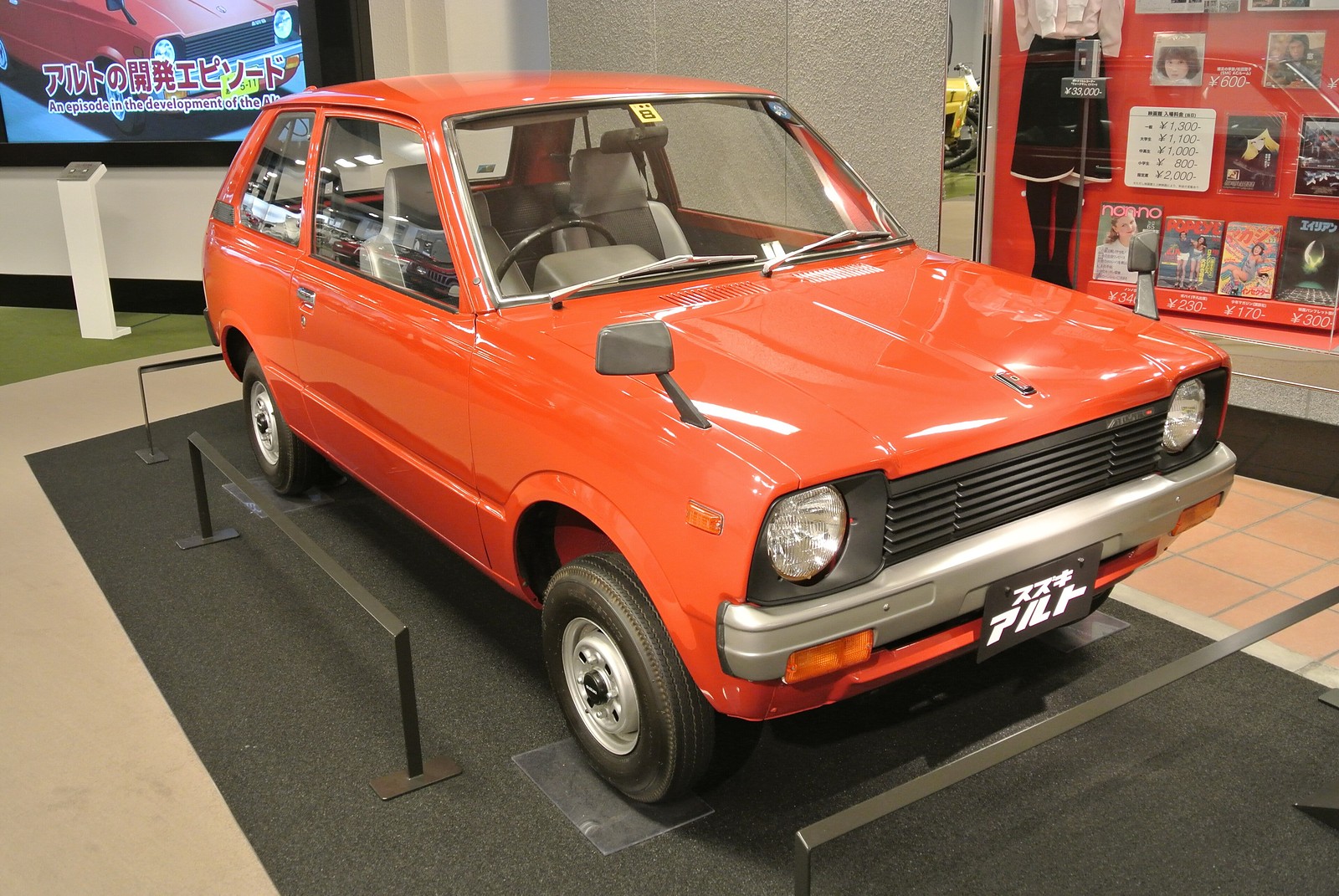
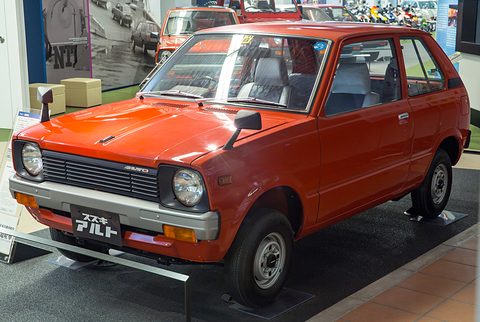
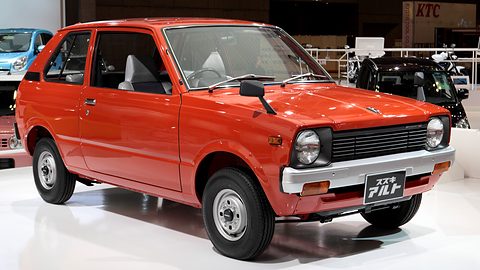
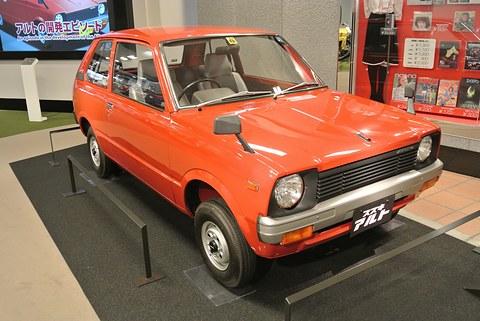
Red small three-door hatchback with round headlamps and a black grille, on a dark plinth in a museum hall.
A red 1979 Suzuki Alto at Suzuki Plaza, the Suzuki History Museum in Hamamatsu, in 2024.Photo: Mr.choppers, CC BY-SA 3.0, via Wikimedia Commons

At a glance

The spec plate

Suzuki Alto

SS30V · Hamamatsu

Built
1979–⁠1984The first generation, May 1979 to September 1984; the name is still in use
Country
JapanSuzuki Motor, Hamamatsu
Maker
Suzuki MotorSuzuki Jidōsha Kōgyō; Maruti Udyog in India
Engine
539 cc water-cooled two-stroke threeThe T5B, across the front; the 543 cc four-stroke F5A from 1981
Power
28 PS21 kW at 5,500 rpm
Length
3,195 mm1,395 mm wide, 1,335 mm high
Weight
545 kg
Seats
4Two, and a small fold-down bench behind; a two-seater from October 1981
Wheels
4Engine across the front, driving the front wheels
Price new
¥470,000May 1979, the same everywhere in Japan
Production
About 844,000The first generation, sold, by Japanese Wikipedia

Not yet recordedtop speed.

How big is it?

True proportion

3.19 m

It is 225 mm longer than a Fiat 500, about 1.8 adults laid end to end.

Drawn at true proportion. The track is 3.6 metres long; the adult stands at the same scale. The Peel P50 is the smallest production car, on every page for comparison.

The story

History

By the mid-1970s the kei car was losing ground. The price gap to small cars had narrowed, kei cars now had to pass the roadworthiness inspection, and emission rules had made them dearer; when the rules moved to 550 cc and a larger body in January 1976, kei passenger cars grew expensive and sales slumped.source 1source 3source 4 Suzuki’s own clean engines struggled, and it was buying engines from Daihatsu.source 4

Suzuki Osamu became Suzuki’s president in June 1978. He put off the next Fronte by a year and had it rethought, and Japanese Wikipedia says the result secured his position.source 4 Suzuki’s research found that kei cars usually carried one or two people, and that used cars at ¥400,000 to ¥500,000 sold well; that became the price to beat. The new car would be registered as a commercial bonnet van, which was free of the commodity tax of more than 15 per cent that kei passenger cars paid, and it would be aimed squarely at women, then a fast-growing group of drivers.source 1source 4 The target was ¥450,000, which meant building it for about ¥350,000. The engineering chief, Inagawa Seiichi, was told, the story goes, to take out the ashtray, the spare wheel, even the engine, if that was what it took.source 4

Alto 47 man-en

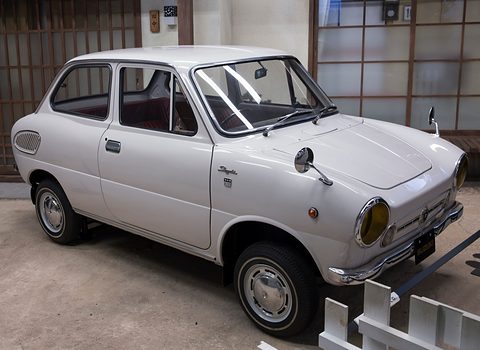
It came out in May 1979, the SS30V, a commercial sister of the Fronte saloon, at ¥470,000: the first price in Japan’s motor industry to be the same across the whole country, and advertised everywhere as “Alto 47 man-en”.source 1source 3source 4 That was about ¥100,000 less than the cheapest Fronte before tax, at a time when kei passenger cars cost over ¥600,000 plus tax.source 4 There was a single grade, the MX, with a heater as its only standard comfort and more than 50 options at the dealer. The door lock was on the driver’s side only, the screen washer was worked by a hand pump, the rear seat was backed with plywood, the bumpers were steel painted grey, and the hatch’s hinge was left in view.source 4 Yet it had three-point belts in front and a separate fuse for each headlamp.source 5 The colours were François White, Crystal Silver Metallic and Apple Red, the car’s image colour, chosen to appeal to women.source 4

Under the bonnet was the T5B, a water-cooled two-stroke three of 539 cc and 28 PS (21 kW) at 5,500 rpm, mounted transversely, with front-wheel drive; a two-stroke was still possible because commercial vehicles faced laxer emission rules.source 1source 2source 5source 4 The car measured 3,195 mm (126 in) in length and weighed 545 kg (1,200 lb), with struts in front, a leaf-sprung axle behind and drums all round.source 1source 2source 3source 5 Suzuki describes a car that ran comfortably, nimbly and safely, with function put before decoration.source 1

Suzuki had planned for 5,000 a month. It sold 18,000 a month, built up long waiting lists and rushed to extend its factories.source 4 Rivals copied it, the tax-saving kei bonnet van became a type of its own, and kei sales, falling since 1970, made a V-shaped recovery.source 1source 4 General Motors, it is said, was so impressed by an Alto it took apart that it chose to tie up with Suzuki.source 4 The Toyota Automobile Museum credits its steady two-box shape with ending the idea that a cheap car meant putting up with something.source 3

Changes, and the Works

A two-speed automatic with a torque converter arrived in May 1980.source 1source 5source 4 In 1981 came the F5A, a 543 cc four-stroke three, still of 28 PS: in January by English and Japanese Wikipedia, in October by Suzuki.source 5source 4source 1 That October a 2 per cent commodity tax fell on commercial vans, but not on two-seaters, so a two-seat Alto kept the ¥470,000 price and the four-seater went up to ¥490,000; rivals did the same. In October 1982 came square headlamps, L and G grades, the G with a digital speedometer as an option, and the end of the two-stroke. The Snow Liner of October 1983 had four-wheel drive, 12-inch wheels and free-wheeling hubs, and the Marianne of May 1984 had air-conditioning.source 4

The second generation of September 1984 brought Japan’s first swivelling driver’s seat, and four-strokes only, of 31 PS. In 1985 the Alto Turbo was the first kei car with an EPI intercooled turbo, and a five-door Alto, the first five-door kei bonnet van, marked a million Altos sold at home.source 1source 4 The Alto Works of February 1987 had a four-valve twin-cam three with an intercooled turbo, and its output led the kei makers to agree a 64 PS ceiling; the RS-X and RS-R had body kits and a famous pink interior.source 4 In March 1989, when a consumption tax replaced the commodity tax, Suzuki retired the Fronte name and the Alto became a passenger car as well.source 1source 5 It is still built, and in December 2016 domestic Alto sales passed five million.source 1source 4
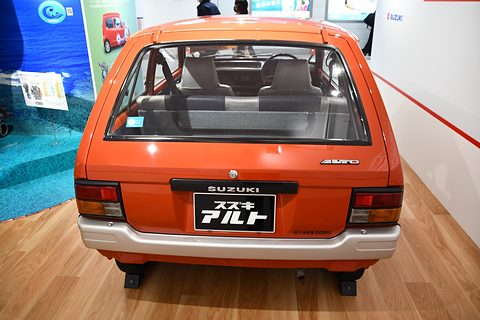
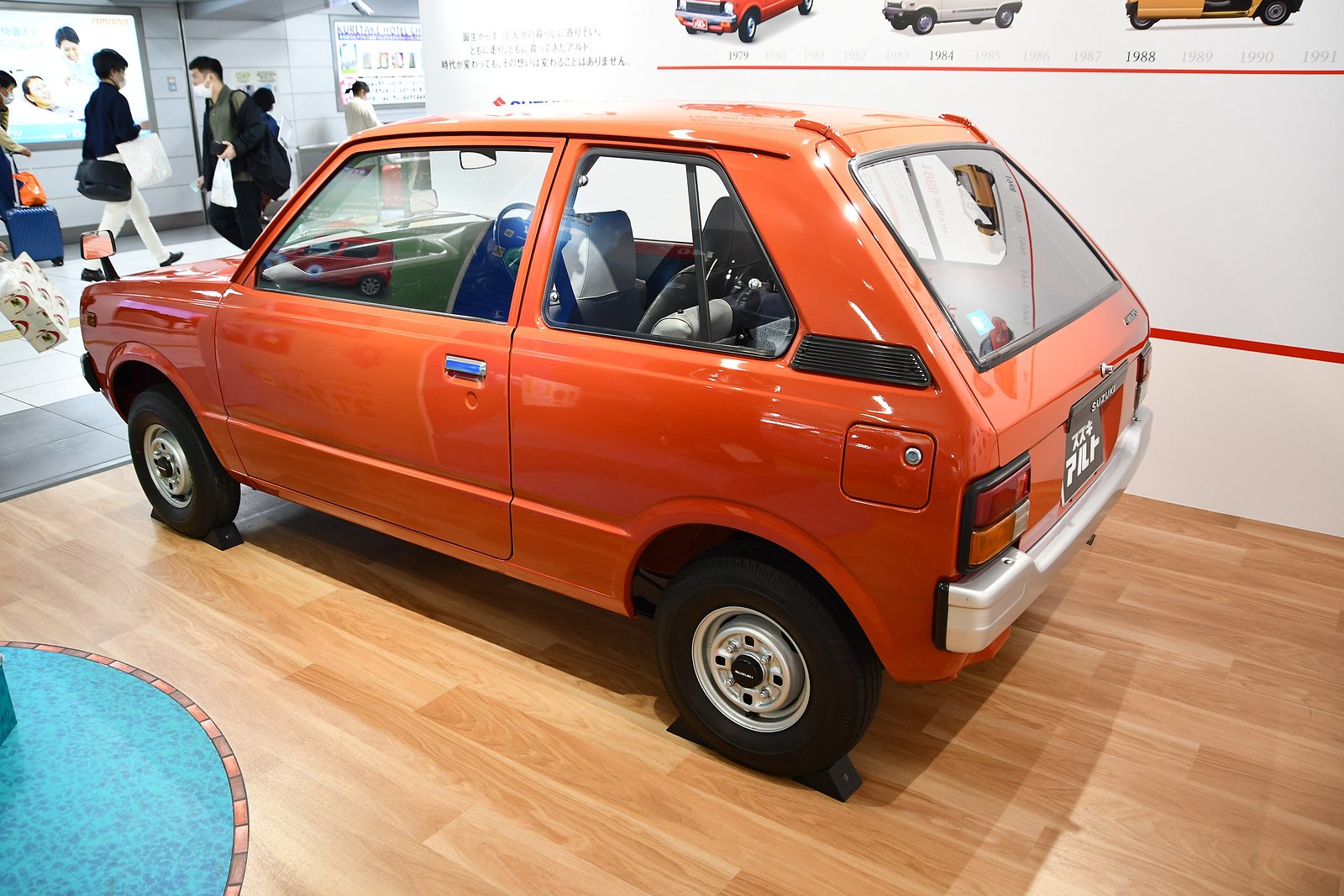
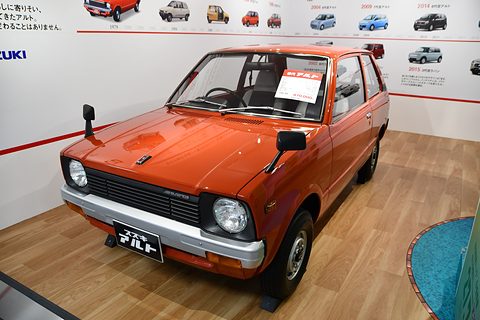
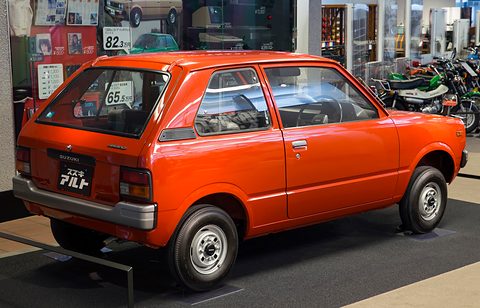
Rear of an orange small hatchback with a large hatch window, small tail lamps, a white bumper and a Japanese show plate.
A first-generation SS30V from behind, on Suzuki’s display at Hamamatsu station in 2022.Photo: Hunini, CC BY-SA 4.0, via Wikimedia Commons
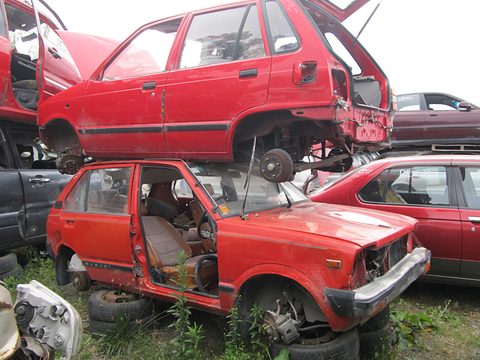
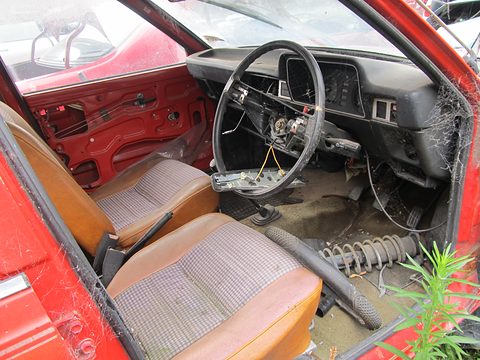
Inside a derelict red small car: torn brown seats, a bare steering wheel, an empty dashboard and weeds growing in through the floor.
The plain cabin of a 1982 Alto, abandoned in New Zealand in 2012.Photo: Riley, CC BY 2.0, via Wikimedia Commons

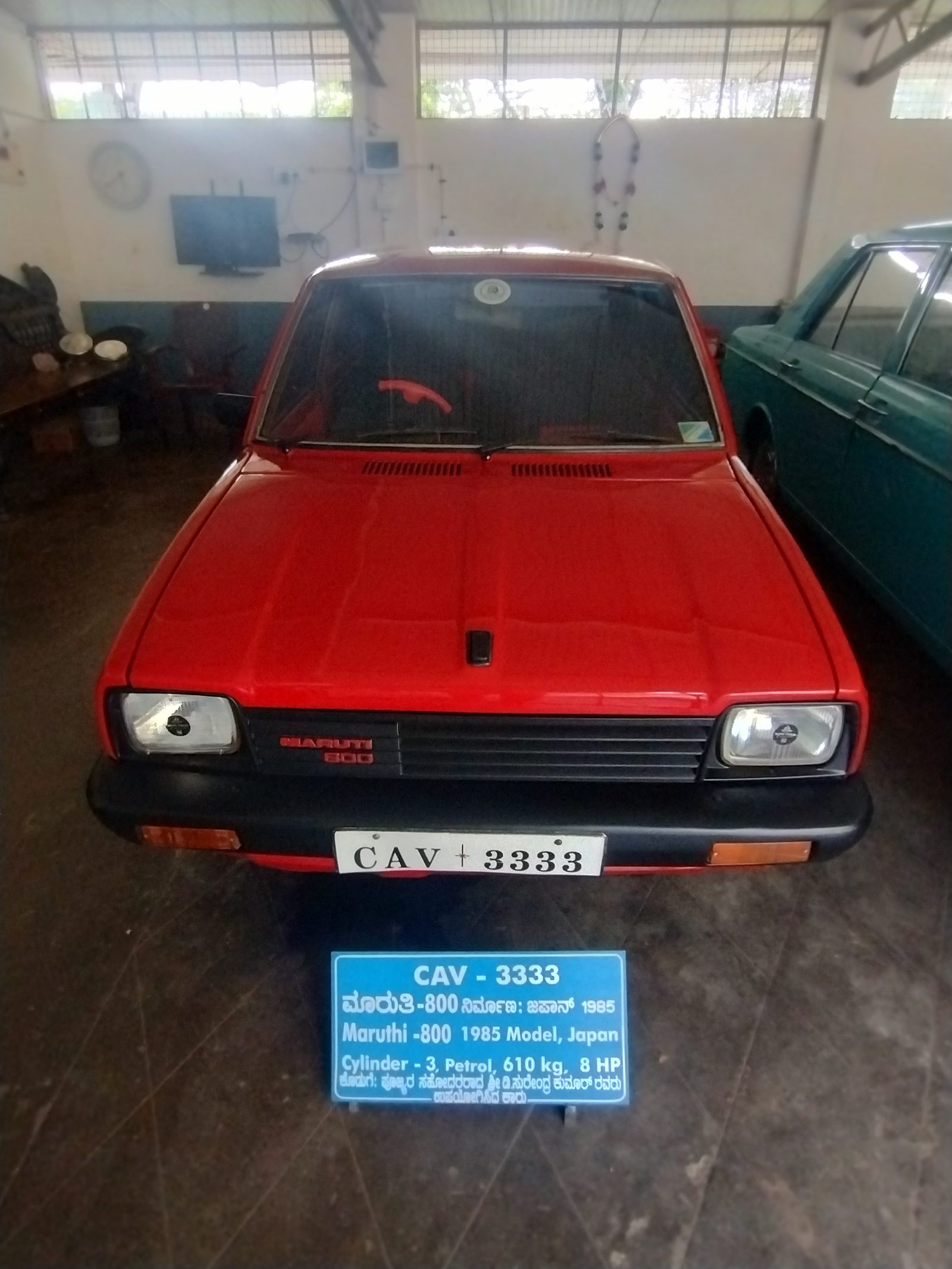
Maruti 800

1983–⁠2014 · a record on this page

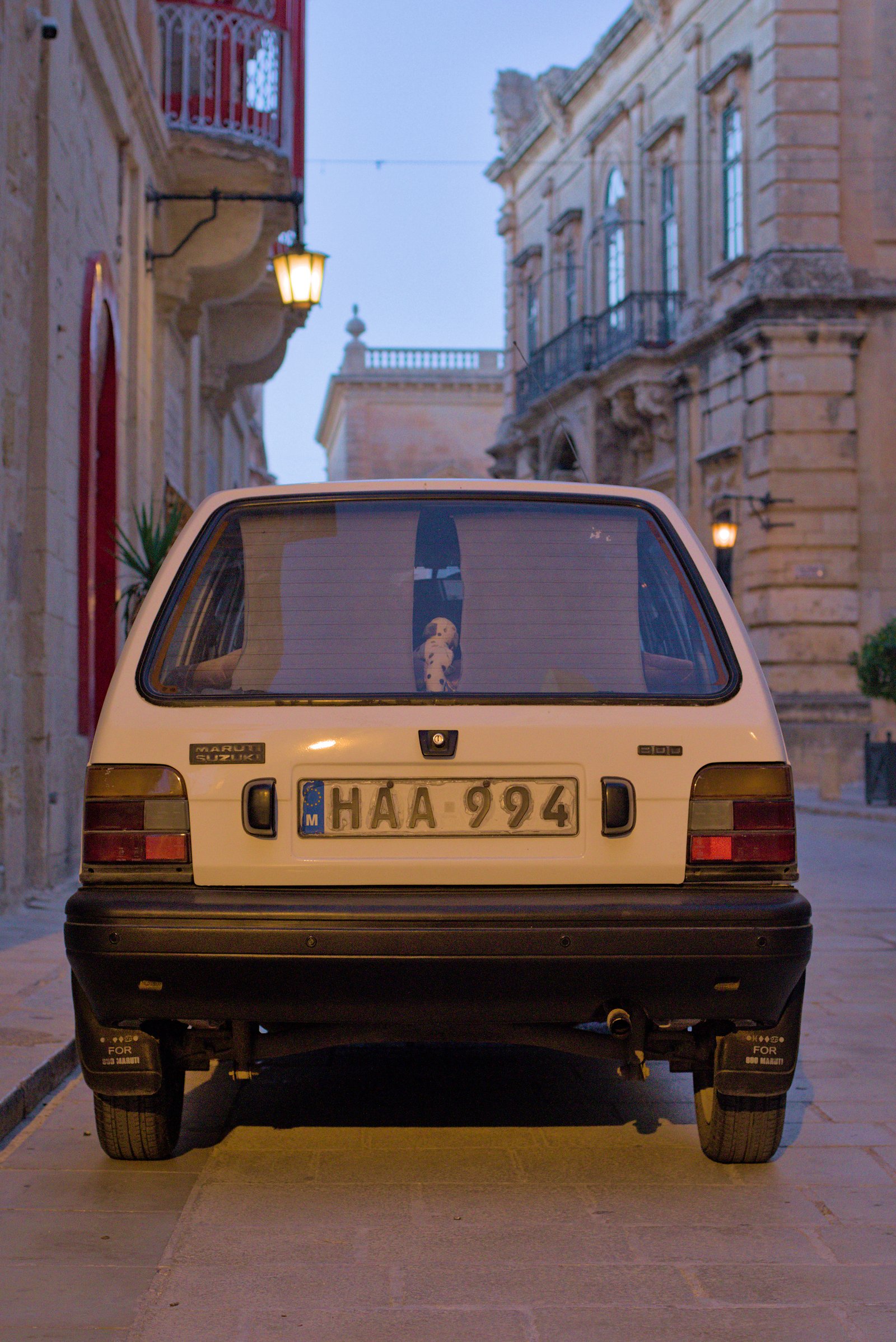
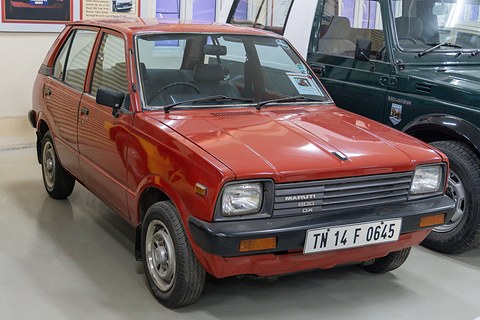
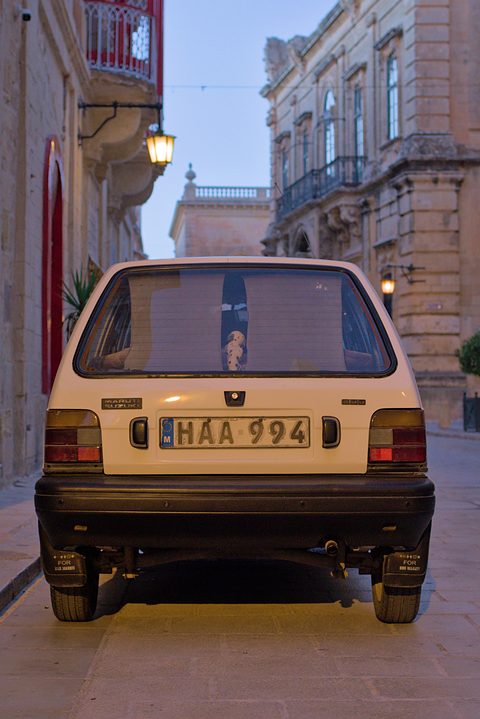
In India the first-generation Alto, as the SS80, became the Maruti 800.source 5source 6 Its maker began as Sanjay Gandhi’s people’s-car project, licensed in 1973, which failed and in 1981 became the state-backed Maruti Udyog.source 6 Suzuki joined by chance: one of its directors read in India Today that a tie-up between Daihatsu and Maruti was close. The joint venture was signed on 2 October 1982, Suzuki taking 26 per cent for about US$20.8 million.source 6source 7

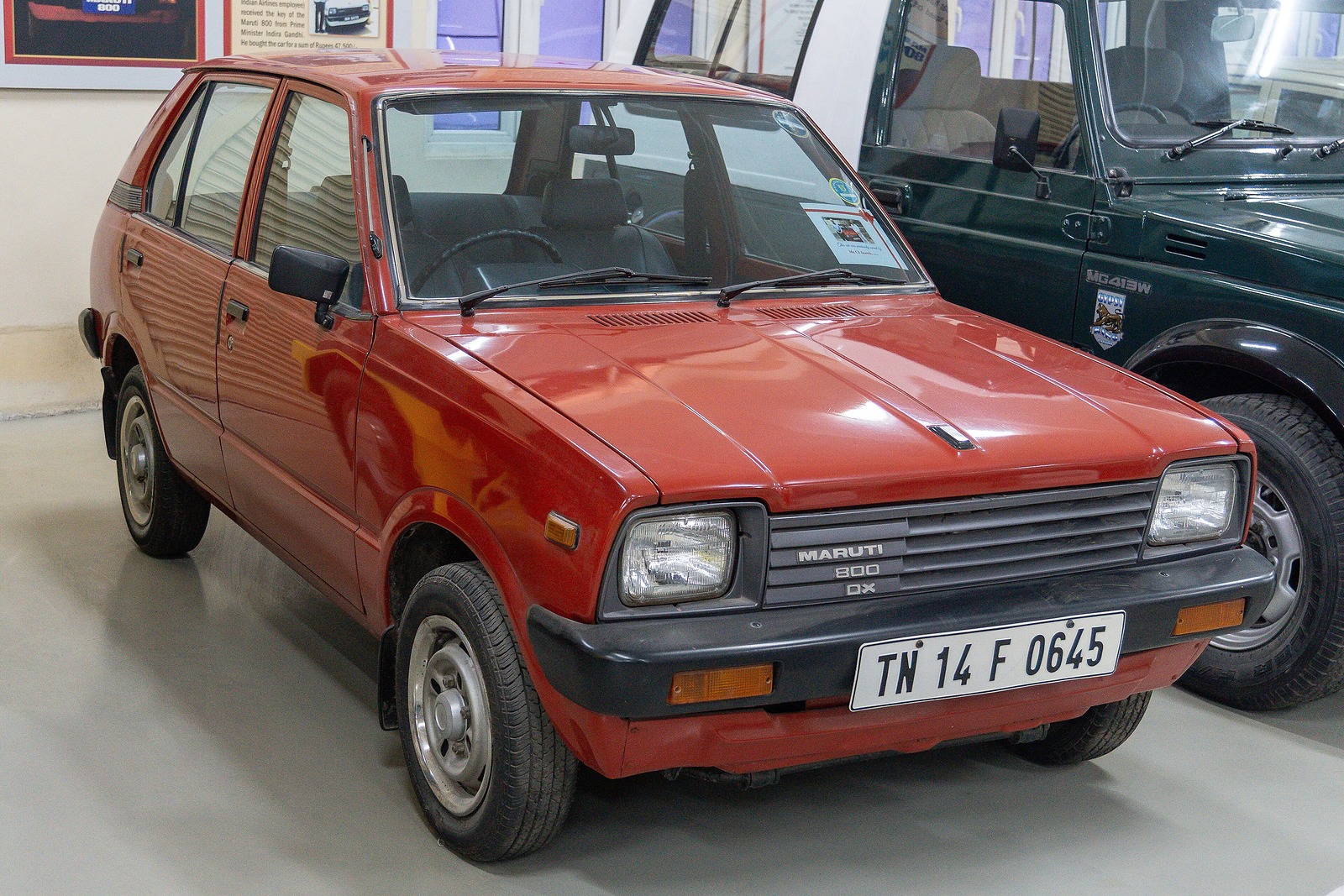
On 14 December 1983, in New Delhi, Indira Gandhi handed the keys of the first Maruti 800 to Harpal Singh, an Indian Airlines employee chosen by lucky draw; only about 70 had been built.source 6source 7source 8 It had a 796 cc overhead-cam three, the F8B, of about 39 bhp, and weighed just over 600 kg. The price was Rs 47,500 by Rushlane’s account, or Rs 48,000 by Autocar India’s, and buyers paid over Rs 1 lakh, with black-market premiums of up to 40 per cent.source 8source 7source 6 Late in 1986 it took the second-generation Alto’s body, and from 1987 it was exported, 500 to Hungary first, the first arriving on 24 October, then to France, the Netherlands, Britain and Italy.source 6 It was India’s best-selling car until 2004, and a symbol of middle-class car ownership.source 6source 7 When it ended in 2014, about 2.87 million had been built, 2.66 million of them sold in India; Rushlane gives 2.91 million.source 6source 8

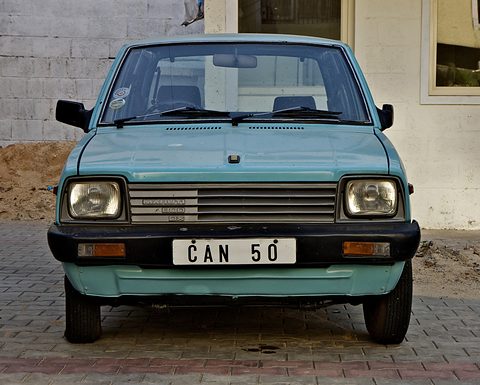
Front of a pale turquoise small hatchback with square headlamps, a slatted grille and a white plate, parked on brick paving.
A first-generation Maruti 800 DX, the Indian-built Alto, head-on in 2010.Photo: Aashim Tyagi, CC BY 2.0, via Wikimedia Commons

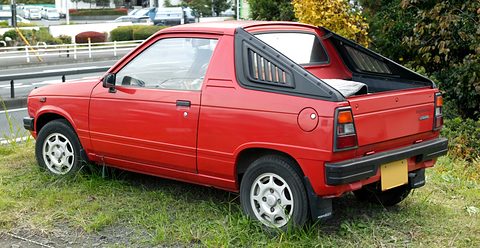
Suzuki Mighty Boy

1983–⁠1988 · a record on this page

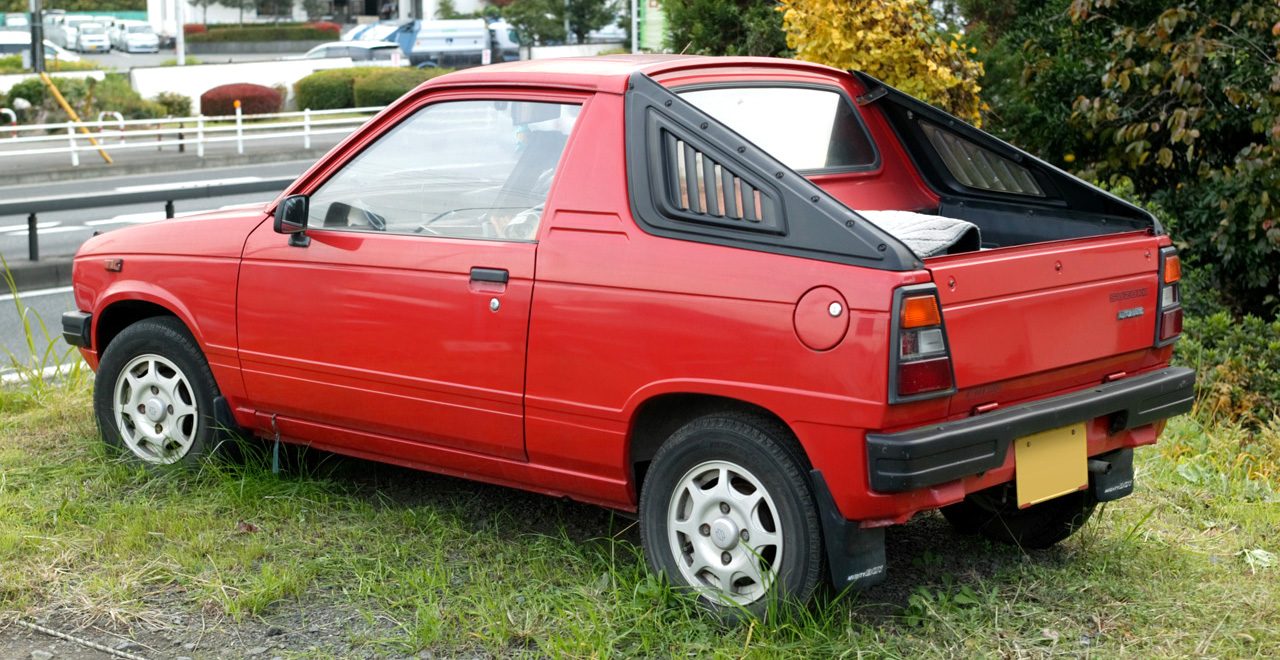
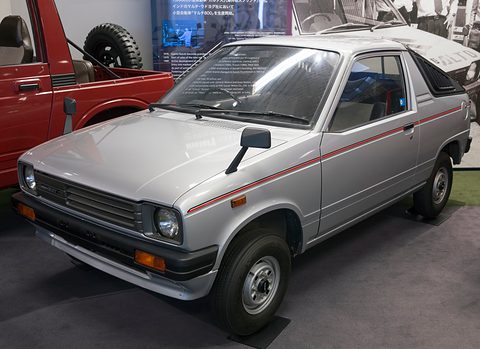
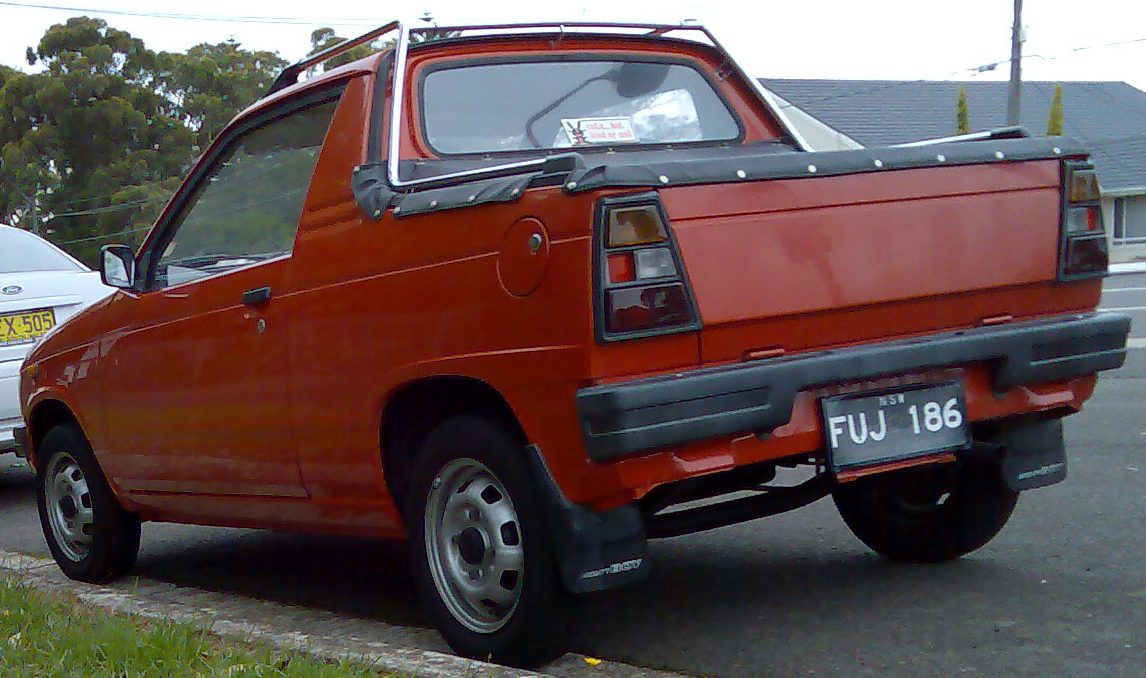
The Mighty Boy of 1983 was a pick-up made from the second Suzuki Cervo, which itself sat on the Alto’s underpinnings: Suzuki cut away the roof behind the doors and left a bed 660 mm (26 in) long, for 200 kg, behind two reclining seats.source 9source 10 At ¥450,000, the national standard cash price, it was the cheapest four-wheeler on sale in Japan.source 9source 10 Its engine was the F5A, 543 cc and 28 PS at 6,000 rpm, later 31 PS, and it was 3,195 mm long, 1,320 mm high and 520 to 530 kg.source 9source 10 It was nicknamed Mābō, and the catchphrase its television advertisements made of the name was much talked about. It is still sought after, often with an F6A engine swapped in.source 9source 10

Silver small coupé-utility with a red side stripe, square headlamps and a short open bed behind the cab, in a museum.
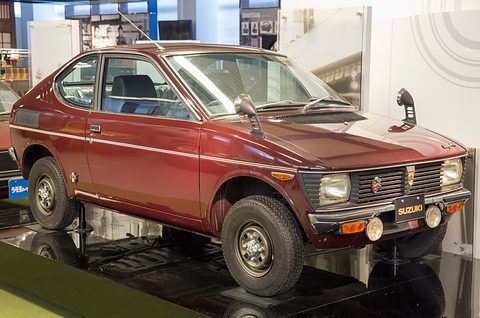
A silver 1983 Mighty Boy at Suzuki Plaza, Hamamatsu, in 2024.Photo: Mr.choppers, CC BY-SA 3.0, via Wikimedia Commons

Pictures

More photographs, old and new

Variants

The first generation, and after

The Alto, 1979–⁠89, and the Maruti 800
VariantYearsWhat differsHow many
Alto SS30V (MX)1979–⁠82The original: one grade, the T5B two-stroke, 28 PS; a two-speed automatic from May 1980In the 844,000
Alto SS40V1981–⁠84The F5A 543 cc four-stroke three, 28 PS; square headlamps and L and G grades from October 1982In the 844,000
Two-seaterFrom 1981Free of the new tax on vans, so it kept the ¥470,000 priceNot found
Snow Liner1983–⁠84Four-wheel drive, 12-inch wheels, free-wheeling hubsNot found
Second generation (CA71V)1984–⁠88Swivelling driver’s seat, four-strokes of 31 PS; Turbo 1985, five doors 1985, Works 1987Not found
Maruti 8001983–⁠2014Built in India: 796 cc three; the second Alto’s body from 1986About 2.87 million

Specification

The Alto SS30V MX of 1979

Engine and drive

Engine and drive
EngineT5B, water-cooled two-stroke in-line three, across the front; piston-port and reed-valve inductionsource 1source 2
Capacity539 cc (32.9 cu in); bore and stroke 61.0 × 61.5 mmsource 1source 2
Power28 PS (21 kW) at 5,500 rpmsource 1source 2source 3
Torque5.3 kg·m (52 N·m)source 5
GearboxFour-speed manual; a two-speed automatic from May 1980source 2source 1

Body and chassis

Body and chassis
BodyThree-door hatchback, registered as a commercial bonnet vansource 1source 2
SuspensionStruts in front, a rigid axle on leaf springs behindsource 2source 5
SteeringRack and pinionsource 4English Wikipedia says recirculating ball
BrakesDrums all roundsource 5source 4
Tyres5.00-10source 2

Dimensions

Dimensions
Length3,195 mm (126 in)source 1source 2source 3
Width1,395 mm (55 in)source 1source 2source 3
Height1,335 mm (53 in)source 1source 2source 3
Wheelbase2,150 mm (85 in)source 1source 2source 3
Weight545 kg (1,200 lb)source 1source 2source 3

Performance and running

Performance and running
Fuel tank27 litressource 2
Payload200 kg (440 lb), or 100 kg with four aboardsource 2
Top speedNot found
Price¥470,000, the same across Japansource 1source 2source 4

How many were built?

Japan and India

About 844,000 in Japan, 1979–⁠84Japanese Wikipedia gives about 844,000 first-generation Altos sold; no figure year by year has been found. The Maruti 800 made far more in India, and its two totals, from English Wikipedia and Rushlane, differ by about 40,000.

  1. 2.91 millionMaruti 800, 1983–⁠2014One source

    Rushlanesource 8

  2. about 2.87 millionMaruti 800, 1983–⁠2014, of which 2.66 million sold in IndiaOne source

    English Wikipediasource 6

  3. about 844,000Alto, first generation, sold, 1979–⁠84One source

    Japanese Wikipediasource 4

  • Two sources agreetwo good sources give the figure
  • One sourcea good source, alone
  • Unconfirmeda lead only, not yet checked

Famous for

Three points

  1. Alto 47 man-en

    ¥470,000, the first price the same all over Japan.source 1source 3source 4

  2. A van by law

    Registered as a commercial van, it paid none of the commodity tax on cars.source 1source 4
  3. The rescue

    18,000 a month against a plan of 5,000, and a V-shaped recovery for the kei class.source 4
Survivors and collecting

Today

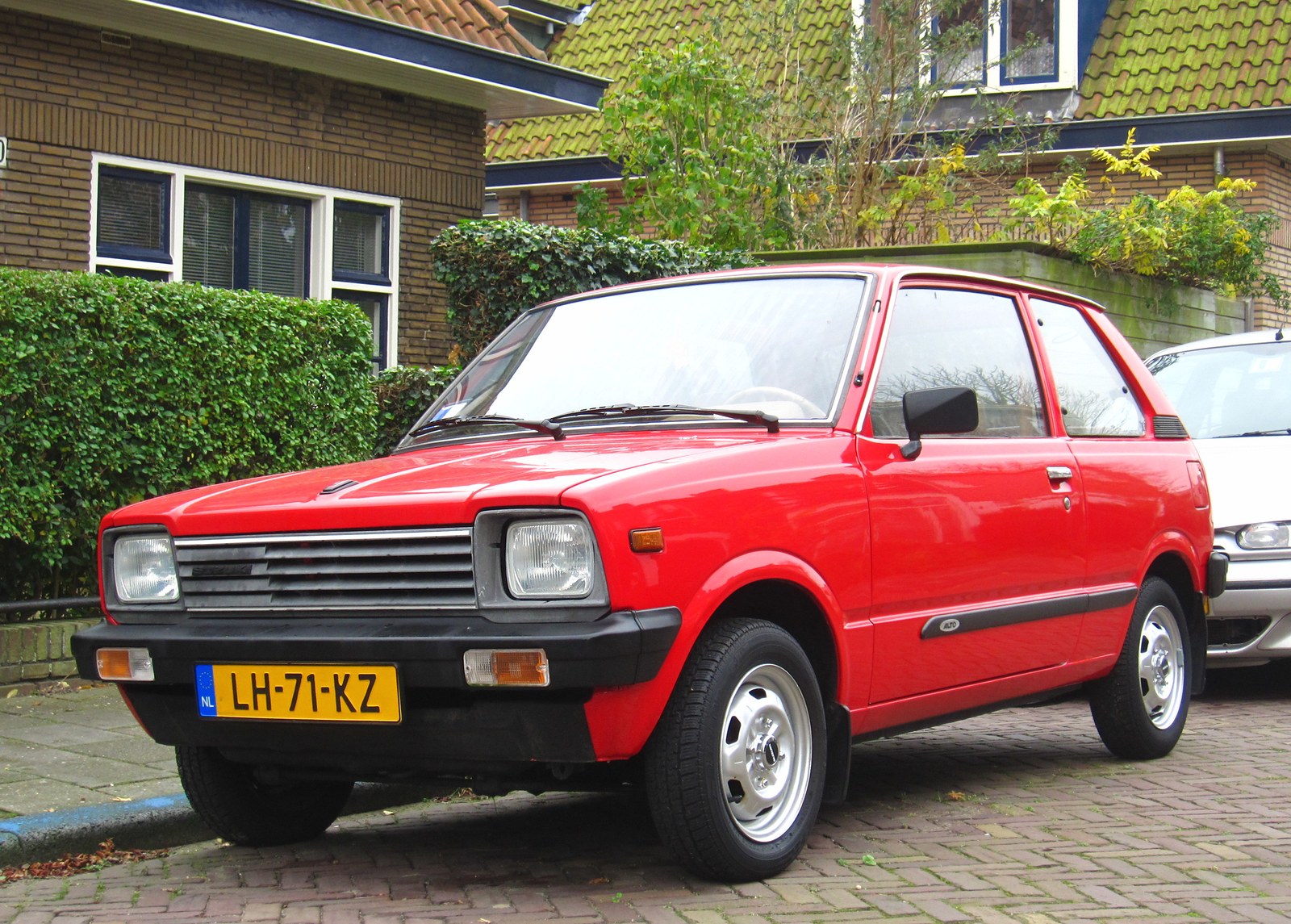
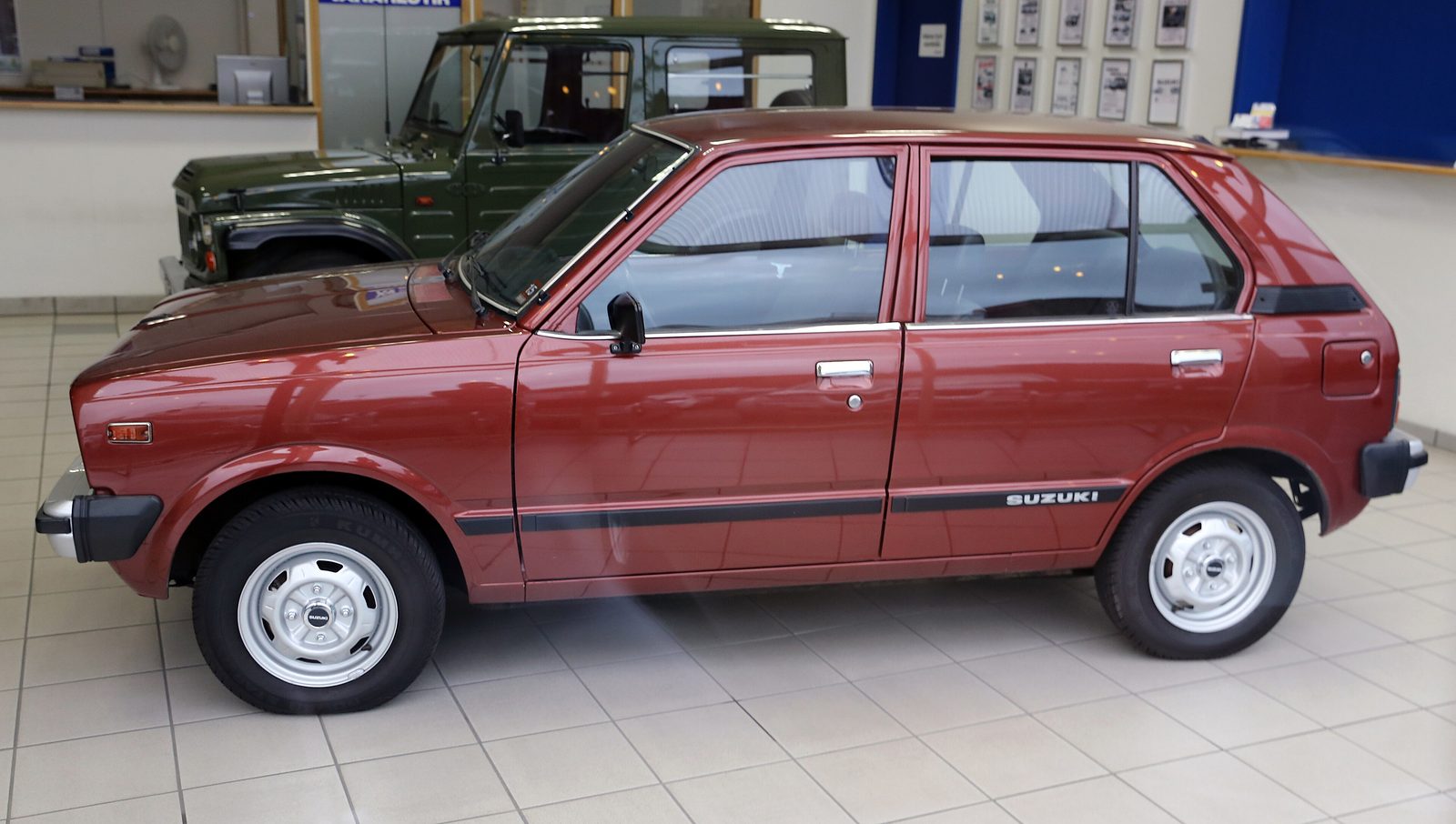
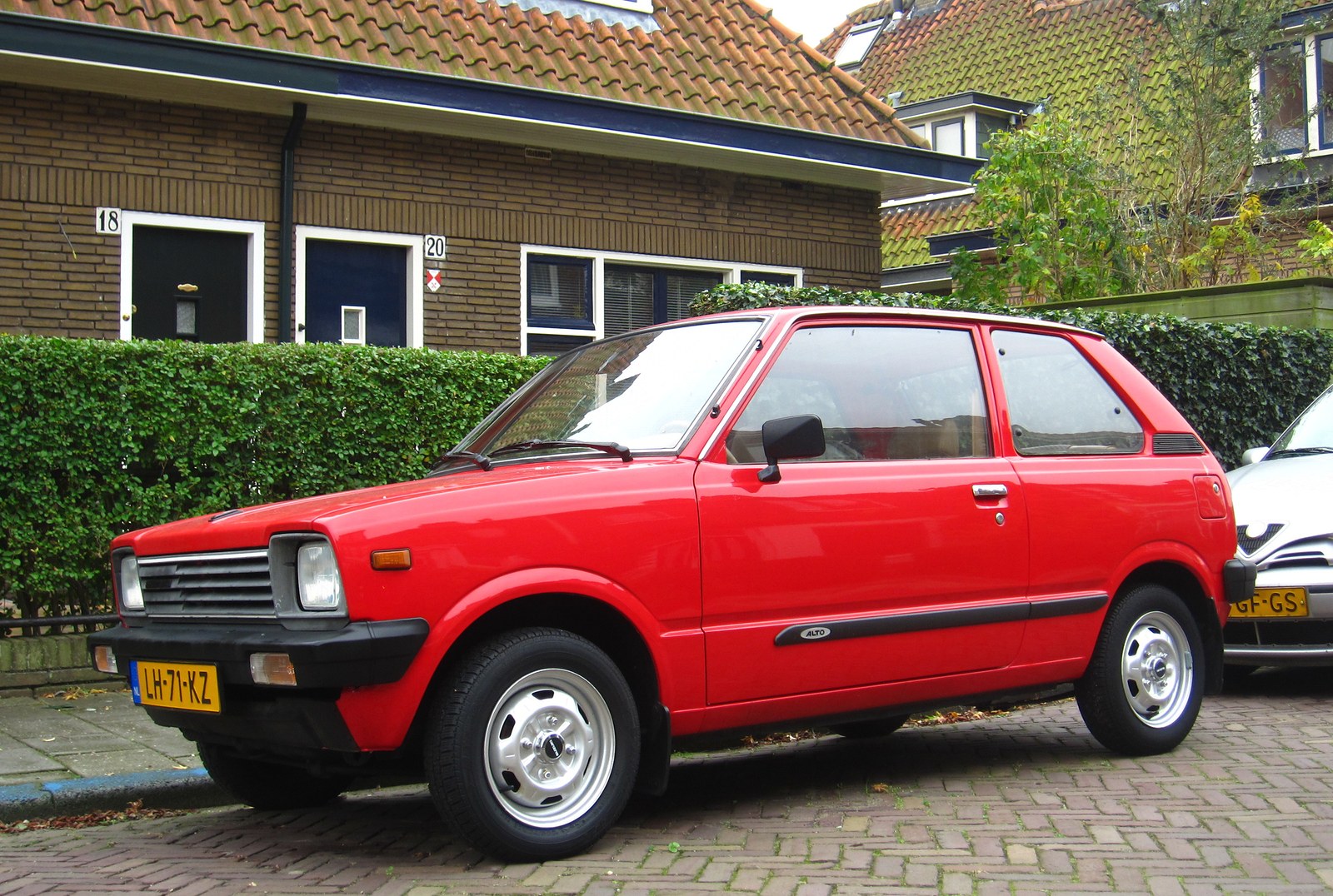
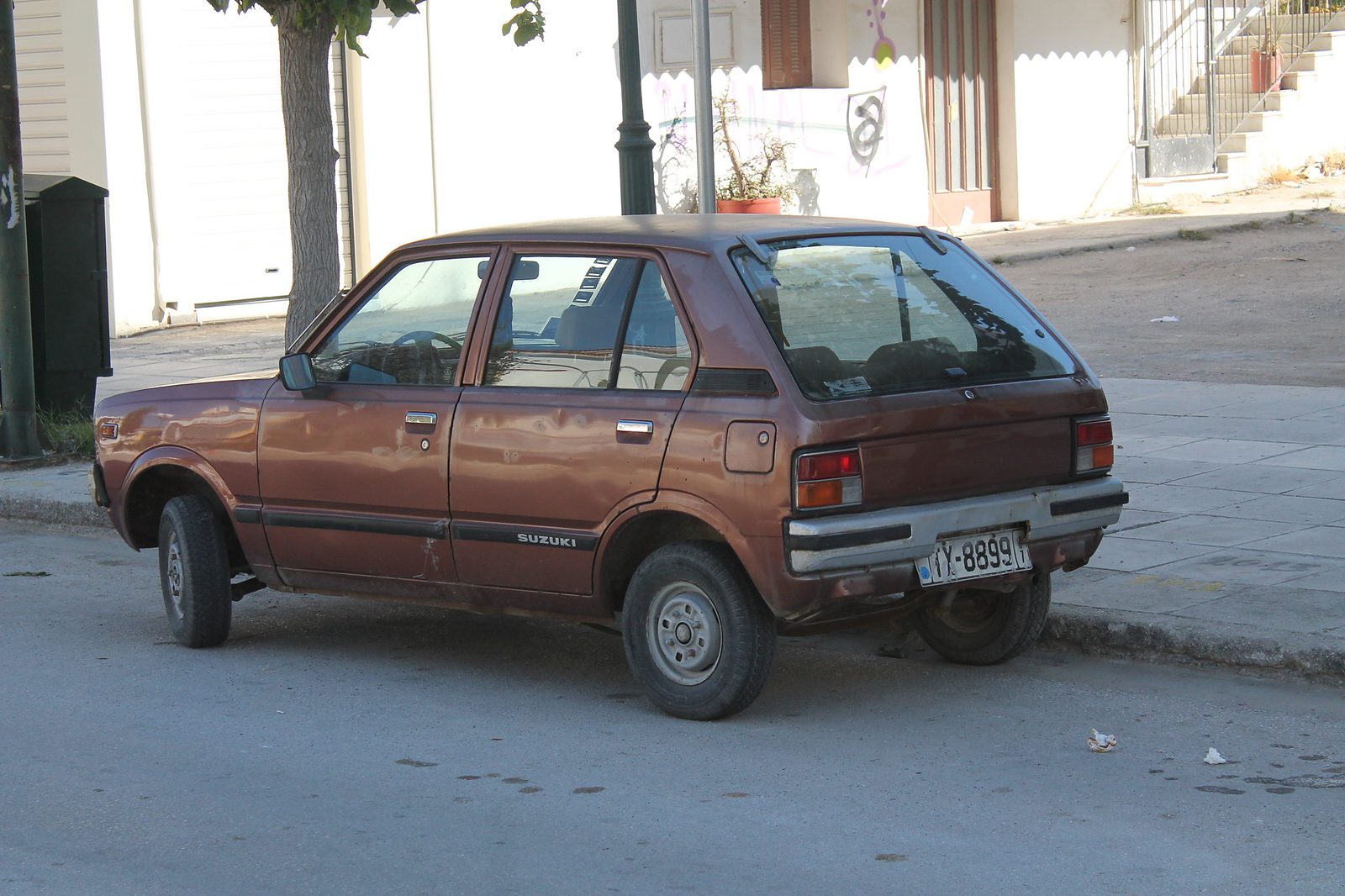
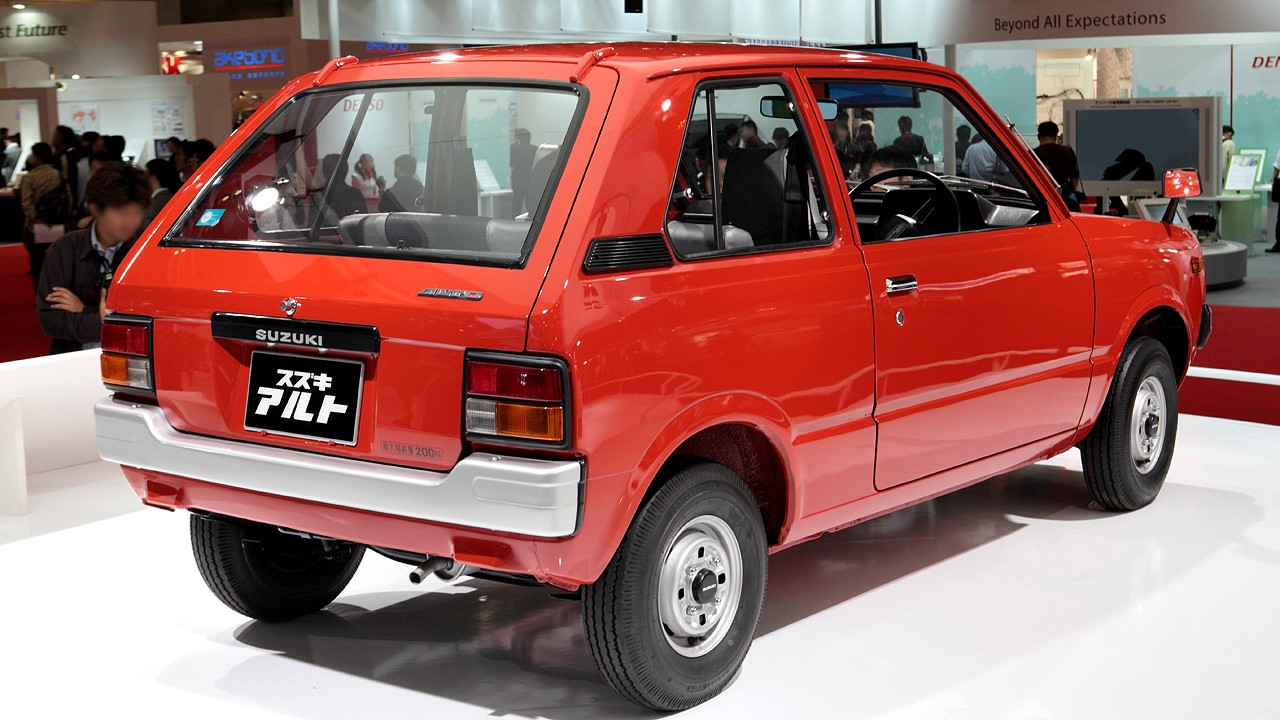
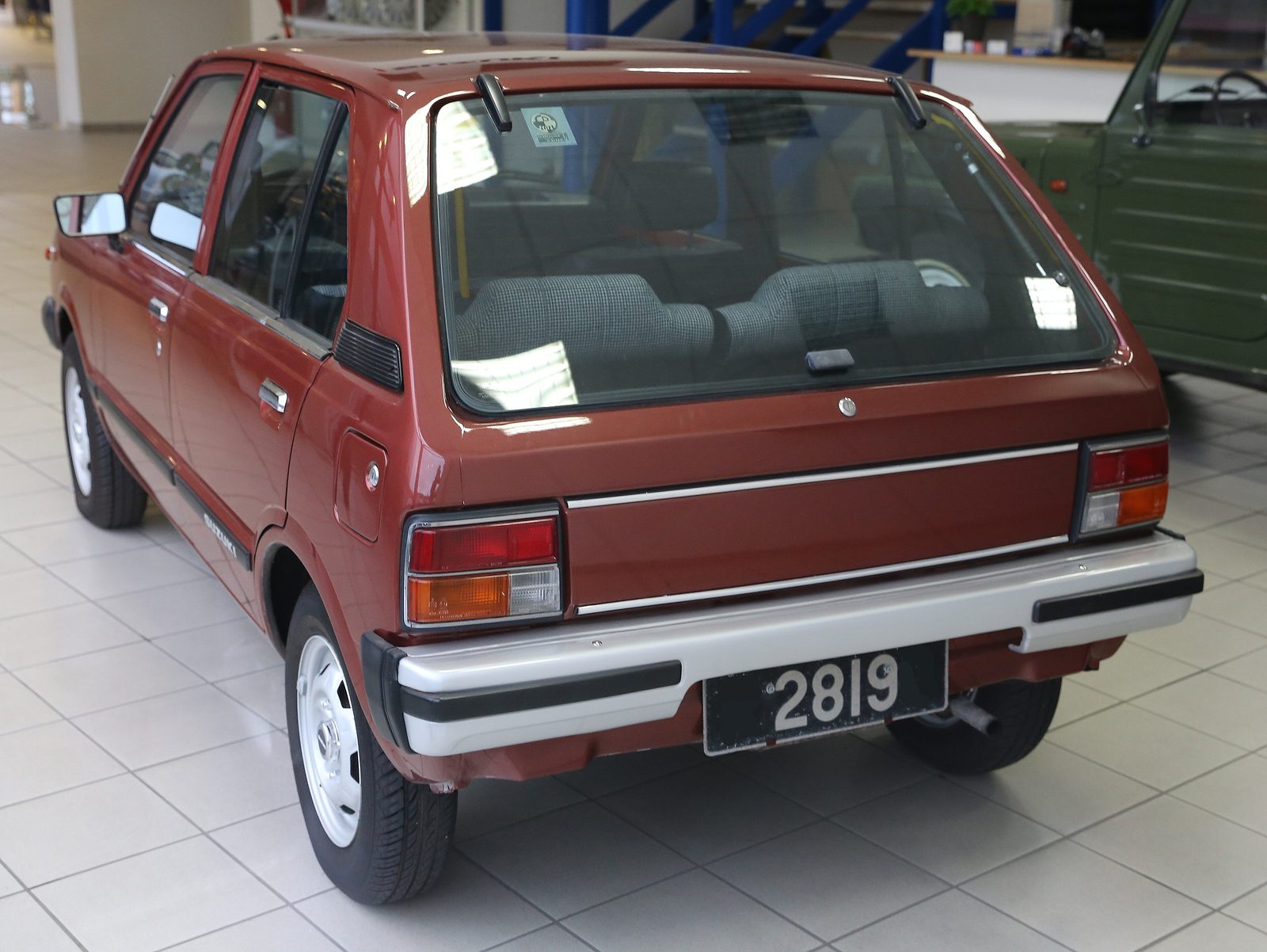
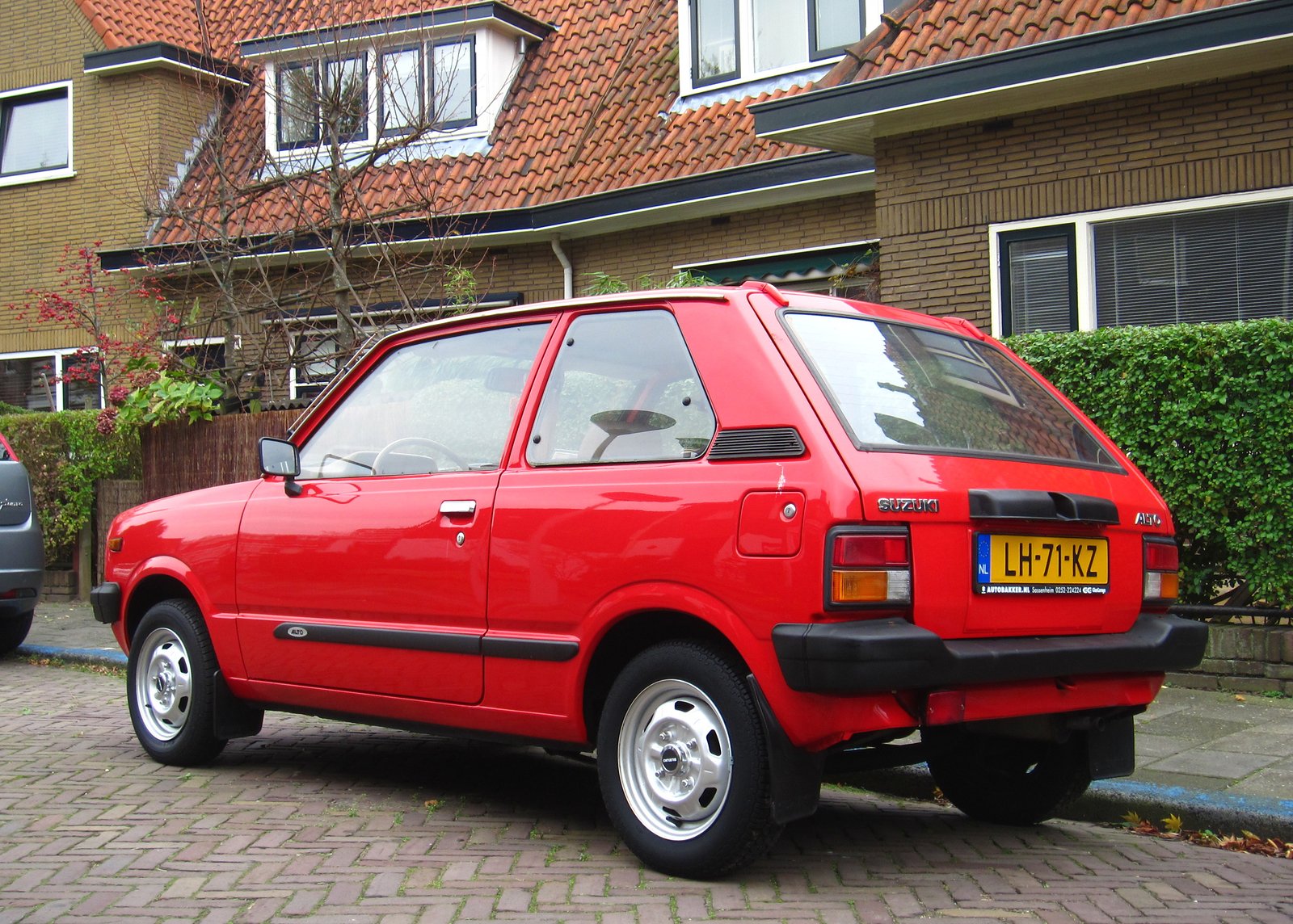
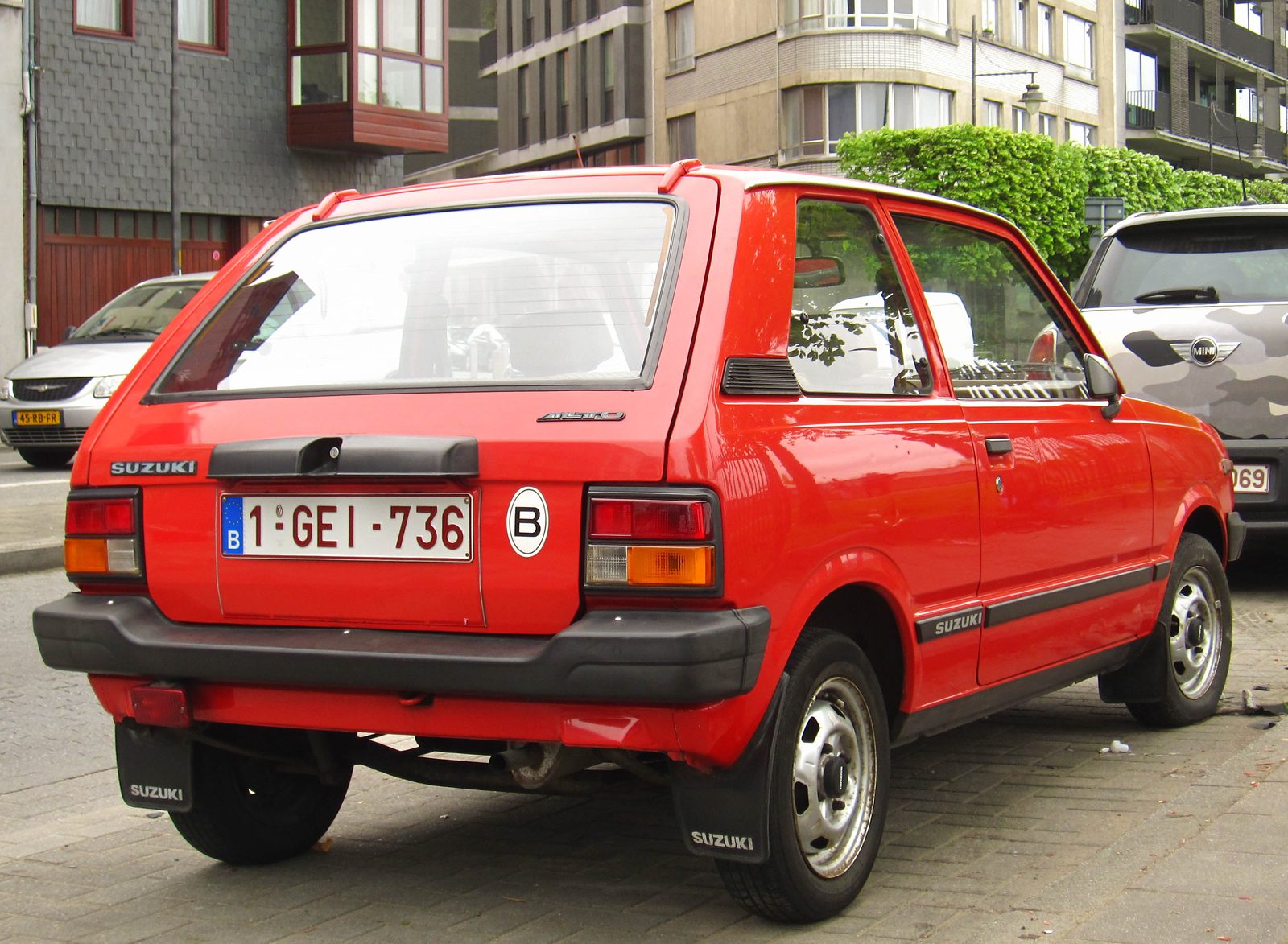
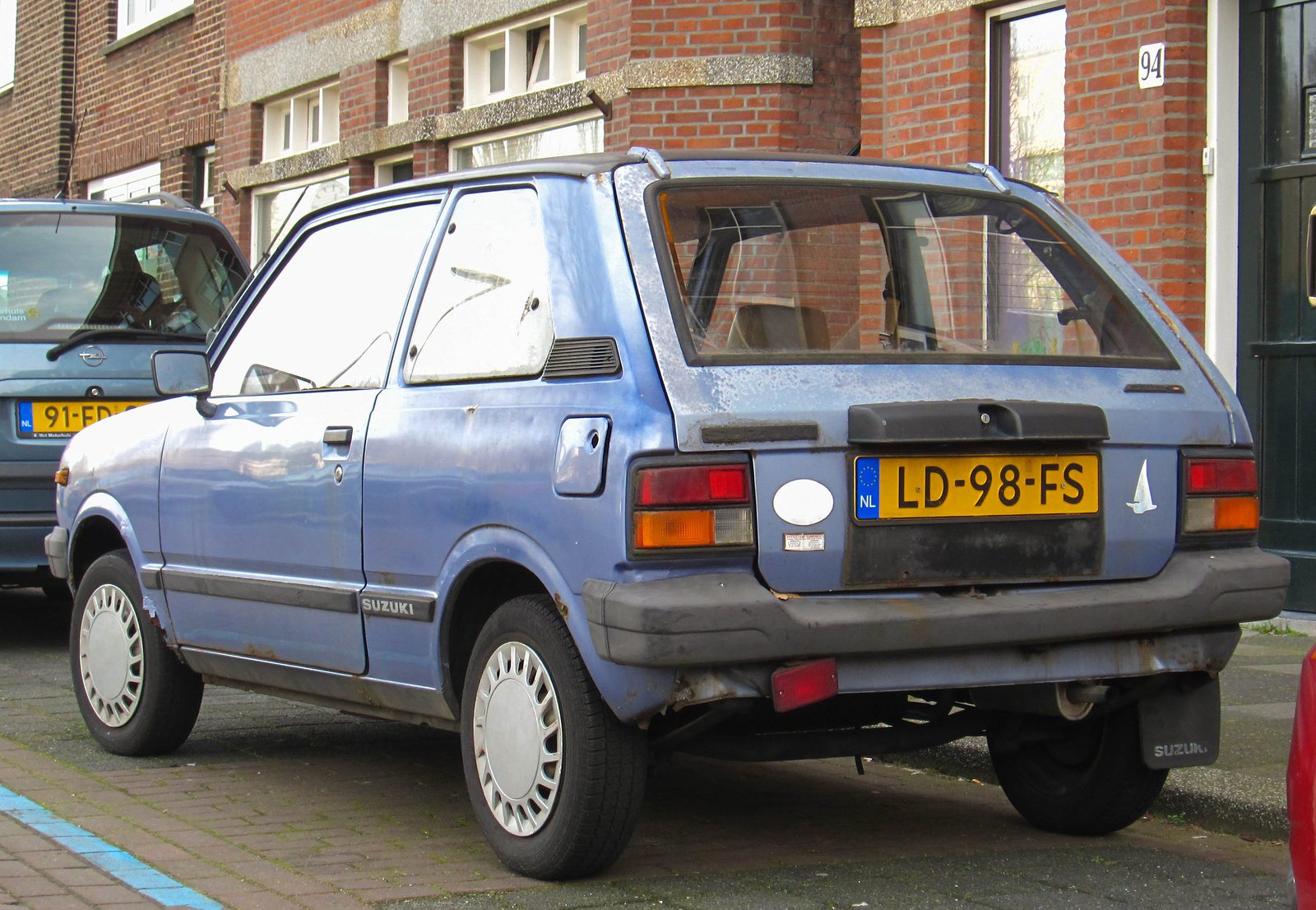
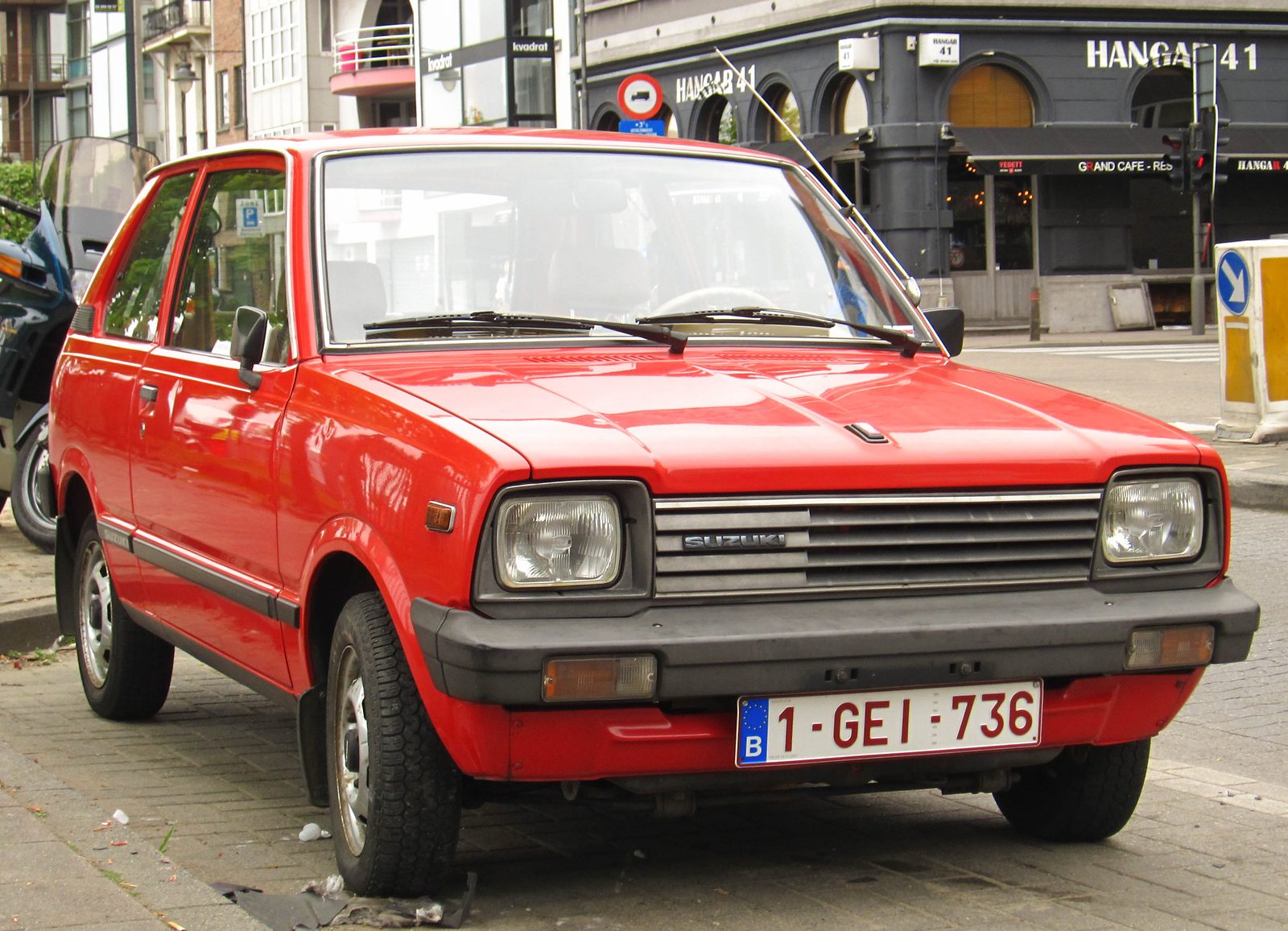
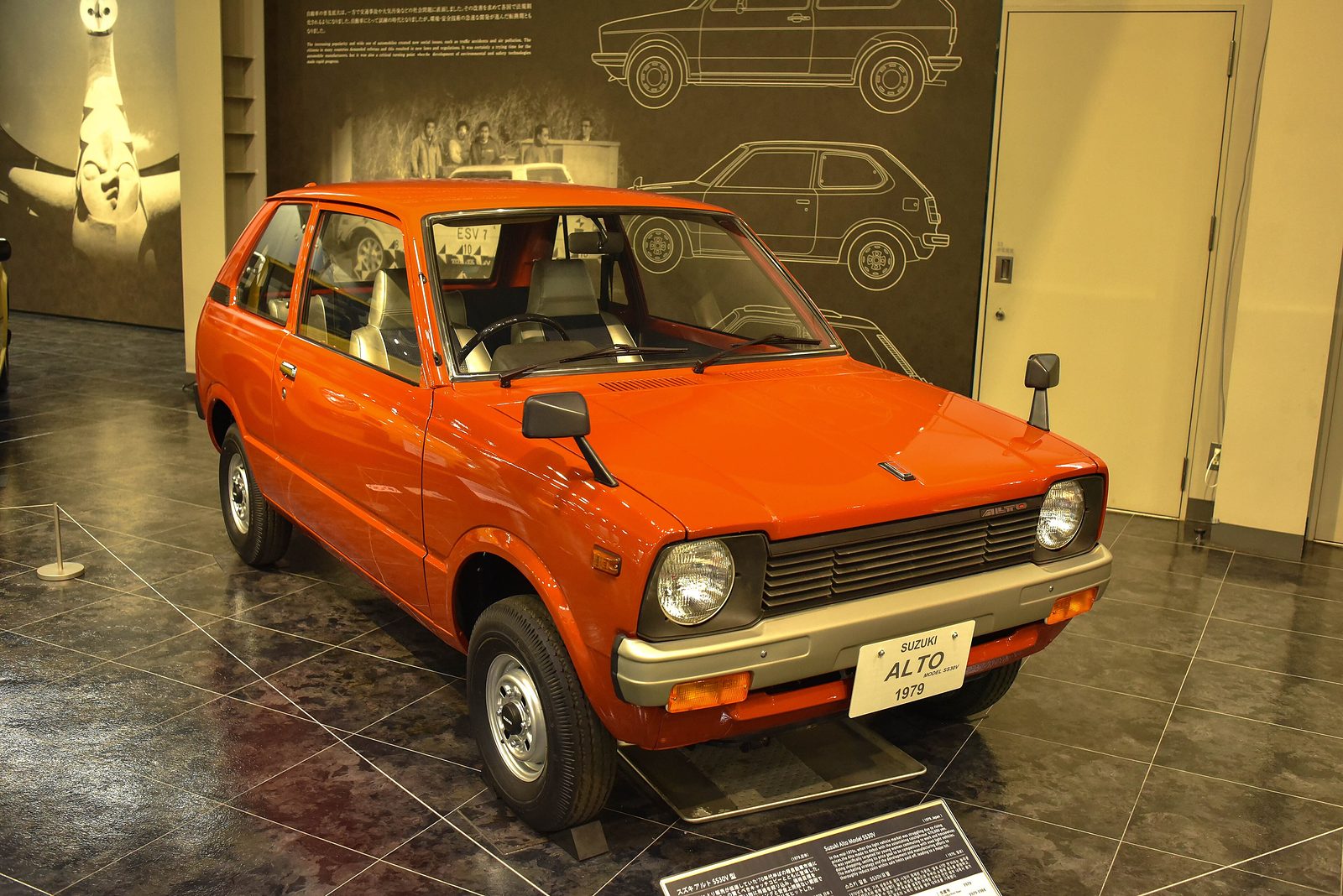
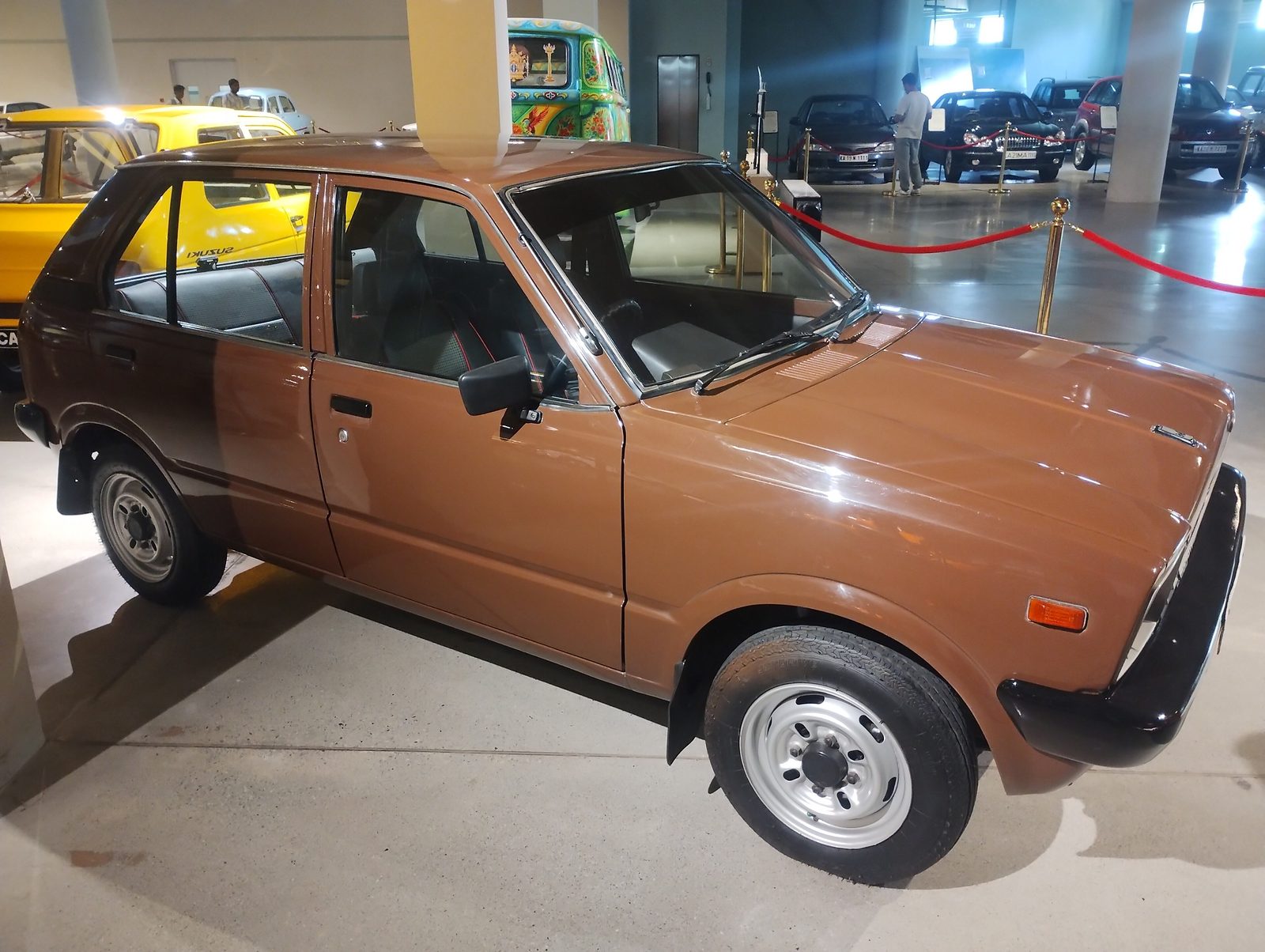
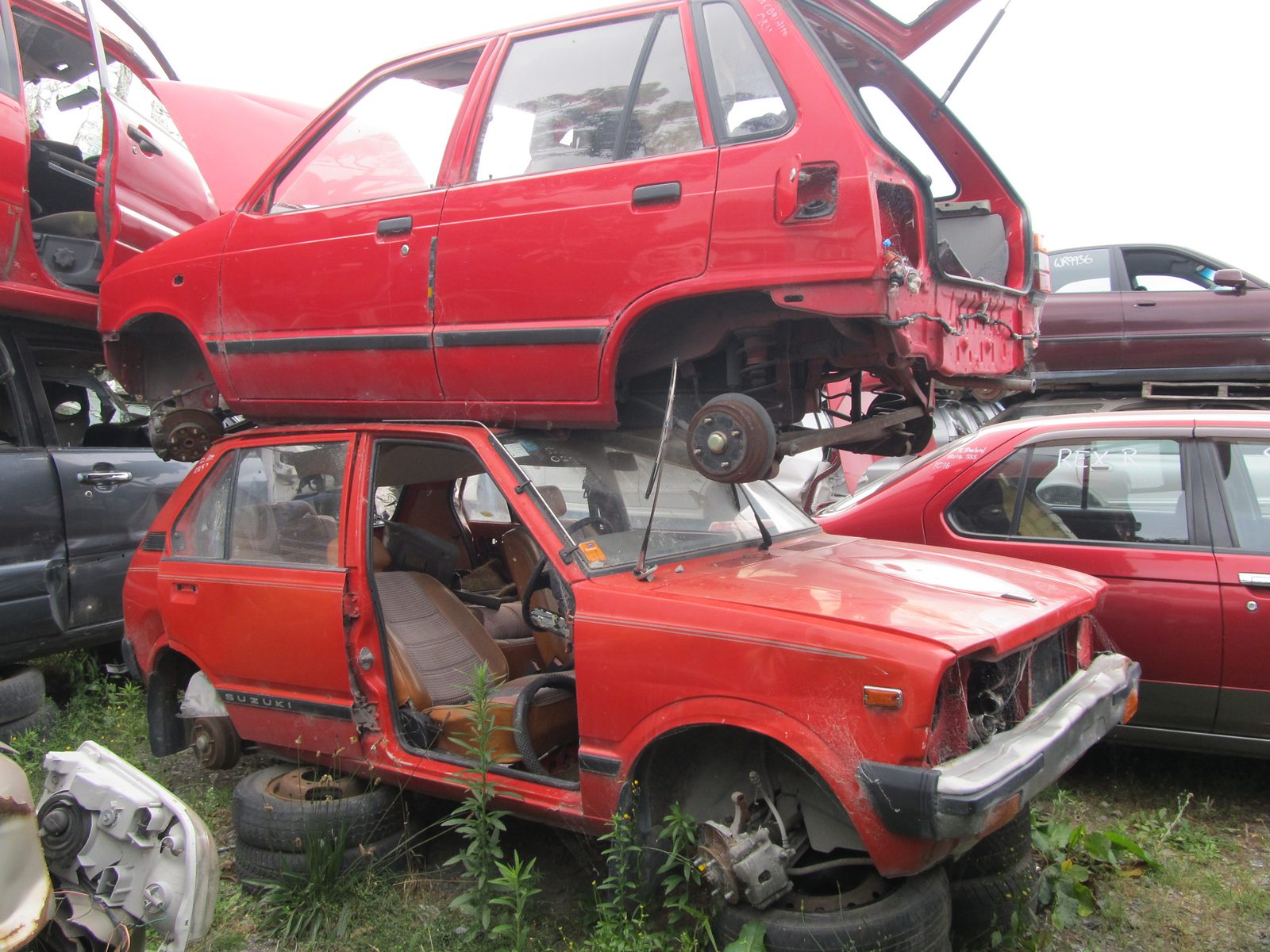
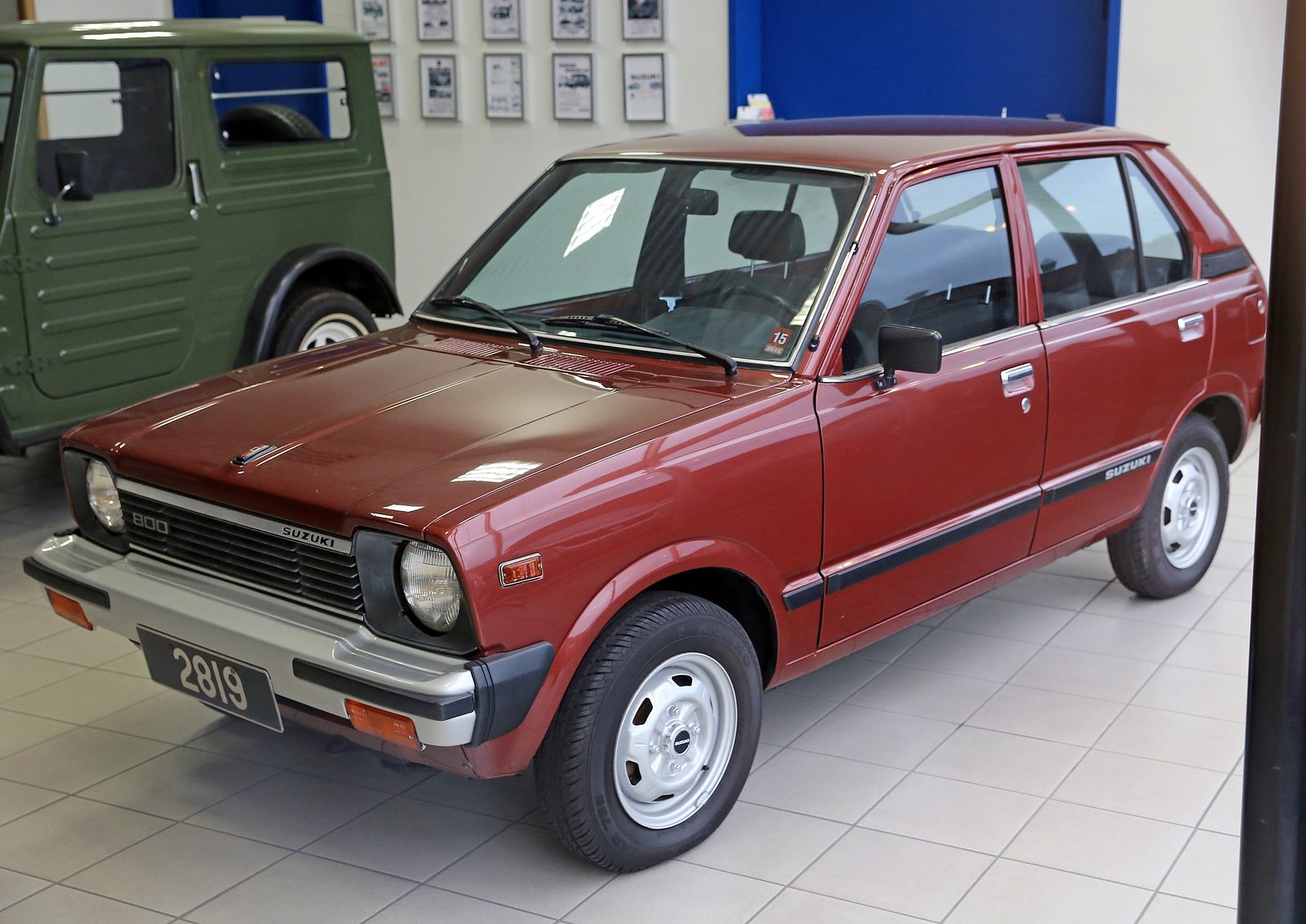
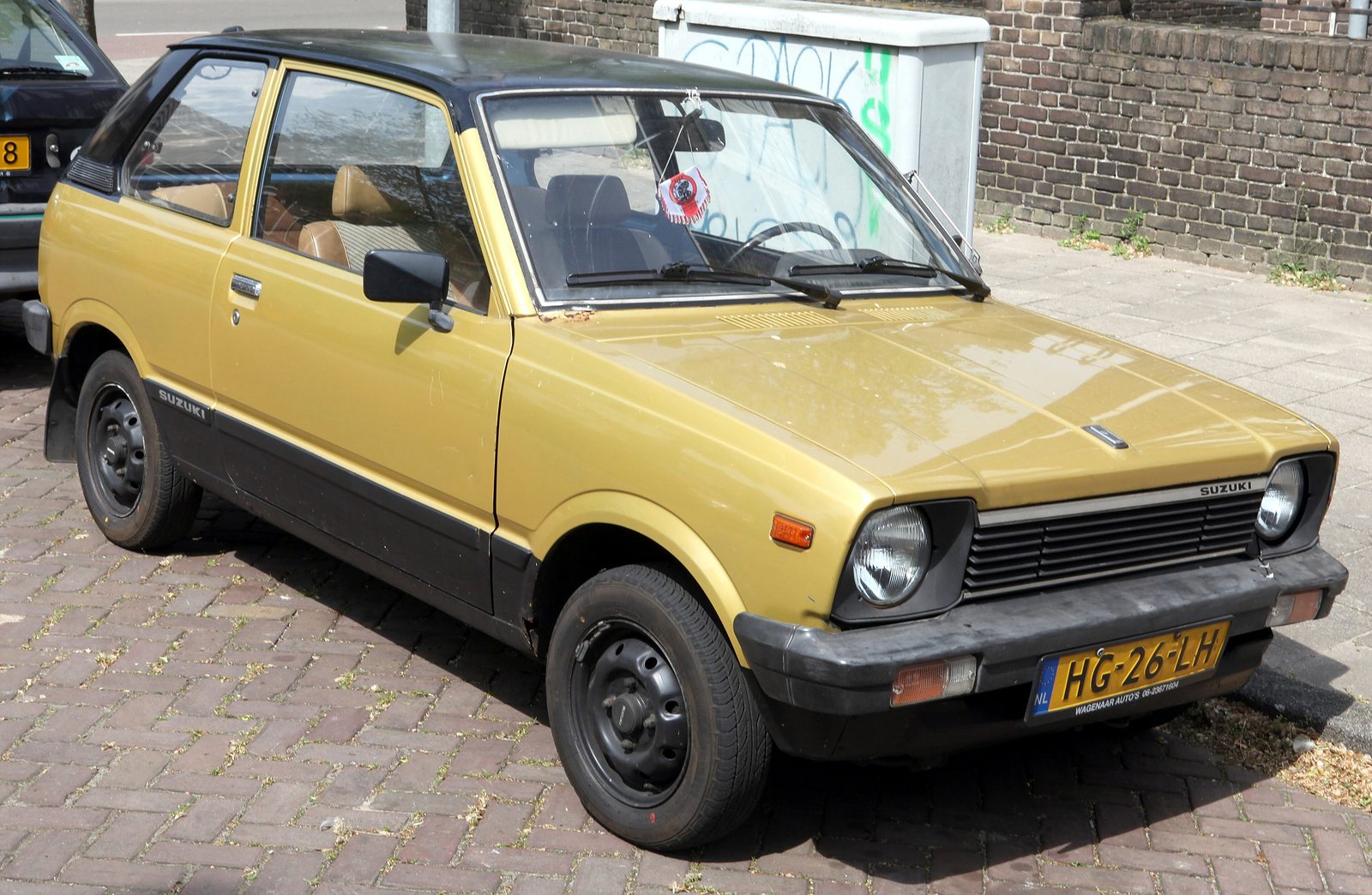
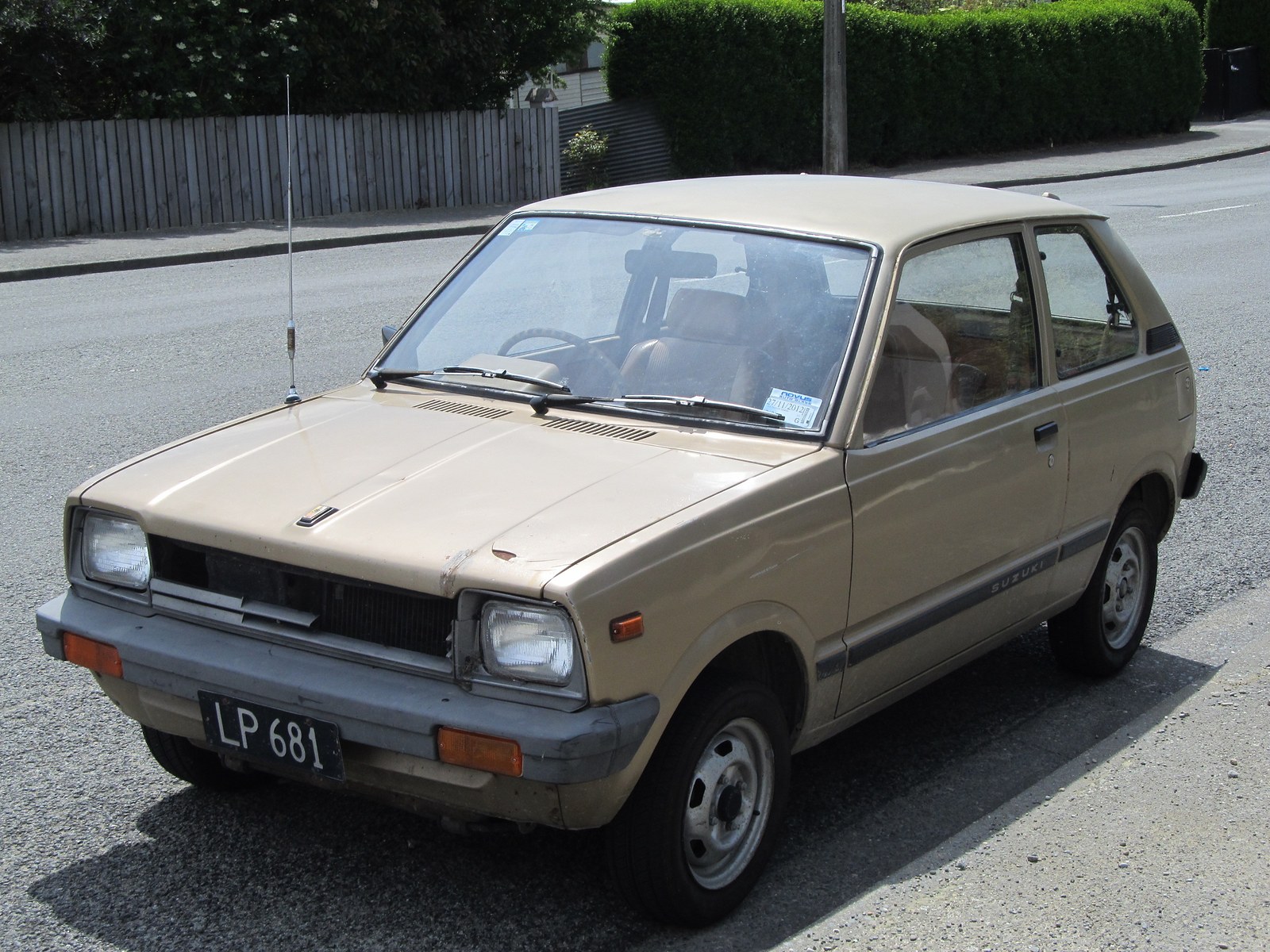
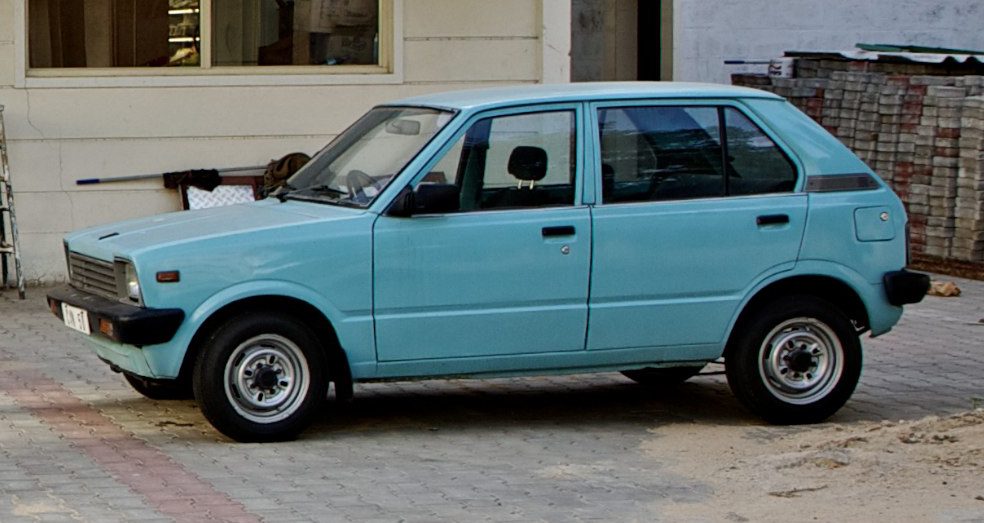
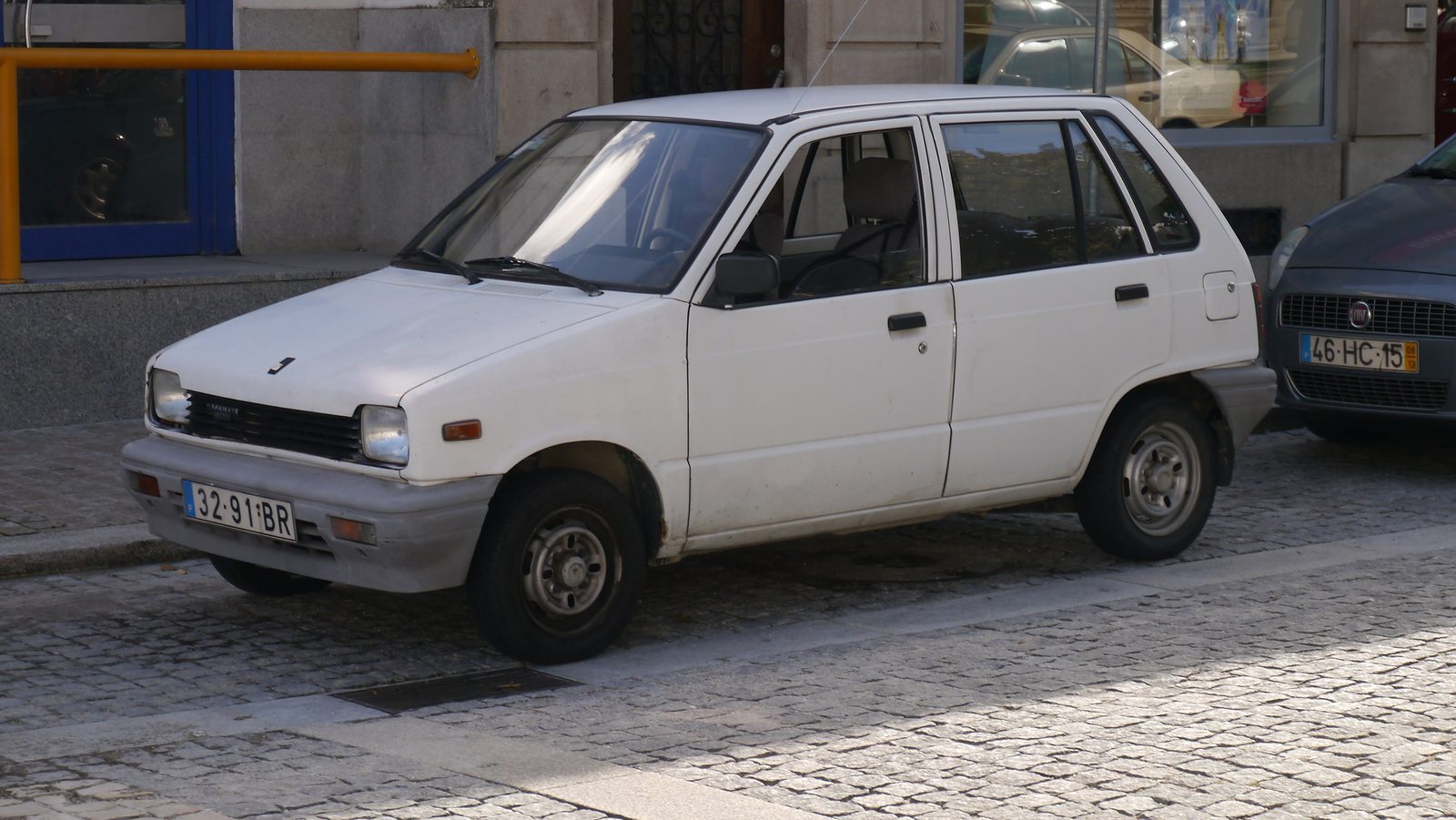
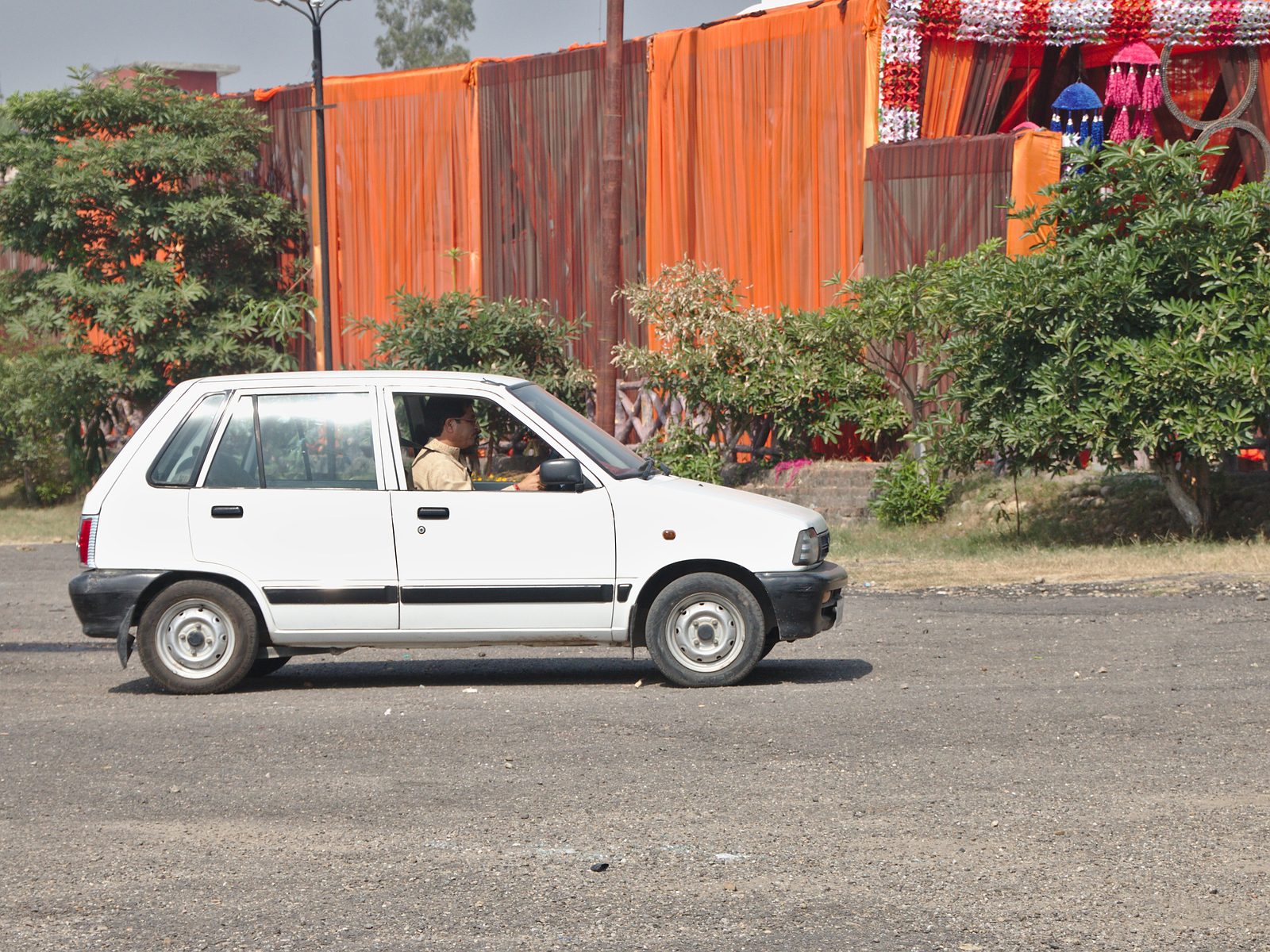
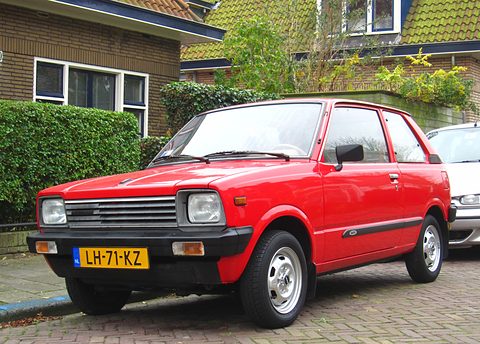
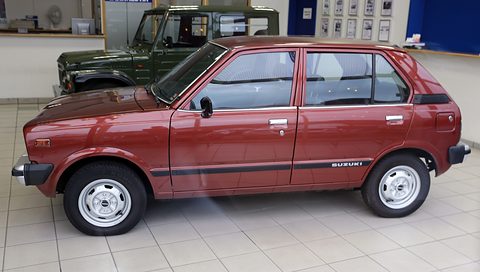
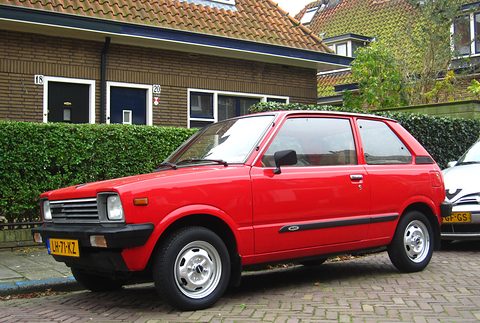
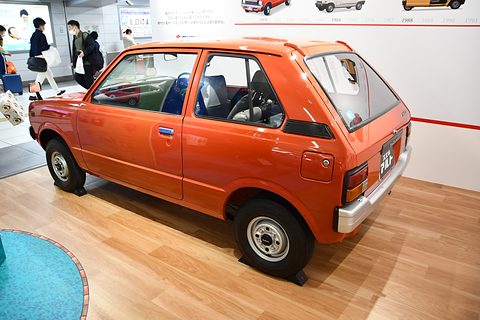
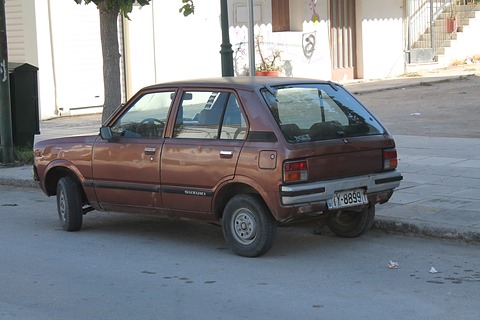
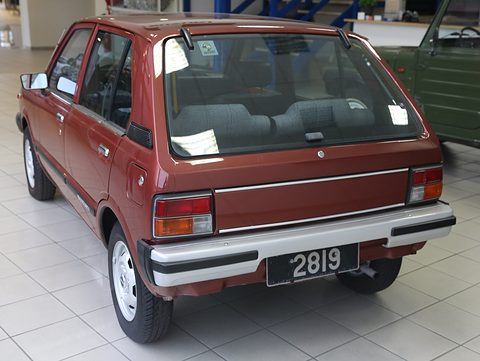
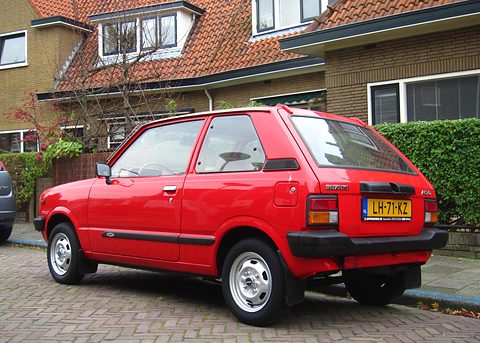
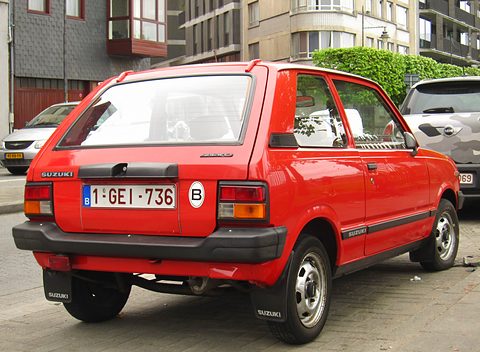
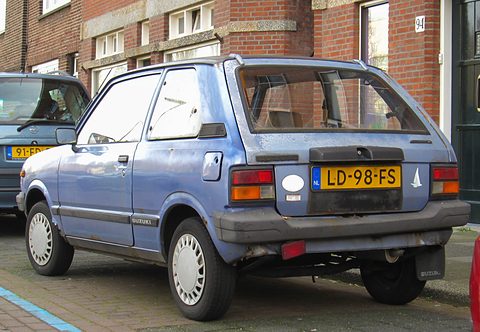
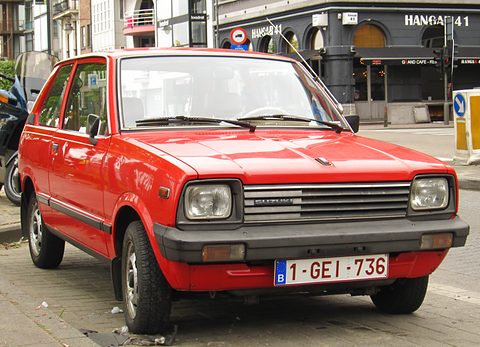
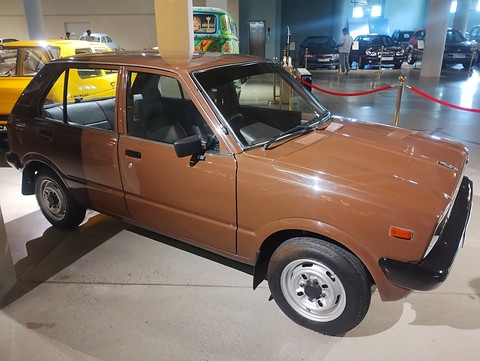
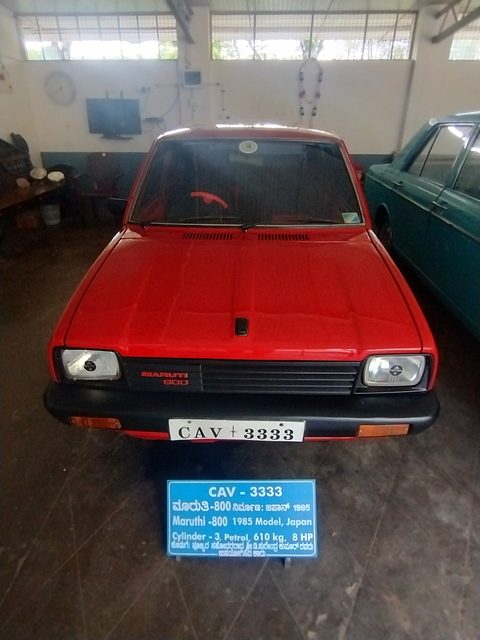
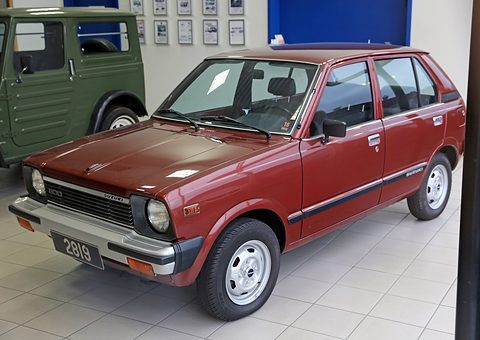
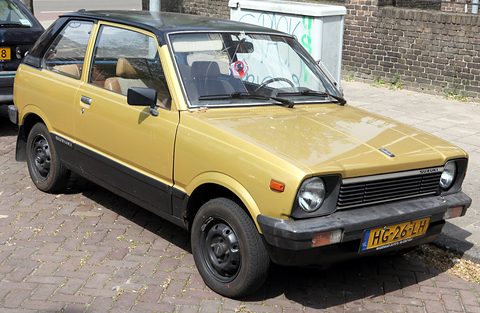
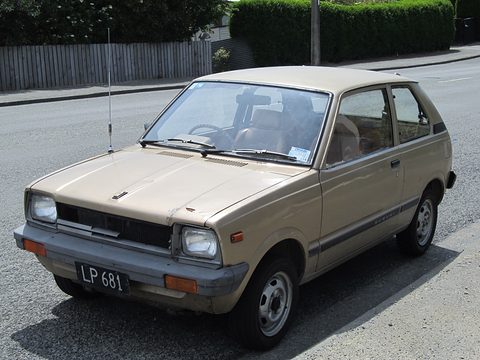
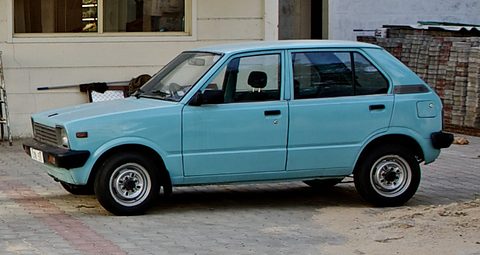
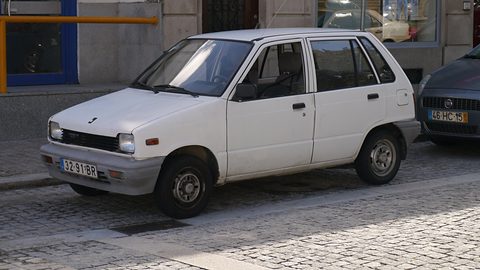
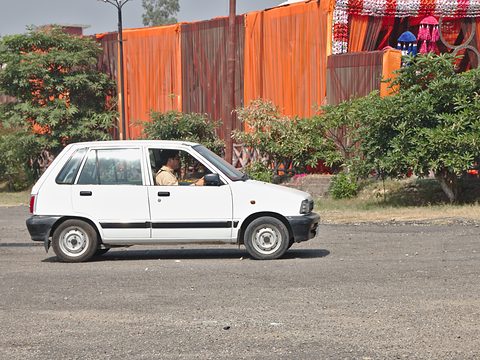
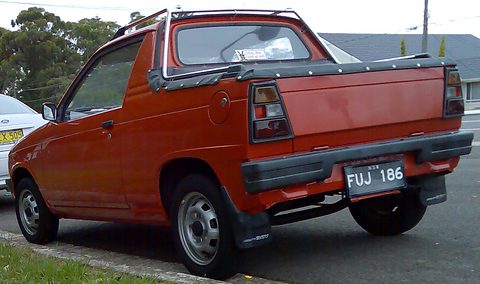
Neither a tally of surviving Altos nor any auction record has been traced. The JSAE records the original car as kept by Suzuki at Hamamatsu, in running order; an SS30V is also on show in the Toyota Automobile Museum’s car hall.source 2source 3 The Japan Automotive Hall of Fame named the Alto a historic heritage car on 6 November 2024, and it is one of the JSAE’s landmarks of Japanese automotive technology.source 4source 2 The photographs on this page show first Altos in the Suzuki History Museum and at the Toyota Automobile Museum, export cars in the Netherlands, Belgium and Iceland, and Maruti 800s in Indian museums.

Sources

Numbered as in the text

No period road test was read. The specification rests on the JSAE’s landmark record, Suzuki and the Toyota Automobile Museum; several of the stories of the car’s making rest on Japanese Wikipedia alone, and are told as such. Sources are given as plain text; the links are on the Credits page.

  1. Suzuki Digital Library, Alto (アルト), the maker’s history and specification tables, the first and second generations.
  2. JSAE (Society of Automotive Engineers of Japan), 330 Landmarks of Japanese Automotive Technology, 1-60: Suzuki Alto (1979), read in full.
  3. Toyota Automobile Museum, collection database, record 259, “Suzuki Alto Model SS30V”, read in full.
  4. Japanese Wikipedia, Suzuki Alto (スズキ・アルト), the first and second generations and the timeline.
  5. English Wikipedia, Suzuki Alto, the history of the name and the first generation.
  6. English Wikipedia, Maruti 800, its origins and history.
  7. Autocar India, “30 years of Maruti”, 14 December 2013, read in full.
  8. Rushlane, “First Maruti 800 price Rs 47,500”, read in full; it reproduces a newspaper clipping of 13 December 1983.
  9. Suzuki Digital Library, Cervo (セルボ), with the Mighty Boy, read in full.
  10. Japanese Wikipedia, Suzuki Mighty Boy (スズキ・マイティボーイ), read in full.