microcarfan
  • Three-wheeler
  • Britain
  • Three wheels
  • No reverse

Scott Sociable

Also known as “The Crab”

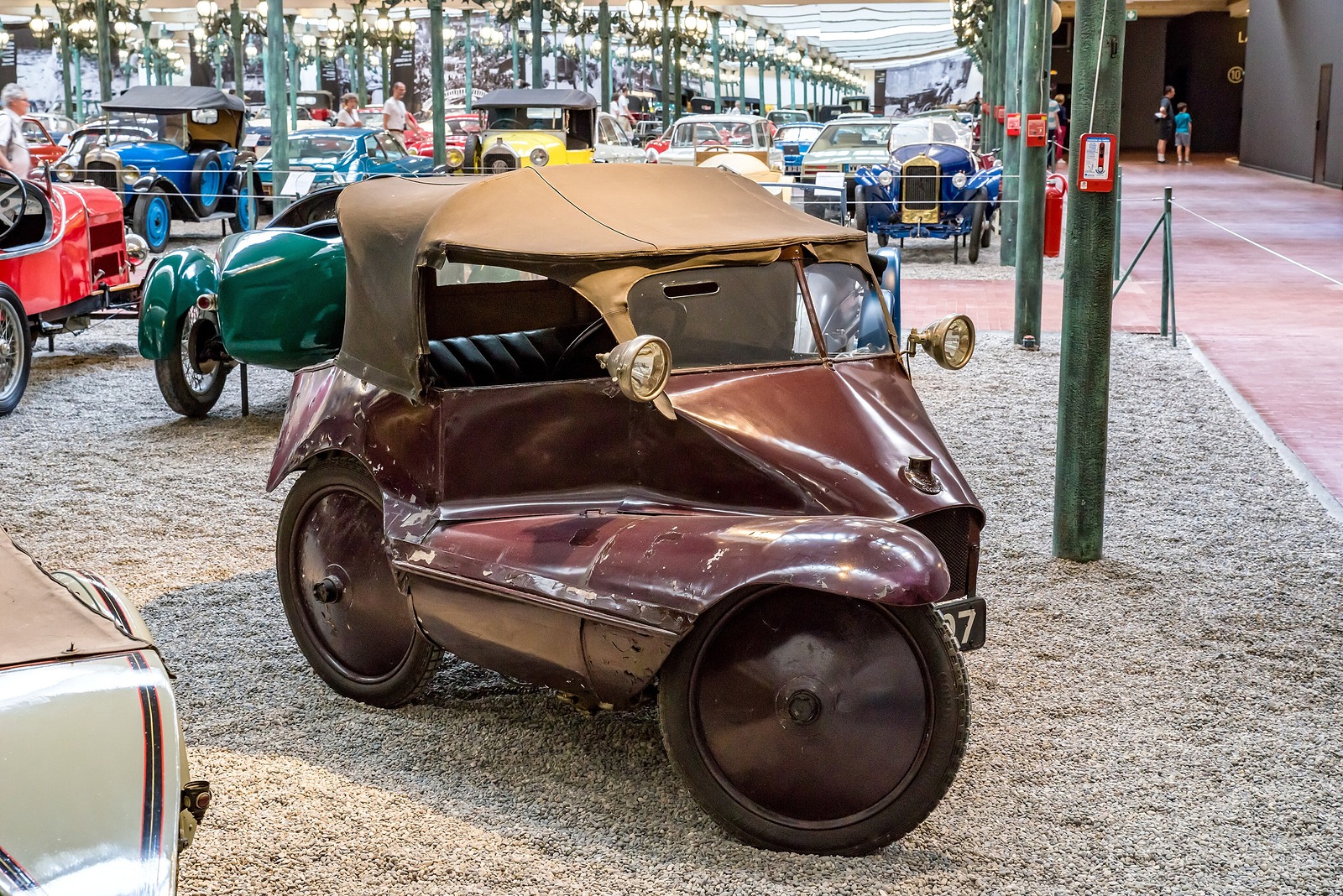
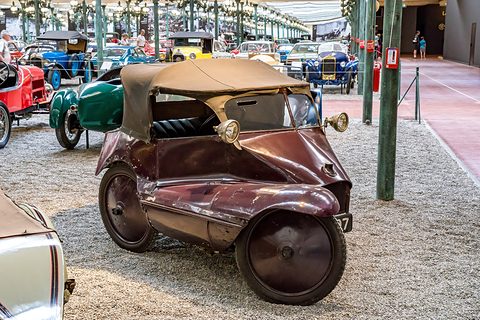
Look at it head-on and the front wheel is in the wrong place. The Sociable began as a mount for a machine gun, built like a motorcycle with a sidecar, and when the army said no, its maker put two seats on it and sold it to the public.

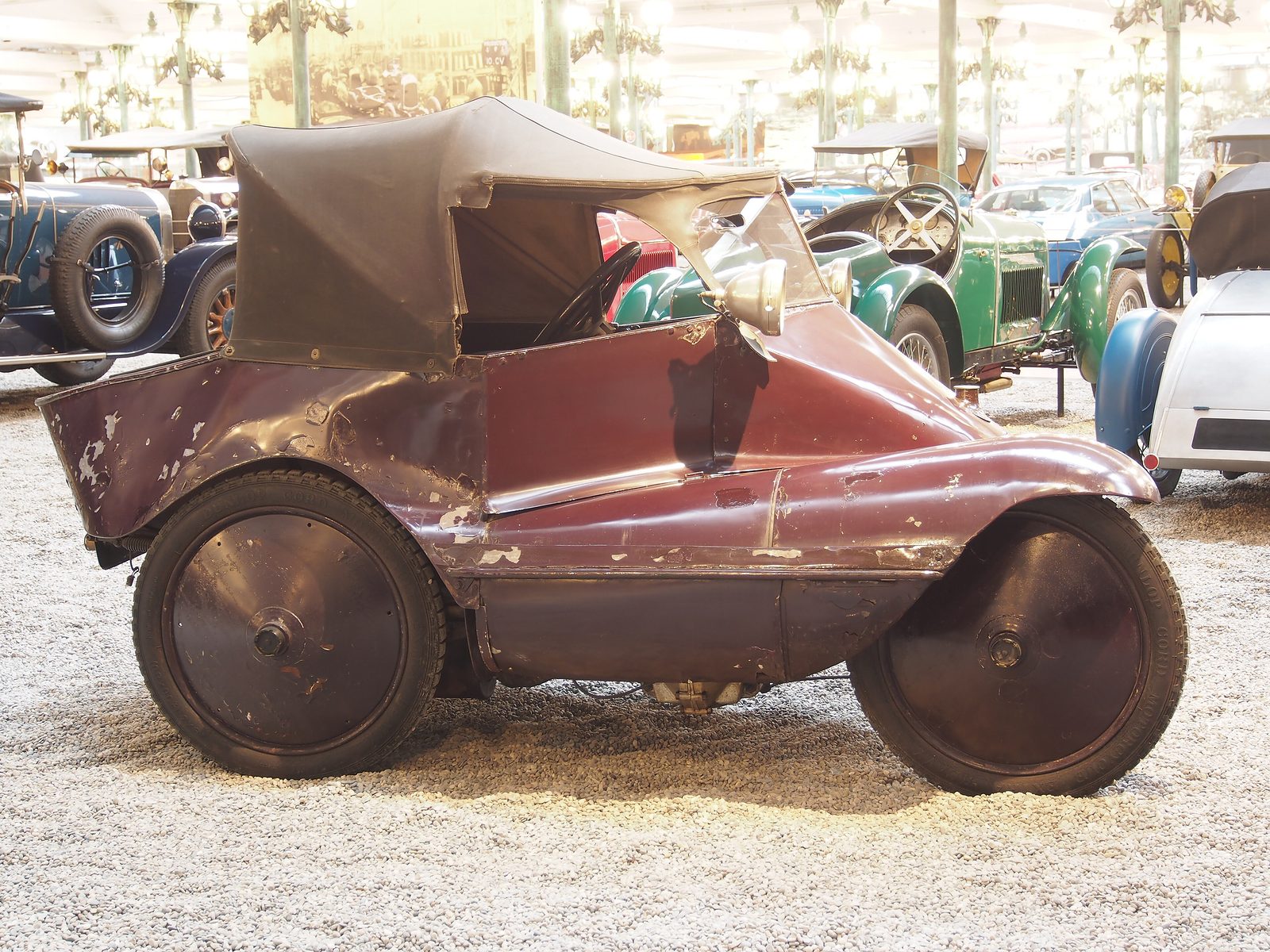
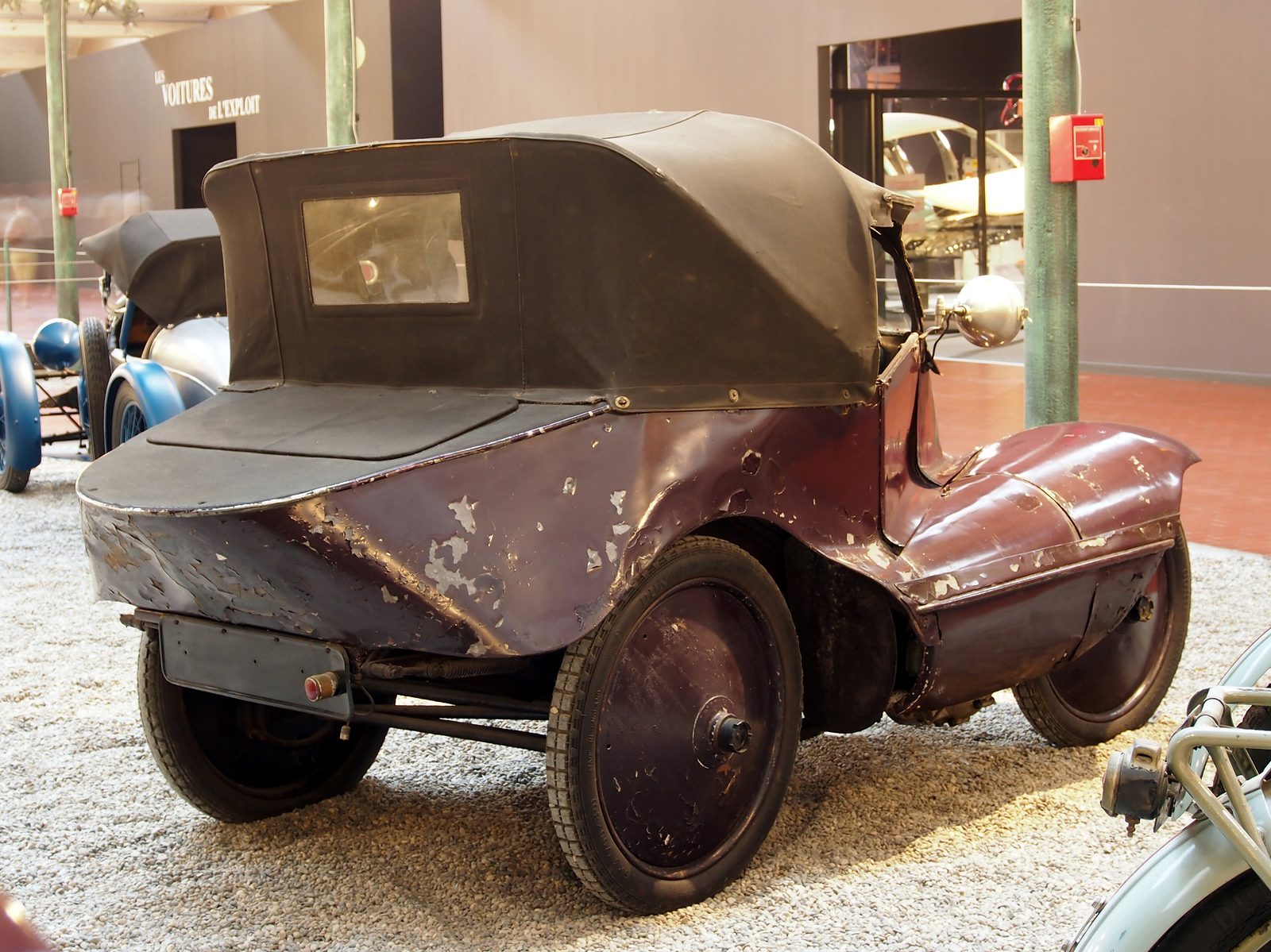
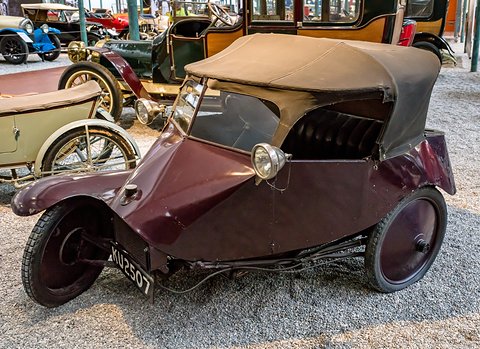
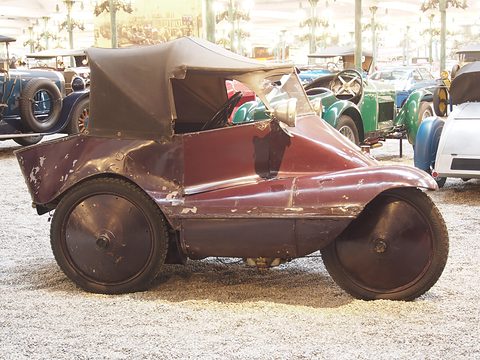
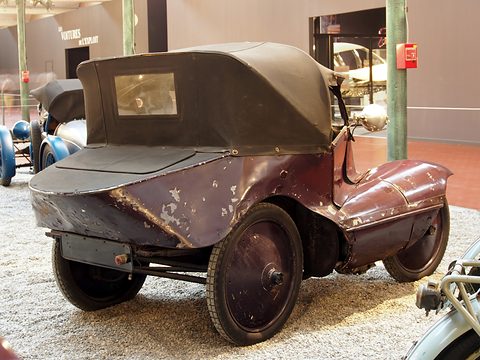
Low view of a maroon three-wheeler with a black hood, the long frame tube running back to the rear wheels.
Scott Sociable two-seater cabriolet of 1923 from a low front quarter at the Cité de l’Automobile, Mulhouse, in May 2018.Photo: joergens.mi, CC BY-SA 3.0, via Wikimedia Commons

At a glance

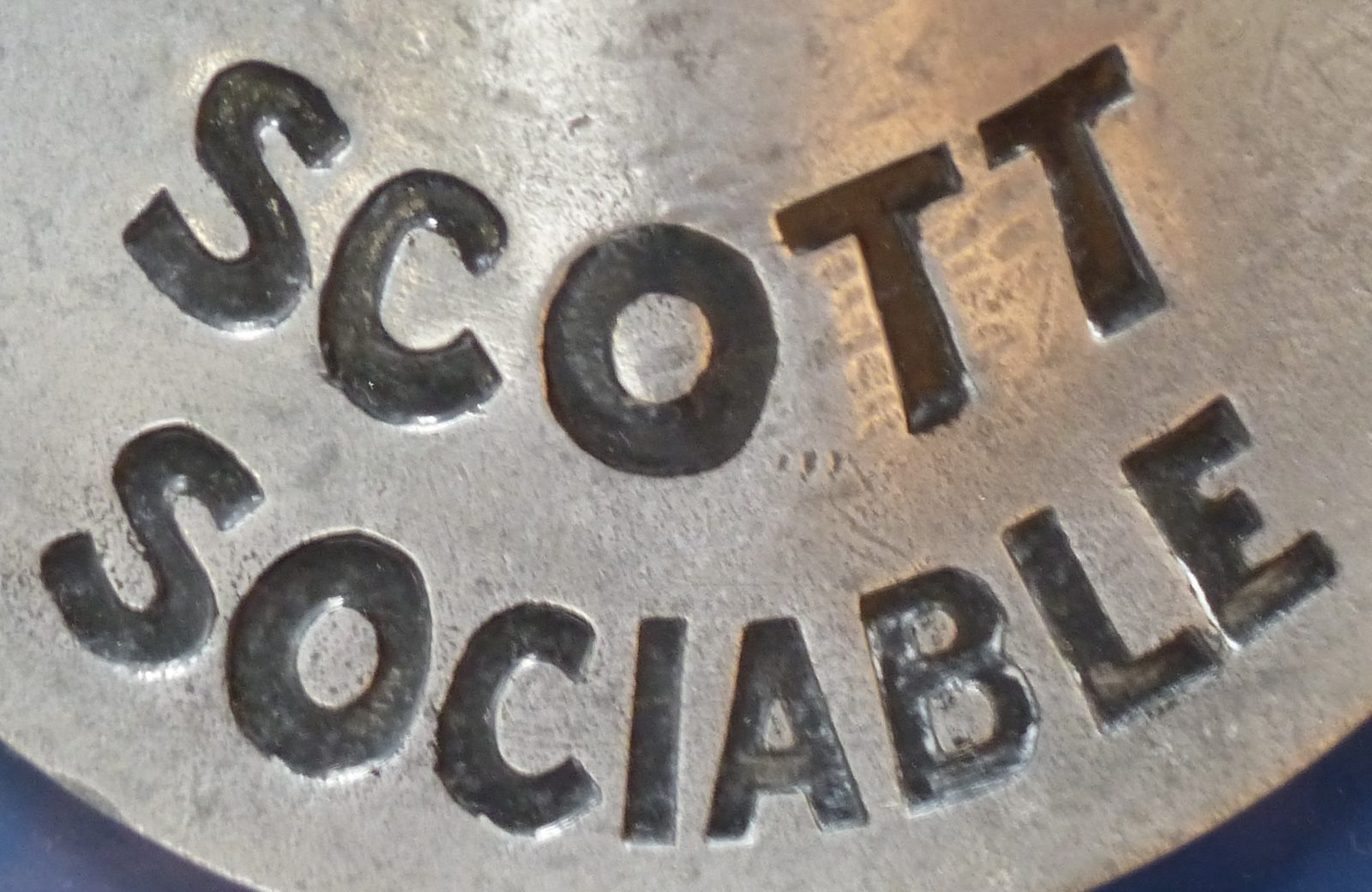
The spec plate

Scott Sociable

Sociable · Bradford

Built
1921–⁠1925Announced in 1916; built from 1921 until 1924 or 1925
Country
BritainLidget Green, Bradford, Yorkshire
Maker
Scott Autocar CompanyFormed by Alfred Angas Scott to build the Sociable
Engine
578 cc water-cooled two-stroke twinScott’s own; three speeds and no reverse
Seats
2Side by side
Wheels
3One at the front in line with one at the back, as on a motorcycle, and a third beside the rear wheel; shaft drive to the offside rear wheel
Price new
£2731921; down to £135 by 1924
Production
about 2001921–⁠25
Survives
No count foundCars are on show in Bradford and Mulhouse

Not yet recordedpower, top speed, length and weight.

How big is it?

True proportion

Length unknown

No reliable length has been found. The Fiat 500, the Peel P50 and the adult stay, so the gap is shown, not hidden.

  • Two seats, side by side
  • Three wheels, set lopsided
Drawn at true proportion. The track is 3.6 metres long; the adult stands at the same scale. The Peel P50 is the smallest production car, on every page for comparison.

Beside its contemporaries

The British microcars on the road in 1921, on the same 3.5 m scale. Lengths of cars without a page yet come from the census and are unverified.

  1. Morgan Three-Wheeler1910–⁠1952 · Britain

    2.90 m
  2. Scott Sociable1921–⁠1925 · Britain

    length unknown

The story

History

Alfred Angas Scott was born in Manningham, Bradford, in 1874 or 1875; the sources differ by a year.source 1source 2 He studied engineering at Abbotsholme School in Uttoxeter, served an apprenticeship in steam marine engineering, and became the pioneer of the water-cooled two-stroke motorcycle. Along the way he patented an early calliper brake in 1897, triangulated frames, rotary induction valves and unit construction.source 1source 2 His slogan of 1909 was “two-stroke, two-speed and two cylinders”.source 2 The Scott Engineering Company of Bradford moved to Saltaire as the Scott Motor Cycle Company, and Scott machines won the Isle of Man TT in 1912 and 1913.source 1 The Engineer’s obituary says that Scott won both races himself; it was his motorcycles that won them.source 1

A gun on three wheels

In 1915, with Britain at war, Scott turned his mind to weapons.

In 1915 he devised a machine gun attachment for a motor cycle and gave a demonstration with it in Buckingham Palace grounds.

Obituary of Alfred Angas Scott, The Engineer, 24 August 1923.source 1

An order for 300 of the gun outfits followed, but technical problems kept them out of service.source 2 From those sidecar gun carriers Scott developed a three-wheeled gun car for the army. The orders never came, so he made it a civilian car, and in 1916 it was announced as the Sociable.source 3source 4 Grace’s Guide, captioning the car at Mulhouse, says it was made to carry cannon; the other accounts all say machine guns, which fits what Scott had demonstrated.source 4source 3source 1

Wartime restrictions held production back until 1921.source 3 By then Scott had sold his shares in the motorcycle company, and the car was built by the Scott Autocar Company, which he formed for it, at Clayton Road, Lidget Green, in Bradford.source 3source 4source 2

Lopsided by design

The Sociable kept the bones of a motorcycle and sidecar. A front wheel and a rear wheel ran in line, as on a motorcycle, and a third wheel was set alongside the rear one, where a sidecar’s wheel would be. All three hung on a triangulated frame of tubular steel.source 3 The engine was Scott’s own water-cooled 578 cc two-stroke twin, driving the offside rear wheel by shaft through a three-speed gearbox with no reverse.source 3source 2 The steering, unlike the frame, came from the car world: rack and pinion.source 3 The two seats sat side by side, and the car Mulhouse shows is a two-seater cabriolet with a hood.source 4 It is counted among the cyclecars of the early 1920s, and it is one of the odder three-wheelers. It was nicknamed “The Crab”.source 2

The brakes were its weak point. They worked on the rear wheels only, and separately: a hand lever braked the driven wheel, a pedal the other. Stopping hard at speed was dangerous.source 3 No period road test has been found, and no figures for the car’s size, weight, power or speed. Timothy Jacobs later put it in his book Lemons: The World’s Worst Cars.source 3

Price cuts, and the end

The Sociable cost £273 in 1921. By 1924 the price had come down to £135.source 3 Scott did not see the end of it. He died of pneumonia on 11 August 1923, aged 48, and in October that year the motoring press was still listing Sociable models, prices and specifications.source 4source 1source 2 Production ended at about 200 cars, in 1924 by English Wikipedia’s account and in 1925 by Grace’s Guide and The Classic MotorCycle.source 3source 4source 2 It is not to be confused with the AC Sociable.
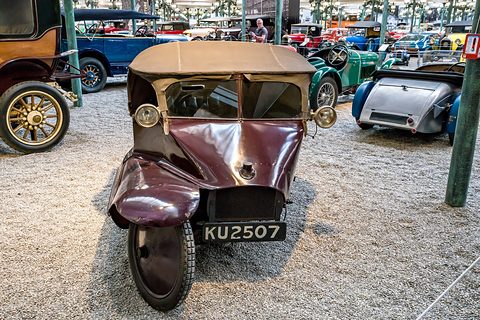
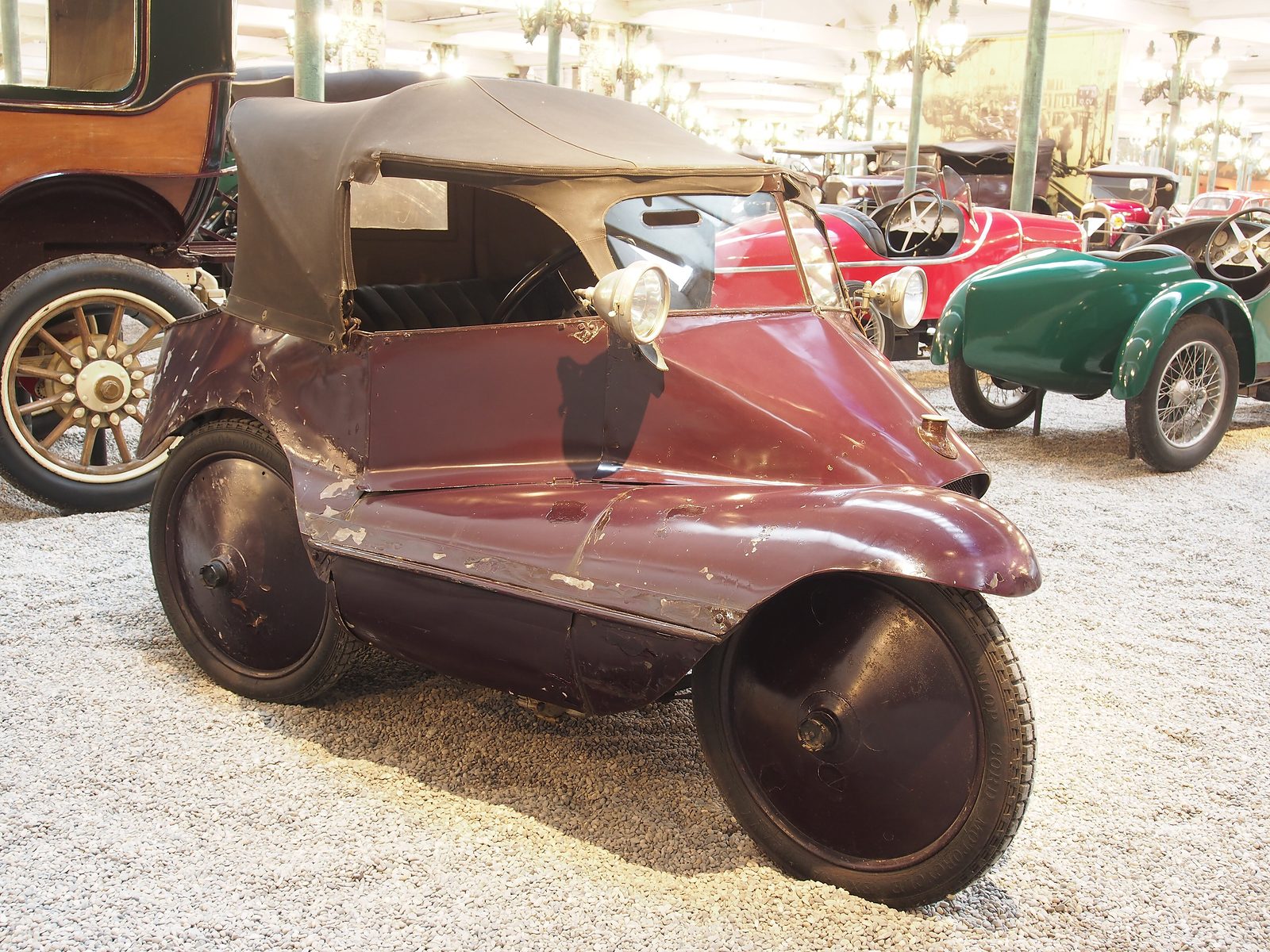
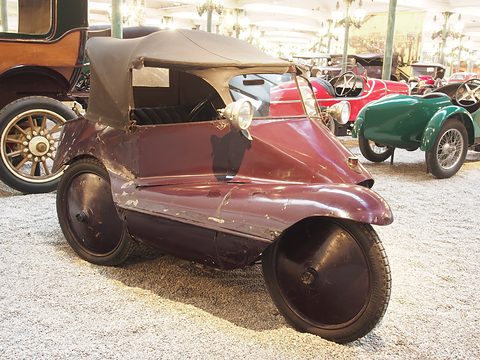
Front view of a maroon three-wheeler with a hooded cabin, two lamps and a single front wheel offset to one side.
The 1923 cabriolet at Mulhouse, head-on: the single front wheel sits off-centre, in line with one rear wheel, as on a motorcycle and sidecar.Photo: joergens.mi, CC BY-SA 3.0, via Wikimedia Commons
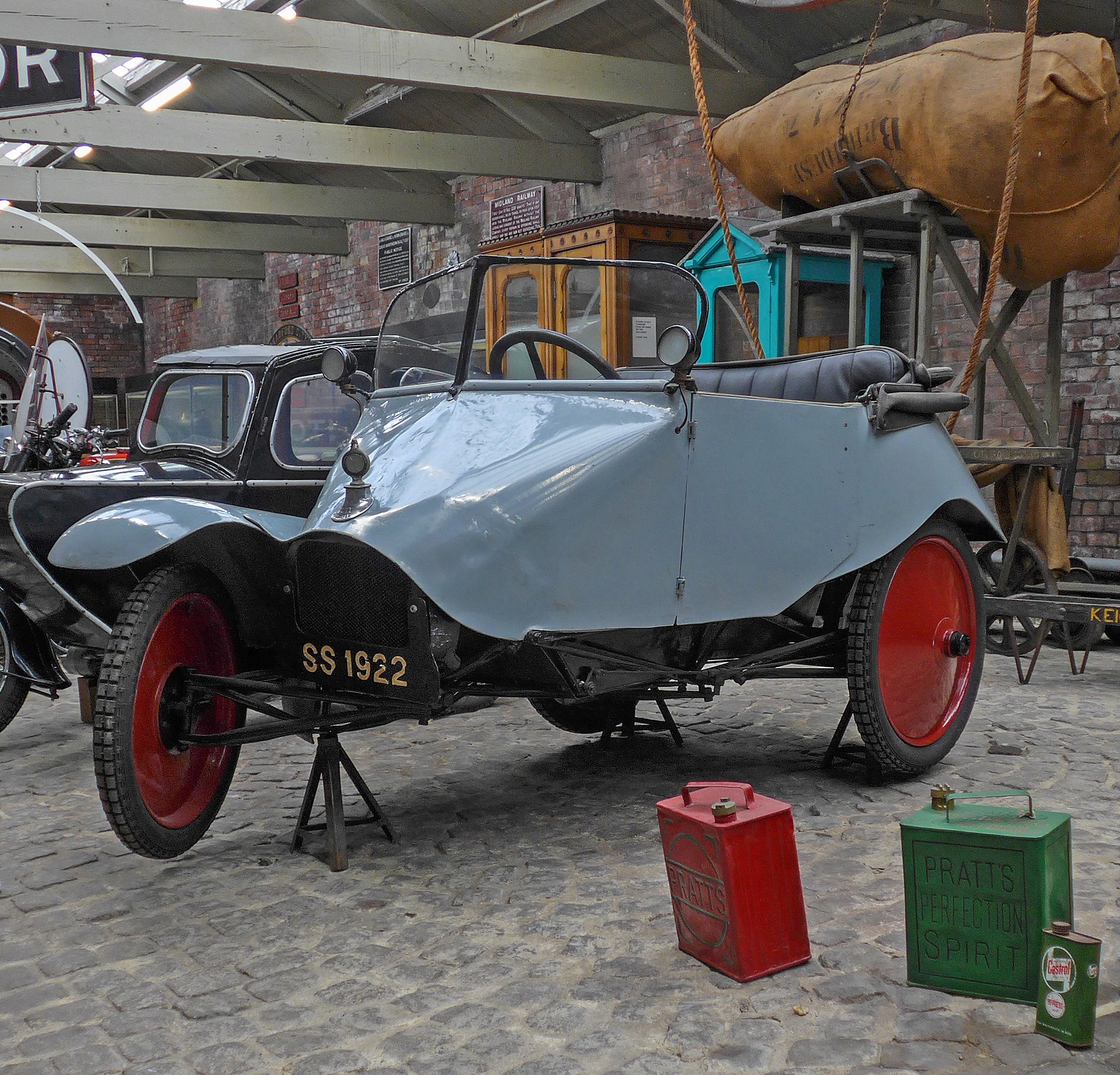
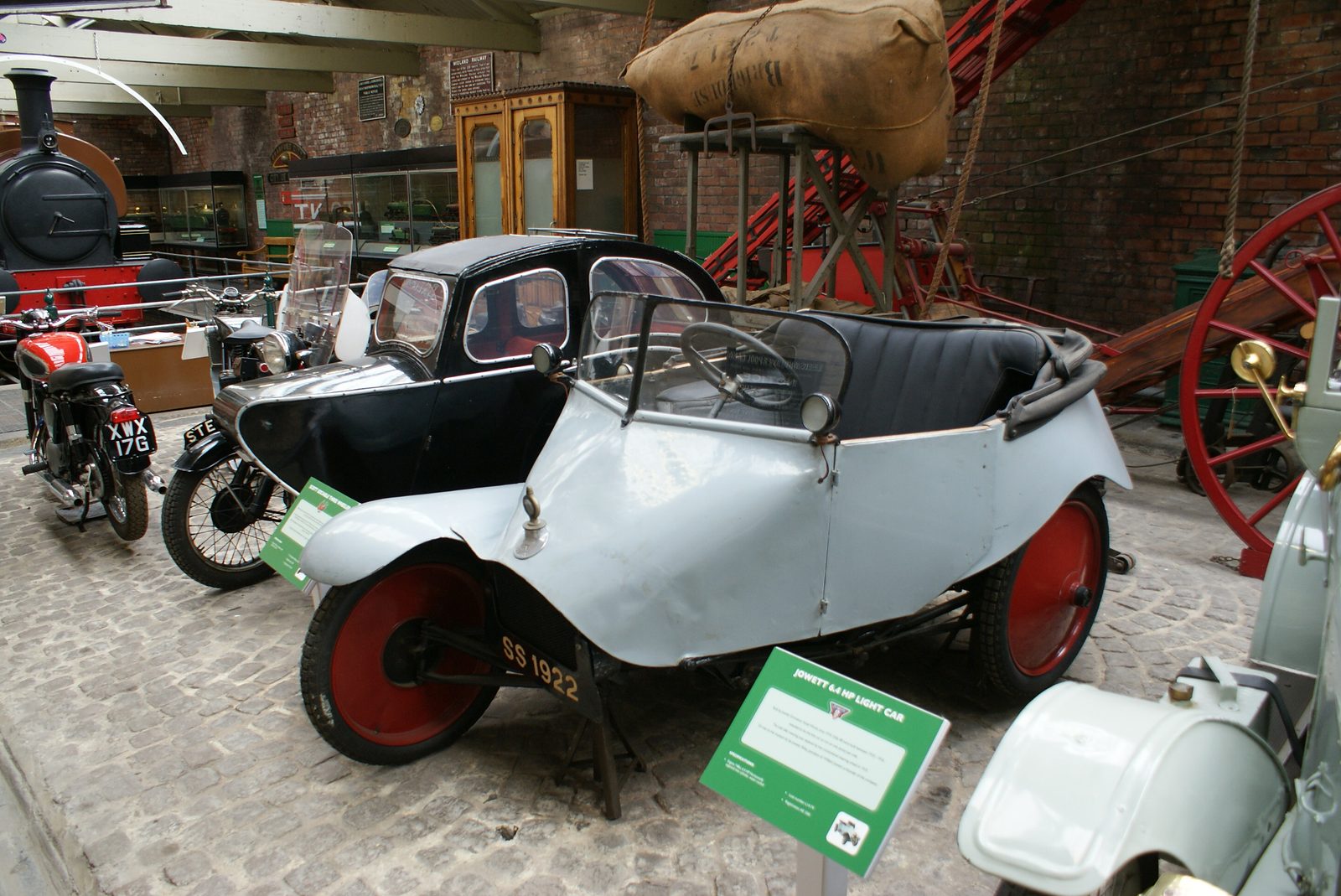
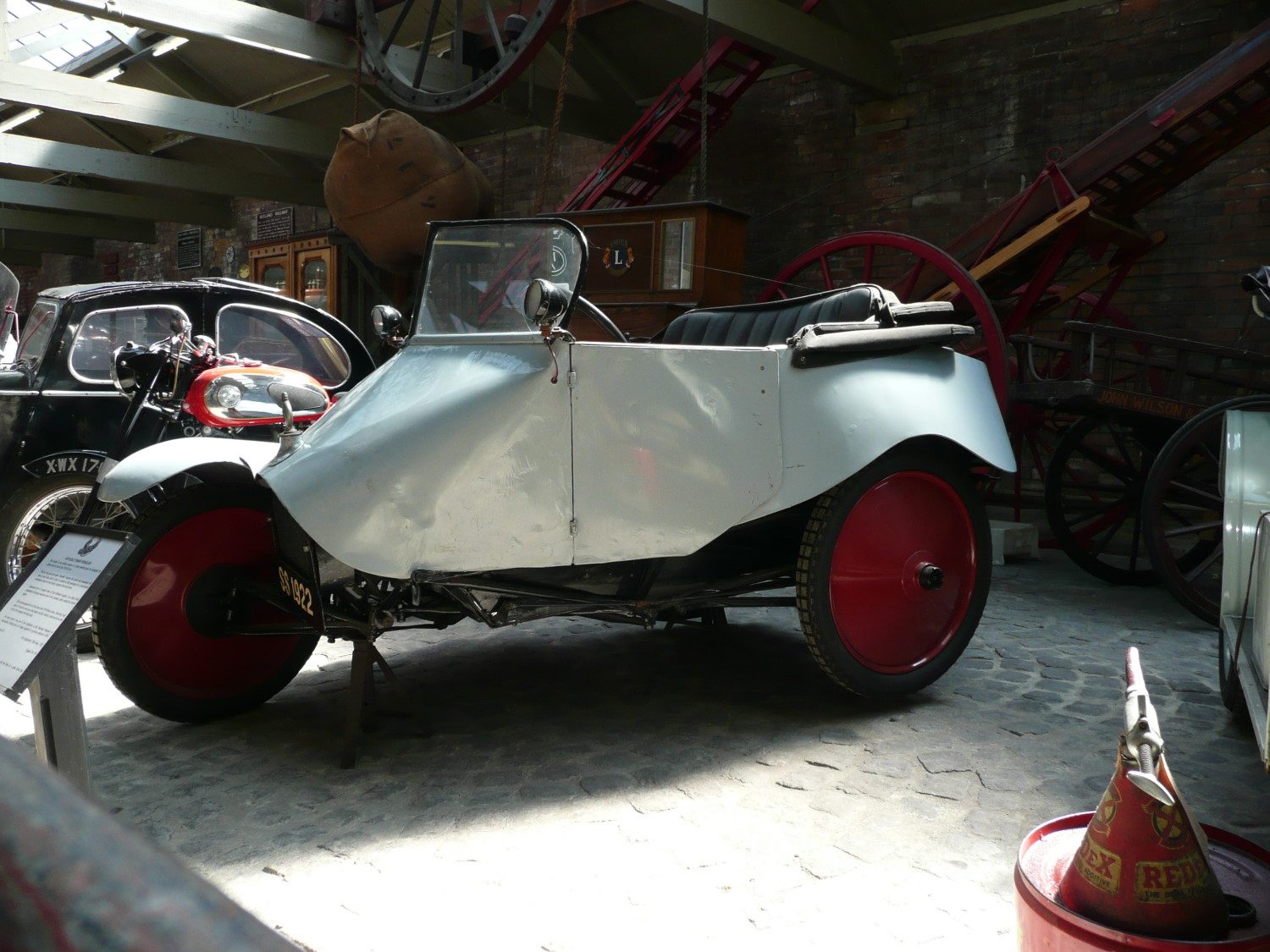
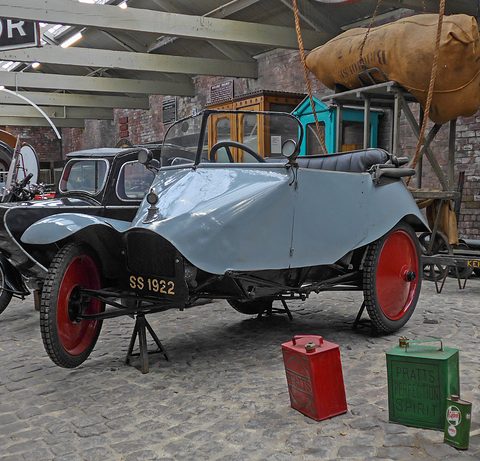
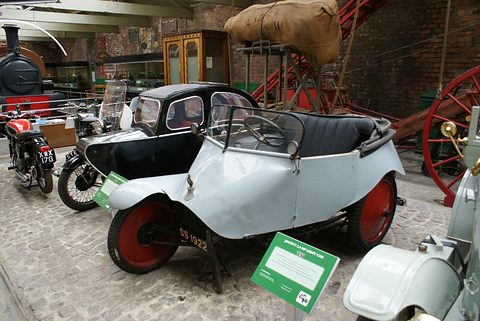
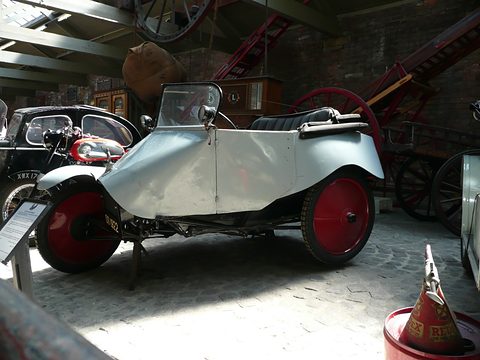
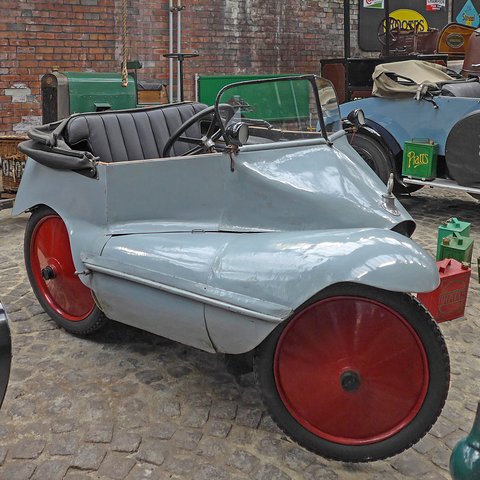
Side view of a grey three-wheeler with a black seat and red disc wheels on a cobbled floor.
The grey Sociable at the Bradford Industrial Museum, from the side: the front wheel and, in line with it, one of the two rear wheels.Photo: Tim Green, CC BY 2.0, via Flickr

Pictures

More photographs, old and new

Variants

From gun car to two-seater

The Sociable family
VariantYearsWhat differsHow many
Gun car1915–⁠16A three-wheeled carrier for a machine gun, developed from Scott’s sidecar gun outfits; the army did not order itNot found
Sociable two-seater1921–⁠24/25The civilian car: a two-seat cabriolet body on the same lopsided three-wheel frameAbout 200

Specification

The Sociable two-seater, 1921–⁠25

Engine and drive

Engine and drive
EngineScott parallel twin, two-stroke, water-cooled, 578 ccsource 3source 2
GearboxThree speeds, no reversesource 3
DriveBy shaft to the offside rear wheelsource 3source 2

Body and chassis

Body and chassis
FrameTriangulated tubular steelsource 3
WheelsFront and rear wheels in line, as on a motorcycle, with a third wheel beside the rear onesource 3
SteeringRack and pinionsource 3
BrakesOn the rear wheels only, worked separately: a hand lever for the driven wheel, a pedal for the othersource 3
BodyTwo-seater cabrioletsource 4

Dimensions

Dimensions
Length, width, weightNot found

Performance and running

Performance and running
Power and top speedNot found
Price new£273 in 1921; £135 in 1924source 3

How many were built?

The one figure, with its sources

About 200 builtAbout 200. English Wikipedia and Grace’s Guide both give it, drawing on different books, and no other figure has been found. Grace’s dates the run to 1921–⁠25; Wikipedia ends it in 1924.

  1. about 200Sociables, 1921–⁠24/25Two sources agree

    English Wikipedia, after Georgano and Burgess Wise; Grace’s Guide, after Baldwinsource 3source 4

  • Two sources agreetwo good sources give the figure
  • One sourcea good source, alone
  • Unconfirmeda lead only, not yet checked

Famous for

Three points

  1. A gun car for civilians

    It began as a three-wheeled machine-gun carrier for the army, and became a two-seater when no orders came.source 3source 4source 1

  2. One wheel off to the side

    Motorcycle-style wheels in line, plus a third set beside the rear one like a sidecar’s.source 3

  3. A Lemon

    Its separate rear brakes earned it a place in Timothy Jacobs’s Lemons: The World’s Worst Cars.source 3

Survivors and collecting

Today

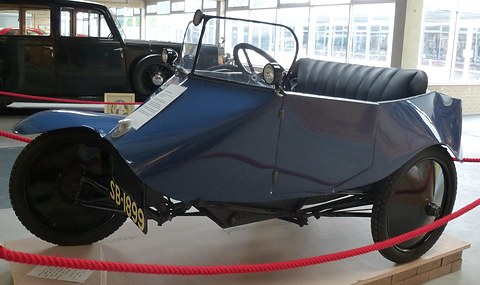
Sociables survive in museums. The Bradford Industrial Museum, in the city where the cars were built, has one that Grace’s Guide dates to 1919 and describes as designed as a gun car for the First World War. The Cité de l’Automobile, the national motor museum at Mulhouse in France, has a 1923 two-seater cabriolet.source 4 How many survive is not known, and no recent auction result was confirmed.

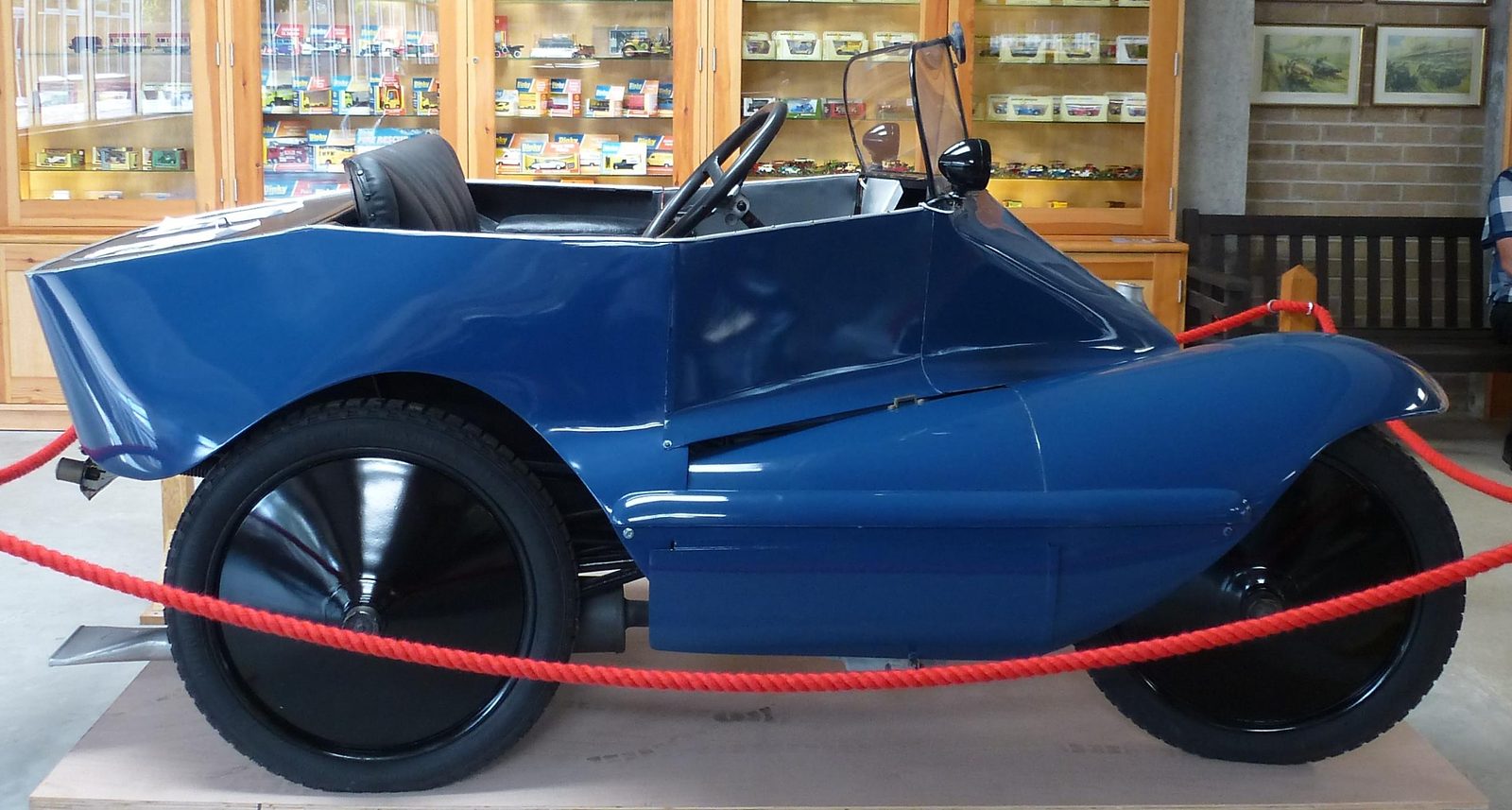
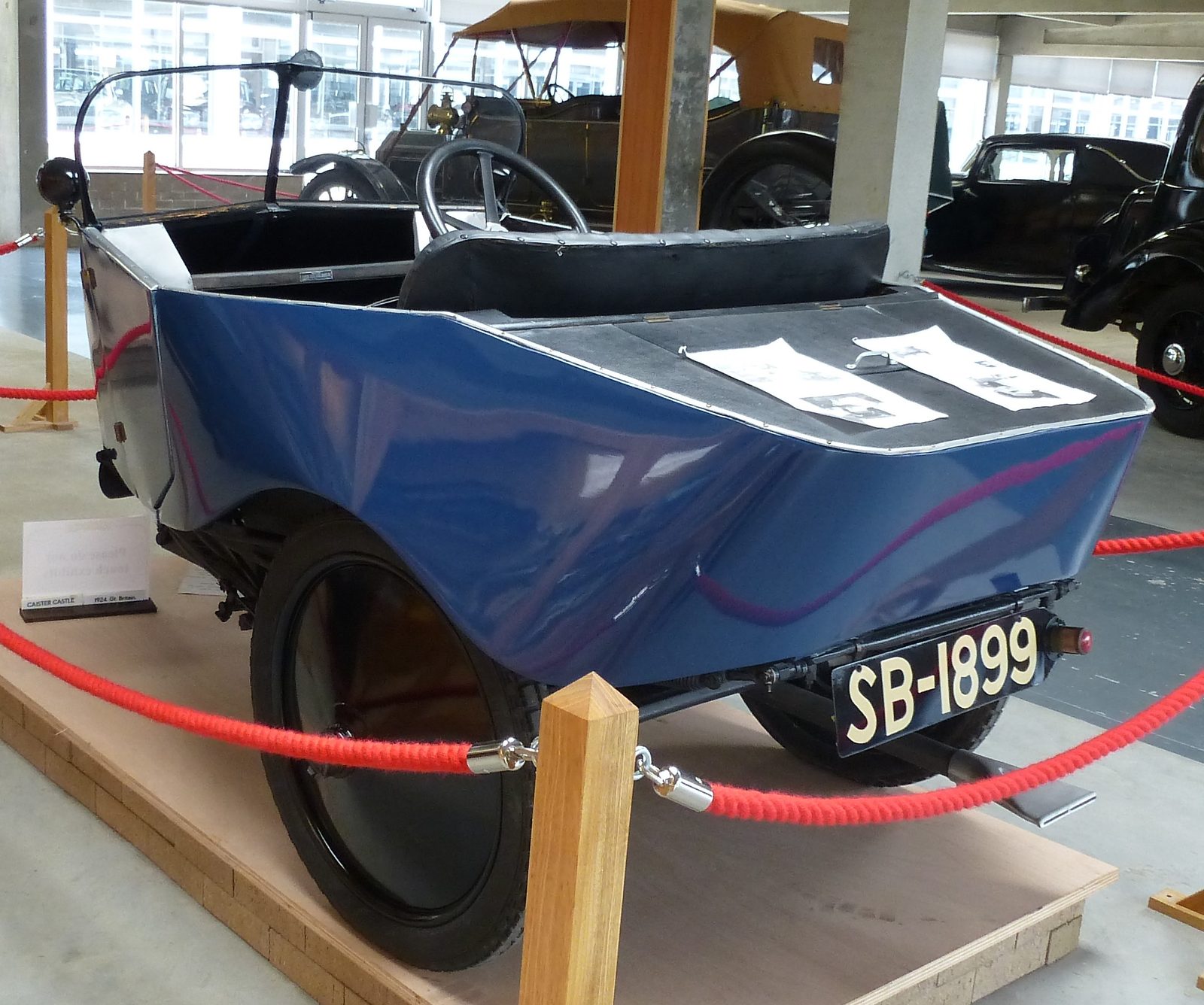
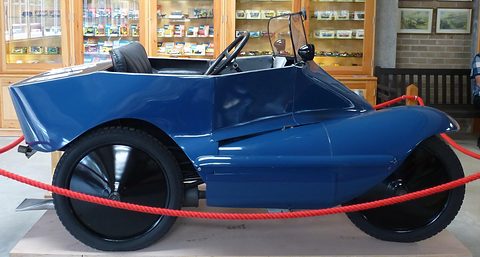
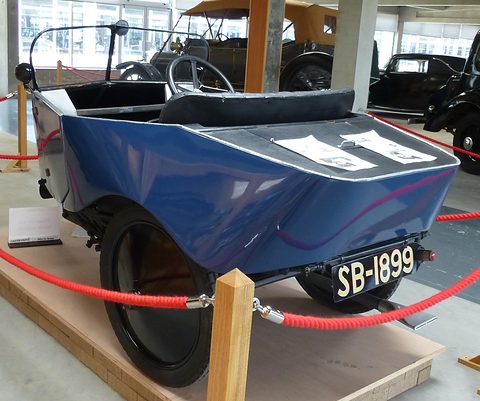
A blue open three-wheeler with a single front wheel under a cycle wing and two lamps, behind a red rope.
A blue 1923 Sociable two-seater at the Caister Castle Car Museum in Norfolk, 2017.Photo: Buch-t, CC BY-SA 3.0 de, via Wikimedia Commons

Sources

Numbered as in the text

No period road test was found, and no dimensions or performance figures; most of this page rests on English Wikipedia’s short article and on Grace’s Guide. Sources are given as plain text; the links are on the Credits page.

  1. Grace’s Guide, “Alfred Angas Scott”, with the obituary from The Engineer of 24 August 1923 and the probate notice; the relevant parts read.
  2. The Classic MotorCycle, “A to Z classic reference: Scott”.
  3. English Wikipedia, Scott Sociable, read in full. It cites Georgano, Beaulieu Encyclopedia of the Automobile (2000), Burgess Wise, New Illustrated Encyclopedia of Automobiles, and Jacobs, Lemons (1994).
  4. Grace’s Guide, “Scott Autocar Co”, read in full. It cites Baldwin, A–Z of Cars of the 1920s (1994).