microcarfan
  • Cyclecar
  • Britain
  • One seat
  • Engine behind the axle

Carden cyclecar

Also known as Carden Monocar, New Carden (1922–⁠25)

One seat, four wheels and a motorcycle engine mounted behind the back axle, chained straight to it: John Carden was barely 21 when he built his Monocar. Before he died at 43 he had sold the idea three times over, and designed the tankette.

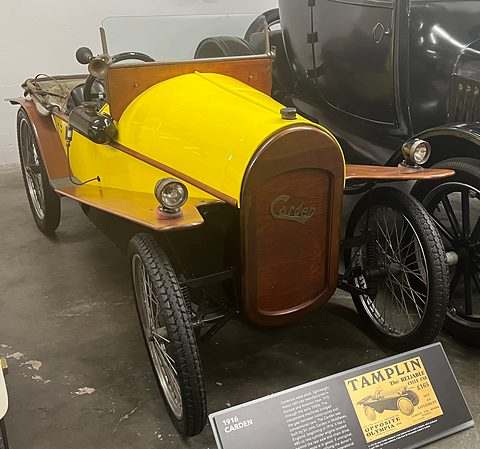
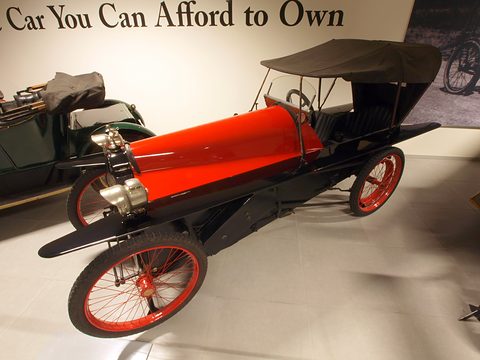
A tiny yellow single-seat cyclecar with a varnished wooden nose, wooden wings and wire wheels, a museum placard in front.
Yellow Carden monocar of 1916, its engine at the rear and Carden script on the dummy radiator, at the Petersen Automotive Museum, Los Angeles, in August 2024.Photo: TaurusEmerald, CC BY-SA 4.0, via Wikimedia Commons

At a glance

The spec plate

Carden cyclecar

Monocar · Farnham

Built
1913–⁠1925The Carden Monocar from 1913; later Carden designs built by other firms to 1925
Country
BritainFarnham, Surrey, then Teddington; later designs built at Ascot, Staines and Willesden
Maker
Carden Engineering Co. LtdJohn Valentine Carden; cars built for him by Ward and Avey in 1915–⁠16
Engine
4 hp JAP single or 5 hp JAP V-twin, air-cooledBehind the rear axle; one source gives 480 or 481 cc for the single and 654 cc for the twin
Seats
1Two-seat Cardens followed from 1914
Wheels
4The engine behind the rear axle, driving it by a single chain; no differential
Price new
£55The Monocar in July 1913; a Carden cost £90 in 1925
Production
Not foundCardens and AVs together “may have reached 1,000”, by one unconfirmed account

Not yet recordedpower, top speed, length and weight.

How big is it?

True proportion

Length unknown

No reliable length has been found. The Fiat 500, the Peel P50 and the adult stay, so the gap is shown, not hidden.

Drawn at true proportion. The track is 3.6 metres long; the adult stands at the same scale. The Peel P50 is the smallest production car, on every page for comparison.

Beside its contemporaries

The British microcars on the road in 1913, on the same 3.5 m scale. Lengths of cars without a page yet come from the census and are unverified.

  1. Morgan Three-Wheeler1910–⁠1952 · Britain

    2.90 m
  2. Carden cyclecar1913–⁠1925 · Britain

    length unknown

The story

History

John Valentine Carden was born in London on 6 February 1892 and taught himself engineering. In 1913, at home in Farnham, Surrey, he built a single-seat cyclecar with a wooden body.source 1source 2 Its JAP engine sat behind the rear axle and drove it directly by chain, without a differential and at first without a gearbox.source 3source 2 English Wikipedia, citing Georgano, says the very first car had a 481 cc JAP single and drove the axle by belt; by the summer of 1913 it drove by chain.source 2source 3

On 16 July 1913 The Cyclecar, which had already described “the Carden monocar”, reported the latest version. The rear springing was altered, a combined tank for petrol and oil sat behind the driver, and there were mudguards. A multiple-disc clutch was built into the axle, and the car had a starting handle and a decompressor, two independent brakes for foot and hand, an Amac carburettor and a U.H. magneto. “The completely equipped machine has a very pleasing appearance,” the paper said.source 3

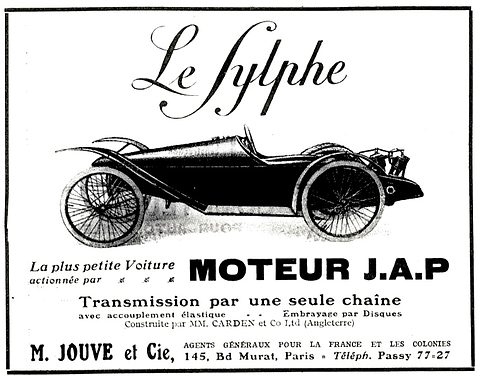
The main design remains the same, with a 4 h.p. J.A.P. engine mounted behind the rear axle. A single roller chain drives the axle, in which is incorporated a multiple-disc clutch. … The Carden Engineering Co., Ltd., of Farnham, Surrey, are selling these machines for £55.

The Cyclecar, “The Latest Carden Monocar”, 16 July 1913.source 3

Teddington and the war

Grace’s Guide dates the founding of the company to 1914, with G. L. Ward as Carden’s partner, though Carden Engineering Co. Ltd of Farnham was already selling the car in 1913.source 4source 3 English Wikipedia says production moved to Teddington in February 1914, and a two-seat Carden appears in photographs of that year.source 2source 4 On 8 October 1914 The Motor Cycle reported on a Monocar on trial, registered MXY1, with a 5 hp air-cooled JAP V-twin behind the rear axle and a single gear; other models could have two speeds, by disengaging one sprocket and moving another into line with the chain.source 2

Carden joined the Army Service Corps, became a captain, and learned about Holt tracked tractors.source 1 Meanwhile the firm of Ward and Avey built his cars for him in 1915–⁠16, then bought the design and the factory, and from 1919 sold the car as the AV Monocar.source 4source 5

Three more designs

Carden did not stop at one. In 1919 he designed a new cyclecar with tandem seats, built it at Ascot, and at the end of the year sold it to E. A. Tamplin of Staines; The Light Car and Cyclecar of 8 November 1919 reported that Tamplin had acquired “all rights to manufacture the Carden Tandem Two-Seater”. It became the Tamplin.source 4source 6 In November 1920 Carden Engineering, now of Piccadilly, showed a small two-seater.source 4 A further design of 1922, a two-seater with a body of fibreboard, went to the New Carden Light Car Co., and one was sold to King Alfonso XIII of Spain.source 1 Arnott and Harrison of Hythe Road, Willesden, built the New Carden until 1925.source 4source 7 In 1925 a Carden cost £90.source 8 Baldwin’s A–Z of Cars of the 1920s, as English Wikipedia quotes it, says production of Cardens and AVs together “may have reached 1,000”; no figure for the Cardens alone has been found.source 2

From cyclecars to tanks

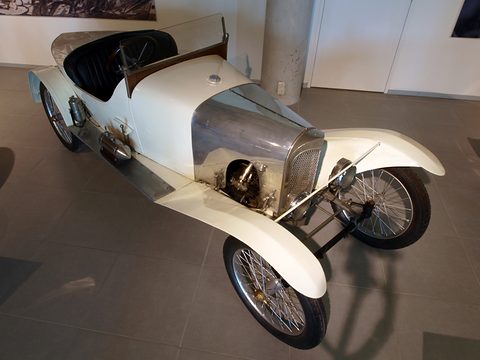
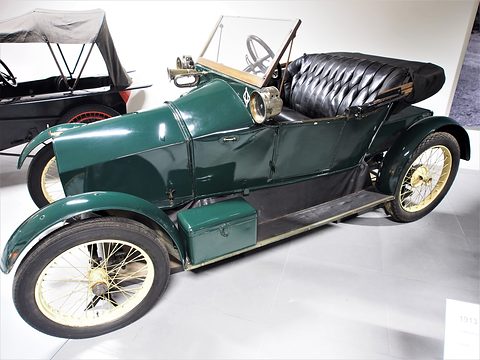
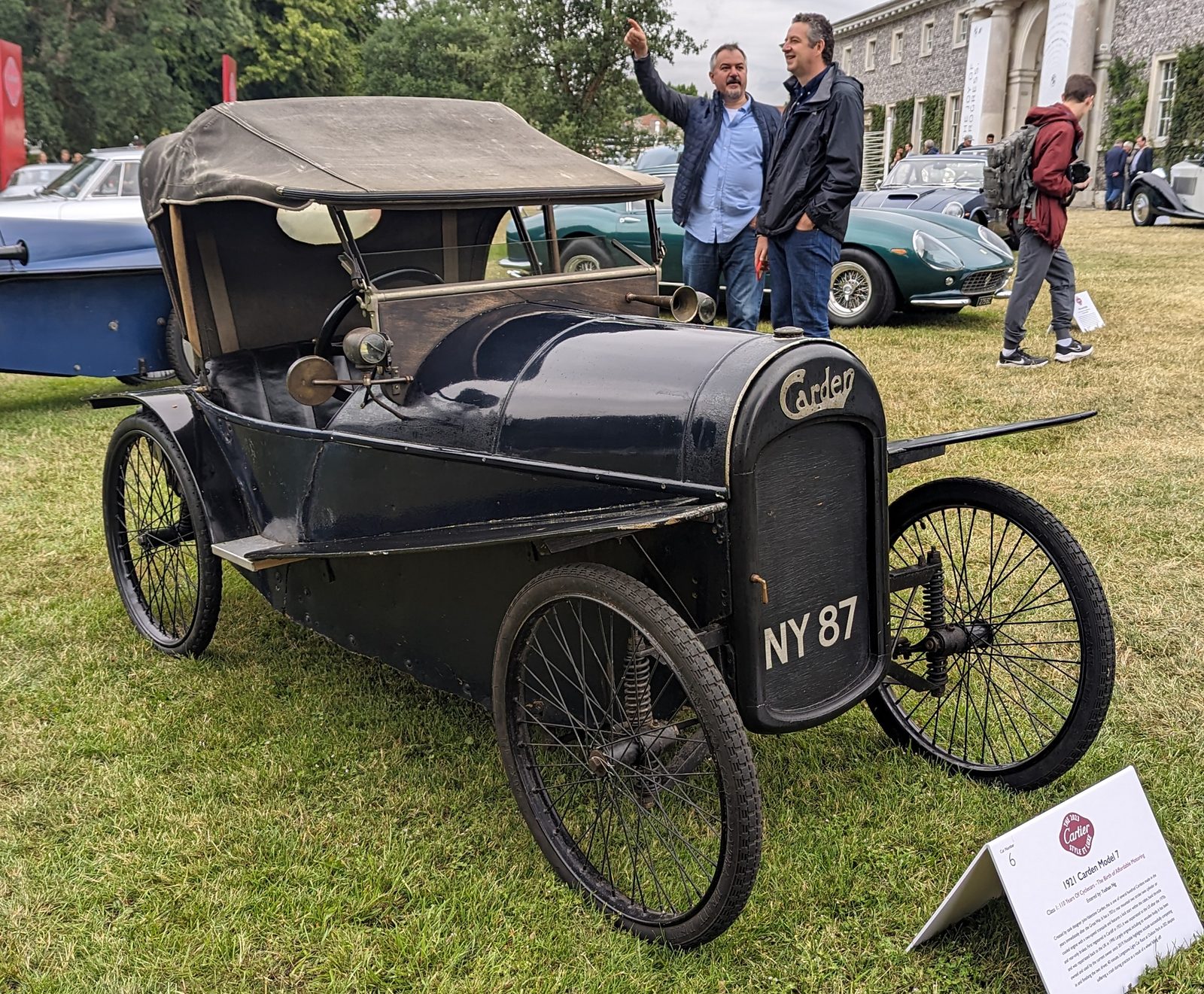
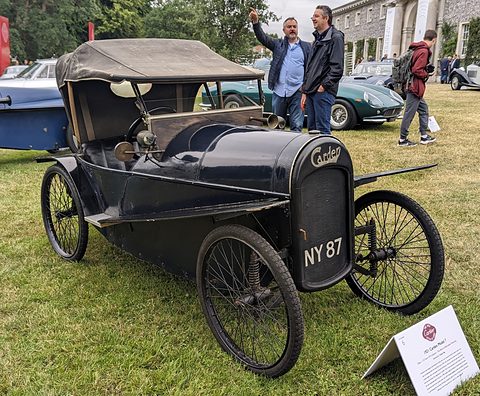
With Vivian Loyd, Carden then turned to military vehicles. Carden-Loyd, at Chertsey, made the One-Man Tankette of 1925 and its successors, Marks I to VI, and in March 1928 Vickers-Armstrongs bought the firm and made Carden its technical director. He went on to design Vickers light tanks, an amphibious tank, and the carrier from which the Bren Carrier descended, and later founded Carden Aero Engines and Carden-Baynes Aircraft.source 1 By then he was Sir John Carden, 6th Baronet; he was killed on 10 December 1935, when a Sabena airliner crashed near Tatsfield, in Surrey.source 2source 1 No surviving Carden cyclecar has been traced in the sources read; two cars labelled as Cardens appear in this page’s photographs, a 1916 car at the Petersen Automotive Museum, Los Angeles, in 2024, and a 1921 Model 7 at a concours.
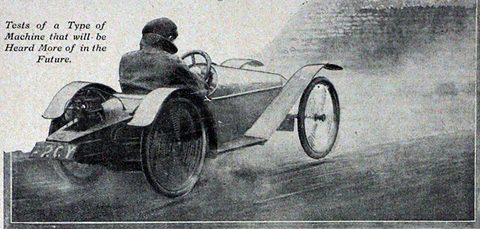
A man in a cap driving a tiny single-seat four-wheeler with its engine behind him, dust streaming from the rear wheels.
Plate I · 1913 A Carden single-seater, its engine behind the driver, on a 100-mile trial, from The Cyclecar, November 1913.Photo: The Cyclecar (1913), Public domain, via gracesguide.co.uk
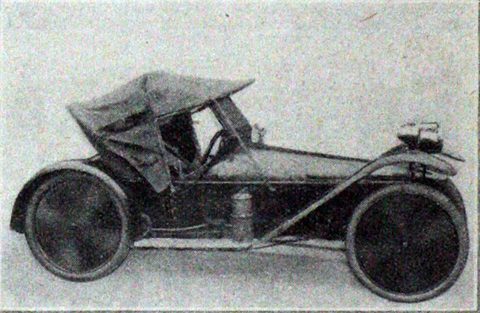
Side view of a small single-seat cyclecar with a fabric hood, disc wheels and an engine and fuel tank over the tail.
Plate II · 1916 A Carden Monocar with a hood its owner fitted against the weather, from The Light Car and Cyclecar, April 1916.Photo: The Light Car (1916), Public domain, via gracesguide.co.uk

AV Monocar

1919–⁠1924 · a record on this page

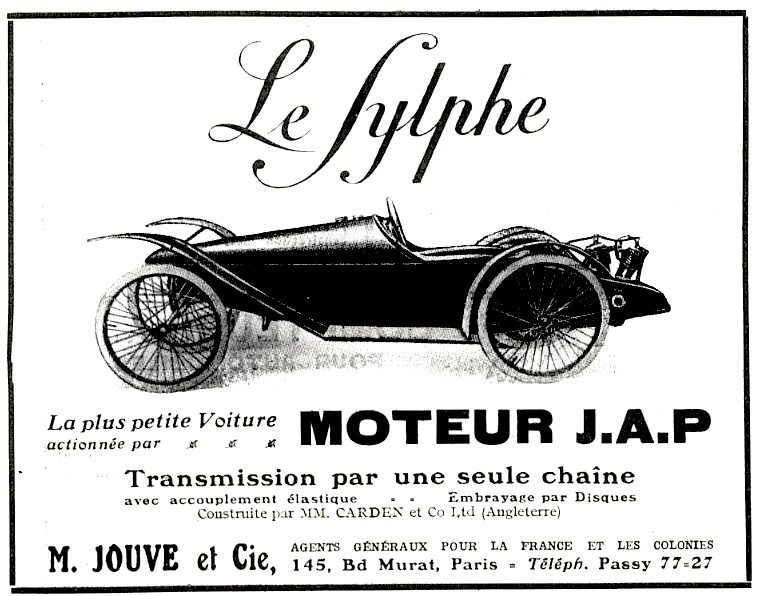
Ward and Avey of Teddington were two cousins, George Leopold and Frederick Max Holzapfel, who during the war took their mothers’ maiden names by deed poll.source 5 Having built Cardens for John Carden in 1915–⁠16, they bought the design and the factory and renamed the car the A.V.source 4source 5 As the AV Monocar, sold from 1919 to 1924, it was one of the more successful cyclecars: a single-seater about 762 mm (30 in) wide, of about 249 kg (550 lb), with its JAP, Blackburne or MAG engine of 5 to 8 hp at the back.source 5source 1 Grace’s Guide, drawing on Wikipedia, says several hundred were made, and about 50 of a two-seat version, the Bi-car.source 5 It is likely, though not confirmed, that Carden’s partner of 1914, “G. L. Ward”, was the same George Leopold. Little else about the AV is recorded in the sources read: no dimensions beyond its width, no prices and no survivors.

Pictures

More photographs, old and new

Variants

Carden’s designs and their makers

The Carden family
VariantYearsWhat differsHow many
Carden Monocar, first car1913Single seat, wooden body; by one account a 481 cc JAP driving by belt, with no gearboxNot found
Carden Monocar1913–⁠16Chain drive, a clutch in the axle, a starting handle; £55Not found
Carden two-seater1914–⁠16Two seats, photographed in 1914Not found
AV Monocar1919–⁠24The Carden design continued by Ward and Avey“Several hundred”, by one account
Carden tandem two-seater1919A new design built at Ascot, sold to TamplinSee the Tamplin
Carden small two-seater1920Shown by Carden Engineering of PiccadillyNot found
New Carden1922–⁠25Two-seat fibreboard body; built by Arnott and Harrison, WillesdenNot found

Specification

The Carden Monocar of July 1913

Engine and drive

Engine and drive
Engine4 hp JAP, air-cooled, behind the rear axle, with a starting handle and a decompressorsource 3480 or 481 cc single or 654 cc V-twin by English Wikipedia’s sources; a 5 hp JAP V-twin in the car tested in 1914
DriveA single roller chain to the axle, with a multiple-disc clutch built into the axle; no differentialsource 3source 2
GearsOne speed; a two-speed mechanism was offered on other models by 1914source 2
Carburettor and ignitionAmac automatic carburettor; U.H. magnetosource 3

Body and chassis

Body and chassis
BodyWooden single-seatersource 2source 1
BrakesTwo independent brakes, foot and handsource 3
TankOne tank for petrol and oil, behind the driversource 3

Dimensions

Dimensions
Length × widthNot confirmedsource 2English Wikipedia gives 3,050 × 813 mm (120 × 32 in) and a 1,980 mm wheelbase, without saying for which model
WeightNot foundAbout 249 kg (550 lb) for the AV Monocar

Running

Running
Price£55 (1913); £90 (1925)source 3source 8

How many were built?

The only figures found

No Carden-only figure foundNo figure for the Cardens alone has been found. The figures that exist are round numbers from encyclopaedias, and they count the AVs; Grace’s Guide also says “several hundred” AV Monocars were made.

  1. up to 1,000Cardens and AVs together: production “may have reached 1,000”Unconfirmed

    Baldwin, A–Z of Cars of the 1920s, through English Wikipediasource 2

  2. about 50AV Bi-carsUnconfirmed

    Grace’s Guide, drawn from Wikipediasource 5

  • Two sources agreetwo good sources give the figure
  • One sourcea good source, alone
  • Unconfirmeda lead only, not yet checked

Famous for

Three points

  1. Engine behind the axle

    A JAP engine hung behind the back axle and chained straight to it, with no differential.

  2. Sold three times

    Carden’s designs became the AV Monocar, the Tamplin and the New Carden, all built by other firms.

  3. A car for a king

    One of the 1922 two-seaters was sold to King Alfonso XIII of Spain.

Sources

Numbered as in the text

Apart from one period report, The Cyclecar of July 1913, this history rests on Grace’s Guide (five pages, some drawn from Wikipedia) and English Wikipedia, which are not fully independent of one another. The 1914 road test in The Motor Cycle was not read. Sources are given as plain text; the links are on the Credits page.

  1. Grace’s Guide, “John Valentine Carden”, read in full; drawn from Wikipedia and Flight of 19 December 1935.
  2. English Wikipedia, Carden (cyclecar), read in full. Used as a lead; it cites Culshaw and Horrobin (1974), Georgano (2000), Baldwin (1994) and The Motor Cycle of 8 October 1914.
  3. The Cyclecar, 16 July 1913, “New Cyclecars … The Latest Carden Monocar”, the item read in full from Grace’s Guide’s scan.
  4. Grace’s Guide, “Carden Engineering Co”, read in full; it cites The Light Car and Cyclecar of 8 November 1919 and The Engineer of 19 November 1920.
  5. Grace’s Guide, “Ward and Avey”, read in full.
  6. Grace’s Guide, “Tamplin Engineering Co”, read in full; it cites The Light Car and Cyclecar of 8 November 1919.
  7. Grace’s Guide, “Arnott and Harrison”, read in full.
  8. W. Boddy, “The vintage years of the Morgan 3-wheeler”, part 2, Motor Sport, July 1965, read in full; it compares 1925 prices.