
microcarfan
  • Cyclecar
  • Britain
  • Tandem seats
  • Fibreboard body

Tamplin

Also known as Tamplin cyclecar, Carden-Tamplin

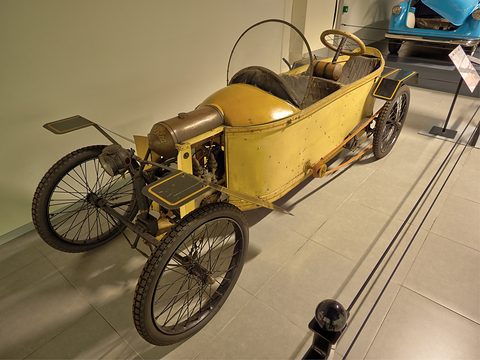
A body of fibreboard soaked in linseed oil, which was also the chassis; a JAP twin started by a kick from the driver’s seat; the passenger sitting behind; and one long belt to the back axle. The Tamplin was a cyclecar at its barest.

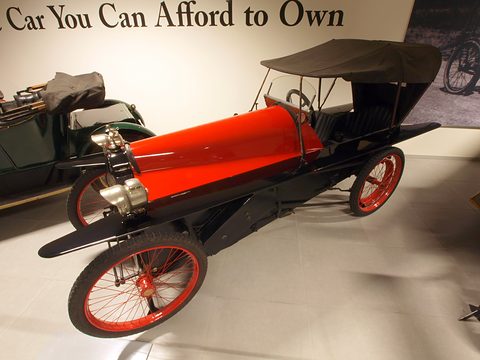
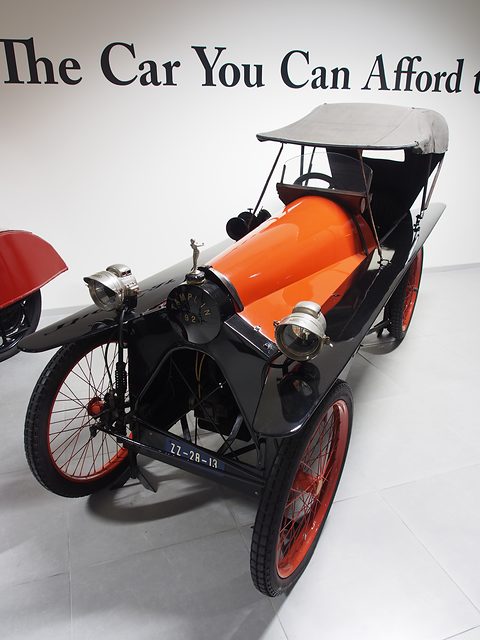
A narrow tandem cyclecar with a red bonnet, black body, folding hood and red wire wheels under a sign reading The Car You Can Afford to Own.
Red and black 1921 Tamplin cyclecar with its hood up in the Louwman Museum, The Hague, in April 2011.Photo: Alf van Beem, CC0, via Wikimedia Commons

At a glance

The spec plate

Tamplin

Tandem and side-by-side · Staines and Cheam

Built
1919–⁠1927At Staines from 1919, at Cheam from late 1923; the end is given as 1925 or 1927
Country
BritainRailway Garage, Kingston Road, Staines, Middlesex; then Malden Road, Cheam, Surrey
Maker
Tamplin Engineering Co., then Tamplin MotorsEdward Alfred Tamplin’s Railway Garage at Staines; from late 1923 at Cheam
Engine
8 hp air-cooled JAP V-twin980 cc by English Wikipedia; some cars had Blackburne engines
Seats
2, in tandemSide by side on the later model
Wheels
4One belt to the rear axle on the first model; a central chain on the later one
Price new
£150Less accessories, December 1919; £165 is also quoted for the belt-driven car
Production
Not provenThe maker claimed 1,896; chassis numbers do not support it
Survives
YesA 1921 car belongs to the National Motor Museum, Beaulieu

Not yet recordedpower, top speed, length and weight.

How big is it?

True proportion

Length unknown

No reliable length has been found. The Fiat 500, the Peel P50 and the adult stay, so the gap is shown, not hidden.

  • Two seats, the passenger behind the driver
  • A tub of fibreboard that was also the chassissource 1source 2
Drawn at true proportion. The track is 3.6 metres long; the adult stands at the same scale. The Peel P50 is the smallest production car, on every page for comparison.

Beside its contemporaries

The British microcars on the road in 1919, on the same 3.5 m scale. Lengths of cars without a page yet come from the census and are unverified.

  1. Morgan Three-Wheeler1910–⁠1952 · Britain

    2.90 m
  2. Tamplin1919–⁠1927 · Britain

    length unknown

The story

History

At the end of 1919 a small and odd-looking car drew a crowd outside the car and motorcycle shows. The Motor Cycle wrote it up on 11 December.source 3

A four-wheeled vehicle which created a great deal of interest outside the car and motor cycle shows is the Tamplin tandem-seated cycle car, which, in spite of its curious appearance, is possessed of many pleasing features.

The Motor Cycle, 11 December 1919, as quoted by Grace’s Guide.source 3

A garage and a designer

Edward Alfred Tamplin, of the Sussex brewing family though not in the brewery business himself, ran the Railway Garage on Kingston Road, Staines.source 1 He was the agent for John Valentine Carden, who had built single-seat monocars before the war, a design that went to Ward & Avey as the AV Monocar.source 4source 5 Carden’s next car, a tandem two-seater, was developed at Kennel Ride, Ascot, in 1919. Tamplin contracted to take its whole output, then bought the rights and built it under his own name.source 3source 1source 4 Carden went on to design tracked carriers, the Carden-Loyd, and was knighted.source 4

Fibreboard and a belt

The Tamplin seated its passenger behind the driver, in the manner of the French Bédélia; Georgano called it the British equivalent.source 6source 7 Its open tub was made of fibreboard waterproofed by soaking in linseed oil, and on the first model the tub was the chassis too.source 1source 2 An 8 hp air-cooled JAP V-twin at the front drove through a universal joint and a chain on the near side to a Sturmey-Archer gearbox with three speeds and reverse, and from there one belt ran to a pulley on the rear axle.source 3source 1 The Motor Cycle describes a live axle in large Skefko ball bearings, so that one belt drove both wheels; English Wikipedia says the drive went to the left rear wheel alone, to avoid the need for a differential.source 3source 1 The front wheels were sprung independently on coil springs, the rear on quarter-elliptics. The driver started the engine with a kick-starter from his seat, and pressing the clutch pedal fully down also put on the brakes.source 1 In December 1919 it cost £150, less accessories.source 3

The magazine’s tester needed a few miles to get used to it, because the direct steering wanted a very light touch; after that he found the control most satisfactory, and in dense traffic the narrow track and quick steering gave the driver a real advantage over larger vehicles. The driver’s comfort was excellent; the passenger’s room, less so.source 3

The Tamplin on the road requires careful handling during the first few miles of initiation, as the direct steering gear necessitates a very light touch on the wheel.
The Motor Cycle, 11 December 1919, as quoted by Grace’s Guide.source 3
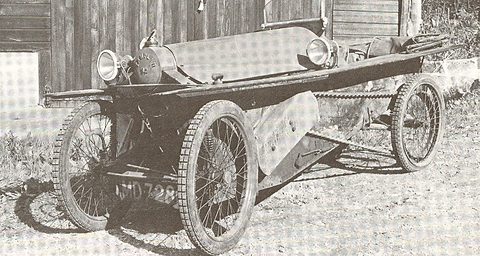
A narrow cyclecar with wire wheels, twin headlamps and a long exposed chain along its side, parked on rough ground.
Plate I A 1921 Tamplin in a yard before a timber shed, its long side chain on show; the photograph is undated.Photo: Unknown photographer, Public domain, via Wikimedia Commons

From tandem to side by side

Some cars of 1920–⁠22 had Blackburne engines instead of the JAP, and second-hand advertisements of the early 1920s offer a 1921 Tamplin with dynamo lighting and a Tamplin coupé.source 1source 8 At its busiest the works built up to 14 cars a week.source 1 Then the car grew up. Georgano says the Tamplin became a more conventional side-by-side two-seater in 1922; English Wikipedia dates the new model to 1924, with the engine at the front, a wider body, a central chain to the rear axle and a separate chassis, and Baldwin illustrates a side-by-side car of 1923.source 2source 1source 4 In late 1923 Tamplin Motors moved to Malden Road, Cheam, in Surrey, and production carried on there.source 2source 4

It did not last. By 1925 the cyclecar market had gone to the Austin Seven and the Morris, and Tamplin went back to the garage trade, dealing in lorries.source 1source 4 Georgano and a French encyclopedia give 1927 as the end, the latter after an estimated 2,000 cars, and the French book judges the Tamplin too basic beside the Austin; Baldwin says cars were made for some years more, and even longer to special order.source 2source 9source 4 Tamplin’s own claim of 1,896 cars is not supported by the chassis numbers known.source 1 Later writers have been less kind than The Motor Cycle was: one thought the Tamplin of 1920–⁠21 looked like a child’s pedal car.source 7 Culshaw and Horrobin counted Tamplins among the most successful exponents of the cyclecar.source 10
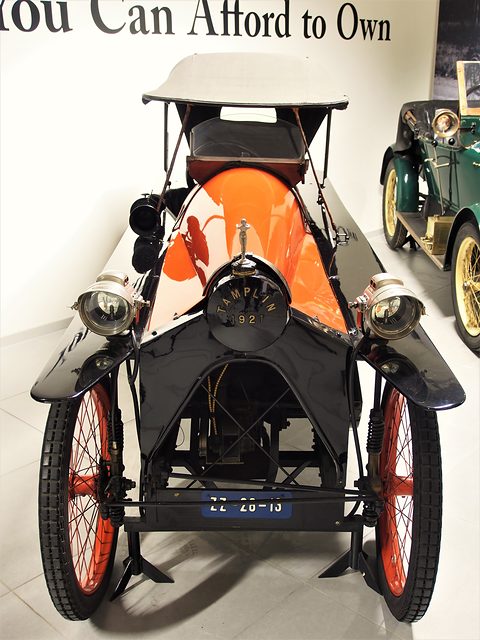
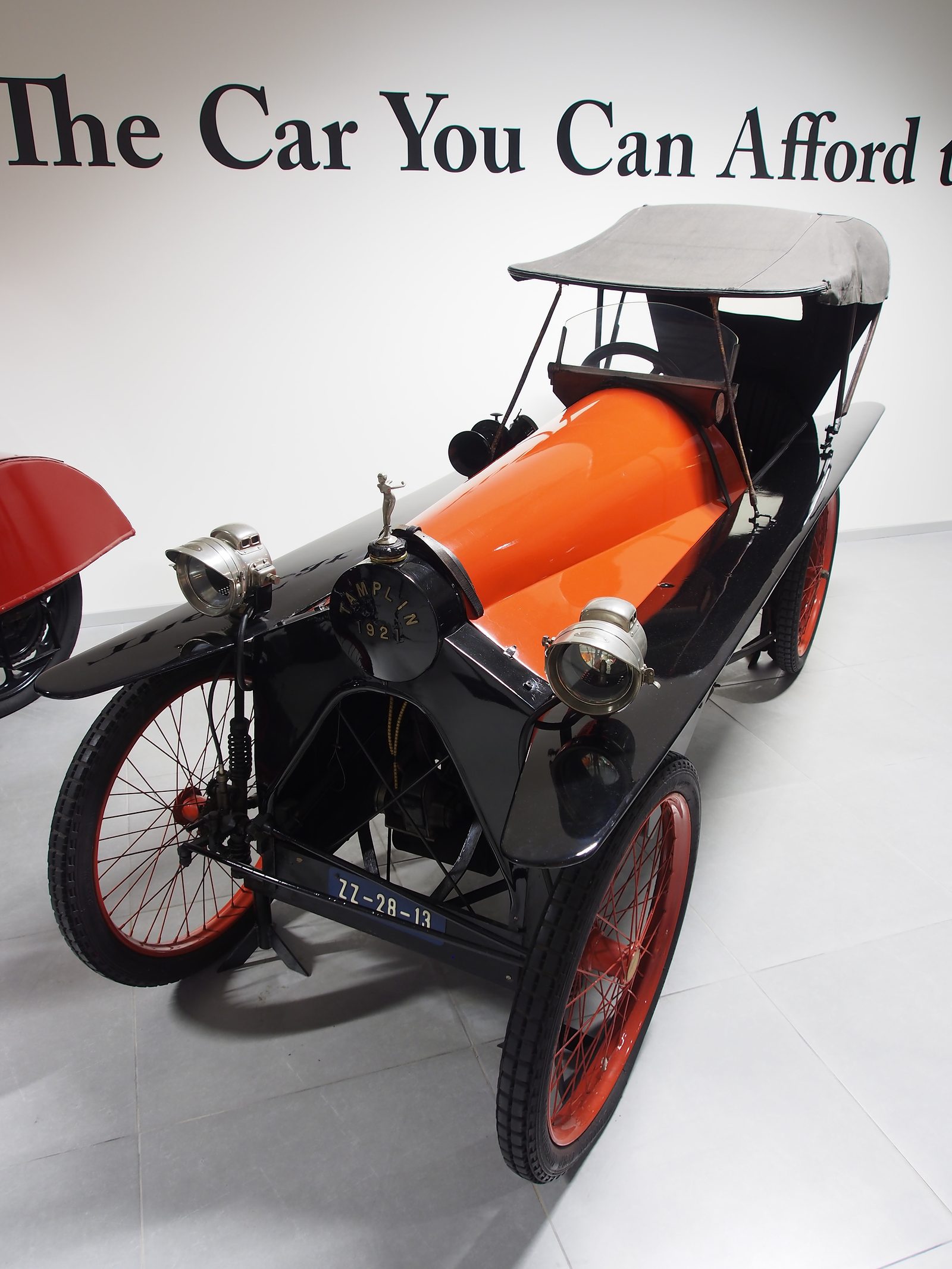
Front view of a very narrow cyclecar with a red cowl, a V-twin under it, two side lamps and red wire wheels.
A 1921 Tamplin head-on at the Louwman Museum, The Hague, in January 2017: the narrow body, the V-twin and the lamps.Photo: Alf van Beem, Public domain, via Wikimedia Commons

Pictures

More photographs, old and new

Variants

Two Tamplins and a coupé

The Tamplin family
VariantYearsWhat differsHow many
Tandem1919–c. 1922Carden’s design: tandem seats, a fibreboard tub as chassis, one belt to the rear axle, a kick-starter at the driver’s seat; JAP or Blackburne twinMost of the output
Coupéc. 1920–⁠22A closed body, mentioned in The Motor CycleNot found
Side-by-side1922/24–1925/27A wider body with two seats abreast, a separate chassis and a central chainNot found

Specification

The tandem Tamplin of 1919–⁠21

Engine and drive

Engine and drive
EngineJAP air-cooled V-twin, 8 hp, at the frontsource 3source 1980 cc by English Wikipedia; one book gives 85 × 85 mm and “900 cc”, though 85 × 85 mm makes about 965 cc
StartingKick-starter, worked from the driver’s seatsource 1
GearboxSturmey-Archer, three speeds and reverse, driven through a universal joint and a chain on the near sidesource 3source 1
Final driveOne exposed belt to a pulley on the rear axlesource 3source 1The Motor Cycle: a live axle in Skefko bearings, so one belt drove both wheels; English Wikipedia: the left rear wheel only, avoiding a differential

Body and chassis

Body and chassis
BodyAn open tub of fibreboard, waterproofed by soaking in linseed oil, serving as the chassissource 1source 2
Front suspensionIndependent, with coil springssource 1
Rear suspensionQuarter-elliptic leaf springssource 1
BrakesApplied by pressing the clutch pedal fully downsource 1

Dimensions

Dimensions
Length, width and weightNot confirmed from a period source

Price

Price
December 1919£150, less accessoriessource 3£165 in a later book on vintage cars

How many were built?

Two figures, neither proven

Not proven; perhaps up to 1,900Tamplin claimed 1,896 cars, but known chassis numbers do not support the figure; a French book estimates about 2,000. At the busiest times up to 14 cars a week were built. Our reading, not a sourced figure, is several hundred at least and perhaps up to 1,900.

  1. about 2,000Tamplins, to the closure in 1927Unconfirmed

    L’univers des voitures classiques, an estimatesource 9

  2. 1,896the maker’s own claimUnconfirmed

    English Wikipedia, from the reference books; not supported by chassis numberssource 1

  • Two sources agreetwo good sources give the figure
  • One sourcea good source, alone
  • Unconfirmeda lead only, not yet checked

Famous for

Three points

  1. Fibreboard in linseed oil

    The waterproofed fibreboard tub was both the body and the chassis.

  2. A kick from the seat

    The driver started the JAP twin with a kick-starter without getting out.

  3. One belt

    A single long belt carried the drive to the rear axle, with no differential.

Survivors and collecting

Today

A 1921 Tamplin cyclecar belongs to the National Motor Museum at Beaulieu, and a few other single examples are known in British vintage circles.source 10source 11 An Automobile Quarterly feature mentions a museum collection running from a Tamplin cyclecar to a 1987 Trabant, without naming it in the part read.source 12 The pictures on this page show a 1921 Tamplin at the Louwman Museum in The Hague. No auction result has been traced.

Sources

Numbered as in the text

The launch and the first car rest on The Motor Cycle of 11 December 1919, as Grace’s Guide quotes it; the original was not seen. Much of the rest comes from English Wikipedia, drawing on Culshaw and Horrobin and on Baldwin, and from snippets of other books. No period figure for weight, length or speed was found. Sources are given as plain text; the links are on the Credits page.

  1. English Wikipedia, Tamplin, read in full. Used as a lead; it cites Culshaw and Horrobin, Complete Catalogue of British Cars (1974), and Baldwin, A–Z of Cars of the 1920s (1994).
  2. G. N. Georgano (ed.), The New Encyclopedia of Motorcars 1885 to the Present (1982), entry Tamplin, snippets only.
  3. Grace’s Guide, “Tamplin”, quoting The Motor Cycle of 11 December 1919, read in full.
  4. Nick Baldwin, A–Z of Cars of the 1920s (1998/2010), entries Tamplin and Carden, snippets only.
  5. C. F. Caunter, The History and Development of Light Cars (Science Museum, 1957), p. 57, snippet only.
  6. Vintage Cars: motoring in the 1920s (1973), snippets only.
  7. G. N. Georgano, Classic Cars (1979), captions, snippets only.
  8. The Motor Cycle, about 1921–⁠22, second-hand advertisements, snippets only.
  9. L’univers des voitures classiques 1886–⁠1975 (2001), entry Tamplin, snippets only.
  10. David Culshaw and Peter Horrobin, The Complete Catalogue of British Cars (1974), entry Tamplin, snippets only.
  11. Vintage Cars in Colour (1975), snippet only.
  12. Automobile Quarterly, a museum feature, snippet only.